Become a Creator today!Start creating today - Share your story with the world!
Start for free
00:00:00
00:00:01
057. Leading with Love: Building a Culture of Human-Centered Leadership image

057. Leading with Love: Building a Culture of Human-Centered Leadership

S5 E57 · Vulnerability Muscle with Reggie D. Ford
Avatar
13 Plays29 days ago

"I try to show up and show love—even in business." 

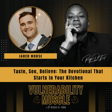
In this soul-stretching episode of Vulnerability Muscle, Reggie D. Ford is joined by culture curator and leadership consultant Darius E. Moore for a conversation that blends storytelling, emotional truth, and practical wisdom. Together, they explore how early life experiences, especially Darius’ deeply personal family history marked by tragedy and healing, shaped his approach to relationships, leadership, and fatherhood.

From breathing through trauma to curating workplace cultures rooted in love, this episode shows how real power comes from showing up as your whole self—scars, stories, and all. They discuss the importance of seeing others not as data or problems to solve but as people to love. They also dive into what it means to parent with presence, the grief of a lost childhood, and why every child—and adult—deserves to be seen as a star.

Darius shares stories from his upbringing in a military household, how his therapist wife helped him discover emotional regulation, and what his daughter taught him about living in the moment. This episode is a tribute to collective kinship, vulnerability as a practice, and leadership through love.

Key Takeaways & Quotes:

  • “Discipline and punishment aren’t the same thing. I wasn’t punished; I was prepared.”
  • “Breathing is how I regulate. I believe every inhale is the breath of God.”
  • “If you want to build better cultures—at home, at work, in the world—start by loving people right where they are.”

Call to Action:
This episode will change the way you think about love in leadership, parenting, and personal growth. Listen now to discover why vulnerability is the key to healing and connection—and how we build a better world through radical, consistent love.

Contact Info:
Connect with Darius E. Moore:
darius.e.mmore@gmail.com
Instagram: @GenesisThought
LinkedIn: Darius E. Moore
🎙Podcast coming soon: Let’s Build Something

Connect with Reggie D. Ford:
reggiedford.com
@reggiedford on all platforms
Subscribe to the Vulnerability Muscle podcast wherever you listen


Recommended
Transcript

Introduction to Vulnerability Muscle podcast

00:00:00
Speaker
Showing love and loving who they are so that you can love their story allows for a lot of very open and vulnerable conversations. Welcome to Vulnerability Muscle, the inspiring podcast, challenging norms and helping you redefine vulnerability as a strength.

Meet the Host: Reggie D. Ford

00:00:16
Speaker
I'm your host, Reggie D. Ford. Each episode of Vulnerability Muscle dives into a variety of topics such as mental health, social issues and mindset shifts.
00:00:26
Speaker
We explore the power of vulnerability and fostering meaningful connection. healing, building resilience, and promoting personal growth. Sometimes these conversations are uncomfortable, but good workouts often are.
00:00:41
Speaker
So join us and flex that vulnerability muscle. Welcome to the Vulnerability Muscle, the empowering podcast challenging you to redefine vulnerability as a strength.
00:00:53
Speaker
And it's a strength that helps us connect, to heal, to grow. It humanizes us through our stories that we

Guest Introduction: Darius Moore

00:00:59
Speaker
tell. And today we got a guest that I'm so excited to be talking to right now.
00:01:04
Speaker
Darius Moore. What's up, Darius? My brother, my brother. What's up, Rich? How you doing, baby? I'm great, man. Good, good, good. Darius is a friend of mine who I've gotten to know and had some deep, deep personal conversations with over...
00:01:20
Speaker
some years now. yeah And I feel like we were just talking like so many of our conversations that we've had. We should have been recording these a long time ago. And so this is one that I'm excited about. But introduce yourself,

Darius Moore's Background

00:01:31
Speaker
Darius.
00:01:31
Speaker
So I am Darius E. Moore, the one and only Darius E. Moore. You might find a ah a Darius Moore here and there, but it's just me. I'm the only Darius E. Moore. So originally from West Tennessee, Jackson to be specific. It's about an hour from Memphis for anybody who doesn't know.
00:01:47
Speaker
ah ah one of five kids. I'm the middle child. ah My parents both live back in Jackson. My dad is a military vet. My mom is a basically a retired teacher and caregiver.
00:01:59
Speaker
um And then I have a all two older siblings and two younger, I'm smack dab in the middle. and then But I currently reside in Gallatin, Tennessee, which is about 30 minutes from Nashville, ah with my wife and my daughter.
00:02:12
Speaker
All right. My beautiful wife. I need to make sure she hears that. My beautiful wife. Beautiful and beautiful daughter. Beautiful daughter, for sure. Yes, facts. And your daughter's a freshman, right? Freshman in college. It's her first year. So she graduated early from high school and is ah is on the the college journey already. Hopefully, we're we're hoping to get her into Clark Atlanta in the fall, but she's taking some prereqs at a local college. All right.
00:02:37
Speaker
but Clark Atlanta, any folks out there represent, y'all know, reach out, help us out. For sure, man. We're trying to get one of them more. We'll take it. take what we can get. but But yeah, man, so um I've been in the Middle Tennessee area for off and on over a decade.
00:02:51
Speaker
i Went to MTSU, proud Blue Raider. Let's go. Go Blue Raiders. And so I left and I came back. I've been working in the in multiple spaces, mostly in the the finance world of or nonprofit. And so...
00:03:05
Speaker
So excited to be able to um be able to see what Nashville is now because yeah it was very different when I left back in like 2012, 2013, and then I came back in 2015, 2016. It's just a completely different dynamic. so yeah Yeah, but you've been modest. So you've been in the non nonprofit space and the finance space, but you've been a leader in those spaces. Yeah.
00:03:28
Speaker
You've been a leader in cultivating positive culture and cultivating, ah building good relationships with people. And you're one person who I know can can talk to anybody. You got that. My dad said got the gift again. Yeah, yeah. so you can talk to anybody, but in a way that makes them feel ah like they matter and like like their presence is important. And I think that is something that you have built throughout your entire career. Yeah.
00:03:56
Speaker
Talk about this new endeavor, new old endeavor of yours, ah more development and

Consulting Group Focus: Culture & People Management

00:04:03
Speaker
consulting group. Yeah, man. So so the the focus is really to um to help organizations and individuals um take care of the people that work for them and that help to bring their vision to fruition. So my my general focus is always to help um keep your people, build them up, help them to feel good about where they work, but also Let that be the same energy you take out into the community when you're going to try to get clients. And so my focus is business development with an emphasis on talent and professional management within your organization. You heard it. Let's go. Yeah, I like that. I love it, man. I'm going to cut you off. So I love people.
00:04:40
Speaker
i love i love the i love people and And I understand that relationships are really what makes everything work. And so instead of thinking about people list as stats and um yes as resources, you think about them as the individuals and as family members. yes And so that's what I try to curate with the cultures and companies I work with. I love that, like especially in organizations, like thinking about people over profits. When you think about ah outside of organizations, too, because you mentioned that when going out into a community, like carrying the same values that you do within your organization to your home life, to your personal life, so that you're not showing up as the boss who is talking about.
00:05:21
Speaker
ah relationships and culture and all that, but then go to the grocery store and you're an asshole, but you are that all the way throughout your life. So I love that. And let's, let's hop into, we're going get into more of that, but let's hop into a segment called ah what comes to mind.
00:05:36
Speaker
what comes to mind We might have to clip that and keep that. just It just popped in my, I always have these vibes that come through and it's like music always playing in my head. That's the creator in you. Yeah. All right. So ask everybody this, but what comes to mind when you hear the word vulnerability?
00:05:53
Speaker
um I would say openness. I would say ah openness and transparency about um what's really going on inside. not just um Not just the things that you you you expect to say, you know the boxes that you're checking, but actually how you're feeling, what's really going on inside you know from moment to moment.
00:06:11
Speaker
um But not just, not just a hey, i'm um I'm feeling happy or sad or everything is good. It's the the deeper conversation around what's going on inside of you. What's going on inside? All right. going to tap into some of that. But yeah what do you do to center yourself when you're feeling overwhelmed, stressed, or maybe even depressed?

Managing Stress: A Personal Story

00:06:29
Speaker
um So I, you know, and I want to pivot, but i I want to make sure I include this because ah yesterday i had a life moment. and And I was reminded of the fragility of life.
00:06:42
Speaker
And my daughter was in a car accident. Oh, man. Totaled the car. she was um She was just a mess when, you know, she was just really hurt. shes yeah She was suffering and when she called us, and it was a crazy moment.
00:06:54
Speaker
We had to go see about her. um And, you know, fast forward after we get everything resolved, she was okay. She was fine. She was healthy. The other people involved were healthy. Okay. We brought her home, and, you know,
00:07:06
Speaker
One of the things you talk about, how do i how do I kind of regulate myself, is like that's something I talked about with her is is just breathing. um I think about, and I'm i'm very connected to God. I'm a firm believer in and have a relationship with Christ. And I believe that when we breathe, we breathe in the breath of God. And I think that's a way for us to heal internally and and work on the things, work out those things that are um naturally in our bodies, whether it be the the stress, the tension, the frustration, the ah hurt.
00:07:37
Speaker
ah We breathe in that that fresh air and breath of God and we breathe out the energy that we don't need. So meditation, and I was talking with her about that. I was like, you know, you're you're feeling something in this moment.
00:07:48
Speaker
ah Take time to feel that and don't don't suppress it and don't just push it to the side and move on and just try to get over it. Feel your feelings. you know But breathing, regulating yourself. i I'm a big proponent of ah of of breath work.
00:08:02
Speaker
yeah And so it's taking the time, whether it's from your diaphragm or your chest. We talked about this before. Breathing, letting that air come in and letting that that bad energy or whatever go out. But just meditating, mindfulness, man, just sometimes sitting and just sitting quietly from your thoughts. I saw an interview that Denzel Washington did, and he was talking about, like, the first thing he does in the morning is not what the typical person does. he hes I just get up and I go sit in silence. Like, I don't go for my phone or anything like that.
00:08:28
Speaker
And I do that. It changes your day. It does, man. I try to be very intentional about creating a space where I'm at peace yeah and there's silence and I can just feel feel the presence of God or just so of just the peace of the universe definitely before we get into anything else.
00:08:43
Speaker
I love that. And one, I want to say im I'm glad that your daughter is okay. Thank you. Physically, I'm sure that psychologically has been it will continue to impact her and just lot of lot of fear around driving even. So i hope that she continues to heal and work through that.
00:09:01
Speaker
um But I love the example that you set of going to her and giving her some of your tools of breathing. I am a huge component ah proponent for breath work and ah doing some some box breathing, some all different types of pranayama for my yogis out there.
00:09:17
Speaker
But I hope I said that right. a whole Sanskrit word. I was almost like you just kind of dropped a random term and was Like, what is that? don't know what that is. It's a Sanskrit word. So you, and we're on camera, so y'all see my face, but I can't hide my face. Look, so when you say crazy, I'm going to be like, may stop you. Yeah, my yogi folks are going to be like, listen, he's trying to sound like you know something. But no, pranayama is breath work, and it's a Sanskrit word, which is... the language behind yoga and all that.
00:09:46
Speaker
But, um, but like box breathing, I'm like, I want to tap into that because I think to your point, breathing helps us regulate our nervous system and is a tool, a resource that most of us have the luxury of doing on our own at any given time. It's free.
00:10:02
Speaker
And so to take advantage of that at any time, whether you sitting here listening to me talking, you doing box breathing. When I say box breathing, that's inhaling for a count of four, holding for a count of four, exhaling for a count of four, holding for a count of four, and doing rounds of that, it'll help regulate you, calm you down when you're feeling stressed, overwhelmed, or whatever. So I love that. And then also,
00:10:28
Speaker
letting her feel what she needs to feel in order to heal. Let's go. Yeah.

Influences from Childhood

00:10:33
Speaker
I love that. I love that. And that's, that's, and so that's a, that's something I've learned and and got a better understanding from my wife. My wife is actually a therapist. She's a shout out to Felicia. Shout out. Yeah. yeah She's a LMSW. So she's a licensed social worker, therapist, family therapist, focusing on play therapy. Okay. We'll come back to that. Yeah. She may not want me to shout that out right now, but I'm a shout it out. Yeah.
00:10:55
Speaker
But because of, What she understands in her her academic knowledge and her knowledge of of therapy and understanding how to regulate yourself, I've learned a lot. Good. And it's helped me to grow and understand how to regulate myself, but also how to recalibrate when I'm having a moment.
00:11:11
Speaker
but And then very much try to pour that into my daughter Lacey when she's she's struggling. I love that. So speaking of play therapy, it reminds me of childhood. And so the next question is, what is one of your favorite childhood memories?
00:11:25
Speaker
Oh, man. Oh, I'll tell you one, and it's it's so many, but I'll tell you one specifically was when we got my first dog, um Spike. I remember going down to, which is is kind of odd, but i we we so i live I grew up in the military. So I grew up on um on base. I grew up in Fayetteville, Fort Bragg, ah now Fort Liberty, Pope Air Force Base. And so it was a small community. Everything was kind of right within ah proximity, all the the houses were close. And so we walked down to a neighbor's house, and I think my mom knew this neighbor had had some dogs.
00:11:58
Speaker
And i I don't even remember what kind of dog it was, but I went down there ah with my little stool. i had a little yellow stool, and I took i went took it down there, and that's what I carried a Spike back in Wow. And I'll never forget that that feeling of like, oh, this is mine.
00:12:13
Speaker
Like now I have a responsibility, and i don't know how old I was. I had to be probably like seven or eight. Okay. But it was ah it was just a really fun moment. Yeah. But it's like that was my very first dog. And i had I've had a bunch of dogs. I'm not to get into all of that.
00:12:26
Speaker
But that was my very first dog. And um ah that was a cool memory to have something that I own, like something living, breathing that depended on me. Yeah. And that was a, I don't even know why that, I haven't really thought about that, but that was a I'm glad you did. It obviously meant to me. Yeah, I'm glad you did. And I think like, so asked that to kind of find a place, a resource. If ever this conversation gets overwhelming, I want you to come back to your breath. I want you to come back to carrying Spike home and some of those positive memories that you have from childhood. So um that's beautiful, man. Therapist Reggie. I appreciate you. I am not that. I am not that. Felicia. Ah!
00:13:04
Speaker
Get them. But ah I'm i'm i'm um'm excited to learn a little bit more about that backstory. So you spoke, you opened up a little bit about being in the military family and and your parents. just tell me Tell me what it was like, what what childhood was like for you, what was growing up like for you?
00:13:22
Speaker
um it was It was beautiful, man, honestly. you know And I think what I come to realize as I've gotten older is that i had a very ah sheltered, very um curated view of the world in my existence. And when I say curated view of the world in my existence, it was my mom was always kind of trying to make sure that, and my dad was trying to make sure that, ah what I understood and what I saw and was exposed to was um was appropriate for my age.
00:13:50
Speaker
So they allowed me to be a kid, allowed me to just use my creativity and explore and use my imagination. So you know I was always able to play. and And that might have been because my mom, like this was before, like you know YouTube and all of that was a thing. And so maybe it was a way for my mom to get out the house get a breather. you like Go play by yourself. And so that has always um been my thing. Like I've always been perfectly comfortable by myself. yeah um You know, I'm a very big advocate of self self-care. But for me, self-care is just being intentional about spending time with myself. and being okay with just being quiet and being being still or or finding those things that bring me joy.
00:14:29
Speaker
And so growing up, you know, my mom was always nurturing that. She was nurturing my creativity, nurturing, you know, my self-care. You know, what are the things that I enjoy doing? And then my dad, ah where he he kind of added a whole different dimension that I think I tap into much more now is having intellectual conversations with me. And I was actually talking about talking with him yesterday. and And one of the things I was telling, I was like, you know, I really appreciate you always having deeply intellectual conversations with me, um but at my level, at the appropriate level. So whatever the age was, it was, you weren't ever talking over my head. We were just talking.
00:15:01
Speaker
He asked me, how are things going? Like, you know, tell me what you're thinking about. Like, you're thinking about something. You can't just be thinking about nothing. and Right. But also, ah because he was a military man, being very intentional about the words that I spoke.
00:15:13
Speaker
Okay. You know, have to I had to be very— Impeccable with your words. Yeah, articulate. That's why I'm very articulate now. You know, I still get a little lazy with my mouth every time I'm in, but— But at the same time, my dad was like, you you're going to talk right. you're going to say words. You're going what you're saying.
00:15:29
Speaker
You know, if you say a word, you better know how to know what it means and know how to define it. Like, you have to be um you have to be spot on with what you say. So he didn't let you just blurt out pranayama. like No, definitely. That was a good way to get hemmed up. like you you might you know You might catch these hands. But but no no, it was it was always a um structured. we I grew up in with structure and and discipline, but the discipline was—and I would say it's more it was more discipline than punishment. Okay. Okay. I think sometimes there's a misconception around discipline versus punishment. And it's like, I wasn't punished like much, if at all, it was, I was disciplined and it was to help shape my path and help me to understand like, this is the direction you need to go. Yeah. Don't wonder aimlessly, you know, make sure you know where you're going, but also understand that, you know, life is meant to be lived. And my mom nurtured that. She nurtured that um opportunity for me to always enjoy wherever I was, the space that I was in and,
00:16:24
Speaker
um Just find those things that to find ways to have joy in any individual moment while my dad was nurturing that. Hey, you know, you need to understand things. You need to be able to speak to things. You need to have a very concise way of understanding the world around you. That's beautiful, man. And it's it's you spoke to discipline versus punishment, which I think is is powerful because there is a misconception that to punish is to discipline. But that doesn't necessari necessarily have to be the case. and but But you also said something that don't want to ah glaze over is that um he might you might catch these hands. Yeah. Well, was that part of some of the discipline

Discipline vs. Punishment in Parenting

00:17:05
Speaker
as well? Corporal punishment was definitely something that was implemented in my household. Yeah. ah So, yeah. And this is at a different time. so
00:17:11
Speaker
Yeah, very very very different age. it probably would have been a abuse now. But, but like, yeah. So my mom and my dad, my mom was was typically the more um more consistent disciplinarian. So she was the one that if, you know, we we step out line, we get popped. You know, she can pop us with a spoon or, you know, we get a whooping with a belt. Getting hit with a spoon, though? Yeah, man. Listen, so my mom— My mom grew up in rural West Tennessee. Her and my dad, they grew up in rural West Tennessee.
00:17:37
Speaker
And I still remember vividly ah the my cousins always talking about, even once we got older, was like, you get hit with whatever they can get their hands on. Yeah, facts. You acting crazy, you step out of pocket, they're going pop. Because I think, in and I would say that the context of that is they had already taught you how to act and how to behave and and what you should and shouldn't do and when you should. How to behave when you need to behave and where.
00:18:01
Speaker
yeah And so being mindful of that, it was the, what was the phrase? Don't embarrass me. Yep. You know, yeah you embarrass I'm embarrassing. go out here and make look like a fool. Yeah. And yeah so that was, that was the, I think that was the the context. i I say that was the context. and i And again, going back to what I said before in terms of having a very curated experience.
00:18:20
Speaker
Like it was it was very much you get this, but this is why, conversation with me. Like I, I got disciplined, but then it was a conversation afterwards and it was like, you know, I, I, I whoop you because I love you. And it's like, ah.
00:18:32
Speaker
Yeah, we got challenge that a little bit. yeah But then it was like, you know, this is what we this is why you got discipline. Right. It's good to have that conversation because as a child, you you need to have something that connects the dots. You do. In your brain. Because you're going to assume and internalize something that is like, oh, I got a whooping because of something that's totally unrelated, totally over here.
00:18:54
Speaker
And then you continue on that same narrative throughout your life and it affects your personality. it affects how you show up in the world. So though... it was abuse then and now. We just didn't classify it as abuse then. To have those conversations as these buffering experiences helped to make sense of it all. Yeah, and and I would say I i don't think either my my mother or my father wanted to have to discipline us because they didn't like getting disciplined that way. and and But it was, and the conversations were to help us understand it and so such that we didn't internalize. And I don't i don't know what my mom and my mom or my dad did as far as education, like back in the day. I just know they worked. My mom was in it. you know She was into education. she was She had her own daycare at home.
00:19:34
Speaker
But they ah they really understood, i think, the psychology behind disciplining your children yeah and why you need to have those conversations. I think they were probably ahead of the the game with the gentle parenting. yeah It wasn't gentle. It didn't feel gentle, theoretically, but it was it was gentle in the way that they explained it and the way that they helped us to understand and contextualize, for me anyway. Yeah, no, I love that. And you said that like you had these intellectual...
00:19:59
Speaker
conversations with your dad and your mom, like, prioritized living and joy in life, but they also let you be a kid. And I think, like, for me personally, there were moments, especially through sports, where I got that to be a kid, but so many other aspects of life, I had to grow up too fast and and be exposed to things that kids shouldn't be exposed to at the ages that I was exposed to them. Mm-hmm.
00:20:25
Speaker
And that is that steals away. There's grief in that because it steals away. um You know, when I think about some of those childhood experiences, when I think about, you know, they're hard to pull because it didn't feel like I was a child.
00:20:40
Speaker
It didn't feel like I was being able to experience that joy if it wasn't on a football field or basketball court. right Well, what well so I'm curious, and not to turn it on and say, but like you you talk about there there's a grief attached to that. Tell tell me about it. Help me to understand that differently. So being being an adult now and hearing someone tell—when I ask that question to all guests and hearing them talk about different moments in their childhood, and I'm like, damn, that's childhood. That's you being a child.
00:21:08
Speaker
and i And i the grief is— the wish that I had had that same experience or a similar experience. I can't go back to being five years old. I can't go back to being six and experience that joy and that bliss and that innocence.
00:21:26
Speaker
But, and so that's where the grief comes in at. It's like missing out. Like what was lost? Grief is attached to loss. What was lost was a childhood that could have been ah I feel you on that. I think what what what what stuck out to me and what you're saying is just like, you know, it's almost like you had an envy of that of that experience.
00:21:45
Speaker
Yeah. But then thinking about it in the context of, you know, everybody has experiences what they're supposed to when they're supposed to. Mm-hmm. And though you having the experience of not doing some of those things helped shape you into the man that you are now. And so like, had you been nurtured and coddled and in like, you know, given this, this play time or whatever it was, um you may not have the understanding of things that you've had and be able to have the drive that you have to be independent and build who you are. So I, I'm not to, not to say that your feelings are not invalidating it, but I always like to give alternative perspective. And so like, because,
00:22:17
Speaker
there's opportunity in seeing things differently. Right. And I, I don't know if anybody's ever seen the, uh, Inside Out 2 movie, but, Love it, love it. I thought well one of the scenes that was really cool is they rotated the, it was like a memory they rotated the memory and saw it from a different perspective. And I i think that was so powerful because that's, I think that's the key. And, you know, and i talk about my curated experience as a child, like my brother, you know, I have an older brother and older sister and then i have two younger sisters, like their experience and what they saw and were exposed to or what they understood, how they understood things was very different than mine. Right.
00:22:51
Speaker
You know, and it's just perspective. And sometimes we just have to have that slight shift to really understand things differently. And so i I'm always going to encourage people to like, oh, here's an alternative. Refrain. Think about it. Yes. And I love the reframe because that's something that I've had to apply to my life in various stages. Like even...
00:23:07
Speaker
When you think about reframing vulnerability as a strength, right? This is not like if you say the word vulnerability, even if you go to chat, GPT, Google, whatever is going to show you sadness. It's going to show you weakness.
00:23:20
Speaker
And it's like that doesn't have to be the case, but it's contrary to what we've been taught, what we've been shown. So reframing that. reframing PTSD, right? Perseverance through severe dysfunction, which is my book.
00:23:32
Speaker
It's like we can dwell on the the um post-traumatic stress disorder or we can persevere through it. We can grow from it. We can learn from it. And so, yeah, i I love that. And like just looking at it from a different perspective because there I don't regret any of my past.
00:23:50
Speaker
There's grief there and that comes, but there's no regret there. I love all the things that I've been through because they helped shape me to the person I am today. Yeah. And I say, in order to love the person that I am today, i have to love all those different experiences and people and things that made me who I am today.
00:24:04
Speaker
That's good. So so it it's funny. i i um ah what What really just occurred to me and what you just said and yeah was it's something, a conversation that we had and and my wife and I had in our therapy. And our therapist was saying, like,
00:24:17
Speaker
You know, sometimes you have to have those conversations with your inner self or your younger self to say, hey this is not where we are anymore or we we don't have to do that anymore. And I thought about that in the context of self-discipline. yeah Sometimes self-discipline is being able to discipline your internal self yeah and to say, hey, we we don't have to do that or we're not there no more. And in being able to have that conversation with yourself to say, hey, I'm i'm in a different place. And that's what that's put that puts things in context, I think, is so important and powerful.
00:24:46
Speaker
It is, man. You got to, I like that. Like the conversations we have with ourselves are so important. Yes. And we we have to evolve. we We're going to evolve. And the things that served us at a time when we were in chaos, at a time when we were suffering, at a time when we needed it may not serve us now.
00:25:03
Speaker
And you have to self-reflect. You have to do self-inquiry work. You have to sit still, going back to meditation, and just reflect on who am I today, right? Because I can have the same perception of myself as a 16-year-old driving to Graham Central Station on Thursday night yeah and going to school on Friday morning and acting like nothing happened. And that's like the the the highlight of high school for me and my boy D. um But I can also...
00:25:30
Speaker
I see myself as the 33-year-old who is sitting right here in front of Darius and all the things that have evolved since that moment. But it takes intentionality. It takes intentionality. so and it it's it's is It's funny that you you went straight into because I was going to ask, like, how do you impact that? How do you you um you you undo that yeah that? That inclination to be like, oh, this is what I've always done, and so just going to revert back to that because you're you're you're essentially trying to break a cycle. Yeah, it's it's a lot of cycle breaking, but I think you first have to analyze, like, does it still serve you or not? Like, what is the cycle? And does it serve you or not? because Because some of those things when I was 16 still serve me, right? And so I can keep, I can hold on to a lot of, I can hold on, honestly, like when we're breaking cycles, it's not breaking the entire foundation of who we are.
00:26:19
Speaker
It may be breaking itty bitty bits and pieces of those things. That's man. And so if I can break or if I can identify what those cycles are and then see if they're serving me or not and then challenge myself to do something different.
00:26:34
Speaker
And that that is that's the hard work, yeah right? Because we can see it and we can say, man, I know I shouldn't be doing that. yeah And I know damn well I shouldn't be doing that. But then taking the intentional action in the morning to not grab the phone and get up like Denzel does and to to just do small atomic. I know you've been reading atomic habits. Small atomic habits to to reshape how we approach life.
00:26:59
Speaker
It's work. It's work because we have like this default system in our brains. Our brains, we were talking about it earlier, like our brains want to be lazy. It doesn't want to use all the energy to to reshape everything. yeah it It wants to categorize things. It wants to generalize things. it wants to make things easy for us.
00:27:16
Speaker
But to be intentional, to to actually exert effort, to do something different, you got to do the work. That's good. But we're talking about evolution. Mm-hmm. I was talking evolution. don't know what you were talking about. But here we are. You mentioned some of the past and being raised by your parents. And I'm curious how that upbringing has shaped the professional that you are and really speaking to how it leads to the powerful work that you do with organizations, with people, with building relationships.

Professional Philosophy: Love & Engagement

00:27:53
Speaker
How has your past influenced that?
00:27:55
Speaker
the work that you do today? That's good. That's a, that's a great question. I think about it really in the context of, um, when you talk about a foundation, you know, what, what was the foundation that was laid and regardless of what my house looks like now and who I am now, what my life is now, like the foundation is still the same. And so the foundation for me, uh, was love and and encouragement, but also, um, a firm focus around intelligence and And being able to say what you mean and mean what you say and being able to to understand exactly what it is that you're saying instead of just saying a bunch of words like know what you know what you're trying to communicate. And so I i think as a professional, um my focus is always to um to show love.
00:28:39
Speaker
ah and ah And I say it's it's kind of odd to say that as a professional, but it's in my personal life, too, to show love and to make sure that people feel, like you said earlier, seen. And i'm I'm fully present and fully engaged in every conversation I have because I care.
00:28:52
Speaker
like i ah i truly do. and i i think um As a professional, that's what I've tried to encourage the different spaces that I've been in and different roles that I've been in. I've tried to encourage the team to to care, you know to show love, like treat people like they're your own family. you know if If you have a dysfunctional family, you know maybe treat them like your friends. just treat Treat them like somebody. like that. Treat them like yourself. you know Treat others like yourself. and um so So, yeah, all my all my professional career has has been has had a focus and and at the center has been how do I show love?
00:29:23
Speaker
You know, um it could be in a way I might be showing love to myself to make more money in a job or I might be showing love to the person that and that needs it the most. So I may be talking to a coworker to say, hey, you know, what's going on in your world? You know, what projects are you working on that I can help you with? What what things can I help um make your life less stressful?
00:29:43
Speaker
Yeah. um But also when I'm going out and engaging with the community and clients is saying, hey, you know, what what is it that you ultimately want to do for yourself and your family? yeah You know, how do you want your your life to look? You know, what do you want the narrative to be about ah what it is you do? it So working in a nonprofit world.
00:29:59
Speaker
when I would go out to schools and talk with principals, I'd ask them, hey, ah what what is it that you really want your students to feel and experience when they come here? what is it the What is the vibe that you want this your your school to, and the ambiance you want your school to give off when people step in the building? You know, what do you want partners to feel and experience when they're here? Because that's I think that's what you you always go back to, and what I always go back to, you know, you're regardless of what your systems are, you're not trying to create a process, you're trying to create an experience. yeah And I always come back to that in any roles that I've been in
00:30:33
Speaker
ah it's I'm trying to create an experience. And I talk about this being a culture curator. It's like I'm trying to create an experience in whatever role that I'm in. So in the nonprofit world, it's like, hey, what do you want people, donors, partners, what do you want them to experience? what do you want How do you want to draw them in What is it that you want the to resonate with them once they're done with whatever the event or volunteer engagement is?
00:30:55
Speaker
And then in the for-profit world, in the private sector, it's like how do you want your clients to feel about working with you? Right. About what it is they're doing. Do you want this to be transactional or do you want it to be relational?
00:31:07
Speaker
And so I always, you know, when I was an advisor years ago, i always wanted to have those conversations with clients. With any of my clients or potential clients, prospects to say, hey you know, what is it that that drives you?
00:31:18
Speaker
You know, find out more about them in, you know, in the business. We used to call it fact finding. Yeah. You know, you got the fact finder. you checklist that Yeah. Dig into it. But but it was really just to understand the psychology and and and the emotion behind.
00:31:33
Speaker
and the decisions that people make financially, ah but but also in terms of planning strategically for their families. And so it was always about learning and getting to understand people. So that that's always been a passion for me. And that that comes from my mom teaching me and nurturing that that creativity and really seeing me for who I was.
00:31:50
Speaker
and And my dad saying, hey, you can have a conversation, you can use words and they can be powerful. wow And so I incorporate both of those things, both of those concepts and and the What those roots, shout out to the Givens and the Moors, my mom and my dad's side, respectively.
00:32:06
Speaker
ah Those are my roots and and and just trying to make sure that the the fruit of my tree reflects that. Wow, that's beautiful. I love what you said, the culture curator, like curating culture. emphasizing people, putting people first. If you can be human-centered, because that's what that's what all of this is about. It's about seeing people for who they are, humanizing a whole story because we know that we are here and and we can be perceived as the person that we show up as, but there are so many different experiences. There's so many different backgrounds that create this person that's sitting in front of us.
00:32:39
Speaker
And we cannot get out here without, you told me a story. or you alluded to a story about the ways in which your father has challenged himself and reflected on himself ah through his experience and how that shows up and how you think about your experience. But can you, can you if if if you don't mind, if you feel comfortable opening up and sharing it. It's already on record. you you can You can probably find the conversation and find the story. but Look up the only Darius Moore and you'll find that. But here So so my my um my dad so we grew up my dad and my mom both grew up in rural West Tennessee. That's where they're from. you know I mentioned being a military brat and kind of growing up in North Carolina, but my family, my roots are West Tennessee, rural West Tennessee.
00:33:24
Speaker
And so when my dad was a kid, um his father, ah who was a— um alcoholic and had a lot of demons that he was still trying to process, um ah shot and killed his mother, ah my my dad's father. My dad's father killed his mother.
00:33:41
Speaker
So my grandfather killed my grandmother. Okay. When my dad was a child. This is before he was, I was feel like it was before he was even in high school. It may have been middle school. It's heavy. With ten siblings, well, nine siblings, ten of them all together.
00:33:55
Speaker
they have to um ands essentially become latchkey kids ah because, you know, they no longer have a mother and their father's going to prison. And so now they're, they don't become wards of the state, luckily, because they have a community that wrapped around and said, hey, we'll we'll take them in. But now they are, you know,
00:34:14
Speaker
They're nomads. and And even though they had a family and a community that nurtured them and that they that taught them the right things. Shout out to my my uncle, Arnell. He was a ah beautiful human being. and But but they they had people that took care of them. They still didn't have the the parentage there.
00:34:30
Speaker
It was missing. um And my my dad, and it's something that always stuck with me. My dad always said that, um and I don't have a lot of pictures and and um images of my grandmother.
00:34:41
Speaker
i I remember my grandfather. I met him multiple times. I spent time with him and he's, you know, old guy. ah He's since passed, but I don't have a lot of men like vivid pictures and images of my grandmother, Helen.
00:34:54
Speaker
And my dad always would say that my grandmother has sad eyes. And that's something that all of ah him and his siblings have now. And it's, I don't even think about myself as having them, but um there is there somewhere, you know, and it may, it's sometimes it's a, it's a reflection that I catch or A moment that I have when I have a, um you know, hard day or life is going rough and I feel that sad moment. But um but it it it is stuck out to me because that's how he described his mother.
00:35:23
Speaker
But he also described his father in terms of that incident. ah And it shaped how he took care of his family, because ah when my mom and. ah He got together. They weren't really planning to get married. It was kind of dating. as was a fling. And then one thing led to another. My brother was born. And my dad found out years later, or found out after my brother was born that he was he had a son.
00:35:47
Speaker
And my dad had went off to the military, and he he came back home to rule West Tennessee to Jackson and found out, hey, I got a kid. And he was like, hey, I'm going take care of my responsibilities. And I'm going to love my wife, ah my future wife,
00:35:59
Speaker
and my family passionately. And so i I never forget what he told me about when he, him and my mom first got married, he said, you know, ah if you don't love me now, you'll learn to love me.
00:36:10
Speaker
ah And it wasn't in a strong and aggressive, you know, strong arm way. It was more and in terms of like, I'm going to do everything I can to provide for you and and to show you what love really is supposed to feel like ah because I didn't experience that. And so you know I don't know, you asked earlier, you know, how has how i was raised, shaped how I am in the the business and professional world.
00:36:33
Speaker
It's just trying to show love, man. Like yeah everything I do, I try to show up and show love. And even if it's just having a conversation... uh, and hearing somebody's perspective and just asking them how they really are doing. Like, yeah you know, you don't have to fake the funk with me. Like, just tell me how you're doing. Cause I want to be there present with you. I really want to be in a, be engaged in, in, uh, what your experience is.
00:36:53
Speaker
And so, um, you know, that, that experience for my dad, you know, shaped how he cared about people around him and how he, um, tried to show love and be kind, yeah um, not only to his family, but those he was, he encountered and,
00:37:05
Speaker
um I'm Kilo Mike Jr. My dad was Kilo Mike, you know, yeah Ken Moore. ah But i'm I'm his son, you know, good, bad, or otherwise. And this is a conversation we actually were having yesterday. was like, you know, um as unfortunate as it is that, you know, his dad did what he did, it's still his dad. right ah He embodies some of the characteristics of his dad to this day. You know, funny kind of quirky sense of humor is like things that you don't, you know, because of the incident and and because of the nature of the relationship, you don't readily acknowledge, but as you get older, you, you, ah you, um, you have to acknowledge them. You have to embrace them because it's, it, it reflects the totality of who you are.
00:37:42
Speaker
Yes. I love that. And so that, that's, that, what that's what I would say is like, you know, is part of that legacy from, you know, a tragic event, the legacy and the, the residual effect is, is, is showing love and, um, and, and being really honest about who you are and not trying to hide aspects of who

Family Tragedy & Its Impact on Love

00:37:59
Speaker
you are. It's, um,
00:38:00
Speaker
The vulnerability. Yeah. The vulnerability of it, the authenticity of it. i love that, man. And like like you said, like the totality of who he was. Like there was an incident and it was a tragedy and someone was murdered and happened to be your grandmother. And so he, an action was murder.
00:38:20
Speaker
He's not a murderer. He he committed an action. that's really He's not a murderer. He's a human who has murdered somebody. We identify people oftentimes with actions that they've done and that then shapes how they live their life, how how they think about themselves and then the future actions. The future narrative. Yeah. I am a murderer. So when so when stuff breaks out, when shit goes, yeah um I'm thought to be a murderer. Right. I had a conversation on vulnerability to muscle season one with my cousin ah who, as ah as a 16-year-old, murdered somebody and had to ah live with what people perceived him as early on in his life on on something that—
00:39:04
Speaker
um doesn't define who he is. And if you met him today, you would never throw that label on him. But he there was an action that took place at a time in the past. And so it's just like, how do how do we see people as humans? And I love that you keep bringing up the word love.
00:39:22
Speaker
that is that I love that you keep breaking up the word love. I just finished rereading All About Love by Bell Hooks, and I think that is a great book. If if you haven't read it, if anybody hasn't read it, Bell Hooks, All About Love, it it challenges so many systems of patriarchy, of violence, of conquering, and and how we see love. and like Back to an earlier example of like I can tell you I love you and then I hit you.
00:39:51
Speaker
But like abuse and love, they they're two opposite things. And we, because of systems and because of ah modeling and and conditioning, like we may associate those things to be the case.
00:40:05
Speaker
But are they? And can we challenge them? Can we reframe that and say, hmm, that doesn't feel loving? Yeah, it feels contradictory. Yeah, absolutely. If you look at it for what it is, it's like, okay, that like if i if I didn't hear any words that were being said, if I didn't see anything, any action, anything like that, and I saw that, and then you came up to me and said, I love that person, and just did that to.
00:40:27
Speaker
I'm not going to think that. So so it's it's funny. It's funny. It's ironic when you're talking about that. Like I remember, and this is this ah kind of a weird offshoot example, but when I first started working in banking, because I worked in banking years ago, yeah I was working before I got the job. I was working at Sears.
00:40:46
Speaker
Shout out to Sears. don't know. I don't even know if they're still around, but I was working at a department store. I don't even know, yeah. And so the one of the ladies that I worked with was this real oh old black lady. She was probably like in her 70s or 80s, like just basically done with retirement.
00:41:00
Speaker
And I remember she was just the sweetest lady, and I remember telling her about this job. And she was like, oh, she was like, yeah, I worked in banking in New York for years. And she was like, the one thing that you have to always understand and always keep in mind when you're working in banking is the person that's right in front of you has no idea what you've been doing.
00:41:16
Speaker
going through or you've had going on and you don't either for them. And so you have to treat every new conversation as just that, a fresh one. And not carrying your baggage or not identifying the person in terms, you don't know what's going on. And so that was my approach throughout my entire banking career.
00:41:33
Speaker
And it you know, it led to some promotions. It led to some good opportunities, you know, professionally, but it always led to substantial relationships with the people, the the clients, the customers, the members yeah of our credit union and the and the team around me because i i was always vested in those individual conversations and the stories.
00:41:51
Speaker
And that that's continued to be the narrative of who I am to this day. And it you know it's ah it's a huge aspect of of how I live. It's like i always want to be vested in um the person and what they got going on and not...
00:42:04
Speaker
giving them a narrative or um identifying them in in terms of an incident or whatever they had going on. And same thing for that for me. Like, I hope that, you know, i I can bring my authentic self and whatever I have going on is not attached to me when I'm having a conversation with somebody.
00:42:19
Speaker
You and I have in a moment, you you know, to start this, like you didn't know that my daughter had a car accident. I didn't even share that. No. Because, you know, that's not relevant to our connection. You know, yeah, it's relevant to me and it's heavy on me, but it's not relevant to our connection. My connection with you is is is my connection with you.
00:42:36
Speaker
ah it's not It's not relegated to whatever I have going on in my world.

Authentic Connections & Acceptance

00:42:40
Speaker
yeah And so just trying to show up in a real authentic way and showing love yeah and being loving of the person that you're talking to and and loving who they are so that you can love their story um allows for a lot of ah very open and vulnerable conversations. Yeah.
00:42:55
Speaker
I'm going let that breathe a little bit i'll let that him I like that but i want to come back to your daughter Lacey this may challenge you a little bit I don't know maybe not but what lessons have you learned from parenting Lacey or from Lacey directly that you apply to your life with in the professional space or in other personal relationships that you have Oh, that's good. That's good, Rich.
00:43:27
Speaker
um What is it like to raise Lacey?
00:43:33
Speaker
It's funny because I started writing a ah story about Lacey. Really, like, ah it's like an offshoot narrative, kind of a sci-fi of, of like, her life. And it's the ah the the miss misadventures of Stargirl.
00:43:46
Speaker
You know, because, ah you know, we used to say Lacey Lane, remember her name. It's just a catchy thing for her. And, it and like, She's just a, um I've always just thought about her as a star. You know, she's always been a star in my eyes. And, you know, early on, because, you know, I'm i'm not her biological father, ah but early on, um I just saw that she had star potential. Like, I just i just saw that she had something special.
00:44:09
Speaker
ah that's That's real. You talk about lessons. And so this is ah this is a random ah random anecdote. But the first time I ever met Lacey, we went to we went to ah dinner or lunch at a place in Jackson, a restaurant in Jackson. And we ate.
00:44:25
Speaker
And she said it was time for like the food was over. And she's like, um I'm still, I can do a dessert. And we was like, but you just, you didn't eat all your food. She's like, cause she's like, but I have a dessert part in my stomach. It's open. She's like, this is the, this is the meat part. This is the vegetable part.
00:44:41
Speaker
And then my dessert part is still empty. And i was just like, what? But, but like, that's, that's how she, that's how she sees the world. And it's such a beautiful thing because it's like, it's her own unique perspective. And,
00:44:51
Speaker
you know And I love it. and and And even when I didn't fully understand her and we we haven't always been the closest, like I just loved who she was. like It's you know good, bad, or indifferent. Teenage years are hard. It's a grind. But um but she just she she taught me how to just um live in the moment and not be so caught up in what's next and the the things that I have to get to.
00:45:14
Speaker
You know, and like slow down a little bit and just enjoy it. um You know, I always thought i I enjoyed life and I, you know, breathe in the air. But she taught me to slow it down some. That's beautiful. And just just go for it. Wow. And like i think she's she's brought out the inner child in me. Yes. Like where sometimes I'm not just like, yeah, I need to be more mature and kind of grow up. And then it's like, no, you let's have a good time. let's let's Let's do it. Let's push it to the limit. And also ah I see myself reflected in her.
00:45:42
Speaker
And it's that's such an odd thing as somebody who is not a biological parent of a child is like, you you take on my characteristics. Like, you know, she she run late for a lot of stuff, which I do that, you know, no problem. My wife would my wife would say otherwise, but ah it just like,
00:46:00
Speaker
the way she she gets ready, you know, the her her mannerisms, like how she is with people. And and it's it's a funny thing. Like Lacey has this thing that everybody loves, Lacey, like yeah in the schools and whatever environment she is, she's in.
00:46:13
Speaker
But she she took something from me that I didn't realize until she got a little old in high school. ah So everybody that I know, and and my wife hates this, but everybody that I know and I get connected to gets a nickname. Uh-huh. You know? as Wait.
00:46:25
Speaker
Yeah. Everybody gets a nickname. What's mine? I mean, you Reg. Reggie Reg. You just made easy on yourself. Okay. I did. I don't know. I feel like I was trying to come up with something early on, but Reg felt better. Okay. ah Well, don't know. I'll probably come up with something at some point. But everybody gets a nickname.
00:46:42
Speaker
And and and it it speaks to the the deep and personal connection that I have with them. Some people don't get nicknames because they don't like nicknames. I remember I had a had a guy worked with in banking who he hated to be called anything other than Timothy. like I was like, oh, what's up, Tim? He's like, no, it's Put some respect on his name. That's what you like but like. But everybody gets a nickname.
00:47:03
Speaker
and And the reason why that is is because it it creates a ah level of personalized identity within me in terms of that relationship. But Lacey does that too. And I didn't know that she did that. Until like we went to school with her and they were like, yeah, she's like, that's Miss such and such. And it was like, oh oh, yeah, that's her name. So then I meet her and we talk with her and that's not her name.
00:47:22
Speaker
And it's like, what? You just calling this lady by some other name? And it's like, but Lacey does that. And it's like, You know, she just learned that randomly. And, ah you know, ah something I always told her whenever she would leave the house, and I still tell her to this day, i always told her, Lacey be a a superhero, not a supervillain.
00:47:43
Speaker
You know, because I think we all have a level of duality within us and a propensity to do one and or the other. It's just whichever one you lean into. ah And i I know that she has that because she has it. she has a lot of me in her and yeah I know I had a little bit of that we got the angel and the demon yeah and I had a little bit of that like you might be a sociopath a little bit like and so I had to like I had to like learn how to be more empathetic and learn how to be more connected to people but also to to seek out good and not evil and so because I saw that in my child at an early age i I always told her like let's be you know be a superhero and not a supervillain love that like her mom was encouraging her to be kind and so um but it it's been a reminder to me you ask like what lessons has she taught me like
00:48:24
Speaker
She's taught me to be a superhero, not supervillain. That's dope. That's dope.

Parenting Insights: Living in the Moment

00:48:28
Speaker
And you said something when you first started speaking about her. You said you saw that she was a star. And I think that is something that we can see in everybody.
00:48:38
Speaker
Everybody has star potential in whatever it is that they are doing in life. And it may not be what you expect them to be a star in, but everybody has their own unique genius. Everybody has their own unique talents.
00:48:51
Speaker
And if we can see the stars and bring out the stars and everybody, then we build better relationships. We get to see people at their highest potential. But, Reg, you know what that is?
00:49:02
Speaker
you You are loving people. Loving them. When you see the star potential. As they are. You are loving them. You are loving who they really are. You're loving the heart of who they are. Yes. And ah you you see that you see everything they can be because you love them and you see it differently. you just That's just the lens through which you see. and And I think if we can start seeing each other in the world around us in the context of that in in a loving way, love people.
00:49:26
Speaker
um Love people. It'll create more of a connection and community and we won't have such... um don't know. We just want to be so separated. I think we won we won't have so much of a tendency to, to want to, you know, go be at odds. Yeah. Because I think that's the, the natural human tendency and propensity is to, it's odd because it's a duality is to either be, ah be in community and have connection or to be left the fuck alone. Like, Leave me alone. or like, I want to be by myself. And it's like, and those are competing dynamics. yeah And so if we can find a way to to understand that everybody has that and how can we be able to to find a way to connect to that that need for community and connection while also allowing people to do whatever it is they're going to do and give them their autonomy. Like, don't try to force yourself. Force your will and how you see things on people.
00:50:14
Speaker
Allow them to exist as long as it's not harming you. Like, leave them alone. Yes. yeah Leave people alone. Yes. You just reminded me of something. let me cu No, you're good. Because when we force our will, we we we we can do that easily, so more easily with adults yes than we can with children.
00:50:31
Speaker
And I just saw this quote. Because kids ain't going. Right. But i just I just saw this quote, and it was like, I'm going to botch it, going to put it in my own words. But We have often said that childhood and and kids, like, it's preparing them for life, right? When their children and the things that they go through, the discipline that they that I give them, the character building things that I give them, it's preparing them for life.
00:50:55
Speaker
But childhood is life. It is a part of life. And so when you go and and insert yourself and try to change who they are, what they are, all of that while they're living, then you're changing. You're not loving.
00:51:11
Speaker
You're not loving. And so I think we need to see children just as we see adults with autonomy, with um they their own power, with their stardom.
00:51:21
Speaker
And I think that is a way to show that we love. I love it, I love it. Yeah. Yeah, baby, that's good. that's That's so powerful though. Like i I don't think I've always thought about that and that's helped me to kind of, is
00:51:37
Speaker
I love a good breath. It just helps me to like see some things differently in terms of my my my early years and as a parent for Lacey. is like you know you just You just learn to understand that they are living. you know They're not just like, they're just being a kid. It's like, no, that's life. like they have actually They're actually like figuring things out now. You can't shortcut that.
00:52:01
Speaker
They're brand new. we call We call the people toward the end of their life old. We don't call the people at the beginning of their life new. But I think if we did, if we said these new people, then we'd start giving them a little bit more grace for all the mistakes and all the things they get into. But I also hope that you give yourself grace for those earlier times because you were a new father.
00:52:21
Speaker
And you were new and learning and understanding that with a whole new, you know, dynamic. I accept that. Yeah. I appreciate that. That is good. Yeah. I want to get into another segment. Rapid response. Okay. So you're going to fill in the blank. Let's go. right.
00:52:36
Speaker
Vulnerability makes me feel blank.
00:52:40
Speaker
Whole. Whole. My biggest strength is blank. Loving. If I could tell my younger self one thing, it would be?
00:52:53
Speaker
Find joy. yeah When I need inspiration, I turn to?
00:53:01
Speaker
God. Preach. right, baby. Darius, thank you for this. always like and we We close to being dumb, but I like any last words, any last thoughts, anything that you was like, man, I wish he had asked me about that so I can get that off my chest.
00:53:15
Speaker
Anything like that, that you got that you want to share, um, or just, or just a tip to somebody out there who needs it. Uh, no, man, I don't, don't have anything that I wish he would have asked. I just, I just appreciate this conversation. I was i would lead with um gratitude and just say thank you for having this moment and for allowing me to to have this space and and this share.
00:53:35
Speaker
a Shout out to the behind the scenes guys. yeah Jamie and Elliot over there. They're

Conclusion: Love in Building Connections

00:53:40
Speaker
doing a great job. But like, I just appreciate the opportunity to be able to speak and have a conversation, like a real authentic conversation specifically around vulnerability.
00:53:48
Speaker
ah but But to wrap, I'll just say, man, um ah so it's so important. Like, you know, as as Stevie wanted to say, love is in need. Like, we have to be able to show love consistently.
00:54:00
Speaker
um And so if you can learn to just um love people, right where they are, not with any expectations or preconceived notions. Uh, I think that that will help things, um, help you have a better life and help people to, uh, exist more, um, closely together. And so I, I say that, uh, from a business perspective, um,
00:54:21
Speaker
If you're interested in having these type of real relationships with your people and you're you're and interested in building a building a ah culture and community of connection, ah please feel free to reach out to me. I'd love to help.
00:54:34
Speaker
Absolutely. And how can people reach you? How can they? Socials? email. yeah ah My email is just Darius.e.more at gmail.com. ah You can find me on LinkedIn, same Darius.e.more.
00:54:47
Speaker
On IG, I am Genesis Thought. Yes. going to lean more into that soon, so stay stay tuned. And then i have ah I actually have a podcast that's coming out soon, and I'm not going put a date on it yet, but it's called Let's Build Something.
00:55:02
Speaker
And it's conversations like these, but it's really driven towards finding those things that we're we're all working towards and how we're all trying to build ourselves together. I love that, brother. pre Man, thank you. i'm I'm thankful to have you here.
00:55:15
Speaker
If you are new, if you are old, if you've been around, if you've been on the vulnerability muscle journey. Thank you. I appreciate you. Follow us, like, subscribe, rate, and review because that helps this podcast grow to reach more people. If you found this valuable, somebody else could find it valuable. And so like, review, share, whether it's YouTube, whether it is Spotify, Apple Podcasts, wherever you get your podcasts, definitely please follow, support, and show us some love. yeah ah But Darius, man, with...
00:55:45
Speaker
All the things that you could be doing and all the places you could be, I appreciate you being here with me embracing vulnerability. 100%, man. I love it, man. You my brother. Reggie Reg, man. I appreciate this, bro. So that's your nickname. Reggie Reg. Reggie Reg. I'll take it. That's always what I do. All right. But I appreciate this, man. Thank you. Thank you for creating a space where we can be vulnerable and we can have honest conversations. Like, that means a lot to the world and the universe, and I thank you for putting this out.
00:56:11
Speaker
Absolutely, brother. Much love, bro. Love you. Yeah, love you too, man. Thank you for joining us in another episode of Vulnerability Muscle. If you've enjoyed these conversations around vulnerability, please consider leaving a review.
00:56:23
Speaker
Your feedback not only motivates us to continue to do the work that we do, but it allows other people to witness the power of vulnerability. Share your thoughts. on YouTube, Apple Podcasts, Spotify Podcasts, or wherever you're listening from.
00:56:39
Speaker
And don't forget to spread the word. You can follow us at vulnerabilitymuscle on Instagram and me personally at Reggie D. Ford across all platforms. Visit vulnerabilitymuscle.com for additional resources and support.
00:56:52
Speaker
And remember, embracing vulnerability is not a sign of weakness. It is the source of your greatest strength. Sometimes it's uncomfortable, but most workouts are. So keep flexing that vulnerability muscle.