Transcript
Speaker: Welcome to Dirty Money with Bevin. And Mike. A space to talk about financial topics for folks who don't fit into traditional financial spaces. We believe money is a tool for everyone. Our mission is to provide a literal microphone and platform for queer, BIPOC, polyamorous, and sex -positive individuals. No topic is off the table here.
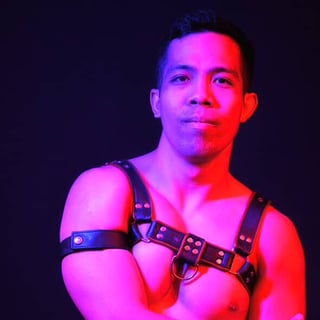
Speaker: That being said, one tiny little housekeeping note. For those listening who may have others with sensitive ears, the listener discretion is advised because we do not censor ourselves. That's right. You've been warned, but enough from us. Let's get this episode started. Hi, welcome back. We are so excited to be talking today with Sir Dion Etz. Welcome, Dion.
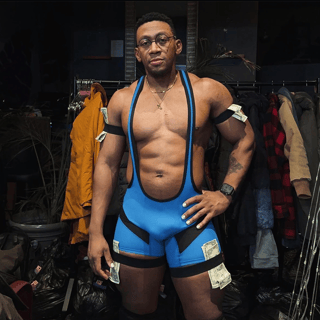
Speaker: Thank you. Thank you. Appreciate it. Glad to be here. How are you doing? It is a rare sunny day in Seattle, so I'm doing really well. Okay. That's yay. Yay for the sun. And you already answered my first question, which was kind of an introduction. So you told us where you are. You're in Seattle. What do you do there? What's your life about? I am a pro dom here. I get paid to make fantasies come true.
Speaker: I really like that definition of prodom. For somebody who's listening and literally has no idea what that is, can you tell us a little bit more about what all that entails?
Speaker: Yeah, yeah. The easiest way to explain it to folks has been to say I'm a male dominatrix. That seems to be what folks can latch on to. The longer answer is I am a BDSM practitioner. I am a top and I get paid to help folks explore BDSM. I love that. So we've talked a little bit about what BDSM is on this podcast.
Speaker: But two questions, one is, again, for the folks in the back row who just don't know, please tell us a little bit about what that acronym is. And then the second thing is, why does somebody need help with that? Why is that important? Okay, okay. There are so many different ways to like flesh out that acronym. Mostly you hear bondage, domination, masochism, sadism.
Speaker: which covers a lot actually that works. And it is...
Speaker: I look at it as playing with the expectations that society puts on you, playing with societal norms. And the reason why it's important that people have someone to guide them through it is because not only can BESM put you in a physically vulnerable place, but it can put you in a mental and emotionally vulnerable place as well.
Speaker: and having someone that knows how to hold space for you and that and yeah having someone that can hold space for you when that happens yeah sorry i'm trying to get these words right don't get them right just get them natural let's just get them out right
Speaker: Having someone that can hold space in those vulnerable times is really important. You can really access some traumatic memories sometimes and you need to know that the person that you're with is safe. Vulnerability is a big part of BDSM and having someone that can handle that is really important. Otherwise, you could have an experience that makes you just completely turn off to what can be an actual healing experience for you.
Speaker: That's deep. That's super powerful. And I know like one of the things that you and I have talked about before is just the idea of just sexual liberation in general.
Speaker: pleasure and then especially tapping into pleasure as a person of color in this country, in all of the countries, let's be honest. So what has your experience been in this work? What are some of the things that you've seen, like some of the freedoms that you've seen people step into? What does this all mean for you? Thank you. I like that question.
Speaker: I've been in BDSM or Kink for over a decade now. I got my start in 2012 in Savannah, Georgia, and it was just very different. I was one of maybe three POCs in what's usually like 20 to 30 people parties or groups.
Speaker: It was weird trying to figure out how to navigate, right? Because you see all these other people with just the freedom to explore and do these things. But personally, just as a POC, as a Black man, growing up in the Midwest like I did, I was very used to seeing other folks, non -POC folks that had the freedom to explore that I didn't.
Speaker: And so to be in a situation where I'm now in this group where I can't explore these things, it was very interesting. It was liberating for myself, but also kind of held back because being the only or one of few POCs in there, it's like, yes, I can explore, but only so far.
Speaker: I can do these things, but I can't get too into them because of this other identity that I'm holding that's not quite like caught up with, yeah, caught up with like this lifestyle. I mean, I remember the first time I told people, it was actually my line brothers, I pledged a fraternity in college. And I remember telling them like, hey, this is what I'm into. And they're like,
Speaker: okay, and kind of moved on. Like, no curiosity, no like, oh, well, what, you know, how'd you get into it? What's this about? It was just like, okay, another weird thing that Dion is into. So yeah, but like, as I got more comfortable in kink and just kind of accept it, like, yeah, I'm just gonna be one of few black folks here, one of few POCs here,
Speaker: And then 2019 I moved to Seattle and 2021 was when I helped to start a king party that's exclusive to QT BIPOC folks, queer trans people of color. And that was life changing that
Speaker: completely changed the trajectory of what I was doing with my kink career and with my comfort in kink. And all the things that I had taken for granted, I'm seeing these people finally being able to experience.
Speaker: Yeah, what got me was the amount of people who were new to kink that didn't feel comfortable doing it anywhere else because of the white gaze. And as a person of color,
Speaker: your very presence can be a kink in and of itself if you're around folks who are, are exotifying you or that's, that's not the word. That is a fetish sizing race. This is all about fetishes.
Speaker: And so to be fetishized by your very presence, I mean, one of the biggest role of pink BDSM is consent. Consent is key. And you're not consenting to being someone's fetish by being there. But you can't turn it off. Like I can't walk into a dungeon and just be like, oh, I'm a white man. Today only.
Speaker: So yeah, having a place where that's not something you have to worry about. If I'm vlogging somebody, they don't have to worry about being hit, being vlogged, having all this
Speaker: Yeah, having being hit and logged in front of folks who don't understand or who will look at them differently or who might react internally differently, like be a bit more turned on because it's this black person that's being hit.
Speaker: Yeah, and especially like after, you know, 2020, where like black trauma was such, such like in the news and everything, we're always seeing black bodies being traumatized. So to be able to explore that without that extra weight,
Speaker: That was, yeah, that was just life changing and just seeing, you know, folks have that comfort and just being like, wow, we can really do this. We are, we're out here. We want to do this. It's just about being safe and feeling like vulnerability is not something that that takes you out of it. Really incredible. One quick note, just for our listeners, if they're new to
Speaker: this lifestyle. What is flogging?
Speaker: Vlogging, vlogging is my favorite form of what's called impact play or percussion play. And that's just, that's hitting someone. Impact play in general is hitting someone. Vlogging is using, it's called a flogger and hitting someone with the flails of the flogger, right? So that's, yeah, that's one part of impact play.
Speaker: And I am personally convinced that Sir Dion keeps his flogger on his person at all times. To keep me personally distracted is my theory on that. Yeah, so. It has to. Well, that's it. I never know who's going to be excited if you're ready for nice little flogging. Regroup. Okay.
Speaker: with so I'll be I'll be the the wrangler with with the fact that you know this is as that man typically says this is a money podcast right yes so tell us a little bit more about the journey with with this the
Speaker: play party that you've created, what goes into that? What financial realities have you had that you're willing to obviously share or comfortable to share? Whether it's someone that wants to say, hey, this is a really cool idea, I wanna maybe start this, or I want to participate in this, what does that look like? From a financial,
Speaker: kind of net framework. That that can be a lot it depends on what your resources are and not even financial resources all the time. We started our party in a studio like a photography studio small studio we had no furniture
Speaker: no spanking benches, which is what you would use to spank someone, or a St. Andrews cross, which is the giant wooden X that folks usually see. Those all help to make impact play or whatever kind of kink play that you might be engaging in possible.
Speaker: And so if you don't have that, then that furniture is something that you need to buy. If you don't have toys, if you don't have vloggers, canes, paddles, rope, wax, electric, play stuff, all of that is another added cost.
Speaker: Because some people, if they have been in the lifestyle for a while, they'll have their own collection of toys that they can bring to an event. But if that's not what you're working with, for instance, my party is called Pleasure Hole. And with that, because there are so many new people who are just like, I don't know what kink is, I don't know what a flogger is.
Speaker: we have to have that for them. So that first, I think our first six months was in a studio and we were able to upgrade and get to another, an actual dungeon that had the furniture that we wanted. And I think it was last year, some folks had gifted us some impact toys so that we can bring those and people can have that to play with.
Speaker: We were probably in the red for a good part of the first year. It took a while to actually be able to, for the party to sustain itself instead of the, there are three organizers and instead of putting organizer money into it, now the party can pay for itself. We can pay for venues. We do a camp out every year. That's another expense, but it's also,
Speaker: But yeah, like, we were...
Speaker: Um, yeah, I mean, it's all worth it. Like none of the organizers actually walk away with any of the money. It all stays in the group. That's a, that's an important note for sure. And I, we're going to, I'd want to dive a little bit more into that too, but if, so let's say one of our listeners who's in your area is like, this sounds really great.
Speaker: What, you know, I'm ready to sign up today. What kind of financial commitment is that for someone wanting to be a part of the group? As of now, the only financial commitment is paying entry into the party. Yeah. As of now, that's it. We're looking at the membership.
Speaker: Yeah, we have early bird tickets. They're like 25 bucks. If you buy it on the day of, it's like 35. We are definitely, we want to make it as accessible to folks as possible. And that's where the low price of entry comes in. I am excited though about the idea of the membership component. I feel like, because that's one thing that I think, and especially as people of color,
Speaker: And especially as people who are doing something that's kind of like new and out there, we do want to make our things so accessible. We want to be an open and safe space for people. And sometimes it means that we do things that are financially unsustainable. And so I'm excited about you having a recurring revenue model that could hopefully allow your organization to grow and to let even more people in, etc.
Speaker: Yeah. Yeah. I have a friend that always is in my ear about that. Like you could make so much money and I'm like, I know, but that's not the point right now. I mean, you know, like Mike and I have said for this podcast, we're like, one day we will have a sponsor who will pay for our tickets to conferences and things like this. But today the goal is to create a platform for speaking. So I totally get here for that. Well, so that being said,
Speaker: Right now, you are a pro dom. You have Pleasure Hole. You have these really great events that you're doing. What else is in your future? What are you building? What is the brand of Sir Dionix all about? Sir Dionix is all about
Speaker: Making fantasies come true. I love in -person work. I love working one -on -one or one -on -two, however many folks are involved, but being able to actually educate folks on kink, show them the ropes, even though I don't do rope.
Speaker: But yeah, to show them how things are done, I really love Hink. And part of that is just knowing the safety involved in it, the way that we communicate, the way that we communicate about safety, about consent, about exploring, playing.
Speaker: That's what we call all of our activities, whether it's impact play, wax play, electric play. It's all play because we're we want to have fun with it. We want to have adult playtime. And so keeping the brevity while also informing folks and letting them know like what the risk is and how to how to approach it in the safest way possible. You know, it's funny because it really makes me think about
Speaker: improv, basically. And I don't know, has anybody had this conversation with you? I don't want to be the dead horse. I don't know if this is like a, okay. No, I'm curious. I took a like,
Speaker: Several weeks long improv class way back in Austin and after taking that You know, I was thinking I was gonna go and I'm like learn how to tell jokes and be funny and really what I learned was a new way to communicate a way to forgive myself for mistakes and
Speaker: Way to be in the moment a way to kind of roll with what was happening around me and way to stay really present and engaged and You know after taking that course, I was like every single person on the planet needs to take improv. Improv is for everyone
Speaker: And I feel like now I'm in a new clique of like sex nerds who are like, BDSM is for everyone. We all need to learn consent. We all need to learn to communicate these ways, you know? But like, am I crazy? Like I think BDSM is for everyone. I think a lot more people are kinky than realize it. I mean, obviously like Fifty Shades of Grey was an awakening for a bunch of folks.
Speaker: But even outside of that, if you're thanking somebody in the bedroom, you're engaging in impact play. If you're choking someone, which I don't, I did not suggest for non -kinky folks or folks just casually choking, that's very dangerous and you don't need to do it. In fact, there's no way to choke someone. So I joke that.
Speaker: I 100 % agree with you because you do not want to touch their airway when you're choking them. And I learned the correct way to choke somebody because of my time in the
Speaker: the military when I learned different combatives because we had to get this, the blood flow. And I'm like, oh, I, okay. Just tuck that in your back.
Speaker: And then, and then it's like someone one time was like, I want to be choked. I'm like, okay. And then they were like, Oh my God, I didn't like cough that time. I'm like, yeah, you shouldn't be coughing. Yeah, there's a way to do it. You want to restrict blood flow, not air flow. Just there's your education for today. Yeah. Yeah. So I forgot where I was going with that, but oh well.
Speaker: Well, so you're telling us that more people are kinky than know it. Oh, really? Yeah. Well, you and I actually had this conversation. I'll tell a quick story. I was at a birthday party for someone in Atlanta who was like a huge part of the kink scene, super well respected. And he kind of just like had all of his people in space chilling. It was like a very just like cuddle puddle, like do what you want to do.
Speaker: everybody here like kind of has a pre -arranged consent situation going on. It's great. But there's one person there who was like super cis gender guy, like super hetero black man. He was very much like, I'm a dude type of dude. You know, we love.
Speaker: But I was kind of having a conversation with him and another person off to the side. And the other person who was there was like, oh, what are you into? And he was like, what do you mean, what am I into? And she was like, what kind of stuff do you like to do? Are you kinky? Do you have finishes? And he was like, ah, nah, I'm regular. I just do regular stuff. And she was like, well, what does that mean? And he was like, I might just do a little spanking. I might pull some hair. I'll do a little bit of choking, just regular stuff. And she was like, that's BDSM. What are you?
Speaker: That's kink. That is all like, yeah, the world has done crazy on it. I do want to circle back to one of the things that you mentioned with kink and BDSM. And I think one of the important parts is that for a lot of people, it's that level of trust and that one thing that I think that we're
Speaker: kind of all as a society collectively not getting it right now is connection because everything's virtual. We're not, we don't have that physical. A lot of people are still working completely remotely. They don't have that physical connection with people as much as I think we need as the species as individuals. And for me personally,
Speaker: What's really funny is I was just talking a bit about this is like a year ago, year and a half ago, I took the BDSM tests, right? The online, like, how do you feel about these things, right? And you can take the short one or the long one. We'll put that in the show notes if you've never done it. It's actually, I love it. It's fun. My first one, my top thing was 100 % vanilla. And I'm like...
Speaker: But over the last year, there's been a lot of exploration, a lot of my journey within polyamory has also really kind of opened up. You don't have to be polyamorous to be into BDSM and Kink, but it just, I feel like because of the both of them being taboo, I think they kind of go hand in hand sometimes.
Speaker: you know, for me personally, the first certain aspects of or things that I find extremely like attractive about kink and BDSM is the is that deep level of trust and connection with somebody that that alone
Speaker: is like I'm also demisexual. So like it's all just kind of playing together that it's like, oh, I trust this person enough to tie me up and me being completely unable to have autonomy of my body. And I'm okay with that. And also it turns me on.
Speaker: Right? And so I think it kind of comes back to that we just a lot of it and why I think this is important for people to explore or look into is because we are humans we need connection and it's just another way to create connection with people and
Speaker: Yeah, it can it can be a lot of fun. Yeah. Bring up a lot of traumas. Yeah, yeah. And that's the thing like you create that trust and yeah, like if you're tied up physically, there's not much that you can do. However, if they're say something is triggered and you need to get out you do have you have a safety latch you have something that you can
Speaker: either say or do, whether it's a safe word or a safe gesture, where it's like, all right, pause, this is where we need to either readjust or this is where we need to stop completely. And then that's also like, if something traumatic does come up, it's good to know that like, in this space, if something comes up, I say this, I do this and it stops. I don't have to keep going with it. I don't have to let this affect me and re traumatize me. I can actually stop.
Speaker: which is part of the healing power of kink, where you're able to go into something in a more safe way, knowing like, okay, I can explore this, I can kind of feel around and it's darkness. And if I grab something that I don't like, I can let go and get out and turn lights right back on. Right? Yeah. Funny, you should mention that I just had a conversation two days ago with one of my partners about who's a lot more
Speaker: experienced in this world. He doesn't have a safe word necessarily. Or he uses, there's red light, green light, red light, yellow light, green light, blue light. So, and this was mind blowing to me. So red light is full stop. I need to, we need this. We cannot go any further. Like yellow is proceed with caution.
Speaker: green is keep going and blue is keep going but more. Like the blue one was really kind of, I was like blue, what's blue like? And it's like, oh, you want me to keep going and you want more, got it. And so that was a really cool kind of like,
Speaker: I guess you would call it like a safe phrase because it's a temperature check on where you're at. And you can, either person can kind of, if that communication is there and you both understand what they mean, it can be really beneficial as you're exploring those things. Well, and I'm just trying to imagine. So it's like, are you in session just like, blue light, blue light, blue light? Or is it like a check -in situation? I think it can be either. OK.
Speaker: It really, I think it depends on the, what you're doing, the, the dynamic and.
Speaker: Yeah. And it's kind of funny because there's so many different ways of communicating, like in relationships with anybody, whether it's kinky, platonic, romantic, familiar, communication is key. And being able to communicate is like essential. And it's kind of like twins, where it's like twins always seem to have this like unknown language that's just between them. That's what kink is.
Speaker: If I'm just randomly playing with somebody and they're like, blue, blue, and I don't know that that means anything, it doesn't mean anything. But if they're with their partner and they say that, it has meaning and you know how to proceed, right? So it's, and I mean, that's just one of the things I love. And part of the reason why it's so important is because the stakes are high.
Speaker: Like I said at the beginning, you can really hurt someone. You can really put someone in a dangerous situation, potentially a fatal situation. Knowing how to communicate and being able to do that and having the trust in that person to know that they're going to hear you, to know that they're going to respond to what you're communicating. I mean, that's what changes everything.
Speaker: Well, so with that said, if you are entering into a new relationship with somebody, so like, if you know that you're a kinky person, and you know that these are the things that turn you on, and these are the things that you want in, you know, relationship, in physical intimacy, etc., but you're with a brand new person, what does one do to establish all of that trust? Because it's a lot. It is a lot. It is a lot. And it's something that takes time.
Speaker: I mean, if you want to, we can do a mock negotiation where we could talk about play. Let's do it. I'm here for it. Okay. Okay. So, so Bevin, what's your experience with BDSM? Um, I,
Speaker: have been, I guess, in the scene for about two years. I've been, you know, a bit of research before that, but I would say, like, I threw myself in whole hogs. So I won't say I have a ton of experience, but I'd like to think that I've got a decent amount of knowledge. Do you have any experience with any certain types of play? Impact and bondage.
Speaker: light bondage. I haven't been completely restrained, which is on the top of my list. Just throw up, you know, manifesting for the universe. And that's honestly about it. That's about it. So when you talk about the bondage, are you talking about rope bondage specifically? Or are you into gadget bondage? I don't even know what gadget bondage is.
Speaker: Okay. So that's like cups and chains. Okay. If that's something that I am into, I don't know. I would be interested in exploring, but I don't have experience with that. Okay. Okay. That sounds like it could be a soft one. I don't know. When I imagine it in my mind, nothing comes up emotionally, but it's just something that I would want to
Speaker: trifers. Proceed with caution. Exactly. It's a yellow. Yeah. Yeah. That would be, I would consider that a soft one. Okay. So I'm into impact play. I'm really into impact play and I have floggers, I have kings, I have a paddle and I have some other impact instruments. Have you, what's your experience with impact play? So I have had experience with floggers and paddles.
Speaker: I have had a very short experience with a dragon tail, which I was not a huge fan of. That might have to, you know, other than that. So I don't have experience with canes or really much of anything else. Okay. Okay.
Speaker: And how do you feel about your pain tolerance? Do you think you have a high pain tolerance, medium? I think I am probably low to medium. Low to medium. Okay. Okay. I mean, that all works out for me. I think we could probably have a pretty good scene. Are there any parts of your body that you don't like to be hit or that you would prefer I avoid when doing impact play with you?
Speaker: Well, I know that you're a professional, so you know what all of the red zones are, and I'm not worried about that. However, beyond any strictly dangerous place, not really, actually. I have become a lot more open to all of the places with appropriate amounts of impact.
Speaker: I'm a sadist. I enjoy hurting people. However, I'm also a sensual sadist. And so there can be pleasure that's mixed into that. When I add sensuality to it, it's usually touch, usually maybe stimulation, definitely groping, grabbing. How do you feel about that? I am very on board with all of those things.
Speaker: Wonderful, wonderful. Well, yeah, I think we've covered a few things. As far as safe words go, I just use the light system. So yellow is to kind of pause, readjust some things. Red is if you need to stop immediately. Like there's something wrong for whatever reason you want to bring an end to our session. Does that make sense to you? That does. May I make a safe word request? Of course.
Speaker: So the word that will likely pop out of my mouth if things need to stop is tailwinds. Can that be my red safe word? Of course. Thank you. Wonderful. Yeah, that would be like a pick up and play kind of negotiation there. Okay, so this is like literally if I'm like at a party and I see somebody that I would love to do something with
Speaker: That's us establishing trust in a short amount of time. Right, right. In a romantic relationship or any kind of play relationship with a play partner, those conversations, like that's a good foundation, those conversations are usually a bit longer because what you're doing is going to be a bit more involved.
Speaker: the way that I play with somebody at a play party is going to be very different than someone who I've been playing with for six months. Right. So, so yeah, like that's a good foundation to start with, but those conversations can go a lot of different places. No, one thing that you actually wrote in our like getting to know you
Speaker: information here before we did our podcast was, um, in call and out call space. And I've actually never heard those phrases before. What is that? Okay. So, uh, an out call space, uh, or an out call would be if I went to a client, uh, say it's a client that I've already established some sort of rapport with, and they have maybe a dungeon space in their home or somewhere else that they'd like to meet.
Speaker: then that's where I would go. An in -call space is having my own space. Fortunately, in Seattle, I have a dungeon that I work out of, and so folks come to my dungeon in order for us to have something. So interesting. I thought we were talking about a mental space, which is why I felt like that was the segue. So this is pertaining to your business as a pro -dom,
Speaker: So really being like a practitioner, like a hands -on BDSM practitioner, like basically you're a therapist, right? Just with a different modality. Don't tell them about that.
Speaker: I mean, I have not licensed. We're the same thing. So, so we joke about that is a that is a common thread joke between Bevin and I and the line of work that we do as well because money is so also emotional and taboo that you know you draw that line of educator
Speaker: and knowledge versus let's talk about why you're feeling that way because you can't just talk about, well, you need to do this, right? Like this is how this works. It's like you need that element of emotional
Speaker: unpacking if you want to call it to be able to I'm sure you you I'm sure that is very similar to the work that you do in terms of when you are if you have a Newer relationship with somebody that's coming to work with you. There may be times where you need to talk through If something happens during a session or something like that so I'm sure you you understand that feeling of like I need to ensure that I am
Speaker: educating and supporting, but staying within my confines of what I can do. Right. Yeah. Yeah. And that's that's a really important part of it. And that's also where you put your ego aside and put your pride aside. The client safety is much more important than your ego. And until you can really grab onto that, there's your ceiling for success is very low.
Speaker: When I go into session, I may be in the mood to really well on someone, but if it's someone that has a low pain tolerance and they didn't ask me to well on them,
Speaker: then what I want doesn't matter. It's like going into a McDonald's and they're like, here's your Big Mac, buy. And you're like, I wanted a chicken nugget. Can I get a fish filet? No, I just want you to have a Big Mac. That doesn't work. And so it's the same way with what I do. Well, so that actually
Speaker: That brings me to a question that I've been mulling over. I haven't had a chance to really talk to anybody about it yet. And with this work being so intimate and so personal and really being one of those things that I think a lot of us think like we're supposed to be able to figure out on our own that we should be able to just like do with
Speaker: a romantic partner or whatever, or a lot of people are like, well, there's no way I would pay for that because it's, I'm cool enough, I can go get it on my own or whatever. And so when it comes to the fact that this is something that you would potentially do with a partner and something that you're doing professionally, how do you create those boundaries? What are the rules?
Speaker: as far as like how far I would go with someone or like the... So I mean, you know, kind of back in the situation that we were talking about before. So, you know, as a pro dom, like obviously like you have a whole website that people can go to and they can like book sessions and things like this. But also like presumably you go out to the bar or the club or you go to a play party and maybe you see somebody that you want to like do, you know, have a session with.
Speaker: how do you kind of like decide when you're on and being professional, like when you're just having fun time, like how does that work?
Speaker: Yeah, it depends on the place, really. When folks contact me, especially via my email address or my website, then I know that's professional. And I know some folks will contact me wanting something more personal, like Instagram or something. And my thing that I've been having to learn as a professional and as a business owner is how to
Speaker: how to differentiate what's community work and what's professional work. My work with Pleasure Hole, that's community work. That's something that I don't expect to get money out of. However, at Pleasure Hole, if I'm flogging someone and I want to offer them a session, I'll have my business card. I'll give it to them. I'll let them know, hey, if you want to do something outside of here, this is how you contact me.
Speaker: If I'm at another, there's another play party that happens out here that I'll go to, and that's, yeah, more community kind of stuff. But if it's like a personal party, I'm not talking business. My real weakness, honestly, is charging people I'm attracted to.
Speaker: I'm like, wow, I could probably make more money if I would just like charge these folks instead of just be like, oh my gosh, you're gorgeous. Let me hit you. Um, the, the bourgeoisie is at it again. The bourgeoisie is at it again. Pretty tax. Pretty tax. Pretty tax. Yes. Yes. Know your worth. And your crowd. Um,
Speaker: Sounds like you need a business coach. Hmm. Hmm. Where could I find one of those? Let's talk. Who could possibly help with that? I don't know. I don't know. It'd be nice if that person would like come to Seattle or something. It could help me one on one.
Speaker: But, you know, just putting that into the ether, put that out there. Yeah, indeed. Also, we've been talking for a while. This is not necessarily the last question, but I wanted to make sure to get this one in before we do wrap up. I'm gonna start close all the way back to the beginning. This isn't about business or money, but you did mention that
Speaker: when you first, I guess, kind of came out as a kinky person to your Lyme brothers, and I happen to know that you pledged a historically African -American fraternity. So they're like, oh, yes, you did. They're like, oh, here's Dion. What did you say, Dion? Dion? Go ahead. Let's let you know. So their reaction was kind of like, oh, here's Dion doing this weird thing again.
Speaker: And I have had a similar experience and then, you know, Black folks, we're not always like exploratory people. And so I just wanted to get your take. Like, what is it that holds us back from being okay with like letting our freak flag fly, you know? Like, what's going on? It's like the number one reason is shame.
Speaker: especially when it comes, especially when it comes to black men.
Speaker: there's a lot of shame that can be there. And when there is shame, it's a lot easier to grow in isolation, as opposed to growing in community. And so it's not that reaching out like, hey, bro, I'm really into this, what do you think about it? Because we've already decided in our heads, like, if I talk to this guy about it, he's probably just going to make fun of me or like not understand, or I might be excised from the community.
Speaker: And so getting over that shame is a big part of it. And the desire to connect with others, the desire to grow in community, that's got to be there. And that desire is there. I mean, that's why there's so many Black folks in church. That's why there's so many Black folks in D9 organizations. It's all about connecting. It's all about community.
Speaker: Knowing that there is a community out there, that's probably one of the bigger hurdles as well. I didn't know. There's a leather fraternity that I'm pledging. Actually, by the time this comes, I'll be a full member.
Speaker: But it's called Onyx, and it's a queer leather fraternity for POC men that I didn't find out about until I moved to Seattle. And once I moved out here, I'm like, wait, this exists? I haven't had to do this alone this whole time. I could have been around people who understand and get me.
Speaker: And it was just like a light went off. I was just like, okay, that's who I need to be with. That's who I need to plug in with. And I mean, even in my pledge process with Onyx, that's been just amazing. It's been affirming. It's been
Speaker: all these things. I can't say enough just how positive that experience is, but it was finding out that that exists that even got me out there and got to it. So yeah, I think shame is a big part of it and just access. And I think we're also
Speaker: We are so stuck in what a black person is. We're so scripted in what we can and cannot do. And getting out of that, I mean, that's a whole mindset thing that you've got to get out of in order to be able to have that freedom to explore, which we're finding. I think it's less of a thing now than it was 10 years ago when I started. Every time I say that, I feel so old.
Speaker: But it's also like with that time in, I've been able to see a change in growth and see how, I mean, even like, what's his name, Sir Leeses, he has a lot of viral clips out there of him doing impact play at these events. I think I want to say like, do you see yourself?
Speaker: But that's someone who's gone viral doing kink play as a black man. You have King Noir, who is very much into kink. You've got the Naked Trumpeter also into kink and topping and all these things. So we're out here now and with Instagram, Twitter, that you can see us. You can see people and we're getting more exposure.
Speaker: that has to keep happening. We have to keep growing. I think the people who are leading the charge need to be seen more. And the people who've been out here in these environments, being the only POC, being the only person that's doing this, like we want to invite more of us in. And that's the thing, it's just about getting the word out there and showing people like, hey, we're here, we're doing this and having fun, you can too.
Speaker: As I say, representation matters, right? Yes. That is literally why we started this podcast. That is the mission of this podcast is to, especially because, you know, money and sex, you know, both are so taboo.
Speaker: You know, we only talk a lot of times. It's only like, you know, there's one way to do it. There isn't. So giving, you know, people of your, in your community, like you a platform to just speak about it, to hopefully reach someone who is like, oh, I'm actually into this. I need one second. I'm sorry. I, my, my iPad's about to die.
Speaker: I want to make sure that doesn't happen. All right. And we are back after some slight technical difficulties. Very slight. But yes, I did have one almost last question. And so I know that you are like the leather community is very big for you. Obviously, as you said, you're pledging this fraternity. What is the leather community? I don't know. I don't know anything about that side of our world. Please explain.
Speaker: Yeah, leather is, I mean, it's the gay male community that is, gosh, it's like, kind of the super, like, almost machismo, masculine, sect of, like, gay men, where, yeah, I mean, if you've ever looked at a Tom of Finland
Speaker: picture or drawing. That's where we got our start, honestly, with leather. It's the uniform. Because there is a difference between leather men and kinky folks. There is an overlap, but it's not. Just because you're into leather doesn't mean you're kinky. Just because you're kinky, it doesn't mean you're into leather. But yeah, I feel like
Speaker: Yeah, my experience with leather being a leather man is just, yeah, I don't know, like that's the, that's definitely the aesthetic that I was initially drawn to when it came to my queerness.
Speaker: I remember seeing Tom off in the drawings and just being very uncomfortable because I shouldn't have been feeling like that. As a good Christian boy, I was. And then coming into terms with my queerness, I'm just like, damn, that is...
Speaker: that's what I'm into, like that's that's what I'm attracted to. And so I went to a leather weekend in Northern California over the summer and it was just it was a bunch of queer men and doing the things doing all the things and it was yeah like that was one of the most affirming experiences I've had. I would also say
Speaker: As someone who has also dabbled, as in I have a harness or two. There you go. Maybe some restraints too. Or as we jokingly call them, friendship bracelets. There you go. I think there's also there.
Speaker: in the leather community for those that are not in it. There are also sub communities of it. I alluded to earlier, one of my partners is in the pup community, which is huge in the queer male leather scene.
Speaker: not every it's like rectangle to square right like not every person that's into leather is into putt but it's kind of like most people that are in pup I believe I don't want to speak for the whole community but are also into leather because a lot of the they wear the hoods which are leather typically or neoprene depending on material but it's those are kind of intertwined and a whole nother
Speaker: sub -community that I'm tertiary to, not interested in being a part of, but interested in learning more about to be able to support my partner and their partners because it is something that, you know, a few weeks ago we were trying to figure out plans for the weekend and he's like, hey, I'm going to this
Speaker: Lobo event, which is like leather pup night at this bar. And I felt, I was like, I mean, I want to go, but like, I don't know. I ended up going after, kind of like after the event started.
Speaker: And it was just really, it was a really cool experience because, you know, it's just another level of community and pink. And there's a whole, you know, aspect of, of, um, customs and courtesies and things that go into the pop community that have been really.
Speaker: interesting to learn about and I'm not going to speak on it because I am not an expert just to know that it exists. That's one thing that I forgot to mention actually is protocol. Leather, at least old guard leather, very much into protocol which are essentially like the rules and
Speaker: I mean, it's just having manners, honestly, but also just in a very much more structured way. One thing that has been life changing for me is this book, Black Men and Leather. This is part of the reading that we did for Onyx. And yeah, I mean, it just, it places black men in the, you know, like leather history,
Speaker: in a way that I've not seen before or heard of before. And so, yeah, I mean, it's good to know your history, right? And knowing that this isn't anything new for us. We've been in this community. We've been doing this. It's just about time that we are out and doing it in a more visible way. Yeah. That's awesome.
Speaker: Oh, I was just going to say one really cool thing about that event is they, and it caught me off guard, but they had, when you walked in and had your ID checked, they then handed you a pamphlet and said, what color bracelet do you want? It was a consent bracelet. And wild. Just, I was like, I've never experienced this where it's like, that felt so
Speaker: good going into an event that I didn't necessarily know if I would be comfortable, but instantly felt so much more like, okay, this is my, this says you need to ask if you want to touch me. Right? Like, right, right. So anyway, they had different they said, you know, is red, like green, like yellow, basically, it was like green is you're free to touch me how you want.
Speaker: Yellow is please ask me before you touch me. And red is please do not touch me or ask. I will initiate if I want to. So that was really, really just such a simple, easy thing that I think regular bars should include, to be honest. Because sometimes I want to go to a bar and I don't want to be
Speaker: like approached or talked to. Like sometimes I just want to go for me, but sometimes I want to be approached. I want to be, and I feel like that's a practice that we should just have. It shouldn't just be for, you know, leather, kink events. I think it should be for for everybody. So well, the thing that's just so great about
Speaker: learning more about this community, these myriad worlds, is that there is a lot that we can carry over and say, hey, guess what? We figured out a way to do a complicated thing. Why don't we try this in this other space? So I love, thank you for sharing about the letter community beyond. And I love just this idea that there are these safe spaces for people to celebrate themselves, to celebrate their history, to feel
Speaker: whole to feel seen. I think we just have to have so much more of that. Then again, you find your place where you've got folks who look like you, feel like you, but then I think as long as we're taking from those worlds and bringing them into other places and continuing to meet and reach out and create a whole big complex organism, then we'll be doing it right.
Speaker: I wholeheartedly agree. Like I said earlier, the level of communication that's necessary to be successful in these lifestyles, it helps you just as a human being. I can communicate much better now than I ever could back when I was in college or something. Even when we met, the conversations that we had were essentially very direct.
Speaker: what we're doing, what we're there for, and it led to some great connections. Connections. So one last question for you. No follow up on that.
Speaker: But the last question that I would like to ask is one that I like to ask a lot of our guests. And it's kind of going back to this idea of, well, actually, I'm not going to preface it. My question for you is, what is the future that you would like to see? And whether that's for you as a human being, you as Sir Dion, or for the world at large, what is the future that you're envisioning?
Speaker: I want a future where everyone is covered in leather. But seriously, for me, I am getting into sex education and kink education. I did my first Impact Play workshop not too long ago, and I'm going to continue building on that to make it a complete series.
Speaker: So I would like to be traveling to different cons and presenting there. I definitely want to do more in -person work. I'm actually getting into making content as well. So I've got a lot of things personally that I'm delving into. And I just started working at a leather crafting shop. So now I'm making
Speaker: I made actually some collars yesterday and making restraints and everything. So I'm really like digging as deep into leather as I can to be what I see as like a complete leather man. So yeah, like that's, that's, I guess on the macro level and just on a bigger, anyway, on a bigger scale.
Speaker: I do want to see a sexually liberated world. I want to, I mean, when I was at the Sex Down South Conference, all I could think of is, wow, I wish the world was like this. I wish we were all just walking around happy, naked, talking about all the things. There were no concerns about anything. Everyone was just enjoying themselves and having fun.
Speaker: Yeah, like that's the kind of environment. I remember being a kid and just thinking like, damn, I'm never going to be around a whole bunch of black people at a sex party because there's not enough of us that are interested. And to go from that to now leading a sex party that's full of black folks. Yeah, like life comes at you fast. That's a good vision.
Speaker: I'm gonna throw out one more thing too. So yes, Deanna and I did meet at Sex Down South, which was a life -changing experience. And it was a queer, multicultural, nude sex party. And also it was a place where when conflict did arise, it was met with compassion, care, and very clear communication.
Speaker: And I would like to think that most of that was because this was a group of people who understand BDSM consent. They understand these things. Like these are folks who have experience in and have studied these practices. And I mean, I'm going to shatter from the rooftops. I think everybody needs BDSM in their life. And I think everybody's improv in their life and everything would be great. Everything would be great.
Speaker: Yeah, yeah, it was definitely more about calling people in than calling people out. And that's as a community, that's something that we try to do. You're not going to have folks that are continuing to invest in your community, if all you're doing is pushing them out and shaming them. Absolutely. Yeah, Mike, you got anything else? No, this has been this has been great.
Speaker: If you've enjoyed today's episode, please don't forget to rate, review, and subscribe. That's the easiest way to support our show. We hope you took away a new nugget of information or perspective today, and we're grateful you took the time to listen to us. Until next time, bye. Bye.