Transcript
Speaker: Welcome to season four of Two Buy Guys. I'm Rob, and I'm excited to announce that our very own podcasting platform, Zencaster, has become a new sponsor of the show. If you've been listening for a while, you'll know that we started this podcast before the pandemic. Season one, we recorded in professional sound booths. And that sounded great, but not only did it become impossible when the pandemic hit, but it was also super expensive and unsustainable.
Speaker: So for seasons 3 and 4, I have been using Zencaster. The main thing I was looking for was audio that would record locally in the room with my guests. All of that gets taken care of now by Zencaster. I just meet my guest in a Zencaster room. It's like a Zoom room, but better. We record there, we can see each other, we can record video if we want also.
Speaker: And then Zengaster post -production puts it all together for me. They take the local audio from each person's computer, they compile it, they sync it, they do some sound mixing and sound editing. So it's super easy for me to download, use it, and upload it, or edit it myself for content if I want.
Speaker: I want you all to have the same easy experience I'm having. If you are thinking about starting a podcast or thinking about recording meetings you're doing or interviews you're doing of any kind, I highly recommend Zencaster. And if you go to zencaster .com slash pricing and enter promo code 2BUYGUYS, all one word, you will get 30 % off your first three months. That's Z -E -N -C -A -S -T -R dot com slash pricing.
Speaker: promo code 2byguys. It's time to share your story with Zencaster. Hello and welcome to 2byguys. I'm here today
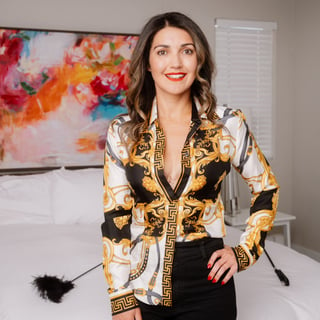
Speaker: With an author, another bi author, there's so many new books coming out this year. And last year, last season, we interviewed Jen Winston, who wrote a bi memoir, and Vanit, who's writing about bi men. And today, we have Anna Kuchakova. She is a Russian -born Australian author and poetess, social media strategist for nonprofits all over the country.
Speaker: and a passionate bi activist based in Sydney. Anna is the creator of the Bi and Prejudice Instagram space, which is how we connected, which helps celebrate multisexual attraction and human diversity. And her book of the same name, Bi and Prejudice, just came out last October. So welcome to Two Bi Guys, Anna. Thank you so much for having me. I'm so excited and it's so wonderful to meet you and to actually see you.
Speaker: Yes, after all this time of communicating via text, it's nice to see your live face in person. It's a little blurry right now, but I get a sense. Technology. We hear. I love it. Indeed.
Speaker: Indeed. So I got a chance to read some of your book, the sample that came out before it was actually published. And I'm eager to get into your story because it's very different from mine and many people we've talked to on the show. But then you notice all these very clear similarities that a lot of bi people go through. So before we get into it, why don't we just start by telling me how you identify and how you came to that identity.
Speaker: That may be a long question to how you came to it, but start with how you identify and why, I guess.
Speaker: I identify as a bisexual cis woman and it was a long journey getting to that term and to that specific label because I didn't know it existed for a very, very long time. But I ended up sticking with it and really, really loving it actually because bisexuality has a really bad rap. I think just a PR marketing department is gone and nobody's doing the work.
Speaker: And I really wanted to actually stick with that. And then when I realized that the definition is a lot more expensive than what I thought was initially, I'm like, yeah, of course I'm sticking with that. That sounds perfect. And I'm going to change and shape it and adjust it to what I believe bisexuality is. And that's why I continue encouraging people to ask that question. So how do you identify and what it means to you? Every single time you meet a person who identifies as bi plus.
Speaker: That's so interesting already, because people make so many assumptions about what bisexuality is and what it means. And non -bi people, I just hear that over and over what those assumptions are. And I think, to a certain extent, I had been making those assumptions before I came to it. So I guess the logical next question is, we interviewed Robin Oakes last season. I tend to gravitate towards her lovely definition. But what does bisexuality mean to you these days?
Speaker: Yes, I love Robin Oaks definition as well. It is very close to my heart as well. Absolutely. I think it is actually one of the first definitions that made me feel a lot more accepted and included into the community itself. I did not feel connection to the community for a while. It took me some time and it took me some time of trying on, like literally trying on and see how it feels, those different definitions. And Robin Oaks was the first time when I felt
Speaker: Oh my God, that lending really well. I really love it. So I definitely include and always love to include all gender expressions and all sexes into the definition of bisexuality, but also asexuality and also aromantic people. And because I feel that bisexuality has so much conversation around sex and sexual act and proving it and
Speaker: explaining that and not so much about platonic and not so much about friendships and not so much about other emotions. Maybe we don't have enough words to label yet. And I want to include that as well. And then in conversations with people, I
Speaker: started to change even that more because somebody would say, well, I don't identify as bisexual, I say bye, and there's a difference for me. And as I'm learning those nuances, I'm including a lot more into it because it resonates with how I feel. Every time I have any experience, I'm like, oh, I have to add this in. So I think I wanted to add
Speaker: romantic and platonic emotions and connections into bisexuality and different levels of it, because there may be sexual attraction to one sex or one gender expression specifically, but less to another, or it may completely change next day.
Speaker: And I wanted to include that fluidity. And fluid is probably actually one of my favorite labels, but that requires always a lot more conversation. And I want to start with bisexuality because it's a little bit known than I think fluid, and yet also has such a bad rap. So I have an opportunity to talk about it every time when people are like, I can see on their face, they're a bit unsure. And I'm like, oh, this is an opportunity. Let's talk.
Speaker: Yeah. So I mean, you name the Instagram page and the book by and prejudice. So I think it hints to a lot of the prejudice or assumptions people make about this. So when you do try to explain this to non -bisexual people, what kind of assumptions do you hear most often? And how do you counteract those? Yes. One of the first and main things that I hear is I actually heard a friend
Speaker: and telling me how she was having conversation with her relative about me. And she said to her relative, oh, Annie's bisexual. And the question was, what by what? What are you talking about? And they are from Eastern Europe as well. And I think like in Russia, there's just a bit of a lack of understanding of that and a big lack of understanding of that actually. And my friend said, well, you know, when she likes men and women,
Speaker: And I thought, huh, okay, well, there's one definition. And I let it be there and I didn't even touch it at the time. And I thought, huh, is that what people thinking every time when I have a conversation with them? And that was one that actually hurt me probably the least because before that, when I mentioned having attraction to different gender expressions, I didn't even say bisexual at the time. I didn't use the word. Somebody asked me if I'd be interested to share all the crazy sex things that I do.
Speaker: And I was so confronted in that moment, like, is that, are those two related? Am I meant to? Oh my God, I don't have anything to say. Do I have anything to say? So I thought of all those ways that probably I now instantly need to fit in, but none of those were my definitions. And it was just all about hearing all the weird things I do, which apparently identify with having attraction to other people.
Speaker: Oh, sorry, people of different genders and sexes. That was actually one of the first things that I heard. And another one which was very interesting and was very recent is somebody telling me that if you are attracted to multiple genders, then your life is a lot easier because you can get over people really quickly. You have more options. Super easy. I'm thinking, people are so challenging though. But what a quick fix for relationships, just be bisexual.
Speaker: You're just open to then more conflicts with people and more potential good and bad, but every person is a person. Yes, so it does not shortcut into good relationships at all. Absolutely. But it's interesting that it was about me having more opportunities because I could date
Speaker: different genders. And the personality and the people's experiences and traumas and other things just don't come in at all. That is not the conversation.
Speaker: Right. I mean, I guess if you live in a small town where there's only a handful of people, single people your age, maybe that, then you have more options if you don't have any disqualifiers. But most places, there's more people than we're going to have time to develop relationships with. So it's always a weird line of argument.
Speaker: I also am curious about what you were talking about with friendships and the asexual spectrum. How do you think your bisexuality affects your non -romantic or non -sexual relationships, but other types of relationships? Yes. Personally, I feel like I have an open space. I feel like I have a lot of acceptance and I notice a lot.
Speaker: And I love to blame bisexuality for it. It's possible that it's part of my personality. And I remember my former business coach and my therapist, they both were always telling me that my gift is curiosity. I just want to know, I want to ask questions. And even when I encounter those odd opinions people have of bisexuality, I'm often feeling hurt and curious.
Speaker: I'm often going back and like, what, why do you think so? And with other relationships, I'm just curious to see whether there is more other styles and forms of relationships. And to me, it feels like connection to the world and connection to different people entirely regardless of their sex or their expression. Because other things matter and affect my attraction more, I think, than sexuality.
Speaker: And sometimes when I'm finding it difficult to distinguish whether that's friendship or romantic, how am I feeling in this particular moment now? And it kind of blurs for me a lot. And there are other things that contribute towards that. It is not because I've got one particular sexual orientation, but I have past experiences, I have traumas, I have so many other things that shape and form this, that just having it
Speaker: just putting it down to sexuality, so limiting and inaccurate. And I believe that also different levels of friendships or platonic connections could be part of that sexual orientation as well.
Speaker: And maybe that's why sexual orientation is not such a good phrase because it has sex in it, but I want to add relationships into it. Like my friend often says, I'm super straight, but I just think that women are so beautiful. And she finds same sex relationships are beautiful. And like, she's so queer inside. It feels so queer to me. And she says, but I'm super straight. I'm just not interested in the sex part.
Speaker: And I thought, oh, that's right. But you don't really have to. Even though I'm never going to, of course, identify as high as bisexual, I will always let that person tell me who they are instead. But to me, it feels like, yay, welcome to CLAB. That's just part of the human condition and all our experiences we have. And to me, it's very bisexual.
Speaker: Yeah, I couldn't agree more. I have friends like that too who, since I've come out, they have not. They're straight, but I feel the relationship has shifted or queered in some way and allowed us to connect on a deeper level. It's not sexual or romantic, but my bisexuality did kind of open up space to
Speaker: be more emotionally connected within a friendship or within a family relationship. And I think people have listened to this podcast since season one will know that I resonate with a lot of what you were saying about the blurring of lines between those relationships and also about curiosity. I mean, I think that is a core part of my bisexuality is I was always curious about myself and about other people and what
Speaker: was going on in their head and what drove people and like, why is the world the way it is? And why are we taught the things we're taught about gender and sex? And I kind of think my curiosity really led me down this road in my late 20s. And like, if I hadn't been curious about the thoughts in the back of my head, they would have stayed back there and I never would have come out. So yeah, it's very intertwined for me too.
Speaker: Yes. It's interesting you mentioned at the beginning how your straight friends didn't come out. Why don't they? Straight people never come out because I think once they're born, everyone assumes that everyone is straight. And then we have to wait to actually come out almost like every day. Every time I get coffee from a new coffee shop, I'm coming out again.
Speaker: Yes. The straight people don't have to come out and don't realize what that's like, I think. It's hard for people to understand the ways you'll get biphobia or in other people's cases, transphobia when you either have to come out every time or face that. Yeah, it's difficult.
Speaker: Let's go back a few steps. We've covered a lot already. But I want to hear about how you did come to the identity, and especially because you grew up in Russia, and you wrote in the book about growing up in a pretty conservative family. Maybe there's a lot more conservatism there, and kind of being exposed to certain things without even noticing it for a while.
Speaker: racism and homophobia and pro -authoritarian views and stuff like that. So talk about what that was like and how you eventually started to notice those things. Yes, growing up in Russia was very, it's like living in the box almost literally because you've got walls closing in around you and
Speaker: There's one opinion almost, and there's one view, and it's very difficult to look outside of it. For a while, I believed that dictatorship is actually the way to go, because the only way you can make things work or get things done is to hurt all the cats and lock them in the gate somewhere in the room.
Speaker: done. So just dictatorship or and that's how I saw monarchy even. And I thought we just need a Tsar. And we've always had a Tsar. And I believe that. And I think the racism that I was observing, I found my peers in my community or the place where I was growing up very racist.
Speaker: and quite openly racist. And a lot of the times very proud of being racist because there is a very strong distinction between us and them. And they are, they're loving it. Everyone around me were supportive of that view. And for that reason, queer community, I couldn't even see it. It didn't exist. And I didn't even feel the need to
Speaker: qualify myself or give myself a label of any sort. Because all of my experiences felt like that's what straight women do. Because I think there was a lot of hatred toward homosexuality specifically. And there was really nothing said about lesbians. But I was still very scared to be mistaken for a lesbian. And I didn't have any other definitions or any other labels.
Speaker: only two, there was a gay man or a lesbian. And people were mostly making fun of lesbians because what can go wrong with a cuddle? That's really how it was seen. And a homosexual man, that was, of course, scary, it's provoked, it's wrong. And
Speaker: we had this story of hosting two friends of my mom's best friend, friends. It was a gay couple and the two men who stayed with us, it was just a massive secret. And I wasn't to tell anyone and I actually haven't till I wrote the book. That's the sort of first time I was actually talking about Out Loud. So it's a bit terrified, but nobody was to know. I don't even remember what the men looked like because I was so scared not to sit too close to them, not to tell anyone.
Speaker: And everyone was whispering about them, just so that neighbors couldn't see, don't tell your friends, stay home, don't go anywhere. It's a big event happening. So all I remember this nervousness around just meeting two people. It felt so crazy, but it was also all I knew. So it was sort of normal, even though it felt odd. This is so confusing to be in a space like that, when you know that this is just a human being, and yet you're meant to be terrified of them.
Speaker: and fear them and stay away from them. So I didn't even notice and didn't even know where queer community was till I moved to Australia and after a decade of living here, I met people who told me that they used to go to Russia back even in the 90s and would go to gay underground clubs and how welcoming and amazing people were. And I felt like, what happened? I missed all this. I've never heard of this. This is the first time I hear it. I need to go back and find it. And I haven't yet.
Speaker: But when I did go back after leaving for about 10 years in Australia, when I did go back, I just looked at the people and I could almost tell. People felt queer, people looked queer, and I could tell how nobody else could see them. It is such an invisible place. You can hide there so well. Even if people were covered in tattoos or they had green hair, which is just not something Russians would do. But if they had all of this, they could have even had a little rainbow pin.
Speaker: it would not be noticed. I think Russians would just look through and not even notice it because we have this belief that queer just doesn't exist. We don't have it in Russia. I think that was actually an interview with Putin, one of the American documentaries, where he was saying, this is just something we don't know, we don't like, we don't want, so we don't have it in Russia.
Speaker: And this is almost a political stand of a country. So no wonder I didn't have any labels for myself at all. And all my experiences that I had over my life, I would just put them down to, when you're growing up, you try things, they don't mean anything. Maybe that's what women do. It's just part of being me. Maybe I'm a little bit like a crazy wild person and it's appropriate for women to do. Men desire that. So I'll just do it. I think it's fine. And all those thoughts. And I just stayed with that.
Speaker: And it took me it took me leaving Russia and living for almost 10 years in Australia before I actually could claim bisexuality to myself very cautiously and carefully and still unsure. But I heard about it probably my second or third year into living in Australia. I finally heard the words. So would be my mid 20s.
Speaker: And I thought, wow, I need to research that. What is that? And of course, the first opinions I heard were around mixing bisexuality with being a cheater and being unreliable. Those were the first things that came to my mind. And I thought, I don't want that. No, thank you. I was terrified to be called lesbian. Now I'm going to be called a cheater all the time, just by default. No, thank you. So I'm going to stay with straight. And so I did for a number of years. I just decided to be straight, but I
Speaker: would occasionally make out with women and men love it. So it's approved. It's accepted. I'm just going to do that. It's very safe. And I just stayed there for years and years and years.
Speaker: Yeah. Again, I'm identifying with much of your story because it sounds like it's even more pronounced in Russia, but even here, there's these things we're taught and things we internalize about the way the world is that is not necessarily true. And for us, I think growing up in a very
Speaker: binary way. And today, we see queerness all over and it's acknowledged and accepted in many places, not everywhere. But growing up, it wasn't like that. I didn't see much. I didn't know that many gay people. I knew zero bi people until my 20s. I didn't know that that was a thing that could exist.
Speaker: And even my parents, who were pretty progressive, had views and didn't know gay people and so didn't have exposure. And I internalized a lot of that stuff looking back. I think that invisibility is very confusing because you do have so many experiences and you see nothing. And of course, you just think that's my fault. Something's wrong with me.
Speaker: Right. You take the world as what you're told is what it is, and then you look at like, oh, so then why am I having these thoughts? Or why am I not fitting into this? And the reality is that what we're taught is wrong.
Speaker: Support for Two Bye Guys is brought to you by Manscaped, the best in men's below the waist grooming champions of the world. Manscaped offers precision engineered tools for your family jewels. Last season on Two Bye Guys, I reviewed their fourth generation trimmer, the Lawn Mower 4 .0. They were kind enough to send me one. And you know, I had never actually shaved down there before and I liked it kind of nice and it feels nice and smooth and it's easy to use.
Speaker: I recommend the Lawn Mower 4 .0, but also this season they sent me something new. It's the Weed Wacker Nose and Ear Hair Trimmer. That's what it's called. And it's been great. They sent me one. It's awesome. It trims your nose and ears hair. Pretty self -explanatory. I don't know how much detail I can go into it, except it's super easy. It looks nice. And it trims your nose hair. And that's an important thing to do frequently as you get older because it grows faster and faster, I have noticed. So try out the Weed Wacker Nose and Ear Hair Trimmer.
Speaker: Or try out the Lawn Mower 4 .0. Maybe you heard us last season talk about shaving your balls and you didn't pull the trigger. Well now's the time. Join over 4 million men worldwide who trust Manscaped with this exclusive offer for you, 20 % off, and free worldwide shipping with the code 2BUYGUYS
Speaker: at manscaped .com. That's 20 % off the lawnmower or the ear and nose hair weed whacker and free worldwide shipping with the code 2BUYGUYS all one word at manscaped .com. Your balls and your nose. Well, thank you.
Speaker: there was an interesting anecdote in your book about taking your parents out for a Mardi Gras celebration in Australia, I believe, and kind of exposing them to queerness for the first time and seeing how they reacted, although you were not out then, I believe. Can you tell us about that story? Because I found it really interesting with the whole coming out to parents thing.
Speaker: Yes, it was very nice actually. They came I think in 2016 and they happened to be coming in March.
Speaker: I thought, oh, that's an opportunity. So I booked VIP tickets so we could see it at the stand right in front of the parade. And I told my parents that they're going. They were very excited because my parents love, um, they love carnivals and they love dress ups. My parents dress up. They chorus dress just for fun at parties and their friends do that. It's just as long as you don't say anything queer or don't identify as queer, it's fine.
Speaker: So they do do that. And I thought they could love it because all we need to do is dress up, which they do, watch people dress up and dance and get drunk together. And of course, that's what we did because my mom even smuggled some alcohol in because nobody checked her bags. It was adorable. And we sat next to the bar anyway, and we got drinks as well. And they loved it. And we had conversations kind of throughout before and after, and I kept explaining to them that what are you looking at?
Speaker: is expression of people's creativity and how they feel, and that they are not choosing their attraction. But this is a show, so they are expressing their experiences. And my parents would be like, look, it's interesting, it looks amazing, but it's just, we don't want to be a part of the promoted lifestyles.
Speaker: I'm like, no, you need to understand it's not a lifestyle. And we had this conversation back and forth, and they wouldn't push back too much by saying, no, that's what we believe in. They would actually say, Hmm, this is interesting. Maybe you're right. Look, it's just unusual for us.
Speaker: And so I felt like they had this glimpse of understanding, but they're just in the wrong country and in the wrong narrative and they're soaking in it. But at the end of the night, of course, the gates and everything was moved and Mardi Gras finishes and everyone spills out on the streets. Of course, it was raining. And of course, my parents were throwing their clothes in the air and hugging people and we all tipsy.
Speaker: We're just walking back to the train station and my dad is hugging all this topless man and they're singing together and they're chanting. It's adorable. It was so fantastic to watch. They loved it so much. It was an amazing experience. And then of course we had to have another conversation about the birds and the bees again or lifestyle versus human humanity and human existence. And they were just so, I think they had a glimpse of
Speaker: not being punished for being surrounded by queer. And I think if they were here, it maybe would have even changed for them. But of course, I wasn't celebrating it as a queer person myself, maybe just quietly to myself. I didn't know the label yet very well at the time. I wasn't identifying. I wasn't even planning to come out. I was just so excited that my parents who are so conservative
Speaker: mostly out of fear, conservative, that they could enjoy it and they could see that people are safe because they were worried about
Speaker: gay man being unsafe. And they are my dad is, is like taking his shirt off and hugging other guys. I'm like, Yeah, you see, nothing happens. You didn't die. They're amazing people. And you had a good dance. So yes, we enjoyed it so much. It's beautiful to have those opportunities for them. And I'm, I'm glad that they just took it and went with it hasn't changed their opinions yet. I still have to have the be in the birds conversation with them. But they had an exposure
Speaker: without being punished for it, which is what would have happened in Russia. And I think that's what we need.
Speaker: That's so interesting. So you still have to have the conversation means you haven't come out to them as bi yet? No, I haven't. And they haven't even seen the book. So I'm thinking it will either come to them by accident, or we'll just have a conversation eventually. But we haven't, no, we haven't had this conversation yet. And I felt one of the challenges
Speaker: of discussing bisexuality with my family is the prerequisite knowledge that I would need to expose them to because bisexuality doesn't exist entirely. And it would be an interesting conversation. Very interesting. You'll have to come back on after you've had that conversation someday to tell us about it because it's a very interesting experience of almost testing the waters with them before actually coming out.
Speaker: I wonder, do you think there's some level that they wondered why you wanted to bring them there or got something that you're connected to this on some level, maybe even if you didn't realize it at the time? I don't know. Good question though. I think it's a lot sneakier than that. I think because my parents love
Speaker: parades and carnivals and dress -ups themselves. We always went to Thailand. Them living in Russia and me being in Australia, we would catch up in Thailand or India. And we would go to Thailand and we would go to a lot of shows over there. And they loved it so much. So that just fit into, I think, their love of performance, really. And another thing that I think assisted me is that in Russia, we love men dressing up as women.
Speaker: And we just don't call it drag at all. And we don't even know their sexuality. And they're always married to women, men. We don't know. We just don't talk about it. And we have even our own guy who looks like Elton John. But nobody would even say that until John is gay. So it's all kind of very under wraps, but sort of semi understood. And we love people cross -dressing for some reason. It's been always a huge part of modern Russian culture.
Speaker: And I think that kind of helped me to hide behind that. And I thought if I give it some time with parents to be able to give them more information, some more of the opportunities like that, maybe bisexuality would come a little bit easier. But I do remember that when we had a gay marriage plebiscite when Australia had to vote whether we wanted gay marriage to be or not, which is a rather embarrassing experience in Australia.
Speaker: But when we had that and we finally legalized gay marriage and I got, um, send a message to my mother being very excited about it. And I told her that that happened. She got very nervous and she was very concerned and she said, why do you care? And I thought, Oh, so she is, she is worried about it. And, and we had a different conversation with her eventually. So I think it's just that I have a, I have a sneaky situation with the culture accepting a lot of that, but without,
Speaker: actually claiming and empowering queer, unfortunately, that would be the next step. Yeah. It's interesting what you're talking about, this idea of people, it's okay to behave in queer ways or do queer things as long as we don't label it queer. And as long as you don't talk about having actual sex with someone of the same sex. Yeah.
Speaker: And it's like maybe not in the same ways as in Russia, but you see that here so much too. And we also had Jane Ward on Season 1 talking about all this homoerotic behavior among young men that is totally accepted in this country as not gay behavior, like, quote, not gay, and no homo. All of those things are
Speaker: normal male bonding as long as we establish that there's no sex. But as you've talked about, we're blurring the lines and society is very rigid about what thing is okay and what's not. And bisexuality is all about blurring those lines and asking, well, why?
Speaker: Yes, I love it. Yes, it is about blowing the lines, I think. And you see, this is why there are so many different other layers of this big onion, such as our relationship with sex or the lack of and other ideas that we have, bad ideas around sex being wrong or sex being owned by specific sex or specific gender, or it should look certain way and it should be in certain number at certain age with certain people.
Speaker: and all of that gets intertwined with sexuality. And I feel like we need to definitely blur all the lines and also unravel and unpack each of them and see where the problem is. That reminds me of what you wrote about in the book about being the good girl. How did that sort of influence your feelings toward your sexuality and then morph when you came out?
Speaker: Yeah, it is still a very difficult label that my family gave me. I was always a good girl. I have like a broken brother in a way, a brother that was just difficult. So it was a difficult big brother and a perfect little girl. And it's something that I think I was given before I was born.
Speaker: because I was meant to be born a good girl and I'm still unraveling it and still shredding it and shedding it off me. It's very difficult and it still comes back as a habit and something that I embodied so, so strongly and so deeply. And it definitely makes it a lot harder to come out to self
Speaker: or accept self, not only for sexuality, it's not achieving something in some weird timeframes. And then I'm like, Oh, not a good girl. I failed it. Not finding the right partner that my family wants me to have. Oh, I'm a bad girl. I should be a good girl. So many other things. Um, lately getting a first tattoo, for example, and as I was getting it, it was like, Oh, I am such a bad girl. Yes. And now embodying and trying to be excited about being
Speaker: bad rather than trying to be a good girl. And I'm hoping that that's just a step to eventually being kind to self, sitting down with bad and good and figuring out what that means to me and instead settling with Anna without good or bad. But of course, that definitely made me feel
Speaker: unsure and uncomfortable, so much trepidation with same -sex relationships. Every time I was on a date, even with a girl, I would feel, oh, I'm doing something wrong again. This is not what I meant to. I'm not being a good girl. Living with my partner was absolutely terrifying because of that as well, because I meant to stay with my partner. It doesn't matter what kind of relationship we have.
Speaker: All of those things, instead of following your true self and instead of listening to your body, we have all those ideas from someone else that we believe in, so strongly believe in. And I think this is one of the reasons why we even have to come out, because somebody put us in and then we have to come out of it.
Speaker: And this is why living abusive relationships is so difficult. This is why actually feeling what we need and want is so difficult. Am I hungry? What kind of career would I have? Do I want to live in the city? And there's things already colored by our society and our family who are telling us what we need to do, again, based on the ideas of sex and gender expression. So that whole idea of being a good girl is still haunting me. It's very interesting to watch my relationship with the words good and bad and what it means.
Speaker: And it's still there. It's still all over my head, sort of like a bird. Fascinating. Yeah, there's nothing bad about being bad. So you moved to Australia in 20... When did you move to Australia? 2008. Oh, okay. So you've been there quite a while, but only come out in the last couple of years.
Speaker: Yeah. And I feel like it's not even, I feel like I came out to myself, but I feel like every time I meet someone, I'm doing it again and then again and then again and then again. Right. It's this constant coming out that is particular, you know, kind of unique to bi people. I mean, others experience it too, but especially as bi, like it's quite invisible on its face sometimes. So you have to come out to let people know.
Speaker: Yes, but I think you're right. I still accept it, I think, or took that label as my own, probably, oh my God, two, three years ago. Cool. The wave is coming. Yes. So have you found a bi community in Sydney? What's the bi scene like there?
Speaker: Yes, we do have a community here and we have a couple of a few actually really good organizations. And I really hope to see even more more niched, interesting spaces. But originally, I was
Speaker: Confronting self very intensely during the 2020 pandemic, the beginning of pandemic. And I couldn't find anything because it was, we were getting into lockdown. And this is why I decided to create Bind Prejudice because I was hoping to have a place where people would come. And instead of me trying to go and find them, I was hoping that they would come to me and we will be able to exchange those experiences. And I'm like, yes, I'm not crazy. There's people out there. This is fine.
Speaker: And that was my urge to do that. But that actually helped me not only connect with people all over the world, but also find the leaders of other groups and find the leadership in the space and connect with big organizations as well who are doing some work. It was terrific in that way to realize that we have
Speaker: a whole specific group for, say, nightlife specifically for B plus people, which was amazing because they organized parties in Sydney. And, you know, you walk into a nightclub and you just know that everyone is multi sexually attracted. Like everyone is just a human. And there was another. Nobody was thinking who I was. It was so welcoming also of non binary and trans community that it was it just felt so diverse and so welcoming. And I felt like home.
Speaker: And of course, we have a whole bunch of other smaller communities that are only social or other ones that do a lot of advocacy and then groups that do those two together.
Speaker: And then we are working together on smaller projects, especially on social media, and now getting together as well. And also led me to meeting leaders from all over the country, so state by state, and they're running their own groups as well. And we could join it together. And I was invited to participate in the Stand By Us conference, which is an annual conference for bi plus people. And it's huge in Australia. And it was such an honor to
Speaker: to meet all other people, all the leaders and the participants. And it was huge. I really didn't expect that. So starting with
Speaker: almost feeling like I'm just the only one like this to meeting to thousands of people. Yeah, I love the idea of a nightclub filled with bi, fluid, MSpec people. That sounds amazing. And we were kind of going there in New York with the group that I helped run BiRequest, but the pandemic kind of put a damper on a lot of those plans. But we have to get back to that because that sounds great.
Speaker: Yes, definitely. I do love it. And it's coming up soon. So we are dancing very soon with them. They're called Biconic and they are so much fun.
Speaker: Cool. I'll fly to Australia. We do have some listeners in Australia, so go check it out and let us know how it is. I'm curious, maybe, maybe not, but have you been dating since coming out officially? Has that changed the dating scene for you or reactions from people you might date? I've been lucky to meet
Speaker: I want to say nicer people than I met before because I was in a very long term relationship with a very conservative man who was very similar to my family. So I guess it really made sense that we got together and we're still close and he is a very kind and gentle person, but with a whole bunch of prejudice, which are very difficult to live with in the end. And so I left.
Speaker: And after that I met, it was interesting because when I left, I wanted to take a lot of time to understand myself. And instead of meeting people as to with idea of dating them or going into relationships, I decided to go to a whole bunch of play parties and meet a whole bunch of people in a sexual environment instead of having a date or a coffee.
Speaker: conversation, those I do quite easily anyway. And I thought what it would be like if I enter a whole room of people with an intention of having sex and see just how I feel about it. And all the things that we're always a bit not allowed or odd
Speaker: or different because of the community I was within. I was suddenly on the opposite of it. And I just thought, I'm going to do it all. And I'm just going to try it all. I'm going to see what it all feels. And I had a chance of doing or attending a few of those events before the second lockdown in Australia before pandemic all came back again. And it was really interesting. And I realized that I didn't actually want to have a relationship straight away. I wanted to see
Speaker: what is my relationship with this good and bad situation? And see if I am with someone, if I'm with a woman on the street holding her hands, how much am I going to freak out? And I wanted to see what my feelings are and how deep this indoctrination goes and let myself feel all this stuff. And I ended up meeting a few very lovely women and I was so happy that a lot of those lesbian women were very nice and they didn't care about
Speaker: bisexuality in a way that actually I remember one of them telling me I'm so pissed off with my community, because they're making me look really shit. And I have no prejudice of the same caliber that so many peers of hers had. And she felt really we had a really good conversation about it. And it was probably the first time I had this conversation with with a gay woman. So it was really
Speaker: really validating and safe to feel and hear. And thankfully, I still haven't been on the date when somebody found out my sexuality and said, okay, see you later. Instead, my situation is usually just very sexualized. Instead, it's like, whoa, yeah, tell me what you do. What would you sleep with? And I'm like, what about you tell me all of these things? Why? Why suddenly this is on the spot in the spotlight?
Speaker: So it's been really interesting. And also I have been meeting mostly bisexual people, which makes it so much more safe and valid and open and easy. But also I'm wondering how much of a bubble it's creating for me. But I really need it after all those years in a conservative space and within
Speaker: with conservative people, families and friends, everyone were very conservative in their views and attitudes. After that, I feel like I need a queer bubble. Just sit in it for a bit. It feels amazing. Yeah, that's really nice. And I'm glad you brought up
Speaker: the going to the play parties because I didn't get up to that in the book if it's in there. And I had the same impulse, too, a couple years into coming out, of really wanting to see what those parties are like and see what it's like
Speaker: to go into a space where you know everybody is thinking about sex. And actually, it was kind of funny because I found similarly that I didn't always want to have sex at a party and I usually didn't even sometimes if I wanted to because it's just not how it goes down. However, some of the parties that I didn't have sex with anyone were like the most fun I had in a long time. And the parties were so fun and the people were so nice and I really
Speaker: just connected with people in a different way, even if we're just chatting.
Speaker: Yes, I agree. Yes. So I identify with that. Yes. And I think it was also, for me, it was also definitely an opportunity to understand my body as well and to understand what I wanted or not, because in the past, I would have sex in my life without wanting it. But this is what was expected of me. And I actually went with it. And finding myself in the situation where I was enjoying sex and only doing what I wanted, I was mind blown.
Speaker: And it was because how often people are worried about am I good in sex? Do I have the right stuff for it? None of that matters at all. It's my own relationship with my own body that matters. That's it. But it had to come to a play party to realize that. And then secondly is
Speaker: those connections. I agree with you. I had some of the best times and connections with just sitting around with people. But I think that exposure and maybe that intimate environment, we take off all the masks. It felt so much more raw and so much more connected. And that's why I still absolutely love them.
Speaker: Exactly. I agree completely. It seems so simple. Do the things you want to do and don't do things you don't want to do, but it's actually a really hard thing to learn and to unlearn and to be able to check in with yourself and your body. And I find that queer spaces have helped me learn how to do that. Yes, yes.
Speaker: I'm very interested in your poetry. You describe yourself as a poet and your book begins with a long poem. We've interviewed a lot of writers, artists, so I'm always curious about the intersection of your poetry and your bisexuality. Did one affect the other? Did both affect both? How does your queerness influence your art, and how might your art influence your queerness?
Speaker: Yes, for me poetry has become, as I realized, has become a witness of myself. It is something you can whisper a secret to and it's sort of spoken. So it doesn't have so much power over you. And that was the space where I would talk to about queer things and queer feelings.
Speaker: or just feelings really. And poetry originally for me was the place to talk about mental health. And that's where I started. And I think it was a container and to be safe to talk about mental health, especially very, some of the heaviest things that I could find experience because I could never say them out loud before.
Speaker: But being queer was one of those things you could never say before. So for that reason, poetry became the container for it as well. And I would, my poetry is quite raw, I feel. It's very direct. It has very specific things and almost like factual and a little bit cut through sometimes. So I could tell my pen and paper the experiences that I couldn't tell other people.
Speaker: and look at them and understand what it meant to me. And also being able to say and feel safe, being able to say, I'm queer and not like being scared because you feel like you've got to get punished straight away because of the environment that I grew up in. You have to be a good girl, obviously you don't have to be queer, please be white and all those other things, married kids, dogs, and all other interesting ideas that were in my community specifically. And then poetry was that space where I could actually say how I felt
Speaker: And I started writing more of my poetry as I was writing my book because I wanted to highlight every chapter and also have a bit of experiment with different form. My poetry is usually very long and then suddenly I wanted to create something a bit shorter.
Speaker: And it was a highlight of how I felt. And because poetry is a witness, it felt like I was witnessing self and allowing others to have a peek and have a look at it. This is why I was so terrified when the book first came out, because this was very intimate conversation for me, as it turns out an important one. But it was also a very scary thing to do.
Speaker: you are really putting yourself out there with poetry. I mean, it's very raw and personal. And so I wonder if that almost helped prepare you to have the vulnerability you need to come out as bi.
Speaker: I think so, yes. Once you said it out loud, it's not holding you as much, I feel, but it needs to be said a few times. And then you watch how it received as well. And you said again, and you said again, and you said again. Yeah. Yeah. I love that. That's lovely. Feel free to say no. Do you want to take us out with reading some of your poetry? Is there anything you want to share? I wouldn't mind sharing one actually from that book. It's a bit of an interesting one because I feel like it's angry.
Speaker: Yay, angry bisexual. I love it. Yes. I think anger is something that we are taught and asked to hide. Therefore, it gets stuck in our bodies and gets sick. I was just talking about that with my therapist. Good. Yes, we need that. We need to experience every motion. So it's interesting how we got bad feelings and good feelings, but really we have feelings and they all require a container. So if you're punching a pillow, writing poetry, beautiful.
Speaker: So here is a bit of a, here's a bit of an angry one from the Safe Skin chapter. And it is sort of about personal change, but I made it a little bit like into a monster because it feels like a monster that is angry. But I just love the monster. Anger is wonderful.
Speaker: I feel afraid and small. I guess you win today. But I do the work that births my courage while you remain the same. I feel the safe skin growing on my limbs. While you are asleep, I'm sharpening my teeth. I love it. Thank you. That's great.
Speaker: Cool. Well, thank you so much, Anna, for being here on Two Bye, guys. We are definitely thinking along the same lines on many of these things and though, you know, grew up in different places and had different experiences, like have gone through many of the same things and come to many of the same conclusions. So it's very nice to meet you and connect.
Speaker: Thank you so much for having me. It's such an honor. And I love that we have so many connections and so many realizations we do come to eventually. That is so lucky. I love that. Thank you so much for having me. Indeed. Thanks for being here. It was lovely to talk to you and thank you all for listening to Two Bags.
Speaker: Two Bye Guys is edited and produced by me, Rob Cohen, and it was created by me and Alex Boyd. Our music is by Ross Mincer, our logo art is by Caitlin Weinman, and we are supported by The Gotham, formerly IFP. Thanks for listening to Two Bye Guys.