Become a Creator today!Start creating today - Share your story with the world!
Start for free
00:00:00
00:00:01
Aubrey's Advocate image

Aubrey's Advocate

S1 E3 · The Blindsided
Avatar
101 Plays2 years ago

Mom Julie Shapiro tells the story of the pregnancy and birth of her daughter, Aubrey. While her pregnancy was seemingly uncomplicated, Aubrey's growth rapidly declined and she unfortunately had a cord accident.  In this episode, Julie discusses the multiple issues surrounding her pregnancy, secondary infertility, and research related to COVID's potential impact.

Julie was able to survive her experiences by staying active and diving into a fitness routine, individual therapy, couples therapy, attending a wellness retreat, really focusing on her mental and physical health, and forming the nonprofit-Aubrey's advocate. 

Julie is a mom, wife, daughter, sister, and advocate for families in need of financial assistance due to hospital bills incurred during the birth and labor of children stillborn. She is the founder of Aubrey's Advocate, an organization dedicated to helping with hospital bills and co-facilitator of a the support group-Light After Loss. For more information you can follow Aubrey's Advocate on Instagram and Facebook, and check out the website!

Thank you Julie, for sharing your story. We are honored to have you in our community.

To read more about Julie, you can visit our website here: 

https://theblindsided.com/latest-podcast-episodes/

To read more about Aubrey's Advocate, you can visit their website here:

www.aubreysadvocate.com

If you have a message for Julie please email us at nicole@theblindsided.com or desiree@theblindsided.com

Thanks for listening!

Transcript

Introduction to Podcast and Hosts

00:00:00
Speaker
Hi, I'm Nicole and I'm Desiree. We are both mothers who run a support group for perinatal loss. Through our group, we have met many wonderful families and have had the honor of hearing about and sometimes meeting their beautiful babies. We noticed that families feel relief when they can share openly and feel seen when they meet others who are telling similar stories.

Podcast Purpose and Goals

00:00:19
Speaker
So we created this podcast as a space for families to share the stories of their babies.
00:00:23
Speaker
We want to honor and remember these children. We want to help you navigate your life after loss. And most importantly, we want each story to give you hope. So please join us as we share these stories of grief and love. Welcome to the Blindsided Podcast.

Guest Introduction: Julie Shapiro

00:00:40
Speaker
Hi, everyone. Welcome to the Blindsided Podcast. I'm your host, Nicole, here with Desiree and Julie Shapiro. Julie's here, and she's going to talk about her daughter, Aubrey. Hi, everybody. Hey, everybody. Nicole and Desiree, thanks so much for having me. Yeah, thank you so much for letting us record you and talk with you. Sharing your story with us.
00:01:01
Speaker
Yes, Julie, can you tell us the story of Aubrey or how you started with your pregnancy?

Julie's Pregnancy and COVID-19 Impact

00:01:07
Speaker
My husband and I were married when we turned 30 and it was all part of the plan that we wanted to spend the first two years after getting married.
00:01:18
Speaker
traveling and just really living it up before settling down and having kids. We had an amazing two years. We checked so many things off our bucket lists. We moved to the suburbs and then we decided, okay, it's time. We want to expand our family. And we were so lucky that it happened with
00:01:40
Speaker
out any type of trouble. It was almost like as soon as we decided we were ready, we were able to get pregnant naturally. My pregnancy was great. It was uneventful. However, I found out I was pregnant in January of 2020. So right before COVID happened,
00:02:01
Speaker
And then when COVID happened, everybody was so scared of the unknown. So we really spent our entire pandemic hunkered down at our house, just the two of us trying to stay safe, really doing everything possible to make sure that our baby was going to be healthy.
00:02:19
Speaker
And for a lot of reasons, that was why we said that Aubrey was our ray of sunshine because especially in those really gloomy days when the pandemic first started and there was no unknown, it was kind of like our little ray of hope and happiness.
00:02:33
Speaker
Yeah, there wasn't much to look forward to then. At all. And because of that, I definitely did not believe that I had a normal pregnancy because there was so much telehealth happening. I was only going in to see the doctors, you know, once a month, more frequently because they were trying to keep everybody at home. But as far as I felt and knew, everything seemed to be going right according to textbook.

Medical Concerns During Pregnancy

00:02:59
Speaker
like every single mom who has unfortunately experienced a loss feels. And looking back, I did have an anterior placenta. I never knew if I was really feeling kicks and movement at the intensity that other people do. I just assumed that it was normal because from what I had read, everything did seem to be pretty normal.
00:03:22
Speaker
and there were no scares or anything like that. Then when I was 32 weeks pregnant, I went into the doctor's office to have a growth scan done. And it was there that they identified that in between 20 weeks and 32 weeks, which was the length of time between my two ultrasounds, that our baby had gone from being in the 50th percentile
00:03:45
Speaker
down to the eighth percentile. They had no idea why or how, but nobody acted like it was a big deal. So they told me sometimes these things happen and the baby still looks great because of this change in size. We are actually going to start having you come in more frequently and we'll keep extra eyes on you. So I was actually receiving more attention than I think most other
00:04:13
Speaker
pregnant women were. Starting from that point on, I was in the doctor's office twice a week having growth scans done and having non-stress tests done and everything was being tracked and the baby was still growing and everything was measuring appropriately. The one thing that we did know was that Aubrey, well we didn't know it was Aubrey at the time, we chose not to find out the gender and we knew that the baby was breech and because of that I had a scheduled C-section planned for October 5th.
00:04:43
Speaker
The whole month of September, we were just so happy. It seemed like the world was starting to open up again. We were getting to go out a little bit, finally getting to spend time with our family and friends. We did a little drive-by baby shower and really just tried to make the most of our last days of what we were like, this is just us. You know, it's like before we become mom and dad, this, that, the other thing. So on Friday, September 25th,
00:05:11
Speaker
I went into the doctor's office for just a routine checkup. They were like, baby looks good. I had a non-stress test done that day and left. They said, come back in on Tuesday and we'll see how you look. Maybe we'll be moving your C-section date up. So that weekend we did all the finishing touches on the nursery, ran all of the last minute errands, did all of my nesting type things. And then that Tuesday woke up and went to the doctor's office. I had no idea that
00:05:41
Speaker
anything was wrong. I felt no changes in anything mentally, physically from that Friday prior which was the 25th to the 29th when we went in for the doctor's

Aubrey's Loss and the Emotional Impact

00:05:54
Speaker
appointment. I was all by myself because of COVID and so Justin was out in the car and I get to the doctor's office, I just hop out of the car, I run in and I go get taken back. Everything is totally normal.
00:06:07
Speaker
And then I lay down on the table for the ultrasound that was just again routine. Is this a growth scan or? That was just a regular ultrasound to see if the baby had moved from being breached at all. Okay. And it was the ultrasound tech who
00:06:24
Speaker
We were having conversation and all of a sudden she just like went super pale and had a moment of panic and was like I'll be right back and so I FaceTimed my husband Justin who was in the car at the time and I was like you have to get in here Something is going on
00:06:39
Speaker
something weird is happening. And then he came flying in through the office around the same time that the doctor came in to confirm what the ultrasound tech had really indirectly already told me by her body language. And that was that the baby no longer had a heartbeat.
00:06:57
Speaker
And I always say I remember that exact moment because I remember feeling like I was 600 feet off the ground watching a horror movie of somebody that even in that moment, I was like, I feel so bad for this, these people and couldn't even grasp the concept that it was us. We, you know, are standing there hugging each other, screaming what happened? What happened? How could this be? Nothing sunk in yet.
00:07:23
Speaker
The doctor just casually looked at us and was like, I'm really sorry. Sometimes these things just happen and left us in the room. So we were, I was still in the ultrasound room. We were trying to just kind of like get our thoughts together and the doctor comes back in and she's like, you can go to the hospital whenever you feel ready. There'll be waiting for you. You don't need to rush over. This is no longer an, it's not an emergency situation.
00:07:50
Speaker
which also really made me feel like, okay, so there's a chance that my baby is still going to be alive. You know, if it's not an emergency, the way the calmness almost of the office made me feel like also it was so surreal that it wasn't even happening. It wasn't what it was. Yes. And so we get in the car and we drove back to our house and I just remember we went
00:08:14
Speaker
Into our house to get our hospital bags and our pillows and I went into the nursery and it was I just literally remember standing in there and I was like, okay I'm never going in this room again and just shut the door got

Hospital Experience and Saying Goodbye

00:08:27
Speaker
in the car. We went to the hospital when we got to the hospital we checked in they still were unsure of what happened and they had confirmed with the ultrasound earlier that I
00:08:37
Speaker
the baby was still breach so we chose to have the c-section instead of being induced you know looking back i'm like was that the right decision for me and i definitely think that it was aside from just the medical aspect of it the moms who go through labor and delivery i
00:08:56
Speaker
know that all of our stories are so different, but I am just truly in awe of that type of strength. It feels so different than what I had to do. I got to actually be almost, you know, have the surgery. I got to get put under. I got to really disconnect as much as mentally.
00:09:15
Speaker
I could have, I felt. And so unfortunately I had to sit at the hospital until 6 o'clock that night. We got there around 10 a.m. because I had eaten breakfast that day so I had to wait because of anesthesia. Oh my gosh. And everybody kept coming in and like the doctors and nurses coming in just trying to talk to us and I just would not even put on my hospital robe. I was unable to really come to terms with what had happened.
00:09:44
Speaker
I remember the nurses were crying and I was just looking at them dry-eyed because I couldn't even cry because it just was so surreal. Yeah, you're in shock. Absolutely. How was your husband at that time? We were both really quiet and I don't even think we spoke at all. We were just waiting to be told what to do. Luckily, my mom is a nurse and she was able to come in and be with us because
00:10:12
Speaker
it was COVID so we weren't allowed to have visitors and I think that she really just kind of like told us step by step like what to do next like okay put on your hospital gown okay at that point we had not made any decisions yet we didn't want to and we didn't even know if the baby was a boy or a girl so we were just honestly standing there in silence.
00:10:34
Speaker
for like eight hours and then I got wheeled into surgery and the doctor and the anesthesiologist recommended that I get sedated because of the emotional aspect of everything and I agreed to that and I had my c-section and we found out at 608
00:10:52
Speaker
PM on September 29th that our baby was Aubrey Ray Shapiro. She was born, and she unfortunately had the cord wrapped around her neck multiple times. And the doctor confirmed that her cause of death was ruled a cord accident. She was laying across my belly when they delivered her, so she was turning into head down position, they believe. But however, at full term, she was four pounds, 12 ounces. So she was still good and small.
00:11:21
Speaker
and were able to determine the cause

COVID-19 and Stillbirth Concerns

00:11:25
Speaker
of that. They didn't diagnose you with intermittent growth retardation. They did. They diagnosed me with that at 32 weeks, but it was still monitored so closely. At no point did anybody bring up that that would have possibly led to a stillbirth or could have been a reason. It was just basically, we're going to monitor you extra close and we're probably going to deliver you early. Okay.
00:11:48
Speaker
that was it. And so like even now looking back and even afterwards when we asked all those questions, the doctors are still felt very confident that she was just a small baby. But now that we're a few years out from COVID, there's a lot of data and research that's coming out about there was this 600% increase in the number of stillbirths during 2020 and 21.
00:12:12
Speaker
A lot of it had to do with small placentas, which they are correlating to being a possible effect of COVID. Wow. So I never had COVID as far as I knew when I was pregnant. I was never diagnosed with it or tested positive for it. We really did nothing. But again, it was 2020. So who knows who didn't have it at that time, right? Yeah, I had it once the first time and I had a headache. That was literally my symptom. And at the time, that was like a major symptom of the omnicron.
00:12:42
Speaker
Um, and I had already had my, you know, vaccines and I took a test and yeah, it was positive. Literally a headache. That was it. No other symptoms. I wanted to say, I know we're going to go back to this, but you have since had a baby and what was his birth weight and when did you deliver? How many weeks?
00:12:58
Speaker
So he was born 37 weeks and four days through C-section again, which I chose to have. And I chose to deliver him early and the doctors were very understanding and really wanted me to do what was best for my mental health. And he was seven pounds, seven ounces.
00:13:15
Speaker
I had small babies, five, 12, six, two, full term. So that I just wanted to see if it correlated with. You know, I really do wonder how much do the doctors really want to protect the moms and the dads when they ask questions afterwards? Because my mom heart tells me that COVID had something to do with it. Why was that never when I brought it up? They were like, no.
00:13:35
Speaker
We haven't heard that yet, but now we're hearing it all the time, like through just connecting with other moms that had to still birth around the same timeframe and all this other research that's starting to come up. And I know, of course, it's a slippery slope because it's like if you open the rabbit hole, how far are you going to go down it? But you think that hospitals really should or doctor's offices really should offer families a thorough chart review and sit down and help them get answers.
00:14:02
Speaker
Yeah, especially because COVID is not gone. It's still here. You know, there was an percent increase. I didn't know the numbers, but I knew that it was true. You know, friends that work in the hospital and they said, we are seeing so many more full term stillbirths. Yup. Exactly. And it's like maybe just requiring pregnant women to take COVID tests every week. Like something that could be done to at least monitor anything. It's the unknown. And we have the technology, so why not use it?
00:14:32
Speaker
Yes, totally. So because I was sedated and because I really had problems connecting with myself that day, my husband and I chose to say hello and goodbye in the OR after we delivered Aubrey. And we did not bring her back to our room with us every day. I of course wonder, did I make the right decision? But I know that the decision we made for ourselves
00:14:57
Speaker
at that time was the best one. Yeah, I think that's so hard. And that's like one thing that people always say like, it's never enough time anyway, even if you did bring her to your room. But I reflect back on that all the time as well. I should have brought her in more. I should have had her with me. But I couldn't I couldn't in that moment, keep her with me for a long period of time. So that resonates with me what you said.
00:15:19
Speaker
And, you know, and like the really sad waves hit birthdays and things like that. And I think back on it and I'm like, I would have done so many things different, but of course I would have done things different. I would have done everything different. I mean, I would have gone to the hospital a day before just for a check. So we, I have really learned to come to peace with the fact of the decisions I made at that time were the right decisions for us.
00:15:43
Speaker
Yeah, that's a good place to be in. That's awesome that you feel confident and good with your decisions. And I wish more moms felt the same way. So you gave birth to her, you met her and spent time with her in the OR. And then when you were discharged from the hospital, what did you choose? Did you choose to have a service for her? Yeah.
00:16:00
Speaker
so we chose to bury her which also was so crazy when i think about it i'm like oh my god it's heartbreaking she was in the morgue longer than she was with us because we chose to have a funeral and to bury her we didn't have a funeral we had a service at the cemetery
00:16:17
Speaker
And we buried her, but we did not do an open coffin or anything like that. And we have family friends who own a funeral home and they were the ones who took care of her and picked out the casket for her and poached us through all of those decision making things as well, which was really, you know, something that I don't know how I would have been able to those decisions to meet if I wasn't working with somebody who I knew and trusted. That's amazing.
00:16:45
Speaker
So did you have the service at the cemetery because of COVID? Because you couldn't have it in like a place? Or you just chose that just because? We just chose that. But actually, the date that we buried her was the date that my c-section was scheduled for. So October 5.
00:17:01
Speaker
October 5th. Yeah. And we had so many friends and family that came to support us. And it was still COVID. And everybody had on pink masks that somebody brought in honor of Aubrey. So it was a beautiful day. The sun was shining. And I remember thinking to myself, this is first of all, this is so crazy. Like I'm burying my daughter. And then I magically thought to myself, I was like,
00:17:26
Speaker
Maybe the fact that it's nice out right now is proof that she's in a good place and like this proof that she's happy right now. And I just kind of held on to that thought. We had some family members just say some prayers and we had a priest that gave a quick blessing and essentially we handed out carnations.
00:17:47
Speaker
and had everybody who was there was invited to put a flower down on top of her coffin before getting into the car for the procession. So that was really special. That's beautiful. I love the pink masks. That's really, really nice touch. I actually didn't even realize that she was born the COVID era, but when I met you, you had her benefit, which we'll talk about, but it was outside. And I think that's why it originally was outside or just because of the size of how many people were going to show up.
00:18:15
Speaker
No, it was we always say our Aubrey Ray of Sun and my sign from her. There are points in time when the sun is in a specific location. I will just get hit with like a hot sunbeam and we always say that's Aubrey Ray of Sun and we know that it's happening. Yeah. Oh, I love that. Oh my gosh. And it happens very frequently.
00:18:36
Speaker
So can you tell us about how you keep her memory alive and what you do in her honor?

Grief and Advocacy: Aerobics for Aubrey

00:18:40
Speaker
Sure. So when we came home from the hospital, you know, the grieving started and my emotion was anger. I was so mad that this happened to us, that this happened to me, that this happened to my family, that we were robbed. I felt nobody understood and nobody realized the fact that I had a full baby and that my life was just going to have to go on.
00:19:06
Speaker
looking exactly the same way as it had before I carried her for nine months and that was really hard for me like I all I wanted was to talk about it and a lot of people of course aren't comfortable with it and I just was exploding with emotions inside and so one day when I was at home I
00:19:26
Speaker
I was having a relatively good day and then I opened the mail and I got a bill from the hospital for my insurance company. It was probably two months after Aubrey was born and I opened it up and it was my balance that I owed and on it it said fetal demise.
00:19:43
Speaker
And that just triggered me so much. And so I sat on the phone with the insurance company for four hours and went through the IVR and finally got to somebody in customer service who I shared my story and what happened about Aubrey. I was like, and I got all these bills and I cannot even imagine
00:20:03
Speaker
ever having to pay these like this is salt in the wound etc etc and they were able to absolve my bills and I leave my delivery bills down to zero dollars but it took a lot of work how did they do that yeah that's crazy yeah so I mean just asking the right questions and getting to the right person
00:20:23
Speaker
And they wanted to help. I mean, they felt horrible about what happened. And by admitting that I didn't want to pay these and needed this help and spending the time, they were able to basically just, yeah, get me in touch with somebody who was able to make that decision.
00:20:40
Speaker
So I did that and I felt so great about myself. And then I had met another woman through another organization who experienced a loss around the same time as I did. And I shared with her what happened and what I was able to do. And she was like, oh my gosh, I have so many medical bills as well. And I really don't know what to do. We're on a payment plan. I was like, no, let me try to help you. So I take all her bills and I called her insurance company.
00:21:07
Speaker
And I went through the IVR again and I went back and forth and I was able to get $1,500 reduced from her bill. And I was like, wow, I can start trying to do this for some people. You know, it feels really good to have a target to get my anger out. And so I started thinking about it in the grand scheme of things. And I was like, you know, this is something I want to let some other lost moms know that like I can do for them if they need my help.
00:21:34
Speaker
I started kind of just networking through that. It felt really good, like I said, to have an outlet. It also felt really good to know that I was making an impact for families who experienced what I had felt like. And it also really inspired me to recognize that there really is a lot of women and men who have experienced the exact same party that I have and that you're really not alone.
00:22:01
Speaker
So not only was I helping people but it was also became a social outlet for me as well. I'm so lucky because I come from a family of lovers who everybody wants to be supportive of people and everybody wants to be included. We always say Aubrey was born into the most loving arms of all girls. We have like
00:22:21
Speaker
15 girls in our family, no boys. She was just bound to be the princess, the littlest little girl. And all of my cousins really wanted to find ways to keep Aubrey's memory alive as well and always honor her. So we were talking like, you know, what do we want to do? Some type of an event.
00:22:39
Speaker
and I work out a lot and so I decided I guess at that point it was probably like eight months after we lost Aubrey and I had really spent a great deal of energy also working on my work fitness and trying to just get my mental health back that I wanted to have a fitness event to raise money in honor of Aubrey and I
00:23:00
Speaker
wanted to use the money that we raised to help pay for hospital bills for families who had experienced losses like we did. So I wanted to find a way to raise money to pay for the labor and delivery bills that we couldn't just get the insurance companies to absolve. So that was the inspiration behind our first Aerobics for Aubrey in April of 2021.
00:23:23
Speaker
I was thinking about it as it was like kind of my big debut after we lost Aubrey because I did go into hiding for a long time. I just found it easier for me to really turn inward and I felt a lot of sadness and pressure trying to fit in with my friends who all still had their children and whose babies all lived who gave birth around the same time as I did and you know did a lot of work on myself and then we say that Aubrey's
00:23:52
Speaker
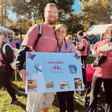
Aerobics for Aubrey the first year was really like my coming back out into society. Our first year, the turnout was huge. We raised, I believe it was, you know, $15,000. We had over 150 people that showed up. We hosted a dance cardio class and the message behind it was that we were raising awareness in honor of all the babies
00:24:16
Speaker
who did not get to go home from the hospital. I also made it a point to make sure that the day was not necessarily only for the people who have experienced these losses, but also for the rest of society and their friends and family.
00:24:31
Speaker
so that they could learn how to support their friends and family members who are going through this and really just meet stillbirth and child loss less of a stigma in our community. And I was shocked. There were so many people there who I had never met before and so many people who came up to me to let me know about their own stories of infant and perinatal loss.
00:24:55
Speaker
And it was really just a beautiful day that really showcased the fact that no one is in this alone. And then from there, I was like, okay, this can really be something. And one of the most special things about Aerobics for Aubrey were the number of other lost moms.
00:25:13
Speaker
in the community that came and that have met through our Aerobics for Aubrey events each year. And that really inspired me to kind of start the additional arm of Aubrey's advocate, which I like to call the peer and community support arm.
00:25:30
Speaker
And this is really just kind of the fancy way of me saying that I have put myself out there to be known. I had a stillbirth. I lost my daughter. If you are going through this, reach out to me and we can talk about it. Let's share our stories. As sad as it is, let's relate to one another and find commonality and walk side by side and know that there are going to be good days ahead.
00:25:57
Speaker
And so through that, we now do different support groups and really just different events with other lost moms in the area and just kind of connecting with everybody and making it known again that, you know, if you just need a friend to text, I'm

Support Group: Light After Loss

00:26:14
Speaker
here. If you just are having a bad day, I'm here. Someone else gets it.
00:26:19
Speaker
So if someone wanted to get in contact with you in the Pennsylvania area, could you just tell us where these groups take place and how they would get in contact with you? Sure. So our support group is called Light After Loss. I run it alongside of a fellow lost mom from the New Jersey area.
00:26:36
Speaker
Aubrey was born stillbirth and my friend's daughter Noelle was born with a fetal diagnosis and lived for 17 minutes. We have had two completely different types of losses, but we both know the pain and the journey that it takes for you to climb out of that hole and to remember there are still good things that are going to happen to you.
00:26:59
Speaker
Our support groups are for eight weeks long. We have a group of eight moms. Everybody has had their loss within the last six months. So these are all moms who are really riding the same timeline that you are. And we meet virtually once a week. And each week we go over ways to prepare ourselves to reenter society. What does our new normal look like? If somebody asks you a triggering question in public, how can we be prepared to answer it?
00:27:29
Speaker
How can we be prepared to support ourselves if we feel ourselves going into panic mode? What types of supplements can we take that will help us through that postpartum period? It really is just focusing on meeting yourself mentally and physically where you are postpartum, in your grief, and just figuring out really how to survive those first few weeks and first few months and first year.
00:27:59
Speaker
Do you limit it to only people in the New Jersey, Philadelphia area or can it be anyone that joins your support group? Yes, no, our group is open to anybody who wants to join. We run them quarterly and more information can be found at AubreysAdvocate.com. Those eight weeks, you know, like you said, you do the first six months, that time is the most important time for these families when they really need the most support and say like, okay, I'm not alone. So thank you for doing that.
00:28:27
Speaker
And we keep it small because our goal and what we've seen is that everybody really does become friends outside of just being lost parents. You know, we have other things in common with one another besides the fact that we all were dealt this awful awful hand. And I think it's kind of we said finding people who have your same grief vibe that you do.
00:28:48
Speaker
Yeah, finding your tribe. Yep. Yes. Don't need it. The isolation is almost as pain. I felt at least that the isolation and feeling like no one else understood the pain was almost as painful as experiencing the loss. It was an easier thing to focus your feelings on was that aspect of it for me.
00:29:11
Speaker
And I think it's great too that it's virtual because at that point you really don't want to go out. You don't want to leave your home and just having that at your fingertips is awesome.
00:29:21
Speaker
And we focus on the wins each week too. You know, not every day is going to be horrible. There are one or two positive things that happen each day. You still have blessings. You still have a roof over your head. You have friends. You have dogs. It's all about hope that the future will be easier than the current is.
00:29:43
Speaker
Yeah, that is so important to look at the good things even though they are few and it's so hard, especially in that time. So that's awesome. How many families have you helped with Aubrey's Advocate and the money you have raised?

Aubrey's Advocate and Fundraising Impact

00:29:54
Speaker
So we have now raised over $50,000 since we created Aubrey's Advocate.
00:30:00
Speaker
officially in 2021 and thank you we have to date we have paid for the labor and delivery bills for 18 families and our goal is to just keep going we are able to provide up to a thousand dollars to be used for labor and delivery bills
00:30:20
Speaker
for families who have experienced a third trimester stillbirth with no red flags. Nothing that made you a high-risk pregnancy in the first place. I believe the doctors told me that we're 0.4% of the population that what happened to us happened to.
00:30:37
Speaker
And I do feel like I'm going to be working until my last day trying to educate people and let them know that these things do happen and trying to find a way to prevent them. That's awesome. I can't believe you helped that many families. Holy cow, girl.
00:30:55
Speaker
Congratulations. That's really amazing because the financial aspect is a really hard thing to find support for. One other question about the bills. Have you been able to call and help other families too, like to get their bills canceled like you did with yourself and the one friend you met? Yeah. So that's always kind of step one when a family reaches out to us looking for financial assistance. The first thing that we'll do, and I say, well, it's me.
00:31:25
Speaker
that I'll do is reach out to their insurance company and reach out to the hospital that they delivered through to see if there are any opportunities to have some of these bills reduced. That's awesome. That is such a needed service. Wow.
00:31:40
Speaker
People forget when you leave the hospital that on top of leaving without your baby, you are still expected to pay for all of the medical procedures and care that you received when you were there and your baby as well. Your funeral, like you have to pay for that and that is a huge unexpected expense.
00:32:00
Speaker
I know, depending on what you decide to do. And unfortunately, I feel like a lot of times families feel pressure into like doing the cheapest option because they don't have the extra money because they're starting their families and just starting out. Sure. Yeah. Yeah. It's like it's expensive to have a child. It's expensive to lose a child. Yes, absolutely.
00:32:20
Speaker
What would be your advice to someone who is newly going through child loss, infant loss? What advice do you have for someone who's just

Advice for Those Experiencing Loss

00:32:30
Speaker
starting out?
00:32:30
Speaker
I think that it's important for you to give yourself grace in every sense of the word. I think that signing off of social media and walking away from any type of societal pressures or anything that will potentially make you hurt more than you already are is so important.
00:32:53
Speaker
putting up your boundaries and constantly reminding yourself your baby does not want you to be more sad than you already are. Say no to things. Surround yourself with the people that you feel safe with and comfortable with. You can't have any expectations for yourself and on the reverse and it's hard to hear but you have to let go of expectations of others as well. People can't give you
00:33:19
Speaker
what they don't have. And because of that, you know, it's a lonely journey. But there are so many people that you can find to connect with, and we get it. So you and your husband, did you grieve similarly, differently? And then was your timeline for grief? How was that for each of you?
00:33:36
Speaker
So we grieved very, very differently. I wanted to talk about it. I wanted everything to stop while I figured out what had happened to me and I just wanted to talk through it. And, you know, being a problem solver, I've needed to know why did this happen.
00:33:53
Speaker
and then my husband on the reverse was very much more so internal he did not want to talk about it he didn't want to rehash things he didn't want answers like i wanted them and that really caused a big rift because sometimes
00:34:10
Speaker
He would listen to me, but after three hours of hearing me drive myself insane, you know, he was angry and it was painful for him. And then I would be mad at him because he wouldn't want to talk about it, but he would say, we already did talk about it. And it was just a really, really difficult time for us. I eventually realized that
00:34:30
Speaker
couples therapy was great for us, but individual therapy for me was even more needed because I needed that space that would allow me to talk about it. Because you could be more open when he's not sitting right next to you about your feelings and not hurt his feelings maybe. Yes, and even just having somebody who was there to not necessarily try to problem-solve with me, but just to let me talk.
00:34:55
Speaker
right and get out what you wanted to say. Exactly. And that's really why I found the space of the therapist most helpful for in addition to the individual therapy and like helping families with their bills helping other families. Was there anything else that really helped you through your grief?
00:35:11
Speaker
Yeah, I mean, honestly, I being active, getting outside and making sure that I was really taking care of myself after my loss was really important to me. Somebody told me once, you can't heal mentally if you're not healing physically. And because of that, I found a passion in fitness and I
00:35:34
Speaker
always made the time to get outside and spend time in nature and be active. We planned vacations around hiking and just really made it a point to get out of the house and keep moving. So following up with that, I just want to ask about your family building journey.

Struggle with Secondary Infertility

00:35:52
Speaker
When did you decide to continue your family building?
00:35:55
Speaker
So when you want to talk about the anger, so of course I was so angry after we lost Aubrey. And then when we finally decided that we wanted to start trying again, I was diagnosed with secondary infertility after trying with no success for eight months. So that to me felt like just salt in the wound of everything else. Yes.
00:36:18
Speaker
And I will honestly say that I found that time of my life to be almost more traumatizing than losing my daughter because it felt like I clung to hope after we lost Aubrey. Clung to hope. Okay, one day I'll have my family. One day. One day I'll have her sibling. One day I'll have a baby.
00:36:42
Speaker
And then it was month after month of that not happening. We actually ended up going through fertility, which was unsuccessful and then finally decided to take some time off because my mental health was spiraling. And after a few months of taking some time off, we ended up getting pregnant naturally.
00:37:04
Speaker
And I really think that that also just goes to show that you can't heal mentally if you're not healing physically. And you just really need to take care of yourself. Wow. Yeah, that sucked. When you were doing the fertility, you weren't like taking care of yourself like you should have been. I was in a horrible headspace. I didn't believe that it was going to happen. I don't think. Yeah.
00:37:28
Speaker
I also think that my body was in a chronic state of fight or flight because I wasn't mentally healing from what had happened. And I was just becoming obsessed with having another baby because it wasn't happening. And it was just not a positive, not a healthy headspace at all for me to be in.
00:37:50
Speaker
And then once I took some time away from that, did some more deeper work on myself, you know, therapy, I went to the fertility doctor, I went to an endocrinologist and I went on a wellness retreat and really just was like, okay, like I need to get myself better. And that was when it happened. So really turning inward and focusing on that self care really helped me.
00:38:14
Speaker
Okay, so tell us about that pregnancy and about the baby that you have at your house now. All right, well, anybody who's experienced pregnancy after loss knows it is terrifying. And for every minute of excitement, you are also faced with a minute of complete fear. So
00:38:32
Speaker
My pregnancy luckily was very low key. We kept it pretty quiet and we chose to go to a different practice where they knew my story and the doctors before told me that they were willing to follow me as closely as I would have wanted them to be following me.
00:38:52
Speaker
And they were very transparent with me at the fact that they were so sorry that this had happened and that they were going to do everything in their power to make sure that that did not happen again. And so I found a lot of trust in them. I was at the doctor's office every week. Starting at 20 weeks, I got regular ultrasounds. I got growth scans done. And then once we hit 32 weeks, I started getting a weekly growth scan.
00:39:19
Speaker
and two non-stress tests and that continued until
00:39:23
Speaker
week 37. So I felt very in control of this pregnancy. Yeah, that's a lot of testing. Yes. And because of that, that helped me kind of mentally stay seen and actually get excited. So insurance covered all of that testing too. Yeah, I was super high risk. I had like 100 running jokes. I mean, it's not a joke. It's to the truth. My file is hot. I have now I'm 35.
00:39:50
Speaker
Plus full term stillbirth. I had like a hundred reasons to like that insurance had to do what we said. Yes. But having a doctor identified before it even happened that I knew would follow me as closely as I wanted to was needed. Yeah. But how did you find that doctor? Did someone give you the information? So it's actually the doctor who delivered Aubrey. He was not affiliated with our practice at all that we were at when I was pregnant with her.
00:40:19
Speaker
He just so happened to be on call that day. And after I delivered her, we stayed in close contact and he ended up going into private practice. So I went directly to him.
00:40:34
Speaker
And it was a male doctor. That's amazing. He really, I rarely hear that. Yeah, he's amazing. We say that Aubrey sent him to us. He also really helped Justin in a lot of ways also talking about things and normalizing it and reminding him, you know,
00:40:50
Speaker
This impacts you just as much. And I think he needed to hear that and feel that support. It's so sweet. Oh my gosh. Yeah, especially that it's a male, like you said does, because you don't hear that. He's the best. Is there anything else that you want to

Growth and Identity After Loss

00:41:04
Speaker
share? I do. You know, now the further out that I get from my loss, the more I realize that, you know, having a stillbirth does not define me. For so long after we lost Aubrey, I felt
00:41:19
Speaker
trapped by this title of stillbirth mom because i was so dumbfounded that it happened to me and it changed every aspect of my life the people in it my goals my values my relationships my trust my positivity the way i saw the world and now that i'm three years out i realize that i'm a different person now but i'm a better version of myself
00:41:46
Speaker
And that having a stillbirth is only a part of who I am. And it's not my whole story. And being Aubrey's mom is something that is almost like a superpower. We've already lived through the worst day of our life. So true. So true. Thank you so much, Julie, for coming on and sharing the story of Aubrey. Thank you guys for having me. Thank you so much.
00:42:10
Speaker
If you'd like to show Julie some love and send her a message, you can email us at Nicole at the blindsided.com or Desiree at the blindsided.com. If you'd like to check out her nonprofit or are interested in her support group, you can check it out at Aubrey's advocate.com. Thank you so much for listening. Thank you so much for tuning into the latest episode of the Blindsided Podcast.
00:42:33
Speaker
We truly appreciate your support and time you spent with us. If you have a personal story you'd like to share on the show, don't hesitate to reach out to us. You can send us an email at Nicole with the blindsided.com or Desiree at the blindsided.com. For more episodes, make sure to follow on your favorite podcast app. Just search the blindsided podcast and hit that follow button. You can also connect with us on social media too. You can find us on Facebook and Instagram at the blindsided podcast.
00:43:02
Speaker
We love engaging with our listeners and hearing your thoughts on each episode. And before you go, consider leaving a rating and review for our show. Your feedback helps us reach more listeners who might find value in the stories and discussions we share. Once again, thank you for listening and being a part of the Blindsided community.