Become a Creator today!Start creating today - Share your story with the world!
Start for free
00:00:00
00:00:01
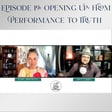
Episode 18: Opening Up - Truth, Healing, and the Courage to Be Seen image

Episode 18: Opening Up - Truth, Healing, and the Courage to Be Seen

S1 E18 · Don't Trip On Your Cape
Avatar
130 Plays1 month ago

In this episode of Don’t Trip on Your Cape, Alex Embry and Leslie Arboleda welcome Dr. Lida Fatemi for a thoughtful conversation about truth, healing, and what it really means to open up in a world that often encourages us to hide parts of ourselves.

Dr. Lida brings a unique perspective to the conversation, blending her professional experience as a physician with her lived experience navigating identity, growth, and the deeply human process of learning to be seen.

Together they explore how vulnerability can become a source of strength, why authenticity is often the doorway to healing, and what it means to move through life with curiosity rather than judgment.

The conversation touches on identity, personal transformation, emotional resilience, and the ways we can create environments where people feel safe enough to show up as their full selves.

Because sometimes the most powerful step in healing is simply allowing ourselves to be seen.

Links

Don’t Trip on Your Cape ⁠https://www.donttriponyourcape.com⁠

Can We Grok? ⁠https://www.donttriponyourcape.com/can-we-grok⁠

Aligned Living & Leadership (Leslie Arboleda) ⁠https://alignedlivingandleadership.com⁠

Mush Love ⁠https://mushlovellc.com⁠

A Human Being With Love (Alex Embry) ⁠https://ahumanbeingwithlove.com⁠

Recommended
Transcript

Introduction to 'Don't Trip on Your Cape'

00:00:00
Speaker
Welcome to Don't Trip on Your Cape, the podcast where Leslie, the founder Align Living and Leadership, and her amazing co-host Alex from Much Love dive into the very things that weigh us down, only to reveal those burdens are actually our greatest strengths.
00:00:12
Speaker
Together, they help listeners recognize that what feels heavy is often just your own unique superpower in disguise. So grab your cape, and let's explore how to wear without stumbling. All right, hello everybody, and welcome to this week of Don't Trip on Your Cape. This episode, I'm Alex.
00:00:28
Speaker
And I'm Leslie. And today we have Dr. Lita and Leslie will tell you a bit about her.

Guest Introduction: Dr. Lita Fatemi

00:00:36
Speaker
Today's guest is not just a physician. She's a pioneer, a truth teller, and a woman who understands what it means to rebuild from the ground up.
00:00:44
Speaker
Dr. Lita Fatemi fled her country of origin and began again in an unfamiliar territory. What could have hardened her instead sharpened her clarity. What could have silenced her instead strengthened her voice.
00:00:58
Speaker
She's now an advisor on the New Mexico Psilocybin Medical Act and the founder of the Conscious Physicians Psychedelics Academy, training medical professionals at the intersection of science, policy, and expanded states of healing.
00:01:12
Speaker
She stands in rooms where medicine, legislation legislation, and consciousness meet, and she speaks with conviction. But beyond the credentials and the advocacy is something deeper.
00:01:23
Speaker
a persistent inner calling, a willingness to say that everything is allowed to be talked about, a belief that when you listen closely enough to your inner guide, you will know exactly when to move and when to open.
00:01:37
Speaker
In a season where we're inviting ourselves to loosen the armor and let ourselves be seen, Dr. Lita embodies what it means to open up without losing your strength. So Dr. Lita, we're so honored to have you here. Welcome.
00:01:50
Speaker
Thank you so much. I have to wipe the tears first. man You know, thank you so much for that real deep introduction. i don't think anyone's ever introduced me in that way before. And it hits soul very deeply in

Cultural and Historical Context of Iran

00:02:11
Speaker
my heart. And especially in this time where there's ah the woman life um freedom revolution that's happening in Iran as we speak. and there's a lot of, you know, in the Western countries, there's a lot of confusion about, oh, is this the right thing that we're doing? Is this the wrong thing we're doing?
00:02:33
Speaker
It's the right thing that is happening by the Western countries going in. People of Iran have suffered for half a century being severed from our culture, our deep Zoroastrian roots that deeply are ingrained in the planet and planets. Astrology and astronomy were huge in ancient Zoroastrian traditions. That goes back to 5,000 years ago and we have gotten severed from that for the past half a century. And now it's ah it's a coming back to a remembrance and a removal of the the metastatic cancer that took over the region, took over um Iran. Iran used to be known as the heart of the world in the ancient world. And it's known to be a portal for um so much, so much. It's like a stargaze, you know, portal. Look into it. There's a lot of, there are a lot of people talking about this, especially as things have been moving forward with these, um I don't want to call them attacks, they're removals of of of this past consciousness that has been very dark and
00:04:01
Speaker
um And it has shattered us as a people um across the world. um However, what's so interesting is that there has been an expansion because of it as well.
00:04:17
Speaker
Mm hmm. The suffering has has, you know, it's it's like pieces of the star has that has, you know, a meteorite hits. And, you know I don't know if you guys know about the stone Moldavite, that 14.8. Yes, you do. Yes, I love you guys.
00:04:35
Speaker
while we get a along okay i'm wearing a moldavite right now um stone of transformation and um as you know it hit the earth 14.8 million years ago the earth went up to the sky and the impact was so hard and hot that it formed glass that it hit the atmosphere and it dripped down this green glass looking crystal and it's a stone of transformation and this is the time of that type of transformation that these old old ways of being the frequencies are breaking down and we are no longer subscribing to the fear that was spun out of creating illusions utilizing religion of all sorts, belief systems. And that is all breaking down. And the truth is cracking open. um And what a cool time to be alive. And all of this is, of course, interconnected with the psychedelic movement that we are a part of and we're witness to our own cracking open. um and as each individual goes through that, the ripple effect of that throughout the world for generations, for right now, generations behind us and forward,
00:06:07
Speaker
It's all changing, which is ah so incredible and difficult at the same time, but so it has to. We have no other way to go but this path.

Reflections on Childhood in Iran

00:06:21
Speaker
So thank you for allowing me to share that. what so like bottom Yeah, we met is your openness, this willingness to talk about these very deep and you know meaningful and your life as well.
00:06:35
Speaker
it's a reflection of these things right now that we need to talk about in here. So we're grateful for you sharing that. I was hoping we could start with a little bit of your early life as well, growing up there.
00:06:47
Speaker
You did tell a little bit about it. What was it like living there? And how did you see yourself you know there in that land from the inside and maybe how people saw you from the outside? Give us a little bit of insight into your childhood.
00:06:58
Speaker
Thank you for that question, Alex. Yeah, it's my childhood childhood. was magical.
00:07:08
Speaker
I know it's hard to believe that because I lived in war. We lived in war for the first eight years of my life. My mom was pregnant with me. i think she was about three months pregnant with me when the war between Iran and Iraq started. And um I was born into this terrorist regime utilizing Islam as a way of severe oppression and suppression of humanity, but primarily through women. Because they understood that if they suppress and press women, yeah they got a stranglehold on society.
00:07:47
Speaker
And they used that very deeply, very negatively and continue to in ways unimaginable. And all that said, and they it's so funny because in 1979, they kind came into power, this terrorist regime.
00:08:08
Speaker
And people thought now they're going to have more freedom of speech than they did before under Shah's time. During Shah's time, they had a lot more freedoms. If you look at pictures of Persians in the 1970s, it's a European country.
00:08:24
Speaker
Women are in their bikinis hanging out. They're smoking their cigarettes. They're dancing. You know, they're beautiful, playing music. Art is gorgeous.
00:08:36
Speaker
And then all of a sudden, A dark lid is put on in 1979. And in fact, America and the UK and France who created this, you know, to to put this lid onto Iran, they apologized when they did this, when they removed the Shah and put these powers in that place because they wanted that oil money because they had these you know on you know behind the scenes contracts with this terrorist regime to get that oil under their control oil gas natural resources and iran is a very geopolitically a very strategic country and
00:09:25
Speaker
So when they came into power two years later in 1981, when I was born, they started the the war against Iraq. It was based on nothing.
00:09:37
Speaker
It was based on control over the country. A country that is in war has to be unified against the enemy. That is fake as well. And so illusion on illusion on illusion, creating so much fear in people that they will they will subdue themselves.
00:09:59
Speaker
And in fact, it was when I was three years old that my... brother my dad had to smuggle my brother out of the country because he was 13 and the terrorist regime was about to take 13 year olds and then nine year old boys into the war that they just you know created out of this illusion that there was a war and we were getting bombarded and all of that they created this right And so my dad smuggled him out of the country into Vienna and and two other kids who were about to be enlisted into the war in our family. And without anything, without any documents, without

Family's Escape from Iran

00:10:40
Speaker
he got to America. And this story is just, I cannot believe the courage that it took in him to do this. But he tells us the story of sitting in the airport and the officers held them for half a day or maybe a day
00:10:56
Speaker
um And they're like, well, you got to turn around. He's like, how am I going to take these children back to a country, to a terrorist regime that is going to enlist them into a war that they created? You tell me how to do this and I will be on my way.
00:11:15
Speaker
And, you know, I mean, e they heard him and they were humane and they took the kids in.
00:11:28
Speaker
So grateful. And so that's the kind of thing we grew up in at the same time as the war was going on the same time this terrorist regime was was going on. The people of Iran, this terrorist regime, they're not Persian, they're not Iranian origin. their Arabic origin, their Islamist fundamentalist origin. They don't always speak the same language. And so i think people have a lot of misunderstanding. They're true violators. And the Iranian people are not aggressive. We're not violent violent people. We are all heart.
00:12:06
Speaker
without boundaries, that is our lesson. We have to set hard boundaries when we see that there are violators coming in. You say no.
00:12:17
Speaker
As soon as you can, you say no. you We are the best hosts you will ever have in your life. We bring you in, we give you the best food that we have to the guests and we will deny ourselves and our family the best food and we give it to the other.
00:12:40
Speaker
That's the type of people we are And in Iran this past you know half a century, we've developed in ways of education. i mean, we we have like quadruple doctorates in Iran, but they don't have a job.
00:12:57
Speaker
We have arts that's coming out, music that's coming out. I'm just mind blown. The refinements of the culture and the the philosophy, the mysticism that started in Zoroastrian times is really percolating through with the newer generations.
00:13:17
Speaker
Unfortunately, what I still see in the older generations is that fear mindset. That the new generation is like, no, I am here to take a bullet because I'm not going to pick up the gun.
00:13:31
Speaker
i will take the bullet for the freedom of of the next generation or this generation right now. And I'm okay with that. I will take the missile that's being dropped next to my house right now. I i might die. And i'm this video I'm making may not make it to the next.
00:13:50
Speaker
I may not make it to the next day. but Please share my voice today that if I'm not here tomorrow, we will have a free country tomorrow. So the community, when we talk about community, i've never been part of a stronger, more connected, heartfelt community than i did in Iran as a child.
00:14:20
Speaker
I felt safe in the midst of war when we had to run down to the shelters and run down like three flights of stairs at 3 a.m. My dad and mom, you know we would be you know sleeping in between the areas of the house that were framed and there are no glass, you know everything would be pulled down and taped up and or we'd be under um under our living room table with a with huge,
00:14:49
Speaker
yeah blankets over it so that if things shatter, we we would be safe. But I remember running down the stairs as a child, like, you know, with my parents and super groggy eyes and my older sister, three and a half years older than me, um down to the garage and all the neighbors would be doing the same thing. And we still had jokes to tell.
00:15:16
Speaker
People would still be laughing about like the absurdity of what is happening. um We would still be dancing. We would gather all the time to share meals.
00:15:32
Speaker
We would make meals that were so large that you could feed an entire neighborhood. And that level of connectedness and love and care and sharing creates for a magical childhood.
00:15:51
Speaker
Now I can imagine from a an adult's perspective, what that was also like, right? Sheltering the children, providing for kids where you everything is rationed in war. Everything was rationed. We would have days without water. So as soon as would hear, okay, you you got you gotta to collect, you got it you got to figure out how to do this, right? But they certainly made it magical for us children. and um
00:16:22
Speaker
And the authenticity that also comes through in grief. Because, you know, every week, like there would be some family whose child died in war.
00:16:34
Speaker
Child. Their son that they were forced to send to war and they didn't have the means to get out of the country. um died. And so death was a really big part of life. And it continues to be. And this January, i mean, the past 50 years, they have killed hundreds and thousands of innocent people point blank, shot them in the head, shot them in the gut.
00:17:01
Speaker
And people are walking in blood this past year. it won't stop is the thing. um This past January, in two days, ah no, I'm sorry, in four days, ah some accounts say 20,000 people were killed because they unleashed military on onto unarmed humans who are not going to pick up guns to kill you.
00:17:27
Speaker
and they were all gathered onto the streets revolting, um but they were ready to take those bullets. They didn't they were not fleeing. um and so those are executions. And so, you know i just want people to be very clear of what we're dealing with here. This government, this terrorist government has been also feeding terrorism across the world.
00:17:56
Speaker
And it's really interesting that this with new this new human consciousness that all of us here and your listeners too, each one of us is tapping into in our own way of expansion.
00:18:13
Speaker
oh man, this is the greatest accountability, integrity, morality, ethics that we're seeing in allowing others to do the same.
00:18:27
Speaker
courageously, because each one of us here have been doing the work and continue to do the work as we're becoming more and more conscious in our evolution. So thank you. Thank you for doing this work. And I hope I answered your question. But, you know, childhood, again, and a childhood was complicated, but beautiful at the same time. The connections were really beautiful. I'm still connected with my childhood friends from Iran, growing up under those conditions, with my family, with my cousins who are still there.
00:19:02
Speaker
call I called them a few days ago to see how they're doing. And they went to the Caspian Sea area of the of the country, which is the northern region. There's a big mountain region that airplanes usually can't get over. And so during wartime, you know people go to those spaces if they can.
00:19:23
Speaker
and um yeah the people are so full of love and care that that's what carries you through um but you know i was i was a kid that i was also rebellious you know i was developing boobs at age i don't 10 11 12 and i'm like fuck ten eleven twelve and i'm like look this government. I'm not going to put hijab on. I'm to put like, I'm not cover my boobs. Let them let people see what are you talking about? You know? And so I get on my little bike around the neighborhood and I'd be rebelling in my own way. in the neighborhood. And yeah.
00:20:03
Speaker
yeah And you know, when people said, no, you can't as a girl, I'd be like, fuck you. Yes, I can. i'd I'd get that shovel out and like, oh, girls don't dig. i'm like, watch me.
00:20:15
Speaker
Watch girls dig right now. so
00:20:23
Speaker
So yeah, i always had this, you know, push the boundaries, push the boundaries, spirit. and And my grandmother was a lioness. I think, you know, a piece of her, she was a firecracker. She never stopped. She never stopped. It was phenomenal. Yeah.
00:20:44
Speaker
yeah Childhood. i think you made a really powerful point too. We talk a lot about the armor we build in our early years, you know, and based on the stories that were told, the experiences that we're living.
00:20:58
Speaker
But I think part of what you spoke about is sometimes putting the armor on is doing something like saying, i'm I'm not going to be subdued. I'm not going to be oppressed anymore. And part of how we end up protecting ourselves and our future, you know, our future ancestors is by saying, no, my armor and my protection is about being authentically myself, even if it's a 10 year old little girl with boobs on a bike, right? Like whatever whatever expression we get to. um
00:21:36
Speaker
And you you shared, obviously you you came to America, i think at 14. yes What were the parts of you that you felt safe showing right away? And what were the parts that you tucked away that maybe have come forth in your adulthood?

Cultural Adjustment in America

00:21:53
Speaker
That's fantastic question. felt... man i felt I felt very betrayed coming to America because I loved Iran so much and I loved my friendships. My sister didn't feel the same way. She was older than me. She was closer to the college age. She saw what her future would be like if she stayed, you know, if our family stayed. So I think for her, it was a different thing and she was happier coming. For me, it was, ah you know, I wasn't, we weren't told we were coming to stay in America. we were told, We're going to visit family for the summer. And then at the end the summer, they took us and we registered in high school.
00:22:37
Speaker
Like, oh, I don't know that language, you guys. i don't know how to speak English. What? So and, you know, I had a community that I loved as a child and I.
00:22:50
Speaker
was deeply grateful for it as a child. And I thought if I was grateful that it wouldn't ever go away.
00:23:02
Speaker
And it went away like that. So to me, it was a huge betrayal from the universe's side and also my parents' side and also the the lack of communication and us being in the know and our voices being heard in the matter, you know, as if you have no voice at all.
00:23:27
Speaker
And so high school, the first three years, extremely difficult for me. I was very depressed. I was very internal. I was a i was more of an external child in Iran because I felt connected and supported in community. And I was the funny kid. And then all of a sudden, all of that was stripped away from me. And so I was very internal in that way. um I didn't understand the American culture and how spoiled kids were, um in my in my opinion, because I came from war. I came from a deep place of seeing grief, being in grief. dealing with things children really shouldn't be dealing with so i at age 14 i was more more close to 30 year old in america in my maturity and understanding of the world and we had traveled the world you know we had traveled many countries with my family outside of iran because my dad wanted and my family wanted us to be, you know, connected with different ways of living because they were like, this is not the way of living, you know. And um so there were a lot of
00:24:49
Speaker
tugs you know that I felt during that time um it also did the the part for my for Iranians academics or and cognitive and and intellect is very highly valued which translates into us having good grades and so when you don't have good grades because you don't know the language, then that part of my identity was squashed completely too.
00:25:20
Speaker
um so it was it was really cool because that was my ego, right? That was also my armor of that survival in that country. I was a straight A student. I was always a favorite student. in Iran. And if you were not a straight A student, you were frowned upon, um which is hilarious when you look at it, you know, but it was, that's how it was. And so the shifts were so sudden and so 180 for me um that, yeah, it was like a very significant psychedelic experience where it's like, poof, ego dissolution. And
00:26:02
Speaker
Here you are, you know. And so I was very internal during that time. I was very much into my spiritual practices that was introduced to when I was 12, a path called Ekinkar. And it was a lifesaver where there was spiritual practices of visualization meditation. Soul travel is what it is called of being able to you know connect with a part of you that brings you that peace and connection to the greater being, um source, and universe, whatever you want to call it. And being able to travel in those spaces that in the outer world, your life can be very dark,
00:26:46
Speaker
but internally you can reach. And so, yeah, that time was very, I would meditate for upwards of hour and a half sometimes during those years. So that really deepened my connection with myself and that self-discovery, which really helped me like moving forward in college, that sense of like,
00:27:11
Speaker
identity of I know who I am internally and I know how to connect with my greater self or, you know, the universe um in a deep way that now looking back, um many people didn't have in college because they didn't go through that like severance. um I feel like, you know. Yeah.
00:27:36
Speaker
Makes total sense. It seems like it not only affected your life then, but how you lead today as well.
00:27:45
Speaker
You're right. You're right. And, you know, I love these questions because I haven't really thought about them in this way. So thank you for asking. Yeah. As you moved into all these like psychedelic therapy and, you know, the medicine and advocacy and all of that,
00:28:02
Speaker
Was there a moment when you realized that hiding was not an option, that this was really going to be your path? Yeah. You know, Alex, it was a
00:28:16
Speaker
couple of times it it happened. but One big one was during COVID. um we saw as medical professionals and and and and professionals who are also connected to Seoul and expanded states and in what is good for humans, we saw that that year where they were going to like just shut everything down, you know, they did the three months and they did the six months. And from a scientific perspective, us being on this side of things, seeing things, both my husband and our physicians,
00:28:54
Speaker
we would have this conversation with like, okay, three months, okay. More than that, that's a bad idea. It's not good for the human being to go into that kind of isolation.
00:29:15
Speaker
Mind, body, spirit, period, like not good for us. And so when, but we I felt very um suppressed and censored. I was still in at an institution And in fact, I made a video on Facebook um'm talking about like, okay, we got the vaccines, you guys.
00:29:37
Speaker
I'm vaccinated now. You're vaccinated now. Let's take these masks off. Let's like go into micro expressions. Let's connect with each other. What what is happening with our children? oh my God. And I got called.
00:29:52
Speaker
by the chief of medicine. And I was ah i was at, a like had a very prestigious status i at University of New Mexico. I got a gut called by the chief and he was kind of like, you know, I get your points, but there are other doctors who are who don't get your points. and And they've called upon me to talk to you about this. And I'm like, we are university program.
00:30:17
Speaker
We should be able to use our voices and not be censored. is you know what are we doing if we don't have contradicting ideas that are conversed about we are in a, we're gonna go into a very dark place. We should have differing ideas. I should come at you from 180 degree difference than your viewpoint and be able to have a conversation in a humane way, ah in a compassionate way and and in an understanding way. That's how we grow. So regardless, you know, they asked me to take the video down despite my gut feeling of like, no, everybody needs to hear this.
00:31:00
Speaker
whether you agree with it or not, that's it whatever, you know, um that this is why a free country. um But I felt this like, again, going inward with my voice and not using my voice, um which didn't feel good. um And the second time was during the psychedelic movements.

Advocacy for Psychedelics

00:31:29
Speaker
And during this, i was like, there's no way I'm going to stay quiet. And there was fear. Absolutely, there was fear. Even though I've done psychedelic work, inner work, healing work, spiritual, all kinds of things, right?
00:31:45
Speaker
um I still had fear of using my voice, right? on a large uh in a large arena and what gave me permission was aaron rogers coming out and talking about his ayahuasca experience a few years ago and you know sports illustrated got big about it like you know he was on all kinds of channels and um i was like you know thousands of people are going to start using psychedelics.
00:32:23
Speaker
And those who have expertise, if we don't come in and talk about both sides of things, of yes, there's beauty and light and love and all of that, but there's also a dark side and shadow side to psychedelics, not only historically, but presently, because we live in a dual world, we're dual beings, we have the light and shadow within each one of us.
00:32:50
Speaker
If we're not very honest about that, and we don't go safely about this, this can go a very wrong direction. And so I saw what happened with COVID when we weren't speaking up and it went a very dark pathway and it went, you know, and kids are still recovering, becoming young young adults who child torture cases went up 12 fold during that time and and we haven't recovered from it.
00:33:20
Speaker
you know And so I was like, no, I have to really see to my fear of where it's coming from. And it came from the terrorist regime. It came from the fear of using our voice in any arena whatsoever. In our family, oh, don't say this. Somebody might hear you and dad might disappear tomorrow.
00:33:48
Speaker
And, you know, some of it was true, some of it was untrue, but the fear was real. And, um or, you know, I cannot speak to my cousins about having a spiritual practice.
00:34:03
Speaker
Because someone might hear and your family might be dead tomorrow. And so that's a very real practice. immediate imminent, you danger. And so the the voice suppression was a real big, big fear of mine to be able to get through.
00:34:23
Speaker
And so, you know, I tapped into the education realm of if we're talking about education, you can talk about anything. we're educating and all of these studies have come at this research has come out. We can talk about that all day. Like, okay, it came out of Hopkins. It's come out of Imperial College of London, out of Yale, out of ucs and it continues to. And so I'm very grateful for this true community effort in the psychedelic world to allow all of us to have permission to come forward and talk.
00:34:55
Speaker
um and talk about all of it. So yeah, that's where I saw, um i mean, it's ah it's a whole life journey to get to a point of being able to speak about things that may feel difficult or shameful or whatever it is, you know, or or or ah you know the the deep fears that we all hold. It's it's quite a journey.
00:35:23
Speaker
It's such a beautiful description of your courage from a place of grounded presence. That it wasn't it wasn't a fearless choice.
00:35:35
Speaker
It was a choice to hold hands with your fear and step into your purpose anyway. um I just like, I I've gotten chills so much while you're talking, cause I am just, I feel such a resonance with your power and, and it's, and it's a transparent power, which means it does come from there's trauma in there. There's, there's fear in there. There's grief in there. There's all these parts of the human condition that,
00:36:01
Speaker
I think a lot of us at one time or another, we've been conditioned to resist and reject and say, oh, well, that doesn't feel good. So i'm I'm not going to do it rather than that might not feel good in the moment, but I need to do it because the collective needs me to do it.
00:36:22
Speaker
um When you when you were sharing with us part of um what made you want to come on the podcast, you used a phrase and said, you describe a persistent inner calling, which I think you've spoken to a little bit already. But what does that voice sound like, especially when the fear is loud?
00:36:43
Speaker
oof Great question. So good. um You know, it's it's it's a feeling. It's a feeling from... um If you were to imagine, you know the solar plexus area deep in there.
00:37:00
Speaker
um Central and it's a light. And... um
00:37:09
Speaker
There's such a deep connection to it that there's no choice. But to... There is no choice. I've i've tried.
00:37:24
Speaker
tried toitestep i've tried to tried squish it. I've tried to be like, you know, um you know fear and fear you know presents in so many ways. in procrastination, in laziness, in putting it off for tomorrow, in, well, so-and-so said so, so I'm not going to, oh, oh, no, no, no, no they don't want to hear this, you know, it' from the people-pleasing side, from so many different angles that can come at you to suppress it, but, um,
00:38:00
Speaker
You know, the moment that I knew this is what I, it's just non-negotiable, is the moment when I heard about children, what happened to them during the year of COVID.
00:38:17
Speaker
i have this deep connection with kids and I don't know what it is. It's just a gift gift. just a gift. One of the reasons I, the main reason I i went into internal medicine as an adult physician, 18 up, was because I couldn't see sick children. i can't even see a cut on a kid, like let alone other things that they come in with. And um and even before that, as a kid, i loved kids. Like they used to joke around that when i got my tonsillectomy at age 18, they put me in the children's ward
00:38:55
Speaker
And they're like, of course they did. Like, you know, my family knew ah knew this about me. But fast forward to, I think it was 2021. one And I was having this conversation, this podcast with a physician, child abuse specialist in the state of New Mexico. She's a phenomenal human doing the work that she does. She hasn't had any childhood trauma. She's like, I feel like I can hold the space for kids who have. And she does the most difficult job that I can ever imagine with such ease and beauty and holding. And um she she did. she was I was like, Leslie, I'm seeing these adults coming in. Even grandma is overdosing. Like, what is happening? yeah Mental health is like in just shattered during during the year of isolation and she's like she kind of like tried to beat around the bush and then she's like you know we're seeing child torture increase and i'm like what i was like i had never heard the term in medical school in residency any part of my my my training never heard of it and it's a repeated you know intentional hurting of a child until they're disabled or die
00:40:13
Speaker
um chronically And so and her numbers were staggering. She went that she was saying we went from a you know, one case, maybe a year that was as a case report reported to two a week.
00:40:31
Speaker
right after the isolation was lifted, I i was mind blown. So ah we did the math right then and it was 12 fold increase. And she was like, I thought it was only New Mexico because we are top three broke states every year.
00:40:52
Speaker
And she reached out to her list served of other child abuse specialists across the country. It was all across the country. And so, you know, she got an IRB approval to study this. And, um and you know, that's that's that is the day that my heart just shattered.
00:41:14
Speaker
And i could not be okay with myself
00:41:21
Speaker
if I didn't see through what i am here to do.
00:41:28
Speaker
you know, a so that's really what every day, it pulls me that light from the gut just pulls me and, and we got to do better, like what?
00:41:46
Speaker
And it's the source or the adults, you know, the source of the adults. So my purpose is Let's show adults their light to themselves and then they can do that with their children. And we are all in community with children and young adults. And the more we transmute our own the more we connect with our own purpose and there's more self-compassion in this world, that's what percolates.

Openness and Purpose

00:42:17
Speaker
And so um that's really what pulls me every day. Like when, especially when things get hard or my mind is in the place of doubt, any moment of, I'm like, no, like, what are we talking about?
00:42:35
Speaker
No. ah ah keep going one step in front of the other. That's it. I love that. When we first met, I remember right away, we got into a really good conversation because you had, you know, been born and raised in this wartime regime and I was born and raised in a cult. And so very much we resonated on this deep level. And what I loved the most about you was how open you are. And I remember you saying something similar about me. So How do you stay open despite all of these different things that have happened in your life, despite potential criticism, especially in psychedelic spaces and things like that? Because that is one of the things that I admire about you so much.
00:43:18
Speaker
Thank you so much. it's you know when the it's so i've gotten It's practice. I've gotten better at it over time. um Like anything that you want to get better at, it's practice.
00:43:31
Speaker
And um criticism that comes, it's so funny. One of my aunts who I dearly love criticized me for...
00:43:43
Speaker
During two years ago when the first the woman life freedom revolution was happening in Iran and I was like, yes, somehow she criticized me because I was supporting whoever that she didn't agree with.
00:43:59
Speaker
And we got into, you know, initially I was like, oh, heartbroken. I was like with this person, right, that I look up to so much and as a child looked up to so much. You're trying to censor me. Oh my God, how could you? And and I told her that, too. I was like, how could you? Like, I've lived under this terrorist regime. You didn't. She let left the country early. And that was a trauma of itself. She was like 17 when she left the country. Right. And everything she knew alone to England. And so this government, this terrorist regime has severed us in so many ways and taught us a lot about ourselves, too, at the same time. But
00:44:42
Speaker
um Staying open can be absolutely a challenge because that censorship can also come from my family. But I've learned over and over again, doing it in ways that may not be super offensive to people.
00:45:01
Speaker
and and because there's purpose in the openness, Because there is a change that comes about when we're open and when we see the truth for what it is and we we're like, here's the truth, I'm not here to please you with it.
00:45:22
Speaker
yeah that's ah that's it That's a previous generation. that's it That's a previous frequency of mine. That's a previous generation within me that needs letting go of. and and And every time these things happen within even my own family, there is a shedding of skin that happens and they feel it and I feel it. And they are more empowered in themselves to be more open and I'm empowered to be myself unapologetically because I'm not here to please other I'm here to be in purpose and the reminder for me of I'm a channel I'm a channel
00:46:10
Speaker
I'm a channel for the universe working through me. That helps me tremendously get through the mind resisting what is to be said, what is to be done, um and what universe presents me with where parts of me is like, oh, I don't know. Oh, I'm too tired. Oh, no, but I'm doing too much. Oh, you know, like all those little excuses that might come up and I'm like,
00:46:37
Speaker
No, you can you can sleep at night or you can take a nap. Sure, rest, but you're okay. You're okay. And and we are I'm a channel for the universe walking through me.
00:46:50
Speaker
So let's go. Let's go. this is and And it's delicious and it's joyful when I'm in that space. um And of course, again, all of this is a practice. It's not just given to us.
00:47:05
Speaker
But when in that space, ah as a channel, it is lovely. It's lovely.
00:47:16
Speaker
We obviously our podcast is Don't Trip on Your Cape. And we celebrate when people are tripping over those things that we have in life. And You are absolutely an undeniable expression of strength.
00:47:30
Speaker
You've spoken to different ways you've learned to leverage your softness so that you can stay as and authentic to that purpose, but also do it in a way that it connects with other people. But I also imagine as a human being, you do find yourself tripping on your cape every now and then. So what allows you to recover from those experiences? Like all the time. Oh my God. like I was tripping yesterday. know,
00:48:00
Speaker
um you know What allows me to get through it? um i think the sense of purpose is is a big one. My life practices, man. it's my conscious I call them conscious life practices because I consciously connect with them. um They're not passive. They can be difficult to do And I'm always learning, always learning. how to do better, how within myself. it's not Again, it's not about doing for other. I've lived that life through that. And that still comes up as well. So I face that as well. But I face it, I'm like, oh, I'm people pleasing here. i don't need to. Okay, moving on. you know So really what I see is that the more we do it, the more, wherever you want to go in life,
00:48:53
Speaker
the more you pay attention to it, your energy and your focus in that direction, the more of that you become.
00:49:05
Speaker
I've been in the dumps, in the dark, dark, dark, not just once, several times in my life. um And I've always also been able to come out of it several times in my life.
00:49:20
Speaker
And I never wanna go back there again. And so when I hear the knock of of of that coming, I've developed that part of me or parts of me that are able to recognize what that is and choose in that moment where I want to go next.
00:49:52
Speaker
And that's really it. It's really that simple. ah and And it's a journey. You know, it's it's funny. These simple things are the hardest things in life, right? ah But it's a choice every moment. It's a choice. It's a willingness to see our pain, see our sufferings, learn from it and say, I don't want to go there again. And I don't have to if I don't want to. i'm Yeah.
00:50:23
Speaker
But in practice, it's it's all the time. you know This is all the time because the mind and our brain, the weight we're built evolutionarily is that...
00:50:42
Speaker
Our stress response center, the sympathetic nervous system, the fight or flight center is very sensitive and overly developed so that we don't die.
00:50:56
Speaker
And because we are nature, we when you evolutionarily look at us, we lived in caves, sure, and then we had more huts, but we weren't separate from nature, as as separate as we are now. and And I'm not saying go back and live in a hut or in a cave.
00:51:15
Speaker
No, we we also need to evolve ourselves. I'm saying that we now need to learn how to modulate how to self-regulate where the sympathetic nervous system that is on all the time because we always feel like we're in danger with technology, especially right now, and all the news, news, news, news news news that's not pleasant.
00:51:44
Speaker
How consciously can I separate myself and maybe tap into it for advocacy. That's what I do. I tap into it for advocacy where I see I'm needed and i back off and I put away for the rest of the day.
00:52:01
Speaker
And it takes discipline and um and and a and a big conscious awareness. But when you're able to be very calculated where you put your chess pieces,
00:52:17
Speaker
and disciplined about it, you can live a pretty good life. You can tap into that space of passion and equilibrium at the same time.
00:52:29
Speaker
And setting boundaries is a really big part of all of this, especially the boundaries for ourselves, the boundaries around our, you know, even thoughts. Yeah, I see you. Thank you so much for being here and I let you go You know, i I analogize my ego to to a toddler. and That's just like, you know, she's really big when she comes on. She's old. She's like, man you know, huge and really like scary looking. And then I see her and I'm like, oh,
00:53:00
Speaker
And it takes a lot of practice. it's taken a lot of practice to get to this place. But seeing her, I'm like, oh, it's my ego. I love you so much. Come here. me get you a big hug So we hug it out. And then I'm like, oh, honey, it it's okay. It's okay. Everything's going to be okay. Thank you for being here. And then she she shrinks into this like little two-year-old. And I'm like, oh, you need a nap. So we go into into the crib. I put her down. sing a little lullaby for her. And she's taking a nap. I close the door and come out.
00:53:39
Speaker
And that exercise has has helped me so much. in my life. It's like, it's been the the part of me, right, the ego gets into that resistance of what the universe wants me to be here for.
00:54:00
Speaker
and So me being able to put her to take a nap, you know, even if it's for a few hours, it's nice. And then you're getting into that flow again um is yeah, that's, that's what keeps me going.
00:54:16
Speaker
Because that resistance is where we lose a lot of energy. Yeah, absolutely. I love that you don't shy away from these hard conversations, even with yourself, because as a doctor and especially like in the healing space around trauma, those conversations are hard to have. So as a doctor, as someone in the psychedelic space, what do you think you're uniquely equipped to say that the world needs to hear right now? Because we'd love to hear that.
00:54:44
Speaker
Thank you so much for that. um Not to be afraid of transformation and evolution. um There are parts of it that are challenging like anything. But once you get through it,
00:55:04
Speaker
It's always better. It's always better. I'm not saying it's necessarily everything becomes easy. No, you will be faced with other challenges that you never knew you had um and you were carrying with you. but man, is it worth it. And to really...
00:55:26
Speaker
connect with the humanity and that self-compassion, self-compassion and humanity within each other, seeing each other as humans, regardless of political views, what side of the border we're on what side of, you know, and that's what psilocybin medical act really helped us see in our community that it was a bipartisan landslide,
00:55:54
Speaker
Oh my gosh, that is so cool to be a part of that we are now in this phase of humanity, humans for humans and connecting with each other through that is phenomenal to be in this in this space. And the other...
00:56:19
Speaker
space, you know, that goes along the same theme of transformation is death and dying. You know, I was a hospitalist, internal medicine. We mostly did for a decade and and in academics. So I taught and I also did a ton of heroic measures in medicine of you know, bringing people back and coding and all kinds of stuff. And many people die too in those instances. But Now I've transitioned into that felt it an ivory tower to be a part of. Now I'm in community like mycelium, which is so lovely. And seeing what's happening in the community and connecting with people in their homes. You know, my attire right now, I go to people's homes. I just came back from a couple of homes and it's just so beautiful to be in that space and them trusting you.
00:57:15
Speaker
as a medical professional to go into their space sharing their wall art, their you know pictures of family, their life stories.
00:57:26
Speaker
And at the end of this physical life, we're all the same regardless of socioeconomic status, regardless of what we've gone through in life. I've had people who are millionaires. I've had people who have nothing to their name and very broke monetarily.
00:57:54
Speaker
And at the end of it all, We're so equal. it's it's it I haven't digested it all yet. yeah But it's so interesting to be a part of it. And it's made me appreciate the living experience.
00:58:13
Speaker
and our life so much more, the miracle that we are, you know, the spiritual beings that we are having this human experience. It's made me appreciate the deliciousness of food, the flavor, the breathing, the All of that we are feeling in our body is comforts and discomforts. Even when I'm uncomfortable and I'm like, thank you. That means I'm alive. you know The neck pain that I feel, I'm like, yes, as I'm alive. This is really cool to be you know an active participant in life.
00:58:51
Speaker
so And in that transformation at the end of life, you know the the healing that can come from it can come from it within communities of families. you know, I go in and I've learned so much from secular-like experiences personally and also through facilitating for others these it is a death every time of different sorts right and a transformation that happens and to be a part of that makes me a lot more present for the dying process of leaving this body
00:59:34
Speaker
um that we're all energy, that we're all connected regardless of this physical form being active or not. um and And bringing healing in ah in that way, that this these memories... these the love that you had for this person or have, it continues on.
00:59:59
Speaker
and in fact, in you letting them go and forgiving yourself in this relationship and them in this relationship, it makes um for such a more peaceful and dignified transition for everybody involved. Because the transition is not just for the person that is leaving the body.
01:00:23
Speaker
It's for everyone who is connected to that soul. So a lot is to be learned from it. And knowing that grief is such a powerful emotion and emotions that it and it that it contains that brings us closer to our authentic selves.
01:00:45
Speaker
It's like, you know, we're polishing ourselves through grief and not to shy away from it. And I've seen beautiful miracles come from. the dying process for the living family of connection, of of being more present with community, of teaching how to take care of a loved one at the end of life. um And so it's, and the care that goes into it, the compassion and care, that's also very similar in the psychedelic ah space and also the dying process.

Human Creativity and Evolution

01:01:24
Speaker
um Yeah, but that but the yeah those are the big themes that I see in both. So much good stuff in that. I can just resonate with so much of what you've shared, I think, collectively, but also personally with different experiences I've had. I know when I stub my toe, I say, oh, shit, I'm so glad I'm alive because dead people don't hurt, right? You're very similar that way. Yes, you are. Yes.
01:01:53
Speaker
So what do you hope listeners feel permission to do after hearing some of the part of your story that you've shared? Connect with your light and don't be don't shy away from it.
01:02:05
Speaker
Don't shy away from your purpose. and And even if you're feeling really far away from your purpose right now, you know deep down that there is a teensy little twinkle somewhere.
01:02:17
Speaker
Connect with that teensy little twinkle. um and and the more you connect with it, the bigger it gets and the closer you get to it. It's really one step at a time. Every day is a step at a time. um And for those who are connected and and in their purpose, stay consistent. That's something that you know can feel a little struggly for us as well. But that consistency is very important in
01:02:53
Speaker
in being able to, you know, continue holding that light. You know, the doesn't keep going by itself. It will diminish. It will it will die out. um You got to put the wood in. We got to engage. And I'm not saying the engagement has to be full of suffering. Not at all. It could be very pleasurable, in fact. You know, and I think the...
01:03:23
Speaker
I'm a big fan of Buddhism, big fan. And a big part of of the philosophy is about suffering, that life is suffering. I'd like us to evolve from that and say, yes, parts of life are suffering.
01:03:43
Speaker
And parts of it are absolute joy and ecstasy and fun and playfulness and connection. and And we can move through suffering. And in fact, when you really look deeply in Buddha's teachings, he didn't say all of life is suffering.
01:04:02
Speaker
He didn't. he He acknowledged that there is and that we you know acceptance of it helps us move through it. um And so I'd like us to kind of have a new script and and write the script as you wish it to be for you. What is that script? What is that bright, fun, playful life that you want to be a part of? And you get to create it. We get to. We get to. We are creators. Humans are creators. And not to forget that. We are creators.
01:04:37
Speaker
architects of our lives if we choose to be or if we choose to be aware of it and you know and as i speak i have clients who come to mind who've come back from like ibogaine journeys and they're breaking down and they're like i can't get out of this and severe trauma childhood trauma and and i understand that and i also understand that we have a choice of being in that, I can't get out of this.
01:05:06
Speaker
And I can also be like, yes, I can get out of it. I can, I can. Even if it's for this tiny little sparkle of a moment that comes, hold on to that.
01:05:19
Speaker
Hold to that tight and stay consistent with it. And you will come through. That's all I got. yeah Yeah. most part but but We talk about choices a lot here and especially because, you know, like love and fear, are two sides of the same score and can and cannot, two sides of the same thing. And it's all just a choice of where you want to orient to yourself. So I i love that. i love that you said that.
01:05:45
Speaker
So what we like to wrap up with one specific question before our final wrap up, but that's what does Don't Trip on Your Cape mean to you today, this season of your life? Great, great question. I think for me, right this moment, it's a don't trip over doubt. Hmm.
01:06:08
Speaker
Don't doubt yourself. Don't doubt yourself. And doubt has been something that's also been a very like stamped, like hardwired programming from the terrorist regime.
01:06:20
Speaker
Growing up in that kind of a culture where you're not right. You're sinful. Your hair is sinful. Your eyes are so, your skin is sinful. You're you are wrong through and through and that's the brainwashing that they did so that they can control and um and not to have doubt when when the universe is is speaking to you in whispers or in loud voices and you know the more of
01:06:54
Speaker
the work The work is the work that we have to do. We all have to do and be connected to. And that's a choice, you know. um The more of that that work I was sharing with you and the spiritual work, especially that where we are the channel for the universe working through us, the more connected we are with that without the resistance or the least amount of resistance possible,
01:07:22
Speaker
when you hear those voices, those whispers, those messages, you better listen.
01:07:33
Speaker
norton Right? And not doubt it. And so um that's really, says catch it in the whisper and my tattoo. Yes. Yes. And we need the reminders. We need those reminders all the time.
01:07:53
Speaker
um So, yeah, thank you for that question. So much good stuff, Dr. Lita. So we like to end every episode with a list of 10 questions brought to us by one of the greats, James Lipton and his show Inside the Actors Studio. And part of why we like to wrap up each of our guest interviews this way is because sometimes it can help us understand even more in a way when we answer from the heart instead of from the head. So we'll invite you to do the

Personal Preferences Q&A

01:08:21
Speaker
same.
01:08:21
Speaker
And the first question is, what is your favorite word?
01:08:28
Speaker
Confidence. Confidence. I like that. What's your least favorite word? Fear. Fear. And what turns you on creatively, spiritually, or emotionally?
01:08:45
Speaker
Kids and animals.
01:08:50
Speaker
love that. What turns you off?
01:08:55
Speaker
forcefulness you know like when people are trying to like tell you have doubts about about what you're doing like I can hear you and and i I appreciate the difference in in opinion and and and I again oftentimes I learn from that but allowing myself it's really what it is it's allowing myself to be diminished
01:09:23
Speaker
yeah what's your favorite curse word fuck ah one What sound or noise do you love?
01:09:35
Speaker
Birds. And children's laughter. Oh, little bells. Oh, that's my favorite. Yes. yeah What sound or noise do you not love?
01:09:51
Speaker
Screeching metal. Or, you know, oftentimes in construction, construction sites, I would say. That's a hard one for me. I'm like, stop building. We don't need more buildings. We need more nature, you know? Yeah, I hear that.
01:10:08
Speaker
What profession other than your own might you like to attempt? Artist.
01:10:16
Speaker
What profession would you not like to do?
01:10:21
Speaker
Oh, like engineering. no way. um For us, at least. If heaven exists, what would you like to hear God say when you arrive through the pearly gates?
01:10:37
Speaker
That the earth is heaven, if you choose it to be. You already lived in heaven. agree. That's fantastic. Perfect.
01:10:49
Speaker
Perfect. Well, thank you so much for being with us today. We really learned so much. You have so much wisdom and love to share. So we're so grateful for it. Thank you so much, both of you, your questions, your presence.
01:11:04
Speaker
the love that I feel through the screen coming this way and, and for each other that you have, thank you so much for creating this beautiful, safe space and healing space for people to connect with. It's, it's a pleasure being with you today.
01:11:23
Speaker
Well, the honor is, is mutually felt my friends. So thank you so much. And until next time, don't trip on your case. We'll see you then.
01:11:36
Speaker
Thanks for joining Alex and Leslie on Don't Trip On Your Cake. I really appreciate you being here and walking this path with them. If today's episode sparked something in you, if it helps you rock something new about yourself or your journey, show your support by subscribing to the channel, liking episode, and leaving a comment to show your thoughts or takeaways.
01:11:51
Speaker
Your voice helps to grow this community of brave, curious humans learning to wither kitchen confidence. Until next time, fly high, stay curious, and Don't On Your Cake. Step into your superpower.