Become a Creator today!Start creating today - Share your story with the world!
Start for free
00:00:00
00:00:01
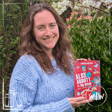
84 Rebecca Stott | Historical Fiction, Non-Fiction and Biographical Author image

84 Rebecca Stott | Historical Fiction, Non-Fiction and Biographical Author

S1 E84 ยท The Write and Wrong Podcast | Writing Tips, Book Publishing and Literary Agents
Avatar
430 Plays3 years ago

Historical fiction, non-fiction and biographical author, Rebecca Stott in on the podcast this week to talk about her latest novel, 'Dark Earth'. Hear all about the inspirations and research that goes into her work as well as a glimpse into what it was like growing up in a cult and then overcoming the fear of documenting it in her award winning book, 'In the Days of Rain'.

Support the show on Patreon

Signing up to the Patreon will give you access to the Discord server, where you'll be able to interact directly with Jamie as well as many of the previous agents, authors and editors who have been on the show. You'll also be able to see who the upcoming guests are and put forward questions for Jamie to ask them.

WriteMentor

Get a whole month with WriteMentor's Hub for free using the coupon code 'Write&Wrong'.

The Chosen Ones and Other Tropes

Jamie, Melissa and Noami talk about the best and the worst writing tropes!

Bookshop

Click here to find all of our guests' books as well as the desert island library over at bookshop.org.

Zencastr

Click on this referral link to get 30% off your first three months with Zencastr.

Recommended
Transcript

Introduction and Sponsorship

00:00:00
Speaker
Hi guys, quick one before we get into the episode.
00:00:02
Speaker
This episode is sponsored by Zencaster, which is the production suite that I've used from the very beginning of this podcast.
00:00:06
Speaker
And if you're interested in starting your own podcast, hang around at the end of the episode for our 30% discount referral code.
00:00:12
Speaker
Thanks.
00:00:13
Speaker
So our podcast is called Right and Wrong.
00:00:14
Speaker
Are these your notes?
00:00:16
Speaker
These are your notes about what we're going to say.
00:00:19
Speaker
Anything.
00:00:19
Speaker
It's a short answer.
00:00:21
Speaker
So how many novels did you not finish?
00:00:24
Speaker
Oh my God, so many.
00:00:26
Speaker
It was perfect.
00:00:27
Speaker
What's she talking about?
00:00:28
Speaker
This is not a good one.
00:00:30
Speaker
Ooh, a spicy question.
00:00:32
Speaker
I love it.
00:00:33
Speaker
This is it, guys.
00:00:34
Speaker
The big secret to getting published is you have to write a good book.
00:00:38
Speaker
You heard it here first.
00:00:42
Speaker
Hello

Interview with Rebecca Stott

00:00:43
Speaker
and welcome back to the Right and Wrong podcast.
00:00:45
Speaker
Today I'm very excited to be joined by award-winning novelist, non-fiction writer, broadcaster and historian, Rebecca Stott.
00:00:54
Speaker
Hi Rebecca.
00:00:55
Speaker
Hello.
00:00:56
Speaker
How's it going?
00:00:58
Speaker
Yeah, very good, thank you.
00:00:59
Speaker
In London and it's a beautiful morning here.
00:01:02
Speaker
Oh.
00:01:02
Speaker
Well, I'm glad the weather is on your side.
00:01:05
Speaker
Let's start off by talking about your latest release, Dark Earth, which came out in June.
00:01:13
Speaker
It's a literary historical fiction set in 500 AD England.
00:01:19
Speaker
What is it about and what made you choose that setting and the characters?
00:01:26
Speaker
I really, really wanted, I became fascinated a few years ago, maybe as many as five years ago.
00:01:32
Speaker
Actually, I've always been fascinated by ruined cities, particularly ruined cities that represent a different civilization that's somehow kind of mysterious.
00:01:43
Speaker
And then I came across...
00:01:46
Speaker
some information about Londinium.
00:01:48
Speaker
So Londinium was this great big, you know, mile wide city, basically the size of the financial district of London now, built by the Romans when they occupied Britain and then abandoned by the Romans 400 years later.
00:02:02
Speaker
And I

Creation of 'Dark Earth'

00:02:03
Speaker
came across this amazing fact that for 400 years,
00:02:07
Speaker
After the Romans abandoned their huge city, and you imagine a great wall around it with four rooms and bathhouses and warehouses and all built in stone, they abandoned it.
00:02:18
Speaker
And then for about 400 years, it was unoccupied.
00:02:22
Speaker
I mean, unvisited.
00:02:23
Speaker
The number of things that people have found in the ruins after the Romans left, that they can date to that 400-year sort of sleeping beauty period, you can put in a single shoebox.
00:02:38
Speaker
So, you know, it just blew my mind.
00:02:41
Speaker
And then I started thinking, well...
00:02:44
Speaker
Then I found a brooch.
00:02:45
Speaker
I don't know, I'll talk about the brooch in a little while.
00:02:47
Speaker
But basically, my book is about two sisters, Anglo-Saxon sisters, that they've migrated to England, or their father has, who are living sort of in exile on a mud island in the Thames, opposite the ruined city.
00:03:02
Speaker
And various things happen, and they have to go on the run.
00:03:06
Speaker
And eventually, having tried to find sanctuary in various places, they're quite young,
00:03:11
Speaker
they have to take refuge inside the ruined city and they find a community of women there.
00:03:17
Speaker
So it's a story about two women on the run, two sisters on the run, and they are being pursued by the local warlord,
00:03:27
Speaker
And his men.
00:03:28
Speaker
And they and the community of women that they find have to find ways to defend themselves against the men without the physical might that the men have.
00:03:39
Speaker
So it's about magic and witchcraft and smoke and mirrors.
00:03:43
Speaker
Amazing.
00:03:43
Speaker
So it sounds like what sparked this was a bit of information that you found out, a little bit of research
00:03:52
Speaker
I know that you've worked on plenty of nonfiction stuff.
00:03:55
Speaker
Why did you decide to do this as historical fiction as opposed to a nonfiction piece?
00:04:01
Speaker
Oh, that's such a great question.
00:04:08
Speaker
Usually I always know whether a book is historical fiction or fiction or indeed nonfiction.
00:04:15
Speaker
With this, I didn't.
00:04:16
Speaker
All I knew was that I was obsessed with it.
00:04:20
Speaker
You know, although I was trying other projects and thinking about other projects, I kept coming back to this.
00:04:24
Speaker
There was something about it.
00:04:27
Speaker
And, you know, I started thinking about fiction and nonfiction because I write probably equal amounts of both.
00:04:34
Speaker
It's unusual, I think.
00:04:36
Speaker
You know, I was trained as a historian.
00:04:37
Speaker
I wasn't.
00:04:39
Speaker
Yeah, I was trained as a historian and a literary critic and so on.
00:04:42
Speaker
So, yeah.
00:04:43
Speaker
It's unusual to move between the two.
00:04:45
Speaker
And I think I've just started a few years ago, started to think of it as a spectrum rather than as a binary, if you know what I mean.
00:04:53
Speaker
There have been novels I've written that have mixed nonfiction into them, like my novel Ghost Walk, my first novel, which had a sort of nonfiction book tucked inside it in extracts.
00:05:08
Speaker
And with this one was different again.
00:05:11
Speaker
I mean, that's the amazing thing, isn't it, about books is that I think for writers, you start again each time.
00:05:16
Speaker
You have the toolbox and you have methods, but each project requires different things of you.
00:05:23
Speaker
And this, I think more than anything, I wanted my feet on the ground in that ruined city.
00:05:30
Speaker
I wanted to be able to see through Isla's eyes.
00:05:34
Speaker
Isla is my main protagonist.
00:05:36
Speaker
I wanted to be able to see through somebody who was living there at the time.
00:05:41
Speaker
And so although I started it as a nonfiction book, the fiction kept breaking through.
00:05:48
Speaker
I kept wanting to say, imagine walking across the city and it's 500 AD and it's, you know, there are walls and there are, you know, cracked walls.
00:05:57
Speaker
And, you know, I wanted all of that.
00:05:59
Speaker
And eventually my agent just said to me, just write the novel.
00:06:03
Speaker
Yeah.
00:06:05
Speaker
which is really interesting because the two forms were vying.
00:06:09
Speaker
But I think that's not because it was either one or the other.
00:06:13
Speaker
It was that I was somewhere in the middle of that spectrum.
00:06:17
Speaker
I wanted to do something that was more fiction than nonfiction, but nonetheless to weave enough fact around the book, in the preface and in the acknowledgements, to give people a slightly different kind of experience from an average novel.
00:06:33
Speaker
to tell them, you know, this is true, this is true, this is true.
00:06:36
Speaker
You know, and what I did was to write into the gaps.
00:06:40
Speaker
So

Historical Facts in Storytelling

00:06:41
Speaker
yeah, it took a while and it was a struggle.
00:06:44
Speaker
But once I started writing the novel, once my agent just said to me, just write the novel, it came very easily, at least to start with.
00:06:53
Speaker
Yeah.
00:06:53
Speaker
So you mentioned a brooch.
00:06:56
Speaker
What was the story with the brooch?
00:06:57
Speaker
Yeah, the brooch.
00:06:59
Speaker
The brooch was, once I got fascinated with Londinium, you know, so going back to that imaginary shoebox, the number of objects that had been dropped inside the ruined city and its 400 years of abandonment could be put in a single shoebox.
00:07:16
Speaker
Imagine one of the objects in that shoebox was a brooch.
00:07:21
Speaker
So somebody was, a wonderful archaeologist who I eventually interviewed, went into an archaeological site on the north bank of the Thames.
00:07:33
Speaker
in 1968, I think.
00:07:35
Speaker
And he was digging in an old, what they knew there was an old bathhouse there, an old Roman bathhouse, and he was digging the remains of that.
00:07:43
Speaker
And he found this brooch sitting on top of the fallen roof tiles of the bathhouse.
00:07:50
Speaker
So the bathhouse had gone down.
00:07:51
Speaker
By the time this woman dropped her brooch, the bathhouse had gone down and she had walked over the broken roof tiles.
00:07:58
Speaker
What was astonishing to him about the brooch was he could date it and he could date it to about 450 or 500 AD.
00:08:08
Speaker
That meant it was an Anglo-Saxon brooch.
00:08:10
Speaker
So what he was looking at and he told me, you know, the hair stood up on the back of his neck.
00:08:15
Speaker
Here was proof that a, an Anglo-Saxon woman went into the ruins and walked across the ruined bathhouse.
00:08:25
Speaker
What was she doing there?
00:08:26
Speaker
You know, so this, so we had a date for it.
00:08:29
Speaker
And yet, because we know nobody went in, you can sort of assume that the people who were farming in the local area probably thought that the ruined city was haunted or it was just too dangerous.
00:08:42
Speaker
So we know none of, nobody was going in, hardly anyone was going in, but an Anglo-Saxon woman did and she dropped her brooch and we know she was there at that moment in time.
00:08:53
Speaker
Okay, the brooch, she could have belonged to her grandmother.
00:08:56
Speaker
So, you know, the date was a bit difficult, but we know it was an Anglo-Saxon woman who dropped her brooch there.
00:09:03
Speaker
So that for me, and the brooch is lovely because it's about two inches wide, maybe an inch and a half.
00:09:11
Speaker
And it's got some lovely patterns on it, but it's rusted and there's a great hole in the middle of it.
00:09:15
Speaker
And it sits on a frame in the London Museum.
00:09:19
Speaker
And when I saw it, and I saw the explanation underneath, you know, that she, that this had been found on top of the bathhouse, I suddenly thought, oh, my head was just racing.
00:09:30
Speaker
You know, what was she doing in there?
00:09:32
Speaker
Was she on the run from something?
00:09:35
Speaker
Was this a tryst?
00:09:36
Speaker
Was she curious, more curious than any of her peers?
00:09:40
Speaker
You know, what was unusual about this woman that she was one of the few people to drop something in there?
00:09:45
Speaker
Well, what was she doing and how did she get in?
00:09:49
Speaker
And all of, you know, did she go by boat?
00:09:50
Speaker
Did she go across the bridge?
00:09:52
Speaker
Was the bridge still standing?
00:09:54
Speaker
So all of those questions started to come thick and fast and, you
00:09:58
Speaker
Yeah.
00:09:59
Speaker
So you'll see, if you read the book, you get to the moment where the brooch is dropped.
00:10:04
Speaker
And that's my interpretation of how the brooch got there.
00:10:08
Speaker
And I tried to make it, yeah, not the kind of explanation that you would expect.
00:10:14
Speaker
That's awesome.
00:10:15
Speaker
That's such a cool inception for the sort of story and the character and what it's all about.
00:10:21
Speaker
I remember talking to, so a few years ago, I was part of a salon in London.
00:10:27
Speaker
We called it a salon, very pretentious.
00:10:28
Speaker
Basically, it was a group of historians and historical novelists who came together to talk about writing history and writing history novelistically, whether it was fiction or nonfiction.
00:10:41
Speaker
And I remember Philippa Gregory talking about...
00:10:47
Speaker
how, because she was in the group, she's so interesting, really interesting woman.
00:10:51
Speaker
And she talked about how constraints, i.e.
00:10:54
Speaker
dates,
00:10:56
Speaker
and objects being in a particular place, mysterious things.
00:11:01
Speaker
But the facts, basically the facts are your constraints and it works a bit like, and I've been thinking about it since, it works a little bit like the constraints of a sonnet.
00:11:10
Speaker
You know, you've only got a certain number of syllables to align.
00:11:14
Speaker
And in a historical novel for me, things like that, well, the brooch was dropped there.
00:11:19
Speaker
That's one of my constraints.
00:11:21
Speaker
I have to have it in there.
00:11:22
Speaker
It's part of the framework.
00:11:23
Speaker
It's part of the architecture.
00:11:26
Speaker
But what's different about this was there were so few facts.
00:11:29
Speaker
So I had very little architecture in a way.
00:11:32
Speaker
The brooch was really important as a central truss, if you like, of the structure.
00:11:38
Speaker
Yeah.
00:11:39
Speaker
I've always thought that creativity thrives when it's constrained.
00:11:43
Speaker
When you have things in place where it's like, okay, I can't do this, that, the other.
00:11:46
Speaker
I know these are the historical facts around it.
00:11:49
Speaker
I think that's where you really have to be innovative with the creativity of the story and what happens and things like that.
00:11:55
Speaker
Yeah, it just gives you a framework.
00:11:58
Speaker
And that's why I think, you know, sometimes I'm working on another project at the moment for television.
00:12:05
Speaker
And it's fascinating because I'm working as part of a bigger team.
00:12:10
Speaker
And the mantra is we are not writing a history lesson.
00:12:14
Speaker
We're not making a history lesson, you know, so in other words, we can play hard and fast with the facts.
00:12:20
Speaker
Yeah.
00:12:21
Speaker
And there's a bit of me that just keeps on saying, but the facts are the interesting things.
00:12:25
Speaker
You know, you keep the facts in place and we have to work our way around them or try and figure out why that character did that exactly at that point.
00:12:33
Speaker
That makes sense.
00:12:34
Speaker
As a historian, I can see why you would be interested in that.
00:12:37
Speaker
Yeah.
00:12:38
Speaker
So it's not that I'm obsessed with the history, like, oh, we've got to be true.
00:12:43
Speaker
But it's just that when you start to move the facts all over the place, you lose some of the really interesting stuff.
00:12:49
Speaker
It's

Research to Writing Process

00:12:50
Speaker
there in the record.
00:12:52
Speaker
So, I mean, as someone who's obviously very interested in history and old stories and things,
00:12:59
Speaker
Do all of your projects sort of start from something that you find interesting and then you begin researching it and then from that point that's where the project is born?
00:13:10
Speaker
Yes.
00:13:10
Speaker
Yeah.
00:13:11
Speaker
And I think it's a new thing for me now I think is realising that my, I'm sure lots of other people have said this is not unique, but it's that I finally understand it that my curiosity is my barometer or my
00:13:28
Speaker
Weather system, you know, if I'm really obsessed with something, there's something to find, you know, if I can't let it go and if it excites me.
00:13:37
Speaker
So when I wrote Ghost Walk, which was my first novel, that started with a mystery that I came across in a footnote.
00:13:47
Speaker
You know, I was reading a biography of Isaac Newton.
00:13:52
Speaker
And it was, it was a lovely biography.
00:13:54
Speaker
I can't remember the name of the writer now, but it doesn't matter.
00:13:57
Speaker
And he was saying, oh, Isaac Newton was really lucky.
00:14:00
Speaker
He got his fellowship at Trinity, which had enabled him to do all the amazing things he did in this particular year.
00:14:07
Speaker
because there were more fellowships available.
00:14:10
Speaker
So then there was a little number and I went to the footnote.
00:14:13
Speaker
And the footnote said, there were more fellowships, vacancies available that year because several fellows had fallen down staircases to their deaths.
00:14:22
Speaker
What?
00:14:23
Speaker
Yeah, this was in a footnote.
00:14:25
Speaker
And I'm...
00:14:27
Speaker
I remember putting three asterisks by the footnote and then just going back to it again and again.
00:14:35
Speaker
Then I had to know, you know, why were they falling down staircases?
00:14:40
Speaker
You know, was this...
00:14:42
Speaker
Just a coincidence, was there somebody helping Newton get his fellowship?
00:14:48
Speaker
By pushing people down the stairs.
00:14:50
Speaker
Yeah, yeah, yeah.
00:14:53
Speaker
And why were they falling?
00:14:54
Speaker
You know, were they drunk?
00:14:56
Speaker
So I spent, I think, about four months trying to dig away.
00:15:00
Speaker
And I was in Cambridge then, so I could get into really rare archives.
00:15:03
Speaker
Yeah.
00:15:04
Speaker
And I did indeed find evidence for all of the four deaths.
00:15:09
Speaker
There were four, I think, deaths that year.
00:15:12
Speaker
And they were all mysterious.
00:15:14
Speaker
And they were either drunk or drugged.
00:15:17
Speaker
And clearly people who recorded them at the time thought that they were mysterious.
00:15:23
Speaker
I mean, you know, suspicious.
00:15:25
Speaker
Yeah.
00:15:25
Speaker
Yeah.
00:15:26
Speaker
That's interesting.
00:15:27
Speaker
That's how I started on that one.
00:15:29
Speaker
Yeah, that's so interesting.
00:15:32
Speaker
I've had a couple of historical authors on the show.
00:15:37
Speaker
Obviously, when you're writing anything historical, there needs to be a good research element to it.
00:15:44
Speaker
One of the things that people always say, one of the pitfalls, is
00:15:49
Speaker
for lack of a better phrase, over-researching and sort of falling down these endless rabbit holes.
00:15:55
Speaker
Is that something that you've encountered?
00:15:57
Speaker
Yeah, and I don't worry about it so much now.
00:16:02
Speaker
Again, I think I sort of trust my instincts sometimes.
00:16:05
Speaker
This novel, Dark Earth, took five years to write.
00:16:08
Speaker
Wow.
00:16:09
Speaker
or five years to finish from, I think I spent about a year and a half on the research.
00:16:14
Speaker
And I just think, well, there's a bit of me that just thinks that's just not financially viable, you know, writing historical fiction.
00:16:21
Speaker
Taking five years to write each one, you know, for goodness sake.
00:16:25
Speaker
But it was really hard.
00:16:26
Speaker
This was the hardest one I've written because there's so little information.
00:16:30
Speaker
And the information that we do know is,
00:16:33
Speaker
in the world of archaeology rather than the world of historical documentation.
00:16:39
Speaker
So I was having to find my way into archaeology and to talk to archaeologists and get them to trust me and ask them to explain why one person thought one thing, one person thought another.
00:16:50
Speaker
And so that took a long time.
00:16:53
Speaker
And then reading, you know, it was a new feel for me in a way.
00:16:58
Speaker
But I read and read and read and I just stuck with the questions that were driving me in those early days.
00:17:03
Speaker
And then when I started the novel, I remember there was a day when I thought, okay, this is it.
00:17:09
Speaker
And I put all the books together.
00:17:11
Speaker
that I'd been reading all the notebooks, all the papers, all the, you know, academic articles into a couple of really big boxes and took them to the garage and closed the door hard.
00:17:25
Speaker
And it was something in that swinging of the garage door shut, you know.
00:17:30
Speaker
I mean, I knew I could go back out there to check something if I needed to.
00:17:35
Speaker
Mm-hmm.
00:17:36
Speaker
Basically, this was it.
00:17:37
Speaker
You know, I was on my own with it now.
00:17:39
Speaker
It was all in my head.
00:17:40
Speaker
And I didn't need any of that stuff anymore.
00:17:45
Speaker
And if I did, then if I needed to check a fact or I needed to, you know, put a person's name in, then I could fill that in later.
00:17:53
Speaker
But that was the moment.
00:17:54
Speaker
It's like for me, I don't know, I'm sure lots of other writers do this as well.
00:17:59
Speaker
But when I'm in the middle of writing a book, I put the internet blocker on.
00:18:06
Speaker
And I set it for four hours.
00:18:08
Speaker
And it means I can't get to the internet.
00:18:13
Speaker
I can't get my emails.
00:18:15
Speaker
I can't do anything other than work on this project.
00:18:19
Speaker
And there's a lovely moment when the little banner comes up.
00:18:22
Speaker
I use an app called Freedom.
00:18:23
Speaker
Okay.
00:18:25
Speaker
And the little app comes up, a little banner comes across your screen and it says, your Freedom Session has started.
00:18:32
Speaker
And that's when my brain gets, or my heart or my mind or whatever part combination it is, really gets going.
00:18:40
Speaker
And I can work for about, I rarely do four, but I can do three of those four hours.
00:18:46
Speaker
Yeah.
00:18:47
Speaker
And then I fall off.
00:18:51
Speaker
So it's a little bit the same with having the books to hand.
00:18:54
Speaker
It's closing of that garage door was like saying your freedom session has started.
00:19:00
Speaker
Yeah, yeah, yeah.
00:19:02
Speaker
you're allowed to go to the other place of your brain now, the place where the girl is who's running away.
00:19:11
Speaker
And yeah, so it is, I think it is a real, and people ask me that a lot because I used to teach at UEA, taught an amazing course there.
00:19:20
Speaker
that I designed and was just mine, called Novel History, which was about writing history novelistically.
00:19:28
Speaker
And the students often had that question, like, oh, I've tried writing historical fiction before, but I get lost in the research.
00:19:37
Speaker
And I think what I would always say is you have to trust that you've reached a point where you know enough to occupy the world.
00:19:45
Speaker
and to be in it and then you put everything away.
00:19:49
Speaker
Lock it away if necessary.
00:19:50
Speaker
Yeah, yeah,

Curiosity and Writing Passion

00:19:51
Speaker
yeah.
00:19:51
Speaker
I spoke to one author who said that she'd spent, she'd kind of got lost for a couple of weeks sort of figuring out the process that they used to create the buttons that went on the shirts and then she realized it's like, why am I even researching this?
00:20:06
Speaker
This is never going into the book.
00:20:07
Speaker
Yeah, yeah.
00:20:09
Speaker
But then sometimes, you know, when you're in that research and you find...
00:20:13
Speaker
you know, about the buttons that go on the shirts.
00:20:15
Speaker
And then you find a button maker that lives in the street where your character lives and you think, yes, I will use that.
00:20:22
Speaker
You never know.
00:20:22
Speaker
Yeah.
00:20:23
Speaker
You never know where you're going to end up.
00:20:25
Speaker
Yeah.
00:20:25
Speaker
Which is exciting.
00:20:26
Speaker
You know, that's, that's the sort of fun part of research, isn't it?
00:20:28
Speaker
Learning these new things and then sort of, they suddenly all link up together.
00:20:33
Speaker
Yeah.
00:20:33
Speaker
As someone, presumably you work on, do you work on multiple projects at any one time?
00:20:39
Speaker
I am now.
00:20:40
Speaker
So I gave up my job teaching at UEA last September in order to go freelance.
00:20:44
Speaker
And I really, really have been longing for this moment.
00:20:48
Speaker
Not because I don't like teaching.
00:20:49
Speaker
I love teaching.
00:20:50
Speaker
But I wanted to have a period of time where I was just freelance.
00:20:55
Speaker
So now, for the first time in my life, before, I couldn't because I was teaching, you know, doing all the stuff that you do as an academic.
00:21:03
Speaker
And so in a sense, yes, I was writing alongside teaching.
00:21:08
Speaker
But now I'm doing several writing projects at the same time.
00:21:12
Speaker
So as someone who sort of finds inspiration through interesting tidbits and then research, have you had many projects where you find an interesting thing, you start researching it, but after a little bit, you kind of lose the energy and then put that project aside?
00:21:30
Speaker
Yeah.
00:21:30
Speaker
Hasn't happened to me a lot.
00:21:32
Speaker
Yeah.
00:21:34
Speaker
Yes, yes, definitely.
00:21:37
Speaker
There's a lovely poem by Don Patterson called Why Do You Stay Up So Late?
00:21:44
Speaker
It's dedicated to his son.
00:21:46
Speaker
So his son had asked him this question, Daddy, why do you stay up so late?
00:21:50
Speaker
And he talks to the boy in the poem and says, you know, he talks to his son, he says, you know, you know when you go to the beach and you collect the stones and you bring them back and you put them in water to see what, which one of them's blinked back at you.
00:22:04
Speaker
You know, the ones that are really shiny and have the secret little patterns through them that you can only see underwater.
00:22:11
Speaker
He said, that's what I, the poem goes on, that's what I do at night.
00:22:16
Speaker
You know, I collect the stones of the day and I find out which ones I wish I could.
00:22:22
Speaker
I'm not very good at remembering.
00:22:26
Speaker
But he talks about looking for the one that blinks back at you, you know, and sometimes you choose the wrong stone and it doesn't blink for long or it blinks a little bit and then it stops blinking.
00:22:36
Speaker
That's a great analogy.
00:22:37
Speaker
It is, isn't it?
00:22:39
Speaker
Yeah.
00:22:39
Speaker
And it's a great way to sort of approach it as well, especially if you're doing something that does have that sort of work that needs to be done beforehand, like historical fiction or nonfiction piece where you do need to do the research.
00:22:51
Speaker
I guess you can quite quickly understand whether or not you're going to enjoy writing this book by the pace of the research.
00:23:01
Speaker
Yes, absolutely.
00:23:02
Speaker
Yeah.
00:23:03
Speaker
And yeah, it takes a long time.
00:23:05
Speaker
I'm really, I'm really interested in ways in which, you know, I guess if I was sensible, I would dig the same field.
00:23:12
Speaker
You know, I would write the next book in the same period, but my brain and curiosity doesn't really work like that.

Memoir and Impact

00:23:21
Speaker
It's much more maverick.
00:23:22
Speaker
It'll hop from one century to another.
00:23:24
Speaker
Yeah.
00:23:25
Speaker
And I mean, from one genre to another, from fiction to nonfiction to academia and things like that.
00:23:32
Speaker
And this, so this is, you've released quite a few books, but this is your third novel.
00:23:37
Speaker
Yeah.
00:23:38
Speaker
Because amongst your other books, most notably, In the Days of Rain, which won the Costa Biography Award 2017.
00:23:46
Speaker
I can only imagine that
00:23:50
Speaker
how good it must have felt that that won and got the sort of recognition that it did because it was a book that was so close to home for you.
00:23:58
Speaker
Yeah, it was.
00:23:59
Speaker
And it was also a dangerous book for me to write.
00:24:02
Speaker
So, you know, for listeners, it's, it's, I grew up, it always sounds so melodramatic, but there's more of a way of saying it.
00:24:09
Speaker
I grew up in a, in a, in a cult, in
00:24:13
Speaker
They live in Britain.
00:24:14
Speaker
They live all around the world.
00:24:15
Speaker
They're called the Exclusive Brethren.
00:24:17
Speaker
They call themselves the Plymouth Brethren Christian Church now.
00:24:21
Speaker
And they're unbelievably strict.
00:24:25
Speaker
And we were not allowed any access to the outside world, really.
00:24:31
Speaker
So we left when I was about eight.
00:24:33
Speaker
My parents had been in it all their lives.
00:24:36
Speaker
My grandparents, my great-grandparents.
00:24:38
Speaker
So we didn't know anybody outside.
00:24:41
Speaker
this particular group.
00:24:43
Speaker
So we, we left because of a sexual scandal that split the group.
00:24:46
Speaker
So quite a lot of people left at the same time as we did.
00:24:50
Speaker
Um, but the group is, you know, like any cult, it works through brainwashing.
00:24:55
Speaker
So there's a lot of fear of speaking out against the group or in, because most people like me have relatives still inside.
00:25:04
Speaker
Um, and you don't want them to get into trouble for, you know, things that you've done.
00:25:11
Speaker
And also the brethren themselves are immensely wealthy and very litigious.
00:25:17
Speaker
They practice what's called vexatious litigation, which I love it as a phrase, but it basically means they threaten to take you to court and keep you under pressure for a really long time until you stop bad-mouthing them or speaking out against them or whatever.
00:25:34
Speaker
Oh, okay.
00:25:35
Speaker
Okay.
00:25:36
Speaker
So I knew quite a lot of people who'd been through, you know, the system of vexatious litigation.
00:25:42
Speaker
And so I was very scared that this book, which was my brave attempt to do what my father had failed to do.
00:25:52
Speaker
He was too scared, really.
00:25:53
Speaker
He was too scared to face it.
00:25:54
Speaker
He was too scared to write things.
00:25:58
Speaker
I mean, he tried, but I think there was a part of him that was really badly damaged by his experience of being inside.
00:26:08
Speaker
And so I just started writing it.
00:26:12
Speaker
And as I continued writing it, and I got, A, more angry about the way cults work and this particular group work and what had happened to us as a family, but also...
00:26:27
Speaker
more compassionate as I went, you know, I could understand how people like my father stayed inside, how they did terrible things because he did do terrible things inside.
00:26:39
Speaker
You know, he, when he lay dying, he talked of himself as a brown shirt.
00:26:43
Speaker
He talked about the period that we'd been inside the brethren as a Nazi decade.
00:26:47
Speaker
And I'd say, you can't use phrases like that.
00:26:51
Speaker
You know, it's not comparable.
00:26:52
Speaker
Yeah.
00:26:53
Speaker
But there was a bit of me that realized as I did the research and the writing that he was right.
00:26:57
Speaker
You know, he did work.
00:26:58
Speaker
He was a young Nazi.
00:27:00
Speaker
He worked for the group and bullied people and put them under pressure.
00:27:06
Speaker
And I began to try to understand what it was like for those men inside.
00:27:12
Speaker
So, yes, going back to the Costa, well, you know, the book had to go through three separate libel reads before.
00:27:19
Speaker
The publicist, which would, you know, because it was coming out in Australia, America and Britain.
00:27:24
Speaker
Simultaneously?
00:27:25
Speaker
Simultaneously.
00:27:26
Speaker
And each of those countries has different libel laws.
00:27:28
Speaker
So we had to have three different teams on it.
00:27:32
Speaker
So I felt it was pretty bulletproof by the time it came out.
00:27:37
Speaker
But I was also scared.
00:27:38
Speaker
You know, I was really scared of reprisals.
00:27:41
Speaker
My family was scared of reprisals as well.
00:27:44
Speaker
And then, you know, it wasn't long before it won the Costa.
00:27:49
Speaker
Then my publisher said to me, now it's really bulletproof.
00:27:53
Speaker
Yeah.
00:27:54
Speaker
Because it's had so much publicity and, you know, it's going to be read by huge numbers of people and it will be, you know, read by church groups and all the rest of it.
00:28:05
Speaker
And it was and it has been.
00:28:07
Speaker
And, you know, so it was obviously wonderful to have that endorsement that it was, you know, that it was a work of,
00:28:17
Speaker
of worth in itself, but also to have the protection of the Costa.
00:28:22
Speaker
Yes.
00:28:24
Speaker
And, you know, since the book came out and it won the Costa and it got lots of publicity, I've had something like 400 letters from ex-brethren, people who left about the same time we did or who left later.
00:28:38
Speaker
all people who were too scared, and I would actually use the word shell-shocked, really, you know, too much PTSD to talk to their families about their experience.
00:28:49
Speaker
And many of these people were really elderly.
00:28:53
Speaker
And it sort of released something in the community, I think, once I had gone to press with my book.
00:29:01
Speaker
It released something for them.
00:29:02
Speaker
They wanted to tell their story, so I had hundreds of letters.
00:29:07
Speaker
And I even was asked to go to the bedside of a woman in her 90s who was, you know, wasn't going to live much longer.
00:29:14
Speaker
And she'd never talked to her family about what she'd experienced.
00:29:18
Speaker
She read my book and her daughter wrote to me and said, our mother would really like to talk to you.
00:29:24
Speaker
So I drove to Milton Keynes and sat with this wonderful woman for a couple of hours and she just held my hand and talked to me.
00:29:31
Speaker
That's nice.
00:29:32
Speaker
It's great that you sort of inspired all these people to not necessarily speak up, but sort of talk about things that they may have not been speaking about or had kind of been holding inside for such a long time.
00:29:45
Speaker
Yeah.
00:29:46
Speaker
Yeah.
00:29:46
Speaker
And books are really powerful like that, you know, sort of, it isn't just that you give them, that you give people an experience that is very similar to theirs so that they go, oh my goodness, that was like that for me too.
00:29:59
Speaker
But yeah.
00:30:01
Speaker
that it breaks a taboo.
00:30:02
Speaker
You know, it's one person stands up and says, this is how it was.
00:30:07
Speaker
This is not right.
00:30:09
Speaker
This should not be happening.
00:30:12
Speaker
And this is what happened to my family as a result of what we lived through.
00:30:17
Speaker
And then other people feel that the taboo is broken for them as well.
00:30:22
Speaker
Yeah.
00:30:22
Speaker
Yeah.

Advice for Aspiring Writers

00:30:23
Speaker
So speaking of other people and, and, and offering help, what advice would you have to give to aspiring writers, whether that's in nonfiction or historical fiction or, or any of the, the areas that you work in?
00:30:41
Speaker
Yeah, that's so interesting.
00:30:42
Speaker
I would say, I mean, because I taught creative writing for a long time, you know, it's not that we impart our knowledge of, you know, we've got all the secrets and they don't, they've got loads of great tips themselves, the students.
00:30:57
Speaker
But I think the thing I feel most strongly about is just keeping going and not going back over the perfect beginning that you've started.
00:31:08
Speaker
Yeah.
00:31:09
Speaker
but just getting it down, you know, just keeping going, not necessarily every day, but regularly, you know, and keeping the story going and putting it down on paper because you'll have to work it later.
00:31:23
Speaker
You know, you work it and you work it and you work it once you've got the first draft.
00:31:26
Speaker
But I've seen too many people just going back over the opening again and again and again to make it perfect.
00:31:34
Speaker
And then, you know,
00:31:38
Speaker
they can't progress because they're somehow going round and round on this.
00:31:43
Speaker
So I think writing and accepting that the first draft is going to be poor, but just keeping going and not going back and editing constantly.
00:31:53
Speaker
Yes.
00:31:53
Speaker
Yes.
00:31:54
Speaker
As they say, you can't edit a blank page.
00:31:57
Speaker
Yes.
00:31:57
Speaker
Yeah.
00:31:58
Speaker
That's advice that quite a lot of people get.
00:32:01
Speaker
Yeah.
00:32:02
Speaker
Yeah.
00:32:02
Speaker
That

Desert Island Book Choice

00:32:03
Speaker
brings us to the final question of the interview, which is, as always, Rebecca, if you were stranded on a desert island with a single book, which book would it be?
00:32:14
Speaker
Yeah, it's a weird one.
00:32:15
Speaker
I've been thinking about it the last few days and if you ask me in a week's time, it might be different.
00:32:20
Speaker
It's the same for me.
00:32:20
Speaker
Don't change it every week.
00:32:22
Speaker
Yeah, the book I'm longing to reread at the moment is actually Herman Melville's Moby Dick.
00:32:28
Speaker
Oh, yeah.
00:32:28
Speaker
Yeah, I know.
00:32:29
Speaker
It's weird, isn't it?
00:32:31
Speaker
I have just spent five years writing a book which is almost entirely women because I was very frustrated by reading history books from the period which were almost entirely about men.
00:32:43
Speaker
And so my book's very, very female-centred.
00:32:46
Speaker
And Moby Dick is almost entirely male-centred.
00:32:49
Speaker
I don't know that there's any females in it.
00:32:52
Speaker
But it's such a weird mix of fiction and nonfiction.
00:32:56
Speaker
And it's so...
00:32:58
Speaker
joyful and it's a fantastic story that goes all the way through the middle you know ahab and the whale and the various things that happen on the boat yeah it's got all of these tangential little pieces about whiteness and about you know sperm oil and
00:33:16
Speaker
Sometimes it reads like a natural history book.
00:33:18
Speaker
Sometimes it reads like a book of philosophy.
00:33:20
Speaker
Sometimes it's like a novel.
00:33:23
Speaker
But I love the weirdness of it and it makes me laugh.
00:33:27
Speaker
So yeah, it's really good.
00:33:29
Speaker
That's great.
00:33:30
Speaker
It's great to have another classic in the Desert Island collection.
00:33:34
Speaker
And it sounds like that's kind of similar to the way that you like to write your fiction, where it's, as you mentioned, the sort of whale oil, you dot in these sort of nonfictiony details so that you are learning stuff as you read this adventure fun story thing.
00:33:51
Speaker
Yeah, exactly.
00:33:52
Speaker
You can have an adventure story and hang all kinds of weird things on it.
00:33:57
Speaker
I think that's why I want to reread Moby Dick.
00:34:00
Speaker
It's a really, really terrific book and he's such a wonderful writer.
00:34:04
Speaker
Yes.
00:34:04
Speaker
Yeah,

Conclusion and Social Media

00:34:05
Speaker
I didn't think that I read Neil Stevenson's Seven Eves and I've never learned so much about the International Space Station and astronauts as just reading that one dystopian science fiction speculative novel.
00:34:21
Speaker
Yeah.
00:34:21
Speaker
Yeah.
00:34:22
Speaker
Which is great.
00:34:23
Speaker
Well, thank you so much, Rebecca.
00:34:24
Speaker
Thanks for coming on the podcast, sharing your experience and telling us all about how you write and what's going on with you and your work.
00:34:33
Speaker
Thank you for having me.
00:34:34
Speaker
And for anyone listening, if you want to keep up with what Rebecca is doing, you can follow her on Twitter at Rebecca Stott 64 or head over to her website, www.rebeccastott.co.uk.
00:34:46
Speaker
Dark Earth is out now, along with all of her other books.
00:34:49
Speaker
You can go and get them in all the usual places.
00:34:51
Speaker
And to make sure you don't miss an episode of this podcast, follow us on Twitter at RightAndWrongUK or on Instagram at RightAndWrongPodcast.
00:34:58
Speaker
Thanks again to Rebecca and thanks to everyone listening.
00:35:01
Speaker
We'll catch you on the next episode.
00:35:03
Speaker
Thanks again for supporting the show and we'll see you in the next episode.