Become a Creator today!Start creating today - Share your story with the world!
Start for free
00:00:00
00:00:01

260 Carmella Lowkis | Historical Fiction Author and Marketing Manager

353 Plays4 months ago
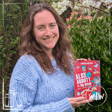
Historical fiction writer and publishing marketing manager, Carmella Lowkis drops by to chat about her second novel, researching historical fiction and being on both sides of the publishing industry.
Support the show on Patreon! 💖 And get extended episodes, ad-free and a week ahead of everyone else. 🙏
For audio listeners:
Listen to The Chosen Ones and Other Tropes, Jamie's other podcast with Melissa Welliver and Naomi Gibson! 📚
Follow on socials! 🥳
Recommended
















Transcript
Challenges in Writing
00:00:00
Speaker
Oh, a spicy question. I Because the writing is sort of everything, right? Like can fix plot holes, but if the writer... So some readers love that and some readers are like, but I wanted more of this. So it's kind of, it's kind of a gamble.
Introducing Carmela Locus
00:00:14
Speaker
Hello and welcome back to the Right and Wrong podcast. On today's episode, I am with historical fiction author, Carmela Locus. Hello. Hi, great to be here.
00:00:25
Speaker
Thanks so much for coming on. um Let's start, as we always do, with the upcoming publication, your second novel, which is out 22nd of
Carmela's New Novel Premise
00:00:34
Speaker
January. Tell us a little bit about A Slow and Secret Poison.
00:00:40
Speaker
Yeah, so this is, as you said, historical fiction. It's set in 1920s Wiltshire. So I'm from Wiltshire and for this book, I wanted to dig into that sort of setting where I know things very well and I know the history, but um I was thinking, you know, less research, but actually that 1920s turned out completely differently. Okay.
00:01:02
Speaker
It's about a young female gardener who's come to this big Wiltshire country estate to escape a sort of troubled, mysterious past that she's left behind her. And she becomes obsessed first out of curiosity, but then sort of more romantically with the Lady of the Manor.
00:01:20
Speaker
who's a reclusive, strange hermit, you know, everyone's dream woman, who believes that she's under a terrible curse where she's going to die in the next year.
Personal Connections in Writing
00:01:30
Speaker
So it's a bit of a romance, a bit of a gothic mystery, and things get very twisty and turny with lots of betrayals and things like that.
00:01:37
Speaker
So hopefully a very fun read. I had fun writing it. Okay, yeah. It sounds like it. And I feel like, uh, going back to like where you're from, but focusing it in Wiltshire, I feel like that's something that a lot of people do with a, with a second novel.
00:01:53
Speaker
I don't know Like it feels like the, there's a confidence when you've written your first novel and then you're like, Oh, I want to do something that's like much more rooted in, in me. Was that kind of why you decided to do that? Yeah, I think as well with your first novel, you sort of have all this time, you limitless time to research whatever you want.
First Novel Challenges
00:02:14
Speaker
um And then, I mean, for myself, I had a two-bit contract, which means that I needed to write this next book. um in a actually a deadline suddenly and a time frame that was much shorter than what it took to write book one and so I thought okay as I said let's fix on something that I already know all about I wouldn't even need to do any research and then that didn't quite work out in that way as I planned but right yeah I think as well that personal connection is sort of maybe for book one I was thinking oh no one wants to hear about
00:02:49
Speaker
the things that I'm interested in or that I've had in my life. And then you realize, oh, maybe they do. i don't know. We'll try it out. Yeah. Okay. Okay. So it turns out over a hundred years, Wiltshire has changed quite a lot.
00:03:02
Speaker
Yeah. Would you believe? So we're talking about the, the, the research part of things though. Um, before we get into that, this novel set in the 1920s, your first novel, Spitting Gold, 1866, um, What is it about the, well, we know why the place for this new one Wiltshire. What is it about sort of time and place that draws you in as a storyteller for this novel, for the first novel?
00:03:28
Speaker
I think I'm really interested in times and places where we're having changes in the ways that different social groups interact. So I write a lot about women. I write a lot about gay women and about social class. And these are both times where there's sort of been these periods of upheaval and change. So for book one, that's the French Revolution and it's that sort of you know, 70 years after that. So how has that changed in the lifespans of the people where the elderly sort of really remember that and the new generation have been born into this new world of post-revolutionary France?
Historical Settings and Social Dynamics
00:04:02
Speaker
And in a Stone and Secret Poison, that's post-World War I, we're into that interwar period where... There's a lot of changes in terms of the economy, in terms of international relations.
00:04:16
Speaker
Again, there's this generation who really remembers the the things that happened in the First World War, who were fighting in the trenches. And then this younger generation, like the main character is part of, who sort of experienced that as children, but aren't really familiar with it now.
00:04:31
Speaker
um So yeah, I'm interested in those places where... the way that people exist in society will change and um like leave room for growth and progress.
00:04:42
Speaker
Okay, that's really interesting. So you've kind of looked for a sweet spot after a sort of big global or national event has taken place where enough people remember, but enough time has passed that you can see where things are going to settle, where the dust has settled.
00:04:59
Speaker
Yeah, I guess these events have a sort of destabilizing effect in society. And I'm interested in the way that that creates opportunities for people. So as I said, particularly for women, post-World we've got suddenly there's far fewer men because they've all you know gone off to the trenches and many of them haven't come back.
00:05:19
Speaker
And women have had to step up a bit more in World War II, but also in World War to take on these traditionally male roles to get out and work together. And then suddenly those roles might be taken away from them or they've got to fight to keep them.
00:05:34
Speaker
And it's sort of, you know, it's the foundations for the ways that women's rights have progressed over the last century. Yeah, that's, yeah, that's, that's a good formula. I'd imagine you probably have, well, imagine you're working on something new already, but apparently you probably have plenty of, um, snapshots of time and then places where that you can apply that similar kind of, um, situation, uh, to your, to your storytelling when it comes to the research.
00:06:00
Speaker
Um, sadly, you did have to do more research than you thought for this new novel. Right. What's your process for
Research in Writing
00:06:09
Speaker
research? How much time do you spend like learning about the time and the place?
00:06:14
Speaker
Well, normally it's already time and place that I'm interested in aware of. So example, for this one, the reason that the in Wiltshire specifically was interesting to me was because I'm very interested in the bright young things and that sort of era.
00:06:31
Speaker
And I've read quite a few biographies or been to exhibits on some of those people who lived in Wiltshire. So figures like Cecil Beaton, the fashion photographer,
00:06:42
Speaker
Siegfried Sassoon, who a bit older than the Bright Young Things, but who was a war poet. And these are all um these are all gay or bisexual men as well who were in Wiltshire. They were living these lavish, upper-class lives, throwing these parties with all the glitterati coming down from London to their massive Wiltshire estates. It's just a really fun era and something that I wasn't really aware of sort of growing up when I was younger in Wiltshire and then sort of came to later in my life. i was like, oh, wow, this is all really cool stuff that was happening near where I lived that I had no idea about.
00:07:16
Speaker
So I'd already, like I said, had some kind of concept of that. So that helped me focus that on where I wanted to set my book and also do my research.
00:07:28
Speaker
So obviously i think unsurprisingly, i do a lot of reading. um I was looking through lots of nonfiction books about the 1920s and things like how people lived, how they dressed, um but also some personal accounts of people who might be working as domestic servants in the 1920s to give that sort of upstairs, downstairs angle, Downton Abbey sort of vibes.
00:07:56
Speaker
And as in addition to that, um what was really helpful was there were times where it was just unclear. You know, we know when electricity is invented, but when did it make its way out to these small countryside villages? When did the plumbing grid get set up? And For those questions, I actually just went to my granny who was not alive in the 1920s. But I was like, when you were a child, did you have electricity? Because that gives me, you know, within a couple of decades of leeway.
00:08:27
Speaker
So thank you to her. She was a very useful resource to have to say, oh, no, we didn't have indoor plumbing until I was 30. Okay, great. okay So I can backtrack that one.
00:08:40
Speaker
Right. Yeah. A couple of decades and World War II, I'd imagine. Yeah, exactly. The other thing that's always fun is ah i chat I've chatted to a few historical authors and it seems quite common because I think just to be a historical writer, you have to be someone who's just naturally interested in history and and and kind of always reading those kinds of things, even if it's not for any specific specific research or or project.
Balancing Research and Writing
00:09:07
Speaker
And a lot of them tend to say that sometimes they get lost in the, in their research and they, and they kind of like go way too deep and things. Did you find that happens to you?
00:09:19
Speaker
Oh, definitely. I think it's sometimes it's a procrastination technique where you're writing and yeah you know, you've got to write one sentence. You're like, okay, but I mean, what were they having for breakfast? And then you go away and you read three books, then you come back and you write toast. Yeah.
00:09:38
Speaker
But I mean, yeah, I get so i get so engrossed um and in it sometimes that I will just be continuing to read. And especially when you, ah especially it sort of leads to a web of other interests. So even before I was researching this book, like I said, with The Bright Young Things, I read a biography of Rex Whistler, which led to a biography of Stephen Tedder, which led to a biography of Cecil Beaton, you know, just sort of leaping all over the place because yeah they they're almost the figures of these eras become almost like i I don't want to say characters in your personal soap opera but almost you start to see the way that all their lives interconnect and the wild dramas that they're having and you're like oh I want to dig into that some more okay as part of your process do you do the research before you start writing is it during the writing or is it a bit of both
00:10:30
Speaker
yeah I try to do a big block before I start writing so that then I can't tempt myself with that. Oh, let me just check. yeah And then I try, i don't always succeed. What I try to do is to write and when I'm not sure about something, just make a note to come back and then eventually come back to it to fact check it.
00:10:51
Speaker
I'm not always great at that. I sometimes get sucked into, no, I'll just check it immediately. um But yeah, you can very easily get distracted. by the historical detail when you're just trying to actually you're just trying to tell the plot and the characters right at this point Yeah, they just like really minutiae, like, oh, but how did they tie their shoelaces? I need to know. And it's like, it's just not really relevant. Yeah, I got really for this book. So there's quite a lot of motoring characters driving classic cars, which I know nothing about. And I got really sucked into, I must have watched hours of YouTube videos of classic car restoration videos and driving videos to just to write, you know, oh, she was driving this car.
00:11:32
Speaker
Yes, exactly. Yeah. Just to write. And a lot of the time it's, and I think it is worth it to some degree, but a lot of the time it'll be like, uh, 1% of the people writing are going to flag the thing and be like, Oh, actually that's not historically correct.
00:11:46
Speaker
Yes. Yes. I mean, the funny thing is that my brother is really into vintage and classic cars. And so I tried him first. I said, yeah do you know, ah you know, how did they put the fuel in? He goes, I don't know.
00:11:58
Speaker
Look it up. Great. Thank you. So even people who are interested probably don't have that knowledge off the top of their head, but you're right. There's always one. There's always one, yeah. and And I guess the the the breadth of doing the research like that is that you're hoping that every so kind of small bit of detail will like um make that one person happy that's going to know that one piece of detail. And that's that's why you want to do it in a broad sense.
00:12:23
Speaker
And also I think having the details and the sort of texture and vibrancy of the world in your own head as an author, even if it's not going into the book, it's sort of helping you to think how these characters are living, what their lives look like.
00:12:40
Speaker
Yeah. And inform that a bit. Yeah, like the the iceberg, right? You only see the top of it. yeah We talk about this a lot with when I have like fantasy authors on and they're talking about world building and they're like, I have this huge amount of world building that you just would, you'll never see it in the book. Like some of it's implied, but most of it's just left out. It's like, I need that so that I can write the characters and write the world and make everything um coherent when it comes across on the page. And it's the same kind of thing, I guess.
00:13:06
Speaker
Yeah, definitely. And I think even with historical fiction, There's so much that you can't find an answer to and you do kind of have to make it up. So I think, you know, i think fantasy authors and historical fiction authors probably have a lot in common there.
00:13:20
Speaker
Yeah. Yeah, I think so. um So you do a big block of research before you start writing and that will be the sort of lion's share of it.
Carmela's Writing Process
00:13:27
Speaker
When it comes to the writing itself, are you a planner or a pantser?
00:13:33
Speaker
I'd say I'm definitely a planner. I like to have my structure. i like to know sort of not necessarily chapter by chapter, but how the story unfolds, especially because I tend to write books that are a bit point of view switching or time switching. So my first book, halfway through the point of view changes and we step back in time a bit and get some background context from a different character.
00:13:57
Speaker
For my second book, there's some sort of interludes told from a second character's point of view, going backwards in time against the main narrative, which is going forwards in time.
00:14:08
Speaker
So... I sort of have to have in my mind how though that structure is going to unfold and how the details of the sort of Gothic mysteries that I'm writing about get dealt out between those two structures.
00:14:22
Speaker
Because if I didn't have that in my mind, I think I'd just end up ah revealing everything all at the start. No mysteries here. Yeah. Okay. But there's definitely things that come. I'm,
00:14:35
Speaker
But I definitely don't stick to it too rigidly. There's things that will come to me as I'm going or even after I finish the first draft and go, oh, no, actually, this needs this needs all of this here.
00:14:46
Speaker
So <unk> ah there's a bit of lovely leeway for fluidity there as well. Okay, sure. And is that how you wrote? i would imagine what you're describing is the process for writing a slow and secret poison and then probably whatever you're currently working on. Is that also how you wrote spitting gold or has it has your process evolved since then?
00:15:08
Speaker
Spitting golds are really interesting one because it when I first started writing it, it was at university, i was doing an undergraduate and creative writing. And it the my final year dissertation instead of a dissertation was to do a creative writing project, which was 10,000 words of a project.
00:15:27
Speaker
So I only had to know where the 10,000 words were going, which is about the first three or so chapters. So I sort of had a concept of where it needed to end up because obviously you can't necessarily start writing without knowing what's happening next.
00:15:43
Speaker
But yeah, the the end of the book was very, very nebulous. So when I then came back to it to finish it off and turn it into a full book, there was a lot of, oh where was I going with this? Especially because I put it down for a few years. oh what what was meant to happen next? So I learned from that that it's just good to write it down at the start so that then later on you can remember what your intentions were, even if those are going to change.
00:16:10
Speaker
Yeah. Okay. That's so interesting. So I've never, i didn't realize that you could do that in lieu of a, like a academic dissertation is have a creative writing sort of dissertation. And I'm impressed that you decided to pick that up as opposed to trying to write something new.
00:16:28
Speaker
Yeah. Well, I think that it was because I'd had that sort of reassurance of at least I knew that these 10,000 words had got a good grade and been workshopped with a class. So it was, okay, well, these are passable. I can do something with these. And yeah, people have asked me over the years, how did you know that this was a project ah just keep chipping her away at and eventually turn into a full book?
00:16:54
Speaker
And I suppose it was that over time, as I was reading more books in the area, you know, lots of Gothic historical fiction. I love reading it too, as well as writing it, obviously.
00:17:05
Speaker
i was going, okay, well, actually this has some things in common, which I think means that it would, it would be publishable. it might sell. So and that was sort of reassuring. So that helped me keep going.
00:17:20
Speaker
Okay. I just have one more question before we head over to the Woodland Cabin. um and that is, i't i't we haven't touched on this yet, but we're going to get onto it in the second half of the episode. But as someone who works in publishing and will soon have been through the process of publishing um a novel twice, ah what advice would you give to new writers who are about to begin the process of publishing their debut?
Advice for New Authors
00:17:51
Speaker
Oh, great question. i think it's probably helpful to understand the publishing timelines and what's going on behind the scenes, if you can find that out a bit or ask for that information from your agent or your editor, because for me, that was the most helpful thing. You'll have these long periods of sort of radio silence because the process of submitting your book to it being a book is so long.
00:18:19
Speaker
And I suppose it's tempting to go, what's happening? Why haven't I heard anything for so long? And for me, it was really helpful to be in my head. Well, here's what is probably happening. You know, there's these meetings coming up or this deadline coming up. You know, this is what I imagine is going on behind the scenes.
00:18:36
Speaker
I found that very reassuring. So if you're, I would say, if you're looking to avoid panic um or already panicking, Don't, it's fine. that Like there's work happening that you just can't see. um And it will all come out in the wash eventually.
00:18:56
Speaker
Yes. And it is, it is slow, you know, even, even when people have like a miraculous, like very fast, if it gets acquired very quickly or whatever it might be, the the actual process to it being physically published will always be long.
00:19:11
Speaker
That's, there's no shortcuts in that one. Yeah, definitely. Yeah. Awesome. That's a, that's a great little, a little bit of a advice. And, uh, I think not many authors talk about that, that kind of just being aware of, of the process and, and, and also just knowing that you can ask and that people are your, you know, agents, editors, everyone will be open to to telling you like, oh just this is happening at the moment or waiting on this.
00:19:37
Speaker
Yeah, exactly. I think you will know you will know if things are taking too long because that's when your agent will start panicking. so Yeah, your agent will tell you. Yeah, until that point, and it's fine. Just trust.
00:19:50
Speaker
Yeah. If your agent's concerned, then you can be concerned until that point. Just relax. Yeah. That's, that's a good advice to live by actually. Um, so we are at the point in the episode where I ask Carmela, if you were snowed in at a cozy woodland cabin in the middle of nowhere, what book would you hope to have with you?
Recommended Reads
00:20:12
Speaker
Well, I don't really have a very cozy vibe. I like books that are a bit spooky and dark. So I i think I can make this Woodland Cabin a bit spooky. okay I think I'd choose Rebecca by Daphne du Maurier. It's just one of those books that always holds up on a reread.
00:20:30
Speaker
And I think in a sort of dark atmospheric setting that would be a very enjoyable immersive tense read so i think that's my answer yeah there's a lot a lot of meat in there to get into no matter how many times you're stuck rereading it because of the snow you'll find something new to look at Yes. I think there's something, and ah if you're in like a very cozy setting, there's something really nice about reading something a bit scary or on edge or a bit horror-y. You know what I mean? Like it's it's nice to do it. You don't want to be in like, you don't want to be like cold and uncomfortable and then you're reading your horror novel.
00:21:09
Speaker
Yeah, that's true. When you're safe and snug and you know you've got your fire crackling and all your duvets and blankets, then you're safe. ah And then you can, in your head, be scared, but you that physically you're safe and secure. Yeah, that's good. I like that.
00:21:23
Speaker
um Okay, great. Rebecca, a classic. ah So next up, we are going to chat a bit about some more publishing bits, um finding an agent, industry stuff.
00:21:35
Speaker
That will all be available at patreon.com forward slash right and wrong. This is definitely a much stronger case in the 1920s of having to go, i have no idea how people were living then and they had access to.
00:21:51
Speaker
Okay, amazing. Well, sounds great. Sounds like you are excited and ah are doing well to not talk about it excitedly. um So that brings us to the end the interview. Thank you so much, Carmela, for coming on and chatting with me, telling us all about everything you've been up to, your writing process, everything, your kind of experiences within publishing and and ah telling us the difference between PR and marketing. it's been It's been really fun chatting with you.
00:22:15
Speaker
Thanks so much for having me. And sorry that I wasn't more helpful on the difference between PR and marketing. I'm, you know, I've been doing it for six years and I'm still not fully sure on all the nuances. So yeah, yeah if if you're confused, we're also confused. It's fine.
00:22:29
Speaker
Okay, great. As long as everyone's confused, that's fine. Perfect. A Slow and Secret Poison is out on the 22nd of January in all the usual places. And if you want to keep up with what Carmela is doing, you can find her on all socials at Carmela Locus. To support this podcast, like, follow and subscribe. Join the Patreon for ad-free extended episodes and check out my other podcasts, The Chosen Ones and Other Tropes.
00:22:52
Speaker
Thanks again to Carmela and thanks to everyone listening. We will catch you on the next episode. Shout out time. One of my amazing patrons, Lee Foxton, is querying their debut novel. It's a family drama, commercial fiction, along the lines of Jojo Moyes and David Nichols. Fingers crossed. I am rooting for you. Good luck.