Transcript
Speaker: Oh, a spicy question. I love Because the writing sort of everything, right? Like you can fix plot holes, but if the writer... So some readers love that and some readers are like, but I wanted more of this. So it's kind of, it's kind of a gamble.
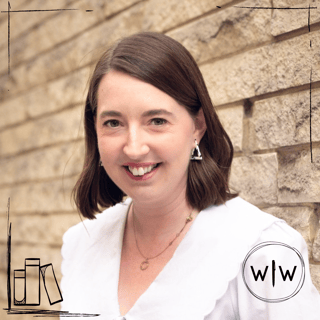
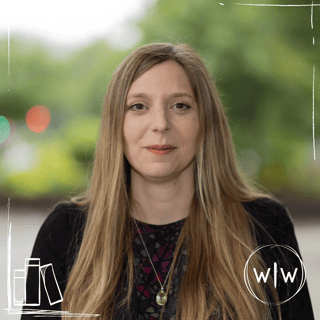
Speaker: Hello and welcome back to the Right and Wrong podcast. Today i am joined by literary agent and managing director of the Ampersand Agency. It's Jamie Cohen. Hello.
Speaker: Hello and good morning. ah Good morning to you too. Thank you so much for coming on. I know you're you're very, very busy and this is just after London Book Fair, so it's all been a bit hectic, but we've got you here now, which is great.
Speaker: With literary agents, I always like to hear about the publishing origins, like your journey as an agent, how you got to where you are. So am I right in thinking that you've been in publishing longer than you've been a literary agent?
Speaker: Yes, I have. You are right about that. And my my path to this job is quite an unusual one, quite an odd one. um Shall I tell you about that? shall i kind of leave yeah yeah So my first few jobs actually in publishing were in contracts and legal departments, um which I did probably for about seven or eight years, I think. So I started at HarperCollins, moved to Hodder, as it was then then, immediately, very soon after, became part of Hachette.
Speaker: um And I was there for a few years, then came back to HarperCollins for another promotion. And essentially did all of the jobs in contracts departments that I could do without ever becoming a contracts director, which was kind of the last promotion available to me.
Speaker: um And the the people that I'd worked for were so embedded that that was never likely to happen. So i kind of ended up just doing the same stuff over and over again. And there are bits of those jobs that are fascinating, um but they're also quite repetitive at times, I feel. And so I kind of got to the point where I was just casting my mind around for the next thing to do. and Ended up being very fortunate to make a jump from doing that job to an editorial role at HarperCollins.
Speaker: which I did for about 18 months to two years, and then got made redundant, which was a great shame because I loved the job. But in truth, the ah the context that I was working in was really complicated.
Speaker: I've been promoted by one person who, I've been given the job by one person who then moved on to a different role and somebody else took over. So it was kind of a a weird situation, but I loved the job. I realized at that stage that it was going to be quite tough for me to go back to being a contracts person i think so um yeah i just took a bit of time freelanced um did some editing work uh did some kind of freelance contracts work on behalf of a few different people um and frankly had a very nice time not having to mute commute to uh to hammersmith
Speaker: from North London anymore, which was a great and wonderful thing. um And eventually was, i bumped into Peter, who's now my boss at a launch party, actually the launch party of Amy McCulloch's first book. She was one of Juliet Mission's first, maybe even Juliet Mission's very first client.
Speaker: And Amy and I had worked together, bumped into Peter at her launch party. Peter had tried to sell me a book, which I tried very hard to buy. when I'd been an editor. Peter is Peter Buckman, who is the owner and chairman of the Ampersand Agency. He set up the agency many years ago. um Bumped into him at the launch party.
Speaker: He mentioned he was looking for somebody to come in and do some agencying. Had I thought about that? And I said, no but I'd very much like to. We went and had lunch a couple of weeks later in Oxford, and he offered me a job, and I took it.
Speaker: um And that was 2013, I think i'm right I think I'm coming up to 13 years with Ampersand this year.
Speaker: Okay. yeah Amazing. back Yeah. I mean, it's funny that you'd never thought of agency as a job until, until Peter brought it to you, because I would have thought with a background in contract and publishing and then editing, yeah like potentially I imagine doing some commissioning stuff. You literally have the perfect CV to become an agent. that that I agree. i think to i think to say that I'd never thought of it is probably a lie, or just not the right way of putting it. it just hadn't seriously um occurred to me as ah as an idea
Speaker: until Peter suggested it to me and yeah I'd actually i actually had some meetings with some agents who had very firmly advised me that it was a terrible idea to start being a literary agent because at the time, i don't know whether they were just being kind of super negative or I picked the wrong people to speak to, but the general consensus was that it takes so long to get your feet under the table in terms of kind of earning capacity, which is true yeah as a literary agent that it makes it very hard to kind of yeah, to kind of get into it. But I mean, I've been doing it 13 years now and it's worked okay for me. So I think probably they were,
Speaker: either misguided or they'd massively underestimated my ability at this job, I suppose. beautiful I say that with tongue firmly in cheek, of course. Potentially.
Speaker: That being said, I do think, I guess in their defense, agenting has evolved quite a lot since like 13 years ago. I think agents do a lot more editing now than they did back then. that The role has sort of shifted in in its capacity to some degree.
Speaker: I think that's probably true. i mean, the honest truth is that I don't feel, in terms of my experience from then to now, I'm not totally sure that it's changed that much. Okay. um ah You know, the different agents and different agencies work in different ways. It's quite interesting, the variety that there is in the industry, actually. Excuse me.
Speaker: um For example, there are some agents who, this is quite, my my understanding, my experience is this is fairly typical of us agents quite a lot of senior agents there do very little editing and they have people that do that on their behalf i don't think that's true of all us s agents by any means and it's certainly not true of all uk agents but i feel like there's a sense in in some agencies that the agent's job is to sell and if they're not selling then they're not earning and if they're not earning then they're not doing their job and there is an argument to say that that is true
Speaker: um you know, our function as agencies to earn money on our clients behalf. And if we're not doing that, then arguably we should be. So I do kind of understand that point of view. We are, you know, we exist to turn our authors creativity into money essentially, or to help them to do that. um But at the same time, I think, you know, certainly for somebody like me who has a bit of editing in their past and who enjoys that aspect of,
Speaker: of working with books, it would seem rather stupid to me for somebody to send me a book for me to read it and see the bits that were wrong with it and then do nothing about that. think yeah You know what I mean? It would seem kind of like a bit of a, yeah, I don't know, like a not fulfilling my responsibilities fully on but on my client's behalf. So it kind of comes naturally to me. My mum was an editor also, copy editor, her desk editor for her whole career, managing editor at Pan Mac for a bit.
Speaker: Um, and so that kind of, that element of the, of the job really appeals to me and I enjoy it. So I have no issue doing it, but I, at the same time, i can understand that other agents might feel differently and, and operate differently.
Speaker: I think a lot of the agents I've spoken to part of the appeal of being a literary agent and some of them will describe it as like, it's a very difficult and intense job, but they love it. And part of that is the variety and also being able to like, uh,
Speaker: integrate with an author and a writer at that super early stage and like be present for that kind of early editorial. i I agree with that. Yes, I agree with that. I mean, I think that there is genuine satisfaction, job satisfaction and personal satisfaction and creative satisfaction that comes from seeing a book right at its outset and then seeing the transformation of that book all the way through to the point where it gets published. The truth is some books don't require a great deal of work. You know, there are some that will come to you and you'll think, mike like a debut novel will arrive in your inbox and you'll read it and go, my God, how on earth has this person produced something that is basically almost perfect? And, you know, you can pretty much submit it as it is. That's rare, of course, but it does happen. But yes, it's a hugely satisfying thing for sure um to feel like you've contributed to
Speaker: the genesis of a book from when you first read it to when it gets published to the world in its final form, as it were. So it's a lovely thing to be a part of. Yeah. And to be able to watch that difference from from start to end. Whilst we're on the topic, I've i've spoken to a few people recently and there does seem to be a sort of, it's it's not that many at the moment, but there is, I think there might be a growing trend of the bigger literary agencies are bringing in in-house editors now so that it takes some of the pressure off the agents to do like dev edits or whatever they might need to do. I think probably they still work on on a debut novel, but if some of their clients need additional work on like later novels, I think sometimes having that in-house editor is helping them out. Is that something that you're seeing becoming more common?
Speaker: It's difficult for me to say whether it's becoming more common because It's not really something that I would quiz other agents about. Sure, of course. The other point to make is I don't think necessarily this is a new thing either. So, for example, in in the kind of going back 10 years or so, maybe a little bit more, and I think probably this still is the case now, ah it was the role of a junior agent um or an agent's assistant in a big agency to help with that editorial work.
Speaker: right So often people would kind of cut their teeth on helping a more senior agent with that editing role in order that that senior agent can do that. Maybe they're the MD of the company or the CEO of a really big agency and they have a lot of other responsibilities and that's fine.
Speaker: um So that's definitely the case. I'm not sure how many actual full-time editors get employed by big agencies. I'm i'm sure that some do it.
Speaker: um But yeah, it's it's it's kind of an understandable phenomenon, I suppose. I would personally feel ah a little bit conflicted, to say the least, about letting somebody else edit my client's work.
Speaker: That's probably partly a control freak response, for sure. But also, I just kind of feel like it's my job, you know? yeah it's It's my job to help.
Speaker: And yes, it's difficult. And as you have more clients, and you have other responsibilities within your agency, it's always hard to find time to do things. But I would definitely feel a bit weird about not editing my clients' books.
Speaker: Yeah, no, I totally understand that. Speaking of your clients, um let's talk about your list. So yeah coming up to 13 years now, I'd imagine your list is pretty big. how you Do you know roughly how many authors you represent?
Speaker: I do. And it's not as big as you think. I'm at the moment representing, counted recently, it's around the mid 20s, I think, in terms of client numbers. That is less than I thought.
Speaker: It is. And it's less than the less than the average for somebody who's been doing this job as long as I have. Yeah. There are a variety of reasons for that. The the first and the first and foremost of those that that we are a very picky agency.
Speaker: and We are intentionally very choosy about the writers that we take on. And I know that every agency will say that. But i think I think it's borne out by the average number of clients we have per agent here.
Speaker: We are not the kind of agency who and picks something up, throw it out into the world to see if it flies and then drop it like a stone. We look after our clients. We try very hard to, at least. and We have longstanding relationships with most of them.
Speaker: um So, like yeah, ah Peter, when he when we updated our website a few years ago, Peter came up with the the tagline for ampersand of small, selective and successful And actually, slightly corny, though, I felt that it was. It's completely accurate. you know We do punch above our weight for for what we are, for the number of agents that we have. um We are very choosy about who we take on. And we've we've made a success of it. you know The agency's been running for a long time now. um
Speaker: We've added two agents in the last six months or so, which is great and wonderful thing to see. A little bit of growth there. um And so I feel at a time when publishing is always struggling because there's not a huge amount of money in the industry, there never has been. So it's always a little bit of a struggle to to make ends meet. I feel like we're kind of cautiously expanding um based on you know a number of years of success. And I feel that's that's testament to Peter's vision, really, the way that the way that we're doing things and that we're continuing what he started. Yeah.
Speaker: So yeah, it's a very long winded answer to your question. it's great twenty s Mid 20s in terms of my list. I am looking to add more clients to that. So I i do feel that that's probably a bit low and I have some space for more clients. So I'm reading submissions furiously as I always do.
Speaker: and But I'm kind of at the same time, I'm not i'm not about to leap in and take 10 people on for the sake of it. They have to be the right clients. Absolutely, yeah. And with keeping your list kind of neat and and small like that, you know, it's currently April 2026.
Speaker: Your submissions are open. Do you ever close your submissions? That's a great question. We have not done so far. I think that's partly because partly because we're relatively old school, I think. i think there's a general...
Speaker: ah <unk>ve I've run this kind of concept past Peter in the past and our our colleague Anne-Marie Dalton, who is another tremendous ex agent in her own right, with some amazing clients.
Speaker: They have both kind of felt, well, if we if you if you close to submissions, you might be missing out, firstly, which is true. And secondly, there's a danger that if you close to submissions, those people that ah would have submitted to you forget about you when it comes to the point where you're opening them again.
Speaker: So I completely understand that. I've never needed to close the submissions. um It does get very full and very hectic. And there are times when you have to resort to short form replies with an apology rather than giving some control you know some kind of constructive feedback to everyone that writes to you.
Speaker: um but the answer is no i've not closed the submissions previously but i can understand why people need to because it's a numbers game being a literary agent and if you are overwhelmed by the numbers that you're seeing in your inbox and that's not a good place to be and for your own sanity for your own mental health it's important to have some time to bring those numbers down to a point where you feel they're manageable yeah and then go from there i can completely understand the motivation Do you get, do do you think you, maybe you or the agency as a whole receives more submissions now than you did 10 years ago?
Speaker: ah i definitely do. but um that It's an interesting thing, which we've we've experienced this recently with with Abby Fenson and Katie Blagdon, who joined us last year.
Speaker: Both of them on joining saw an absolutely huge impact. ah tidal wave of submissions pour into their inboxes when the announcements went out and they joined us. So I definitely had that when I started. there is There's an initial surge.
Speaker: And those are probably of authors that are either already submitted or looking for new people to submit to for whatever reason. So that's completely understandable. And then it kind of dies away a bit and then it kind of averages out on kind of levels.
Speaker: um But I think the longer you do a job, the more successes you have. with your clients that do well, win awards, sell lots of books, the more people become interested in wanting to be your client. And that's a natural thing.
Speaker: and And so I definitely receive more on average now than I did. So it's it's a constant job to catch or try and keep on top of that, for sure. yeah Okay. Yeah, that's interesting. I think that's a general thing I've heard as well, is that that there are just more submissions in existence now going around the whole industry. um Yeah, I think that's probably true. Yeah.
Speaker: Yeah, I think so. On your list specifically, ah let's talk about it. What, in in a sort of broad sense, what are the um genres, age ranges that you represent?
Speaker: Yeah. ah Well, the... My list is probably about three quarters science fiction and fantasy, um about just under a quarter crime and thriller, and a tiny amount of weird and wonderful nonfiction.
Speaker: um That's kind of the breakdown in terms of age ranges. I don't really represent anything that goes younger than new adult, I would say. so kind of 17, 18 onwards. um I have represented YA in the past. I've indeed have sold some YA in the past, but as i maybe as I've got a bit older, maybe i've don know maybe I'm looking for things that are a bit more adult in their tone, or maybe it's just that that's what's been sent to me and that's what I've enjoyed. So difficult to know which, you know, chicken or egg in that situation, which is correct, but that's the state of it these days, yeah.
Speaker: Okay. You mentioned, ah I'll just touch on quickly, uh, a little bit of nonfiction. Do you, is that, I know with nonfiction a lot of the time, literary agents have reached out to the authors as opposed to the other way around. Is that generally how you've found nonfiction or have those been through submissions to you? Um, a bit of both actually.
Speaker: um the, there's yeah, a little bit of both. I mean, in some instances it's one, I mean, one fairly memorable instance, this, there was a,
Speaker: a guy who was a friend of a friend, actually, and who had got into some writing. He was also doing some TV work um and had an idea for a book. And and i I had said to him previously, ah if you ever think about writing anything, because I think you're an interesting person, then drop me a line. And about a month later, he did. So that came to ah two books that ended up getting sold and doing reasonably well, which was good fun.
Speaker: and So it can happen it can happen all sorts of different ways. Definitely it is the case that you are able to, as an agent, you're able to be more proactive, I think, with with potential nonfiction clients.
Speaker: um I think what it comes down to is ultimately you can't make somebody write a novel, but but in a way you can ask somebody if they'd like to write a nonfiction book.
Speaker: And often it's the case that they they say, yes, please, that sounds great, and off you go. yeah um so it's a different it's definitely a different vibe. but It's also the case that these things are sold in different ways too. and I'm sure you've had other agents tell you this, but nonfiction, um it's possible to sell, to pitch, and to sell a lot of nonfiction books on the basis of um not having a full book, in essence, not having a finished book in your hands. So you can write a pitch which has a few chapters as a sample and then an extensive pitch and a synopsis for how the book's going to break down. and
Speaker: And often it's the case that you're able to sell on that basis where even if ah even for a debut writer, by the way, but for a debut novelist, that's definitely not the case. You need to have a whole book in your hand. um And except in very unusual circumstances, you would need to have a whole book in your hands as an agent to be able to pitch that and send it to to editors.
Speaker: yeah So I think there's some more flexibility arguably there with nonfiction than there is for fiction. Okay. Okay. So and the bulk of your list is made up of science fiction and fantasy. Yeah. Just because sometimes it's easier when people are listening and that and they're trying to identify whether they should submit to you or not. Yeah. Are there any genres or like styles that you absolutely do not represent that is not something that is good to send to you?
Speaker: ah I mean, without being too obvious about it, nothing racist, sexist, or, her um, or horrendously anti LGBTQ. I mean, those are obvious things to say, but that's definitely true with me. Um, but other than that, no, not really. i mean, I'm, I'm open to to, anything. I mean, if anybody's not sure about, um, about the clients that i represent, the kinds of things that I like, then our website's a good place to go. I know you're going to direct people to that later.
Speaker: um So yes, I'm i'm i'm open to to most things, frankly, as long as it's not big bigoted or discriminatory in any way. Okay, great. I'm a big fantasy reader, so I'd love to talk a bit about some of the fantasy stuff. Fantasy at the moment, because I have discussions with people often, and I think given how huge romanticy has become, yeah a lot of people are...
Speaker: saying things about which triggers me as a fantasy reader look they're saying things like oh there's you know fantasy is all about the same tropes over and over again and i have to correct them and be like listen you're talking about romanticy sometimes you know there are tropes but when it comes to fantasy do you represent things like romantic and that kind of stuff or are you more on the sort of traditional epic fantasy grimdark fantasy kind of thing or both I represent all of it.
Speaker: Excuse me. I think. um i mean, if I said i didn't like romanticism, didn't want to represent it, I'd be lying because a Y. Chow is one of my clients who's Shanghai, mortal and Paris celestial are kind of Chinese East Asian mythos inspired fantasy novels with bits of romance in them. I don't think that they're overtly romanticy, but it would certainly be ridiculous for me to say that I don't enjoy reading romance in fantasy novels because that's just a complete nonsense.
Speaker: What I would say is that i i'm quite ah I'm quite a bloody minded person, I think, and I tend to ah i tend to react against trends and hype in quite a big way. And that might just be because I'm old and grumpy now.
Speaker: um But i yeah, I do tend to react against that. So I don't know. I mean, i i'm not I'm not one for the super generic, it I think is what I'm saying. But if somebody sent me a romantic novel that actually was a brilliant novel, which had some cool love story and weird sexiness in it, then I'm absolutely all for it. But it has to be the right book.
Speaker: And the writing has to excite me and make me feel like I'm reading something that hasn't been done before and is fun and interesting and cool and potentially funny. Do you know what yeah know I'm saying? um I think what I'm saying is I don't go out of my way to look for that stuff. But if it comes to me in a form that I really enjoy, then I'm i'm not going to turn it down. Yeah.
Speaker: The writing comes first. The story is the most important thing. For sure. Okay. And the the other cool thing about fantasy, which is sort of a a lot of it's coming through independently published authors when then and then being picked up by Big World's now is you were getting all these um sort of sub sets of fantasy. So like I had Travis Baldry on um a couple of years ago. Obviously he like lit a fire under the cozy fantasy genre. yeah And then there's things like, um I'm reading Dungeon Crawler Carl at the moment. like i i thought I thought you were literally about to mention that book. Yeah, go on. And like these kind of sub genres, are these also things that you're, when you see these things emerging, you're like, oh, this is great.
Speaker: It would be cool to get one of those on my list. I don't, so kind of the same answer as the previous question, really. I don't go out looking for them. so um So for example, I'm about to pitch a novel that purely by chance is actually lit RPG adjacent.
Speaker: I'm not going to tell you who it's by or what the title is for obvious reasons, but there are and there are strong connections between this book and in particular video gaming. So video game RPGs like Elden Ring, and The Dark Souls...
Speaker: games and and others. Besides, there are also parallels with a couple of quite big movies of the last 10 or 15 years. There's a time loop mechanic and embedded in the story very cleverly and in a very light touch way, which is makes makes for a super cool backdrop. The writing, by the way, is also completely incredible. It's quite kind of, it's not literary, um but it is exceedingly beautiful lyrical writing.
Speaker: And the the kind of combination of those two elements to the book, I think, are extraordinary because you have on the one hand quite a commercial prospect in terms of the structure, but that's mixed with genuine creativity and real writing ability, which makes, I think, for something really incredible. and But that's accidental.
Speaker: that's something that I have found. It's a client that I've represented for years who just decided they wanted to try something different and they've written this book. and And it's completely brilliant. So to answer your question, I will not specifically go out and look for these things, um but it's always, it's always pleasing when they come to you in a form that you find exciting and you feel you can pitch. yeah to ah To say something else on that front, I actually think that, um,
Speaker: the kind of emergence of some of these sub-genres um is actually a function of more people reading fantasy novels as a general matter. Because more people start reading these books, and romantasy is the perfect example of this,
Speaker: ah booksellers and then publishers and then agents have to find ways of categorizing them in order that they can describe them quickly and easily to each other. So the emergency of romanticcy, the and growing focus on lit RPG, which is something that I've been keeping an on for a while as an avid gamer and a previous d and d player and all of the rest of that um I think these are really happening because more people are reading specifically fantasy novels, not so much SF, I don't think yet,
Speaker: But more people are definitely reading fantasy novels. And what that means is people need names to describe these subgenres in order that they can categorize them quickly and easily. So actually, as is a kind of it's a roundabout way of saying that I think fantasy is in a really good place at the moment. And a lot of people are reading fantasy novels.
Speaker: And because that, fantasy imprints at publishing houses are being given more time and more money and more staff. which means their lists are growing, which means good things not only for people writing in those subgenres, but frankly for everyone um that's working within them. So i'm I'm a big fan of more people reading more fantasy novels, and I don't really mind if it means that it creates more subgenres, purely because what that means is is that we are we're we're reading selling, reading and writing more fantasy novels, which can only be a good thing.
Speaker: Yes, absolutely. I watched a whole video recently on the pipeline of all these romance readers who have got into romanticcy and then through romanticcy they've gone into different genres which they would never have read initially, like reading Brandon Sanderson and Pierce Brown getting into like more sci-fi stuff with Red Rising. Yes, yes, yes. So yeah, it's great. It can only be, a that's ah a ah really good point. It's not only that people are buying and reading more fantasy, it's also that by reading some romanticcy they maybe taken off in different directions within the genre or maybe outside and that can only be a good thing too yeah yeah although ah i do think about red i loved red rising i think absolutely incredible but that it is sci-fi but in my head there's something very it feels kind of fantasy in a way i don't know it's hard to explain yeah there's a vibe to it but there's you know
Speaker: There's been um a fair bit of fantasy. The Mark Lawrence books spring to mind. ah The early ones, Prince of Thorns yeah was the first. The way that ah those books blend a classic epic fantasy narrative and setting and then with some bizarre kind of historical tech thrown in later down the line, and it becomes more and more clear as you read the books what the world is that they're living in.
Speaker: um that's that's a lovely thing too i'm i'm ah i'm all for that uh and in fact the book that i'm about to pitch that i told you about that is lit rpg adjacent has a bit of that vibe about it as well um which is very enjoyable so yeah i think i'm i'm all for it anything that you know pushes the the genre in a new and exciting um direction even if that's blending with other genres can only be a good thing Yeah. Amazing. Amazing. um I just have one more question before we head over to the, to the cabin. yeah This is a fun question. I always like to ask literary agents is ah would you, or have you ever wanted to write or publish something of your own?
Speaker: ah I've, I've dabbled. um Let us say I have actually been published, um but only for one chapter only leave for it for one chapter in ah in a book, okay which was actually a book written by one of my clients. um So it's ah it's a parenting book called Bad Stories from the Frontline of Fatherhood, which was edited and collated by my client, Elliot Ray, who is an excellent human and a campaigner for parenting rights and a podcaster in his own right and all sorts of other things. um
Speaker: And as we were talking about the possibility of me representing him in the book, I mentioned some information that had that was relevant in my parenting past to the book.
Speaker: And then Elliot just asked me out of the blue if I wanted to write a chapter to which I said yes. So I have been published in that sense. But i'm i much though I love the fantasy genre and much though I've definitely had ideas for books,
Speaker: I don't think I'm that guy. I had a stab at it in the in the distant past. And I look back with the most almighty of cringes at the few chances that i smashed out on my old laptop, thinking that I was definitely, I don't know, the next Ursula Le Guin or something. and I categorically was So, yeah, i I would love to be that guy, but I'm just not.
Speaker: You set yourself a very high bar if Ursula Le Guin was what you were shooting Yeah, there might foreshadowing there, by the way. But yes, I definitely, definitely did. Okay. I think maybe, maybe having read and adored all, I think most of the people that have done this genre best.
Speaker: it does make it quite daunting to set out on that path yourself, I think. It does, yeah. After you've read Brandon Sanderson, the idea of world building suddenly seems very daunting. Right, it does, it does. yeah And also the idea of being able to write about five million words a year. Well, yes. Which seems to be what Brandon Sanderson has, you know, that seems to be the bar that he has set for the world. Yeah, yeah unbelievable. Unbelievable output heard from that moment.
Speaker: um Awesome. Well, that brings us to the point in the episode where i ask you, Jamie, if you were snowed in at a cosy woodland cabin in the middle of nowhere, which book would you hope to have with you?
Speaker: Well, here comes my um whatever comes after foreshadowing, the anti-shadowing, I suppose, the payoff here. Earthsea trilogy by Earthsea. Okay, yeah. Classic.
Speaker: It's not the fantasy novel that I've read the most. That would probably be Lord of the Rings. Mm-hmm. But I think the the older that I've got and the more that I've reread both of those trilogies, I think it's Ursi that stands out the best. I think the writing there is just, I mean, it's preposterously good for any genre.
Speaker: um But i think it's I think it's the best fantasy writing I've read. i Sorry to all my current clients. I really do. i think I think she's just on a different level there.
Speaker: Yeah. Yeah, many have tried to imitate um and rip off. Well, many have successfully done so, but none have come anywhere close to the qualities and in those novels. The examination of what it means to be a human, both in the first novel, ah kind of adolescent and then growing human, and then subsequently a human that's trying to kind of establish their place in the world and work out what the point is.
Speaker: They're... ah at times incredibly sad, very moving, thrilling, exciting, um incredibly beautiful, wonderful pieces of writing. And I i will always love them.
Speaker: um Yeah. And I will always be able to reread them and find something new in them. So, yeah, for that reason, ah has to be a scene for me. Okay, great. i love to I love to get more Ursula Le Guin. Ursula Le Guin, I think, a generational talent. one of just When I read for sure ah The Left Hand of Darkness, I was in awe. I was shocked. I was like, this is so ahead of its time, so clever, so well written. Unbelievable.
Speaker: Absolutely unbelievable. That's right. All of that and more. Yeah, she was one ah one of the all-time greats. For sure. Amazing. A great ah great addition to to the cabin there. Next up, we are going to get a bit more into the nitty-gritty of query letters, cover letters, all that fun stuff. That will be in the extended episode at patreon.com forward slash right and wrong.
Speaker: Ultimately, we're all people that love reading books. And if somebody has been excited by reading a book in the past, that's always a lovely thing to hear, even if it's a book that you've not read to yourself or that you didn't particularly go on with.
Speaker: and Positivity and excitement enthusiasm is always is always welcome. Absolutely. And that is a a great sentiment, I think, with which we can wrap up the the episode. Thank you so much, Jamie, for coming on and chatting with me and telling me all about your career and how you got into being a literary agent and and kind of everything that's going on with you and your list and and all that stuff with careering. it's been It's been really fascinating and fun chatting with you.
Speaker: Well, it's it's been a pleasure and i'm I'm appreciative of the invite. Thank you. And and yeah, I hope i haven't hope I haven't waffled on too much. No, it's been absolutely fantastic. And for anyone listening, if you want to ah get in touch with Jamie or submit to him or anyone at Ampersand, you head over to the website, theampersandagency.co.uk, and you can find all of the emails and and contact details there, as well as all the submission guidelines. um Oh, I did what i actually want to add before we go.
Speaker: i've been online a bit recently and noticed that there are some bad actors floating around online. And I know recently somebody was pretending to be someone that worked at your agency. So for everyone listening, do your due diligence. if If you get messages from someone or if you find someone online, go to the official website, check that this is put the person that they say they are and that they do work for the correct agency. You're absolutely right. It's not only us that this has happened to but there are some bad actors who are impersonating um established and reputable literary agencies. There's a couple of things to say about that. Firstly, and be very careful and ah examine the email addresses of the people that are asking you to send them your book. um All literary agents worth their salt have there ah their email addresses on their websites. or to find them. It's not difficult at all. So make sure that formatting-wise, you're sending your email to somebody who has the right email address.
Speaker: So nobody will ever have a Gmail address, for example. and Be very wary of those. There was a second thing I was going to say. What was that? It was definitely something really clever. oh yeah, I remember.
Speaker: Be very careful, exceedingly wary of anyone posing as an literary agent who asks you to send them money before they have done any actual selling on your behalf. um no No agent worth their salt will charge reading fees.
Speaker: and No agent will ask you to send them any money for any reason whatsoever until the point at which they have actually sold something of yours and earned you some money, at which point they are legitimately due some commission.
Speaker: So that's the way it should work. Be extremely cautious of anybody who ah who says that they operate otherwise. Yes. I also, slightly tangential, i assume that you' you, the author, are not then just paying the agent that's just going to come out of the payment from correct the publisher. Correct. So that you're never paying them directly. It's not a tangent at all. It's a great question. it's yeah it's how It's a question about how agencies operate. We act as an intermediary for payments for contracts that we have negotiated on the writer's behalf. yeah So the the writer appoints us to do that via a contract that we have with them.
Speaker: We receive the money. um We make sure that it's all in order based on the remittance that we've been sent or the royalty statements. When we're happy that it is the correct amount and we've been paid the right amount, we'll then pay the author less the commission that we've agreed with them that we will take on that sum.
Speaker: um So yeah, that's is's a legit question and that's how it works. Yes, that's that's what ah that's what I thought. The author will, in theory, never just directly pay their agent. No, no, in theory, no.
Speaker: No. Okay. So just to wrap things up, to support this podcast, like, follow and subscribe, join the Patreon for ad-free extended episodes and check out my other podcast, The Chosen and Ones and Other Tropes.
Speaker: Thanks again, Jamie. And thanks to everyone listening. We will catch you on the next episode.