Transcript
Speaker: Oh, a spicy question. love Because the writing is sort of everything, right? Like can fix plot holes, but if the writer... So some readers love that and some readers are like, but I wanted more of this. So it's kind of, it's kind of a gamble.
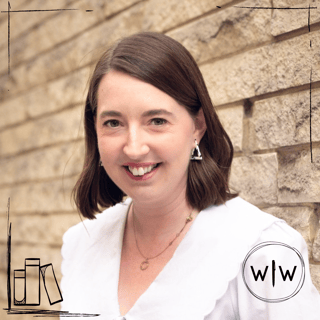
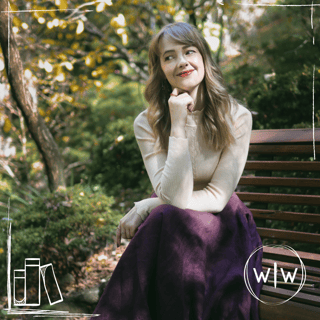
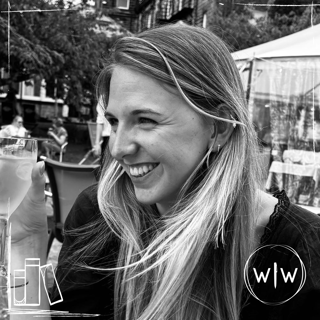
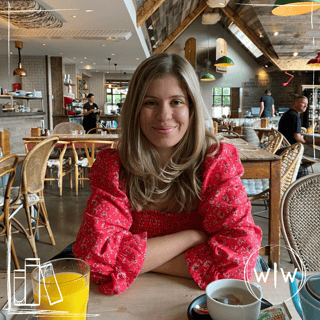
Speaker: Hello and welcome back to the Right and Wrong podcast. This week we have two guests, a pair of freelance editors. One of them is also a publisher at one of Simon & Schuster's new commercial fiction imprints and the other is a books journalist of 15 years and edits for Stylist magazine. It's Samantha Eads and Francesca Brown. Hello.
Speaker: Hello. Thank you. Thank you so much for coming on the two of you. um Let's jump right in and kicks think kick things off with your exciting new collaboration and that is BookFix.
Speaker: Which one of you has the better elevator pitch for what BookFix is? I'm going to let Sam take this one because it was her. you'd say that. But it was your idea initially.
Speaker: Sam came to me because Sam lives quite near me. So we're always bumping into each other, like at school drop-off and over coffees and things like that. And she cornered me in the leisure centre one day. I know, so glamorous. And this was her idea.
Speaker: Say your idea. so I guess BookFix is a safe... space for writers to share with two very experienced editors their work. And I would say our kind of USPs, I think we're brilliant at helping a writer build confidence back up in their writing, particularly if they've had it had a knock. So it is a, well, we are a multitude of things, but um we are primarily ah a monthly clinic,
Speaker: Online clinic where you can book half hour or hour long Zoom call with the two of us where you can share your first three chapters and your synopsis. and But we also offer developmental edits, submission package reviews. and So we are a one stop shop.
Speaker: for writers who want to boost their confidence in their writing. okay Plus you get two editors for the price of one. So that's even better.
Speaker: you get two opposing points of view as well, oftentimes, because, and Sam's brilliant at talking people up and being really enthusiastic. Whereas I think I come in with a slightly more not jaded, but maybe an objective point of view. And then that's a really lovely thing so that you are getting this full sort of 360 treatment at the same time as having a really safe space where you've got two people rooting for you.
Speaker: Okay. Yes, that sounds, that sounds good. Everyone likes two for the price of one. Um, there's other people in this space. Of course, there's other people, other companies in this space. Did you guys have a look at what sort of other editorial offerings there were in the market when you were putting together this kind of product and your packages?
Speaker: Yeah, we absolutely did. And um at the time that I sort of came up with the idea, I what had been, had just started a kind of freelance career. And so I've been working with a lot of the kind of companies. So Curtis Brand Creative, Faber Academy, Blue Pencil, or Emily Randall, all kind of absolutely kind of fantastic companies.
Speaker: and established companies. And I guess the sort of difference in our offering is firstly, you know, something that Fran and I are really kind of passionate about is offering editorial support at a friendlier price point because, you know, freelance editors can be incredibly expensive. um And, you know, we're really kind of passionate about supporting writers from kind of lower income backgrounds. So actually price was something that we thought was, you know,
Speaker: was something that could be a point of difference for us. And then Fran, do want, yeah, i guess Fran has kind of touched on there the fact that we are offering two points of view, which again feels different. Yeah, I think that's that's really important is that a lot of people, a lot of the lovely writers that we've worked with so far, um it's quite a leap to be able to invest in your own writing. And I think if you haven't got that necessarily got your confidence at the moment than even just to talk to someone about your project and literally say I've got these ideas I'm really not sure about them or where I'm going or what my genre is or even if it's worth persevering with to just be able to have that chance to sit and talk to two people who know what they're talking about and understand the market and understand readers and what people want to read and what will make a splash right now I think um
Speaker: It's really important to be able to do that without having to give up your life savings. And I think that's I think that was really what was missing. And that's what we want to try and step into. So, you know, our prices start from 80 pounds for half an hour. So even if it's a case of I've got this brilliant idea, I'm not sure where to take it.
Speaker: Do I even, you know, because to write 95,000 words, I mean, that's a massive undertaking. So even just to have someone say to you, i love it. You've got a potential here. Go away and write three chapters. That can be such a boost. And, you know, or it might be a case of, you know, you're barking down the, you know, barking down the wrong alley. That is not the phrase, is it? Barking up the wrong tree. So, so even if it's a case of right scratch that, but you've got this really good kernel here of so of a really lovely idea. Why don't you pursue that?
Speaker: You haven't, you know, wasted your money, you're actually going to get the foundations of something to work with. Okay. So that there's also sort of an element of tough love as well, where you might need to say something. Definitely from Fran. Not from Sam.
Speaker: Sam is very much the sunshine to my grey day. we We were joking that whenever we see each other, we look like um what they called in Wicked, what the two called Sam.
Speaker: Like a Glinda and Elphaba. Yeah, yeah, yeah. But it's it's just more the case of like, it's really interesting because like as a books editor, i get sent something around 200 proofs a week. I mean, they are piling up beside me. And there are so many titles going to market that then just go nowhere. it's It's really heartbreaking to see because, you know, especially in for publishing, you know, there's fewer and fewer places where authors can be covered and to break out. And, know,
Speaker: It's really important for these writers that if they're going to have a go at writing the book that's really in their heart and what they're capable of producing, that they get the best start that they can. and often it is a case of just clarifying with them, where are they at? What's their genre? And oftentimes, as I'm sure any writer will understand, there's a case of just too many ideas. So being able to sort of just talk things through with someone who's also very, very positive and someone who's just very, very straight talking, I think is a real release for them.
Speaker: Okay. Yeah. Just, ah and and also to speak to people, people often say this about when they, you know, when they, when they managed to sign with an agent and it feels like someone within the publishing industry, a professional has given you the thumbs up. So I guess being able to speak with two people who have like a kind of established and long publishing careers, that's a validation in and of itself about the thing that you're writing.
Speaker: Exactly. And I think what we've also discovered is, and Sam can probably expand on this better than I can, agents are ah quite overwhelmed at the moment, I think, with the number of clients that they have to have. So actually, i think writers are also looking for um their own support system, which might not necessarily be available to them, even if they've got an agent.
Speaker: Okay. Yeah. That's definitely a lot of the sort of feedback a that we're getting. and we And we are kind of almost sort of filling a, filling a kind of communication gap.
Speaker: um And that kind of overwhelm in terms of agents isn't specific to literary agents. It's kind of across the kind of publishing industry. um We're publishing much more,
Speaker: much more kind of books and teams, you know, head counts have been reduced. um And I, and I think, know, there's lots of kind of industry conversation around kind of like ghosting and um that kind of drop in communication between the industry and writers. So um and it's nice to be doing something positive and kind of practical to help with that.
Speaker: Yeah, I've heard firsthand of people, of editors being very overwhelmed with the number of books they're working on and not being able to get back to the authors as quickly as they would want to.
Speaker: Yeah. And i mean, that was very kind of much my experience when I was in-house before I went freelance. Like, remember when I had to do my handover document, I'd got 20 authors and was also running a massive team and running the budget and doing strategy and editing the books and publishing the books. Like, You know, i used to beat myself up on the fact that I didn't reply to people as quickly as I wanted to, but genuinely just sort of sometimes being able to sort of sit at my desk and like respond to emails, like just, yeah. Didn't have the time was sat in meetings for kind of most of the time. So i can, I can understand and empathize with why people don't respond. Um, cause I've yeah, been there.
Speaker: Yeah. And sometimes people just want to be in the loop, you know, authors just want to be in the loop and it's like, they don't necessarily need anything. It's just like, Oh, this is where we're at. This is what's happening right now. You know, it's taking a while, but, but that's, what's happening. Getting back onto book fix specifically, you, so this probably wouldn't apply to the, the, the sort of sessions where that people come in and they chat with you for half an hour, an hour, and you've kind of read a small amount of the the manuscript, but yeah,
Speaker: when it comes to like doing a full dev edit, if someone wants to do a full developmental edit on the, let's say 80,000 word manuscript, are there restrictions on what you would edit or will you edit anything?
Speaker: That's a very good question. Um, so far the quality of the work we have had has been outstanding. Like I've been blown away and there's going to be, I think some of the books we've worked on in the next couple of years are going to be major breakout titles. Like I just cannot believe the quality of the work that we've had. Having said that,
Speaker: I think we're looking at if anybody's using AI, obviously there's a huge conversation about that. um Then we're going to be drawing the line at that because it's really difficult to work with. it's it's i'm I've done a developmental edit on an AI piece without realising previously. and um it It was soul destroying.
Speaker: it was It was like, you haven't bothered to read this book. Why is anybody else? It's just me. It's just me that's wading through it. yeah and and And I know it's going to becoming more and more difficult to spot. You know, there's this real question over what you can tell as original work. But at the moment, you can definitely tell the difference between someone who's writing something from their heart and and someone who's just gone and put in a few prompts and put together ah sort of, um, almost like a mirage of a book.
Speaker: yes Um, so we are going to be having like, you know, learned valuable lessons from what's gone before. Um, we will be sort of like looking at people's work and going, yes, we can work with you. No, we can't work with you. And here's the reasons why. Okay. Would that, would there be a situation where you get something and you're like, this is, you you you know, it would be, we're talking developmental edit would basically be an entire rewrite of like an entire thing where you'd be like, look, I think this will cost you a lot of money. And I think you're basically just going to have to rewrite this entire thing. And I, would you, would you say that to someone, if you felt like it it was, it was just not in in a good enough place for you to, to do that, even if it wasn't AI?
Speaker: yeah i think Yeah, I think we absolutely would. And, um, yeah, I think, I think both of us wouldn't feel comfortable sort of taking someone's money if we actually didn't think we could help get into a publishable standard. Um, and, and Fran's right, like actually sort of. But we can kind of tell from how people, when they come to us with a pitch, like often, you know, they've written books before or, you know, their agents told them to kind of invest in kind of professional support. Like we, people are kind of coming to us and we can kind of tell already from how they're kind of talking about their book and their writing process that we can help them. So, Okay.
Speaker: That's interesting. I've not heard of agents telling authors to send to to go to, to freelance editors before, but that's, that's interesting. That's happening kind of more and more. Right. Cause, cause everyone's just so busy, I guess.
Speaker: Yeah. And some of it is like, you know, your agent might be going on maternity leave and there just isn't the kind of person in your house or, you know, I think something that, um, I'm friends with, um,
Speaker: Two amazing agents, Sue Armstrong and now Andrews. And I think some something that gets kind of forgotten sometimes is that until an agent has actually placed your work with a publisher, they're they're working for you for for free. yeah Um, and you know, sometimes they're working with a writer for like two years, three years, like helping them to kind of get the book up to the kind of standard that they, they think, you know, the free read to be kind of submission ready. day Um, and so, yeah, I can sort of, I can kind of see and kind of understand why kind of more agents are kind of,
Speaker: saying to writers, you know what, this needs kind of one more round and I can't see the wood for the trees anymore. Um, and you know, what's brilliant is lots of these agents are kind of people that, you know, Fran and I have got kind of professional relationships with. Yeah. That's great.
Speaker: Yeah. And I think I've spoken to some agents recently who in the bigger agencies, they're actually now employing in-house editors. for that, yeah for specific specific reason.
Speaker: um In terms of still on restrictions and things like that, this is more like a broader question in terms of When you, ah obviously when you apply to an agent as a writer, when you query an agent, you know, that agents represent certain genres and at the same time they'll submit to editors who represent certain genres, imprints, et cetera.
Speaker: Is there any genre or age range that you guys won't represent or will you kind of take on anything?
Speaker: That's a good question.
Speaker: Because I think i think what we've because what we've worked on so far has had a massive range, a massive range. I mean, there's been femgore and historical fiction and coming of age, um some middle grade fantasy.
Speaker: um And I think we are applying our skills if the if the writing is good enough. then i think as, cause you're, you're still reading it as a reader. So it does come down to what's the story like, what's the characters like, what is, what is your ability?
Speaker: Um, I think it would absolutely have to depend on the work itself for us to say, actually, no, this isn't our wheelhouse and probably then to pass that on to someone who is.
Speaker: But so far we haven't actually, because it's so exciting to work with these authors. Like that it's such a wonderful feeling to like, And this is me being sunshine now. But like, it's a really rewarding process because you're like, wow, these people can really write and they've got something incredible that they've created. And really all they need is some shaving here and there, some rethinking about how they go into the story. And You know, a lot of it is just there to be shaped and tweaked and to be able to help people and to help them find their confidence and their voice and to feel really good about what they're doing.
Speaker: There's very few roles like that left in the world, I think, you know, I mean, it's such a wonderful experience. Okay. Okay. Yeah. So pretty, pretty eclectic in terms of you guys are happy to to look at most things. Would you, you said middle grade, but would you go younger than that?
Speaker: Like picture books, things like that, or is that outside your wheelhouse? I think probably like super young kind of children's fiction. There are like brilliant kind of specialists in that area. Um,
Speaker: we Our first client actually was a brilliant kind of, and it was children's, it was it was kind of, but it was middle grade, wasn't it, Fran? Yeah, yeah. So I think that's probably, know, that's like the kind of bottom of the kind of age range for us. Yeah. Unlike, you know, not like non-fiction, you know,
Speaker: we have done some kind of work on kind of memoirs and, but again, there are some fantastic kind of specific nonfiction. I'd say fiction is probably our kind of wheelhouse. Fiction and then middle grade and older yeah generally. Okay. What about last one on this? What about the more kind of like niche genres? So if you talk like very hard sci-fi or um like the kind of sub genres of fantasy, when you get into like lit RPG and stuff like that,
Speaker: Fran, going to let you take that one. Probably, like, I think there's kind of really niche kind of genres. We have, like, I worked on a brilliant kind of speculative fiction novel. I think accessible kind of science fiction and fantasy, yes.
Speaker: But again, but that kind of more kind of niche categories, there are so many kind of brilliant editors who are already kind of working in that space. It's a real kind of specialism and... um And yeah it's a different approach to editing. And, um, God, I used to have like the privilege of sitting next to glance when I was in house at Orion.
Speaker: um And like, just remember looking over my shoulder at one of those editors and like, you know, deep and a kind of, you know, 200,000 word kind of manuscript, like editing it a real line level. And I just think that's such a specialist skill.
Speaker: um I think probably, yeah, that and that's kind of outside our wheelhouse. I think the good thing is as well is, you know, if people come to us, like Sam's knowledge of the publishing industry, whether it's like agents or other freelance editors, is so brilliant that we'll be able to point people in the right direction. I mean, once again, going back to the ethos of, you know, this is for,
Speaker: This has to be accessible and it has to be supportive. So we will never dismiss anybody out of hand and just say, oh, this isn't for us and leave it at that. It would always be a case of here are your next steps. We're here to, you know, make these things happen in the world at large.
Speaker: Okay. So if in doubt, you're, you're, you're sort of happy to, if someone sends you something like, Oh, do you think this, would you guys work with this? And and if, if the case is that you guys are like, Oh no, but actually that maybe try sending it over here because maybe they can help you out with You know that bit in Miracle and 34th street in the old one where they go to Macy's and the Santa Claus is going, Oh, well, if you want that toy, you want to go down the road there. And everybody's like, Oh, this is an amazing marketing tool. And it's like, basically that we're stealing it from santa Claus.
Speaker: Okay, great. So this is, this is pretty new. You guys have only recently started it. You've had a few clients already. Um, it's sort of alluded to the fact that you guys are mostly working with traditional publishing, but ah have you also worked with some people who are interested in self publishing or indie publishing their books? Yeah, absolutely. Um, I had a brilliant writer come to me who'd written a kind of speculative novel that,
Speaker: he wanted to self-publish and um supported him on that edit. So yeah, we like, I'm a big fan of self-publishing.
Speaker: i think it can be incredibly lucrative and rewarding for authors. um You know, there's an element of, the kind of creative control that you have and also the kind of, you know, the um the financial model, like I think it's it's really enticing um and it's just another way of kind of finding readers. So we're really happy to kind of support people who, you know, that's their journey to kind of publication. um so yeah, very open to writers from there. You know, at some point we'll stop calling it the non-traditional and traditional routes, I think.
Speaker: Yes. Yeah. Cause I also think that, and the more I speak to agents and the more I speak to people in publishing there, I think that they are actually sort of coming together much more because there's a sort of new pathway, which is that you, if you successfully self publish or indie publishing novel, then often an agent finds that, or a publisher finds that directly. And then, and then you get moved into the quotes traditional publishing track. The kind of biggest title at London book fair, which has just kind of been and gone was um all the young dudes which started as fan fiction and has been kind of snapped up all around the world by kind of traditional publishers. So yeah, there's a real kind of ah fluidity and people are kind of building their audiences and um in the self-publishing community and then opting to traditionally publish and vice versa as well.
Speaker: Yes. Yeah. Yeah. Hybrid, hybrid authors is the is is a new fun thing that's happening. Um, usually from the ones I've had on here though, it's cause they're impatient and they want to keep releasing books and traditionals too slow for them.
Speaker: Yeah. we hit Um, no okay, cool. So we are at the point in the episode where I, uh, ask you both if you were stranded and trapped snowed in at a cozy woodland cabin in the middle of nowhere which book would you each want to have with you Shall we start with the sunshine before we move to the storm cloud? So this was a very easy question for me. The book that immediately came to mind was a book called The Snow Child by A.1 Ivey. I did the publicity for something like 15 years ago, which is set in nineteen twenty s Alaska. And it's about a grieving couple in a cabin in the woods who, in a kind of moment of levity, go outside and make. a little girl out of snow and the next day she may or may not come to life um and it's just beautiful and magical and was unlike anything I'd ever kind of come across before um and it's kind of filled with hope so that is what I would pick
Speaker: Okay. That makes my heart thats makes makes my heart go weird, that book. um I don't think I'd want to in the cabin with that book. I was going to pick World War Z by Max Brooks because it's an oral history of a zombie apocalypse.
Speaker: And basically it's full of really useful information about what to do at the end of the world. And if you're stuck in a cosy woodland cabin surrounded by snow, you're going to need some practical skills and some entertainment to So I think that's the perfect marriage for and that situation.
Speaker: Okay, great. That's a great contrast of books there. Real options there between those two. That's great. um Next up, we are going to talk a bit more about publishing and editorial, the role of a publisher and advice for writers looking to get their manuscripts up to scratch for agents and editors. That will all be in the extended episode available at www.patreon.com forward slash right and wrong.
Speaker: um And I think the lessons that you take from writing something from yourself will make that, and you know, the book that does make the splash for you that much stronger. And then even better when, you you know, your agent turns around and says, so what's book number two going to be? You're like, well, I've already got one in the drawer, thanks.
Speaker: Yeah. Okay. Yeah. That's great advice that actually I had L McNichol on recently. And she said, whenever she's writing, she's always writing the book that she's supposed to be writing. And then she's always cheating on it with a book that she's not supposed to be writing.
Speaker: um yeah i think that's great advice i think it because i think the other thing that that enables is that writers put a lot of pressure on themselves especially if you're under contract but often if you're not under contract too but if you're like writing a ah book that's just like you're not supposed to be writing or it's like just on the side then that pressure is somehow relieved and that you have a bit more freedom with that book and then who knows maybe that one ends up being the main one And it'll probably come out in the writing as well. There'll be a playfulness to it.
Speaker: naughtiness to it. Exactly. Okay. Yeah. That's the two great bits of advice. So the main things are a know your market and then be always be writing. That's great. That's some great advice. Thank you so much guys. And that brings us to the, to the end of the episode. Thank you so much, um Sam and Fran for coming on and chatting with us and telling us all about book fix your, your awesome new, um,
Speaker: company that you're that you're doing together, editing and all the packages that you're you're offering. um Yeah, it's been awesome chatting with the two you. Thanks for having us very much. us It's been really fun.
Speaker: Yeah, it's been great. And for anyone listening who who wants to find out more about BookFix or like maybe look at some of the packages, head over to the website book-fix.com and there's an email which is hello at book-fix.com.
Speaker: um To follow Sam and Fran, you can find them both on Instagram. Sam is at Samantha Eads and Fran is at Fran F. Brown. To support this podcast, like, follow and subscribe. Join the Patreon for ad-free extended episodes and check out my other podcast, The Chosen Ones and Other Tropes.
Speaker: Thanks again to Sam and Fran and thanks to everyone listening. We will catch you on the next episode.