Become a Creator today!Start creating today - Share your story with the world!
Start for free
00:00:00
00:00:01

255 Kerry Whittle | Mystery Thriller Author and Journalist

353 Plays4 months ago
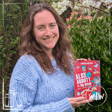
Mystery/thriller author Kerry Whittle drops by this week to chat about her debut novel and the wedding table that inspired it as well as the differences between publishing and journalism.
Support the show on Patreon! 💖 And get extended episodes, ad-free and a week ahead of everyone else. 🙏
For audio listeners:
Listen to The Chosen Ones and Other Tropes, Jamie's other podcast with Melissa Welliver and Naomi Gibson! 📚
Follow on socials! 🥳
Recommended
















Transcript
The Challenges of Writing
00:00:00
Speaker
Oh, a spicy question. I love Because the writing sort of everything, right? Like you can fix plot holes, but if the writer... So some readers love that and some readers are like, but I wanted more of this. So it's kind of, it's kind of a gamble.
Introducing KJ Whittle
00:00:14
Speaker
Hello and welcome back to the Right and Wrong podcast. With me today is a journalist of 20 years who's recently published her debut novel, Seven Reasons to Murder Your Dinner Guests. It's KJ Whittle. Hello.
00:00:28
Speaker
Hi, Jamie. Thanks so much for having me on. I'm a big fan of the podcast. Thanks so much for coming.
The Novel's Unique Premise
00:00:33
Speaker
um As always, we start with the latest publication, your debut novel. Tell us a little bit about Seven Reasons to Murder Your Denny Guests.
00:00:44
Speaker
Right. and So seven strangers ah meet at um a dinner party at ah an underground restaurant in London. um They've got no idea who invited them there or why, and but they sit down and enjoy this delicious dinner and wine and get to know each other a bit.
00:01:02
Speaker
and At the end of the meal, and they look around and realise there are and black envelopes by each of their place settings. and And one of the guests opens her envelope and inside it says, you will die aged on a number.
00:01:16
Speaker
and Some of them are shocked and scared and some of them just take it as a joke, um and a practical joke, ah sort of a stunt type thing. and um But they all go back to their homes a bit disturbed by the evening.
00:01:29
Speaker
Two weeks later, one of the guests dies in line with her number and a month later, another guest dies as predicted. And so the remaining guests have to work out and who their mysterious host is and if there's anything they can do to stop their numbers coming up.
00:01:46
Speaker
Very cool. It's a really fun premise. I'm going to i'm goingnna guess that the inception of this whole thing was just the premise and and then kind of exploring that. Well, yes.
Inspiration from Real Events
00:01:58
Speaker
um I mean, the the whole idea and started, um i had sort of the germ of the idea many years before I started writing it.
00:02:07
Speaker
um I was at a wedding and and I was there on my own and and I was on a table of singles. So it was about eight eight to ten of us um on all like a mixture of friends and family of the bride and the groom. um And, ah you know, we all we all got chatting. And after the wedding breakfast, the waiters came around with these little white envelopes.
00:02:31
Speaker
And um I watched and the other guests start to open these envelopes. And I just had this thought about, you know, what if there was something in those envelopes, a sort of piece of information and that would change everyone's life and that would everyone would react differently to being such different people.
00:02:47
Speaker
And... um And that you know that thought stuck with me of what what if what was in there was when they will all die. um And in fact, at the wedding, it it wasn't that at all. Obviously, it was a of a sinister wedding.
00:03:03
Speaker
and it was um They were wedding favors and they were lottery tickets. And so then it it sparked a discussion about how you would spend your winnings and and And it sticks in my mind that one one chap um said, you know, he wouldn't have cared either way. And because his his wife had recently passed away, so all he would want was her back, which obviously is something that money couldn't bring. and But that that idea, that image of this table of very different people and these envelopes and sort of stuck in the back of my mind for for years, really, until, you know, I got to the point where I had ah a chance to sit down and and have a go at writing my own book.
00:03:40
Speaker
Um, and then, um, yeah, and then i went, went back to that table and the, the white envelopes became black envelopes and, um, the, the, uh, contained the ages of, of each character would be when they die Wow. Okay.
00:03:55
Speaker
So you obviously you've, but you, you know, you, you recruit your career has been in journalism, but you've been around writing, you've done a lot writing. I right in thinking then that this is the first sort of novel that you ever put your hand to?
From Journalism to Novelist
00:04:09
Speaker
Yes, absolutely. and Yeah, I was, it's something I'd always wanted to do. um I've always been a big reader since I was a child and read um The Owl Who Was Afraid of the Dark, was my the first book that I remember reading.
00:04:22
Speaker
and um And I studied and English literature at university and and then went into journalism working on women's weekly magazines in London for lots of years.
00:04:33
Speaker
and and And I loved hearing and stories from and from various people over the years. my My specialty was in real life journalism. So it was all about interviewing people with with sometimes crazy, sometimes heartbreaking, you know, sometimes funny stories and writing them up, um you know, telling telling these individual stories.
00:04:54
Speaker
So it but it's always been in the back of my mind. I've always read, like I say, and it's always been in the back of my mind that the ultimate goal is is to write my own novel. And so, um you know, after a number of years working in London, we we moved up to Manchester and we had children here. And once they started nursery in school, and then I had an opportunity to sit down and have a go at this, you know, bite the bullet and have a go at writing this book that's that's always sort of been in the back of
The Curtis Brown Experience
00:05:21
Speaker
my mind. And and so I did ah a Curtis Brown online novel writing course and for three months. And and as part of that, you had to submit and an idea and 3000 words of your story. And so that's when I went back to my and my table. and and created these these different characters and and and took it from and took it from there really. so so that was that was actually It was just just before lockdown. And um and and that's that's where the story began. but
00:05:54
Speaker
you know In fact, I didn't really know where it was it was going to go. i had I didn't have an idea, oh, I'm going to write a murder mystery or ah you know romance or or whatever. i just i I focused on creating these characters that I hoped would be believable and authentic and would behave and speak in an authentic way and just really to follow their story, and their individual stories, and just to see where it would take me and and um what ended up happening during the course of writing. and one character admitted to the other that they'd ah committed these murders. And so that's what told me, oh, I'm writing a murder mystery.
00:06:31
Speaker
And so then, so that was the point where and where I was able to then, you know, work on the the tropes um that you would have in a murder mystery. Right. Okay. So it sounds like, yeah, it sounds like you really tapped into your experience as a journalist where you interviewed lots of interesting people. And then exactly yeah the thing you focused on was having these very individual characters who sat around this table, each of them with their own stories and quirks and things like that. Okay. That's really cool.
00:06:57
Speaker
Exactly. Yeah. I
Character Development Insights
00:06:59
Speaker
felt like ah like over those years of interviewing lots of different people, I've built up sort of a well of and personalities, and but also um personalities as well as stories, and you know, to to create these people who, you know, I've tried to make... believable. And also I really enjoyed and moving from the points of view to the different characters, so to get some insight into what they were thinking and what they thought of the other characters, and you know, while they were also getting to know each other, and mixing in like, that you know, what they're they're putting across as well as what's going on inside.
00:07:36
Speaker
Okay. Yeah. Yeah. yeah That makes sense. And like you said, a great well of inspiration to draw upon with the Curtis Brown course. Um, is that the kind of course where you kind of have to come with a, you said you had to submit 3000 words. I think it was, do you have to have like a ah kind of fleshed out manuscript or create literally just be those 3000 words for that kind of course?
00:07:58
Speaker
and I think there were some people, there were certainly some people on the course who who were further along the line and and had you know nearly full manuscripts. and But but the like the minimum requirement basically was was an idea, like a synopsis and and the first 3,000 words. And that is thats pretty much what I had going into it.
00:08:18
Speaker
Okay, right. And then you said that you you didn't really plan this out. You just kind of started writing and tried to see where it would go.
The Role of Feedback
00:08:25
Speaker
Did did that course, did the the being on that course really help you shape the book to what it would end up being?
00:08:33
Speaker
Yes, um um there was some work on and obviously different elements of novel writing, and such as characterisation. And so we did exercises around you know getting to know your characters, you know what they would have in their pockets, all that kind of thing.
00:08:49
Speaker
um and and around dialogue as well. and We did this one exercise which I really enjoyed, which which was, it sounds a bit creepy when you talk about it, but you you would um like record a conversation that you would have with somebody. like I did one with a mum outside the school gates.
00:09:05
Speaker
and you're not Obviously not to be published online or anything like that, but it was but you would take this conversation as sort of inspiration and then you would and sort of weave it in into um you know some kind of believable dialogue and that you might have in in a story. And it was it was so interesting because you what what you what I noticed was how we we don't really talk in proper, full, sensible sentences.
00:09:27
Speaker
You know, and we it was very much, you know, full starts and half sentences and you go off on tangents and things. um But that was really interesting. um So we did that. And then and so there was there was various sort of modules on on different elements of novel writing. But there was also um probably the most helpful part of it was the feedback that you would get on your manuscript. So you would get some feedback from the tutor, but also feedback from other people on the course.
00:09:53
Speaker
and And you were in turn providing feedback on their work. which Which felt so strange at first. and I remember you know when I very first started the course and yeah they advised you to do like um and a word document, and you know, um annotated word document. And so took to go through and just make like notes alongside um the other people's work. And and i remember messaging the tutor and saying, oh, can I just write a few sentences, you know, in in response to this work? And they're like no, we think this is the best way to do it. But but I got the hang of it really quickly and and it was so beneficial in my own writing. when you you know you sort of got to see what what
00:10:30
Speaker
worked and what didn't work with other people. and And um so that, along with getting the feedback from from the tutor who was an experienced writer, and I think really helped, definitely helped with with my own writing, yeah.
00:10:44
Speaker
Yeah, I think it's incredible what you can suddenly notice in other people's work and then realize that is also in your own writing, but you couldn't ever have seen it in your own writing until you'd seen it in someone else's.
00:10:57
Speaker
Yeah, definitely. It was really helpful. And this was, well, this is two book deal with Harper Collins. Um, so I'd imagine you're well underway with, with, with a followup novel, which I'm sure is being kept under wraps right now. but my my question is um you kind of were figuring writing this novel out as you as you went, it sounds like obviously with, you know, some help and guidance from the Curtis Brown course, but when it come, came to the second novel, you know, you, you have a lot more support around you, the process of conceptualizing and writing it,
Second Book Pressures
00:11:32
Speaker
did that change a lot? Has it evolved a lot since writing seven reasons?
00:11:38
Speaker
Definitely. it's definitely been a really different process and to the to book number one. and So so with with the first book, as I say, i started it in 2020, and then have the whole long, drawn-out process of of finding an agent. And then, and you know, I worked on it with her a bit, and then, and then ah you know, my editors. um so so i So I've got the two-book deal with um with Harper North, the imprint of HarperCollins, also with Sourcebooks in the U.S. And and they the two publishers worked um together with me um on the on the edits in the earlier stages um so um so yeah so so it was quite a long the the whole process you know from from doing that curtis brown course to the final edit was probably uh four four or five years um you know and you know the the story evolved as as i went along because there was a point early on in the in the draft of um of Seven Reasons where there were there were only five characters. And I got to the end and and I had this idea about and Seven Deadly Sins. And so two more characters were added and and you that changes happened through the the process of those those years of working on it.
00:12:55
Speaker
um And like I say, I hadn't intended to write and a ah a murder mystery. that wasn't I didn't have one genre in mind, really, as I started. So and with book two, and my publishers wanted another murder mystery.
00:13:07
Speaker
um and And they want to publish a year after and Seven Reasons, so next year. and Yeah, so it's a very different process. So yeah so um yeah I'm going into it thinking murder mystery, not just focusing on the characters ah as I did with Seven Reasons. And so there's definitely been more planning involved. um And um but it's fantastic to get to get some more advice because, you know, obviously, before you have an agent or an editor, you're you know just just sort of out there on your own, just trying to feel your way through with no experience. So it's been it's been very different, but it's a different is a different that there are obviously more pressures associated with it because there are deadlines to meet. Whereas that obviously wasn't the case with book number one.
00:13:49
Speaker
Yeah. But like you said, you have that kind of broader support system around you. You have your agent helping you, you have your editor helping you as well as I'm sure other resources. And you you probably have, I'd imagine you've stayed in touch with maybe some people from the Curtis Brown course or like you have like a sort of community now that you maybe get feedback off.
00:14:08
Speaker
Exactly, yes. and so So from my course, and a group of us and now have a group on Slack and where we share work and and give each other the feedback and and you know general encouragement and cheerleading and things and because it ah you know it can be a long and and bumpy road in publishing. and So it's been brilliant to have that support and and yeah know with but writers who are who are very talented and and yeah whose opinion I really value.
00:14:37
Speaker
Yeah, absolutely.
Journalism Skills in Novel Writing
00:14:39
Speaker
um Before we head over to the cabin, um I wanted to ask, obviously, you know, lots of experience with, with journalism, which is a sort of different side of publishing. um How much of that experience and how many of the kind of skills of journalism, and that kind of writing are transferable to writing fiction, to writing novels?
00:15:03
Speaker
and There are few. i mean, um just just the process, of just the and practice of writing every day, um you know, as ah as ah as a journalist. I mean, you've you've you've got no, you know, that's your job. So you've got no choice. So you've got no choice.
00:15:18
Speaker
um A job that you love doing, obviously. and But, you know, you'd be, I'd go into an office and and you would you would maybe have two or three interviews a day. and and you'd you'd be speaking to to that person for an hour or so. And then you'd you'd be but writing it straight up in in the same day. and so um you know, so it was a quick turnaround and you're obviously working to quite tight deadlines. So you're sort of used to, and i suppose, not having lots so lots of time to stop and think.
00:15:45
Speaker
um and just just getting the words down on the page. and And, you know, I always used to think of it with a with the articles, you know, with writing a feature, it's very much just, you know, its own like mini story, you know, beginning, middle and end.
00:15:59
Speaker
and and And I'd very much see it as like, you know the first sort of draft is like a a skeleton and you know and each and each each time you go over it, you're you're adding another layer to the story. and yeah you know with With filling in, you know there there will be dialogue in in these features and details and and and that sort of thing. and So so the the process is is is very similar, and but obviously with with journalism, the longest article that I would have written was probably about 1,500 words.
00:16:28
Speaker
and And so it was all about being as concise as you could be getting as much detail and color into a story as you could, but within that short um space that you had. So I remember starting that Curtis Brown course and Googling, how long is a novel?
00:16:44
Speaker
And it it came came back sort of 90,000 words or something. It's like, oh, my goodness. yeah What am I going to do with all these words? How am I going to fill it? um because you're so used to cutting down. It's always been cutting down.
00:16:57
Speaker
and but But I mean, there's there's sort of ah an intimidation element of that, but there's also like a joy in that because you've got space to explore, and obviously, the characters and the and the emotions and ah to describe things in much more detail. The freedom.
00:17:14
Speaker
Yeah, exactly. Yeah. And one thing that I've really and carried across with with me is like detail, and because in my in my type of journalism that I did, which is, you know, real life journal journalism on women's magazines, you know, it's often, there's a bit of a snob snobbery around that sometimes, you know, that, you know, it's sometimes those mag's types of magazines can be called granny mags, but but there's but there's a real skill in it. And, and you know, my editors that I work for, were always talking about detail and you know if you mention somebody you you describe them and you talk about and like their posture and and you know what they would wear and you know if I don't know if like a if a football top was mentioned you know it would be what what team and um You know, the small details ah really, really bring ah a story to life, obviously. um And that's something that that I really have um focused on in my writing so far yeah um is is including that essential detail, which really adds to, know, characterisation and atmosphere and setting and things.
00:18:18
Speaker
Yeah, absolutely. And if, you know, in if in future novels, you want to write about something that that you maybe don't have too much experience in, you have the complete skill set to kind of reach out to people and interview them just as research for a certain character or a certain um genre or the theme within a novel.
00:18:39
Speaker
Yes, yes, that and that's absolutely right. Yeah, yeah. um I can approach people and and i'm I'm quite comfortable with asking them, you know, some slightly intrusive questions. But yeah but but yeah you do yeah, you do develop, you know, with so many years of of doing that job and speaking to all sorts of different people, you know, you I think you do have develop a bit of a and you know shortcut to and you befriending them and and gaining people's trust and and getting them to open up a little bit and getting those extra bits of information that that really bring the story to life.
00:19:14
Speaker
Yeah, absolutely.
Book Recommendation: Olive Kitteridge
00:19:15
Speaker
um That brings us to the point in the episode where I ask Kerry, if you were snowed in at a cosy woodland cabin in the middle of nowhere, what book would you hope to have with you?
00:19:30
Speaker
Oh, wow. I've had a good think about this. um Firstly, i would I can't think of anything better than being snowed in in ah a lovely silent woodland cabin with nobody bothering me. That sounds amazing. And and um I've noticed that and one of my favourite books, and After You'd Gone by Maggie O'Farrell, um has had a few mentions um in this this slot on your podcast before. And that is one of my favourites.
00:19:55
Speaker
But i won't I won't say that. and I had a thought as well. Should I go for, you know, a classic big tome, and you know, that would keep me busy however long I'm going to be in this cabin for? and But then I worried that that wouldn't be distracting enough.
00:20:10
Speaker
and So i had gone through a few thought processes. So then I wondered about an Agatha Christie novel. um And I do love Agatha Christie, obviously. And i've i've I've read sort of her better known one. So I could choose one I haven't read before. But then that might be a bit scary in ah in this cabin on my own.
00:20:26
Speaker
So conclusion. I'm so sorry, it's Don't worry. In the end, um I decided to go for something that would bring me comfort. um And i've I've gone for and Olive Kitteridge by Elizabeth Strout. I love her her novels around Maine, and how she she interweaves all her different characters. and I love her characterisation and particularly her particularly her character, Olive Kitteridge, is just wonderful. She's like a retired school teacher who can be quite abrasive, and but she's also kind at her heart and self-aware. And um in Olive Kitteridge, there's this um scene where she's going through her old photo albums. and and sort of reflecting on her life and her her bringing up her son and and growing older with her husband. And it was just so moving. And I think about that scene quite a lot. So um yes, Olive Kitteridge, Elizabeth Strout is my choice.
00:21:24
Speaker
Okay, yeah, that sounds great. um I'm interested that you thought of Agatha Christie um because, and I imagine this is maybe something like similar that if you you're going to do, you know, you're in murder mystery, the, you're obviously in in in a woodland cabin in the middle of nowhere.
00:21:43
Speaker
isolating the characters is always such a big part of those kinds of murder mystery things so i can see why you thought of that if you were trapped in a cabin in little lower perfect for some murders and you have all the suspects caged in together exactly it's ideal setup and i've i've read um oh what's the ah ruth word did um did something and around that didn't she is it um but One by one or something like that.
00:22:10
Speaker
Very good. I recommend. Very creepy. Trapped in the snow with your killer. Oh yeah, yeah, yeah, I can imagine. um There's plenty of horror um stories set in that kind of thing.
Industry Insights on Patreon
00:22:23
Speaker
um So next up, um we're going to get a bit more into some of the industry side of things like querying, landing landing an agent and going on sub with the agent. All that will be available at patreon.com forward slash right and wrong.
00:22:41
Speaker
Because like you said, it's it's all you, it's all from you. so it seems strange, an alien for them to be interested in something that's like yeah just you. Yeah, exactly. it It does. But, um, but no, I'm, I'm, I'm getting the hang of it and I'm feeling the fear in doing it anyway. Well, that's great. And, uh, great advice to live by. and that brings us to, to the end of the episode.
Closing and Thank You
00:23:03
Speaker
Thank you so much, Kerry, for coming on and chatting with me and telling us all about, ah the new, your new book, your debut, Seven Reasons to Murder Your Deneghess. It's out right now in all the usual places. It's been so fun chatting with you.
00:23:16
Speaker
Thanks so much, James. Thanks for having me. And for everyone listening, if you want to keep up with what Kerry is doing, you can follow her on Instagram at Kerry Journo. To support this podcast, like, follow and subscribe. Join the Patreon for ad-free extended episodes and check out my other podcast, The Chosen Ones and Other Tropes. Thanks again to Kerry and thanks to everyone listening. We will catch you on the next episode.
00:23:37
Speaker
Shout out time. One of my amazing patrons, Lee Foxton, is querying their debut novel. It's a family drama, commercial fiction, along the lines of Jojo Moyes and David Nichols. Fingers crossed. I am rooting for you. Good luck.