Transcript
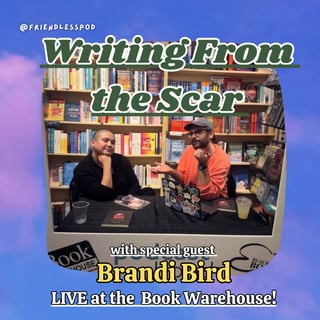
Speaker: Well hey there sweet peas, welcome back to Friendless, I'm your pal James Avramenko popping in ahead of the main interview just to quickly lay the scene. This episode is the latest in my series of collaborations with the book warehouse on Main Street.
Speaker: And this week I'm joined by the author Iona Wachaw to discuss her latest entry in her series of 13 books and growing. The latest is called A False and Fatal Claim. A quick note, I had some unexpected tech issues with the recording. I've done my best to clean up the audio, but unfortunately there are still a few spots where things get a little wonky. I apologize in advance, but on the positive side, the interview itself is an absolute treat that I know you're go to love. So that's it from me. Enjoy the episode.
Speaker: So here's the thing about friendship. It requires a certain amount of delusion. You meet someone, you decide on basically no evidence that they're saved, that they will not disappoint you, betray you, or vanish without explanation.
Speaker: You hand them a little piece of yourself and hope for the best. And most of the time, most of the time, it works out. But sometimes the person you trusted turns out to be someone else entirely.
Speaker: Sometimes the community you thought you knew has been keeping secrets. Sometimes the hat abandoned in the brush is the beginning of something much worse than a hat. The last one is from today's guest.
Speaker: Iona Wishaw is the author of the Lane Winslow Mystery series, 13 books set in post-war British Columbia where a small lakeside community keeps insisting it's idyllic right up until the moment it's absolutely not.
Speaker: Her brand new novel is a false and fatal claim, and I really can't think of a more friendless title than that. Iona, welcome to the show. Thank you very much. I'm excited to be here. Right off the bat, a question I like to set up for all guests is is very simple, but potentially a hazardous question of who the hell are you?
Speaker: Well, it's hard to know what to say about who you are. You're either the long string of things you've done or you're the long string of people you came from. would have to say right now.
Speaker: I'm definitely a writer. Because I started so late, I was 64 when I started this particular series, in general started because I was an educator before. It's really over the last decade that I've been writing transformed from an educator into a writer and in some ways back into it a little bit of an educator as well. So let's chat a little bit first of about about the newest book, A False and Fatal Claim.
Speaker: It puts trust really front and center. And I'm curious, what kind of false claims are you most interested when you are plotting a novel like this? Is it the ones that people make to each other or the ones that they make to themselves?
Speaker: I think I should mention that I don't plot. Okay, fantastic. I just write. So I'm always quite interested when people are not honest ah about themselves to themselves. They're making their their thoughts to themselves in some ways, right? I think that can happen. Like in this book, for example, there's a guy who slings hat in the cafe in Nelson. gets offered a job by a really wealthy person to be a driver and is like transformative in his life. The first time he has a suit, he has a hat, you know, he has all those things, but he's still himself.
Speaker: Yeah. And he's struggling to be the person he thinks he is in these new clothes. You know, I'm the driver for this. Because he's on such unsettled ground. Yeah.
Speaker: He ends up becoming a victim. He ends up becoming a criminal because he doesn't actually know who he is. If somebody asked him, who are you or who are you, as you would have, he would have struggled, think, to answer it beyond a very, you know.
Speaker: And do you find that, do you think that that's a more natural instinct for people to sort of lie to themselves? Or do they think that they're doing more correct protectively around how they are perceived by others?
Speaker: You know, what do you think? When you think about the question, you know, who are you? I think most people would have difficulty answering it. And I think that's where the problem lies, you know, because you define yourself all the time. Like right now, I'm the person who's talking to you. And I think people often...
Speaker: It's harder for them to think beyond that, deeper than that, because who are you must, I think, to be really solid, must encompass what you believe. Right. And i think people live lives where they don't have to examine their beliefs. yeah Yeah. You know, less so right now in our society, everyone's having to examine what they believe now. yeah But, you know, 10 years ago, we lived in a comfortable Western society. There was no pushback on anything. And there was not that much pushback. So, yeah, I think, you know, and people are easily duped. That's the other thing, you know, that I think becomes, that's a really big problem.
Speaker: You know, people being duped and they're duped because they're not in solid ground themselves. Like the number of letters I get that are from scammers. Oh, yeah. are unbelievable. Yeah.
Speaker: They're eloquent, they're they're and and they're shifting how they do it, andre just looking for, you know. Just one little in and then you're, yeah. I think a lot of people, I don't mean writers necessarily, but a lot of people are drawn in to these things because they're uncertain about who they are and they're uncertain about what to do in a situation. Yeah. You know. Well, and it's that drive for connection. I often find the tip people who I've known who have fallen for scams things like that, more often than not, it's not 100%, but more often than not, they've been in moments of isolation. They've been moments where it's like, oh, here's somebody contacting me. Here's somebody connecting to me. Right. and oh yeah Absolutely. I think in this book,
Speaker: There's a kind of elaborate scam going on all the way through it, right? There's somebody who's pretending to be somebody totally else the entire time. And when I think about Lane's neighbors, you know, it's ah it's a mixed box. there are some neighbors who don't get along at all.
Speaker: Other neighbors who are very content to be... to To be just the people who, you know, they've they've had their one adventure, for example, in the Hughes family, elderly mother and two, you know, upper middle-aged daughters.
Speaker: You know, they both had tragic love affairs, the two daughters. The mother's husband died. And there's no impetus on the part of any of them to change that. Neither girl ever fell in love again. Mother never married again. They settled into this life and that's how they want it to go on. But that in a way is is a formation of and of their own community, right? right yeah That community is incredible because I lived in that community when I was a child and I could leave my house in the morning five or six years old and wander to the post office or up the hill to the people who might model Don the Hughes or off to the American, you know, and everywhere people would give me tea and something to eat and entertain me and put me down for a nap. It was unbelievable. And because they were largely English, they had a very kind of non-sentimental approach to life. sure yeah Gladys Hughes would never...
Speaker: sentimentalize anything. Speaks straight up and everything is absolute rotten nonsense. And, you know, yeah it's just, but underneath it, there's that real level of caring. Like if if somebody needs something or, you know, they come together, like I think in this book, Ames is having a drinks party ah prior to his marriage.
Speaker: and And so they're throwing it at Lane's house. And Lane is not a cook. it is, you know, a little worried about it. And the Hughes is leap into the breach. we'll we'll do it. We'll make all the candles. Don't you worry about a thing. We'll do it. you know You know, oh, I can't think. Not since.
Speaker: Love to do it. yeah So you get that going on in the community all the time. here and So this leads me into this question of the idea of King's Coke, you know, and the idea of the idyllic surface, right? And the people who want to be just within a community, you know, and are participating in that way.
Speaker: But then that doesn't necessarily make for interesting fiction, right? You know, you then have to have problems and you have to have some modicum of darkness in a lot of ways. And I'm curious, you know, so you've said, you know, you don't necessarily plot it out as you're writing, but as you are...
Speaker: exploring the story and as it's kind of coming out of you, how do you find yourself calibrating the level of darkness or or whatever it might be? How much do you let in before it feels like you are no longer...
Speaker: working within the community that you've built. In a way, you're talking about how I might betray the community exactly as a writer. yeah It's very interesting because worst thing that happened in that community, in a way, happens in the first book. And I don't really do that again. and in that first book, the the guy who now lives alone at the turnoff in the road, Paris, marries a young woman, goes off to war,
Speaker: Right. The guy up the road takes advantage of her a really, really bad winter. In the end, the guy comes back, Harris comes back from war, his wife's left him, and they have a terrible fight. And now they just live very distantly, one at the bottom of the road and one at the top. yeah They try to go to the post office at different times, you know, and when they end up at the same event, they try to Be on the other side of Be on the other side of the room, you know. And I don't have really done anything that harsh since first, really. Because, you know, I've grown fond of the community. I want them to be safe.
Speaker: And, you know, there are darknesses in their lives. In the third book, we find out all about the Hughes family and the Jewish women and what happened.
Speaker: And, you know, it's a dark and ugly story, but they're survivors. You know, they're gardeners, bakers, workers. The other thing that's interesting about that community and probably most rural communities is how strong the women are.
Speaker: I mean, those are three women left... by the First World War, you know, the Second War has just happened and lots of women have been left and are having to carry on, sometimes with children, you know, looking after the famine, all that kind of thing. So it's kind of an extraordinary testament, you know, the war was and then post-war. The conflict, too, of, you know, they had just maintained that community for the better part of, mean, really, if you're looking at both wars combined, you know, the last 40, 50 years, you know, it had been female led and female held up. Yeah, no, no. And I think the other interesting thing about the community is it's largely English.
Speaker: right They're all from the old country. And then Lane comes along. She's a new immigrant from the old country. And they embrace her immediately. But they still call the American the Yink. Yes. And they, of course, do accept her and they love her. But the it's it's the running joke, though, that all the Americans are so different from us.
Speaker: sort But, you know, they're they're going to have to incorporate new people as they come into the community. So they've had to embrace darling when he marries and comes into the community.
Speaker: Layton comes to Kingscope pretty explicitly to be alone and to kind of recover and to isolate in a lot of ways. But now, you know, 13 books later, she's, you know, embedded it ah in not only a marriage, but in in this complete community.
Speaker: And I'm wondering, do you think that... From her perspective, do you think that she got what she was originally kind of looking for? or did she sort of discover something new along the way? And this is leading me into a sort of a deeper exploration of a building community. But I think starting... I mean, the thing is, that's what Lane came for. And we have in some ways to take into account Lane's own upbringing. Yes. Like, what was interesting. They saw it friendless, you know. Like, she, in fact, grew up very...
Speaker: You know, her father was horrible to her, her mother was dead, she had witnesses, you know, a great aunt who was harsh. And in some ways, my mother and Lane in this regard are quite similar. Lane comes there and but She thinks she wants to be alone, but she's immediately confronted by these lovely people across the road in the post office who are so warm and so absolutely accepting.
Speaker: I think that really begins to
Speaker: make Lane's original goal less about just being alone, but about learning to be cared for. Yes. Because in some ways she never really had that growing up, you know.
Speaker: And, you know, she's a good, sturdy person who she has a good, strong sense of herself and and could have gone wrong really nicely. She might have married somebody if she hadn't come to the family and that would might have been a mistake for her.
Speaker: Sure. But because she comes into this place where she finds this friendship and, you know, it's a bit easy for her because they're English. Right. And they're English about how they...
Speaker: Let in other English, basically. I think, you know, she found something that she hadn't bargained for that was really an antidote. I ask because it's something that I've been exploring in the solo episodes of the show recently is this idea when you are feeling impulses of isolation or you're wanting to withdraw,
Speaker: That ends up making the loneliness or whatever it is you're running from worse, you know? And so often this sort of antidote, as much as it might not instinctually feel like it, the way to lessen that is to be the one who reaches out, be the one who contacts or build a community, basically, right? You know?
Speaker: I think one of the reasons that the books perhaps are popular is because they do need just move us a bit back into a time when we didn't have technology. Yeah. I mean...
Speaker: Lots of people, strongholds, weren't even on the phone yet. yes It took until the fifties for most people to be haunted place. And that's just to have a home phone. So it's a lot harder to isolate themselves in those days because there's always people.
Speaker: ah to And they're humans and they're with you and you go and you have to the post office and, you know, rushed in for a cup of tea and whatever's just been made. And you just sort of go along with it.
Speaker: It's much further to hide out. I think you've really, I think you've just tapped into something. it's something I've been really ruminating on a lot lately is this idea of like, Because I was born in that generation that's in that funny little middle ground. You know, i got the internet when I was kind of in junior high age, you know, and I didn't have my first cell phone until, you know, almost university. So, you know, I had this childhood without it, but I still came up in it, you know. So I kind of, you know, straddle both both sides. and And I wonder about, you know, even for someone like me,
Speaker: At this point now, it's like I used to go out, I used to socialize, i used to have no problem going out to not even just, you know, to say a party or something, but just going out and doing things, going out to the movies. And now it's like I feel a panic when I have to go down the streets, you know, and like just go to the grocery store or something, you know.
Speaker: Can't imagine what it's like for younger generations who have just been raised completely in this really isolating technology. I think you really tapped into something around like you were used to people being around because they had to be there. Right. So it just, you know, it sort of trains your nervous system in a way that, you know, and it's not that something like COVID, it's not that that lockdown caused all this. I think it just revealed that that was the way things were going, you know, and it kind of accelerated it all. Right. And remarked to myself about how much of an effort it's going to be to go to a movie. It's this idea for me, it's this idea of there used to be friction in our lives and that was good. You know, like, you know, friction and resistance, you know, it was difficult to figure out what was playing at the movies. You had to get a newspaper, you had to look up what was playing, and you had to go down.
Speaker: Now it's like, oh I can just pull it out of my pocket and do I want to see it or do I want to watch it on my TV? Our lives are really frictionless. They're smooth. And I think, you know, when I think about the other impacts of having no technology in the time that I write about, I always think about, you know,
Speaker: a second book, Lane was effectively being kidnapped at the winter night. And, you know, the outcome is she's on the road in the middle of nowhere with a pregnant woman.
Speaker: And, you know, she lived on the city. They've got to decide. Figure it out. closer to going this community or this one? Because we're going to have to walk. It's nighttime. It's snowing. We have to get somewhere where there might be a telephone. There's no guarantee there'll be a telephone. okay But at least they'll be inside. at least it'll be inside. And, you know, that kind of ah challenge, I think, just builds your ability to cope a bit more. You're right. Everything's so... so smoothness. Yeah, I was calling like the Apple Store. Our whole lives are just the Apple Store now. Right. You know, and it's like it was, you friction is good, right? Friction is what causes heat.
Speaker: Heads life, you know, like friction is a good thing, right? You know, like it's it but building capacity. Right. Exactly. And the less you challenge those muscles kind of they soften. Right. You know, and so it's it's you look at the children of Kings. There's three of them, right? There's just three boys. Angela's three boys.
Speaker: They're out of the house all the time. Mm hmm. doing whatever. yeah and When you think about the skills they're building, in a way they're like little animals who play fight. it was sure They're building skills for adulthood. And you know i look around at kids I feel bad for them. I feel really bad them. What are here? You know? It's remarkable.
Speaker: But you had mentioned something about about your mother being kind of the inspiration for Lane. And I'm curious, what do you think you inherited from her personally? And then also, what do you think Lane kind of inherited from your mom around how women navigate spaces where they're maybe not fully trusted or fully seen?
Speaker: My mother was definitely larger than person. She came from a fairly upper class background. And so she felt herself belonging everywhere. Mm-hmm.
Speaker: I always tell the story of her hitchhiking to Alaska when I was three and taking a little felice with an evening gown. And she wore that evening gown to social events in Anchorage yeah with a pair of runners.
Speaker: But her belief was, I set the fashion here. right so she had a very strong sense of law belonging wherever she was. And, you know, i
Speaker: was I embarrassed by her as a child? It's hard to know. That wasn't your question. It just came to me. but you know I love that question. I think all children are embarrassed by their... spite right It's only in retrospect that you're like, oh, actually, they were a human. They they weren't. yeah Yeah, yeah. I did... You know, as my life has changed and I've taken on different roles and, and yeah you know, first thing we're...
Speaker: and a kind of service realm and then I became a teacher and became an administrator and then I retired became a writer. like in each of those things, I was conscious of having to grow into that role and be comfortable because it was going to involve other people. You know, you're not a teacher without involving other people. yeah yeah So I'd get comfortable with that and then I'd be into the next Now there's a whole new realm of comfort that you have to have. And so I think in some ways I did learn from her that I can belong everywhere, which I think is important. I'm not sure I felt like that all my life.
Speaker: Of course. Because she was huge in my life and yeah you know, you didn't feel like there was much root. Sure. Yeah. now I do feel that I've got. In some ways, it's sort of outright thievery, but I've taken a a lot of my mother's life and and and given it to Lane because I think it makes the kind of woman Lane is and that my mother was.
Speaker: In some ways, they're very, very different. Like everybody responds to ill treatment as a child differently. My mother's was to never really develop.
Speaker: super maternal instincts. You know, she was a great and interesting mother, but she wasn't, you know, she never knew where we were. right yeah we should yeah kind of Whereas Lean is a much more sensible person and she's discovered late in life that she adores children.
Speaker: She had no idea. Right. And so I'm not sure my mother ever got there. I think A level of confidence, maybe. And my mother was crazy courageous. You know, my father said about her after she that she was the most courageous woman. i And her father had called her a little coward. She her father did not get along.
Speaker: And, you know, she told me literally on her day that she'd spent her life trying to prove him You know, I have to look back on things my mother did and and just say, never.
Speaker: and like I never yeah inherited that kind of marriage. But I think Lane knows it, so she's welcome to it. Yeah. It's an interesting thing. You know, the the way you're describing that sort of like that belief of belonging, I think i think that really encapsulates the kind of behavior that...
Speaker: was just talking about this the other day about this idea of the exact same trait in someone from one perspective can be inspiring and positive and nurturing and beautiful. And then from the exact same behavior, the exact same person, but from a different angle is like this most toxic, awful person. How dare they be here? and You know, that speaks to the resilience of kids. I mean, that's just it. Yeah. kids My whole life.
Speaker: And i I saw many tragic family court situations and you would see kids coming out of them differently. And so been said, just a little more resilience and you're able to, you know, to make it. I think building on that too is this idea of, you know,
Speaker: it's if somebody's always goingnna There's always going to be somebody who's perceiving you in the wrong. You know what i mean? And so it's like, I think the ability to hold yourself with your own confidence and the ability to, you know, like your mother, to be able to just say, yeah, absolutely. I belong here. Why would I not? Right. You know, there's going to be somebody who says, how dare you? But what does it matter? like but yeah Her response would be, how dare you? so King's Cove, you know, as we've kind of talked about, it really functions in a lot of ways as its own character. You know, it's a place that that holds people together, kind of whether they like it or not. it's and And you had mentioned that you grew up somewhere like this. Do you think it takes a certain kind of smallness, I guess is maybe the word for it? You know, the sort of the small community? Do you think it takes that kind of size to really...
Speaker: force or to hold genuine connection? Or do you think it's possible on a, you know, Vancouver scale or ah or a larger scale than that? It's a very interesting question because in some ways we're more isolated in a bigger place, right? Because we're not, I mean, I live in a small apartment building with like nine people, like nine different units.
Speaker: And, you know, we're very friendly with each other, but I wouldn't call us a community necessarily because we don't do the things that create community, um except i around the building.
Speaker: You say hi in the hallway kind thing. You say hi the hallway and we work together to get... You know, I sometimes find myself longing for whatever a small community would give me. give And then i think about for about 10 minutes and the blocker...
Speaker: yeah but Because the thing about the city is you have so much available to you and you create community in different kinds of ways. like I live in a neighborhood in Dunbar neighborhood. There's two drugstores there. There's a movie theater. There's the Stong supermarket. I know everybody. I go in. We always have a chat.
Speaker: ah thing And you know you go home feeling like, yeah, and this is my community. I just have my chat. young people I know. My neighbors go in and out of there and we'll stop in front the spaghetti and annoy people who need to get at the pasta, you know. So I think those are different kinds of things that people make. I'm really lucky because my son and his wife live here in Vancouver, so I've been lucky to have my grandchildren nearby. They're grown men now, so, you know, I
Speaker: I don't know when I'll see them again. Of course, yeah. But, you know, that was like a real blessing for me because I also, I think like my mother, grew up very isolated. co Alone because we traveled all the time. From the time I was five, we traveled all the time. So in a year, I could go to five different schools.
Speaker: sizes and Right. yeah so in some ways, recognized who my mother was. all I was also brought up in that kind of isolated way. My brother never lived with us from the time I was about five years old.
Speaker: and He stayed here and went to private school because he was older than me. You know, we've just got to know each other much later. yeah My father was always away. My mother was always busy. And it was just, you know, there's where that resilience maybe gets built up. And lucky that I had a level of, you know, curiosity. I think my ability to get along with people is because you have to. When you're moving all the time, you have to. yeah Right? Yeah. And what's that thing of, you know, we there's that instinct to be alone, but we're the human, you know, whatever we are, the human monkey, right? Like we're not single. We're we're a communal animal, right? to be connected I'm so glad you brought up the human monkey because I think we're so instinctively about making community. That's right. It's just going to look different.
Speaker: Big city, small town. Yeah. All of that. So to you, it's not necessarily proximity by like where you're living per se, like where your where your bed is, right? You know, but it's still an in-person connection kind of. Is that where you go with it? You have to make a bigger effort.
Speaker: Yeah. I have to make a bigger effort to go. And I just think about kids growing up in the city. Like I i remember, you know, I lived in Mexico City when I was really small. And, you know, and I had a couple of Mexican friends who lived in the building I lived in but other than went away to school and you mean you went to your dance lessons all over the city.
Speaker: you just, you make your community and instinctively. I don't think you do anything special, but I think a community where you're doing this can be really helpful.
Speaker: There's one of the sort of like temple questions of friendless has been over the years has been this question, you know, because we we use these words, right? We use friend, we use community, right? And these are really commonly used words, but they're also very nebulous, right? And they're sort of like, what does that even actually mean And something I often like to ask my guests is, you know, at the baseline, what does a word like community actually mean to you? So i'm curious from your sort of perspective, how would you personally define what a community actually is?
Speaker: You don't ask easy questions. I mean, I do think of Vancouver as my favorite community. I definitely do. I think of Dunbar as a village. but It is kind all those communities, you know.
Speaker: I think of mentally in my mind, break the city, and all these different communities. And I do literally feel like I'm going to the village if I walk over to Carysdale from here. Or if I drive to Strathcold. Well, because they were their own villages, right? that's ya yeah So that's kind of, I think for me, it's probably for everybody.
Speaker: this this is kind of i love that. And actually, you know your books also take a real honest look at the question of who doesn't belong in communities at times. You know, they quote the you know, the marginalized, the sort of the suspicious newcomers, you know, the the Americans, right? You know, ah in your perspective,
Speaker: Do you, you know, and this is obviously not like, you know, ah mindful choice, but i'm I'm curious at the baseline, do you perceive the concept of King's Cove as sort of a utopian sort of direction?
Speaker: Or is it a more honest portrayal of how communities actually work? It's funny. Like, and there's been a discussion about whether my books are cosier.
Speaker: yeah and Yeah. Which I see as a high one of the highest accolades, just so you know. I love a cozy ending. You know, in my head, all of the people that exist are decent people.
Speaker: You know, they may be under dress, you know. For whatever reason, I feel like most people you meet are decent people yes who are trying. yeah I mean, it's the 1940s, and, you know, the Japanese have been moved into that area a lot from the coast.
Speaker: And the Dukkabors are there, and they're in the middle of a political transition that's already beginning with... Sons of freedom, blowing things up, but you know, all of that, like it really puts pressure on the community as a, at large. yeah I think about my mother, my mother spoke many languages, a very, she spoke Russian and you know, she had Dukkhabar friends, you know, and she could go and she could speak to people.
Speaker: So maybe not everybody could have, but she was, she was someone in King's Cove. And so she's about
Speaker: acceptance, really. Now, you know, the the the one thing that i I noted that, for example, there's a black police officer, sort of, for the first time in Nelson, right?
Speaker: And, you know, some people are just, he's notable because he looks different from other people. But lots of people just roll with that. But in King's Cove itself,
Speaker: I think because it's a small community and you can't hide who you are in lots of ways, you really can't. You can't go around pretending to be something. I think if you were really pulling to somebody who came in, was vastly different.
Speaker: Like your neighbors would call. It's hard to hide in any small town. I've lived in a town of 100 people and it's everybody everybody knows exactly what's going on everywhere. You can't pretend to be something you're doing. Because it's small, you know you get a certain number where now if you're excluding someone, and you've got other people who will do that as well. But in a really small community, that's to explain as well.
Speaker: Given who the people are, you know I'm sure they'd be down there saying, what you're doing is okay. Right. I'm curious, you started writing much later, right? After decades of being a teacher, also social work and all you know all the rest. And I'm curious, firstly, around the writing, what did the timing of this, you know, of you coming to writing later in your career, what do you think it gave you that you wouldn't have had at an earlier time?
Speaker: Well, it's very effectively kept me from having to take care of it. I will say that. Thank God. I always wanted to be a writer. And in my 40s, I took a degree at UBC, which was degree of writing.
Speaker: So it was always the background. And I think writing has given me is just like... in a way, a whole new life. Like i I consider myself now to be working. I talk about, you know, I've been retired since 2014.
Speaker: I'm working and I'm meeting just like all kinds of writers. I mean, on a very kind of practical level, many of the writers that I read before I was a writer,
Speaker: Donna Lee, Anne Cleaves, Jance, Tony Hillerman's daughter, Anne, Elizabeth George. I mean, I've met these people. I've seen panels with them. Jacqueline Woodspear, I was on a panel with her. and We talked a lot afterwards, you know.
Speaker: it's keys i'm I'm suddenly vaulted into this world of writers that I love, and now I'm kind of with them, and, you know, you have to pinch yourself. So ok in some ways, it's really, yeah it's opened up a whole new world.
Speaker: feature of my life. has it do you Do you think that that's kind of, what's the word I'm looking for, you know, kind of like It revealed to you that authors are just people too, right? Do authors deserve the pedestal, I think maybe is the question. Yes, because i I do put authors on the pedestal. I absolutely do.
Speaker: But in some ways now, but you know, it if I can do it, is it worth belonging to this kind of a feeling, you know? like but The other thing I've been really lucky about, and I do pitch myself about this, is that the very first book I sat down to write the first book,
Speaker: I'm still working then. I still had two years on my job and I was working every morning a little bit, you know, before I went to work.
Speaker: You know, Lane just walked into life. oh She walked into my life and there she was. And it's been easy in the sense that it's been the right thing.
Speaker: Yeah. that I feel in some ways that these stories were way I got to do, you know. So in some ways, I i feel that it it is a magical thing, you know, and just incredibly grateful to be part of it. Yeah.
Speaker: You literally just answered my last question already. I was going to say, you know, you've written 13 books in the series, and which means really living with these characters for a long time, you know, and I'm curious, has has Lane taught you anything about yourself that you maybe didn't expect?
Speaker: I think in some ways, ah you know, people are always asking me, you know, I always begin with my mother was the inspiration. And a lot of things that have happened to me or how she's handled really difficult, dangerous situations are taken directly from things i know about my mother's life because I was alive when some of these things happened.
Speaker: Other things I don't know and she didn't tell me until she was... year from her, and for example, that she did espionage. Intelligence scheduling. So...
Speaker: You know, when I have to answer the question is, is Lane like me? I think more and more as I've given voice and a place for all the things I feel strongly about. And you know, and those are social justice issues, how kids are treated. You know, these are huge things for me, but I think they've put meat on the bones of what actually means.
Speaker: You know, to be to be fair, to care for children. I think that's wonderful. this has been just such a pleasure to chat with you. Look, and we've had the biggest crowd yet. This is amazing, right? yeah but the but Well, that is Iona Wishaw, everyone. False and Fatal Claim is out now.
Speaker: You'll be able to pick it up at the Book Warehouse where we recorded this conversation. Always support the Book Warehouse. Thank you all so much for coming. that ah i cannot thank this bookstore enough for the partnership. It's incredible for the listeners if this episode resonated with you. And I really hope it did And hey, for all the live button audience as well, best thing you can do to help show out is share it when it comes out, especially to someone who you're not suspicious of.
Speaker: um ah ah but But otherwise, thank you so much. And thank you all so much for joining. me And yeah, I have no official sign off. So i always end up just kind of like trailing off and saying, and we stopped recording here.
Speaker: you.