Become a Creator today!Start creating today - Share your story with the world!
Start for free
00:00:00
00:00:01
Sometimes Things Work Out (LIVE at the Book Warehouse with Special Guest Susin Nielsen!) image

Sometimes Things Work Out (LIVE at the Book Warehouse with Special Guest Susin Nielsen!)

S8 E29 · Friendless
Avatar
143 Plays10 days ago

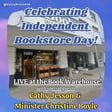
This week on a very special episode of Friendless,  host James Avramenko welcomes acclaimed author Susin Nielsen for a live recording at Book Warehouse Vancouver.

Susin's latest novel "Snap" tells the story of three unlikely friends brought together through an anger management program—and it all started with a real incident at a disastrous school visit 15 years ago. In this wide-ranging conversation, Susin and James explore the power of optimistic storytelling in dark times, the peculiar difficulty of making friends in Vancouver (despite everyone being "so outwardly cheery"), and why setting Canadian stories in "any town USA" drove Susin crazy enough to plant her work firmly in Vancouver's streets and neighbourhoods.

They also dive into Susin's journey from craft services on Degrassi Junior High to writing on the show at age 22, creating positive work environments on Family Law, refusing publisher pressure to censor her work, and her recent experiments with meditation and church-going (for the community, not necessarily Jesus).

Whether you're interested in the craft of writing, the challenge of building community, or just want to hear two people who love Vancouver bond over its friendship paradoxes, this conversation has something for you.

Links & Resources:

Sign up for the Friendless Substack HERE!

Follow Friendless on TikTok

and on Instagram

Support the show, Buy Me A Coffee!!

Create your podcast today! #madeonzencastr

Recommended
Transcript

Introduction and Guest Background

00:00:08
Speaker
Well, hey there, sweet peas. Welcome back to Friendless. I'm your host, James Avromenko. And this week, I'm joined by novelist, screenwriter, and all-around earth angel, Susan Nielsen.
00:00:20
Speaker
This is the first episode in my collaboration with The Book Warehouse. It was recorded live at their Main Street store, and it was an absolute blast. Susan and I talk about everything from anger management as creative inspiration, the difference between therapy and therapeutic, and what inspired her to write her latest novel, Snap.
00:00:38
Speaker
All that and so much more, so it's time to lean back, get comfy, set your volume at a reasonable level, and enjoy my interview with Susan Nielsen here on Friendless.

First Podcast Experience and Novel 'Snap' Discussion

00:00:47
Speaker
This week on Friendless, I have an incredible guest that I am so excited to interview live at the book warehouse. She is the author of Snap, amongst a myriad of other books of all age ranges and topics.
00:01:04
Speaker
The one, the only Susan Nielsen. How are you today? I am very well, James. Yes, this ah I'm a podcast virgin, so this is my first ever podcast. I listen to a lot of podcasts, but I've never been on one, so I'm very excited. I feel very blessed that I get to expose you to the world. I'm trying really hard not to get inappropriate with that. The moment you say... I kind of set you up. That's a sabotage moment. There's no gotcha moment.
00:01:32
Speaker
The whole series that we're doing with Book Warehouse is with the intention of trying to get local authors, not just here talking about their books, but also talking about their community. And I think Snap is such an incredible...
00:01:45
Speaker
sort of platform for that kind of conversation because not only does it read as a beautiful exploration of the characters they've created but also it reads very much like a love letter to Vancouver and I had just adored it but before we dive into that further for any listeners who may not be familiar with your work I'll open with a question that I ask all my guests in varying levels of aggressiveness who the hell are you? laughter
00:02:12
Speaker
I would say that was moderately aggressive.

Susan's Background and Writing Journey

00:02:16
Speaker
No worse than that. Well, who the hell am I? God, I mean, that could be a very long answer. I mean, you know, i i was a you know little girl from Ontario, grew up with a single parent mom.
00:02:31
Speaker
Spent a lot of time alone um because she had to go off to work. Every day I was a latchkey kid and, you know, spent a lot of time making up imaginary games and in my imagination and reading library books. And, you know, this is not a sad story because I, you know, I really, i mean, It sounds like paradise. you know Yeah, exactly. It was a good childhood. And, you know, i love my mom very much. were really tight.
00:02:57
Speaker
But yeah, I mean, good Lord, how much detail could I get into... The nice thing is podcasts are literally the platform to yap. So by all means, okay gay you know, give us the long version if you want. Yeah. Well, I started writing at quite a young age. My mom kept everything of mine, which wound up being a gold mine after I started publishing my first book, Word Nerd. I actually found all these boxes of my old journals and my old writing.
00:03:25
Speaker
And i found the first diary that I ever kept when I was 11 years old. And the opening paragraph literally reads, this is the first day I've written in a diary.
00:03:37
Speaker
The reason I am is because I love writing stories. And if I do grow up to later die, and they want to get a story of my life, I guess I should keep a diary. You're forward thinker. I love it. I love it.
00:03:48
Speaker
You know, I had a prof at university who always said, if you want to be remembered, write it down. Doesn't matter what you write, just write something down and eventually you'll be useful to someone. That's amazing. feel embarrassed I'm giving you such a super long-winded answer. No, I love the way you frame the idea of nowadays, for some reason, when somebody hears, oh, I spent a lot of time in the library, for some reason, there's this belief that that's a, that's ah oh, I'm so sorry, you know?
00:04:14
Speaker
Right? there's I don't know what the right word for it is. Well, it's true. And I had to tell you this isn't a sad story. I always feel like I need to tell people that it wasn't a sad story. Yeah. And you were actually, you were flashing me back to when I was a kid and how excited I was to go to the library, how excited I was to like...
00:04:29
Speaker
You know, even if it was to take out the exact same book again for weeks on end or whatever it might be, like just the paradise of the library and of that almost kind of sanctuary feeling, you know? I hate to be, I don't want to be a doom and gloom type person to be like, oh, and everything's wrong and everything's broken. But I don't know how to refoster that excitement. And maybe maybe it's that you don't in adults. Maybe you don't refoster in adults. Maybe you just try and get the next generation excited. You just go to the kids again.
00:04:59
Speaker
Do you mean about books in particular or? I guess both. I think the library as an entity, but also, yeah, I think books in general, you know? Yeah. I don't know that I know how to answer that question, yeah James. That's a tough one. i know. I'm spitballing here. Yeah. I mean, I feel like adults are still reading a lot.
00:05:18
Speaker
Whether or not young people are still reading a lot, that's a very good question. yeah And I only know things anecdotally. So I wouldn't feel like I could really speak to that

Career in Teen Shows and Reader Impact

00:05:28
Speaker
necessarily. So that leads me to your career has spanned so many different kind of, I guess you could call it reader readerships or, you know, reader types or however you want to.
00:05:37
Speaker
So you have a wealth of experience, whether you want to admit it or not, you know, or whether you even recognize it or not. You have a wealth of of sort of information that not everybody has access to. And I'm curious about, you know, in your time when you were writing predominantly kind of youth or young respective books, what was the sort of anecdotal reception of reading and of books in young people?
00:06:01
Speaker
Oh, sure. Well, I mean, first of all, i I am at a point in my life where I can actually say, yes, I do have a wealth of experience just because I'm, you know, old. So for a long time, I was very firmly in that world of tween and teen, starting with my television career because my first ever gig on a TV show was with Degrassi Junior High. Right. Was this Degrassi Jr. High the original, like with Joey Jeremiah and Caitlin? That is how old I am. Yes, it was the original. one of my favorite shows of all time. So thank you for your work. I really appreciate it you're very welcome. That show. Yeah, I mean, it was absolutely the best iteration of the Degrassi show. And felt incredibly lucky to be able to be a part of it. The first season I did craft services. And I was very terrible at that job, but I really loved working on the show. So between first and second season, I wrote a spec script, speculative script, and I very boldly gave it to the head writer, Jan Moore, who wrote most of the episodes. And he read it, and I believe Linda Schuyler read it, the creator of Degrassi, and he told me, we don't think this is very good.
00:07:09
Speaker
But we see a spark in your writing, so we're going to give you a shot at writing an episode. And I think I was about 22, which is amazing, I know, looking back, 22 or 23.
00:07:21
Speaker
And I wound up writing 16 episodes of Degrassi Jr. High and High. And I wrote books while I was there because they did all these novelizations. so And one day Linda just said, do you want to write a book about Shane?
00:07:33
Speaker
And I said, okay, because I just never said no to any opportunity like that. So I wrote Shane, Wheels, Snake, and Melanie. And I thought someday I'm going to write an original young adult novel because this is really fun. and then I was in that world for many years in the TV world writing for a lot of teen and tween shows, Ready or Not, Madison, Adventures of Shirley Holmes, Brace Face, like all these shows.
00:08:01
Speaker
And I finally, in my forty s sat down and wrote Wordner and then six more after that. And so, yes, indeed, i haven't forgotten your original question. yet Yeah, yeah. No, i I'm just somebody. ah I love a random. I call it 80 detail. they love Marvelous. Yes. I'm big on going off on tangents. Yeah. And actually what was super fun was like after Word Nerd was published, it was like crickets. I can tell you that, like crickets.
00:08:30
Speaker
And I thought, oh, well, I guess that's just, you know, that's what it's like. i mean, any author you speak to, especially with their first book, I mean, it it is kind of crickets. But then it started winding up on a lot of young readers choice awards lists across Canada. So for the first time ever, I started to be like doing school visits and but presenting in front of kids and going to events with a lot of kids. And not just with Word Nerd, but with all of my books, it wound up being remarkably gratifying because I was, i mean, some kids are, of course, indifferent when you go into the school, but...
00:09:05
Speaker
there were a lot of kids who told me that my books got them back into reading yeah because they could identify, they could see themselves or they could see somebody they knew. And there was a lot of humor in the books as well, as, as even as they were dealing with tougher subjects. And it was really, I mean, maybe a little bit of a barfy word, but a little bit heartwarming to see that there are legions of kids out there Who and and thoroughly enjoy reading, yeah you know, yeah and who still love escaping into those worlds. So, yeah, yeah.
00:09:40
Speaker
Coming back to the, you know, the the idea, what you just brought up about the idea of like, you know, kids, when they get kind of sparked with something. It sort of triggers them to then cascade into, you know, and I'm remembering when I was a kid, I was really into Eric Wilson books. He came, he read a chapter of his new book at my school one time. There was a reading challenge to read as many of his as you could. i mean, Eric Walters, do you? No, no. And this is the thing. I have moments sometimes, I i sometimes have like those, like, what do they call it The like Mandela effect moments whenever I talk about Eric Wilson, because everybody's like, who? What are you talking No, but did he write mysteries as well? Yeah. Okay, that Eric Wilson. yeah I totally know who you mean. yeah I think I didn't know he wrote children's books as well, or or middle grade. Yeah, it was like a brother and sister. i can't remember their names now, but they mysteries kind of across Canada. So each book was like- You know, there was like the vampires of Ottawa and there was that something in Alberta or the stampede. It was fun because it felt a little grown up. It was a little dangerous, but it was also Canada, you know? So it was like adventures in Edmonton. They went to the Westhead Mall and that then propelled me to want to read other stuff, right? And it challenged me to read bigger and and different books. And this why I think the work that you do is so valuable. I think that people like you need to be sort of celebrated a little bit more in that space.
00:10:58
Speaker
All it takes is one author to latch on and then you've got a reader for, you know. Well, that's a very good point. I mean, I don't know that I need to be celebrated.
00:11:09
Speaker
But thank you. I'll tell my husband you said that. yeah But I do think it's a really good point. And I always love hearing that from readers, whether it's one of my books or somebody else's book. That's the one that kind of opened up that world to them.
00:11:22
Speaker
And certainly for me growing up, it was Judy Blume. I mean, it absolutely was Judy Blume. And she did that for a lot of young readers and a lot of future writers, I think. No, she's magnificent. Paul Zindel. That was another one I remember. Paul Zindel. My darling, my hamburger.
00:11:39
Speaker
my God. I've actually dealt with abortion, which think would be like super hard to do today, weirdly. This is a bit of a digression, but it's coming off something you just said about the idea of content, right? You know, the idea of often people will say, oh, that could never get made now or this could never get made now. And then stuff gets made that's even more challenging and stuff gets made that's even more relevant or exploratory or whatever it might be.

Content Censorship and Real-life Inspirations

00:12:00
Speaker
And I'm curious, um, um, In your own creative work, have you experienced moments where you've wanted to put something into a book and you've been stopped? You don't have to name names or anything like that. Yeah, no, that's okay. Or is that sort of an idiom that just pops up sometimes? No, mean, I think it's very true. could tell you two very different stories, I suppose. The story I will tell you is don't think I've ever shied away from something that I have wanted in one of my books. I did have my American editor.
00:12:32
Speaker
on No Fixed Address. The Americans wanted me to take something out of that book. And it's actually a moment when Felix, who has been living in a van with his mom, it's kind of about the hidden homeless, and he's very sick, goes to school anyways, because it's at least warm at school.
00:12:52
Speaker
gets in a fight with his friends, winds up at the local library, falls asleep in one of the little study carols, and wakes up and there's an older man beside him masturbating.
00:13:06
Speaker
Okay. Okay. And um he has to leap up and flee from the library. They really wanted me to take that out. And I've actually gotten some angry letters from parents about that particular bit too.
00:13:21
Speaker
And for me, the reason I kept it in is because what I was trying to show was that there was sort of... The safe places for him were getting fewer and fewer. And it's not to say, obviously, a library is generally a safe place. But I can tell you, like, I remember growing up and having...
00:13:44
Speaker
Multiple incidents like that happened out in the world as a young girl. Yeah. And I don't think it's completely disappeared. So um that was why I said, no, thanks. I'd like to keep it in. And I think I actually missed out. They they wanted to do like, ah you know, the Scholastic books. Remember how you could. Oh, yeah. Oh, the book fair. Oh, my God. it was so much fun. yeah And when you could order books and then they'd arrive and it was like Christmas. It was so much fun. And they were going to do like a a sort of like trimmed down version of one of my books. It might have been no fixed address. But I had to agree to cutting out a bunch of content. So I just said, you no, yeah I'm just not interested in that. and You know, and but you can get in the book fair another time. you know. now
00:14:32
Speaker
Exactly. But this i mean but i think that's I think that's brilliant. And I think that's such an interesting perspective on that conversation around censorship. And I wonder if you had been in a different stage of your career, if you would have had the ability to hold your ground as strongly as you could.
00:14:47
Speaker
Yeah, I doubt that I would have. I mean, if I had been quite a bit younger, you know, by that point, I was probably in in my late 40s, maybe early 50s. And one of the really great pleasures of getting older, as a woman especially, is that...
00:15:08
Speaker
You just have a greater ability to stand up for yourself. Totally. If that had happened in my 20s, I would have just done whatever people wanted me to do There's not a right or wrong answer, really. Of course not.
00:15:20
Speaker
Would it have been the end of the world if that wasn't in the book? Well, probably not. Sure. Yeah. yeah let's But let's can we move on from masturbation? Right. Okay. Yeah. Yeah. Absolutely, we can. You know, so that actually leads me really nicely into the book itself, into Snap.
00:15:35
Speaker
To begin with, i'm I'm curious if you could tell me a little bit about kind of the, I don't know what the right word for it would be, the impetus, the inspiration for it. You know, moving from all the books that you had written and now deciding to finally write a quote unquote adult book and what led you to creating the book?
00:15:52
Speaker
Okay, well, I'm going to take you back in time again. After Word Nerds was published, about a year after it was published, I started getting invited to do school visits. And I was very new to this.
00:16:06
Speaker
And it was honestly terrifying for a long time. And i was invited to one school outside of Toronto. And i was...
00:16:18
Speaker
surprised to find out that I was speaking to the entire middle grade school of 500 kids in a gym, which I hadn't agreed to, first of all, but was too afraid to say anything. yeah yeah And I had a PowerPoint presentation because I was told you got to, you know, keep them entertained. yeah But of course, most of them hadn't read my book. So, you know, I did a presentation about writing for TV, writing for books and the differences. And and
00:16:48
Speaker
How much of this story do I tell? At one point, I showed a slide of all of the crew of a TV show I'd worked on and all the people it takes to make a TV show. And that you're kind of the architect as the writer. And then the construction crew comes in and builds it, right? And when you write a book, it was just me in my office with my cat, which, of course, isn't entirely true, obviously. i have a wonderful team of editors, et cetera. but Sure, sure.
00:17:11
Speaker
So a boy at the end of the presentation raised his hand and in front of his 499 classmates said something really vile and misogynistic about the picture with me and my cat.
00:17:33
Speaker
I will leave it up to people's imagination. And i was just, I was so ah stunned and humiliated, honestly. I just remember that feeling of humiliation. And I saw a teacher at the end of the aisle go, like this look of horror on her face. I thought, okay.
00:17:54
Speaker
She's going to deal with this kid. And also because these are 12 year olds. Yeah. It went over a lot of kids heads. Sure. Sure. She made a beeline to me. I wrapped up very shortly afterwards. She made a beeline to me afterwards. And I thought, OK, OK, she's going to tell me they're going to deal with this kid. And she said, you said you worked on Degrassi.
00:18:12
Speaker
Did you meet Drake? Oh, from the teacher. Yeah, from the teacher. And ah i just, i like, I have to really, really emphasize I'm not proud of this at all.
00:18:27
Speaker
And that also, I've done so many school visits since then. Sure. And they are 99% positive and lovely. But in that moment, I snapped. Yeah. And I said, no, I did not meet Drake. Permission to go speak to that kid.
00:18:43
Speaker
So I wound my way through the gym, caught up with him out in the corridor. Again, not proud of this, but I am fairly certain I grabbed his arm and spun him around. yeah And I tore a strip off him. I told him, would you speak to your mother like that? Would you speak to your sister like that? should never speak to woman like that. And I saw a teacher watching and I was shaking. I went back to the auditorium, grabbed my stuff, and as I was walking out of the school, I had two thoughts. One was, I am never going to be invited to do school visits again. Like, my name is going to be blacklisted. Sure. And this is a huge part of how authors make a living, is these school visits.
00:19:30
Speaker
And my second thought was... Boy, that would make a really good opening chapter to a book. So flash forward, like,
00:19:43
Speaker
A long time, like at least 15 years. And I mentioned that my last middle grade novel, Tremendous Things, which I think was published in 2021, while I was writing that book, I'm very proud of that book. I like that book very much.
00:19:57
Speaker
But it was the first time I ever had the feeling that I might be getting really close to repeating myself. Mm-hmm.

Optimism and Character Development in Writing

00:20:04
Speaker
and And that really freaked me out.
00:20:08
Speaker
Then my show for global family law, we actually got a green light. And so for four years, I was show running family law, which was super fun, but I was writing for adults. And so during that time, suddenly the voices in my head were no longer...
00:20:29
Speaker
kids' voices. They were grown-up voices. And Francis, the protagonist of Snap, who snaps spectacularly, at a school visit, off the top of the book, really started to talk to me. And I decided it was time to try something new. And You know, there's, look, there's similarity in all of my books. There's always a blend of comedy and and drama and pathos and hopefully some really sweet moments.
00:20:56
Speaker
I tend to write books where things work out well in the end because maybe it's because of the world we live in. I feel like we need those sorts of novels along with the weightier ones. But I also just was, I don't want to be stale. So I really wanted to try something.
00:21:13
Speaker
Yeah, I think that's fabulous. You know, i just read something the other day talking about how one of the reasons we use fiction is to essentially practice what we might be able to do in the future.
00:21:24
Speaker
It's a way to sort of, it's almost like a dress rehearsal for what culture or what society could be And the argument that was being raised was this idea of more often than not, we call something realistic when it centers essentially a a white supremacist paradigm of control and subjugation and horror and pain and all the rest.
00:21:45
Speaker
And and and it was saying, you know, we need to create speculative fiction that isn't just a dress rehearsal for fascism, but it could potentially be a dress rehearsal for other potential versions of society.
00:21:58
Speaker
And you actually really tweaked something, and as you were saying, that it's one of the reasons I loved the book so much. And and what I found so uplifting about it was bad stuff does happen, but at the end of the book, everyone gets not necessarily what they wanted, but what they needed. And and more often than not, that's better than what they thought they wanted, you know?
00:22:22
Speaker
um And I think that is no less, you know, no, no qualitatively lower than if it was, oh, and then everybody dies and is miserable and is right, you know? Like, it's like, who cares? You know, like, like,
00:22:38
Speaker
Because sometimes it works out, you know? We don't have to only have fiction that says, and it never works out, and it's always bad, and it always gets worse, you know? And so I think it's really powerful to choose a resolution where where characters get satisfaction, you know? yeah And there's something very comforting in them, you know? But not in a kind of a docile, placating way either, you know? It's just comforting of like, yeah, sometimes it can work out, you know?
00:23:02
Speaker
Yeah. And you say that that that's sort of an impetus for most of your most of your writing, do you find? Like, is that intentional or is that just sort of how it sort of shakes out for you? I think that's a good question. Is it intentional? I think it's just probably who I am as a person. i think I'm more optimistic than pessimistic, although I have my moments for sure. And ah ah certainly in my middle grade fiction, i suppose it was intentional in the sense that I wouldn't want to leave those young readers in a dark place. And and also my protagonists are all young and no matter what terrible things happen,
00:23:40
Speaker
have happened to them and to some of them, some pretty awful things have befallen them. But, you know, they're young and there is still hope. and I would find it hard to write a book that was just relentlessly sad or that had no hope at the end. Yeah.
00:23:56
Speaker
Yeah, I would find that really difficult. So I suppose it's my own worldview creeping in, you know? think that's beautiful. Even as it's right about now, sometimes it's a little bit harder. But but we have to we have to be optimistic, right? We yeah have to be.
00:24:14
Speaker
I think there's a difference between sort of like naivete and and then sort of like a pragmatic hope, you know? i think that just saying, oh, it'll, you know... It'll work out. and like not But then not doing anything about it is is sort of one direction. I think saying like, no, we can make it work out.
00:24:29
Speaker
yeah You know, it's a matter of do you want it? You know, do you want that future? you know Well, and i also really like what you said about, you know, people writing things is almost a ah a rehearsal. And certainly i know one thing I have done in a number of my books is that but before we started recording, I told you that I have the same very judgy inner monologue that Frances has. Yeah. I'm not proud of this.
00:24:54
Speaker
I've what I've often done in my books is sometimes taken something that I've been rather judgmental about and or dismissive about or looked at in a bit of a black and white fashion and kind of unpacked my own judginess. Because, of course, nothing is ever black and white. Right. And and so, yeah, I just thought that was a really interesting way that you articulated. that The way that the three characters, you know, we've got Frances, who's who's the not you, you know, but, you know, but has a lot of the all you know um you know, we have Parker, who's this young girl who's working on film and, you know, something really terrible happens with the star and she kind of takes the fall for it, you know. And then we have Garrett, my boo, my guy. What I loved about him was that he has this series of unfortunate events, but the way he is presented as very ingrained people pleasing. And how that correlates to anger is what I actually found so fascinating about.
00:25:56
Speaker
we were talking just before we started recording about the idea of your own perspective on things like emotional regulation and anger. How intentional were you around presenting each character's emotional intelligence and their journey through that?
00:26:12
Speaker
Gee, I think you're investing me with way more smarts than I actually have. It could be instinctual too, though. That's so interesting. Do you think I work from, okay, another tangent.
00:26:24
Speaker
An episode I wrote of Ready or Not, which was a tween show with Amanda and Busy. I remember it, yeah. Ready or not, can't wait another day, a little in shock.
00:26:36
Speaker
What would your mother say? think it's two two o'clock. I'm just getting home from school. I'm having my own flashback now, you know? I wrote an episode. I think they were at summer camp. And ah the creator, Elise Rosenberg, came to me and told me she thought my episode was absolutely beautifully written.
00:26:54
Speaker
It was such an exploration of, and she went into this big philosophical explanation of my episode. And when she was done, i just looked at her and I said, really? but I thought it was about a girl who was afraid of bugs. so um Isn't that the magnificence of art, right? isn't that the Isn't that the beautiful thing? Once you create something, you give it to somebody and then it kind becomes theirs, right? that's absolutely very true. Different people draw different things yeah from it. But I do think I'm absolutely much more of an instinct instinctive, instinctual writer than I am.
00:27:32
Speaker
coming from a place of intellect i mean that sincerely i probably was less thinking about each of their you know emotional regulation ability how they dealt with emotions than i was about their backstories and who they each were as people and i obviously wanted them to be very distinct from each other so you've got you know garand who's very he's so guileless i mean i just love him and then Parker, I mean, she and Garand have some similarities and in that they both are very optimistic people. and And Parker so wants to cling to that optimism and so wants to believe in her vision boards and that she can just, you know, she can manifest her way out of this shitty situation that this piece of shit actor has, you know, put her into. Mm-hmm.
00:28:20
Speaker
um And then there's, you know, Francis, you know, again, who's a lot more like me, you know, more pragmatic, more pessimistic, for sure. yeah But I'm drawn to, I think, stories of, I mean, many authors do this. This is no wheel reinvention here. so But, you know, the idea of...

Exploring Friendships and Community Themes

00:28:42
Speaker
A group of unlikely, very different people forming unlikely friendships. I do. i love toying with that. Ann Patchett, she wrote a wonderful book.
00:28:53
Speaker
this is This is the story of a happy marriage. Book of essays. I think I've got the title right. And she says every author has one story out in them that they repeat in different ways. And for her she says it's the Poseidon adventure, which she saw when she was a ah young girl. yeah And she said, think about it, a group of completely disparate people thrown together in an unlikely situation.
00:29:19
Speaker
And how are they each going to respond? And then if you go through her novels... Bel Canto, Patron Saint of Liars, Tom Lake, I think you could even say that about. Like, it's really interesting. You're oh, yeah, she does have.
00:29:32
Speaker
So I'm not sure what my movie is, but, you know, it wasn't the Poseidon Adventure because I didn't i didn't see that one. fair But it must have been something similar. Yeah. Yeah. It's it's really interesting. You know, friendless itself, often I'm exploring these questions of community and how do we foster community and how do we find it and then nurture it? And what was so exciting about the book was that it was this kind of accidental community, you know, like they all just happened there by happenstance and by their own bumbling luck.
00:30:01
Speaker
And then they but none of them sat back and waited for it. They found themselves in this situation situation and then they put the work that was needed in. And I find them actually to be... Sometimes reluctantly, but yes. There was there was definitely resistance, but they still showed up, you know?
00:30:17
Speaker
And I actually find this book to be a really magnificent example of a lot of the stuff that I try to explore and try to talk about. And I guess I'm curious about the idea of fostering community.
00:30:28
Speaker
How much went into your own kind of consideration when creating the book or or just in general, and not necessarily just about the book itself, but just, you know, in your own life, do you find yourself... um focusing on nurturing communities sort of at work, you know, or or or do you try to put work aside and then make your own community outside of that? Or do you find yourself like your characters from Snap, where you're just sort of like, this who I've been dealt, so we're working with it, you know? If any of my friends listen to this, yeah, you know what, they're who I've been dealt. Yeah.
00:31:03
Speaker
of with it boy that's a great question i mean i feel like i've got multiple answers certainly when i was when i was working on family law for example and you know i mean i was basically the boss lady i mean it certainly wasn't just me and networking with like an incredible team of people and i'm a very very good delegator i'm i'm you know if i can not do something and somebody else can do it hell yeah But certainly, you know, in in that setting, i was, i think I was a aware of of absolutely wanting to foster a very warm, inviting atmosphere where people felt a part of the show, where they were respected for the work they did. You know, I had a lead actress in Jewel State who
00:31:54
Speaker
was also just brilliant at doing that And so, you know, she played a large part in setting the tone. And I feel that I did as well, as well as my director, producer, Andy Makeda.
00:32:06
Speaker
So that, that I feel like we created a work family and it was a joy to go to work. And I think most people who worked on that show felt that way, which believe me is not always the case in the television industry. Like yeah it's actually shockingly rare and it shouldn't be because how lucky are we to be playing make believe for a living?
00:32:25
Speaker
We are so lucky. And it's amazing to me how many people lose sight of that. yeah That said, I've also never...
00:32:37
Speaker
bought into the idea that that should be my only community, that I'm very big on work-life balance. while I have made lasting friendships through my work, my friendship circle, if I think about it, I mean, people come from all over.

Social Dynamics and Friendships in Vancouver

00:32:51
Speaker
I've become very good friends with parents who we went through the school system together with our kids. I moved to Vancouver when I was 30, right? So I had a great friend group in Toronto, Ontario, where then we moved out here. Yeah, let's talk about the fact that Vancouver is a bloody hard place to make friends when you move here. Thank you for circling to this. I didn't, you know, i would the moment you said it, I was like, oh, right, we need to get into the Vancouver city. It's a nightmare. It's really hard. And we moved here when I was 30. My husband had a job up at UBC.
00:33:24
Speaker
So he was fine. Like he had a community to go to every day. And I was home alone with no work because I basically like left opportunities behind. So I was trying to find work out here. i knew next to nobody. I remember I would call the people that I had some vague thread, you know. And i remember one gal saying to me, oh yeah, it would be great to get together. I'm a little bit busy for the next three. And I thought she was going to say days. once she She actually said weeks. Well,
00:33:53
Speaker
It wasn't months. That would have been even worse. But for me coming from Toronto, I just remember my heart just hanging. Yeah. And for all that people were outwardly friends. Like in Toronto, you walk down the street and you just, you have your blinders on, head down, kind of a scowl on your face, you know. But the community of friends, like people, we got together all the time. Maybe because the winters were shitty and the summers were humid. Yeah.
00:34:21
Speaker
we would just be together all the time and out here i found that people were so outwardly cheery and friendly yeah we should get together sometime but try to pin any of these people down good lord so it's it's it's such a relief to know that it's like the municipal slogan for decades now of like hey we should get together and then never seeing each other it's nice to know that that's not a new thing you know I guess I've chalked it up to. And you know what? I mean, then I feel like I probably spent a few years being really bad being immediately warm and welcoming to newcomers, too, because I think we're all too busy, like skiing and biking and swimming. We're just trying to pay your rent. just trying to survive and put food on the table, especially now. When I moved here, it wasn't that bad.
00:35:04
Speaker
But yes. So actually, like my friend circle is a friend circle that I have made since my 30s. And those people have come from all over. The friend, one of my best friends who I met in prenatal classes and our kids are four days apart. yeah My two fantastic friends, David and Fraser, who we met in spin class. And I guess, you know, I feel like I've gone through phases where I haven't been as good about nurturing those friendships as I should have been.
00:35:35
Speaker
But as I get older, i think I realize more and more just how. vital those friendships in our community are. And I think one thing that I'm really aware of is being open, being open to new friendships.
00:35:54
Speaker
And as you get older, because I'm 61 now, we've recently made friends with a couple, Heather and Stephanie, if they ever listened to it, Hi, Heather and Stephanie. I was going to say hi. Yeah. yeah um And they are um ah like 20 and 15 years younger than my husband and i And like making younger friends it's particularly awesome. I think it's so lovely to have
00:36:27
Speaker
a wide circle of ages, backgrounds, experiences. you know, I have some writer friends and some people in the TV industry, but a lot of my friends have nothing to do with any of those industries. I think that's actually something that's really, that that I wish more artists kind of partook in, is the idea of like,
00:36:47
Speaker
you know I come from a theater background. I used to be in the theater world. you know and And all my friends were in the theater. every my whole Everyone I knew was in the theater. And it was like a cult. you know It was like, you know did you hear about the thing? Oh, are you auditioning for this? It was like, you couldn't escape it. And then when I when i you know i got divorced and I moved out that you know my my ex got theater in the in the divorce. know Sorry, where did you move from out of curiosity? Saskatoon. Oh, OK. Yeah. Where you could take the entire theater community as a whole and put them in one of the theater spaces and not sell out the space, you know, but it was small, small community. But, you know, moving here, I didn't rejoin that community and have since really fostered connections with just whoever. And it's really kept my art, I find, more vibrant because you're not so stuck in the...
00:37:37
Speaker
Maybe it's just theater. I don't know if it's the other arts, but I know in theater, it's like you're not necessarily friends with your competition. You know, you you're pitted against each other. Yeah. You know? Yeah. Whereas if you're friends with somebody who's got a totally different line of work, you can just talk to each other about your work, you know? And and then as an artist, you can also then use it. right Well, that's exactly it, right? Yeah, yeah. Yeah, you want to be exposed to a different experiences for sure. Exactly. Yeah. My friends every now and then, they're looking at me they're like, oh my God, you're going to put this in a book, aren't Yeah.
00:38:06
Speaker
Maybe. Right? but That's what you get for being friends with a writer, you know? that's you know That was the other element, though, that, you know, I brought it up at the start of the show, but I really wanted to circle back to you is this idea of, you know, the book for all the characters also very much reads like Vancouver is a character in that book, you know? And it really read like a love letter. And, you know, my book club read this and everyone was saying how they just, they loved how every chapter there was but mention of a street or a store or a location of some kind again you know maybe this is another instinctual thing i don't know but i'm just curious about what made you want to tie the city so closely to the experiences of these characters
00:38:49
Speaker
Yeah, I mean, setting my books in Vancouver is very intentional. Six out of seven of my middle grade novels were set here. And then my very last one was set in Toronto, where I did live for 12 years. But i felt like it was weirdly like a bit of a betrayal. um But I mean, it's it's very intentional for two reasons. One,
00:39:09
Speaker
i'm slightly lazy, as I mentioned before. And so it's it's so easy to picture my characters walking around this city, right? But secondly, especially in the middle grade world, it made me crazy how many books I would read and I've read a few books kind of in the realm of the snap, like lighter books, where you'll have a book written by a Canadian, but it's set in like any town USA. Yes. Yeah.
00:39:39
Speaker
And it's, I do, I've understood that. i love to read books and I don't care if I've ever been to that place before. I love to read books that have that specificity. Yes. And that, you know, maybe make me want to go to that place sometime. i just, I love those little details. And so, you know, for me, like i i kind of know the house that Frances lives in. It's a bit of an amalgamation of a few houses and kits. I like to picture, although I hear the Ellis is closed, unfortunately, but I loved picturing, you know, her and her daughter Daisy and her best friend Jules.
00:40:16
Speaker
having lunch where she's talking about her upcoming date. For me, I think it helps me draw richer characters, yes you know, as opposed to just setting them somewhere that I don't know as intimately as I feel I know Vancouver, right?
00:40:30
Speaker
um And it, yeah, I mean, maybe it's because I live here too that I was like, it helped me center myself, you know? But yeah, I've encountered that for years of artists being told, set your movie in America or set your book in America or something because then it'll have...
00:40:45
Speaker
better chance of crossover sales and da da da right because americans don't want to read about canadian places and it's like well fuck them you know yeah and i also don't think that's true exactly i think it's an archaic yeah it's like some weird holdover i was really really proud of the four seasons of family law because it's Very firmly Vancouver, you know? Yeah. Yeah. And it's, you know, blue sky Vancouver and, you know, and all that, like our crew, they were hilarious because of course they almost exclusively work on American shows sure that are shot here. And so they said, oh my God, it's so nice to shoot a show that's actually letting us be Vancouver for Vancouver. don't hide the signs. Exactly. Yeah, get rid of the mountains. Right, right.
00:41:29
Speaker
I'm watching the time here. So I think we can kind of start the wrap-up a little bit, but I just wanted to really make sure. I have one funny question for you and then a wrap-up question and then we can get out of here. know I'm enjoying this. the You know, an element of the of the show is ah An element of the book is is around this anger management you know program. And you know they they never really go to therapy per se, but it's therapeutic. you know And it made me remember a story that David Lynch told once. or Maybe he told me, I don't know. But he he he told a story about he started seeing a therapist and he asked the therapist, is this going to impact my creativity?
00:42:05
Speaker
And the therapist said, oh, absolutely. So he stopped going. Yeah. And I'm curious, I'm curious of your experience because I have my own kind of read on that.

Writing as Therapy and Spiritual Exploration

00:42:15
Speaker
But I'm curious in your experience, how have you found whether it's therapy directly or therapeutic behavior?
00:42:23
Speaker
How have you found it impacting your creativity? Or do you think that was just David Lynch just missed one time? you know Oh, yeah. No, i love what David Lynch said. i actually have I think I've only gone to therapy.
00:42:35
Speaker
twice in my life. so Okay, I feel like I need to stop. I'm verbally saying that at all. because I find that, you know, the therapeutic expression is so powerful. And sometimes when I've already got it out in therapy, I don't have anything left to say, you know?
00:42:49
Speaker
Oh, that's so interesting. What's interesting is that your this line of questioning has been a slight light bulb moment to me because I'm thinking, oh, my God, maybe that's why I write.
00:43:01
Speaker
Maybe that's how, okay you know, because, I mean, I deal with, like, in my kids' books, I dealt with all sorts of things that I dealt with. you know Sure, yeah. Dad who, you know. ditched our family just before I was born, didn't meet him until I was a teenager. Like all these sorts of things, lots of issues. So interesting.
00:43:21
Speaker
Maybe that is why I write is maybe David Lynch was onto something. This is really interesting. I like that. It's like my version of therapy. and You know, I've been such a devotee, you know, I've been with my therapist for almost six years now. And I always have this joke of like, going to the gym isn't your therapy.
00:43:38
Speaker
It's therapeutic. Yeah. Therapy is your therapy. Right. But then from the other side, it's like that's me being just as much of a dick. You know what I mean? It's like if this is more therapeutically powerful for you or useful for you, who am I to get in your way?
00:43:54
Speaker
Right. And I'm very curious about how people approach that. You know, tightrope walk. I mean, I just think that people probably just have very different inner lives as well. I mean, maybe my inner life is just a little more simplistic than yours or something like that. um I would argue with the other, but you know. And I will say like the two times that I sought out therapy, they were so helpful. And the reason that I never had to go back wasn't because of David Lynch, what David Lynch said, but that they literally, so each of them said something to me in that session that was weirdly a light bulb moment.
00:44:31
Speaker
and a great takeaway. So it helped me. But I think I probably went for very specific sure issues. yeah Whereas maybe you just have a lot more issues than you do. you know, you're not wrong. You know, the irony is that I was working with him and then we were like, I think we're going to start winding down. And then I thought, of course, was like, actually, you know, right? And then now my fear of abandonment has kicked in. And so now I'm like, oh, now you can't leave me. Now we have to keep working together forever, right? You know, but...
00:45:01
Speaker
I kind of get that. Yeah. Or like, I don't know. I'd worry if I somehow gave up my time slot that I'd never get it back. Right? He keeps like pushing me to be like, you know, you can just go out and live. You know, you're okay. Right? You know, and I'm like, yeah, but I'm going to miss you. you know, you're my friend. Yeah. You're my friend that I paid. Yeah. This has just been...
00:45:18
Speaker
Such a treat. I'm so grateful that you took the time to chat with me. And and and I'm just, you know, it's a weird thing to say, but I'm very grateful for your book. It it was the first book I read this year, and it was a great kind of way to kick off the year, especially with the idea of the resolution. The way it ended on a really hopeful, positive note actually was like very, it felt like it set up the year well. I'm really grateful for that. Well, thank you. Yeah. And I do i do think it's it's ever so slightly zeitgeisty in that I feel like we're you know we're living in a time where a lot of people, rage is simmering beneath the surface. Yeah. And yeah, these people actually, well, I mean, you know they also exact revenge, but yeah but they do also kind of work through some of their issues in perhaps a more positive way. That's the hope, right? Anger's benign, right? It's how you use it in the best the right way, you know, right? Before i have one last question for you, but before we wrap up, is there anything you'd like to plug, anything you'd like the listeners know about, where you'd like them to find you, anything like that?
00:46:14
Speaker
Oh, sure. Well, I'm on Instagram. I think it's just susannielson.com. You just have to know how to spell my name. And at ditto, I have a website. Like, if you want me to come do a book club visit or anything like that, you can contact me through my website. Awesome. Actually, Season 4 of Family Law is currently airing on Global Thursday nights at 9 o'clock.
00:46:37
Speaker
Yeah. I think that's all I would plug at the moment, but thanks a lot. Super fun. i always like to leave my listeners with something actionable that they can do in in the world this week. I'm curious, um do you have anything? It doesn't have to be big. a Do your laundry? No. Well, I was going to say, is there is there anything you would recommend you know that people could try? i always frame it as to try to be a more effective friend either to themselves or to their community.
00:47:03
Speaker
Wow, that's a really lovely question. Okay, possibly a slightly longer answer than you want. Oh, give it to We don't have to be out of time. I just wanted to, ok you know, yeah. Okay, because this is, I'm coming at it from a bit of a side angle here, but after Christmas, my husband and I felt that something was a bit lacking in our lives. Okay.
00:47:23
Speaker
And it felt like a bit of like a spiritual component. And so we decided we're not we're not religious. But we decided to go to church. And we went to there's a United Church, Canadian Center for Peace. Is it the one like kind of on Granville? Yeah, it's like at Burrard and 16th. That's what I meant. yeah Yeah. So it's United Memorial. A friend of mine goes there, actually. Okay, it's a United Church. Yeah, yeah. yeah So like...
00:47:49
Speaker
I hope they wouldn't be offended that I would say like religion light, but very, very community focused. and we actually really loved going there. like yeah People were so welcoming. I've been meaning to go actually because my friend goes and and they're not very religious and I'm not, but I've been like,
00:48:05
Speaker
I think I need something like this. So it's so funny that you're telling me because that was the exact church that I've been like, i need to go to that. That's really funny. I wonder if we met your friend. Maybe. I mean, yeah we met a lot of people there. Maybe. But to anyway, very, very welcoming, very, very inclusive. yeah And i don't think the word God ever weirdly came up. I remember that the sermon was about finding wisdom in nature and we got to get up and sing. We even got to clap, which was amazing. So that was really fun. um But I guess um the actionable thing, I'm not suggesting that people go to church. pun i'm really not. That's right, exactly. Hallelujah.
00:48:43
Speaker
And all of you heathens out there are going to hell. um But ah what we what we started doing, and I should probably also add that we haven't been back yet yeah because Sunday's 1030.
00:48:58
Speaker
It's a really bad time to have church. I'm sorry. like yeah Especially in Vancouver because we are active people. So we tend to be cross-country skiing or cycling or running or doing something like that when church is up.
00:49:10
Speaker
But what we started doing, they also have a meditation group. And so we've been trying to meditate. Gotcha. Started at five minutes a day.
00:49:21
Speaker
i think I'm up to seven. Beautiful. It's not a lot. so That's me all you need. So maybe an actionable thing I would say because I do find... weirdly, having stuck to it now for all of about two weeks, which is not very long. So believe me, need to say, I'm not talking like an expert, but as you're saying, it's like an actionable thing. i really notice how if I take that time and just, you know, think about the words gratitude, love, peace,
00:49:54
Speaker
I've even like breezed out a bit of love and peace towards people like Donald Trump, yeah which was not easy. Beautiful practice. I feel like what it does is it takes you a little bit out of your own head and your own ego.
00:50:08
Speaker
um and I guess my hope is that maybe that will translate into Bigger things than that, because meditation is still, you know, it's just like still, you know, it's just me meditating. sure So I'm not.
00:50:22
Speaker
But I'd love to find something, I suppose, in the world where I could feel like I was, i don't know, doing something good for my community. Yeah. But I don't know that I found that yet. but I mean, I'm of the mind that that is something that's good for your community. That's why I frame it collected, because, you know, there's moments where.
00:50:38
Speaker
We're not taking it care of ourselves. We think we have to show up for this or that or the other thing, but we're in a bad spot and we don't show up as effectively as we could. Whereas if, if it's like, you know, I want to be able to show up to help this, but in order to do that, I have to first help me. You know, it's the old, there's a therapy adage of you put your own air mask on first. yeah You take care of that first and then you can show up, you know. That's a great way of putting it. And actually, I do think that one small benefit that I have noticed is that I do feel like I'm paying more attention to my friends. Exactly.

Closing Thoughts and Future Collaborations

00:51:05
Speaker
I'm checking in on people who are going through a harder time than I am. And I'm doing that on a more regular basis. So. Yeah, I think it's wonderful. And it's not, you know, it's not, it's not, you know, if you if you miss a day or if you miss a week or something, it's not like now all that progress is gone. There's no such thing as backsliding in that regard. You know, go easy on yourself. You know, that's I'm just I'm a huge proponent of meditation. So it's I love that you brought that up. Oh, yeah. yeah You're on the perfect train. yeah know right yeah okay
00:51:32
Speaker
But thank you. Thank you for that. One last time, Susan Nielsen, thank you so much for everything. It's been just lovely. And I don't have an official sign off for the show other than just to sort of awkwardly trail off. you know Well, thank you for making my first podcast experience a delightful one. And um see you in church.
00:51:55
Speaker
That's the one.
00:52:09
Speaker
And that's it. Thank you so much to Susan for coming on the show. What an absolute treat it was to get to know her. I was just absolutely charmed by her energy and the stories she had to tell. I literally, I feel like I left that interview genuinely feeling like I made a friend and that ah felt very, very cool. Only time will tell if I actually follow up on that though. but Also, I want to send a huge thank you to the Book Warehouse team. They have been so incredible through this entire process. I could not ask for a better team of collaborators. If you're interested in Snap, copies are available at the Book Warehouse on Main. They are signed by Susan herself. You can also find them at other fine book retailers. But if you're in Vancouver, check out the Book Warehouse.
00:52:56
Speaker
And thank you to Penguin Random Host for sponsoring the booth. I'm hopeful that this will lead to further collaborations and we can just kind of grow from here. But that's going to be it for me this week. So let's wrap things up there. Thank you so much for listening. And I hope to catch back here next week. But hey, I'm not going to worry you about that right now.
00:53:14
Speaker
And neither should you, because that is then and this is now. So for now, I'll just say I love you and I wish you well. Fun and safety, sweet peas.