Transcript
Speaker: Hi, Christian Jordonov here. I want to tell you about my new book I just published called How to Actually Live Longer Volume 1. This is, as the name implies, volume, the first in a series that I'm going to come out with over the next couple of years.
Speaker: In this first volume, I introduce you to what I call the primary drivers of aging and dysfunction. So this book series will teach you how to increase your lifespan and your health span. So to do that, you clearly have to avoid disease, avoid degeneration,
Speaker: and optimize your health. These things are kind of the prerequisites for a long and healthy life. So I'm pretty proud of this short first volume, the reason I decided to make them short.
Speaker: and split the book into multiple volumes is to make it more digestible for the reader like yourself that could be busy, doesn't want to suffer through 500 pages, you know, of a massive book. I myself, I haven't read fully most of the books I own and that's hundreds and hundreds of them. So I want people to really read the book and apply the practical tools and strategies I outline in there. So this first volume, again,
Speaker: I'll teach you what the how you basically what at the kind of the at the cellular level what actually drives aging dysfunction disease once you excuse me once you understand that you are much you'll be much better equipped to
Speaker: mitigate or ameliorate or reduce or eliminate the factors that are aging you prematurely. Some of the topics in this first volume will include how to protect yourself from ubiquitous inflammatory components of the modern diet, namely polyunsaturated fats, how to evade insulin resistance, how to
Speaker: nip stress in the butt as I like to say it's basically how to how to reduce stress psychological stress and physiological stress because as you'll see if you read the book it is one of the three primary drivers
Speaker: of disease dysfunction and premature aging stresses not just psychological stress but physiological stress in the body stuff a lot of us can't feel we can't really detect unless we use sophisticated lab testing so because most of us can't do that we need to.
Speaker: have tools and strategies that we know are effective to reduce and ameliorate these internal stressors, right? So these internal stressors include things like inflammation, oxidative stress, and these are kind of the archetypal stressors that I talk about. So I'll teach you how to reduce these and how to give your body the
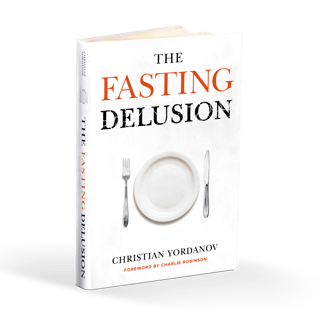
Speaker: energy, the building blocks it needs in order to repair said damage. So other topics in this first volume will include why fasting is a bad longevity strategy. I actually detail at length why contrary to popular belief fasting is not
Speaker: the holy grail of longevity. We also discuss why low carb keto diets are not conducive to longevity. I know a lot of people out there are erroneously thinking these diets are, you know, healthy, and they can in for short term goals, they can be effective in certain circumstances. But I'm talking from a from a from a long
Speaker: term health and longevity perspective, these diets are not conducive to longevity. And I explained why in the book. And then we have a chapter on how to give your, it's called, give your gut some love.
Speaker: how to basically optimize gut function and give your gut a spring cleaning, which as you may know already, the gut is like the, in many ways, it's kind of the axis on which the wheel of all the body, all the spokes of the body systems and organs, they kind of revolve around that axis. So if you can improve the functioning of the gut, a lot of other systems in the body will function well. So I kind of
Speaker: discuss a number of different topics and weave it all together and give you very simple practical things to do and not to do in this first volume. I'm actually pretty proud that I was able to do all the research, writing, editing and publishing related administrative tasks for this book pretty much on my own in about four and a half months. So that took a lot of
Speaker: A lot of caffeine, a lot of new tropic stacks. There was actually a chapter on, I was going to include a chapter on optimizing brain function in the book, but I wanted to take it out because I wanted to keep a certain length to each book of the series, just so again, to make sure people read it.
Speaker: and I don't overload people with information. But I'm hoping in the next volume of the series, I'll talk about some of my new Tropic stacks that I used to really be able to put in the kind of the crazy hours and intense focus required to do such.
Speaker: It's a fairly chunky project, even though the book is not long. It's a couple hundred pages. To do this in four months, four and a half months is, if I say so, quite the undertaking. So that's a little bit about the first book of the series. Check out links somewhere around in the description or the webpage you're on, depending on where you're listening or watching this video. Check out the book. It will be out in hardcover soon.
Speaker: Yeah, I'd like to hear your thoughts. If you can grab your copy, leave an honest review. After you've read the book, I would really appreciate it. And please share it with your friends and family. And let's try to repair some of the damage
Speaker: that our modern world has done to our health in general. You may be in great health, I may be in good health, but it's not guaranteed unless we really wake up to the many modern challenges that we face today and we help others to wake up to these challenges. It may not be guaranteed that we will see old age and be healthy, which is kind of the goal here.
Speaker: So please share it, share the book far and wide. And I'd love to, again, I'd love to hear your thoughts on it. If you can spare some time to leave a review or to send me an email, myfirstnameatmyfirstnamelastname .com, you know, basically Christian at christianordinal .com, send me your thoughts. So that's, that's all I wanted to say. Thank you for watching.