Transcript
lpaltiguzman: Welcome to Energy Vista, a podcast on energy issues where we make experts great again and contribute actively to the public debate and policymaking around commodities, the geopolitics of energy and trade. I'm your host, Leslie Pelti-Guzman. It's April 10, 2026, and time for a new Energy Vista episode.
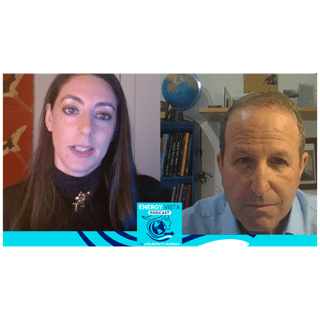
lpaltiguzman: Today, my guest is Mathieu MacManus, retired since September 2025 from the US Department of State, where he worked on international energy and economic issues for more than three decades.
lpaltiguzman: Math is now a visiting fellow with the National Center for Energy Analytics, and he has recently authored an issue brief with the National Center on Energy Analytics titled Energy Sanctions as a Foreign Policy Tool how successful and for how long.
lpaltiguzman: So Matt, welcome.
Matt McManus: Thank you.
lpaltiguzman: And I think it's going to be a very timely conversation um given the context where we are talking right now. And so we're going to discuss the outlook for sanction policies, particularly in the context of Iran, but we'll chat also about Russia and Venezuela.
lpaltiguzman: So the latest war with Iran lasted in nearly 40
lpaltiguzman: And we have now entered into a phase of negotiation with a fragile ceasefire that it seems to be holding for now. Do you think the prospect of lifting the existing US sanctions on Iran that were imposed over nuclear proliferation, terrorism, and human rights concerns are going to be used as a diplomatic carrot in the ongoing discussions?
Matt McManus: Well, thanks for having me on the show. It's great to see you for coffee, it which seems like a lifetime ago, just last month. And ah I do think that sanctions are very much fundamental to resolving the current crisis.
Matt McManus: You see, it wasn't just American sanctions. It was, as you correctly know, it was unilateral sanctions about backstopping on and slippage on the nuclear commitments. And so these are United Nations sanctions, their IAEA. And of course, their bilateral Treasury soctions sanctions.
Matt McManus: and also secondary sanctions. I think what my work at the NCEA is doing is is really focusing on how sanctions can be used as a diplomatic tool.
Matt McManus: And we saw the imposition of sanctions on Iran and also the specter more recently of secondary sanctions where buyers of Iranian oil like India and others in the Indo-Pacific risk sanctions as well.
Matt McManus: And so that brings us to the current diplomacy. And I was looking ah reviewing today the U.S. 15-point plan ah that was allegedly put through, of course, Pakistan, and then the Iranian 10-point plan. I think what's really interesting is one point of convergence is that ah sanctions rollback are very important. And Iran went so far on their list to have both primary sanctions and secondary sanctions and United Nations Security Council resolutions and IAEA resolutions all ah to be removed. And the U.S. plan noted that it would remove sanctions and as well as civil and nuclear cooperation. Now, as a a retired diplomat, anytime you have two you know opening statements from both sides and they have the same thing on it,
Matt McManus: Hopefully that's the easy button, right? Hopefully those are areas where the two governments, if the rest of the political and non-proliferation and supporting ah rogue surrogates in the region of all those broader and much more important issues are dealt with, then you return to sanctions as a tool of of perhaps, you know, the heart of an agreement.
lpaltiguzman: Yeah. You know, we hear a lot in the past few days, well, you know, maybe the new leadership, the new leaders, even if it's still the IRGC that seems in control, but...
lpaltiguzman: the new leaders might be more hardcore. like For me, you know I see for them a reason to be pragmatic in a way, is because the Iranian economy has been severely weakened for years of sanctions, but also because of more structural problems and mismanagement and corruption in the country. But the the economy was already very deteriorated before the war began.
lpaltiguzman: And now, they might be an even stronger incentive to rebuild the country and to seek those sanction relief.
Matt McManus: So I agree that sanctions really ah have motivated Iran first, you know, be before the hostilities broke out. You know, it did bring them to the table.
Matt McManus: And I think that is very important.
lpaltiguzman: Thank
Matt McManus: And they saw unrest in their own community, given their despotic rule for 47 years. and the desire of their people to live in freedom.
Matt McManus: So you saw the ah federal budget for next year was very, very hurt by the imposition of sanctions. They were really biting.
Matt McManus: And I think really what was most ah concerning to Iran was the secondary sanctions. and yeah And this is where, you know, when you talk about sanctions, a lot of people like to well, people evade sanctions.
Matt McManus: But look at the shadow fleet that both Russia and Iran had to fund. They had to send their oil to nontraditional markets on ships. They had to buy themselves, self-insure. And then they idled off their markets for many days because there was over 40 million barrels of oil alone in the case of Iran.
Matt McManus: that that was stored at sea. And tanker rates, as we know, are through the roof up more than 600 percent last year. So this really cost Iran a lot of money, even if they were able to sell their money outside of the sanctions regime. The opportunity cost of losing traditional markets, as well as all the operational costs of this really rickety shadow fleet, which is also an environmental danger that Russia and Iran have been sponsoring. really has raised, I think, the cost to Iran and brought them to negotiate, not again, not only with the United States, but the world community through the UN that is very concerned about their nuclear ambitions.
lpaltiguzman: Yeah, you mentioned the shadow fleet. It's really interesting because I think now it's maybe about 20% of the tanker fleet, which is huge in a way.
Matt McManus: That's correct.
lpaltiguzman: So is it a sign of successful bypassing of the Western sanctions? Or does it really complicate their operation, their logistics, it's increased costs? And we've seen that and I'm closer to watching what's going on with Russia because of their LNG exports from the Arctic, where we see that it's really a a big impediment. do Do you see that the same happened with Iran?
Matt McManus: Thank you, Liz. I agree. I think it's the latter. it It puts a lot of cost on the Iranians. The markets are unsure. And then they have to pay the huge cost of idling tankers off major markets as they try to sell the oil. So if you're an oil exporter, you don't want to sell through a shadow fleet. And this, I do believe, has brought Iran back to the table before the you know the outbreak of of kinetic activities.
lpaltiguzman: And it seems that we've seen recently the easing of sanctions on Venezuela. And in both cases, for Iran and Venezuela, China was giving a lifeline to these countries by buying discontent oil.
lpaltiguzman: um Do you think that um for the case of Venezuela, China has lost leverage and um and you know its position to buy this kind of oil in a way is weakened?
Matt McManus: Absolutely. And in the case of Venezuela, there are more unilateral sanctions by the U.S. And you you see they also had to resort to the shadow fleet.
Matt McManus: And so I definitely think that, you know, what would people like to talk about, imposition of sanctions. But right here, as we talked about at the opening of the broadcast, it's the removal of sanctions are also a diplomatic tool that also give the country or the international coalition that put sanctions on leverage.
Matt McManus: In the case of Venezuela, there is a lot of leverage remaining because sanctions remain on Venezuela. A series of general licenses from OFAC at the U.S. Treasury Department has allowed American and and European and other entities to engage with the government of Venezuela. But this is, again, a trial period where it enables the United States to keep leverage over Venezuela as they're making admittedly very welcome reforms in the hydrocarbon law and other areas.
Matt McManus: Bilateral relations obviously are improving with the exchange of ambassadors, but sanctions are something to be negotiated. And again, the real goal in Venezuela, as well as stability in their several stages, is the return to democratic rule. So I think that also in the case of Iran, you will probably see a roadmap for the removal of sanctions that Iran would have to live up to its part of the bargain, which as we speak this morning, strait is still closed. So a long road to hoe.
lpaltiguzman: Yes. Now, that's very interesting, this use of sanctions, you know, moderate lifting while still applying gentle pressure to make sure that um the country is heading into the right political and economic yeah direction. and And just to clarify for our audience, so the current um revenues from the oil exports from Venezuela, is it the population? Is it the country? Is it the U.S.? Like, what's the arrangement right now?
Matt McManus: Yeah, so by both an executive order, it goes into a treasury designated fund, and then funds are released for the needs of the Venezuelan people, a shopping list, if you will, from Caracas. And so the oil is being sold and they're getting a better price.
Matt McManus: China had been taking advantage of Venezuela. They'd gotten a huge discount. But now that Venezuela can sell their oil under the auspices of this program, Venezuela gets a better price. And they're also able to sell to their most natural market, which is the United States, and get full Gulf Coast coast prices. And that's more money for the redevelopment, the recovery, of Venezuela.
Matt McManus: So you see also the benefit that a country gets from the removal of sanctions or at least the moderation of sanctions, they get more revenues and those revenues have been flowing back to Venezuela.
lpaltiguzman: and is yeah
lpaltiguzman: And is there an oversight on making sure that this money is not going to be used for illegal activities or, you know,
Matt McManus: Well, I think that's the the good thing about putting it in a U.S. designated account, I think first in Qatar, and I think one of the smart, prudent things the Treasury Department did is they removed this money from attachment by creditors. Because in order to let the money return to Venezuela to help the return to democracy, it could be tied up in court for years.
Matt McManus: So that makes sure that the money is going to the Venezuelan people. I think that shopping list is vetted by Washington. And of course, now you have a U.S. Embassy with Laura Dobu reopened.
Matt McManus: And you have oversight, if you will, traditional diplomatic oversight on the ground. And here in Georgetown, you have the return of a Venezuelan ambassador, which I think are both very good news.
lpaltiguzman: Yeah.
Matt McManus: And they're both both very good steps. As you know, I've been to Venezuela over 15 times, i spent a lot of my younger days as an oil analyst there. And there's there's a natural, I think, really affinity between our peoples. And between our energy sectors, for sure, with the heavy oil and the deep conversion capacity we have on the U.S. Gulf Coast. So the more that we can turn to normal, as we've already seen in the Gulf crisis, that is really helping ameliorate the, you know, the Iranian threats of continuing to close the strait because we have galloping production both by Venezuela and more importantly by Guyana, nearly a million barrels a day by Brazil. Of course, the American story and the Permian, so the fulcrum of global energy production is really so shifting from the Gulf, the Persian Gulf, into the Gulf and in the United States and, of course, in Brazil.
lpaltiguzman: Yeah, no, absolutely. like The easing of the Venezuelan sanctions is impeccable um in terms of trying to alleviate the tightness in the market. And before um I have a related questions with Russia, but I wanted to ask you, like, because we mentioned, you know, this kind of mechanism um of um governing the all revenues from Venezuela, do you see a kind of similar system being able to to to be put in place in iran Because we know that in the past, i mean, the problem with Iran is that some of the money has been used to fund the proxies or its military weaponry and ballistic missiles and so on.
lpaltiguzman: So how are we going to make sure that if the sanctions are gradually lifted, the money will be used also for you know fru infrastructure juor and the the global like i mean the general you know economy of the country and the population?
Matt McManus: Great.
Matt McManus: That's a great question. and I think that you know the Venezuela situation does provide perhaps a roadmap, and it's certainly something to be on the negotiating table today.
lpaltiguzman: Yeah. Mm-hmm.
Matt McManus: And again, it's not just the United States, but these are United Nations Security Council resolutions and sanctions. So I think that you bring in a multilateral entity like up in New York, where you are, the UN to perhaps help oversee some of these funds with the US and our allies.
lpaltiguzman: And in order to alleviate further the market right now, some Asian um countries and voices we would like to see more easing maybe of the Russian outstactions or at least get some waivers.
lpaltiguzman: And some have already bought some cargoes from Russia. And especially especially right now on the LNG side, um I can see maybe India or additional SaaS asian Yeah, Asian Southeast country that would like to see this oil from the Arctic coming to their countries and because they are the ones that are suffering in the most from the shortage in the market right now. Do you think the US will kind of close its eyes temporarily? How how and
lpaltiguzman: how is that going to play with the Ukraine-Russia war, which has not ended, and you know the sanctions are a big stick over the head of Russia, and we know that they have worked in some ways.
Matt McManus: That's a great question. And and as we know, the 30-day sort of standstill for the ability to sell this floating oil off the Indo-Pacific really ends April fifteenth um In various packages, Secretary Besant did relax for a 30 day period oil that had been on the open water ah in those regions.
Matt McManus: I would not anticipate that would be rolled over further because, as you know, there's also the the Ukraine war to resolve with Russia to keep pressure on. there There was a lot of concern.
Matt McManus: ah that those sanctions were eased, but I think in you know with the Strait of Hormuz closed, it was extremely logical to do that. But again, there's also a date certain when those sanctions are put back on. And they should be, and particularly with LNG as well, there's plenty of LNG in the United States.
Matt McManus: LNG is subject, as you know, to sanctions both by the US and the EU. And that's really important to keep the pressure on Putin to bring him to the table.
lpaltiguzman: Yeah, on the LNG side, you know, now with Europe almost, um um I mean, later this year, they will totally ban LNG imports from Russia.
Matt McManus: Correct.
lpaltiguzman: And as a result, that will complicate a lot the logistics of all the Russian Arctic cargoes because and they will have to route around the Cape of Good Hope and Africa to go to China, for instance, for example, during winter time when the Arctic route is not navigable.
lpaltiguzman: And that is very expensive with the ice tankers, icebreaker tankers, because they cannot use neither European ports now for transshipments. So either they do transshipments elsewhere, or more complicated, but in any case, the logistics is much more complicated and costly.
Matt McManus: That's right. And again, that's another cost to Russia. And then you have, you know, US LNG g will double between 2024 and 2028. So our we're bringing on new trains almost every day. More recently in the Gulf, we're looking at Alaska.
Matt McManus: ah We're looking at floating offshore ah production. So the U.S. sector is robust. Competition has increased.
lpaltiguzman: Yeah.
Matt McManus: Of course, we've seen 20 percent of ah world LNG sidelined briefly and Ross Lafon and maybe 17 percent of that off for several years.
Matt McManus: But the LNG market is also one where you see, again, really strongly increasing production and and projects being brought on in North America and and including Canada.
lpaltiguzman: Yeah, so actually in the paper, you mentioned this US energy bonanza as an asset and as an enabler also um for these targeted energy sanctions because it makes the US less dependent on the global oil and gas market and more insulated from shocks. Do you still think that the US was I mean, it has been more insulated from this um most recent shock. But at the same time, we heard a lot of discussion in the US about the ah price at the pump.
lpaltiguzman: um How do you think about this?
Matt McManus: That's a great question. And so and in the span of my 30 year career, I would have been very surprised if the United States was able to sanction any one of these three countries. But by the end of my career, we could sanction all three.
Matt McManus: And that really is a reflection of the huge increases in the Permian and the huge increases in my home state of Pennsylvania on natural gas. And that really, that American abundance, we can remember how many presidents had to, you know, phone OPEC for more oil or their hands were constrained. So the U.S. is no longer constrained in its foreign policy by energy scarcity. It's now a major concern. energy exporting country, both the largest producer of oil, the largest exporter of LNG, as we know. i think that is very important to our foreign policy. And what a lot of Americans don't understand is that only 20 percent of our natural gas is exported as LNG.
Matt McManus: So you didn't really see any change in the Henry Hub price based on the recent crisis because most gas is used here at home. And that's very different than Qatar or Australia or other LNG exporters where it's a much bigger portion of their domestic demand.
lpaltiguzman: Mm-hmm.
Matt McManus: And in the case of oil, I really like to point out the architecture of energy security founded by Henry Kissinger. i like to note right in a State Department conference room in 1974.
Matt McManus: Henry Kissinger really correctly figured out you had to have consumer solidarity backed up by 90 days of reserves. The SPR has worked. The IEA has worked successfully. a very successful 400 million barrel draw.
Matt McManus: Just on Thursday, DOE announced another, I believe, $30 million dollars exchange where they will lend oil out, get more oil back. But as I wrote in the Wall Street Journal last week, when the dust settles, when this is over, we have to rebuild our strategic petroleum reserve, as do our allies, because it's really important, even though we're almost a net exporter of oil, not quite.
Matt McManus: But we still need robust strategic oil reserves. We have them, but we really need to fill it back to the to the brim of 700 million barrels. And we also have the ability now, I think we have, there are countries in the Gulf, like Kuwait is one of them.
lpaltiguzman: Yeah.
Matt McManus: it really has no pipeline to another site, like the Saudis have the east-west pipeline to Gambu, which is really a brilliant investment in the energy security of not only Saudi Arabia, but the world.
Matt McManus: And so we will have empty space in our SPR. And I would propose leasing that space to other producers, particularly those that are vulnerable to a future cutoff.
lpaltiguzman: Very interesting.
Matt McManus: So we'll have to have creative ways to rebuild our SBR again with with market participants, but perhaps with the cooperation of major producers.
lpaltiguzman: Very interesting. um you You mentioned also in the paper that it might be way too premature to talk about peak oil in the US. And we've heard a lot of discussions prior to the war, some kind of pessimism about the ability from the US to still produce at the same levels oil and gas based on the shale gas productivity and and how it functions. Can you address a little bit this? And I think you're very...
lpaltiguzman: ah confident in u.s technologies and ah ways to find in in additional ways to find additional oil offshore or with some federal lands so talk to us a little bit about this
Matt McManus: That's a great question. And and my friend Javier Blas talks it about it as like shale 4.0, right? So you now have the majors who have consolidated their positions in the Permian.
Matt McManus: and there and And the recovery rate from American shale is only 10%. It's about 30% for conventional oil. So you have a lot of technology, you additional propping technologies to open up more of the rock. You have more lateral drilling ah yet further. You have new, um you know, they're brewing new surfactants to be able to bring the oil to the surface.
Matt McManus: And you have AI and 3D seismic. So you're really using all of the technological edge of the US energy sector to bring the recovery rate from the Permian back.
Matt McManus: Already that's put like 2.4 BCF of natural gas on the market because we know it's often associated with production in the Permian. So you're getting more oil and more gas.
Matt McManus: And then you're going offshore at deeper depths. youre You see more bidding from the bipartisan ah Well, actually not bipartisan, by the big, what they call OBW, the big beautiful bill.
Matt McManus: you You see a lot more drilling offshore, both in the Gulf of Mexico and also the Gulf America, whatever you choose to call it, and also off of Alaska.
Matt McManus: So you know you have a lot more activity, you have a lot more investment, and you have new technologies, deeper depths, and tiebacks offshore.
lpaltiguzman: Thank you.
Matt McManus: And I note in the paper that while offshore was going to fall, it's now going to go up by a modest 100,000 barrels per day. But that's a good turnaround. And again, you also have a lot of international investment. i think a good reflection of the U.S. model is it's open to all players. You have a lot of major European companies as well producing in the Gulf of Mexico.
lpaltiguzman: ah So you mentioned bipartisan.
Matt McManus: Right.
lpaltiguzman: I was going to ask you if the sanctions in general, do you think through your careers, it it has been like a bipartisan policy? And are you worried if the next administration is a democratic administration? Do you think that they would understand the assets of energy exports from the US and you know the use of energy foreign policy as an asset.
Matt McManus: That's a great question. I think that sanctions have been bipartisan. In the case of Venezuela, administrations of both parties have sort of ratchet up sanctions there, largely over concerns over Maduro stealing the election. Same case in Iran. I think you have seen bipartisan You've also seen congressional ah sanctions on Iran.
Matt McManus: So I think that you do have a bipartisan understanding that energy is a strategic asset and ah and and that both parties have worked together in sanctions.
Matt McManus: And I believe both parties benefit from from more American production. Last year, we produced a record amount of all forms of energy.
Matt McManus: but of all forms of energy 65% oil and gas And what is going to impact our foreign policy is, of course, the exports of that 65 percent.
lpaltiguzman: Mm-hmm.
Matt McManus: So 65 percent is important. And all forms of energy makes more energy available in the U.S. And so I think you really do have bipartisan support for sanctions as a foreign policy tool.
Matt McManus: doesn't prevent kinetic action, but I think it delays it, it reduces it. And again, It is a a tool that you can have to resolve ah should you agree to you know have have a diplomatic solution both in Iran and i more easily in Venezuela.
Matt McManus: It is a very good tool ah to have.
lpaltiguzman: Yeah, in terms of outlook, it's it's way too early um to say if Iran will become you know, Iran has a huge potential in terms of oil and gas production and exports. Do you think that there is potentially a path? And again, there are so many if, and you know, the war could restart anytime. But if, you know, the negotiations um and it's an outcome works out for both parties, do you see a potential road for Iran to start exporting more into the international gas gas and oil market?
Matt McManus: i think I think there are a lot of ifs there, um but I do think you know in the case of Venezuela, the answer is a yes. And I think you know a lot of people you know only want to talk Venezuelan barrels if they you know rival Saudi barrels or if the the heavy converters are turned back on. But I think there's a lot.
Matt McManus: Remember, in the time that Venezuela was largely off the market, that's when fracking took off. That's when Canadian heavy oil took off. And so we didn't need Venezuelan barrels. So Just from conventional barrels in Venezuela, without any fracking, bringing in new equipment, more modern practices, you have a lot of low-hanging fruit that I think is, there's a lot more there than people realize. I was talking to ah a colleague the other day. There's a land rush on, a new Landman episode would be great in Venezuela.
Matt McManus: because these these tracks are flying off the shelves. Everyone is competing for them. I think there's a lot of economic activity, and the risk is not very high for producing conventional barrels where you easily get them to market, where you have, again, the general licenses of the U.S. So we I think we should watch that space.
lpaltiguzman: In the Iran, similarly, do you see the fluke for oil and gas exports over there?
Matt McManus: I'm not super optimistic on Iran about where we are today. um let Let's hope that there will be change within Iran, that it will be a country that people will be willing to invest in. But I think you have some fundamental regime issues there.
lpaltiguzman: Absolutely, yeah. Well, ah Matt, let's move to a more personal trajectory question. So you've been a career trade negotiator.
lpaltiguzman: You spent three decades in the State Department, really working on energy security initiatives, and you're an expert on Venezuela.
lpaltiguzman: You participated in many meetings with... um U.S. presidents and secretaries of energy. So you have a very good grasp on how the U.S. evolved from being a major importer of oil and gas to become an exporter.
lpaltiguzman: And I'm wondering like from, um you know, and personal at the State Department and other parts of the governments, like how the thinking has evolved also, like has the US government finally figured out how to use energy um as a tool, as um an asset.
lpaltiguzman: And and you know for me, it really varied from alternative from being a non-apologetic, proud energy superpower to be not really assuming that this advantage and almost on the verge of shooting itself in the field by aborting too soon uh this big advantage so where do you think we are right now and then what's the future for this energy and i'm talking mostly about fossil fuel because um as you mentioned it's still 65 of the production of energy in the us
Matt McManus: That's a great question. I think the the real challenge for the Congress and the administration is the a bipartisan energy permitting bill. Right. You need both sides. um That will get more American energy around the country. I mean, imagine the state of New York, where you are doesn't benefit from the shale revolution as much as it could.
Matt McManus: The rock there is very similar to my home state of Pennsylvania. And then we have, ah you know, we we need permitting reform that brings American energy and American molecules from all forms of energy, however it's produced around the country in an efficient way.
lpaltiguzman: So more pipelines.
Matt McManus: And that is going to really help our economy.
lpaltiguzman: Yep.
Matt McManus: It's going to help fuel our data centers. We need as much gas for data centers. My colleague Mark Mills did a great study that showed for if we just assume 55 gigawatts of energy will be demanded by the new ah data centers, it'll be 10 BCF just to fuel that. And then we have 15 BCF.
Matt McManus: that has to fuel the increase in LNG capacity. So this country needs to, I think, come together to realize that energy is the backbone of our economy, to work together to get through the Congress. And I think they can. I think this is one of the issues that is close on permitting reform.
lpaltiguzman: Very interesting. So when you say permitting reform, it includes pipelines. What else?
Matt McManus: Pipelines, electricity, really moving energy around the country ah without the bottlenecks we face today. We could bring a lot more gas to market. We could get a lot more electricity again from whatever the lowest cost is. We could get that to market. And that's going to really help our economy.
Matt McManus: that's gonna help us you know stand up to these shocks. If you look in the 70s and the days of Henry Kissinger, we use oil to produce electricity. We don't do that anymore. we And ah many countries are dependent on foreign imported LNG, for example. We produce all the electricity we have here from, again, ah many forms of American energy. Most countries don't have that luxury. And we're also integrated with Canada and Mexico.
Matt McManus: And I think there's a real strength there through our North American integration of our energy grid, which we've had for for many years now.
lpaltiguzman: Yeah.
Matt McManus: But we really have to pay attention to permitting reform and increasing the you know investment climate in our own backyard.
lpaltiguzman: Yeah, and the US will definitely be in a stronger position by doing all the above energy, like not picking and choose, but basically advancing the best technologies and and using it its competitive advantages. wherever they are, whether you know in some states it's going to be solar, in other wind, or other nuclear or geothermal and natural gas. And sometimes you know coal might be still on for security of supply purposes. but i think
lpaltiguzman: I think that all of the above energy is often the best because it's in a way to to do some kind of fuel hedging because who knows what the future will hold. And and so it's it's enabling to to be safe proof with any kind of you know shock to the system.
Matt McManus: but I think the real benefit of the U.S. energy grid, I think OPEC learned this the height hard way when they they tried to swamp um swamp the market and put shale gas out of business. They saw the resilience of the U.S. private sector.
Matt McManus: Sure, some small companies went bankrupt, but they started the next day under a new name. and production came ah rolling back. So I think an advantage we have compared to our competitors is we have a free market system in energy that allows the investment dollars to go to the highest highest valued use.
Matt McManus: And that really is the bedrock of our energy strength.
lpaltiguzman: yeah well on that note Matt thank you so much for joining the Energy Vista podcast thank you
Matt McManus: Thank you for having me.
lpaltiguzman: This pi episode was recorded on April 10, 2026. This is Leslie Peltie-Guzman saying good day and good luck.