Transcript
lpaltiguzman: Welcome to Energy Vista, a podcast on energy issues, personal and professional trajectories. A podcast where we make experts great again and actively contribute to the public debates on policymaking around commodities, energy geopolitics trade.
lpaltiguzman: I'm your host, Leslie Paltier-Guzman, and it's November 7, 2025. two thousand and twenty five Today, we're going to discuss shipping, but also shipbuilding seaborne transportation and maritime security.
lpaltiguzman: It's a subject I'm becoming very passionate about and that I've been researching, analyzing and writing for a while now because not only it's front page news, but it also sits at the crossroad of supply chains, industrial competitiveness, technological leadership, alliance dynamics and geoeconomics rivalry with China.
lpaltiguzman: So resurrecting maritime power is going to require strategic patience. And it's more than just reviving the American shipbuilding industry.
lpaltiguzman: It's also about reclaiming control over our critical value chain and enhance Washington's position in a global economic contest, notably with China.
lpaltiguzman: um So, you know, the US kind of woke up late um and realized that it's vulnerable and has ceded maritime dominance to China. um But that many actions have been followed over the past two years.
lpaltiguzman: and bipartisan action, actually. So the Biden administration had launched a section 301 investigation with the trade ah USTR um to address China's actions, policies, and practices to dominate the maritime logistics and shipbuilding sectors. And then the Trump administration has also prioritized the issue with some executive orders and has continued USTR ah actions.
lpaltiguzman: So here we are. um The leadership has taken notes and there is a broad consensus. ah America needs a strong independent shipbuilding sector, especially if we are heading you know one day in time of crisis, war, supply chain disruption. So it's vital for the free flow of goods and U.S. economic and security interests.
lpaltiguzman: The reality, however, is that the U.S. cannot achieve this alone. or within this decade. and There is ah actually a legislation, the Ships for America Act, that wants to address parts of the challenges that Congress has yet to adopt it.
lpaltiguzman: And it's going to take more than the legislation. It's going to take, as i mentioned earlier, patience, but also maybe some critical elements. One is maybe the energy transport needs some kind of ah special treatment.
lpaltiguzman: um Two, strong alliances, notably with Japan, South Korea, which are trusted partners and have the known how and that they can bring to the table.
lpaltiguzman: Three, educate the maritime workforce because there are not enough skilled workers. And four, we need a lot of consistency and ah coordination at the highest state level, whether it's with trade, um transportation, labor, energy secretaries.
lpaltiguzman: And fifth, the U.S. needs to reclaim also their voice at the global maritime table with international organizations. So a big agenda, and I'm delighted um to have ah Ryan Lynch today as a guest.
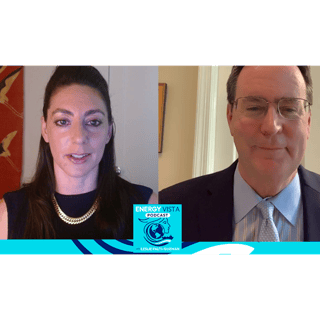
lpaltiguzman: He's the CEO of Hanwha Shipping, which is an American unit of the South Korean conglomerate Hanwha Group and Hanwha Ocean. And Hanwha is increasingly involved.
lpaltiguzman: in shipbuilding collaboration between the US and Korea, and key partnership in this agenda of maritime revival. Hi, Ryan.
Ryan Lynch: Thanks for having me today, Leslie. This is an absolute pleasure to be on your podcast.
lpaltiguzman: Thank you very much. So let's dive in You heard some of the introduction. It's going to be a gargantuan task.
Ryan Lynch: No, it
lpaltiguzman: yeah To set up a little bit the context, um what do you think is the top reason the US government has decided to rebuild at home or with allied countries like South Korea, its own tankers, its own vessels?
lpaltiguzman: Is it the part of the reindustrialization agenda? Or is it part of the geoeconomic rivalry with China? Or is it part of national security defense reasons and the fact that there are dual use between the military and the commercial or all of the above? And do you think there is one of the reasons that prevails?
Ryan Lynch: Well, I think it's a great question. i think one of the reasons this, this let's say, thematic approach to reindustrialization has taken hold on a bipartisan and for that matter, bicameral adoption or eventually, let's say, is because it really does hit all of those and everything else.
Ryan Lynch: um You know, there's a there's a tremendous agenda within the United States to re-empower the mechanical trades. And of course, shipbuilding does that. um My family has been the beneficiary of an industrialization effort from World War Two, bringing people from the farm to the ocean.
Ryan Lynch: And this this really now it may not be quite as discreet as that um today, but showing the world that there are jobs at sea, great jobs, with tremendous pathways to learn learn how to do something, learn what to do, and to partake in the global economy, it really is a great opportunity for those who may not see opportunity in other places.
lpaltiguzman: Thank you.
Ryan Lynch: So, you know, everything from people learning coming out of trade schools to people in the White House. um you know this This really is something that hits for everybody.
Ryan Lynch: And so, yes, is that's a long way to say that everything you say is 100% correct. But I think the re-industrialization, the re-enfranchisement of the working population and the re-education of the industrial community and the empowerment of our supply chains.
lpaltiguzman: Mm-hmm.
Ryan Lynch: ah We think this is a tremendous moment in time to to bring this back to America, not solely for geoeconomic or geopolitical concerns, but for for pride of our country.
Ryan Lynch: And I think that's really it.
lpaltiguzman: Very interesting. um So it has also been discussed amidst the trade war between China and the US. And we've seen a few days ago that there has been kind of a pause in this trade war.
lpaltiguzman: ah Does it lower the pressure for the US government to push ahead with this re-industrialization and re-unsuring, french-suring of the shipbuilding?
Ryan Lynch: You know, I i think it's it's difficult to sort of discern one thread from a complex, you know, basket of weaving, let's say. But, you know, diplomacy is difficult um and there's many attributes and elements of of diplomatic negotiation that those of us outside of the room will never know.
lpaltiguzman: Mm-hmm.
Ryan Lynch: um so So leaving much of that aside, we can speak to the need base of the United States. um you know We need more Mariners because if if we do want to re-engage our industrial supply chains, we we need to make sure that Mariners of tomorrow have the most sophisticated, technologically advanced, and and quite honestly, the number of vessels.
Ryan Lynch: So does this change the power dynamics of global trade? you know Perhaps it does. but But what it what it does is it means those of us who are attempting to operationalize and deploy funds in the market to support this re-industrialization initiative, that just means it's on us.
Ryan Lynch: you know We have to lead the charge.
lpaltiguzman: Mm-hmm.
Ryan Lynch: we're We're very proud of what we've done, at least operationally, to build new ships in America, order new ships in America, acquire shipyards and build efficiency into that system.
Ryan Lynch: and And we welcome the chance to partner with anybody that wants to sort of take that pole position um and lead the charge because it will take and will take the economy to do the work as well, not just the policy.
Ryan Lynch: Policy is effective. It's a great carrot, if you will. um but you But we do need to to to run our own race. And I think that's that's maybe the moment in time we're in right now is Ships for America Act is in committee, as you as you rightly said.
lpaltiguzman: Mm-hmm.
Ryan Lynch: um It will be discussed. It will be, I'm sure, negotiated in very many ways. um The USTR process is in and of itself moving ahead, um but it it has had a pause and that's rightly done.
Ryan Lynch: I think the Trump administration has been very proud of their their engagement with People's Republic of China. And if if that lessens the burden on the population, whether it's inflationary or complexity,
Ryan Lynch: That's a good thing for trade, um but we need to take that pole position and really move ahead here operationally.
lpaltiguzman: So one of the challenges is going to create enough demand for those new ships to be ordered in the U.S. or to be ordered in with allies' shipyards. um So, you know, if there is a pause with the trade deal, and the Trump administration had started targeting...
lpaltiguzman: um um like to put port access fees to Chinese linked vessels, but also for the LNG tankers, for example, um set up some targets, ambitious targets that certain percentage of US LNG exports will have to be carried um not on foreign built vessels and so on. So trying to create demand incentives to move away from those non-US tankers or vessels. Do do you think um that's the right approach? and And how do you think in general about demand and orders?
Ryan Lynch: So it's a great question. And I think the let's take LNG just specifically because I think that ecosystem presents the ah greatest order of complexity. um Obviously, the United States is the largest LNG exporter in the world.
Ryan Lynch: It has the greatest marginal supply of LNG, most projects sort of theoretically coming online. um But it also represents the the frontier of technological capabilities, both of vessels and of Mariner training.
Ryan Lynch: So it's a very hard system of operations to optimize around. It is also something that has not been endowed into the United States system and in about 50 years. We've not had LNG vessels operated in our in our world um since 1979. Now,
lpaltiguzman: And just to insert here some statistics, um there is only one U.S.
Ryan Lynch: now
lpaltiguzman: s flag LNG tanker, I believe, that is kind of a smaller size ah one and probably like mostly deal with Puerto Rico trade.
lpaltiguzman: And yeah.
Ryan Lynch: That's right. and
lpaltiguzman: And then the...
Ryan Lynch: and it And an older generation technology there too as well.
lpaltiguzman: ah Yeah.
Ryan Lynch: Yeah. And so I think that what's interesting here is that it re let's call it a re nationalization of a fleet of carriers is This is not the first time this has happened. i mean, we've seen and initiatives in France, for example, to envision a French tax lease program to to put French international flags on board vessels that are servicing the French demand for LNG.
Ryan Lynch: Now it's on the other side of the equation for here in America, we have supply of LNG. So this is not this is not unprecedented. We see a tremendous amount of demand for ships in their local registries um around the world.
Ryan Lynch: You know, the UK has an offshore ah registry. Sweden has one as well. um and And so we we like the idea that there is precedent for these transactions. Now, it's always the how to not the what to. That's the complexity.
Ryan Lynch: um And in America, the system right now, we don't have enough meritors. We need to really look into our recruiting and our and our efforts to get people um on vessels. um So that's where we start for LNG. g And then as you as you rightly mentioned, there is one vessel that's operating between hous or Corpus Christi and Puerto Rico.
Ryan Lynch: And that's tremendous. That's a great first step. And our hats off to the Crowley team who have made that happen. um But The international world of crew matrix standards, compliance standards, and a very rigorous, um let's just say crewing capabilities and and personnel capabilities on board the vessels that international energy majors require.
Ryan Lynch: It's difficult. So we have to make sure that we're thinking very deeply about not only bringing physical assets to the United States, but making sure they are operationalized and able to be delivering LNG to the global set of customers.
lpaltiguzman: Yeah.
Ryan Lynch: Because if we can only bring it to to a certain subset of customers, well, it doesn't solve that problem, does it?
lpaltiguzman: so So you're raising a distinction here also that um I mean, the targets would be gradual and we need to distinguish also between U.S. flagged, U.S. crewed vessels and U.S. built.
lpaltiguzman: So I think the first target by April 2028 is 1% of U.S. energy exports that must travel on U.S. flagged and U.S. crewed vessels. And then by 2029, the idea is that six U.S.-built tankers must be in operation.
Ryan Lynch: Yeah.
lpaltiguzman: And then crescendo 2047, it would be about 15% of U.S. energy exports to be transported U.S.-built, U.S.-flagged, U.S.-crewed vessels. So it's about 100, like over 100 ships.
Ryan Lynch: but
lpaltiguzman: over one hundred
Ryan Lynch: That's right. And and actually the the stipulated or let's say the envisioned demand schedule that comes from the USTR, it does mirror the Section 420 of the Ships for America Act.
Ryan Lynch: um So it is quite similar. There are some some differences in timing, um but but generally you get to the same result of over 100 depending on your view of exports, right?
lpaltiguzman: That's correct.
Ryan Lynch: Because it is inextricably linked to export volume. Now, one condition that I would say everything you said is factual is that to enter the US flag state, there are traditionally three conditions.
Ryan Lynch: One is a technical condition, meaning the vessel has to be approved by the United States Coast Guard. And that generally vessels built in Korea to the highest standard generally will accomplish that. um But then secondarily, the vessel must be owned by a citizen company of the USA.
Ryan Lynch: Now, there are some tremendous flag bearers, you know, exacting companies that do tremendous work in the U.S. ecosystem, traditionally working in the coastwise market or in a specific military programming market.
Ryan Lynch: um but they don't have a tremendous amount of experience in international LNG. So one of the nuances and complexity is that in order to bring a vessel to the U.S. flag state, we have to make sure that it's a U.S. company.
Ryan Lynch: And then secondarily, or so I should say finally, the In order to enter the US flag state, you need to have a certain cadet grouping of US mariners.
Ryan Lynch: Now, that brings us back to this, um if you will, this balancing feedback loop, whereby if we don't have the mariners that are sufficiently qualified to partake in the international trade, then that preempts the whole entry of vessels into the US flag state.
Ryan Lynch: So I will say that's ah that's a bit of a rabbit hole to go down, but it isn't quite as complex or quite as easy as just bringing vessels to the USA and raising the U.S. flag.
lpaltiguzman: Yeah.
Ryan Lynch: um There is a much deeper system of equations to to analyze.
lpaltiguzman: Yeah. It's so interesting because you've been really highlighting this labor ah workforce and challenge. And, you know, I don't think many people don't understand this, but because the U.S. has kind of lost its expertise for so many years in building those vessels, we need to regain the non-how and some foreign workers will have to train American workers It's going to take time.
Ryan Lynch: That's right
lpaltiguzman: And then we need some programs, you know, education also um to educate this new pool of mariners. ah Very interesting.
Ryan Lynch: right. Yeah, it it it's complex, but but it also draws ah tremendous amount of similarity to ah the shipbuilding side. So I think there have been some some requests for information from the Bureau of Labor on their international labor um grouping.
Ryan Lynch: about how do we train shipbuilding workers that are US citizens in allied countries to come back to the United States to deploy those capabilities.
lpaltiguzman: Mm-hmm. Mm-hmm. Mm-hmm.
Ryan Lynch: And that's one of the things that we and our organization are able to facilitate and have initiated already. And so that's for us, we do focus on the labor because back to what you said earlier, we see this as a re-industrialization question and re-industrialization.
Ryan Lynch: Of course, you think about a traditional Cobb-Douglas function, you have labor, you have capital and technological efficiency. Well, maritime really attacks all of that capital intensive business.
Ryan Lynch: It's a labor intensive business and it requires new technology. So this is sort of, if you will, it's an economist's dream to really be able to look at this system of of equations and really find some manner in which to optimize it.
Ryan Lynch: And I think that's really why it's such an exciting opportunity for all of us.
lpaltiguzman: Yeah, very interesting. If I can come back a little bit to the trade war question. ah Your company has been caught in the crossfire with China and directly sanctioned.
Ryan Lynch: Yeah.
lpaltiguzman: So China sanctioned five U.S. subsidiaries of Hanwha Ocean. um do hanwara or she do you Can you explain us a little bit what what what has been what has led to this and what's the status right now?
Ryan Lynch: Yeah, so so of course I can't um ah can't speak much to sort of the thought process of the People's Republic of China, um but but certainly you know that which is available publicly, we we know as well.
Ryan Lynch: um The sanctions have been, if you will, or at least our understanding, they were part of the discussions in in the APEC summit between President Xi Jinping and President Donald Trump.
Ryan Lynch: um we We have seen the executive order or the executive notice that went out on last Friday that said some of these targeting of of sanctioned entities will be withdrawn based on that agreement.
Ryan Lynch: So we're very pleased to hear that. um But, you know, the sort of why yes, it's a complex question, but we make we're very proud to be supporting the U.S. administration in re-industrializing American maritime, you know, just for its own right.
Ryan Lynch: You know, I am fourth generation American maritime person. um And so for me, I exist in the economy because of the maritime industry. So, of course, I'm going to be proud of of bringing the next generation of mariners in and mariners and shoreside personnel and and bringing them into the system robustly and significantly.
Ryan Lynch: So, you know, perhaps that was the subject of their ire. It's just our advocacy for these programs. um You know, we bought a shipyard as as philadelphia in Philadelphia last year.
Ryan Lynch: We stood up a shipping company, which is what I'm responsible for. And we are owning vessels. So I don't know, maybe maybe it's just that we were so such a staunch advocate for the administration's efforts.
Ryan Lynch: And we're really kind of taking part um in in assisting the world to understand how complex ah the U.S. flag state system is and manners in which to advance it.
Ryan Lynch: But outside of that, I don't know.
lpaltiguzman: Yeah.
Ryan Lynch: ah but But you're absolutely right.
lpaltiguzman: yeah
Ryan Lynch: We are right in the middle of
lpaltiguzman: of And, you know, the U.S. needs allies, right? the It cannot do it alone. So I think um um it's interesting because we're in a period where countries will have to pick a side.
lpaltiguzman: um China has become the dominant shipbuilder in numbers, um in almost all segments, except LNG, I think.
Ryan Lynch: Yeah.
lpaltiguzman: um and where South Korea is still one of the leaders. Maybe China saw that the US was very ambitious and determined to revive the LNG tanker industry also and saw it as a challenge ah for the future of its industry, I'm not sure.
lpaltiguzman: ah Because you know it's not only going to happen in the US, but potentially other countries are going to take note and also twice similar ah initiatives.
Ryan Lynch: I think so. And and I think if if we go back to the Russia-Ukraine invasion of 2021, you know, this was a great moment of kind of awareness, let's say, is that if you have a vessel under a flag state of a nation and that nation has a certain policy objective to support one of their allies, in that case, perhaps it was the European Union's need for natural gas in the wintertime.
Ryan Lynch: There is a manner in which a flag state or a citizen company can be suggested or compelled to service the the the goals of a nation. And I think that's one of the the awareness that maybe the United States said, if we have vessels under the US flag, we can achieve our allied diplomatic objectives or allied policy objectives in a manner that supports their economies.
Ryan Lynch: um And so, you know, if you think about a ship as as that modality of deliverance, um that's that's what excites us is that, you know, if America has LNG, they have spare capacity and they can deliver it to Germany.
lpaltiguzman: Yeah.
Ryan Lynch: And there is a manner in which the United States government wants to do that. Well, of course, having vessels with the US flag state is an important way in which to manifest that outcome.
lpaltiguzman: I'm so happy you spelled out the thread because we, you know, there has been so much discussion and not enough examples of what could happen, I think. And, you know, of talking to many people in the industry, often I heard, well, the one that owns the ship controls the trade.
lpaltiguzman: So what does that mean exactly? Does it mean that it can be weaponized, that a tanker can be weaponized in times of war or supply chain disruption? And you mentioned the example of ah the trade between the U.S. and Europe, for example. If a ship would have been Chinese flagged or Chinese crewed, could...
lpaltiguzman: it have received the order to actually redirect, you know, it depends on the scenarios, of course, but like to redirect the cargo to another destination or go back to China or not help an allies from the U.S.
lpaltiguzman: or, you know, or if it was Russian flag or Russian crew, you know, the the kind of, ah yeah.
Ryan Lynch: it's yeah no it's it's a great It's a great thread to focus on it. And my background has been in the in the commodity trade sector. so So the the answer to your question is, of course, it's complex, but you know but the the ship owner doesn't own the cargo on board the vessel.
Ryan Lynch: And you know even if it's the same company's cargo, it's a different entity within.
lpaltiguzman: Yeah.
Ryan Lynch: There's a letter of credit often provided by by a banking entity. So they are technically the owner of the cargo until it delivers to whomever it goes to. But there are certain circumstances where you may be loading cargo that's, let's say United States government cargo to deliver to the German government, let's say, at an FSRU in Willemshavn.
Ryan Lynch: And in those circumstances, the cargo can be the property of the United States government or be delivered from some merchant to the German government. The ship is then at the discretion of the voyage orders by who is chartered the vessel.
Ryan Lynch: There is, however, always a distinction in every charter contract, financing contract, that if the flag state has what's called an outbreak of war or a certain emergency condition, that the vessel can be put at the service of that flag state.
Ryan Lynch: Now, in the current global economy or global maritime world, we have flags of convenience. Now, traditionally, those flags of convenience are convenient because they are not at war with anybody.
lpaltiguzman: So it's what, Malta, Cyprus, like...
Ryan Lynch: um
Ryan Lynch: Similar, yeah, Marshall Islands, Liberia, Panama, um the these type of entities. And they do a tremendous job on the international registry system by affording business continuity and minimizing disruptions in the supply chain because of their their sort of diplomatic work.
Ryan Lynch: Now, on the other hand, if you put a vessel into a U.S. flag state, not to say we're ever going to war again, and I hope we do not, but there is a higher probability all else equal.
Ryan Lynch: that something might occur. And so in in those circumstances, what that means is that the United States government has control of that vessel by virtue of giving the protection to the vessel under the flag of the United States.
Ryan Lynch: And that's the nature of that vessel as property of the United States or as property within the United States.
lpaltiguzman: Mm-hmm. Mm-hmm.
Ryan Lynch: um And so that's where the control function comes in, is that if the government so compelled the ship owner to redirect the vessel or put the vessel at the service of the government, they would be obliged to under certain circumstances.
lpaltiguzman: and And I guess, yeah, it becomes very handy also in terms of war logistics, where, you know, if the U.S.
Ryan Lynch: And so
lpaltiguzman: military needs supply or, you know, fuel or food or, you know, whatever it is, to have also a bunch of commercial vessels that are U.S.
lpaltiguzman: flags.
Ryan Lynch: Well, yeah. So I think first and foremost, I mean, one of the one of the remarkable aspects of let's just use World War Two as an example, was the deployment of supply chains and those supply chains. You know, i think people don't think through that system.
Ryan Lynch: They require a merchant marine class. you know this is not You're not moving you know bulk oil and coal and and kerosene. You're not moving them on Navy vessels. I mean, okay, you might in certain quantities, but the bulk fuel that needs to go power airplanes, that needs to go power diesel tractors and and lawnmowers and bulldozers,
lpaltiguzman: Right.
Ryan Lynch: the These are transported by commodity cat carriers. So a lot of the time you'll see wording in military procurement of, or I should say, commercial maritime procurement of military usefulness.
Ryan Lynch: Now, that's an important aspect is that if we can train crew to run cargo that's military useful, that is, of course, a national security objective of the United States, that as it would be with any nation.
lpaltiguzman: Mm-hmm. Mm-hmm.
Ryan Lynch: Now, you might take that one step further and suggest, well, how does LNG become military useful? It's quite a complex commodity that has demand into a generating system.
lpaltiguzman: and
Ryan Lynch: Well, our view, and it's not the view of any one person or or the United States government, it' that it's our own, is that if the United States government has, whether it's military or diplomatic institutions in a country that require to pull from the electrical grid of that country,
Ryan Lynch: then being able to provide LNG as a safe, secure, and reliable source of energy to those countries, well, that may not have direct military usefulness, but it certainly does have tremendous applicability to safety and security.
Ryan Lynch: And so that's where we we see those correlative aspects.
lpaltiguzman: Yeah.
lpaltiguzman: Since we're talking about military, can you talk a little bit about this transfer between the commercial and the military in terms of um you know the the workforce, but also the technology?
lpaltiguzman: um So if the US regains some technology transfers for its commercial fleet, you know that could be applied also to the military. And in general, like the the shipyards are going to be stronger on both sides, no?
Ryan Lynch: Yeah, well, I mean, certainly. So I'll give you a couple examples. So we at Hanwha Ocean were very pleased to announce last year, about March, that we successfully completed a maintenance, repair and overhaul of the United States Navy oiler.
Ryan Lynch: One of the TAOLs, I believe it was. um That vessel was able to be serviced, what they call in theater. So in the Pacific Basin, it didn't need to steam back to the USA.
Ryan Lynch: It didn't need to go you know through a process in the USA and then get back to the Pacific. It could do it in Korea.
lpaltiguzman: Excuse me, just for all of us, an Euler, what is an Euler?
Ryan Lynch: oh
Ryan Lynch: ah It's one of the supply chain vessels within the Navy. So it's it's carrying you know diesel fuel, jet fuel.
lpaltiguzman: Okay.
lpaltiguzman: Okay, okay.
Ryan Lynch: um you know So vessels can stay at sea. And these vessels are the supply chain.
lpaltiguzman: And then it's the bunkering ship-to-ship transfer or it's...
Ryan Lynch: Yeah. And I don't know. i wouldn't say I know too much about it, but it's it's the Navy's version of bunkering vessel, let's say.
lpaltiguzman: Okay.
lpaltiguzman: Got it. Okay.
Ryan Lynch: um
lpaltiguzman: Mm-hmm.
Ryan Lynch: So so in that context, the oilers, those which carry oil, um they they. So the vessel stayed in theater, stayed in the Pacific. And the Hanwha Ocean Shipyard was able to repair and overhaul that vessel.
Ryan Lynch: quicker, more robustly, and and more economically than would otherwise be done. And so that's a great example of capability awareness in Korea that we we have that as an endowment, and we're very proud of, that we hope to one day bring to the shipyards in America.
lpaltiguzman: Yep.
Ryan Lynch: So we bought Philadelphia with the express purpose of how do we make it better?
lpaltiguzman: Mm-hmm. Mm-hmm.
Ryan Lynch: How do we make it bigger? How do we build more complex ships? Well, we have the whole research and design organization of Hanwha in Korea. We have a potential shipyard or a shipyard in America and a continuous loop between those two of communication and optimization.
Ryan Lynch: So we can do things in Korea. We can empower labor force in America with those attributes. And then perhaps we can help them on their journey to do it themselves one day in America.
lpaltiguzman: Yeah. ye
Ryan Lynch: But giving them the sort of the the framework of operations is is really our goal. And that's what we did with the LNG carrier order earlier this year.
lpaltiguzman: and Actually, i wanted to ask you I wanted to ask you about this order.
Ryan Lynch: You know, first you need
lpaltiguzman: um So there will be at least, you'll give me the exact number, but few tankers may be built in the Philly shipyard, but it's speculative order in the sense where you order it for yourself.
lpaltiguzman: And the goal is maybe that some U.S. companies or foreign companies that deal with US energy, for example, will buy it from you one day. And what's your dream that a company like that um at one point you'd be able to have, i don't know, 10 orders a year to be built in one of the you know new or existing shipyards in the US?
Ryan Lynch: Yeah.
Ryan Lynch: Yeah, well, let let me kind of so all of that would be exciting. I would say we we would never rule out any commercialization strategy such as that. But in its sort of prima facie condition here is what we've done is we've we ordered two vessels in Korea in February this past year.
Ryan Lynch: um Those represent the most advanced technology, but also the most sort of capable vessels that we deliver in Hanwha Ocean. Those vessels were then presented to the United States for a technical compliance. Basically, do we make sure that these vessels can be serviced in class for the export of LNG from America?
lpaltiguzman: Mm-hmm.
Ryan Lynch: Well, practically, that's what they're doing anyway. so So the answer was yes. We made a couple of minor changes to be compliant with what we believe to be the Coast Guard's emerging standards of LNG carriers under flag state.
Ryan Lynch: um And so we we did what we needed to do. Once we believed that vessel was technically acceptable to the U.S. flag state, We then ordered those vessels or two more vessels at Philadelphia.
Ryan Lynch: So you had to have the condition in order to know what to order. And that's what we did.
lpaltiguzman: Mm-hmm. Mm-hmm.
Ryan Lynch: So we ordered two more vessels now. Why did we order them at Philadelphia? Well, LNG g is a complex supply chain. You have to have makers, you have to have licensing, you have to have the ability to weld in variable material.
Ryan Lynch: Of course, that can can withstand a negative 162 C and then an ambient temperature change. So it's quite quite ah quite a drastic mix. um But those are those are difficult supply chains if you've never had them in the United States.
Ryan Lynch: So what we did was we said to Philadelphia, Will you run this exercise with us? You are an expert at handling compliance and regulatory authority. You are the the the shipbuilder of America, the top standard.
Ryan Lynch: Let's work together. We will order the ship at Philadelphia. You outsource what you can't do to Hanwha Ocean. And then you can identify, rectify, and remedy all of your blind spots.
Ryan Lynch: So over the next 10 years, whilst we may have very little wrench turning and construction on the first vessel in Philadelphia, we hope in 10 years with our capability transfer plan that we might be able to have 100%.
Ryan Lynch: But it is a process, and it does require very significant robustness and due diligence in every aspect.
lpaltiguzman: but
Ryan Lynch: We don't want to rush LNG. We wanna rush technological capabilities, but we don't wanna have a product that we wouldn't be proud to say we built.
lpaltiguzman: So do you think that your business model is going to charter it or to sell it? And what would be your dream client?
Ryan Lynch: Yeah. and And sorry, that was the second part of the question. um the um So we we as Hanwha Shipping, we are a ship operator. and We own ships and we put them at the pleasure of customers, whether through bare boat or time charter.
Ryan Lynch: But we also sell ships too. So we we took the position on on the vessels so we can really engage that capability transfer plan. Now, if there is somebody who wants to charter the vessel from us, we'd be happy to do it.
Ryan Lynch: um We have great partners on the crewing and management side that are willing to support us um and engaging with the U.S. crewing system and manning agencies. And so happy to do that, too.
Ryan Lynch: But we want to make sure that people want the American LNG carriers.
lpaltiguzman: Yeah, yeah.
Ryan Lynch: um we So we want to make sure that if that carrot is put there by the United States government, that nobody can say the vessels aren't available. Well, they are available. We've got four of them.
lpaltiguzman: yeah yeah
Ryan Lynch: And so so that's where we want to stand by and just provide the ships to those who want them. We'll never force anybody's hand on it. But if you want a vessel of the USA um and a two-stroke LNG carrier with high-pressure engine systems, we're happy to provide it to you.
lpaltiguzman: Latest technology that potentially will be green like will bring greener LNG if we look at, because the more the more the more efficient is the tanker, the least potentially methane leakage or like ah emissions,
Ryan Lynch: Mm-hmm.
lpaltiguzman: um like the the lower emission would be the transportation of this LNG.
Ryan Lynch: Of course. and And gas is about optimizing, right?
lpaltiguzman: Mm-hmm.
Ryan Lynch: I mean, so if you think about natural gas, as you very well know, we have, of course, on on an LNG carrier, you have methane leakage to worry about. We have reliquefaction systems that can reliquify that to ensure that the vessel is is leaking as limited methane as possible.
Ryan Lynch: We have shaft generators to work on power takeouts so we can reduce the usage of auxiliary engines and boilers.
lpaltiguzman: Mm-hmm. Mm-hmm. Mm-hmm. Yep.
Ryan Lynch: We have air lubrication systems to make sure that friction with respect to the water and its transference is as limited as possible. We have rotor sails to ensure that we have to we can limit the usage of of diesel generators.
Ryan Lynch: And so we're doing all this. And because we're associated with a shipbuilder, can we do all this?
lpaltiguzman: yep
Ryan Lynch: Now, the next step is that once we have the vessels that are in and of themselves optimized, how do we work with our suppliers of cargo on the supply chain, whether that's responsibly sourced gas, renewable natural gas, e-methane, know, auditing our our scope one, two and three supply chains um with auditors such as Project Canary, MIQ or whomever else.
Ryan Lynch: You know, these are places that we can optimize the gas value chain further once we have the installation of the virtual pipelines or the vessels.
lpaltiguzman: So Venture Global, Chenier, you heard it. There are some tankers U.S. made, potentially available for chartering. and But we need to talk also about the subsidies and the grants and all the incentives, right? Because we know that those tankers are potentially going to be more expensive. The one built in the U.S. will be potentially more expensive than the one built in South Korea.
lpaltiguzman: So in South Korea now, it's 250 million. For one tanker, how much would it be in the US? It's still, you know, preliminary in terms of estimates because of the material, the labor, all the other things we discussed. But we need um a you ah state government's incentives, right?
Ryan Lynch: Yeah. so So yes, is, of course, the answer to that question um on the building side, but also the operation side. Now, remember, um you know, U.S.
lpaltiguzman: Hmm.
Ryan Lynch: Mariners traditionally are have different labor standards in terms of number of of of hours worked and different sort of, well, let's just say generally standards, but also wage rates.
lpaltiguzman: Mm-hmm.
Ryan Lynch: So on both sides, operation and CapEx, do we need to address? However, the one thing we like to say, if if you told us here's a blank check, go order a ship in America right now and make sure it's the same standard as Korea, it just couldn't be done.
Ryan Lynch: So any number that anybody says in America right now, it's just it's an an an estimate. So 250 million in Korea, that's factual, right? We could we could deliver upon that. You know, whatever the number is in America, it's it's just a guess.
lpaltiguzman: Mm-hmm.
Ryan Lynch: So what we what we like to say is that, you know, right now, the only way to really advance LNG in America is to lean into the allies of the United States and ensure that capability transfer happens.
Ryan Lynch: One day we will be able to build in America and the number will be higher, no question. But there are government programs, there are, you know, sort of loan guarantees and civic, state, local ah credits for the shipyard itself.
Ryan Lynch: Very similar to how the IRA tax credits were formulated. You have investment tax credits, production tax credits. I think we like to see something like that in the envisioned statutes of the Ships for America Act. There are similar attributes, at least discussed.
Ryan Lynch: There are, you know, reductions in taxable incidents. If you put your vessel into American Bureau of Shipping Classification Society, there's a reduction if you use the American P&I Club.
Ryan Lynch: um So there's there's a lot. It's a fairly wholesome bill that ships for America Act. um So there isn't one single thing. But what I like to say, and this is the the economist in me, is that, you know, it's it's very easy to ignore the positive externalities that come with reindustrialization, whether that's national security, greater labor force engagement, lower incidence of disenfranchisement, ah higher taxable incidence at certain locations, and on shoring of ship owners who are traditionally offshore.
lpaltiguzman: Mm-hmm. Mm-hmm.
Ryan Lynch: So you have to really take a very wholesome approach to the net benefit of a subsidy. You have to look at what that taxable incidence does. If it increases the taxable incidence in a holistic way, then maybe the subsidy isn't isn't all that negative or all that high relatively.
Ryan Lynch: And so so i think it's it's that wholesome analysis.
lpaltiguzman: like so Actually, yeah yeah, very interesting. And I was thinking while you were talking about this European corporate and sustainability due diligence directive, um because there is a sustainability component and also a human rights components.
lpaltiguzman: And we know that mariners have not been
Ryan Lynch: Yeah.
lpaltiguzman: the the segment of the workforce the most taken taken care of in certain crude of certain nationalities, like the conditions are just awful for some of them. So I i would think that it could put the US at a competitive advantage in those kind of, um you know, environment where we're going to look at a greener LNG in the future, but also maybe one that is more sustainable also on the environment, like human rights side of things.
Ryan Lynch: Oh, 100%. I think, you know, the the position that i I personally take is that, you know, ESG of the last many years is tremendously important. But the one thing we forget is that, gee, the governance factor really does, in my view, trump everything is that if you have better governance of your your corporate actors, you
lpaltiguzman: Mm-hmm.
Ryan Lynch: you can push for better environmental or just social governance compliance standards. and And I think that's where our re-engagement with the United States operating ships with U.S. citizens on board, it forces us to have that greater level of governance over over how to and and over the how-to of operating an LNG carrier.
Ryan Lynch: Now, it's it's a bit of a blue sky thinking, but you're absolutely right. um You know, it's that it's that audit control function of the national state, you know, whether it's France or UK or the USA.
lpaltiguzman: um
lpaltiguzman: It's going to be interesting to see this the dynamic between like maybe a little more expensive LNG because it's you pay a premium for the governance and the sustainability and one that is maybe a little bit less expensive but um is the less ah attractive for all the other reasons we mentioned.
Ryan Lynch: Yeah, I think we see that in the hydrogen options around the world, both in Europe and in Asia. you know You have blue, green and gray.
lpaltiguzman: Yeah.
Ryan Lynch: um
lpaltiguzman: right
Ryan Lynch: But I think that carbon intensity function, you know i'm I'm less involved in European side of the politics, but you know it is very important um in terms of auditing the wholesome supply chain.
Ryan Lynch: but What we want to make sure is that gas is here and gas will remain here for a very long time. That's very important for us as LNG carrier owners, as well as our overall system. um It's a reliable source of of electricity or power generation.
Ryan Lynch: And, you know, if we have to make it better, let's make it better. You know, I'm very much a marginal gains rather than paradigm shifts. That's really my view is, so let's let's continue to marginally improve the value chain of LNG wherever we can.
Ryan Lynch: And when that new technology is robustly available to adopt, then great, let's move ahead with it. But marginal gains for me, trump paradigm shifts.
lpaltiguzman: Great. I would like to move now to your personal trajectory, Ryan.
lpaltiguzman: So you mentioned several times actually yeah that you're a fourth generation us shipping leader. So what does that mean exactly? What's the origin story of your family?
lpaltiguzman: Did you own a shipbuilding company? Like, how did you get into this sector?
Ryan Lynch: Yeah, it's it's a kind of a a lot of twists and turns, but um generally, so my great-great-grandfather started as a pilot on the Delaware River.
Ryan Lynch: um So husbanding ships into into port, understanding the nuances and the complexities of that river system, um and making sure that cargo, both on the export side and the import side, was delivered appropriately.
Ryan Lynch: um during During the lead up to World War II, the number of years before, my grandfather was a or went to sea out of Philadelphia.
Ryan Lynch: um So we have a lot of history in that region. And, you know, boarded a ship and eventually worked his way up to become a master mariner. And so during World War two he was running the Euler fleet across the Atlantic Basin.
Ryan Lynch: um So he was in very much in an active theater um and and sort of bringing supply chains to the European theater of war. um And so very much that was his kind of the stories we would hear were tremendous and and um and and scary.
Ryan Lynch: and And so we really felt to understand that the Mariner was perhaps overlooked in terms of their importance in ensuring the allies victory in World War II, that that supply chain capability. So that that's really where it came from in our in our family.
Ryan Lynch: um My dad ran a ship brokerage company for many years, was the founding partner of Mallory Jones Lynch Flynn. um in 1979, retired a couple of years ago. And so I had worked in this system and my family's worked in the system for a very long time.
Ryan Lynch: But the one thing that we had a firsthand witness of, or firsthand, I should say, we we bore witness to, was the atrophy of the system um since the 1980s.
Ryan Lynch: My grandfather was the president of Atlantic Richfield Marine Company, and they owned the LCCs under the Jones Act. They built them in NASCO and in San Diego.
Ryan Lynch: They operated them both in the international market and in the coastwise market. They ran the Alaska tanker fleet for a number of years. And my father sort of over the years started his career doing a lot of Jones Act work.
Ryan Lynch: But over the end by the end of his career, was all international. And that was representative of just the market dynamics, is that the system in America stopped growing.
Ryan Lynch: The shipbuilding, therefore, stopped growing. And what what I chose to do in my career was really look for the future and how we can re-engage that industrial system in the United States, re-empower people to understand that maritime is a part of their daily life, whether they're at sea or on shore.
Ryan Lynch: um And so that's that's the position that I took. And um it's it's been a long road this past 20 years in the business, um but but it's been an exciting one. And I hope the future will remain that way.
lpaltiguzman: Yeah, it's an amazing ah place to be right now. um So thank you, Ryan, for this conversation.
Ryan Lynch: Yeah.
lpaltiguzman: we'll both ah follow closely what's the next steps um for this um big initiative that I think is is very needed um right now in the US.
Ryan Lynch: Great. Well, thanks for having me. And and thanks again for for bringing awareness to the American maritime system. we We find it to be such an exciting time as well.
lpaltiguzman: it
lpaltiguzman: This episode was recorded on November 7, 2025. This is Leslie Pelti-Guzman saying good day and goodbye.