Transcript
lpaltiguzman: Welcome to Energy Vista.
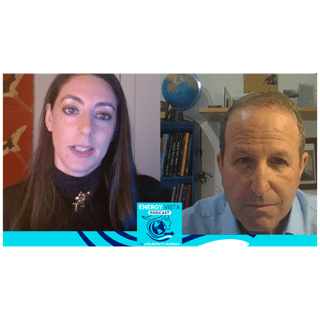
lpaltiguzman: Welcome to ener Energy Vista, a podcast where we make experts great again, contribute actively to the public debate and policymaking around commodities, the geopolitics of energy and trade. I'm your host, Leslie Palti Guzman.
lpaltiguzman: It's December 12, 2025, and time for a new Energy Vista episode. The talk of the town has been the dissection of the recently released national security strategy, which is the focus on two today's podcast.
lpaltiguzman: with and and We are going to highlight two specific angles, the energy and transatlantic alliance angle. My guest is David Goldwyn, president of Goldwyn Global Strategy, and and an and an energy advisor and his firm is a consultancy. He's also the chairman of the Atlantic Council Global Energy Center's Energy Advisory Group.
lpaltiguzman: And David served as the US State Department Special Envoy and Coordinator for International Energy Affairs from 2009 to 2011. First, my quick takeaways from the message of this new official document, which sets the direction for the entire administration and sends a clear signal to both allies and adversary adversaries.
lpaltiguzman: So specifically on energy, one, um the this document is very clear about the fact that energy is one of the means to achieve US goals in the world.
lpaltiguzman: Notably because it's a source of strength, it fuels the economy, supports competitiveness, and underpins national power. Also, it's very clear that this administration specifically is very unapologetic with this energy powerhouse.
lpaltiguzman: So the foundation has been the Shell Gas Revolution nearly two decades ago, and the US is no longer a reluctant energy superpower, but a proud one.
lpaltiguzman: And this goes along with the energy dominance agenda from the Trump administration. And this is what it means when it says unleashing American energy.
lpaltiguzman: um So I've said that for many years now that it would have been a terrible mistake to cut short this bonanza because of only on environmental grounds, um especially at a time when it provides an enormous comparative advantage internationally.
lpaltiguzman: So the US is currently enjoying an abundance of energy, relatively cheap compared to its peers, and it makes the country more self resilient and competitive.
lpaltiguzman: And this is something that is really underpinned. This strategy is that compared to other powers, it puts the US at a real big advantage. So third, the US is going to use this energy for exports, notably in its relations with allies, sometimes to help, but also sometimes to get its way.
lpaltiguzman: And energy has become also a tool of influence. ah Four, there is a big emphasis emphasis on innovation and technology rather than climate. And but at the same time, some of these technologies could be deployed also to curb emissions.
lpaltiguzman: And um five, um there is a big emphasis on the geoeconomic competition, notably with China, where energy, industry, trade, and technology are deeply entangled.
lpaltiguzman: ah By the way, this is a focus, and this intersection is increasingly a focus of my analysis, and I put a lot of attention on this entanglement. and But it means that countries increasingly will be pressured to pick sides.
lpaltiguzman: and those choices will shape their energy procurement strategy and infrastructure partnerships. So from Washington perspective, there is a real concern that Europe could tilt toward China if it lacks sufficient economic strength.
lpaltiguzman: And we'll discuss a little bit about this in the podcast. So hi, David.
David Goldwyn: Hi, Leslie. Good to see you again.
lpaltiguzman: Very good to see you. Thank you very much. you um I think it's the second time you're the guest a guest at Energy Vista, so thank you. And this is going to be a fascinating conversation.
lpaltiguzman: um you heard a little bit about the introduction. And since you work for the government, can you maybe give us some context on how usually those documents are prepared internally? And um is it like a multi-agency effort?
lpaltiguzman: you You used to work for the State Department. From what you read in this one, do you think the State Department has been consultant consulted? And um yeah, tell us a little bit your big takeaway here.
David Goldwyn: Well, thanks for having me back. I must not have done too bad a job the last time to had to get second invitation, so I appreciate it. um Yes, I've participated in a number of these national security strategies. Before I was doing energy, I yeah you know i spent time at the State Department as the the Chief of Staff to the Undersecretary for Political Affairs. And even when I was at the Department of Energy, we saw these. So it tends to be, tend to get a draft which comes out of the White House, and then it gets circulated to the agencies where they make sure that the the priorities that they've been tasked to to work on are reflected. And there's a fair amount of debate about how you're going to how you're going to phrase certain things in order to be consistent with policy or to be careful of the signals that you're sending to other countries. So it takes a while to negotiate. It tends to be a reflection of grand strategy when you have an administration that has a grand strategy. and of priorities. It's not a document that people refer back to for guidance.
David Goldwyn: And it you know it it is only as good as the the thinking on the day that it's written and events tend to to change change policy over time. So this national security strategy is unique and a departure from previous national security strategies in a couple of respects.
David Goldwyn: One is that it really doesn't posit a grand strategy. i mean, the the things that the first Trump national security strategy talked about, the growing rise of of China, the rise of cooperation between China, Russia, Iran, and North Korea, the ways we compete in the world for influence, both economically and politically, are really absent.
David Goldwyn: from this national security strategy. It's a very America first transactional approach and essentially says that we will gauge our relationships regardless of the kind of government that's there by what kind of deals we're going to get.
David Goldwyn: So China gets not as much of a mention as Europe, which you mentioned earlier, we can come back to that. so um US is a global leader, setting international standards, writing the rules of the road, building alliances, setting the moral example. None of that is here.
David Goldwyn: This is all not not not the way we're doing things. So it's um it's a pretty big departure, and I think it's being read that way around the world.
lpaltiguzman: Right, and instead of picking some themes or threats that are international and crossing boundaries like terrorism, um or China as a big threat that encompasses different sectors,
lpaltiguzman: um the way the document is being organized also, like towards the second part, it's like picking four different regions of the world. And i don't know if it's a priority, but the number one is the Western Hemisphere, right? Number two is Europe.
lpaltiguzman: Number three is the Middle East. And number four, Africa. And do you think it reflects like a priority? Hmm.
David Goldwyn: Well, I think it represents an ideology. So we're seeing two things from the Trump administration. One is this return of the Monroe Doctrine and the so-called Trump corollary.
David Goldwyn: And this is the idea that foreign governments especially if they have military support, should not be present in our hemisphere, and that the the US deserves a sole source, a right of first refusal on the resources of these countries.
David Goldwyn: I mean, we used to call this colonialism, but you know so it's sort of a ah right of primacy, which and it's not clear the other countries have really bought onto, certainly not Brazil, not Colombia,
David Goldwyn: and not others. So that's that's unusual. um And you have to really wonder why, in that we have pretty good trade relationships with with countries there. You have the traditional irritants with Cuba, Nicaragua, and Venezuela. But it's not like the U.S. did not have access to trade relations or investment in these countries to begin with.
David Goldwyn: So that so that is that is new. And rather than the first Trump administration and Biden and Obama, which had talked about the pivot to Asia, the importance of competing in the Indo-Pac region, the future of growth in the global economy coming from those countries and ensuring we had to access, trade relations, and that we contain the rise of China,
David Goldwyn: that doesn't make the cut. So from a strategic point of view, you know, US s competition in the world, you have to wonder why Western hemisphere is is so ah ah so high up on that list other than Venezuela, which, you know, many might argue is, you know, unfortunate and tragic, but not strategic.
lpaltiguzman: Right. Like for me, it's a very sober assessment maybe of where the US is right now in the world in terms of the acknowledgement that it's more a multipolar world and especially China is now, and it's mentioned in the strategy, like a near peer,
lpaltiguzman: And as a result, it justified their new vision of balance of power. And i think for South America, Central America, it's ejecting trying to eject China that has taken a lot of strategic assets, whether it's ports or minerals or other kind of natural resources, maybe in the region, and trying to keep China out of this sphere of influence.
David Goldwyn: but but There's some major contradictions there, of course. China has been a major investor in South America, particularly Brazil. It builds railroads, telecommunications lines, plants. There are not a lot of US companies that are competing for those sorts of investments. It's kind of not necessarily what we do. And so you know do you know you can certainly say the US wants to compete in that space, but we've just essentially disassembled USAID and a good chunk of our capacity in the State Department to advocate for for those kinds of deals. So you have to wonder how you know how that how that really makes sense.
David Goldwyn: um In other parts of the world, you know you also have the you know these these contradictions, which is, you know you you want to, um Europe is an important partner and indispensable, even though the administration doesn't like the ideology of the governments in Western Europe. So they have to remain preeminent, but you're going to have tariffs against them.
David Goldwyn: um you You talk about the sovereignty of nations and the nation state is the core element, but you say nothing about Russia's invasion of Ukraine and essentially paint an equivalence between them. So are are national borders sovereign or are they not?
David Goldwyn: And in terms of you know competition with China and other places, you know there's a real absence of of a statement or an affirmation or a strategy about but how the U.S. will compete in that space. It's fine to say that we really don't care about the character of governments if they do business with us, but Venezuela, it seems to be about the character of the government entirely and not about the resources. So um I think there's some deep contradictions in there. We can pretty much go around the world and find them in every in every part. But the deepest one, you alluded to it earlier, is probably the characterization of Europe.
lpaltiguzman: Yeah. So let's start with the contradictions in the innerg energy agenda, maybe. so um Clearly in the in the document, energy is a mean and to achieve some of the goals.
lpaltiguzman: And it says clearly unleashing our enormous energy production capacity as a strategic priority to fuel growth and innovation and to bolster and rebuild the middle class.
David Goldwyn: Thank you.
lpaltiguzman: Do you think that currently the US is using this mean efficiently at home and abroad? like and And we can discuss also some of the contradictions maybe with the tariffs and um and what it means for the allies um but and trade partners. But so far at home domestically, how is it going?
David Goldwyn: Not very well. So the president has made it clear to OPEC that he welcomes the the release of their their cutbacks on production. He is happy with prices around $60. And the US oil industry has probably suffered greater losses in the first 10 months of the Trump administration than they suffered in all four years the Biden administration.
David Goldwyn: you made reference earlier to sort of environmental costs and the administration has said well we're we're deregulating and rolling back the biden then you know the biden restrictions but the dallas fed you know made clear that that's kind of less than a dollar a barrel it's just not that expensive that wasn't the real cost so there's real pain um and cut back in spending in the oil patch right now um and that's
lpaltiguzman: the The pain is mostly coming back from a yo-yo and change of you know policies, depending on the administration. And so for companies, it creates a lot of uncertainties and and predictability.
lpaltiguzman: like they They invest in one of the technology to curb emissions, and then they can relax it. or how how How is that impacting them?
David Goldwyn: Right now, i'm just talking about oil. So the oil patch itself, which is the production the president wants to to unleash, is suffering problems because of price and because ah of diplomacy.
lpaltiguzman: OK, yeah.
lpaltiguzman: Hmm.
David Goldwyn: it's also creating It's also suffering because of the threat of tariffs to Canada and Mexico, two of our largest suppliers. If you move to the gas industry, gas production is up, gas prices are up.
David Goldwyn: That has a lot to do with domestic demand as well as international demand. But you look at who our largest customers are for US LNG, and certainly it's been Europe in the last few years and and also Japan and and Korea.
lpaltiguzman: Thank you.
David Goldwyn: But we're in a tariff war with all three of those. They're all having projecting lower growth next year than this year. So we're inflicting economic pain on our customers and for the largest buyers of US LNG in Europe, which is in Western Europe.
David Goldwyn: The administration has essentially said, we are going to support opposition parties in your government. We believe there should be regime change. And we believe that these current governments are on a path of civilization no civil civilizational erasure, which is pretty dramatic language, and that we like the countries of Central, East, and Southern Europe better. So I don't know under what business strategy you basically slap your primary customers around, threaten them,
David Goldwyn: with deposing them as well as imposing costs on them and then hope for increased sales so i think um it's creating some real headwinds i think for the us lng industry the oil industry has it and of course in the renewable space which i think you were alluding to if you're in hydrogen or wind or solar um or any of those advanced technologies You've had the rug pulled out of you for existing investments in the United States and basically a very negative future for the next four years. So you see your competitors in Europe and in Asia essentially benefiting. You're seeing China essentially own the value chain for for clean energy technology.
David Goldwyn: And you're seeing capital and talent move to Europe, which continues on the path of of clean energy development for national security reasons. so So it's hard to see who the winners are in this energy dominant strategy right now.
David Goldwyn: And if I could just add one thing, I mean, you talked about, you know, it's good to see, you know, the US energy boom continuing and those geopolitical tools, but nobody was talking about erasing those.
lpaltiguzman: Thank you.
David Goldwyn: You know, the first shale oil boom happened under Obama. The massive export of US LNG happened under Biden, not because of government policy, but because of the market. So I think we have to not lose track of fundamentals in this conversation because government policy tends to create uncertainty, but market fundamentals are what drive capital.
lpaltiguzman: I totally agree that production has started to increase under the Obama administration and continued under the Biden administration. um But it was more, I think, a ah ah matter of messaging and in um
lpaltiguzman: You know, I think the current administration doesn't want to to lose what, like all the like the tools that have made the U.S. so rich, basically, and self-reliant in the past two decades and seed market share to other countries um by aborning those disbonance too soon.
David Goldwyn: Yeah, no, I think that's right. The thing that has created such success for the U.S. industry is demand. European demand, Asian demand, Mexican demand for gas, Canadian demand.
David Goldwyn: And so... I don't understand a strategy which essentially punishes your primary customers, reduces their growth, and raises the costs of things you get from them because inevitably, if they are doing poorly economically, they will buy less of your stuff. Mexico is our number one destination for natural gas. It's our number one destination for ah for for ah petroleum products.
David Goldwyn: We want Mexico to do well so we can sell them more gas and more products. Composing
lpaltiguzman: But but i think that I think actually the strategy wants Europe also to do well. like they They are particularly concerned with the prosperity of Europe. and And the main idea I think is, you know it it might be tough, but I think it's tough love in a way. And it's again, a shock therapy. And you know Trump himself loves the shock therapy.
lpaltiguzman: um and And so I think it's speaking the truth, a hard truth to hear sometimes, and But you know in in in Europe, i mean on the right side, and I'm not talking about the extreme right, just on the right, um I think people have understood the message and knows what he's talking about because they've been saying that for years. I think on the left, it's a bit different and they're under shock and you know cannot believe what they hear. But I think you know pretty much half of Europe kind of agrees. on some of the big lines, right, of how Europe got to this situation and ah about the economic decline. and um
lpaltiguzman: And I think a big fear for this and administration and what they mentioned in the paper, I think they're afraid that China could, um like that Europe could sell to China, everything basically. And that China would increasingly own Europe.
lpaltiguzman: some of its companies, some and and the strategy mentioned, for example, Germany now, and I wasn't even aware that some chemical companies from Germany are going to China to use abundant energy that China receives from Russia.
lpaltiguzman: and And here you can make the link, well, maybe you know Europe would be better off using Russian gas at home rather than going to China and out and um you know move its companies to to China. right I think some of it is related to the supply chain.
lpaltiguzman: and and and the concerns that basically um yeah more influence from foreign powers in Europe because Europe is not strong enough economically and militarily.
David Goldwyn: Well, there was a lot there. So let's let's break that down a little bit. First, let's start with you know the diagnosis on Europe.
lpaltiguzman: Yeah.
David Goldwyn: I think the the national security strategy and and some of Trump's rhetoric um is right on the diagnosis of what the challenges are for economics in in Europe. But Mario Draghi knew this too, and that's what the Draghi report was all about. You know, the fact that it has been you know highly bureaucratic, that there have been impediments to permitting, um that there are labor restrictions which make it hard hard to invest, and that some of the proposed regulations would be draconian to deter investment. So I don't think there's disagreement, even in Europe, that that is the problem. And of course, the solution is how to to fix it. So we've seen, you know,
David Goldwyn: We've seen some great creative stuff about permitting in in Germany and the rest of Europe. and We've seen the UK also talk about you know accelerating permitting over two years. You're seeing grid modernization there. And then you've seen you know even RepowerEU come up with 10 FSRUs in the last few years and seven expansions of LNG plans.
David Goldwyn: So the Europeans are dealing with this. So I think you know you' you're you're right, the diagnosis of the problem of Europe is is is is spot on and and and not really debatable.
David Goldwyn: A lot of the deindustrialization and shock came from renouncing Russian gas because of the invasion of Ukraine, which is what the opening was for US LNG. So those are a little bit crocodile tears. complaining about that. I think it's only really at this point German industry which is talking about a return to Russian gas it's going.
David Goldwyn: The problem is the prescription which is essentially saying that the problem with these governments is that they're too liberal and democratic, that they're investing in renewable energy which is a national security matter for them and and and these days not not more expensive than other other kinds of energy and that essentially those governments ought to be unseated And you may not be talking about the right-wing parties, but they are.
David Goldwyn: They're talking about the AFD in Germany. They're talking about...
lpaltiguzman: They are talking about patriotic parties.
David Goldwyn: barrage and and the and the you know and the Le Pen rally you know um in France. so That's exactly who they're talking about. That's what Vance was talking about at the Munich Security Conference. So they're talking about about the appropriateness of having and have had the U.S. intervening to support parties in other countries to unseat the governments, which are their current partners,
David Goldwyn: So we talked a lot about fearing Russian intervention in our elections. This is essentially administration policy. Signally, it's going to intervene in the elections which are coming in France you know and in other countries over the next few years. So this is unprecedented and frankly, for military allies, you know an act of hostility. So it's the prescription, not the diagnosis, which is the problem there. Europe has embarked on that. But for the US to say, essentially,
David Goldwyn: Liberal governments versus illiberal governments are the problem. And that needs to change. And that's what's wrong with Europe. You know, is the US s kind of abandoning democracy as a value that we promote? Now, you'd be hard pressed to find any president, any Republican president, Reagan, either of the Bushes, Nixon, Eisenhower, who wouldn't be, frankly, shocked at that kind of rhetoric. But it isn't, that's why I say ultimately this document is ideological. It is talking about a different view of the world and a different view of who are America's allies and what our interests are.
David Goldwyn: And that is one which I think is going to be really bad for business.
lpaltiguzman: Mm-hmm.
David Goldwyn: And just to pitch what you're saying about China, the problem is not so much that the US is is not so much that European companies are going to go to China to set up those businesses, is that europe Europe may see China as less of a threat and less unstable an investment partner or a seller of goods than it views the United States because the Chinese are not trying to unseat their government.
lpaltiguzman: so mean
lpaltiguzman: Yeah, I still think that Europe prefers the values of the US and the standards of the US than the Chinese one. By the way, the in the document, democracy is only mentioned three times, and it's mostly in the European section when talking about Europe.
lpaltiguzman: um And yes, the this document wants a specific type of Europe, um a Europe that is patriotic, a Europe that doesn't self-hate itself,
lpaltiguzman: um and and stop self-beating itself.
David Goldwyn: you
lpaltiguzman: um So they want strong Europe. And again, i think ah for for this administration, the stability is going to come from the economy and also from the culture.
lpaltiguzman: So you can agree or disagree on the way they say it. But, you know, I think Europe is making a ah ah mistake, not debating it within itself. Right. I think ah immigration has not been debated enough in Europe. and the consequences of immigration, you know, you you can avoid tough topics. I think what the U.S. is doing is putting its fingers on very tough topics that Europe has not managed to successfully in debate and handle over the past few years.
lpaltiguzman: um I don't agree with the prescription on how the U.S. want to deal with it, but I think it's things that Europe needs to deal with it because otherwise it leaves room to extrem-right parties.
lpaltiguzman: um
David Goldwyn: You could just imagine how President Trump would react to have President Macron lecturing him on maybe a better way to secure the border, or maybe you should invest more in Mexico, or or or you know having ah you know prime you know the Prime Minister Starmer say, yeah, i think I think actually to be more patriotic and democratic, you know you basically need to have an election elect a different party.
lpaltiguzman: And to come back
David Goldwyn: Can you just imagine? President Trump's reaction and how much UK and French goods would we want to buy after that sort of a declaration for their presidents. So this is where it it comes back to energy is if you're if you're talking to European governments about buying
lpaltiguzman: Yeah.
David Goldwyn: your LNG, but you're telling them you need to abandon your energy strategy, which is looking at more autonomous energy through through clean energy. And we're going to put tariffs on your goods, but we want ours to be tariff free. And you can rely on us, but I might tear up that tariff deal if you do something politically I don't like.
David Goldwyn: How good is that for business? And, you know, I think that's where it's going to be it's going to be challenging. You know, people don't like to do things under duress. No one no one likes to be dominated.
David Goldwyn: And so the idea that they are going to stake their long-term gas imports on the U.S., I think we are now in worse shape than we were before. And I think if you're Europe, you're looking at Algeria, Libya, um you know, more pipelines from North Africa to to Southern Europe. ENI is already investing in in those So why wouldn't you have more piped gas? And not for nothing, you know, 2027, I think you've written about this. We're looking at a considerable LNG gut. So the U.S. isn't the only seller. You have Qatar as well.
David Goldwyn: And in a period of low prices, not so bad.
lpaltiguzman: I mean, I think
David Goldwyn: So why wouldn't you diversify more if you're Europe now, if the US s has suddenly made itself a political threat in the way that it's never been. And not for nothing, just in one more point, i mean, the US is on the verge of talking about significantly withdrawing military assets from Europe and shifting more of its defense burden onto itself. So you're raising their budgets, abandoning them when Russia is aggrandizing, and you'd like to do more business, please. I think that's a naive strategy.
lpaltiguzman: Yeah, I mean, I think Europe is still, ah yeah the US is still a reliable supplier. um You know, we cannot compare the US with what Russia used to do in terms of weaponization.
David Goldwyn: course.
lpaltiguzman: i agree that there is more politicization.
David Goldwyn: Yes. first
lpaltiguzman: um But, um you know, the the strategy like is mentioning, specifically, Europe remains strategically and culturally vital to the US transatlantic trade.
lpaltiguzman: remains one of the pillars of the global economy and of American prosperity. European sectors from manufacturing to technology to energy remains among the world's most robust. I mean, the US needs Europe.
lpaltiguzman: They know it.
David Goldwyn: yes
lpaltiguzman: They need it as one of the big markets. it's um um an educated, rich you know um a market. They need it and there is kind of an interdependence right right right now in the relationship.
lpaltiguzman: um Like a big question for me from this strategy is also like, because it keeps talking about Europe needed as a stable partner, right? Like ah a capable and stable partner. So the US wants to delegate now The US doesn't want to be the policeman of the world.
lpaltiguzman: They need capable partners to delegate some of the military and um you know kind of division of labor. So if Europe is capable enough, they will deal themselves with Russia and other threats.
lpaltiguzman: But to to get to this point, how are we going to get a stable Europe? and does Does it mean that we need Russian gas again and Russian energy? It seems that from this strategy, for me, the underlying message is that we need Russia to make Europe stable again.
lpaltiguzman: What do what do you think about this ah statement?
David Goldwyn: Well, i think I think the diagnosis is a little bit different. i mean, essentially what they say is that, well, first, if you want to share burdens around the world, that's what alliances are for. That's what NATO is for. That's what those other alliances are for. And so you can definitely ask them to share more burden.
David Goldwyn: And President Trump has been successful with the help of motivation of fear of Russia in getting European countries to increase their their military budgets. so They are being more self-sufficient, but you don't do it in six months.
David Goldwyn: You know, that's basically abandonment. And so you can't both say you don't want to be the world's policeman and you want your outcomes and you don't think your alliances are important. So i think there's a contradiction there. Second, their diagnosis on Europe, that essentially the problem with Europe you know, and it's basically a racially tinged analysis, is that if European governments don't control immigration, they won't be European anymore.
David Goldwyn: If they're not European anymore, then they're not going to be reliable allies. And therefore, we need, and he's talking about basically, we need Europe to stay white and Christian in order to do it.
David Goldwyn: It's the immigration which is is the problem, which is questioning to some extent the European project and
lpaltiguzman: so i'm reading it yeah I'm reading it a bit differently.
David Goldwyn: And so yes, well, you can you can also talk about Muslim integration, but of course, a lot of those countries are now our major investment and trading partners.
lpaltiguzman: yeah
David Goldwyn: So they're basically making that analysis and saying, if you don't fix that problem, you won't be good partners. and if you And therefore, you won't be good good allies going forward. So I'm not so sure that's...
lpaltiguzman: i mean yeah For me, more than racial ah racial reading is really more like um
David Goldwyn: sure this
lpaltiguzman: the Judeo-Christian values that have underpin Europe as a culture, um ah framework, and a philosophy, I think are under threats under some countries.
lpaltiguzman: and And it's a small threat right now. But if nothing is done, it could really spiral. um you know I've been following a lot the Muslim Brotherhood in France and in Europe.
lpaltiguzman: And it's increasingly a latent threat. So it's because the their strategy is to be very patient, but infiltrating the society, the fabric of the society, and different um organizations at the society level.
lpaltiguzman: And that really threatens you know what we call in France laicity, but it's like the secular um framework and and really philosophy of many European countries.
lpaltiguzman: And I think this this is how I read it also. it's it's I don't think in Europe, it it's it's it's not just white and racial because many you know many people that have been immigrants have been integrated and are completely endorsing the values of those democratic societies. But I think it's a part of the population that doesn't want to integrate and really want to um to impose, you know at the end of the day, the Sharia law. It's like a whole set of different values that don't that really don't align with the democratic values.
David Goldwyn: This is not new for Europe. I mean, this has been, you know, there's been decades of concerns about Turkish immigration in Germany and the and the the former French colonies emigrating into France, as you know well from, you know, from your time there and the Brits as well. But, um you know, no country wants to import terrorists into its country and you need to screen them out. But you know the the same diversity that they celebrate when they field their World Cup team in France, know you can't have it one way and say, but we really wish all those people except for the best soccer players would stay out. And that's, you know, so i think I think it doesn't give enough credit to European governments now.
David Goldwyn: mean, frankly, of either party that they have not understood and made steps to try and address this issue. But that's not necessarily reason to unseat them.
David Goldwyn: So i think that's i think that's ah the challenge with that kind of that kind of approach. Burden sharing itself, I think, is is a fine concept. But you can't disdain your alliances and expect more burden sharing.
lpaltiguzman: Yeah. So what about Russia? Where does it leave us with Russia? um You know, there are ongoing negotiations and obviously Ukraine, Europe don't really have a seat or a voice at the table right now.
lpaltiguzman: um What's next for Europe? Do you think we're increasingly going to go through division? between Europe and the US on this matter.
lpaltiguzman: um you know If Europe really wanted to have done something, you could they could have used the frozen assets from Russia. They could have already done things on their own, potentially. right um Do you think they are ready to to be more assertive, aggressive on their own? is it going to be Or they are going to follow the US?
David Goldwyn: Well, if we're talking about sort of the resolution of the the conflict rather than talking about gas, we can come back to gas. I mean, first, Europe europe is arming Ukraine. The Trump administration has not contributed US dollar to the armament of Ukraine since President Trump came to power.
lpaltiguzman: Thank you.
David Goldwyn: He's allowed Europe to buy weapons to sell to Ukraine. So in addition, and when it comes to sanctions, which is actually force wearing resources, whether that's gas and oil, it's Europe, which raised its own electricity prices and gas prices by force wearing Russian oil and gas. It took them some time to to to reduce it. And I think they are, they are you know, hell bent on fulfilling those commitments in 2026 and 2027. So in the context of a peace deal, would Russian gas come back? Maybe a little bit, but not much. so I think that deal is done. And I think it's, you know, it's really, it's a falsehood, you know, to say that Europe has not done enough. One of the biggest opponents to seizing
David Goldwyn: Russian assets has been the u Treasury at some points because the precedent of seizing government assets without a process because they exist in banks is something which the US s does not want to experience with respect to its own assets overseas. And so that's why they've talked about more creative mechanisms such as using those assets as collateral for loans, which would then be made to Ukraine to arm itself. So so i think there's some legal technical issues there about that. So I think the Europeans have done plenty. And at this point, you know certainly last year, much more than the United States has. Going forward, I think what we're going to see is more of the same.
David Goldwyn: I think President Trump has, i think rightly, tried to put pressure on both sides to come to a deal. The deal that has been proposed the last time, the 28-point deal was Russia's talking point, so that was never going to go anywhere.
lpaltiguzman: Thank you.
David Goldwyn: And the 19-point plan was just fewer of Russia's talking points, so that wasn't going anywhere either. But they they are moving towards some sort of ah some sort of a greater understanding of what a deal would have to look like in order to to to take place.
David Goldwyn: But the things the US has supported, that Secretary Rubio has supported, that are essential to a Ukrainian deal, which are a demilitarized zone, ability to join the EU, a reasonable limitation on its army, not giving up territory that it already possesses and just handing it to Russia, are and have been and always been fundamentally unacceptable to Russia. So if the Russians are willing to take that kind of a deal,
David Goldwyn: maybe something happens. Will we get a ceasefire plus deal? I think that's possible. well We'll get a ceasefire for a stand down, but that stand down is time for Russia to rebuild its military and perhaps for Ukraine as well.
lpaltiguzman: Mm-hmm.
David Goldwyn: So I think what we might actually see in the next six to eight weeks, if it becomes clear that there is no reasonable deal that the Russians will accept, and the Russians are the problem right now, then I think you may see a resumption of President Trump putting more pressure on Russia. And that might be allowing the sale of long range missiles to Ukraine, which would be able to redress the military balance a little bit and, in President Trump's hope, bring both parties to the table.
David Goldwyn: But I think there's a fundamental tension there which cannot be papered over. And I think that is, that fundamental tension comes from the fact that that that Russia believes Ukraine is not a country.
David Goldwyn: and that it's not going to accept its ability to arm itself and defend itself. So, you know ceasefire possible. More pressure on Russia, actually, rather than Ukraine, I think likely.
David Goldwyn: Return a Russian gas to Europe, not anytime soon, and not very much.
lpaltiguzman: I think Europe has been very good in the rhetoric in supporting Ukraine to some extent militarily, but you need money. You need money for a like sustained support of Ukraine. And Europe right now doesn't have much money, you know, to rearm itself, to help Ukraine, to do all these things that it needs to do to remain competitive. So I think this is like the danger in the long term, right? Especially if the U.S. becomes less involved.
lpaltiguzman: um you know like Will there be means to support Europe's vision, basically?
David Goldwyn: Yeah, and that's that's why it's very interesting and I think significant that Europe has changed its policy with respect to debt. That it is essentially going to allow countries to borrow beyond what the European fiscal targets would have allowed if that borrowing is for the purpose of of weapons. But here's where you have another one of these contradictions in the policy.
David Goldwyn: What would the Trump administration like? They'd like Europe to buy more weapons. Where would the Trump administration like them to buy weapons from? From the United States.
lpaltiguzman: I
David Goldwyn: So if you you're basically saying, you European governments should buy more weapons, buy them from us, devote your money to do that. In the meantime, we're going to strand you and leave you more vulnerable. We're going to put tariffs on your goods and we're actually going to work actively with your opposition parties to unseat you.
David Goldwyn: So that's a contradiction is the nicest thing I can say about that.
lpaltiguzman: i totally agree. There are many, many contradictions in in the current vision and administration. And at the same time, there are some truths. um So it's it's interesting, totally.
lpaltiguzman: And quickly for Russian gas, um you know I think we could see actually a division between Europeans. Some, you mentioned Germany, and I agree. I think there are very strong lobbies in the industry in Germany that wants the return of Russian gas just to power their industry, their are exports, because their business model has been completely intertwined with the ship Russian gas.
lpaltiguzman: Maybe also to some certain extent countries that have still in place on long-term contracts with Russia that have not expired and that they are either still on arbitration or they don't or you know we don't really know publicly what's going on with these contracts.
lpaltiguzman: And also, um you know, there is still this idea that the US is taking it on a little bit, but that used to be the one prevalent in Europe, which is how can you have a stable Europe without having an integrated Russia into the continents?
lpaltiguzman: and energy traditionally historically has been a way to integrate Russia with exchanges, except that it didn't prevent Russia from aggressing and provoking a war into Ukraine. So like in the future, like, what are you going to do next with Russia? Let's say there is a ceasefire.
lpaltiguzman: ah How, you know, Russia needs revenues, right? They need to leave. Like, where are they going to sell this energy only to China? It's going to be interesting questions.
David Goldwyn: Yes, well, that ought to be motivating Russia to take a different position than the one that it's taking. But I would say even in in in even in Germany, while there are always voices that would like the cheapest gas, it is remarkable the degree of political consensus you have seen in Germany and in the European Union as well to accelerate their phase out of Russian gas. But again, this is the, you know, if if if the return of Russian gas to Europe is part of the Trump administration's carrot list,
David Goldwyn: what does that do to the US LNG industry, especially, you know, in the next few years?
lpaltiguzman: have to sell.
David Goldwyn: So this is, you know, so this is coming back to the very first thing we raised is sort of how's that energy dominance thing working for you? You know, and the answer gri is, you know, not great.
lpaltiguzman: you have to stay you have Yeah.
David Goldwyn: Not yet.
lpaltiguzman: ah you ah US LNG has to sell. that And you know if there is no import markets, and you mentioned that too, and there is no you know power coming from from the the fossil sale fuel. I mean, there will be at home, it will power the economy at home, but you will lose a big part of your influence if you cannot export anymore because of lack of markets or because there is too much competition outside.
lpaltiguzman: Yeah.
David Goldwyn: Yeah.
lpaltiguzman: Well, fascinating questions. We can spend hours talking about all this. um And let's move a little bit to your personal trajectory.
lpaltiguzman: So David, you used to work for a Democratic Party. Now it's the Republicans in town. How is it to be in DC these days? ah You are affiliated with the Atlantic Council or think tank.
lpaltiguzman: um how How is it for experts right that are i feel that have policy expertise, background? I know there is a new sheriff in town. How is it for people like us um these days?
David Goldwyn: Well, it's it's very different. And really just in terms of my own trajectory, I really began as a civil servant under President Bush 41 and worked for the Under Secretary of Political Affairs, Arne Cantor, you know, who under Secretary of Labor.
lpaltiguzman: Hmm.
David Goldwyn: So I had worked for for Republican and and Democratic administrations and I I went political to to work for President Clinton. But all through, you know i worked in think tank world and in the private sector as an advisor all during Bush 43 and during Trump 1.
David Goldwyn: And really during all of that time, um you know whether ah for whatever the problem of the day was, Both the State Department, the White House welcomed analysis and thought leadership to try and figure out what the best solution was to their problems. There were significant differences on tactics, but in an energy particularly, you know up until the shale boom, it was what's the best way to get diversity of supply, what's the best way to propagate technologies, and then it was how to find the best export markets and how to compete with, basically how to keep other countries from being dependent on Iran in particular. you know or having europe being too dependent on russia so you know there wasn't a lot of politicization of of energy then and in think tank world you know it was really welcome i think it's different in a couple of respects now um actually the the um on the energy side i think the uh the administration has been had very positive relationships with the with the atlantic council our energy center is run by a former
David Goldwyn: former Trump appointee, but it's it's non-partisan and and and apolitical. So there's some some, you know, on the convening side, there's there's good relationships. But policy in this administration is largely coming from the president and from a small group. So the State Department is really absent from these deliberations in a way that has never happened before.
David Goldwyn: And the, you know sort of the appetite for analysis, for sort of, for data, you know, for studies and things like that has dropped dramatically. And of course, the ah huge cuts in funding that Elon Musk led, both the ending of the, of, you know, of USAID, but cutbacks and things like that,
David Goldwyn: have led to basically a drying up of academic research and things which supported analysis. So there's still you know there's still room. i mean, the the appointees themselves you know at State and at Energy and and other places are you know quite congenial and nice people and interested, but they are operating in environment.
David Goldwyn: which is very top-down when it comes to policy. So it's it's it's very hard, it's much harder to do advocacy and it's much harder to do thought leadership. So that's that's quite that's quite different.
lpaltiguzman: An unconventional policy. This is a term mentioned also in the strategy. So they are totally owning it, the fact that they are unconventional and doing things differently.
David Goldwyn: And one, I mean, source of, would say, personal pain to me, i led the creation of the Energy Bureau at the State Department, the Energy and Natural Resources Bureau under Secretary Clinton, sort of designed it in the Quadrennial Defense and Development Review and and and left as it and left in 2001. Carlos Pascual really stood it up. But for 15 years, it has been there and has been the leading edge of both advocacy and policy development whether it's containing iran you know or uh or imposing u.s s sanctions or fostering development or critical minerals um and it was eliminated um in the the doge uh you know sort of decimation of the of the state department um and this makes absolutely no sense in a world where you want to seek energy dominance.
David Goldwyn: So it makes me sad, not only that the capacity is no longer there, but that the people who populated that essentially were fired um because they work there rather than moving to other places.
lpaltiguzman: yeah do
David Goldwyn: So I think i think the department's going to miss that capacity, you know, going forward.
lpaltiguzman: do you think this Do you think this thinking of energy and diplomacy has moved to the White House in the Energy Dominance Council somewhere else?
David Goldwyn: I think the Energy Dominance Council is doing some of that. The head of the the n NADC is gonna be the G20 Energy Sherpa. So so I think some of those moves there, but theyre you're talking about two people.
David Goldwyn: You're not talking about a staff. You're not talking about someone who understands the country and more important, understands the markets.
lpaltiguzman: Right.
David Goldwyn: And when we created the Energy Bureau, the thing that was new about it was that we realized in order to make other countries investable for the US, in order to make them self-sufficient so they weren't vulnerable, or in order to make them good markets for the US, you had to understand the structure of their markets. You had to give advice on on fiscal,
David Goldwyn: How to make you create fiscal terms that would make people want to mine critical minerals in their country. You needed to sometimes educate them about the importance of open markets so the U.S.
lpaltiguzman: Mm-hmm.
David Goldwyn: had access to those resources. And that took really understanding things at a much more technical level than the State Department was used to. And that was the reason to create the Energy Bureau was to build up that that expertise. And the Energy Department does international. I was Assistant Secretary of International Affairs the Department of Energy as well.
David Goldwyn: But the the fact is that it's um it does not have it's not a well-resourced office um and largely supports the secretary and in travel. And they can do diplomacy. And the Department of Energy has has a lot of technical expertise, but its mandate is domestic.
David Goldwyn: and Congress is not like the Department of Energy spending money on international things.
lpaltiguzman: Mm-hmm.
David Goldwyn: So, you know, as currently funded and structured, the Department of Energy can't do that. So we've disarmed ourselves just at the time when at least the administration's policy is to assert US exports and dominance on a global level.
David Goldwyn: So yeah, it was i was I was sorry to see that go and and and even sorry to see the the people go. But I think the administration will miss that and at some point, maybe have to rebuild it as it realizes it's got a lot of demand for for that diplomacy and it needs capacity to support its objectives.
lpaltiguzman: Fascinating, David. Thank you so much for joining the Energy Vista podcast, and we'll have you back very soon.
David Goldwyn: Great, thanks, Leslie. Lovely to see you. Take care.
lpaltiguzman: This episode was recorded on December 12, 2025. This is Leslie Peltigoodman saying good day and good luck.