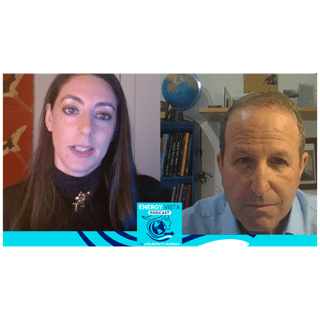
Transcript
lpaltiguzman: Hi Ed, good morning. How are you?
Ed Morse: Well, Leslie, very well on yourself.
lpaltiguzman: Good. Thanks for joining the Energy Vista podcast. And today we're going to do a round of the world of the oil market, looking at the big geopolitical hotspots. so let's start with taking the temperature check. Like where are we standing with WTI and crude in general? Like Brent, I think is hovering around $62, $63 per varo Are you surprised that it's um stable and in those 60s at the time when we have some geopolitical headwinds, especially in Venezuela, for instance?
Ed Morse: Well, we have geopolitical headwinds and we have geopolitical tailwinds. And you asked me about the stability of prices.
lpaltiguzman: Yeah.
Ed Morse: We had been in a price range up from you know early June before the US and Israeli attacks on Iran through the middle of October, which was really a price range that was seldom exceeded and not gotten any lower than it was between for Brent
Ed Morse: 65 and 70 at the time. And for WTI, about $3 to $4 below that. It spiked above that level briefly when the attacks started by the US on the nuclear sites in Iran, and then a few days later went back to that range.
Ed Morse: Went above that range for minutes in early August when the US made some threatening noise about putting heavy sanctions on Russia unless they came to the table in the battle with Ukraine.
Ed Morse: And, you know, seemed to be pretty stable in that price range, no matter what we thought was happening in fundamentals. Not only was the price range on the prompt within that like three, four dollar range, but if you looked at the forward curves, they had flattened completely. So by that, I mean, when Brent was let's say pricing at around 68, the price range out for a full 10 years was about $2 below that and $2 above that.
Ed Morse: And the same thing happened for WTI. Now that is a telling you that price is not being reflected, reflecting whatever's going on in the marketplace.
lpaltiguzman: Yeah, and actually I remember over the summer, you know, before the attacks on the nuclear facilities in Iran, many analysts warned, oh, we're going to see price spikes, afraid of escalation, and it didn't really happen, right?
Ed Morse: It didn't really happen, and there was nothing soft about the market from indicators that we normally use, namely, where were inventories, and they were very low. And they were still getting tight over the summer.
lpaltiguzman: Hmm.
Ed Morse: We had spreads. We had we had ah significant a premium for products against crude. And that was because inventories of products were low.
Ed Morse: And crude seemed to be going really nowhere until some movement finally happening at the end of the summer.
lpaltiguzman: So explain us what's really going on in Venezuela right now. um There is a military buildup, US military buildup on the coast of Venezuela. and There has been, I think, about 21 airstrikes so far since September, roughly, on boats, um potentially transporting drugs.
lpaltiguzman: from Venezuela. um So are we back into a maximum pressure strategy against Venezuela, where the main goal is a war on drugs, or the main goal removing Maduro, or is it reestablishing a US sphere of influence in the region?
lpaltiguzman: And depending on the scenario and the main goal, like how is that going to impact Venezuelan oil production and exports?
Ed Morse: So we don't know, but like we can guess about it, as you know, as well as anybody in the world. When we look at US policy, there's no doubt that the fentanyl, anti-fentanyl policy is important, but the attacks on the boats, I think, have to do with the military threat that could be eventually used to achieve the main objective. and the main objective is to replace the Maduro government with another government. The hope is not a military government, but the hope is one that that appeared to have won the last Venezuelan election. So that's the goal.
Ed Morse: We know from the Secretary of State that there is another goal involved in it at a more general level where he's talked about reestablishing, and he hasn't used these words exactly, but what's basically U.S. dominance in the Western Hemisphere.
Ed Morse: and to up and there's a lot of evidence for his thinking of the whole Western Hemisphere because...
lpaltiguzman: But does that mean that China now is very influential and that's a concern for Washington?
Ed Morse: Well, that is a concern to some degree in some places. Certainly, it had been a concern in Panama, and the government expressed that concern.
lpaltiguzman: Yeah.
Ed Morse: And all of a sudden, ah China no longer controls... of the flows of shipping through Panama to the degree they did before ah those concerns were raised. So yeah, I think there is something about China.
lpaltiguzman: Yeah.
Ed Morse: It's about foreign influence. And it's about you know processing to the degree one can from an American perspective. what one hopes would be ill legitimacy in terms of the government at the other end. Now, there are plenty of exceptions to that. Certainly, the sanctions that have been used by the US on certain countries in the region, Brazil being one of them, Colombia being one of them, seem to be highly personal from the president's perspective, rather than representing something that would reflect, that anybody can really understand as a long-term national objective.
Ed Morse: in dealing with the countries or the region.
lpaltiguzman: What about the licenses that Shell and Chevron had to ah explore and export oil or gas from Venezuela? ah where Where does it stand? And some people say that, you know, um it's also about access of resources in Venezuela, whether oil or minerals. What what do you think of of this ah allegation?
Ed Morse: I think access may be in the back of somebody's mind, but I don't think it's a major, it's the major feature. I think there are certain limitations about what the president might be able to do, given his own objectives of unseating Maduro, replacing with another government.
Ed Morse: and continuing to have growth in Venezuelan production again and to you know keep prices, at particularly gasoline prices in the US, at a relatively low level. So you know Venezuela is special in that it's the closest source of of abundant and potentially even more abundant heavy crudes that are or medium to heavy crudes that are even sour, that work well in the U.S.
Ed Morse: Gulf Coast refining system.
lpaltiguzman: Thank you.
Ed Morse: So I think that reducing Venezuelan production is not an objective. It may be a threat, but they have not really moved to stop Western companies from ah participating in the production side in Venezuela.
Ed Morse: and It appears as though the military has not been eager to have ah landed a force in the country to to try to take over the country and and facilitate through military invasion a change in the government. So pressure is there through the threats of on boating, and we know that there are other sides to this. there are Certainly voices have been raised about whether this is a fully legal thing to do ah to attack those boats without any indication that there's something of a military threat to the U.S. related to those boats.
lpaltiguzman: Yeah. What I'm watching also is that for a while on the gas side, there were discussion between Trinidad and Tobago and Venezuela to cooperate and Shell was involved with a license to potentially take some gas from Venezuela, use it in the liquefaction of Trinidad to because Trinidad has had declining supply for a while and was looking for additional supply potentially from Venezuela.
lpaltiguzman: um So there is kind of uncertainty around that license and what could happen next. um But yeah, I mean, the the it seems to me that the region right now is awash with oil and gas, actually. When you look at Guyana or Sorin, are those like elements also that makes the Venezuelan oil and gas less needed in the global market?
Ed Morse: Well, I'd say that from a Western Hemisphere of perspective, and it's North and South America, the only you know growth in production capacity is really, with a few exceptions, in a few OPEC kind of or opec plus countries. But you know the Western Hemisphere is leading the world in non-OPEC production growth.
lpaltiguzman: Yeah.
Ed Morse: And that includes you know Argentina and Brazil, Guyana, obviously. Canada and the United States, Mexico and Venezuela and Colombia have been lagging from their traditional perspective. But there's ah you know a surplus and the Western Hemisphere is certainly a net supplier to the rest of the world of considerable importance.
lpaltiguzman: Okay. um So let's move to Russia now. Actually, today we've seen a lot in the news, like a potential a leaked proposal for a peace deal between Russia and Ukraine um drafted by the US.
lpaltiguzman: Europe is likely to counter with another proposal, which would be more beneficial to the Ukrainian side. And at the same time, we had seen the most powerful sanctions so far against Russian oil companies, Lukoil and Rosneft.
lpaltiguzman: We've seen also there is a proposal by two senators in the US, Senator Graham and Senator Blumenthal, to impose secondary sanctions on Russia. So we have like this kind of dual track of...
lpaltiguzman: of possibilities, one more sanctions against Russia and really trying to constrain their ability to get revenues from oil and gas to wage the war against Ukraine.
lpaltiguzman: And on the other hand, carrots and to try to bring them again to the peace negotiation. So in this context, do you think like the sanctions so far have been effective or we need even stronger sanctions? Where are we right now with the oil production and exports from Russia?
Ed Morse: So I think there are two factors that have affected the global oil system that are related to Russia. One of them is, of course, the sanctions that started with the European refusal to buy Russian crude and Russian gas, except the to a limited extent, with certain exceptions that couldn't find easy alternatives. And then we have the Ukrainian military hits on Russian energy infrastructure.
Ed Morse: the Those are two important factors. Another one to bear in mind is that the military activity that the Russians are embarking in in Ukraine can consume a considerable amount of product that they would otherwise be available for exports. So ah between all of these things, Russia has been constrained in its exports.
Ed Morse: It has to export to countries that are not nearby but are far distant from them, with the exceptions of those in Asia that are connected by pipeline or the Asian pipeline to the ESPO line that gives sail to by ship into the Asia Pacific region. So we've had a distortion to trade, which has increased the price of oil around the world.
Ed Morse: And that's because the cheaper Russian oil was not available for its main a nearby buy buyers in Europe.
lpaltiguzman: Yes.
Ed Morse: And in addition to that, there were problems in the Red Sea, which distorted exports out of the Middle East, making them more expensive to the rest of the world.
Ed Morse: And we've had Russian oil discounted to get into the large markets that they have, namely into China and into India.
Ed Morse: So where things now stand is that the Russians are unable to export a significant amount of product, gasoline and distillate both.
Ed Morse: They had been large suppliers of middle distillate to Europe, middle distillate cracks around the world. are at record levels. They may be coming down a little bit now as we moved away from a seasonal demand for that.
Ed Morse: But, you know, it's they're suffering. There's no doubt that the Russians are hating are hurting from this and they've been impactful.
lpaltiguzman: Yeah, the economy. isnt
Ed Morse: so i'm So I'm sorry to interrupt you, but
lpaltiguzman: So impactful for the economy and they have transformed their economy as a war economy, but we know that the The sanctions have worked also in a way where increasingly less buyers potentially are willing to risk buying Russian oil and products. And so China is by far the largest.
lpaltiguzman: India also has become a very important buyer of Russian products. But what about the latest sanctions? Do you think India will still be willing to to buy from Russia?
Ed Morse: Well, there are, are you know, is whether it's India or the effect of sanctions is an open question, but we know that the largest Indian refinery company has announced that it will continue to buy Russian oil.
Ed Morse: It claims that it's not buying it from either Look Oil or Rosnaft, but it will it will use that oil and they claim they're separating the flows of where the oil comes from. They'll use that oil only in a very small refinery unit.
Ed Morse: and that overall their use of Russian oil will go down. And the flows from Russia into India seem to indicate that something may be happening.
lpaltiguzman: Mm-hmm.
Ed Morse: And today, of course, is a deadline. The day we're talking is the deadline for those sanctions. So I'd say Russia is hurting on the oil side. It's finding revenue scarcer. It's finding sanctions on the use of the revenues to the degree they're not going to the countries that will enable them to use that revenue.
Ed Morse: but they you know They're constrained in buying. They've had over a million casualties of the war in terms of the military. They've had over a million people leaving the country. Those are mostly men.
Ed Morse: of age to be drafted who have actually in many cases returned to their country of origin, whether it's you know Kazakhstan or Uzbekistan or one of the other CIS countries. But the the net result is labor market inflation, goods inflation.
Ed Morse: The inflation rate has come down from the low 20% level to the very high teen level. Growth is down to barely positive. So I'd say all in all, after three and a half to four years of this conflict, Russia is really not doing very well. it has not made progress on the ground.
Ed Morse: and And it has been you know limping along trying to achieve something that oh that the regime can be proud of.
Ed Morse: And on that, one second second, they did change the constitution after the first attack.
lpaltiguzman: So it's in
Ed Morse: They remade marked remarks before the attacks on changing the constitution.
lpaltiguzman: Mm-hmm.
Ed Morse: The constitution that was adopted at the end of 22 says that almost all of Ukraine is part of Russia. And that therefore, this is a defensive part action on the part of Russia, and not an offensive one. So, you know, they they're playing that very highly now in in looking for a way out, but they're claiming to be the victim.
lpaltiguzman: Right. um So are you optimistic about any negotiations leading to a peace or you think where, know, Europe is arming, rearming, um getting ready for ah war of attrition? Poland is very worried on it on the border.
lpaltiguzman: um What could be the impact if we see no peace happening anytime soon, you know, this year, next year, and in the coming years.
Ed Morse: Yeah, so, you know, we we're in a market that appears to be in surplus without thinking about Russian oil. If Russian oil were further disrupted, there may be some problems with the
lpaltiguzman: Yeah.
Ed Morse: with the degree to which there's a surplus. I think that what we're seeing is a European response that some news agencies have reported. We don't know what the actual response is, but the the the reports are that the Europeans are proposing a ceasefire, not the withdrawals that are part of the American plan.
Ed Morse: And think
lpaltiguzman: Mm-hmm.
Ed Morse: And a ceasefire is not something that's attractive to Russia at the moment. They may, however, be forced into a ceasefire. So we're we're at the beginning of winter.
Ed Morse: The battlefield is not of a lively place in the wintertime. It is snow-filled and ice-bound, and we have not seen battles on the ground except in the late spring through the summer and into the fall, and we're we're moving into that season again.
Ed Morse: The Russians clearly would like to see an end of the bombing of their port facilities and and their refining capacity because that has diminished their ability to make money where they otherwise could, particularly on the
lpaltiguzman: Yeah.
Ed Morse: both the crude and the distillate side. So I think that there is All things equal, we're moving to a kind of 50% probability that a ceasefire will emerge.
Ed Morse: But a ceasefire will be a temporary one, unless there's something official in what Russia says about about they have objectives, which are to get back territory that has been part of Russia for centuries.
Ed Morse: And so you know I think it would be temporary if we have the ceasefire.
lpaltiguzman: Yeah. Yeah.
Ed Morse: I put the the winter chances. Maybe in January or February at ah close to the 50 percent level, but nothing immediate on you know a NATO agreement with Russia that Ukraine would also agree to.
lpaltiguzman: Yeah. and And I think as long as the main actors believe that it will be only a temporary ceasefire, we will see not, you know, Russian gas flowing again to Europe anytime soon.
lpaltiguzman: And we'll see Europe continuing to rearm. and And so that that's going to be interesting to watch if it change any of the, you know, decisions that have been made recently in Europe.
lpaltiguzman: um you know I see some parallels between the global gas market and the oil market in terms of fragmentation and in terms of like the new alliances between trusted partners. So we've seen on the oil side, you mentioned you know Russia with China, and it's the same on the gas side, right where we see a strengthening of the corridors between the two countries. Do you think it's permanent?
lpaltiguzman: And do you think there are any potential you know divisions that could emerge between Russia and China.
Ed Morse: There are potential divisions that could emerge between Russia and China, and there are potential movements to get together again between Europe and Russia. And they all move at a different pace. So I need not tell you, because you know this subject much better than I do, that the cost of natural gas in Europe has gone up significantly.
Ed Morse: and the replacement of nearby effectively discounted Russian pipeline gas into Europe by U.S. and other, but largely U.S. LNG into Europe has seen the relationship between WTI and and and TTF in Europe widen significantly.
Ed Morse: And we've seen deindustrialization taking place in Europe This is you know seen in Germany more than elsewhere. It's seen in ARI where the three major import centers are, Rotterdam, Antwerp, and Amsterdam in the northwest part of Europe.
Ed Morse: So I can imagine that a ceasefire would also see a movement by people in companies in Europe, whether those companies are utilities owned by governments or whether they're private sector companies, needing natural gas as a feedstock to go back to Russian gas. And I think the calculations would be, particularly in a world moving to a natural gas surplus by conventional wisdom,
Ed Morse: We're seeing the possibility for either the surplus leading to 50% drop in TTF prices or a return of Russian oil along with the surplus coming from the LNG exporting countries of the world, which could bring bring down the price of TTF even further than that. so You know, if we have WTI at a $3 or $4 range, but in a surplus world, it would closer to $3.
Ed Morse: TTF would possibly be ah more like $6 rather than $12, $13, or $14.
lpaltiguzman: Mm-hmm.
Ed Morse: So I think there would be an attraction in Europe with a ceasefire to have a return to Russian gas, maybe not 100%. but I see think ah you know, good 50% of what was there before
lpaltiguzman: I think the German industrial conglomerates would love that. I think it would be a political hot potatoes for the European Commission. um And even for the public opinion, you know, um it would show a lot of flip flopping and um it's going to be interesting to watch.
lpaltiguzman: um So let's move to Iran. and um Iran is another big geopolitical hotspot, and there has been recently publications of satellite imagery showing that Iran may rebuild some of its nuclear facilities and ballistic missiles, which leads to discussions about a potentially Israeli airstrike to preempt any new threats coming from Iran.
lpaltiguzman: Do you think that um you know that could lead also to to some price spikes again or not? And where where does the Iran threat, does it still matter for the oil market right now?
Ed Morse: So I think the Iran threat to the oil market is what we saw signs potentially of during the US-Israeli strikes in June and over recent weeks with the taking of a tanker ae near Hormuz but into Iran territory near the Strait of Hormuz. So I think the the the threat ah from Iran is less a threat from a loss of their oil, which I think they can find ways to put into the global market in an adequate enough way that it won't mean be meaningful. And on all sanctions, which I have not said before in our discussion today, basically all sanctions find a way to get around them to a significant degree. So the erosion
Ed Morse: that we can see in the new Russian sanctions is a question not of whether it whether it will happen, but when it will happen. And Iran has and i've been pretty successful in getting back a market share that provides enough revenue for the country, even at a discounted rate.
lpaltiguzman: you
Ed Morse: I think the changes in the Middle East is ah basically twofold. One is a significant weakening of the defense system that the Iranian government put in place for itself. So this is influencing proxies around the Middle East, certainly proxies on every part of the Israeli border system that they could put proxies in. They didn't succeed in every part, but as many as they could. So proxies in Yemen, proxies in Lebanon, proxies in Syria.
Ed Morse: And those have all been destroyed for all practical purposes. So that's a you know real weakness. And then...
lpaltiguzman: So actually, let me ask you here, what about the Houthi right now Because they have you know disrupted maritime transportation for two years now um But they have kind of slowed down their attacks for the past few months. And since the ceasefire ah between Israel and Gaza, they've been very silent.
lpaltiguzman: However, it's going to take some time, I think, for tankers to come back, especially Western tankers to come back. um and use the Red Sea route again and the Suez Canal route, especially on the LNG side. I don't know that much about oil tankers and how they think about the risk, but for LNG, it would take a few months. And also if there is still a threat with Iran or you know still like um tensions in Gaza, we don't know what the Houthi would decide to do again.
Ed Morse: No, we don't, but we know that thus far the number of of container ships have started moving again through the canal.
lpaltiguzman: Mm-hmm.
Ed Morse: I think there will be a test of whether a tanker, whether it's an LNG carrier or an oil tanker, will see movement through the canal. ah But so far, you know it's been pretty calm. I think the more interesting thing that's happened is the US effective NATO-like guarantees for security that were first provided to Qatar because of the accidental situation that took place when the Israelis bombed some sites in in Qatar. And then what we saw recently in the US with the visit of the Crown Prince of Saudi Arabia
Ed Morse: and the US providing a similar guarantee, NATO-like, to Saudi Arabia, which no US government has done before. We'll see what happens at the end of the Trump administration, but that's a good three years from now.
Ed Morse: So you know there there is a set of security links in the Middle East that really deprive Iran the ability to do what they did in 2019.
lpaltiguzman: Mm-hmm. Mm-hmm.
Ed Morse: And in 2020, when they, you know, bomb sites in Saudi Arabia and the UAE and the U.S. ignored them and didn't come to the rescue of those countries, that's not going to happen any longer. You know, the threat of a U.S. retaliation is really there to narrow the optionality of what the irans have so what the Iranians have. So I think the situation is very different from what it was in 21 and 22, not just related to Russia and the Middle East, but to China and the Middle East. you know It's amazing that the Security Council got an American resolution
Ed Morse: passed that was supported by Saudi Arabia, obviously by Ukraine, and Israel even on what was going to happen in Gaza, in a Gaza peace.
Ed Morse: And China and Russia couldn't even veto it. you know They were sidelined and a show of real direction of waning influence.
Ed Morse: that they have in the Middle East and growing influence that you know is sealed by agreements on nuclear between the US and Saudi Arabia for nuclear energy, agreements on mining for critical minerals, agreements on AI centers, and Mohammed bin Salman, not under pressure, but raising the commitment he made for $600 billion dollars of investment in the US made to President Trump in the month of May.
Ed Morse: su in the month of November, raising that to a trillion dollars. So I think there there have been changes in the Middle East that are encircling Iran, making Iran's security much less secure than it was weeks ago or six months ago.
lpaltiguzman: Mm-hmm.
lpaltiguzman: Yeah, my only response to that is that there might be a competing alliance um between Qatar, Turkey, that could try to influence also what's happening in Gaza and in the broader Middle East.
lpaltiguzman: And against that, the Saudi-led coalition alliance. um which could get stronger if there is one day a normalization between Israel and the Saudi. But I think like it's going to be interesting to see the influence between Saudi Arabia and Qatar in the reconstruction of Gaza, who is going to lead the way, and um not just with bringing billions of no dollars needed for the reconstruction, but a program of de-ridicalization, what's going to happen to Hamas.
lpaltiguzman: We know that the Saudi hates Hamas, doesn't want Hamas to lead in any capacity. I think Qatar has a different viewpoint on this topic. ah So it's going to be interesting.
Ed Morse: Yeah. And, you know, as you started in your initial, you know, comments, we live in a world of fragmentation geopolitically, not only around the world, but within regions of the world.
Ed Morse: And this fragmentation is a very different world from what we saw in the Cold War. or the initial aftermath of the Cold War. This is a further fragmentation that makes it really difficult to see you know what the stabilization is going to be in any of these zones of conflict. But also,
Ed Morse: puts has an has an has a an effect on oil in near-term pricing. So we've seen an incredible surge in volatility because of this fragmentation.
lpaltiguzman: Yeah.
Ed Morse: That volatility was seen this week when, with the announcement of the US plan, oil prices fell dramatically. And this may be you know end the first week of ah of a month in which oil prices are going down considerably over a full four-week period of time.
Ed Morse: It will change as the volatility moves in another direction. And when there's concern about security, once again, on the and that can happen in a week.
lpaltiguzman: So, you know, we're heading into 2026 now. Are there any geopolitical hotspots or wild cards that we haven't talked about that you're watching?
Ed Morse: Well, I think there ah there are there there are there are there are there are ones that we should remember, and namely that the Fragile Five is still the Fragile Five. That's Iran and Iraq in the Middle East, Nigeria, Libya, and Venezuela.
Ed Morse: So, you know, we could have a million and a half hour a day disruption from any two or three of them. We have an impact already on one of them through the new US sanctions.
Ed Morse: the The sanctions on Look Oil are already causing Look Oil to lose control over their production and what else they do in Iraq that's affecting Iraqi production in the near term, making it lower.
lpaltiguzman: Right.
Ed Morse: Now it's lower at a time of you know surplus in the global market, but we don't know what that'll mean going forward with Iraqi production growth. So it's more complicated, but I think the Fragile Five have to be in mind and we have to think about Iran's influence in Iraq.
Ed Morse: The new elections in Iraq have not changed. The pattern of Shia influence in Iraq by Iranian ah financial pressures.
Ed Morse: So it gets it gets complicated all around, even as we see these main major, you know, large fragmentations among the the major parties.
lpaltiguzman: Very interesting. So Ed, let's move to your personal trajectory.
lpaltiguzman: um So you have been a watcher, analyst, leader in commodities for almost four decades now. and And you, if I'm correct, right?
lpaltiguzman: um and and So you you started by teaching actually a graduate course at the University
Ed Morse: little bit A little bit more, but that's okay.
lpaltiguzman: Woodrow Wilson School. And I think you mentioned to me that this is when you realized that it was important to anticipate trends and not be caught by surprise by big movements in the markets.
lpaltiguzman: Can you tell us a little bit more about that?
Ed Morse: Sure, i had i honestly had no influence and I had no interest in energy or any other commodity at the time. i My advanced degrees were...
Ed Morse: ah more on the geopolitical side of the of the global economy and to the degree they're on the economic side. They're about the impacts of global interdependence that came about from the removal of of tariffs in relations among countries, the openness of capital flows among countries, and what that did to create uncertainties around the world. I was teaching a course on that when we saw oil prices rise.
Ed Morse: And that course was, I was teaching in the early 70s, the oil prices went up 400% twice.
lpaltiguzman: So that was in in the seventy early seventy s
Ed Morse: The first was a little bit of a movement in the very early 70s and 71, when ah two things really happened, the US went off the gold standard and the price of gold started floating rather than being guaranteed at $35 an ounce by the U.S. Treasury.
Ed Morse: and And then Libya decided to cut its exports, and the result was 400% increase in very low oil prices to a level that was still low.
Ed Morse: But then after the Arab-Israeli war in 1973, the Arab oil embargo took place against Libya. the Netherlands and the United States, and oil prices went up another 400%. And you know youre if you're middle of teaching a course on that, and the oil prices, or on the global political economy, and oil prices are going up, you want to find out who predicted it and what they said when they were predicting it. And I did this rapid you know literature search.
Ed Morse: I was not able to use
Ed Morse: chat GP or anything else, but I was able to you know do a search at a library.
lpaltiguzman: Thank you.
Ed Morse: And I found that nobody had forecasted either the first or the second increase in oil price, and no one had took the lessons of the 71 one to apply it to 73, 74. So from that, my interest really got into commodities and also got interested in how to approach commodities, particularly energy. And what I decided was looking at momentum was not going to happen help you very much. that You had to really search for discontinuities and help hope that that those discontinuities had a higher percentage of materializing or watch them materialize to see whether
Ed Morse: that momentum was going to be interrupted somehow. So i I moved from kind of the momentum way of forecasting to trying to be an outlier and look at where the where the other side of the story could be.
Ed Morse: And that has dominated the way I think about energies, for sure.
lpaltiguzman: Yeah, so I'm trying to do a little bit the same, I guess, i'm connecting the dots and anticipating trends. Sometimes we're correct, but sometimes we're not, right?
Ed Morse: Absolutely.
lpaltiguzman: But we at least we're sticking our neck out, which I think is valuable.
Ed Morse: Yeah.
lpaltiguzman: um Ed, I would like to finish with a last question that came to my mind. Often on the gas and LNG side, I'm asked these days if the US is weaponizing LNG.
lpaltiguzman: And I was wondering if you get the same question of what do you think about it? Like for me, it's more like, you know, the US has a bonanza of oil and gas and it's a tool in diplomacy. It's a tool.
lpaltiguzman: um to use in relationship with countries but i don't think the us is using it as a weapon the same way russia has been using it or other countries but i'm i'm curious to to have your opinion on this
Ed Morse: Yeah, so my opinion is that we have dramatically corrupted the worst of we word weaponize. And I think it stemmed from, and we we see it more often in tariff policy than we do, and in sanctions than we do in a way that you're you're you're alluding to with respect to LNG.
lpaltiguzman: hmm
Ed Morse: So there's no doubt that there's been an increase of the use of economic instruments for foreign policy purposes. And that precedes Donald Trump's era. it you know We could go back to the 1970s even as the U.S. in that decade was ah getting as close to zero tariffs as his possible for a government to be.
Ed Morse: And in the 70s, with the already the Kennedy-Rand tariff negotiations having taken place, US tariffs went to like 1.5% on average for the world. That's nothing.
Ed Morse: But then we started using them for political purposes. but then lift them when those political purposes have ended. Now, they have been weaponized in the sense that they're used for things that are substitutes for military weaponization, but they're used to put pressure on other countries to do things that the US government wants. I don't see this happening in LNG or even happening in oil in a big way in terms of
Ed Morse: promising this or wantonly preventing that in the sense that, yes, even when we talk about tariffs on Mexican and Canadian goods, we're not talking about tariffs on oil or gas. We're talking about them on other goods. And the targets are things like aluminum and steel and other things that may come to the mind of the president.
Ed Morse: So what I think we're seeing is the U.S. government trying to help you US LNG being exported to other countries by facilitating that rather than by weaponizing it, which would mean threatening threatening to withhold it.
lpaltiguzman: I agree.
lpaltiguzman: Yeah, absolutely. Great. Well, thank you for your take and your insight, andd I think it was a fascinating conversation.
Ed Morse: And thanks for inviting me. and it's always good to see you, Leslie.
lpaltiguzman: Thank you.
lpaltiguzman: This episode was recorded on November 21, 2025. This is Leslie Peltie-Guzman saying good day and good luck.