Transcript
Speaker: Hi Christian, you're not here. I just want to talk to you a little bit about why fasting or starvation is probably not the fountain of youth. It's probably not the key to your longevity. And it's not really this magical intervention that we kind of have been led to believe. I think I was just at Anarkapuko.
Speaker: a couple of weeks ago and a couple of the speakers whom I respect greatly were speaking of the benefits of fasting. So I think most of us think that it's one of the best things ever for longevity and healing and so on.
Speaker: But when you look deeper into it, understand the physiological mechanisms through which we continue surviving when not consuming fuel and nutrients, it kind of starts to create chinks in the armor of this intervention. And just from a
Speaker: briefly from a conspiratorial perspective and this is kind of how I framed it to the people at Anarkapuko because you know very intelligent people that they will understand this type of thing so the way I framed it to them is think about it this way if you're ruling over a population wouldn't you want to sow the seeds in their mind that caloric restriction is one of the best ways to
Speaker: increased lifespan, health span even. Wouldn't you tell them that fasting is super beneficial? You need less food to feed them. It would make them weaker because they're literally starving themselves in both instances. And if you look online right now in the mainstream, press media, health media, you will
Speaker: If you look for what are the most reliable ways to increase lifespan health span, you will see caloric restriction and fasting. And we I think I already I can't even remember anymore what I've covered on this podcast. But
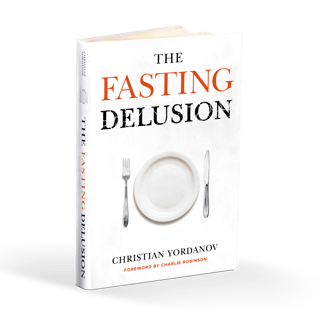
Speaker: because I talk to so many people about these things but I think I've covered before the reason the research most of the scientific research on fasting and caloric restriction is bullshit is because first of all the feed the animals basically toxic glorified toxic toxic slop as I talk about in my book so this is by the way coming for a lot of this information is unpacked in my latest book how to actually live longer volume one
Speaker: about one fifth of the book is about why fasting is not good for longevity. So in there I talk about, I explain what these animals eat and they basically eat seed oils and grains, gluten, fish meal, just disgusting concoctions of crap made into pellets with synthetic vitamins, just really crappy minerals. So really, if you feed an animal that kind of garbage,
Speaker: And then you put them on a fasting protocol or intermittent fasting or caloric restriction. Well, they're eating less poison. So of course they're going to have better outcomes, especially because often the control group are allowed to eat as much as they want. They get fat that causes metabolic problems to develop. And of course they will do less well than the animals that eat less of this poison garbage.
Speaker: So i highly recommend you get the book i talk about you know low carb diets why they're not good for longevity. Fasting and intermittent fasting why it's all good for longevity and a bunch of other stuff how to you know how to actually.
Speaker: As I explained in the book, it's not that fasting doesn't have benefits, it's that we can get those benefits without starving ourselves. And here's kind of the basic gist of it, right? If the benefits of the fasting were because of weight loss that occurred during the fasting,
Speaker: Well, there are healthier ways to lose fat or excess weight than starving ourselves. You know, just improve the diet for one, move more, walk more, reduce stress. There's like a dozen different things we can do that would be a hell of a lot less stressful than fasting.
Speaker: because don't forget when you fast, you're losing 25 to 30 % lean tissue, muscle, bone, organs, parts of the brain even can be broken down, skin, joints. So that's precious. That's precious because as you know, muscle is hard to gain, easy to lose. And when you are done with the fast,
Speaker: especially muscle, but all that lean tissue that's metabolically active that you've lost.
Speaker: Now your entire metabolic rate is lowered, not just because of that, but because your thyroid hormones have been lowered by the body as a protective mechanism because it doesn't know when it will have food again. So it lowers the metabolic rate to preserve you for as long as possible using the reserves you have. So now if you don't reduce your caloric intake after the end of the fast,
Speaker: you will gain fat. And by the way, this is the case with intermittent fasting as well. I'll explain what one study found. So yeah, this is another area like the keto diet where researchers, or I suppose mainstream media that takes these studies or whatever, they conflate the benefits of
Speaker: they conflate the benefits derived from the intervention with the intervention itself. So with fasting, if you lose a ton of weight and your diabetes is reversed and your metabolic syndrome goes away and your insulin resistance is improved and so on,
Speaker: and your blood pressure improves. Well, was it the fasting that did it? Was it the starvation? Or was it that you lost 30 kilograms or 70 pounds? It's the same story with the keto diet as I explained in a previous episode. So we cannot conflate the benefits of the intervention with the intervention itself necessarily.
Speaker: And I guess the way I could sort of frame this one is, let's say you have a person with all those things, you know, metabolic syndrome, diabetes, high blood pressure, et cetera, et cetera, insulin resistance. If we could do three different things, we could get them to
Speaker: fast and lose the weight, we could get them on exercise regime to lose the weight, or we could do clean diet. And I suppose we could also do a third or a fourth intervention where it's clean diet, stress reduction, the full program.
Speaker: Clean diet, stress reduction, detoxification, protocols, movement, exercise, walking, all the stuff. And let's say in all cases, they lost a bunch of weight. Well, in all cases, the diabetes, insulin resistance, metabolic syndrome,
Speaker: Blood pressure will improve, right? But some of these interventions would have been a hell of a lot more stressful and fasting would have been probably the most stressful, maybe in the short term.
Speaker: Sure, it's a short -term stress, but then after it, you're depleted, your metabolic rate is lowered, your thyroid hormone is lowered, your androgens are lowered, various other stress hormones have been highly elevated. So maybe that person will recover and
Speaker: one year down the line, they will be just as healthy as these other people. But you can see that there's less stressful ways to get the same outcome. So that's kind of where I'm trying to get at. If weight loss is the benefit of the intervention, let's figure out how to do the weight loss in a much
Speaker: less stressful way so that's one one way we can replicate the benefits of fasting if that those benefits were weight loss we can just do it do it right do the weight loss right without fat diets starving yourself crazy exercise you know fat burners stimulants on
Speaker: This is again from the book, so if this topic interests you, if you've been fasting before, it may change your mind, or it may prompt you to reconsider or reduce how often you do it. Because if you do it a couple of times here and there a year, or if you do a bit of intermittent fasting,
Speaker: once a week, it's not such a big deal. It's when we do these things chronically that they can start becoming highly stressful to the body and detrimental.
Speaker: So if the benefit of fasting was the break the person had from their processed and highly inflammatory diet, that means we can replicate the benefits largely by removing the junk and replacing it with real organic whole foods. So you take a person off the street eating the standard American diet and you put them in the study and then you have them fast for eight days.
Speaker: Yeah, they're going to get a lot of benefits because they stopped eating, you know, 50, 60, 70 grams of seed oils every day and glyphosate and pesticides and crap. So yeah, they will get a lot of benefits. But what if we took that person or we took that group of people and half of them did the fast and half of them, we just put on a really good diet, like grass -fed steak, organic butter.
Speaker: and organic fruit and honey and orange juice, freshly pressed. Well, at the end of that intervention, let's say eight to 10 days, if we measure the stress hormones, the group that ate clean is going to have less stress hormones. They're going to have better testosterone and androgen profiles. The thyroid hormones are going to look a lot better because we know that fasting down regulates all of those things. Thyroid hormone goes down to preserve
Speaker: basically to help you survive longer. Testosterone goes down and you know DHEA and the androgens in general go down. Squirtazole goes up. Adrenaline goes up. All the stress hormones really go up. Serotonin goes up. So
Speaker: You can see that you can have a break from your really inflammatory foods and diet that isn't starving yourself. Oh my God, it's what a concept, right? In today's world, what a concept, just eat really clean.
Speaker: Who'd have thunk it, right? If the benefits of fasting were due to the lowered inflammation and dampened immune response caused by a gastrointestinal imbalance, we have ways to address gut issues without starving our bodies of the much needed nutrients and energy they required to heal. So some people heal from severe autoimmune conditions and
Speaker: various gastrointestinal complaints with fasting. And what I posit, and I discuss some of these strategies about improving gut function in the book, because it's a big part of staying healthy, of course, gut function. And one of my biggest points of focus in my research and clinical work
Speaker: So the point there is, yes, when you stop eating, the gut, if what you were eating, goes back to the previous point, of course, if what you were eating was inflammatory, activating the immune system, let's say you were highly reactive to a bunch of foods you were eating on a constant basis, well, stopping all food will give your immune system a break, less inflammation will allow the gut to heal.
Speaker: Where will it get the nutrients and the energy to do all that healing? It will have to break down other parts of itself and shuttle those, let's say, zinc and various minerals and vitamins and glucose, etc. It will have to rob Peter to pay Paul.
Speaker: So we have better ways to do it. And this is what I do with my clients. So we can check for, for example, for food sensitivities. We can check for pathogenic organisms. So we can remove the inflammatory foods, all the fibers, the starches.
Speaker: A lot of these plant foods that are highly inflammatory for many people, nuts, seeds, grains. So we can, again, clean up the diet. We can bind toxins with activated charcoal or other binders. We can use gentle gut cleansing protocols. We can use probiotics. So there's ways to improve these gut and autoimmune and immune system dysregulation type
Speaker: issues without starving the body of the nutrients that it requires to heal. Think about it. If you're stuck in your apartment, you can't go anywhere. You only have to use what you have inside. That's like an analogy for fasting. There's something like a rock breaks your window or your chunk of your wall is broken by a cannon ball that someone shot at you because you know, you made some enemies back in the day.
Speaker: Well, you're going to have to patch that up because winter is coming and you're going to have snow and sleet and rain and whatever and all your heat will escape. So what do you do? Well, you have to maybe break off a cabinet door from the kitchen or a big door from the living room or something to patch up that area of injury to your apartment.
Speaker: While you fixed that problem, you now, you had to break something down in your apartment to resolve that issue. That is an analogy for fasting. Now think about it this way. If you're reacting to a lot of foods and a lot of inflammation and immune responses and so on, you could do really clean eating
Speaker: So you continue adding nutrients without stimulating because it's, let me just put it this way. It's a very end stage sort of disease and dysfunction if you're reacting
Speaker: immunologically to meat, for example, to very basic things like beef. The person has to be in a very advanced state of degeneration. So generally, there's foods that you can continue eating, even though you have a bunch of different, let's say, immune responses to other foods, be they
Speaker: IgG or other other immunological mechanisms. So you don't have to remove all of the foods. It's just about figuring out what are what are either the specific foods we can do that with certain tests or
Speaker: We know generally what are the most reactive foods and those are the nuts, seeds, grains, plant foods, generally vegetables, right? So remove those. A lot of people just automatically feel better. You just remove those. So there's a, my point here is without, sorry, I know you probably know if you listen to me that brevity is not my strong point.
Speaker: But my point here is all of these amazing magical benefits from fasting that we are getting purportedly from fasting can be replicated with other means. And I explained some of those in the book and I've already explained them now, right? Just in general, there's more. For example, there's another one. For example, when you eat against starches and fermentable fibers, that causes the production of
Speaker: what is known as lipopolysaccharide, LPS, or endotoxin. And this endotoxin is a part of, it's a bacterial cell wall fragment. So as they ferment and eat these fibered starches, resistant starches, and so on, which are purportedly very healthy, not really,
Speaker: especially if you have an overgrowth of these specific endotoxin producing bacteria, which many of us actually do, because they live in all of our gut, just some people have more of an overgrowth, other people have manageable numbers of them.
Speaker: They're kind of part of the commensal microbiota. They're not considered beneficial. They're considered potential dysbiotic or inflammatory triggers or autoimmune triggers if the ecology of the gut gets out of balance.
Speaker: Let's say you're eating a bunch of resistant starch and green bananas and cold potatoes because somebody told you, oh, you got to feed the gut microbes and stuff like that, but you have an overgrowth of these guys, these endotoxin producing bacteria. Now you're going to get a lot of endotoxin production and endotoxin production means it can, it can contribute to leaky gut. It can get into the bloodstream and once in the bloodstream,
Speaker: Certain cells have endotoxin receptors and when those endotoxin particles activate those receptors, a very strong inflammatory cascade is initiated in the body. And I'll talk about this in the book so you can read more about that. But these endotoxin are implicated in a lot of diseases, atherosclerosis, depression. Let me even see if I can quickly get it here.
Speaker: Here's a quote from the book.
Speaker: independently predicted myocardial infarction stroke and cardiovascular death during a follow -up of about three years. Another quote from a study in the book. In healthy older individuals, higher levels of the lipopolysaccharide binding protein were associated with higher inflammation and worse physical function. So these endotoxin particles have been implicated in so many diseases, right?
Speaker: They're high in Alzheimer's, Jesus. Non -alcoholic fatty liver disease, diabetes, they're high in obesity, insulin resistance, cardiovascular and neurodegenerative disease. They've even been found in human atherosclerotic plaque, right? So some researchers think that they could be implicated in atherosclerosis and heart disease in general.
Speaker: This is serious stuff, right? And all of us have these bacteria. I should do a whole episode on all the stuff, but when you stop eating, let's say when you start fasting and you stop eating all these starches, you have less endotoxin getting produced. And that will mean less of this inflammatory response. So again, we can replicate that benefit by removing those fibers and starches, which are indigestible, right?
Speaker: So that's some of the stuff I wanted to talk a little bit about intermittent fasting. But I think the most important thing to understand here is what is the physiological response to stopping food? So when you understand that, when you understand how your body continues to survive, how you continue to function without food or fuel coming in,
Speaker: once you understand the mechanisms behind it very basically you'll be like well that doesn't make a lot of sense in terms of me increasing my longevity I don't think I want to engage in that too often it looks like it looks like that is a survival response that is very nifty and wonderful to help me survive but if
Speaker: used all the time or chronically, it will cause me to degenerate faster. And here it is. Let me just briefly sort of give you an overview. You stop eating. You have your last meal. You've just had your last meal.
Speaker: The next couple of hours, it's kind of that anabolic period. You're building proteins, you're storing glycogen in the liver, which is the storage form of glucose. You're synthesizing proteins, storing fat, and just all this anabolic stuff. Now, when your stomach sort of gets emptied, when you've kind of assimilated that food, certain hormones start to gradually increase. So you have your ghrelin,
Speaker: you have your glucagon
Speaker: So these start to signal, basically they can signal hunger, but they also signal to the liver to start releasing its glycogen. So it starts drip feeding the body some glucose. And a lot of that glucose is used to keep the brain alive. It needs some few grams an hour, which is, you know, quite a substantial amount. Like that's 120 grams over 24 hours.
Speaker: you need your red blood cells, they need about 30 grams a day. So this glucose starts coming from the liver. The liver only holds about 100 grams of glycogen. So as that glycogen starts getting depleted over the next few hours,
Speaker: stress hormones start going up. So glucagon has been increasing, cortisol starts gradually rising, adrenaline. The deeper you get into your fast, the more cortisol and
Speaker: the other stress hormones like adrenaline, growth hormone start going up and they go up and the reason they're going up is because they stimulate tissue to be broken down, they're catabolic. So when you think of stress, think catabolic, so breaking down the body. So the cortisol signals fat cells to release their fatty acids, which adrenaline also does, but it also signals
Speaker: lean cells that are in lean tissue to break down, especially muscle. So muscle gets broken down, bone starts to get broken down because there's a lot bone is like a lot of bone is protein, you know, it's hard. That matrix is hard of the bone, but a lot of it is protein. I think something like about 40, 40 % of bone is collagen, which is protein amino acids. And
Speaker: which means there's a lot of amino acids that can be broken down from the bone to be sent to the liver to create glucose to keep you alive. Now, it's a bit of a misnomer that once you reach ketosis, you're going to, everything is going to be dandy. It's not really because you were still going, ketosis will account for some 60, 70 % of the energy that you create.
Speaker: that you utilize. So glucose is still going to be created. Let's say after day three, you enter ketosis, you need to create less glucose then. So the some, some pressure is taken off the liver, sure. But you continue to break, break yourself down over the fast, which is why like, you know, let me just find the, the study here. So
Speaker: So one study, the men, I think it was men that did it, thank God, because women even more so should not fast.
Speaker: So the men did a 10 day fast. Keep in mind they were getting about 200 to 250 kilo calories of nutrition. So they were getting some honey and vegetable broth and a glass of organic juice every day. So that spared a lot of tissue because 250 calories of
Speaker: that's something like 60 grams of glucose, which if you were to break your body down, let's say if you were to break muscle down, you would have to break a hundred grams of muscle to create that much glucose. So that that did spare potentially a kilogram of lean mass during the duration of this 10 day fasting study. So anyway, the
Speaker: The, so these guys in 10 days, they lost on this or average six kilograms of weight. 40 of that was estimated to be fat mass, 60 % of the other weight. So, so, okay. So 40 % fat mass was lost of the six kilograms. Excuse me.
Speaker: The other 60 % of that was 58 % of the other 60 % was water and glycogen that was stored in the liver and the muscles. And 42 % was what they call metabolic active lean tissue. So 42 % of 60 % of six kilograms, stay with me here, is two and a half kilograms.
Speaker: 42 % of 60 % of six kilograms. I'm sorry, even I'm confused. So that was 2 .5 kilograms of liver, kidney, heart, intestine, and muscle tissue.
Speaker: And potentially bone, I would doubt that no bone was broken down during these 10 days. And what was the reason that this lean mass was lost for? What was it sacrificed for? Primarily to create glucose so these people could freaking survive. So their brain wouldn't die. Okay. So that's.
Speaker: a lot. Two and a half kilograms out of six kilograms was lean mass loss and it's well known that, like I think I've mentioned it before, 25 to 30 percent of the weight loss during fasting and many other weight loss like dieting interventions
Speaker: 25 to 30 percent of that is lean mass. So we really have to, if we're after weight loss specifically from an intervention, we really have to be a lot smarter how we're doing it. So we don't lose the lean mass because especially muscle, if we lose a bunch of muscle, it's lowering our metabolic rate. It's setting us up for, in terms of longevity now, it's setting us up for
Speaker: for trouble in the future because if you look into it, one of the biggest
Speaker: the sort of risks as you get older is falls, fractures, broken bones. So sarcopenia, loss of muscle mass and strength is a real big issue as you get older. So as we get older, we really want to preserve muscle mass as much as possible, not give our body real serious opportunities to lose it. So especially for women,
Speaker: because they have less anabolic, androgenic hormones, hormone levels, especially for women. We don't want to mess with it, especially if they're near a childbearing age and they want to have kids or they're still menstruating and whatever, especially as you get older, especially if you have a health condition, even if it's a minor health condition, especially if you're under a lot of stress. In all of these instances, fasting is becoming a huge, big added stressor.
Speaker: In this particular study, the men's basal metabolic rate dropped by 12 % in 10 days. This is just not okay. And there's another study I talk about in the book. Listen to this now. So this was an eight days of water only fasting.
Speaker: What happened here is after these eight days, the men's mean testosterone level
Speaker: dropped 35%. Free testosterone decreased by 27%. DHA, dehydroepiendrosterone dropped by 22%. And I don't have it in the book, but I remember their sex hormone binding globulin went up quite significantly. So that is not really a good result. I would not want to engage in things that lower my testosterone. And people are always like,
Speaker: Yeah, but then it goes up. After that, your body rebuilds and it goes up. And, you know, where's the evidence for that, guys? We actually seen follow up data on, I don't think many of these researchers want to do follow up blood work on their participants because how, what can you expect if you lower a person's metabolic rate, if they lose lean muscle tissue, if they're
Speaker: protective hormones go down. What can you expect in three and six months, especially if they just go back to the regular, potentially unhealthy lifestyle? I don't expect much benefit. In this instance, in this particular study, the men's testicles shrunk by, so the men's total testicular volume decreased by 17%. And listen to this.
Speaker: These researchers concluded that these results indicate that eight days of water -only fasting improved lower urinary tract functions without negative health effects. So their protective hormones went down, their freaking balls shrunk,
Speaker: And they had the goal to conclude that systematic use of caloric restriction or the use of intermittent fasting or continuous fasting of short duration should be considered as a method of prophylaxis or health therapy.
Speaker: Where are they getting this? This is completely plucked out of the air. And I joke in the book, who the hell was running the study? Dr. Mengele from the population department, because this is a very negative health effect. Your testosterone is a protective hormone. It has opposing effects to
Speaker: cortisol, for example. So it's a protective hormone. It's not just what makes men men, because women have actually their testosterone levels are much higher than their estrogen levels, even though estrogen is a female hormone, quote unquote. So these are, DHEA, these are protective hormones.
Speaker: We do not want to lower them. We should be thinking of ways, how do we increase these hormones as we get older? Because they tend to get lower as we age and the stress hormones either stay the same or go up. So this is the complete opposite of a longevity strategy is what I'm trying to get to, right?
Speaker: And again, guys, the book, it will not take you very long to read. I'm coming up with short books so that people can read them quickly.
Speaker: You know, you could read this book in a week, just with your morning coffee and on the toilet and, you know, whatever, waiting for something to, whatever your kettle to boil. So I go in quite a lot more detail, but in terms of intermittent fasting, let me just, uh, let me just tell you what the study found. So.
Speaker: A study showed that it takes as little as two weeks of intermittent fasting to lower resting energy expenditure, REE. So that's in lean healthy people as well, right? So a lowered resting energy expenditure needs a lower metabolic rate. We know that's bad.
Speaker: It means your body is shutting down something. Something got down regulated, some function that it was previously, some cells were doing a job and that either got shut down or down regulated. So less energy overall is being expended. And this is interesting.
Speaker: The study authors of this particular study, the citation is in the book if you want to read the whole thing, the study authors concluded the decrease in resting energy expenditure after intermittent fasting indicates the possibility of an increase in weight during intermittent fasting when caloric intake is not adjusted. What does that mean? It means that
Speaker: because the people's resting energy expenditure went down, if they had kept the same calories they were eating, let's say they could do that, the exact same calories that they were before, it means that in
Speaker: in a year's time that they would have gained about 21 ,500 calories, which is about three kilograms of body fat, because they estimated the resting energy expenditure decrease at about 59 calories per day. So 59 calories over a year, that's about three kilograms of fat. So what they're saying is,
Speaker: If you start intermittent fasting and you don't adjust down your caloric intake, you will gain fat over if you continue doing that. Like what the hell are we doing intermittent fasting for? I thought we're doing it to lose weight. Here's another study. This one is in a prominent paper, JAMA Internal Medicine, published in 2020.
Speaker: The authors stated time restricted eating in the absence of other interventions is not more effective in weight loss than eating throughout the day. So again, if you're doing intermittent fasting to lose weight,
Speaker: The science shows that you need to also reduce the calories, otherwise it's not more effective. So here's the thing. The reason intermittent fasting works for so many people is because it is damn hard to shove three full meals and a snack or two down our gullet in an eight hour period. It's just damn hard.
Speaker: You could do it at the start, but then you're like, oh, this sucks. You just don't want to deal with that. So then you eat less. If you're given one hour to eat in a day, you cannot eat as much as if you're given 16 hours to eat. So the shorter your fasting window, it's likely that more
Speaker: most people will eat less. It's again what I was talking about with the ketogenic diet. The reason people lose weight on a ketogenic diet is because they're forced to eat more real foods, so steak, butter, vegetables, whatever.
Speaker: less garbage and the fat, the high fat content of the diet increases satiety. So you eat less. Okay. So this study, they also wrote, there was a significant difference in appendicular lean mass index between the two groups. And then they gave us the numbers. So the difference was minus 16 kilograms per meter squared confidence interval, 95%.
Speaker: So very vague. I think that was in the abstract. Yeah, that was in the abstract, which is what most people read. So very vague. But what does that mean? So in the actual study, they found a significant reduction in lean mass in the time -restricted eating group. So that group, the average weight loss
Speaker: was 1 .7 kilograms over however long the study was, I think it was. Jeez, I think it was eight weeks. Or six months, I can't remember. Damn it. Anyway, of this 1 .1 kilograms was lean mass, right? So 65 % of the weight lost was lean mass. Holy smokes.
Speaker: Remember what I said earlier, when you fast, 25 to 30 % of the weight you lose will be lean mass. These folks lost 65 % of weight was lean mass. And the researchers actually mentioned the following. The proportion of lean mass loss in this study, approximately 65%, far exceeds the normal range of 20 to 30%.
Speaker: In addition, there was a highly significant between group difference in appendicular lean mass. So lean mass in the limbs, so legs and arms. Appendicular lean mass is correlated with nutritional and physical status and reduced appendicular lean mass can lead to weakness, disability, and impaired quality of life.
Speaker: This serves as a caution for patient populations at risk for sarcopenia because TRE, time restricted eating, could exacerbate muscle loss. So the older, like I said, the older you are, the less
Speaker: You should be doing fasting, low carbine, caloric restriction, intermittent fasting, because again, all of these things, so amazing. Best things and sliced cheese. They're actually the, the reason they work is because they put a stress on the body. And when you put a stress on the body, it will lose weight because you know, if you remove fuel, it will have to break itself down and the end result is weight loss. But the mediator to which it happened is stress.
Speaker: Don't do it. Just don't do it. Read my book. I explain how to, how to, how to keep stress. As soon as you wake, wake up, how to reduce your stress hormones, how to top yourself up with some honey at night or maple syrup or whatever. So you have a more, your liver is topped up. So you have a longer period before the stress hormones kick in these little things.
Speaker: If you do them on a daily basis for decades, they will keep your stress hormones down and they accumulate to really sort of a lot of benefits. It's like if you're 5 % in a deficit, let's say some nutrient or like something is like one, 2 % suboptimal over decades, that's gonna accumulate to like serious problems. At the same time, if you optimize five, six, 10 different things,
Speaker: over time that's going to pay dividends. Not dividends as in accrual necessarily, but in slower degeneration, slower rate of aging, slower rate of muscle mass loss, and difficult to, sure difficult to quantify, but once you understand the mechanisms of physiology, it makes sense. So yes, I can't give you a double blind, placebo controlled,
Speaker: study to support some of these things but when you understand that just it becomes common sense and this is why I really had to write the book because it's there black on white you can read it reread it read it ten times if you have to until you understand what happens when I stop eating carbohydrates what happens when I stop eating for you know 18 hours or
Speaker: three days when you understand how your body responds to all of that, you can then make a decision. Do you want to do that once in a while, often or never? And I strongly believe if we explain these things to people,
Speaker: They're going to be like, well, that's just the whole thing. I don't why, why would I want to increase my stress hormones? Fasting increases your stress hormones. That is how you continue to function. It's okay when you're 25 or 30 because you have all this adaptive reserve because you haven't accrued this damage in the generation that older people have due to suboptimal lifestyle and entropy and just the ravages of aging that we all succumb to.
Speaker: So it's okay. So here's the problem. These things are great when we were young, like I started intermittent fasting, maybe I don't know, I was like 31 or two, I don't know, roughly there. And it was okay then I could deal with it and all that stuff. But, you know, let's say you're 20 and all these things are working really well for you or 25 and they're keeping you lean and all this exercise is keeping you jacked and lean and strong and ripped.
Speaker: you think that these things are beneficial so you keep doing them in your 30s mid 30s 40s maybe early 40s but they're not beneficial
Speaker: they were working well for you because you could handle all that stress. As you get older, all you're doing with this excessive exercise, excessive fasting or caloric restriction or restricting carbohydrates, you're just keeping your stress hormones high and they're degenerating you and aging you. You know what I mean? So this is what I am trying to kind of
Speaker: help spread the word that yes, fasting can have benefits, but we can get those benefits without starving ourselves of the nutrients and the fuel that our bodies need.
Speaker: on a constant basis because if they don't get it again they down regulate stuff they down regulate functions you know hair that that will be one of the first things to go in a very stressed individual sexual function
Speaker: good mood, all of these kind of higher functions, they're the first to go because fertility for women and for men actually. So these are the first things to go. So especially if you're an older person, especially have a chronic health problem that you want to get over, fasting, I don't think is the optimal strategy. That's all I'll say. Thanks for listening and I'll catch you on the next episode.