Become a Creator today!Start creating today - Share your story with the world!
Start for free
00:00:00
00:00:01

284 Mike Lawson | Indie/Hybrid Romcom Author

336 Plays1 month ago
What happens when a book "dies on submission"?
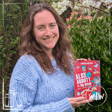
Indie romcom author Mike Lawson discusses some of the difficult realities of the publishing industry and how he channeled his 17-year cabin crew career into his queer rom-com Winging It. He explains why he split with his first agent and accidentally landed a new one. There's also a good chat about how Mike has navigated self-publishing with more confidence on his second time around.
Support the show on Patreon! 💖 And get extended episodes, ad-free and a week ahead of everyone else. 🙏
For audio listeners:
Listen to The Chosen Ones and Other Tropes, Jamie's other podcast with Melissa Welliver and Naomi Gibson! 📚
Follow on socials! 🥳
Recommended


















Transcript
Introduction to Mike Lawson and His Work
00:00:00
Speaker
Ooh, a spicy question. love it. Because the writing sort of everything, right? Like you can fix plot holes, but if the writer... So some readers love that and some readers are like, but I wanted more of this. So it's kind of, it's kind of a gamble.
00:00:14
Speaker
Hello and welcome back to the Right and Wrong podcast. On today's episode, I am joined by a self-published author looking to move into the hybrid space with his queer fiction. It's Mike Lawson. Hello. Hello. Thank you for having me.
00:00:27
Speaker
Thanks so much for coming on. um We always start these episodes with the latest publication. So let's start with your new book, Winging It, which is out right now.
00:00:39
Speaker
Tell us a little bit about it. Yeah, sure. So Winging It is male-male rom-com, and it's inspired by my 17-year career as cabin crew. So it literally takes you on board the aircraft and peeks behind the galley curtain into the lives of the cabin crew on board Tiny World Airlines. and It's all about Callum, and Callum has just had his heart broken,
00:01:04
Speaker
And he's spiralled into a pitfall of vodka and grinder hookups and Tinder hookups until until one day he's in New York on a night stop with work and things take a twisted and dark turn. and But come to the rescue is the airline's original dragon wagon, Ivy Walsh. She's the senior that no one wants to fly with, but she's got a bit of a soft spot for Callum and she gets him back home to Manchester safe and sound. And it's kind of the wake-up call that Callum needs.
00:01:36
Speaker
And then he swears off men for good, but he meets, unexpectedly, a tall, handsome stranger called Ollie, who ends up being the flight's engineer. And just as they're getting to know each other, Callum's ex, Liam, comes back and is not happy at all that Callum has moved on. So there's lots of twists and turns that happen from that point, and it all comes to a head on another night stop in Times Square. Um, but it's all, you know, it's all about chosen family and gaslighting in queer relationships.
00:02:11
Speaker
So it's a bit of a darker rom-com that you, then you might normally be, you know, you'd normally read, but it deals with authentic themes and it's definitely written authentically from the perspective ah of my career up in the sky.
Behind 'Winging It': Inspiration and Humor
00:02:25
Speaker
Okay. I mean,
00:02:27
Speaker
ah I know that obviously to some degree all books, even if they're fiction, are reflective of the author, but how much, how sort of autobiographical is this in terms of like, are there things that happen on the flights which like you yeah yeah you actually experienced as ah working in Cabin Crew?
00:02:47
Speaker
Yeah, this is really funny actually because everyone, i still work in aviation. So everyone who's read it, who knows me within aviation has said, oh my God, I can't believe this happened to you. And it's not an autobiography at all. yeah It's inspired, but it's not completely true events. is's a couple of things that are in there that have happened to me on board, but they're the funnier side of things rather than than the darker side. And my CV in real life is like a graveyard of all the airlines that have gone bankrupt over the past 20 years. know I've worked for all the what we lovingly call Timpot Airlines, and airlines that you would never have even heard of, like Fly Globespan, Small Planet Airlines, Tora.
00:03:31
Speaker
And at Small Planet, our claim to fame was that Watch Dogs did two special episodes on us because of all of our delays. So that gives you kind of the insight to the sort of airline that I used to work for. And it's all the things like that that used to happen.
00:03:48
Speaker
And aviation has, you know, the job as cabin crew has changed so much since I started flying 22 years ago.
Aviation Industry Reflections
00:03:56
Speaker
And I think, you know, what the crew got up to is really what I got up to and the crew used to get up to in the late 90s, early noughties, because you'd never get away with it these days, and and rightly so.
00:04:08
Speaker
um But, you know, to give you some and an idea of what the crew used to get up to on board, I used to work for an airline called Flight Globespan, and they were a Scottish long haul airline flying out of Manchester, and the aircraft was so old.
00:04:23
Speaker
And that was definitely a feature in winging it. and And but when we used to serve the premium cabin, we used to serve alcohol from the big litre bottles. It wasn't the miniatures that you get on board now.
00:04:36
Speaker
But because of the duty-free and the tax laws at the time, before you landed into your destination, even if you'd taken just one little bit of vodka or one little bit of Jack Daniels out the bottle, you had to pour the whole bottle away down the drain, which is criminal. Yeah. Yeah.
00:04:54
Speaker
So the crew obviously used to rescue the alcohol pour, you know, the vodka into water bottles or the Jack Daniels into Coke bottles. And we'd have what's called bus juice on the way to the hotel, or we'd have a room party you later on. And it's kind of that era of flying that I'm celebrating, but in a modern day context, if you like.
00:05:15
Speaker
Okay, okay. it's what I can see how this would be a fun setting to put a story and have like lots of characters doing wild things and clashing with one one another. Yeah, absolutely. And and I think...
00:05:28
Speaker
It's sat on an airline. Anyone who's cabbing through will relate to this because it's it's authentically told. And when I watch any TV show, which is to do with aviation, I'm constantly sat on the sofa going, well, that wouldn't happen. And that wouldn't happen. And they've taken off on a Boeing and now it's an Airbus and my partner hates it. if ah You know that ITV show, Red Eye? I'm not allowed to watch that with with my partner because he's going, we just shut up.
00:05:54
Speaker
yeah So it's a real... and look at what goes on during cabin crew training and life on board the aircraft at 40,000 feet when there's no escape in this metal tube from these other passengers and sometimes your own
Self-Publishing Journey: From 'Biscuits with Blanche' to 'Winging It'
00:06:10
Speaker
crew. And and that's where the drama comes and some of the funny and the the funniness comes through.
00:06:17
Speaker
Okay. do you ever get the kind of reverse of that where, cause I remember reading Yellow Face, Rebecca Kwong's book about publishing. and And I remember speaking to people who had read it, who, who weren't familiar with publishing, didn't know how things, and they were like, oh, this, this can't be real. Like none of this is, this is so like outside. And i was like, no, a lot of this is like pretty close to reality. do you ever get that with people reading it and bere like, this can't be, this can't be real.
00:06:43
Speaker
Absolutely. and And it was funny, ah I was doing a talk last night at the at Manchester Airport, the Airport Society, and I was saying anyone who's crew now who's just starting out in their career would not believe that we used to get up to all of this or that this used to on because it's so regulated now and rightly so as well. and But I have had people reading go, but that's definitely not happened. And was like, it did.
00:07:08
Speaker
it absolutely did. know, the cabin crew these days would be fired and for so much as sniffing a Bringle without paying for it. and But back in the day, we just used to think miniatures were a perk of the job. and I mean, I'll never, ever get another job as cabin crew ever again after this book, but it's a story worth telling.
00:07:28
Speaker
Okay. Wow. Sounds great. um the But this is your second novel, right? So your first novel came out back in 2022, Biscuits with Blanche.
00:07:38
Speaker
Yeah, it's completely different to to Biscuits with Blanche. So Biscuits with Blanche political satire and it was told in agony um letters. And I started writing it at the novel studio at London City Uni.
00:07:54
Speaker
and And, you know, it's during COVID, I was writing it and i thought, oh my God, this is this is the best thing ever ah with the arrogance ah of, you know, not having any experience within the industry. And yeah I self-published it it. got rejected by all the agents it was sent to and rightly so because It isn't very good. And I've taken it off sale. So, you know, you can't get your hands on it. and But it was a massive learning curve. And I'm glad that I did it because I learned so much from doing it.
00:08:26
Speaker
um And then I started and I met some amazing people on that and course who are really close friends today. One of those people is and Janice Oko. She's just won a BAFTA for and Emerging Talent for Best Writer. And we started writing together and I started writing Winging It.
00:08:46
Speaker
And I sent her a couple of chapters and she and she really liked it. And she told me about the novelry, and which was just opening for a scholarship. And I applied and didn't think anything of it because I'd had so many rejections. And and I got the scholarship ah to to finish the the novel with them. So that's how Winging It really started to be born, is is with the novelry. And I had coaching sessions with an amazing coach there and then an editing session.
00:09:14
Speaker
So i was really lucky that I got to craft. that winging it with the professionals. Okay. Tell us about novelry then. What's the, what what did you do there? What did they, what did they kind of teach you? How did that help beyond like what you already had going?
00:09:29
Speaker
So the Novelry, they have lots of different online courses, and but they also have interactive coaching sessions. So I was lucky that I had Libby Page, who's a bestseller and of the Lido and lots of other books. And it was just being able to brainstorm your work, but also kind of follow it follow a structured path to craft that book and to make sure that you're just hitting all the right notes that a story should take in terms of plot. and its development and the characterization. Okay.
00:10:01
Speaker
And then i was really lucky once, again, once I'd done that, that they offered me and a scholarship on their editing course. So I able to edit it with the novelry as well. And at the end of it, the novelry sometimes offers to send your book out on submission on your behalf to agents. And they offered that to me. But at that time, I'd already got an agent. and It was my first agent. And we worked together...
00:10:27
Speaker
making ring it even better than it was. And we sent it out on submission to publishers and it it died on submission. and And I don't think people talk about dying on submission enough.
00:10:39
Speaker
I think there's some caught sort of shame to it or, and you know, it's such a hidden subject. And actually it happens so often and all the time. Yes. I guess more books die on submission than find ah find a home with a publisher.
00:10:54
Speaker
Absolutely. and And I think being open about, I've been really open on my social media about Dino submission. And i sought for a couple of months. I really, really sought because I thought, oh, this is it because you you work so hard crafting the book, perfecting your pitch to the agent and then making it better. And and I thought, oh, my God, ah you know, I felt all that embarrassment that it didn't get picked up.
00:11:21
Speaker
And kind of then just lived on my laptop for a couple of years. I didn't do anything with it. And I wrote another book, which didn't land quite right with the agent. But by that time, I'd already started to think,
00:11:36
Speaker
what does success look like for me? Do I really need a traditional publisher and or can I self-publish? And I decided to self-publish and left my agent. and And it was one of those moments where you think, oh, am I doing the right thing? I'm taking a huge step back. You know, I've been working so hard to get an agent.
00:11:54
Speaker
and and And I left, absolutely no animosity at all. I just decided, actually, I'm going to self-publish. Yeah. By this point, i' then already started to write, um, the followup to winging it i about the followup of the followup really called the coast is queer. Um, which is set in Gran Canaria in a hotel. I mean, when they, people say, right, what, you know, i really do take that at as far as, as you can. And, um,
00:12:22
Speaker
one ah One of my friends had said um that I'd met up at Novery, said, Green in heat and Heaton have opened the Green Door Project. why don't you will Why don't you try it?
00:12:33
Speaker
And I tried so many competitions and hadn't really got anywhere. I was thinking, oh, this is a bit of waste of time. And then for some reason, just thought, oh, let's do it. And I sent off the first three chapters. That's all i'd written at that point. And from that point, a couple of weeks later, i got a phone call, and set up a Teams call, and I was offered representation there and then off the strength of those three chapters off.
00:12:59
Speaker
the next book, which was just unbelievable because I thought I'm never going to get an agent again. And within a month and a half of leading my previous agent, I got a new one. and So I'm now with Mia Dakin at Green and Heaton, who's absolutely fantastic and is ah a real champion and of my work. And When I was discussing, publishing, winging it, self-publishing, winging it with me, as she you know as I say, a huge champion and really pushed me forward really.
00:13:31
Speaker
So whilst One Butts currently out on submission, I've self-published this
Navigating the Literary World: Agents and Career Planning
00:13:37
Speaker
book. Okay. Right. And that's, what's interesting to me there is that Mia is absolutely happy for you to self-publish it. And she's like encouraging you to go and do that aside from what you're kind of working on with her, which will go on out to editors and things like that.
00:13:51
Speaker
Yeah, absolutely. And we sat down and we discussed career options really, which for me was great. I didn't realize that an agent could actually sit down and say, you know, what sort of writing do you want to do? Have you considered and writing IP work or you know which book do you want to write next? Have you thought about changing genre? And it's just a very open discussion about, okay, where can we go? How can we actually build and sustain a long-term writing career? And i think that's what anyone wants in an agent, really. And it's been a perfect partnership so far. and
00:14:29
Speaker
And I really like the fact that Mia and is very direct and that's how I am. And I like feedback, which is very much like, well, you should really change this or, you know, this works brilliantly. And it's that two-pronged, a touch, I guess, is, as you know, you get the good and the direct feedback.
00:14:47
Speaker
I hope that makes sense. Yeah, I get that. It's it's interesting that you're, that's what I expect most agents to do upon your like first meeting is for them, that first meeting where they sit down after they read the full manuscript and they they're sort of, it's it's the offer of representation discussion, either a phone call or in person.
00:15:06
Speaker
And I think my understanding is that you would expect them to sit down and be like, so what is it that you're looking for in this career? i mean, first of all, because I've spoken to enough agents to know that they want to know if you're the kind of person that's like, I just have this one book. This is going to be my magnum opus. I don't intend on writing anything else. But they I feel like it's, yeah, they should have, your first agent should have kind of mapped that out with you and been like, what what are we looking at for this career? What do you want to write?
00:15:30
Speaker
Where do you want to go? And, you know, they probably did, you know, it and it's not to talk, you know, bad about my first agent at all. yeah I think for me, in my head, because, you know, I still didn't have much experience in in the industry, i was thinking of it as a project by project case, rather than this could be actually a long-term career where you could have publishers who were buying multiple books and,
00:15:56
Speaker
but I knew so much more than what I did five years ago or or even a couple of years ago. and You know, the writing community is absolutely amazing. What's out there on Instagram and on Blue Sky and TikTok and everyone trying to support each other. And when I first released Blanch, I didn't have any idea what I was doing and I didn't know that this community really existed. and And as you start to immerse yourself in it and you start to be part of these writing groups or
00:16:30
Speaker
the Society of Authors group in Manchester that they have that meets up once a month here, you just learn so much more about the industry. And even, you know, I've listened to your podcast since the very beginning. I'm a huge fan. And listening to other people's stories and gaining their experience just through listening, and is it really helps.
00:16:51
Speaker
Yeah. I mean, yeah, for sure. Cause also this is such a weird industry and I feel like no two people have the same journey and everyone goes through. It's not like there's like a set straight line of hurdles you jump through. Everyone sort of has to veer off the path and find their own path and wind back around and then get back on somewhere.
00:17:07
Speaker
Do you know what? That is so true. and you know ah I've got a friend who went out on submission with publishers on the Friday and she had a deal by the Monday, and which you know we can all only dream of that.
00:17:20
Speaker
And then I've got another friend who's got a ah deal we could only ever dream ah of in America. Yeah. But those are the the glamorous stories. And I think actually we don't usually hear of the stories where where your book was on submission for a year and then it got bought. And, you know, there's so many more stories apart from the ones that get published in the bookseller where, you know, it's gone to auction and things. And and as you rightly say, it's a winding road, I think, for most people.
00:17:48
Speaker
Yeah, it's it's rarely a straight line. For some people, you know, there's the lucky few who just get the straight line and they're like so I submitted, I got an agent, the agent I submitted, know, bang, bang, bang. But for most people, it's like, well, I had to go, you know, I had to go a to B via Z to get just to the to the point where I have the agent and then found the book deal. Yeah. and And do you know what? Good for them and great for them, for the people who've who've had and that straight line, if you like.
00:18:14
Speaker
But we probably don't know that they've been trying for years with other agents or they've been writing for years. And, you know, so... Everyone, i think, you know, i can't remember who said the only difference between a professional writer and an amateur writer is the professionals just kept going. Right. And I think that's true, is that professionals or what you would consider a professional are just the writers who didn't give up, who kept on trying despite all the rejections.
Literary Inspirations and Recommendations
00:18:41
Speaker
Yeah, yeah, yeah. Cause it's, I have so many authors on who, who they're like, you know, they have a huge breakout debut or something and and they'll say, yeah, but I was working at this for years and it like, it takes years to become an overnight success.
00:18:54
Speaker
yeah Because that's that's all that people, you know if you're looking at the bookseller and things like that, all you're reading is the big splashy news of like, oh, book preempted, like debut author, blah, blah, blah. And then I'll speak to someone like that and they'll be like, yeah, and I was querying for 10 years before this and I had like five different novels die on submission and then finally we we got here. Yeah, um and then all of a sudden that overnight success was actually taught them 15 years, you know, to get there. Yeah, there was just no spotlight on them when when they were kind of doing the hard graft and that. um
00:19:27
Speaker
We are at the point where I have to ask you. So, Mike, if you were snowed in at a cozy woodland cabin in the middle of nowhere, what book would you hope to have with you? Okay, this is a really easy answer for me. you would have to be Cecilia Ahern's Where Rainbows End. And I read this book for the first time when i was in, I used to live in Cyprus when I was 18.
00:19:53
Speaker
I was one of those really annoying holiday reps, the entertainment reps who used to try and get you to take part in all the activities, but and someone had left this book behind in the hotel and I picked it up and I read it and ah I read it, you know, in one sitting and it was the first book that I ever felt drawn into so quickly and made me laugh, made me cry.
00:20:16
Speaker
and it's a story really about fate. They made it into a film, and Love Rosie, which, Oh, this is Love Rosie. It's never as good as the book, is it? I mean, the film was pretty dire, and but the book I found was amazing. The book was told in letters and from between Rosie and I can't remember the name of the the other character, the protagonist. And it's the story of their life from...
00:20:43
Speaker
meeting each other in at infant school all the way up to retirement and the twists and the turns of life. And it's all about fate. And it's the first book where I read it and really connected to it. And I thought, wow, what a skill to create such an emotion in these pages. And that's the book that made me want to write.
00:21:01
Speaker
And when I got home from Cyprus, I went and and applied for Salford University to study English literature because I read this book. and So I read that book, I read it, still read it every couple of years.
00:21:16
Speaker
And for me, it still has, you know, it could have been written yesterday. It's still so relevant. It's still got all the feelings. and So yeah, that would be my book that would take with me.
00:21:27
Speaker
Okay, that's great. Alex, I think is the name of the male character. That's Yeah, I was going to say Sam Claflin, but that's not his name. Yeah.
00:21:37
Speaker
Okay, cool. That's a great choice. um i she She wrote PS I Love You as well, right? Yes. Yes, she did And she's still you know releasing books every year. picked up her last one last week in the supermarket. and So yeah she must have so many books by now.
00:21:55
Speaker
Yeah. And you that they're obviously selling well if she's still stocking supermarkets with them. so ah Paper Heart was her most recent one, I believe. That sounds right. I think that's the one I possibly could have picked up last week.
00:22:11
Speaker
Okay, great. Amazing. That's ah's great. And I love that that's the book that made you want to be a writer and it gave you the confidence to be like, I can do this. I could write too. This is something I could see myself doing. That's great.
00:22:22
Speaker
um Next up, we're going to pick up a bit more on the agent stuff, talk a bit about writing craft and then some self-publishing bits. That will all be in the extended episode available on Patreon patreon.com forward slash write and rhyme. not going say otherwise I would I'd be stalling you know I'd be going away to research and it would just take me forever but I really kind of like the process that I have now of gathering all that information and then sitting down to write okay yeah yeah so just you have all of the car you know all of the characters in and out you have the setting locked down so that when you sit down to write you don't need to kind of map it out but you know everything well enough that it
00:22:58
Speaker
the story sort of flows of its own accord whilst you're writing. Yeah, exactly that. Okay. I know people write in lots of different ways. That's just what works for me. Yeah. I mean, that sounds great. And it's taken you, that it's just a natural progression of your writing that you've found this kind of spot that, like you say, works best for you. yeah um That brings us to the end of the episode. Thank you so much, Mike, for coming on and chatting with me and telling us all about your your your latest book, Winging It, which is out right now in all the usual places. um And as well as your kind of writing journey and your publishing journey, it's been really, really fun um chatting with you.
00:23:35
Speaker
Thank you for having me. Big fan. I'll be listening for for a long time to come as well. um And for anyone listening, if you want to keep up with what Mike is doing, you can find him on Facebook at Mike Lawson Writes, on Instagram and TikTok at writermike85, or on his website, MikeLawsonWrites.co.uk.
00:23:54
Speaker
To support this podcast, like, follow and subscribe. Join the Patreon for ad-free extended episodes and check out my other podcast, The Chosen Ones and Other Tropes. Thanks again, Mike. And thanks to everyone listening. We will catch you on the next episode.