Transcript
Speaker: Ooh, a spicy question. love it. Because the writing is sort of everything, right? Like you can fix plot holes, but if the writer is bad. So some readers love that and some readers are like, but I wanted more of this. So it's kind of a gamble.
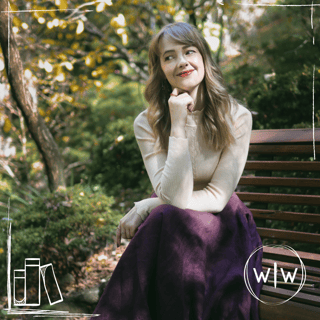
Speaker: Hello and welcome back to the Right and Wrong podcast. On today's episode, I am joined by an independent children's author, publisher and chartered librarian, winner of the Hachette Children's Novel Award in 2023 and shortlisted for the Selfies Book Awards 2026. It's Rachel Pattinson. Hello.
Speaker: so hello. It's happy to be here. Yes, no so great to have you on. Thank you so much for coming on. Let's start with um your debut middle grade mystery novel, Seven, Distracted distracted Detective.
Speaker: Tell us a little bit about the the the story. Yeah, so it's a contemporary mystery novel for nine to 12 year olds. and And the story opens when Seven, who's aged 13, and yeah, that does get confusing.
Speaker: He's bored in a maths class and looks out of the window and sees the school caretaker, Mr O'Reilly. And he's stumbling across the field, the school field, clutching at his chest. Clearly there's something wrong.
Speaker: and And he drops the school keys, the master keys to the school and doesn't come back for them. So after class, Seven goes and picks them up. And then Mr O'Reilly is reported as missing.
Speaker: So Seven decides to investigate. But I think and the world is quite you know distracting, particularly when you're maybe 13. And um Seven has more distractions than most people um because Seven has a parent with a late stage alcohol problem.
Speaker: So ah yeah, this this story is really about like, can a distracted detective solve a mystery? you know Can you solve a mystery when life is quite chaotic? Okay. And it sounds like you're, whilst this is for middle grade, you're not shying away from serious topics as with like alcohol problems and things like that.
Speaker: ah I mean, yeah, that was a, it's kind of a, I suppose it's an important storyline and that it's kind of almost a double A plot actually. Although it's, it's, you know, the title is, you know, distracted detective. It is a mystery novel, but that is a central storyline. Yeah.
Speaker: Okay. Right. Right. But this is, I would imagine being middle grade, this is, there's like, this is like funny and kind of whimsical and and then an adventure at, at its core. Yes. I mean, it's, it's meant to be entertaining. I hope it is. Um, and definitely like, um, you know, a good puzzle for, uh, children to solve.
Speaker: So, um you won Hachette Children's Novel Award with this in 2023. Yeah. yeah Am i right in thinking that this is not your first writing and that you've written a few other things before this?
Speaker: Yeah, this was, um ah so Seven was the first longer novel that I'd written. um so before Seven, I'd written um kind of chapter books, so books for six to nine year olds, I know about 12,000 words or so. So Seven was the first, I suppose, substantial novel I completed. um Yeah,
Speaker: at but I have written obviously the kind of longer format since as well. Since. Yeah. And your previous novels, well, I guess let's just start by saying you you ultimately did independently publish this. You self published this novels, this novel, did your, this novel and your, or your previous like chapter books and things, did you send them out to agents and and editors and and competitions?
Speaker: Yeah, so I think the first first chapter book I wrote was in my early 20s. And I um and at that point submitted it to three agents.
Speaker: I think at least two of them requested the full. um And then i got so then I got so despondent at the fact they didn't, you know, accept it and offer me representation that i completely, after submitting it to three, I thought, oh no.
Speaker: I need go in a draw now. So I did with, that yeah, I know. I should have probably done a bit more with it. um But ah yeah. And then so after that, you know, I wrote some other things. I think one of them got um ah long listed in the chapter book prize, for example. um yeah But this was like the first kind of real, so I suppose seven was the first real success that I had, I've had with writing.
Speaker: Okay. Right. And so obviously you entered the Hachette Novel Award, but did did you enter other awards as well? Did you send Seven to agents to to kind of pitch to them?
Speaker: So as I was writing Seven, i was looking at different competitions, different mentoring opportunities, and I identified the Northern Writers Awards, which included the Hachette Children's Novel Award. So I hadn't actually finished writing the first draft of Seven.
Speaker: Um, at that point, but I thought, okay, well I'll put it in. If it gets anywhere in the competition, I'm sure I could finish it. And, um, got long listed it got a long list and I hadn't written the end on it. So I had to write the, like the last few thousand words, um, did the briefest of all edits, which was basically making sure that all the characters had consistent names and stuff all the way through and submitted it for the competition. And then it won. And I was just amazed because.
Speaker: but well, because I know how competitive these things are and it was in my head very early and it's kind of, um, uh, yeah, very early in it's in this writing journey, really. So, okay. Wow. Nothing like a, nothing like a deadline to really motivate you. Well, it's true. Yeah.
Speaker: Okay. Wow. That's, uh, that's impressive. So e seven was very much a more conceptual than, than finished when you entered the novel. That's it's cool that you, you, you kind of based the premise then, or the the premise kind of inspired you to be like, okay, so where would this fit in the market and where, where will this, you know, potentially find a readership and a community before you'd actually finished writing it from that, would I be writing thinking then that you are a planner and not a pantser?
Speaker: Um, I think I, yeah, I would probably describe myself as mostly a discovery writer. i i think there's always a kind of a thought or a plan. Like oh I'll come up with a kind of, I think this book is going to be, it might look like this sort of, this sort of cover. It might be on this sort of shelf.
Speaker: And I might have, ah for Seven, I had two page outline of what I thought the plot would be, two page synopsis. which I'd only created because I was entering and that into another mentoring scheme. um Okay.
Speaker: But it didn't actually include the bit like the B story, ah the the parental alcoholism storyline, because because I'd never had to write a story that required a B plot. So um yeah, that was that was a discovery along the way, for sure.
Speaker: Is that because ah chapter books is just, they just have an A plot and it's just very yeah simple, straight line for storytelling. Okay. Exactly. So I knew there needed to be a B plot, but I hadn't really quite worked out what it, what it was. And I'd focused on my outlining what I thought the mystery might be. um But even that was quite vague in a two page outline. It was like yeah seven, seven uses the keys and find some clues, you know, yeah there was quite a lot of unpacking to do in the writing, I suppose.
Speaker: Okay. Yeah. Yeah. And did you know how it ended or did you think you did? And then when you actually came to write it on on the kind of your, your crunch to deadline, did you, did it change the ending a lot from your plan?
Speaker: I think when I was at that crunch to deadline, i was very close to the end. I was kind of on the last couple of chapters, like after the kind of mystery element has sort of wrapped up.
Speaker: So yeah, so I did at that point know um what happened in the end, I suppose. But yeah, I mean, yeah, I don't think, yeah, yeah don't think you could call me a planner, Jamie.
Speaker: Okay. so with the Hachette's Children's Novel Award, am right in thinking that the the winner, you get a cash prize and there's a mentoring program ascribed to it?
Speaker: Yeah, so, yeah, Cash Prize, and then um you get a mentoring programme with Hachette, the children's publisher, and with New Writing North, who are the regional writing development agency for the North.
Speaker: and So I did that for a year, and I had, um you know, it was really great. I had lots of support from both of those organisations. I learned a lot about Hachette and their work as well. um But at the end of that year-long development programme, so now we're in sort of 2024-ish,
Speaker: um I'd gone through two rounds of editorial feedback with the Hachette children's team. And at that point, the mentoring program was ending and I was like, okay, so, you know, what's next? And they were like, oh, um well, you know, you need to go and find an agent. And i was like, oh, okay.
Speaker: Okay, sure. That's what I'll try and do then. um So, yeah, so I did try and find um agents and, and ah you know, did approach independent publishers about seven. um But in the end, I decided to publish it myself.
Speaker: Okay. I'm surprised that, um, winning an award like that would not garner the attention of, uh, literary agents. did Did you not find any of like any of them reached out to you upon winning that award? Was it not that kind of thing?
Speaker: Um, not on we are winning the award. No. Um, Obviously I then did go and submit to the agents I thought might be interested in it. And I did to get some responses, but a lot of it was just kind of your standard, well, this, you know, this isn't quite for us. We just don't love it enough.
Speaker: You know, doesn't have a place on our list, all of that, all of that sort of stuff you get in that rejection process. Um, ah ah which was kind of surprising in a way, as you say, because I was like, well, I've won this quite so you know significant award. um Yeah. I mean, with a, with a big publisher as well. So I was just surprised that they wouldn't, because a lot of the time, I mean, a lot of those awards come with a either a book deal or an agent signing or like an agent pairing, which usually ends with a signing. So I would have thought that, the yeah, I would have, my guess would have been that that would have been the case, but clearly it, clearly it wasn't for whatever reason.
Speaker: Yeah. And it was the first year of the award where that wasn't the case actually, because before that the award had come with a publishing deal. So it was the first year that it didn't. Yeah.
Speaker: That's unfortunate. You should have done it year earlier. It was unfortunate. I know. If only I'd won the Hachette 2022. Nevermind, you know. um Okay. So in the in in the timeline of you winning the award, writing this novel, it was like,
Speaker: ah quite some time after you'd won the award and you'd done the year my mentoring program program that you decided that you're actually going to do the indie route was it after you kind of didn't find any luck with agents so it was that when you decided you know what i think I'm just going to self-publish this Yeah, well, I think I decided earlier than that, well, even maybe as I started writing Seven, that self-publishing was an option for me. Because with chapter books, I'd always felt like if I was to publish a chapter book, I'm not an illustrator and it would be quite prohibitively expensive to publish a chapter book for me, i think. um
Speaker: But I'd always thought if I wrote something longer and if it was any good, then self-publishing was an option. um And what I'd also done actually through the year long mentoring program with Hachette was I'd secured an Arts Council England and grant for developing your creative practice. So I'd done lots of like training sessions, read books about how to self-publish children's books. and I thought, OK, well, I will go down the agent publisher route. I will try that. But if that doesn't work, i you know, i don't think that's the be all and end all here. And I kind of always saw it as a ah viable alternative.
Speaker: Yeah, definitely. And I mean, now that you've done it, now that you have gone down the indie route, you've, the book is out published. Would you, ah would you be interested in finding an agent and maybe looking at traditional or are you happy where you're at doing all yourself?
Speaker: Um, in the future I would consider it for other books I suppose it depends on the project you know um i i mean so Seven already had that kind of um validation if you like from Hachette because it had won the prize it had already had the backing of Arts Council England It, you know, it kind of had those kind of markers of being, um you know, good.
Speaker: So, so I mean, whether, you know, in the future, if I write another kind of longer piece of fiction, I think I would probably try. i think it would be interesting to be traditionally published as well. and so I'm open to that idea in the future, but equally, i think in in future, I would be thinking, okay, well, if this does, if I think this is good, And if this doesn't get an agent slash publisher, I've got options, you know, um, yeah, it'd be a lovely addition to my self publishing stable.
Speaker: Yeah. Yes. Okay. So like a more of a yeah ah hybrid approach would be of interest to you somewhere, somewhere down the line. Yeah. Okay. Uh, more and more, more and more, um, common, I think with, with a lot of authors nowadays, especially within certain genres,
Speaker: um yeah Before we headed over to the cabin, I wanted to ask about, you are a chartered librarian. Yes. ah What does that mean? What does that mean? It's a good question. um So it means that I am a member of CILIP, which is the Library and Information Association. um they're the chartered professional body for um librarians and information professionals in the uk um i've been a member of for a very long time so i think i achieved chartership i don't know a very long time ago technically you know my day job is not as a librarian anymore um but i retain that chartership because i want to support um the library profession um also because i'm still working in information more broadly and um
Speaker: And I also am technically, I suppose, still at a librarian of sorts because I have a little free library on my house. Okay. Yeah. Okay. Do you have to do like a test or something to become a chartered librarian?
Speaker: Yeah. You have to demonstrate your competence against, you know, quite a rigorous professional framework. Yeah. So I did that. but Yes. Quite a long time ago. I don't know if they asked me to then try and reprove it now. not sure. Not sure how we would do that. Oh, okay.
Speaker: But they're still kind of satisfied that I am, you know, of a certain professional standing. How much does your, or like did your previous work as a librarian affect your kind of like desire to write? And I guess your kind of understanding of the industry and the market?
Speaker: um I think it gave me a an understanding of sort of, you know, maybe the more professional sides of the industry in terms of like, places like gardeners, the trades, how how places buy books, um you know, distribution routes. So I think all of that I kind of was familiar with. um And I think I was also familiar with, ah suppose, how libraries then um promote and work with books too.
Speaker: And I did work for about four or five years for Seven Stories, the National Centre for Children's Books. So I did also work quite a lot on children's books projects too. so I think all of that definitely... uh, informed my approach and my thinking about how I would, um, you know, work with seven or, um, produce my own books. Yeah, for sure.
Speaker: Yeah. I was going to say, I imagine that all of that kind of especially the trade stuff would be very useful to carry through into like figuring out how to indie publish and how, how the kind of, how to kind of fit into a system that's already very established. Yeah.
Speaker: Mm hmm. Yeah, because I think when you go into that world of self publishing, you actually need like quite a mixed skill set, don't you? You need to understand yeah the industry, you need to understand the distribution routes, but you also need to be, you know, have the kind of um ability to produce a book a product right that ah you know is hopefully appealing to an audience and you need to be able to market it as well as this quite a lot involved right so I think I had um maybe enough of each of those things to feel confident I could do it and do it well
Speaker: Okay. Okay. We're going to get onto more on the kind of self publishing indie publishing side of things. Uh, but first, um, it is at that time where I ask you if Rachel, you were snowed in at a cozy woodland cabin in the middle of nowhere, which book would you hope to have with you?
Speaker: So I thought about this. for a while and if I was snowed in in a ah cabin I think I would have whatever book I would happen to be reading at the time so so usually it would be the next book or you know the one that I'm currently reading so I picked one of the books I'm I'm going to be reading next so i haven't actually read this book care it but but it's the honest answer that's what I would have and the reason I've picked it is because It is set in partly in a snowy wooden cabin and I think it would be perfect.
Speaker: So I picked um Melva Mapletree and the Great Undoing, um which is a publication by my charity Mortal Falls. And um it's set on Mount Scratchical, which is a snowy mountain. um And Melva lives in a cabin in the woods. uh, up there. So i think this would be a kind of perfect adventure. ah It also really supports kind of, um, mental health and wellbeing. Uh, and I think if I was snowed in, that would be quite helpful for me. So.
Speaker: Okay. Lovely. And you said it was through your charity. what What's your charity? Yeah, so Mortal Falls. We're a children and young people's charity, a creative learning and drama and theatre company. So Melva has had, so I say I haven't read Melva, but I have experienced a lot of Melva because it has been, um it's been a play, it's been a film, it's been a digital programme, it's been a game, it's, yeah, it's been lots of things and it is now a book. So, um, so I feel like I know it well enough to recommend it to you. Um, and, uh, yes, I am. And I'm looking forward to reading that very soon.
Speaker: What's your kind of, um, role within, uh, mortal falls, the charity. Uh, so I'm a director and trustee there. So I've been their trustee since 2018. Um, and yeah, so I support them on, ah fundraising or marketing on, uh, digital stuff on, um, safeguarding too, on the safeguarding lead.
Speaker: Okay, great. That sounds cool. Um, and a nice, uh, a nice new and fresh, uh, book to add to the, to the cabin and, and supporting charity. So could people not and go? And indie published as well.
Speaker: Yes. And indie published. There you go. Um, So, next up we are going to go even further into in the indie publishing. going talk about processes and the mechanics of setting up a publisher and publishing your own novels. That will all be available in the extended episode, which you can find patreon.com forward slash write and write.
Speaker: Yeah, I can basically follow up seven with more or less whatever like because I'm not under contract to do anything in particular, you know, it's, you can just sort of see where the energy is. so Yeah, you have a lot of creative freedom when you're kind of doing it yourself.
Speaker: um Awesome. Well, that brings us to the the end of the episode. Thank you so much, Rachel, for coming on and chatting with me, telling us all about um Seven, Distracted Detective, of which there will be an audiobook coming out quite soon. So keep an eye out, um anyone who's interested in in that. But thank you so much, Rachel. Yeah, it's been so fun chatting with you.
Speaker: um Thank you, Jamie. I've really enjoyed being on the podcast. And for anyone listening, if you want to keep up with what Rachel is doing um and be the first to hear about when the audiobook's coming out, you can follow her on Instagram at RachelAlmost, or you can find her on her website, rachelpattinson.co.uk. To support this podcast, like, follow, and subscribe. Join the Patreon for ad-free extended episodes and check out my other podcast, The Chosen Ones and Other Tropes.
Speaker: Thanks again to Rachel and thanks to everyone listening. We will catch you on the next episode.