Transcript
Speaker: Oh, a spicy question. love it. Because the writing is sort of everything, right? Like you can fix plot holes, but if the writer... So some readers love that and some readers are like, but I wanted more of this. So it's kind of, it's kind of a gamble.
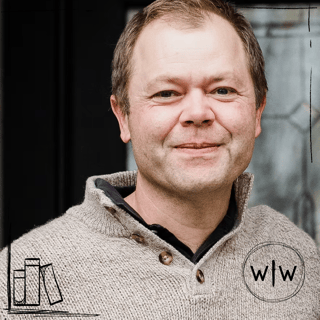
Speaker: Hello and welcome back to the Right and Wrong podcast. On today's episode, I am joined by a children's author whose debut novel Zero Override came out just a few weeks ago. um It's Steve Blackman. Hello.
Speaker: Hi, Jamie. Thank you for having me here. It's a real pleasure to be here. Thanks so much for coming on. um As always, let's jump right in and talk about the book, your debut novel, Zero Override.
Speaker: Tell us a little bit about it. Yeah, thank you. ah Zero Override is about a 13-year-old hacker called Zero who lives with his younger sister Grace in a found family of of other hackers. And their world is ah is a near-future London where AI has matured.
Speaker: So humans and humanoid robots live side by side and robots ah kind of operate in all areas of our lives. And Zero is a really great gifted hacker, but he's got profound distrust of robots.
Speaker: for reasons that become obvious throughout the book. And he's got no interest in saving the world. He just wants to go on hacks and release money ah from undeserving corporations and give it to the people who need it in a kind of Robin Hood kind of way. um But he discovers a virus that will wipe out the kind all of the AI in the country, included including that of his younger sister, Grace's artificial heart.
Speaker: And so no one will work harder than him to stop that happening, except a kind of my story mysterious bot that shows up and won't leave Xero alone. So the only way to to solve this is for them to go on the run together, to avoid capture by MI6, to stop the virus, to save, grace the younger sister and maybe save the world.
Speaker: Okay, wow. A lot going on there. The near future setting with AI matured, very zeitgeisty right now. Is that when you started writing this, was was that like what you were going for?
Speaker: Yeah, it really was, actually. At the time when I was planning this book, um when I was thinking about it, ah the conversations in publishing around AI had become particularly heated and authors were joining the ah the case against anthropic.
Speaker: And and of course, lots of conversations were about what AI was doing to publishing. And I have kind of had a conversation with my my brilliant agent, Callum Martin. And at the time he said, that's a really interesting kind of thing to mine.
Speaker: He said, but also, why don't you think about robots? Because i think the Wild Robot film is about to come out. And we were looking at a number of ah of of books that had come out of you know i'm after by the brilliant Podrick Kenny.
Speaker: And so as soon as he said that, it kind of unlocked it. And of course, it's easier to have an antagonist and a protagonist if they've got personalities. And so very, very quickly, the two ideas kind of enmeshed. And from that point, it came together really very quickly.
Speaker: Is um sort of technology, cutting edge technology, is that something that you as like a hobby like to keep up to date with and make sure that you kind of know what's happening? Well, it's, it's always been an interest, but for the last 25 years, I've kind of, I've been very technology adjacent in my work in that I, I worked in digital agencies where, and and I wasn't a coder, I'm not a coder, but I worked with people who were,
Speaker: And kind of as the interface between the people who coded and the people who needed it business solutions. So I understand what technology can do and what it can't do.
Speaker: But yeah, I mean huge sci-fi kid. So it's impossible to to avoid technology if, you know, if one consumes sci-fi. Yes, no, of course. And obviously I've, I've been a, I've been a young boy and I know that there's definitely an appeal with gadgetry and technology for young boys. I saw that when you were featured on the bookseller, the title of the article said that this book is aimed at getting boys hooked on reading.
Speaker: Was that in part why you kind of leaned into this techie stuff to some degree, or is that like a separate thing that you you were just looking at doing? it's No, it's absolutely integral.
Speaker: And and of course, when i when but I began writing this, it was at the end of 2024. four So we had ah no idea that this would be the the national year of reading. But we did we were very much in the grip of the literacy crisis. And and like many authors, i started writing the book with a really, really pure intention that it might help get young people reading. And I particularly wanted to get young boys reading because I know what an underserved market they are. And I know how series like Alex Rider or Cherub really speak to them. And they have the kind of propulsion and the the technological detail that that really engages young people and especially boys.
Speaker: Okay. Yeah. And you do think it's, it's like a big, uh, there's a big shift, I think from some of the articles I've read where, ah young, there's not really as much of a worry with young girls reading. It tends to be more boy focused that it's harder to get boys into it.
Speaker: It is, but in I've been really fortunate in that I've now done quite a number of school visits. And it's the the the boys who like to read are really passionate about it.
Speaker: Right. and And it was the same at um ah the Canterbury Kid Little Festival at the weekend. You know, the people within the audience to whom I'm speaking, the boys, really, really felt strongly about the books that they had read and the books they wanted to read and the subjects within them.
Speaker: So the audience is there, but it's definitely, it's definitely reduced from, from where once was. Yeah. I guess it's a lot of it's not necessarily that boys wouldn't like reading, but there are so many other things taking up their attention. If it's like video games or like YouTube or whatever, ah the digital landscape is so broad now that it's hard to like squeeze in a space for the reading.
Speaker: Yeah, that that's a really interesting and really important point. And I hear people say, i really want my child, my son, to read books, but he's just interested in gaming and manga and graphic novels. But the fact is that, and and as a kid, I really, really loved books and loved films, and my dad could understand that because he did too, but he couldn't understand my love of books.
Speaker: comics and dungeons and dragons and choose your own adventure stories, but he couldn't see that I was mining those things for storytelling. And it's the same now. you know The issue isn't that kids don't like books. It's that kids now have a much wider a pool of content from which they can take their storytelling. Yeah.
Speaker: And tune to try and help them take the journey from manga or gaming to books is is, I think, the conversation with which we need to engage.
Speaker: Yeah. And I guess as I play a lot of games myself and I would say it doesn't necessarily have to, it shouldn't be like a, well, you you know, you either or kind of thing. Like the, there was a game that came out last year. It won record breaking numbers of game of the year awards called Explosion 33. And it's yeah probably like the best, one of the best story narrative experiences that I've experienced.
Speaker: like experience myself of any medium and it's like yeah games can be like you said that you can mine anything um for for like that kind of storytelling inspiration and and uh and empathy i guess because it's like video games now a lot of them have like these incredibly written characters anyone people who aren't into video games a lot of people have now watched the last of us And The Last of Us is, you know, if you enjoyed that television series, that's basically exactly how the game goes. Like that's shot for shot for a lot of it Scene by scene. Exactly right. Yeah.
Speaker: Yeah. Interesting stuff. um Do you think, I guess, what just while we're on that, the this big social media ban that's that's ah being put upon, i think not just up to 16 now, they're also talking about 17 18 year olds,
Speaker: Do you think that that possibly opens up a space for reading to kind of get back into young people's lives? I think it's it's really, really attractive for us to assume that that would be the case. yeah if this, then that. that...
Speaker: but i think that I don't think it's going to be the thing that makes young people read. There may be there may be and a positive effect, but the fact is there are still all of those other storytelling mediums. And I think that it's more likely that we will see a wider use of them all, including books.
Speaker: But, but the you know, the point we we discussed remains that those things are all are all storytelling. So, yes, if social media cannot be consumed, if it, you know, if it can't legally or and we don't have the permission to do it, there is no doubt that people will still find a way to do so. Well, yes, that's true. because Yeah. we're adaptable and um inquisitive people. So, of course, people will find a way.
Speaker: But yeah, hopefully hopefully it becomes less about that kind of scrolling and and more about the the consuming of of more storytelling. Yeah, yeah, absolutely. Let's get back onto you then. um Zero Override. So I'm fairly confident that this is not the first book that you had written. How much had you written prior to Zero Override?
Speaker: So this is the fourth book that I've completed. Uh, but I have another couple on the go as well. Um, and all of them deal in one way or another with technology, but from very different perspectives and frequently they're asking a ah big other question. One of them is environmental. One of them is to do with reincarnation.
Speaker: Uh, one of them is to do with grief and, And technology is always a kind of the beating heart of it. But then none of them are stories about technology.
Speaker: They just happen to have it within them. Okay. And were they, are they all for a similar age group? Is it all sort of middle grade? No, interestingly, the first two were y a ah but they were very much, and listen, the conversation around what is middle grade and what is YA has become, I think, quite quite a quite difficult to navigate.
Speaker: ah because there are, know, romanticity, I think has changed what YA means. Yes. And whether it should be new adult or adult is not, you is not our place to discuss. But I think that I wrote YA and it was very much clean YA. It was traditional YA. So there were, there were themes of attraction and flirting, but there was no spice.
Speaker: Yeah. And, you know, two ah just the thought of, writing that I give myself the complete ick. And, and so for me, actually, it was, i and also YA, I think requires a particular form of writing to do with stimulation, emotional response, and then reaction.
Speaker: and, For me, I wanted it to be far more, my writing to be far more exploratory. And I find that I can do that more effectively with middle grade when people are at the point where they're they are developing that moral compass and where they're first beginning to try out these big life issues um in a way that I think YA, those things are a bit more baked in.
Speaker: It's just more fun, I find. Yeah, I think you, not that YA can't be whimsical and lighthearted, but I think in middle grade, you have much more license to just be like, this is just fun. And this is, this can be silly and and goofy and that's okay.
Speaker: Yeah, yeah, I think you're exactly right. And the sad thing is that YA absolutely can be can be whimsical and and fun, but it's, you know as we said just now, that's now harder because of the way that YA is now, the expectations that one has of YA.
Speaker: So I think it's it's now more difficult to do and people have an expectation of what a YA book should do now. Yeah. But like, like you mentioned with the, the, the sort of overwhelming effect that romanticy has had and the, the kind of addition of things like new adult crossover.
Speaker: My hope is that I think this, that the YA is sort of in a position of flux right now. My hope is that it settles down into like a, where it kind of used to be some years ago where it was, it was a bit younger. And it filled a kind of spot where sort of from 14, 13, 14 upwards, so that middle grade like led straight into YA and there wasn't this sort of strange um age range, like tween age range where publishing sort of just pretended like it didn't exist.
Speaker: Yeah, exactly right. and it And it is kind of neglected. But the the idea of a 13 or 14-year-old reading some of the YA that is now on the shelves is intolerable as a parent.
Speaker: and Yes. That's intolerable. but What's really interesting is that, you know, people like... Travis Baldry, and I know he's he's been on the show. He writes books about adult characters, but they they're not adult books. They're not YA books.
Speaker: They're kind of genre-free or category-free in that way. It's like Philip Pullman, right? you know He writes about Lyra, who is a young person. But they're not kids books, but they're not adult books. and And I think that I find that really compelling that we can create a story about a young person, but have it have enough questions around the world that it becomes relevant for any age.
Speaker: Yeah, I agree with that. I think Brandon Sanderson was also pretty good at doing that, ah the Mistborn series. I think Vin is 17 or 16, but yeah, it doesn't feel like it's YA. Like you could call it YA, but it also feels adult at the same time. it It doesn't feel like it is part of any of those categories. Yeah, I think that's a good, I hadn't thought about it too much, but yeah.
Speaker: Travis Baldry, anyone could read Legends of Lattos and it would be fine. And you'd probably find something you liked about it. Exactly right, yeah. And what he does, um I think what I've tried to do with Zero Override is to have themes and language that are compelling to a younger person and short chapters and very propulsive.
Speaker: but to smuggle in some quite big questions and some quite literary language. And like hiding yeah like parents hiding vegetables and mashed potato, you know I'm kind'm kind of trying trying to give them something which is immediately appetising, with... yeah That's a terrible analogy, but you know what I mean? To have to have some of the other good stuff that that maybe isn't immediate. Because if one just...
Speaker: you know, says, right, this is a literary k novel, and I'm going to deliver literary paragraphs to you, it's just going you know, a young person would reject that. Yes. You know, who's really good at doing that.
Speaker: And it's, this is not for young people, but I've recently started reading Joe Abercrombie's latest novel, the devils. And it's, I would say the, the phrasing and the way that he writes things is that there's like a lyrical element to a lot of it. And I would say like, you could call this literary, but because the characters are inherently sort of funny and sarcastic, it doesn't feel like you're jumping into some sort of like heavy literary thing that you're going to have to really like lock in for. It just still feels light and fun.
Speaker: Yeah, yeah. And then the two are not mutually exclusive. Exactly. But it's, of course, and I totally get that, you know, within publishing, we need these categories for people to be able to understand them and to help with marketing. And that stuff's really important.
Speaker: But it's, there is, there is far more nuance. Yeah, no, absolutely. Um, let's get back onto you again. We're wondering, um, which is great. I love that, but we're here to talk about you as a writer and you've written four novels now to on the go as a writer. Are you a planner or a pantser?
Speaker: ah Yeah, i can i might I don't believe that anybody is purely one of each. is not a binary question. And I think that even people i know that we know who meticulously plan novels,
Speaker: there is still an element of pouncing within that so when I sit down to write I tend to have I have an idea and I kind of pitch it to myself with the the kind of classic you know who where what how and why questions and if I can answer all of those questions and for it not to be boring then i tend to look at the save the cat beats the but the main kind of waypoints that that save the cat uses and and once i've established those then i can navigate towards them as way markers but my journey to them is never linear
Speaker: So that's when the exploration happens. So yeah, I've got the North star of a plan, but the, the, the fun is then seeing what happens on the way to those places.
Speaker: Right. Yeah. Yeah. I mean, I, I do tend to agree. I've talked, we've talked about this at length on the chosen ones with, I've talked about with Naomi and Melissa and how, that there's a There's a pretty simple argument for like, if you're you're a planner or a pantser, a pantser is a planner. It's just that their their vomit draft is their plan.
Speaker: And, you know, you can kind of look at it. A planner is just doing a vomit draft. It's just a very like meticulously written out one. Yeah, I'd agree. Yeah, so you can you can argue for both, but...
Speaker: Like you say, it's it's about finding, figuring out a system that works for you. And if you have, you you have like, you have your North Star, you've set your direction and then you're kind of like finding your way there. That's pretty good. I like that. What's what's always amazing to me, and i and I know that you've discussed this, um I'm a long time listener of the podcast, is how people who write thrillers,
Speaker: come in come on here and they say, oh no, I pants the whole thing. Yeah. Every single one. Yeah, I know. How can they do that without a spreadsheet? I mean, boggles the mind.
Speaker: Yeah. It's always the psychological thrillers, the domestic thriller authors, the the genres which are so like focused on the big twist or multiple twists and they they they're all pantsers.
Speaker: Yeah. Yeah. They're like, I'm trying to work out who did this. and Yeah. They don't know who did it, but you know, I've said this before, it's like, well, if they don't know who did it, you as a reader are never going to know who did it. It's exactly right.
Speaker: Yeah. And it's, know, people often say about, you know, you need a fully formed character profile for your characters. And I, I disagree. I think that, you know, you kind of get to know them as the story progresses. Mm-hmm.
Speaker: yeah You know, the the the author does and the and the reader does. So yeah, by the end of it, you've probably got a fairly well-formed profile, but you know, I don't, I don't start with that. That feels wrong to me.
Speaker: Yeah. I mean, that's, I've spoken to some authors who before they start writing, they'll do like, short story there's one big fantasy author who does this they write like um short stories about their characters before they start writing the novel so like that's just like a mini adventure that their character goes and does and that's how they get to learn the character and then there's some people will do ah classic thing that agents always i asked i've gone which agent it was i asked one agent like what was the what's the most common piece of advice you give to a new author that you've just signed and she said um she said uh delete the first four chapters
Speaker: Yeah. so I think a lot of people discover their character in the first four chapters, this especially for new writers, um which is also the chapters which a lot of the time they discover that they don't actually need for the story. The story begins like three chapters in or something.
Speaker: Yeah. And that's, that's great advice. Yeah. And I think knowing that now, know, more writers do begin in you know, within the scene, in, within the action. Yeah. that what That's what publishers want. yeah Exactly. Of course it is. Yeah. Because, you know, you've got such a short amount of time to capture the reader without a bunch of exposition because nobody wants that.
Speaker: But it's also hard when you look at what a lot of people, a lot of people are inspired by like the classics and things like Lord of the Rings, Harry Potter. Lord of the Rings, Harry Potter, the structure and the way that those stories are told, it would be very difficult to publish those into a modern with a modern audience because the publishers, that they they start too slowly. You know, they spend too much time doing things which are not driving the plot forwards. And that's what kind of modern readers and and modern publishers want is they want things to, they want to bring you in quickly. Like you say, you haven't got much time to grab the attention of the reader. If, ah I mean, it's been a very long time since I read Harry, the first Harry Potter book.
Speaker: But my understanding is that for the film, they cut loads of the start and just went straight into, you know, the magical things happening because it's quite a slow book to start.
Speaker: Yeah, Harry finds out that he's a wizard on page 50. There you go. Literally. um yeah and and that's ah Yeah. And that's impossible now. When our daughters were growing up, we had this noble idea that we were going to educate them with the 80s films that we loved.
Speaker: And we tried a couple, and they were both like, this is ridiculous. When is something going to happen? and it's And I don't know if it's because of short-form content, because, you know, YouTube and and TikTok,
Speaker: but there is you know there is a need now for the story to uh to be more propulsive and to move through it and you know having seen having read project hell mary and then seeing it recently i'm you know the speed with which they rattled through the science that was necessary for all those things to happen was you know i it was tragic really but necessary in order to create a narrative yeah Yeah, you have a lot less time in the medium of film, in like, you know, your your two to three hour span. You have a lot less time to go through all of that versus a book, which obviously you have all the time in the world.
Speaker: To explain all. Yeah, it is. i mean, a part of it's also just because of there's so much more competition. You know, in the 80s, I would imagine there's like, you go to the cinema and there were four or five films showing.
Speaker: And those would stay in there for a while. Now, you know, the rotation in cinemas is every week there's like new films coming out and coming and coming out. And it's just, it's like a constantly rotating wheel of content that we're all, we all live in.
Speaker: Yeah, movies, books, fashion, the acceleration has been, yeah, it's been dizzying. um Talking about your your process, something that I would like to ask, which is interesting, um has it changed much over time or have you kind of just sort of evolved it, but it's it's kind of similar to, you know, how you write a book now, it's kind of similar how to you wrote who wrote a book when you first started? That's a really good question. um I think that now I am more likely to have an idea and then explore it through writing it rather than the first couple that i wrote.
Speaker: I thought about for ages before i even put a word down on the page. So and it was and it was it was not a process of planning, but it was thinking about the world and it was wondering about questions and philosophising.
Speaker: And I think that now I find that to be detrimental to the, to the creative process. So the thing that has changed the most, I probably do the same thing in that I write a vomit draft fairly quickly.
Speaker: Um, uh, actually, no, that's not true because when I wrote the first one, I would write a chapter and then edit the hell out of it and then move on to the next chapter.
Speaker: Um, but now, yeah, now I'm tend to start writing more quickly and I will write the way through to the end. Okay. So yeah, sorry, completely contrary. It's completely changed is the answer to your question. Okay. Okay. Now that I've actually thought about it, yeah, totally different. Yeah.
Speaker: And a lot of that I presume just comes with the experience of knowing that I need to get this done so that I can start editing it. Which is when the writing really, really happens. Yeah. Yeah, absolutely. Has your, this is always an interesting one to me is, um, you're contracted for two books.
Speaker: Being on contract is sort of a bit of a double-edged sword because obviously it comes with the deadlines, which you wouldn't have had if you're not on the contract, but also it comes with the support of an editor. And obviously you have your agent as well.
Speaker: Has your process changed with the, with the second novel, which I'd imagine is already well underway because of those kinds of new things that are in place because you're on contract. ah Yeah, that that was was very different, actually. Writing to contract, it took longer.
Speaker: and of course, also, i was, you know, we were finishing up the editing, we were looking at the design and then the marketing began. so there were a number of other things to distract me from writing.
Speaker: on Sure. Yeah. but more More than that I ever imagined there might be. okay So yeah, it took a bit longer, but the, the knowledge of writing something and then being able to hand it to my editor. So the first draft of book two went in a week or so ago.
Speaker: And knowing that I could write something that was kind of not fully formed, it was kind of clay and marble, um and give that to my editor in the knowledge that we would then work on it together was so different to my kind of querying and pre-submission writing, where the need to get it so polished, um you know, it shone, is squeaked ah before getting anywhere near an editor. That is really different, and that's hugely liberating.
Speaker: Yeah. ah Yeah. I guess if you're just knowing that, yeah, you can send this out and it's like, this book is being printed. Like there's, this is going to happen. And like, I have a team here. These guys are just going to help me, help me work on this and and make it better. It doesn't need to be, uh, like you say, polished into infinity before I send it out.
Speaker: Yeah, exactly. And the the edit process will be the same as it was before, right? We'll go structural and structural edit and it'll become more granular to the point where it's proof edited. Yeah. But the artifact on which we're working is ah is at a slightly different place.
Speaker: yeah And of course it's, know, I always say this, but I, I'm a much better writer for having gone through the process of the first book with my editor, because I have, I have learned much more about the process of writing from going through a professional edit.
Speaker: It's an extraordinary thing. I wasn't expecting that at all. Okay, that's interesting. um We're going to get back onto a bit of that later on. But right now, we are at the point in the episode where I ask you, Steve, if you were snowed in at a cozy woodland cabin in the middle of nowhere, which book would you hope to have with you?
Speaker: So clearly I knew this was coming up. and And I had this noble idea that I would have a really, really well-polished answer. But of course, it's you know I look at my bookshelves and it's still impossible. And and ah I'm such a completist. would like to take all of Margaret Atwood or all of Emily St. John Mandel, and I know that I can't. But what I can take...
Speaker: um is a series and it it is bound together in a four book a compendium um that really lit my mind up to writing and character and world when I was younger. And that is the the first four Earthsea books by Ursula K. Le Guin.
Speaker: I had a feeling when you said that they're bound as one. i was like, I know what this might be. um I love, I mean, I think Ursula Le Guin was one of the all time greats and is not, I know that she that she does get a lot of praise, but I feel like she doesn't get nearly enough praise for how good she was and how clever she was and how ahead of her time she was.
Speaker: Yeah. So I'm glad, glad to hear that there's more Earthsea representation going to the Cozy Woodland Cabin. That's great. a Fantastic choice. I don't think I'm the first person to take it to the cabin, am I?
Speaker: you're not it's not picked all the time but uh a few people have taken earth sea uh i think i'm trying to think now um yeah it's it's not as it's not as common as uh jane austen was on the desert island but a few people have taken it Yeah, the the library was just Jane Austen and how to Survive on a Desert Island manuals. Yeah, it was about 50% Jane Austen. Austen.
Speaker: but we love Good choices both, right? Yeah, we do. yeah And Emma emma is is one of the, you know, funniest ah and best looks at the human condition.
Speaker: Oh, it's great. Yeah. Yeah. Everyone, because most people's first thought is Pride and Prejudice, but Emma is. Emma is, any any one time, there's a good chance Emma is just on on the TV downstairs because it's my wife's absolute all-time favourite movie is Emma. The new one with Anya Taylor-Joy. She absolutely loves that film.
Speaker: Well, rightly so, it's brilliant. Yeah. I very nearly, um like literally until this morning, was going to bring a book called The Rise and Fall of Dodo.
Speaker: Okay. I know if you know it. I don't know it. Tell me about it. ah by Neil Stevenson. And oh yeah it's it is about an organisation in America that find a way to use quantum physics to build a time machine. And they use that time machine to go to different points in time and bring back witches, which they then...
Speaker: kind of ah commoditize in the work that they're doing. And it's a study of how to build a company and the the processes that a company goes through, but with this hugely speculative call.
Speaker: and it is And it's actually, it's written with a woman called Nicola Garrett, it's a two header. And um it is probably the book after Earthsea that I've read or listened to the most.
Speaker: The writing is wonderful. The premise is extraordinary. the The linear plot of this thing becoming amazingly successful and then failing because of its success is really compelling. And it's a book that not that many people know of.
Speaker: No, I, the only, i've only read one of Neil Stevenson's and that's Seven Eves. But in terms of concept, like his concepts just seem absolutely incredible. So I'm sure there's some really clever stuff woven into that.
Speaker: It's yeah, it's hilarious. I think, I think that you might like it very much. I don't think it would replace... wouldn't replace Terry Pratchett or... I mean, english nothing can. If I'm honest, nothing can ever replace Terry Pratchett. I was talking to John Baker and John Baker was like... I i said, is there any comparison titles that you don't like? And he's like...
Speaker: He's like, he's like, please stop comparing Terry Pratchett because there, there can only be one Terry Pratchett. And if you comp your title to Terry Pratchett, it'll just make it harder for me to separate that.
Speaker: because it's going to do one I mean, comping to people like that is audacious in the first place, isn't it? Yes, i but I think with someone like, I think if you comp like a Stephen King, it is as some agents will say maybe don't, but like there's a vibe to it.
Speaker: um And I think the vibe isn't isn't as unique to Stephen King as Terry Pratchett's vibe is to Terry Pratchett. Cause no one writes true like Terry Pratchett and no one can get away with it. No one's it's just, it's, so it's inexplicable. He breaks. He's the, when people are like, oh, like here's the rules of writing. But the, but the main rule is that you can break all the rules. No one breaks the rules better than Terry Pratchett. And somehow it's just so compelling.
Speaker: I can't explain. Yeah. no No, no, I think you're you're exactly right. It is inexplicable, but also one can emulate the the comedy and the characterization and the observations, but without the underlying philosophy that made his writing so very deep and profound.
Speaker: Yes. I mean, talking of hiding vegetables, right? that's saying Sorry. Sorry. Well, my favorite one is always Small Gods is the one that really connected with me. And it's it's so silly. And it's just like you're you're following ah a god trapped in a turtle's body. And it's like the whole thing is nonsense. There's a bunch of drunk philosophers, but it's...
Speaker: whilst it's so whimsical and silly on the outside, it's so much, it's, it's so like, there's a profound message beneath it. Like, and I, you know, I find myself in tears at the end of it, even though it's not sad. Like it's just, you're right in that there's, there's a secret in there that it's so hard to replicate or, or do you can replicate the the jokes, but you can't replicate the kind of the X factor that's just woven into Yeah, yeah there is. And that the core conceit within small gods, which is that gods are becoming smaller and less powerful because of the the the amount of belief, um is a really, really important philosophical, theological question.
Speaker: But I read that and then I read American Gods. Oh, yeah. And I was like, well, hang on. They're kind of similar. And of course, the the two they both did that day um collaborated on Good Omens, so they knew each other's work. Good Omens, yeah. But I do think that they were both answering the same question, but from very different angles.
Speaker: ah both great books yeah yeah and ah the the focus on sort of uh that the religion sort of supersedes the the actual faith and belief in the god itself exactly yeah a lot of the time that's what small gods is largely that isn't it yeah um awesome uh next up We are going to chat about a bit more about agents, editorial publishing. um That will all be available in the extended episode, which you can listen to at patreon.com forward slash right and wrong. but
Speaker: So in terms of storytelling, it would be that. In terms of publishing, it would be, you know, dude, this is going to take a while.
Speaker: do that Nothing happens quickly except when stuff happens really quickly. Yes. yay Yeah. Yeah. Yeah. That's great advice in publishing just to just, just be aware. going to take a while. Yeah. Strapping.
Speaker: Yeah. And most of the time when you read like a headline, which is like snapped up, like it's the big deal comes out really fast or whatever. It's like, that most of the time the the people involved have been like pushing away at this for many many years at least months before they got to this point it's rare that anyone is a true overnight success Yeah, it takes years to be an overnight success, right? Exactly. Exactly.
Speaker: um And on that note, we are at the end of the the episode. Thank you so much, Steve, for coming on and telling us all about your kind of writing and publishing journey and your your debut novel, Zero Override, which is out right now in all the usual places if anyone listening wants to go and get that. It's been so ah so fun and interesting chatting with you.
Speaker: Thank you, Jamie. It's been a huge joy. As that is a fan of the podcast, it's a real privilege to be invited to speak with you today. So thank you. Well, it's been fantastic. And for anyone listening, if you want to keep up with what Steve is doing, you can find him on Instagram at Steve J Blackman, or you can find him on his website, steveblackman.co.uk. To support this podcast, like, follow and subscribe, join the Patreon for ad-free extended episodes and check out my other podcast, The Chosen Ones and Other Truths. tropes. Thanks again, Steve. And thanks to everyone listening. We will catch you on the next episode.