Transcript
Speaker: Oh, a spicy question. I love Because the writing is sort everything, right? Like you can fix plot holes, but if the writer... So some readers love that and some readers are like, but I wanted more of this. So it's kind of, it's kind of a gamble.
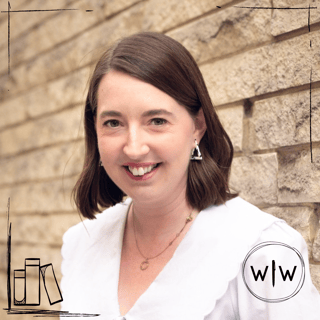
Speaker: Hello and welcome back to the Right and Wrong podcast. On today's episode, I am joined by one of Curtis Brown's associate literary agents, Flo Sandelson. Hello.
Speaker: hi thank you so much for having me. Thanks so much for coming on. um Whenever I have a literary agent on, I always like to ask about the origin story. So as I mentioned, ah you are an associate agent at Curtis Brown, and i think you've been there 2022.
Speaker: Yes, I have. Was publishing always where you wanted to be? Is it always where you saw yourself working? i'm Not really. I think if I'd known...
Speaker: about it and kind of how the industry worked, I would have just thought kind of what I thought when I finally did get a job in publishing of like, oh, this is the most perfect, perfect job in the world. But um no, initially, um I mean, I've always been somewhat of a book nerd, did English literature at uni, like all of the kind of normal, normal roots in and then left uni and didn't really know anything about publishing. I kind of graduated into the pandemic and um kind of was just looking for for any job in the arts at all. ended up working in modern art for a couple of years, which I also loved. And then in Waterstones and then came from Waterstones.
Speaker: I heard about kind of agenting and publishing in the different areas of this industry and just applied and took the first assistant job I got, which ended up being this one. okay Well, the a job an assistant job at Curtis Brown. And um Yeah, it's kind of all all flowed from there. Okay, so we you said you worked at Waterstones. Was that as a bookseller? Yes, it was as a bookseller. um um And I also loved that.
Speaker: And yeah, I feel like it's it's such a valuable experience It's a really valuable experience that I feel like has then served me really well. And it was so helpful in terms of when interviewing, because just the sheer volume of books that you read and that you know the covers of and that you can think about how they're published, I just found so helpful as a route in because pretty much every job and interview I had, the research was slightly already in my head. And so, yeah, to anyone who's trying to get into publishing and isn't quite sure where to start and finds it just
Speaker: impossible to kind of break through to the interview stage I found that such an invariable kind of chapter in terms of kind of building industry knowledge yeah absolutely and being an agent I mean one of the kind of biggest parts of being an agent is just having your kind of finger on the pulse of what is popular in publishing what's selling and I imagine being a bookseller like you know you're on the front lines of that literally exactly yeah and kind of seeing what's selling and like I think as well, sometimes we get emails, and um email just like kind of five or six emails from an customers in the morning being like, hi, this book looks like it's out of stock, please can we order it And we'd be like, this is a bit bizarre. Like, why why are people all emailing about this book that published in like 2010? And of course we don't have we don't have copies. And of course it's not in stock. And then like, just kind of joining the dots between obviously something that happened online, some
Speaker: the kind of um someone kind of reclaiming that book and making it their own again on TikTok. And then that suddenly kind of and trickling through down to us. and Yeah, I found it really fascinating kind of seeing and seeing where the market was.
Speaker: And it just always surprising as well. Yeah. Yeah. I mean, it's especially this last sort of um five years, I would say five, 10 years where things like book talk has like completely changed the direction and trajectory of a lot of sales and like how bookshops are kind of presenting themselves.
Speaker: Um, let's talk about, let's get back onto you a bit here, uh, in terms of, so you, uh, 2020, you joined Curtis Brown as an assistant, yeah you're now, uh, associate agent, but I would imagine you're at that. This is quite a well-trodden kind of a path for becoming a literary agent. You are, are you still working as you're still working as an assistant for Felicity Blunt whilst you're also starting to build your list? Yeah, so I started and as an assistant across Felicity Blunt and Alice Latchins' list and then um an ended up moving into, as is kind of like the natural natural way of things, ended up moving specifically into this team um and did this for
Speaker: three and a half years before getting promoted so my promotion is fairly fairly recent um and yeah I definitely still work on her list um um with and her authors are just phenomenal I mean um and so yeah it's just the absolute best place best place to learn and build those relationships um but I would say then i also and then building my own list I would say probably the divide is about 70, 30 or 80 or 75, 25, 80, 20, kind of depending on the week. But yeah, so very much it is a balancing act of finding time, time to kind of devote to both, both lists.
Speaker: Okay. Yeah. Right. So, so like when you say like 70, 30 or 80, 20, the majority is still with Felicity's list. Definitely. Yeah. Yeah. Okay. Okay. Which is, I think is, is, is pretty normal. And as your list grows, that will probably so start to change over time.
Speaker: and No, I completely agree. And I feel like publishing is one of those industries where and and it's almost like a more old school style apprenticeship where you start an assistant, but the goal, um there are only a few assistant roles in publishing where that is a kind of executive assistant role, like most assistants in publishing. that role, the goal is always to move away from that and to start essentially doing what whatever it is your boss is doing, whether that your boss is an editor, whether your boss is an agent, um whether your boss is a marketing director. that It is a slightly kind of old-fashioned industry in that way in terms of it being like a lot of mini apprenticeships.
Speaker: Yeah. You've landed in a great spot with, it must be, I would imagine that someone as sort of powerful and influential in in the industry as Felicity Blunt has, is just a font of information and wisdom for you to, to learn from.
Speaker: Definitely. And Curtis Brown in general, I feel like, um, because it's got such a rich literary history, we just, it feels like we just have so many really exceptional clients. So from, um working on the Daphne de Maurier estate, which Felicity represents along with our heritage department. It's a kind of right the way through to kind of the speed at which CB does sign debuts and um so much of the company having its DNA in um in the debut space. And I just think, yeah, it's it's it's such a brilliant place to learn. It is the best possible kind of training ground that I can imagine.
Speaker: Yeah. Amazing. you So you, you, you were working, you, you recently got the promotion. Does when, when you get promoted to associate agent, is that when there's sort of like a you're, you're now allowed to start building a list or had you like signed someone before you got officially got the title?
Speaker: I mean, like anything, you kind of have to be doing the job in order to um to get the job. um yeah So I'd actually been signing for, I'd signed, I think, three clients before I got promoted. ah um And I'd already done, I'd done two two book deals and before I got promoted, as well as um a couple of like small sub-agent deals. um So you kind of have to prove prove that you're able to do the thing in order to get it.
Speaker: and But there's definitely more freedom that comes with when you have the title, as well as just a kind of organic rate of kind of increased pace of growth in that.
Speaker: Motive because they're like, oh, but are you an assistant or are you an agent? And you kind of have to go through sort of similar to what we're discussing, that process process of explaining how that works. um And that the kind of end goal isn't always to be an assistant and that you'd love, you'd love to work with them in the capacity as their agent, even though you're not one, if that makes sense. Yeah. Yeah. Yeah. How do you, when you're, so you're as an assistant, presumably, you know, you're not receiving queries or submissions. How do you then, is that through kind of submissions that went to different agents in the agency that you've kind of found your first clients?
Speaker: Absolutely. It's true like honestly the generosity of other people in the company sending you things knowing what you're looking for. Felicity and other and agents here bringing me on to co-rep something with them. um So kind of relying on other people's streams of incoming submissions and then just really kind of trying to find the diamond diamond in the rough of what other people have already passed on internally. um But yeah, so it is hard, but then also particularly in the area I'm working in there's a lot and there's a lot there's a lot that happens outside of the formal querying process.
Speaker: So, um, I work a lot. I have a couple of indie authors on my list. And so kind of, i was, I was kind of reaching out as well, um, to try and sign authors in less traditional methods already. And so I think that was really helpful. Um, helpful for me specifically.
Speaker: Yeah. You mentioned co-representing authors. I had, the lovely Keira Finanon not too long ago. And am I right thinking that you two together represent Marv Michael Hansen? Yes, we do. and and that That was one that that Marv um her agent moved to become an editor. um Cassia Lupo. Exactly. And she's just brilliant. Oh, Cassie, brilliant. Okay, perfect. The full life cycle around um first born of the sun. But I, and yeah, so went and when her agent left, Marv obviously started querying and um she actually queried Felicity and I, um
Speaker: read it in Felicity's um submissions inbox flagged it with Felicity and Felicity basically was like to me you should go for it and then um Kira was um is doing kind of amazing things in the fantasy genre and so I kind of chatted to her about and was like is this something you'd like to do together um And yeah, and so we kind of then then made an approach to Marv together saying, it's not one um for like who you submitted to directly, but we'd love to pick up this conversation. And then yeah, we were we were so thrilled that she signed with us.
Speaker: Okay. What's the, was part of this because, because it's, it's like new for you that you wanted to represent it with someone else or like, was there a specific benefit to having these two different agents? Was it, was it partly because you wanted that kind of experience that Kira has found within fantasy?
Speaker: I think um it's a mix in that I did have a couple of clients that i was representing solo at that point already, but with um Marv specifically, she had a lot of strong other interest. and um um And at that point, it's really helpful to team up and be like, look, you get two champions for the price of one yeah i' on the same commission rate. And you get two brains working on this editorially. You get two brains.
Speaker: two brains available to you, essentially. And I think, and also just, it's a lot of fun co-repping. It's something that happens in other departments within talent agencies a lot. It's really common that actors in theatre, film and TV agents will and have a kind of co-agent model. And it's something that's increasingly, I think, happening in publishing but um yeah we're just we're just really loving it because also it means that um I think it does allow us to deliver a really high quality of um kind of client care because if I'm on holiday and Marv emails there's Kira's here and she'll pick it up and vice versa um whereas if you are the only point of contact for that client like it's obviously fine but it does just kind of
Speaker: mean that they do then have to wait for that response, if that makes sense. And that's kind of true on that small example. But on every example is that you kind of have multiple perspectives.
Speaker: Yeah, and obviously the more authors you have, the more the the less time you have available. So having two two agents, there's going to be more opportunity for them to to get back to to the author themselves.
Speaker: um ah Speaking of the number of authors, let's talk about your list specifically. ah Online, I had a look, and online you are documented as having signed five authors, but I know that it's often the case that these websites have not been updated and in in a little while.
Speaker: is it Is it five? Is that how big your list is now or is it? No, that's actually, i need to update that. and I have, I think I have about 11 clients um yeah roughly, i would say off the top of my head. um um And yeah, and I were and i work on um a fair amount of kind of as a sub-agent for our US colleagues as well and quite a lot more. So and in practice, it's quite a lot more than that.
Speaker: Okay. Right. And do you, I know that, that, um, some agents and agencies, I think it was John Baker I was talking to about this, that they, uh, you don't necessarily post all of your clients online until you have found a book deal for them. Is that how it's done at Curtis Brown?
Speaker: Oh, that's really interesting. No, we tend to make them a page, um, when they come over unless, and often the delay is because they'll be like, do you know what? I'm going to get a new author headshot um but that out or something like that. It's usually much less strategic than that um um in terms of like when their website page goes up, because yes, I think, I think the website landing page is so helpful for scouts and it's so helpful for foreign editors. But I feel like most of our communication with UK and US editors predominantly um they would, that because we um work directly in both those in the UK market and obviously via for our co-agents in the US, s um they would probably we'd probably communicate to them about a new signing type more directly than that.
Speaker: Okay, okay, right, right, right. Yeah, no, I was just curious because I thought that was an interesting quirk that apparently I think quite a lot of agents do it, but- That's really interesting, yeah. Yeah, I, my, my assumption was that it was because the most likely time for an author to split with an agent or to look for a different representation would be if they couldn't find a deal. So it would kind of be easier for everyone if that just never appeared on the page and, you know, if they decided to to part ways. yeah and it was most um interesting That's interesting. I think we, um, I have a couple of clients where we haven't yet been able
Speaker: to find them a home for their book. And I think that, um I don't know, I feel like it happens. i don't know so much about where else it happens in the industry, but it happens quite rarely here, I think, that we would ever stop working with a client just because we couldn't find it. it would usually be the other way around, i think. yes Yeah.
Speaker: Yeah, I think it's usually it's it's usually more on the author side where they're like, I actually don't think this is working. and I want to go in a different direction. Exactly. Yeah. Yeah, I was actually talking to Mike Lawson the other day who decided that after years of dying on submission, he decided that actually he wanted to try indie publishing. And he was like, no animosity. But I messaged my agent and I was like, look, this is I've changed what I think of success. So this is how i want to do that, which I think is perfectly fine. and Yeah, definitely. No animosity in there.
Speaker: A hundred percent. And I think the indie, and the indie route is so interesting and it's kind of got the ability to be more lucrative than ever. um Yes. um I see that so much with indie authors I sign and where I kind of always have to think like, what am I actually adding to making this book, to bring, taking this book out on a trad submission?
Speaker: um When, because sometimes when you look at the earnings, they're just like absolutely amazing. And so you have to think about what advanced level would actually be appropriate in that space, in that situation um to justify that loss of income for the author. So I think it is such an interesting and increasingly very validated route.
Speaker: Yeah, because it's when you look back um not too far, it sort of almost would be unthinkable for ah agents to be actively looking through like indie authors because there was a sort of stigma on self-publishing. Absolutely.
Speaker: publishers didn't want to, they didn't want it to sort of taint the brand that they then wanted to make. But now I feel like it's come full circle. And I feel like if an indie public, if someone's indie published and they have, you know, they've got like a good track record at like decent sales, doesn't, they don't have to have, you know,
Speaker: taken over the world with this thing but like if it's got decent sales and they they they can show that then I think now publishers are suddenly they're singing a different tune and they think oh no this is great this person has proven track record that they can sell books but you know we can take that and you know times exit or whatever absolutely and I think rate of growth as well like so often I think the ones that are going huge it's not the actual sales themselves it's the fact that they've had such a sudden spike of interest within kind of a very short window, um and in the it's which is obviously always going to be indicative of where those where that sales track will go if left up on KU.
Speaker: um And so it is a kind of, yeah, it does feel this area of the industry in particular, very kind of finger on finger on the buzzer. um And it is very different publishing, which is always everybody talks about as being a very slow industry. I would say this is absolutely the absolutely the exception at the moment, which is kind of you blink and you miss it. um The amount of authors that I've emailed and I'm sort of 10 hours behind the agent they've just ah from or the editor they've just heard from and it's kind of yeah it is slightly like if you spot it you have to act now like not in five minutes um which is really interesting and I think um um will be interesting to see to see how that develops and how that grows
Speaker: Yeah, absolutely. Uh, fascinating to see the the direction that the industry is going in. yeah Let's get back onto your list specifically. So, um, still, i mean, you've got 11 authors, uh, you think approximately, uh, still in the early days of building your list. Um, what, uh, what, what is it specifically in terms of age ranges, genres, what do you represent? Um, I,
Speaker: I'm sort of describing at the moment as like across the SFF spectrum. So everything from your more literary speculative to um kind of really brilliant commercial romantity and absolutely everything that falls in between. i yeah, I've always really, really loved this genre and um and kind of grew up reading it.
Speaker: Yeah, represent across kind of the the natural age ranges that fall within within this space as well. So obviously it's huge in YA and New Adult. um And so I'm doing quite a lot of YA as well as as well as and kind of for the crossover reader and and the adult reader.
Speaker: Okay. In terms of, um, I'm a big fantasy guy myself, uh, in terms of genre within the fantasy, because fantasy obviously has so many different sub genres. Do you represent everything from like cozy fantasy to epic fantasy to lit RPG? Or do you, are you looking more for like the, you mentioned romantic, but like things, uh, more kind of traditional romance fantasy? Yeah.
Speaker: i I would be, i don't currently have a project obviously in every single sub genre, but I would love to basically. It's like my scope and my so the scope for that is very, very broad. Yeah.
Speaker: yeah And I have kind of, I have this really gorgeous literary dystopian by an author called Carla Hirsch, who's a really, really amazing German author who writes in English despite it being the second language, but more eloquently than I could ever even think in English, honestly. And and so kind of everything from that more literary and to I have a really brilliant um writer called Elise Donaldson, who um did our in-house creative writing school and then came through that channel and has like adapted the Gaelic myths for um and and kind of taken like quite unknown Gaelic myths and done
Speaker: really beautiful kind of feminist retellings in the vein of Madeline Miller. So, and that's more for a YA audience. And then I have a really, I have a couple of really exciting, um, romantic-y debuts coming up, um, including one with an enormous, um, AO3 platform. And so kind of, and so that one is more towards the commercial end. So yeah, kind of, um, I'm working fairly,
Speaker: fairly across the range. Um, and then doing some more sci-fi stuff as well, because I really, really love it. Um, okay yeah. If that gives you a bit of a flavor.
Speaker: Yeah. and um and And same thing with sci-fi, like you'll, you'll take like a light sci-fi, ah and then you'll also be interested in like very hard sci-fi. hundred percent. I would love like a big space opera. Okay.
Speaker: Okay, great. um And age-wise, that's the same for both. It's like you're YA through to adult. Absolutely. Yeah. And particularly, I think particularly with um sci-fi, I think that that crossover space would just be absolutely brilliant because whilst Romantasy has had such an enormous boom and fantasy has had such an enormous boom, this feels like it's still um developing and kind of coming back into fashion and kind of particularly like I keep seeing announcements of books like fantasy with dystopian elements, fantasy with sci-fi elements. And so if it's if it's kind of able to capture that crossover audience of um fantasy readers and um those two and across also straddle those two age groups, I think that would be particularly amazing.
Speaker: Okay, yeah. and And final question on this then, ah because this is quite useful for people when they're they're not sure if um if they're going to query or not, is are there any genres that that are absolutely not right for you that you just wouldn't fit with your kind of experience in your your list?
Speaker: um I do a little bit of horror, but if I'm honest, that's probably the one within SFF that ah is really not particularly right for me because um whilst I love a kind of like um I'm just like, to be honest, just really squeamish. And I can do like a ghost horror, but the second we veer into body horror, I get really freaked out. Yeah. So probably that, if I've got one area within this that I struggle with more.
Speaker: Okay, body horror. how What about with like gore? Because obviously fantasy and sci-fi can be gore. can do a bit of gore within a fantasy world. I think the thing about horror horror that unsettles me so much is it's completely set within our world. And then suddenly and suddenly I'm like, i do yeah, I don't know. I feel like it's such a kind of also evolving part of the industry. And I haven't quite figured out how to crack that particular k nut yet. So I feel like I'm probably not the right agent for it at the minute.
Speaker: Yeah, because I mean, sci-fi and horror have like always been a a good ah good pairing. So I guess that's... Yeah, I mean, i've got I've got one sci-fi horror out at the moment. And that again, um that again works. And I really loved, but it's not... um Yeah.
Speaker: But, but it's kind of, it's very tonally balanced between the two genres. So you almost don't notice. Okay. just um Okay. I just have one quick question before we head over to the cabin. And that is a fun one that I always like to to ask agents because there's a few agents out there who somehow find the time, but would you like to one day write or publish some of your own writing?
Speaker: Oh, that's a really interesting question. I've actually not given that one any any thought. um um I like wrote about a bit at university, as I think everybody does when you do an English degree. yeah um But I've never never really kind of developed anything beyond that. So I don't think so. and i really like being on the side of the table. It feels like a perfect kind of blend where all my instincts sort of across different areas of my life sort of come together with the business side, the client care side and the creative.
Speaker: Yes. It's a, it's an all encompassing role, the agent. I feel like you get to do, you get to put your, your fingers in all the pies and you can do a little bit of everything. Okay. Awesome. Um, so we're at the point in the episode where I ask you, Flo, if you were snowed in at a cozy woodland cabin in the middle of nowhere, which book would you hope to have with you?
Speaker: um' At the moment, Into the Blue, i have been recommended it by about 40 people and people keep messaging me on Instagram being like, have you read this? Just like friends that I haven't spoken to in ages. And I'm like, why? Why is everybody recommending me this? So yeah, so it's had, and it's been obviously just had so much.
Speaker: so much buzz around it that like I'm kind of desperate to read that so when I dig myself out of my um work reading list I'm so excited to read that and actually can't think of anything I'd like more it's 35 degrees in London than being in the snowy ca yeah yeah with um with an amazing book that I'd be wanting to read so I'm so available for that um And then if it was something I've already read, this is kind of cheating, but I feel like you couldn't put someone in a cabin with book one of a sequel. And so I'd want to be there with the Cazalet Chronicles, which I just love so much and have been meaning to read since um the release of the Louise Young one. And so, yeah, I think maybe them.
Speaker: Okay, great. I'm just looking it up now. Into the Blue. This is Emma Brody, right? yeah Okay. Just came. Oh, literally just came out. April. Okay. Yeah, this looks cool. I love story. Into the Blue.
Speaker: Dreams of... Someone else was telling me about this. Yeah, Dreams of writing for SNL. Yeah, exactly. I'm like, do I need to go to the holiday just to read this? Because it's getting to the point where everyone keeps saying, and so have you read it now? Have you read it? And someone just came back and everyone in the industry seems to be talking about it. And someone just came back from holiday yesterday and everyone's like, oh my God, how was it? Did you read into the blue? Okay. Oh my God.
Speaker: Okay. I need to add this to my list because I've had the same thing recently, but it's just been Dungeon Crawler Carl. Oh yeah, of course. Of course. And i've been the I've been the one asking her if they've read it. Yeah. love it Um, have you read Dundercrawler Call?
Speaker: I have not. I have not. I'm really sorry to disappoint. that's I mean, it's, it's, uh, it's a cult. So yeah. once he read you say he does that a few dies okay but i basically need a holiday where I can take these two books.
Speaker: Well, my, my warning to you is i read the first Dungeon Crawler Carl book and then within two months, like two months I'd read eight of them. So absolutely totally I had that, I had, I'd never read, um, um any of Philip Pullman's books until I was a little at uni. And then I had to, um,
Speaker: um take a week off and pretend i was sick i was like i did that feels like the only logical way to kind of proceed here yeah it's funny it's funny when you're like oh i'll get around to reading that thing that's like came out ages ago and then you finally read it and you're like my god this is as good as everyone said it was okay and now i have like these four like and then particularly when it's series and you're suddenly like i now have this this stack that I need to get through before I'm able to think about anything else and return to the world of normal socializing and normal work yeah yeah exactly yeah I'm I'm grateful that I was have been reading Brandon Sanderson's Stormlight Archives like as they've been coming out because if I was yeah if I fell into that hole I'd be like I'll see you guys next year Yeah, totally. I'm way too obsessive to engage in new backlist, I've decided. Unless I'm going to take like six months to just do that. Yeah.
Speaker: yeah Okay, awesome. um Some great choices there. Next up, we are going to get into queries and deep dive into cover letters and all that fun submission stuff that will be available in the extended episode, which you can find at patreon.com forward slash right and wrong.
Speaker: It arrived and you know, and you're just like, It's kind of what we were talking about earlier. i was like, once I start reading this, that's yeah that's i'm going to be really hard to read anything else, the work. so Yeah. You've got to find yourself sitting like a, take a day off and just spend the whole day. yeah Okay, amazing. um um Well, Kate, I think there's a lot in there for for people to think about if they're thinking about submitting to you. We've got, you know all the all the different ways with which you go through that and everything that you're looking for. Thank you so much, Flo, for coming on the podcast and chatting with me. It's been really interesting hearing your kind of journey through publishing and it's been really fun um speaking with you.
Speaker: Thank you so much for having me. Yeah, it's been really fun and really nice to talk about. And for anyone listening, if you want to keep up with what Flo is doing, you can find her on Twitter at F Sandelson. You can find her and the and the rest of the Felicity Blunt team on Instagram at The Blunt Office. Or you can head over to her Cutters Brown page, which is on the Cutters Brown website, cuttersbrown.cutter.uk. forward slash agent forward slash flow dash sandalson um if you look at as well at some point she is going to make an instagram uh which is going to be an agent dedicated instagram so that will be up at some point but uh keep your eyes peeled to support this podcast like follow and subscribe join the patreon for ad-free extended episodes and check out my other podcast the chosen ones and other tropes thanks again to flow and thanks to everyone listening we will catch you on the next episode