Transcript
Speaker: Hi everyone, a quick heads up ahead of the episode. Unfortunately, it's been brought to my attention that there is a scammer impersonating me. They've been emailing people from a faked account, posing as me, and offering paid packages to come on the podcast. To be clear, there is no payment involved for guests. I do not charge guests to come on the podcast, and obviously that means there are no packages for guests and the like.
Speaker: If you're unsure that you are in communication with me or the scammer, you can check by messaging me on my verified Instagram account at rightandwrongpodcast or through my website, contact page, rightandwrong.co.uk forward slash contact. That's all from me. Stay vigilant and enjoy the episode. Ooh, a spicy question. love it. Because the writing is sort of everything, right? Like you can fix plot holes, but if the writing is there. So some readers love that and some readers are like, but I wanted more of this. So it's kind of, it's kind of a gamble.
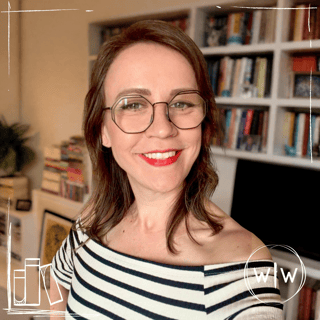
Speaker: Hello and welcome back to the Right and Wrong podcast. With me today is English teacher turned historical fantasy author, Pippa Dunn. Hello. hi Jamie. It's great to be here.
Speaker: It's great to have you on. Thank you so much for for coming on and chatting with me. um Let's jump right in, as we always do, with the the book, your debut novel, The Sign of the Raven, which will be out ah in the UK as of this episode airing. It's coming out in the US a bit later on the 10th of November.
Speaker: Tell us a little bit about it. Yeah, so The Sign of the Raven, as you say, it's a historical fantasy and it is set in the late 19th century in London in 1889. And it follows Ashlyn Threadneedle. She's 16 and by day she works as a government messenger for the sinister Lord Whittaker. She cycles all across London delivering all sorts of documents and folios and classified deliveries. But by night, she lives another life entirely because she's a member of a secret society of lucid dreamers.
Speaker: um But when a government propaganda begins to infiltrate the dreams of London citizens and thoughts become crimes, it's up to Ashlyn and the secret society and a very charming journalist to ah to stop this sinister politician from seizing tyrannical power before freedom of thought is lost for good.
Speaker: Okay, very cool. So this is YA as well. It is, yes, yes. So I kind of pitch it as, and this is how I pitched it to my agent, and she was like, yes, that's how we'll pitch it to publishers. um It's sort of Orwell's 1984 meets Christopher Nolan's Inception for teenagers.
Speaker: that's That's its vibe. Wow. that's There's a lot going on with that as a combination of things. yeah Okay. I was going to say though, yeah, that the the magic system in terms of dreaming and infecting people's dreams is very inception.
Speaker: Yes, it's very, i I am a lucid dreamer or i certainly i certainly was a frequent lucid dreamer as a teenager. So i'm I'm quite familiar with the feeling of knowing that you're dreaming and being able to control your dreams. And um yeah, it's quite a cool thing to work into ah into a fantasy novel.
Speaker: That is cool. I would have said, having only read, I read 1984 a few years ago, 1985. is why I thought it was. Yeah, 1984. I was right the first time. I read it a few years ago because it was one of those things where I i always thought to myself,
Speaker: this is a classic and I should read this. um I read it. I think it's incredible. I hated it. But that's a pretty heavy topic for a YA novel. is it like Is it more like the vibe that you're saying in that picture? It's like the sort of elements of. It's more that, you know, if you have a government that's able to watch you in your sleep and know what you're dreaming and know what you're thinking, um and it has abilities to infiltrate that space that's your sort of very private, safe space, then what else can they do? um And I think that's a a really, you know, scary question. And in a moment where, you know, we have... all sorts of things going on in our contemporary world and our digital worlds that do influence the way in which our waking worlds and our analog worlds kind of, you know, unfold. I think it's quite an interesting, quite an interesting thing to explore.
Speaker: Yes. Yeah. Big brother is watching. Big brother is watching. Or the algorithm is, you know. Yes. The algorithm. Yeah. Not even a human being anymore. Yeah, exactly. Numbers.
Speaker: um Okay, cool. Yeah, that's really cool. um It sounds great. I'm excited for it to be out in the world for everyone to to have a look at it. So I read up a bit about you online and I discovered that you you studied English at university. You've also taught English for a time. so I'm going to guess that being an author has always been sort of part of your life goal or something you've always, it seems that you've been heading in that direction for a long time.
Speaker: It's a really interesting thing because but on some level, i mean, I suppose all writers say, ah and I think this is true, you know, often they'll say, oh, I've always written in some capacity. And I think that's true for me. I i have throughout my life written, but I don't think I ever thought as a child about being an author. I idolised authors. i I was, you know, buried in books for my whole childhood. But I'd never met an author as a child. i I don't think I remember a single author visit while I was at school, for example.
Speaker: It wasn't something that I really thought ah of as a job, I guess. um And I was passionate about literature and about studying literature. And I went on to do that at university. I've always been an enormous sort of book nerd and literary geek. um But actually, my my kind of adolescent and then young adulthood sort of creative goals were actually more based around theatre. So if books were my first love, theatre was my second.
Speaker: And I spent my university years making theatre, writing theatre. And I wanted to be a director. That was what I originally really wanted to do. i wanted to go to drama school for a postgrad and become a director.
Speaker: And life took its various different turns and I needed to earn money. So I ended up... in London and working in the arts, but not you know working in the creative side of the arts. I was working in arts administration and life, life, life. And I had a wonderful 20s living in London and working with my friends and you know meeting a boy and marrying him and all that kind of thing. And it wasn't until my mid-30s that I sort of, I realised that quite a bit of the creative part of my life that had once been so central had faded and I needed to get that back. And that was such an essential part of who I was. And I decided at that time, the the idea for The Sign of the Raven appeared and I thought, this is it, I need to do this. um So yeah, so, and then when I was working on The Sign of the Raven, I started to realise, oh, I might have something here. And, oh, this is this is this is really this is really good fun. And this is really hard, but I'm really enjoying this and I should keep going. um
Speaker: And here we are. I still can't quite believe it, to be honest with you. yeah People say it's a dream come true. And I'm like, I didn't even dare to dream about this. So, you know, it's more than that.
Speaker: so yeah Yeah. It's funny with but becoming an author, some people, it's not like you we the people aren't aware that it's a viable career path, but it's like when you're younger and especially like you said, you you didn't you never met any authors. you never that You never had any of them come visit your school or anything like that. it seems it doesn't It's not that you're like, oh, I couldn't do that. It's that, oh I didn't even consider it as a possibility. Completely. Yeah, that's for other people. Other people do that. And I read these books. And I think it's it's quite interesting. When I was you know when i was younger, I i was you know devouring books and devouring the stage as well. But as an adolescent and as a sort of young adult, I i remember being really torn theatrically. Did I want to be the actor on the stage? age Did I want to be the director pulling the strings and creating these worlds? Or did I want to be the audience? Did I want to experience these stories told on stage firsthand as an audience member?
Speaker: And it wasn't until I started really focusing on on prose fiction that I had this moment of going, oh, this is all of those things at once. You know, I am the characters in the drama. I'm inhabiting them. and i And I do think that a kind of more theatrical background it helps enormously with writing fiction and with inhabiting characters but I am the director pulling the strings I'm the conjurer the puppet master the ring master as it were and I am this book's first reader because so often and I'm sure lots of writers would would this would resonate with them you know you don't know what your characters are about to do until they do it sometimes and there were revelations that you go oh my god I've course. And you get to witness the the alchemy, I think of it as alchemy, of of writing in real time as ah as a writer, and you are your book's first reader. So somehow I i found my way back to all the all the acts of creativity and the combined acts of creativity that had so been part of my of my childhood and and my youth. So so yeah, i feel like um I feel like I'm where I belong now, which is a really lovely feeling. Yeah.
Speaker: Okay. You sort of found your way there in the end. Yeah, exactly. So this is the this is actually then the first novel that you'd ever written. It is, yes. this is this is the I mean, i actually, that's sort of true.
Speaker: At university, I wrote half of or a fraction of a what would I guess have been a middle grade novel um about steam train, which is interesting given what I'm working on now. but um But that very quickly sort of faded into the background in favor of a a play adaptation of Alice Through the Looking Glass that was heading to the Edinburgh Fringe. So I sort of experimented, I suppose, before. But no, this is the first book that I have written, yes.
Speaker: Okay. And based on what you just said about how the the the characters take you in directions that you you want you don't know, you know, where they might go, where ends up differently.
Speaker: how How much of the story did you have kind of mapped out before you started writing, if any? So that's a great question. I had the premise and I had a sort of question, I suppose.
Speaker: And the question that was the sort of catalyst for this was what if there was a secret society of lucid dreamers headquartered at an ancient tavern in the city of London? um I am really inspired by the history of the city in which I live. I love being a Londoner. And when I first moved here in my early 20s, I was absolutely captivated by the fact that I could feel thousands of years of history beneath the streets of this city and particularly in the in the ancient city of London. um So I had that question and that premise and then it sort of spun out from there. But when I'm writing, i and I'm definitely not the first writer to use this metaphor, but I i think of it as architecture and gardening. So I will maybe pull back and then put a bit of the architecture of a book into place, of a story into place. So the key structures of the plot, the tent poles of the plot, the the turning points, as it were. i'm I'm fascinated by narrative structure. I find that really, really interesting. And then I'll allow myself to garden, as I as i put it, you know, throw some seeds out, put some characters into some situations and see what they do. And often they will reveal various things that I'm like, oh, well, okay, I can knit that in like this. Oh, that sometimes I'll know what is going to happen, but I don't know how it's going to happen.
Speaker: And the characters sort of reveal that to me as I'm as i'm working with them. um So, yeah, it's ah and then I'll, you know, do some gardening for a bit and do some writing and the the the novel will grow and the the tendrils will start you know creeping, creeping out and ideas will have sparked and certain connections will been made. And then I'll pull back and do a bit more architecture and be like, OK, let's wrestle this into some sort of shape again. And then, you know, rinse and repeat until you have a till you have a book.
Speaker: okay um remember you said do you know how it's going to end or do you let do you leave that open to see where you end up I did know how it was going to end in very broad terms.
Speaker: And again, I didn't quite know how my character was going to affect that ending. I didn't quite know how she was going to do it, but I knew what was going to end. And actually there's there's an epilogue of this book. And I remember that coming to me, what the the final you know images and and moments of this book would be came to me kind of in a blinding flash about halfway through writing it. um But I did know what the ending was going to look like. I just didn't know exactly how it was going to happen.
Speaker: um So again, i think that that's probably quite reflective of this architecture gardening kind of practice. And i you sort of ah you have to slightly trust both yourself and your subconscious and your characters um with this method. um But it it worked so far. So, you know, we keep going. Yeah. Yes, exactly. Well, you this is a ah two book deal.
Speaker: It's a two book deal, yeah. So I would imagine you're well underway with the second book. i In fact, Jamie, today I begin my first round edit on my second novel. Amazing. So yeah, that's what I'll be doing this afternoon after I've stopped looking to you. So I'm diving straight into the edit on the second book, um which is not a sequel. I don't know quite how much I'm allowed to to say about it just yet, but I can tell you a little bit perhaps. um It's another standalone in the same world um or as The Son of the Raven. So we're still in 1889 in London, but it follows a new set of characters and a new story. it has a similar vibe. And for those who enjoy The Son of the Raven, there are a few treats for them in the second book. This is not a completely isolated story, yeah but it is ah a second second novel set in the same the same place.
Speaker: Okay. So this will be an interesting question then, because, because this is your second novel, how normally I would ask how, you know, how being under contract has changed your process, but given that this is the second time you've done this, presumably the process would have massively changed anyway, but like, yeah. So how, how different has it been writing the second book, obviously on a deadline also with the help of an editor from the beginning, from doing your first one? Yeah, so it's really interesting. You you have years to write your first book.
Speaker: I spent four years, probably a bit more, writing The Sign of the Raven, you know around a full-time job and you know with all sorts of other things going on in my life in between times. um And you do it for you, right? You know, I i obviously hoped that it it might one day be good enough to be published, but that was never, you know, i I was writing it to see if I could and for myself. And it wasn't until later that I was like, okay, and i think i I think I might be able to see if I could get an agent with this and maybe it's publishable.
Speaker: um But with the second book, I had six months to write a book. um Again, because of all sorts of other things that were going on in my life and the timelines of the contracts and when the deadlines were.
Speaker: It ended up being that I had yeah six months to to get it down, which is a completely different process. I mean, I i would describe myself as a crafter, not a drafter. You know, I i don't necessarily write in order.
Speaker: um I am not whipping through a kind of zero draft. Instead, with The Son of the Raven, I was really crafting each chapter as as a kind of piece, as it were, before locking it into a manuscript and making sure it was working. And, you know, I could take my time to really let ideas settle before realising, oh, yeah, OK, right, that's how we're going to craft the next bit of this narrative. Whereas when you've got six months, you you really do just have to sit down and start writing and keep going. like And you do need discipline. And it taught me an enormous enormous amount about my capacity um to create story under those very, very different conditions. um But of course, it is a completely different beast. And I didn't know these characters half as well when I started writing the second novel. you know It's not a sequel, so I'm not playing with the same exactly the same sandbox, as it were. So um it took me a while to get to know my protagonist in the same way that I know Ashlyn. And I know Ashlyn, the protagonist of The Son of the Raven, very, very well.
Speaker: um But you know what? It was a completely joyful experience. The first part of writing it was great. Developing the story was great. Then there was a moment where I, you know, my agent got a couple of panicked phone calls from me having to talk me off various creative ledges. And then I sort of unlocked that book about eight weeks before the deadline. And I wrote like my life depended on it. And it was one of the most joyful things I've ever done in my career. And there's a lot to fix in a second draft, of course. And this is going to be um a really interesting experience for me going through this editorial process at a much earlier stage with my brilliant editors. Yeah.
Speaker: So, yeah, you're not you're not in it on your own, you know, in the same way that in your first novel, you're never in it on your own. You know, if you have critique partners and other writers and you're sharing your work. um But it is a different process, you know, writing under contract and writing specifically for publication. um But it's one i've actually really enjoyed, which is a relief. Okay, good. Because people often, you know, the the second book is often something that people find very difficult.
Speaker: ah Authors often say that the second one is the hardest one for various deal if different challenges to, to the you know, other books. But um I think it's usually it's usually exactly what you've said there. It's that you can spend years doing your first book, taking your time with it. And then you you suddenly are on a deadline. People are watching. People are like, come on, we need to get this going. Yeah, exactly. ah Go, here's your deadline. And don't worry too much about it, they say. And you're like, but I am worried. I've spent so long being worried. And I think the other thing is that, you know, this this industry, if you're pursuing traditional publication, then your first novel that, you know, or what will become your debut, you know, gorgeous You've got to get through in terms of querying, in terms of going on submission. And the competition is really stiff. And I suspect the competition has never been stiffer. Your your novel has to be in a really good place. You're sort of you're sort of having to demonstrate that you've got the chops to do that editorial ah work yourself the first time around. And then actually the second time round, you know you you you've got far less time and far more trust, I think, from your teams. And hopefully you have faith in your editors as well. um And actually, it was ah you know I was able to submit a draft that once upon a time I'd have been like, oh my god, no, there are so many things I know can fix in this. But the deadline is upon us. So I will be vulnerable and I trust you all. So here you go. let's Let's build this novel from here together. And i'm really I've got calls this week with my UK and US s editors. um who were kind of co-editing the novel. And I'm really excited about those conversations because I just love digging in into to this stuff with them and and they make me a better writer. So, so yeah.
Speaker: I get the sense that editors really want to be involved in the most raw stages of a novel because then... it's easier for them to sort of um direct things slightly more if they're like, oh we maybe we can maybe we need to go this more than that way. Then if you've polished it loads and then they have to kind of deconstruct it and they have kind of yeah crack away at the shell that you've kind of put over it and then redo things. It's such a good point. So with The Son of the Raven, I was quite lucky that my developmental edits are they're the bigger structural edits that that you make in your sort of first editorial rounds before you're polishing when you're kind of making changes to the story. um
Speaker: I was lucky that they were reasonably light, but they included adding in sequences, like adding in a couple of chapters um that exist in the dream world that my character um spends quite a lot of time in, this world called The Stream.
Speaker: um and actually my goodness it was so difficult to crack open this novel to find the places that I could unstitch the seams and sew in some new chapters some new scenes because this novel had been you know really polished to within an inch of its life it had been really edited for pace it was it was tight because it had to be to get through that gauntlet of traditional publication and suddenly i was like my God, how am I going to break this open and get these things in? So it's quite funny writing the second one. And again, of course, it as I say, it was a much swifter process. you had to be a little bit faster and looser. But I deliberately left that novel a little bit looser at the seams so that when we were looking at those presumably much more significant developmental edits, because it was a novel written much faster, it would be a far easier job to to pull apart the novel to make the changes that you need to make and then and then sew it all back up again. So, yeah, and my my editors were sort of, they were incredibly supportive when I sort of sent this novel in and said, okay, this is me being really vulnerable. This is not where the side of the raven was when you first read it. But, and you know, both my editors were there going, no, this is where the fun starts, Philip. This is where it gets good. So, yeah. Yeah, yeah, yeah.
Speaker: Yeah, because they can, they can, they probably feel more licensed to be like, okay, we can. It's not as precious. You know, they don't have to be as careful with it because you know it's raw. Yeah. And it is a collaborative process, this, you know, and that is one of the most joyful things actually about about the professional side of of writing now is that I love having these creative brilliant creative people that are in this with me um and that can push me to be a better writer and a better artist. And I feel very lucky to have that kind of talent and and that kind of collaboration.
Speaker: Yeah. um I also really like crafter, not a drafter. I've not actually heard that before. That's a really good... One of one of my mentors gave me that little tidbit. Because it's interesting, yeah there's so much writing advice online, right? If you're writing and you're in any way thinking about traditional publication, the internet is full of advice for you. um and it's either quite conflicting or it has like lots of sort of what appear to be rules that you're supposed to sort of be following and quite a lot I do remember that sort of a period where my god everyone just says get the first out draft down as quickly as possible that's not how I do it I'm doing it wrong I'm doing it wrong and then one of my mentors was like no no no Philippa that's just one way of doing it you're a crafter not a drafter and was like oh Okay. And I've held on to that line actually to remind myself that everybody's process looks different.
Speaker: and And actually, you know, that's a really great thing. That's what results in really brilliant novels of all kinds from lots of different writers. So yeah, embrace your own process. Yes, exactly. Yeah. I think, yeah, i I think more people tend to do the old vomit draft, but I've definitely had a fair number of of authors who are, as you say, a crafter, not a drafter and and every chapter will be perfect, perfected yeah before they move on to the next one. Yeah.
Speaker: But for some people that absolutely kills their momentum and Exactly. And and you've you've got to know what kind of creative you are, I suppose. That's it. Yeah. So yeah. and And each part of the process has its own challenges and joys, you know, and actually what's really interesting writing a second book under contract is that I've been far more appreciative of the freedom of the drafting stage, of the first draft stage, and looking forward to the editorial stages. And I've sort of been through the whole process once. So second time round, I'm i'm learning to really appreciate each stage for what it is and for the kinds of creativity that it demands of you. Mm-hmm.
Speaker: And I think the longer you're you're doing this, the more your your process will keep changing and reshaping. And I was talking Adrian Tchaikovsky not that long ago, and he's you know he's he's published many, many books.
Speaker: um Yeah. And he was saying it's only only recently that he's reached a point where he feels like he's kind of, ah he's found this new this new way of writing where he he doesn't plan anymore. He just does so much world building that when he writes it, he basically the whole thing is gardening. But he says it doesn't feel like I'm making it up because it's all predetermined because I've done so much world building.
Speaker: It took him ah like many years and like all the experience that he had was required before he could feel comfortable doing that. i so I love that. And and that's the that's like the extreme version of architecture and gardening. That's Adrian Tchaikovsky building an entire city of architecture and then letting loose some characters in it and you know exactly following it through. But you know've I've read and listened to other authors say things like, every book is the first book.
Speaker: And yeah every book is you're back at the beginning again. And there is something really wonderful about that and really liberating about that. But there is also something really challenging about suddenly being like, oh, my God, what? How do I write a book? Sorry, you're telling me I've got to do it again? yeah um And before I was diving into edits on on book two, I was, of course, you know, ah in the early stages of of thinking about book three, ah which I'm now, you know, putting on the back burner a little bit as I dive into edits on book two. But, you know, suddenly again, I was like, oh, my God, how am I how i supposed to do this? Sorry. what? I've got to write another book, what?
Speaker: So yeah, um yeah i i I think it'll be a a good few decades before I get to an Adrian Tchaikovsky level of confidence in my process. I mean, and a lot of people don't, you know, ah authors who have, you know, 20 plus very successful novels. And it's not uncommon that I've speak to these authors and they'll say, ah yeah, every time I write a new book, I feel the imposter syndrome comes back in. And I think,
Speaker: oh, maybe all the other times were luck and yes this is the one where I'm going to be exposed because i because I'm not a writer. And it's just, sometimes it just never goes away. Yeah, i i I absolutely identify with that sentiment. um And the the idea of like, oh my God, they're all going, this was a fluke. This is just a fluke. It's a very, very present and very real um thought that knocks on the back of presumably most writers' minds. yeah But then we wouldn't do these things if the challenge wasn't a joy. Like I i used to sort of think of of writing a novel as both a joy and a struggle. And I have loved the joy and the struggle of writing this book. And that is is still a phrase that I think about. This is a joy and a struggle. um
Speaker: And that's what writing is. And that's what writing something as enormous as a novel is. Because goodness me, if I'd have known how difficult it actually was to write a novel, I probably never would have started. Yeah. And I'm glad that I did just think, oh, I can do this at the very beginning. And then you get to a point where you're like, oh, my God, what? Sorry, I've written this much and I'm only like a third of the book. God, how am I ever going to get to like 90,000 words of this? yeah you know But you do you you have to keep on keeping on. And and these are long term projects and they take a long time. And you don't get that instant gratification of, oh, I finished something. um yeah So you you do have to keep going. But I think that that that you know you have to then enjoy working through the struggle on some level or you know be be comfortable with sitting with the struggle on some level.
Speaker: Yes. Yeah. I forget who it was. Maybe it Margaret Atwood. Might be someone else who says, ah I don't like writing. I like having written. Oh, yes. Is that Dorothy Sayer? Or maybe it's Dorothy Park. It's somebody. Yeah. i I hate to write. I love i love having written. That, yeah again, what a great sense of what a great line because it's so true. And actually, when I was writing The Son of the Raven, again, because I was crafting, and i i have ah have them I'm very fortunate to have a critique group that I meet regularly with.
Speaker: um and it really helps keep you accountable because when you know you are handing in 3 000 words of new work to be to be reviewed by your by your peers you you've got to hit the deadlines those like mini deadlines that keep you going and keep you motivated um but often in the process of writing the sign of the raven i'd love whatever chapter it was that i'd polished up and sent to my critique group and i'd feel you know i'd get back to my laptop and be like oh my god i'm never gonna write anything that good again and i'd actually be like paralyzed for a couple of weeks being like oh my god that that chapter is actually good i like it and now we've got to start again and actually know these are these are the feelings you have to get used to and you have to keep going anyway and now what's really interesting is one of my favorite chapters of the sign of the raven no spoilers but it's chapter let me see which chapter it is it is chapter
Speaker: Here it is. Chapter 19 and chapter 20 of The Sign of the Raven are probably two of my favourites. They cover one of my favourite sequences in the novel. They were the hardest to write. I wrote them at the very end of drafting this book.
Speaker: I did not want to write them. Spoiler alert, they're an action sequence. I find action sequences quite difficult. I wasn't going to discover anything new about this world or these characters. I wasn't going to have anything that was thematically groundbreaking that was going to, I just had this cool sequence to write. And I remember just sort of bashing it out, like rocking up to the keyboard and being like, okay, come on then.
Speaker: Start typing one word in of the other. Let's just, yeah thought you you're so close to finishing this book. Just do it. And now they are my, they've barely, they've had been edited a little bit, but not much. And i I think about that all the time, that sometimes you've just got to show up.
Speaker: um Yeah. And not every part of this process is going to feel incredible. um And we we sometimes do this for those moments of flow and the moments where you you feel more alive than ever because the book is taking you with it kind of thing. And you're racing to keep up with your characters or with your story. But sometimes you just got to show up, you know, you' got to bash out the words. So yeah, that's been a good reminder.
Speaker: And sometimes those are the best chapters, like you said. Yeah. Yeah. Who knew? Just doesn't feel like it in the moment. Yeah, exactly. Yeah. We are at the point in the episode where I ask you, Pippa, if you were snowed in at a cozy woodland cabin in the middle of nowhere, which book would you hope to have with you?
Speaker: Okay, so I think this is a great question, because I think it's a much better question than what book would you take to a desert island, because there's so much pressure on only taking one book to a desert island. Whereas I'm going to a cozy cabin, so I can take a book that I just really want to read in that moment, which is so exciting. Yes. So I would be taking, and I hope this isn't cheating, it's about to come out, this book that I would take. So I haven't read it, but I'm really excited to read it, which is Traitor's Nest by Frances Harding, who is one of my favourite writers. She is my biggest inspiration um as a writer. I think if you like Frances Harding's work, you'll like mine.
Speaker: um And I can't believe we've got a new novel from her and it's coming out on the 27th of August. And here I am doing a podcast to promote my book and I'm going to promote Frances Harding's new book as well. It's coming out the 27th of August and I cannot wait. So I would find some way of getting a proof of that and I would take it to this cabin and I would speak to no one for the duration of me reading the novel that is my most anticipated book of the year. That's what I would take. Yeah.
Speaker: Okay, okay. I'm looking a cool cover. like Yeah, it looks good, doesn't it? Yeah, I can't wait. So um I hope that's allowed. I hope that's a good twist on that question to take an unpublished novel that's coming out in about a couple of weeks time. Yeah, yeah, yeah.
Speaker: I mean, yeah. As much as I love Jane Austen, I think we're all pretty familiar. Yeah, you know, I'm going on holiday to this cabin and it's snowed in. I've read Pride Prejudice. I i could take Historic Materials, which is one of my favourite novels or trilogy of novels, but no, I'm going to read something new.
Speaker: Yeah, okay, very cool. yeah The epic new historical inspired fantasy from the award-winning author. There you go. Yeah, exactly. she's She's my vibe, so, you know. Okay, amazing. and Get something new and fresh in the in there and we can promote Frances even in her absence. Exactly.
Speaker: um Next up, we are going to chat about workshops that Pippa's involved with, as well as finding her way into publishing and everything that led up to the upcoming release of her debut novel. That will all be in the extended episode, which you can find at patreon.com forward slash right and wrong.
Speaker: And there are no guarantees for the future. So if I can't enjoy this ride, then what can I enjoy? So I'm going to i'm going to milk it for all it's worth and and rinse every bit of joy out of it that I can. Well, amazing. it sounds like you're in a really great great headspace for for this book and for the book you're currently working on and for and for the future.
Speaker: Listen, that brings us to the end of the episode. Thank you so much. Oh, Jamie, thank you. Long time listener, first time caller. This has been a thrill. Well, it's been awesome hearing about your your publishing journey and your writing and everything that's happened that's brought us up to the the release of your debut novel, The Sign of the Ravel, which for everyone listening is coming out on the 6th of August in the UK, the 10th of November in the US.
Speaker: um Yeah, it's been amazing. Thank you. Thank you. pa Thank you so much, Jamie. And for anyone listening, if you want to keep up with what Pippa is doing, you can find her on Instagram at pippa.dunn.writes or on her website, pippadunn.co.uk. To support this podcast, like, follow and subscribe. Join the Patreon for ad-free extended episodes and check out my other podcasts, The Chosen Ones and Other Tropes.
Speaker: Thanks again, Pippa. And thanks to everyone listening. we will catch you on the next episode.