Transcript
Speaker: Oh, a spicy question. love it. Because the writing is sort of everything, right? Like you can fix plot holes, but if the writer... So some readers love that and some readers are like, but I wanted more of this. So it's kind of, it's kind of a gamble.
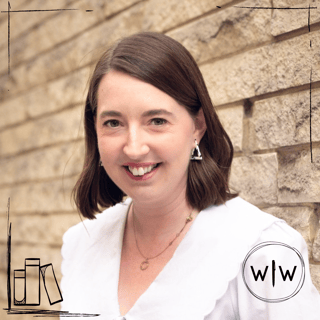
Speaker: Hello and welcome back to the Right and Wrong podcast. On today's episode, I am joined by an author, illustrator and content creator from Adelaide, Australia. It's Christy Anne Jones. Hello.
Speaker: Hello. How are you I'm very well, thank you. How are you? I'm doing very well. Your debut novel is coming out pretty soon. I'd love to talk about it. So let's jump right in Tell us a little bit about Theodora's Tea Shop.
Speaker: Well, Theodora's Tea Shop is a 1920s inspired fantasy novel which follows two women whose names are Dot and Theodora. And so we kick off the story with Dot, who is living in a very sort of small kind of rural seaside town. She's chronically ill.
Speaker: um And essentially, she has wanted to her whole life learn magic. But this is a country in which magic is illegal. and ah when she's 23, she decides to go off to the magical city of Alastair to try and find the witch Theodora who she thinks will be able to teach her magic. And so this is a very kind of bold and scary thing for Dot to do again, in this country where magic is illegal. And so, um yeah, we have our witch Theodora who is who is running a illegal magic business out of the quaint facade of her tea shop. And um yeah, the book was such a joy to write. It was so much fun. The book is a little bit cozy, but it's also a bit dark. There's a a lot of twists and turns. um It's quite pacey at times. And Yeah, it's um basically it was basically the book that I wanted to read is Theodore's Tea Shop. So I'm very proud of it. I'm excited it's coming out.
Speaker: Okay. that's Because the advice you always hear is like, oh, write what you would want to read. So it's great that you've you've done that, taken the advice to heart. Yeah, for sure. So this is, you said it was cozy, but it's not just cozy. You wouldn't you wouldn't advertise advertise this as cozy fantasy, or you think that's a good description? Um, that's a great question. Um, basically when I set out to write the novel, the cozy fantasy genre wasn't a thing yet. And so I was never really considering that as like a marketing angle. Um, the thing with the book is that it is, I think quite affirming.
Speaker: I think it is in places quite comforting. I think if a, like a true cozy fantasy reader, I think if they picked up Theodore's Tea Shop, they they might be, um there might be some things that are ah like tug on the heartstrings a bit more and are probably a little bit more dark. Like there's witches, there's magic, there's an underground syndicate.
Speaker: There are bits that are a little bit creepy in the story as well. So I think overall, there is a lot of heartwarming stuff here, but I wouldn't necessarily say it's just cozy fantasy. Okay, okay, okay. With the with the sprinkling of other things as well.
Speaker: I think so. It's funny how hot drinks have a bizarre association with cozy fantasy. They do, 100%. Like i sort of...
Speaker: i I liked the idea of having a tea shop, I think, because I drink a lot of tea just personally. um But the the shtick with the tea shop in my novel is that um because magic is illegal, Theodora wanted to set it up so that basically if the tea shop ever got raided, then the customers could say, I ordered a black tea instead of I ordered you know this particular packet spell. And so it was kind of a way to get normal people to come in off the street um and bypass the illegality of magic in this place. And not again to get into spoilers, but like when we meet Theodora, um you know, Dot says like, oh, like,
Speaker: you know, do you love tea? Why do you run a tea shop? And Theodora says, no, hate tea. So I kind of get into like, yeah, it's, I think, I think what's quite comforting about the story is that it really centers on platonic love and especially on female friendship.
Speaker: And I think I have always loved stories stories with a lot of imagery and um a lot of sensory imagery particularly. So I think that's part of what kind of gives it that atmospheric and cozy vibe in places in the book.
Speaker: Okay. That's cool. I love that the tea shop is sort of part of the world building of how the kind of illegal trade of magic is happening. Um, I'd love to know about this, the, the choice of sort of setting I had couple of years ago, I spoke with Travis Baldry, yeah who kind of with legends and lattes kind of blew up the genre to what it it is now. And, but that along with, you know, a lot of other books and stories in this space, they're set in the kind of traditional, um, dungeons and dragons, medieval fantasy kind of setting.
Speaker: What was it that made you want to kind of go into style? style I honestly, like I've been working on the novel for such a long time.
Speaker: Like I came up with the story back around 2020. So it's, it was a while ago. i can't remember. cannot remember the exact moment where I was like, yep, 1920s. I think I've always liked it aesthetically. And I remember one of the first there's decisions I had to make when I started researching the 1920s to try and ground myself in this setting is that I had to make a choice whether it was going to be like a 1920s American setting which is actually quite different to a 1920 oh no sorry I remembered I love Virginia Woolf and I love the modernists yeah thank you okay um so adore Mrs Dalloway like really like latched on to Orlando um love T.S. Eliot so yeah no my brain's turned back on I now remember why it's because I love modern the modernists
Speaker: Okay. Yeah. Yeah. yeah yeah yeah had You were saying you had to choose between an American 1920s and. did. Cause the voice is so different. Like when you look at the kind of dialogue of like stories or movies from the, or stories from the nineteen twenty s in the U S or versus um the UK. Cause again, I'd only really read um the bond list. I hadn't read many nineteen twenty s books from the United States. And then I read a passing by Nella Larson, which is,
Speaker: I think set in Harlem in the 1920s or early 30s, I can't remember. And I was like, oh, okay, of course the dialogue and the the general tone of this is quite different. Gatsby is is again quite tonally different. um And so immediately I was like, okay, which sort of direction do I want to go down? um and ultimately ended up with like taking more of the British angle, um I suppose again, because I love the modernists.
Speaker: Yeah. Okay. Okay. That's cool. And then I think that's quite an unusual way to do cozy fantasy is put it in that, thank you in that time zone. Um, this is your debut novel. Yep.
Speaker: Had you written much before you started writing this? Yeah, I mean, I've um basically always been writing. i've been I've wanted to be an author since I was about five or six years old. And i started really seriously writing my first novel um in uni, having come up with the idea when I was 16.
Speaker: And I wrote that book over the course of about eight years, and then it died in the querying trenches. Okay. And then after that, i self-published a book called A Year in Tokyo, which is an illustrated guide and memoir, which followed my time as a English teacher and travel writer living in Japan. um i wanted to make something that was useful as a travel guide, but also interwoven there with um like anecdotes from my time and like cultural things that I'd learned. um So I just self-published that one and then jumped over to Theodora's Tea Shop. So debut novel, but I've always been writing.
Speaker: Okay. Okay. Interesting. Um, did you, when you first started writing, I think like most people, especially if you're younger, and you just kind of start writing. Have you looked into like, have you done any classes or like looked into like books about the craft of writing things like that? Or have you just kind of figured it out as you've gone?
Speaker: I think so. I went to uni, started with an arts degree majoring in English, and then about two weeks into that, or maybe a few weeks into that, realized that that was not going to get me a job.
Speaker: And I had to think very seriously about my future. um I'm from a city called Adelaide. It's a very small city. So, you know, roles for people with just English degrees, like there wasn't that many. Um, so I moved over and actually did a marketing and commerce degree. Um, but I deliberately shoved into my electives as many English classes as I could. I'm so sorry if you can hear my dog. Um, that's okay so yeah I took a bunch of classes in university and then sort of outside of that, just obsessively read books. And so I think most of the learning I really did was by reading other authors,
Speaker: Okay, that's interesting. And you've also, but let's talk about the YouTube channel a bit, because you've been posting on YouTube for for a long time. Yeah. um And more recently, you've kind of moved, the focus seems to be very much more on books and writing and and things like that. I think your older videos, I saw there was like some painting stuff, there was lots of travel blogs and things like that. But now it's much more focused on the literature and and publishing and and that kind of stuff not to mention like right with me and you talking about yeah how you're working on your books and things like that um I think just yeah like you said learning through reading but then also you do book reviews and you do um you kind of talk about why you think a story works whether that's a book or like television or or a movie and things like that that I think will just kind of
Speaker: is There's a self-reflectiveness in that which I think is is teaching yourself anyway. So, I mean, I've, even looking at it from a writing perspective, I've gained so much from doing content work or even um like doing the roles that I had in marketing where I was like in digital marketing, mostly focused on social media. Like there's a lot that you can gain from editing YouTube video and filming a book review, even just from from the perspective of, learning how to make something as engaging as possible, learning how to edit, learning, um you know, what's the minimum amount of words you need to say something. And so the compression around prose is something that you can benefit from, you know, making a book review or even editing a video. um
Speaker: With the sort of direction of the channel, it's basically just followed the things that I've been interested in, which has never been a great strategy. so For YouTube, normally you're supposed to pick a niche and just stay in it.
Speaker: I'm not able to do that. So i you know i started off with like painting videos and then –
Speaker: was in uni and I heard a lecturer say that, you know, most books die on submission because like people don't have audiences and didn't really clock at the time that he was speaking about smaller, more like literary novels in the Australian literary landscape. I just thought he meant all books. And I was like, oh okay, maybe I should try and put out book reviews and maybe I should try and build an audience and and maybe that'll help me get a job in publishing one day. And so I started sort of pushing into book content and then I moved to Japan and then I made Japan content then i came home and um essentially the channel has just followed my interests and it's followed my life and um yeah maybe three years ago i think it was I'm sorry the video that blew up my channel was a writing routine so I've been writing this entire time and then I I used to get up because I worked full-time I would get up at 5 a.m m to write before I went to my full-time job um and then I would stay up late editing YouTube videos so it was ah
Speaker: Truly wonderful time. I did not sleep very much. but yeah um yeah, I filmed my morning routine and and that really blew up. And then um from there I was like, oh, maybe people are interested in writing content and writing craft and just kind of listened to what people were interested in.
Speaker: Okay. I couldn't find the first, ah you've posted a lot of videos over 30 years. But when you first started posting like writing routine and like write with me videos, which I did see some on there, you didn't talk about, a american thinking you didn't talk about what you were writing or show any of your writing. It was very much just like you are writing, but it was cryptic. No one knew what was going on.
Speaker: I was so scared but like because my previous novel had died on submission. i was so scared that Theodore's Tea Shop would die as well. And so I was sort of from a kind of, very nervous, shell-shocked, and just like lacking self-confidence really. So now with the book I'm currently working on, which I'm hoping to go on submission with soon, um which is ah Project Spiegel's Head. It's the next book. um I'm just talking about the main character. Like I don't really mind anymore. But um yeah, back like four ah three or four years ago, i was so scared of saying anything because i was just really nervous that it would also die on submission. ah Sorry, in the Korean trenches.
Speaker: Oh, in the, right, as in two, sending two agents is when book died. Yes, agents need to publish it. Okay, yeah, yeah, yeah. Okay, interesting. And it so you, was it before Theodore's Tea Shop, it was just the one book that you had queried? and Yeah, the one novel. That hadn't found anything?
Speaker: Yeah, for a year in Tokyo, I didn't really think it had commercial potential because I thought it was so personal and it was quite short. So I i just kind of wanted it to get out there. Like I didn't want to wait the sort of mandatory two years that publishing always takes. And um I also with that particular project just wanted 100% creative control over it Um, so I never really even considered sending it to agents or anything for a year in Tokyo. Um, yeah however, what's really cool with that is that, um, my agent now kind of represents a year in Tokyo because we got reached out to by a German English language learning textbook. So for German high schools, like the public schools in Germany, um, they have a standard textbook for learning English. Um, and they wanted to, um,
Speaker: basically print a couple pages of a year in Tokyo in that book. And so now a small excerpt of my self-published book is published um in the textbook that gets given to German high school students, which is very cool. so That's really cool.
Speaker: Yeah, so technically my first bit of money I ever earned from traditional publishing was from this tiny little thing that happened in this German textbook. It's very cool. Yeah, that's cool. And you you said it was illustrated. that the yeah Did you do the illustrations yourself? I did. i did. Absolutely. oh And it burned me out so extremely that I've barely drawn anything since. Okay. Right. So you didn't have any, you didn't do any of the artwork for Theodore's T-Shop?
Speaker: No. I left that to someone who's capable of doing it. okay um as an as an illustrator yourself were you sort of apprehensive about handing that duty off to someone else to be like you can design the cover for my book um i i mean i'm a very creative person in like everything I do. so like with Even with the YouTube videos, like there's a lot of visual composition going on, like there's a lot of stuff with music, and I think that I'm – there's writing and there's drawing, I am interested in basically everything, and also I'm a very picky person.
Speaker: But I have worked professionally before. And so like I was just excited to see what they would come up with. And the person who designed the cover of the book, whose name is Hazel Lamb, I already adored her work. um She did the cover design for a book called The Lost Flowers of Alice Hart, which I had absolutely loved to bits. I read that book at a time where I really needed it. um And so I was always like, oh, wow, I love this. I love this book. I love this cover. And so we ended up with Hazel. And so I knew she would do a brilliant job. Um,
Speaker: But what really surprised me about that process is that my publisher, Hachette, they took me along the entire journey. i saw all of I got to help write the brief for the cover. I got to see all the different ideations of it. We started with 16 different versions of the cover. I got to pick my favorite. um I got to help tweak bits of the cover. Like, for example, on the cover, basically, it's just this really big raven. um And in the raven's mouth, there's a little teabag. and the teabag has yellow flowers in it so that was a different color to begin with and and so I was really lucky because I got to be involved in every part of the process um which wasn't something i was expecting because that doesn't always happen with authors yeah that's that's quite a rarity usually it's usually it's um send us a mood board and then we'll get back to you I did also do a mood board and of obviously you didn't move as well but uh you got to add add a bit more than that oh that's cool it's very lucky
Speaker: I have one question that I was, uh, from a video that I saw you posted that I was curious about before we go to the the cabin. And that was, you did a video called something along the lines of, I tried J.R.R. Tolkien's writing process for a week.
Speaker: Yes, I did. i did. What is what was his writing process? I'm not familiar with, with his approach to these kinds of things. So that's a great question I've done. ah so I've done a lot of these writing routine videos that kind of become a cornerstone of my channel. I started with Ruki Murakami. He has like a 4am writing routine situation. I've done Donna Tartt, Dan Brown, so many different kinds of people. ah J.R.R. Tolkien doesn't really have a writing routine, which was part of the fun and creativity of making that video. And so I went and I looked up a bunch of like the letters that he'd written to his son and um like any kind of media I could find because it was so difficult to find information on his writing routine. um
Speaker: And I was just anticipating comments from people being like, oh, well, this video should have been 30 years long then because that's how long it took him to write anything. Yeah. But yeah, that week mostly I was just focusing on like doing world building stuff and approaching writing and world building from a very joyful and slow perspective and not trying to force myself to to overproduce really, to try and emulate probably some of the way that he was approaching his work. um
Speaker: Because he was this gorgeous, amazing, creative, um you know, creator of languages, um medievalist, like, brilliant, brilliant man. But I don't think he was really, you know, laser focused on output in the way that modern authors are like are focused on it now.
Speaker: Yes. Yeah. ah Yeah. It wasn't the, the industry wasn't the same. ah it wasn't necessarily like that he needed to do it to hit a deadline or or this, that, and the other. Yeah, no, because he invented modern fantasy as we know it. um And you can look at all of the fantasies that came before him. like He was very inspired by um William Morris, who's better known. He's better known for his um like textiles and wallpapers and stuff that he's designed. He's very famous for that. But he was a part of the medieval revival. um and so we've got him and then we've got people like Hope Mirrelees, who did Love in the Mist in the Lord Dunstney's King of Elfheim's Daughter around the same time.
Speaker: Everything else had a kind of fantasy, a kind of fairy tale tradition. and then Tolkien comes in and then just, um you know, leans on the medieval revival and just completely invents a new genre. It was amazing. Yeah. um When you said this is kind of a cornerstone of your channel now, you do these different authors. When you mimic another author's process and you try to kind of figure out how they did something, does that, do you always take away a part of that? And then sort of, do you feel like your process has evolved as a result of it?
Speaker: um I think in small ways it really has. Part of what really interests me about writing routines is that I can't stick to a writing routine. Like I'm, cause like, you know, as ah my day job, I'm still a content creator. And so,
Speaker: that, you know, it's good because I can be quite eclectic with my time, but it's a, it's a job that has a lot of hours for me. And so I kind of still shove writing into any moment that I can. if it's on the weekend, if it's at two o'clock in the morning, like on a train, no matter where it is, like if I have spare time, i am trying to write. And so I, I'll write on my phone. Like it just, I don't have a routine or anything I specifically need. And so I'm, I think I'm really interested in the luxury of being a full-time author and having like a really bespoke routine. Like one of my favorite ones was um Dan Brown. He has a really interesting writing routine where he um gets up. They always get up really early, which has been really difficult for me filming that content because I am, I am a night owl. I'm not an early morning person. Yeah.
Speaker: But I've gotten up at 2 a.m. or 4 a.m. or whatever it is so many times. um Dan Brown, he gets up really early. He has a like bulletproof smoothie, has like coconut oil and stuff in it. oh no. he has a Sorry, the coffee he has has coconut oil in it. He has like a protein powder smoothie. And then he'll write for, I think it was like 40 minutes or an hour, and then he'll do a whole bunch of push-ups.
Speaker: And then he'll write for a bit longer and then he'll do more pushups. So I think I did like 30 pushups a day and that's a lot for me. I have fully pulled a muscle in my neck making that video, but people seem to like it. So worth it.
Speaker: Okay. That's kind of like the, I've heard that when Aaron Sorkin was writing The West Wing, I think he would have a shower. Like every time he, he kind of got stumped on something when he was writing, he would go and have a shower and then come back. That's interesting.
Speaker: Yeah. i Yeah, there's been lot of really interesting little ones that I've sort of found. like um Yeah, so Brandon Sanderson's was really interesting um because he will have a writing session ah because he is also a night owl, and so that was like so much easier for me. He'll basically sleep until like 11 a.m.-ish. He'll do his first writing session and then he'll spend like – 6pm to 9pm with his family and then he'll do another writing session after that and so yeah basically like two four hour blocks and I sort of realized like doing that routine you can make yourself concentrate for much much longer you know there's
Speaker: some obvious additional stuff there where he probably wasn't like, you know, the one cleaning his house or anything, which is another part of um these routines where it's like someone who can focus on being creative, you know, nine, 10 hours a day, they're probably not also homemaking. So yeah um like Dickens was an interesting one. He does a lot of walking. He was doing like couple hours of walking a day, but then again, he wasn't the one like cooking or cleaning. And so i just, i find behavior and routines really interesting. Yeah.
Speaker: yeah, Because Stephen Fry's got, his is like very well documented in his book, I think. I haven't heard his. The comments I always see with Stephen King is like, Stephen King, sorry, is ah the people are like, yes, but like you said, he's also not doing cooking. He hasn't factored cooking or cleaning or like other day-to-day chores into this. Obviously someone else is doing that for him.
Speaker: No, and i a lot of the comments have also mentioned like how I think the only person whose routine I tried who was also a mother was Ursula K. Le Guin. I think from the time I did her routine, it was like, oh, goodness, like I think her kids were like seven or ten or something like that. So she does factor in like domestic labor into like into her routine as well, which I find really interesting. Okay.
Speaker: So, yeah, i it's but it's a real shame, though, because we, you know, the authors who are famous enough to share their routines are not the authors. Like, they're always the authors who are making enough money that this is their full-time gig.
Speaker: um Yeah. And for many people, that takes many, many decades. Like Octavia Butler, for example, um I found two routines for her. But ended up doing the routine from when she was working full time at a factory and she would get up at 2 a.m. um and right before going off to the factory because she felt so um like exhausted from the physical work and the social labor of talking to people that she would want to sleep before she ended up going back to her work. Um, but yeah, for some reason it's quite hard to find routines from working mothers or, um yeah, people who are handling more of those normal domestic things, because at the end of the day, most, most writers, the vast majority of authors are working full time or they're juggling other kinds of employment as well. And so, yeah, I, I really am interested in writing routines, but again, it's this thing where it's like, oh, only a, only a privileged number of authors get to do this full time.
Speaker: Yeah, yeah, yeah. So based on the fact that you seem fascinated by people that have a writing schedule, ah I'll ask you the question then, when it comes to writing for you, are you a planner or a pantser?
Speaker: I'm somewhere in the middle. So i I like to have like a one page outline of where I'm going to go with the story. um But I kind of like to look at it like it's a like a GPS and not a old fashioned, you know, physical map. Like I want to be able to change a corner and have the outline come with me and help me recalibrate where I'm going. So yeah, i kind of have like, I think because I'm easily overwhelmed and the idea of fully plotting a novel sounds really boring to me so i yeah I think ideally what I tend to do is I have like a one pager you know this is the beginning of the story this is like the call to action there's kind of like very basic beats and then they always change along the way okay okay so there is an initial outline but you're happy to deviate from that and you just have it in the back of your mind and you'll maybe circle back to bits in it
Speaker: Yeah, I'm also very, very iterative. So with Theodora's Tea Shop, I wrote the first draft um and then i knew it wasn't working. So I basically put i just put the file and into a different folder and then rewrote it from memory.
Speaker: And then draftee wasn't working, chucked it away, rewrote the book from memory. And so I will have the tendency to write a whole novel and then abandon it and start again because I know it wasn't quite where I wanted it to be. And so I'll, cause I'll vaguely remember the plot.
Speaker: I'll remember like the the main things. um But I've sort of found that that is the best way for me to ideate, to make a story more concise. um And the things that are really fun and cool and that resonate with me are going to stick with me. I'm going to remember them.
Speaker: The stuff that's like fiddly and like isn't engaging, I'm going to forget when I rewrite it the next time. And so it's kind of been the best way for me to ideate. Yeah, I've heard that similar method done for people use that who I've spoken to who have used that to cut word counts where they've they've horribly overwritten. And then what they'll do is they'll be like, okay, well, I'm going to put that away. And then like you said, just do it from memory. And you'll remember all of the main beats, but you'll lose all of the sort of random chaff that you kind of threw in you were going through it.
Speaker: yeah Yeah, it's really helpful for brevity. Yeah. Yeah. Yeah. Awesome. We are at the point in the episode where I ask you, Christy, if you were snowed in at a cozy woodland cabin in the middle of nowhere, which book would you hope to have with you?
Speaker: i I think I would want something really good value, a book that I know I'm really going to enjoy and probably a book that's going to be a reread and it would probably be Jonathan Strange and Mr. Norell by Susanna Clarke.
Speaker: It is one of my favorite books of all time. i think it is the most... ambitious fantasy novel that's come out since Lord of the Rings. It's this amazing kind of like Regency pastiche where Susanna Clarke has written this this book in the kind of voice that you would find um of a book that was written during the time of like Pride and Prejudice. so This is during the um Napoleonic Wars and it's about these two magicians who want to bring magic back to England. And so it's a kind of like alternate reality where, you know, the Duke of Wellington is doing stuff and there's like, again, the Napoleonic Wars are going on at this point.
Speaker: um But we have these two magicians and um one is very stuffy. That's Mr. Norrell. And ah Jonathan is, you know, a bit younger and a bit more bold and it's just, it's beautiful novel it has footnotes it is enormous it's like a thousand pages long and so I would love to take that opportunity to reread it because that book is quite an undertaking and so you need the attention span yeah I feel like you would need to be isolated Yeah, yeah, yeah. As someone who reads lots of epic fantasy, i I've recently been reading some books that are in my head shorter and then I realized they're actually just what most books, the length of most books are. yeah
Speaker: So yeah, yeah, I get it. But this is exactly what you want for being stranded in a cozy woodland cabin. um Amazing. Awesome choice. I don't think anyone's picked that either. So a first at the cabin.
Speaker: I definitely recommend it. It's such a good book. Next up, we are going to get into a bit of the publishing side of things, literary agents, book deals, all that jazz. That will be available in the extended episode, which is on patreon.com forward slash write and write.
Speaker: This whole time. And so it's been a lot of creative juggling for me for many, many years. So I think, yeah, having a little bit of a, a little bit of ah a break for just a little bit of time, I think would be really nice.
Speaker: Okay. Yeah. it sounds like you've earned it. Yeah. Thank you. Yeah. Amazing. Well, that brings us to the end of the interview. Thank you so much, Christy, for coming on and chatting with me, telling us all about um Theodora's Tea Shop and the kind of journey that you've been on as as a writer and and and within publishing. It's been really, really fun chatting with you. Yeah. It's been lovely chatting. Thank you so much.
Speaker: And for everyone listening, Theodore S.T. Shop is out on the 28th of July. and if you want to keep up with what Christy is doing, you can find her on Instagram, YouTube, and Patreon at ChristyAnnJones or on her website, ChristyAnnJones.com. To support this podcast, like, follow, and subscribe. Join the Patreon for ad-free extended episodes and check out my other podcasts, The Chosen Ones and Other Tropes. Thanks again to Christy and thanks to everyone listening. We will catch you on the next episode.