Transcript
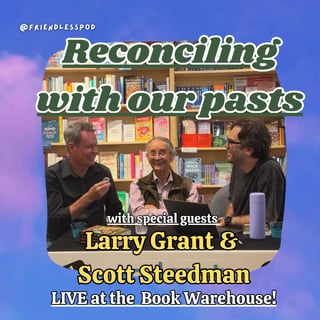
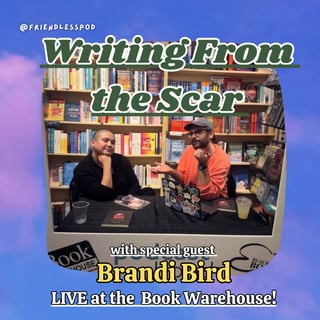
Speaker: Well, hey there, sweet peas. Welcome back to Friendless. I'm your host, James Avramenko, and this week's episode is a brand new interview recorded live at the Book Warehouse on Main Street right here in Vancouver with an absolutely incredible guest, Eddie Bedell Tan.
Speaker: We discuss his latest novel, which is also my favorite read of the year so far, The Tiger and the Cosmonaut. Which leads us to discussing everything from the weight of identity, the cost of compliance, Asian rage, what it means to go home when home doesn't really exist anymore, and why maybe we could all care a little less about defining who we are. So lean back, get comfy, set volume at a reasonable level, and enjoy my interview with Eddie Budel Tan here on Friendless.
Speaker: um To begin with, a question I love to ask all my my guests because it evokes any number of reactions. Eddie, who the hell are you? Who am I? Oh, wow. This this is going to get really existential.
Speaker: Who am I? I ask myself that every day. Don't we all? In the mirror. Yeah. I'm up with a satisfactory answer. But I suppose a part of me is is an author. I live in Vancouver, born and raised.
Speaker: I consider myself to be a a true blue Vancouver. i even miss the rain when it hasn't been around for for some time. think there's rain in my blood. spend so much time on the seawall.
Speaker: i i can have been known to show up at lunch wearing yoga gear, head to toe. So really dyed in the Like a, yeah.
Speaker: But I also write books and yeah. So the Tiger and the Cosmonaut is, I like how you call it brand new, but believe it or not, it's it's over a year old now. I know, which is crazy. Last week, we celebrated its first anniversary, birthday, I don't know what I like calling it. The book-aversary. Just over a year. The book-aversary, like that. Right, it's it it's yours. though Thank you.
Speaker: And it's been, yeah, it's been a thrilling ride. What else am I? So I'm a second generation Chinese Canadian by way of of China and Brunei. So my grandparents, my ancestors come from Hainan province, China.
Speaker: fled China during the war and settled in Brunei as refugees where my parents were born and raised. And then my parents moved to to Canada when they were a young couple and they got married. They first moved to Edmonton, so I could ah could have been an Albertan, but dodged that. We're we're we're we're both Albertans. I was about to say, congratulations.
Speaker: To all the Albertans listening. I think very highly ah of Alberta and Alberta. But yeah, my my my parents ended up settling in Vancouver, which is where where i was born. and And I'm thankful that they did, because I love the ocean.
Speaker: It's the most the most important thing. and And so I couldn't imagine myself living in a landlocked place. It's rough. Especially especially like after you've seen the ocean, you know? Because I think yeah i can...
Speaker: You know, I wouldn't be so bold as to be like, I remember the first time I saw the ocean. Like, I feel like I can kind of remember the first time I sort of felt it in a way, you know? Because you're, when you grow up in, you know, i grew up in Calgary and it's like, you know, the mountains are incredible. yeah But there's something about just like the vastness of the ocean. And just like when you get to certain places where it just, it just never ends, you know, it's...
Speaker: It's something else. yeah It is. yeah And I've i've spoken to people who have grown up on the prairies. It's interesting because I've heard often from people who grow up in the prairies that when they're on the coast by the ocean, they feel claustrophobic. They feel hemmed in. And so being in a place like Vancouver where you have the ocean and then you have rivers and inlets and then the mountains, I can see that.
Speaker: ah But from my perspective, I feel the opposite. a Well, i guess I guess with the, yeah I mean, i definitely understand that because the mountains kind act as this sort of like page in a way. Sure. You know, and they're hard to, you know, at times it feels like,
Speaker: I couldn't even afford to escape if I wanted to, you know, right? Just to get over the mountains, it's, you know, right? right But there's something about, you know, when you're in the prairies, it's, cause it's the same sort of aesthetic, but like you can walk in the, you know, in the same way you couldn't do that in the ocean. Like you're really, you're, you're, yeah but I kind of like that. It's, it's, it's, what's the word for it? It's like, you know, it's a, it's a, but it's like you're, you're in utero. It's like you're, you're encased, you know, right? Yeah.
Speaker: It feels very cozy. Exactly. Yeah. yeah yeah And it's always, blows my mind every time I fly back home because flying over the mountains, one really realizes how vast the wilderness is just past grouse and cypress. It's just mountains and mountains as far as the eye can see.
Speaker: And it really just adds perspective This kind of jumps ahead a little bit in some of the questions I had for you, but but you know, the town that you created, which is not springing to my mind at the moment. Wilhelm. Thank you. Wilhelm.
Speaker: I spent a few summers in in working in Barkerville up north. And so I'm very familiar with you know Wells and Quennell and Prince George and all those places. And Wilhelm really evoked the the the feeling of those towns.
Speaker: But it also, like you say, the wilderness that's right there, you know, and you don't even really realize it And just the, i don't know what the right word for it is, but there's, because there's a, yeah there's sort of a danger and there's also a ah sadness around that too, though, because you you think about There's all that forest, but then they've also clear cut it in a way that if you you know if you go over a certain valley, you just see an empty field. And I wonder sometimes if they if they track flight records for that too, or like flight maps for that.
Speaker: To be like, no, I swear there's still trees. you know But that might be too too conspiracy minded. Yeah, there I wanted to create a place that was that was isolated that and for anyone listening or watching.
Speaker: a Wilhelm, the town in which the tiger and the cosmonaut takes place, is not a real place. yeah Because I get people asking me this all the time. They ask, where is Wilhelm? yeah What is this place? I looked it up on the map and I couldn't find it. Like this, this place doesn't exist. You made it up.
Speaker: The answer is yes, I did. then the next question is inevitably. So it, you base it off of Sechelt, right? Or you base it off of Nelson or Merritt. I get all of these, got all of these comparable town and It's funny to hear that. And I love speaking with British Columbians about this because they're just so passionate about where this story is set in our province. And I really want to determine what inspired this place. And no matter what town they throw at me, I always answer, yes, yeah, it is it is inspired by that because, ah ah no it is it is seashell, but it's also Nelson and it's also Merritt. I really wanted to create a town that could be any and every to town in British Columbia.
Speaker: And not because every town in British Columbia is the same, because that's very much untrue. Every town is so different and distinct. but But I wanted to create a place that that could feel like home to anyone who grew up in a small town.
Speaker: And this idea of Wilhelm as a town, as a place, would really... you know I did it in a way to ah just, I guess, illustrate or or ah reflect how dangerous oversimplifying yeah can I think when you know people think of British Columbia, certain images come to mind, right? James, Will, I don't know, as Albertans, you are.
Speaker: You might be able to attest to that. yeah I think some people come to BC expecting us all to be hugging trees and marching to save old growth forests every day and that every bathroom is gender neutral and and we're eating sushi every morning.
Speaker: And there's probably a bit of truth in all of that. yeah but But it's a lot more complicated that, right? DC is not only one thing.
Speaker: And while lot of those stereotypes might have bit of truth, the truth, the real truth is a lot more complicated. And such is the case with Wilhelm, which Wilhelm on the surface seems to be this very progressive if not self-righteous place, a place that really prides itself and a ah enlightened and and likes to project that image.
Speaker: But beneath the surface, it's a lot more complicated. um ah I'm going to circle back to the to the Wilhelm stuff because i have some some deeper questions about that, but I want to You know, I realized I didn't really set up the novel very well. I kind of just dove in. And so I do want to i circle back a little bit. So the main narrator, Casper, when the story opens, he's already...
Speaker: carrying decades worth of grief and secrets and shame that he's never had a chance to say aloud. I'm going to do my best to not be too spoilery with the interview, but it might come out. i don't know. We'll find out. But and a little hint here and there. Right, exactly. yeah um so So beginning with Casper himself, as you're writing someone like that, what does it what does it feel like as an author to be building a character who who's kind of learned to be so fluent in avoidance.
Speaker: And does do you feel like that comes out of your own predisposition or do you is that an observe from somewhere else? Oh, this is getting deep. who speak to does got it So what's your attachment style?
Speaker: therapeutic
Speaker: So what I will say up front is is this book isn't about me or my life and Casper is not me. And just like how this book isn't about my family, although the family depicted in this book share a lot of traits and similarities with my family, it's really the family at the center of the story is meant to in a way represent any family.
Speaker: Chinese Canadian family with second generation children. And so even though it's not about my family, it's about families like mine. And think to an assertive extent, the same can be said about Casper. Everything in this novel has a bit of me and my life and my lived experience right throughout it, even if it's not a reflection of me.
Speaker: Writing Casper's character was really interesting because I set out to write a story about the experience of being second generation Canadian. And so I can only speak my experience as second generation Chinese Canadian, but the way that I would describe that experience it can sometimes feel as if I were caught between cultures, having to, or feeling some pressure to honor my parents' heritage, to honor all of the sacrifices they made to to be here. And it's all of these comments about, and stories about everything that my parents gave up to come here to give me and my brothers a chance at a better life.
Speaker: And then on the flip side, just wanting to be Canadian, right? Just so wanting to play a hawk street hockey. and to just be accepted as Canadian without people interrogating where I'm from and, you know, why my family, where my family are from and why I don't have an accent. yeah yeah yeah oh yeah That's just what I wanted growing up.
Speaker: and And so that's what that experience felt like for me. But then even more deeply, there are just other, I guess,
Speaker: elements or nuances of of what that experience can feel like. So coming from a second generation Chinese Canadian background, my experience has been very much this one in which I have these certain expectations, right? So ah you might have heard of the model minority and and what comes with that, this idea that Asian Canadians and Americans especially are given access to certain privilege and prosperity, but only if we, you know, meet certain criteria, we toe the line, exactly, we play nice. yeah
Speaker: And in a way, perhaps my community has created this this image or persona of the obedient, rule-abiding citizen.
Speaker: And, you know, just like when we talked about with oversimplification, the truth is obviously a lot more complicated. But, you know, I think there's, Having to, first of all, acknowledging that there is that expectation and that mold exists, and then also feeling like one has to fit that mold and meet that expectation in order to get ahead in life, in order to act with privilege and prosperity.
Speaker: You know, that that has some really dehumanizing oh yeah effects on on a person and on one's sense of self and identity. and And so part of this part of part of the reason that I wanted to write this book was I wanted to explore...
Speaker: What happens when people who are who come from that community who contend with those expectations every day just to decide that they've had enough and they decide that the system's no longer working for them and they they try to the best of their ability to reclaim their their true sense of self and identity.
Speaker: and And so writing Casper's character was really interesting in that way because It really is an exploration of second generation Chinese Canadian identity.
Speaker: Something that I love so much, and again, this is not, you know, I'll dance as far away from the end as possible, but something that became very impactful for me is this idea of how rapidly things can change, even though we think that they're ingrained. You know, we think that these are forever, whatever they might be, you know, norms or traditions or or anything, and then they can flip and then they're gone, you know, and there's sort of no,
Speaker: Suddenly in retrospect, we're like, how could that possibly have ever lasted as long as it, you know? And I think the climax of the story really, really evokes it it evokes a lot of that sort of sentiment, it you know?
Speaker: um You know, obviously, yeah, obviously the that the story isn't isn't directly you. In the past, i had I had read an interview or a quote of yours saying that a piece of the inspiration for writing was kind of reckoning with your parents aging.
Speaker: And that that was something that really, really struck me. there There's a passage around very early on around realizing that your parents aren't waiting for you at the end. that they're onto their neck peak while you're at yours. And that that really caught me.
Speaker: But you know, that feeling of of ah running out time and and and reckoning with what was sacrificed and what can you still achieve. And I'm wondering, I guess, how much of that urgency in the inspiration do you feel ended up within the book? And how much do you feel sort of just stayed within kind of the notebook, if you will, you know, um to for you to just reckon with on your own?
Speaker: Yeah. That's a really good question because a lot of it did end up in the notebook and not in the book book. Yeah. Because when I first set out to write this this story, a part of the inspiration or a part of the motivation was this reckoning that I was going through that my parents were aging.
Speaker: And this was happening at the onset of the pandemic. So, and and I also think it was a part of my stage in life. When I was in my mid-30s, all of my friends seemed to be confronting the same fears.
Speaker: We just started to realize that, hey, our parents were older They are aging, moving into a different phase in life. And on top of that, there's a deadly virus that's ravaging people in which the elderly are more susceptible to. And so that feeling just became really acute.
Speaker: And I did feel this urgency to honor their stories and their experiences in a way. And also i've felt this need to almost make up for everything that he has sacrificed. Sure. and for me and and my brothers coming here.
Speaker: And and so during that time, and this was also amidst a really troubling rise in anti-Asian racism, I really felt this hunger to learn more about my parents.
Speaker: I started asking the questions that at the age of 35, I had never asked my parents before. it's sad, but better late than ever. yeah And I would sit them down and take them out for a meal and ask them to tell me what it was like to move to Canada, you know, when they were 20.
Speaker: And they told me such fascinating stories about, you know, sure, there was difficulty, sure, there was discrimination, but it was also a big adventure for them. Sure. Moving to a new country and moving from a tropical country to a place like Edmonton.
Speaker: Having. The Calgarians are laughing.
Speaker: and And having to shop for a winter coat for the but first time. They told me stories about riding a roller coaster for the first time and then almost in their purse. It was just really, I have a lot of fond memories of that time. because had a chance really delve more deeply into their histories. And I wanted to honor that in some way.
Speaker: yeah I feel like I had a very similar experience with my dad around that same time. And and I do feel like if I had asked him even five, 10 years earlier, i wouldn't have had the same reception or reaction or or appreciation.
Speaker: Every moment count, tomorrow's never guaranteed. a And yeah, so I'm happy that I came around actually ah and had that curiosity.
Speaker: Yeah, enjoy this time. it But it was, like, it did feel very uncomfortable also just because of course there was that urgency and and no one's getting any younger. Well, you don't want to say, you know, hey, I know you might die soon, so do you want to tell me some stories? Yeah, that's not the best.
Speaker: But you are right. yeah you know and it's And it's one of those things that I think that we we had a chance to collectively reckon with it in that window, you know, and and instead I feel like we were more driven to you know but that whole like back to normal thing, right? and And we kind of missed that window. and And I really appreciate people who took that time.
Speaker: to reckon with it, you know, because I think that we have this predisposition to to think that we're owed a third act, you know? and And my therapist loves to always, whenever I'm like, well, I'm in the back half of my life, and he's like, yeah, if you're so lucky. But he's like, don't trick yourself, you know? you Oh, yeah it could be tomorrow, right? So I think that reminder and and then the appreciation of it, yeah it deepens everything, right?
Speaker: Yeah, it really does. And people are always changing too. And yeah, I mean, I'm constantly changing, they're constantly changing. and And so, yeah I just, I value every moment I have with my family and and I value it more and more. And I sometimes, this is going to get, this is going get grim, but every now and again, going to share this with you.
Speaker: Those safety I, every now and again, I get this fleeting thought and the thought is, what if this is the happiest I'll ever be? Like what if everything goes downhill from here?
Speaker: Because I got my health. My husband has his health. We have a happy, full life. Both us, our parents are alive and healthy and everything we need is more or less abundant and we feel fulfilled in life. And sometimes I think,
Speaker: you know all this can be taken away just like that. And yeah we're not always going to be healthy and our parents aren't always going healthy. And so I get this really morbid thought sometimes, thinking this could be it. This could be the happiest I'll ever be and it can all change tomorrow.
Speaker: But you know the, I guess, uplifting part of that is is you know knowing how ephemeral everything is. It does force us to be more present and more grateful.
Speaker: As cheesy as that sounds, i i don't every time I have that morbid thought, I think to myself, my next thought is always, yeah, so this is true. Could be right. So make the most of today. Enjoy it. And and that tends to be a ah positive way of looking at it. The irony of that is I don't see that as grim at all. yeah I think that's just deeply aware of the reality, you know? And I mean, the joy of a thought like that is that there is no answer to it. You know, you're right. It could be. It also could not be. Who knows? You might win the lottery. who know you Right? You know, like you just got shortlisted, you know, like really killer. Like, you know, it's like, you know, that better be making you happy, you know? here
Speaker: it yeah But but ah it reminds me of that there's that. There's a Kurt Vonnegut story of of his uncle. He would always stop in the middle of a nice thing and he'd stop he'd say loud, he'd go, if this isn't nice, what is? And it was his reminder. It was one of his commencement speeches that he would always give.
Speaker: And he'd say, you know so I hope if you take one thing, whenever anything's like nice and soft and gentle, even if it's small and momentary, you just stop and you sail out, you know, yeah this is nice what is, right? You know? and and And I think, again, it's that same thing of we're we're kind of conditioned to not reckon with that stuff. We're conditioned with the belief of, you know, capitalism will only ever go up and it'll only ever, right, you know, and and all those things. And and that there's this there's this delusion of perpetuity, you know? And when you look at things realistically,
Speaker: That doesn't mean it's depressing. It just means it's, you know, i come from the DBT school thought, you know dialectical behavior therapy stuff around, you know, radical acceptance is like, yeah, you you will die. that Sorry, but like, yeah. yeah yeah And you can scream and yell and throw a tantrum, but that's not going to change them. And so you better enjoy what you do get.
Speaker: And I think as we age also, yeah we become more resilient and we become more accepting of that. i When I was younger, one of my, if not my greatest fear was losing everything.
Speaker: So much so that I wrote a book about it, my first book. Beryl Ias, it was all about that, that fear of losing everything, that one day everything will be taken away because in that novel, the protagonist, Cohen, he does quite literally lose everything in a day.
Speaker: It follows him as he grapples with And I wrote that book in part to deal with my fear at the time of losing everything. And and i I've changed since then. So that was six years ago and I no longer feel the same fear. And when I do have that thought of, that happened. I'll ever be. yeah You know, it's it's not, it doesn't make me feel scared. It doesn't make me feel anxious.
Speaker: It's just an acknowledgement. and And so I think as we age, we do be more resilient to that more understanding of it. I, you know, something that actually helped me when we had that fear is is the Buddhist teaching of impermanence. Yeah.
Speaker: Yeah, and you know I don't identify as Buddhist, but I certainly i certainly respect a lot of their principles. And in that principle especially, just this idea of impermanence, the fact that everything is imperfect.
Speaker: Nothing is forever. It's all temporary. and And as soon as we accept that, we healthier our outlook on life. can be because you no longer feel the need to hold on so tightly yeah because it's futile. Yeah, you literally can't. Exactly. No matter how hard how hard you hold, it's it's still going to slip out of your hands at some point. and And there's something really liberating about it. makes it a lot more fun.
Speaker: It opens the door for a little bit. Right, exactly. It's like, you might as well just whatever. you know what i mean and I mean, of course, then the fun comes in. light That doesn't mean just go be a flippant. jerk off, you know, like it's like, but it just allowing, you know, taking that pressure off yourself, right? And allowing yourself to just be like, yeah, you know, but you know my one kick in the can to circle it back to something more dour, you know? Things are getting a bit too uplifting. Right? right we're We're too positive here. We got to bring it back, ri it back down to earth, you know?
Speaker: There's this really beautiful parallel around this sort of the interior journey of almost the the kind of dread of a young queer person just kind of home, you know, and the the the the tension around wanting to be seen and being terrified of the same recognition, right? And that, you know, the fear of authenticity.
Speaker: While also there's this kind of like sunse suspense thriller going on, you know, there's disappearances and there's, you know, liars. There's these two parallels kind of playing Was that sort of a a structural decision from the very beginning?
Speaker: Or is that something that you were discovering as you were, the characters are talking to you as things are happening? Yeah, maybe a little bit of both. So, so really I really, have a lot of fun taking something that seems familiar and then just flipping the script or subverting it some way. So in this case, what I took was your typical boy goes back to their hometown type of story, right? And, and they automatically and immediately revert back to that troubled insecure person that they were when they left.
Speaker: And so I decided that would be... I imagined his voice went up like one or two octaves at first, right? you know that's yeah But there's so much truth in that, right? Oh yeah. You know, whether we're returning to our hometown or even just going back to our parents' home, there's there's something about...
Speaker: being back or revisiting and like a familiar phase in our or past phase in our lives. It just almost transforms us back to the person that we were during that phase in life.
Speaker: I wanted to take that structure of a story or that nut of a story, subvert it in a way, have some fun with it. And so that was something of a structural decision. But something that I do often hear from readers is how much that element of the story really resonated with them. That feeling of going home and just feeling really not at home while they're home. Yeah. Feeling as if they couldn't be themselves and they had to be someone else. Like they had to play a role, or whether it would be the the role that their family or in their lives demanded them to play or
Speaker: or reverting back to who they were that point in their lives. And and it was really interesting to just hear people it's It always reminds me of a, think it's a Gertrude Stein quote of saying that there is no there there.
Speaker: it's this idea of like, they're kind of, in a lot of ways there is no going back. And yet there is also this bizarre, like spiritual regression, even though it's not the same place, you know, because you you know you're not going back and yet it feels like you are.
Speaker: I, you know, and there's, yeah yeah, I mean, I'm in the same boat. I'm one of those readers saying like, I've had that experience where I'm like having this almost like double deja vu of like remembering what the, you know, what the house was while also seeing it it as it is right now, you know, and it's a very alienating feeling, you know, it's lonely.
Speaker: It's a lonely feeling to realize, I mean, again, it's like we're talking about, it's like, it's just that, that feeling of time passing, you know, and when time almost feels like a physical, object, you know, and you realize it's much further away from you than you thought. you know true Yeah. And it's, I guess, compounded for people who are who grow queer. Yeah.
Speaker: Right. And so in this novel, Casper goes home, but he's not just going home. He's also bringing home a partner, a male partner for the first time. to his parents' home. And he has, there's so many more pressing and urgent things happening, but the thing that he's most anxious about is, is his mother going to demand that they sleep in separate rooms, right? Or how are they going to react to this boyfriend that he's bringing home and all the slights that he sees his boyfriend be subjected to. And so I think that element just makes it that much richer or because
Speaker: at least for me, I can attest to my experience growing up queer. i was playing a role, you know? The person that I was when I was a teenager it was not truly me. That was me mirroring my male friends, pretending that I loved hockey, basketball, Jennifer Lopez. yeah Although I do love Jennifer Nolk. I was gonna say,
Speaker: I love Jennifer Nolk. It's a kind of love. yeah And so that just makes it so much more complicated because I think so many queer people can relate to this feeling of playing a role. But even at the time, we're so young that I don't know if I realized I was playing a role. i was just trying to figure out who I was. that's And so I wasn't consciously. yeah putting on show and performing, i was just modeling behavior that I saw around me, trying to figure it out.
Speaker: yeah i mean like You're talking to a guy who was, I was the only boy in dance class. Good for you. Thank you. I remember, you know, it it wasn't quite as like comical as like the fist was in the air as they were, you know, the jocks were surrounding me, but it was close. but but You know, it was one of those like, why are you dance class? And for me, I was like, because i want to dance, you know, but I had to be like,
Speaker: Because, you know, I'm the only'm the only guy. You know, there's so many girls around. Even though that, I was just like... no because I alert you ah it was like, I was so convinced they bought it. was so convinced.
Speaker: Blast her. But there is, you know, you know there's there's that direct... But there's also like... think you're spot on that, like, I don't think that anyone at that age, I mean, i maybe shouldn't speak with such a broad stroke, but it doesn't feel like many of us are that self-aware, you know? and You just wanted to dance.
Speaker: Literally. but But it was one of those, like, it just, you you you you have no idea who you are. And you're just trying stuff on and and and you see, oh, this makes me,
Speaker: not even that it makes me feel safer. It's just that it's like, this means I'm not the target for a little, you know? And and so it's like, okay, better lean into that, you know? That's exactly it. Yeah. That's adolescence in a sentence, isn't it? I mean, just trying to assimilate so that you don't get the negative attention, yeah so that the negative attention can be directed elsewhere. Right, right? It's, oh my God.
Speaker: Horrific what we do to children. Right. oh On the show, I'm often looking at this, the idea of of this sort of nuance between the idea of being alone versus being lonely, you know, and and how those things can sometimes be different. And then I think the book evokes a version of that in the way that, you know, Casper is, you know, surrounded by his family, you know, he's got his partner, he's got, you know, he's in his hometown and yet he is still so isolated.
Speaker: He's still so alone inside himself, you know. I was going to ask about family stuff leading out of that, but we've kind of tapped into it. and I just think that he's an incredible character and it's like very, it's just one of those like, how do you expect readers to respond to him when you think of, you know, he's he's going to is going to his hometown because his father's disappeared and he's worried about where his boyfriend's gonna sleep, and you know? And it's like the the sort of dichotomy of that pressure. yeah um how How did you expect readers to take him in, and sort of on first blood?
Speaker: Well, I want people to relate to him, to see a bit of themselves in him. I think there's something really true about this feeling of of being lonely. And if you're surrounded by people, especially in a city like Vancouver,
Speaker: and especially when one feels that the people around them don't really know the true them and i think that applies to casper's face even with his boyfriend anthony so yeah he's been with anthony for four years if anyone can understand and appreciate casper for who he is it's anthony right but even around anthony anthony doesn't realize that casper had a twin brother yeah doesn't even know yeah Yeah. Anthony soon realizes that Casper's been keeping all of all of these pretty fundamental bits of information from him. And so I think a lot of Casper's loneliness comes from the the fact that he has been keeping people out and he has been guarding himself, his true self, from from those around him.
Speaker: And imagine how isolating. Yeah. I mean, he's doing that classic You know, I hate you, don't leave me. You know, he's pushing away, but well, be like, where are you, right? but isn't That's so human though, eh? I think that's what I find so fascinating about him is that, is that and and so many of the characters in the book, is that, you know, as you said, you don't want them to be just this flattened,
Speaker: whether it's a stereotype or whatever it might be, you know, they're so human and they're so just, they're they're they're messy and they're really complicated and they're not, you know, if you were to just sort of break down their behaviors, they're not technically that likable. But you you get it, you get what they're going through, you get why they're doing it. And the more you sit with them and the more you listen to them, the more you understand like, yeah,
Speaker: this choice had these repercussions, but like, what else could I do? You know? You didn't find them likable? Well, what I wouldn't mean, i did I did. I actually really did in the sense that like, so like the older brother, right? The older brother who like is purposely, it feels like purposely introduced to be like kind of antagonistic and a little bit of a shit, you know, right? But is also like a sweetie, you know? And also is like,
Speaker: so righteously justified, you know? Just so valid it in points and in his you know? I wanted to hear a lot more from him actually. I wanted to know more about him because I wanted to know like why did he run away?
Speaker: You know, why did he, you know, and what was his, right? Because if it's going to lead you to what he did, there's got to be something else, know, right? But maybe that's a sequel. I don't know. Yeah. was just messing with you about the likability question. Yeah. But it goes back to what we were talking about with oversimplification. And so...
Speaker: I know I love it when a reader assumes that a character is going to be one way, but they turn out to be something else. And I think Ricky, the brother, is an example.
Speaker: So, you you know, you mentioned even in the interview, you already brought up this idea of the Asian Canadians being expected to fit this mold. Be obedient, polite, submissive. And... Casper and his siblings have clearly absorbed those expectations in similar and also very different ways. And I'm curious, how do you see the cost of that compliance across their generation?
Speaker: And what I guess it would would be your generation as well. And how do you see that being reckoned with and addressed and shifted for the coming generation? Yeah, I do. Yeah.
Speaker: During the first meeting with my editor, and this was before the book deal and before everything else, I had a meeting, a virtual meeting with my editor, someone who knew i respected and and wanted so badly to work with.
Speaker: And he asked me what this book was about. He wanted me to put in my own words. That was the first question he asked. My answer was, this is a book about Asian rage.
Speaker: and And it wasn't really planned. i should you know I think it was a thought that was festering somewhere, but I don't think it ever articulated yeah this book in quite that way. yeah So I was somewhat surprised when that was my answer. It's actually a fantastic summary of the book. It feels like, hell yeah. right It's kind of what it feels like it It is in the outcome as well, right? I don't think you lost that. yeah Yeah. And it certainly caught his attention. But then he asked me to unpack that. And so on the fly, I had to ah had to unpack that in real time. And so...
Speaker: You know, i had to I had to untangle my thoughts around what I meant by this book, in the emotion rage. and And really what I arrived at was the rage that comes from minimizing oneself, from making oneself more palatable, being submissive because that's what society demands of us. And and so I do think that there is this angering effect that might happen with what people of who are being subjected to And I've certainly seen that in my lived experience. I i look around myself in my community Asian Canadian that
Speaker: And I do think that there are these expectations put on us that aren't necessarily placed on people outside of that. and And I do think that a product of that can be anger, a desire to push back against those demands to prove that we are more than just obedient, rule-abiding, submissive, polite citizen.
Speaker: I grew up. being acutely aware of people's expectations. that And I was never one to make myself smaller for that reason. I would actually, and I still do, I think, I would find myself speaking more loudly yeah than people might expect me to, or just being bigger and just demanding more space than...
Speaker: I might be normally afforded. and And that was way, perhaps my petty way of pushing back against those expectations.
Speaker: I think I learned a lot of that from my parents because, you know, there are a lot of these stereotypes about what Chinese Canadian parents are like. And the parents depicted in this reflect some of those stereotypes. They're very law abiding. very fearful. They a lot of their decisions are made based on avoiding these imagined outcomes like being exiled from Canada or or having their wealth and opportunity taken away.
Speaker: But my parents were never like that. My parents were like, hey, they would put you in your place. yeah yeah and And, you know, for example, there's a scene in the book in which the family go to a diner and it's for one of the child children's birthdays and they have a reservation, but they're made to wait.
Speaker: They end up waiting and waiting because it's 1990s small town BC and families like theirs get seated before the other families in town.
Speaker: And I've experienced like that. I've had experience very similar to that, except instead of waiting obediently, like what the father does in the novel, my father went up to the manager and he demanded to be sad.
Speaker: And it escalated and I was horrifically embarrassed. so yeah i Then my dad wasn't happy and he pulled us and my brothers and we marched out of ah yeah out of the restaurant and and looking back, I just, I'm so...
Speaker: I really appreciate that quality in my parents and that they refuse to minimize themselves to make themselves smaller and weaker just to meet these demands of society. there's So that leads into a a big ah big, the last sort of big thought that I that i really wanted to tease out and and and it's something that, you know, so there's there's, you know, Wilhelm is sort of the, you know, the every town in a way, you know, but it, it you know, it has a very
Speaker: specific kind of racial hierarchy within it within itself. You know, the the the disappearance of the the white boy takes a precedent over over you know Sam because of this ingrained status.
Speaker: You know, on top of that, Casper's Commune of Vancouver, out of the Vancouver queer scene, where he makes direct comments about feeling like, at times, a fetish object. And, you know, sort of just this, like, collectible exotic item, right?
Speaker: None of these places know him as a human, right? But a thought that kind of sprang out of that was this idea of, We talk about, you know, he even says, he says, you know, the city treats me like this, right? The town treats us like this. But it's like the city is just inert building. The city's concrete. The city, you know, you know the the sort of machinations, the machine are are individual behaviors. its It's a person behaving away and then somebody else doing something similar. and ah the reciprocation of the system, right? And that cycle and and the way you said, you know, you didn't play the game, you would speak up when they expected me to be quiet. And I'm curious in your experience and in your, you know, just in your perspective, do you see it as, there's a few pieces here, I think that we can scratch at, but to begin with, do you see it as, you know, where do you see that machine or where do you see those expectations beginning? Is it, is it,
Speaker: our perception of the individual or is it, you know, the multitude kind of beyond Does that make sense? it does that Yeah, okay. I think it begins with this sense of othering that we don't belong. Growing up, I grew up in the suburbs of Vancouver yeah and it was the 90s.
Speaker: And like i can't tell you how many times people how many hi people that would ask me, so where are you from? i look so exotic. And I would say, oh, I was born in Grace Hospital, which is now BC Children's Hospital, yeah you know, 30 minutes away.
Speaker: And inevitably, they would not be satisfied with that answer. And they would ask, no, no, no, no. no Where are you from? Where I can run from! And or they would just lose their patience and say, you know what I mean? And of course I they meant, but in total satisfaction. yeah Yeah. But if I'm not from Canada, then where am I from? Am I from i am China? It was a very complicated question to answer. But I think that's where it begins, is this sense of you either belong or you don't. Yes. And so what?
Speaker: what is the criteria to belong? Well, if being born in this country doesn't meet that criteria of belonging, then what does? And I don't need to spell it out, but I think I know, right? And and so I think it starts there.
Speaker: And another thing that I'll say is from my experience, racism, discrimination, it's very seldom overt. It's very seldom explicit. like yeah I have been called slurs, but that's pretty rare. yeah like More often, it is it's like a microaggression, a slight this stereotype. it a you know, being described things like exotic, yeah right? yeah It's this sense of othering, but it could also be a lot more malicious, but also implicit. And it can be done with humor, and it's often done with humor, in which, know, someone will make ah an offensive joke and just brush it off as, hey, they're just being funny, like, don't be so sensitive about it
Speaker: But that's how you push those things forward. is you tend that's That's called grooming. you know That's how you push it along. And that's also how it becomes systemic. It's very much ingrained in our society. And so sometimes, you know, sometimes we get in conversation with someone who just...
Speaker: doesn't think that Canada has a racism problem because they believe this this beautiful image of Canada being a lovely mosaic in which we can all honour our differences and live in harmony. and as much as i love to ah believe and accept that, and I have eyes and ears and I know ah you know the truth is not so quite so simple. yeah But I get it. was really That was a fun lesson in grade three. ah you know right you know when you had to When you got to color the map, it was great day. Totally. Beautiful fans. And I do understand there are a lot of really well-meaning people who just really believe that. They want to believe that.
Speaker: And they haven't seen any evidence otherwise. But they haven't seen any evidence because they're not living in my skin. yeah right and And so they haven't lived through the same overt and and implicit or implied acts of discrimination. And so so it's interesting talking to people like that who actually don't think that racism exists in Canada.
Speaker: It's not a thing to laugh about, but it's like, how do you not just like, you know? But I mean, how am I going to prove that to you? Yeah. Well, and then that's, and that's, I think that that takes the step deeper of like,
Speaker: So how do we shift it? Because, you know, it's not me trying to say that it's like it takes two take a meal or something around racism. It's way too close to like, well, what were wearing type behavior? But it's like, it's this idea of like,
Speaker: You know, there's this, there's, you know, the social contract, right? And there's these, these societal norms, but I'm like, i guess there's a part of me that's like, where did we learn those? Cause it doesn't feel like though they're ever actually said aloud. And yet somehow we all implicitly learned them.
Speaker: And, and is it, do you think it through just, you know, the trial and error of childhood where we see stuff and we're like, oh, I guess that must mean this, you know, like, or Or is there just this like, or is it like, or all the recent families are like telling their kids and and then they're like, but shh, don't tell us don't tell anyone. You know, like, I don't know. I just, it's it's because I don't, you know, i'm i'm i'm not I'm not saying it doesn't exist. I'm just like, I'm so fascinated by like, where does it stem from? And where does it, where does that get learned if it's not being overtly communicated?
Speaker: how do we now know it exists, right? Or how are we perpetuating it? I guess that's question. Maybe there is a secret racism school. Maybe there is, right? It's a really good question. I don't i don't have the answer that. But i do I do think a lot of it comes from fear. And oh like there are legitimate fears out there. People who are losing work, people who are losing their homes, people And now they have legitimate fears, but they, they need someone to blame. Right. And who's easier to blame than
Speaker: be outsiders, yeah whether they be the immigrants or the refugees or the indigenous communities that live on residences or the queer community or drag queens who just want to read storybooks to children in libraries. and Right. and and And so I think fear brings out the worst in us.
Speaker: And, you know, that I don't know if it's a learned tendency or whether it's learned by the culture around them. But I do think that You know, we we tend to absorb the values and the viewpoints of those closest to us. yeah The child is going to learn based on how their parent is behaving and the things that they say and the things that they do and the people that they they surround themselves with.
Speaker: And so that training is just passed on subconsciously. Do you think it's a, like... I'm getting too esoteric with these questions now. I'm just so curious. This is stuff that fascinates me. And it's just this question of like... Go for it. Let's get weird. Well, it's just... It's the question of like, you know, is the machine the individual? Is the individual the machine?
Speaker: know, it's almost like that at like... What is it? It's not Kampala, but it's like the like... The as above, so below. the one and the all type stuff, you know? And it's it's this... It's so... when I hear things like you know the culture it's like what do you mean what do you mean is that we're all part of the queer community but it's like what even is that what's you know is the queer community the birdhouse or the queer community like the bathhouse or is it like like what you know like like what does that even mean? you know When it's like, it's people.
Speaker: you know And and i think in a way, sometimes i i feel hesitant around using those kind of like collective words because I feel like it erases the responsibility of the individual. you know And it it allows us to sort of, again, like in high school, it allows us to sort of be like, well, I'm in the community, so I'm doing good enough. And that means like, don't look over here. you know And I guess I'm like trying to find ways And I hate to put you on the spot here, but it's like, you know, your characters come up with certain ways to to break the molds, do you know? And I'm wondering, you know, are there is there some direction you would hope that, whether it's readers or listeners or just people you know, might engage on an individual level in order to build that
Speaker: collective shift. I do think it's very human to assimilate. Yeah. Just like how we talked to about, you know, being in the schoolyard, wanting to just be like everyone else as we're trying to figure it out.
Speaker: Yes, I think as we age, we get a better sense of self and a better sense of identity, but that's also not equally true for everyone. I think there are a lot of people out there, regardless of their age, who are just trying to figure it out. yeah They're still trying to figure out who they are.
Speaker: And the easiest way to do that is to assimilate, even though I don't think most people would describe it like that. But they're they're modeling their behaviors and their viewpoints.
Speaker: based off those around them. and And we see this and group think, but we also see this in echo chambers online in which everyone is just spewing the same opinions and hot takes and like the collective tends to amalgamate into a majority much of the time. and And I don't also don't think it's necessarily a bad thing. like Like when you ask about what the queer community is, i think that community, part of the reason that community is so important is because there are so many
Speaker: queer are people out there who just don't know how to be queer. don't know yeah what they should be doing or what is is available to them. or And so they look to role models they look to others within the community to help them figure it out. And so I think all of us are Casper in a way in which we don't know what our identity is because identity is so multifaceted and we can truly be so many things.
Speaker: And so we're all at different phases of just figuring it out. And like you talked about the ephemerality of it, but how things are constantly changing. Our identity is also constantly changing.
Speaker: And so I think there's just something really true and human about that. And I think that actually leaves it on a very hopeful note too, in that it's like, it's like, just because you were something doesn't mean that way you are. Right. You know, so true. Um, um, so many more questions for you, but you're just so fascinated and yeah and you have such fantastic answers to everything that I just, I wanted just let you, let you cook, you know, but, ah but I think to, to, to wrap up,
Speaker: I don't, i this feels like it's going to end on a bit of a downer, but it's, it's, it's it's one of those, it sounds grim, but I think we can turn it positive, you know? Because, you know, talking about loneliness, talking about, you know, something that I've been really been exploring is this idea of like, the idea of like the grief of people who are still around and, and just, you know, the grief that often lives between spaces between people who love each other as well.
Speaker: And I'm curious within that exploration, what What did writing this book teach you about, you know, whether it's about this stuff I highlighted, whether it's about, you know, Asian rage or, you know, all the things that were going into the impulse to write this book.
Speaker: What did the book teach you about those things yeah in the end?
Speaker: That's a really good one. I think something that this book taught me or something that I realized while writing this book is is perhaps we put too much focus on identity. You know, it's one of those words where everything's about identity these days and everyone cares about their identity. But what is identity exactly? And and why is it so necessary for us to...
Speaker: define and articulate and label it and categorize it. and like It's so multifaceted. It's so complex. Like i often say that I'm a walking contradiction because I am like I'm so contradictory and even my closest friends will say things like, that's not like you. Like, yeah, it's not, but you know, it also is. because And so writing those book since this book, this book,
Speaker: is very much about identity, about the complexities of identity and also the limitations of identity. Something that i realized is, don't know, perhaps I don't care about identity and perhaps I cared too much and perhaps people care too much about identity.
Speaker: I hope that doesn't come across little bit because I do think that for many people, you know, arriving at and understanding of what their identity is, is so important and also really elusive and difficult to do.
Speaker: And so I don't want to downplay the importance of that. But... It's almost like my therapist always says, awareness is half a battle. sure So it's like... just by finding out who you are, that's only the front half. And I think the back half is actually learning to like decouple yourself and like de-anchor yourself from it, you know? Yeah, because I think you're spot on. There's so many people are desperate to find that they then, that almost becomes their identity sure is the search when it's like the liberation is being like,
Speaker: yeah That's where i'm at today. Why can't we just be? Yeah. And I think the dangers of that, we see evidence of that all around us in which people are so so desperate for something to define their identity by that.
Speaker: they go all in on conspiracy theories. Or, yeah. Or, bird separatists like, Exactly. Like, we find these things to define who they are, they are is so much more interesting, so much, has so much more potential.
Speaker: And I think it also kind of goes back to our conversation or around oversimplification. And I do think that identity, the way that we often view it is, is inherently an oversimplification, right? if you were to define your identity, if any of us were to define our identity, we'd be really oversimplifying yeah and really minimizing who we actually are. and And so, you know, I think that really ties into that notion.
Speaker: I just realized, I think that's maybe a a subconscious reason why I like to start the interviews with who you who are you, you know? It's really way to start. It almost threw me off.
Speaker: um Eddie, thank you so much. This has been just so lovely talking to you. michael the The book is incredible. i Like I say, I had a million other questions for you, but we'll find some other time maybe, or they'll those will just live in the ether, you know?
Speaker: Beautiful. um Do you have anywhere you would like, where would you like listeners to find you next? Where where where can we point them to? Social media, anything like that. Yeah, come find me on Instagram at Eddie Automatic.
Speaker: That's Eddie with a Y. And for those of you in Vancouver, come find me at Book Warehouse in, i think, two weeks because I'll be here doing an event with the brilliant authors Wiley Wei-Chung Ho and Donna Sito in celebration of Asian Heritage Fund. So if this is out before then then, please come on down to Book Warehouse on Main Street. It will be. It will be. It'll be out a week before. So I'll make sure it's in the, all the info will be in the, in the show notes. And and I have no, I've been doing this for seven years and I still don't have a sign off. So, so I always end up just kind of being like, okay, well, thanks so much. good right And that's it. Right.
Speaker: It's gotta be your signature.
Speaker: And that's it. Thank you one more time to Eddie for chatting with me, for taking the time to come to the store and talk a lot of awkward nonsense. It was an absolute blast. And I've just been vibrating ever since we recorded that episode.
Speaker: If you want to find out more from Eddie, check him out on Instagram at Eddie Automatic. That is Eddie with a Y. And be sure to pick up the Tiger and the Cosmonaut at the the book warehouse or any other independent bookstore near you.
Speaker: Thank you to Will, my brand new team member for manning the camera. And thank you to Debbie and the whole team over at the book warehouse. As always, if this episode resonated, please share it with someone and leave a review. If you haven't, it genuinely helps people find the show and it's completely free.
Speaker: But that's going to do it for me. So let's wrap things up here. Thank you one more time for listening. And I hope I'll catch you back here in two weeks with another brand new episode. But as always, I'm not going to worry about that right now.
Speaker: And neither should you. Because that is then. And this is now. So for now, I'll just say I love you. And I wish you well. Fun and safety, sweet peas.