Transcript
Speaker: You are listening to The Mentally Oddcast, where we talk with creatives about neurodivergence, trauma, addiction, and all the other things that impact and inform our art. Our goal is to show everyone that no matter what you're going through, you are not alone and you can make art about it.
Speaker: Music
Speaker: You are listening to the Mentally Oddcast. My name is Wednesday, leave Friday, and we are found on Ko-Fi. That's K-O-F-I. Do pop by and show us some love.
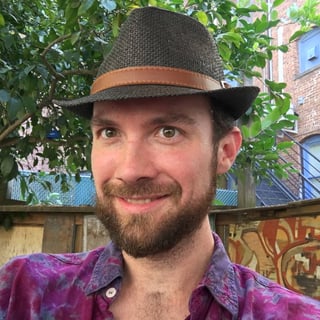
Speaker: This week, we have Eric Miller. Eric Miller's first brush with literary fame occurred when his grade school writing assignment about a bloodthirsty executioner's block earned him a trip to the principal's office. Isn't that always the way? ah Years later, he wrote the screenplay for the sci-fi channel hit Ice Spiders, among other genre films. His first novel, Whatever Happened to Uncle Ed, was called an effective blend of comedy, heart, and scares that defy expectations.
Speaker: Miller lives in Los Angeles, where he continues to write and work in the TV biz while ignoring advice from authority figures. Welcome, Eric. Thank you very much for having me.
Speaker: Oh, it is our pleasure. Oh my gosh. We're definitely going to talk about ice spiders later. I don't know if that's something you would encounter a lot where you say, I wrote ice spiders. Yeah, actually. says Oh my God, what? Really cool.
Speaker: You know, shockingly, shockingly, it is still to this day. I'm like, what? You actually watched that? You saw it? No, it's a very pleasant surprise. And if somebody would have told me at one point in my life that that might be might be the highlight of my career, I'd be, are you kidding me? What have I done wrong? And now I'm like, you know what? I love it. I own it. And it's it's good, bad fun, as we like to say.
Speaker: Well, at our house, we are great, great fans of B-movies. I have Thunder Levin's autograph. I have an autographed Sharknado script from him. Because that is just how far I get into these things.
Speaker: Wow, wow. have you Have you had Anthony Ferrante on by any chance, the Madman director? No, You know what? um i'm I'm pretty small time still. So usually people who have heard of me only heard of me because my name is weird and they remember it.
Speaker: So yeah, I'm getting there though. Well, you know what, that might yeah the thing I've learned about working on a lot of B-movies, both as a writer and behind the scenes on the crew and just knowing so many people in the film and TV industry for years is that we're genuinely mostly really nice people and are usually generally shocked that people appreciate and love what we do. so if you don't feel bad, reach out to pretty much anybody. It's weird. Yeah, people will just go, what, do you want have it
Speaker: Well, even people whose work has really taken off, when I talk to like Russ Streiner and John Russo and Kyra Sean, like those folks from Night of the Living Dead, they're all so unassuming. They're not like... oh, well, yes, I gave the world zombies. Kiss my ass now, please. You know, they're all just so personable and great. So that's kind of what I expect. Like, I don't know if you talk to Mick Garris online, but Mick Garris is pretty active on the meta platforms. And so I always feel like I'm learning something new from him. And he's kind of the same way. Like, really? You loved Psycho 4? You, like, loved it? You remember I did what? No, I've actually never spoken with him online or in reality. I think we met briefly at a party at one point years ago, but just different orbits. But I've always heard that about him and very much respected the work that he did and has done and still doing. So it's actually great to hear he's just one of us. Because you know what? Most people in film and TV are just someone from a small town or the Midwest or the East or somewhere that just had a dream and wanted to go make something and tell a story, you know, writers as well. And it's, yes, there are a few ridiculously, disturbingly arrogant people out there that think or God's gift to the universe. And, you know, you can't look at me, these kind of things, or can't be in the same elevator as I am at the same time. And, you know, I have a very good habit of not being really polite to those kind of people when it does happen a few times. But, In general, most people, even big shot celebrities, they're not who you think they are. They're playing a part. They're really genuinely nice people. And they, you know what, speaking of mentally oddcasts, they have the same imposter syndrome a lot of the times that the rest of us do. So, you know, it kind of, it kind of flavors things a little different when you're watching and listening people to realize they're just like me. They're just like you. They're just like us.
Speaker: Well, let's hope they're, they're a little bit better than me because I want to look up to them. Yeah, exactly. I have delusions of adequacy. So, yeah, hope that they're a little bit better than me. But I'm the fan, first and foremost. So I love promoting people that just blow me away. And there's so many of them that do. So that's very glad hear. Right on. Well, on that note, we typically start the show by asking guests to tell us about the first horror movie that they remember seeing. So this should be good. Let's hear it.
Speaker: You know, i was thinking about this. It's really kind of lost in the midst of time, being that I'm kind of losing myself in the midst of time these days and dating myself. But it was probably, I always go back to, I'm going to have to guess that it was probably something like either some of my favorite movies still, either The Haunting of Hill House, the original 63 Robert Wise, maybe Them, which is still the top of my favorite movies of all time, the Giant Ant movie. And and and it could, you know what, it also could have been pitting the pendulum on late night TV. So it's, there's kind of a mix of things that I don't know what one is going to rise to the top and I might remember what really freaked me out. Oh, you know what, there it did. It just rose to the top, The Fly.
Speaker: Probably original black and white fly, the ending of which still freaks me the hell out to this day. So here we are.
Speaker: Wow, okay. there Lots to unpack there. in the Pendulum is actually my all-time favorite Vincent Price movie. I love that one. And it's weird because it really...
Speaker: I mean, compared to the source material, there's a pit there's a pendulum. That's pretty much it. but Well, but it's ah it's a Richard Matheson script. So, I mean, that guy could do anything. well Another, just one of my absolute heroes. i'm ah I'm a giant, like I said, haunting fan, but also hell house fan. And I always look at those two as kind of the twin books of fiction.
Speaker: haunted house fiction there are so many more of course not sliding anyone but the fact that they're about 10-ish years apart and one is very 50s and gothic and back and the other one is very 60s 70s kind of swinger b movie bright colored vibe but they're essentially the same book and i just always love what matheson pulled off with that and in that same genre so different than shirley jackson and so many other great things like this we always forget not just on his own originals but his adaptations like wow what a talent Yep, very much so.
Speaker: All right. So yeah, so similar foundation to me, because I would say like my my trilogy of horror that's, you know, my my main ethos, Night of the Living Dead, Psycho, and then much more recently, The Mist, I think is damn near a perfect horror film. It even fixed the stuff that was wrong with the the original story.
Speaker: Yeah, interesting. Well, I don't want to make anybody mad. This is just an opinion. I actually love Thomas Jane and I love the movie. I'm sure you're talking about the Thomas Jane version, I'm sure. Yep. Yep. That's the only one.
Speaker: I will respectfully disagree with the exact ending. Personally, i think it kind of invalidates the struggles that everyone went through for kind of a, to me personally, to me for kind of a gimmicky ending, but I am much more a fan of just walking off into the mist, spoiler alert. And I, I don't know where most people stand on that and it's always open for opinion, but Again, I'm more of a fan of we just don't know what happened as opposed to the brutally harsh ending in that. But up to that point, I love it. I think it's great and one of the most effective things ever, both story and film. um so and And again, Thomas Jane pulls it off. The guy's a real, real talent. Oh, yeah.
Speaker: yeah And I can certainly see that point because when you deviate from the written ending that severely with something so nihilistic, not a everybody is going to like that. Now, personally, i think a horror ending where the lead character is screaming in anguish, i mean, that's that's what horror is supposed to be as far as I'm concerned. But right but yeah, there is a certainly a ah finality to it because not only do we lose i mean I love Jeffrey Dumont I can't I can't help it I love him in everything so it that's tragic you know you don't want to lose him or or Francis Sternhagen either I mean they're both such great character actors that when you see them in anything you you kind of want them to make it
Speaker: Right. Well, that's the beauty of of, I think, wisdom, getting a little bit older and watching things. You know, when you're younger, you're like, how was the wrong ending? I hated that ending. It wasn't like the book or whatever. But there have been multiple versions where the, in my opinion, the TV, the movie has done better than the book or movie. Sometimes I hate what they change other times. But now they can both exist to me. They both exist in my head.
Speaker: And I appreciate that somebody took, I think Frank Darabont took the creative chance in this and just went for it. And whether whether I particularly like it or not, I do admit that it actually works. It's great. It may not be what I preserve prefer. there are There are some things, there are some works where I think we all want to go back. I think the, again, at being a gigantic fan of the new Battlestar Galactica series,
Speaker: Until the literal last episode, I wish I could do a GoFundMe and reshoot the last episode of it. But that's me just being, you know, just a little peeved as a fan and maybe not appreciating as much, but I get what they did and why they did it and how they ended it. And there's a world where that exists and lives. And my opinion counts to me and maybe a few friends, but not others. But but if I have a choice, let's just don't fly the hospital ship into the sun and live in tents on the African Savannah next time around, you know, if we have a chance, guys. Thanks.
Speaker: Well, and don't pose all those questions about Starbuck if you have no intention of answering them. Right, right, right. You know, I'm okay with a little bit left up to my imagination, but first of all, little Adama?
Speaker: That guy was robbed. I mean... That guy got no happiness after all of his efforts. Yeah, he got robbed. He really did. Oh, kidding. what ah But what a terrific, amazing show, even you know even with that ending. And I have to say, at the same time, um one of one time where the movie did, again, my opinion, i think the Watchmen movie,
Speaker: did the ending way better than the comic book. What was the giant purple space monster that didn't tie anything and into the story? The movie the movie ending tied everything into the story and characters, which I am a big fan of in all fiction. and And whether it's gratuitous violence, gratuitous gore, gratuitous sex, whatever. I don't like anything gratuitous. I like things that are integrated into the story and plot and that ending making Dr. Manhattan be the spoiler alert, be the bad guy.
Speaker: that was brilliant and it meant so much more than the giant purple space monster but you know i'm i'm not worthy of creating the space monster of any kind or dr manhattan so again just a dumb opinion from a dumb fan well where would fandom be without our opinions and it's an interesting thing because When I was a kid, being a fan meant that you really super loved something, that you knew as much as you could know about it and that you would hype it and and love it. And now fandom is very different and fans, particularly fans our age, like fans 40 and up, you know, much more likely to consider themselves an expert on why something sucks now.
Speaker: yeah You know, and and I'm sorry, fellas, but Star Wars just isn't going to hit you the same way now that it hit you when you were 10. And that's not the movie, brah. That's you.
Speaker: So... yeah so Yeah, very much. Well, don't forget that the word fan is a derivative of fanatic. So, I mean, that's where it comes from. and But I would hope that as we get a little older, even though I will not publicly admit to being older than 28 years old, but when you do get older, I would hope that we all get a little more little bit more mellow like I am. And like I said, be able to see that different things exist in different ways. And You know, and i even go back and sell my own things that I've written. and I have the luxury, unless they've been published, of going, oh, crap, I should have done this. And I'm famous for doing that and changing something. So I think there's probably a lot of writers out there do the same thing. A lot of filmmakers, oh, what i would I have done this? Yeah, but you just have to own it. But then you wonder if some of these people have made a you know multi-million dollar movie and get up in the multi-hundred million dollar movie and get up in the middle of night and go, wow, I really blew that one. Jeez.
Speaker: Well, and you know, some people make it a ah mistake or an error or have like an incongruity in their story and they just go with it unabashed. I mean, um i hate to bring up the grand turf, but Harry Potter, right?
Speaker: ah Spoiler alert, Harry is a horcrux. Which means that when he got hit with the Basilisk Fang at the end of Chamber of Secrets, he should have just died.
Speaker: Because we know now that the Basilisk Fang kills Horcruxes and that, you know, that's just a huge gaping plot hole now. Yeah, yeah. Well, what what that brings up, though, is one of the beauties of horror fandom, though.
Speaker: And I hate inconsistencies, but there's inconsistencies in my own work. And sometimes you write or direct or act your way into a corner that you can't get out of and you just go, whatever. Let's hope they don't notice. but horror fans, genre fans in particular, are the most forgiving fans of all. They will literally be howling for figurative blood, and that's the worst movie ever. This filmmaker, writer, whatever, terrible book, terrible movie, horrible. I hate what you did to the character. I only watched it 62 times and bought 19 different versions, and I can't wait for the new version to come out.
Speaker: So, you know, love it. Love us. I'm of them. Jason Voorhees, anyone? Oh.
Speaker: i'm I'm personally a ah big fan of Jason Goes to Space, whatever number that was, whatever. That has one of the most brilliant couple sequences in it I've ever seen. That's a 10, right?
Speaker: I might be. i've I've lost track over the years. But the whole Jason on the holodeck sequence is just so completely inspired. i just you know Hats off to them for pulling that off in the middle of you know what could just be a forgetful kind of... maybe dumb let's make a bunch more money kind of a sequel and but actually it did something fun and interesting franchise really he went for it at the end because the one where he's body jumping that's amazing yeah Like yeah what else can you do with this French? Oh, what do you know? You thought of something new to do with the franchise.
Speaker: And that's much more impressive. Like overall, I would say if I sit down and watch a Friday, the 13th movie followed by a Halloween movie, I find the Halloween movies to be scarier.
Speaker: i think the sound design and the the music and soundtrack are scarier. um But as a whole, if you look at the progression of a franchise and what they've done with the character, Friday the 13th is way out in front.
Speaker: Because Michael Myers, that mythology just got ridiculous with the child. and I mean, after like, you know, four and five I can live with, whatever. But beyond that, it just... lack yeah i have to I have to admit, I haven't watched the latest entries, so I'm not well qualified to talk on that. But you are correct that, I mean, think about um Jason as well, the first movie. Again, I think the entire planet's seen it by now. Even people who've never watched a horror movie know about it. I hope so. But Jason is not the killer.
Speaker: like Like, it's his mom. Like, like what an amazing start to a series and just it was and it's smart. It's a reverse psycho. That was the thing that I was I was a little bit older when I realized what was actually happening. And instead of the son becoming the mother, the mother becomes the son.
Speaker: And then fans get to speculate for the next however long it's been how the boy was alive. Yeah. if yeahp The whole. But and there's so many theories because there's the one that says that she treated him like he was dead because the accident, the drowning disabled him.
Speaker: and And it impacted, you know, his brain didn't have oxygen. So he was, you know, impaired after that. And she treated it like a death, which doesn't translate very well into, ah you know, contemporary society, because we're a little bit better at dealing with people with, you know, special needs and impairments. So... to get this idea that like, oh yeah, she just wrote him off as dead and started killing people. Like, wow. Yeah, and and her clinical diagnosis skills were obviously lacking, if that's true, because later on when he's you know basically running, vaulting, and doing superhuman things, he's obviously not. i'd like I wish I was that impaired.
Speaker: Right? Right? No kidding. Like, you know, i'm I'm beginning to think that that mass murder is isn't very nice. not Not particularly inclusive.
Speaker: um So if we can get a little more serious, um I was going to ask you about living with clinical depression. And what you actually told me before we started recording is that you are not currently living with clinical depression.
Speaker: Now, I view depression as something... that is not cured, it's it's merely managed. So what what do you want to tell us about that? Well, I will agree with what you say there. I may have misspoken a little bit. I had it much worse when I was younger.
Speaker: And I remember it also runs in my family, various various to various degrees of certain people. And when I was younger, was much worse. And I remember being told that you're kind of screwed because it only gets worse with age. And I've had the opposite effect in some ways, either through life and life medicine, whatever whatever else has led me to be a lot better. So, yes, I do agree. It's in the background. I haven't taken a pill for probably decades. I haven't needed to take one. I do have my downs 100%. But like everyone does.
Speaker: But as far as the pure clinical depression, I haven't had an episode of that that I'm really aware of for a couple of decades now, at least. And that's refreshing. But also it is in the back of my head. It's there. It's in my genetics. It's it's definitely lurking around the corner and I keep a watch for it. And I make sure to do the things that, you know, and there is there.
Speaker: if there's a cure it's not out there yet but there are things that make it better and that's what i always like to tell people who are either new to it or still suffering for it i empathize more than most people ever could because i've had it my mother had it very bad at times other family members have lot of friends i've had a few suicides and friends uh that were like so extremely clinically depressed which still is terrifying to this day I've never been to that level myself, but I'm at least a sympathetic ear. But I also know that when we suffer from it, we have to make ourselves do the things no matter how hard it is. And believe me, I know how hard it can be to just get out of bed or take your next breath some days. But you have to do the things that will help make you at least a little bit better and make things worth going on. And that's getting up, seeing a friend, asking for help, doing whatever a doctor might tell you or some kind of a health care practitioner, getting sunlight, being around friends, listening to music, whatever your personal jam is, whatever helps you, makes you feel a little bit better. But just get up and do it and try. And again, having said that, it's right around the corner. It could rise up and bite me at any time. at any day. And I'm very aware of that. And it's lurking in the corner. And that's a little bit scary in and of itself. But I refuse to be the victim of that. If it does come back, I will deal with it. I will meet it head on, like I do many things, and I will fight it to my best of my ability. And I will reach out, I won't be as hesitant as I was when I was younger to reach out and say, hey, I need help.
Speaker: Okay. So it sounds like you were diagnosed when you were a child. Is that is that accurate? late Late teens. My worst period was late teens through mid-20s.
Speaker: Okay. That is typically when it it tends to present. that's That's true of clinical depression and also bipolar disorder tend to present in the teens, which is why it's difficult to...
Speaker: determine whether or not treatment is necessary just because your teens kind of suck no matter what, yeah you know, no matter what you do, you're raging mass of hormones. Your body is growing and changing. Everything about your life is changing. You're becoming an adult. All the social cues are different. And then you get a little bit older, you're leaving home. You're leaving those sometimes leaving home, leaving the support bubble, either going to college, getting a job, moving in with a friend or sometimes just moving to the basement with there's no shame in that at all because there's safety but all of those things are going in it is you're right it is like how do you diagnose there's actual depression in there when there's just such a chaotic madness mentally and physically going on in your life so what led you to get treatment
Speaker: You know, I just reached a super low point. I, again, saw friends and family members going through it. And then at a certain point, I think to people who haven't suffered from it, what you don't understand is your ability to recognize what's wrong with you is impaired. The thing that gives you the ability to see yourself and understand is what's being attacked, which is your brain. And it doesn't want you to admit that there's anything wrong. It, you know, that dark passenger or whatever you want to call it, either from a you know a fictional standpoint or a reality standpoint, that dark part of your brain wants you to get darker. It feeds off that. it's It's like a virus in some ways. And the virus doesn't want to get better. The virus wants you to get worse. So first off, you can't even recognize there's something wrong with you. And then when you do the things that help you get better, you doesn't even let you do that. It isolates you from your friends, from your family. it You don't want to talk to people. You don't want to do the things you enjoy that make you want to make you get better.
Speaker: So in my particular moment, I just realized it was just I was in such a dark, dark place that I just felt like I couldn't go on. I wasn't suicidal or anything. And I know so many people, again, who have been and talked to people and that's a completely different mindset, which I'm not qualified to talk about, even though I've been close to it a few times. But.
Speaker: it i I didn't want to go that far. I didn't want that to happen to me. And I realized that I wasn't being able to function. i wasn't being a good person. I wasn't being a good friend. i wasn't being a good boyfriend to whoever I was dating at the time.
Speaker: wasn't being a good son. My creativity was suffering, even though I would have bursts of writing, and then I couldn't even pick up a pen to write or read. And it just to the point where i was not functioning as a human being. And i just had that. I realized finally that that had to end.
Speaker: And I said, I need help. So you realized it on your own without people, uh, intervening? You know, I'm sure they were noticing and mentioning it, but like I said, you're filtering it out. You're not listening. I mean, plus you're a kid. I think I was probably, I'm going to guess I was 17 or 18 at the time. So you're going through all the things you go through and, you know, sophomore, junior, you're high school somewhere in there.
Speaker: And yeah there's so many people telling you things and believe me, I have a contrary and streak sometimes where, you know, as we all do, somebody says, you should do this, you should do that. And you just, you lash out, you don't want to listen. And that's also just being a teenager. you know so So I kind of had to, i think I think that happens with a lot of people is, you know, any one of us has to realize it ourself and, you know, reach out the hand. And I encourage people to do that that are having any kind of a mental health crisis. There is no shame in it. There is no judgment. Don't don't be don't be that way. There used to be a lot more than there is now. And I know there's still people out there that look down on it. And the hell with those people. You're you're a person that's having a medical crisis and you you need help. of various There's various types of help that you can get.
Speaker: So what what did you end up doing? It sounds like you might have been on meds in the short term.
Speaker: Uh-oh, did I lose you? You dropped out for a second. Oh, sorry. Nope, nope. I was... What did I end up doing? Well, it sounds like you were on meds in the short term.
Speaker: Yes, I was. was on meds and over the next, I don't know, 10, 15 years or so, maybe till I was about 40 or so, I experimented with various types of meds from various doctors. And that's kind also the problem with, as you all know, and many others know, and many medical professionals know, there's still a mystery to what actually causes depression. And all of this, again, we're narrowing in on it. We know in general, but we also don't know how the drugs actually work on people. You know, there are, you know, all the various types of drugs. Again, not a doctor, not a medical professional, just been around it a lot. There's, and I'll probably pronounce the names wrong, but there's, you know, norepherinine, I think is the wrong pronunciation, and serotonin and all of these. You've either got too much, you don't have enough, you need more. This drug might give you more. This drug might not. Take it for three or four months and try to ignore the side effects. And sometimes the side effects are worse than the good effects and on and on. And eventually after you, I think most people try three or four or maybe more for different dosages and you eventually find something that might work for you.
Speaker: Again, and i'm not I'm not damning that at all, but sometimes the question is out there, what have I gotten better without it? I don't know. And there are a few that I wouldn't take again ever, even if I was having a crisis, but others helped me tremendously. Like the very first one I took was Prozac, and it literally within a few days changed my life.
Speaker: I it really was. I've used the I've used the term before that I went from feeling like I was had a wet burlap sack over my head sitting in the basement to pulling it off. And I was sitting in a sunny field full of flowers. It was a very dramatic effect. And unfortunately, that kind of wore off. It wasn't a high by any stretch. It just kind of peeled back the layers of gunk that was clogging all my sensory and emotional input. And that led, you know, it led to a lot of ah great things. and And it didn't work long term. I'm forgetting now exactly, but I was probably on it for three or four years and then it kind of wore off. But also maybe my again, raging hormones, brain chemistry, everything kind of settled in and I didn't either need it as much. So but I do remember that being very dramatic. And tried various ones later on. There were a few misdiagnoses over the years.
Speaker: Saw various doctors and to a point where I just had to listen to myself. I wasn't denying what the doctors were saying. wasn't Wasn't denying it at all. But no one knows what helps you more than you know.
Speaker: so Oh, absolutely. I just had to listen to myself. And you know now I know what my triggers were. And like my one big trigger was... I think this is hedonia maybe where you kind of lose, you lose your interest in any type of pleasure. And for me, my number one thing is reading.
Speaker: I'm a voracious reader. I cannot stop reading. I wish that I could write as much as I want to read because I'd be ah a number one bestselling novelist now, or at least a guy with a book full, a closet full of novels instead of just one so far. But When I don't want to read, I would kind of go, oh, no, here it comes. Because for me to not do that, and when I don't want to listen to music, you know, whatever your personal trigger is, that that's when you kind of notice that, oh, there's something wrong here and I need to address it.
Speaker: Right, right. Well, and it's it's especially tricky when You have depression or bipolar, you know, or mania and you, you have to live your life, you know, like you can't take two months off work to see how this new meds going to make you feel.
Speaker: You know, you're you're trying something that totally messes with your brain chemistry and then you have to get up and go to work. you know, like parents do this sort of thing. And it's like, you're trying to raise a child and teach them right from wrong. And you can barely keep your brain on straight. And then you have a drug that makes you feel suddenly differently about everything.
Speaker: You know, it's pretty crazy. Cause I have, I don't have any kids, but like, just, I remember taking, trying a new med and then taking the weekend. And when I was due to go back to work,
Speaker: I couldn't remember where I worked and I started getting ready for a job that I had had like four years previously. oh wow. Oh, it was crazy. It was just nuts.
Speaker: And, you know, that that leveled out. I was able to, you know, say, oh, OK, wait a minute, because my my poor husband, he was my boyfriend then. But he's like, you you know, you don't work there anymore, right?
Speaker: You work at Blockbuster now. Oh, I mean, you work at nondescript unnamed company now. But but yeah, I mean, it's it's crazy what the drugs can do to you, which is Like the best reason to take them, but also the best reason not to take them, you know, and yeah that's it becomes its own struggle because suddenly food tastes different. You don't like your favorite foods anymore. It can have like sex problems, which, you know, for women generally means you you are never you can't reach orgasm.
Speaker: So you're bummed about it. Your partner feels bummed about it. You know, I know the dude problem is is different. But yeah, like with all that going on, it's it's hard to gauge like whether or not you're better. It can take a long time. it can take a very...
Speaker: Yeah, it takes a long time to look back. And I think that's from my my point of view, I think that's part of the stigma around the mental illness is that, well, there's a lot of people that hate drugs and, you know, and I'm not a big fan, but there are some amazing miracle drugs out there that do incredible things. And that's great. And and I'm very pro science. But at the same time, we're taking a whole class of things that may or may not work.
Speaker: And so I get why people say that, like, well, here, try this for three months and we'll see if it helps you. Well, wait a minute. I want to take something that, you know, fixes it. you know Like, like you know, yeah right if you you have diabetes, you shoot insulin. It works in general, of course, broad generalities. So I think a lot of people kind of sneer at that a little bit. And then the other one, too, is that I think why there's such a stigma with it or it's not as bad as it used to be. But this is what everything you said. It's not to minimize the everyday struggles that every person goes through raising. I don't have kids either, but raising a cat is hard enough. Raising an animal. Raising kids, going to work, doing all of the things that life requires is incredibly difficult. And a lot of people without clinical depression, probably every person don't want to get out of bed in the morning. Sometimes you just want to lay there and play a video game or veg or hit snooze 62 times and not go see your asshole boss or look at your terrible paycheck or
Speaker: whatever stress there is, if you're lucky enough to even have a job or get up and send in more applications. That's hard. And that is none of this is to dimin diminish what those people go through, which is pretty much all of us. But for anyone listening that is maybe a little bit skeptical, clinical depression is take all of that to the next level and beyond.
Speaker: You can get through it at your best, but suddenly i think a close family member said at one point, if I didn't have to pee, I would never get out of bed. i think I mean, think about that. Yeah, that's relatable. And the same person was saying that they didn't want to even have the energy to take the next breath.
Speaker: That's the next level from I don't want to go to work today. Well, guess what? None of us want to go to work today with rare exception. There are some weird people out there that get up in the morning and love going to their jobs and they just annoy the hell out of me. But. But again, and none of that takes away. But also, I think that's the stigma as people look at that and say, yeah well, I had a hard time. You know, I had a hard time next week or last week. I didn't want to do this. Didn't want to do that. Yeah. And that's valid. And that's real. And at the same time, you might be clinically depressed, too. You need to look how deep, how hard does it go? How deep does it go? Do you need some help? Maybe talk to somebody and find out because life is tough to start with. But then when it's like I always like to equate it to if you were able to you run a race, run a marathon, it's hard enough just to get into shape to run a marathon. Well, guess what? Now you broke your leg. Now go run the marathon.
Speaker: Oh, well, I put I put a splint on or I you know put a cast on. Well, now your other legs broke. Go crawl. You know, it's like, come on. At a certain point, you just have to realize that all the band aids and all the things that you do, maybe they aren't helping and you just you need to address the situation. and And part of that is also saying, yeah, I'm not going to run that marathon this week. I need to get better until I can run the marathon and and the metaphorical marathon is life.
Speaker: Exactly. Well, and you know, it's interesting because when you're depressed, when you're not quite yourself, it's very easy to rationalize things in your brain. And sometimes what you're rationalizing is I'm a piece of shit person and nothing I do matters. So why should I bother that sort of thing?
Speaker: But what I wonder is whether or not there is some... like primitive man imperative to that kind of thinking because there used to be people used to be really down on night people people who stay up late and like to sleep late and the whole day person versus night person you know it it creates issues because you know banks close at five and business hours are a thing but then it turns out that, you know, in in primitive men, it was important to have day people and night people because night people would stay up and guard the camp while everyone else was sleeping.
Speaker: And so what I wonder is if there isn't something similar to mental health, if it isn't important to have somebody in your group or that it used to be like before modern technology maybe you need somebody to run all the doomsday scenarios in their head and determine what the worst case scenario is for everything maybe you need someone with mania that's like really plotting for the future and and brainstorming ideas for where you can go next you know what I mean like that that might be where some of that comes from
Speaker: Yeah, I love that. I love that idea. I think that's kind of brilliant. and And as I'm up all night long and when I'm not working, when I between gigs, when I'm staying up till five or six in the morning and I'm plotting every single thing that could go wrong, I'm not being negative. I'm just being damn good and sure that I'm ready for something to go right. And I'm watching out for you. I'm protecting you from the night monsters and your nightmares. So. know I think that's very true because this just goes beyond depression. And I don't know if we yet have an idea of what you know the depressed person could be in that in that pantheon and that mix of people, but all types of different neurodivergence and on the spectrum. And you know there's the the joke some people make, and sometimes it's serious about the you know engineers or sometimes can be kind of on a spectrum or something. But have you seen what they do? It's like, wow, that is your... The old question, does your brain change to do that type of work or were you naturally suited to do that type of work because of the way your brain was? And some people are really good at some things. People aren't others. And I think that's the beauty of it. And maybe maybe the depressed person. I don't know. Maybe it's a way of in this great, broad, touchy feely thing as a way of having others show empathy and love and care for other human beings. That that could be the function as well.
Speaker: but But I think every single person, either listening or not, they hears this, I think everyone does have value and everyone has a function. And yeah even if you are the most deeply depressed worsened person or the most wildly on the spectrum, there is something for everybody and everybody brings it out. And we do all have to stick together to do that, whether it's to watch us at night or to plan for the disaster or you know write the computer code, whatever it is. Everybody has a value. We may not see the big giant picture yet wherever it all fits in, but I honestly believe like you do, I think everybody fits in somewhere.
Speaker: Nice. Right on. Yeah. Yeah. And I think if we didn't have, if we didn't have chronically depressed, um, Gothic leaning type people, we wouldn't have great writers like Poe and so many horror writers and probably some, uh, rom-com writers too are probably terribly depressed and they're actually writing their way out of it by writing something funny. So, uh, that seems to be the, I think it was a Todd Rundgren album that I always loved. The title was the ever popular tortured artist effect. Yeah.
Speaker: And you know how many how many rock stars, how many writers, how many people are just like, wow, those guys just live these weird, deep, dark lives. And sometimes that is that weird ass wellspring of creativity for good or evil.
Speaker: Well, yeah, because when you when you see the world differently than the average person, that gives you an opportunity to turn that into art or literature or music and and sort of describe things in a way that increases understanding between people that normally don't see at eye to eye.
Speaker: Exactly. I agree with that. So... What I'm wondering is, you we were probably not writing professionally yet when you first got treatment for your your mental health, but I'm curious to know the relationship between your depression and your writing quality and output.
Speaker: Well, I wish I knew the answer to that, too. um my Yeah. my, believe me, I wish there was a little pill that I could take. By the way, I famously remember Kurt Vonnegut suffering from depression. And he wrote about it and talked about it in essays. And I believe it made it into a couple of his books too, where he talked about the little blue pill that he had to take that kept him writing and happy and everything. And in typical giant fan of Mr. Vonnegut and in his very typical kind of wry way he made light of a very serious subject and his own struggles and he also through his character Kilgore Trout if you're familiar with the pantheon of Vonnegut characters and stories managed to look very deeply into people struggling with various types of success and failure and and depression and things and it was his alter ego I think he admitted that many times or at least scholars have
Speaker: um But so so many writers have just called it right on the head. And and and how many, you know again, rock stars have admitted that they're self-medicating or taking drugs or whatever to get over the hump or get through the day and create. So um as far as my own, I'm kind of a street writer.
Speaker: I give the advice, and every writer should listen to this and do the opposite of me. You should sit down every single day and write something. Even if it's 800 times over and over all work and no play makes Jack a dull boy. Just you know skip the ax work at the end of that after you type all that if you happen to be staying in a abandoned hotel in the mountains. But sit down, write every day, to a page count, do a couple of words, do something, just make progress. And I find that I am the most progressive. My most progressive moments in writing are when I do a page count and I can look back and say, hey, I made ten. I made five hundred. I made two thousand words today.
Speaker: But I sat down and do it. But it's hard. My schedule is kind of erratic. But also, like I said, I'm kind of a streak writer. And I don't know if that comes from my mood. um I'm famous for just getting ideas. I'll be out a lot of times. My two places for ideas are when I'm hiking and when I'm taking a shower.
Speaker: If I could figure out how to put a treadmill in the shower and... pretend that I'm hiking, I might just get all kinds of brilliant, um, culture prize winning novel ideas out of it.
Speaker: But there's something about being in the motion in nature or kind of being isolated and almost, uh, you know, the warm, hot water isolation of a bathroom shower or something that kind of triggers my creativity. The hard part is turning those into actual words and setting down and doing it.
Speaker: And I'll go months at a time without writing anything. And then I'll have things bubbling in the back of my head and then I'll sit down and go, Oh, Yeah, that's it. And boom, I will splat something out. Now, there's a lot of rewriting to be done in that. And that is also, again, the worst way to do it. So all writers out there, write every day. Don't be like me. Sit down, do what Stephen King does and so many others. put Set a time if you can. Set a number of words. Set a number of hours or minutes. It doesn't matter. Just do something every day. Do a little bit. And then send me messages and to remind me that I'm not following my own advice and to get off my ass and follow my own advice. write something so but But yeah, I don't know. Honestly, I've never really tracked how the depression or anything factored into that because I still have a lot of the writings I did when I was younger. I think you just in general have more energy while I was fighting through that period. Some of the best stuff that I've ever written, a lot of it hasn't seen the light of day yet. But I wrote a lot voluminously back then during that period. And also other deep, dark times. I think it's a way of you know getting your angst and anxiety out on the page. So there doesn't really seem to be a correlation, except I do remember you know being in the the depths of the really, really, really bad depression decades ago that you just don't have the energy to write, to create, to do anything. Even if the great idea is there, just setting up and getting at the typewriter is just not an option. Like I say, sometimes you barely have the energy to breathe, but there could be. I wish I would have tracked it more and I could be more cognizant of that cognizant of that at this point.
Speaker: Well, let me ask you this. Now, we we' mentioned this with Vonnegut, but um it's it's common for a lot of writers to include their own mental health struggles in their work. Is that something that you do?
Speaker: i think I think a little bit. Yeah, there's... I've talked a lot about this. There's... little bits and pieces of me and every character that I write, even in the dark ones. Usually the heroic, shockingly good looking athletic ones who, who hit the lottery and, you know, do all the exciting things. Of course, that's obviously me, but even the, even the lesser, even the lesser characters, there's little bits of, I think every writer and actor, of course, there's little bits of yourself in each part that you play. And when you're a writer, you really are playing all the parts. So,
Speaker: i I think that has to be in some characters. I do have some very upbeat characters in a lot of my stories. I mix humor in almost everything I do. And I write some just flat out to me funny stories where there's no angst or or anything. but But so I think that's my fun, happy side that is really prevalent for for the most part. But there's definitely little bits of that. And you do use it as a way that to, i think, work out your own anxieties, much much as an actor is playing a part of sometimes a really depressed person or a psychotic person or a serial killer or something.
Speaker: There's no way of separating yourself completely from that process. And you are working through things in your head that most people don't think about. Most people just ignore the dark places and ignore the dark sides of their personality. And writers, we we go there.
Speaker: We become those people for brief periods of time. And it's kind of, i guess it would be, again, an acting analogy is kind of like method writing, as it were, you know, method acting. If you don't know the term, it's where you basically the the actor becomes and takes on the traits of the person, which can be you know really bad if they're playing a very vile person. But that's one particular process that some actors use and sometimes to amazing effect. and But writers do that.
Speaker: We have to do that. And when you're writing a novel, there's 5, 10, 20 characters in there. And you really are each one of those. Each one of those is a section of your psyche. And even if it's little bits of us and little bits of people we meet every day and friends and family, things that you kind of put them in a... big Vitamix and hit blend and you know and they come out as different versions of that. There's definitely those bits in there. so and And again, horror writers in particular, it's kind of funny. I think we're some of the most, in my experience, some of the most well-adjusted people ever. And the the joke amongst me and many close friends is that, yeah, that's because we get our neuroses and stuff out on the page.
Speaker: we Again, we go there. exactly. i mean, it's not that we're we're less messed up. It's that we're more aware of it. And so we're we're better able to navigate it. Now, I think your analogy about method acting is really interesting because I do that and I hadn't really realized that's what it was. And I was I was a theater major.
Speaker: Stanislavski was my boy. So I feel like I should have made that connection earlier. You know, you know exactly what I'm talking about then. Oh, absolutely. But I think the the biggest examples that we have of of modern actors method acting, because I know like Laurence Olivier was super into it, like, oh, I'm Hamlet now. But but Dustin Hoffman, you know, you probably know this. It's a pretty famous story on the set of Marathon Man.
Speaker: the point toward the end where he's supposed to have been tortured and running for his life he basically like stayed up for a couple of days didn't eat didn't shower and he shows up on set and olivier was like uh what the hell are you doing and he explains that he's he's he's method and you know he did all that to prepare because that's what a true actor does and he was like no no actors act try acting right because mean there is a line of thinking that method acting can be really disrespectful to your co-stars because if they show up and they are rested and prepared and ready to work and then you show up looking like ass having not slept for two days you're not going to remember your lines as well you're not going to remember your blocking it's you know, your timing is probably going to be off. You're, you're simply not at your best self. And sure. Sometimes we end up with the USS Indianapolis monologue from Jaws. And sometimes we fucking don't. Sometimes we end up with Heath Ledger or no, not Heath Ledger, the other one, the bad Joker, Jared Leto. Cause you know, he thought he was all that being method. And really it's like, dude, you're not being method. You're just being an asshole.
Speaker: Yeah, that that that is definitely a thing. And it's also disrespectful to they of the cast, but the crew as well. And yeah most yeah most actors I've had the pleasure to work with over the years, big and small, have been wonderful, creative people. I tend to stay away from them because they have their job. And they're definitely, when I'm on a film crew, I'm in a definite definite excuse me different mental space than the rest of us. and so you give them their space even i've been able to drive celebrities sometimes or actors and kind of the rule is if they talk to you that's fine you can be friendly and helpful you're there to help them uh but you shut up because they're either in character or they're running lines some of them want to be called the character name which is a minor variation of of method acting i think and others really go into that part but It's also kind of ah it's kind of amazing to me to watch the process when you get the real deal actors, because there's so many, especially in Hollywood, there's so many that are playing a, like like I said before, we're all playing a version of ourselves, some more than others, and some really chameleon ooze into that other
Speaker: person entirely. And that's phenomenal when you see that. And especially it's a little bit frightening, but also exciting that you see that person that like, you're you know, you're with them at catering or you happen to be driving them that day or you run into them and they're just this nice, cheerful person. And then suddenly they go into the other persona. I think I was saying it the other day. I've never met Anthony Hopkins, but what ah just a titanic actor. But like, holy crap, Hannibal Lecter.
Speaker: like would you I wouldn't be comfortable sitting next to him at catering. you know Not that I'd be in that section of the catering tent, but he was probably back in his trailer somewhere. But if he did happen to sit down next to you, I'd have a hard time doing it because that ain't Anthony Hopkins anymore. That's Hannibal freaking Lecter because I just watched him on set. And like d and that's amazing. yeah Talent and ability to do that is just phenomenal. and And again, it's going places, creative people go places that, well, I think all of us do to a certain extent. We all have our little fantasies in there, but sometimes we just go further and open our minds up to things that other people don't. And it's the old, whoever said it, Nietzsche or whoever, the sorry if I'm misquoting, but you know you look too hard into the abyss and the abyss looks back. It's coming back over the edge.
Speaker: like how How do you do that creatively when you've created a super dark character, you're playing a super dark character, whether your method or not, you got to come back from that. Yeah.
Speaker: Yeah. You know, it's funny because you mentioned actors you'd be afraid to be around in real life. And I've always felt that way about Michael Rooker.
Speaker: ever since I saw Henry Portrait of a Serial Killer. Oh, wow. What an amazing movie. And day and like I'm just such a giant fan of his. And the thing about Rooker is that like there's a few exceptions, especially now, but they're they're fairly recent. you know There aren't a lot of Michael Rooker roles that you see and say, oh, I'd love to hang out with him. I wish he was my friend. Because no, they're terrifying. What, sli Slither? You didn't want to hang out with...
Speaker: No, no. And even on The Walking Dead, like, no, the other Dixon, not not that one. Yeah. No, and I've actually never met him. I don't believe I've worked with him, but I know many people do. And again, supposedly one of the nicest guys ever and just really creative. And you feel bad for actors. They call it typecasting. i I'm sure everybody's heard that term and you get really good at doing a thing. And and again, all of a credit to Henry, like what an amazing movie and a scary thing, great performance and, you know, top to bottom, like, wow, that's just such an incredibly dark, but yet darkly enjoyable thing. And i look into another side or something. But when you, you know, you get typecast and you only get those offers. And I've seen that happen to many people on, on the flip side, I had the pleasure of spending a brief amount of time with Robert England,
Speaker: And of course, ask the question, which he's been asked a hundred million times. You know, it's like, do you you know, yeah what do you feel about Freddy Krueger? How do you feel? And his answer to me, and I think I've heard this in a million interviews that he said was, I love Freddy Krueger. Are you kidding me?
Speaker: That he, yeah, Freddy has enabled me to travel the world, be famous, be in small indie movies, take different parts, be on stage, have a life that I never could have had without that. And are there times when he should have been, I'm sure he probably had the little bit of angst at not getting offered a bigger, bigger not better but a bigger different part in something but i i love how he owned that and i mean what an icon and just that was know fabulously wonderful short time that i got to spend with him working on a film and to hear him say that was kind of heartening that like you want you want everyone to have that kind of success and and so what you know what i got typecast we should all be so lucky i always equate that to one hit wonders uh in music you know how hard is it to make any even one song a hit That's incredible. Just record a song at all, let one let alone one that's a hit. And hopefully each one of those people who wrote that one hit wonder, they may be, quote unquote, forgotten or maybe playing the state fair and still having fun. But hopefully they made enough money of that to have a life and keep playing music and do what they wanted to do. And that's be celebrated. You never know when that kind of thing is going to come back around.
Speaker: Like, imagine being a member of the Trashmen and you wake up one day and suddenly Surf and Burn has sold a million copies and you don't know why. And then somebody says, hey, there's this show called Family Guy. I don't know if you've heard of it. But then, you know, suddenly this one hit wonder band is like back in the forefront. Everybody's talking about it.
Speaker: Ditto the cramps, you know, with the and the Wednesday show on Netflix. And suddenly that's it. I was so excited. i'm like, oh, my God, i could talk to teenagers about the cramps. And they're just like, listen to this song. It's got swears. So many others, too. And that's like that's like when a TV show or a movie gets made of a relatively obscure book or novel, too. It's that wonderful story and characters that maybe had a niche audience before or none at all suddenly gets exposure to a whole new bunch of people. And again, hopefully the creator makes a bank off that. and You just reminded me too, i was thinking it's a couple years old now, but Tracy Chapman, and I wouldn't really call her a one hit wonder whatsoever, but you know, ah technically there was the one hit fast car and then that became big country icon. And, you know, there's a gigantic resurgence into that wonderful, beautiful song, the rest of their music and the, and the other artists music too. And that's, that's a beautiful thing.
Speaker: Yep. Yep. Very much so. So I definitely want to get into your work. So whatever happened to Uncle Ed? This is your first novel, is that right?
Speaker: Yes, first novel. I've edited anthologies before but and written short stories. I've had a few published here and there and some wonderful to me, but generally really bad poetry have appeared in a few places. But this is my first full-length novel.
Speaker: Okay, well tell us about it. It's a little bit of an odd duck. I usually have a better pitch up for it, but it's I always kind of like to read because I labored on it, but I like to read the back cover text from it is basically the story is when um when his mysterious Uncle Ed disappears, former high school basketball star Max Brown inherits a fortune in cash, a creepy mansion and a family curse.
Speaker: He discovers this mind bending arena under the house where he and his feuding allies battle shape shifting demons to rescue people trapped in the subterranean cavern of horrors. But there's more than just lives at stake in these battles. The losers risk their souls.
Speaker: And Max is driven to the edge of madness by playing the increasingly tension filled deadly games, the lingering pain of losing his beloved mother years before and the mind numbing terrors of falling in love, which is the hardest part.
Speaker: And in the story, he risks everything to solve to end the curse and solve the mystery that haunts the whole entire story, which is the title, Whatever Happened to Uncle Ed. There's ah a lot going on in it. I touch on a lot of things and it mixes definitely horror at the top of it. And while basketball is absolutely a theme, it's not a sports thing. Not every single scene takes place on a basketball court. It's more of the obsession to win and the drive and to do things that be part of a team is very much the theme throughout.
Speaker: So I go in a lot of different directions. Like I said, it's it's humor, it's horror. i go very dark places. I go very funny places. There's good bits of action and and a lot a lot of heart, as all the reviews have said. And that's what i'm that's the thing I'm most proud of, because when you separate all of the, again, all of those elements, the action, the horror, the gothic nightmare.
Speaker: Aw. Well, and that's that's really kind of the point. Like, that's what makes a book stay with you. A lot of authors, particularly in the horror genre, are not particularly focused on themes.
Speaker: And, you know, again, i was a theater major, so the elements of drama, according to Aristotle, that's that's a big deal. yeah and And theme is is, in a lot of cases, what makes ah a story stay with you.
Speaker: You know, why you remember it, why you can liken it to your own life or your own experiences, because of of the underlying theme. which is you know then expressed through character and and plot.
Speaker: So I'm intrigued. I'm intrigued. And I would actually, i would like to talk a little bit about demons because i always think of demons as being bad. I think of them as being like, you know, devilish and malevolent, probably violent, um Even even like sadistic even.
Speaker: um But I know there are also Asian cultures where a demon is neutral or or even good. you know So what what is your take on that?
Speaker: Well, I think they can represent all different aspects of reality. And I think what they really are is our subconscious. They are fictional, or hopefully fictional, or metaphorical manifestations of the human experience.
Speaker: And that can be good and bad. and if in in my particular book the demons are shape-shifting demons that do things and they're kind of impish and that they're attacking and fighting and they look kind of stereotypical in that respect so they're very much on the ah more evil playfully sadistically evil side but in general i mean look at i mean arguably what's the biggest demon that we have in western society is a lucifer morning star let's just go right you know let's go to the big one I mean, if there's yes, it's a fallen angel, but that's definitely very demonic. But what is you know like again, I don't want to make religious people mad at me or anything, but you go back into the details of what exactly why is Lucifer the demon? Why is he the worst one that we actually have? Well, he's a reflection of vanity. He it's it's us.
Speaker: You he was vain and thought that he was better than God and disagreed with God. And you don't do that. That's kind of like, you know, you work at you. You go when you go to work, you do what the boss says. It's the boss's company. And he was essentially fired from the firm and became, you know, all of the various manifestations.
Speaker: of things. So like with most mythologies, from Hades to whatever pantheons, there's that reflection of good and evil, like you said. And I think i think that demons can take any form. And I mean, come on, there's succubi out there. Those are definitely not evil. Well, some people would maybe think that they're evil, but others absolutely would love to meet one. So i i kind of agree with that broad pantheon we can kind of pick and choose but ultimately my feeling is they really do just reflect all of the different sides of the human psyche and as we both know that's the that's the really scary monster yeah oh absolutely absolutely okay so let me see
Speaker: um We'll have links in the description, but for now, if somebody is unfamiliar with your work, is that the best place to go to the to the new novel? You know what? it it It probably is. That's the newest and the freshest. And I think that's the the most me of anything else. My anthologies that I edited, those were my themes and my ideas. And i found the art i'm sorry I found the writers and edited the stories that came in on the particular themes. And that would be Hell Comes to Hollywood, which is horror stories set in Hollywood, written by Hollywood horror people.
Speaker: ah The imaginatively titled sequel, I like to say, Hell Comes to Hollywood 2, and then 18 Wheels of Horror, 18 Wheels of Science Fiction, which should be obvious, trucking stories set in the various genres from different things. And I do have a story in each one of those because, hey, they're my books and I just wanted to, i can do that.
Speaker: But Uncle Ed is pretty much, it's much more me. It's very much more personal. And it's my ability to just completely romp and go wherever I wanted and not care. You know, I did have editors, but they were mainly reigning in my worst grammatical tics. And a note to any aspiring writers out there, yes, you need an editor.
Speaker: Hire one. Find one. They have various costs. Even top writers will admit they need editors. We all need them. None of us are perfect. And even through that, I have a few grammatical ticks leak in, but it's mostly my chance to just say, this is my story, my characters, my sandbox, my world, and I'm going to go wherever i want. And I go some really wild and wild and crazy. and
Speaker: Cool. Cool. So I'm aware that you live in l L.A. because you're like a movie person who works in the industry.
Speaker: How is that going? I bet it's like super expensive out there. Oh, it's very expensive, like any big city or honestly, like pretty much anywhere in America and probably half the world right now. i think a lot of places, companies used inflation, quote unquote, as an excuse to double and triple prices on things. And we're in kind of this unique, extreme capitalist version of the world where everything is about making dollar, or making shareholder value and dollar at the at the cost of people's lives and livelihoods, I guess is the right word.
Speaker: So it's but it yes, it is expensive. It's very expensive. Rent is off the charts for various reasons. Gas, California, everybody knows about that. But just everything you try to go out for a meal. I love going out to old diners and things. And you you know you end up spending two or three times what you would have spent to stay at home. So and that's not yeah again, not just L.A. It used to be obviously New York was the most expensive place ever and other big cities and L.A. I think may have is is hovering at the top of that. But it's expensive everywhere. you know even Even in small towns, things are costing and it's hurting people. And that just it's just breaking my heart right now that people have to work two and three jobs or more just to try to get by to feed their family and maybe go out and have some fun every now and then. And it's tough. and Also, on top of that, the film and TV industry at this exact moment, which is spring of 2026, is going through some upheavals. I know some people will probably cheer that, but most people realize, you know, that dream factory of Hollywood is on kind of a weird pause right now where we're simply... not making as many products as we used to, not making as many film and TV shows. And some of the creativity, while there's still a lot of wild, mad, insane, wonderful product coming out, there's other things that are just being derivative and recycled. And it's kind of a scary closed off world right now where it's it's a retrenchment, I think, is what we're all kind of saying. And I hope it's going to get back to a more crystallized, creative, amazing world where there's many jobs for people and much more creativity to entertain people around the world.
Speaker: I sure hope so. um Because AI writing scares the hell out of me for a variety of reasons. And like I lost a couple of jobs to AI in the last year. One company just decided to use it exclusively and another one actually wanted me to use it, which like I i tried to do because I'm not really in a position to turn down work, but i I just couldn't do it. It would just, I have too many feelings about it. Are you concerned with AI taking over as a like ah in screenwriting in particular?
Speaker: Well, yeah yes, I'm more, I'm more, i almost say if afraid is the right word, I marvel at the technology, which I think is not there yet. I think a check has been written for this amazing, wonderful thing that it can't quite, ah the you can't cash the check yet. It can't quite do the things that people are saying it can do. And I'm not just saying this to suck up to our, you know, the Skynet overlords, but I don't think it's the AI itself that's the problem. I think it's like I mentioned earlier, this over the top insane capitalist greed, nothing wrong with capitalism. Don't get me wrong. Everybody needs to make money and I celebrate. Oh, no, dude, there's a lot wrong with capitalism. yeah Oh, there is, but but but it's the people that are using it to replace people, to be the lowest common denominator, to force people to train the AI to do their job, to fire them. And and there's so many different directions. it's
Speaker: What you're missing is the not just the jobs that it's taking away, which breaks my heart. I have so many people that I know, artists in particular, but it's starting to be musicians and writers and people are losing it, ad people.
Speaker: computer coders, it's hitting every section of the thing. And i I hope that it becomes a tool that every person can use to create new amazing things and to accent the job. But what's happening is, i think we all see it, is the people that are implementing it are using it to get rid of human beings. And that's bad anywhere. It's especially bad in creativity but because all of these things we've been talking about, it's the human emotion, the human element that goes into a story, that goes into a song, that goes into a movie, It goes into all a picture, any of these things, the person looking through the camera lens and framing it in a certain way and capturing the flower or the whatever event that it is.
Speaker: You can't get that with a computer and you lose that. And then when you pile on the fact that it's horrifying for the environment, There's not enough power. There's not enough water that it's, you know, it's that that like we're it's it's ruining neighborhoods where it goes in. We're sacrificing all kinds of stuff to make it happen and sacrificing jobs. It's just again, we're in a it's an upheaval time right now. And I think it's going to shake out eventually where people are going to realize they're already realizing it. The you know, the backlash is very much there. We want I want real music.
Speaker: I want real books. I want real stories. I want real movies. I don't want a computer. Well, I mean, i know I kind of say this ad nauseum, but why in the hell should I bother reading something that nobody could be bothered to write?
Speaker: That's i mean best way I've heard it put ever. they're They're called the humanities for a reason. You know, that that's the whole point. is that we're expressing things so that we can be heard and understood and so that other people can look at those things and say, yes, I feel seen and heard because I have seen this art and it speaks to me.
Speaker: And all AI, the best that it can do is impersonate that and tell you what art might sound like if it had something to say, which it doesn't.
Speaker: or or at worst steal or be trained on quote unquote existing works of art, existing writing, existing film and TV and pictures, which is essentially stealing the copyright. Oh, yeah. Right. Totally. Are horrifying.
Speaker: And but suddenly because, oh it's a large language module that makes it OK. Like, no, that stuff was copyrighted. That book was that story that this. Well, I just trained it to sound like Hemingway. Well, guess what? I want to read Hemingway. I don't want to read. Right.
Speaker: Pretending to be Hemingway. Or I want to read somebody else who is a fan of Hemingway and who is emulating their style and putting their own twist on it and their own humanity and using that to create something new and unique. That's what I want to hear. So, I mean, it's here. There's not a lot we can do about it, but I'm i am i'm generally not a fan. i've I barely use it. I use it when it gets shoved down my throat. and I think that's the other thing people are hating too, is that every time you turn around is like, I want to check my email. No, I don't need help writing my email.
Speaker: I just look at pictures on Instagram. I don't need AI interpreting pretty pictures for me. going to stop shoving it down everyone's throat because people don't want it. And and then you get to here's the big the big question about it. And this is this happens with any technological revolution. So nothing unique that I'm seeing here. But when you've replaced the last human being with AI at every company everywhere, who the hell is going to buy the crap that you're making?
Speaker: Nobody. There won't anybody left. There's nobody left yeah with any money. We're already all struggling to find the money to enjoy the arts, to go to a concert, to buy a record, of whatever the kids do these days, or buy a book. But then suddenly when, oh, my job is, everyone's job has been replaced. It's what? It's a bunch of robots sitting around in a circle, doing robot things to each other. I think there's a a euphemistic term that I don't want to use right now, but I think you know what I'm saying.
Speaker: Was also the name of a book brand. Well, I'll tell you that i network with a lot of authors and one of the things I encounter a lot is a writer who will be absolutely affronted at the suggestion that they use generative AI in their writing and yet they're totally comfortable using an AI cover.
Speaker: And the excuse is usually because a cover is so, so, so expensive. And yeah, it would probably cost a lot to commission an artist to paint you a cover.
Speaker: But I mean, you know, Adobe has a light Photoshop you could use for $11 a month. And it's right not that difficult. Right.
Speaker: On that note, I'm very happy to have always paid for my covers with real artists, real illustrators. I love Zelda Devon, who did an incredible job interpreting my lame ideas for the cover of my novel, Whatever Happened Uncle Ed, and did this terrific, wonderful cover for it. And I'm very happy to have paid for that. Did I necessarily have the money? Nope.
Speaker: But I paid for it anyway, because I like that humanity behind it. And you don't have to go with the most expensive person ever. Like you said, you can mock something up. You can go on DeviantArt. You can find people, make an offer. It doesn't have to be a bunch of money. but But just pay someone. And like you said, the people that will sneer about AI in one respect, but then use it in the other respect. And it's just like, well, you know, kind of pick a lane and, you know, get get in your lane. I haven't been personally accused of using AI yet, although friends of mine have, even in emails, which I know for a fact that they're not using emails to write it and I'm kind of biting my tongue on responses. But one thing that's popping up, and this is kind of the state of where we're at in education in the world itself, is that, oh, that story, that page, that email, that letter was incredibly well written and used the proper punctuation and used dashes and whatever. That must be written by AI.
Speaker: And no, MF-er, I've spent 50 freaking years learning how to write. So the day that somebody accuses me of using AI, either in my stories or this or anything or in an email, they're going to get both barrels of of anger from me about that. Like, no, I don't use it. I'm not going to use it.
Speaker: And just because I can write well, I was using dashes before dashes were cool. And I thought for a moment, oh, that's the big trigger. if People use dashes. Suddenly that's a trigger for AI.
Speaker: I don't give a damn. I'm going to keep using dashes because that's how I've always written. have documentation from it and even my own writing now, but stuff going back that was written on a typewriter. I was using dashes 30 years ago. Just get out of my face, get in your own lane and stop accusing people of things. Have some respect. Yep. Yep.
Speaker: yep Yep, that is ah that's a huge issue. Well, because there shouldn't be AI detectors if they're not accurate, because and people are getting academic censures for things that they've written themselves.
Speaker: Yeah, exactly. And what does how do they detect the AI using an AI-driven AI detector? So, yeah wait excuse me? well Well, and if your work has been used to train AI, like, I don't know if you saw, there was a screen cap floating around a while ago that had a few paragraphs from Frankenstein that was called 100% AI. Oh, yes, yes. Of course it was because it's public domain. So it was fed into AI.
Speaker: Right. Yeah. But you know, with like with anything else, here's my feeling on it. If you want to use AI, go for it. Have a nice day. It can be fun. It can be wonderful. I've seen amazing things. Just admit it. Own up to it.
Speaker: If you create something yourself, say you wrote it yourself. If you use AI and let the audience decide, there are plenty of people out there that don't give a damn whether a human created or not and more power to you. If you can write 700 novels this week and put, ah you know, bad AI novels with bad AI covers and put them for sale in all the various places and you're making a living, you're smarter than I am. Good for you. You use the technology. I'm not going to cast shade at you. I may not like it and I'm never going to do that. And then the rest of us that want to hear a real musician, that want to hear a real song, read a real book, look at a real sculpture or look at a real piece of art, that's for the rest of us. And I think that's most of us is what it's going to come down to.
Speaker: I sure hope so. I sure hope so, because there was that whole thing with the AI actress and how much people liked her, and some of the things that men were saying about Tilly Norwood were just gross.
Speaker: like Like, I don't know how closely you followed any of that, but men were saying, finally, a virgin we can lust after. Like, what? What are you saying?
Speaker: yeah things Yeah, the things that people will say. And sadly, I was going to say the things that people will say through the anonymity of the internet. And sadly, a lot of those people would say the same damn thing in person. So it's just disgusting. Yeah, they would. But hey, if that's your bag, you know, go out, have a nice day. Go and go in your little play in your little corner and do what you want to do and leave the rest of us civilized people alone.
Speaker: Yeah. All right. So let's. I was going to say it's hard enough to be a writer. There's enough competition out there. There's enough amazing, wonderful people out there creating art of all different types. And now we got to put up with robots. Like what's the point? point get out of bed So here we do But keep, keep.
Speaker: Yes. So let's get serious now. All right. Super, super serious. Swamp shark. Now I have seen Swamp Shark.
Speaker: I'd never miss a shark movie. um Now that shark is shaped like a great white shark, but it has stripes on it like a young tiger shark. Explain yourself.
Speaker: Well, the simplest explanation is, is all of that was created. Well, except for the stuff that was in camera, we actually did make real portions of the shark, just like in Jaws. I forget what we named it. It wasn't Bruce or anything, but my friend Roy and his team at Soda FX did create real sections of shark that we sunk down in the swamp and had attacking people and doing things. but Most of it is CG animation, so I never actually met or gave notes to the people who created those images. So that's the easy way, but I'll just own it and say that it is a great white tiger hammerhead bull mako shark that went into a genetic sci-fi channel blender and came out as the most ravenous freshwater swamp dwelling shark ever.
Speaker: Now, that kind of takes me to my next point, because film, like theater, is a collaborative art. So you write a script, you love it, it's going to get produced, that's super stokey, and then, you know, you you don't get control over anything else after that. None of my stuff has been adapted into into anything live action, so I don't know how that feels, but you do.
Speaker: Yeah. You know what? It's a singular thrill. and it's even more thrilling when basically one sentence of your original work makes it through to the real screen. But that's really exciting. But no, it is a singular thrill to hear live actors, real people doing excellent renditions of the lines that you created in your head and and the images and people bringing to life the the idea that you had that And yes, what you brought up is a lot of people may not realize this, but a screenplay is a blueprint for a film. It is not the end result, such as a novel or a short story or any other type of writing and even an email. An email is an email. That's the end result. A script is the beginning of the of the process. So dozens of technicians, if not more, and some of of increasing importance from the director and the actors and producers on down will take what you wrote, hopefully interpret it mostly like you wrote it, say the lines kind of the way either the same lines or with some revisions, and it winds up. There's a saying in Hollywood that there's the movie you wrote, the movie you shot, and the movie you edited or delivered. So it's three different things. And that's very true with everything. So most of it gets through, the spirit gets through, and most of the time, most of your lines get through in your settings, but there's just so many things get in the way. Like unless you're writing to a specific location and some things are generic, like you write a bar, you know, bars are relatively generic, but the
Speaker: actual bar that was available and they could afford and shoot in may not look exactly like the one you blocked the scene in your head. So everything is different. Every director photography blocks it differently. Every actor kind of plays parts a little bit differently. They may be almost exactly what you envision, but they may not. They may have their own wonderful take on what you did. And then there's the director, which is the king of interpretation, which takes what you wrote and does it their way.
Speaker: So So again, it's more, i would say, the spirit of what you wrote in most cases gets there. And it's a thrill. It's ah it's a blast. And when the exact literal things, when it looks exactly like you imagined, or, you know, again, the lines delivered like you did, or the action scene is exactly like you did, or the shark looks exactly like you described it, that you, you know, wrote it and imagined it. That's amazing. And that's fun. It's ah it's a blast. I don't think there's there's hardly anything like it.
Speaker: And when do you find out? Like, do you find out at the the screening with everybody else? Do you? Because I mean, you're probably not on set typically, even if you're you're working on the film in another way.
Speaker: They never invite writers to the set or to the screenings. they They actively discourage them from coming. So you usually find it when it comes out on streaming or it's in the theater. No, I'm kidding. No, I'm kidding. I'm kidding. You got me. You totally got me. Well, there are there is actually a little bit of that of but because generally, again, there's this all generalities. There's all different variations of this in Hollywood that the person who wrote the original script probably may not be the person who wrote the final draft that went in front of it. TV is much more powerful. TV, the writers are generally the producers or are much more active and it may even be the showrunner of the show. So they're very much there at every moment. And on bigger films and and the best indie films, if it's a writer, director or someone that really cares about the process, as most producers do, they will have the writer around. Like Ice Fighters, we talked about, I was lucky enough to go to Utah. and spend time in pre-production and probably the first couple, three weeks of shooting and actually be there every day to help with script changes and just, you know, be be there to be a creative ah creative input on that. And that was wonderful. I really got to thank them for letting me do that.
Speaker: That generally doesn't happen on a lot of the, you know, more the indie, more product type movies, but sometimes it does. And The bigger ones, and again, especially TV, the writer is definitely there. And yes, we do get to go to screenings sometimes. they do They do invite us. They might put us in the back or in the closet or you know, not. because o That's just the writer. So, but I'm kidding, of course. But.
Speaker: um No, that's that's usually when you find out sometimes you get to see a rough cut. I have a thing on some of the little indie films that I write, and I've done a lot of rewrites that I'm not credited for, so I kind of have a rule that I won't put my name on it until I've seen the the final cut.
Speaker: And I was that way, actually. And my friend Jeff, the producer that brought me on it, he said, no, you got to put your name on this. And I'm like, no, that's my deal. I need to see it first. And when I saw it, I loved what they were doing. And of course, I put my name on it because it was just a hoot.
Speaker: So but, you know, some things can harm your career. And, you know, it's sometimes you get attached. There's also another funny thing that if a movie is great, the actors and the director did a wonderful job. And if a movie sucks, the writer was terrible. So yeah.
Speaker: which is Which is obviously not true. We're all wonderful and we can all suck. We all have good and bad days and everything. So credit really should be shared around like it is. so but But in general, like I said, I've done rewrites for things that I just also it's not just that I don't want to have my name on things. I have done some rewrites on things that I also don't want to take the thunder away from the original writer. Because that's very, very fair very common in Hollywood that that first person, they reach either their point of exhaustion or frustration or just, you know, creative, creatively exhausted, shall we say. And they bring somebody else for a fresh take.
Speaker: That's how it works. It's happened to me. I've been on both sides of that. It's not it's nothing to get mad about. It's just. Oh, dude. And I thought for most of my life that there was a guy named Carl Gottlieb and he wrote the script for Jaws.
Speaker: And then once they started making documentaries, it turns out that like a dozen people, if not more, worked on that script. Yeah. Yeah. And, you know, even as a fan, as someone who pays attention, I didn't know for the longest time.
Speaker: Yeah, that that is that code absolutely that can absolutely happen. I think that's why a lot of people become writer directors also, because it's one less person interfering, that they get control over everything.
Speaker: um for For good or ill, most of the time for good, sometimes for ill. but yeah no that's ah That's a very common thing. And when you get the fact that you know on the set, sometimes you're not supposed to do this. It depends on if it's guild or not guild. There's a bunch of different rules. But you know people will cut and paste you know this bit of dialogue to there. They'll change this line. An actor will just simply read the line differently when they get in front of it. And the writer doesn't happen to be there. They just read the line differently. So there's a million different reasons, mostly mostly benign, but sometimes nefarious of why things get changed. and and And ultimately, so many different people get input on that. and That's why some movies, too, you'll hear like, oh, this movie was in development for 27 years and went through 97 different script drafts and they finally made it. Well, it's probably going to suck. I can almost guarantee you maybe rare exception. It might, you know, all of that distillation. Well, but yeah, that's that's studio interference. Right. Yeah, there might have been there might have been some world where it went into this creative golden glowing machine and we came out with the most perfect script and production ever. But in reality, it's probably just a big amalgamation that they just need to get their money back on somehow and just just just get it done, shoot the damn thing and get it out there.
Speaker: So Ice Spiders actually does a thing that I love with ah with low budget movies. Sometimes they'll take ah several actors that we know from another thing and put them in the movie. Like if you saw the La Valangela movies, there's a bunch of police academy actors in them. Who who hasn't seen the La Valangela movies?
Speaker: I'm sure I don't know. I mean, it's no big ass spider, but it's still, you know, it's it's worth ah an afternoon. um But Ice Spiders has a couple of people from Melrose Place in it. um just like Was that intentional or did or did it did it work out like that? Well, I would watch Tom Calabro could read the phone book and I would sit down and watch him do that. Seriously. He's just mesmerizing.
Speaker: He's just mesmerizing. I feel the same way about Patrick Muldoon. I just, I loved what he brought. He, Patrick basically played that character exactly like I had it in my head. i was loving that. how fun. Yeah, and up at a point, there was a point where they were wanting some changes dialogue. dialogue, various people here and there, and Patrick just read it and just kind of said, you know what, guys, I love this dialogue. It's me. I'm kind of a goofball and I can play this part just like he wrote it. And I was like, yes, this is amazing. And when he delivered it and everything he did was like, it was such a cool guy to hang out with.
Speaker: And so I don't know if that was intentional. I think it was just casting. They all happen to be available. you know, you get into the you know the casting agents. They all, excuse me, casting agents just know people from years and years and years of doing things. And there may have been a point where it was just like, oh, let's just do this. I think it actually probably just became went backwards and became a marketing ploy. Yeah.
Speaker: I was, you know, being around them on set, it was fun because they all knew each other. There's a certain amount of, of you know, just camaraderie of like, hey, we're all here on this sci-fi channel movie, but we all used to be on Melrose Place. So I think they had fun with it as well. And that I think that kind of bleeds into the film itself.
Speaker: Yeah, I could see that. Definitely. All right. So if we can switch gears a little. i happy Happy accident, we'll call it.
Speaker: right So I am actually prone to imposter syndrome, which I know is pretty common for people with depression and anxiety. Is is that something you live with as well?
Speaker: Oh, hell yes. I think most writers that I know have it, probably a lot of musicians and artists too. It's very endemic. um Writing, I think, is kind of the, might be the center point of that because you're really putting your soul on a plate for the whole world to cut apart with forks and knives. And I guess maybe the other analogy would be a chef who's literally putting things on a plate for people to cut a apart with forks and knives. But But no, it definitely is there. And I think when after I finished editing and obsessively going over probably, i think for six weeks or so, when I thought whatever happened, Uncle Ed was ready to be published. I spent another six weeks going through it again over and over. And I've made a few minor tweaks here and there, know, words here and there. I finally felt like a real writer and I finally had that confidence. And this is after, you know, multiple screenplays written, dozens and dozens of short stories. And I don't lack for self-confidence.
Speaker: I don't think I suck, but in the back of your head, you've got to think, am I any good at this? am i Am I a good writer? Is my story good? Is my characters? Are these any good at all? I might be a great writer, but my story might not be terrific. My story might be terrific, and might be a terrible writer. How do you know? And the only real way to know is reviews.
Speaker: when reviews come in and yeah but sometimes reviews are bullshit though man plenty of reviews are absolute shit yeah i don't mind there are people on amazon that will tell you that the godfather sucks yeah and that it was a waste of their day so you really can't i mean if if i good review helps you then by all means take it but you i really think it's dangerous to put yourself in a situation where you're using reviews and to help you determine whether or not you're good. Because internet is a terrible place.
Speaker: Yeah, it it's one of the it's one of the few, it is though one of the few positive points that you get though. And you can't let it go to your head. You can't let all but you know the great reviews. I think that does happen with a lot of people, a lot of filmmakers, a lot of writers and artists is suddenly the first thing they do is terrific and gets all these great reviews. So they start believing their own press.
Speaker: And stop being self-critical. You got to stay being self-critical. yeah there's So there's a point where imposter syndrome is actually your friend. That imposter is your friend because it makes you, you know, I think people say this about any job out there. The day that you think you know what you're doing is the day that you're about to get fired. because don't Don't believe your own stuff. You always want to have a little bit of an edge, but but it it is really tough because writing in particular, um if people don't understand the writing process and writers will all understand this terrifically, it is just a series of rejections before you ever get to the point of putting out your story, getting accepted into a magazine or to a website or whatever or version it is, or getting your novel out, even if it's self-published, before you get to that point, you've been rejected dozens or hundreds of times. And there used to be a saying, still is a saying, that until you've been rejected a thousand times, you're not a real writer, which I think is very disingenuous. I think if you've failed at something a thousand times, and I don't believe failure is a bad term. Failure is what you do to learn from and pick yourself up and do better the next time or do it different and learn from the thing.
Speaker: But if you've failed a thousand times, been rejected a thousand times, I think you're probably not a writer. You might want to, you know, in general, you might want to go try something else, maybe pottery or something, or, you know, I don't know, would would we wood weaving or making quilts. I don't know, something other, some other creative outlet that you need to do that you might be better at But no matter what you do, you get rejected. So before you ever get to the point of getting a review of any type, you've been rejected hundreds of times. And the mental health aspect of that is just harrowing.
Speaker: You're pummeled nonstop by rejection. Do not get into writing if you have a thin skin. It's it's not it's not for you know it's not for um it's not for the weak And you have to believe in your story and your characters. And you also have to be self-reflective, even after you've sold a million copies, to look at that and look at the next one and go, did I do that as good as I could do it? Should I do it different? And at the end of the day, you own it. It's yours. I wrote it. Good good review, bad review.
Speaker: Good writer, bad writer, imposter or not, I own the story. It's mine. This is how I wanted to word it. This is the story I wanted to tell. It's mine and everything else be damned. And that's when you just hit send and it goes out for good or ill. So, but it's ah it's a tough harrowing process.
Speaker: Yeah, I would agree with that. I would definitely agree with honestly don't even know why we keep doing it. but i think Personally, I might be deluding myself, but I still there's i like obviously like most of the stories and things that I've written, but there are sections and stories of my novel and stories of my own that I read that I still giggle or I cry when I'm reading my own stuff, and that's when I know I'm the audience and I did it. I made myself happy so or sad or whatever the variation is.
Speaker: Well, and and some would say, i would certainly say the definition of success isn't so much what other people think. It's the distance between what you set out to do and what you actually achieved.
Speaker: And if you look at it in that context, it doesn't really matter what other people think. You know, now some of us write because we have something we want to share with the world. We want to encourage people to think of a different way or to see something or to understand an experience that they'll never have themselves.
Speaker: But really, it's the expression and and creating the thing that that you wanted to create. Because that's why you get people like Tchaikovsky.
Speaker: that write something super famous like the nutcracker and then they hate it because that's not what they were trying to do and so we can look at it objectively and say oh my god i love that that makes me so happy you know uh what's his name catcher in the rye salinger he hates his book catcher in the rye he hated it and i mean i don't know if you've read it or if you've read franny and zoe but Catcher in the Rye is the superior book. There's there's no argument, really. Well, that's, yeah. it's like yeah that well You always wonder about that. yeah like you say, Tchaikovsky or somebody, there're they're an imposter or they're maybe not an imposter, but they just don't like what they put out. Like, like wow. yeah I mean, how do the rest of us even compete? Like, how am I supposed to compete with that? Right. What the heck?
Speaker: but But the answer is, like you say, you do it for you. You do it for yourself. And, you know, and you hope you get an audience out there. that's That's why we do it. But I think most people tell the stories, create art, do because we're just for whatever reason in our souls, we're driven to tell that story or paint that painting or or write that song. It's just out there. And yes, there's no denying that, you know, international celebrity and money and mansions and Ferraris and all that is, of course, that would all be great and wonderful. And it's it's ah it's a wonderful goal. But if that's your goal, I don't think you're going to get where you want to go. You've got to basically create for creation's sake, do art for art's sake, and let that other stuff take care of itself. If it does, hope it does for everybody. I hope many people make bunch of bucks and then that enables us to keep writing and keep going. Especially, hope it happens to me, but um you know what? I'm still going to write. Even if it doesn't, I'm still writing. I'm still going to tell stories. I'm still going to publish things and nothing will stop me until my dying day.
Speaker: Right on. And that's that's the way to do it, man. So. So what would you say? i know that that bullying is a topic that that you talk about in your writing. And when I think of bullying, i think of MAGA types, really, because they're the the biggest bullies. But.
Speaker: but But what do you have to say about that? What would you say to these like MAGA types who think that if you're a victim of bullying or you're dealing with depression or, you know, whatever it is, people that say that you should just toughen up?
Speaker: Yeah, I wouldn't say it's just them. Everyone's entitled to believe what they want to believe first and foremost. And that's something I believe in my heart. But what I want to say, I've seen people of all different stripes say things like that is what it comes down to is be a little empathetic to the other person.
Speaker: Your experiences are not necessarily what that person's experience is. you might have had it easier from them you might have had it harder from them but right now at this moment that parts that person suffering from depression or just having a bad day or whatever it is it's it's relative to them they're having a bad day so just if if you don't it it all comes back to you know what things i learned in kindergarten or bumper stickers or whatever if you don't have something nice to say just don't say anything at all but in your heart realize that might be you tomorrow next week someday
Speaker: And you might need to reach out because it's not just that easy. It doesn't matter what your politics are, what your economic bracket is, any of those things. What matters is some days we all just have crappy days and we can barely get through.
Speaker: And you might just be able to reach out to your friend, your family, your neighbor, to a stranger. And we shouldn't judge that person based upon who they are, where they come from, what clothes they wear, what car they're driving, any other ephemeral bullshit reason. It's another human being that's having a bad day.
Speaker: So maybe just give them a smile, maybe just walk on, but don't pile on. Don't dog pile on them and kick them while they're down and sneer and think that you're better than them because you're not. We're all just people. We're all in this together.
Speaker: Like I like saying, I say it in the novel, but also in in just in my own life. Life is a team sport. you know None of us gets through this alone. and Sometimes we're all, we feel like we're on an island, but we're not. We're interacting with others. So just reach out and realize that might be you someday. Try to understand, try to be a little empathetic to them and try to understand, educate yourself. You know ignorance is not an insult. Ignorance just means that you don't know something. So try to find out what that other person is going through. And again, at the worst thing, if you can't help them, don't want to help them, then just walk away. Don't make it worse on that person. Don't be cruel.
Speaker: All right. Yeah. Wise words, my man. ah I'm just paraphrasing again back to Kurt Vonnegut, one of my favorite quotes. Just be kind, babies. Just be kind.
Speaker: um You know, we're actually nearing the end of our time, so I want to ask if there's anything that you wanted to discuss that we did not get to. Hmm.
Speaker: That's a doggone question. I've been wondering, work with me here, I've been wondering if kitchen towels... think that they are better in some way than bathroom towels? And if when they're in the closet, if they're in the closet together, do they sneer at each other? Do they talk at each other? Do they wonder, or did they just all get along in the closet and go, oh, wow, man, that was a great job wiping up the table. Oh, you did a great job in the shower, bud. Do they support each other? I'm just, that's one of the things that just struck me the other night. How do how do towels get along when the closet door is closed?
Speaker: Well, i would I would think that they wouldn't even be in the same closets because you're going to keep your spare kitchen towels in the pantry, whereas your linen closet would have, or or your your bathroom closet would have the the bathroom towels. So they they probably never meet. They probably don't even know that there is another kind of towel out there that's living a very different life than they are, which really comes back to what you were saying about empathy.
Speaker: You know, because you can't know if you're a kitchen towel, you can't know what a bathroom towel goes through and vice versa. Until that fateful day in the laundry room when you all get tossed in the same the same washer cycle. And then suddenly to discover that like, wow, you're just like me. You just clean up slightly different. See a completely different dumb thought that I had just has amazing metaphorical. Somebody somebody better than me write a novel about this. There's towel covers in the dryer. Who knows?
Speaker: I do like to give guests an opportunity to ask me a question if they have one. So if you have one, now is the time to ask it. Yeah, I'm curious about how the mental health aspect has affected your work.
Speaker: Ah, well, my debut novel, which has just come out in a third edition, is about a a fat chick with mental health issues who murders her abuser.
Speaker: um My abuser is still alive. They're just dead to me. but yeah, I mean, most of my work includes things like unreliable narrators, people with murderous impulses that they ah pursue with varying degrees of effectiveness. um Yeah, it's it's all over the place because my my written work, kind of like this show, is really...
Speaker: my intent is to lend perspective. You know, like I have my my third book is about a serial killer and it's all first person perspective, but there's a lot of different characters and every other chapter is first person perspective of the killer. Because what I want, ah what I want to do is say, you know, things like that seem very foreign to us. The idea that someone would want to murder for fun or for sex reasons or to do that sort of thing more than once.
Speaker: um That we want to put a label like evil on it, which is a supernatural construct that I i don't think does any good for anyone. But if you see the thought process, it becomes easier to understand like, oh, you know, if this person had just had this, or maybe if this hadn't happened to them or you know, they had a different kind of parent, things might have all been different. And I think with that understanding comes the impetus, if not the responsibility, to apply that to real life, whether it's extending empathy or voting for resources so that people who want mental health care can get it in in some sort of actionable way.
Speaker: um So yeah, it's a lot of my work is an exploration of what mental illness is and how it affects you, but also what other people can do about it Wow, that's that's great. And that's, I think, one of the great things about writing, about books and literature and fiction, is it enables us to see those other perspectives. And like i was like we're saying, being empathetic to other people and realizing that they have other things, even even a serial killer, even though it's fictional or maybe a real one, you're getting into their head and seeing what that person is thinking and feeling and why they do the things they do. And kind of the key to understanding our own selves. That's that's amazing.
Speaker: Well, thanks. um Now, I understand that you are going to have a reading. We'll have a reading from you at the end of the episode. um Do you want to introduce that? Yeah, I've been bouncing back and forth. I may, I was going to do a short section from my novel, but I think I might do a reading from just a little short flash fiction piece that I wrote a while back.
Speaker: I've deliciously cribbed the title Them from my favorite giant ant movie, Them, the wonderful black and white classic film I think most people have seen on TV, but I do a little bit different take on an ant invasion on a house. So I'm going to do a reading of my short story, Them, and I hope everybody enjoys it.
Speaker: Sweet, sweet. Well, it is time now for the Mad Lib. And when we discussed this before the show, you had said you had never done a Mad Lib before. that's i have that's intense. I've heard the term for...
Speaker: years i literally don't have any idea what a mad lib is so uh okay well my mad lib street cred is gone if i even had any ever so i'll i guess so whatever this is and honestly i've never played scrabble either so uh so i'm i'm there's some developmental uh writing wording things missing in my life so let's try it Okay, so a Mad Lib is a story.
Speaker: It's a single page. And usually, i don't know, about 100 words or so. And there's a bunch of words missing. So I give you the parts of speech. Now, if this were a party, we'd go around in a circle with people giving words, but it's just us. So I give you parts of speech and then you tell me a word that is that part of speech and I use it to fill in the story and then I read the story with all the zany wacky words in it.
Speaker: So the first one is person in room female. So obviously that is me. So then I need some singular nouns. It looks like I need two of them.
Speaker: two nouns to describe the person or just nouns in general? Nope. I need two singular nouns completely separate from the first thing. Just random nouns. Oh, just complete random nouns. um Boy, book and box.
Speaker: Okay. I need an adjective. Actually, I need one, two, three, four adjectives total.
Speaker: Slimy, bright,
Speaker: cold. Is cold technically an adjective? I think it is. Mm-hmm. Yep. And um slippery.
Speaker: All right. I need a color. Green.
Speaker: And a celebrity who is male.
Speaker: Brad Pitt.
Speaker: All right. And a part of the body, plural. Toenails.
Speaker: All right. And a verb in the past tense.
Speaker: Cooked.
Speaker: And two plural nouns.
Speaker: Hmm. Desks.
Speaker: And table lamps.
Speaker: You're looking around the room. I am. um um This is my first time. I've got a cheat. okay Last one. Part of the body plural. Another one. Another part of the body plural. um Nose hairs.
Speaker: Okay, so that is our story. Now this is called All Access Press Pass. ah Hey there, Wetness here from WFUN-TV.
Speaker: Guess what? I was the lucky box assigned to cover the annual book awards and blog about it for you. So here are the slimy details.
Speaker: First, I hit the green carpet and snagged interviews with everyone from the delicious Brad Pitt, who made me weak in the toenails, to the current Hollywood it kid, Eric, who's every bit as bright as the person in person as in the movies.
Speaker: I cooked backstage for most of the show because that's where all the cold action was. And after the parties, oh, the after parties were amazing.
Speaker: People were toasting one another with glasses of chilled desks. Finally, everyone jumped into their chauffeur table lamps and sped home.
Speaker: Everyone except me, that is. Sadly, i had to use the only mode of transportation available to reporters, oh, available to a slippery reporter on my own two nose hairs.
Speaker: Well, that's funnier when the person reading it could read a little better. But yes, that's the gist of the Mad Lib. is that Is there a Pulitzer Prize category for this? Because I think we're in.
Speaker: ah Well, the neat thing about Mad Libs is that like I used to play these at my parties when I had like grown-up parties. And you could play it with a room full of stoners. You could play it in a kindergarten class. I mean, the game itself just like you know it adapts to the crowd that you're in. we have these My wedding favors were Mad Lib books.
Speaker: We made them ourselves. That's great. Yeah, i'm ah I'm a great, great fan of them. And it's also a fun way to get to know someone a little. um so So it's great for that.
Speaker: I learn something every day, whether I like it or not. Right. Right. Well, I really appreciate you being here. We are going to have a story after the episode closes. So y'all want to stick around for that. Um, and we do want to remind all of our listeners to find us on coffee. That's K O hyphen F I. um You can still get past issues of sometimes hilarious horror magazine there, and you can support us because believe me, we need it.
Speaker: um Thanks so much for being here, Eric. It was great to have you. I appreciate it very much. I really enjoyed being here. I love the deep, dark questions and the fun ones too. And and just do like to say, you know, be nice to each other and reach out if you need help because life is a team sport and none of us get through it alone.
Speaker: right on and we will see everybody next week
Speaker: them written read and copyright by eric miller The ants are everywhere. Millions of them. Billions.
Speaker: Their tiny black bodies have taken over the entire house. They blanket every cabinet and closet and corner. They scurry over the floor, climb the walls, cling to the ceiling, boil from the drains and fill the sinks.
Speaker: swarm out of the blankets on my bed and darken the pillows. And more than just smothering the fixtures, they cover me now, too, crawling in prickling waves over my hands, my arms, my body. And worst of all, my face.
Speaker: I have to finish this message while I still can. the invasion started like it did every summer when the scorching desert winds sucked the moisture from the air and the bugs made tentative incursions into my home looking for water i tolerated them at first unlike their angry red cousins that injected fiery poison under my skin when they bit me in the yard these house ants were just a harmless part of life Or so it seemed.
Speaker: I shared the place with them for a week, watching curiously as the thin line of scouts marked chemical trails their brethren would soon follow in ever-increasing numbers. They came to the kitchen sink first as always, gathering around the leaky faucet and carrying droplets of water back to their nest.
Speaker: Food was next. Like nature's vacuum cleaners, the ants devoured the scattered crumbs I'd forgotten to clean up on the counter. When that easy bounty was carted off, they worked their way into boxes and sacks and forced me to put my remaining food supply in plastic containers to stave off the attack.
Speaker: Their intrusion was annoying, but I made every effort not to kill them. I figured the ants were just trying to survive in a sometimes brutal world like all of us, so who was I to act like some malevolent god and smash their valiant efforts?
Speaker: My mother had always told me to live and let live, so I followed her advice. Besides, like every year, I knew that in a few days when the weather broke and the cooler air blew in from the coast, they'd be gone as they mysteriously arrived.
Speaker: But this time, they didn't leave. "'Late last night I woke up and stumbled to the bathroom. "'I felt something crawling up my legs. "'I fumbled for a light switch, "'and the midnight glare revealed a creeping horror. "'I had stepped into a thick trail of the creatures in the hallway "'and was now covered in black legions. "'I smashed some off in a sleepy reflex, "'crushing many, and was bitten in response. "'Bright pain flared in a dozen places on each leg.' i angrily slapped my hands up and down my body mashing hundreds of ants into dark acid smears on my skin the rest climbed even higher biting as they went i took a panicked shower and washed waves of tiny bodies down the drain soon i was clean and the pain subsided
Speaker: Irrational anger seized me as I dried off, so I dug under the sink and found a rusty can of unused bug spray left behind by the previous tenants. I shook the container and aimed it at the thick column of ants in the hallway, raking the poisonous mist back and forth.
Speaker: They died by the thousands, but I wasn't through. I marched through all the rooms and blasted every ant I saw, spraying until the can was empty and choking fumes clouded the house. I coughed and gagged, but I kept the windows closed to give the poison plenty of time to work.
Speaker: After a time, I aired out the rooms, then went to work with bleach, spraying down every surface in the place. Mountains of black splattered paper towels went into the trash as I wiped up the bodies.
Speaker: I sealed the bag with a triple twist and dragged it out to the bin. When I came back inside, the house was clean. The ants were gone. Exhausted, I took another shower, dragged myself to bed, and fell asleep.
Speaker: Hours later, I became aware of a tickling in my throat. I woke up, coughed, and felt something gritty between my teeth. I turned on the bedside light and spat a mouthful of bugs into a tissue.
Speaker: my My stomach heaved, but I fought it down. Then I looked up and recoiled in horror at the moving black blanket that covered the bed, the floor, the walls. I threw the covers off and ran down the hallway, flipping lights on in every room, and to my horror I saw the ants had returned in force.
Speaker: They were now in every nook and cranny of the house. And in every part of me. I should have left then. Ran outside, got in the car, and drove away as fast as I could, but something stopped me.
Speaker: At first, I thought it was the desire to protect my house. It was mine, dammit, not theirs, and they were just bugs. But a cold realization stabbed into my mind and told me it was the other way around.
Speaker: It was their home and always had been. I was the invader, not them. And some force beyond my understanding told me to tell the world just how wrong I had been. I can feel the ants crawling under my skin even now, swimming in my blood, biting my nerves, worrying at my brain.
Speaker: i see them as I struggle to finish this, an ever-growing black mass floating in my eyes and slowly cutting off the light. I don't have much time. i have to send this warning to the people who would hurt the creatures that rule our homes, who were here before we got here, and who will be here long after we are gone.
Speaker: Beings with more right to the world than we have and who are far more dangerous than we ever imagined. And as my vision fades and I get ready to post this, I have one last horrifying thought.
Speaker: Am I the one who's writing this? Or is it them?