Transcript
Speaker: You are listening to the Mentally Oddcast, where we talk with creatives about neurodivergence, trauma, addiction, and all the other things that impact and inform our art. Our goal is to show everyone that no matter what you're going through, you are not alone and you can make art about it.
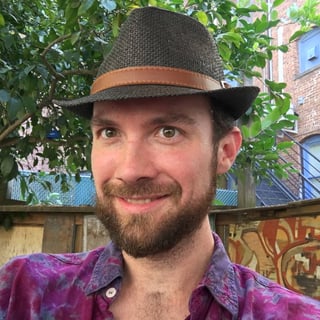
Speaker: You are listening to the Mentally Oddcast. My name is Wednesday, leave Friday, and we are brought to you by Sometimes Hilarious Horror Magazine. Do find us on Ko-fi. This week, we are speaking with Riley O'Dell, who is an autistic writer, editor, and neurodiversity advocate.
Speaker: He writes horror, humor, and bizarro, as well as stories about autism. He lives in Fort Collins, Colorado with his wife, Jamie, plus a dog named Sadie and a rabbit named Newton. How fun.
Speaker: Welcome, Riley. Yes, thank you for having me. It is my pleasure. We had some trouble scheduling, I think, because we were going to record before the break. And then I think I was having some kind of crazy apartment mishap, which I also had today. It's so crazy around here. And then, yeah, break, break, break. And now finally we get to sit down and do this.
Speaker: and Great. So, yeah. Yeah. So, you know, we normally start by asking guests to tell us the story of the first horror movie that they remember seeing. So I bet you've got a good one.
Speaker: I, you know, I think it was, uh, I think it was the movie 13 ghosts, um, when I was 14 years old, or it was either original or the, sorry, the original or the remake.
Speaker: Oh, I, I think it's the remake. Um, I'm, yeah, that was so long ago. I, I wasn't even aware that there, uh, that there were two versions of that movie, but, um, yeah, it was either that one or,
Speaker: Jeepers Creepers 2. I can't remember which one I saw first. Oh, wow. So wait, how old are you? um Well, I'm 35. Okay. All right.
Speaker: So yeah, I'm just trying to put all that in perspective. um Because yeah, I was a full-ass adult when I saw the remake of 13 Gose. Because I love Matthew Lillard. I mean, he's he's so lovable. so Do you think that your early exposure to horror movies put you on a path?
Speaker: and On the path to being like a horror writer? i Yeah. or i mean I think when you are a neurodiversity advocate, I think horror people are are in general more likely to advocate for other people because horror is one of those genres that attracts people with empathy.
Speaker: um but maybe that's wishful thinking because I'm a horror person. um Some people saw a horror movie as a young kid and they never wanted to see horror again. And then other kids saw some horror and said, my God, I'm going to make my whole life about this. So I'm just wondering where you fall in that spectrum.
Speaker: Well, I mean, when I was very young, I, uh, um,
Speaker: there were, I think I saw some trailers for some horror movies and before other movies that I was watching and those trailers, I mean, it was, I think the trailer for like scream was one of them.
Speaker: it just, the trailer scared me so badly. um I practically traumatized me for like weeks. And I thought that I didn't want to have anything to do with horror ever.
Speaker: um As I got a little older, guess I became
Speaker: i guess i was ah became somewhat more drawn to it. Um, I think when I first got the opportunity to my, my, my friend, had the movie 13 ghosts and when he said we should watch it together, um it seemed like, um, maybe it was kind of a chance to try to conquer some of those,
Speaker: um those fears that I had had when I was younger that, that would arise when I would ah experience, uh, horror like that.
Speaker: And so it, it had sort of, uh, um, it, it was powerful, i guess, in that way to, to watch it, um, that movie.
Speaker: And then I enjoyed it. And, um, I've just, yeah, I've been into horror since then. um And ah I guess in a broader sense, I kind of just view, ah to me, I sort of see reality um as horror.
Speaker: Certainly now. I kind of feel like our the human species has been existentially screwed from the very beginning. So what I write often just reflects that view of the world.
Speaker: Okay, yeah, that makes sense. And I think you hit on something that's really important among horror fans, especially horror fans that start young, is that horror can teach us that things are surmountable.
Speaker: Even monstrous, terrifying things that take over entire towns can can be defeated. You know, that's... I forget, is it was it G.K. Chesterton, maybe, who said that we don't tell kids...
Speaker: dragon stories so they can know that monsters exist we tell them so that they know that monsters can be killed i think is i i'm sure i massacred that quote but that is the gist of it that that's one of the things that horror teaches us to do so how old were you when you wrote your first horror story well um
Speaker: you know i I started writing, it was when when I was in second grade, I started my writing with, like, writing comics, kind of like funny comics.
Speaker: And throughout my whole teens, really, I was writing in pretty much only comedy or Legend of Zelda fan fictions. Yeah.
Speaker: So I think I was 18 years old when I wrote my very first horror story. Okay. And did you do anything with it? Did you send it out to get it published?
Speaker: Or did you just share it with friends? Like, what happened to it? Well, no, not at that time. um i I had this kind of idea that I was still too young and inexperienced for there to be any possibility that something of mine could be published. So that, that's sort of just, um,
Speaker: sat on my computer for a long time, I would, you know, I go back and through and I've made a lot of updates to it since then, but I did send it out, start sending it out to publishers later on.
Speaker: um Never did get it accepted anywhere. And it ended up in my first collection of horror stories that I self-published, Vile Visions. Oh, okay. That I self-published in 2022.
Speaker: And the name of that story is the it's the eye that cannot close.
Speaker: Oh, well, that does sound terrifying.
Speaker: Yeah, it's kind of um a surreal and satirical exploration of like cycles of violence and the way it accepts affects society.
Speaker: Okay. And, you know, horror, satire, those have always been things that go handin hand in hand. You know, if you're a zombie fan at all, you probably know that already. Definitely.
Speaker: So, satire actually is is a tough issue right now. Because one of the things that I see a lot, particularly on on social media, is this idea of just posting some blatant, gross lie. And then when people believe it, saying, hey, you idiot, it's satire. Don't you know satire? And I think in some ways people have lost sight of what satire is and what it's for.
Speaker: Would you like to give your take on what satire is and what it's for?
Speaker: Well,
Speaker: for me, I mean, the way that I employ satire, at least, is use it
Speaker: i use it to sort of try to create an ah an exaggerated depiction of the world as it is. And through doing that, um you kind of commentary on how things through doing that it you make some kind of commentary on how things
Speaker: Kahneman, Or I mean, I think by Kahneman, Taking something. Kahneman, That is messed up or whatever and hyperbolizing it to this ridiculous degree David Kahneman, Would never.
Speaker: be the way it is and in real life, you're showing through doing that how that the absurdity of the way that it actually is. Well, I don't know how well I'm explaining this, but that's that's how I use it.
Speaker: um And yeah, I think you hit on something really important. And like that is the word commentary. If you don't if you're not making a point, if you don't have something to say, you're just like spewing bullshit that's not true because it's going to get you clicks or whatever. um that's That's not really satire. That's just an excuse for dicketry. But what you said makes so much more sense, that it's it's commentary.
Speaker: It's exaggerations and lampoons that ultimately demonstrate something. you know they They make a point that that the the author or the artist feels is important to be made.
Speaker: So I have fully respected value satirists, no question. Heroes. You're all heroes. um So um I would actually like to talk a little bit about your autism diagnosis. um A lot of people are getting diagnosed much older now, especially women, because they didn't know how to diagnose us when when we were kids.
Speaker: and And the impact of of an adult diagnosis can be really jarring for some people. So let's get into your story. When were you diagnosed? um kind of unofficially when I was nine years old. ah Oh, wow.
Speaker: Yeah. um The, i got evaluated for autism back then and ah the,
Speaker: um There's this whole written report from the evaluation that I still have in it. You know I think it diagnosed I think I was diagnosed diagnosed with ADHD and oppositional defiant disorder.
Speaker: ah But the the report says something like an ah a diagnosis a diagnosis of, ah of ah sorry, Asperger's um cannot be given because of basically a lack of um the word it used there as stereotypic interests, um meaning like, I guess, repetitive or fixed interests.
Speaker: Most autistic people, they they can get very they can get very fixated on very narrow topics topics of interest. People who aren't autistic would probably call it obsession, but and you know, autistic people, they, the the term we generally use is special interests, but I don't, I don't really have that trait.
Speaker: And because I didn't have that one trait, despite showing like, um, practically every other trait of autism that a person could possibly have. I wasn't, I wasn't given that diagnosis, but oh my gosh my therapist at the time, um told me nonetheless, that he felt that, um,
Speaker: that, uh, that I had Asperger's syndrome. And so I essentially knew and my parents knew, um I did finally This was back in 2019, I guess. I was 29 years old. I did finally get a formal diagnosis on paper.
Speaker: um But, I mean, I have known since I was ah since i was a kid. Wow, okay. So, were you given accommodations as a kid? Like, how did having a proper diagnosis...
Speaker: ah impact you? like what if What impact did it have on like how you were schooled or what you you were doing? Sure. Yeah, I mean, I had some
Speaker: i had some
Speaker: classes through special education and access to those kinds of, the access to some of those resources all throughout elementary and middle and high school.
Speaker: And was that helpful? Yes, it was.
Speaker: Cool. Now, did, do you feel like, i mean, were you in a public school? Yeah. Okay, so it seems like your peers probably would have known that you were getting accommodations. Did that come into it at all for you?
Speaker: Oh, I don't think it was necessarily
Speaker: known. Maybe people knew. I didn't really have a lot of a lot of interaction with most of my peers. I had a few...
Speaker: um I had a kind of a small circle of friends and didn't talk much to anyone else. If they knew, i mean, no one said anything, but the accommodations I was receiving, i didn't need a lot.
Speaker: So I don't, um I don't think it would have been obvious necessarily. Okay, I see. Well, you know, one of the high schools that I went to had elevators between the first and second floor, so it was kind of a magnet school for special needs students, which sounds really weird saying it out loud.
Speaker: But, yeah, I think... there was ah a fair amount of of bullying and just otherizing and unnecessary weirdness. So it's really cool to hear that like, that was more like an experience that that I saw at my school and not a universal experience.
Speaker: So of course, again, you're you're quite a bit younger than me. So maybe we're getting better with the passage of time. That's that's ah that's neat. So how would you say ah your autism impacts you now?
Speaker: How it impacts me now. um
Speaker: Well,
Speaker: in a lot of ways, really. um
Speaker: And in difficult ways. I mean, there's there's
Speaker: executive dysfunction that I deal with,
Speaker: i've I've got oral organizational issues like you wouldn't believe. that's That's super relatable, man. Super relatable. And there's... I've got the ADHD on top of that. And sometimes... Sometimes it feels like the...
Speaker: the
Speaker: benefits of autism and ADHD almost kind of cancel each other out. um I mean, like, what what am like what am I getting at?
Speaker: The sentiment that you're expressing is something that I've heard before either side, that there are benefits to autism that have helped people in their creative lives. There are benefits to ADHD that help people focus and get things done on occasion.
Speaker: But if I'm hearing you correctly, what you're saying is that you don't necessarily get either benefit because they're working against each other. Yeah, sometimes it feels like that. And I also have this chronic brain fog that isn't related to either of them. But the um I have a... oh My brain is a complete mess.
Speaker: hum But autism... i I think that's also relatable. I think a lot of ND people just feel like the entire world is functioning on a different frequency and they're just like in the corner being a mess. I know I feel like that. And I don't, I don't mean to diminish what you're saying and say, Oh, come on. Everybody feels like that. But I do think that that feeling is, is common enough that if a lot of people who feel that way, get together and talk about it, we're all going to feel better at the end of it.
Speaker: Yeah. Um,
Speaker: I ah had and ah another thought. my brain fog has... I'm so sorry. I interrupted you. I'm so bad that. My brain fog has destroyed whatever I was... Well, we were getting into... um Well, so the the other thing to say about autism...
Speaker: is the I mean the way it's been beneficial for me I guess is the sp in the specific friendships that I've I've formed I mean um most of my friends are also autistic um and so if I weren't on the spectrum i I probably wouldn't I probably would have never met them would have different friends and having that shared experience allows us to have maybe kind of a ah deeper friendship than a lot of people might have with their friends and also um well
Speaker: um My wife, Jamie, is autistic as well. and so ah Again, if I weren't autistic myself, probably the path that brought us together, because while we went to this, we met in this sort of dating group for autistic people, we wouldn't have met each other. So I can't say that it's all bad um being autistic.
Speaker: Oh, sure. Yeah, that form makes it kind of sense. It's informed a ah a lot of the way my life is. And ae yeah.
Speaker: I think you hit on something really important, which is that, and this is going to sound like a sweeping generalization, but it's something that I've lived. So I'm just going to say it like it's a fact. Neurodivergent people, when they connect with each other, do tend to go deeper.
Speaker: Because if you start, I mean, I've struck up conversations with complete strangers in bookstores, and nobody's talking about like, how's the weather? Or did you see, you know, the new sign on such and such street?
Speaker: it goes deep. It's like, hey, you're at a bookstore. Why you here? Well, because, you know, I'm feeling kind of suicidal right now, so I thought I'd get, so you know, and and people just are out with it.
Speaker: People just tell you what's going on with them, and they really, you know, you you dig deeper with those people because ah particularly with autism, one of the ways in which autistic people communicate with each other is through shared experiences.
Speaker: So, yeah, While neurotypical people might see that as some sort of one-upmanship, like I'm telling my story and then somebody else starts telling their stories, a lot of neurodivergent people totally get that like what you're saying when you tell your own story is like, yeah, that's relatable.
Speaker: i understand you and here's why. And then you have this connection that's based on shared experiences with somebody that you might have known for 15 minutes. Now you multiply that by an entire ass friendship and...
Speaker: It's this, you know, it's it's huge. And I can tell you in my life that I've had friendships that have lasted decades. And then you find out that like both of you were the same kind of neurodivergent the whole time. And neither of you knew. It just made a ton of sense. You knew that was the person who understood you.
Speaker: And that was how who you hung out with because it just made sense to do so. So that's what that made me think of. And that ah it actually leads into your project, which is Divergent Realms.
Speaker: And I want to hear all about it. So let's start with the broad strokes. What is Divergent Realms?
Speaker: ah Well, Divergent Realms,
Speaker: the the full... The full title is Divergent Realm Science Fiction and Fantasy Stories About Neurodivergence. So that title explains quite a bit about what it is. There's 14, it's an anthology of 14 stories, science and fiction science fiction and fantasy stories about neurodivergent characters
Speaker: written by neurodivergent writers. um And, you know, as a writer, I'm always looking for places to submit my short stories.
Speaker: And I've noticed there are always a lot of open calls out there asking work um work
Speaker: that are exclusive calls for writers that are, you know, um on the LGBTQ spectrum or writers of color. And I, you know, that's great. um But, ah you know, you get the impression sometimes that the idea of diversity in publishing usually just means kind of um those two things or um you rarely neurodivergent
Speaker: or I rarely see mentioned in discussions of neuro of diversity in writing or publishing um I mean, i know of very few anthologies featuring work that are, that's only from neurodivergent writers.
Speaker: I think there's one called Spectrum, an autistic horror anthology. um And there's one other that I came across that I don't remember the name of right now, but there are so many neurodivergent people in the world.
Speaker: And so it's kind of like, why isn't there more, um Why aren't there more anthologies or collections like that?
Speaker: you know Well, I've talked a little bit about my brain being kind of a mess a lot of the time, and that's the case for a lot of neurodivergent people. And so writing is very can be very difficult for us. And so I feel like having submission calls that are just for neurodivergent people can be really um beneficial and helpful.
Speaker: So I just decided to go ahead and and make one myself. um I wanted to make an anthology that gives voices to people whose perspectives are often overlooked.
Speaker: um And well, I think it turned out pretty well. That is awesome. And I think, I think you're right. When we talk about demographics that are specifically sought, I think, you know, things like, ah you know, things that are just for women,
Speaker: or just for BIPOC folk or LGBTQ folk. um I think that things like that make a lot of sense because those people are often, I don't wanna say shut out of the industry, but they certainly have but a more difficult time breaking in.
Speaker: And I wonder if with neurodivergence, Because especially if you're doing all your communications via email and and internet related things, um you can't always tell as readily if someone has mental illness or neurodivergence. I think that probably the aspect of neurodivergence that keeps people out of the industry is more about the creation of the work itself.
Speaker: That it's harder for us to write. It's harder for us to submit. You know, it's harder for us to like get a press packet together, all that there. So I think it's it's really interesting because my guess, and I don't know if you would even know the answer to this, is that having a call specifically for neurodivergent people, one is welcoming because that is an issue with autistic folk that they don't always want to go to a place where they don't feel specifically invited but also that it is inspiring and encouraging to say hey this guy literally wants to hear from people that are like me i better get my shit together and send him something yeah that um i kind of hoped to draw those kinds of writers um
Speaker: out of their shells, I guess, so to speak. ah You know, people who might otherwise be afraid to submit or um that there's there's something that's blocking them from doing so. they that i hope to give them an opportunity to feel like, um yeah yeah, that they could be that something that would be welcoming and inviting for them.
Speaker: um with my anthology and, uh, Oh, sorry. Go ahead. And, you know, I got, um, something like 80 submissions overall. I don't remember the exact number, but I think there were,
Speaker: at least a couple of those people that told me, Hey, this is the first time that I'm ever submitting a story of mine. cool.
Speaker: i I even accepted one of those, but yeah, it seems like, um, I, it was successful in, um, in inspiring some people to share their work who would might not have otherwise.
Speaker: That is fantastic. Now, let me ask you about the downside though, because I run a magazine and the thing that I hate more than anything is having to send a rejection letter. And when I started out, I used to write really detailed, like, I love this about your story. I didn't think this worked for us.
Speaker: And ah in the last few years, I've kind of stopped doing that as much because it's so difficult because then, you know, the writer wants to engage me in conversation. Sometimes people ask for free editing, but overall, I mean, I'm not the, the, the fact that I'm publishing in this magazine doesn't mean like I'm the queen of publication. So if I don't accept your story, that doesn't mean that the story wasn't good or that you're not good as a writer.
Speaker: And i want so much to figure out a way to convey that in a short, succinct way that doesn't sound like condescending bullshit. And I haven't found it yet. How how do you feel about rejections and doing it? Like what's your philosophy?
Speaker: Yeah. Well, um it's never fun to send them. Right. um I just, I think I just,
Speaker: kind of cooked up a short, succinct form rejection that I sent out to um anyone whose story that I didn't accept.
Speaker: And some of those stories were um very good. i feel like there there were probably two primary reasons that I would reject a story for the anthology, either that it was...
Speaker: either that the the writing just wasn't that great. It felt like maybe it was kind of from someone just starting out and they needed to sort of hone their work more before that before they'd be ready to have their stories published. And the other you know the other reason that i would I found myself sending rejections was that some of the stories were very good, but I didn't feel like the sort of the neurodivergent element was prominent enough.
Speaker: I see. And it was, it was especially hard with some of those, I think. Yeah. To send the rejection. Well, cause when you know that somebody is trying really hard and feels passionate about something, it's so hard to be like, yeah, okay, thanks, but no. Um,
Speaker: Yeah, definitely my my least favorite part about publishing because sending acceptances and then the contracts, because, you know, you feel so professional when you send someone a contract. um Are you are you planning a follow up anthology? It sounds like you had some success with this one.
Speaker: Surely there is much, much more to say on this topic.
Speaker: Well, success in terms of how it's been received um and such. ah Monetary success, not as much, but I haven't really found that with anything that I've written.
Speaker: um So it's kind of all just for the love, but I would say that creating anthologies I've found to be ah quite exhausting and I'm done with it for now. I'm just wanting to focus on my own work for yeah foreseeable future.
Speaker: It's a ton of work for sure. Yeah, that makes sense. That totally does. So, you're, how has the reception been? I mean, it it sounds like you're helping people. Um, are you, are you getting the word out? Cause marketing is always the the toughest part.
Speaker: Yeah. And, uh,
Speaker: definitely not not very good at that at all myself. I've been struggling to get the word out. But I mean, reviews from people who have read it are good.
Speaker: I mean, submitted it few, like, i mean i submitted it to a few like um
Speaker: to a few sort of indie book awards. Like I think there was like next generation indie book awards was one of them and a couple of others. And it performed quite well in the ones that I submitted it to. I think I, it was a finalist in a couple of them in the, in their anthologies category. And it was a, it took the third place bronze, uh,
Speaker: um winner in another one of them um and so it yeah it's gotten that kind of recognition as well um when i when i am able to get it out in front of people it's it seems like they they they really like it and they like um sort of what it's about and what i'm trying to do with it in terms of um helping people share their their voices and their experience is and sort of
Speaker: um getting more neurodivergent representation out there.
Speaker: That is so great. um And, you know, representation is kind of a hot button issue because it seems when you talk about representation, it seems like a very basic issue. Like, yeah, if we're watching media, it should involve everyone because they're the humanities. So anybody human should be included.
Speaker: And there are people that want to push back against that. And that the wild thing about it to me is that the reason they don't like having varied representation is because they've never had it before. So now it feels like an agenda.
Speaker: When in fact, the real agenda was pretending that everybody is white and everybody is straight and everybody is Christian and everybody is, you know, neurotypical and everybody has like basically the same religion as everybody else. And then when you deviate from that, people are like, hey, what's this? What's your agenda? Like, no, dude, you were already lulled to sleep by an agenda. And now that people are saying, hey, let's represent represent everybody.
Speaker: People are losing their minds. I mean, as an American, i did not see a black woman on TV that wasn't either a maid or a secretary Until, oh gosh, I think the Jeffersons, because I'm a little young that like Niohda Uhura was also like already in reruns by the time I was cognizant of the TV that I was watching.
Speaker: But you just, you didn't see it, you know? and then... and then You would think fast forwarding like 60 or some so years in the future that people wouldn't still be saying representation. Why do we have that? Why do there have to be girls and things? Why do there have to be brown people or black people? Like, come on, man.
Speaker: So actually you are in Colorado and I don't know very much about the sociopolitical climate in Colorado. So how, how is that going where you are?
Speaker: Well,
Speaker: you know, I might not know a whole lot more hum than than you do. I mean, i don't get it out a lot or know a whole lot of people, but I think that for now things are going about as well as they can be.
Speaker: Well, there are a lot of people here fighting to minimize the impact of the current pandemic. chaos that's going on. um But, you know, just like anywhere, I think a lot of people are struggling too.
Speaker: Is there a lot of ice presence where you are? um I haven't seen them. my my friend a i have a friend who um goes out more than i do and he he is often on the lookout for them and he's he's seen some convoys going around that he thought were probably uh ice with ice um and ah unfortunately i've heard stories that the
Speaker: that the local police have been helping them out around here in some cases. Yeah, but again, I i haven't seen lot.
Speaker: um And it's, yeah, and worried that it's all downhill from here, but. Well, that kind of brings me to my next question. um i know this is kind of a generalization, but among autistic people, there is something called justice sensitivity.
Speaker: And basically it it it relates to people having a particularly difficult time when there's a lot of rampant injustice or unfairness in the world. Is this something that you find yourself to be particularly sensitive about?
Speaker: Yeah, absolutely. you know, i
Speaker: I do my best to stay away from the news at this point in time.
Speaker: i mean, there's the part of me that wants to know
Speaker: what's going on and i mean maybe to try to be more um prepared for stuff but it just it oh man it it can really be so painful um and send me into um just depression for Like, hours at a time, if I... Oh, dude.
Speaker: The day that I saw that video of the kid that got kidnapped from Target, and I just... I mean, he was a citizen, but they didn't check. They beat the crap out of him and then took him to a different store. Like, wasn't even a Target. They took him to, like, a Walmart or something and just threw him outside like a bag of trash.
Speaker: And this poor guy was just, like, working. He was doing his job, and they just came and took him. And I don't... I'm having a hard time with the the preemptive compliance that I'm seeing.
Speaker: Because when a bunch of masked guys wearing vests that you know you can buy at Amazon for $35 come up on you and start telling you that they're law enforcement, who says?
Speaker: Who says you're law enforcement? I can't see your face. You're not showing a badge. Your shirt says police and ICE. You can't be both of those things at the same time. So, but I mean, it's so infuriating that, I mean, the the whole Trump thing, the thing that's been hardest on me has been finding out how many people are cowards and how many people really don't stand up for what they say they do.
Speaker: So there's this like baseline sadness. And then I think over that, there's like a layer of anger. That's like, okay, so not only are you a bunch of cowards, but you're just completely ineffectual. Every time I see a Congress person get on social media and they're like, hey, we're making new rules about the milk your kid drinks at school. Like who the hell cares? We just don't want them shot. So I don't mean to like ramble and ramble about politics, but God damn, it makes me mad.
Speaker: So yeah. Yeah, definitely. my've I've...
Speaker: Yeah, yeah, that's quite a lot of anger about all of the long pause followed by a sigh, I think really, really ah sums it up. um I do want to get back into your work, though. Now, I went to your link tree and one of the links there is a place called um Regret, which ah seems sort of ominous, but it's a game, right?
Speaker: That's right. Tell me about it. Well, I chose the name specifically for its ominous vibe. It's a puzzle game. And the goal is to search for clues in images and text. Yeah.
Speaker: that will lead you to a word. And if you've got the right word, you put it in the ah URL. Um, and it basically, it will take you to a page with the next, uh, the next level.
Speaker: Um, and you know, it's, it's got somewhat of a horror theme. there's a small story that's uncovered as you progress.
Speaker: Um, the i i've made another game like it as well called immolation which is on actually on itch.io um and it's a more recent game and in my opinion i think it's probably you know the better of the two but um it has kind of more of a story and i think the the The puzzles are are more complex, but I kind of designed both games to be as difficult as I could possibly make them. So if anyone wants to brave either one, then they should be prepared to spend a lot of time. Okay, so I don't know a whole lot about games.
Speaker: I certainly know even less about how they're created. So when you tell me that you designed a game and you put it up online, what does that entail? Is that a coding thing? You have to write lines of code to do that?
Speaker: With regret, I did not have to. I ah just, I used, I used a website builder and it's, it's pretty much as simple as uploading images and text.
Speaker: um And then, to each page and just just creating a number of different pages.
Speaker: um And each has its own yeah URL. And so if you get if you get the right word from a level, then you know you'll be it will take you to one of those many pages.
Speaker: Immolation is kind of a more um complicated thing where i did use a some software um that's not really ah software that's designed for making games of that type. I kind of, um it's the software is called, oh,
Speaker: what ah it's called Twine, and it's for making interactive fiction. And I kind of brute-forced it into...
Speaker: um like I do write some interactive fiction with the software, and as I was getting used to it, I thought, oh, could possibly use this to also make this type of game.
Speaker: and I did have to brute-force it a little bit to make it work, but I think it was... And that there's a fair amount of,
Speaker: Twine has its own code that you kind of have to learn. So there's it there's it it's a fair amount of coding and stuff.
Speaker: But I think it was ultimately easier than using some of the actual like game design software that's out there.
Speaker: I found that to be more, um, somewhat more impenetrable, in terms um, in terms of getting used to how it works, um, and how to make games with it.
Speaker: Like okay game maker and some of those other programs that exist unity, um, and such. Okay. All right.
Speaker: Now I want to get into, ah well, we we actually, there's one question on our show that we do not ask without affirmative consent from our for mar guest. And you did agree to tell us about a time in your life where you felt in legitimate fear for your life. Like you thought, hey, maybe this is it. um And and be I just, what what would you like to say about that? What do you want to tell us?
Speaker: Well, I don't think there has been a time in my life when I have come that close to biting it.
Speaker: ah There have been times when I've had kind of a... um
Speaker: Well, like being ah back when I was still and in in school, i I had the, you know, I had kind of just the the ongoing fear that someone might burst into my classroom today one day and shoot me in the head because that that's something that just happens in this country sometimes.
Speaker: it wasn't It wasn't an immediate fear that, oh, I'm going to die.
Speaker: you know right now but it it was is you know it's a a fear that i i might um die and there as far as i mean probably the time that i've been most afraid in my life what didn't pertain to fear of my own death but rather um my when we were in panama um my parents and my sister and i they they were mugged coming back from a restaurant and my dad got stabbed in the chest oh my god you know i thought maybe he was going to die but it was this superficial wound as we soon figured out um i think that's that was the time when i was yeah yeah that's probably that was probably the most terrifying moment that i've had in my life i think
Speaker: Well, I'd actually, if if we can, I'd like to talk a little more about what you're saying about in intrusive thoughts in terms of like school shootings. um Because it can be easy to dismiss that and say, yeah everybody's afraid of school shootings because they're terrible. But if you have to be in a school all the time or you're sending your kid to a school, I know I talk about this with parents a lot. um And if you're someone who deals with intrusive thoughts or repetitive thoughts, that's no joke, man. That can be debilitating, like mentally and emotionally.
Speaker: Um, how is that going? Like, are you, are you okay? Oh yeah. I mean, I'm fine.
Speaker: I'm not sure that I would be fine if that was something that I had to live with. Um, But the reason i want to talk a little bit about the reason that we we talk about this question with people. And that is because the first of all, the answers that we get are way more varied than our answers to the the first horror movie question. But also that feeling like you are about to die is another one of those situations um that can be isolating.
Speaker: that people don't want to talk about because it's scary and because you can learn things about yourself and you can need a change of underwear depending on the situation. There are a lot of things in ah in a life or death fear situation that are difficult and embarrassing and and again, feel isolating.
Speaker: So I'm always wanting to be as blunt as we can and cover as many difficult topics as we can. um for that reason, to to connect with people. And so that people who maybe don't feel comfortable reaching out to have those discussions can listen to somebody else having them and and still reap the benefits. You know what I mean?
Speaker: Yeah. So that's why we do it. And that is why I asked. um And i'm I'm horrified to think that you had to watch your dad getting stabbed. How old were you?
Speaker: Oh, I wasn't there. i mean, um not for the stabbing itself. Because I had gone ahead of them when... When i'd left... We were at a restaurant and I had left before they did and went back to our hotel.
Speaker: And then they it happened to them while they were walking back. I think I was... 20...
Speaker: twenty um
Speaker: actually maybe 23 or 24. I'm not quite sure. Okay. Now, a lot of the people that I interview on the show, I know personally, or we've been online friends for a long time. You are not a person like that. I am really just having my first conversation with you today. So we don't know a whole lot about each other. um Do you have a day drop? What is it that you do?
Speaker: Well, I don't actually. and um
Speaker: Yeah, i've I kind of have some fortunate circumstances that have allowed me to just focus on my writing.
Speaker: which So I try to do that awesome for about 24 hours a week, four hours a day, six days a week. Wow. Don't always hit that. but and then Well, writing and writing-related work I say not it's not all um it's not all writing but like I'm I'm counting this podcast as part of my four hours today for instance but okay um Yeah, but it's ah it's very fortunate because between my autism, ADHD and chronic illness, I think there are probably very few jobs I can think of that wouldn't be an absolute nightmare for me. And um probably if i if i didn't um you know if I didn't have the people helping me out financially that I do, I'd probably have to go on disability and it would suck.
Speaker: Oh, I get it, man. I get it. If I didn't have a husband, I'd be living in a refrigerator box under the bridge, man. Because in no way capable of ah i mean, when I was like you know in my 30s, I think was kind of the last gasp of going out and working a job and pretending that it wasn't like devastating me and it wrecked my body and you know everything else.
Speaker: So... So yeah, I get that. And the interesting thing is i cannot go on disability because my husband has a job. So the prevalent belief is that if your spouse is working, that they are 100% cool supporting you.
Speaker: And i don't I don't know that families have been able to comfortably live on one average income since like my mom was little. like i don't I don't know that that's been a thing in this country for a long time.
Speaker: Yeah, that that system could definitely use some work. Well, that's kind of the joke, right? Because when The Simpsons went on the air in 1989, it was not considered preposterous for a family of five to so to live on one salary. So I guess I aged that up a little for my mom because she was born in 1950. But anyway, in 89, if you had a mom who stayed home and there were three kids and they had two cars and they owned a home, now they had to borrow a little money to to buy the home.
Speaker: but they make their payments just fine. And at one point, I think Homer wanted to have a job that he enjoyed more, but he had to keep his job at the power plant because they were having a third child, you know? So that was, that was the financial reality in 1989 when the Simpsons started. And today the idea that some dumbass who could barely keep his job at the power plant and a mom who has never really worked for any appreciable amount of time can have a full-ass house and two cars and three kids that all do activities. And, you know, Bart has a lawyer and, you know, it's it's crazy. it's It's fantasy because most of us don't know anybody that has a one-income household and they're living well. Like, it's it's so rare.
Speaker: Yeah, that definitely. Definitely couldn't happen that way now. Right. And it's that, and I think the point of the thing is that a lot of it comes back to that idea that we call having a job earning a living, because if you don't get out there and toil to make someone else money, then you don't deserve it.
Speaker: And, and we're, seeing that now i think from our government and people like you know hegseth and and stephen miller that don't really do much but like hurt women and and and bash minorities but those are the people that are like oh well if you can't do an honest day's work for an honest day's wage like you i i don't know where these people get their audacity first of all but exactly Exactly. Gee, I wish I could work as hard as Pete Hegseth. I mean, putting away a fifth of whiskey a day probably is thirsty work, but I'm sure I would not know.
Speaker: um Because I'm too busy getting stoned. but But no, I mean, to hear like ah RFK Jr. explaining how people that drink soda and eat snacks don't deserve food stamps or health insurance because they're not taking good care of their bodies.
Speaker: Like, okay, I think there might be a case to be made that if we get government funded health insurance, we have a responsibility to treat us, to treat ourselves well and to be as healthy as we're able to be.
Speaker: i don't want to hear that from anybody who has repeatedly shot heroin into their veins. I don't think that's the right person to advise me on my potato chip consumption. No, quite hypocritical there. Yeah. Yeah. Well, and that's the thing, is that, like, in politics, outing someone as a hypocrite and bringing receipts used to be devastating.
Speaker: People cared whether or not their politicians were hypocrites. And that's not true anymore. you got people calling themselves pro-life and they're out there cheering for ICE.
Speaker: So... But I digress. Now, you are involved in a bunch of different genres. You do sci-fi, you do horror, you write funny stuff, informational pieces, fantasy. um What I would like to talk about is how you parse what kind of stories are best told in what genre. Like, if you have a ah a ah particular point you want to make, how do you decide...
Speaker: how you're going to tell that story, like in terms of genre and, and let's also say point of view, because that's really important.
Speaker: Um, um,
Speaker: pretty much anytime I, for, for me, at least, uh, as a story ideas kind of just kind of, kind of born together with a ah genre.
Speaker: Um, Like, for instance, I write many short stories that are just based on silly ideas. um
Speaker: And just from the ideas themselves being so ridiculous, I know from the get go that it's going to be a comedy. um I mean, I guess it always feels obvious to that like that to me what the genre should be for any idea that I come up with um I although I do think any type of story can be matched to any genre really yeah you know um yeah even the silliest ideas i come up with could be played straight if I if I wanted to but um
Speaker: I mean,
Speaker: sorry, I've lost my train of thought here. Yeah, I think I just found out that my wrong mic was on. So even though I muted myself, you could hear me coughing. And so I'm sure that destroyed your train of thought. And that is super embarrassing for me as a host. Oh, no, it's not a problem.
Speaker: But so so it sounds like you're saying that when the idea is sort of originating in your head, that you already have a pretty clear sense of who's telling the story and in what genre they're going to be telling it. And I think that makes sense because some things are just naturally like, like if if your story starts with an elf, like, gee, I guess that's probably fantasy.
Speaker: Not necessarily, but I would imagine that some of these things have their own direction, like a natural movement towards the genre.
Speaker: Yeah. So do you write anything directly from your own life?
Speaker: Um...
Speaker: Sometimes i i put little bits in pieces in there. I haven't written anything that can be called autobiographical exactly, maybe semi-autobiographical.
Speaker: Well, I think I'm i'm getting at like the fictionalized, not not necessarily a Mary Sue, I forget what the male term is for that, where you're writing ah a character that is essentially you, but you're not going to admit that it's you, and it's just fictionalized enough that you can point to things that say, well, of course that's not me.
Speaker: Yeah, I write a lot of autistic characters, and it's it's pretty obvious why. Yeah. So that's that's definitely...
Speaker: um yeah I mean, parts of me probably end up in all of my characters, I think. I don't know how you can... I don't think it's possible to write a character without that... some aspect of you leaking in even at least a little bit.
Speaker: Yeah, i think I think that's true, but I also think that not every writer is aware of that. I don't know if you're familiar with a rather famous interview with Anne Rice, ah where I don't know how much you know about Anne Rice, but Anne Rice had a child who died in real life. um And they were they were quite young.
Speaker: And in her book, Interview with a Vampire, they the the two men well one of them uh Lestat makes a little girl into a vampire so she can't grow up but she also can't die and so when someone asked Anne Rice oh is this ah a reference to your daughter and that you know your coping tool was to create a child who couldn't die and she was pissed She was horrified. She vehemently denied it. she I don't know if she actually stopped the interview, but boy, was she unhappy and not wanting to discuss that in any capacity.
Speaker: Right? And that's the thing is that it seems so obvious. And while I wouldn't presume to tell an author what their own book is about, that's that's pretty tough to deny.
Speaker: Yeah.
Speaker: But it being such a painful subject, I guess. Right? don't Well, that's the thing is that on the one hand, it seems like an obvious question, but also bringing up someone's deceased child in an interview is something you should probably clear ahead of time.
Speaker: Yeah, it seems quite direct. Yeah. Well, you know, i've I've never really been a fan of, I mean, people so have a lot to say about Barbara Walters and her interview style and how great she is and how she gets to the bottom of things. Boy, she has the tough questions. And i I think a lot of that is is crap. I mean, yeah, she's gotten to talk to some influential people. But when I was a little kid, she asked Brooke Shields whether or not she was wearing underwear.
Speaker: on And I mean, Brooke Shields, I think, was maybe 15 or 16 at the time. And Barbara Walters is supposed to be a friggin journalist. And she had no problem saying that to her. So bizarre.
Speaker: Right. Well, and again, in the 70s and 80s, we looked at those things as a society very differently. So maybe if you're interviewing a 16 year old girl.
Speaker: who has been nude in an R-rated film, maybe that question felt more appropriate. um But I still, I can't get past it. I can't call a woman a serious journal a journalist after something like that. And again, that's just my opinion. I'm not the queen of journalism, but if If you're trying to be a journalism, maybe maybe don't do that.
Speaker: If you're trying to do a journalism. ah but But getting back to you, um what I need to know is if somebody is unfamiliar with all of your work, where is the best place for them to start? Now you have a link tree and we're going to have that in the description, but what would you advise?
Speaker: Well, you know, my the my first collection, Vile Visions, is free. ah And the stories in there present a pretty solid overview of what my writing is like. So that's a pretty obvious starting point. I have a Vile Visions Volume 2.
Speaker: The whole first collection is free? ah that's Yes, that's correct. That is dope. Yeah. And Vile Visions Volume 2 is what I hope people, if they like Vile Visions 1, they'll go on to buy Vile Visions 2.
Speaker: That one was a finalist for the Wonderland Award this last year. neat. For superior achievement in bizarro fiction. Okay,
Speaker: okay cool. So, I mean, either of those are good starting points. You you don't have to have Red Vial Visions 1 to read 2, but I mean, you might as well because the first one's free. um Right. But definitely everyone who's interested should check those out. And I mean, obviously, you know, if you're neurodivergent or just like the idea of science fiction and fantasy from under underrepresented underrepresented perspectives then divergent realms um is definitely one that you should check out or um or if somebody wants to read something that's just so somewhat more light-hearted fun and comedic um
Speaker: then you know my novella Shit, Love, and Burgers is where I would tell them to go. Evocative title. I like it. who Cool. Okay, so... um
Speaker: Wait, what was I going to say? it was on the tip of my tongue. Saliva. No, it... um ah I'm to have to cut out this long pause while I remember what I was about to say.
Speaker: I don't know. I don't remember what I was about to say. I don't write everything down, so I don't know. But we are nearing the end of my list of questions, so I need to know if there's anything that you wanted to talk about that we did not get to.
Speaker: i can't think of anything, really. Okay. Yeah, I mean, we covered a lot of ground, certainly. um And also, i wanted to ask, sometimes authors will give us a short reading.
Speaker: at the end of the interview. So that is something that you can get together on your own and just send to me and we'll tack it on to the end. But what do you think? You want to read us a short story?
Speaker: See, we got to tell people whether or not to expect it at the end of the interview.
Speaker: Yeah, i don't I don't know what I would read. I don't have anything... Well, that's not a good enough reason not to do it. That just means you need more time to pick something.
Speaker: I've got to find something. Well, if you've got a collection that you're giving out for free, it's probably a good idea to pick something from that collection to introduce people to your work. And they don't even have to get up or hit any buttons on their phone to like get there. It'll just appear after the interview.
Speaker: Yeah, well, I think you should do it. But I'll tell our readers that if you don't want to give us a story read that they can enjoy, then I'll put up a free story of my own. And so you're going to get a story at the end of this episode regardless. And you can just be surprised whether or not it's me or the guest.
Speaker: How about that? Okay, yeah, I'll find something. I bet you will. i have I have very little doubt. And the interview, this is probably not going to go up for a couple of weeks. So you have plenty of time to to do a read. And if you want to use this interface that we're using here to record with, I can totally hook you up with that too.
Speaker: So we'll make it happen. I love doing audio books. I think it is really fun and it is an interesting way to get a new perspective on your work because your work feels different when you're reading it out loud as opposed to reading it in your head.
Speaker: yeah I didn't know that until my first podcast years ago, years and years ago. um Another thing that we actually like to do is to give the guest a chance to ask me a question if you want to. So if there's something you want to know, now is the time for that.
Speaker: Well,
Speaker: not if you're wearing underwear. Ha ha ha ha ha. i don't care I don't care to know that one way the other. um No, I can't really think of anything.
Speaker: Okay. Well, you know, I'm not very interesting, so that would stand to reason. um I'd say you're you're interesting. i'm just i'm not great at I'm not great at thinking of questions to ask people, I guess, so...
Speaker: Okay, well, I'll just use this opportunity then to let everybody know that I am wearing underwear, but because we are audio and not video, I am not wearing, like, outer pants. Underpants, yes.
Speaker: Pants, pants, no. So, I'm wearing a long night shirt right now because I didn't even bother getting dressed. That's just how I roll. And what that actually means, then, is that it is time for the Mad Libs. So, I hope you are ready for this.
Speaker: Um... Looks like we're starting with adjectives and I'm going to need one, two, three. Three adjectives is what I need from you.
Speaker: Three adjectives. Yep. Okay. um Cheesy.
Speaker: Let's see. Warm.
Speaker: warm Okay, and one more.
Speaker: um ah Fun. Okay, now I am going to need some singular nouns. I will need one, two, three, four of those.
Speaker: Yes. Oh, wait, no. One, two, three, four, five singular nouns.
Speaker: Okay. um
Speaker: Horse.
Speaker: Finger.
Speaker: Okay.
Speaker: see. I three more nouns that are singular.
Speaker: Ceiling. Uh-huh.
Speaker: See, this is how we know that you're a real writer, because you are feeling the pressure during Mad Libs, and only but only writers feel the pressure to come up with good words during Mad Libs. Everybody else just looks around the room.
Speaker: oh well, that's kind of what I'm doing anyway. Well, I figured that when you said stealing, but I didn't want to embarrass you. So two more nouns. Okay. ah
Speaker: I'll go tree.
Speaker: Alright.
Speaker: And, uh, butt. Alright. Now we need a couple of plural nouns. I'm gonna need one, two, three, four of those.
Speaker: Okay. Feet.
Speaker: Mm-hmm.
Speaker: Lions. Alright.
Speaker: Um... Two more.
Speaker: Shirts.
Speaker: All right.
Speaker: Mountains. Okay, great. And now we need a verb.
Speaker: Dive.
Speaker: And a part of the body, plural. Part of the body. of Noses. Noses. Okay, cool. That is everything. So this is from the sports section of the Madley book. And it it this is called stickball.
Speaker: If you don't live near a cheesy baseball field, you can always play stickball, city version of baseball. You will need a warm stick, a rubber ball, and bases to dive around.
Speaker: A lot of things in the street can be used as bases. Sewers, manhole covers, and feet. You don't need a pitcher and stickball. The players just toss the horse in the air and hit it themselves.
Speaker: Warning, you have to be careful not to hit lions parked along the sides of the road. And if you hit a fly ball, keep your noses crossed so it doesn't go through any glass shirts.
Speaker: Also, if possible, play on a finger with very little ceiling traffic. As long as you observe safety precautions, stickball can be just as much tree as the fun game of baseball.
Speaker: So get all your neighborhood mountains together and play butt.
Speaker: See, that is the definition of irreverence. That's what that is. I'm just trying to figure out how to cross my nose.
Speaker: Well, think you need a friend for that one. You need to cross noses. All right, man. Well, I am so glad that you could be here. This was a fun episode and I learned stuff, which is always my favorite thing.
Speaker: um And we want to remind all of our guests that we will be back next week. And also that the the best way to support the show is to support the magazine. which is sometimes hilarious horror. And you can find us on coffee.
Speaker: So thanks so much for being here, Riley. Yeah. Thank you for having me. And we will see everybody next week.
Speaker: In my hometown, a tradition existed that was as old as the town itself. The tradition said that when a kid turned 13, he or she had to brave the flesh caves in the mountain behind town. For boys like myself, one's manhood hinged upon it. The teasing never ended for those who chickened out, and I did not intend to.
Speaker: Since I turned 13 on the same day as my friend Travis, tradition allowed us to enter the caves together. The day saw us so giddy we couldn't even think straight. How could we not be with the stories we'd heard? Ingo told us there were anus-like crevices that farted at regular intervals, powered by lava-like pools of boiling fart gas in pockets deep within the earth. Billy said you could find whole walls covered in nipples, and that some of those nipples grew on little blobs, suggesting they were girl nipples. oh how we gasped and giggled at the thought and there were even rumors that if you went in deep enough you could find a giant wet vagina so large even a full-grown man could fit inside we were two boys at the beginning stages of puberty you do the math
Speaker: The adults all knew of the tradition and publicly condemned it, yet many had performed the rite of passage themselves and were of the belief it ought to be preserved. So even though the caves were for officially off limit limits and any anyone caught screwing around down there was officially in a whole lot of trouble, it was quietly conceded that if somehow a group of boys was to succeed successfully sneak out of town at night, they could probably get down to the caves and back without any anyone noticing. Adults in town spent a whole lot of time pretending not to notice such things.
Speaker: We got to the caves as Twilight set in, bringing with it a mild chill. We'd have worn coats, but according to the older boys, the caves were warm, so coats would only weigh us down inside.
Speaker: We could feel that warmth from where we stood, just up the hill from the entrance, a heavy warmth, thick with moisture and positively rank. Travis plugged his nose and looked at Billy and Harold who'd come to see us off.
Speaker: "'You didn't tell us about the smell,' he complained. Billy chuckled. "'Would it have stopped you if we had?' "'No way,' Travis said with a shake of his head. "'You'll get used to the smell quick,' Harold said. "'After a few minutes, you'll barely notice it. "'If you say so.' "'We climbed the rest of the way.' Boards were nailed over the entrance with a sign that read, Keep Out, but we could just duck past them. "'You kids have fun in there,' Billy said. "'You're fourteen,' I said. "'Only marginally less of a kid than we are.
Speaker: But I've been through the caves,' he said. "'Fair enough.' He gave me a pat on the back. "'Go on, we're rooting for you.' "'Thanks, man.' Travis and I entered the cave. As soon as we crossed the threshold, the air got much hotter and stinkier. "'Their.' "'Gah,' Travis said. "'It feels like a sauna.
Speaker: A sauna full of sweaty old men "'who have all been farting non-stop for hours. "'It almost smells as bad as your breath,' I said, "'and he gave me a punch in the shoulder.' The floor of the cave was soft, notched with wrinkles and th folds, a blanket of scraggly gray hair coating its surface like dead grass.
Speaker: Boneless limbs and appendages hung from the walls, and here and there were swirly little indents, with that which I thought might be belly buttons. We were nearly more than five minutes into our quest when the beam of Travis's fleshlight began to flicker and then went out. "'Ah, damn it,' he said.
Speaker: He tried shaking the fleshlight, smacked it on the rear, but it didn't come on again.' I can't believe this thing's gone kaput already. You'll need to charge it, I said. Yeah, you mind the looking away?
Speaker: As if I wanted to see his dick. I turned to focus on the wall, admiring various details such as moles and warts, trying to tune out Travis's grunts, though his fleshlight moans of ecstasy admittedly aroused me somewhat.
Speaker: This little symphony went on for a minute or so until Travis gave a long groan, shortly followed by the wet smack of him pulling out. I waited till I heard his zipper go up before turning around, just to be safe.
Speaker: When I did, his beam was back at full strength. "'Ready?' I asked. He nodded. We began to walk, and there came a deep rolling grumble from below, which caused the floor to shift and me to nearly lose my balance. I grabbed a leg sticking from the wall to steady myself, but Travis was less lucky.
Speaker: He fell right in his ass.' I may have been scared had we not already been warned about this, been told it was harmless. Some people theorized the flesh caves were part of a titanic creature, the main body of which existed underground, and the shaking resulted from its movements.
Speaker: From what I'd seen, I could scarcely begin to guess what manner of creature it might be. Something humanoid, I suppose, only if the human form were designed by M.C. Escher or Salvador Dali and am blown up a million times in size." Even as a kid who hated science, I found it pretty damn cool to think about.
Speaker: We forged a ahead, soon coming to a wide cavern in which big noses hung on the walls, moss-like strands of boogers dangling from the nostrils. There were ears, too, large cavities encompassed by cartilage, excreting a sickly yellow gunk which could only have been earwax.
Speaker: Next, we came to nipples, and it was just as Billy had said. The cave walls were dappled with dozens of immaculately shaped boobs. Travis and I shared a grin and a high five, then went to cop some feels with our horny little hands. I found one boob I particularly liked and spent a good several minutes fondling it, mooning over its texture and inconsistency, its paradoxical quality of being supple yet firm, while Travis was swiftly turned off by a squirt of milk to the face.
Speaker: We headed on and soon we arrived at the most sacred part of the caves, the area known as Genital Cavern. The most obvious features were the schlonagmites and schlonagtites, large penile formations scattered about.
Speaker: There were none of the female counterpart to be found here. Only one vagina was known to exist in the caves and it lay still ahead. At the far end of the cavern was the legendary Wall of Manhood, the place where hundreds of boys before us had carved tallies to show that they had been here, the result being a davit dazzling tapestry of sharp scars showcasing the sheer history of the tradition. Travis and I flipped open our box cutters and added our own marks down near the bottom. The marks oozed blood, and somewhere beneath us, the being the caves belonged to, if there was one, groaned. Not so much in pain with pain, it sounded to me, as with annoyance.
Speaker: We found the passage and continued on our way. The heat, hitherto uncomfortable, became close to unbearable, more so with every step. I stripped out of my shirt, then my shorts and shoes and socks, so I was walking in nothing but my boxers.
Speaker: It was still too hot even then. I think we should go back, I said. Travis looked at me like I'd just spoken Japanese. You serious? You want to see it, don't you?
Speaker: It sucks in here, I said. It was fun at first, but now I'm stickier than melted chocolate and I just want to go home and take a bath. You are serious, he said. What if we leave now and it turns out that it was right around the next corner?
Speaker: Look around the corner, then. I sat down while he went to look. A second later, I heard him gasp. What is it, I asked. "'It's here,' he whispered. I shot to my feet, forgetting how tired I was, and joined him.
Speaker: He hadn't been joking. The vagina was there, a pinkish slit gouged into the wall of the cave. It was huge and wet and gross. Jesus, it was so lumpy and covered in bristly brown hair.
Speaker: "'It's kind of,' I began. "'Yeah,' Travis said, cringling his face. Cool, though, innit? Can't say I've ever seen anything like it, I agreed. I want to go in, Travis said.
Speaker: Oh, I said, you can't be serious. You'll get fluid all over you. Yep, he said, grinning. Whatever, man. You're nuts. Just don't get stuck or anything, okay?
Speaker: He flashed me a thumbs up and disappeared into the glistening wet shaft of the of the vagina. I waited. A minute passed, then five, then ten. I started to get antsy.
Speaker: Travis? I called out. Help! came his response a few seconds later, a blood-curdling scream of absolute terror. I shot to my feet and shone my light at the vagina, but it didn't penetrate deep enough for me to see what was going on.
Speaker: "'Travis!' I yelled back. "'Travis, are you okay?' He screamed again, not a word this time, but a garden garbled discordant mishmash of gibberish, and then again and again, and actually it was not so much one scream after another as it was a single, prolonged wail of overwhelming horror which went on and on, and then, all at once, it stopped." That silence, impossibly abundant, impossibly heavy, was the worst sound I'd ever heard in my life.
Speaker: As I stood there, the sheer force of it crushing me, glaciating the humid air, a thin trickle of blood came out of the vagina, almost as though it were menstruating. The town sent a rescue team into the caves, but they never turned up anything, and I never saw Travis again.
Speaker: The owner of all that flesh didn't care much for his excavation of its genitals, I guess, and so it sucked him down there and down into its bowels, deep within the earth, where no one will ever find him.
Speaker: I heard from the other boys that some of them had gone in the vagina too, but all of them had come out okay. Only Travis had been so unlucky, for what reason I'll never know. But I also heard he wasn't the only kid to go missing in there.
Speaker: It happened more than once before, but all before our time. What I... Why i Why had I never heard of those other missing kids? It seemed wrong that they should be forgotten. Their names lost the history. I made sure that would never happen for Travis. With a simple story, I immortalized him, ensuring his name and deeds would be passed down for generations to come.
Speaker: Like most legends, the story is not wholly true, but neither is it technically false, and it goes like this. Travis died while getting laid.