Transcript
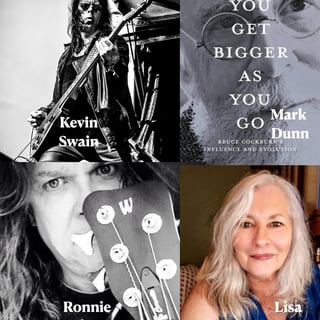
Speaker: Hi, it's Dan here for Dutch TVS Radio and this is the podcast, Liner Notes Revealing Chats with Canada's Retro Music Makers. Today I'm very honoured to have as my guest musician, author, teacher and somewhat of a music historian, Mark Dunn. We'll be talking about his book, You Get Bigger As You Go, Bruce Cockburn Biography, and get some insights into one of Canada's most well known and most loved entertainers. So thanks for joining me today, Mark. How are you?
Speaker: I'm well, thanks for having me, Dan. I'm so thrilled to be here. Yeah, no, I appreciate having you on. And well, this will be very multifaceted, so I may direct it a little bit. There's so much here. I mean, rich content and then, of course, your situation, your story, which I'm interested in, and then the fact that you wrote the book. And then there's so many things in there about Bruce Cockburn's career and the person. So there's lots to talk about. So I have a few things I want to ask you about.
Speaker: sure but i would like to start with you and your situation now you're you're performing yourself you've been performing for over thirty years you've done a bunch of albums and you're a writer you've done poems and articles and those kinds of things so so how did this all come over tell me a little bit about your career and how this all came about with the book well i've been.
Speaker: much more active as a freelance writer during my earlier part of my life, we'll say. And in the last years I've been teaching, I teach at Sioux College in Sault Ste. Mary, Ontario. Nice. Yeah, it's very enjoyable. And so I didn't have to make my living through my writing any longer, which kind of freed up my time and energy. And I kind of thought, you know, what would I want to write about? And I wanted to write about music. And the first question I asked
Speaker: myself was, what is this power that music has to transform our lives by changing our thoughts or giving us insight into our own experiences? That was the first question, which coincided with a renewed interest in Bruce Coburn's music. As I said, I was no longer needing to write for a living, so I asked myself,
Speaker: Who would I like to interview? And it was Bruce Coburn. So I started interviewing him and did a couple of articles. And then the, um, my writing, uh, started to incorporate his music in it because I went back and I started listening to his entire catalog, uh, catching the albums that I'd missed and then, um, you know, reacquainting myself with ones that I'd kind of forgotten about.
Speaker: Yeah. Interesting. Well, that's very cool. And of course you picked somebody who has some substance, obviously, and much more than just a musician, which we'll talk about. So one of the first things when I read a book about a particular entertainer, and I've read many, there's various kinds of books that obviously the autobiography is usually assisted by somebody and they can not be totally forthcoming sometimes or
Speaker: you know they tend to avoid being unflattering about themselves or and then you've got the authorized biographies i guess which is sometimes approved content or you know career or personal focus depends and then you've got the unauthorized biographies of course people can write whatever they want like the gossip and the disputes and and kitty kelly kind of stuff sure so yours is a biography
Speaker: but was it approved? Did you have approved content in it? I don't really think of it as a biography. I kind of think of it as a beginner's guide versus music. There is a biographical section, but its main focus is
Speaker: tracing Bruce Coburn's, his music, cultural presence. And I don't spend a lot of time on his personal life. I kind of feel it's none of my business. So I focus on the music and is playing through the years. When I first realized that I was
Speaker: So I'd been writing, I'd been listening to music and just writing about it. And, um, I started meeting people and, um, who knew Bruce or had played with Bruce. And anytime I met someone like that, I'd ask them a bunch of questions and document it. And so I started interviewing people and I'd probably been into it about three years. It took seven years to write the book and about three years into it. I realized, I think I'm writing a book here. So I contacted, um,
Speaker: Bruce Coburn's manager, the tremendous Bernie Finkelstein, he's just a legend, and just kind of said, I think I'm writing a book on Bruce here. What do you guys think about that? His response was, well, we won't stand in your way, but we won't endorse it. So it's not officially endorsed. However, I will say that if Mr. Finkelstein or Bruce Coburn hadn't
Speaker: wanted this book to be written, it probably wouldn't have been because everyone I spoke to pretty much contacted them to ask if they could speak to me. So I think there was an implicit kind of, not blessing, but more like just let it go and see what happens.
Speaker: Yeah. Well, a couple of things there. So with someone like Bruce Coburn, there's no way you can write about the music without talking about his personal life to some measure, because it's an integral part of his music, right? That's true. Absolutely. Those things are intertwined, right? So obviously you're going to get some of that, but I appreciate the fact that you're focusing more on the music. And secondarily, I guess the approved content, I mean, there's sort of not an explicit, but maybe an implicit sort of
Speaker: Hey, try to get it right or don't write anything unflattering. Was there any of that? Because he mentions, I think, at one point that he didn't totally agree with everything perhaps in the book. Did you ever find out what that was? No, I'm very curious to know.
Speaker: Yeah, so there was no pressure put on me at all. And I think too, I'd had a bit of a prior history that I'd interviewed and published the interviews with several times. So I think they had a sense of what I was going after. And I'd kind of spoken with them enough that I think they had kind of a sense that I wasn't going to, you know, do any gotcha journalism.
Speaker: Well, for sure. And you're not trying to be salacious. You were trying to write something about this particular person's life and the impact that this person had. So I think your motives were pure in that sense, I would suppose. And also, I'm completely biased, right? And when you read the book, you realize it's... Yes. The first... I worked with a great editor named Ellister Thompson and his response to my first couple of drafts were,
Speaker: So Bruce Colburn can do no wrong. So I had to change my thinking a bit and kind of be more critical. But it's clear that it's not really an objective account of his music. I am a fan and I'm a great admirer of his work. Yeah, for sure.
Speaker: No, good. And of course, yeah, you picked the person of substance that had lots to say in a huge career. So one of the first things I had to ask you about was the name thing, the Cockburn -Coburn thing. And I never quite understood that. You explain it quite well in the book. And I just wondered why he didn't just pick Coburn and just go with that because it's always back and forth. And I was always confused by that. Can you shed some light on that?
Speaker: Sure. So the pronunciation is Colburn. It's a Scottish name. So the cock is a bird, basically.
Speaker: So maybe you're asking why, I don't know why he didn't, he has spoken about that. Like he said, some members of his family have anglicized their name to be phonetically Coburn. I think that would probably make life easier in some, some settings, you know, like the playgrounds and locker rooms, things like that.
Speaker: Well, because they're used interchangeably. So it's odd. I'm thinking, well, which is it and why? Is it just because you don't like, I mean, Cockburn obviously is, you know, got some other connotations that would be an issue. So Coburn seems like a softer version of that and one that's more palatable to the general public. So why didn't you stick with that?
Speaker: Well, I think he's very consistent with the spelling, which phonetically is cockburn, but the pronunciation is coburn. So it's always pronounced coburn. Okay. Yeah. But then I've seen it spelled C -O -B -U -R. Like you explained in there, it's C -O -G -B -U -R -N, but it's... Oh, yeah. So some people have, with that last name, have anglicized it too, but Bruce is always C -O -C.
Speaker: Yeah. Okay. Okay. Yeah. I just, I had to ask you about that. Sure. Yeah. That's something that I think people wondered about. And I know I myself, I wondered about it too, even being a fan and having listened to his music lots. So yeah. Okay. Well, so then the other thing about him is that, so you talk about the fact that he found this old guitar in his grandparents' attic, and then he ended up
Speaker: studying jazz and stuff so a lot of the players like it's funny because you think okay this guy wrote some songs they sound pretty good but then you you see certain players like like a Gordon Lightfoot for example or in this case Bruce Coburn and stuff that that they're substantial players I mean they're not they're not sort of campfire hacks. Yes oh for sure.
Speaker: Yeah, I mean, there are many songwriters who write wonderful songs with maybe three or four chords, that kind of thing. And I was thinking about John Prine the other day, how
Speaker: a lot of his songs seem very simple. I don't think they are, but they really seem that way. And most of them have just a few chords, but they all sound different. So that's kind of his own knack. But you're right. People like Bruce Coburn, he's a virtuoso on his instrument. And Gordon Lightfoot, of course, was a trained singer and
Speaker: and wrote, could read and write music as well. Quite an excellent guitar player. Well, that's what I saw there that Bruce Coburn actually studied jazz at Berkeley for our time and took lessons and was quite a schooled musician rather than a guy that just came up and learned by, I guess, by acclimation or osmosis, I suppose. Yeah, he certainly, he did study and he still studies music and guitar for sure.
Speaker: So then he's got that sort of story where he weaved himself through the business and played in some bands and then decided that he was going to go solo. So it's funny because there's a few guys that have been like that, you know, say, Ian Thomas or somebody that, you know, they start out with bands and then they have this vision for themselves. Why do you think that was in his case? He just didn't want to be part of a group of people, just had his own, wanted to forge his own path. I guess it was my sense of it.
Speaker: It could well be. He said about that he had a body of songs that worked better with just voice and guitar and that at least is what he said publicly. It can be so challenging to keep a band together. To be in a band, it's often more direct to go solo.
Speaker: Yeah, fair enough. But then, again, he's had his foot in lots of different camps, right? I mean, he's got the band, he's got the trim down, stripped down, and then solo, right? So it's just whatever the flavor of the day is, I guess, is what he does. And I think, too, at that time, he kind of went solo about 1969 or so. Right. Maybe 1968. But at that time, that was
Speaker: the beginning of the era of the singer -songwriter was in the most recent era of that. So I think there was probably just a cultural trend toward that way of performing. Yeah, good point. And I ask my guests quite often how much of what you did was a function of the time in which you did it. Oh, yeah. Over and over again, the answer is very consistent, right?
Speaker: Yeah, we are partially a product of our time and place. Yeah, for sure. Well, and the reason I asked that question because the significance is, you know, could you be Bruce Coburn today or could you be the Beatles today? Yeah, that's fascinating. It's hard to determine that, isn't it? I remember Neil Young saying like maybe in the late 90s, he was saying that there was no way that he would have would make it.
Speaker: at that time in the 90s. He made it because of the timing was right. Yeah, there's certain buzz and that certain community and the music that emerged from that cultural setting and on the cusp of all this new music coming in and there was a real excitement about it. And AM radio, of course, you didn't have the internet. That's right. Yeah. So a lot of it was a function of the time, I would think. I think so.
Speaker: And then, of course, after Bruce's first album came out in 1970, it was the first sort of implementation of CanCon Law. So his album got a lot of play from that as well. Yeah. So you were in favor, he was in favor of CanCon, I'm assuming. Not everybody was, but most of the musicians, I think, were. I've never spoken to him about it. I don't know what his position on it was, but I think it, I would imagine
Speaker: just because it did play a very important role in his early career, getting him established. I wouldn't think he'd object to it.
Speaker: Well, it's interesting because some of the radio stations and some of the business people did because they wanted to play the songs they wanted to play and then they're forced to play. And then there was some criticism about them, the Canadian stations playing songs that maybe weren't up to the standard they normally would have had, but they had to play them because they were can con and then the maple rules like the, uh, you know, so, uh, yeah, the, uh, yeah. The made in Canada component of that. Yeah. So it's the four, right? MAPL.
Speaker: Yeah, music, artist production and lyrics. Three of those have to be Canadian for it to count as a can -con. Yeah, right. So that helped them. So the interesting thing is a guy was talking one time about the French -Canadian situation and why they're so strict and about
Speaker: their French language and protecting it. And he pointed out that larger cultures tend to absorb the smaller cultures or have an undue influence on the smaller cultures. And I think for American music, that certainly was the case in Canada, where a tenth their size, you're playing all the American music. So you have to have something to offset that. And CanCon was probably, I don't want to say perfect, but really a good way to counter some of that.
Speaker: I think so, yeah. Canada was pulling away from its colonial heritage from Britain and France and then dealing with this beast to the south that was, you know, it still does flood us culturally and it floods the world.
Speaker: Which is not necessarily a bad thing. You don't have to make a value judgment. It's just a fact, right? And that's why the larger English language would overtake the French language if they don't have some sort of protection around it. Absolutely. It kind of made sense to me that reasoning. Yeah, I think so too. Yeah.
Speaker: So he got together with Bernie Finkelstein and obviously he's a legend in the business as well. But you know, it's what's very unusual about his story. I mean, I've interviewed countless people and almost to a person. I mean, there's a handful of stories where the record deal was good, the management deal was good, but that's the exception, not the rule.
Speaker: And I've heard so many horror stories about record companies and managers and these kinds of things. And Bruce Coburn skirted all that and had a good friendly interactive business relationship and still has one. Is that correct? That is correct. It goes back I think to 1969, 1970. So 55 years they've been
Speaker: manager, artist without a contract. It was all agreement and handshake. Isn't that amazing? Really, really unusual in this business. And Bernie has this really, it's one of my favorite lines in the whole book when I interviewed him. He has this wonderful line where he says, he's explaining that. And he says that they had a mutual agreement that still stands. And he said, it's a good thing that Bruce didn't sign a contract because
Speaker: had he signed a contract he would have stayed in that arrangement for a few years and then moved on to a different manager probably and then bernie's line is. But now he's been with me so long he doesn't know what to do.
Speaker: That was pretty cute. Well, you know, I look at it sort of like a marriage, you know, like on your wedding day, everyone goes into these situations like with good intentions, right? You think, okay, this is the person I'm going to commit myself to and it's going to work out and it's going to be great. And more often than not, that's not the case. But if you have a mutual understanding and a mutual respect, I think is what it is. That's for me, the rub in the music business. I don't want to be disrespected.
Speaker: I'm a straight up guy. And then you sort of had that expectation that everybody else will be, too, which is false. Not the case. Yeah. No, I really think, you know, Bernie Finkelstein is is an exceptional person and that he's found in that he works in the field. He does. He's brought a lot of integrity to Canadian music. There are others, too, that that are ethical. But Bernie is like,
Speaker: He's kind of extraordinary in that sense. He is for the artist. Even artists he doesn't represent, he supports people. He's a remarkable man.
Speaker: No, good. Well, it's, you know, it's a heartwarming story because there's so many, like I read, um, uh, Tommy James book, right. And his record company, his record exec was a gangster. He didn't get paid and he was afraid to ask for money. He said, I didn't get any money. I was afraid to ask him. Yeah, it happens. Right. And crazy. So it is amazing when you, you pointed out like that, all the multiple elements that came together to allow
Speaker: Someone like a Bruce Coburn to come through and to sustain a 55 year career. Well, and the reason in my overriding point is, is that, you know, Bruce Coburn is a bit of an oddity, if I may say, I don't mean that in a negative way, but he's a bit of an anomaly. And for him to have the longevity that he's had and the modicum of success. I mean, he's not a superstar, but he's certainly a legend.
Speaker: That solid record deal and management deal I think was an integral part of that. It would have been difficult if he was bouncing around different places and stuff. I'm not sure he would have gotten lost in the shuffle to some measure. Absolutely. Yeah.
Speaker: I mean True North Records released all of his albums and Bernie Finkelstein sold True North. Bernie founded True North and Bruce's first album was the first album released by True North in 1970. I can't remember the exact year but I think in the early 2000's say.
Speaker: Um, it's still going strong. It's still kind of functions in the same way that Bernie set it up. But, and, um, Mr. Finkelstein's kind of semi retired from artists management and he kept his first, wasn't his first client, but he kept, uh, Bruce. So they, you know, still together.
Speaker: So, the other thing that struck me about that is that, you know, I often ask entertainers when I interview them, you know, is there some kind of message in your music, right? And some of them say, not really, you know, I just write songs or, you know, you had the protest songs or the peace love groovy songs and stuff. But, I mean, Bruce took that to a whole different level, right? I mean, if there was no message in his music, I'm sure he wouldn't have played.
Speaker: probably wouldn't have played music. I mean, it was an integral part of everything he did, the humanitarian message, the injustice, the war, the famine, the politics. He was just immersed in that. So for the record company to sort of accept that is, again, a bit of an anomaly. It is, yeah. I mean, he's really, when you dive into his catalogue, a lot of record companies would be
Speaker: very reluctant to release some of the music for sure. Well, yeah, because they want to sell records. They're not interested in your flower power kind of, you know, if you want to save the world stuff, they want to sell records, right? I think with Bruce though, part of it is
Speaker: What makes him so interesting as a writer, one of the things that makes him really interesting is that I don't think he approaches it with the message. In fact, this is what he said. He doesn't approach it
Speaker: he needs to write a song about deforestation or something like that. It's the things that concern him that come out in the songs. A lot of times you'll hear, well, I'll quote Bernie Finkelstein again. In the book he says, it's very easy to write a bad song about war. And it is, and sometimes
Speaker: you're writing a song and you're so wrapped up in the issue or the anger caused by a situation that the song comes out sounding forced and kind of constructed like propaganda almost. Bruce has been able to do really remarkable work. You listen to If a Tree Falls.
Speaker: It's spoken word and it's didactic, you know, it just lectures us with facts. And then it's a really interesting song and a good one. Yeah. So that's the talent. Well, the thing is, I think from my perspective, he brings the credibility in the sense that, you know, he was involved in some NGOs and Oxfam and Amnesty International and he was boots on the ground. I mean, he was traveling, he was learning, he was experiencing it for himself.
Speaker: Absolutely. And so that lends a lot of credibility. I mean, some other people have been criticized, you know, Sting flies to the Amazon forest and gets a picture in paint in his war paint with the Amazon, you know, the tribe tribes there and then gets back on his plane and flies back to England or Princess Diana drives her limo up to some starving black kids in Africa and takes a picture and then gets back in the limo and back to the five star hotel. Yes. Bruce was not like that.
Speaker: No. His trip for Oxfam into Mexico to visit the Guatemalan refugee camps when Guatemala was under a coup and the indigenous Mayans and poor farmers were pushed out. They were being murdered. It was genocide and they were pushed into Mexico. This is where the song, If I Had a Rocket Launcher, comes from. Right.
Speaker: Um, but yeah, Bruce went there, um, and, uh, stayed with people and talked directly with them. Yeah. Well, it's funny you bring that song up because Bruce is surprisingly candid in his lyrics. That's kind of my point. Like if he, if he had a strict sort of record company that a lot of that stuff most likely wouldn't have got through, they would have just said, well, we're not, we're not releasing that or we're not interested in, in your political, social, cultural agenda. We're just going to.
Speaker: Um, so, but then he did his rocket launcher and I heard him tell the story. So I knew that story because I heard him in an interview years ago talking about how that story came about. Cause he was asking the people, what, what do you need? Like if I could get you something, what would it be? That sort of idea, right? Yeah. The other guy says a rocket launcher. So then people misconstrued that and I get, did I read that some people were trying to give him a rocket launcher? Like Bruce, as if, as if that was, was what it meant. I hadn't heard that one. I know that, um,
Speaker: He'd been in Afghanistan and someone gave him a rocket launcher just to hold and they had a hard time getting it back from him, apparently. Well, the thing is, but he's not pro -war, he's not pro any of that stuff. He wants peace and prosperity for people, right? Yeah. So that song, Rocket Launcher is often misconstrued as a call to arms and it's far from that. Really what it is, it's a cry of pain.
Speaker: having witnessed so much violence or absorb so many devastating stories that the human response, well, violence is contagious, right? So if we hear these stories, we adopt that, we can adopt that stance. And so I think that song is more of a cry of frustration in that
Speaker: being brought to the edge of just anger. To me, it's instructive of how violence breeds violence. Fair enough and how that bitterness develops and takes on a life of its own because he was astounded that that was the response. He's just shocked of all the things that you could ask for. That's what you picked.
Speaker: Yeah. And in fact, now recently he's not playing that song now because he's had responses where he finishes with that last line. If I had a rocket launcher, some son of a bitch would die and people in the audience will hoot and holler. Yeah.
Speaker: Approval, right? Right. Yeah, which is completely opposite, right? Yeah, exactly. Yeah. Yeah. I guess some people missed that. I didn't. I thought, you know, again, Bruce has those songs that just kind of, they just turn your ear. You go, what? What?
Speaker: So that's what I've always appreciated. You make the point that not many people under 40 would know who Bruce is, but he's sort of a historian by design and default. Does he teach some classes too, passing on his knowledge? Has Bruce taught classes? Not to my knowledge, no, I don't think so.
Speaker: I'm just wondering because he's got to get a, you know, he's got to have a platform where he can sort of pass this message on to the next generation. And is there been any effort to do that? Or I guess you're doing that. I'm hoping, trying to.
Speaker: One of my motivations was that I teach at a college and I teach a music class, music history class. And I do find that every year there are fewer students, people, young people who know about the foundational singer songwriters of the past, which makes sense. There's so much out there. And so one of my motivations was to make a beginner's guide to the music and hope that it might help
Speaker: spread along. However, I do realize that writing a book might not be the best way to get people's attention these days. I suppose. But again, I guess it's like the pebble in the pond, right? You just put it out there and hope that people can relate to it. And then you never know because sometimes, I think sometimes like when a movie comes out, for example, they pick an old song. If they picked a Bruce Coburn song, then all of a sudden this whole generation, oh my God, did you hear that song? Well, yeah, that's
Speaker: Yeah. And that's bound to happen eventually. I hope so. It almost happened with Franklin the turtle recently. Yeah. So hopefully something. So I want to, if I can geek out a little bit on you for the guitar stuff, I'd just take a left turn a little bit, but being a guitar singer, guitar player myself, and being a fan and a Gordon Lightfoot fan, of course, I wanted to ask you a couple.
Speaker: A couple of questions about that. Bruce is a master level guitar player, obviously, and you dedicate a whole chapter to that. You talk about his picking style. The first thing I noticed was he's signing with his left hand. It's so funny because I play the exact same way. When I was a kid and I started playing guitar, I am fully left -handed.
Speaker: in every respect and I put the guitar on my hands so my dominant hand was on the fretboard and the guy said well that's right -handed and I was seven years old and I said well how I'm left -handed though and he said no he flipped it around and it felt so strange so I'm a left -handed person who plays with my left hand on the fretboard.
Speaker: Ah, and you do that just because it felt better, not because that was the guitar that you had? That's right. Well, they flipped. No, they flipped it around because he said, are you left handed or right handed? And I said, left handed. So he put it in the opposite way. And I'm like, no, that doesn't feel comfortable. I said, you know, he goes, well, that's right handed. If you're going to play that way, I said, well, call it whatever you want. But it feels, he goes, well, how does it feel more comfortable? I said, with my hand, my left hand on the fretboard feels more comfortable.
Speaker: So that was it, and that was 50 something years ago. It would be interesting to know, and you would have greater insight into this than I do, how that changes one's approach to the instrument, having the dominant hand fretting. My first question was, who decided what a right -handed and left -handed guitar is?
Speaker: Wouldn't you put, like, who made that decision? Wouldn't you put your dominant hand on the fretboard? Wouldn't that make sense? It makes sense. It does legitimately make sense, especially because many guitar players just, especially if they're using a plectrum, it's not that complex, you know, movement of the right hand. Unfortunately, I don't have the history to that. I don't know why the right -handed guitar is fretted with the left hand.
Speaker: But I just, I see myself as a seven, you know, I started singing when I was six, started playing guitar in a seven and I could see myself talking to the guy and I'm reasoning it out with him and he's going, well, that's right handed. I'm like, well, no, I'm left handed. And this is little kid, but I, it made perfect intuitive sense to me to have you left. So anyway, so the point being that Bruce plays that way. Yeah, it may have a, um, an origin in sort of, if we look to pre, um, guitar stringed instruments that didn't have as much fretting involved, like,
Speaker: a stringed instrument that might have been played with a slide type thing or the string might have been bent or something like that. So it might have been that the first stringed instruments weren't as complex in the fret next situation so that you wanted your, it still doesn't make sense, does it?
Speaker: Well, I mean, I suppose I'm just wondering who decided that. I mean, on the piano, your right hand is playing the melodies and typically the more intricate stuff, even though you're doing difficult things with both hands. But the right hand, the piano would be odd if it was flipped around.
Speaker: It's a really good question that I didn't have the answer to. Well, we'll get together later and we'll talk about it. Anyway, so my point was that I looked at Bruce and he's doing that exact thing and it made sense to him. And then you talk about his planting style. I use the fleshy part of my hand on the bridge all the time, but you said he plants his pinky and then allows the other three fingers to work off the fulcrum. That's a cool way to do it because he's got three digits to work with.
Speaker: Yeah, and I think it gives that anchored pinky gives more power to the thumb. I think yeah as well. So, does he use a thumb pick or just? No. Yeah, no. Just nails. Just a callus or he uses his nails. Okay. Yeah. I think on thumb, it's probably just the side of his thumb. Yeah, it could be because if he calluses up, it still sounds smooth because some of those thumb picks in that sound a little harsh sometimes. They do. Yeah. Yeah.
Speaker: Yeah. No, that's very cool. No, but he has a very distinct style too, and he's very humble about it. So when you look at his origins about studying jazz and then playing the singer -songwriter stuff, and then he sort of morphed all that together in some recipe that works for him and gives him a very distinct style. Yeah. It's a very eclectic style that he's put together from, you know, from Mississippi John Hertz and many of the foundational blues artists. Yeah.
Speaker: And then jazz studies in, in Berkeley, he studied a composition. He wasn't actually studying guitar. Okay. Um, because when he started there mid sixties, I think Berkeley and Boston, um, there was no one teaching finger style there. There were only teaching flat pick and he didn't want to play with a flat pick. So, um, yeah. So he was studying a composition with the goal of becoming a, um, big band composer and a ranger.
Speaker: Interesting. Well, the thing about that, like I use hybrid picking, which I was taught by my guitar teacher, where you lose the four finger, but you hold on to the pick and then you pick with the other three fingers. So you have four digits. That's what the jazz guys do. Plucking four, four note chords and then a finger picking in two and you don't have to drop the pick or anything. You lose your index finger though. Right. Yeah. And I've done that for some of the jazz guys that now it's Berkeley. It's B E R K L E E for those who don't know, which is in Boston, right? Yes.
Speaker: And there would have been some jazz guys there that would have played with hybrid picking. There could have been. Bruce did say that when he started, there was really no one doing any kind of finger picking. Crazy, yeah. Except the classical guys, but then a lot of guys don't want to go down that road because that's a different... I had Leona Boyd on and she was very much
Speaker: the classical, but she studied with the classical guys and went down that road, but most of the pop artists didn't do that. No, that's true. Most pop artists are kind of in the self -taught area or just taking what they learn and then morphing from there into their own style. Now, you made the point that Bruce has had to adjust his playing about because of the arthritis and stuff. He's trying to do more with less at this point in adjusting his playing.
Speaker: Yeah. He's had some profound loss of mobility. Um, but you know, when you hear him play now, there's, there's nothing missing. It sounds, it sounds really, there's some songs he can't do. And some of the instrumentals he used to do in the seventies. Um, he doesn't play anymore because I don't think he can, but as far as the songs go, I think he compensates a lot with tunings because to compensate for the lack of reach, but I, you know, he's still a master.
Speaker: Well, for sure. And it's funny because I played with a drummer one time and he came up and he set up his kit and he put up a snare and a floor tom and then a ride cymbal and a hi -hat. And I said, what's going on? He goes, well, to make my playing a little bit different, I wanted to use a really trimmed down kit so I can just think about the rhythms and what I'm doing and stuff.
Speaker: Weird. That's a good approach. Yeah, it was cool. It ended up, I thought at first, okay, well, you're crazy. And then after we played a few gigs and I thought, you know, it gave him a different sort of view of things. So it can be something good. And then you talk about his guitars, you spend a chapter talking about the Larave and I guess he was into Larave guitars, which are beautiful handmade guitars, and then some Martin guitars.
Speaker: And then you talk about Linda Manzer as well, I guess. Tell me about that a little bit. Yeah, so Linda Manzer is a luthier based in Ontario and she trained under Jean Laravey, the Laravey company. And there's some really nice stories about that like Bruce used to hang out at the Laravey shop when they were in Toronto. And they're sort of a legendary
Speaker: situation where Jean -Laurevé was the first of that era of luthier to build a cutaway steel string. Gibson had a cutaway steel string, but I don't think at that time it was in production. They were quite rare. They were cutaway classical nylon string guitars. And the story goes that Bruce asked for one and so Jean -Claude, Jean -Laurevé built him a cutaway.
Speaker: But Linda Manser trained with Jean Laravey as did, oh man, probably a dozen famous luthiers. And then sometime in
Speaker: the 90s, I think he started using Manzur's guitars. Okay, so if you go see him play now, like if he's doing some shows this year, I'm assuming right? According to Yeah, so what's he playing? Yeah, he has a really full tour schedule this year. So he plays usually plays. He has a couple of Manzur's that he plays the kind of the greenish blue ones that he has. And he has a dobro steel
Speaker: a two body guitar. And he might play a carol, I think, this is baritone. And he probably has another one I'm just forgetting right now. And then I think that's probably it for cars. So he's not not playing the laervais anymore. But it's funny because I've been around, of course, Vancouver and Western Canada lots. And the best sounding acoustic guitar I've ever heard in my life was a laervais. I had to walk up to the guy and ask him what it was.
Speaker: They're beautiful. Unbelievably good, I guess. Couldn't believe it. Yeah, I play a La Rave. Do you? I love it. I found it secondhand in a shop in Newfoundland in St. John's. Oh, nice. It'd been kind of beaten up, but it'd been sort of a rental model. And so I had it refrated, and that it's lovely. Nice. Well, that's great. It's funny, because a guy mentioned one time
Speaker: I think it was Tal Backman that mentioned, but a lot of guys have mentioned it too, that you walk into a store and there's 50 acoustic guitars and every one of them sounds different. Even the ones that were manufactured on the same day in the same factory, it sounds slightly different. It's weird. Yeah. Isn't it funny? That's a case for not buying guitars online. Yes. You got to try it. No, that's totally right. You got to go in the room and try them all out because I was going to, I have a larvae that I use for recording. I just, it's a plain Jane and I just pull it out, record with it and put it back.
Speaker: but I was going to trade up to a higher model and I went down to the store and I played them AB and the one I have sounds way better and the other one was twice the money. Yeah. Well, there you go. I just said to the guy, I'm sorry, this one sounds better. Don't you agree? He's like, yeah, it's very strange. Anyways, no, that's cool. I had to ask you about that because
Speaker: You know i wonder what he plays now and you know obviously you have your pet guitars any guitar player knows you have that the one that just feels comfortable as an extension of your body and that's the one you like to play so yeah. Bruce played the lara bays in the mid 70s not for long and he went to David Ren.
Speaker: I don't know if you know him. Ren was also, that's W -R -E -N, one of Jean Lérive's apprentices. And he had a couple of those guitars that were lost in a fire. And I think after that, he went to Linda Manser.
Speaker: But the first instrument she made for him was a charango, the Peruvian instrument that's traditionally made out of the body of an armadillo. She made one, it's a 10 -string instrument, kind of like a mandolin, but tuned differently and it sounds different. And she thinks it might be the first electric
Speaker: Surengo ever. Oh, well. You mentioned Martin Guitars, no? Did he not play Martin at all? He did. He's had some Martins, I think in the like in the early
Speaker: part of his 70s. I think his first album, he was probably playing a Martin. I don't... D28? I don't know. Okay. Martin makes sense. So then I have to ask about his voice. He's been criticized for his singing and he does the sort of half talking, half singing sometimes. But he's got that distinct sort of way about him that people accept as part of... It's sort of like a Tom Petty or a Bruce Springsteen, Neil Young. I mean, a lot of these guys, they're not
Speaker: They're not getting voice degrees at the college, right? Yes, exactly. What is the Leonard Cohen line? I was blessed with the gift of a golden voice. Quite often songwriters aren't.
Speaker: Yeah, aren't, you know, they're not, they tend not to be Adele's. Yes. Well, that's the thing is that, you know, how would Neil Young do on The Voice, for example? Yeah. Or that one where they hide, you know, they wear costumes and they sing. Yeah, right. Yeah. Everyone would know it's him. Masked singer or whatever it's called.
Speaker: Yeah. That's funny. So how does Bruce deal? I mean, obviously he's got his own style and he's sort of a troubadour and a poet and stuff, right? Yeah. I think his voice is for people who like his music, his voice is comforting. And it can be strange. And sometimes, to be honest, when I listen, sometimes I'll think, oh, yeah, he does have a kind of a strange voice sometimes.
Speaker: But he's always in key, always on pitch. And actually, live, he sounds great. At 79, he's holding notes for bars and his solid falsetto still.
Speaker: Well, it's interesting because the overriding point that a lot of the real, of course, you got your Steve Perry's and your Freddie Mercury's and stuff, but for the most part, you've got your Neil Young's and your Tom Petty's and stuff, and they just have that flavor that people get accustomed to and they like.
Speaker: And it's not necessarily it's funny cuz I had Frank Mills on you know who the famous piano player and I asked him what you regret. Do you have any regrets? He said the one thing I regret is I should have sang more because I just didn't think I was a good singer. But he said I listen to a bunch of hit songs and the singing isn't necessarily great. It's just got a good flavor.
Speaker: It's distinctive and it fits the song. Yeah, for sure. I mean, Tom Petty's not a great singer, but I love listening to his music because he's just, he reaches and especially with, with guys like, like he said, Leonard Cohen, but, but Bruce fits that category perfectly. They, they're telling a story. They're talking kind of half talking, half singing sometimes and it works. It does. Yeah. And, and I think too, it brings out more of the personality of the individual than someone who's, you know, uh, operatic or,
Speaker: Yeah, like a TV commercial, the singer is singing perfectly, but it's perfectly sung and lacks personality perhaps. Yeah, exactly. And then, so Bruce, the other thing about Bruce that I've often talked about with certain people like Murray McLaughlin or Ian Thomas or those guys, they're the true singer songwriters. I mean, they're the guys that are
Speaker: writing about their observations and their experiences and their true musicians. They have that heart for music and they want to tell a story and they're the true sort of singer. That word singer -songwriter gets kicked around, that phrase gets kicked around a lot these days. But I'm thinking there's certain guys that are the true singer -songwriters and Bruce certainly fits that category.
Speaker: Absolutely. And a lot of the people you mentioned, Murray McLaughlin, also a True North artist. He was the second artist signed by Bernie Finkelstein onto True North. Yeah, very cool. I think it was the second album that True North released was Murray McLaughlin's first album. Very cool.
Speaker: Yeah. Well, I mean, you know, of course I had him on as well, but he's the real deal. He was the real deal. He was writing about his life and the things that he'd done. And there was no, you know, sort of, it's like the Cowboys now, like a lot of the country artists, right? They're not really Cowboys. They're not really writing about their cowboy experiences. They put on a twang and
Speaker: they do their thing. But that's the point. I think Bruce is exceptionally good at writing from his perspective and then borrowed perspectives, like the rocket launcher story, that he's borrowing that perspective and writing from it. Bruce is very much a journalist. One of his functions as a songwriter is as a journalist. It's a great mix he has of this poetic
Speaker: ability, these beautiful lines crystallize an idea into just a few words. And then these detailed accounts of things, it's music journalism in a way. Yeah. So again, that speaks to my previous point though. From the record company's perspective, he's not necessarily chasing hit songs. I had a guy that I knew that had a hit song and the record company called him and said, we need 10 more songs just like that.
Speaker: And it's like, well, that's not the way that it works. He's trying to explain to the guy. Just do that again. Yeah, 10 more times. But he said that's not the way that works. And Bruce is very unapologetic about that. I mean, he's not sitting down trying to be a modern influencer or trying to chase hit songs. Not at all. I think he
Speaker: the songs come to him through his experience and the song probably helps him crystallize that experience. Bernie Finkelstein said that another great line that Bernie had in the book is,
Speaker: that he felt that every song he released, he felt was going to be a hit. So his exact words were, quote, I spent a lot of time being disappointed. So, yeah, I don't I don't know if things work out that way. Although, I mean,
Speaker: Most of the songs we hear in the radio, commercial songs and commercially successful songs, if you put it that way, were written intentionally for that, right? Well, that's my point. Yeah, and the thing is, and it doesn't even matter, it's a problem to the people. I don't care what you can burp the alphabet for all I care. I don't care what you do. If I can sell a million of them, knock yourself out.
Speaker: And that's sort of been the way. And again, to the previous point, if Bruce hadn't had such a good relationship with his record company, he would have been dropped for not being that way.
Speaker: Oh yeah, if he'd been with another record company for sure. Yeah, so we don't need songs about stuff that... Or at the slightest mention of any controversy. People start pushing back on things. Unapologetic about that. That sort of baked in the cake with someone like him. Yeah. And then the thing is too about Bruce is that he seems like kind of a nerdy kid. He's not that flamboyant personality, but he's got a strong presence.
Speaker: You know, and I wonder, can you comment on that? Um, yeah, he's very shy, uh, person. And I think we could probably categorize him like that. He's very humble. And I mean, if you didn't know who he was or what he's done, um, you just be some nice guy you're talking to. And so, um, yeah, there's nothing really pretentious about him at all, or, or even like really false. He's one of the,
Speaker: It can be challenging to be in his presence because he's very focused and there's no BS. When he's speaking with you, he's zoned right in and he's all there.
Speaker: Well, that's kind of my point. Some people, they're not flamboyant, they're not extroverts, but they can have a strong presence. So you take a John Denver, for example, who's kind of a nerdy guy and wrote a few songs, but I mean, his stage presence is enormously strong, right? Just has that way of filling the room with his message and his voice and his music.
Speaker: Yeah, that's the it factor. Yeah, it's true. And I think Bruce has that. But again, you talk about the difference between art and celebrity, right? I think what's the point that fame should be a byproduct of making good art, and it's not really like that now, right? Precisely. I mean, while we see it certainly with social media, that's their whole purpose is to become famous. Here's an interesting example of that.
Speaker: The example I'll give you is the most recent one. So when the book came out, there were some nice articles that came out about it later. And there was a nice review kind of thing. And well -meaning people would congratulate me on the article.
Speaker: right? Not on the book that seven to 10 years writing. It was on the, being the end goal was perceived as being, you know, getting the recognition for it or, you know, and what do you say to that? It's just like, well, I had nothing to do with the article. Just said a couple of words. And well -meaning people. It's just that we've become so skewed with that. And our culture is like that very much in other ways too, that we focus on the
Speaker: on the product and not the process of things. We want the sizzle, not the steak, as they say, right? Yeah. We want the outcome without the journey. I mean, and it's all about the process. Yeah. No, I agree with that. And one of the quotes in the book that you have is brands are constructed to attract followers rather than built up from the interest of supporters. The process has been reversed and fame is now the end goal. Yeah. I agree with that.
Speaker: Well, the thing is, but that's the point. Like people will say, well, I'm an influencer. Well, an influencer of what? What have you done? What do you do? What do you produce? What influence? Yeah, I know. That's the thing. It's like, yeah, it's gotta be. Do they put that on their income tax?
Speaker: I guess. But again, I think your overriding point is a good one, that it's the substance that should draw people, not the sizzle. It should be the stake that we're interested in, so to speak, right? Yeah. Ideally, I think that should be it. But for some reason, we've gone the other way.
Speaker: Yeah. Well, so then, speaking of Bruce's presence and he's not a flamboyant personality, but he is an enigmatic figure, right? I mean, he's present, but he's sort of aloof and he's kind of pondering and reflecting and questioning, but then pleasing people with his art. And I look at someone like him and I think, well, he's a deep thinker, but being a deep thinker is a blessing and a curse, right? I mean, it's mostly a blessing, but it is a curse too. Yeah, I think so.
Speaker: It's a lot to carry. Considering as many angles of any situation as one can, that's a lot of energy. It's much easier to do the heuristic of just jump to the conclusion.
Speaker: Well, yeah. And what struck me about him, because he tells that story about when he got his first big royalty check. Yes. And he said, you know, I have to share something. Like he wasn't, you know, most people are trying to be famous and rich and I'm going to make it. And then when you get your first check, I remember talking to a friend of mine out here, he goes, he said, when I got my first check from the royalties from the record company in 77, I got $150 ,000. He said, I thought I was going to get that check every three to six months for the rest of my life.
Speaker: You bought a bunch of coke and a cabin and a whole bunch of stuff. And here Bruce is saying, well, I got to share some of this.
Speaker: Yeah, it's amazing, isn't it? Yeah. At that time he was living, I think he was living in a cabin near in the Ottawa Valley somewhere. He and his wife at that time. And when he had free time, they would be in a truck camper and they'd drive across Canada and just tour around and go camping. And I'm sure Bernie Finkelstein
Speaker: was trying to get a hold of them half the time. No cell phones, of course. That's right. Yeah. Yeah. But I guess it speaks to the overall person when you look at the consistencies and you of course are an expert in that now, but looking at the person and their message and the consistency of that message and that the way that they see the world and the way that they're approaching things, there's a certain consistency that sort of binds all that together. There is indeed.
Speaker: a voice. I mean, there's the physical voice of Bruce, but there's a perspective that people cherish. And the interesting thing about his writing, Bruce is almost always in his songs somehow. He's observing, but there's so much more going on there. And often he will be in the song as an observer, but the song's not at all about him. It's what he's witnessed. A broad perspective, right?
Speaker: Yeah, and so it's quite a trick that he's been able to perform. I think that he is kind of enigmatic. Even you can know about the details of his life now, where he lives and who he lives with and all that stuff.
Speaker: and read his autobiography, read everything. And you still don't feel like you know the guy. And that might be part of being an introvert, right? And introvert. And a deep thinker, right? Still waters run deep, as they say. Yeah, exactly. And socially, a person might be sharing everything they can, and they feel like they are an open book to the world. But for some reason, well, just because, as you say, the deep thinker is more under the surface there, right, that can't be accessed.
Speaker: Maybe even by themselves. That's where the art would come in. A couple of things that struck me. One struck me from the book that you mentioned the respect of his peers. It may not translate into greater audiences, but it's very important to artists. When your peers respect you and appreciate what you do, that matters a lot.
Speaker: Yeah, I think so. Sometimes that's all you get. I mean, and you're kind of lucky to get that because that brings you into community, right? Well, yeah, Bruce has been enormously influential, certainly on Canadian songwriters and musicians.
Speaker: Yeah. And people have a lot of nice things to say, I guess is my point. And then you spend a good chunk of the book talking about the three distinct phases of his career, the developmental, and then after that, I guess he took a sabbatical and then maturity and then the present phase. Do you want to just give a thumbnail sketch of that? People can buy the book and read it to get the deeper. Yeah. I mean, when you do something like this, it's kind of arbitrary how you categorize things.
Speaker: And Bruce's albums break down quite nicely into decades as well. You can look at each decade is almost quite distinct. But the way I did it, I organized it into three major sections. The first is what I call the beginning or becoming.
Speaker: And I've kind of taken some flack for this, but it incorporates 18 years. And I'm not going to count the albums, but from the first album, Bruce Cobra, into a big circumstance in the late 80s, early 90s. And I count that as one
Speaker: era because if you look at those albums from the start to the beginning in that period of time, you see his entire arc of concern expressed or developed actually. You can see his spirituality, for example, developing in those albums in the early 70s to mid 70s. And then there's a shift and he becomes more focused on capturing
Speaker: the with accuracy through the lyrics, events and imagery. So, you know, you get to inner city front, that kind of album. And then in the later part of that period, all the political stuff comes together. It's all there right from the beginning, but it slowly develops. Right. And then the next period I go into is called The Being from 1991 to 2011.
Speaker: And that's eight albums. And in there you don't see a massive change in the artist, but you see the full expression of who he is musically and thematically, the issues that he's always dealt with. He goes much deeper and those albums are very rich. And then the third phase,
Speaker: I think is where we're at now, which I call into the now after a song on his latest album. And so far, those are three albums, Bone on Bone, Crowing Ignites, and Osun -O -Moon. And there we see sort of an elder artist who has actualized his potential and is furthering his development. He's still kind of growing into it.
Speaker: I appreciate you saying that because it is arbitrary in a certain measure, but you're tracking it and having looked into it deeply saying, here's what I think. And then I like your point about the maturity phase. I guess there's a certain swagger and a certain confidence in that that develops that you can use as a springboard. You're no longer trying to
Speaker: achieve something as a young artist, you're established and you can sort of reflect on that and have the platform and the confidence and the swagger to do that. And in that middle period too, the first album comes out in 1991, it's nothing but a burning light. And that's the first album that Bruce recorded outside of Canada. He recorded it in the US with T -Bone Burnett.
Speaker: Interesting. Yeah, so he did two albums with T -Bone Burnett. And so that, again, is a pretty stark shift. And the sound of those albums is much different than the previous two, right?
Speaker: Yeah. Am I correct? He lives in San Francisco right now? He does, yeah. Okay. How did that come about? His wife lives there. Yeah. Okay. So his volume of work is unbelievable. Before I do these interviews, I got to dive into reaffirming myself or reacquainting myself, I should say, with the music and stuff. And you look at the body of work, it's
Speaker: pretty darn impressive. I mean, he was truly committed to his art. He was a world traveller, obviously exploring the physical world. And he did the humanitarian work and he was a doer, like a boots on the ground kind of a guy. So what effect do you think his music had on the culture? Does he have a Leonard Cohen type influence, do you think? I think so. It's this strange economy. I call him a stealth artist because I think his influence is there and it's not often seen. If you talk to Canadians,
Speaker: Most Canadians would know of Bruce Coburn and be able to name a few songs, but it's quite easy to stump someone with an album. So he has this remarkable presence culturally, and yet, not really. I mean, he's there and he's not there.
Speaker: There's so many lines from his songs that have become part of just every day. I've heard people say, the trouble with normal is it always gets worse. And just in throwing it in conversation. Yeah. And I think that's a good point because there are certain images that come out in the lyrics and in his music that resonate with people and stick with people, I guess. Interesting.
Speaker: And then, so I have to ask you about the spiritual journey. It's funny because I had an English teacher one time in college and we were studying, I forget, I think it was Tom Jones by Fielding or one of these particular books, but he said that the characters and human beings are on a sort of a dual journey. You're on the physical journey, but then you're also on a spiritual journey. And those things coincide to a great degree. And then we analyze the character and see how those things affect the inward experience
Speaker: vis -a -vis the outward experience. And I think Bruce is a deep and introspective sort of artist philosopher guy. And what about his spiritual journey? I mean, he identified as a Christian and then some form of spiritualism. Maybe you want to comment on that. Yeah, he does identify as Christian. And that starts quite early. He sort of becomes publicly Christian about the mid 70s. And I think it's taken different forms over the years.
Speaker: He's never exposed sort of a type of Christianity and it seems informed by some very wide reading like into mysticism, into Buddhism. But it comes for him into it, meaning spirituality, comes into form for him with a Christian mythos.
Speaker: Yeah. Okay. Yeah. Cause I sense there was an Eastern and Western influence there and, and some people have a sort of a form of Christianity, but it morphs or adjusts when you, especially if you're a traveler, if you, if you go to different cultures and different religious traditions and stuff and experience that some people have this syncretism that kind of creeps in, I guess you'd say. Yeah. Sort of a, a blended sort of, yeah, spirituality.
Speaker: I was curious about that because that's been an important part. It's not a side topic for him. No, it's not. In fact, it's interesting because a lot of Christians who say would maybe be into so -called Christian music can be offended by versus music. He's not accepted by all Christians.
Speaker: And some Christians don't like them. It's probably not a terrible insult to him either. So kind of of many worlds, you know? Right. Yeah. Well, interesting because, you know, a lot of times, especially as a storyteller, you're telling a story. You're not necessarily married to every line and every word in that story. You're presenting a story or you're presenting something that people can consider and think about and reflect upon. Yeah. It's kind of like,
Speaker: dealing with the metaphor, living in the metaphor rather than making it concrete and literal all the time. If you're in a play and you're playing the character of a bad person, you're just illustrating what the bad person acts like. You're not married to that person or identifying as that.
Speaker: Yeah, exactly. True life, right? I mean, you're just presenting a story, so. Yeah. So, no, I wondered about that because he's, again, he's deep and he's almost cryptic, I guess, in the way that he talks about things sometimes or leaves it open, I guess. Yeah. He has some great lines about that where he says that he wasn't raised religious to be religious source, but he says that he started noticing
Speaker: Indications that suggested there was more to life and reality than just was physically available to us. Well, and that's part of the rub of being a deep thinker, right? Like to sort of float through life and go, well, I'm here for a good time, not a long time, not going to worry about, like deep thinkers aren't allowed that option. Correct. Yes. That one's not one of the options. You have to reflect and you have to think and you have to explore. Like it's not good enough to just say, I don't know.
Speaker: Yeah, exhausting self interrogation. Yes, exactly. That's what's required here. Well, that's right. I mean, I've always felt that, right? I mean, I just think that life asks more of us than to just kind of float through. Yes, I believe so too. And the thing is when you start opening, when one starts opening themselves to those possibilities,
Speaker: you often are presented with options but also with more profound questions. So it kind of leads you on into deeper waters. Well, yeah, that's right. And I've spent most of my life in some form of study and a philosophy professor once said, you know, we don't have a lot of good answers, but we ask really good questions. Yes, yeah, that's all you can do. That was perfect. What a great thing to say because we don't, we're encumbered by our
Speaker: lack of understanding, lack of knowledge, lack of vision, and those encumbrances actually can lead us astray at times if we don't try to sort it out. So he's had suggested we just have to learn to ask the right questions and really good, deep, penetrating questions. I think so too, yeah. When you're writing something, story or something like that or anything, doing some creative work doesn't have to be writing.
Speaker: The limitations you place upon yourself, you know, write a poem without the letter A or something like that, right? Those limitations can lead you to remarkable places and it's the same with any kind of pursuit of philosophical pursuit. It's the things we don't know that will compel us to keep going.
Speaker: Fair enough, yeah. And one philosophy professor said it right, that we were just expanding our beach head with the unknown. That's what we're trying to do. That's a good way to put it. We have to embrace the mystery. Yeah, for sure. And the thing is, if you look at the things that we know and compared to the things that we don't know,
Speaker: I mean, we're dwarfed even regardless of your spiritual view. I mean, I identify as a Christian and I believe in God. But even if you don't, you have to think that there's a heck of a lot more going on than we'll ever know or understand. Yeah, exactly. And not only are we dwarfed, we have no idea by the degree to which we're dwarfed. Yes, exactly. But it's a lot.
Speaker: If we can safely guess. That's a lot. So in Bruce's personal life, what's his personal life like? He doesn't seem like the drug and booze, train wreck life guy. He's sacrificed, I'm sure, like a lot of musicians have. No, I don't think there's...
Speaker: There are really, I can probably safely say, no scandals. He's lived really fairly normal life, as normal as his life could be under those circumstances. He said to me once, he's just a regular guy, but he has a strange job.
Speaker: Well, yeah, I mean, he was he was too serious of a guy to get caught up in the partying scene and all that crap. But then, you know, when you're traveling and writing and you're so fixated, I mean, the part of being a deep thinker is being sort of focused and tending to be in a workaholic or traveling too much or and that takes a toll on your personal life. Right.
Speaker: Yeah. With Bruce, he's like the perfect songwriter in a way because we were talking about before and you mentioned that you'll have a songwriter who's a good writer but not a great guitar player, a great singer versus a great guitar player.
Speaker: the other parts of it too, being a musician to travel, right? Like, um, I love performing, but, and I do like travel, but it's just all this stuff about like airports and uncertain, uh, accommodations and things like that. Like it to me, like sleeping on floors and weird places. And like, it's tiring, but you know, so you have someone who loves to travel. Uh, and so that's kind of an ideal, ideal life. I think he spends, spends more time.
Speaker: Traveling then being at home like even in his off time. He's always yeah, which is a different line I could never live that life I'd love being at home and I just would never want I travel that tour to bit in the 80s But I just didn't like it, you know So but I'm just wondering the sacrifice did that cost him a marriage or or the opportunity to have kids earlier? Well in his first marriage they have one child who's now probably in her 40s and
Speaker: I don't know the circumstances of why that marriage ended. It's documented on the album Humans though. It is there from like 1980 or something like that.
Speaker: He had a later marriage and he's a father of a 12 -year -old now at the age of 78. So that must be an adventure. Yeah. Well, there you go. I mean, that's a difference. Well, good for him. I often ask my guests at the end of the interview, are you happy? Because it seems to me that life is more important than the music. It's nice to talk about all the accolades and all the things that you get and the accomplishments and stuff, but it's life. Are you happy? I mean, what does it mean if you're not? Oh, exactly. Yeah.
Speaker: I can't imagine dedicating my entire life to a pursuit of some trophy. I mean, yeah, that trophy is going to be dust in another century or so.
Speaker: I think that's the thing because fame and fortune can be vacuous. One person said that I wouldn't have worked so hard to get to the top if I had realized there was nothing there. That's astute. I thought that's right because you're sitting in your mansion, your fame and your fortune, but you're sitting there by yourself looking around going, what? Really?
Speaker: You know we kind of learn that as children or we can if for my case i just didn't pay attention it's that christmas catalog phenomenon of here's the shiny toy i need that i need that when you get it christmas morning it's like what this is a piece of crap you know but you know that lesson could have been applied to so many things in life.
Speaker: Yes, certainly. And the idea of making it. That's why I was asking my guests, are you happy? I think Bruce seems like a pretty grounded guy. You've mentioned it several times that he's pretty down to earth guy. He's not full of himself or pretentious about stuff. No, I don't think so. He had a reputation of being difficult early on. I think he was just more shy than anything. He's very precise in his language and his thought.
Speaker: Doesn't suffer fools like he's going to correct you if you say something right wrong, but I think too like especially in his later life Recently when you see him play if you go see him plays touring, Ontario The spring it's it's joyous. Yeah, it's just it's he's having a blast it seems
Speaker: Well, he's a living legend now, though. It's sort of a different category, I think. Yeah, I think so too. He has nothing to prove. If he ever felt he did, I don't think he did feel he had anything. No, and at this point, you're just basically bathing in the last 50 years of his contribution, which has been significant.
Speaker: Yeah, I think so and he has a really strong album that came out last year. It's right up there with his best stuff. I didn't have a chance to listen to that, but he's got brucecockburn .com, right? So people can go there and check that out.
Speaker: You know he's still relevant I think it's an inspiration you still recording and touring and you're pushing 80 years old and you're still out there doing your thing you got my support and the funny thing is I do a show John Fogarty Bob Seger shows and they were both born in May of 1945. Oh that's interesting that crazy so the three of them I looked at Bruce's birthday and it's me what 27th 45.
Speaker: Yeah, something like that. And I thought, that's so funny because I say it in the shows, Bob Seger and John Fogarty were both born the same month, May of 45. What was happening nine months before that? I don't know. A lot of music came up. Well, it's funny because you mentioned that before and John Fogarty makes that point. He said, I know my music is simple, but it's the right simple. Yeah. That's what I'm looking for.
Speaker: And I mean, all those simple, those simple John Fogerty songs. I mean, they're not easy to play well. That's right. And they're timeless. People love them. Young people love them too. So yeah, for sure.
Speaker: Yeah, well good. So what about you? You've got some gigs that you're playing a lot or somewhat and you got any new recordings happening? Yeah, I put in a couple of singles this year. I was thinking of trying to do an album, but I don't think there's any reason for me to do an album now. I might just continue putting it into singles and
Speaker: I'm always writing. Yeah, fair enough. Yeah, I'm booking some shows for the spring, kind of local to me or just through Ontario. Well, good for you. I mean, you sound pretty happy and pretty grounded yourself. Yeah, I try to be. What's next for you? Are you going to write about anything else? I mean, the Bruce Coburn thing obviously was a labor of love for you. Yeah. I have nothing planned in that regard now. There's some ideas I'm fleshing out. I'm not really keen on jumping into a huge project other than
Speaker: I really want to play some music and keep writing songs at this point. Oh, good for you. Well, good. Well, no, I really appreciate you coming on and sharing all the stuff you did. I obviously did your research and had some really substantial things to say about a Canadian icon. I mean, Bruce is a Canadian treasure, I think, is fair to say. Yes, indeed. Yeah, indeed. Yeah, it was a pleasure. I won't say it was all pleasurable. There were times where I was wondering what the heck I was doing.
Speaker: and kind of gave up on it a couple of times, but it was an honor to be able to do it and I'm glad that it's been so generously received to this point. Thank you, Dan. It's been a tremendous blast to talk with you. Oh, that's great. I appreciate all the insights. Many thanks to my guest, Mark Dunn, for being part of the Line of Notes podcast and sharing some insights from his latest book. More information is available at formattapress .com. The book is available there and then
Speaker: MDDONE .com is where Mark's music can be found as well. So we hope you enjoyed the podcast and invite you to subscribe to it and share it on social media so others can enjoy it as well. And we also invite you to listen to Dusty Discs Radio Tuesdays and Thursdays to hear music from the Canadian artists you're hearing on this show. So until next time, I'm Dan Hare.