Transcript
Speaker: Hi, it's Dan here and I wanted to let you know that this is a very special episode of the show. Some glimpses from my chats with four previous guests. You'll hear about 10 minutes of each guest's 60 plus minute conversation, which will give you a small idea of the many topics that we covered. Also, you can listen to the entire conversation at either linernotes .ca or on any podcast platforms. Just search for liner notes revealing chats with Canada's retro music makers. Enjoy.
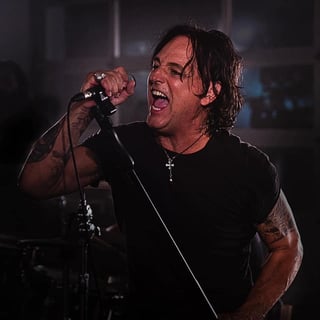
Speaker: Today, I'm very honored to have as my special guest, the rock warrior himself, John Michael Thor. I thought you were from Toronto because that's where you kind of came out of, but I didn't realize you were born in Vancouver. Yes, so I ah was born in Vancouver and I started my musical career in in Vancouver. And that's that's where the Thor concept started. Our first concert i was at the New Westminster High School nice ah in February the 8th of 1974, believe it or not. And the opening act was Applejack.
Speaker: who later became trooper. and i saw that to that you always wanted to be a superhero but then your parents got you to play the accordion too so i know lots of accordion jokes and i know you you kind of mentioned that that wasn't a super cool instrument but it was probably a good instrument to train on well ah later ah weird al yankovic made it a super cool instrument there you go yeah but But it was a good had a good one to write songs with, yeah really. Well, so what I was trying to figure out with you is that you were ah kind of on a dual track, right? You liked the bodybuilding and and that sort of stuff. and And obviously you spent lots of time doing that because you looked great and and you won some competitions and stuff, but then music too. So you were kind of on a dual track, I'm thinking.
Speaker: Going back to the 50s, I was really into superheroes and watching The Adventures of Superman starring George Reeves on on television. Yes, absolutely. And then I ah also liked the cowboy shows, you know, with Gene Autry and and Roy Rogers, with they you know, they won the day and they ride into the sunset with their trusty horse. So I thought that was really cool. And ah then there was Steve Reeves, who was Hercules. and My brother was a bodybuilder and a star athlete. So I was inspired by all this. And I started training at a very young age. But I found out that when I listened to music, it made me train harder. ah So it was, and it's something later on, if you see the, you know, all the exercise shows, they have music and people train with music. But I found out the pulsing rhythms would get me going.
Speaker: For sure. Yeah. Well, ah lots of athletes, I mean, the hockey players that get the fighters and stuff, they always come up to their songs, right? They probably use some of your songs in there. Yeah. Well, our songs have been used in the WWE and ah other sports. Yeah, for sure. Well, that's cool. So, but you, you had to spend a lot of time in the body. You became a bodybuilding champion, right? Mr. Canada. And, and, uh, you won the U S one as well. Is that right?
Speaker: That is correct. Yeah. at ah At seven years of age, I started training you know with my brother. He showed me how to train with weights and I just kept getting bigger and I was 12 years old and started getting interested in competing in bodybuilding championships.
Speaker: and And so in my early teens, I did compete 16. I went into the Mr. Western Canada contest nice and placed very high and won the most muscular division. and i that's They had various divisions back then, like best legs or best chest and yeah most defined, et cetera. And ah that got me inspired to keep going. And ah the following year, I won seven trophies, Mr. Junior Canada and you know Mr. Pacific Coast. And then I just ah kept going from there. And then, yes, I had had a ah Mr. USA title ah under my belt and also Mr. Canada.
Speaker: by 1973. And so what were you doing musically at that time? Would you train in the daytime and then were you still playing and writing songs and trying to get your music career on the go or was it? Yeah, on the back eye I um started in various bands in 1960s in high school.
Speaker: You know, we did a lot of Beatle type songs. We would write the songs. Of course, yeah. And they were pretty melodic, actually, you know, pretty good songs. And then I wanted to get heavier. So there's a band called Man, and that was late in the later 60s. And so it just kept leading up to, you know, what trying to be more theatrical as as ah that style came in, in the early 70s with the glitter rock.
Speaker: as bands like Alice Cooper came in, Kiss. The more wilder you were, the better. Well, yeah, it's it's funny because um a manager of mine years ago said that, you know, if the show rhymes with dough, right? If you want to make money, you you got to put on some kind of a show. And then you, of course, took that to the to the extremes, really. I mean, you were you were right up there and in terms of your stage presence and stage show. So you really embraced that. Yes, I did. i That was my inspiration of the Hercules movies, the Superman movies, etc. I very in awe of Alice Cooper when he came out, you know, with the snakes and he hung himself and did all those crazy things and and ah David Bowie when it was Ziggy Stardust. Yeah, I thought I could be this superhero character on stage.
Speaker: and And so we started getting out there, getting really wild ah costumes. And this is all in Vancouver, where this started in 1973, where there was a costume maker, did costumes for the cave shows at the cave. if You remember that old place yeah and Izzy Supper Club. yeah and And so I got these glitter outfits and and put together a band and then I had these other fellow muscle men behind me posing to choreography and right try to make it a wild show. so ah and And then we played you know the Commodore Ballroom one time, ah you know, Geldof was in the audience. He was an exchange student at that time from the Boomtown Rats. yeah yeah Bob Geldof, yes. And he gave us a rave review, absolute rave review in Georgia Strait.
Speaker: And so that really kind of got us some attention. Yeah. And and that was, ah what was the name of that band, of the album and the band? Well, our band was called Michael Body Rock. Body Rock, right. that's Yeah, of course. Yeah. But it was really us, you know, dressing up in the ah Thor style or Gladiator style attire and people dubbed us a muscle rock.
Speaker: Yeah, that's right. That's what I always heard. Muscle, sore muscle rock. And, but it was a glam glam. That was very glam glitter with Grecian sandals. and Yeah. How did you end up in Toronto? Well, I went over to, uh, tour Hawaii, you know you know, after my stint was over in Hawaii, I came back to Vancouver again. And my agent said, Hey, I got a whole tour for you, uh, up in Northern British Columbia.
Speaker: I said, oh, great. you know you know I've been there, done that many times. Yeah. So he sent me up to Kitimat. We went to play Kitimat. And ah I got off, you know that they had a shuttle from the airport and everything. and and I got off the ah bus and and there was this fellow meeting me and and he goes, hi, I'm Frank Sota, you know, and we became friends ever since. We're still friends all these years. Oh, he's a great, great guy. Great, wonderful, talented man.
Speaker: You probably didn't realize at the time what a great guitar player was picking you up because Frank was the real deal, right? Or still is. he's He's as great as eight they are. good he's still like he's He's on our new album. yeah out and the you know were We have a single coming out. Our next single, well, Frank's on it and he plays fantastically. But the long story short, was we played that night together and he was amazing.
Speaker: and so after After the show, I said to him, you know I'm going to continue this tour and ah um I have some plans for my show and ah you know I'm going to contact you again and we're going to do some stuff together. cool I was that impressed with him.
Speaker: yeah so i ended up um And next I did, um I got offers to play the whole Ontario circuit. And if you thought Kitimat was cold, try to go to Kappa Scasy. So ill I went to Kappa Scasy and Timmons and all these places, you know, the whole circuit in Ontario.
Speaker: And I just pounded the pavement, but we developed ah quite a following. And this is going into 1975 now. And so I just kept touring and touring. And then ah for Christmas, i I went back to Vancouver, you know, to see family and take a break. And then ah the agent said, hey, you know, you got all kinds of these offers coming in and, you know, you got to get you back out here. But I wanted to go. I told the agent, I said, I want to go all, you know, original now.
Speaker: And he says, oh, OK, well, that's a tough thing, but let's give it a try. And I said, ah you know, there's one guy I'm going to call, and that's Frank Soda. So I called Frank Soda. He was up in Kitimat. And I said, Frank, I want you to come with me, and we're going to go out east and conquer the world. And he says, yeah, are you sure? so The world? I'm sorry, man. We're doing it. Yeah.
Speaker: yeah Today I'm very honored to have as my guest singer, songwriter, guitar player, composer and producer Scott Merritt. So what happened for you? Like, did you have some kind of defining moment where you thought, you know, I can make something more of this than just, you know, playing with my buddies? It was always a little fuzzy whether it was I would be able to make a go of anything, you know, ah but I thought I would I would give it a try. Sort of how I looked at it after um school. And then I ah just thought, well, I'll give it a go for
Speaker: six or seven months or something and see if there's anything to be had. Because literally, I mean i was just you know blind phone calls. I had no no references, even though there were people that were trying to manage me even at the time. and and ah But I you know it was still feeling like this is kind of like insane, but was pretty strong calling, you know what I mean? i sure you you I'm sure you had the same experience. it's like well i yeah Once it's in you, it's really hard to deny ah to just turn it off and say, it's i'm i'll do it i'm I'm done with this. yeah I mean yeah right ah can't imagine that stage. It's just not an option.
Speaker: It was always about writing songs. I mean, that was the first thing, right? I don't know. I'm not sure about whether that was your first thing or was that for you as well? Part of the package for sure. yeah Yeah. It was sort of the whole package for me at the beginning was was making making up songs and um that goes back really far. Like that's I can remember not even having an instrument and ah my mother's putting some elastics around a pie plate. And that and I remember sitting out in the backyard you know as a before school. That would be like even before I went to school. So what is that? Five years old or something? I'm out there making up ditties by myself to the birds. you know i mean it's That was the thing I couldn't really turn off at the beginning anyways.
Speaker: You're more of a sort of ah reflective, and don't know let's say, a true singer -songwriter. The old singer -songwriter is the guy that's got the guitar on his back and he's a troubadour and he just goes around and finds experiences and then he sings about those experiences and reflections on life. and That seems to me what you are and what you did. I think that that's what I've always been attracted to.
Speaker: When I first heard some people sing, even if it was like, not my music, like the, I think of people like Ray Charles or Hank Williams. And I, when when I heard them, it felt like, it felt like a true thing. You know what I mean? It felt like that's a kind of truth. And that's what really kind of flipped me out, you know, ah that that there there was this, that this was, you're hearing something really,
Speaker: vital you know like or um you're hearing something that's very essential, I guess. so That might be a better word. Authentic, I think. is you know That's the word I would use, authentic. you know like it's It's sort of like um like nowadays, the singer -songwriters aren't true singer -songwriters. They're manufacturing the songs, or or like a lot of the cowboys. like They've never ridden a horse in their life. They're just sidewalk commandos. They're not cowboys.
Speaker: you know yeah They're not cowboys. They're not writing about riding the range, even though they're singing about it. I think there's, you know, I mean, I'm at like one of the things I feel lucky about in the last 10 years, 15 years is this whole other universe that opened up working with other songwriters recording them.
Speaker: And I quickly realized that though there are real songwriters out there and they're young ones and they're and they're doing it through themselves and they're trying to get at some kind of essential thing. And some of it just completely floors me, honestly, to some of it. And that's it a lot of it is very humbling. And so they're out there. It may not be the time for that in the mainstream, but it doesn't doesn't stop people from trying. yeah know and um I'm happy to hear that actually. a Thanks for sharing that because that's important. We want the authenticity and the people that sing from the heart about experiences that matter to them. That's what a singer -songwriter is to me, not a manufactured pablum to the people guy. Yeah, you know yeah i'm I'm with you on that. i mean i i I would go back to where we were there for a second.
Speaker: where you're saying authentic and I was saying essential. And and I think I agree the on the on the authentic part of it, but I think I would put a line between authentic and essential. yeah There's sort of like there's something when you're writing your song and you're And something kind of lights up in you when you're doing it. That to me, that experience is is an essential experience. It's not like I'm feeling, oh, this is authentic. All I'm feeling is this is better better than I am. yeah yeah this is This is a bigger thing than I am. and it's And I've just got to do my best to try to do it some justice and spend some time with it and try to get it right. you know
Speaker: yeah i I still feel the same way. And I see that in other kids. I see it in kids, you know? Yeah. No, that's that's that's great. now And i I'm on the same page, too. You you reach down into your musical musical sensibility, wherever it is inside of you, and you try to draw things out. but The main thing is just making stuff up and feeling creative by making stuff up. and ah But you also want to do it. um you and The older I got, the more I realized I want to do it justice. You know, yeah right I don't want to take it for granted. So that's a part for me that um where it feels like it can be hard going sometimes because it only speaks at that kind of glowing kind of volume to me at certain times. And I've really got to be paying attention
Speaker: Closely then otherwise it'll be gone and someone else will write it well, and the curious thing to me that is about the genres because you're you're a folk ish and and sort of adult contemporary I guess or or um What we're influenced is and then I listened to some of your stuff and I listened to some of your back catalog And you kind of float around a little bit like you got some quirky songs. You got some band songs You got some songs that are really stripped down just guitar and voice and not much else not a lot of harmonies but How did you manage the genres? I didn't think about it like you like you were just saying, you know you didn't overthink. i I just knew what I was sort of excited about at the time, except for the very exception the exception here would be the first record, I guess, because that was really like going to school, making the first album. okay but um But after that, I didn't really want to record anything
Speaker: unless I felt like I had something that felt like it was contributing something. You know what I mean? I don't want to. To me, it's got to feel like it's a conversation with time right now. You know what I mean? And if it doesn't feel like that, then I really don't want to make records. I just want to listen. OK, so from a musician's perspective, I i buy that 100 percent, but you had record deals and stuff. I mean, they have to pigeonhole you in some way as as much as you resist. that I was really lucky there, Dan. I mean, I I was I was lucky. I mean, there is there is a lot of um well, I mean, the work was there, you know, I mean, the the it all happened very organically that, you know, I made this record by on my own. I made it and it sold enough ah independently through me licking stamps and sending them out and going to the record stores.
Speaker: that I could make another record. And that and and the first that first record did get, you know, I would turn on the radio coming home from someplace. And how the hell did that get on the radio? You know what I mean? and the And the same thing happened with the second. And then, you know, then some guy's calling me. It's sort of the age of much music. And he's calling me and saying, I'm a film student. I'm thinking of making a movie. I really, I loved that show. And, you know, I saw you somewhere. I had no idea where he was from.
Speaker: He made a little film and then that was right at the front of the video, much music thing. yeah So that kind of, you know, they're looking for content, I guess.
Speaker: So that just sort of organically happened and then the record companies call after that because they see this guy's getting attention. He's surviving, you know, so it's like, okay, so let's, let's give our listeners a little background here. So in 1979, you had desperate cosmetics. Right. Um, and that was the album that you, and your first album that you self produced.
Speaker: Yeah. Well, yeah, I produced it at Grand Avenue there. Yeah. Yeah. Okay. And then you became an engineer and producer right away. I mean, some people make that transition, but you were one of those guys, I guess you were in there hunched over the console and trying to make things happen and figure out how things work. So you were involved in that side of it too, right? Not the first one. And the and the second one, I started learning a little bit just by paying because I was really interested in the the very front end of digital technology. So I was i was sort of really curious about ah loops, yeah tape tape loops, and ah sort of just how to accomplish weird things in the studio and and try to integrate integrate those weird things, what people were considering outsider stuff at the time, trying to integrate it into more of the personal songwriter world.
Speaker: and try to see if I could make something out of that. And that's what the second record was. I was not engineering that. That was Greg Roberts and that one and Dan Lanwaugh on the first one after that with the label deals kind of came in after that.
Speaker: Today, I'm very honored to have as my special guest singer, songwriter, musician, composer, Brian Meisner, best known as the lead singer, songwriter, bassist for North America's first Beatles cover band, Liverpool, and Canadian rock groups Spice and Ariel.
Speaker: my mother ah was a ah music teacher and she sang and played piano. He actually ah was a teacher like in the school system. So she was teaching in Colville and so I started she started me singing in the local church there ah oh at the age of seven.
Speaker: are eight years old singing in the choir and doing some solos and stuff like that too. So she was really putting me out there. And then that graduated to, there was a Saskatoon radio station called CFQC would come out and broadcast live in ah villages and towns in Saskatchewan. oh yeah And everybody would come to the local town hall ah and CFQC would be there broadcasting live and they'd raise money for cancer. okay So my first quote on stage ah experience experience rather ah would have been at that age of seven or eight and singing ah Marty Robbins El Paso and Turkey and the Straw love it love it for this audience. And then people would phone in
Speaker: and donate money based on the act that they liked the best. Oh, very nice. Yeah. Yeah. Oh, very cool. Anyway, so that was that was really neat. So Sugar and Spice was a show band, like um like a cover band, show band, and then you eventually just changed it to Spice.
Speaker: Yeah, that's right. Well, ah original originally, they had three girls singing, the um Murphy sisters. So there were three of them. um By the time I joined the band, one of them had quit to become a lawyer. And then the bass player, actually, he quit to become a lawyer. Oh, okay. We're shook and spiced. So I was filling in for that. And of course, I was the lead singer. So I did that took that on and then Eventually one thing led to another and then one of the other girls decided to to quit. She wasn't yeah into it anymore. um And then we started recording and things like that. So that was my first recording experience because our manager Frank Weiner had a record company, no Franklin Records.
Speaker: And he was recording all the bands that he was booking, basically, more or less. And so I wrote a couple of songs, and then that's where we we went to Toronto. And we recorded two songs there, Strawberry Wine and Sweet Talking Woman. okay Both of those charted, Strawberry Wine went top 30 in Canada in 72.
Speaker: Well good and then so so you did a bit ah your initial recording in Winnipeg and then thought you should go to Toronto? Is that right? You did some demos in Winnipeg? Yeah. Well it was the same thing again because it um the band was morphing because it was no longer a show band. We were doing funk and then I eventually basically took over 50 % or maybe more of the lead vocals And then I think the last ah Murphy's sister had left the band at that point and yeah replaced her. And then we went on ah to get booked and toron in in Toronto. Yeah. Yeah. Okay. Because I was going to say, well, so you had landed in Toronto. I mean, that's there was a thousand other bands that went to Toronto to try to find their way. And most of them didn't. You found your way and you ended up with a record deal doing live shows and and becoming quite successful out there in in in a place where many others didn't.
Speaker: Yeah, so then so we were in Toronto and once again we had we played a few gigs ah and that all went fine, but then two more of the guys were basically quitting the band, Spice, and then Lori and I, the drummer,
Speaker: ah We were being booked at that time by Ray Daniels, Russia's manager and ah Ray and Vic Wilson. um So Ray Daniels and Vic Wilson and ah Vic had this idea, I think it was his idea to put together a Beatles cover band. So at that point, ah we were basically starving musicians.
Speaker: There you go. He said, oh okay. but they They said, well, we'll fund you. you know We'll pay you X amount a week or whatever while you get two other guys you know to join the band and then you'll work up this Beatles act. Low and behold, so that's what we did. so We advertised somehow, I can't remember how that was, ah found two other members for the band that fit. One was a real Beatle nut, which was a big blessing.
Speaker: And then the guitar player, he was fantastic. So Dave Moyles and Rick Pearson and then Florian. So we started playing. We were hit basically from the word go. Like it was just 1973. I guess it was around March, yeah ah April 73 that we started playing and and we got a great response wherever we played.
Speaker: yeah Well, yeah, that and that would be fresh. I mean, the Beatles broke up at 70. Obviously, all the members went on to record. Wings was really popular at that time, but the Beatles music was still fresh and and excellent, and the Beatles never played a lot of that stuff live anyways, and and they were gone.
Speaker: And that's that's a good point that you make about them not playing a lot of it live. So at first, so what we did, we started with, we were dressed in the Beatles suits. um We never did cut our hair into Beatles haircuts, like you see some of the cover bands now. We did that. we We didn't change the way we looked, but we did dress like them.
Speaker: Yeah. And then, so that went on for, that was very successful. We traveled all up and down the eastern seaboard and played a lot of different gigs, stuff like that. And then where we really got a jump up, I will say, was when we, um two of the members were, I don't know what, I can't remember the circumstances, but um we basically decided that we needed some new members to play with us. Lori and I decided this.
Speaker: right And so we interviewed some new guys, and we actually we brought Malcolm Buchanan in to play keyboards before that happened. So there were five of us, and he played multi multi -keyboards, which allowed us to do all the Sgt. Pepper stuff. and Right, yeah, some people don't realize that, but the Beatles were a four -piece band, but keyboards was an integral part of, especially yeah some of the you know the later stuff, so you have to have it, right? and You have to have that orchestration, basically. It's what what what they would do. they had everything from flutes to strings and everything like that going on there. Well, don't they have a church organ and let it be? if They do the big middle part, right? What is that? Oh, probably, yeah.
Speaker: yeah yeah dad dad did it yeah Yeah, so there's a lot of that going on. And so that really stepped us up up our game and we played Ontario Place in Toronto to about 16 ,000 people. Crazy. Probably the pinnacle for a Liverpool. Oh, and then then we actually played the 1974 Beetlefest yeah in New York City, which was the first Beatlefest ever. So we played there. And unfortunately, I don't have any pictures of that. no one was right No one was bright enough to take pictures. And I've looked in archives in New York, you know, sites, but I've never come up with anything. But there are a lot of folders photos taken of it when we came on stage. Because this huge hall ah was filled with people.
Speaker: You know, yeah and they had really cool stuff like one of John Lennon's guitars was going to be given away and you know, it was really, really neat. Anyway, that was a bit of a big time. And then the other thing that we did got a gig playing the whiskey at Gogo in Los Angeles. Very cool. yeah Yeah. Yeah. So that was kind of that was a lot of fun.
Speaker: I guess you toured lots and and I see here in the list you opened for and shared the stage with lots of people like the the Outlaws and Charlie Daniels and Hall and Oates and how did all that happen? Well, that was all our East Coast tour. So one okay what was going on in those days and probably still goes goes on now is all the universities, um colleges and universities, et cetera, in the States would have these, um I guess, buying sessions. They would be buying bands for tour tours to their universities.
Speaker: So we would go down to places like we played in Savannah um and all the ah the college buyers would be there. yeah And then that's where you'd get bookings basically. and And that's a huge circuit. That was ah a great circuit to be on back then, right? yeah Yeah, so that that was the thing thing. So it was mostly the Eastern seaboard that we were ah playing, ah New York City some stuff and then you know down through Georgia and into Florida, Florida State University in Orlando. and I mean, that must have been a whole and whole different world for you. How did you how did you absorb all that?
Speaker: Oh, well, it at the time, of course, it was, you know, um we'd get pulled over at the border. and yeah damnip be they were looking They were looking for drugs like crazy. yeah right like they They never found any because we weren't carrying we're about to carry anything across the border. and that was yeah That was the end of that, right? but no So those were the days and and the New York in 74, 75, those dates right there, these places weren't that safe to be. There was a lot of crime. So I remember coming out of our hotel at one point and the doorman said, we were about to turn left and go down and he says, oh no, go down to the corner down there, but don't go beyond that. So that was what that was like.
Speaker: Today, I'm very honored to have as my special guest promoter extraordinaire and highly regarded music industry professional, Ron s Sakamoto. He has worked for many decades as a promoter for some of the biggest shows and bands on the planet. and So we'll get some insights about the Canadian music scene from someone who's been there and been in an integral part of it for, I guess, six decades now. So thanks for joining me today, Ron. How are you? Hi, Dan. How are you? Wait, that makes me sound old. Six decades. How did that happen? ah You know what, it it went by so fast. I really don't know how it happened, but it's been a, it's been a ride for sure. It's been a great, great ride, you know? Yeah. Awesome. I see here born in Coldale, Alberta and and been a good Canadian boy and a good Prairie boy for your whole life, I guess. Right. Uh, we bought a farm and medicine hat and that's where I grew up on the farm. And so I grew up in medicine hat actually.
Speaker: And then you eventually made your way to Lethbridge, I see. so ah Yes. You know, the reason why I came to Lethbridge is when I started ah my first club, it was called a honeycomb.
Speaker: and then My mentor was Mayor Harry Viner, who really helped me a lot. He was a businessman and just enjoyed what I was going to do. But he told me, Ron, you know I think that you should get another club because if you had two clubs, you could book the same band Friday in one city and Saturday in the other city.
Speaker: and then have and the the other band playing Friday in that city and Saturday in Medicine Hat. And so you could buy the bands cheaper for two nights than one night. And so I said, okay. So, you know, he was a real astute business man. And so that's why I moved to Lethbridge and started the Varsity Club in Lethbridge. And then I also ran the one in Medicine Hat too, but I had the general manager run that.
Speaker: Right. Well, that's that's cool because I was you know looking at your timeline here and then you got into hockey and then eventually I guess you got an injury and then you thought, well, music. And and one of the things I like about what you've said over the years is you you love bringing the joy of music to others and that's kind of your gift to the world.
Speaker: Yeah, you know, it's so neat, you know, to ah see people go out of concerts or clubs, you know, just happy and, and you know, they come in and and see the show. And then after the show, you know, they're going out singing, dancing, you know, just having a great time. and And it's so neat to see that. And I just really enjoy, I guess, you know, just making them happy. Yeah. Well, and then so it's the early sixties and then you say, I guess you opened up, you said you opened a club and then you opened another club. And I was thinking, you know, young people, it sounds pretty cheeky, you know, for a young farm kid to open a club and then open another club and then sort of think that you can get into that end of the business.
Speaker: um What were you thinking at the time? Just a young guy thinking I can go for it? Well, yeah I did, you know, I did play hockey and I got hurt. I played junior and and I got hurt in Calgary playing at the Corral. And I think I was 18 at the time. and And so I'm in the hospital.
Speaker: and watching television. And on Saturdays, they used to have American bandstand on, right? Yes. And I'm thinking, holy cow, you know, the kids are having a blast, you know. And this was from Philadelphia, and I'm thinking, wow. And medicine had had nothing. We had nothing there. I mean, but every weekend, you know, we just drive around the block and or try to find parties or make parties. and They had nothing for the kids to do. And so I thought, wow, you know, I think this would be great. And so then I asked my parents if they would, you know, help me out. And they said, yeah, well what do you want to do? Well, they're farmers. They really didn't know too much about music, but they trusted me. So then that's when I first met the mayor, Harry Weiner, who had an old molding that was shut down.
Speaker: And then I could go and I asked him if I could rent it. And he he said, what for? and he And I told him my idea. And he was the mayor at the time. He said, wow, medicine needs that. They need something for the kids. I'm going to help you. um would you know and And he said, listen, you take that old bowling alley and you fix it to a dance hall.
Speaker: And if you make money, pay me. If you don't make money, don't pay me. And he was a mayor, and he told me how to come to the city council, how to do this, and how to get this, and how to do that, and how to promote. you know He really was my mentor, and he was an amazing, amazing person, and and taught me a lot of things. And he you know that's that's how I got started.
Speaker: Well, very nice. And then I heard a quote years ago that always stuck with me, but it it it would went like this and get the young people to do it because they don't know what they can't do. And I always thought that was smart because you just go ahead and do it. You got young energy, you got enthusiasm and you just go for it. You know, Dan, I had most of my friends say, hey, Ron, what are you trying to do? Right. And a lot of people saying, what are you trying to do? You know, like,
Speaker: they couldn't believe I was going to do this. and and And so I said, well, this is, you know, something that I think would really work. And what really Medicine Hat really needs is something for the kids. ah And at that time, I mean, what did we have? We had, what, television that was just getting started, black and white. We we didn't really have you know, all the amenities that they have today, computers, there's no computers back then. yeah no There was just zero. And so anyway, you know, I had it in my own mind that because I saw this work in the United States on American Bandstand, I thought it would work here in Canada too. And so yeah I, you know, went ahead and and and got a lot of advice from
Speaker: the mayor and Mary Harry Binder and I got a lot of advice from business people and you know because I didn't know anything about that and so then I learned and then you know I said okay this is what I'm going to do. Yeah and then back then too that's when when promo and those kinds of Parts of the business were very labor intensive, right? There was no online, no social media. You do posters and advertising, maybe the radio station, um that sort of stuff. So you were back in the in the trenches, as it were. Oh, right in the trenches, because we know it was all, um I mean, we had to go to the station and and make a deal with the stations, you know?
Speaker: And so what I did was I was the only game in town. So what I did do is I made a deal with the radio station that if they would promote all my shows and my at my club you know that you know, I would give get a deal from them and and they could put their name on it, right? Presented by CJOC or presented by Chat Radio and Medicine Hat. And so that, you know, if we we cut a deal way back then, right? And it was it was is a great, you know, it was it was great for both of us. What I did do to to to really start my club off was I went to city council, i invited all the Aldermen
Speaker: and Mayor Harry Viner, of course, and I had go -go girls, you know, because yeah the honeycombs are go -go, and they had a go -go dance contest, so I invited everybody down, and then the mayor invited the TV stations, the radio stations, the newspapers, and it was packed, and they invited the parents, too, if they wanted to come, and and so that all of a sudden, ah the the it meant that the the city council, the mayor,
Speaker: in our hierarchy, who was really, really backing this. And it was great for the city. It was great for the kids to come to. And Dan, I'm telling you, it was packed every weekend. It was packed because you know we we really made a splash.
Speaker: Well, and you would have you probably owned a hammer stapler and you would have hammered a lot of posters on telephone poles and stuff. Did you do that? You wouldn't believe how many posters I put up. My fingers were sore every week, you know, but, you know, it wasn't a lot of fun, but you had to get it out there, you know. Yeah. Well, that's that was the only way. I mean, nowadays, think of it. You can put ah an ad on Facebook and reach thousands of people.
Speaker: Good Lord, to reach a thousand people or two thousand people back then, you know, took a lot of labour, right? A lot of work. It did. youd had You had to have television, radio, newspaper and your stapler.
Speaker: We had the clubs going for a number of years, and then all of a sudden, you know, it started to, the bands wanted more money as it got bigger, right? And and the club would hold 500, and the other one would hold 800, and Lethbridge would hold 800. So what happened was I'm thinking, and I'm thinking, okay, the bands want way more money, I can only put so many people in, and I can only charge so many dollars, so, you know, I'm gonna have to start a promoting company,
Speaker: to get into bigger buildings, like the arenas, the juvenile auditoriums, so I can take these bands that want more money into those places. So that's what I said, okay, I guess I better start a promoting company, not just the clubs, but the promoting company. And that's why I started Golden Gold Productions.
Speaker: Thanks for checking out these short bits from my much longer conversations with previous liner notes guests. Don't forget you can listen to each full interview at either linernotes .ca or on any podcast platforms. Just search for liner notes, revealing chats with Canada's retro music makers. Until next time, I'm Dan Harris.