Become a Creator today!Start creating today - Share your story with the world!
Start for free
00:00:00
00:00:01
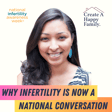
The Truth About Fertility Access—From America’s First IVF Baby image

The Truth About Fertility Access—From America’s First IVF Baby

S4 E14 · Create A Happy Family
Avatar
70 Plays1 month ago

Why is building a family still so hard—decades after IVF changed everything?

In this episode, we sit down with Elizabeth Carr, the first child born through IVF in the United States, to explore how far fertility medicine has come—and why access to care is still out of reach for so many.

From insurance gaps and rising costs to the emotional realities of navigating IVF, egg donation, and surrogacy, this conversation goes beyond the science to unpack what’s really happening behind the scenes.

Released during National Infertility Awareness Week, this episode is about more than awareness—it’s about understanding the barriers that still exist, and what needs to change.

If you’re exploring your options, supporting someone who is, or simply trying to understand why this process can feel so difficult—this conversation will give you the clarity, context, and perspective to move forward.


Recommended
Transcript

Elizabeth's Journey and Mission

00:00:00
Speaker
It started in 1981 with a movement that changed what was possible for families forever. was the first IVF baby. This was technology that had never been done before in the United States. And for Elizabeth, she didn't fully understand what the big deal was at first.
00:00:18
Speaker
But over time, she came to understand what her parents went through to create their family. And she's made it her mission to educate, advocate, and empower people navigating infertility today.
00:00:30
Speaker
People don't whisper about this anymore. Now people are like, I'm an IVF baby or I have an IVF baby. We've come so far since then, but why is this still so hard?
00:00:41
Speaker
Because if you're trying to build your family through IVF, egg donation, seriacy, you're not just navigating a medical process. You're navigating access, cost, and a system that doesn't always make it easy to move forward.
00:00:54
Speaker
They're not going to cover that darn medication that you need to kickstart the whole process in the first place. And even now, decades later, those barriers are still shaping who gets access and who doesn't. You are now a member of the worst club with the best members. If you reach out your hand, somebody will be there to take it In this episode, you'll understand why, despite how far we've come, this process can still feel so difficult, what you need to know if you're trying to move forward, and how you can help.
00:01:33
Speaker
Enjoy.

IVF Challenges and Media Attention

00:01:36
Speaker
Okay, so just to dive right in Elizabeth, I mean, you obviously hold a very unique place in American history as the first child born through ivf in the U.S. And of course, like more than 40 years later, millions of families have built their family through this technology. But when you think back where your story began and where reproductive medicine is today, what kind of stands out to you most?
00:02:07
Speaker
Oh man, I think the thing that stands out to me most is that people don't whisper about this anymore. And what I mean by that is literally people would come up to me and my parents and be like, well, not. you know, my sister or brother or cousin or da-da-da-da-da had an IVF baby and would literally whisper it to us. And now um people don't do that. Now people are like, I'm an IVF baby or I have an IVF baby. And, um you know, it's like high five, you know? um
00:02:44
Speaker
So i think we're much more comfortable talking about these things, which is so lovely because, you know, I never understood that as a kid. Like I was so proud to be an IVF baby. So it was really weird when people would come up and whisper to me, I'm like, why are we whispering about this? You know?
00:02:59
Speaker
um So that's one thing like that always stands out to me is like, we're finally talking about this stuff in the open. When you mentioned, you know, you were so proud and, but then you're having kind of this odd juxtaposition. When did you understand kind of the significance of your birth story and how did you, how did that conversation kind of start with your parents?

Public Perception and Personal Significance

00:03:26
Speaker
Yeah. So, I mean, I always knew that I wasn't born like, you know, my next door neighbor. um Because,
00:03:35
Speaker
you know, um my first ah press conference was at three days old. So, you know, I've been in the media forever. Right. um But, yeah but it really sunk in probably when I was you know, I think seven years old and i was at a mother's day reunion and we screened the movie or Nova documentary of my birth.
00:04:01
Speaker
And i had, oh wow, one doctor on one side and another doctor on the other side explaining to me, you know, the technology and all the terms. um And I'm watching myself be born on the screen. I'm watching my own birth and this highly technical procedure,
00:04:20
Speaker
um And they're talking about like, it's such a historic moment and, you know, blah, blah, blah. And I'm going like, oh, I guess this is kind of a big deal. You know, like ah now i now I understand why like the media is always following us around, you know. um And so that's when it kind of like hit me like, oh, okay.
00:04:42
Speaker
My parents really went through a lot of trouble to have me and this, you know, now, now I understand it. and Now I get it. Um, you know, but I, but I always understood that, you know, I wasn't, you know, conceived the same way as, you know, everybody in my neighborhood, essentially.
00:05:01
Speaker
Sure. Sure. How did you guys handle you and your parents handle, like you said, you, your, your first conference was three days old. So you have all of this media attention and there's almost this kind of weight of being the first. Mm-hmm.
00:05:18
Speaker
How, I mean, did you, do you feel like you mostly had a normal childhood? And then, you know, on occasion it was like, there's a camera in your face or how did you guys navigate all of that? it was very much a fishbowl.
00:05:33
Speaker
ah My parents and I, had what I call an agent in reverse. You know how when you're famous, you have an agent and they like help get you you, know, bookings on TV and things like that. We had what we call an agent in reverse, which was like to keep people away from us. um So we had people like screening our mail, um the hospital. Thank God it was the 80s because we had an unlisted phone number. Um, so we weren't in the phone book, you know, how old am i We weren't in the phone book for those of you kids that have no idea what that is. Google it. Right. The yellow page. yeah
00:06:13
Speaker
Um, so, you know, the hospital would have to call us and say, you know, the today's show or good morning America wants to have you on. Do you want to talk to them? you know, blah, blah, blah. So, you know, we were lucky to have that, but then there were things like I have, I'm looking at it. It's in my office. um, you know, the front page of a newspaper printed my parents' home address with like a faux, oh with a a faux birth announcement of like, Oh, baby Elizabeth, seven pounds, 12 ounces. um you know, you know, from Roger and Judy Carr lives at blah, blah address. And like on the front page of a newspaper. um
00:06:53
Speaker
so, you know, there were things like that, that just were, um, you know, not quite normal. Uh, So, and you know, I had camera crews follow me to my homecoming dance, which is incredibly awkward or like my senior prom. And, um you know, so like the media has literally followed me my whole life. um And so so in some ways you get used to it. um And in some ways you never get used to it. um
00:07:24
Speaker
And my running joke is that, ah you know, I can go to the grocery store and people don't know who I am. But if I walk into a fertility conference, it's very odd because people treat me like Mick Jagger. Right. So I always say i always say I'm not like Hollywood famous. I'm like C-SPAN famous. It's like a very specific niche.
00:07:49
Speaker
I love it. I love it. But I think it's so I mean, it's so interesting that.

Media Scrutiny and Advocacy

00:07:56
Speaker
You said it you know it's wonderful that it's evolved from people coming up and whispering to you about this. But then also there's this juxtaposition of the media is in your face and following all of these you know moments in your life and printing you know just personal information and all of that
00:08:23
Speaker
How have you, obviously you have taken that and run with it and used, you know, kind of your quote, your powers for good, if you will. yeah How did that evolve for you? And I mean, i guess my second part of that, part of that question is obviously your parents had gone through so much to have you, how were they navigating something that was so wonderful, but now is being taken as kind of this, like you said, it's a fishbowl.
00:08:50
Speaker
We're looking at this kind of, I don't want to say science project, but it almost feels like it was like that sort of, that that type of quality to it. Yeah. Well, you know, on the one hand, my parents did something very smart. And I like to tell this story because it makes me kind of proud. When I was, what the day I was born, um you know, the hospital had blocked off an entire wing of the hospital for my mother. And there were armed guards outside her door and there were secret code words and special badges. And like, this was a whole circus. Um, and there were like protesters outside the hospital. I mean, this was really like a big production. Um, and the, a telegram arrived with a dozen long stem roses from the national inquirer and the national inquirer, telegram said, you know, something to the effect of like, we want the rights to your daughter's story until she's 18. Um, and you know, they were willing to pay for it.
00:09:52
Speaker
um and my And my parents, being my parents, um you know kept the roses and just sent a telegram back saying, thank you so much for the roses, um which basically is like a passive aggressive New England way of saying, please go the heck away. Right. um yeah So they made a very conscious decision that from early on, they would only do things that felt educational. So we did occasionally do like traditional media, like today, good morning America, because we knew that would reach the masses and they wanted
00:10:26
Speaker
people to know that this technology existed and that it could help people build families. But by and large, everything that we did was educational in nature. So we didn't do, you know, the Jerry Springers and the Maury Povich's and the, you know, things like that. um sure And I have kind of carried that same idea forward into my advocacy work. um And I very much am careful about, um you know, the media platforms that i participate with um and how I use my voice to educate the public. But I also understand why the media followed me, because this was technology that had never been done before in the United States. And quite frankly, nobody knew how I was going to come out.
00:11:15
Speaker
And um there is a certain level of pressure there that, you know, if I had come out with four fingers on one of my hands. Um, you know, IVF might've been 10 years delayed in this country. Um, you know, they weren't sure if IVF was going to have any long-term health effects on my on my own health. Spoiler alert, I had no problems getting pregnant with my son and I had no infertility. I had, I have, you know, other than the fact that I'm five feet tall, I have absolutely nothing wrong with me. um
00:11:51
Speaker
well I mean, you know, jury's out on if I'm normal or not. But You know, they really had no. Normals. That's an aside. you know um They really had no idea. So I understand why they, you know, every single milestone wanted to kind of check back in and say, look, OK, she's still healthy. She's still thriving. She's still, you know, plugging along. um So, i you know, as annoying as it could be at some times, I also understood um why it was important.
00:12:23
Speaker
Right. That people needed to see my face. That's beautiful that your parents were so conscientious of not only is this our story as parents, but your story.
00:12:38
Speaker
And I think that's really wonderful that you are aware of the good that can come from you using your voice. And you were aware of that so early on.
00:12:51
Speaker
You mentioned at delivery day, your parents, again, like you said, it's a whole circus, but that there were protesters.
00:13:02
Speaker
What, obviously I'm the protesting I know didn't stop. um How, how did you guys navigate that? Or maybe that what you didn't have to navigate it, but your parents did. Yeah. um Like I said, the hospital took very good care of my parents. And had every precaution, armed guards, um code words, secret badges, um you name it. um People escorting them to and from the hospital. And they finally had to leave, you know, go back to Massachusetts because, you know, I was born in Virginia. My parents are from Massachusetts. IVF was illegal in Massachusetts at the time. So they were flying back and forth in order to access care, which is always a part of the story that I think people forget. um
00:13:49
Speaker
And, you know, when they arrived back home at their house in Massachusetts, we lived on a cul-de-sac. The entire cul-de-sac was filled with um media trucks, which was entirely overwhelming to our neighbors. um And they used my mother's cousin, who happened to be a lawyer, as the family representative to just say like, hey, folks, you know, we we gave you the statement. You got your photos.
00:14:17
Speaker
ah Now this couple just wants to, you know, like, try and enjoy their baby and like maybe get some sleep. Um, yeah you know, so, um, you know, they just wanted to try and live a normal life. And, yeah um so, you know, there were still people that would like camp out and, ah you know, send, hate mail. And, you know, to this day, I, I'm very accessible as much as I can be on social media and my website and my platforms. And hey, I still get hate mail um in my inbox and in my DMs and that you know comes with the territory. um And it's just something that you know people are like, oh, that's so awful. And while I agree, it's not enjoyable, it's also something that i um I am used to because I have been getting it by way of my parents and our story my entire life. So it also is just kind of like, it's part of the landscape.
00:15:17
Speaker
um But I think they handle handled it incredibly well, knowing that like, well, it kind of comes with, you know, it's the good and the bad. We we want people to be aware of this. And so we know that not everybody's going to agree with it. And and that's okay.
00:15:34
Speaker
Wow. I'm just imagining I'm thinking of my own self postpartum and then having to navigate just, like you said, all of these things. And your mom is obviously rock star. Your parents are obviously rock stars. Yeah, exactly.
00:15:50
Speaker
But with that type of just prejudice, I know it's kind of just become normalized to you, but I think there are still so many intended parents and so many...
00:16:05
Speaker
hopeful parents and people who, despite the fact that this is not as taboo as it once was, still navigate some of those questions, concerns, and and do still whisper about about that.
00:16:24
Speaker
Do you have any advice for how you navigate that?

Discussing IVF with Children

00:16:34
Speaker
and what just yeah any advice for how you navigate that yeah i'm words of encouragement yeah i mean it it's one of the you know the the most frequently asked question i get is um you know how do i tell my child that this is how they were born um or conceived and
00:16:55
Speaker
You know, it's such an interesting question because I i joke that I feel like I've always known um because how can you not ah when when you grow up in this giant media fishbowl?
00:17:07
Speaker
And what I always say is that children are always going to mirror, you know, whatever you decide is acceptable is kind of what they're going to decide is acceptable. And so,
00:17:22
Speaker
you know, the earlier you talk about it and the less of a big deal it is, i think that's the other part of that is like, I really had a hard time understanding why the media was so obsessed with me because in my mind, you know, I was just my parents' child and it was not a big deal. Um, and I was just like everybody else. And, um,
00:17:48
Speaker
So it was like, i don't quite understand this. i you know, i don't understand this station in, in the world. And until, you know, I watched and I was like, oh, it's, it's less about that. It's more about the history. Um, but in general, it was like, I'm just, you know, your kid. Um, and so i think, you know, you really have to decide like what you're comfortable with and, and it's very, very personal.
00:18:18
Speaker
And so if you come into it with an attitude of, I'm going to whisper about this, then your child is going to take on that same attitude. And so you have to decide, you know, where your level of comfort is and be very, very honest with yourself about where that line is. And it's not the same line for everybody.
00:18:36
Speaker
The line is all over the map, right? um And that's perfectly acceptable. You know, you have to decide, You know, um when you're building your family, um where is your starting line? Where is your stopping line? Because there's not always a finish line, right? There's really a stopping line, whether the stop is with a child or whether the stop is you don't have a child and whether it's by choice or by not a choice. um
00:19:09
Speaker
And you really have to kind of sit with those ideas. um So, yeah, I think just kind of having those conversations with yourself first is an exercise I encourage people to go through. Yeah.
00:19:26
Speaker
Yeah. Hey, real quick, before we keep going, what if your story is about more than just the outcome? April 19th through the 25th is National Infertility Awareness Week, a movement to change the conversation around infertility, break down misinformation, and remind people they are not alone.
00:19:47
Speaker
This year's theme is more than. So every day that week, we're releasing a new episode exploring each day's theme, plus our full episode on Wednesday. If you want to learn more about NIAW, head to infertilityawareness.org and make sure you subscribe to create a happy family wherever you listen to podcasts. So you don't miss a single episode.
00:20:09
Speaker
All right, back to the conversation. Obviously your parents did a great job in terms of, ah Hey, we realize there's a media circus following you, but you're our kid. What was that like for you? How did you think about it?
00:20:23
Speaker
And again, I know you're kind of the outlier, but with all of the other kids that are hearing this, what was your own takeaway, I guess? And yeah what would you say to those? Yeah. So, um, I have to confess that I thought that,
00:20:40
Speaker
Everybody had IVF babies. i it did not occur to me that it was not the optimal. I love It was not the optimal way to have a child. i because it was so normalized to me because you have to understand my social circle. Yes. I wasn't conceived the way that my neighbor was, but I also grew up, um, in a very tight circle of like the first 10 IVF babies from the clinic where I was born were all very dear friends. Now, granted, they were younger than I was, but they all were very dear friends. um And so I just assumed that like, I was going to have an IVF baby and my friends were going to have IVF babies. And it was like the way you had children. um And it just made perfect sense to me. And so um high that was that. um
00:21:33
Speaker
yeah So ah it took me a while to come around to the idea that like, well, no, actually, there's a different way. Like they had to explain like the traditional way that you have children. um And I was kind of wildly uncomfortable with that idea. um So I quite frankly, I did not like that idea. um I liked my way watch much better. um So, you know, you you just can never gauge a child's reaction um because i just with IVF was so normalized to me that I just figured everybody did it the way that my parents did it.
00:22:10
Speaker
um And I figured I would do it that way too, which I did not. So yeah. Yeah. No, I love that. Again, i mean, like you said, early and often, and it's all about the how your appearance how your parents approached it. And I mean, yeah, that's so funny. My kids, I had... um I was a surrogate and my eldest, I had twins after my eldest and then i was a surrogate and they had spontaneous twins. And so my eldest, instead of asking anybody who was pregnant, if they were a boy or a girl, she always asked if it was one or two because she just assumed everybody. See, exactly. You just, you go with what you know what is my motto. You go with what know. go with what you know. Absolutely.
00:22:59
Speaker
but So even though IVF has been around for as long as it has been, So many people still face just all of these challenges as far as just even receiving

Fertility Care Access and Insurance Issues

00:23:16
Speaker
care. Like you said, it's been, it was your parents flying to now, you know, there's costs and all of those things. And it is so i just dependent upon where you live where you live, what your insurance coverage is, just all of these things.
00:23:33
Speaker
How do you feel like these things shape the choices that families are able to make when they're trying to build their family? Yeah. So I'm going to, I'm going to say something that is like totally a downer. um It takes away choice, quite frankly.
00:23:50
Speaker
it it, it really, um it does not give patients a choice. um Your care and access to care should not be dependent on your zip code or your socioeconomic status or, you know, um whether or not there's even a clinic within 500 mile radius of where you live um or any of those things. And it's incredibly frustrating. um And that's like my personal project is access to care in all the ways in which access the word access is defined, um particularly on the insurance front. So quick aside, i was born in Virginia.
00:24:35
Speaker
um Virginia was a pioneer in this arena. Spoiler alert, Virginia still does not have an insurance mandate to cover IVF. um We are extremely close and I've been working on this for like the last 15 years. um It is my bucket list item. um And so I will not stop until Virginia has insurance coverage. And that's just one of the states that like I'm working on. Right. um But but this is a very real problem. that is not quickly solved. um
00:25:09
Speaker
So we have a long way to go, but just, you know, it's one of the very first things when people talk to me about, I'm exploring IVF. um I don't ask, you know, like, oh, well, you know, what options are you looking at? I ask, where do you live?
00:25:27
Speaker
And then it is shortly followed up with, um what do you have for insurance? um which is so, so unfortunate that those are my questions. um But that's the reality.
00:25:39
Speaker
And people need to be aware of that. They really do because a lot of people get into the situation where they they just assume that they're going to have access to these technologies. And then they get into a position where that is not at all the case.
00:25:55
Speaker
um And so, um yeah, you you have to be aware of your options. Unfortunately, it's like you have to learn the language of fertility um before you even set foot in the country. um And unfortunately, most people just get dropped from a plane into the country and then you have to learn the language. um So yeah, it's incredibly tough. It's incredibly tough.
00:26:26
Speaker
Yeah. What do you feel like most people misunderstand about how fertility coverage works in the US?
00:26:38
Speaker
Uh, the biggest one I will say is that the word mandate does not equal guarantee. Okay. So just because a state has an insurance mandate does not mean that your, um, fertility benefits are guaranteed. Um, or even that every part of the fertility process that you assume will be covered will not, not necessarily be covered. Um, so Unfortunately, you have to read the laws extremely carefully. And if you have a problem reading the laws, i said I'm accessible. I mean it when I say it. I put myself out there on purpose. um Reach out to me and say, I don't understand this. Can you explain it to me? I'm happy to. I do it all the time. Because if you really don't understand the way in which mandates and insurance works, which listen, it's not fun and sexy. So I get it. It's not, it's okay. You don't understand it. Nobody really wants to understand it. um
00:27:41
Speaker
You know, it's not fun, um but it's, it's, it's incredibly important that somebody explains it to you if you don't understand it. And it's okay to admit if you don't understand it, um but you should know where you stand. in terms of, you know, if your state does have a mandate, what exactly does it cover?
00:28:00
Speaker
What exactly it doesn't cover? And just know that mandate does not equal guarantee. Well, yeah, I mean, insurance in general yeah is confusing and I feel like it's always changing. Can you dive in a little bit to maybe just some examples of what you mean by mandate and not guaranteeing and maybe some of the...
00:28:27
Speaker
I guess, typical drugs that you see as you have people reaching out you? Sure. So I think the easiest example, because it's pretty universal, is medications. So for example, yeah um your state might have an insurance mandate that covers you know an IVF cycle, but um within that IVF cycle, you know there's a hormone protocol um that you need to participate in in in order to even have the cycle to produce the eggs. to um you know to even go through the cycle. um But guess what?
00:29:01
Speaker
Your insurance is not required to cover those medications. Um, which is kind of like, Hey, guess what? I'm giving you a car, but if you want the steering wheel to drive the car, you're going to have to pay extra for that.
00:29:18
Speaker
Cause we're not just going to give you that. Um, so it doesn't quite make sense, but that's nine times out of 10. That's what happens, right? Is like, um, so you might have your insurance cover the site, the whole cycle of IVF, um, like the transfer pro to, you know, the transfer procedure, the retrieval, um you know, things in the lab, various tests, but they're not going to cover that darn medication that you need to kickstart the whole process in the first place, which makes absolutely no sense, but is very, very common. So that's like a very typical one um that often takes people by surprise. And it's, you know, not cheap. um Some of the medications, you know, it's
00:30:01
Speaker
several thousand dollars, right? Out of, ah out of your pocket, um, nine times out of 10. So, you know, those those are just things to be aware of. And that's a, that's a pretty typical one.
00:30:12
Speaker
What, why do you think this is something that is such hurdle with the science having been around for as long as it has been um,
00:30:25
Speaker
now where infertility just is it seems like it's just not seen as a medical necessity you know if i had the answer to that i could probably also solve world peace um ah really it is a question i wrestle with every day um You know, i it is a very complex process. um And I think, you know, I'm not quite sure why there are so many hurdles with um coverage and access with fertility in general. um
00:31:03
Speaker
You know, nobody questions a doctor when they say, this guy or this woman needs a knee replacement and we're recommending this particular very expensive part as the knee.
00:31:16
Speaker
um But if if an REI recommends a specific protocol or whatever for a fertility patient, um you know, an insurance company or whoever is often very quick to say, well, but have they tried IUI first?
00:31:34
Speaker
Um, or have they tried, you know, XYZ? Um, and that often just kind of blows my mind. Um, because we're not talking about a knee, we're talking about potential for human life, which, um, I just, you know, it's not apples to to apples to apples. Um, so, I don't quite know.
00:31:58
Speaker
i've never quite understood the hurdles that exist because, um you know, in, in the Nova documentary of my birth that I mentioned earlier, um, an interviewer asked my dad, you know, what do you say to the people who have a problem with how you're creating your family?
00:32:19
Speaker
And my dad, said, you know, for me, it's just really simple. How can anyone be mad about us wanting to have a child? And that's how I feel about it too. How can anybody have a problem with someone wanting to build their family in whatever form or shape that takes, whether it's IVF, surrogacy, donor egg, donor sperm, doesn't matter.
00:32:48
Speaker
ah Adoption. How can anybody be mad about somebody else wanting a family? I don't get it. i don't get it
00:33:00
Speaker
What would real progress in fertility access look

Vision for Fertility Care and Advocacy

00:33:06
Speaker
like? Oh, real progress in access. um Man, to how how long do we have? um No. Yeah.
00:33:16
Speaker
um So real ah real progress with access would mean no more fertility deserts. So clinics readily accessible, in including in rural rural areas where there aren't any clinics or ah REIs. um insurance coverage universally. So I would love a federal insurance law. um ah Note that I didn't say mandate. um
00:33:48
Speaker
and ah And equity when it comes to access, because we know that there are certain populations that are not treated as equitable equitably as other populations within the fertility space. Um, you know, LGBTQ population, black, black and Brown people, um the mortality rate is just, you know, not the same. Um, so, yeah you know, i think we need to level the playing field in those areas. um
00:34:26
Speaker
those are the those are the big Those are the biggies. I think they're big enough. you know that they they would yeah It's going to take a while. um But to me, that's real progress. right And they're they're big, big issues. and And we have come a long way. Don't get me wrong. We have come. quite, quite far. And we do have many, many states with mandates now, many, many more than we have ever had before. And we do have many more clinics than when I was born. There was only one, obviously. so and now we have many and we have networks and, you know, many more options, but um yeah we're still not there.
00:35:09
Speaker
And, ah you know, I've had a front row seat to watch this field grow up. And in many ways, I feel like IVF in particular is still very much a teenager.
00:35:22
Speaker
we're not We're not an adult yet. We're not we're not an adult.
00:35:28
Speaker
What kind of impact do you see when access to actually to fertility care expands?
00:35:40
Speaker
Um,
00:35:44
Speaker
you know, I think a lot more people will have access to technology that will allow them to halt disease within their family line.
00:35:59
Speaker
um They will have access to testing that they may not know exists currently. um They will have the ability to have a lot more autonomy over their timeline of when they create a family.
00:36:16
Speaker
They will have a lot more control over even something as small as, you know, somebody in the military um timing their family building if they're going on deployment um and preserving their fertility if they're going through a cancer treatment. um Those things matter.
00:36:37
Speaker
That kind of autonomy over your own body and your own ability to build your family is not a small thing in my world. That is probably the most important thing. I think people that conceive the traditional way or the good old fashioned way or the way that I didn't think that you know most people had babies um I think people take that for granted. You know, they just, they make a choice that they're going have a child and then they have a child. Um, and they chose to do that. And for your typical fertility patient, there is so much that is out of their control that to be given back some level of choice and control and autonomy feels huge, feels monumental.
00:37:29
Speaker
Um, so, you know, to me, I think that's just priceless.
00:37:39
Speaker
Yeah. What role can patients and families and advocates play in pushing for broader access to? Oh, my goodness. um This is great. um So i will say the first thing is people always ask me, like, well, how do how can I get involved? How can i help be an advocate? Or like, how do I become an advocate? um Number one, go to resolve.org and sign up for their advocacy network. There are also other great organizations out there. I'm on the board for All Paths Family Building, which serves all New England. There's also Families Out Loud that I serve on the board for, um which is a phenomenal organization. They have events all across the country. um
00:38:23
Speaker
both All of these organizations on some level are helping to push policy. So sign up for any of those and you'll be kept in the loop in some way, shape or form. So that's easy. That's like, check that off the list. You're done. um But also, yeah you know, just tell your story if you're comfortable telling your story, because you never know.
00:38:48
Speaker
Who is going to remember a tiny nugget and piece of information that you shared with them that is gonna just sit in their brain until they need to access it? And I say this because I have ah real life example of this. So I have a friend from elementary school who knew my story, obviously, because she was in my class and I was always you know on TV or in the media, you know in the newspaper, are who knows what. And she knew that I was the first IVF baby.
00:39:21
Speaker
um And fast forward, she was having trouble conceiving and she only thought to explore IVF because she remembered, oh, that girl who was in my fourth grade class was that IVF baby.
00:39:38
Speaker
And I don't know anything about IVF, but I remember that her parents had fertility troubles and that's why she was an IVF yeah baby. So I'm going to, I'm going to look into IVF. And she messaged me and said, you know, the only reason I looked this up was because I remembered that little tiny nugget of you were the weird girl who was always in the newspaper for being IVF.
00:40:00
Speaker
Um, and, but and, you know, if that tiny little nugget of me being the weird, weird girl who was in the newspaper for being IVF, helped her on her fertility journey, so be it.
00:40:13
Speaker
You know, that tiny little nugget is what now she has a family, right? Now she she was successful in her journey. I helped her find a clinic. um You know, that matters to me.
00:40:25
Speaker
I don't care what piece of information she retained. The fact is she retained something that helped her. So, yeah. Well, and that's such a beautiful illustration of why storytelling is so important in this space and not whispering about your sister's kind brother and being... Yeah, because it is more than just the science and technology of it. These are real... People, there's a human side of it. And if you are brave enough to tell your story, that is just as moving and wonderful as it is to go to Capitol Hill.
00:41:03
Speaker
All of those things are needed for to making a movement like this happen. Yes. And also, i will say, it's also okay to not share your story. Not everybody is comfortable doing that. And so it's okay to not share your story. um There are other pieces of action you can take, you can send the email. You can send a note, you can send a postcard, you can pass along a link to somebody of resources. um You can simply be an ally. you know You can donate to the nonprofits that are doing the work, the advocacy work. There are so many little micro actions that still matter that add up to the sum of the larger being that you know it's it's not one thing. It's all the things put together Um, because we we all have to have our foot on the gas. It's not just one of us.
00:41:58
Speaker
When you think about the generations that have followed after you, what does that legacy mean to you? Well, first of all, it makes me feel incredibly old. yeah.
00:42:15
Speaker
um And yet not IVF is a teenager. Remember? is You know, 44, 45 years old. Um, it's fine. We won't just discuss it. No, IVF in the United States is 44. Um, it's fine. I can never lie about my age, um but, but no, you know, what's great is when I was 10, I hold, I held in my arms, babies a thousand and thousand and one, they were twins.
00:42:45
Speaker
And so now there are more than 18 million IVF babies walking the earth. And... That makes me in a weird sort of way feel like an incredibly proud big sister to all of them, which, you know, I know technically we're not related just so everybody's clear. We're not related. There's no genetic material. We're not related. Let's make that let's be very clear, but I do feel a kinship to all of these children. um and I have always felt very protective over everybody that's come after me um,
00:43:23
Speaker
That's why I fight so hard. That's why I fight so hard to protect IVF because i don't want to be the last first of something, um especially in the fertility space. I know there's going to be so much more innovation and I know that we're not done. um and I just know there's going to be some kid that's going to be the next first of the next innovation in this field. And, you know, they're going to be in my place where they're going to be the first of that thing. And i want to protect that. I want to protect them being the first. of whatever that thing is. And so if I can stand, you know, I always picture them all standing behind me, truly. um I'm getting emotional because it's really important to me.
00:44:18
Speaker
um i always picture them all standing behind me and I want to act like a human shield for these people. If I'm going to take the flack and take the death threats and take the hate mail,
00:44:33
Speaker
Um, and fight the policy battles. That's what I'm going to do. I'm going to take all the hits for these kids. Um, cause I'm not gonna, I don't want to get to the end of the line.

Support and Future of IVF

00:44:47
Speaker
For someone listening right now that's in the middle of infertility and feeling discouraged and coming up to all of these roadblocks, what would you want them to know?
00:44:58
Speaker
Oh, man. I think the most important thing you have to know, and it's so cliche, but I'm going to say it again because you need to hear it all the time. First of all, you're not alone. um You have, you are now a member of the worst club with the best members. And I i mean that. Yes. Wholeheartedly, worst club, best members. um But the other thing is, if you reach out your hand...
00:45:28
Speaker
Somebody will be there to take it. And, you know, I said this earlier or and I'm going to say it again. um I make myself very accessible um and i don't have a staff um that answers like my DMs or my emails. That's all me. And i set aside an hour every single night, including weekends. to answer every single message I get on my Instagram and on my website. But every single message I get, i answer back. If you ask me a question, you ask me for a resource, you reach out with your story, I read every single one and I answer. it might take me a while because I get a lot of them, but I will answer you. So if you reach out your hand to me, be assured I'm going to grab it.
00:46:22
Speaker
So just know that if you feel like you have nobody else to talk to, I will be there. And that is always my promise to you. And I have always kept it. I am a person of my word. um So do not be afraid if you're still in that stage where you're completely overwhelmed and you're still in that place where you're whispering about this, you can whisper to me. That's beautiful.
00:46:53
Speaker
When you think about the impact IVF has had on families over the past four decades, what gives you the most hope for the future?
00:47:06
Speaker
I think the most hope for the future is that, you know, now the generation of IVF babies like myself are, you know, having their own families and their own children. and um you know, there's a whole set of like IVF grandparents. Like my mom, my mom is like, you know, an IVF grandma. Right. And, um and so now we're seeing, we're seeing this generation
00:47:40
Speaker
you know, fight the battles and want to protect these technologies um where we didn't have that before because because nobody had experienced these technologies before. And so now now now we have the support. Now we have a voice.
00:47:57
Speaker
um Actually, when I went into college, I went to an all women's college, Simmons, shout out Simmons. um My class, my class had a slogan ah when we entered and it was find your voice. And I feel like my generation of IVF children has found their voice and now we're not going to shut up. So we're going to keep fighting. We're going to keep fighting. And that gives me so much hope. It's not just me out there you know with my loud New England brash personality. um it's It's all of us. It's all of us.
00:48:36
Speaker
Well, and it takes a village for anything. and it But it also, it takes that first. And it's I'm so grateful that You have led this charge and it has obviously made a huge difference. And I am so grateful that you continue to share your story and are willing to take all of the good with all of the ugly.
00:49:02
Speaker
And i mean, truly sharing your story and your wisdom has is has had such an impact and will continue to have an impact. I know you said you have...
00:49:13
Speaker
You are accessible where you said Instagram and your website. Why don't you shout out your handle? And we'll have it in the so in the show notes too. But for those who do want to reach you. Yeah. So my Instagram handle is at ejordan12. And my website is ejordancar.com.
00:49:33
Speaker
perfect. And no, her physical address is not. That's right. You can not show up to my house. ah Please do not do that.
00:49:46
Speaker
Please is do not. Please do not. Well, Elizabeth, again, thank you so much just for everything that you have done, are doing, and continue to do. you represent such an important important part of history, but just the way that you continue to advocate for families to have access just makes such an impact. And i am just, I'm so grateful for your time um and just sharing everything with us. So thank you so much, Elizabeth.
00:50:16
Speaker
Thank you so much for having me.