Become a Creator today!Start creating today - Share your story with the world!
Start for free
00:00:00
00:00:01
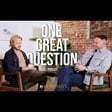
S1E04 | One Great Question: How Do We Set Expectations That Actually Work? image

S1E04 | One Great Question: How Do We Set Expectations That Actually Work?

One Great Question
Avatar
24 Plays5 months ago

Most disappointment at work doesn’t start with bad intentions. It starts with unclear expectations.

This episode explores why teams, relationships, and organizations fall apart when no one defines the rules of the game. Using stories from childhood playgrounds, leadership failures, and real workplace dynamics, we unpack how unclear wins, missing deadlines, and unspoken assumptions quietly turn into frustration, disappointment, and eventually resentment.

This conversation introduces a simple but demanding framework for setting expectations well: define the win, make it measurable, check if it’s doable, match resources, and revisit the agreement as conditions change. Expectations are not contracts. They’re experiments.

If you’ve ever felt blindsided, burned out, or quietly resentful at work, this episode will help you see why. More importantly, it will show you how to reset the game before everyone walks away.​​​​​​​​​​​​​​​​

Recommended
Transcript

The Importance of Boundaries in Relationships

00:00:00
Speaker
There are some people in life who will keep taking from you until you draw a line and that nobody really knows where anybody stands with one another until somebody says, these are the boundaries. And without rules of engagement, without rules of expectation, then we don't know how to actually engage with each other. In dodgeball, if you're the last person who hasn't been hit, you win. End of game, number one.
00:00:24
Speaker
Deadline, end of game. In most teams, nobody knows what the number of the deadline Nobody knows what the big or small wins are. And that's when we start to get hurt and then frustrated.

Unwinnable Games and Their Lessons

00:00:35
Speaker
Did you ever see that movie War Games in the 80s with Matthew Broderick? Matthew Broderick? Yeah, with the, like, early stage computers? Yeah. Okay.
00:00:42
Speaker
It was Cold War movie. Okay. I mean, Cold War era, you know, so he was like a hacker. Is this pre-Ferris Bueller? Yeah, I think so. Okay.
00:00:53
Speaker
I mean, thereabouts. Okay. It's one of his first movies, and basically he hacks a a government computer. He doesn't realize what he's doing. He loves video games, he any and he basically hacks into this, like, I don't know, thermonuclear army station thing,
00:01:13
Speaker
and And he like starts this ah um war game with the computer itself, but the computer thinks it's a real threat and they're getting ready to like launch thermonuclear missiles, right? Okay.
00:01:28
Speaker
But it's a movie. bet the theme music was amazing. It's good. Early 80s. And there's a love of interest and they're running away from the powers that be at the point. But long story short is he has to kind of stop World War III.
00:01:41
Speaker
and And this is like worried about, you know, the Soviets bombing us. we you know We're going to bomb them. We need this. Only this 15-year-old can help us save the world. Only 15-year-old. Yeah. and And the way that they they get the computer to realize, like, calm down, you don't have to fire the rockets, is he asks computer to play a game of tic-tac-toe.
00:02:03
Speaker
And if you know how to play tic-tac-toe, you should never lose. Right. Like tic-tac-toe is an unlosable game, actually, because if you if you're just doing the math and just watch like you could always beat your opponent. Yeah. Like when I was doing it when my kids were younger, I had to remember like play badly. Yeah. Right. So they're going be uninterested at the beginning. it's not there's It's not like chess. There's not a lot of um strategy. There's not a lot of strategy and there's not a lot of potential outcomes. Like, it's like, these are the moves. So they play tic-tac-toe and they keep, like, it keeps, you know, stalemating, keeps tying, keeps catting. And then they realize that a ah thermonuclear war is a zero-sum game. Like, everybody loses.
00:02:46
Speaker
Nobody

Rules in Games and Real Life

00:02:47
Speaker
wins and because you just bomb the crap out of each other and everybody dies, right? yeah it's that's That's what kind of like the the assurance of mutual extinction is what keeps us from you know not doing that.
00:03:00
Speaker
And so that's a that's an unwinnable game. And when I think about games, I think about if you don't have clearly defined wins and losses, ah like what does a win look like? What does a loss look like? What are the very clearly defined rules? You don't have a fun game.
00:03:17
Speaker
And I often see my kids playing out in the cul-de-sac with the neighborhood kids and they play like a game of like kickball or hide and go seek or whatever. And inevitably, um it all just kind of falls apart because they don't know what the rules are or they haven't agreed on what the rules are. yeah And then what eventually happens in that game in the cul-de-sac? One the kids gets mad or all of the, one of the kids gets mad, pitches a fit and walks away. And then eventually you watch the game just like everybody loses interest because it's not, they're not holding it together with clearly defined rules. And that's literally a picture of what? Mutually assured destruction, right? The thing just disintegrates in front of you but because somebody takes their ball and they walk away. Go home. Yeah. That's it. Okay. It does remind me of my first bully.
00:03:59
Speaker
oh well Speaking of rules. My first and only bully. Okay. That led to my first and only fight. Really? Okay, i've I've only ever been in two. Yeah, I think this is only my only real fight. I was i was in first grade, and i had a bully, and his name was Teddy.
00:04:15
Speaker
Okay. And i'm sorry, age ranges again? You're the old B.L.? I'd be like eight years old. god Maybe like seven. Yeah. and Terrifying at that age. Teddy looked like a Teddy, meaning he's a sweet, cuddly little boy. okay.
00:04:30
Speaker
Not like a bear, like a a stuffed animal. Yeah, yeah. Sweet Teddy. And every day, Teddy would come demand my lunch money. And Teddy had a big hoss of a friend standing next to him that must have been named Bruno. At least as this is how I remember him being named. So Teddy and Bruno would come up and they would demand my my ah milk money every day and I would give it to him.
00:04:52
Speaker
And would tell my dad about it. And he would go, dude, like, what are you doing? And I would come to my dad with tears every day and I would go, what do I what do i do? I don't know what to do. And my dad goes, here's what you need to do. You need to, you need to, you know, make a fist, tell the kid to, you know, point somewhere out the window or something, say, hey, look at that. And when he looks away, get ready.
00:05:10
Speaker
And then when he turns back, pop him in the nose. And my mom in the room was like, no, don't do that. Don't do that. I was like, that's to do hashtag gentle parenting yeah yeah i didn't do it i was terrified yeah go back to school kebby and myer yeah i keep getting my milk money stolen by teddy backed up by bruno day after day after day and then one night my dad's put me to bed my mom's in the other room my dad's like listen buddy you need to punch that kid in the nose and it'll never bother you again like he keeps asking for more because you haven't kind of drawn the line you draw the line he'll never bother you again
00:05:44
Speaker
And he said, and he and he told it to me in this way where I started to get really excited. I was like, I've never done this before, but I've seen enough Rambo movies to want to try. As a seven-year-old, you're familiar with the like the Rambo. I had to go to Rambo movies, and I was like six years old, yeah. Much to my mom's chagrin. And the next day, go to school.
00:06:05
Speaker
Teddy takes my my milk money. I gladly volunteer because I know what's coming next. And as luck would have it, I never put this together. Teddy and I rode the bus together and we were the last two kids on the bus route.
00:06:15
Speaker
So he got dropped off and then I was the last kid hu on the on the bus route to be dropped off. i We lived out in the country. And so the the third to last kid gets dropped off. So now it's just me and Teddy. And I'm at the front of the bus and he's at the back of the bus where all the bad kids are. And I get up and walk back there and I sit next to which I've never done before.
00:06:33
Speaker
and he just looks at me and I don't say anything and he's just sitting there it's very very awkward and then I'm like working up the courage to like live out the script exactly the way my dad told me to play it out you know and i um I'm sitting there blood's pumping, you know, adrenaline pumping. And then I go, okay, I got it, you know.
00:06:58
Speaker
And I go, oh, hey Teddy, look. And I point out the window, you know, and he looks and I pull my fist back, squeeze into a little ball, and then he turns to me and I go,
00:07:09
Speaker
and just a breeze of cool air blows across Teddy's face. I totally miss a, uh... And he he's, like, stunned. He doesn't really know what has just happened, and I've attempted to assassinate... Did he try and high-five me? Like, what happened? like yeah you And and i'm I, like, realize i have precious seconds before the jig is up, and ah and so I point again, i go, look, it's ah it's a deer! You missed it! And he looks again, which is my redemption, you know, and I pull my fist back again, and he turns back, and my fist, uh,
00:07:39
Speaker
indents into his face and I could just feel his nose kind of, you know, under my knuckles. And he immediately starts crying. And I said, don't mess with me any anymore, Teddy. And then he starts crying, threatening to tell the bus driver. And I'm like, oh, sorry, I'm sorry, I'm sorry. And I'm like, he's not. There's a sanction by dad, but maybe not the bus driver. i don't know how much trouble I am. So then I like sneak back up to the front of the seat and I'm like hiding and he gets up, walks past me, glares at me walks up to the bus driver and then turns and goes down, never says anything.
00:08:12
Speaker
Never bothered me again. we ended up becoming friends after that. Really? And ah yeah, we were like buddies. and And for some reason, Bruno just disappeared. He may have never existed. i don't know. A figment of our childhood imagination and fear of this person. But I mean, I did. That was only fight I'd ever been in But I did learn that there are some people in life who will keep taking from you until you draw a line.
00:08:38
Speaker
And that nobody really knows where anybody stands with one another until somebody says, these are the boundaries. This is how we work together. This is how we play together. This is how life works. This friendship works. This how family

Setting Clear Expectations

00:08:51
Speaker
works. Like we've got to have some clearly defined boundaries. And so I think this question of expectation in the workplace and relationship, where do we stand with each other?
00:09:02
Speaker
I think is really important. My... best friends, people that I have the greatest respect for, we have this sort of mutual understanding that the other person should never wonder where we stand with one another.
00:09:15
Speaker
And I've always admired that about people who can kind of cut to the quick and go, hey, like, you did this, I feel this, like, let's work it out, instead of like, having these hidden resentments and in like, are we cool? Are we not cool? And so I think this question of expectation is that really important.
00:09:35
Speaker
Well, and it goes back to one of the other questions, you know, we wrestle through around conflict, you know, how do we get on the same page? That's actually a result of not setting good expectations at the beginning.
00:09:46
Speaker
And so now there's this ambiguity, this lack of clarity between these two people. And it's going, oh, nobody stepped up to set a really clear boundary, a really clear expectation. And the beauty of that is it only has four parts.
00:09:59
Speaker
All, and you know, I call these they like the rules of engagement, the rules of expectation, because the games that we play as kids, you talk about you and Teddy at that age, it's dodgeball, it's kickball, it's four square.
00:10:11
Speaker
It's all same. Stealing my milk money. That was Teddy's game for a while, and he was good. He was Yep. Defeating. He owns one.
00:10:19
Speaker
um But the other games we play at that age, it's all with the same red ball, about the same size. But with this game, we can play dodgeball, we can play kickball, we can play foursquare, we can make up a new game.
00:10:31
Speaker
But we need to know what we're expecting of each other, how to like play the game. The rules is what makes it fun. And without rules of engagement, without rules of expectation, then we don't know how to actually engage with each other. And this is where...
00:10:46
Speaker
That sort of a lack of expectation setting leads to four things very quickly. First, it's hurt. So let's go back to the kickball and dodgeball analogy.
00:10:57
Speaker
If you and I were gonna go play, and and I thought we gonna play kickball, and you thought we were play dodgeball, and you know the absent recess teacher blows a whistle, grabs a Heineken and disappears behind the bleachers, they can get drunk during recess, and now it's just kids hanging out. mean, he's gonna be more than one Heineken to do. He's already on four deep like this is ah And hold on, i was in East Tennessee, so he's on his fourth Milwaukee's best, or whatever it is.
00:11:22
Speaker
ah Real stories, real life of my middle school experience coming to the States. And also the place of my first fight. But in this moment, like, they've blown the whistle, here's the red ball, and I'm expecting us to play kickball.
00:11:35
Speaker
And then you're like, oh, my expectation was dodgeball. So when you rear back after the whistle was blown and hit me directly in the face, ah we're playing by completely different rules.
00:11:45
Speaker
And when that happens in personal relationships and professional relationships with your spouse or friends or kids or parents, that now results in full things. First is hurt. Oh, you hit me in the face, that hurt.
00:11:58
Speaker
If it happens again, now it's a frustration. It's a repetitive hurt. Because I didn't expect it to happen. i didn't yeah understand that it was part of the game we were playing. Yeah, exactly. And then I'm like now in the game. You won't let me out. right So now I'm frustrated. yeah Like I'm really good at kickball.
00:12:14
Speaker
I can knock the thing like out in the outfield. I'm not good at dodgeball. And I didn't know that we were going to play that way. Then the third level is now resentment. Like, oh, you're the problem. You did this. i don't like you.
00:12:27
Speaker
Even though you you thought the agreement had been to play dodgeball all the time, Carl's just bad at I don't why he's mad, but he's really bad at this game. He should probably not play while I'm playing with all these other kids. And the fourth layer is eventually bitterness.
00:12:39
Speaker
I hate recess. I hate school. I hate the other kids. I hate this country. Because again, the expectation wasn't set. And the flip of that is also true. There's four parts to making a great expectation. So when they're bad, they do these four things, the the hurt, frustration, resentment, and bitterness.
00:12:57
Speaker
But if you're intentional with setting expectations, there's only four parts to getting it right. and It's actually pretty simple to understand, very difficult to do in our marriages, in our parenting, our friendships, our workplaces. But number one, and it's not even close, it has to have a win.
00:13:11
Speaker
What is the clear win of what are the engagement between the two of us is? And I would tell, especially in companies and teams, people are like, well, you know, the win is, and then they state some 14 paragraph long mission statement or the vision of the original person. was like, nobody can restate that. The win has to be simple to understand.
00:13:30
Speaker
It has to be numerically driven and it has to have a deadline. So take, you know, tic-tac-toe, the reason every kid could play it, because there was a number and a deadline. You get three circles, I get three X's, when you do this in this order, you win.
00:13:44
Speaker
Number, deadline. In dodgeball, if you're the last person who hasn't been hit, you win. End of game, number one. Deadline, end of game. In most teams, nobody knows what the number of the deadline is. Nobody knows what the big or small wins are, and that's when we start to get hurt and then frustrated.
00:14:03
Speaker
And then number two, once we kind of understand that win, the hardest place is, you know, and luckily we have the Brene Browns of the world there with Atlas of the Heart, like championing this idea of vulnerability.
00:14:16
Speaker
And so I'm really grateful about the year and the age of humanity that we live in because we talk about this stuff. I mean, could you imagine your dad talking about vulnerability in the workplace? No.
00:14:28
Speaker
Yeah. And so this is a fortunate place for us to be, men and women alike, going, hold on, I can ask a vulnerable question, which is, is that doable? Can I actually do that?
00:14:40
Speaker
So we said, hey, the win is let's make a million dollars more this quarter. And then I get to ask the question, hey, you're asking me to accomplish that. I just need to know, like, could I say, I don't know if that's doable.
00:14:53
Speaker
So number two is, is the win actually doable? And then the beauty of that, if it's not, you just go back to number one, let's re-engineer a new win, different number, different deadline, but we're in the conversation now doing this together.
00:15:05
Speaker
But the other person in the conversation also has to be vulnerable. Typically, the leader setting the number or the deadline has to ask the question, And this is where we have to get curious, right? Hey, is this doable? I know I set the number in the deadline. I like to just ask transparly transparently. And actually, is it doable is not even a good question.
00:15:23
Speaker
Do you mind if I ask you why why you think I would say that? Why is is it doable not a good question, especially in ah in a workplace? Well, because the boss is going to say, yeah, you know figure it out far away. And the people who have to implement it might not be able to conceive of that happening. Sure. And ah let me take one more layer on the question.
00:15:42
Speaker
Why would it be a bad question of the boss to ask this way? Hey, is that when doable? Just like that to the employee. ah I don't know. them they They may not know things that he knows.
00:15:56
Speaker
Yep, I think the information gap is real. I think I lean more to an emotional space where that employee is going, well, the only answer I can give is yes. Right, or I'm gonna get fired. Right, or I'm gonna get fired. There's a power dynamic that we're not taking into account in expectations.
00:16:09
Speaker
And it's one of those things, like, you know, as a middle-aged cisgender, a highly educated, you know, middle-class guy, i have to understand in every room I walk into, there is 5,000 years of power that I'm walking into the room with.
00:16:25
Speaker
And this is why I have to ask better questions, because I have to acknowledge that there's a power dynamic naturally when I walk into the room. That for, you know, at least the last several centuries, I've been the most important influential person in any room. Now you add the title boss on top to my cisgender, white, but educated, socioeconomic thing, now I'm only more powerful.
00:16:47
Speaker
And so I have to ask the question in such a way where I'm going, I would almost pay you to tell me that it's not. I would almost gamify this for you to be that vulnerable and that honest because you just saying yes doesn't actually help us.
00:17:01
Speaker
Because then all of a sudden I say, hey, let's go make an extra quarter million dollars this quarter. Is that doable? Yes, boss. I come back at the end of the quarter, we made $50,000 more as opposed to a quarter of a million dollars more. And everybody's upset because I asked a terrible question.
00:17:17
Speaker
So those are, in my mind, the first two elements is, is there a clear win? Two, is it doable? And then three and four is, have we matched resources on this? Like, oh, we've got a red ball. We've got this much time to play. Hey, like, do you know how to play dodgeball? Hey, do you know how to play kickball? Like we're matching resources on our intellectual property, on our availability, on our ability, all those sorts of things.
00:17:41
Speaker
um really critical that we're asking in that question, like, what do you need? ah Or what do you need from me? What do I need from you in order to make this thing run? And then the last and probably most critical thing that we miss, we don't ever talk about it again.
00:17:54
Speaker
Oh, we did the hard job. We talked about it. We set an expectation. We're playing dodgeball. Let's just play dodgeball now for the next 40 recesses. Right. We don't ever meet to set and reset the expectation.
00:18:05
Speaker
Right. And that's the problem. Same in most businesses. You know, it's this idea again, well, we're very meeting averse now, so let's just never talk, never touch base. And it's like, you're constantly experimenting and never meeting to see how the experiment is going. Right. Yeah.
00:18:22
Speaker
Yeah. I mean, it's, i don't know, scientific method. Like you've got to have a hypothesis. You've got to sort of test that hypothesis. And then you have to draw a conclusion from it. You have to go we were right. We were wrong. This is science. um And I think one of the challenges in the world of business and the game of business is like there's only one acceptable outcome and that is winning.
00:18:43
Speaker
If there's any game that if you every time you played it you would win, you wouldn't keep playing that game. would a boring game. like It has to be... i was reading about this somewhere, but basically the most fun games are where the likelihood of winning is is just a little bit better than the likelihood of of losing. So that you're working against a challenge, but it's not like insurmountable. And so if it's around 49%, 50%, 51%, that's a game worth playing.
00:19:11
Speaker
um and you know people go to casinos and stuff, go gambling. They're looking for the best odds unless they like love risk. um But they don't want it to be so easy that it's not worth playing. And I think one of the challenges with our expectations about expectations in business is You want to like winning equals more money.
00:19:32
Speaker
i don't ever want less money. i want more money. um So I'm either going to play a safer game where it that it ensures that the outcome is almost always you know favorable or I'm going to like live in denial of the actual losses and we're going to just sort of keep papering over it. And it's funny. And I watched the kids play out in the cul-de-sac and um ah they get bored if it's too easy or too hard.
00:19:59
Speaker
You know, they give up if it's two if it's one or the other. And they get bored if it's the same game over and over again. And it usually takes some kid kind of getting bored of this game. Let's do this instead. Like, let's let's change up, you know, change the game a little bit.
00:20:12
Speaker
And so I think you got to know where people where you stand with other people, where they stand with you. And then I think even at work, there's something to like playing more than one game, you know, having a bunch of different projects at different times that we're going to kind of do a deep dive in this quarter. We're going to focus on this next quarter. We're going to focus on that. We

Business Strategies and Adaptability

00:20:30
Speaker
might win, we might lose, but we're going to keep learning and growing and and actually figuring out how to play the game better.
00:20:36
Speaker
Yeah, and that last part I think is so critical. Learning how to play the game then creates the culture of that company. so you can play lots of different games, but it's your ability to play. It's the way in which you're setting that up across projects, across products, across ideas.
00:20:52
Speaker
Because in that moment, what you're really learning is how to be a team. Is going, oh, I'm good at this thing, you're good at that thing. We can direct it at this goal or a new goal or something completely different. And I think that's the part where you said it best.
00:21:04
Speaker
It's the world of of business, it's the game of business, but it's also the scientific method of business. And what great leaders are doing around this idea, like what do I need to do or what do you need to do in setting expectations, is they are keenly aware of the fact that all expectations are experiments.
00:21:24
Speaker
And they have become these master scientists. They're in the lab experimenting with the expectations going, hey, is the wind clear? Nope. Okay. Let's solidify that. Okay. The wind's really clear. Is it doable? Well, no. in In this particular experiment, the pH is off. Okay. So how do we adjust the wind? So that's better. Oh, and then they get to step three of the resources and they're like, okay, parts one and two of the experiment are working, but We don't have enough time, energy, or money. Okay, that resource is depleted. Let's add that to the mix. Oh, all of a sudden it's moving towards our hoped intended goal of, you know, creating slime for Nickelodeon. That's the experiment that we're making here. Because maybe that's what a lot of business feels like.
00:22:04
Speaker
Sticky and messy and sometimes really, really fun. And then the last bit of that is, but now have the expectations changed? And this is partly where I see lots of companies fall apart, is in the fourth step of the expectation.
00:22:18
Speaker
because they don't talk about it enough, how it's going. Hey, is it still the right win? and Is that still doable? Do we still have the resources? Why? Because the ground shifts beneath your feet when you play. Like let's go back to the kids and the cul-de-sac or us at recess. Eventually it's nighttime.
00:22:35
Speaker
We don't have lights out there. So can we play anymore? No. So what do we do? We instantly reset the ice. Hey guys, same time tomorrow, right after breakfast during the summer at 8.30? Yeah, yeah, we'll be here. So it didn't end and we didn't fail. We've reset a new expectation for the game to continue. And when the ground shifts beneath you, as it always will, are you meeting regularly enough to set and reset those expectations?
00:22:57
Speaker
Yeah. I mean, it's ah it's how nations work. you know like if If a nation is just so overwhelmed with debt, they'll just start printing it a new currency. You know, all about this. Yeah, having lived ah in Southern Africa and been to Zimbabwe and ordered a chicken sandwich at KFC, I think it was 50 million Zim dollars. ah i Like, I saw pictures of this. I wasn't there for this, but I saw pictures of people, like, wheeling in wheelbarrows of cash.
00:23:30
Speaker
Right. And the joke was, um you paid for your food before you ate at a restaurant because it would be more expensive at the end of the restaurant. Wow. at the end of the meal than it was at the beginning because inflation was growing so high.
00:23:42
Speaker
Yeah, and that's an example of a game that's just gotten out of hand. You've got to reset and you got to recalibrate. um And really serious entrepreneurs, really great players of the game of business that I know, um are very comfortable with losing.
00:23:57
Speaker
Bankruptcy, fail business failing, got try and start again. Do you think that the the reason those friends of yours are successful is because they don't frame it as losing? or Yeah, I don't think

Entrepreneurial Perspectives on Losses

00:24:08
Speaker
they think of it as losing. they don't act It's just a game and yeah fun to play. It's like going to the casino and if i if like if i as a rule, can take more with me than I...
00:24:19
Speaker
came with that's a good thing but but i've seen people lose 20 30 grand at a casino and go nah it's just a bad week you know i'll be back and i'll i'll i'll play better next time and i've also seen like i'm the world's worst golfer but i have i would fight you for that title i might be worth you would win at losing I would win. um When I played golf, ah I was just like trying to get the ball in the hole, you know, and lie about how many times it took to get there. Well, that doesn't count. That doesn't count. this yeah
00:24:50
Speaker
Because that's what I thought. they get You know, the game is the fingered word is mulligan. Yeah, right. All right. why do we got to move this. ah and um And my friends who are who are really serious about golf, would intentionally play a bad round or two or three or four or five because they were, for example, focusing on their short game, you know, or their fairway shots or they like they were trying to get better at a certain aspect of the game because they had a much bigger picture of the game that they're playing. And I think great entrepreneurs do this too. They go, the game that I'm playing is the life that I'm living where I'm not worried about short-term loss because short-term loss can eventually lead to long-term gain if I actually learn the lesson or develop the skill or take whatever I'm going to take from this experience.
00:25:36
Speaker
And I do think there's something about if you're constantly trying to win every single little game that comes your way, you've got to lose and you've got to sort of reset the game, as it were. And in a very indelicate way, that's kind of what my dad was saying, was like the power dynamic between you and this kid named Teddy is is way off kilter, where like he whatever he asks for, you'll give to him. And that's just not

Humor in Retrospective Reflection

00:26:00
Speaker
cool. So you've got to...
00:26:02
Speaker
reset it in a pretty dramatic way. And I did, and we became friends after that. So is that what you're recommending in the workplace? Yeah. like No. says Anybody you're disagreeing with, you will, Jeff Goynes promises you'll be best friends if you just punt and punch them right in the face. What I can guarantee is that if you do what I did, it will change the relationship.
00:26:20
Speaker
it will It will alter the trajectory of your connection with that person. And probably your connection with HR. Yeah, or the law. But before you bunch them the nose, make sure you go, hey, look, it's a deer.
00:26:32
Speaker
Point out the window. Otherwise, it won't make any sense. Otherwise, they'll hit you back. But if you stun them and run away, it'll it'll work. ah Anyway, so is is that what you had in mind?
00:26:44
Speaker
Yeah, I think that's kind of what I needed from this episode. So I did what I needed to do. You did what I needed you to do. Your expectations are met. They were met and exceeded. i had a good giggle and thinking about you and poor Teddy. Hey, Teddy, if you're out there, he didn't mean it.
00:26:59
Speaker
Oh, I meant him Okay. hey Hey, Teddy, I'm sorry. Apparently he meant it, but hopefully you're still good friends. Anyway, I'll see you when I see you, Teddy.
00:27:10
Speaker
Until the next question.