Become a Creator today!Start creating today - Share your story with the world!
Start for free
00:00:00
00:00:01
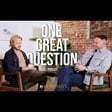
Episode 11: The Cost of Becoming A conversation with Nigel Darius  image

Episode 11: The Cost of Becoming A conversation with Nigel Darius

E11 · One Great Question
Avatar
47 Plays2 months ago

Hey friends, we are back with another episode of One Great Question, and this one went somewhere I didn't expect, which is honestly my favorite kind of conversation.

Nigel Darius is one of those rare humans who is an author, keynote speaker, spoken word artist, and creative director, but more than any of those titles, he's just one of the best hangs you'll ever have. He grew up poor in rural West Virginia, and has since stood on stages in front of thousands, written books with Thomas Nelson, and built a platform on a single stubborn belief: there is hope for humanity.

But the road between those two places? Not a highlight reel. Think nine months without work, busing tables at a Michelin star restaurant, losing friendships, and a genuinely painful reckoning with what he actually believed about himself deep down.

We get into the mirror principle and why you literally cannot obtain what you're not yet aligned with, why psychological safety is the number one driver of healthy culture, what it actually looks like to signal safety to someone who thinks nothing like you, and why the Hebrew word shalom cannot belong to just one person and still mean anything.

Nigel also shares the question a friend asked him over a meal that quietly restructured everything. You'll know it when you hear it.

This is the kind of conversation that reminds you why dialogue still matters. And in 2026, I think we need that reminder more than ever.

New Book: We Say Shalom: 40 Words to Cultivate Curiosity and Connection is available now.

Find Nigel Darius:

Instagram  

Website 

Book 

Recommended
Transcript

Introduction and Connection

00:00:01
Carl Lubbe
Hey friends, welcome back to another episode of One Great Question. And today I'm incredibly pleased to be introducing you to, if you don't already know, the genius that is Nigel.
00:00:13
Carl Lubbe
And Nigel and I have come across each other in various places, probably like most people in Atlanta, I would imagine. It was through my brother, Jerome, because everybody knows Jerome as Dr. Jerome here in town. And it's one of those funny things in my earlier life when I was a musician in my 20s. It was like, oh, people knew me as a musician and then they would meet my brothers. And then I moved to Boston and I come back a couple of years later and it was like, oh, now everybody knew Dr. Jerome and I was Jerome's brother. And it's my favorite transition that I've ever had in life is to go from Carl the musician to Carl
00:00:47
Carl Lubbe
Jerome's brother.

Exploring Nigel's Work

00:00:48
Carl Lubbe
But I came across Nigel. I've come across him in different spaces, first as a speaker, and then I've come to come across his work as a spoken word artist, and then as a writer and an author, and even now coming across his work as a creative director. But more than anything else, it's just a great hang. So Nigel, thanks for being with me today, man.
00:01:09
Nigel Darius
Yeah, I'm really grateful to be here. I appreciate you having me on in the space and I'm really excited to have a conversation with you today. And yeah, more than anything, just be with you as we discussed kind of before we hopped on together.
00:01:19
Carl Lubbe
Yeah.
00:01:21
Nigel Darius
It's always good to see your face, to experience your joy. And you're one of the best question askers and listeners that I've ever met in my life. So I'm very excited to, yeah, as a person that very much enjoys dialogue, I'm i'm pumped to see what we get into today.
00:01:34
Carl Lubbe
Well, it's high praise coming from you. So the podcast is obviously new in this

Introducing Nigel to Children

00:01:40
Carl Lubbe
format. And so we've got three of the same questions that come through the podcast and then lots of other ones that come out. So I would love to know, as the first question here all around Nigel is...
00:01:51
Carl Lubbe
if you were going to introduce yourself to one of my kids, and my kids are now 10 and 12, but for the sake of argument, when they were eight, how would you introduce yourself to my eight-year-old?
00:02:03
Carl Lubbe
If they were like, and who are you?
00:02:03
Nigel Darius
Yeah. that That's great. Well, I would just say that I'm someone that attempts to help people um understand more about who they are through really creative ways of engagement.
00:02:20
Nigel Darius
And so I would imagine that maybe there will be a follow up that says, well, what does that actually mean? And I would say, well, i'll write books um on a myriad of topics. I wouldn't use the word myriad, even though I know that your children are very intelligent and would absolutely and understand and know what myriad meant.
00:02:35
Nigel Darius
And then I would say that I get invited into spaces to speak to large groups of people and small groups of people about things that they may be having challenges with that can help them break through those challenges or understand more about how to solve problems.
00:02:52
Carl Lubbe
Amazing. And so I've been fortunate enough to see you in places where there are thousands of people in the room and then there are dozens of people in the room and you're on stage curating a space, talking to them, setting the intention.
00:02:59
Nigel Darius
Yeah. Yeah.
00:03:04
Carl Lubbe
um I'm fascinated in your journey around that. If the eight year old version of you. were to see Nigel's life now, what would you say that they would be like proud of or would made them go like, wow, wait, you did what?
00:03:19
Carl Lubbe
Or you're doing what?

Reflecting on Life's Journey

00:03:20
Carl Lubbe
What's the thing that might come up for the eight-year-old version of Nigel?
00:03:20
Nigel Darius
Yeah.
00:03:23
Carl Lubbe
Mm-hmm.
00:03:23
Nigel Darius
This is really good. Anytime I'm in spaces with people, they typically ask the question, you know, well, what do you do when you meet them? And I think that in line with who I was when I was eight and now who I am many, many years later, um I think the eight-year-old version would ask me how I'm doing before he asked me what I'm doing. And I would respond and say, I'm doing really well.
00:03:49
Carl Lubbe
Hmm.
00:03:50
Nigel Darius
And I would say that,
00:03:52
Nigel Darius
um so I think that the eight-year-old version of myself would be very elated at the fact that I'm still the same little eight-year-old kid. I'm just way older now.
00:04:03
Carl Lubbe
Hmm. Hmm.
00:04:05
Nigel Darius
So I think that he would be he would be like, oh, that's me. He would be able to identify himself and say like, ah, that laugh never changed. The curiosity never changed. um the The wonder and curiosity that is required to move through the world in difficult environments never changed. And then I think that I would say, yeah, you should know that you're going to do things that are beyond your imagination.
00:04:33
Carl Lubbe
Yeah. Yeah.
00:04:34
Nigel Darius
I would let them know that, you know, we wrote books and are going to continue to write books, that we stand on stages in front of thousands of people and educate people and entertain them too at the same time, that we would get to travel and see the world.
00:04:49
Nigel Darius
Sometimes other people pay for that, you know, as ah as a means to be able to enjoy it.
00:04:52
Carl Lubbe
yeah
00:04:55
Nigel Darius
But I would also say that you're making enough money now and will continue to make enough money to really do whatever you want whenever you want. And um yeah, and I say that like as humbly as I possibly can, but as a a poor eight year old boy from southern you know rural West Virginia, the thought of having enough, just having a little bit of money would be exciting to to him.
00:05:06
Carl Lubbe
Yeah.
00:05:16
Nigel Darius
So yeah, that's what I would say.
00:05:19
Carl Lubbe
Yeah, I mean, having had the same experience of you know poverty in my youth, when I moved to the States and my family made $8,000 a year, one year for a family of six, living in East Tennessee, i have this very vivid memory of going, you know at that point, I probably would have been about 12.
00:05:30
Nigel Darius
Hmm.
00:05:37
Carl Lubbe
And I'd asked my mom, we were you know in this East Tennessee town and like all towns, when you're going down the interstate, you can see a sign from McDonald's. And I remember you know saying to my mom, oh, can we stop at McDonald's?
00:05:46
Nigel Darius
who Yeah.
00:05:48
Carl Lubbe
And she just was like, hey, babe, we just don't have money for that. And I remember in my mind going, hey, when I'm older, I want to be able to make enough money that I can have McDonald's anytime I want.
00:06:00
Nigel Darius
Yeah.
00:06:01
Carl Lubbe
And I mean, obviously there's the opposite side of that. I probably ate a little too much McDonald's trying to prove to the 12 year old version of me that I can afford it.
00:06:07
Nigel Darius
Sure. if
00:06:08
Carl Lubbe
um But yeah it's it's this wild thing now, right? When we come into our 20s and 30s and 40s and we start to like build a life, there is some part of us going, hey, let me let me prove to a younger version of myself that i'm I'm okay.
00:06:22
Nigel Darius
Mm-hmm.
00:06:24
Carl Lubbe
And sometimes it's really beautiful and creates good work.
00:06:24
Nigel Darius
Yeah.
00:06:26
Carl Lubbe
And then sometimes it costs us some things, right? Where we're like, oh, I mean, at one point I got up to 375 pounds. And I think at some point I'm probably trying to prove to the 12-year-old, I can eat anytime I want
00:06:37
Nigel Darius
Yeah.

Overcoming Poverty and Success

00:06:38
Carl Lubbe
to.
00:06:38
Carl Lubbe
And now I eat all the time, you know?
00:06:39
Nigel Darius
Yeah, that's good.
00:06:40
Carl Lubbe
um which Which brings me to another question in kind of your journey, somebody who's now had success. And obviously success has lots of different iterations. And this is one of the things I talk to a lot as somebody who coaches executives is I try and reframe like success is more the first question that you answered from the eight year old version of you. Not like, hey, what's surprising you? Are you proud of? Like, hey, man, how are you doing?
00:07:07
Carl Lubbe
Not how are you living?
00:07:07
Nigel Darius
Yeah. yeah
00:07:09
Carl Lubbe
What you doing, right? And so that level of success is their contentment. Are you enjoying the day? I think is much deeper. And so in my work, a lot of times with executives, I'll i'll dive in and be like, hey, what did you think success was going to be? And what does it cost you?
00:07:25
Carl Lubbe
And the second part of that question is, would you pay the price again, knowing what it's cost you? And so I would love to know from you, everything from the struggle of success to being on a stage, the struggle of pitching books and not getting them to then getting them.
00:07:39
Carl Lubbe
There's like levels of these things all the time, right?
00:07:41
Nigel Darius
Yeah.
00:07:41
Carl Lubbe
And obviously people see an Instagram reel or they see ah a post somewhere about a book launch and they go like, oh, you must be wildly successful.
00:07:47
Nigel Darius
yeah
00:07:49
Carl Lubbe
They don't see the you know, 9,000 hours that led to that moment. And so I'd just be curious from you, what what does it cost you um as you look back at your success and would you pay the bill again?

Personal Cost of Success

00:08:00
Nigel Darius
Yeah, yeah. I think this is this is the question that I think a lot of people have like a lens or framework or like expectation they think through with the question like this to think about like the practical things.
00:08:14
Nigel Darius
But I think I'll like sink on, you know, the soul level for this question. And I think for me, I've been a person who has always been delusionally optimistic.
00:08:19
Carl Lubbe
yeah
00:08:26
Nigel Darius
But optimism and faith really aren't the same thing, right?
00:08:30
Carl Lubbe
Mm-hmm.
00:08:30
Nigel Darius
Like faith requires trust and the belief that an outcome can be what you expect and and and desire for it to be. And for me, I didn't realize how much I would have to change in order to obtain the things that I've been after. And when I say that, there's this concept called the mirror principle that I studied a while back. And it has a lot to do with when you think about like vibrations and frequencies, you get little woo-woo for a second, how it's almost impossible for you to obtain what you're after unless you get on the same frequency as the thing that you're pursuing.
00:09:08
Nigel Darius
And you will repeat and attract the same things that you've had previously or worse if if your belief system is off kilter for what you're asking for.
00:09:08
Carl Lubbe
Mm-hmm.
00:09:19
Nigel Darius
And I think this,
00:09:20
Carl Lubbe
ever If we can pause just two seconds, I hate to interrupt, but for anybody who might have lost us on the woo-woo, I want to help them a little bit and help them understand, like, do we know that this thing, this physical thing here has a frequency?
00:09:22
Nigel Darius
Yeah.
00:09:27
Nigel Darius
yeah
00:09:33
Carl Lubbe
It has a literal atomic vibration. And when I go from an iPhone, you know, whatever, to then an iPhone Max, because it has different size, the atomic connection of that is literally different frequency.
00:09:45
Carl Lubbe
So what you're talking about isn't just, okay, we're in this really hypothetical, you know, space you're going, the physical world around us has a frequency for different things.
00:09:53
Nigel Darius
yes
00:09:55
Carl Lubbe
And for me to hold one bowl

Growth and Alignment

00:09:58
Carl Lubbe
is going to have a different frequency quite literally than a bigger bowl. So when I'm trying to elevate its understanding, What's required of me? And so, sorry, I just wanted to interject real quick in case we'd lost somebody and they're like, hey, let me fast forward through the woo-woo. It's like, no, the whole world around you is a frequency. Just ask your favorite physicist.
00:10:14
Nigel Darius
Listen, I'm so grateful that you interjected because that is amazing context for this.
00:10:17
Carl Lubbe
Yeah.
00:10:20
Nigel Darius
So in the same way that the phones change and the accessibility changes and the possibility changes, it works the same way when it comes to the things that you're pursuing. And for me, I realized that a lot of things that I was praying for and a lot of the things that I was pursuing and the things that I was writing down on my list of aspirations that I do at the beginning of every year,
00:10:39
Nigel Darius
I discovered that I was really on a soul level, not aligned with what I was after when it came to my belief. And I had to change and it required a deep season of humility where I was without a job for about nine months.
00:10:54
Nigel Darius
I had to go work at a restaurant and bus tables and take orders. And now it was a nice restaurant, right? Michelin star, you know. But at the same time, it was wildly different from being in these creative spaces and speaking on stages.
00:11:01
Carl Lubbe
yeah
00:11:06
Nigel Darius
And it was almost as if the opportunities that had been previously presented to me were pulled away briefly so I could see what I really wanted and why. And then after a process of about nine months, I was slowly changed in a very painful way because I desired so deeply to have the things that I once had in a new capacity.
00:11:25
Nigel Darius
But the new capacity had to develop in me first before I could actually obtain the things that I was after. So I think it's cost me, yeah, old ways of thinking, bad habits, patterns that were not conducive to me going in the direction that I desire to go in.
00:11:30
Carl Lubbe
Mm-hmm. Mm-hmm.
00:11:40
Nigel Darius
And it also kept me away from communities that I did not need to be a part of, too. And when I say that, you it is impossible to celebrate and join in on the beauty of receiving that blessing with people that won't celebrate you or people that didn't support you in the process or people that held their applause until the thing actually happened, but they silently believed that it wouldn't.

Reality of Entrepreneurship

00:12:04
Nigel Darius
And so, yeah, it's it's painful to think about, you know, losing family or losing friends or being ostracized by someone else for going after a thing that you deeply believe in and feel called to. And so it's cost me a lot. And I would pay the price again because who I am as I've evolved through this previous framework of thinking to get to this new belief that says, like, no, I am worthy.
00:12:29
Nigel Darius
of these things that I'm obtaining. I do deserve to be in these spaces. I have worked really hard and earned the ability to share the messages that I want to share with the world and create in the capacity that I desire to. And so my output is more helpful and supportive to the audiences that I serve because my belief system and my brain changed en route to the thing.
00:12:50
Carl Lubbe
Yeah. Man, what an incredible way to put that. Because I think, too, in the world in which we live, in which things like entrepreneurship, and founding and startups are now deified.
00:13:02
Carl Lubbe
And it's like, hey, if you're not an entrepreneur, what are you doing with your life? you should Everybody should be making $100,000 a year on two hours a week. And you can just you know build this and do this and be a you know kind of cult of personality.
00:13:15
Nigel Darius
Mm-hmm.
00:13:16
Carl Lubbe
What people don't talk about is anybody who's done that, that you might respect or value the ecosystem that they've created, there was just a metric amount of a metric ton of time in the woodshed.
00:13:29
Carl Lubbe
I actually, i shared something yesterday, a line that came out of a coaching session probably two years ago when somebody was trying to speed stuff up. And they were like, we got to get there faster, faster, which I understand as a founder and a leader that they're going, hey, there's a real press here to make money now, or else this thing will go under.
00:13:47
Carl Lubbe
And I said something that accidentally just shut down the room because there are about 10 of us on the call. And I just said, you can't microwave a steak that you would want to eat.
00:13:51
Nigel Darius
Yeah.
00:13:55
Carl Lubbe
And it's this idea, right? That when you go, hey, you can't eat immediately and nobody around you can eat right now. A lot of the people at the table will be like, I'll just take some instant ramen right now.
00:14:07
Carl Lubbe
And listen, I'm not slamming instant ramen. It's got a place and it's got the thing. But if you've got a vision for a steak and you've gone like, hey, I bought this sous vide and I need to do all this stuff and this thing's gonna take time and it takes care and it we need to evolve in our thinking around this while we give it time to mature and and soak and do the things that it needs to do. And so I just, I'm such a big fan of your philosophy around this and that it goes, I'm okay with losing whatever speed would have gotten me.
00:14:38
Nigel Darius
Yeah, that's true.
00:14:38
Carl Lubbe
And sometimes, you know, I look about this and I audit this in three ways. Any adjustment in mindset will have an adjustment in one of these three things. First is energy.
00:14:49
Carl Lubbe
Like I'm like almost kind of what you're talking about, a frequency, my capability to do a thing. So for people who are thinking about in this in business terms, you want to audit for capacity. So energy or capacity, whichever word works better, you're like, can I actually do the thing that I want to do if I don't pause? Because for those of you who don't know, who may not follow Nigel yet on the socials, which you should, my man can sling some weights.
00:15:12
Carl Lubbe
So he's in there in the gym right there.
00:15:12
Nigel Darius
Yeah.
00:15:14
Carl Lubbe
if i'm And i'm I'm saying, hey, Nigel, let's throw on 45 plates and go hit the bench. First thing you're like, hey, man, we might need to do a little stretch. Maybe start off with I'm like, man, there there are people in this room.
00:15:26
Carl Lubbe
I got to throw on 45s because they're looking at me. And will they leave the room if they don't see me throwing up real big weights on this bench press? Cause I'm a big guy. So shouldn't I be able to do this? And they should on themselves.
00:15:38
Carl Lubbe
Right. And then everybody needs a presence like yours. It goes like, look, man, I'm big, I'm fit. I'm strong. We're to start with 25. We might start with 15. We might start with fives, but we're going to gradually warm up so that when we do the thing it's worth doing, and it's going to build the muscle the right way.
00:15:47
Nigel Darius
Yeah. That's
00:15:52
Carl Lubbe
So that's the first thing is capacity. The second thing that we've got to audit for is time. If this thing stands the test of time, it will take time to make.
00:16:03
Nigel Darius
yeah
00:16:03
Carl Lubbe
So if you want something that's not going to last, well, then you can probably do that quickly. But if I want something worth doing, if I want to do work worth doing, it will require time in order to stand the test of time.
00:16:15
Nigel Darius
good
00:16:16
Carl Lubbe
And then the third one is capital. And this is typically people. Like who are the people who are being drawn to that long-term vision, who want to eat a steak and not have some instant ramen? Who are the people who want to be fit over long distance, not just have a quick show off in the gym? Who are the people who are going, I see the thing that you're building and it's worth congregating around and it will require community and effort and sacrifice.
00:16:38
Carl Lubbe
And I'm willing to cheer you on on day one and be a part of lifting that weight as opposed to waiting until you show up and hope I get a little bit of the shade of your greatness and your glory.
00:16:39
Nigel Darius
Yeah.
00:16:49
Carl Lubbe
And I can sit underneath that and claim some of it for myself.
00:16:51
Nigel Darius
Yeah.

Cultural Contribution and Authenticity

00:16:52
Carl Lubbe
And I'll just show up during the the credits at the end.
00:16:55
Nigel Darius
That's good.
00:16:56
Carl Lubbe
And so I love this.
00:16:56
Nigel Darius
It's a great framework to think through.
00:16:58
Carl Lubbe
Yeah, I love this philosophy of yours in that. It's going, who am I? But one of the things you said to me earlier that is is really sticking with me around this idea of sacrifice and success is...
00:17:12
Carl Lubbe
There are a lot of people right now in the culture who are deciding who they're going to be based on the success. So they're almost trying to play the game, right? So obviously we live in incredibly volatile times.
00:17:20
Nigel Darius
Yeah. Yeah.
00:17:22
Carl Lubbe
Anybody who's listening to this who's a human in 2026 is going, are they going to talk about politics? Are they going to talk about immigration? Are they going talk about religion? Are they going you know, and all of those are just fraught.
00:17:33
Carl Lubbe
with people positioning to what they will and won't say based on the audience that will and will not listen to them and how they can capitalize on it.
00:17:33
Nigel Darius
yeah
00:17:40
Carl Lubbe
For somebody who speaks in front of as many people as you do in as many diverse rooms as you talk in, I would love to know this.
00:17:47
Nigel Darius
yeah
00:17:48
Carl Lubbe
Who is Nigel becoming to the culture?
00:17:51
Nigel Darius
This is good. i think first, I just wanna be a person that signals safety to my audience. And when you think about the development and the building of a platform, you don't do that by yourself.
00:18:04
Nigel Darius
Now you can, you can engineer and manufacture, you can buy thousands of followers and buy bots for engagement, et cetera.
00:18:04
Carl Lubbe
Mm-hmm. Mm-hmm. Mm-hmm.
00:18:10
Nigel Darius
You can build and you can make it look real nice to the point that people actually come to trust you, know you and believe in who you are based on what you manufactured behind the curtain. And, you know, to each their own. That's just not me.
00:18:22
Nigel Darius
So I want signal safety to my audience and let them know that I'm I'm actually like I do this for real. You know, the reason why I get out of bed in the morning, the reason why I create the reason why I write is because like I really do want to help people, one, achieve clarity.
00:18:38
Nigel Darius
in their personal journey. Two, I want them to see themselves as contributors to culture and not just people who critique it and stand by feeling helpless like they don't have anything that they can do.
00:18:48
Carl Lubbe
Mm-hmm. Mm-hmm. Mm-hmm.
00:18:49
Nigel Darius
we think about time, talent and resources, like you can use any of those things to contribute to the culture, but the internet has made it very easy for people to critique instead of contribute. So those those two things. And then I think lastly,
00:19:03
Nigel Darius
I don't want to be a person who profits off of treating people like products. We have come to a place of transactionality in business and transactionality with our friends and transactionality with our community. So we will hide behind like this thinly veiled solidarity, if you will, that says, come to me, trust me, take my ideas, take my opinions, take my advice, let it help you. And then when, you know, some shit pops off politically and people need to know where you stand,
00:19:33
Nigel Darius
Are you OK with the way immigrants are treated?
00:19:33
Carl Lubbe
Mm-hmm. Mm-hmm.
00:19:35
Nigel Darius
Are you OK with people being dehumanized? Are you OK with rhetoric that is prejudice and racist or misogynistic in its essence? Or are you a person of the people?
00:19:46
Nigel Darius
And I'm not doing this to divide, but I think that that honestly sometimes is what objective truth does. Like, where do you stand and how does that impact the people that you claim to serve? And so when I think about who I want to be to culture, I just want to be and continue to aspire to be through the things that I create a person whose authenticity can be felt so that people can know when they come over here, he wants to help me more than he wants my money.
00:20:04
Carl Lubbe
Mm-hmm.
00:20:08
Nigel Darius
He wants to help me more than he wants my engagement. He wants to help me. think and feel so that I can actually act based on what I think and what I feel influenced by thoughts that are helpful and uplifting, things that ultimately help you become a contributor to culture and not just someone who critiques it.
00:20:25
Nigel Darius
So I would i would ideally love to be remembered as a person that used every ounce of energy had and every fiber in his being and every creative piece of ingenuity um to engineer things that helped people on planet earth you know to the maximum degree and i know that that's a big heavy aspiration but it shows up in the small things and i want to continue to do the small things well so that the people i work with and serve feel the things that i desire to give them
00:20:53
Carl Lubbe
Man, that's so good. One of the things that strikes me in what you're talking about, Nigel, is there's a ah couple of different studies, one by Harvard Business Review and the other one by Stanford, where they talked about the number one indication of cultural health in a business. And it's not close. Like if you looked at the top 10 things, it's number one. And then way down here, it's number two of whether or not people will perform well and the culture will rise and you'll be productive and something that can last as a brand.
00:21:24
Carl Lubbe
Number one was psychological safety. And so it's this idea that as leaders, how do you engineer psychological safety for the people around you?
00:21:33
Nigel Darius
Yeah. Mm-hmm.
00:21:33
Carl Lubbe
and so I love your phrase of like, how are we signaling safety that, hey, this is this is a place to be.
00:21:37
Nigel Darius
yeah
00:21:39
Carl Lubbe
So the question that I would ask around that then is it's pretty easy in today's day and age to throw up a flare. You know, people talk about virtue signaling. So that's the bad side of this. But it's also fairly easy around people who think maybe like you do or, you know, in other spectrums, people who think like I do and go, oh, when Nigel says this or if Carl says that, that signals safety. It's saying, hey, here's here's the line. Here's my camp. You can come and be safe in the camp as long as you think and and act and believe like I do.
00:22:09
Carl Lubbe
I think the interesting question now becomes in 2026, how do we signal safety to people who believe differently so that there is a place to to find a moment of common ground and then move towards a preferred future together?
00:22:24
Carl Lubbe
And Carlos Whitaker says it you know this way. He's like, ah you know I don't stand on issues. I i walk with people, I think is I'm paraphrasing. i don't know if that's exactly, but the idea.
00:22:33
Nigel Darius
That's exactly what he says.
00:22:33
Carl Lubbe
Okay, great.
00:22:34
Nigel Darius
That's good. Yeah.
00:22:34
Carl Lubbe
All right. Okay, cool. I don't want to misquote somebody because Carlos is brilliant. So I'd love to know from you, how are you finding ways to signal to people who may be thinking differently than you that they have some safety with you in order to walk a path together towards something preferred? Because again, I'm looking at this from a business corporate leadership space that's going...
00:22:56
Carl Lubbe
You got two people who are on opposite sides who think, hey, we should spend all this money on paid ad. And then somebody else is going, no, we should do everything organic. And now they could draw a line and neither one of them is safe with each other in a meeting because everybody knows what they stand for, which is a stupid business version of, hey, where do I stand on something like ice or how we're spending money or what do we think about, you know, the future of, you know, rights in the the US or, you know, there's 1000 things we could do that idea with.
00:23:10
Nigel Darius
Yeah. Mm-hmm.
00:23:25
Carl Lubbe
But I think if we can make it something as simple as i want to play dodgeball, and somebody else goes, I really want to play kickball. And again, the eight year old versions of us, how would you signal to the other player that they're safe with you in order to discuss whatever is going to happen next?
00:23:43
Nigel Darius
Yeah, that's really good. i think this is a perfect opportunity for me to share that I actually just wrote and will be publishing on the 17th, a book that is going to speak to this.
00:23:49
Carl Lubbe
Yeah, he did. Mm-hmm.
00:23:53
Nigel Darius
It's called We Say Shalom. Shalom being this Hebrew word that has to do with peace that is often not achieved without conflict. And, yeah, I think that we've discussed this at length, but, you know, conflict isn't difficult when you know how to do it well.
00:24:10
Nigel Darius
And I think that it requires honesty from both parties. And it also, you know, says that sometimes we speak different languages, but we do say the same thing. And that's really what the book is about.
00:24:22
Nigel Darius
The concept we say Shalom, it's a collective thing.

Book Discussion: 'We Say Shalom'

00:24:24
Nigel Darius
It's not just I get peace and peace is only for me and my neighbor doesn't get to share in it because Shalom says and it's a linguistic understanding that Shalom is not complete unless two parties who are involved both have peace.
00:24:37
Nigel Darius
And again, it's not ah achieved without conflict. And so.
00:24:41
Carl Lubbe
it The idea is wholeness, right? With Shalom?
00:24:43
Nigel Darius
Yes, yes.
00:24:44
Carl Lubbe
Yeah.
00:24:44
Nigel Darius
Wholeness, peace, the completeness. It's this essentially the garden before the fall, if you will, where everything is put in its in rightful place.
00:24:49
Carl Lubbe
Yeah.
00:24:52
Carl Lubbe
Yeah, because I'm not whole without you.
00:24:52
Nigel Darius
It's.
00:24:54
Carl Lubbe
If I'm okay, but you're not okay, we're not whole.
00:24:54
Nigel Darius
thanks Yes, if it's good for a few and not good for all, then I would argue that it's not good.
00:25:00
Carl Lubbe
Yeah.
00:25:00
Nigel Darius
And so, yes. So curiosity and connection, those two things go hand in hand. So when we have people who are saying things differently, we have an innate responsibility that we oftentimes have to wrestle with ourselves to get to that says, what can I be learning right now from the person I'm experiencing conflict with?
00:25:19
Nigel Darius
And so i have a story in the book where when I was 16, I went to an AA meeting with a friend of mine who was 20 years old because he just needed someone there to support him during the meeting.
00:25:20
Carl Lubbe
Mm-hmm.
00:25:30
Nigel Darius
And very shyly said yes. And I walked in there with all confidence and stood up and said my name and why I was there. And what I learned through being exposed to AA is that they actually have this concept called you spot it, you got it.
00:25:44
Nigel Darius
And it's a really unique principle that says that if you're frustrated and something you're experiencing through another person, it's typically your conscious or your mind signaling to you that you either used to be like that and you're experiencing a old version of yourself.
00:25:44
Carl Lubbe
you
00:25:58
Nigel Darius
Or there's either something stirring inside of you that knows that you you share in some similarity with the thing that you're actually frustrated with. So that always spoke to me when it came to the power of words, because I think in this time that we live in where like sharp edges and reflexive thinking, the reactive nature of comment sections and, you know,
00:26:24
Nigel Darius
That is almost rewarded more than empathy and patience and kindness and slowness and gentleness is.
00:26:27
Carl Lubbe
Mm-hmm. Mm-hmm. Mm-hmm.
00:26:32
Nigel Darius
And so what I would say is that in order to signal safety to people who we're on opposite pages with, we have to start by looking with, okay, well, what do we actually have in common?
00:26:43
Nigel Darius
And you can typically, if you have a hard time identifying something you have in common with the person that you're you're in con conflict with a big opinion on, is that, wow, this person is a human being having a very real palpable experience in the same way that I am.
00:26:57
Nigel Darius
And you have to keep in mind that people grow the way that they're treated.
00:26:57
Carl Lubbe
Yeah. Mm-hmm.
00:27:01
Nigel Darius
So who's to say that they haven't arrived at the ideology that they support and stand on because of the way they were discriminated against or the way that they were mishandled or, you know, ah outburst came from years of being unheard and the whispers that they once whispered turned into shouts over time. And now they support what they support because of how they were treated. You have an opportunity to potentially turn that treatment that they've experienced previously in the opposite direction through how you engage with them.
00:27:28
Nigel Darius
And people I've learned, specifically as I work in these workshops with people and teams, and even, you know, have conversations with people when I get off stage or in DM with people who engage with my content, it's that curiosity and vulnerability go hand in hand with each other.
00:27:28
Carl Lubbe
Mm-hmm.
00:27:45
Nigel Darius
So if a person stands opposite of you and they're very adamant about pushing the thing that they support and you don't fight back against them first, you just stop and say, can you help me understand how you've arrived?
00:27:58
Nigel Darius
The shoulders drop a little bit. The blood pressure goes down. The heartbeat decreases and that person feels seen and you're giving them an opportunity to feel heard, which may be.
00:28:04
Carl Lubbe
Yep. Yep.
00:28:12
Nigel Darius
your body and your mind are like, they don't actually deserve that because this is a really aggressive stance. You have to overcome what you're experiencing bodily, but also what you're experiencing mentally and emotionally, which is really, really hard to do. But if you're able to stop yourself, if you're able to pause first and be patient with the person, you can see them, invite them to share so that they feel heard. And then out of your you know due diligence to to be the person to take the first step, you can connect with them on a level of vulnerability that might lead to an actual solution instead of continuing to perpetuate the problem.
00:28:44
Carl Lubbe
Yeah. And our our mutual friend, again, referencing here, Dr. Jerome would talk about the first person you have to signal safety to is yourself. And I didn't actually know this until very recently, but Jerome shared with me, like one of the biggest signals of safety to a human mind is touch.
00:29:04
Carl Lubbe
And so as we talk about this, a lot of people that you might you know think about anybody right now that you are diametrically opposed with on a political thought. So you're like, OK, I've got that person in my mind. i would vote this way. They'd vote that way. They I would say this is the truth. They would say that is the truth.
00:29:18
Carl Lubbe
And the question then becomes to your your idea of like, when did they lose that curiosity? When did they lose that vulnerability?
00:29:25
Nigel Darius
Mm-hmm.
00:29:26
Carl Lubbe
Jerome would probably tell you at some point they lost having kind of like safe touch, like where they felt safe and they had to take control and be like, I will take a stand. or they've got somebody in their world who is like very dominant. And they're like, oh, that's where safety is. I'll follow that way of thinking.
00:29:42
Carl Lubbe
And so he's like, one of the quickest ways when you feel your blood, elev your blood pressure elevating, you're getting anxious, you're feeling combative with another person is just you put your hand on your chest, you'll see Jerome does it all the time and you just rubbing a little circle and it's signaling to your neurochemistry.
00:29:57
Carl Lubbe
i would never do this if I was under actual physical attack.
00:30:01
Nigel Darius
Yeah. Yeah. Yeah.
00:30:02
Carl Lubbe
So in this moment, I'm safe. i'm I'm okay. And so even when I'm coaching sometimes and I feel like the the room is getting heated, I'll do one of these or I'll kind of do like a little, you know, rub my, and it just is de-escalating a little bit because I'm supposed to be as the consultant, as the executive coach.
00:30:16
Nigel Darius
yeah
00:30:17
Carl Lubbe
I'm the voice of reason, right?
00:30:17
Nigel Darius
yeah
00:30:18
Carl Lubbe
And I'm finding myself getting, I'll be like, oh, I'm hot too about that.
00:30:21
Nigel Darius
yeah
00:30:22
Carl Lubbe
And and so once you signal that safety to yourself, then you are able now from a place of centeredness to do what you're talking about, which is how do I think about that other person? How do I build empathy? And so our framework around this at curiosity is there's three parts.
00:30:38
Carl Lubbe
And first, acknowledge their difficulty. And so it's this idea of, okay, if I was sitting here, you and I as an immigrant, you as a you know successful black man, and we were zoomed into a Klan meeting, and they're like, okay, neither one of us is safe.
00:30:54
Nigel Darius
Yeah.
00:30:56
Carl Lubbe
I'm an immigrant.
00:30:56
Nigel Darius
this is
00:30:56
Carl Lubbe
They don't like what I'm to think about. You're black man. You're the hell. sure as hell is not safe. And we're you're going, hold on, Carl. So how are we signaling safety? It's like, well, could I get to the place where I am acknowledging what was difficult for this person.
00:31:11
Carl Lubbe
And I find myself, because you being a public speaker, you know one of the first things you were probably you know heard as ah as a trick from the 60s and 70s is, what do you do with the audience if you're scared?
00:31:21
Carl Lubbe
You imagine them naked.
00:31:21
Nigel Darius
Hmm. Naked.
00:31:24
Carl Lubbe
By the way, I think that's the weirdest piece of advice ever. be like, man,
00:31:26
Nigel Darius
Freaky ass piece of advice. Who, why, what, what is the point?
00:31:31
Carl Lubbe
why? Why are we doing this? What pervert was like, hey, I'm going to try and get the whole world to imagine everybody naked.
00:31:37
Nigel Darius
Yeah. Just come on.
00:31:39
Carl Lubbe
i've I've switched that in my mind. What I do is I try to imagine the eight-year-old version of this person before they experience trauma.
00:31:47
Nigel Darius
Yeah.
00:31:47
Carl Lubbe
They don't have any worldview that is like interesting or complex or combative. They just want to play. They're hoping they walk outside and it's the middle of summer and there's eight friends in their neighborhood who they can go play kickball with.
00:31:53
Nigel Darius
Yeah.
00:31:59
Nigel Darius
Yeah, yeah, yeah.
00:32:01
Carl Lubbe
and And I would imagine a Klan member this way, like, who are you at eight before this happened, before something broke in your world? And at that point, I can acknowledge difficulty.
00:32:08
Nigel Darius
Yeah.
00:32:10
Carl Lubbe
You, like me, like every human on the planet, have experienced some sort of trauma. I wonder what's difficult in your world as a byproduct of that.
00:32:14
Nigel Darius
Mm-hmm.
00:32:17
Nigel Darius
Yeah.
00:32:17
Carl Lubbe
You don't feel safe. So acknowledging the difficulty. Second thing is we affirm the effort. And this is, you know, affirm A-F-F-I-R-M, the effort because I speak weirdly E-F-F-O-R-T, affirm the effort.
00:32:30
Carl Lubbe
I have to say these.
00:32:31
Nigel Darius
There is. Mm-hmm.
00:32:32
Carl Lubbe
There we go. We finally got there. um And in this place, what I'm doing is going, you've done something with great intensity and urgency and personal costs, and it may not have produced the results that I would have wanted.
00:32:46
Carl Lubbe
But you've gotten up at 5 a.m. and done a hard thing. you've You've fed your kids. You've gone and gotten a job. You've worked a job you didn't want. You've put in effort somewhere so I can see there's personal agency. And I could affirm that. Like, I see, Klansman, that you're a really hard worker.
00:33:03
Carl Lubbe
Like you're showing up to work and doing a thing. And I can acknowledge that without excusing the outcome.
00:33:06
Nigel Darius
Yeah.
00:33:07
Carl Lubbe
And this is, again, I think where we get things crossed up is we always want to praise outcome as opposed to affirming input or effort. And the more we do that, it's now we don't have the dissonance, which I'm sure you also experience is well, hey, Carl, if you give this person any sort of credit, you're acknowledging and affirming and standing by what they believe or the outcome they're trying to create in the world. and I'm like, no, I'm not.
00:33:31
Carl Lubbe
I'm only affirming that there is some input that is worth redeeming. And the moment we can do those for first two things, that's all the empathetic EQ bridge. And then the last thing comes to your brilliant point is now I go, so what would look like a win for you?
00:33:47
Carl Lubbe
Like moving forward, you're yelling this rhetoric, you've taken this hard stance. What does the world look like if if everything works out for you? And typically what I find, and I'd be curious about what you found, is they're talking about their kids.
00:34:02
Carl Lubbe
They're talking about food. They're talking about not being scared in their own home. They're talking about like, what does a world exist in which I'm seen and cared for? and i'm like, oh, me too.
00:34:11
Nigel Darius
Yeah. Yeah.
00:34:12
Carl Lubbe
Your narrative just sounds wildly different around those things. And then it comes to your point is like, if it's good for one but not good for all, is it actually good? And that's where we can then ask the question, because hopefully if we've built enough personal capital with this person, We're going, hey, I'm not trying to fight that worldview.
00:34:22
Nigel Darius
yeah
00:34:31
Carl Lubbe
I actually want the same thing. But is there a world in which you live where somebody has to die for you to live? did Somebody have to lose for you to get the win? Because that's zero-sum thinking, and I don't think it works.
00:34:44
Nigel Darius
Yeah, that's really good. So real quick before we jump into kind of our next part, I actually have a unique relationship with the clan.
00:34:53
Carl Lubbe
Okay, tell me about this.
00:34:54
Nigel Darius
Okay, so I say that jokingly because, you know, one of my favorite authors says the best way into an add adult conversation is through childlike humor.
00:34:55
Carl Lubbe
Yeah. Yeah.
00:35:02
Nigel Darius
And I think that that's just true.
00:35:03
Carl Lubbe
Yeah.
00:35:04
Nigel Darius
And so my mom, she is white, she's Native American, and she's also like her dad was light skinned black. And my dad, he is as black as your you know iPhone screen whenever you press the off button. Now I'm here, caramel macchiato, somewhere in the middle.
00:35:19
Nigel Darius
And we grew up in southern West Virginia, very white, you know very few people of different ethnicities or races. And we were just, yeah, a a very small family in this space that just was not built or designed or really accepting of us. And almost being mixed was a crime. Having like an interracial relationship was very unpopular in the late 80s, early 90s when my mom and my dad met. But my mom, one of her best friends from high school,
00:35:45
Nigel Darius
Her dad was a war veteran and he when I met him, i would say I was probably around four or five years old and my mom was very young.
00:35:54
Carl Lubbe
okay
00:35:55
Nigel Darius
She was probably only 23 or 24 when we had first really been introduced introduced to this family and been spent a lot of time around them. Her best friend from high school. This was her dad. And it wasn't until a decade almost after we had met and spent time around this family that my mom came to the grandfather and the grandfather came to my mom and he always looked at her like she was one of his kids.
00:36:17
Nigel Darius
And he came to love us like very deeply and dearly. He was like, man, these babies might as well be my grandbabies. But what he didn't tell her and what she didn't know was that he actually used to be a member of the Klan.

Transformation Through Love

00:36:30
Nigel Darius
And she didn't tell me this story until two weeks ago. We were on the phone talking. He's he's now passed. And she said that he came to her in tears one night. and was just like, hey, can we talk for a second?
00:36:42
Nigel Darius
And they went you know back into the living room and they sat down and they just kind of they sat and they talked and he said, I wanna show you something. So he took her into the bedroom and he opened up this big trunk and he showed her all of his former memorabilia from his involvement in the clan.
00:36:58
Carl Lubbe
Mm-hmm.
00:37:00
Nigel Darius
And he said, it was through my relationship with you and you allowing me access to love your grand, baby your babies in the way that they were mine. I have, I've had to repent in my heart and my mind and realize that I have had this damaging part of my past and history.
00:37:16
Nigel Darius
And because of the exposure that you brought these children around, I've fallen so deeply in love with who you are and who they are just as little babies, that it has completely changed the way that I see the world. And it's made me repent of my very dark and damaging past. Like, think about that. Like insane.
00:37:35
Carl Lubbe
Oh, insane. I mean, stunning. I've got tears in my eyes thinking about how how many lives have changed because the bravery of your mom to allow those spaces to happen.
00:37:46
Nigel Darius
Unbelievable, man.
00:37:46
Carl Lubbe
Right.
00:37:47
Nigel Darius
So, yeah.
00:37:48
Carl Lubbe
It also, you know, i'm I'm a kid, and so I think about things in like the simplest terms possible. I think about this as there's constantly the dialogue between is it invitation or challenge? Right.
00:38:01
Nigel Darius
Mm-hmm.
00:38:01
Carl Lubbe
It's like, hey, can everybody just be welcome and we figure it out? Or is it like, no, no, no, this person has to understand what they're doing is wrong. And I like to think of it almost like in a ah five to one ratio.
00:38:12
Nigel Darius
Yeah.
00:38:12
Carl Lubbe
For somebody to let me ah even offer an ounce of challenge, I need to give them five ounces of invitation.
00:38:18
Nigel Darius
Mm-hmm.
00:38:19
Carl Lubbe
And your story is like one hundredfold that like be with these grandbabies, let them be yours. Like the amount of invitation is almost if you're looking at from a third party, just going, hey, what end result is going to play out here you know from a a ah critical analysis, you're like, that's an insane amount of access.
00:38:37
Carl Lubbe
That's an insane amount and of invitation, hoping this person would almost organically receive the challenge.
00:38:37
Nigel Darius
that
00:38:43
Carl Lubbe
Because that's the beauty of this is the challenge was caught not taught. It was this thing of I'm in the environment and I feel everything that I know is wrong because I see something completely to the counter of what I've been taught, what I've understood, you know, critically in my brain is not now what I'm feeling in my heart and in my body.
00:38:49
Nigel Darius
It's good,
00:39:03
Carl Lubbe
And what what a beautiful invitation in that space.
00:39:07
Nigel Darius
good man
00:39:08
Carl Lubbe
That's so good. So this brings us to, you know, really the the last space that ah ah or the question I'd love to ask. So we've talked about, you know, what would the eight-year-old be excited about in your world? And then also what does success cost you? The last question that I love to ask anybody around this conversation is, as you as you look now, kind of, you know, the last couple of decades of your world,
00:39:32
Carl Lubbe
I have the premise coming out and you know in my book, and it's kind of the you know name of this podcast, One Great Question. And so is if you look at your world, what is a question that changed everything?
00:39:43
Carl Lubbe
And so maybe somebody asked this quietly or maybe not so quietly in your life. And you're like, oh, actually, as I look back now with hindsight, that question changed the trajectory of my life.
00:39:54
Nigel Darius
Yeah. You talk about one great question. If that's not one great question, I don't, I don't know what is my brain is kind of doing this like buckshot thing where it's going to like a million different directions, trying to like think through.
00:40:03
Carl Lubbe
Yeah.
00:40:07
Carl Lubbe
And the beauty of this is it's kind of like a Rorschach test, right? There's no right answer. It's like, oh, where did my brain gravitate towards?
00:40:11
Nigel Darius
Yeah.
00:40:13
Carl Lubbe
And it might be something a week ago. It might be something 20 years ago and anything in between.
00:40:17
Nigel Darius
Yeah, so i actually i had a conversation with a person about three years ago, and this person is pretty well known around Atlanta and a number of different communities and respected. and we just sat down, we sat at the Flying Biscuit in kind of like the Candler Park area and we just chatted, just talking life and work and love and business and all the different things.
00:40:34
Carl Lubbe
Uh-huh.
00:40:38
Nigel Darius
And i asked him because he was making such a big transition from doing you know this kind of consulting work to more entrepreneurship without the consulting. And I was like,
00:40:50
Nigel Darius
This this dude is deeply convicted in the direction that he's going in. And I just asked him, I said, how do you walk away from. The guarantee.
00:41:02
Nigel Darius
Of finances and stability and benefits to go and launch your own thing. And he said, I have a cousin. And he said, my cousin makes about four million dollars a year.
00:41:16
Carl Lubbe
That's a nice cousin to have.
00:41:18
Nigel Darius
And. He said, respectfully, this cousin is, you know, not the highest grade of weed in a dispensary, if you know what I mean. This this cousin is is, yeah, just an ordinary person.
00:41:26
Carl Lubbe
Mm-hmm. Mm-hmm.
00:41:32
Nigel Darius
But they have found their lane and they're they're really driving their lane and ah at at a pace that is healthy, healthy enough and he said i had to ask myself the question well how much money do i want to make like what do what do i think i can do and he didn't do it through this materialistic lens of living some like wild luxury lifestyle but he was like i think that i have i have put a lid on my capability As a person in the professional workspace and industries that I exist in, he said, and I think that might be the thing keeping me from building and expanding and dreaming through these ideas that I have.
00:42:11
Nigel Darius
He said, so as an entrepreneur, I'm now asking myself, what do I need to do to have a $1 million dollar year? And he asked me, how much money do you want make? And, you know, zealously, a person in that conversation, not thinking anything about that before the conversation started, wants to be like, well, I can make a million. You know what mean? But I was just like, you know, i had a number in mind and I said the number. And it was a couple weeks later I went and I wish I had it handy in here.
00:42:39
Nigel Darius
I went home and I wrote down six things that I wanted.
00:42:43
Carl Lubbe
Mm-hmm.
00:42:43
Nigel Darius
It was a specific job title, making a specific amount of money. I said that I wanted to do at least one brand deal and I wrote down brands that I wanted to partner with for the creation of content. I said I wanted a publishing deal with a specific number for the amount of money I would make on that advance.
00:43:00
Nigel Darius
I said I wanted to do consistent business in New York paid for. And then, ah yeah I wanted an affordable place to live, not not paying a ridiculous price for rent. And when I tell you as of a week ago, everything on that list from three years ago has now happened and come to pass.
00:43:19
Carl Lubbe
come on man hmm
00:43:20
Nigel Darius
Again, it's the changing of belief. It's being challenged to think in a new direction. It's having conversations with people in my community. It's this big process of discovery. And i even though it could have went in a million different directions, I genuinely believe that that conversation did something to me professionally. It made me say, oh my gosh,
00:43:38
Nigel Darius
I have more ability to to do consultant retainers for these organizations that I

Goal Setting and Growth

00:43:43
Nigel Darius
work with. I have the capacity to find an agent and pitch a book so I don't have to keep doing independent publishing. It's happening right now today.
00:43:52
Nigel Darius
If I pivot a couple of these keynotes and make them oriented towards new audiences to diversify what I'm offering, I can have new and bigger opportunities to step on stages and share these messages with the world and be paid well to do it.
00:44:06
Nigel Darius
If I pivot and tailor my content in a way that is more palatable for a grand audience and not just the people that I serve, maybe a brand deal can come about. And all of these things have happened.
00:44:18
Carl Lubbe
Man, bro, I'm just celebrating that success of the one great question changing something in your world.
00:44:22
Nigel Darius
Thank you. Thank you, man. Yeah.
00:44:24
Carl Lubbe
Man, because I will say, you know, full transparency, you and I have had a couple of lunches where I'm like, all right, man, how do we how do we engineer some things in in you know in your best interest and and to be here in this space and go, man, the fruition of that question from this other person yielding this kind of, you know, return on investment is so exciting.
00:44:33
Nigel Darius
No, literally.
00:44:46
Nigel Darius
It's rich, man.
00:44:47
Carl Lubbe
Yeah.
00:44:48
Nigel Darius
It's absolutely rich.
00:44:50
Carl Lubbe
So one of the things going ask you to do when we're done is, you know, if you get to ask the next guest a question, this is kind of borrowed from Stephen Bartlett and the diary of the CEO.
00:45:00
Carl Lubbe
They do this thing where it's like you get to ask them a question. So you don't have to put that on here, but I'm going ask you off screen afterwards to write down a question for somebody else.
00:45:05
Nigel Darius
Yeah.
00:45:09
Carl Lubbe
For all of the people who are hearing this and going, okay, this is super valuable. Love Nigel's whole vibe. We've got a company. We want to get him to have a chat. We want to order some books. We want to... What's the best way for somebody hearing about you now and going, I want engage?
00:45:24
Nigel Darius
yeah yeah so all things nigel darius so n-i-g-e-l-d-a-r-i-u-s nigeldarius.com instagram is at nigel darius tick tock is at nigel darius everything is just my name um that's yeah that's the best way to uh to stay engaged because i'm doing frequent updates on places i'll be popping up cities that i'm visiting you know things content related that i'm producing and publishing And then always down to connect and have a coffee and just have a conversation and those things typically go somewhere.
00:45:24
Carl Lubbe
How do they do that?
00:45:38
Carl Lubbe
Lockdown.
00:45:55
Nigel Darius
So yeah, if you wanna connect or have a conversation or potentially do some business together, I can be reached on all those platforms.
00:45:56
Carl Lubbe
Yeah.
00:46:02
Carl Lubbe
Amazing. Amazing. And so where do they get the book?
00:46:06
Nigel Darius
Yes. So it's available at most retailers, I would say, almost all retailers. Amazon is the most quick, approachable, probably preferred method of purchase.
00:46:14
Carl Lubbe
Yeah.
00:46:15
Nigel Darius
And it is titled We Say Shalom, 40 Words That Cultivate Curiosity and Build Connection. So um That comes out next week, February 17th. So we are just a few days out.
00:46:27
Nigel Darius
And yeah, this book is for everybody. It really is. If you're a person who wants to have some stronger moral principles and learn about how as a culture we've lowered the bar of moral reasoning and now need incentive to be good to and consider and care for our neighbor.
00:46:41
Nigel Darius
this book is for you.
00:46:42
Carl Lubbe
Mm-hmm.
00:46:42
Nigel Darius
If you're a person who doesn't necessarily like believe or find yourself having a relationship with God, but you're like spiritually curious and you want to hear about history and culture and the intersection between secular life and spiritual life, this book is for you.
00:46:57
Nigel Darius
If you're a person that needs some inner peace, but you don't know how to arrive there because you just don't have the tools and you realize that's affecting your ability to connect with your neighbor, this book is for you. So yeah, it's for everybody.
00:47:08
Nigel Darius
And yeah, that's that's what I would say.
00:47:11
Carl Lubbe
Oh, man. Well, I know that it is well written because the things you say are well said. And I cannot recommend the book more highly than I do right now. Just go out and grab that when that comes out because it will be good for you.
00:47:23
Carl Lubbe
And like Nigel was saying, it really is a book for everybody because even if you're just somebody who enjoys history and understanding language, it's just a fun read and understanding.
00:47:33
Carl Lubbe
Hold on. How are all these different things interconnected? And what does that mean to me? And so I recommend everybody go out and grab a copy.
00:47:37
Nigel Darius
Yeah.
00:47:40
Carl Lubbe
But
00:47:40
Nigel Darius
Amazing.
00:47:41
Carl Lubbe
More than anything, Nigel, you're just one of the best hangs. I'm so incredibly privileged that you would say yes to coming on the podcast. So thanks for your time.
00:47:48
Nigel Darius
Thank you, brother. This was great.
00:47:49
Carl Lubbe
Yeah. Yeah, man. I'll catch you next time.
00:47:51
Nigel Darius
All right, sounds good.
00:47:53
Carl Lubbe
Cheers.