Transcript
Speaker: We are not long remembered. Stop wasting time in terms of should be vulnerable or not? Yes, be vulnerable. We're gonna face loss. That's it's the way this world works. We're gonna face loss. And so be vulnerable. Let yourself love.
Speaker: I'm Jeremy. And I'm Tyler. Welcome to Good Pain, where we talk about life's true intensities without pretending they're easy to solve. What if the things we're told to fix, optimize, or get over are actually where the real wisdom lives?
Speaker: Each week we gather for the kind of honest conversations you desire to be a part of more often about the relentless demands, the unexpected grief, the quiet victories, and everything between. Because maybe, just maybe, the answer isn't to eliminate the hard stuff, it's to find the good in it. Welcome to the conversation.
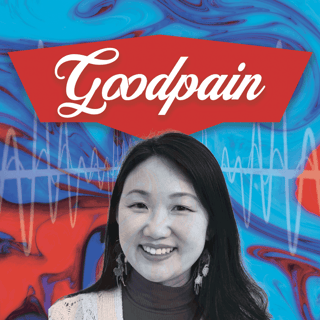
Speaker: Our guest today is Robin Walser. She is a clinical psychologist, an author, and an internationally recognized trainer in acceptance and commitment therapy, which is where I met her during a training at the beginning of 2026, where we had a room full of helpers, therapists,
Speaker: of all sorts psychologists psychiatrists who were there to learn from robin as well as some of her peers she's often described as a clinician's clinician for her deep emphasis on therapeutic presence and connection robin is the author and co-author of several influential act books including the heart of act where she invites therapists to move beyond technique into a more heartfelt process-based and relational way of working she treats therapy as a shared human experience rather than a set of tools and when she was on stage demonstrating some of the ways she works with clients it was illuminating to just see how much she connects with people on the ground level sometimes literally in recent years robin has been reflecting on questions of feminism masculinity and the impacts of cultural narratives on our sense of self intimacy and vulnerability especially in the context of trauma and moral injury, which is what we end up discussing a fair amount here in our discussion today.
Speaker: She invites a more nuanced, inclusive conversation about gender, one that honors pain without vilifying whole groups, and that makes space for men and women alike to live with greater authenticity, responsibility, and heart. I hope you enjoy the conversation. This is my discussion with Robin.
Speaker: I grew up in a family where I had three brothers and no sisters. So it was, you know, mom, dad, and three brothers until age 14 when my parents divorced.
Speaker: And so there was a lot of, you know, masculine energy, especially from my father who quite patriarchal, um very dominant and honestly was violent at, at times, controlling. And so, um,
Speaker: you know Watching my mom sort of go through some of the things that she went through in those circumstances was really hard and at times traumatizing. ah But one of the things that it did, even at a very young age, like I can remember being...
Speaker: you know, eight, nine, 10, it's hard to remember before that, but very young, having a sense that it was wrong, like not really knowing much about the world, being pretty innocent, but is this is not okay. There's something not okay about this. And and so as i got older, my mom and I would do things like go on walks in the morning together and we would chat and she would say things to me like, you know,
Speaker: you can do whatever you want. And stupid i will confess that she also said, but whatever you do, don't get married. but Right. that But it was, it was, she was coming from a certain context and I understand that context and and why she felt cautious and wanted something ah for me.
Speaker: And um so and that's sort of the, you know, some of the things that, that shaped me was this encouragement to, you know, go and do and, you know, be a doctor, be ah be whatever you want to be.
Speaker: and um, watching her struggle and suffer, especially after the, when once they were divorced, she, uh, you know, had to raise four kids basically on her own.
Speaker: And so she worked multiple jobs and, you know, it's very, very, um, uh, persistent in making sure that us kids were taken care of.
Speaker: You mentioned that in this this form of your relationship, this expression of going on walks with her, your mom gives you this, encourages you to dream big.
Speaker: And then in that moment, I'm gonna try to avoid using our therapy speak, our psychology speak, but I think i think this is important is is that, and then she followed it up with, but don't get married.
Speaker: yeah Reflective of this rules governed behavior that when you start talking about that expansiveness, that creativity, that being able to imagine, and not being constrained by that. Your mom is reflecting also at that moment the rule that has crept in for her to bound her in and and and limit because she feels limited and that she's giving that to you as a means of almost legacy to say this is how I must protect myself, this is how I would have protected myself, how I would have secured my own safety.
Speaker: And I want you to have that. And yet that kind of rules, government behavior is often of a facet of the structure that says follow this rule and you will be safe. I don't think she didn't truly want me to ever get married, right? Like she wanted she wanted me to be happy and she attended my wedding. I did get married to another party.
Speaker: But I could, even as a rule, I could see why she was saying it to me, right? it Like it didn't emerge out of something, just as you're saying, like emerged out of a system that just wasn't very kind to her individually.
Speaker: and Nor to us to us kids, right? It's, you know, a kind of ownership that, she wanted me to be free from. and so i hear the rule and I hear what you're saying, that the rules are, that are created inside these systems often are part of the problem, right? That they create spaces where freedom or ability to choose gets lessened, right? Like don't get married. It's like, well, what if I want to do that, right? Like it, it can disappear in that space. And yeah, I,
Speaker: You know, how do we get out of that? where we We're rule-making creatures, like we do this constantly, and we need rules. You know, and the rules are healthy for us, but but what kind of what kind of rules can we have that are about safety and protection and that keep us healthy and vital and free? And um ah what rules do we need to let go of and really examine and say, what are those rules doing to us? What are they creating?
Speaker: You know, where is the power imbalance such that the rules are diminishing folks? And so I think that's a very hard thing to do. And I think people have been working at it for so long.
Speaker: And what you see is these drastic swings, right? Like people go out and to don't and never and ah as a way to kind of get the pendulum to come back into the right space. But we just sort of swing back and forth. and We're in interesting times right now, right? With with where we're at in this idea of what's the rule and how do you how do you move forward inside of a system that tends to be more patriarchal and You know, it's not an easy thing. Like, how much do you fight that? How much do you, and is the fighting itself even part of the, but you know, just like, how do you manage this whole system?
Speaker: Yeah. So you were kind enough to let me do us a slight diversion there. But what you just said is these are big questions that you, that sounds like the unfolding of some of what you experienced when you first said is just like, I had this inkling, this is wrong.
Speaker: This is wrong. So, so from that, then How did you get from the, there's something wrong here to start exploring these types of questions? What happened then for you um as you started to create distance from that family of origin? Well, so um ah my mother passed in 2008 and I miss her dearly. she She and I had a lovely relationship. I miss her dearly. um And I never really, I tried to cultivate a relationship with my father.
Speaker: it was sort of on and off, and ah he passed just this last year. and So just more context is that I didn't really push away from my family. I stayed connected to all of them. And one of my brothers passed away, unfortunately, at a very young age, 47.
Speaker: And then my other two younger brothers died. The three of us are very close, but we have very different lives, right? And so i have stayed connected to the family and inside of that. We've parted in terms of maybe how we think about things, how we how we live, but have still managed to get together and have lovely gatherings and and times together. But I think in and there's some ways in which we interact with each other now where we tread carefully.
Speaker: in some ways. in their both Both my brothers are police officers and they they um ah live inside of a world where every day they get to see some of the the worst things that humans can do to each other, right? It can sort of jade you and it can feed the idea of you know, no vulnerability, no, you know, you got to keep people safe in a certain way. And some of that's manifested through getting in control and getting in control quickly.
Speaker: And I get it. Like people's lives are on the line and you have to, you know, you have to take care of things very fast to stay safe. And as a psychotherapist, like I'm in the room opening people up and, you know,
Speaker: let the vulnerability in, let's take a look at it, let's see what's happening here. And so you can feel sort of that the distance in those two worlds. And sometimes we we joke around about it and you the way you know we laugh about what we each do right ah ah in our professions.
Speaker: um And so we're we're very close and i try to have a lot of understanding for the you know, what it means to have a kind of masculinity and what it means to to um keep things safe and the messages that come behind that.
Speaker: And so i um i went to school at 17. I went to undergraduate school. So was very fortunate. of um A friend's mother, asked me, I was living with them just temporarily because my mom and other, my two brothers had moved to another ah city and I stayed to finish high school. And she said, well, how are you going to get into, what are you going to do for school? And I said, I don't, you know, we were quite poor because of the circumstances. I'm like, I'm not going to school.
Speaker: What are you talking about? And she said, oh yes, you are. right and she helped me fill out some applications for scholarships. I got some scholarships and was able to go to school. And He's always sort of interested in psychology. And you know, the old tale that therapists say to each other is like, you go into psychology because of your history.
Speaker: it It didn't have that same quality to me. um i worked in a behavioral lab and that's how I supported myself. And so just kind of Got interested in that territory and had always had an interest in trauma. And that's probably is based on some of my history. Right.
Speaker: And just moved right into the to the field of just continued my schooling and moved right into working with trauma look my entire career, basically.
Speaker: You had already. set the possibility of you going to school to the side and yet you had your mom who held out this possibility and it's this picture of the limits of your own imagination at 17 and your mom continuing to say that those limits are are not real what what was that experience like for you Besides the logistics of her walking you through and getting applications filled out, how have you synthesized that view of my mom was the standard bearer for holding out my dreams when I had already closed them down? Yeah. oh
Speaker: You know, it's really interesting. ah It brings up another ah layer of what influences our behavior. But, you know, given that my mom was working multiple jobs and you know, barely paying the bills and paycheck to paycheck kind of thing, and and sometimes needing to, you know, rely on welfare and those kinds of things that um it just felt unattainable.
Speaker: So it's not that I didn't dream of it. I still wanted it. I just couldn't but imagine how I could do it without the money. Right. So it just seemed like it wasn't for me.
Speaker: because I couldn't imagine figuring out how to pay for something like that. And that might've just been a 17 year old brain, you know, making $4 an hour at the grocery store. Like it's not going to happen. Right. And i hadn't thought of applying for scholarships. I really, it just hadn't occurred to me. I didn't live in the kind of space where it's like, here's something you can try or do.
Speaker: um And so, yeah, it, Like it's, it was like a ah lovely dream and I wanted to hang on to it, but I couldn't figure out how to, how to make it unfold financially until this friend of mine, mom, her mom came to me and said, you do this. Right.
Speaker: But they were from a family where like everybody goes to school and everybody gets their education. And there's no doubt that that's what you're going to do. And my mom was how they had that dream, but.
Speaker: She too couldn't imagine the finances for it because she was always scrambling for money. As soon as I found a way, i was all in, right? And, you know, doing the things that were about and not only entertaining the dream, but doing things to bring the dream to life.
Speaker: and And then spent a really long time his school rate in school, way longer than I anticipated. Yeah. You do go to school for a very long time. You start studying trauma. And then um some of these things we've been exploring um ah kind of through the lens of your story,
Speaker: um Recently, you mentioned that you've started asking questions specifically about what it means to at least be on that side of the the feminine energy or or whatever you want to describe as what we're what that is and what you're exploring.
Speaker: how did you How did you get here to to starting to say, like this worth looking into and getting curious about a little bit more? Well, you know some of that has to do a little bit with a fallout of trauma, but i'll I'll expand a little bit. you know When people have you know really awful traumas, violence, accidents,
Speaker: war, all the stuff that leads to trauma, right? That they the emotions in it are hard and the bodily sensations are challenging. And we have all kinds of messages in our social world that tell us to keep your emotions under wrap.
Speaker: It's kind of different messages for men and women. but And then you add trauma to it. And there's a lot of closing down and moving away from emotional experience, combined with social messages that say, you're not okay, or you're broken, or there's something wrong with you, if you're feeling.
Speaker: You know, I i um worked at the with veterans for many years, and, you know, the men who come home from terrible experiences of war, and they've and they're they're saying things like, you know, you have to be tough, you have to be a man, you have to you know, with these ideas that any sort of vulnerability is weak.
Speaker: And maybe in the situation of war, that makes sense, right? So as I'm studying trauma, I'm looking at this. And um but they're carrying, you know, horrible pain.
Speaker: And just it's locked in and ah unable to share things that they, that the only way to sort of process it is to like say, this is what I'm feeling. This is what I'm experiencing.
Speaker: So you think about, like, I'm going to be stereotypical here for a minute, right? Like women can have certain emotions, like sad, happy, they get there and they're allowed more of a range of emotional experience, ah so to speak.
Speaker: And then men can be like mad and glad, right? Just if we if we sort of do a stereotypical categorization. yeah Of course, men and women feel the same emotional experiences.
Speaker: full range of joy and pain. And, ah you know, we're we're made from the same stuff. We feel the same things. We have different rules for who can feel what.
Speaker: And in, of course, in my work, and even as a youngster, it's like, what, how can we connect with each other in ways that are heartfelt, but that don't also mean there's something wrong with you.
Speaker: Like you're weak because you're a woman, or if you feel these things as a man, you're vulnerable and you know, it's not okay. mean, those are broad categories and I don't want to, I don't want to, you know, be reductionist. Yeah. I don't want to be reductionist about Yeah. Thank you. but Um, uh, like when I think about things like how do we love, how do we have authenticity and what, what are the most important moments in our lives? you tap into that a little bit and it's not just about what you're thinking in your head, right? There's emotions in it and sometimes really powerful emotional experiences. It's what connects us and brings us together and, um, you know, allows us to sit in moments with each other that are painful or joyful and not because people will run away from joy too, by the way.
Speaker: And, Not just the pain of of things like sometimes. And you see this in trauma where joy can also be like scary, interesting, you know. And like when I look across a lifetime and think about what feels what matters, it's stuff of the heart.
Speaker: but And maybe I'm wrong. but I think that's true for me as well. you you I heard a couple of of words there. and that i mean we we just some In one respect, words can be so insufficient to convey what we're talking about. At the same time,
Speaker: the reaction to specific words can point us that there's something here worth investigating. And one of those words that I heard you say routinely was connect, connection, and and that that's pointing at something involving potentially meaning, purpose. What is a deep understanding of if there's anything that unites us, it's the fact that we all have a set amount of time to a portion here on earth.
Speaker: and that we want the time and how we invest it, how we use that time to to provide or or point us towards increasing levels of fulfillment.
Speaker: And that one of the components for that, that we measure is connection. The means may be different. The the the ways of expression, the forms loved it may be different.
Speaker: and And that's what I hear you say is is that that that when we talk about the stereotypes of men and women is is that part of the limits of the imagination on both sides is is that we dictate that, okay, we all want connection, but you're only allowed to get connection through this form. You're only allowed to do it through this form and and through that – experience that emotional experience that creates a very limited palette for driving connection. But, and we forget that that's part of the goal. We want to connect. What, what are your thoughts there? Yeah, well, it kind of loops us right back to the power of <unk> rules, you know, verbal behavior and that, you know, we get inside of things like stereotypes and
Speaker: you know, ways of fitting in in the world. Like think about youngsters and how vulnerable they are. take 13, 14, 15 year old, you know, and parents kind of move into the lower arena of influence and social connection and being with friends kind of take over. You know, I just, how much people want to fit in and to do that, they start following the rules or how do I need to behave? And, you know, so you can just see the,
Speaker: the verbal community dominating what's what's happening in those spaces, the messages of the stereotypes and the messages of you need to be like this or you need to look like this or you need to have this kind of a money or that kind of job.
Speaker: Status, achievement. Status and achievement, right? And that it can be different for men and women um in in some in some respects. And you just feel the struggle of like that the tenderhearted part of I want to fit in can get dominated by the messages that are out there about what it means to fit in.
Speaker: You'll grow up in these systems, right, that don't allow for this more heartfelt place that I'm touching into here and talking about, but as a kind of vulnerability. ah And vulnerable, is the word like literally means woundable.
Speaker: But when you think about love, like, and you if you're going to step into love and connection, it also means you're going to step into some form of pain.
Speaker: Because if you love deeply, it also means you're probably going to have some kind of pain. Like, because we, like, oh, what if I lose this love? Or what if that this love betrays me? Or what if something bad happens, right? like So you get inside of, like, sort of very mindy space and And, you know, it's just like love and pain come together.
Speaker: But we only want the love. We don't want the pain part, right? And the message out there is don't have the pain. And so we don't want to be woundable. yeah And so we what we don't recognize is that we step away from our hearts when we do that.
Speaker: You know, that we, if we're not willing to take a risk of love, then we also, you know, cut ourselves off from things like joy inside of love. And so I guess part of, you know, what I think about when I'm thinking about these kinds of things is how can we, how can we make this more available in ways that are not so maybe stereotyped or rule bound. And, you know, these folks are like this and these folks are like that. we We're such so good at separating, separating, separating.
Speaker: We're all made from the same stuff, right? Like skin and bones. and And we do only have a short period of time here. Yeah. Like, you know, If we're lucky, 60 to 80 years, something like that.
Speaker: Right. And that is not very long. Like, so you know, Tyler, are you surprised to find yourself that the age that you're at? Like I am. I'm like, how did I get here? Yes. quickly yes Right. It's like, it's like shocking sometimes. And I'm like, am I really that age?
Speaker: Yeah. And I'm on, you know, I'm on the, I'm closer to the 70 and 80 than I am to the, you know, younger version of myself. And so meaning in there becomes really important. Like when, when I look back on my life, I, I want it to contain the heartfelt connected spaces, but it does mean vulnerability.
Speaker: And, um, like, and when I think back on things, place like those walks with my mom, You know early morning sunshine, she and i on the on the dirt road together, walking out in the countryside.
Speaker: There's something really special about those moments, right? but It's the whole experience of being with my mom in these moments. And it's not, and and I'm feeling stuff, right? Not the rules that that she gave me that were such the important spaces that we were together.
Speaker: And connected. And so when we think about like what we want to when it it comes our time to be done here, like what, what do you want it to look like? A stereotype or something that, you know, you you, when you're done, you go, Oh, that really was meaningful. That really, my time that I had here was really important and valuable. And I, I, I, you know, tasted the whole menu.
Speaker: Mm-hmm. that that tasting the whole menu, you had just couple of minutes minutes ago talked about tasting that menu in terms of degrees of intensity, of depth of experience, um and and how so often, at least in our system, we we cut off half of that. We we we we cut off the the side of that that is the pain, suffering, discomfort, distress side, and dilute ourselves into thinking that
Speaker: that we can somehow know what it means to have that full experience just by the peaks, just by those those peak experiences. And you know one thing that has sat with me, one of the most the biggest anecdotes regarding what happened with me and my family was... um getting to witness an adult ask my, at the time, I think she was nine or 10, my oldest, you know what how has how are you doing? how How has this been for you?
Speaker: And her response was, I did not know how much my parents loved me until I saw how anguished they were. and And you mentioned that depth of feeling,
Speaker: i didn't know how much i loved my my daughters until i experienced the very real loss and just that deep deep volume and intensity of of anguish, of despair.
Speaker: And that was only there because it contextualized and contrasted against how much I adored and loved. And that's part of a little bit of what we are saying. We cut ourselves off from that depth of experience. And and maybe this is where we transition a little bit to your conversation or the exploration of the feminine, of femininity. And I'm going to now reach a little bit for a stereotype for that. um is is that And wanna do this without cutting off the fact that not all women experience this, but there is specifically for moms,
Speaker: You have an experience where the the process of bringing a life into this world comes with deep, deep and ah intensity of experience. that that that That moment of, i mean, deep experience, deep pain, just essentially bodily anguish, emotional, psychological anguish is then met with and imprinted on this being.
Speaker: And there's almost just this depth that is is well ahead of the father's experience or others who did not. And there's, you and I could talk academically about how that's important evolutionarily, all these different things. But what it does point to is at least right now, it's still only um females that can have that experience. It is biologically unique.
Speaker: and that that speaks to something about what it means to at the very least have the capacity for experiencing that, that having that depth of experience. how is How does that fit into your exploration of what it means to be a woman, what it means to be female itself, and potentially to be the ones that lead For this degree of vulnerability, for this knowingness, because you recognize that men want this, but they may not have the capacity or at least the systemic license to do this.
Speaker: I just gave you a lot. what what what's What are your thoughts there? Well, i mean, i do sometimes wish that men could have babies too. like that like That might be a kind of interesting x experiment. And it makes me think of that old Arnold Schwarzenegger movie, right? with I don't remember the name of it. Junior.
Speaker: it was a junior. That's where he carried a man. And... um uh because i it it is interesting to think about it in terms of what kind of both biological physiological emotional like what is it just even you know what are all the chemical things going on and having a baby and then you know suddenly there's a being here um and i wonder about inviting men into that process more in some way and you see that happening i think you know over time where
Speaker: fathers want to be in the room, they want to hold the baby as it's born and, you know, make those connections. I don't know if the experiments have been done, but it'd be interesting to see what happens for those who are, those who aren't, you know, um um in that in that space.
Speaker: It might create something different. um And certainly, I mean, I myself have not had children, so I should, yeah i should you know, put that out there. and i tried, but I wasn't able. Hmm. And so can't speak to it personally, but you know moms ah moms really do, not all, again, I mean either hear you not all, but moms really do get connected in specific ways. But what I want to tune into here is what you said when you realized the depth of the love for your child in this terrible experience that happened to you.
Speaker: but like There's probably not words that can go on top of that to really explain it in any full kind of way. right it's it Words are just inadequate. You should reflect back on the moment of the experience and the expanse of the love and the pain that are just wrapped up in one big you know earth-sized ball here.
Speaker: And so I think men do have the capacity, right? Like you, in your own words, you, you put it out there. Yeah. And I think women would say that it's similar.
Speaker: and so we have very, you know, different rules about how you, what to do with those and how to express those and, and how to let those be a part of your experience and where you can express them. And, you know we get sent into void in spaces all the time.
Speaker: And i like I kind of wonder if we could have more conversations like you and I are having right now and and meet about our vulnerabilities and our fears, our loves, and see that although there's differences, women can have babies and men can't, there's also very powerful emotional experiences in both places. Mm-hmm.
Speaker: And thinking about how to allow those in ways that are healthy and, you know, um don't sort of send us off into the land of I have to get the messages of be like this or look like this, but just are very human. You know, it I think about um some of the definitions of masculinity and how they can get distorted across time same for feminism by the way right like people misunderstand feminism all the time and they assign a lot of negativity to it in the same way that masculinity can get assigned a lot of negative negativity to it as well and um you know it's categorized categorized categorized like good bad good bad good bad and um
Speaker: that you sort of don't meet in the middle with our with our hearts. We're still or in our heads. This is what it should look like. This is what it should look like. And I just you know kind of see it some form of tragedy in there. Like we're trying to connect and we see we see this epidemic of loneliness, right? Like the World Health Organization as said that we're in an epidemic of loneliness. And You know, if you want connection and you don't know how to get it because you're not opening your heart and taking risks and being vulnerable, then you can see why these things would happen. oh i mean, there's other factors that are that are going on too, right? Like we're living inside of technologies instead of human interaction. and that contributes to it as well. But...
Speaker: the and other as well as you know capitalism of all the other things that are that are going on in the world and you know I think about you know people wanting to get married or to have babies or to find love and then we're trapped inside of these stories of what it supposed to look like and how you do it right it's just like what are we doing to ourselves in in in this process and i think we just need to come back to this a kind of very fundamental space so we want connection we want love we want meaning and oh that's hard because what does it mean to be a man right like
Speaker: with a You and I both have ideas about that, you know, that are based on our learning history and all these messages of money and power and patriarchal and, you know, it the the you know and for third um women having to look a particular way and stay young forever.
Speaker: ah You can feel these messages out there that that just separate. Right. So the very thing that we we crave is lost in this categorization and separation. And we, you know, why not?
Speaker: like can't like I kind of want us to look over the wall of separation and like see these two beings, you know, man and woman. And and and let let me be thoughtful about this too. Like all ways of people falling in love and being connected to each other.
Speaker: Like look over the walls of, of separation and and categorization and seeing that, you know, we're just, you know, holding hands with your mom or your dad as a, and walking, walking, just walking down the street together or something like that.
Speaker: Just recently, I was talking with a person that I know who, man who said that Some of his favorite moments were when his dad would hold his hand and they'd walk together.
Speaker: he Like the image alone. and you feel it? Like it there's something emotional about it. and Something like, oh, my dad's holding my hand. and And it's not like seen as like, oh, dad shouldn't hold hands because that's not a masculine thing to do, right? um There's just something very beautiful in it.
Speaker: And we need to like hold hands more, I guess, if I can use that metaphor. But we're inside of systems. And part of why I'm so glad to hear that you're doing this you know work on what does it mean to be masculine? and How do we define it? and you know how How do we show up? is that you know From like a kind of a feministic perspective, you know part of what I see going on in the and the world today is like more and more separation.
Speaker: But the desire to not have that be the case. when When you think about some of our loneliest, I'll just you know say some of our loneliest men and some of the things that they're doing to not have that. It's like the loneliness is driving behaviors that are desperate.
Speaker: and i put it Can I say it that way? It's not all men. We should be very careful here too because it's a very small portion of men that are that get a lot of attention because of the the drastic things that are going on inside of some of those systems. and And it's over advertised on TV and stuff like that. So it looks bigger than it is. But um yeah, so I like there's a desperate loneliness there.
Speaker: Anger about loneliness, right? Like there's some really kind of interesting things that are that are kind of percolating in our systems right now. Yeah, yeah. You've mentioned a couple of things that I'd like. um this This aspect of loneliness, of of not being seen.
Speaker: i just had a conversation yesterday where it was described as as loneliness being the symptom of of an underlying invisibility. um And that invisibility is not, and you you even referred to this as like, we put a lot of attention to this group.
Speaker: And yet the invisibility comes in the words, the language that we use to describe them, the boxes that we we, particularly as the academic crowd identifying a problem, we actually call them problems and we put them into the boxes that they fit into through our lens. And that creates a sense of invisibility that produces a isolation and loneliness that is in conflict with even within that population, that desire for being seen authentically connecting that are all still there.
Speaker: And, and you talked about that aspect. And then also, about how we do the same thing with the box of feminism and and these others where what we're we're describing is like there's just this push towards categorization which ends up being reductionist not just to the individuals that are placed in the boxes but to ourselves that we demean our own conversation we profane the ways of connecting in a much more robust way
Speaker: what talk to me a little bit about, about how you're exploring that through the lens and even just thinking about your nascent thinking about how that's being done with feminism or what it means to be female or what, what's, what is exciting to you about that topic right now in your explorations? Well, it's, it's a real tricky issue, right? Because, um,
Speaker: feminism and mean in some circles has come to be kind of a bad word and you know even women are running away from the idea because it means that they don't want love or that they're you know not interested in relating with men i that all kinds of negative associations just like on the you know masculine side um um but really i it's really about i give up if i can go back like mean freedom, right? Like with this ability to choose and move in the world and save
Speaker: and loving and caring ways, and to have a sense of equity and partnership rather than domination and power, right? So that it's got some empowerment in it rather than power over. you know, there's a term that I use when I'm working with trauma survivors when I invite clinicians to think about their position in the room with a trauma survivor, right?
Speaker: And ah i I say, what you want to do in the room is instead of power over, because you're the clinician and you're the doctor and you're the one who knows, it's power with, and that's sitting beside, sitting next to, taking perspective, being inside the other person's understanding the best you can and, you know, looking for what's happening. we Like inside of... So what's interesting to me about this is how is it how does it all keep going off the rails in ways that it wasn't intended? Like equality becomes labeled as something bad or negative or, you know, they're trying to dominate or, well you know, that's not... Women aren't built for that or whatever the the message is that distorts it in some way in the same way masculinity gets distorted.
Speaker: So... like I find it fascinating how we're sort of wanting something and then where we start pointing at it in ways that are make it worse rather than trying to understand and get it. That's kind of a an interesting way to think about it. It's like, oh, they're both both of these are wanting something, but then we like people describe it and point at it in ways that actually separate farther.
Speaker: the you know um kind of lock human beings into you're supposed to do this and you're supposed to do that. You have to be a mom and you have to be a protector.
Speaker: Well, you know, i happen to know a lot of moms who are fabulous protectors. I mean, you know, they, they're going to do what they need to do to save their children. And, you know, and I know a lot of dads who are amazing fathers and, you know, uh,
Speaker: oh oh doing the responsibilities and things that they need to do and just as one example, right? I mean, there's lots of different ways to do that. But we do we need to lock each other into the ideas that we have about people? Again, kind of feeding the space of the rules that lock us in in ways or seem to, I mean, let me say it that way, seem to lock us into who should be able to do what.
Speaker: Maybe some of that comes back from women are the only one who can have babies. You know, who should be able to do what? Like there's a there's definitely like a like men can't have babies. Right.
Speaker: And well, they do have babies. and You know, actually, as I just said that, I want to change it a little bit. Men do have babies. They just don't give birth to them. yeah Let me just shift that up a little bit, right? Watch my own language about it. um It's kind of interesting. women Only women have babies. Uh-uh.
Speaker: Men have babies, too. I mean, I'm ah i'm evolving even as we're talking here tired in in the in the way of way I'm speaking about it, right? And how can we honor each other in ways that are deeply respectful, not about ownership, not about musts,
Speaker: better collaborative, collective, kind, right? And where we can all sort of come to a place and I don't, maybe it sounds too idealistic or something like that, but gosh, I just wonder how things would look in the world if we did more of that kind of stuff and less of the, you know, shoulds and musts and competition and the,
Speaker: um categorization that we that we live inside of. That categorization piece, that's what that's one of the big parts that I heard is is almost that we've inverted our process of of of getting closer to the things that we want.
Speaker: that you use the the example of the word equality. is Is that what we almost convince ourselves is that first, let's let's let's compare and make sure when you say equality, what do you mean? When I say equality, what do I mean? And in the defining of the terms itself, you use the example and and beautifully demonstrated that you have an evolving definition is is that even if we define equality,
Speaker: what it is this construct of having a baby through a very limited lens of biologically who carries, who births, um it it narrows the exploration of what it actually means for us to have a baby or to, like where we are all of a sudden with our definitions being reductionist. And and i heard...
Speaker: that really what we want to at least experiment with is if we inverted the definition, instead of starting with the the form of making sure your form equals my form, and we said we reached for the courage to name the yearning and the longing, and that's where vulnerability lies, right? Like that vulnerability lies in saying that I want to build a legacy in in the experiment of raising a child.
Speaker: i want I want to step into the risk of I'm going to make some mistakes. I'm going to imprint things on this individual that's going to have their own autonomy and agency that they're going to carry for the rest of my life. And I want that to be a boon for them. And I also know that it is going to be a curse in some respects, and that's a part of the cycle and that's risky. And I would love to do it with some other partners who are allied to me within this and building those relationships comes with risk and vulnerability.
Speaker: Instead of saying, you know what? I need a family. And my family equals this, this, this, and this. And let's debate on what a family looks like instead of getting back to that shared yearning and longing for what it is that we're going to do here with our time. And that's what ah I hear you exploring. And that's what I hear you saying. Yeah.
Speaker: It's not about being idealistic. It's about having the courage to actually name what's at risk rather than to talk at this level of definitional categories. Yeah. and it We spend so much time there. Like, you know, you and I kind of started at this space of we just live in our heads so much. I mean, what, 99.9% of our day is like up in our minds or something like that. Yeah. Um,
Speaker: You know, human work, we're super complex. We oversimplify our behavior all the time with the categorization and labeling and descriptions.
Speaker: And that felt sense of yearnings that you're expressing and that felt sense of wanting to be close to somebody or to, you know, connect in ways.
Speaker: you know there's all kinds of ways in which we disconnect these days not just from each other from from nature from animals from you know the world around us in ways where we're just like driving to work every day getting the job done coming home putting the kids in bed like you know it's just go go go go go and we're we're disconnected from these very places that you're speaking to the yearnings the the um the sense of meaning that we get from
Speaker: you know just just looking into our baby's eyes or standing next to a beautiful tree or you know putting our hand on earth on our dog and petting there heading them for a moment. i like don don't like Don't those feel like the really sweet moments of life? And theyre again, words don't adequately touch those experiences. like We can talk about it, but when the felt sense of it is different and we just
Speaker: don't spend time in the felt sense. We don't spend time in the recognition of the vulnerability that's inside of a unit. And we just, you know, walk around in our minds and our categories, if I can put that. ah I think that sometimes at great cost, you know, and I see it inside of trauma, and even greater cost, right? Is that I'm going to run away from myself as fast as I can because there's an emotional experience here that feels too big or too hard.
Speaker: Um, and it's like, I'm going to stop being human. And, uh, You know, when I look at all of these struggles that we have inside of feminism and masculinity, it's sort of like we keep asking ourselves to be something that we're not. and You know, we're, I'll go back to, we're flesh and bone. We're, that's a vulnerable space, right? Like every minute that you're getting older and moving towards your own death, right? Every moment is that's passive you're moving away from being alive and that isn't vulnerable in and of itself but we even run from that you know we have these ideas of living forever and wanting to put my name on you know all the buildings in the world or something like that and you know you're we're all going to be forgotten every single one of us going to be forgotten
Speaker: And I don't know folks know Steve Hayes, but Steve Hayes is a pretty famous psychologist, I'll say. And ah he once asked a group of us, how many of you know your great-grandparents' first names?
Speaker: And it's surprising the number of people who don't know their great-grandparents' first names. And then if you go even one step further, your great-great-grandparents' first names, I don't know my great grandparents' first names. i mean, unless you've looked at a genealogy chart or something like that and done some memorization, like, I don't know who those people are.
Speaker: But they participated in bringing me here. there They're part of my community. dna and my experience and my expression and i don't know who they are like we are not long remembered and so gonna in my opinion and maybe this is an overstatement stop wasting time in terms of should be vulnerable not yes be vulnerable be safe but Like, I don't want trauma to happen to people.
Speaker: And we're going to face loss. That's it's the way this world works. We're going to face loss. And so be vulnerable. Let yourself love. I'm... ah Right now, as we're wrapping up season three, or season two, we're also in the production for season three, and we already know what that's going to be about. And so whether this is confirmation bias or everything you just said, um it really is like, oh, this is a this is going to be a lot of things we explore in season three and and a couple of.
Speaker: art Season three is going to be about art and human expression. and and And I'm going to use a couple of words here that I heard, i'm borrowing from some of the explorations we're doing as we start to frame that out. um I've been going back and rereading John Dewey um and and his conversations around art particularly.
Speaker: what he introduces with the nature of art, of how it reflects that limited time you were just talking about. And and what is the appeal for art in through his framework is we don't get to see the full beginning to end of our own living. We don't know when that's going to be. And yet so much of what we do, we we want to. And so much of the aberrations of control is about this belief that we somehow can control do. what the end is going to be based on what we've experienced in the past.
Speaker: And he distinguishes that so much of what we experience is is this starting and stopping in our day. I get up, I go to work, and then I stop working.
Speaker: I don't get to see the culmination of that in the same way I don't necessarily get to see the full, I don't get to go to my memorial memorial service and hear what people are gonna say about me. And what he says is is that that there's this yearning for fulfillment and and that for completion for and and the consummation of our activity is is what art mimics, is is that we get to see the full story. We get to experience some aspect of that.
Speaker: And yet we forget and instead turn ourselves into projects of just starting and stopping, starting and stopping, and believe that the culmination of all those starting and stopping somehow gives meaning.
Speaker: He references, and this is where I hear what you said, so what's the antidote to that in his mind? We need more time savoring. We need to pause and we need to savor the moment. We need to savor what has been accomplished.
Speaker: and And I hear that in what you were saying is is that you're advocating that that connection to the vulnerability that we want, to the yearning, to the longing is about savoring.
Speaker: and And very often what we crave is collective savoring. And when we look at at where we are right now, It's just that it's very hard to see where are those spaces for us actually coming together to savor this experience together. We're so busy, right? Like starting and stopping is really a good way to think about it, right? It's like yeah this to-do lists, to-do lists, to-do lists and um the success and how do I help my kids live in the world if they don't play like six forms of sports and you know get straight a's on everything and that's a big to-do list for a parent and you know but who you know what does it mean to i just thought sit in the backyard and watch your kid play with no agenda no agenda i i don't know if you've seen this but um i just i just love it and i'll follow it when i can but
Speaker: There's a, speaking of art, there's a, yeah I don't know who the guy is, thank you but he takes his little two-year-old girl's way of speaking and turns it into songs.
Speaker: It's just hilarious and fun and her way of speaking. and But you can hear that he's like savoring her experience. And that's a very different thing. And he's taking it and putting it in art for right? Like you're talking about, it's like, I'm seeing this thing unfold.
Speaker: that's really beautiful and and it's going to change at some point and she's going to make better sentences as she gets older, you know? and a And yeah, I think that we're we're so busy and we're busy in our lives and we're busy in our heads that we we don't connect in the ways that we're yearning for. It's almost like I'm going to do all this work so that I can then connect.
Speaker: but but rapid and And that then we miss that. then, you know, life goes by and suddenly you're like 75 and it's like, oh, I didn't, I forgot to for connect.
Speaker: Right. And so, that yes, I think that art and savoring and slowing down are part of that. But we live in a world that demands, like, again, we come back to this place where the ideas and rules and, you know. The the structural realities. The structural realities force us into these places where, know,
Speaker: Sometimes breathing feels hard. And then we, I think we look at things in overly simplified ways, like masculinity and femininity. We, you know, we reduce them to very limited ideas of what they are and how they can operate together.
Speaker: And maybe if we took some time to savor together, we might discover, you know, stuff that reaches beyond those simplified ideas and helps us to understand better and to recognize and be present to that we've all yearned and that we all feel and we all want joy, but joy helps.
Speaker: comes with pain they you know they have to come together they're they're inseparable and in my humble opinion anyway like joy and pain come together and so like how do we share those moments ah you know think about the depths of pain that people can have that they that they are alone with.
Speaker: And some of that's out of fear. Like if I show this, people will not want to be around me. The very thing that I'm afraid of will unfold. So they sit alone inside of the thing that they're wanting because they're afraid they'll be rejected. Like, can you feel that kind of weird paradox in there? And i don't want to be rejected for being so lonely. And yet I'm so lonely.
Speaker: And just feeds on itself. It just feeds on itself. And so, yeah, I think savoring is a way, shared savoring. I like that idea you know of trying to come together and see each other more um and a different kind of understanding that isn't full of labels and categorizations and you know you're one of these and you're one of those.
Speaker: That system has done a lot of damage, I think, over time for a lot of people, women and men. It's required men to behave in ways that maybe they really would rather not.
Speaker: And it's, you know, put women in and labeled women as, you know, if you want equality or an aggressive, you know, man like woman or something like that, right? Like these are just some flavors of it.
Speaker: And somebody's got to be in control here. So the oppressors and oppressees, right? Like the those there's those two categories. Yeah. Yeah.
Speaker: Yeah. We are right up at time. I want to be respectful for you as well. if if is it Do you need to to jump or do you have time to wrap up real quick or how are you? The doorbell hasn't rung. And so of course, uh,
Speaker: As soon as we start to wrap up, the doorbell will probably, yes like the timing will be like that. Exactly. We can give it a, we can give it a, yeah i do I do have a hard stop at nine because I have a client at nine. So I got that. I got that. So, so I'll be as judicious and respectful of your time as we kind of wrap up here and, and, and to get us there, I'll just say, um, there's a couple of things that I'll put you and I could probably take where we were just talking. Yeah.
Speaker: And we could go off in a completely new direction. One of which which I heard also was that that that phrase, shared savoring. so One of the structural issues is is that technologically, we have increasingly built structures that that are predicated on this belief that I actually don't need to share that. and in fact, we could look at AI through the lens of, I just can bump into myself in the mirror with this AI and and we've lost the venues for sure. We could go there, but that will hold that off. I'm probably going to put a little bit of that into the prologue of some of the things that we could explore. Yeah.
Speaker: My last question for you is, is there anything that we would be remiss in addressing after this call that you that that that is important for you to share at this point? um Anything that we should mention?
Speaker: I guess, you know, when I think about um the way masculinity and feminine femininity has unfolded is that it forgets that we're all humans.
Speaker: and that we all have the ability to deeply experience that's not inside of what our minds are doing. It's felt, it's in the at the cellular level, right? It's this sense of belonging, love, connection. And maybe even to a larger part of our our experience. It's not just between us as humans, but between us as beings, you know, walking on earth and connecting with nature and what's around us.
Speaker: And so i suppose one of the things that I would invite us to step into is a kind of savoring, right? in But of each other and our experiences and remembering that meaning isn't going to come in you know, whether you are masculine enough or not, feminine enough or not, right? Meaning is going to come in, yeah if I can be so bold, in those places where we're relating to ourselves and others in ways that are vulnerable and that remind us of our short time here and to really um see our humanity a and um in a... you know
Speaker: compassionate and loving way. And I i don't mean that to sound, um you know, like you can already hear somebody like, oh, you know, woo woo kind of thing. I don't mean it like that.
Speaker: I mean it like if we get really honest with ourselves. about the things that we want in our lives and what we care about. It's for the majority of us.
Speaker: It's that love connection. I mean it from a very authentic space, not a categorized space. Thank you for sitting with us in this conversation, for bringing your own story, your own questions, and your own hard-won wisdom to what we're building together.
Speaker: If you want to keep this going, subscribe to Good Pain on Apple Podcasts or Spotify, where you can also leave us a review that helps others find their way to these conversations. And for weekly doses of conversations that go beyond quick fixes or surface-level advice, subscribe to our Kindling newsletter at goodpainco.com.
Speaker: Good Bain is recorded in Colorado on Arapaho, Ute, and Cheyenne ancestral lands. And let's remember, we are not alone in this. Our struggle is not our shame.
Speaker: Whatever we are carrying today, we don't have to carry it alone. We will see you next time.