Become a Creator today!Start creating today - Share your story with the world!
Start for free
00:00:00
00:00:01

253 Rachel Neely | Literary Agent

589 Plays5 months ago
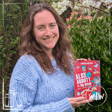
Editor turned literary agent Rachel Neely is with us this week to talk about her journey from editor to agent, a bit behind the curtain of both roles and what sorts of stories she's looking to add to her list.
Support the show on Patreon! 💖 And get extended episodes, ad-free and a week ahead of everyone else. 🙏
For audio listeners:
Listen to The Chosen Ones and Other Tropes, Jamie's other podcast with Melissa Welliver and Naomi Gibson! 📚
Follow on socials! 🥳
Recommended

















Transcript
Introduction to the Podcast
00:00:00
Speaker
Ooh, a spicy question. love it. Because the writing is sort of everything, right? Like you can fix plot holes, but if the writer is there. So some readers love that and some readers are like, but I wanted more of this.
00:00:11
Speaker
So it's kind of, it's kind of a gamble.
Meet Rachel Neely: Rising Star
00:00:19
Speaker
Hello and welcome back to the Right and Wrong podcast. Joining us today is one of the booksellers rising stars for 2024. It is literary agent Rachel Neely. Hello. Hi, Jamie. Nice to to speak to you.
00:00:34
Speaker
Thank you so much for coming on.
Rachel's Publishing Journey
00:00:36
Speaker
um With agents, I'm always interested in starting with a bit about your origins in publishing.
00:00:46
Speaker
So first question is, was publishing always the industry that you you wanted to to work in? and No, not at all. I think I was kind vaguely aware of it as um an industry, but everyone I knew who was kind of dead set on publishing, they all read kind of very serious classics or yeah and kind of prize winning. Like they always read through like the Booker list. And I was just sitting there with kind of like whatever the crime fiction was in Tesco that week. So I kind of felt like it wasn't really for me um until shortly after university, I came across... and
00:01:23
Speaker
an ad for an editorial assistant job in the guardian and it was for crime and thriller and it was a kind of like um i guess like a big realization that actually whatever i wanted to read i could go and i could specialize in that and i didn't need to be able to rattle off kind of big serious books um yeah i could kind of read the books i found entertaining um so that was kind of um when I kind of first realized actually maybe this is something that that would be a good a good route for me. Before that I explored a lot of different things, academia, I did an art degree, i did some SEO copywriting, what else I do? I applied for a job at Innocent Smoothies, so yeah, i was a bit lost and then I found this ad book and I was like, oh, finally.
00:02:14
Speaker
That's great. I think you there definitely is like a ah an association with that kind of very high literary people when they're younger being like, oh no, I'm going to work in publishing. And they probably think they want to be an editor as well.
00:02:29
Speaker
Yeah, definitely. I think... Yeah, i kind of, yeah, i felt like I felt quite different to everyone I knew who was like, oh, yeah, I'm dead set on being kind of an editor at a publishing house. And it definitely wasn't something that um was kind of, there wasn't a great deal of information on publishing at my comprehensive school in Belfast. So it took me a while to find my way, but it's now been almost a decade. And I'm, yeah, very happy doing what I do.
00:02:54
Speaker
Yeah. And but I mean, little do you know, at you know, at that age that and it's the same for the people that were reading literary stuff. But the littles, you know, that the the supermarket crime fiction, that's, you know, some of the biggest commercial successes currently going around. Yeah. That's the big, that's the great stuff. That's, that's, you know, you've won. It's a very huge success. Yeah, very happy accident. um Yeah, for sure.
00:03:18
Speaker
So with that in mind, what was your first entry? How did you kind of find your way into publishing? What was your first job? So i um I applied for that crime fiction job and I came, i think I was the runner up. I was the second choice, and which was obviously gutting at the time. But um the two editors that I emailed with said they were like really impressed and they could see I had a lot of and kind of passion for the thing, ah for the subject. So they referred me to a colleague who was looking for an intern.
00:03:51
Speaker
and So I spent my first six months in publishing doing an internship and at Avon, which is part of HarperCollins. and I then interviewed HarperCollins for about 10 different editorial assistant jobs. and And eventually I didn't get any of those, but there was one of the people I interviewed with there had a friend who was moving to a different publishing house and looking for an assistant.
Career Growth and Transition
00:04:16
Speaker
um okay so yeah my top tip for anyone wants to get into publishing is do as many interviews as you can because even if you don't get the job a coffee with an editor can be a really fantastic way to to find new opportunities yes and it's one of those industries where people are often moving between the the bigger companies and they're often exactly various people move in groups or like you know whether that's an an author moving with an editor or vice versa and things like that it really people do move a lot Yeah, so I moved at that point from HarperCollins to Hachette. And then I was at Hachette for five and a half years, something like that.
00:04:55
Speaker
Was that as an assistant editor? So I was an editorial assistant first for about a year and a half, um and then an assistant editor, and then I jumped to commissioning editor at a different division. um That's what I was kind of most recently. Okay, that was Orion, right?
00:05:14
Speaker
That was Orion, yes. I worked in Trippies, which did a lot of kind of book clubby fiction, um as well as some crime fiction. Mm-hmm. And then in 2022, I moved to Mushroom Entertainment as an associate agent, which is kind of part assisting and and part kind of starting to build your own list.
00:05:34
Speaker
um Yeah. And yeah, now it's ah been here ever since. Okay. It's a pretty, it's a pretty solid route in a couple of questions on there.
00:05:45
Speaker
Sure. It's my understanding that all editors are in to some capacity doing commissioning stuff. They are like looking for things to bring to the publisher. So what's the difference between it an editor and a commissioning editor?
Agent vs Editor: Roles and Preferences
00:06:00
Speaker
There's not a great deal. Usually a little salary bump, which never goes amiss. I think as a commissioning editor, you kind of stop assisting usually. and So even as an editor, you're maybe providing support to a publisher or an editorial director. And then once you get to commissioning level, it's very much about your own list.
00:06:23
Speaker
and So it's not really that dissimilar to kind of being a literary agent. It's very much about kind of shaping your own list and and focusing on that. Okay, right. Yeah. So it's basically the difference between an associate agent and a literary agent. Exactly. Yeah. Yeah. Okay. Right.
00:06:39
Speaker
So what made you want to move? i've I've spoken to a few agents and I know there's lots of agents that have made this move. What made you want to move from editorial into literary agency?
00:06:51
Speaker
I think I always really enjoyed working with the authors. And I think that when you're at a publishing house, your kind of loyalty is split. You need to get kind of a really good deal for the company, first and foremost.
00:07:05
Speaker
But you also want to have like a good deal for your author. And often the two are kind of at odds with one another. What's good for an author isn't, you know, it's usually lots of money, which isn't great for the company. They want you to be paying it kind of as little as possible.
00:07:18
Speaker
Whereas as an agent, what's good for the author is good for me. If they get a big advance, then that's great for me. And I can kind of sleep easy knowing that everyone got a good deal, essentially.
00:07:30
Speaker
Okay, that makes sense. And I guess, yeah, you're your obviously your priorities, because like you said, you're torn. But also in some ways, um as an editor, of obviously you do care about the author, but your job is to make the book work.
00:07:45
Speaker
as you know as as good as the book can be but as an agent you're more focused on the author than the book does that kind of track i think it's both um well i found kind of surprising and wonderful about agenting is that spend a lot more time editing than I did as an editor, which is almost more of a kind of project management role um with the editing often getting kind of shoved towards the weekends, um whereas I do kind of an edit at least once every other week um as an agent. So we do a lot of kind of focus on the book. We're a very editorial agency, I'd say, in general. and So we do structural edits with our clients. We do line edits with our clients and make sure that whenever a manuscript goes out, it's in kind of the best possible shape it can be.
00:08:32
Speaker
and But then, as you say, we're also thinking about an author's career long term and kind of how they build on that first book. Right. In a way that if you're a publishing house and a book doesn't work out, you can drop it and you can drop an author from the list. Whereas as an agent, you have to kind of be able to pivot and think, right, how do we kind of how do we find a new home for the author?
00:08:56
Speaker
Mm hmm. And I mean, you know, it's you spend a lot of time going through carefully picking the people who are on your list and like you invested your time in them for a reason. So like, you know, that if one book doesn't find a home, whether it's that same book or it's a new book, you believe you've signed with that author because you believe in them and that you believe that you will find a home for them eventually.
00:09:19
Speaker
Yeah, absolutely. And I think and it's always heartening to hear of kind of some of Juliet's clients are massive Sunday Times bestsellers. And it was maybe the third book that went down submission before they found your home.
00:09:32
Speaker
So I think it's it's very much it's not kind of if we don't sell, then it's done. We're always looking for kind of how to move forward, whether, like you say, that's the first book to sell or when we come up to recontract. And yeah, we also, like you say, we believe in the people we sign. We pick them very carefully out of hundreds of submissions that come in every week. And yeah, sometimes a book doesn't land for whatever reason, but we do trust our authors kind of eventually to find the home. And often it's, they maybe switch genres or the market moves and that's kind of what makes
Networking and Submissions in Publishing
00:10:07
Speaker
the difference. yeah And I think it's often kind of what's for you and go by you.
00:10:13
Speaker
So when you joined, uh, mushrooms entertainment as Juliet's assistant, uh, or was it, you know, it was associate associate association agent. So you kind of, uh, skipped the, uh, assistant part of that usual track previously because you had all the industry experience.
00:10:31
Speaker
Exactly, yeah because I was coming in with kind of six years experience. It meant I was able to skip ahead, though I have to say i was very ably assisted by some amazing assistants at the agency because there was an awful lot to learn. and And definitely it kind of gives you a different viewpoint, which I think is useful. But it does mean there's a lot of the kind of very basic stuff that you're playing catch up with.
00:10:53
Speaker
Sure. Had you, as an editor, as a commissioning editor, had you worked with Juliet on and on any authors? We'd, I'd met her before. and We didn't share any authors, though shortly before i left, she sent out a book that I was like, I would definitely be signing that if I wasn't leaving. it was just, yeah, bad timing.
00:11:17
Speaker
But yeah yeah, I mean, I'd always really admired her list. And I think ah editors are always really excited when they see her name pop up in the inbox. Mm hmm. As someone, I guess, as as someone who has um been on both sides of this, is there, as an editor, do you kind of have, obviously you're open to to anything and you'll be open to any agent that comes to you, but do you have like a so a kind of,
00:11:42
Speaker
list of agents where you're like, I know that I've signed, you know, we've signed some really great books from authors from that agent. And then you kind of have like, there's a sort of goodwill built into that. So you're like, oh, so-and-so so sent me a book.
00:11:57
Speaker
This could be really good. Yeah, I mean, I think that as you get more and more submissions as a commissioning editor, and you get a sense of kind of who shares your taste.
00:12:08
Speaker
Right, yeah. So absolutely, like if somebody kind of sends something, me you think like, that was my favourite submission this year. Of course, you'll be excited to kind of receive whatever they send out next. yeah And yeah, I think often when I'm thinking about my subs list for my authors, there are lots of authors that I have existing clients with. And I think actually, this would be really great for them.
00:12:28
Speaker
Once you have that relationship, I think on both sides of the table, you get to know one another's tastes and that can make kind of receiving a submission or sending out kind of really exciting. Yeah, there's so much like organic growth of networks, which yeah can't you you you can't like force yourself into because so much of it's subjective as well. Like you're saying, the the editors that you will align with the most as ah as an agent or the agents as an editor is it's usually going to be the, you know, it's the it's the ones that have similar subjective taste to you. So it's not like ah you can just network with everyone and you're going to have everyone on your list. It's it's not going to be like that.
00:13:06
Speaker
Yeah, no, for sure. But then I think there is, it's always lovely to kind of go to a publishing house and sit down with people and discover a new editor who you have a lot in common with. That's always really exciting. And we always send out submissions widely that you're sending to maybe about 20 people and each book. So there's plenty of room for everyone on the list. And sometimes it can be a really nice surprise to connect with someone that, you know, it's the first book you're working on together.
00:13:33
Speaker
Yeah. Okay. So as an agent, you're sending your average like to 20 different editors as like kind of Yeah. Somewhere between kind of 20 and 25 usually. As an editor, how many submissions do you think you would receive sort of weekly or monthly, whatever's easier to track?
00:13:52
Speaker
Yeah. I mean, as an editor, i think when I was a commissioning editor, I was the only person commissioning on my imprint for a little while. so I was probably getting about 20 submissions a week. Okay. And I think that's pretty standard for editors now. um As an agent, we get about 200 a week.
00:14:13
Speaker
um Yeah, yeah, yeah. From kind of prospective authors. But I think the difficulty of being an editor, of course, is that every book you receive has already kind of been... through the kind of the initial round with agents. So there's obviously going to be and a reason why that agent signed it. The writing is probably of a good quality. the plot is probably appealing. It probably makes sense for the market. So
Rachel's Literary Focus
00:14:38
Speaker
I think a lot of the the ways that we as agents kind of sift through our submissions, all of those things are kind of out as ways to kind of sift through your and your reading pile as an editor because you know there's at least a level of quality.
00:14:52
Speaker
Um, so yeah, I have to say I much prefer being on this side of the table where the ones that i really want to work on, they kind of immediately jump out of the inbox, I think.
00:15:04
Speaker
Okay. Yeah. Great. Yeah. Cause as an editor, like, you know, you, you have, you, like everyone at Mushrooms, you said very editorial, you guys, you used to be an editor. This is like yeah professional level, level editorial has gone into these, the agents know the market, they know it's going to be commercially viable.
00:15:22
Speaker
So everything an editor is getting could become a book. And like, have say I guess you have to find reasons not to sign it. Exactly. And I think we're very careful to not to give an editor an excuse.
00:15:35
Speaker
But um yeah, it's it's, I think, you know, I have a lot of sympathy for editors. It's scary kind of thinking about, Like, what if you read the wrong one and you miss out on something and your boss is going, why didn't we see this? Why didn't we offer on this? and Yeah, it's a lot of a lot of your spare time as an editor goes into reading.
00:15:53
Speaker
so yeah, I have a lot of respect for editors. Yeah, I guess that's do you get that feeling as an agent as well? Yeah, i mean, we we we read a lot. um But I do think that particularly as someone who's relatively new to agenting, my list isn't full yet. So that gives me quite a lot of time for reading and for editing during office hours, which I think is a luxury that I definitely didn't have as an editor.
00:16:18
Speaker
and But I also think it's kind of a good litmus test. Like if I'm reading something, my kind of one of my initial questions is, would I be happy to keep reading this at the weekend? Because that's what it's going to be for an editor.
00:16:32
Speaker
And they're going to have to want to give up their time, whether it's on their commute or on a Sunday or in the evenings, they have to kind of feel compelled enough to spend time kind of extra work on extra work.
00:16:45
Speaker
yeah whereas for you it's like if i'm not driven enough to you know i've started this if i'm not driven enough to read it maybe that's just that's the sign in of itself absolutely this isn't for me yeah yeah and i think it's it's like anyone who picks up a book that they love you kind of get wrapped up in it and the pages fly by and suddenly you're at the end and you've kind of drunk in in one sitting or two sittings and that's the yeah that's kind of the feeling you're looking for Yeah.
00:17:12
Speaker
Okay. So that brings us onto your, your list. Um, as a literary agent, what are the genres? What are the age ranges that you represent?
00:17:24
Speaker
and So I only do adult and just because that's the market I know. It's the market I've worked in for almost almost a decade, whereas children's and why I'm just not the right agent for that. and I don't have the kind of market knowledge that would set me up well for that. um In terms of genre, i'm fairly agnostic. um So I do fantasy, I do dystopian, i do dark academia, horror, book club fiction, and crime and thriller.
00:17:52
Speaker
I'd say what kind of unites my taste rather than genre is that I generally prefer darker stories. um So like the little kind of soundbite on my agency page is that my favorite books center characters with tragic fates, dark pasts or buried trauma.
00:18:08
Speaker
and that gets quoted back to me an awful lot just before a really depressing query letter right um but yeah i think generally speaking i prefer it like kind of tragedy over comedy um dark over light okay yeah that's i think the market to some degree also prefers that Yeah, I mean, it can be challenging when, ah particularly the minute, like romance is having such a ah big moment. But yeah I love like a rom-com as a film or a TV series, but it's just not what I naturally gravitate towards when I'm reading.
00:18:49
Speaker
Yeah, ah yeah, I get that. um Okay, so pretty eclectic. It might be easier then to ask, are there any genres that you absolutely do not represent?
00:19:02
Speaker
um So women's fiction and rom-coms aren't quite right for me. I'm also not a big fan of kind of dark romance or romantic suspense. and I just think sometimes it can be quite icky. um And then obviously YA children's, I'm not looking yeah for that.
00:19:22
Speaker
And then I have an amazing kind of cozy crime author on my list, but it feels like that's kind of enough and right for now. So I'm not actively seeking any cozy crime either.
Genre Exploration and Representation
00:19:34
Speaker
Okay. But, but it sounds a bit like, but you know, never say never. Sometimes you see something you you didn't know you wanted. Exactly. Sometimes something comes in and it's incredible. and Or sometimes, yeah, you just, you didn't know you were looking for it until it lands. So I think across the agency, we all, we, between us, we cover most things. um And often if something isn't for me, it's actually a perfect book for Juliet or for Maria, who's joined us recently from Inkwell in New York. So I think across the team, we kind of cover a little bit of everything.
00:20:08
Speaker
Yeah, and you do non-fiction as well? I personally don't. I'm fiction only, but Maria that I just mentioned, who everyone can find on the website, is doing some non-fiction as well.
00:20:20
Speaker
Okay, so just fiction. Yeah, I did one non-fiction book as an editor, and the legal read scared me out of doing it ever again. I was like, this is much easier if we can just make stuff up. No one ever has a problem with that.
00:20:34
Speaker
Okay, okay. So yeah. Would you, sometimes I have an agent on and, you know, they'll they'll say, i I represent this and this, this, this. And I'll be like, okay, well, do you represent, you know, like epic? They're like, i represent fantasy. I'm like, do you represent an epic fantasy? And they're like, not really epic fantasy, but other fantasies. But then they'll say, yeah if the caveat is that she's, they're like, I do have one book that's in this genre that I don't represent. Or i am a I am willing to represent that. If one of my authors comes to me and says, oh, I'm thinking about doing this.
00:21:04
Speaker
Yeah, I think that's like a very different situation and because I think you already know you love that writing. And also if the author is coming to you and saying like, I'm thinking about writing this, you have a whole year to kind of make sure you're well-informed and kind of equipped with all the right comps and know the market and know the editors. and So you're doing a really good job.
00:21:25
Speaker
right So I have like a couple of historical writers who want to move into fantasy, which is something I represent. So... that's quite convenient yeah but it's also really exciting because I know that I love their historical work and I think historical and fantasy share a lot of DNA um there's all of that that world building um so I'm really excited for those two books I'm really excited for Okay.
00:21:52
Speaker
Okay. but And I guess you have um Juliet and Maria kind of either side of you. if If one of your authors was like, oh, I wanted to do some nonfiction, you you have Maria as a resource to be like.
00:22:04
Speaker
Yeah, absolutely. Yeah, yeah, for sure. um Okay. But no, I haven't been tempted yet. So we'll see. But never say never. Well, yeah. But you're not you're not looking for it. If anyone listening is, don't submit that to Rachel. That's not what she's actively looking for. Yeah, I'm not actively looking for it. So yeah, probably not the best port of call.
Seeking Fresh Stories
00:22:26
Speaker
um i So before we get on to stranding you somewhere with a book, ah on a more last question, then more specifically, then, is there a so any specific subgenre or setting or character that that you are particularly on the lookout for that you'd love to see pop up in your submissions?
00:22:49
Speaker
Well, I'd say I very much kind of cut my teeth on crime and thriller. and And I'd love to have more of that for my list. We do get quite a few submissions in the crime and thriller space, but I think it can be really hard to find something that feels kind of fresh and new.
00:23:03
Speaker
So yeah, I think please send me all your crime and thriller. and i'd love to have a few more authors kind of in that space. And it can be commercial or literary. I'm kind of open to both in that that crime and thriller space.
00:23:16
Speaker
Okay. Okay, great. So then that brings us on to the, the new location. This will be, I think the third or fourth episode that we were no longer kidnapping you and dumping you on a desert island. Now the question is Rachel, if you were snowed in at a cozy woodland cabin in the middle of nowhere, what book would you hope to have with you?
00:23:41
Speaker
um Do you know what the the cozy cabin makes me think of? Have you read The Hunting Party by Lucy Foley? A group of university students go to a cabin in the wilderness, get snowed in and start getting bumped off. so that's probably not the right choice. um I think my favorite books, I kind of think they're the ones that read kind of a really long time ago. um It's such a cliche answer, but The Time Traveller's Wife will forever be kind of up there as one of my favorite books.
00:24:11
Speaker
And I read The Girls shortly after i came into publishing by Emma Klein, and I really loved that too. And I think they're both kind of, they're not the happiest books, um but I think like a kind of cozy cabin with like a fire going on. Yeah, that would be, yeah that would be all right. Everything around me would be cozy enough.
00:24:31
Speaker
Whereas it was on the desert island, it would be a bit bleak, wouldn't it? Yeah. Yeah, exactly. It's a different vibe. It's different time. And those are those are kind of bittersweet stories. you know Yeah, I think that suits the little cow well.
00:24:47
Speaker
if If you had to pick one, which would it be? Probably The Time Traveller's Wife. and yeah I just think it's such a kind of singular book. and And I read it when I was maybe like 15 or 16. And I think I've read it like three or four times since.
00:25:03
Speaker
It's one I can kind of always go back to. Yeah, it's like comfort food, right? Yeah, definitely. Okay, great. ah great it's it' It is a classic, so it's a great choice yeah um to take to the cabin
Conclusion and Listener Engagement
00:25:17
Speaker
with you. ah Next up, we are going to go a bit deeper into submissions and cover letters, the do's and don'ts, and that will be available in the extended episode, which you can find at patreon.com forward slash right and wrong.
00:25:32
Speaker
So I come in every day with like chapters and chapters of these stories with wild plot twists to incorporate all of these different words we were learning to spell. um But that is as as far as my writing ambition ever went.
00:25:45
Speaker
Okay. Well, you know there's ah I've had that answer a few times. with Just straight up. Nope. Nope. Never. Yeah. so that's fine yeah um Awesome.
00:25:56
Speaker
Well, that brings us to the end of the episode. Thank you so much, Rachel, for coming on. telling us having me It's been such a pleasure. Yeah. You're publishing. Yeah. It's been so cool chatting and hearing all about your, how you approach queries and the kind of the the nitty gritty of all of that. Yeah. It's been great. Thank you so much. It's been great. Thank you so much. And for anyone wanting to keep up with what Rachel is doing, you can find her on Instagram at Rachel Neely agent. And if you're thinking about submitting, head over to mushrooms, mushrooms, entertainment.com forward slash Rachel dash Neely for all the details on that and the other agents at mushrooms entertainment. To support this podcast, like, follow and subscribe. Join the Patreon, add free extended episodes and check out my other podcasts, The Chosen Ones and Other Tropes. Thanks again to Rachel and thanks to everyone listening. We will catch you on the next episode.
00:26:43
Speaker
Shout out time. One of my amazing patrons, Lee Foxton, is querying their debut novel. It's a family drama, commercial fiction along the lines of Jojo Moyes and David Nichols. Fingers crossed. I am rooting for you. Good luck.