Transcript
Speaker: I'm not as young as I used to be, which means I can't treat my body the way I once did. In fact, last year's medical checkup didn't turn out the best, so I decided I needed to change things up and start eating healthier. One of the ways I do that is by making smoothies. But smoothie shop prices can be pretty high, and making them at home always seem like a pain. You gotta pull the blender out, find the right attachments, set everything up, and then cleaning everything is annoying, making it difficult to quickly whip up a breakfast smoothie in the morning.
Speaker: That's why I'm glad to tell you about the BlendJet 2 Portable Blender. Like I said, it's portable so you can blend up a smoothie at work, a protein shake at the gym, or even a margarita on the beach. It's small enough to fit in a cup holder, but powerful enough to blast through tough ingredients like ice and frozen fruit with ease.
Speaker: BlendJet 2 is whisper quiet so you can make your morning smoothie without waking up the whole house. That's especially important to me because I wake up before the rest of my family, and once my kids are up, my morning work routine is pretty much shot to hell. And best of all, BlendJet 2 cleans itself. Just blend water with a drop of soap and you're good to go.
Speaker: BlendJet 2 has over 30 plus colors and patterns to choose from, so if you don't like one design, there's definitely one that suits your personality. So what are you waiting for? Go to blendjet .com and grab yours today. Be sure to use my promo code supercinemapod12 to get 12 % off your order and free two -day shipping.
Speaker: No other portable blender on the market comes close to the quality, power, and innovation of the BlendJet 2. They guarantee you'll love it or your money back. Blend anytime, anywhere with the BlendJet 2 Portable Blender. Go to blendjet .com and use my code, supercinemapod12, that's supercinemapod and the number's one, two, to get 12 % off your order and free two -day shipping. Shop today and get the best deal ever.
Speaker: I am Chazan. My name is... All is known to me. Your name is Billy Batson. You did not pry into the secret of the scorpion. That is why I am here. But where did you come from? Out of the past, my son.
Speaker: Down through the ages to guard the secret of the scorpion. You've been alive all these years? What you call life returned to me when your friends violated the tomb of the scorpion. Well, they meant no harm. Then they should obey the inscription on the tomb. The harm has been done. It is your duty to see that the curse of the scorpion is not visited upon innocent people. My duty? Yes.
Speaker: So long as the Golden Scorpion may fall into the hands of selfish men, it is the duty of Captain Marvel to protect the innocent from its evil use. But who is Captain Marvel? You are my son. All that is necessary is to repeat my name, Shazam. By its repetition, you will become Captain Marvel and take on the virtues you see recorded there.
Speaker: The wisdom of Solomon. The strength of Hercules. The stamina of Atlas. The power of Zeus. The great courage of Achilles. And the speed of Mercury. You must never call upon this power except in the service of right. To do so would bring the scorpion's curse upon your own head.
Speaker: And now, my son, repeat my name and return to the rescue of your friends. Shazam! Welcome to the Superhero Cinephiles podcast. I'm your host, Perry Constantine. Welcoming a new guest today and a fellow author, and that is Teal James Glenn. Teal, how you doing today?
Speaker: I'm doing fine. Welcome to all. Well, welcome to the show. Glad to have you on. Before we get started on today's movie, though, let's talk a little bit about you. Why don't you tell people a little bit about yourself? Well, I was a stuntman and actor for 45 years. Did 60 Renaissance Fairs.
Speaker: a couple hundred soap opera appearances, often doubling people, but also I was a cop on God and Light all the time. Most of the Shakespeare canon, I'm a weapons expert. And one of the nice things is I studied sword under Errol Flynn's last stunt double, Patty Cream. So that's my touchstone to the famous. And I've been
Speaker: been writing. I have 22 books out right now. I've written 49 novels. Some are scheduled to come out this year. And I just run around and cause trouble. Wow. Yeah, you've got you've got a few on me. I'm at my my current count is I think about 30 books out so far. But let's talk a little bit about your stunt career. Any so you said you'd worked out a lot on soap operas and stuff like that. You ever worked on any any movies?
Speaker: I worked on a lot of low budget movies that show up on USA cable now and then. I worked on Spencer for hire. I got to call Hawk a clown and he beat the snot out of me, which one should when you call him a clown. Did a lot of low budget pictures, the bug creatures. I was toxic Avengers stunt double and fight choreographer for Citizen Toxie, which is I think the fourth movie or fifth, who knows.
Speaker: I was in trauma's war. I died 18 times. A buddy of mine died 22 times because he was there one day longer than me. You know, a lot of low budget stuff. One of my great opuses is Lord of the G -strings, which was released in an R version and a hard PG version as Lord of the Strings, where I played a bunch of parts and choreographed fights and nonsense.
Speaker: which apparently there's a drinking game for. So I was also, I was Vega in Street Fighter of the Later Years, a web series that College Humor put out about, at this point, I think 12 years ago. It's still online.
Speaker: I never even heard of that. Wow, that's interesting. At one point for about three years, it was the most watched web series in the world, oddly enough. Oh, wow. But College Humor decided not to continue it because they didn't want to get stuck doing continued stuff. But there's 10 episodes, like six minutes apiece. But I'm still friends with most of my various street fighters after all these years, which is hilarious to me, frankly.
Speaker: So very cool. Yeah, and when Sorry, go ahead. I was gonna say i've been killed hundreds of times and killed hundreds of other people online on screen You know nothing I can admit to on the open air Uh, so when did you uh, when did you start writing? I've always written I I finished my first novel just a couple of months after I graduated college. I went to art school I was a comic book artist for a while and a book illustrator and um
Speaker: But back then it was get the full manuscript, put it in an envelope, mail it to them, hope that it came back because you had a self -adjusted envelope. And so it was a really long process. And it really wasn't until the electronic age that I really started putting stuff out there because it doesn't cost a hell of a lot to just hit send on an email.
Speaker: But, I mean, I sold stuff back then. I sold to Black Belt and Mad Magazine and Deadly Hands with Kung Fu and a bunch of other places, you know. But, you know, it was sporadic. I mostly made my living at that point as an artist and then got into the stunt work actually because I did the storyboards for a film and they needed someone to do the fights. I did the fights and I never looked back at that point.
Speaker: So what are some of the comics you've worked on? Oh, I did background stuff, but the one that has my name on it as the penciler is Action Master, which was only like a three issue deal from, you know, I mean, that's what I wanted to do. But I kept going off into illustration and other stuff. I mean, no matter what I do, I'll always consider myself a failed comic book artist. But I got to I took classes with Dick Giordano and did some backgrounds for him.
Speaker: and Howard Beckerman, who was an animator, and I knew a bunch of those guys. I used to actually put together Paul Levitt's fanzine before he started to work in the business. He published a fanzine about comics, and we used to go over to his house and do
Speaker: parties where we would have pizza, but we'd walk around the table and assemble the magazine because it had to be, you know, it was a hard copy print. You had to put all the pages together and then saddle stitch them. Right. So it's, it's pretty funny that, you know, they've gone off in that direction, but now he's like the big guy, you know, and I went off and got myself beat up a lot and set on fire and hit my cars, you know, and then I went to movies.
Speaker: Well, let's talk about some of the writing you're doing these days what I mean I don't think we've got time to talk about all the stuff you've written with with the biggest bibliography as you mentioned there, but what are some of the What are some of the biggest things you're you're involved in writing wise?
Speaker: Well, I did I won an award for the cowboy in Carpathia. I've done three novels and One novella about what would happen if Robert E Howard had not taken his life the creator of Coleman He died at age 30. He committed suicide and My postulate that he decides not to and with the behest from his mother Because she died He travels the world and in the first book he meets Dracula
Speaker: and he goes to the Land of the Fae in another book and he fights Cthulhu and Hera in the third book. So that's definitely pretty popular and I have a series called The Ghost Maker. First book is out now, the second coming out next year about what happens when the Land of the Fae
Speaker: overlays our world and So he's a Jack silence is a ghost maker. He hunts fae that go bad Okay, kind of exterminator, but they're very tongue -in -cheek and then I have a maxi and moxie series Call back for a corpse being the first one it's husband and wife investigating weird crimes in Hollywood in the 1930s and
Speaker: Bela Lugosi's a character in the series. They run into, you know, various famous people. And so, you know, I pretty much write every genre at this point. I've got a sword and fantasy series, the first two books of which are out, Alpiva, Journey to Stormrest, and then Dragonthroat, which eventually it'll be a
Speaker: at least a nine book series. I've got four of them in the computer now waiting for the artist to get onto them. But I've been very blessed, you know, and I've written, you know, short stories for a bunch of magazines. Chrisova had a poem in the recent Weird Tales and a short story of previous Weird Tales. So I'm very lucky that I get to play all the games I wanted to as a kid.
Speaker: Yeah, we've we've written for some of the same people because I know I've seen your name on some pro se stuff in the past as well as the membership 27 as well, I think, too. Yeah. Yeah. And I've got a bunch of stuff. Well, Airship is publishing the fantasy series and pro se is is publishing the the ghost maker and the Robert Howard stuff. In fact, the thing I sent off tonight was to pro se. OK, we get an approval on that.
Speaker: And the other series is from Bold Venture Press. So yeah, I mean, it's a relatively small pond. Yeah, it's not that big. I'm trying to get up to the big boys, but you know. So anyway, the focus here is on superheroes. So what was kind of your introduction into the world of superheroes? I know obviously you were a comic creator. So do you start off as a comic book fan? I'd like to get way into that.
Speaker: I learned to read from comics when I was a kid. That's literally, I would say, what's this word? What's this word? And so I was reading it like a fifth grade level in first grade.
Speaker: and then a 12th grade level by second. But, and I totally credit it with comic books. And the nice thing is my parents, most parents made their kids give up their comics. So when the neighborhood kids had to throw them away, I got to keep them because my folks said, that's fine. It's not interfering with your reading. So the kids would come over to my house to read their comics. So, which is great because after art school, I sold my collection twice
Speaker: um to to survive in the lean years that followed art school before I got settled um but also my very first memory of television is of chapter two of rocket man which was a republic serial and I clearly remember the one scene where he gets the gunshot out of his hand and years later when I saw it I went oh my god that's the thing I remembered so I obviously I was faded to both
Speaker: Read it and see it and eventually be it. In high school, I made superhero films. I made a couple of Rocket Man films. I made a Captain Marvel film, Super 8, back in the dawn of time. That's what got me started in my stunt career. I was too sick to do sports, but I could learn how to jump off a roof and do a box rig. And I could get enough wind to do a fistfight for camera.
Speaker: So, eventually, I really tried to be those heroes, you know. So, it all connects. And I'm still doing that. I'm still, you know, writing adventure stories and hero stories. That's awesome, yeah. Yeah, I had a similar experience with that, not the stunt part or the making superhero films part, but the, definitely the comics, learning how to read through comics. And my parents, they didn't exactly,
Speaker: liked that I was reading comics, but at the same time they didn't discourage it either. It was like every now and then my dad would see me reading comics, just roll his eyes and be like, why don't you read a real book? But that was like the extent of it. Yeah. And the thing is, it never stopped me from reading real books. Although I have to say, the real books of a reading were, you know, Doc Savage and Conan. So it's not that much different. Right, right. Just the fewer pictures, basically. Yeah, yeah.
Speaker: Okay, so today we are going to be talking about the 1941, you mentioned the Rocket Man Republic serial. Well, this is another one of those. This is the Adventures of Captain Marvel. Actually, pretty much from what I've been able to tell from my research, this is the first superhero film ever made, as far as I can see.
Speaker: It's the first flying hero film, but they're they use the same technique in darkest Africa a serial a couple years before Republic where they had Batman flying Okay, and they did do they did do costume heroes because they did spy smasher Just before they did Captain Marvel Okay, same team same director same stunt crew same effects crew But yes, this is the first to my knowledge
Speaker: costumed super powered hero And it was because they originally they were supposed to do Superman yeah, they got the rights to the Superman and DC wanted too much control. So they said to heck with it. They scrapped the Superman script and Turned it because they knew how to do the flying effects. They'd already figured it out for Batman the Batman stuff in darkest Africa. Yeah
Speaker: mysterious Dr. Satan, and they made up their own mass character, the Copperhead. Yeah, I also see here that apparently Paramount had tied up a lot of the Superman's theatrical rights as well. Yes, they did the animated at the same time. Right. And Republic thought that they were separate, but Paramount argued, no, we have the film rights.
Speaker: And then later on, it was Columbia that got the film rights to do the Superman serials in the late 40s. And National Periodicals, the old name for DC Comics, they actually tried to stop Republic from developing it as well because of their failure at adapting Superman. And they had ultimately didn't succeed with that, so this did end up going into production.
Speaker: Yeah. And the thing is, is they were going to do Mr. Scarlet and Bullet Man afterwards, which were all Fawcett characters. And they had to shelve them for a bit, but they turned the Mr. Scarlet script into Captain America because Marvel was more than happy to give them. They didn't charge them anything. Yeah, sure, I'll put my character on the screen. And the helmet that they designed for Bullet Man and the costume, they turned into Rocket Man. Oh, OK.
Speaker: They you know one spawned the other which spawned the other But it explains why they didn't the the Captain America They changed his whole backstory and identity and his costume because it had already been written for mr. Scarlett. So they just had excited. Yeah Yeah, yeah, cuz I've heard about that Captain America cereal and just like how completely different it is So so that explains why those differences exist So
Speaker: Now you said in your email that this was uh, this was kind of the reason why you wanted to get into stunt work in the first place So why don't you talk a little bit about your your experiences with this series? I was that I was at a comic convention in I I don't know if it was 68 or 69 um But it was right about because I entered high school in and I don't remember it was the summer before or the summer after my first year in high school, but I saw
Speaker: 16 millimeter print of Chapter two of the Adventures of Captain Marvel. I'm up to then I didn't know that it existed because there was no there were no Captain Marvel comics out any old comics I found were like the nickel box in my local store and I hadn't seen any Captain Marvel ones and I saw this
Speaker: incredible action on screen. And I said, I want to do that. And then I started reading everything I could on serials on the back of it. There were, you know, at that point, there was famous monsters put out a companion thing called Spacemen, which had some stuff on it. And then there was another screen Thrills Illustrated, which has articles on it. But I found through at that point, fanzines
Speaker: I found those enduring matinee idols, which was a whole series of articles on cereals. I read everything I could on stuntmen, on how the cereals were made, the background, and I just started to try and duplicate it, even to the point of making a life -size dummy to fly
Speaker: But all I could get was copper wire, so it didn't work very well. So what I ended up doing for my films was I got a Captain Action, made a costume that matched my costume, put it on fishing line, and I have wonderful realistic shots of him flying along. This was before the Christopher Reeve Superman movie. So all we had were silly superheroes, you know? All we had were
Speaker: Eventually, the 66 Batman, which was Goofy, and then Mr. Terrific and Captain Nice, nobody took the hero seriously. But the Captain Marvel serial, it was literally dead serious. He would throw people off buildings. He would machine gun people. There was no getting around the fact that this wasn't a comedy character. Right. Yeah, that was something that was kind of interesting because
Speaker: Obviously, the image of, this is kind of a tangent, but it does connect in a weird way. A few years back, this is going back like maybe 20 years or so, Mark Miller pulled a hoax on the internet claiming that he had discovered these sketches from an Orson Welles, that Orson Welles was planning to do a Batman movie back in like the 1950s or something.
Speaker: he'd had this are I can't remember who the artist was they'd done these amazing sketches and like they and he talked about it and He the basic his argument was like man Imagine if Orson Welles have made a superhero movie back in the day would have like kick -started the whole idea of Hollywood taking superheroes seriously and all that and that was in my head as I was watching this just watching this made me remember that because this came out in 1941 and One of the things that surprised me is how
Speaker: earnest it was, how serious they actually did take the material. There's no winks. There's no winks to the audience. People die. You're really concerned that people are going to be hurt. And Captain Marvel, I think he says four lines in the entire film. He shows up when action is necessary. And what's nice is the first time you see him show up,
Speaker: The bad guys shoot him and he's stunned that he's not dead because he still has Billy Batson's mind. And he kind of looks up and grins with this goofy grin like, oh, you guys just bought trouble. He picks the guy up and throws him. And it really was done straight. Well, same thing with, if you ever get a chance, Spice Masher is considered the best cereal ever done. But I argue that it's between the two of them.
Speaker: because I've heard, um, I've heard this one in a lot of the research I was doing. A lot of people say that this one is between this and spice masher. The only thing spice masher didn't have was flying scenes, but the costume is actually just as realistic. The rationale behind is realistic. And they, the premise in the spice masher is that he has a twin brother and at some points they change identities and the twin brother gets killed. So it was not, it was totally serious.
Speaker: And this too, I mean, the production values on it. Republic was the studio in the day. They had the newest equipment. They shot their action scenes with rheostats so they could speed them up just a little so you wouldn't notice. And they had the stunt team of Dave Sharp and Tom Steele and Dale Van Sickle. And they were just phenomenal. And, you know,
Speaker: There you go. I need one of those in life. And they sold it as earnestly as any other thing that they ever did, which is amazing. It's the first after Marvel costume, too, with the flap and the loose sleeves. Yeah, I got to say, that was the biggest surprise for me, was seeing how
Speaker: how how much it lacked that that winking quality that whole tongue in cheek aspect that you would see in like, you know, for example, like the George re Superman, or I mean, Ben and 66. It was very, it was very intentionally campy. So I mean, they're very intense, we're like,
Speaker: Adam West was playing the straight man, basically, and the whole thing. Yes. And the thing is, even in the George Reeve Superman, even in the serious ones, there's still every once in a while, he'll look at the camera and he'll hear in on the joke with him. There's none of that in this. This is absolutely bad guys trying to kill people and heroes not concerned if a bad guy dies. There's one shot in it where
Speaker: He's up on a roof garage and the bad guys are hiding behind some boxes and he picks up an engine block and then throws it through the boxes and kills the guy. And the second guy he picks up and throws off the six story roof.
Speaker: You'd mentioned the machine gun to like it was at the first or second episode. He's you know, yeah picking up a freaking Gatling machine gun machine guns three guys who are running away throws the machine gun and flies It's just mind -boggling Lee, you know people talk about silly and I said there were as I've gone on I've seen more and more of them
Speaker: the period serials from then and republics were absolutely the best but like the columbia phantom serial is done with no wink to the audience um the secret code has the black commando no wink to the audience so um back then they knew their audience we were not selling this to adults pretending to be kids we're selling these to kids who want to believe it well also it was there was also i think this goes back this goes
Speaker: This kind of speaks to a misconception a lot of people have about comic history. Those original comics...
Speaker: They were read by kids obviously, but they weren't only for kids like they're oh absolutely everybody was reading them Yeah, let's same thing with cartoons in the theaters. They were always done on two levels right it was the card there were current affair references and adult innuendos and slapstick comedy in the same cartoon Yeah, because it was a mass media when when when the superhero comics hit they were such a phenomena that
Speaker: It was unlike anything else that had happened. I think the only thing I could have maybe likened it to in modern days is the Harry Potter books. Harry Potter came out of nowhere and something was everywhere. And that's what happened in comics. After that action comic came out, suddenly every publisher wanted to get in. And they were selling hundreds of thousands of books, even of the bad books.
Speaker: So it's it's it's mind boggling that, you know, we think about now people if we if we sell 10 ,000 of a comic, it's good. Mm hmm. And doesn't would go a day. You know, right. They had the point where, you know, in the poll magazines, the shadow was selling so much that they went to a biweekly status because people wanted entertainment that badly. So they were putting out a new magazine, a full magazine every two weeks, because by the end of two weeks, they would have sold out everything on the stand.
Speaker: It was happening with comics, too. Same thing, Captain Marvel comics, they were biweekly. They were selling so many that the racks were cleared in a week. Yeah, speaking of that, too, another thing that struck me, not necessarily about this serial, but one of the things that annoys me these days in comics discourse and when people complain about politics in comic books, and you go back and you look at those early comics, they were very political. I've fairly recently picked up the
Speaker: The golden age superman stories and i've been reading through them There you wouldn't I mean people they'd be right from the streets if the superman books were that political today Oh, yeah. No, they would they would go after crooked politicians and and crooked um builders and there's one one of the early ones where a guy's beating his wife and superman comes in and just slaps the snot out of him and says you touch your head and I'll break your arms like Whoa, you know, um, it was totally I
Speaker: These were the issues. I mean seagull and schuster are 18 years old. They were writing the issues they cared about Yeah, you know and and there's um, the story of the superman against the clan which they just turned into a comic but on the radio show He went against the ku klux clan, right? And yeah, you know the writer of that show Right. Yeah the writer of that show he had done extensive research on the clan. I think he'd even gone undercover to get some information on it and
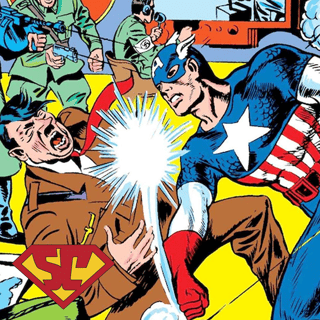
Speaker: Um, and yeah about that that comic too is superman smashes the clan is an amazing comic. Anyone hasn't read it. It's really good Um, yeah, I mean they were they were always political it's like people get like, you know Like indiana jones. Oh, they'll get all woke and they'll have like a they'll be anti -nazi and suddenly they'll be a tough girl And like well, yeah, they had it then they had it back in the 30s, you know Uh, I mean captain america's debut was punching hitler in the face. Right and uh, I talked about this behind the war year
Speaker: We were not in the war yet when it happened. Exactly. And fascism was pretty popular back then in America in those days. There's a great book about this called Hitler's American Friends. Also Rachel Maddow recently did a podcast called Ultra talking about the the the America First movement and all that in the 1930s.
Speaker: Yeah, Jack Kirby got death threats back in those days. Oh, yeah. And he was ready to, he was ready to go down and punch out anybody who showed up. Exactly. One of my favorite Jack Kirby stories is they called him up one day when he was at Marv, timely in those days, when he was at their offices, and it was a bunch of New York Nazis. And they called him up and they said, we want to, we want, we're downstairs. We want to meet this Jack Kirby guy who's drawing all these anti Hitler comic books. So Jack Kirby rolls up his sleeves, marches downstairs, and everybody ran away. Yeah.
Speaker: Yeah, he was Ben Grimm. He absolutely was Ben Grimm. Oh, yeah. My favorite quote from his is the only politics I ever knew was that if somebody said they liked Hitler, I'd beat the stuffing out of them and that'd be that. Yes, there's really no it's like no equivocation involved. Well, yeah, I just finished a novel, which I'm shopping, which takes place in 39. Two weeks after the big Nazi rally at Madison Square Garden, where there were 20 ,000 Nazis. Yeah, yeah.
Speaker: And, you know, and I've been to the Nazi camp on Long Island. There were one in Long Island, there was one in New Jersey. There were major summer camps and housing developments for the Nazis. So. Yeah. I think, I think Madhouse Podcast talked a little bit about, touched on those things a little bit as well. Yeah. Yeah. There's a huge. There were like a dozen across the country. Yeah. Outright Nazi camps. Right. You also had Father Colin.
Speaker: Coughlin on the radio was doing a lot of pro -fascist stuff and inciting violence and all that kind of thing. It was insane back then, yeah. If anyone is interested in hearing more, definitely check out that Rachel Maddow podcast, Ultra, or that book, Hitler's American Friend. They're both really good references for that. But anyway, let's dive into this serial. So I had known about this for a long time. I think when I was a kid, I actually remember at my local public library, they had this huge,
Speaker: VHS compilation of it. And I remember being very surprised because I'm like, Captain Marvel, that sounds, and I looked at it because I didn't really, I know the name Captain Marvel, but I think I'd known him more. I didn't have that much association with either the Marvel or DC versions, but I think I had slightly more association with the Marvel one. And so when I saw that, I remember, this is what made me laugh when I changed his name to Shazam because
Speaker: When I was growing up, all the DC action figures, they always called him Shazam on it because they couldn't use Captain Marvel. So he was always Shazam to me for like at least 10, 15 years before I finally found out. The hilarious thing is in the early 60s, I think 63 maybe, something like that, there was a company that came out with a couple of books and one of them
Speaker: was a Captain Marvel. But he was a robot who could split his arms and legs separate from him. I think there's two or three issues of it. And because at that point, the DC had bought out Fawcett and the name had gone fallow, it was not used. It was later on when Marvel said, you know, we should we're named Marvel. We should claim that name, that they created Mar -Vell so they could take take it over. And
Speaker: But that was the only Captain Marvel I knew when I went into this convention film room to watch. And I saw this thing up on the screen, and the figure flies across at the opening. And I was like, oh my god, this is heaven. This is where I want to be. And like I said, I then studied The Stuntman from it.
Speaker: and I just wanted to live in that world, which again, which is why most, about half my series take place in the 1930s, because I'm more comfortable there than I am in the 2000s, you know? So what were some of your thoughts rewatching it for this podcast? Well, the biggest thing for me is the scope of it. It was just before they instituted the wartime
Speaker: kind of downsizing where they would go on fewer locations. So there's, there's the big mansion sequence where they're on this actual grounds of a giant of a mansion with all of the grounds and stuff. They're up in the Garden of the Gods, the Corriganville, which is the Siam. And there's a lot of exterior stuff. And there's a lot of on location that the
Speaker: the parking garage that they go to is in downtown Los Angeles. They went and shot there. So there's a lot more, you know, like the next two or three serials, they started to go on fewer and fewer location shoots. During the war, they kept things pretty close and they used stock footage. But, you know, that and the fact that they made sure there was a Captain Marvel appearance
Speaker: in every chapter and at least one flying scene, sometimes more. Because that's what the kids were there for. And the thing is, is that they presented it in such a way is that
Speaker: If anything, it's closer to the way Marvel does films now. There's a sense of reality. If a guy showed up who could do this, this is how people would react to him. There's that sense of it.
Speaker: that really a lot of other films did not do. That was the thing that impressed me. Plus, I just love watching the... The other one is The Battling Butler. There's a sequence where in one of, I think it's chapter three or four, where they come in and this butler, the bad guys, you come to get the professor, and the butler suddenly takes them on. And suddenly the butler is hiding like that. It's just amazing.
Speaker: He hired this butler because he's a freaking martial artist. Come on. He's a gymnast and he's flown all over the place. And you expect the heroes to do that, but not the butler who has no lines. They're just hilarious to me. Yeah, my thought watching it was like for my part, as far as like the story and stuff goes, I didn't enjoy it as much, but I did approach. So I approached it more from like an academic exercise, kind of put it myself in the mindset of that time frame and all that.
Speaker: And the technical stuff is what impressed me the most. Like you said, the fight scenes, the special effects were, and again, the fact they played it straight the whole time, even like the costume design. The costume design is really nice. Story -wise, it doesn't hold up as well for me, especially because, and this is one of the problems watching it now in like one sitting is that it's like when you're binging
Speaker: A sitcom or something like that. There's a there's a there's a sense of repetition that kind of sets absolutely That's not how it was supposed to be watch right people would go to Yeah, if you watch it once a week you wouldn't notice that that's the same set again or that they've repeated that footage the other thing is interesting is I think I'm not sure but this may be the first of the
Speaker: There's a group of us, one of us is the bad guy, Plots, which became really standard in Marvel, in the Republic after this. There would be a group of explorers that go somewhere or the science club or whatever, and there's a bad guy there, they're fighting, who's masked, but one of them we slowly learn is that bad guy. And so everybody has to give these kind of looks.
Speaker: There's, there's a lot of like shifty looks on everybody because you're supposed to suspect everybody. Yeah. There's also a lot of work happening that goes on too, which again was kind of the, one of the problems of the format, because if somebody, if you just chop this into a two and a half hour film, it would be a lot smoother. There's a, there's a cut of, I think it's zombies of the stratosphere, which somebody did a colorized version of, um,
Speaker: in the 80s, I think. And what they did was they took it up to each chapter ending, and then it would stop
Speaker: And then it would go chapter two and you would literally pick up directly. There were no recap and it was colorized. So they got it down and it gets rid of that repetitiveness. I mean, it still has a simple formula to it. But when you see it that way, it's really not as dragging on you.
Speaker: But I said it's the first time that I know of that they use the one of us is guilty and so they have to do a lot of extra shifty looks and You know kind of moments and For the most part it's relatively subtle But there are some of them that are still like almost silent acting for those moments I'd also wish there was a bit more
Speaker: seeding of clues as to who that uh what that thing is because the scorpion is a dubbed voice it's a complete cheat yeah you know it's a complete cheat and i in some cases like uh in the mass marvel serial they honestly didn't know which one of them was going to be the mass marvel at the end so they wrote it
Speaker: And so it could have been literally any one of them. And then at the end, they decided who it was. And I think there's some of that in this where they said, look, if we give honest clues, we have to think too hard. So let's just roll with it, boys. And again, you're seeing it once a week for 12 weeks.
Speaker: And so, and this is before they started doing the economy chapter. Usually in the serials, they started about chapter nine or 10, there would be, well, you know, Bob, remember that time and they would do a chapter where they only had to shoot three minutes of new material and they would just recall stuff for the earlier serial. That's what they started extending the serials to 13 chapters and then 15 chapters. And a lot of them started doing that.
Speaker: So this is before then where they're still, you know, pretty much it's like 16 or 18 minutes of solid story before they do the cliff. I think the first chapter was 26 minutes or 28 minutes. But then the big thing with serials then was you would put all your money in most serials in the first two to three chapters because those are what you showed to exhibitors.
Speaker: And once they bought it, like Sam Katzmann could then cheap out for the rest of the cereal. Republicans did not do that generally. They kind of took pride in the fact that they were the top of the line for that stuff. But even they cheated a little, like all of the Siam stuff is from
Speaker: I think it's Guns Over Bengal, which is why they all look like they're Afghanis. Yeah, I thought that was when they said they're in cyan, like, how come everybody's dressed like they're in Afghanistan? And it was because they had all that stock footage from one of their feature films, and that cuts down across the cereal. So all of that stuff, I kind of just kind of go, yeah, well, it's just the way it is.
Speaker: Yeah, yeah, yeah, you know if you ever get a chance that the full man chews cereal is absolutely One of the most intellectual one of the most well -written cereals it's the same team that did Captain Marvel and spice masher and But it was written Not to have
Speaker: those kind of cliffhangers. Sometimes the cliffhanger is just a camera coming in on Fu Manchu going, I will get that. But even then, toward the end of that serial, suddenly all this footage from the same Guns Over Bengal shows up because they had all this footage of guys with turbans riding horses and they stuck it in there. That's the economy part of making those things.
Speaker: And this is obviously a sign of the times was just like the whiteness of the cast, even when it came to characters who were not supposed to be white. Oh, yeah. No, I have a it's funny. I have a hard time looking at anything with yellow face. Certainly blackface, but yellowface bothers me, although I can stand Mr. Moto because.
Speaker: He was somehow different. Laurie was so good, they didn't do any makeup on him. He did stay with acting. And the first Charlie Chan series, because he's the smartest guy in the room, I can take. But generally speaking, yeah, I mean, even when blacks show up in any other serials, you know, they're named Snowflake.
Speaker: Yeah, it's really hard to take for a modern audience. I can't watch a lot of Westerns to watch, you know, all the Italians playing Native Americans with the same wig on. So it tempers one's love of old films with that kind of consciousness, you know. And the other thing I like about Republic, though,
Speaker: They're serial heroines. They often got into fights. They tend to not quite be furniture like so many of the other serial women at this period. I mean, they had Linda Sterling and they had the Nyoka serials. So they had female leads and they would get into a fair amount of action. So that at least tempers some of that. But yes, the fact that, you know,
Speaker: Everybody looks like they came from Pittsburgh. Although I did think they did have, they did have two though. They had Tetsu Kamae who played, what was this character's name? Tom Lai. And then Al Kikume was another one who is playing just native chief is how he's described.
Speaker: So it's a little bit, I mean, they've done a little bit better in those times, although even still not the best examples of representation, to say the least. Oh, yeah, no. And when they did have Native Americans playing Native Americans, it was, you know, Monkey Blue or Chief Thundercloud, and they were pretty monosyllabic. Yeah, yeah. Yeah, no, it's hard to take. You know, it's like I said,
Speaker: When I look at any of these, I try to put them in context. I write a lot of period stuff. And my model for what I'm writing is I try to find the most progressive magazines from the period. Street Smith, for instance, they did not use certain slurs that were standard in a lot of other magazines. And their main characters tended to have a more open
Speaker: I won't say necessarily modern attitude, but more modern. Right. And so I try to go with that. But yeah, I mean, she's some of the stuff and you're like, like a lot of the pirate movies, it's basically, you know, the hero basically ravages, you know, the Marina Hauer and she's supposed to like it. Yeah, I have a problem with that kind of stuff. Yeah. And I put it in context, but it can only take so much of that, you know,
Speaker: Another thing that I thought was interesting is, now I'm not sure how much of a Captain Marvel fan you are from the comics. I've never really been able to, I think that's also part of, that's another layer that's keeping me from becoming, being a fan of this is I'm not a real, I'm not pre dispossessed to enjoying
Speaker: Captain Marvel. He's been a character that just never never quite interested me. It's funny my my interest in it came after the movie Like I said, then I explored where it came from right and um It is so not like any of the comics, right? Yeah The comics always were tongue -in -cheek if anything the comics were closer to Batman 66 right then anything and I mean the main villain is a frickin
Speaker: Worm right. Oh, mr. Mine. So it really is like another creature altogether Although spice masher is surprisingly close into the comic and even in spice masher they introduced Characters from the cereal. There's a spice masher comic which is a sequel to the cereal
Speaker: And they did bring the scorpion from the cereal into the comics of Captain Marvel at one point after fact, being like makes one appearance. So they were conscious that, you know, this is our audience. Let's let's kind of do a little cross marketing here. But, yeah, Captain Marvel in the movie is
Speaker: Nothing like the comic. I mean in the comic He is they call the his nickname is the big red cheese for god's sakes You can't imagine him picking up a guy and throwing him off a seven -story building to get him out of his way Yeah, you just you can't even imagine that that's exactly the point I was gonna make like this is this is far more serious than even then at least my encounters with him in the comics have been and and like I was able to
Speaker: I enjoyed the Shazam! film for the most part, because I think what attracted me to that is they lead in more to the big aspect of it, you know, big... Oh yeah, no, the two Shazam! films are closer to the big red cheese of the 40s than it is to the stuff now. Right. Actually, the Jerry Lordway run on Captain Marvel at DC, or Shazam! family.
Speaker: are closer to the serial. Because Ordway had a more realistic art style and the story lent a little more, they didn't quite embrace the Bigfoot, the cartooning phrase of Bigfoot comics, goofy stuff. His run on it was much more serious. But then they've now moved back
Speaker: to the old Captain Marvel. If you ever go to Comic Book Plus, you can always look at the comics online and read a bunch of them. And I went back and I read the Spy Smashers.
Speaker: just to see how close they were to the serial at one point and in many ways they are closer because he's a he's just a costume guy who has a cool plane you know and so he has a gun and he shoots people so in that sense he's a lot closer you know he doesn't fight any I mean he fights the mask but he doesn't really have
Speaker: crazy supervillains like Captain Marvel did. Right. You know, although during the war, they fought Captain Nazi. You can't get any more on brand than that. Yeah, yeah. That's actually something I enjoyed about about this serial was the fact that it it had taken itself more seriously. And like, so this is, again, kind of a tangent, but I'm part of a public domain group on Facebook. And one of the things like probably the most common point of discussion is
Speaker: about how can we do Captain Marvel stories, right? But make him a pastiche or something, change his colors, and Captain Thunder, Captain Magic. I want a couple of those groups, I think. Yeah, and probably, probably. And any time I read those discussions, I'm always kind of left there thinking, I'm like, well, I have no interest in stories about a little kid who becomes a superhero. So it just never really, so one of the things, and again, this is something that's just,
Speaker: a barrier between me and Captain Marvel Shazam is that just doesn't appeal to me as a reader or as a watcher. So I thought it was really interesting that when I watch this movie and we see Billy Batson, and it's a guy who's in his 20s, I'm like, oh, okay. This actually has to be a lot more than the little kid. Yeah, because in the comics, he's supposed to be around 12 or 13. Here he played it as if he was like a 17 -year -old give or take, although I think he was like 21 at the time.
Speaker: of the actor, Frank Coughlin. But yes, he's, it makes more sense that this guy could be a reporter, that this guy could drive a car, you know. The comics never made any sense that Billy Batson runs a radio station. He's 12. He's 12 years old. You know, and it's, but that's the audience they were going for. So, they were going for the kids. Again, like you say, they were,
Speaker: They made these cereals.
Speaker: for the kids, but they made them also for the adults who went with the kids who were going to sit through the cereal and watch the feature that came on after. Right. So there's enough of like the girl is sexy and the bad guys are bad and the action is hardcore so that it could be appreciated on those couple of levels. That works. That's why that's why most people say this is the best cereal. It is a real toss up between this and spice masher only because spice masher
Speaker: is smoother. It's a little slicker, and it's a much more war -connected story. I mean, he is fighting Nazis in Europe, and then he ends up fighting Nazis on the home front. So it's much more war -connected in that sense.
Speaker: Hey guys, we ended up having some technical difficulties and unfortunately, Tio lost his connection when he was able to get his computer up and running again. For some reason, Zencaster would not let him back into the recording studio, so we had to cut our recording time short, but just a few things I wanted to mention, just to kind of...
Speaker: to wrap up. We're almost at the end anyway. One of the things that Teal had noted was that the directors were both editors themselves and they had shot for the editor. So when you're watching the movie, you can see that the editing works very well in this. In fact, there are scenes where you've got the Captain Marvel
Speaker: dummy flying across the zipline and flying across the screen kind of from a distance and then it will cut almost seamlessly to a close -up of Tom Tyler who's the actor who played Captain Marvel either either landing or Or just a close -up of him flying through the air. So the flying effect were actually pretty well done for 1941 it's done fairly sophisticated in a fairly sophisticated fashion and
Speaker: The other thing I wanted to mention is, and this kind of ties into the whole problem I had with the writing not being completely on point, is that in the comics they've gone back and forth between Billy Batson and Captain Marvel or Shazam.
Speaker: you know, as to whether or not when Billy Batson says Shazam, does he just transform into an adult body, like in the movie, or like in some of the more modern comics, but he still basically has Billy Batson's mind, or does he actually transform into a different person, which I think some comics have done in the past, or is he some kind of mix between the two?
Speaker: One of the things that I was curious about on this that the serial didn't really touch on is whether or not it is Billy that we see just his mind in Captain Marvel's body, or if Captain Marvel was actually a separate person. Like Teal had mentioned, Captain Marvel doesn't have a whole lot of speaking lines, and when he does speak, you can't really get a good sense of, is this Billy's personality? Is this a separate guy? So it was kind of hard to tell, and I wish there'd be something more about that, especially since
Speaker: you know, like we had mentioned, Captain Marvel is no slouch in the violence department in this. I mean, he goes around and, you know, machine guns people, he tosses people off roofs or through, he throws an engine block at someone. So all these things made me wonder about, you know, what kind of person this really is. And it would have been interesting to see some of the more psychological stuff as far as, you know, what's it like for
Speaker: Billy Batson who is this very earnest upright moral guy when he's basically turning over his existence to this super powerful god -like being who doesn't care about how far he'll take the fight. So that's something that would have been interesting to see but unfortunately we don't get anything like that in this movie.
Speaker: I will say that in closing, this was a really interesting artifact. You know, one of the first superhero movies, if not the first costumed, super -powered superhero movie like Teal had mentioned, but it's one of those things that you can find it very easily. The whole thing is available on YouTube. I think it's also on some of the free streaming sites like 2B or Pluto TV or something like that. So you can find it fairly easily.
Speaker: Although I would suggest if you're going to watch this, don't watch it in one sitting like I tried to do. Instead, I would recommend spacing it out a little bit, giving yourself maybe a few days between chapters. And on YouTube, in fact, there are some versions that have it split up by chapter. So you can do it chapter by chapter on YouTube.
Speaker: And I think that would be a better way to experience it. If you watch it all in one sitting, the repetition is really going to set in and you're going to feel that three and a half hour runtime.
Speaker: I mean, this is a three and a half hour runtime, but it's not something like Avengers Endgame where that three and a half hour runtime moves very swiftly. You feel the three and a half hour runtime with this, so keep that in mind if you do seek it out. I will say though, it was impressive how earnest it took itself, how serious it was, and
Speaker: how different it was from what my expectations of it were. You hear something about a superhero movie from 1941, you think it's going to be really cheesy, the effects are going to be terrible, and the effects are dated, but it does a pretty good job with what they had access to at the time.
Speaker: So yeah, that about does it for our discussion on Adventures of Captain Marvel. As for Teal's stuff, he did send me an email with some information. So his website is theurbanswashbuckler .com and his A Cowboy in Carpathia is the book he had mentioned where it's Robert E. Howard meets Dracula.
Speaker: And he also has the Maxie & Moxie Mystery series, which is described as X -Files meets Nick and Nora Charles in 1938 Hollywood. Looks like there are three volumes in that series, Call Back from a Corpse, Cultists Always Ring Twice, and Feywild My Lovely. So you can check out all of those, again, at theurbanswashbuckler .com, and we'll have links to that in the show notes. As for us, superherocinephiles .com is the website, SuperCinemapod on Twitter and Instagram.
Speaker: And remember, if you subscribe to our Patreon page for as little as a dollar a month, you get these episodes a week in advance without the ads, plus you also get access to the exclusive Patreon show, the companion podcast, Superhero Cinephile's Book Club, where we talk about comic books and graphic novels, and we release new episodes of that about once a month.
Speaker: Thanks so much for listening. And again, sorry for the technical difficulties in this episode. It happens sometimes, guys. I don't know what to tell you. And I wasn't sure if I'd be able to find a time to reschedule with Teal just with my schedule kind of being what it is. But again, thank you for listening, and we'll talk to you next time.
Speaker: If you enjoy the Superhero Cinephiles, then you'll also love my companion podcast, the Superhero Cinephiles Book Club. All my Patreon subscribers get access to this exclusive podcast where I review superhero comics and graphic novels. Not sure what comics you want to read next or what you should dive into? I've got you covered on that. I'll be doing reviews, recommendations, and also talking to you about useful entry points if you're interested in reading some comics but don't know where you should start.
Speaker: Plus, you'll get access to all episodes of the main show a week before everyone else. On all of this, for as little as just a dollar a month, all you have to do is go to patreon .com slash SuperCinemaPod and you can sign up at any subscription amount to get started. Thanks so much for your support, and please don't forget to rate and review us on Apple Podcasts or wherever you get your podcasts.
Speaker: Thank you for listening, and as always, good night, good evening, God bless.