Transcript
Speaker: What does a movement artist do when they can no longer move? When chronic illness takes physicality away from an artist who is so intrinsically centered in their body, what's left?
Speaker: The performing body is pushed and coerced and broken, all within a pervasive culture of pushing through or toughing it out, dancing it off, or trusting in doctor theatre, to the point where damage can can become permanent.
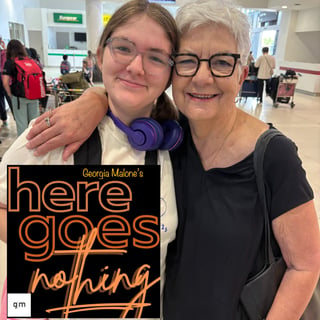
Speaker: On this month's episode of Georgia Malone's Here Goes Nothing, we meet award-winning physical performer Sarah Nelson, whose career has evolved from community theatre to mask, movement, puppetry, installation work, electric performance, and into advocacy built around Sarah's fight with long COVID.
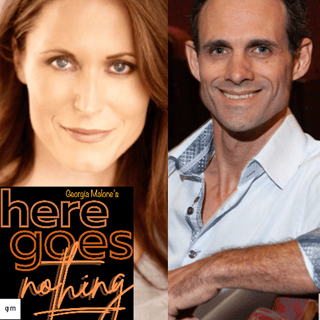
Speaker: Joined by Kelly McCluskey, Chief Executive Artist with PVI Collective, Sarah chats about her journey through challenge after challenge, pushing back against the burnout and stress that comes from funding cycles, as well as a very special recent accolade.
Speaker: Enjoy this great chat between two innovative artists sitting on the floor at Pico.
Speaker: Okay, well, I would just like to say welcome Sarah Nelson, award-winning artist, recent recipient of an award, which we'll get to at some point. um I'm Kelly McCluskey.
Speaker: I'm Chief Executive Artist with an art group based in Burrulu called PBI Collective. And it is an absolute thrill to be part of this series. And thank you, Georgia, for connecting us to enable us to have this chat. um So Sarah, welcome. um This is great, like artist to artist, peer to peer. We're going to get deep, stay playful, i'll get political, have some fun. I love that. It's like the framing.
Speaker: yeah um So where to start? I think... it might be good to start. I was thinking if we could time travel backwards a little bit to when we first met, just so that we can ground ourselves there, which I remember being your work, Mobile Moments.
Speaker: Proximity. Which is Proximity Festival. That was the first Proximity, wasn't it? Yeah. That was so pivotal and so amazing, that program. Yeah. So I remember, I have distinct memories of you driving us around in this um bicycle tuk-tuk. What was it called?
Speaker: Christiane bike. They're from the Netherlands. So that's the cargo bike. And there was a camera on um on your audience, on us, and you were asking questions. And it was such a beautiful...
Speaker: experience I mean for me as well making work outdoors and seeing someone else make participatory work and in such ah a generative honest way and it was such a simple beautiful proposition to just jump on this bike with you and have you cycle us around um and what i also love what you did with that is that you didn't end up using any of the sound or the conversations. You actually turned it into a video, this beautiful video where when you watch it back and you see the joy of these audience members kind of being cycled around and you didn't need to hear what we were saying. You kind of, as an audience member, you filled in the gaps, which I thought was like a really beautiful, clever,
Speaker: way to integrate and to take a work beyond like a performance realm into a gallery realm. And I mean, I guess as a practitioner for you, where did you start to realize that maybe the one art form wasn't enough or that you sat in between the gaps of multiple art forms? Do you want to talk about where you studied? Because I know you had a a big five-year training stint.
Speaker: My gosh, I might step back before that, but I love that that's the first kind of touchstone for this conversation because that, for me, in terms of my independent practice, was a really pivotal project.
Speaker: I started that project through DADA, who I'd been working with for years, and it was a residency in the Kimberley, and it was... riding that bike out on the marsh in the streets of Derby and with the Mullen Gym kids as well, and just really engaging with community on that one-to-one level.
Speaker: And the stories that I heard were so powerful and so surprising, but just this reminder about the simplicity of human connection and conversation. And for me as well, and we'll kind of open it up later more, but this...
Speaker: real love of non-verbal performance and how that as a film portraiture project celebrates just our fundamental kind of humanity. You see it in the eyes, you see it in a glance, you see it in the way that people remember a memory and you see, I mean, I had really beautiful moments of laughter, but also some really traumatic stories were shared as well, but how people felt safe.
Speaker: And I think as well, there's this real power and that project really reminded me of when we're in transit, when we're moving, when you're in a taxi, when you're in a train, when you're on a plane, this thing of how we have some profound moments with strangers.
Speaker: And so, yeah, that really anchored me, I think, in kind of trusting my interest in voice and other ways to create work outside of theater. So for me, I really started in theater from a very young age. And this was a real kind of moment of going, there's other ways of connecting with your community, not just being on stage. yeah So yeah, the training for me, yeah, i i had, I mean, I grew up in regional Victoria.
Speaker: So I think for me, reflecting on this kind of podcast brought up memories that I, yeah, hadn't forgotten, just maybe had parked. But yeah, just really seeing from a young age, from maybe the age of six, I'd been exposed to performance.
Speaker: How so? i And this is this is the bit the bit that shocked me because I thought my first kind of memory and creative experience was that moment that my mum came to me in the paddock and I was shoveling horse shit into the wheelbarrow, which incidentally is one of my happiest places. Like I get so happy shoveling shit, literally.
Speaker: But she came out to the field and said the local theatre company is needing a kid in the... next production, do you want to audition? And I just had this moment with literally a a shovel in my hand without hesitation and said yes.
Speaker: And so I thought that was my kind of starting point, but then actually on reflection, it involved a worm. Did it? What did you do with the worm, Sarah? not piece of radical performance art. Oh, I've snorted already. So I was in Curranborough for the first few years of my life and Curranborough had the Apex Club that loved to do the floats for the local parade.
Speaker: but we also went to Moomba in Melbourne. Do you? I don't know if you heard of that over here. So basically the streets of Melbourne were packed and it was floats from all communities around Victoria. And so for us, the first moment, Karambara was known and David Attenborough, he even actually did a bit of a story on it, the giant earthworms. So for one Moomba, they created...
Speaker: What I thought was a 30-metre long worm that maybe was 10 metres, but it was huge. But it was this big pink worm that, you know, there was probably what I thought was maybe 100 but probably 20 people inside and we were pushing and weaving this worm down the streets of Melbourne. Wow. How old were you then? Maybe six.
Speaker: Puppeteering. Yeah, and that's it. And I didn't realise that I kind of had put my hand onto puppeteering at such a young age. And then I remember one year it was Dot and the Kangaroo for the float and my sister got the role of Dot inside the mushroom house and I was the kangaroo. Great. And I just didn't realise I'd set up from quite a young age this relationship with animals and puppeteering.
Speaker: Yeah. It's really weird. I've put my body and my hand up many backsides of animal puppets but that's for later. So yeah, I think, yeah, and I suppose my folks were just, know, my mum in particular just threw a lot of stuff at me to see what would fit. But being in regional Victoria, it was the classic kind of thing of ballet classes, music classes, drama classes. yes And so that kind of really was a part of
Speaker: my upbringing from the age of six or seven. And did you find you took to all of that or you felt, i always felt like I was failing at the standard art classes and I just, i felt like I didn't, wasn't getting it right in any of them, but I knew had to keep going. Yeah, same, same. Like it was this both, some things made me feel like I was hitting a floor when I found myself. And a of the time it was this anxiety provoking kind of experience where you're from a young age, like we do as humans, but you start comparing yourself to others.
Speaker: And I think I remember early days of doing classical ballet training and I may have been year six or seven again. And I realized quite soon that I didn't fit into that form, that I wasn't pretty enough, strong enough, didn't have the right body, all of those horrible, you know,
Speaker: generalisations that are so attached to that form. But yeah, I kind of just remember early on going classical ballet training doesn't fit, let's go jazz and sort of found my fun. And I was so lucky that, you know, my dance teacher was just this wild fun woman. And so she helped me find the play within dance.
Speaker: And then parallel to that, I had a really beautiful drama teacher Prue Verme and actually just remembering her through this reflecting has been so lovely.
Speaker: Prue Verme was, yeah, a very soft, kind, generous human who helped find a way to go, here are your strengths. and support and guide me in a really beautiful way. And i just remember being in her, like she was a drama class at school, but then I had private lessons with her and she would, in her lounge room, help me prepare for the Trinity London speech and drama exams. yeah Oh, wow.
Speaker: but that yeah drama school drama school i bet it matters doesn't it to have those kind of rock solid teachers and the influence and the impact that they can have on you very foundational when you're being told around you that maybe you know i mean i was always like it's, you know, you can do the arts, but then you might want to have something else that is going to earn you money.
Speaker: Did you ever get that kind of like this sense of kind of is arts an actual career to be moving into? Did you feel for you that when you came out of school and when you came out of your studies, that there was a place for you to experiment and, you know, see how the the dance and the theatre and the puppeteering could weave together? Or was it kind of more of a kind of an accidental falling into jobs and gigs and then finding your way?
Speaker: think both. Yeah. I think because it was such an influence for me growing up, it was this thing that I knew and it was recognising, like particularly in high school,
Speaker: that I was, you know, I was quite good at drama. It was something that, you know, i enjoyed. But, yeah, i kind of went, oh, you know you know what, maybe you were right at this.
Speaker: And I remember in high school doing The Crucible and playing the role of Elizabeth Proctor and it was the first time I got myself into a really meaty role. And I just remember going, oh, wow, this is really fucking fascinating. And i really enjoyed that.
Speaker: um But i was also lucky that I didn't have parents who pushed me or corralled me into another kind of normal job or career path. I was always supported and encouraged.
Speaker: So I kind of did drama all the way through and I did, you know, these parallel tracks of music classes, dance classes and drama, but they all ran separately. And for me going into training in a career and as it unraveled more, it was like, oh, wow, these have all emerged and influenced.
Speaker: So when I finished high school, you know, and I did drama in year 12, I buggered off overseas for a year and deferred, but I actually applied for a Bachelor of Performing Arts and deferred. But, you know, I ah got the grades that I could have gone into any other career as well. So it was this kind of...
Speaker: just knowing that that was what I wanted to do. I didn't overthink it too much. And I travelled across Europe when I was 18 and I came back for it. On your own? Yeah. ah I set off with um three others.
Speaker: They were older than me. And then a few months into the travelling I was on my own and that's where I i met my husband, Matthew. It was very romantic. Was it? Where did you meet? Outside a toilet in a backpack.
Speaker: Oh, the romance.
Speaker: romantic girl. But yes, I came back to study and so I did a Bachelor of Performing Arts at Monash University in Melbourne, but it was what happened around that course that was actually quite pivotal in Melbourne. Yeah.
Speaker: So I kind of fell into being a student slash subject matter. What's the word? just Just go a participant. But yeah there was this lovely human Ash Wayne who was doing his PhD at BCA in archetypes and neutral mask and kind of transformative transcendental power of
Speaker: performance through mask. Anyway, i think for me, i I got this whole world open to me with Neutral Mask. So I trained with him on his thesis for nearly two years and opening up that world of physical performance and kind of diving into archetypes and metaphors and kind of that subconscious realm and how we express stories through our body was really like that's where I went whoa there's something happening yeah you don't need words there was something really powerful and primitive and important about that so that really opened up my body and heart and that's where I started intersecting or bringing in the dance and drama that had been separate tracks kind of started coming together and were you making your own work at that stage no not really I mean yes for assignments at school but they were little pockets it wasn't a body of work absolutely not
Speaker: And then around that time as well, there was a bunch of us from different universities in Melbourne that created our own collective, for want of a better name we called it, so it was Baba Ganoush. Great. um And we were... It's yummy. It's really bloody yummy, you know, and I think that's what it was. We tried so hard for finding a name and we went, think we were literally eating Baba Ganoush. There you go. like Here we go. that That'll do. Fuck it.
Speaker: But that was really cool as well because that was just a collective of us and we just trained in physical theatre for two and a half years. There was no performance outcome. It was meeting weekly and we would go off and do an intensive.
Speaker: But we all brought our skills and we trained in mask, um you know, Suzuki, Meyerhold, biomechanics and just played. And that was just self-initiated. Self-initiated. It was going, we, ah yeah, we just loved it. And I really felt,
Speaker: So ah inspired by it. I just think it was this power of moving with my body, but finding a way that there was a narrative that can come through your body. And so how did you end up in Bourlou in Perth from Melbourne? That is very good question, Kelly.
Speaker: So that was the moment after I finished uni, the standard kind of trajectory for many young Australian performing artists wanting to move into physical theatre is that you jump over to France and you go to Le Coq and I had that on the cards, I was getting ready to audition and kind of moved to France to do that training. But somewhere in that last year at uni, this newsletter I'd subscribed to had advertised the new physical theatre school here in Bourlou, which was Anastasia School of Physical Theatre. Wow.
Speaker: And i just remember this feeling, particularly because the studies that I was kind of really into at uni as well, we were looking at the next wave kind of in Australian performance making and how like the 60s and 70s were a pivotal moment of us finding our my own voice and expressing our own stories. And there was just this sense of kind of going, I want to stay on this turf and kind of investigate what that is. Mm-hmm.
Speaker: And I also remember coming back from overseas after being exposed to all of these beautiful cultures and languages in Europe and just really feeling this sense of, well, what the hell's mine? What's my place? What's my identity, culture, all of that.
Speaker: So, yeah, anyways, I just went, no, that's it. I'm going to stay state in Australia. And so without getting in, I packed up my house, the panel band got driven across the country and I auditioned and moved here.
Speaker: So I got into, yeah, the physical theatre school with Annie Steiner and that was probably, that first year in particular, pretty powerful and pivotal as well. um Makes you rest in peace.
Speaker: Annie Steiner brought such a unique magic and presence and authenticity about making performance and storytelling.
Speaker: you know her she was head of movement at wapa that's what brought her out from the yeah uk right um and she kind of carved out her own path but brought in the influence of mine movement archetypes st fairy tales and and metaphors and just kind of the tapestry of weaving stories through moving images it was just really yeah inspiring. And it was really lovely as well, because it's just for a brain that, you know, fires off in many directions, feeling how we can sit in something fast, simpler in our bodies and the way we express.
Speaker: And around that as well was Reg Bolton, who who was pivotal in shaping that kind of community arts engagement. His suitcase circus kind of program that he kicked off in the seventies in regional communities across WA was You know, he really paved that pathway, but it was just this thing of going, ah wow, you really don't need a lot to make magic happen. And he would literally go into regional communities with a suitcase of circus toys.
Speaker: Hi everyone, Toby Malone here. I'm just jumping in really quickly to say that the next two minutes of audio between Kelly and Sarah is a little bit rough. I'm not sure if one of them bumped the microphone, but it's about two minutes. So just hang in there. I was going to cut this stuff, but it's just too good. So listen carefully. You won't regret it. But yeah, apologies for the sound quality for the next two minutes. All right, back to the show.
Speaker: um You know, I went into circus for ah quite a while. and it was really yeah just incredible to see how there were so many ways in for so many people for circus and i i was really a deep sense of play as well that's it yeah and shutting our heads off and actually getting into our bodies and developing those neural pathways you know it's this invasive one-on-one stop but for me it really opened up the accessibility all marginalized communities and accessibility for all abilities so out of
Speaker: Dear Red passed away. Um, and I was really fortunate that his daughter, Sophie asked if I could pick up his program that had been running through the Armadale Noel Corporation, which was, yeah, funded by World Vision at the time, but it was, um, a circus and performance program for the kids out in the Armadale way.
Speaker: So Derek Nenna and yeah, ran that kind of program for a few years. So you moved into more facilitation at that point? where Yeah, yeah. I think I should probably back step as well, just because the beautiful memory of my daughter and Matthew has been amongst that program us there as well. Right. Yeah.
Speaker: So how old would she have been when you were doing that? She was in Matthew's marriage. So she was, yeah, maybe just over one, maybe 15 months. And so, yeah, I think that's ah that's really important to acknowledge. I mean, this five years of training,
Speaker: finished with total theater and then two weeks later then I was pregnant so kind of embarked on my career in the arts the same time as becoming a mom wow that is uh quite an undertaking it was and I wouldn't change anything like it really was did you feel like I know we felt like we're just strapping to us and keep on talking that's it yeah Yeah, that's right. And it's a beautiful thing. And I think that's something that i love about, you know, our industry is this, I mean, it's more so now. It was really hard as well because there wasn't that support. support
Speaker: Or even acknowledgement that you could allow to be a parent and an artist at the same time. That's it. You know, let's put the woman card on there as well. Like a really... I was fortunate that the very first professional gig I had was Spare Parts Puppet Theatre and dear Philip and Michael taught me so much, but also were just so beautiful and darling, your child's welcome.
Speaker: And those early memories of Amelie pre-setting puppets, you know, and being in the rehearsal room and just being able to be in that space. was so beautiful for her, but also this thing of going, yeah, you can move forward and have a career as an artist. But sadly, those moments became really, really rare. yeah The more I moved down the career path, I went, oh my gosh, that's surreal.
Speaker: Yeah. So what was your career path from there? You then jumped over to work with DADA, which is Disability in Arts, Disadvantaged in the Arts Australia. So, again, kind of facilitating workshops and making work or? I was running the ArtLink program. Right. Yeah, which was the respite art program for kids with all abilities and their siblings. So I ran that program for three years. So that was yeah integrating all forms, so circus, painting, drawing, photography, film.
Speaker: And I think that, yeah, really indirectly influenced that there's so many ways in to create stories and connect with communities. And yeah, through that was the residency for Mobile Moments, which kickstarted that.
Speaker: I mean, I did that again. I've had a good 15 years of life, mobile moments. Well, it's such a simple concept. those Those live on. Like I think when you overcrowd things, it really what I love about that work, just circling back round to it, was the was the refined simplicity of it. but That it was just and that takes um that takes a great deal of um artistic sensibility to be able to take stuff away. Yeah.
Speaker: and It's so true and it's really shit how hard it is to be simple and how much we forget that as well. We get so caught up in the noise and the possibilities or just there's so many things that come in that we forget the fundamentals of trusting a simple story or a simple exchange. We forget the...
Speaker: the power and importance of smiling at a stranger um and connecting with communities in a very basic way. Having a cup of tea and a conversation. we don't have to wait for two years for the fronting to roll out to deliver this big thing. Like how, yeah, I'm really reminding myself of that, particularly now moving back into the industry after having a major disruption to my health and that is such an important anchor and the only way I can move forward is really remembering the power of simplicity and being kind and careful.
Speaker: Well, let's talk about that now that you've gone there. We're sat in your studio at Pika at the moment and all of the fluoro lights are out because fluorescent lighting is actually toxic.
Speaker: we They are the devil's spawn. And can cause seizures. And this has all really come about through um through COVID. Do you want to touch on what happened? You were overseas at the time. Yeah, um I'm really comfortable and happy to talk about it. I think I want to do a little precursor to it and acknowledge
Speaker: i you know all the the winding roads that kind of really allowed me to have... a career as a maratist and a mum, you know, for 20 years. I really was able to do that. It was freaking hard. Did you have a moment where you were like, this is it, I've landed, this is how it's going to be? Briefly.
Speaker: And then what happened? I burnt out. Yeah. Yeah. It's really hard. um And I think I kind of got to a point where I was saying yes to so many things to keep you know, I engage with my kind of my skill set in my career, but it was also the practical reality of keeping a roof over our head and bringing up a kid on our own. yeah Yeah. kind of found my energy going in all sorts of directions, but also doing a lot of gigs that weren't feeling relevant and important. And my soul was slowly getting kind of thrown around. And so
Speaker: Prior to the yeah UK, I hit burnout and I hit a point where I was ready to leave actually. The industry. The industry. Yeah, yeah. I'm not going to lie. it was um It was the right time for us to make the decision to move. My husband's from Northumberland, Scottish borders, and it was very, you know, been on the cards for a long time to go back and have time bringing up our kid there.
Speaker: at the moment that it happened was me kind of going forth. I was kind of this duality of kicking and finding my stride as an artist at the same time going burnout, I can't do this anymore. And that burnout was a result of the, I'm just guessing, but ah partly I suppose is the constant relentless cycle of project funding that independent artists find themselves stuck in this cycle because unless you incorporate and become a company to enable you to apply for what was at the time in this state,
Speaker: annual funding, you know, you could have an annual program. If you weren't, and then tri-annual, and there was a pathway, right? But as an independent practitioner, Then and now I feel like there's still that exhaustive, relentless cycle of project funding of just trying to get the next project up and there's nothing in between that can hold the artist to help support their, you know, then their actual job of work, which is being an artist. so
Speaker: do you find, and that was a really long statement. It might have been a really important one. Yeah. it it Was that what triggered the burnout or was it multiple things? Was it multiple?
Speaker: But that that part I kind of dealt with early on. I remember, you know, producing my own work quite early on.
Speaker: Um, but also realising that that funding kind of process as a young mum, I wasn't a known or established artist. I was getting no support, mentorship. I was missing out on so many kind of, I was that shortlisted artist who'd missed out on so many mentoring opportunities. You're young enough. You're too old. you Who are are you? yeah What are you saying? What's the point?
Speaker: I just kind of had all of these new misses. But I was also on a relentless train of applying for funding to get my own work up. And kind of the work that I'm producing now is very much anchored in what I was dreaming of 20 plus years ago. But I remember after I think so five rejections, I didn't have it in me anymore.
Speaker: My confidence got smashed. yeah But also it wasn't as important as going, right, my child. I've got to find a better way and that's where I kind of moved into just working on other people's projects and Becaming.
Speaker: Becaming? Becaming. How are I Becaming? Becaming. Or mentor to others or collaborator? Just collaborator, performer, you know, and I worked, you know, over the years with all the major companies here. but and a lot of independent artist projects. But yeah, I basically worked on other people's projects because... What do you think would have helped you at the time? And I mean, we can talk systemically in terms of funding, but you talk about you didn't have much support. Were there kind of peers and artists um around at that time that that that helped or that could have... what What do you think, if you were looking back, what could have helped hold you to prevent that burnout?
Speaker: Support, being recognised, mentorship.
Speaker: We needed, yeah, just and still to this day more of a new for funding. But space and time and recognition is really important. Yeah. Creating space for, you know, artists whether you're emerging or established. We still have all of our human kind of traits and flaws and just being able to actually have space to be seen and supported.
Speaker: And that's in so many ways. And I just felt I, as I said, near misses and I just felt very isolated. It's interesting, I was looking through the Swinburne University um ah report in preparation for this talk with you about mental health and wellbeing in the arts in Australia. And it was conducted in 2024. And I wanted to read you one of the statements and I will go through before we talk about your experience, ah just to ground us in where we are in terms of mental health and wellbeing.
Speaker: In 2024, we have, of of all of the surveys, the artists surveyed at the Swinburne Uni um um a report, 54% of artists report high to very high psychological distress. And that's particularly music and performing arts. um Post COVID, one fifth of us left our our jobs or our other jobs, because a lot were trying to hold things together and still do working in other industries. 20% have left the industry, this is 2024.
Speaker: 41% of us were in increased financial stress. And this one just really choked me up that all of the people surveyed, 57% of artists were reporting suicidal ideation.
Speaker: this is 2024 and you were talking you know 20 years ago and these feelings that you were having and the sense of there is no support there's obviously been a massive chasm of of lack of support like a big black hole um and then there's this shiny ferris wheel of project funding that's kind of floating above it but i guess I wanted to read you one of the quotes of one of the artists said that what they ultimately wanted was to be paid for what we are worth and for people to recognise what we are worth, which is exactly what you've just said. It's spot on and it's it's
Speaker: it's sad that we're still having that conversation, but sadly it's getting worse. Like I was feeling this 20 years ago and throughout and it's still something that all artists independent through to orgs like there is this real I think crisis with our health and how this beautiful wild ride in this industry has this double-edged sword it is the most incredible industry to be a part of we have such opportunities to really tap into
Speaker: stories, community, sharing, our humanity, you know, self-expression, all the things that we know and love of the arts. But within that is this double-edged sword of relentless burnout.
Speaker: Yeah. And... Would a living wage for artists be something that you think would have helped then and would help now? Gosh, yes. In what way would have helped you back then?
Speaker: It's a baseline to go, I can meet my living costs so that then I'm not having to do so many hustle jobs to keep the roof over our head and food in my child's belly and allow for...
Speaker: that space in your heart and head to focus on the integrity of the work that you want to do Like it really, there is so much of our energy goes towards survival opposed to creating.
Speaker: And it actually doesn't, I don't think take much to pivot and work with what we've got. It is actually about prioritizing, respecting artists, you know, and reallocating existing resources.
Speaker: I mean, Ireland's done it. They ran a pilot program for a basic wage for artists and now it's become permanent. So I think it's an interesting model in terms of wanting to challenge that systemic um failure of funding systems to not recognise the living, I guess, earth how to stabilise the working lives of artists beyond just receiving project funding. Absolutely. I also wanted to say, though, indirectly, because my career path for various reasons led me to taking a lot of jobs.
Speaker: I can reflect and go those side hustle jobs or those other jobs. I was always consciously aware that I wanted to root a lot of those still within the arts or community in some way. And they actually indirectly also became a huge influence in tapestry for where I'm at now.
Speaker: You know, I've gone from being a cleaner, a carer, and connecting with people, you know, who are really vulnerable in their homes and taking care of someone on a practical level through to the Starlight Foundation and being a Captain Starlight, interacting, you know, with kids in oncology, you know, and their families and this kind of how to find that that moment connection, you know, in a really short time.
Speaker: As much as I kind of in many ways wish that I could have a more balanced and support and control and agency over my choices,
Speaker: there was so much influence that came from all of these other jobs that helped ground me, I think, in staying connected to your community, not just a career and being stuck in your head and your own kind of ego and path. yeah And I think it's like everything, we've got to have a balance. But I think that if I had sliding doors and motherhood happens later and I've got support as an emerging artist and opportunities to help kind of build those skills and platforms,
Speaker: Maybe I'd be, you know, a bit of a diva. Maybe I'd be on a completely jump path. You are a diva, Sarah. Sarah Nelson, you are a diva. So I'm going to jump us back because we kind of jumped there and then we took a bit of a segue. We're good at jumping. What do we call a side quest? We side quested there. We side quested. Into a living wage, which is an important conversation. Really is. But I do want to get to where you're...
Speaker: physical and mental health were fundamentally challenged and changed you, I suppose, in ways that you never could have seen coming, which was when you went back to the UK with your partner and family, decided to leave the arts behind you.
Speaker: Not quite. Ah. See, that's actually, yeah, intersection, sliding doors, whatever. But I had been, yes, considering it was all off, don't do it anymore.
Speaker: But then some lovely little seeds happened that helped sustain that. And I really want to talk about balance, work-life balance, because this moment of moving to the UK was disruptive and challenged, but also beautiful. And it took a good kind of two years to settle there and set up life there.
Speaker: But man, there was a window of perfection. We were living in this beautiful village in Northumberland and I was galloping on horses up hillsides. hugging cats in front of, you know, wood fires and having this beautiful regional lifestyle and then jumping on a train on a plane or a plane and touring the world.
Speaker: You know, I was working with Barking Gecko back here in Australia. I was working with The Last Great Hunt touring to North America, Europe. I started work with this incredible full mass theatre company called Vermos in the yeah uk And so I was traveling around the yeah UK and Europe with them. So there was this beautiful kind of moment of going, i was working on shows that reminded me of the power and importance of theatre.
Speaker: And you're living the dream. And I was living a bloody dream. I was literally finding that balance of taking care of what my body and heart and head needed, living in this really beautiful, idyllic situation.
Speaker: But then also having the opportunity, and is where i do love the arts, is the opportunity to travel and meet communities all around the world. But both of those shows in particular, It's Dark Outside and Finding Joy, were both about dementia.
Speaker: Wow. And they were both full mask works and they both,
Speaker: importance and power and how they connected with audiences. So wait, it's dark outside. You were the old man. I was the old man with dementia. Beautiful work. Still to this day, such a beautiful work and such a beautiful role.
Speaker: And, you know, to have people in tears who don't speak English after a show and just going that that touched and you were seen and recognised for your reality. Because dementia is bloody horrible and hard. Oh, yeah. For the carers, the sufferers.
Speaker: And touring with the Moss, it was so amazing as well, because it was, it was finding joy through caring for someone with dementia. And it was very much focused on carers. And so the response from audiences for carers of those with dementia and to have them seen and validated. Yeah, they're often overlooked. So overlooked. to it was also so there's this really fun, joyful show. I was playing five different roles, you know. i was I had a line of masks behind the set and I would literally rotate within 20-second changeover and become another character. And it was just...
Speaker: Yeah, tapping into all of this kind of storytelling through mask and movement and but really feeling that tangible connection with audiences. I've forgotten. It's so much of that. Maybe forgotten. I just wasn't having enough work and experiences here.
Speaker: What is that moment? What is that moment, Sarah, if you could put it into words, of knowing that you've connected with an audience member in a way that you know is kind of special for both of you? What does that feel like?
Speaker: I sometimes catch the glint of an eye of an audience member and I just kind of go, yes, like that makes me so happy. It's in your eyes right now. Right. And I just don't think words can go there. It is. It's amazing.
Speaker: Yes, we can go, it's obvious, through someone saying that was wonderful, you know, thank you, all of that. But it's about the unspoken moment of connection. And you can feel it when you're on stage and it's an audience of, you know, hundreds or thousands and it's it's a dark room. You can feel it.
Speaker: You don't need to see it, but then you have those moments post-show where you do see that vulnerability and that truth in someone's eyes. And that's... Yeah. A special thing. It's what it's about. It's what it's all about. But yeah. So joe you were in your happy place. I was in the happy place. Oh, what the fuck happened? Fucking COVID.
Speaker: All right, let's go there. So February 2020, London, I was performing with Earth Visual and Physical Theatre Inc. at South Bank in London. So they were...
Speaker: yeah, touring to Australia and I performed and went with them before and it was great that I could hook up and do the show again with them in London. But this was kind of COVID was still in China, so far away. And so we could feel that this shift was happening in the world, but it was business as usual.
Speaker: So yeah, I performed this show, but I had had pneumonia in November prior to that, which doctors later look back on and go, well, that could have been something else. But I was kind of coming out of being, yeah, quite sick.
Speaker: had built myself back up a bit and did this show. And then I left London and within three weeks it was a national lockdown and I was sick in bed within days of returning from London and I never got better.
Speaker: Wow. Yeah. So while... When you say sick in bed, what what it was beyond whatever they figured were ordinary COVID symptoms at that time. There was no... There was no vaccine. So yeah, that's another debate. and but Not a debate. That's another conversation because yeah, that that kind of... I recognise that there has been a lot of vaccine injuries, but for me, my disruption to my health came from the virus.
Speaker: um So for me, I kind of had in the early weeks, it was just, yeah, this really relentless fatigue, the coughing, headache and post-exertional malaise, like just a little walk, a little task. I was just floored and I didn't get better. I actually just got worse.
Speaker: um Kind of in short, it was just pretty much a year and a half in bed. Wow. I was around 10 months into lockdowns. Like this is the yeah UK as well, just to like acknowledge that it was a very different experience. We had a very isolating lockdown experience for a long time.
Speaker: But, yeah, 10 months into lockdown, I think it was. ah Yeah, it was it was pretty tough, but I had this kind of... Were you in isolation or were your family...
Speaker: I was with my husband and daughter. We were living in isolation, but the rest of my family, we, yeah, it was, I remember about six months into lockdown, my in-laws coming around with plastic suits over their bodies so that they could give us a hug, you know.
Speaker: But, yeah, i was um I was shot off in an ambulance displaying all signs of a stroke. I was hospitalised for three days during lockdown, so i was alone in hospital as well.
Speaker: And that kind of was the moment that marked me yeah, next level significant change and COVID likes to find the weakness in our systems and for me it's neurological. So it was really, really shocking and debilitating and I didn't realise kind of how sick I was because you're just kind of in it.
Speaker: Yeah. You're like, let's just fix this thing. Let's just fix this thing or the thing's going to pass. It's going be... yeah, it'll get better and it and it didn't. And i remember feeling a sense of alienation because it was new. What was this long COVID?
Speaker: No one was validating the experience. And just to kind of actually bring it back to stories, the moment where I felt a sense of relief and recognition was watching a documentary based here back in Australia, it was in Sydney, I think about long COVID.
Speaker: And my auntie, who was a really great influence on many fronts, but creatively as well, she shared this documentary with me and through this storytelling, I felt recognised and seen. Everything that she described was like, oh my gosh, yes, that's what I'm experiencing. Because all your tests are coming back clear. Everything's wrong, but nothing's showing that's wrong.
Speaker: You know, to have a shower was a huge win on a... any day. Yeah. You know, basic living and tasks were really taxing and challenging and you were pure normal.
Speaker: Did you, um, did you have a moment where you felt like this is my new normal? I have to find a way. Constantly. Yeah. I'm still doing that now. Yeah. Six years on.
Speaker: Six years. I think as well, I was a shock to hear my husband say like two years later that he wouldn't, he was, he was prepared and seeing that I could potentially die. oh I didn't realise I was that sick because I just was in it and doing it, you know?
Speaker: Yeah. So, yeah, it was a major disruptor and I'm adapting to this day. We got back to the, we got back to Borloo 21, I think it was like August, September. Okay. But that required so much. I had a personal trainer, man, for six months working from home just to get me out of bed, to get on a plane.
Speaker: Wow. And then actually quite extraordinarily to get here to land with a work with Tara and Gill and Cat Osborne with my home like a peek of here.
Speaker: And that for me was, whoa. Such a gift, but also such a challenge. But I want to really acknowledge how supportive I was in that in that chapter.
Speaker: I want to talk about that return to to work. How, i mean, you're saying you're still figuring things out now. We talked about fluorescent lights earlier. How much has it radically changed?
Speaker: how, I mean, what venues you can go into, the conditions in which things work for you or trigger you. What additional things are you having to think about as a a maker of performance?
Speaker: It is hard. hard And this is just where, yeah, my awareness and empathy has just tenfold evolved in terms of invisible conditions, neurodivergence and how noisy this world is and inaccessible so much of the world is. Yeah. so What can we do better, though, in terms of as an industry?
Speaker: Well, you guys have just done it for me, you know, with um your beautiful booster protocol with Firth Festival. like But there was there was this moment of you guys being able to really go, we can turn the lights off. We can allow for rest.
Speaker: We've got a plan if your body starts relapsing, we don't need get an understudy, there's a window of opportunity for you to get out. You know that your consideration and care approaching my needs allowed me to do it. Yes, it was challenging, but there's so many institutions and environments that don't even recognise that simple, significant things can make someone feel seen and supported. And I've actually been masking for years.
Speaker: I had, on even pre this condition, it's something that we as humans do. and That's another kind of conversation. yeah But, you know, i had we got back and had i had to go to work in some way. We needed to buy a house. We needed to set up life again. We came here with suitcases. All of our savings went to travel and quarantine and,
Speaker: I wasn't working for, you know, two years prior because of my illness. So it was a real kind of, we just had to do it. So I was working part time and that particular chapter, which was three years, was incredibly taxing and triggering to my health because the environment of the work wasn't allowing, not allowing,
Speaker: It was really hard to communicate what my needs were when I was so normal. Yeah, right. And that I could function at work. They couldn't see the cognitive impairment that it would take half an hour to write a one-sentence email.
Speaker: I don't see the pain and pressure that's constantly in my head that feels like my brain's about to explode and that's amplified when you go into a room where there's people talking and lights on. It's just like a sensory assault. Yeah.
Speaker: every action and interaction has consequence now for me every day that to commute to have a conversation to go into this shop to go into this you know it all contributes to relapse that leaves me going from being normal looking normal to not being able to walk and talk and so it's just this been this really
Speaker: discombobulating time, but you've kind of been in survival mode, but it's also just this kind of way of reevaluating how and why I work in this sector. Yeah.
Speaker: I'm thinking about, I mean, that's an incredible journey that you've been on and that you're still going on health wise. What, What for you moving forward, what's really keeping that fire in the belly?
Speaker: I mean, extraordinary tenacity, just hearing what you've been through and what you're still going through. What gets you fired up? Is it making new work?
Speaker: Is it collaborating with others? Is it? I think for me it's remembering why. And I think that's what we're...
Speaker: losing so much of in this sector is we're forgetting why and having a reason and having rigour. We kind of just throw a lot of shit to the wall and throw a lot of things that are wasted and it's like let's just bring it back and remember why we're doing something and the reason for it.
Speaker: And so for me at this point, literally, it is making a work inspired by my experience. And it has literally, I think, saved my mental health. I was going to ask how you negotiate it kind of spiralling you down in terms of having to go there in terms of the extent to which you were suffering and and working with it to lift you up.
Speaker: How do you negotiate that when you make work that's so autobiographical? I've heightened it. I've literally detached the experience into objects. That's so beautiful.
Speaker: How clever. Slash kind of just subconscious rollout and all those influences of your career and life kind of feeding into something. And I think it's also broadly speaking, remember that artisan projects is a time and place.
Speaker: and And I literally conceived this work when I was bedbound. You know, the amount of... pain I was in, I was stuck in my body literally. Like some days I couldn't move, I couldn't lift my arm. So you're just left to your imagination.
Speaker: And there was this beautiful thing that kind of happened where I just started translating these sensations into images and objects. And things that were really rooted in my reality and my everyday experience became inspiration objects for heightened imagery. And I love being carried away with dreamscapes, heightened imagery, surrealist kind of tapestries, but they're all rooted in reality in some way. They're all rooted in a reason.
Speaker: So, yeah building this work from a really painful place, so it's just this thing of going, actually, fuck you, you're not taking me down. And also that feeling of not being seen and validated, you know, and watching that documentary, I went,
Speaker: There is literally hundreds of millions of people who were left in the aftermath of COVID. So many. But how isolating that And then no one's talking about it. that's it. And that's why it's like it's like this collective forgetting, isn't it? It's too hard. It's too traumatic. It's like our you know our history of this country. Actually, no, we need to recognise the truth and talk about that stuff. And it is uncomfortable.
Speaker: And it's fucking important. Well, that's the power of truth telling. That's it. And that's where I feel. Yeah, totally forgotten the thought that That's what happened. Fire in the belly. Fire in the belly, guts and heart. There you go And it is. It's just that that thing of being able to go, this work is literally something that is helping me process it happened, but I'm very intentional about making it accessible to so many people that the story can be interpreted in whatever way. Yes, it's rooted in my experience, but because of the form,
Speaker: it allows for universal appeal, I think. And, you know, from the showing so far, it does. It really, I've had some genuine responses that have really brought up for different people. Yeah. So it's, i can't remember what the original question was and that's okay. Is turning, is turning that,
Speaker: trauma into something in ah in a work in a way that isn't kind of navel-gazing and dragging you down or audiences down is using it as kind of like it's cathartic yeah but I'm doing it I hope in a way that's not all about me it's about being conscious of a collective need to be able to sit in discomfort and to talk about it and to know that within that there's laughter there's humor You know, i still struggle with the word hope, but it is. It's finding hope. It's digging in and finding hope in. oh
Speaker: o We just did the symbol for radical hope from PPGY's booster protocol. And it is. It's this thing of going, if we lean in and sit with discomfort, we can cut through the bullshit and actually create better work and and cut to the truth of how we need to connect and make our communities healthier.
Speaker: And don't we need that more and more these days? Oh, my God. Those stats that you just read out, you know, mental health. How much we've shoved that shit under a rug? How many people are leaving the industry silently?
Speaker: Yeah. And going into other career paths or falling in a heap with their mental health all over the place. Yeah, and the shame and the self-esteem crushed feelings that you exit the industry with, I can imagine. And it doesn't take much to pivot it back, whether you're a producer, programmer, AD.
Speaker: It's going, how can we do simple little things that respect and acknowledge artists and the diverse needs of our audiences? Yeah. and the collective sector. And, you know, it's feeling like just coming from Strut doing their beautiful Dandor workshops, a part of Perth Festival. It was the one of the few moments as well of going, I can be in a room where your access requirements are met that are invisible for most.
Speaker: But there was this permission to meet your body where it's at. Yeah. And that's what we're not doing enough. And that's not hard. Whether with or without chronic illness, it's like can we meet our bodies, our hearts and heads where it's at? Yeah. Stop pushing.
Speaker: Stop going, let's go through burnout and it takes so much and we've got to kind of fall in a heap after we deliver. How do we slow down, take a breath, be more resourceful and do some simple things that can have a significant shift to make people healthier, but also to help our work really connect with our communities in important and powerful ways in all of its forms. Yeah.
Speaker: Go, Sarah Nelson. Thank you so much for chatting. i think that's a beautiful place to leave it, unless you want us to keep going, which I'm more than happy to. mean, we haven't even gossiped yet.
Speaker: think... i think There is that one. i think we've kind of answered it though as well. oh Sarah, it's so great. It is. You're great. i'm i think I'm surprised that we didn't do silly voices at one.
Speaker: Do you know what? You have a tendency to do make fun of British accents and so do why And then when you do it, I start to do it and I'm like, I really hope that doesn't happen. like I just, you know, this, it's just so lovely to have a conversation and this is the thing as well is like,
Speaker: Let's just strip away the noise and the shit and make space for conversations. You know, just on the weekend having an information session for a program that I'm producing, it's like, oh, yeah, we're sitting in a circle and we're having a conversation about storytelling, you know. And how, yes, it's about some pretty tough stuff as well, but it's also like...
Speaker: yeah just remembering the importance and power of slowing down taking a breath and prioritizing your well-being man it's like it shouldn't take it should it took it took chronic illness it took severe disruption and pain to my body to wake up and learn a lesson yeah same for me yeah yeah i hear you can i ask for you what that
Speaker: Yeah, though like how you held yourself through your health and how you've navigated. Oh, it's um we flipped it. so um It was so interesting to hear you talk about it, Sarah, and that that you sit in it and you just try and get on with it. So i was diagnosed with breast cancer, had went through the full...
Speaker: chemo radiotherapy tried to have reconstruction they found more um so then it metastasized so then you go through more and then you're in the hospital system for what feels like an eternity and you're having your ovaries taken out and you're and it's like a massive massive and you just kind of like sit in the reality kind okay and now this is next now this is next but you don't have that um
Speaker: sense of distance to be able to evaluate how you should be responding. You're in survival mode. You are literally in survival mode. Yeah. So I totally hear you on that. And then the realisation that perhaps this is, you know we can work towards incrementally improving things, but that's going to be a slow journey. And why are we rushing? It's like that quote, isn't it? What? Everything's urgent. We need to slow down. We constantly got that in our heads.
Speaker: But hearing you talk about radical care is so important. And I think from a sector perspective that we can you can know We can make work about amazing things, but if we're not held within a funding and a systemic kind of, you know, infrastructure that also cares about these things, then um again, once again, it comes down to the artist. The artist is the one that is actually propping this industry up, if you think about it.
Speaker: And without the artists, we don't have these festivals. We won't have these institutions. We won't have these kind of gatherings. So there needs to be like an absolute revaluing. And I think that Revive can do this through its pillars when it talks about centering the artist.
Speaker: It's like, well, then let's do that. Let's acknowledge the fact that none of these things will happen unless the artist is kind of supported to be their best through it.
Speaker: So I don't know why I went there, but that was, I don't know what you just fired up in me. ah I was just like, no! But it's so important. and I just want to ads individual responsibility and accountability because the system's not gonna change from the top down. It's that grassroots remembering of how can you as an individual without it being a burden that pulls you down, but how can you champion and advocate for what you need be a healthier human and with or without yeah disease and chronic illness? yeah Actually, can we turn down the stress levels? Can we turn off the burnout?
Speaker: And that's up to you as an individual. That's about you creating boundaries. not a badge of honour. It's not. it is not a but it It has been worn as a badge of honour to the cost of physical and mental health. Stress, man, is so... sickening And because my nervous system is so inflamed, yeah I feel stress and what it does to our systems.
Speaker: And people are getting sick and we need to stop that shit. And we're in a very privileged position here as well, would acknowledge here. Like here in Berlou, like we are so privileged and we're two white women who have had a lot of, I think, support and love and basic needs met growing up.
Speaker: But there is still that universal need to really prioritise care and consideration and it starts with you. You know, Confucius for one of, i can't remember the quote, but if you want to put the world right, you've got to start with yourself, man.
Speaker: And so here's to looking after ourselves and caring and slowing down and taking breaths, remembering why we do this thing and how powerful and beautiful this thing is when it works.
Speaker: Like it is a moving meditation as a performer when you're on stage tapping into something and connecting with a bunch of strangers. It's a beautiful thing when you have a moment with a stranger who's seen and recognised for the first time in a storm of shit that your work, that, you know, you're planting little seeds of radical hope and care through, you know, those immersive experiences that you do out on the streets. It's like, let's strip it back.
Speaker: keep it simple and keep it meaningful and and look after ourselves.
Speaker: Before we wrap up, Sarah and Kelly, I'm just going to break in here. Usually I don't do this, but I think it would be really nice to just spend a couple of minutes speaking about the George Malone Artist Award, which you were just a awarded. So, Kelly, maybe you could talk us through Sarah's honour. Mm-hmm.
Speaker: So Sarah, I mentioned earlier ah that you're an award-winning artist, which I know a lot of us like to put on our bios, but this is a very recent um particular award that I'd like to unpack here, and in particular that this is Georgia's podcast. What award did you win recently, Sarah Nelson?
Speaker: ah The inaugural Georgia Malone Artist Prize with Minderoo. So... That legend of a woman left, well, before she left, she was a trailblazer and she is and knew everything that we're talking about. Like she was one of those humans who got it and genuinely advocated for artists. I know. I feel like this is for you, Georgia. it is like She did it and she knew it, but she kept herself behind the scenes and was in that position of really, you know, creating change.
Speaker: But she got it. And she was pivotal in carving out the Mindaroo Philanthropic Artist Fund program. And like that is what we need more of is philanthropic pathways and support. That the way that she has left a legacy through that program, through this podcast, through so many, you know, memories and and moments that so many people in this industry have been touched and remembered by her. But to have this award,
Speaker: was such a shock and surprise. A, didn't even know the category existed until we were there. and I would have loved to have seen the look on your face. First of all, it was just this beautiful kind of feeling of how wonderful that there's ah an award in recognition yeah of this beautiful woman and the legacy that she will continue to leave.
Speaker: But then to be a recipient man, oh, it was just a real beautiful shock and a real honour because I have to say, like it has, it's's it's been a really hard slog to physically do this this work and develop this show. I'm literally peeling myself off the floor.
Speaker: And, yeah, just to be recognised in her name is yeah is such an honour and I'm really grateful. And I feel her and it's lovely, you know, because it is a reminder that our health is so important. and Not all of us make it. Yeah. and so dig in, look after yourself because this life is short and it is so sweet and it is so wild and it is so hard.
Speaker: But, you know, we have to look after ourselves and celebrate what we've got. And, yeah, it's a beautiful thing to have this award. And it's going to really help me. And this is the thing.
Speaker: is how to make a sustainable practice like I can't go in and do two weeks intensive development I go back into hospital it's like slowly over time it's like having that space and that resource of a bit of money just to chip away at something so that I can rest and take care of myself but still continue this work that is allowing me to do that for the rest of this year well congratulations I can't think of a better recipient and a better way to honor Georgia really yeah well done you well done you hey Hold on, everybody.
Speaker: What an inspirational, important chat that was. The advocacy that Sarah and Kelly champion are exactly what we need at the moment. And as a former actor with a chronic injury earned on the Perth stage 25 years ago, I can only hope that this kind of energy will continue to make a major change for future generations of performers.
Speaker: Speaking on behalf of the Malone family, I want to say how thrilled we are that Sarah was named the first Georgia Malone Laureate from Minderoo. Georgia was one of Sarah's biggest fans and would be so thrilled to know we had a chance to bring her onto the podcast.
Speaker: Be sure to share this episode, particularly if you are a member of the Perth Performing Arts community. Georgia's mission of pushing the ripples outward are really bearing fruit, and we continue on our mission as we near the one-year anniversary of her passing.
Speaker: We'll see you next month.
Speaker: Thank you for listening to Georgia Malone's Here Goes Nothing. This podcast is dedicated to the enduring, impactful and dynamic memory of Georgia Lindsay Malone. We produce and maintain each episode in Georgia's honour to keep the ripples moving.
Speaker: Georgia Malone's Here Goes Nothing is produced and engineered by Toby Malone with the support of co-producers Joe Malone and John Carter. original theme music by lu and blue as for where this podcast is based let's let georgia get the last word This podcast was made on Whadjuk Noongar Budja, a place I'm very privileged to call my home, and I acknowledge and honour all Noongar people that have been making art on this land for tens of thousands of years, and will continue to do so for generations to come.
Speaker: Always was, always will be Aboriginal land. This is a GM Productions Project.