Transcript
Speaker: Peter Brook spoke of the empty space as all you needed to create art. Take a space, walk someone through it, observe by someone else, and you have an active theatre. Finding space, of course, could be the biggest challenge of all, with soaring rent, gatekeeping producers, and inadequate square footage, meaning that finding a space to rehearse, let alone perform, can destroy a young artist's ability to create.
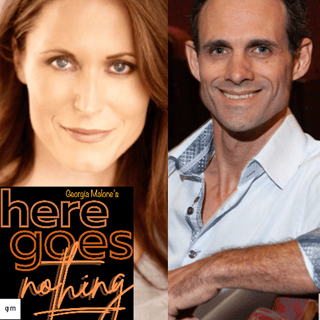
Speaker: For this month's episode of Georgia Malone's Here Goes Nothing, we meet an artist who is finding a way to provide that space so the art may follow. James Berlian is a multidisciplinary artist with a keen understanding of audiences, process and secrets, who has created the vital West Berlian space in Bayswater to facilitate a place for art to be made.
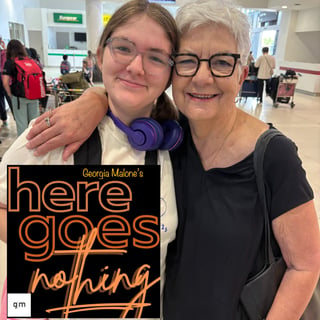
Speaker: As the winner of the inaugural Power Ripple Effect Award in honour of Georgia Malone, it was vital to invite James to join us. Brilliantly interviewed by the thoughtful, articulate Geoffrey J. Fowler.
Speaker: Enjoy the conversation. i was thinking the other day, James, I was trying to remember when I first met you. And actually, i think it came up. We had lunch last week. And I think my first memories of you were when you were doing Tawdry Heartburn at the Blue Room Theatre.
Speaker: And I kind of saw it in the program. and caught wind of it and then met you. and I thought, what? That's funny. How funny. You were telling me more about that for performance the other day and how many performances of it you did in the end.
Speaker: Yeah, look, it was it was a really interesting time. um i went to a symposium that PVI was putting on. It was their 10th birthday symposium about interdisciplinary performance. And I was about to turn 40 and realised that I hadn't really been the artist that I thought I could be.
Speaker: At that stage, I had... um I was an acting project officer at um what was then Department of Culture and the Arts for six months and ran screaming from the building thinking, I don't want to be an arts bureaucrat.
Speaker: It's important, but it's not for me. um And a whole lot of things conspired to allow me to really consider At 40, if I was going to do this thing that I had been passionate about for most of my life, um but wasn't currently doing, then I'd better do it now.
Speaker: PVR had done, as I said, a symposium about interdisciplinary performance, and I thought I could have a go at making a multidisciplinary performance. Long story short, when I had been a full-time performer in Perth from in the late 80s to mid-90s, I had been a professional dancer, an actor, um a cabaret performer. I'd tried my hand at everything and I think ultimately that's why I returned to Perth because I love...
Speaker: the opportunities here. um And ah yes, long story short, I had become a nail technician in Sydney after that perth first Perth stint um and realized that I never wanted to run my own business.
Speaker: But out of it morphed a drag character who would do people's nails at raves and dance parties at four zero in the morning. And the most interesting thing about that was this exchange of service and the stories that came out of it.
Speaker: And so I decided to build a show out of an experience from... five to eight years ago and I didn't want to do a drag character but I loved the drag name Tawdry Heartburn, Audrey Hepburn, um but decided it would be a man and the reason being that I had found people are more willing to tell stories of a personal nature to a complete stranger or to a character.
Speaker: And so I built one-to-one performance where I would do someone's nails, and yes, I trained, as I alluded to and in exchange for a secret. And foolishly, the very first time I did it, I allowed people to tell me their secrets directly, whisper them directly into my ear. And I very quickly discovered I didn't have um appropriate psychological training, nor did I want...
Speaker: um the braggadocio and darkness of people's secrets in my head. It was way more than I signed up for. So I ah landed upon typewriters as being a really effective way to allow people to communicate a secret that wasn't traceable. you could There wasn't a a digital signature and there wasn't handwriting.
Speaker: And so in the early show, i would do this performance and then they would type a secret and I'd build an installation. Later on, I added um palm reading to the exchange because I found that a lot of men were freaked out by the notion of of having a manicure.
Speaker: um And what what became really interesting for me was that it was a guided conversation 20 minutes, that started with the premise, um you and I go to our respective homes tonight and we see a news article where a scientist is basically saying, sorry, we missed this meteor, it's heading to Earth, we're all going to die tomorrow.
Speaker: And if that's the case, what haven't you said, why haven't you said it, and who haven't you said it to? And I really liked that provocation. um there There are lots of reasons why I really like that provocation. um And i I grew up in a household where children should be seen and not heard and the least said, the easiest mended. And I think probably that's why i gravitated towards being or trying to be an artist.
Speaker: um It sounds like you're saying you were at at the age of 40 looking at what you had done and what ah you wanted to do. The meteor question is kind of about what you were going through as well. Like, what have I not done? What is next for me? And then you're you're asking your audience, your audience have won that every time you be tawdry heartburned.
Speaker: i think it' I think it's really important and I and i really do gravitate towards um practitioners who have walked away from their practice and come back or it's this constant dilemma of how do I make this work. In my own case, i trained as a dancer um and worked professionally full-time for two years and then began a series um of six ankle operations over the next 10 years and and quickly, well, no, slowly discovered that, um you know, as as a dancer, I have feet that were well designed for computer programming. um and
Speaker: But, you know, i would do it all again. i think the thing that was really valuable was a sense of adaptation. And I think...
Speaker: Artists in this day and age and in our context have to be incredibly adaptable. And I also think um you have to have multiple strings to your bows. You know, it's not a European context where there are vast amounts of population who are hungry and a tradition for for um participating in arts at all levels. It's not that context or tradition.
Speaker: It's a brilliant context. It's just... Perhaps I was slow to really coming to appreciate what it is and how it is. And what Tawdry Hartburn really told me was that you can live in an isolated city like West Australia if you make work that is of quality and flexible, tourable and portable. you'll get gigs.
Speaker: And moreover, people um across the continent who are really good at their jobs as programmers and presenters will know about you. They're looking for um those pieces of the puzzle that fit their particular puzzle,
Speaker: What I hadn't taken into account was Tawdry Heartburn's Manicures was a free performance. It generated no ticket income. It was a 20-minute free performance with an installation that built over time.
Speaker: um But because it was one artist and up to six travelling typewriters, it was really easy to tour and it became a perfect kind of niche um filler for programmers who went, oh, look, I've got a festival but I've got a dead foyer. How can I activate that foyer? And um the secret project, or 10 Days on the Island um called it State Secrets, became perfect for that. And it really taught me a lot about um the other side of
Speaker: making which is the professionals you are making for, the infrastructure, the the situations, the context in which you're making, um it's one thing to to be really passionate about your vision and realising your vision. But if it sits at odds with the programming or presenting context, it's going to be a pretty solitary um and possibly lonely experience. And I'm not saying... um please Can i ask you about that? like if you've um Because you've made Tawdry Heartburn and it perfectly fit an appetite that was out there. It filled foyers. It was unique, different, you know had a clear point of difference. It's one person on the road. So, you know, a very sellable, desirable show. Have you ever made a show where...
Speaker: there wasn't a market for it what you wanted to do creatively yeah pushed against the waves of the industry and no matter how hard you tried, you just couldn't get that project either up or up once but then not out touring?
Speaker: I don't know about made a show. I've pitched dozens of shows that that didn't get any um traction. um And ah my husband would say that because I have nine water signs in my chart, I'm very mutable and adaptable. So I think when when I've received that feedback and I've received more, you know, rejections um and no-goes,
Speaker: well, not more, but as part of the experience, you receive a lot of that. And ah rather than ah stopping or or thinking, well, F you I'm going to do my own dance, I think I just used as as an opportunity to adapt and morph and think, okay, so that didn't that didn't fly.
Speaker: but what about it do I like and how can I adapt its feathers, for want of a better metaphor, into something else? um And so I will say...
Speaker: looking at where I've come from and where I am now, um it's it's been and a really iterative process. I started out ah wanting to be a dancer because I auditioned for everyone. And that was there were a couple of training organizations that were interested me in me in that context.
Speaker: I'm very quickly actually in second year our VCA, I very quickly discovered that I don't think in what I would consider movement terms. I'm much more interested in ideas and words. And whenever I've made movement, I start by writing anyway.
Speaker: And I thought that was um a little distressing at the time, but interesting. um And, ah you know, i i came out of VCA and there were no jobs. um And at that time in tertiary dance training, you trained to get a job in a professional dance company. And if you didn't achieve that, you were a bit of a failure or quite a lot of a failure.
Speaker: or at least that's how I understood the paradigm at that time. So um I freelanced, worked super hard, tried lots of things that didn't work out, um got a gig at the Melbourne Fringe Dance Festival in 1988 and made a solo show by writing six characters and did a bit of movement as well and got a really lovely... um review and then got a job in wa in a dance company so i could finally kind of get that monkey off my back what was the dance company you got the job here for is that is that why you moved over yeah it's now co3 before that it was buzz and before that it was two dance plus so in the 80s i came over in 89 it was a dance in education company that's it's was its remit and we would
Speaker: perform in three schools a day where we would roll out the tarquette and the sets and do ah do a lecture dem and then do some performances and roll it all up and go to another school and do it. You know, it was it wasn't a glamour contemporary dance um posting, for want of a better turn of phrase, but for me it was a professional company um working with choreographers and ah that was great more than good enough for me. Actually, i considered myself bloody lucky to get that gig.
Speaker: And it was super hard. I loved it. um And as i as I mentioned, my body didn't love it as much as I did. But ah it gave me, again, one of those fulcrum points to go, okay, well, this is tipping into you're not going to be able to to do this. so what are you going to do about that?
Speaker: I think... ah you know i'm I'm very grateful for those opportunities where you get to choose. And if the choice isn't necessarily immediately available, you get time to think about um how do i want to play this?
Speaker: Can you tell me about your choice to come and stay in Western Australia? like Yeah. Because you came for the gig, but a lot of people would come for a gig or a lot of people come for a year or two and then leave. I'm a born and bred West Australian, though I have left twice and come back to Perth. I'm always fascinated by people that come from away and stay here and find something good here.
Speaker: So, yes, I came in 89 to join the company. um I was in the company for two years and I had some surgery and I could still, you know, I was still dancing in small pickup companies doing doing projects. I guess I didn't want to go back immediately because I i felt like there were opportunities here.
Speaker: um i morphed, as I said, from working with... um ah Two Dance Plus into working with Fieldworks Performance Group. I got to make um three shows over three years at what was then Rage Festival and that got me some notice and then I worked with Perth Theatre Company. I was around but not involved in Black Swan as it was getting off the ground.
Speaker: um And then ah i did, yeah, by end of 1994, I felt like I'd worked with everybody and had a really great opportunity.
Speaker: um Before the powers, there was this thing in the 80s or 90s called the Swan Gold's Critics' Choice Award. And I got nominated for the name.
Speaker: Yeah, I got nominated. all but I'll show you the dusty statue one day. I got nominated for one of those and won one. one and And I think really because I was making a lot of work and just happened to be in more shows than anybody else at that stage.
Speaker: um And then I thought the old ego kicks in and I thought, right, I'm moving back to Sydney to become a major star. Clearly, I've worked with everyone here. Not really understanding until I got there that there were certain really important skill sets that I was missing out on. um What were you missing out on?
Speaker: Oh, I think acting talent, even though I'd won an acting award. Right, that one. I'm a performer, really, not an actor. I can act really badly, but as we were discussing the other day, you know, what I've learned is for anybody, it's really easy to make shit work. Anyone can do it.
Speaker: You know, the good stuff is much, much harder and takes... well, in my case, takes more than I imagine. i'm I'm better at imagining it these days than I was, you know, back then.
Speaker: Anyway, i was in Sydney for a while, worked with a few people. It wasn't going well. um i had more ankle surgery and... um I trained as a English as a second language teacher and I did that in Spain for a year. I was still making shows and doing stuff, but really felt, to be honest, very kicked in the teeth by my life choices and um got myself...
Speaker: into a pretty well actually a ah clinically unhealthy ah ah mental situation and um a lot of work and learning came from that.
Speaker: um And then in 2002, a buddy of mine asked me to come back to Perth to do an art raid show. And I was teaching English as a second language for a national organisation that had a branch in Perth. And I went, right, I can come over and do the show and teach here for three months.
Speaker: Came back at the end of 2002 and I remember very clearly I went swimming at Beattie Park and um I was just looking around. I was just there by myself um thinking, what if you moved back?
Speaker: You know, as um a mutual friend of ours who's no longer with us, Malcolm Hughes, used to say, ah, Perth, it's not the end of the world, but you can see it from here. i was really...
Speaker: I was really aware of the isolation, but well the more I looked around at the pool, I kind of visualised the people that I knew in this place and the opportunities and the collegiality of the place.
Speaker: You know, in other words, I felt like, and I still feel like, I can get more bang for my buck here in Perth than I can in the East Coast.
Speaker: If you are... what I call a clickbuster. If you can walk into ah into a group of people, arts workers, a company and go relax everybody, you've got me, I'm here, it's all gonna be fine, then you'll probably do well in those bigger centers.
Speaker: I'm much more comfortable with the idea of work in a place with less pressure, make work that is desirable for those big centers and they'll reach out.
Speaker: And if they're not reaching out, then it's probably ah the work doesn't suit or fit their remit. And if you're a priority for you to still have work on it, like, is it more important for you to have a show on in Melbourne or Sydney than in Perth? Is there a difference?
Speaker: Not at all. It was, it it was about um some kind of warped notion of benchmarking myself. And, you know, if I like work here that tours, then I've got to be okay. Okay.
Speaker: But, you know, I know people in Sydney who are benchmarking themselves to New York or to London. You know, there's always a bigger pool. There's ah a place with more pull, more theoretical, you know, success and attractiveness.
Speaker: At this point for me, i'm much more in in the interested in the process of whittling away um what the creative process itself is and refining that and making the work that I really want to make um and less about approval seeking. That said, um approval's awesome and, ah you know, ah I've loved it.
Speaker: But it's not actually why I do it. i I feel creating performance is like giving a gift. And if you love the person you're giving the gift to, you think about what that gift is. You think about it long and hard and how they'll respond to it. And is it really the right gift for them? Or are you giving the gift to yourself, you know, which is wankery, right?
Speaker: And there was something else I was going to make about this point about gift. Oh, yes. The point is that for me, um I don't have kids. I'm very fine with that decision. I've loved being um an educator of of kids from two to 72. It's really nice to hand them back.
Speaker: I love being an uncle. um I have a competition with my my eldest brother who also doesn't have kids about who is the better uncle and we play that game incessantly.
Speaker: um But making performance, if someone is going to pick up an idea of yours, even to reject it, even if they don't particularly like it or are not at all enamoured with it,
Speaker: It feels like proof of life to me. It feels like we exist in this place together. Whether you are sitting in a room across a darkened space or as with Tawdry and other performances that I've done, whether it's an audience of one, it's that exchange that is palpable and tangible to me amazing.
Speaker: ah maybe it sounds corny, but I know of no better experience. I want to pick you up here, James, on um talking about gifts and like giving your work as a gift for the audience.
Speaker: How do you find the audiences of Perth are at receiving gifts?
Speaker: That's a really good question. um And it's a dangerous question because it's good. Go into to generalising. I like that no audience is the same.
Speaker: And certainly with Tordering Hardware, it's an audience of one, it's free and ah they can get up at any time. I've done that more than 1200 times and each performance is different because I'm dealing with a new,
Speaker: experience with a new resonance or lack of. um You know, we love to assume, well, no, i am aware of the training that conditions performers to think that if someone's bought a ticket, they're right in there for you.
Speaker: And once you get into the real world, you realize that's not the case at all. um
Speaker: I think there is a, ah to go back to your question, I think there is a tangible result for Perth having had the oldest arts festival in the country.
Speaker: That um Perth Festival, Piaf, it's been through many changes, has created um audiences that are cashed up but are highly intelligent.
Speaker: um that's not all audiences at all. And in fact, I think there are really interesting things happening away from the main companies and the main festivals.
Speaker: um For example, the work that you just did with Georgia and Mark in Melville, and there are we talked about this last week, about really interesting um arts officers, you know, um Ella at Hetherington, Zoe Atkinson, Tim Carter, doing things away from the centre of Perth. And I think those...
Speaker: Their efforts are creating positive audiences. And, ah you know, Melville does the Midwinter Festival. It's raining cats and dogs, but there are hundreds of people out in the dark of night to see stuff.
Speaker: I haven't experienced that before in Perth. um And it reminded me of I was in Paris a thousand years ago and I didn't know what a white night, Nuit Blanche Festival was.
Speaker: But i I went to a ah club and came out at like three in the morning and walked around the corner to the Pompidou Centre where there was a line of about 400 people to get in to see a free Magnum photographer's exhibition. So I lined up. It was October. It was sleeting and people were waiting to see this exhibition. The whole and across the plaza um was a church where I'd been through the day before and it was a church. And that night there was a sculpture exhibition and there were concerts going on at four zero in the morning in the church. And I was like, OK,
Speaker: This is a critical mass. You know, when you have a city located where it is of millions with the history, blah, blah, blah. But that's that. what What's amazing is there are people in Perth who create moments of critical mass.
Speaker: And I think in this context, that's an interesting, wonderful and pretty incredible achievement. you know Yeah, it's great to see the outer metro centres opening up, up in Joondalup and Melville and all that. I wonder who will be going to those things. Will it be people that haven't traditionally been watching a lot of theatre in Perth? I mean, I know I used to be the associate at Black Swan. I was very aware of who our subscriber was back then in those years, and it was a middle-aged woman and from the western suburbs. with children that she wanted to have stay in Perth and she wanted to patronise Black Swan and for Black Swan to succeed so that there was something to do and see in Perth at night. And I think it's great that we're responding to this urban sprawl, but I still, as an artist, I sometimes feel quite...
Speaker: are hamstrung by the audiences of Perth. And this is not an accusation against them, but just an awareness of who they are. You know, we were talking last week, James, about what would happen if we had a queer theatre company in Perth. There is no funded queer theatre company in Perth at all. And, you know, it takes me back to what you were saying at the very beginning. You know, you made Tawdry Heartburn and there was this perfect spot for it and it got to go around Australia and, you know, did 1,200 performances, which is incredible.
Speaker: But I still feel like in Perth as an artist, one of our biggest barriers is that only a select part of society is coming to watch theatre. And therefore, unless you're making work for those people, you are not going to get up. You're not going to get those opportunities. You are not going to get funding. And I actually think one of our one of our great limits is a severe lack of audience development here.
Speaker: ah wonder what you think of that. I think... I think differently about it now. One of the mandates of Two Dance Plus and the reason that we performed in three high schools every day for weeks on end and we went to... um schools in the outer, outer metro. We went to private schools. We went to state schools. We went to um special schools. We did the gamut.
Speaker: We weren't um locked into a specific um ah demography at all. um And at that time, the funding, there was more largesse to pay the company to do that. And audience development was its mandate. And developing a culture of contemporary dance, professional contemporary dance.
Speaker: And at that time, there were there was twod Dance Plus, Chrissy Parrott Dance Company, Still Moves, West Australian Ballet and Independence. So there were five organisations with performing artists.
Speaker: um There's not that now. um And so i think...
Speaker: Audience development is more expensive than ah we as a state want to afford.
Speaker: I think it's not a short-term investment. It has to be part of the fabric over decades. um And given three and four three-year political cycles, that's very hard to achieve.
Speaker: ah
Speaker: you know any more For me to say more than that, I'd be stepping outside my my area of experience. you know I'm not a political scientist, but I do think that um policies move and ah You know, I've been in Perth long enough to see initiatives come and go. In the early 90s was the dance triennium and there was a real sense of um dance getting its place. And, you know, Chrissy Parrott came back at a really great time and and then she had some of the best contemporary dancers in the companyent in the country, arguably, um
Speaker: bar none. But, you know, that existed for a period of time. And then the funding frameworks change, the government change, priorities change, and those things go.
Speaker: um
Speaker: I think audience development is essential but tricky. Tricky to fund in the long term because it's hard to see tangible benefits.
Speaker: I think um artistic development of audience at this time is really interesting given, ah you know, devices and the rise of AI and...
Speaker: You know, um Disney just laid off a thousand um ah graphic designers. You know, i in the process of making Dragon Eye, looked at a bunch of AI things.
Speaker: I went down a rabbit hole of of AI movies and stories online that have millions of subscribers and not a single human is producing them. um So audience development now is really...
Speaker: ah challenging for myself. um I guess I've always thought of my career as a blank page. And when I hit a wall, I asked the question, what can I do? And so I decided You know, having finished with WAU Theatre Company, I had an amazing experience there, worked my butt off and um really was grateful for every moment.
Speaker: But there weren't a lot of offers after that. um And that coincided with this incredible post-COVID event real estate catastrophe that's happening around the country um where prices have gone through the roof. And my husband and i apropos of nothing, had bought a little property,
Speaker: um There was a legal dispute with a neighbour, which meant we subdivided, which meant we could sell half the property, pay our debts off, which meant I could buy a little shop and turn it into my own tiny theatre and provide for myself and my peers a really affordable space.
Speaker: um As you well know, affordable spaces to make work important outrageously limited in this vast city with so many empty buildings, if I sit at another gathering of artists talking about empty spaces and how to activate them, well, I couldn't actually. And I went, I have this one choice. I'm a chance. I'm going to put my money where my mouth is and make a space.
Speaker: Yeah, so you've created um West Berlin that's in Bayswater, is that right? That's correct. I went and visited the other day and I wouldn't even know what suburb. Yep. What's your five-year dream for West Berlin? It's a beautiful space, you know, a little six-meter by six-meter studio performance space, boutique but beautiful. What do you want it to be over the next five years? Yeah.
Speaker: I want it to be my studio for part of the time, three, sometimes six months a year, depending on what i'm working at. And for the rest of the time, I want it to be an affordable performance space for independent artists.
Speaker: um We have a great legacy of that in in Western Australia in perth um with the Blue Room, which is an awesome institution, but it's also fully subscribed.
Speaker: And, ah you know, like all small to mediums, it's staffed by extraordinary people and every five to ten years its goalposts shift slightly, which is healthy and exactly as it should.
Speaker: But for some artists, they don't necessarily fit into those parameters. um'm I'm looking on screen at my very grey beard thinking um i don't remember when I was an emerging artist. um I do. But ah it's, you know, particularly in a small community, once you've emerged, you can't really re-emerge.
Speaker: um So there are limitations even to the incredible legacy and largesse of the Blue Room. Perth has grown and I think that's a healthy thing.
Speaker: And ah so there were a couple of pillars for for West Berlin. One, could I afford to do it if no one wanted to play?
Speaker: um Because I've also seen models where with debt or debt expensive um rental agreements, it's not sustainable.
Speaker: So that was really important to me that um I didn't want to be at this point in my life chasing people, chasing other artists and going, please, please use the space. If you don't use it, it's all going to fall over.
Speaker: um I don't want to live like that. the The second pillar was um that... you It's not a community hall, meaning you can find affordable community halls in Perth, but you can't move your gear in as an artist and leave it there.
Speaker: You have to be out on Thursday afternoon for Ikebana and you have to be out on Saturday morning for ballet. and And that's what a community hall is and is fantastic. But for artists, we need to dump all our kit in a room.
Speaker: You know, the last show I made had three massive TV screens and a computer system and a whole lot of... and um a live feed camera and a whole lot of stuff that is expensive and takes time to set up.
Speaker: And if you're busy moving in and out of a space, you can't actually figure out what the work is. And also, if it's a lock and leave space, you can wake up at 2 in the morning and go, oh, God, I know how to fix that issue. You can drive down to the space, open it up, get in there and fix the issue.
Speaker: um I don't suggest that that's healthy, but it's great to have that privilege as an artist to be to have a space that is dedicated. it's One of the great assets of The Last Great Hunt is that we have the mainland space, which we share with WA Youth Jazz Orchestra. And we have that year round. It does mean that often we're listening to jazz from 4pm during any of our rehearsals. It can be a little tricky, but you schedule your day accordingly. But actually, yes, being able to leave everything there, being able to leave our cameras there, knowing we have a space, not needing to rent it slip into other people's
Speaker: ah rehearsal schedules or around their dance classes is amazing. I genuinely believe it's one of the things that has allowed The Last Great Hunt to keep growing and to develop as much work as we have. So i understand, you know, really having a space of your own is core to any mid-career artist, isn't it?
Speaker: Look, it is the limiting factor. And I agree. I think um I can think of companies on the East Coast and here that don't have spaces and they spend a lot of their energy on that question.
Speaker: And if you can resolve that question, you are freer then to just come back to the work. I mean, we even have state theatre company that don't have full access over the theatre spaces that they use. They have to rent them from the Arts and Culture Trust. Like, at the very top in Western Australia, people don't have proper security.
Speaker: and And what happens is if if the state theatre company is spending... a sizable amount of their income on just renting space, what suffers? The opportunities for artists and the work because they can't afford more.
Speaker: And it's the State Theatre Company. ah That doesn't sit well with me. you know um mean I was at Black Swan. I finished in Black Swan in 2019 and we used to do eight to ten productions a year. They would often be huge. you know You'd have huge cast, Shakespeare's, you'd have some musicals in there, you'd do a lot of classics. And now you look at Black Swan, they're putting on... i mean this is I'm not pointing a finger at at a specific any individual person, but Black Swan is now putting on five to six shows a year, sometimes four, and then a buy-in or two, and you'll have at least one or two one-person shows a year.
Speaker: and Where's the money going instead? Venue? It's crazy. It's crazy. What's happening? That whole industry is collapsing under having nowhere that they can afford to be. i was speaking to um a mate the other day who ah was the AD of a very successful dance company in Australia for 20 years and his perspective is...
Speaker: I had got comfortable with the idea that it's just really tough for independents and small to mediums. And he's like, no, no, no, no. At the moment, it's tough for everyone, actually. And and budgets aren't keeping up with inflation and inflation.
Speaker: you know, post-COVID accessibility and all of and the lot the drain of um of staff post-COVID, you know, it we really are in a state of flux.
Speaker: I don't have answers. All I can do is my response is is this is an individual one. I have this opportunity to create a small space. And what taught you Heartburn taught me actually is sometimes smaller is better than bigger.
Speaker: And um as someone who is has been, you know, seven and a half feet in heels and a wig, um smaller, more intimate is more manageable.
Speaker: I know that West Berlin will exist for as many years as I want it to exist, and I can offer... um an unfunded price, a funded price and a company price to artists.
Speaker: um I had an independent artist come in a few months ago and her response was, wait, so i could I could do a show here. I could just hire it for a few weeks and then do a show. And I'm like, yes, you could. And if you're unfunded, it's cheaper than anywhere on the planet.
Speaker: Well, no, that's... That's not the case. I'm sure there are cheaper places. But, um ah you know, i am critically aware of this outrageous privilege to have a space, to be a micro impresario. and ah I want to make good on that.
Speaker: I love this town and this community. I love that the distance here is an advantage or a disadvantage. I am very proud of the life I got to build here. And I've said it before, I think...
Speaker: my proudest achievement is that there isn't a door in arts or arts education that I can't knock on and begin a conversation. It doesn't mean anything will come from that conversation.
Speaker: But I have contemporaries in Sydney and Melbourne who don't get to the door. they they They can't pick up the phone and go, I want to call this director or I want to talk to this lecturer about this crazy idea I'm thinking about You know, that's an extraordinary um luxury that that I want to make good on.
Speaker: ah And West Berlin is part of that process, really. and um It's amazing that in the in the building of it, it was pretty tough there for a while. It took 15 months to get it across the line. It was very important to me that it was done legally and appropriately, that it had all the checks and balances ticked off. And... um Yeah, ah renovating a shop and changing its building class is not the same as, you know, renovating your back shed. And a public space comes with all sorts of um interesting and really important regulations.
Speaker: ah So that was that was challenging, but I'm now in a position where I'm really excited about the future. And now what work do you want to make for that space? do you have something you're already developing that you want to put on in West Berlin?
Speaker: Yeah, I had um i had um further ankle surgery and foot surgery last year or the year before, and um then I got pneumonia. So I had time to do not much. So I've written a bunch of solo shows. I really, really, really love the solo the solo show form.
Speaker: ah Like I said, I can make really bad versions of it easily. easily I've been very lucky to... to make one or two that have some merit over the years and I want to keep working on that process. So I've got a couple of solo shows.
Speaker: Interestingly, what what I've become ah aware of is that because I have this space, I can now make um an embodied draft of those shows and bring directors like yourself and others into the room and go, here's what I'm thinking um embodied, are you interested? Are you not?
Speaker: i'm I'm tired of the pitching to your colleagues process. I know it's a necessary evil that we do um ah to get collaborators on board, but i'm I'm excited about actually showing them kinesthetically, physically, in terms of a rudimentary ah lighting plot, what I'm thinking about and working from there.
Speaker: um So, yeah, there's a bunch of shows, solo shows that I'd like to make. I've got a show for an ensemble of um women who garden that I'm that i'm thinking about and want to make. Literally garden? like ah An ensemble of actual gardeners? Yes.
Speaker: Gardeners. Great.
Speaker: So I'm interested in in that. And um then I'm interested in in having the space function as a first draft um venue.
Speaker: You know, it is small, but the size is an advantage or a disadvantage. It depends on how you work it.
Speaker: Hey, I want to go back to um your creation of Dragon Eye at Perth Festival, which I was lucky enough to see, which I thought really dealt with these questions of what we're doing as artists right now, what we're making as artists and what it means to work in a world where a part of the creative work can be done for you.
Speaker: I thought that the show you made with Adam was like a really fascinating look at it, as I said to you the other day. i didn't It didn't necessarily it didn't scratch the itch exactly where I wanted it scratched in terms of how are we going to collaborate with AI or is AI a given? it was I thought the show took a really strong anti-AI angle, which is pretty fair as well. I'm not personally loving AI. I'd love to know more about that show and what it means to you. And as a 60-year-old artist, seeing AI come in and actually be used by companies and artists in our own city, how you're feeling about AI and how you explored that and expressed that in DragonEye.
Speaker: um Thanks for saying that, Jeffrey J. Yeah. I guess in the process, it it came about because Adam and I made a show, Arco, um when we were both at Waitco. He was a company member um and ah we were doing some devising workshops and young people are always super, super busy. They want to do everything. But often it was just me and Adam in the large meeting room at King Street looking at each other going, what are we going to do? And I said, hey, why don't we make a solo show? We made this show, Arco, Arco.
Speaker: That has been very successful. We've been touring it again nationally um last month ah regionally sorry and we're touring nationally in august and it's amazing possibly internationally again next year but i can't confirm that um and so having had that really positive experience it it started as a 20 minute let's see what happens if we do this adam at fringe and it grew into three versions arco senior arco junior and arco classroom um
Speaker: And so now both of us out of Wake Adam aged out and I moved on. I said to him, would you like to make another show? And if you know Adam, he is obsessed with dragons.
Speaker: And so we started there and then we morphed into a The fact that he's he walks around with basically seven books of dragons in his head. It's incredible.
Speaker: And I wanted to look at that and the stresses. And he, yes, the process evolved that he um hadn't completed them. And then we looked at AI and...
Speaker: um And it very it became apparent very quickly that neither of us have an expert opinion on AI. What we had and what we share in common, I guess, is a high level of anxiety. So we wanted to kind of explore that.
Speaker: um And we I felt like that was a more honest proposition. I'm a big fan of talk about what you know rather than... I didn't feel comfortable trying to talk about um ah broader aspects of AI. It's just really not my understanding or not my remit. And yes... The show poses a very interesting question. The show kind of poses when should an artist or when can an artist use AI to continue the development of their initial idea and how is that different for people who are neurotypical and neurodivergent?
Speaker: and I think that's a big question, right? like Because there are points in any creative process that are real frustrating and suddenly every artist in the world has been given a little button that just says, finish it for me, and it sits on their computer.
Speaker: I think that Dragon I pose this question and i as an artist who has often wished for a button that says, finish it for me, it's like, oh, I'm tempted now. I'm tempted to hit this button. I think...
Speaker: ah Yeah, I think that's absolutely right. And I think you have to hit the button. You have to explore. It is a tool um and it's very powerful.
Speaker: But I'm also in the process of making the show, i was sharing with Adam constantly all of the articles that we stumbled across around AI and then research about what AI and people who use it regularly is doing to um critical thinking and our ability to problem solve and for me um because i like a version i imagine a version of myself as an artist solving the problem solving the question what is james berlin as an artist what is that version and i've been working on it ever since i started training really
Speaker: i I guess I'm dyed in the wool. I guess I'm having a 60 year old moment where I don't want someone to solve that problem for me. I want to solve that problem for me.
Speaker: it's It's the thing that I clean cling to. It's the thing that i um have developed some identity around.
Speaker: I've been fumbling in the dark for 40 years looking for the light switch. It doesn't mean I want someone else to turn on the light. ah Because I have this journey of sometimes finding light and often not.
Speaker: um And I guess it's much more... It's much more nuanced than that, of course.
Speaker: But, um you know, as I said, I'm looking at completely AI-created stories and i'm I'm sitting there as someone who has an interest in story going, oh, that's quite interesting. They really have an interesting take on development of the A story and the B story and how they intertwine. And I'm looking at the mechanics of that and then going, oh, okay, it it really is derivative. Yeah.
Speaker: That's all it can do, right? It can say this this is the ah aggregation of all the other stories that are kind of like the one you're trying to make. This is kind of a good version of what you're doing. i have, I'll admit to it. I've like a posed questions to AI before to see what its solution is in a creative sense. And it always gives me an answer I hate and I take great um heart in that. But I'm like, good. Yeah, that's the most average way we could go down this path.
Speaker: But then other people are selling that art. They're selling the answer, and i find that very confronting. Yeah, and people are buying it. You know, there's that rock band, I can't remember what they're called. They're completely ai um They're selling albums, and there's not a human breath in any of the songs.
Speaker: um But... yeah You know, ah had a ah thing that I wanted to say and it's just left the building momentarily. the devil will bring it back to you in a second. Do you know what I said? I grew up loving confessional art. I love art where the artist is right there in the heart of the thing that they're making. you know i like I love Arnie DeFranco and Tori Amos in terms of musical influences.
Speaker: Always love a one-man show or one-person show where I feel like, even if it's um fully true or not, you feel like there's a lot of heart and a lot of the person giving themselves in the works, so like a Bryony Kimmings on stage or even like a Phoebe Waller-Bridge with Fleabag where it's not a true story, but you watch it and you get the sense that Phoebe Waller-Bridge is expressing something of herself through this character, through this filter. And as opposed to me with AI art, you can never get the authenticity of the person that you're watching create the art.
Speaker: And that is the great that is that is the thing it can never replicate. So maybe it moves the importance of the things we're making. We don't need to be original anymore, but there's more pressure than ever to be authentic in what we make.
Speaker: I think ah that's what Adam and I, what what I was going to say was we wanted to push that in terms of AI skimming all the information and feeding out a generic answer. What does that mean for a neurodivergent artist like Adam? How effective? We we then realized that...
Speaker: neurodiverse answers were a much smaller part of the harvest yield of an AI algorithm. But what if we pushed that to the point where it's all about content and selling content and so algorithms will get increasingly more specific and more detailed and then is there a world where an algorithm can know who you are and what you are and anticipate what you're going to make. So that's really what we did with Dragon Eye, just push that idea further and further so that, you know, in in
Speaker: the as ah an audience member said, it was like sort of black mirrors for autism where where the AI just removes Adam from the equation of writing so that it can take his IP and generate content and make money.
Speaker: which is a very, very narrow parameter to look at AI. I absolutely am aware of that. But we felt like we needed to be true to our instincts as as makers and push that idea. And it's interesting what you're saying um about authenticity because i feel like that absolutely and For me, success these days would be to have an audience of 27, which is probably the maximum of West Berlin, really coming with you on a journey rather than ah filling a larger auditorium of people who are like, yes or no.
Speaker: you know but being moved. Coming with you, meaning they are taking the ideas on board, they may reject them or they may find them distasteful. but um And I think why I kept doing Tawdry Heartburn was that an audience of one is an audience.
Speaker: You're a performer, perform. And if you make that connection, that has to be enough. And at the moment, AI... ai can't do that in live, in theater at least, in live performance.
Speaker: And um I feel very heartened by that, but also horrified by the, you know, the swamp of images about robots and robots being able to shoot perfect perfect basketball hoops and do, you know, like we live in a very interesting time.
Speaker: um And again, my response is, ah Go smaller. Work with the people who are actually in front of you rather than dealing in a whole lot of dogma of we've got to get people and we've got to bring them in.
Speaker: You know, you were in in Melville and sold out. And that was mostly... We added shows. Wanting to interact with that show and that content.
Speaker: That's really exciting. Like, i this may be foolish, but I think... We've never been more hungry for a good show. Like a good show will attract people and will bring people to it.
Speaker: You know, yes, there are some mechanisms of publicity and marketing, but in the end, those things don't sustain an audience if the show isn't there, you know.
Speaker: um How long ago was Briony Kimmings here, that first festival, fringe festival she did? I don't know when she first came. I shared a um dressing room with her when she had, she brought um Fake It Till You Make It, but I think before that she had brought Sex Idiot and she brought Sex Idiot again and then she brought I'm a Phoenix Bitch, I think, in that order.
Speaker: Fascinating person. Hey, more on nu West Berlin. You're going to use West Berlin as part of your expression for what you're doing with your Ripple Effect Award. Should we talk about that?
Speaker: Sure. it's It's funny how it I'm not a big woo-woo person, but the notion of the universe conspiring is interesting. When I was trying to get ah West Berlin across the line and thinking about What an incredible opportunity and I didn't know anyone who had this kind of good fortune.
Speaker: i wanted to make good on that and do some kind of a scholarship or some kind of um way of corralling space for artists who might not be able to afford access so that we could get more people through to explore the benefits.
Speaker: And then um John Carter and Joe Malone fronted up at the studio a few weeks ago and said, we want to talk to you about um the ripple effect. and I really did think they wanted me to suggest people. Anyway, um this amazing thing happened. And ah unlike gongs where, hey, we think you're great, you've done a good show, yay me, I'm going to go out and get myself a new computer or buy a new frock or something, um I really was gobsmacked by the notion of honouring a legacy.
Speaker: That's some very powerful and serious um responsibility, I felt. And so it seemed that I'd been wanting to do this thing and then the opportunity came up. So because the Ripple Effect Award came with a prize, I could turn that prize money into a bursary for residents at West Berlin.
Speaker: So ah what I did was just split it into three and make it for three years. And hopefully by three years, i will have figured out how to make it annual. um ah So, yes, the word's gone out there. It's basically three weeks at West Berlin using all of the lighting, sound, computer projection.
Speaker: And um me as a mentor, if an artist or arts um recipient of the residency wants that, they might say, actually, on your bike, Berlin, we just want the space, which is perfectly fine.
Speaker: um But I am very interested and the residency is structured so it's not just about making new work. It's about making new work in the context of our sector and in the context of does the work support, enhance, engage, do something more than the work itself, create ripples.
Speaker: And then I thought, well, what do you know about that, Berlin? It's one thing to say this. And then I realised that... through Tawdry Heartburn, I came back from the first national tour of that show and realised that there wasn't any platform for one-to-one work and managed to convince convince um Kelly from PVI, Kelly McCluskey and Sarah Robitam, who then was working at Performing Lines, to build um Proximity Festival.
Speaker: I loved Proximity Festival. i just have They are some of my best black audience memories. The intensity that you'd get from Proximity Festival of just going in and it's just you and the performer. And the so many great ideas came to fruition. I think I saw the full program...
Speaker: ah maybe twice and then one year I could only get to one program because it sold out so quickly. But just a fascinating project. And also what I loved about proximity is you're really just saying, let's let artists work.
Speaker: Let's just let them ignore economics for a moment. Let's let them ignore the realities of money and the realities that a lot of the time we need to sell a certain amount of tickets. What do you want to make? And if you just had one person to impress or one person to affect, what would you do to them? I think approximately all the time
Speaker: I had learnt through Tawdry Heartburn, get off your freaking high horse, Berlin, because an audience of one is an audience. They command as much respect, as much professionalism, as much craft as an audience of 100 or 1,000.
Speaker: Once I got that in my head, then I really felt like I could fly. um and so Yeah, that was a little ripple that continues. um I spoke to Talia Rubin, who is ah not an artist I've become a new friend of, and she moved to Perth from Canada um for lots of reasons, but one of the drivers was Proximity Festival, and she got here the year after it's finished, and she was like, no! All right, not the way.
Speaker: Yeah, but, you know, It was some work in dialogue with the community, with funding organisations.
Speaker: You know, it was creating some ripples. And I think, you know, one ripple I'm particularly interested in is sustainability. We talk a lot about that now, and I think there is much more work to be done.
Speaker: um And ah the gardening show is something that I want to explore and expand upon um on that much later. ah Yeah, I think there are many ripples to be made and to be had at a time when things are very odd, very hideous and very wonderful.
Speaker: What a great meeting of the minds, with two massive figures in the Perth theatre scene. For more information on applying for one of James' West Berlin residencies as part of the Ripple Effect Award Prize, check the show notes or visit at West Berlin Space, Berlin with a Y, on Instagram before the deadline of June 30, 2026.
Speaker: Speaking on behalf of the Malone and Carter families, I have to say how thrilled we are that James has chosen to use his prize money in this way, continuing to move the ripples. I've been Toby Malone, and thank you for joining us here on Georgia Malone's Here Goes Nothing.
Speaker: See you next month. Thank you for listening to Georgia Malone's Here Goes Nothing. This podcast is dedicated to the enduring, impactful and dynamic memory of Georgia Lindsay Malone.
Speaker: We produce and maintain each episode in Georgia's honour to keep the ripples moving. Georgia Malone's Here Goes Nothing is produced and engineered by Toby Malone, with the support of co-producers Joe Malone and John Carter.
Speaker: Original theme music by Lyndon Blue. As for where this podcast is based, let's let Georgia get the last word. This podcast was made on Whadjuk Noongar Budja, a place I'm very privileged to call my home, and I acknowledge and honour all Noongar people that have been making art on this land for tens of thousands of years and will continue to do so for generations to come.
Speaker: Always was, always will be Aboriginal land. This is a GM Productions Project.