Transcript
Speaker: The arts is a machine of evolution. Often an artist will start out with a specific focus, only to find their interests diversify and fragment. You don't have to look far to find an excellent lighting designer who started out as an actor, or a stage manager who began as a visual artist.
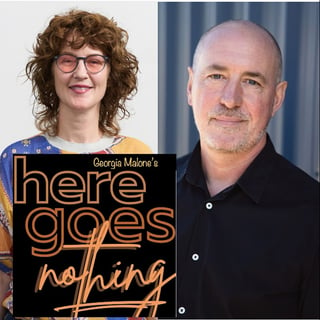
Speaker: The journeys we take as artists can often lead to tangents that become a life's obsession. On this month's episode of Georgia Malone's Here Goes Nothing, we meet Rebecca Davis, who began her career following in the footsteps of her performer parents and distinguished herself as a mainstay of the Western Australian stage before turning her attention to producing.
Speaker: And it's there that everything changed. Joining Rebecca is Stuart Hallis, Rebecca's producing partner, artistic collaborator and husband. Together, Becky and Stu have taken a framework suggested by Agelink Theatre, performing stories for and about older audiences, and evolved it into the internationally acclaimed Theatre 180,
Speaker: who produce large-scale, original, multimedia stage performances with stories from our past. Military tales, West Australian yarns, tales of bravery, often using cinema screens to do justice to these larger-than-life tales.
Speaker: This is a wonderful conversation between two treasures of the West Australian theatre scene, and we had a great time catching up. Enjoy the chat.
Speaker: How wonderful to be sitting here on the couch with you. chatting about all the things we love apart from each other and our lives in theatre and the world we've created with um with Theatre 180 and evolving the company from Agelink Theatre and taking it from where it was to to where it is today sitting here on Buloo country on Wodja with our dog who's in the background making noises um and of course with Theatre 180 we tour all over
Speaker: all over the country and acknowledge the elders wherever we go, but particularly, you know, being resident here and but which is very important for us and we feel the kind of weight of of the storytelling history of the Nhoangar people and, ah but you know, we talk about that a lot, don't we, Bec, and how that goes into the work we do.
Speaker: Yeah, we do. i mean, our our personal stories are so intertwined and and then they also feed into the work that we do in theatre and and and everywhere, really.
Speaker: um We have so many shared stories, you and I, together over the years. We've been together so long that there's history, such ah a great history with us and then, of course, that obviously does feed into the work that we do with Theatre 180. Yeah.
Speaker: It started so long ago, our journey, it's hard to remember. Well, your story in theatre started long before mine because I never had a burning passion to become an actor and work in theatre. I came to it quite a lot later. But yours started at the age of four.
Speaker: Well, yeah, and I guess really possibly even earlier, only that... In the womb. ah Well, I was really fortunate, and I say very fortunate, to grow up in a theatrical family. So it's been around me all my life, both my parents, Jenny and Bernie Davis, wonderful theatre stalwarts in WA.
Speaker: And so growing up, it I always had the choice to do whatever I wanted, But at the age of four or five, I think I was, um i definitely decided I knew that was what I wanted to do.
Speaker: and it was my first kind of, I guess, memory I have of of theatre really and particularly theatre in Western Australia because and Mum and Dad were doing a production of A Midsummer Night's Dream at the old Hole in the Wall Theatre. Is that when it was on Southport Street? Southport Street in Lidderville.
Speaker: Not many listeners would remember that. that's right. Knocked down years ago. But not long out of the 70s, it was kind of a, um and I probably remember this a bit incorrectly, but as a child it was, it wasn't disco themed, but obviously the costumes had that kind of element to it. But there was lots of glitter because in those days you could use glitter on stage.
Speaker: You can't anymore, of course. And um I remember watching the show And afterwards, everyone, all the cast and the patrons had gone into that wonderful bar and they were drinking away and there of laughter going on the bar, but I didn't want to have a bar like that.
Speaker: I was too young and I wanted to go back into the theatre. So I was drawn back into this amazing auditorium and the stage manager had left the lights just really down low. I remember sitting in the seat and looking at the stage and seeing the glitter glistening around the stage and still some elements of it in the air.
Speaker: And I asked the stage manager, if I could go on stage and feel what it was like. And so he he led me on stage and I stood there looking out into the empty auditorium.
Speaker: And it's funny, you know, as a child you you don't, you can't put a word to it now, but it was visceral. Well, then you couldn't put i couldn't put a word to it then. But I remember standing there and feeling this incredible energy come out from the auditorium and kind of all around me.
Speaker: I'm thinking I could reach out and grab grab it. I feel like I could grab this energy that's still there. And I thought, oh, this is what I want to do. This excites me more than anything. Wow. And so from that moment.
Speaker: That's so powerful. mean, it's a type of magic, isn't it, really? It's quite, theatre is alchemical. An audience can walk into an auditorium and sit down and hear a story and leave the auditorium changed. Yeah.
Speaker: They're changed by the experience. Well, shared experience, isn't it? And and we rely on each other. we We don't perform to empty houses, hopefully, and and we want the audience to share their energy with us.
Speaker: Hence that nature of theatre being so playful that every performance you do, you can rehearse a show hours and hours and weeks and weeks. But on the actual night of performance, there are so many things that have the ability to change not necessarily direction, of course, but just in terms of what the energy is in the room.
Speaker: from the actors to the audience and the audience to the actors. Yeah, yeah that that transference of energy and and the idea that Aristotle said you never step into the same river twice and it's the same with the audience. Every audience is different.
Speaker: And even people who who come and see shows, you know, two or three times, and we we get that with a lot of our patrons, don't we? They come back again and again to see the show and, its of course, it's different every time and they get a different thing out of it.
Speaker: So did you you obviously spent your life around theatre with Jenny and Bernie because you grew up in in the dressing rooms, didn't you? i Kind of underneath the dressing table.
Speaker: I slept underneath dressing tables, particularly at the Playhouse Theatre. Again, another beautiful theatre that's gone in Perth. um Yeah, I did. I was really lucky to grow up in an industry where the actors in town became my second family. Well, it became my family, really, because we migrated to WA when i was two.
Speaker: and we were only meant to be here for two years. Our plan, or mum and dad's plan, was to go back to the UK. And circumstances just kept us here. um Big medical episodes, really, that involved my dad kept us here.
Speaker: um And so, but but interestingly, you know, a lot of migrants, they come out, their families join them, but no one in our family came out to live. They came to visit. um And so I had no cousins, no aunts, no grandparents living around me.
Speaker: So I looked to the industry for that and and there were so many wonderful actors who became my family and and hence with our children too growing up, Ollie, our son, doesn't he often talks about he's got kind of six mums and the other five he he rattles off are all of our dear actor friends and so it is ah it is an extraordinary community here in WA and it's part of our isolation I guess but but just generally the arts communities are so connected.
Speaker: And how do you think that shaped you as a person kind of growing up in theatre? Because I imagine all of your other friends at school didn't have the same experience. You know, there were times where Jen and Byrne were off on tour and you stayed with a teacher, I think, at one point. I remember you telling me years ago. And, you know, had bait lots of different babysitters and so on. but But being surrounded by all the stories, and I know you've talked about helping Jen and Byrne with lines and things like that. that fed into who you are as a person?
Speaker: Yeah, yeah, definitely. um ah ah One funny story, I remember my brother's first writing, one of his first writing kind of lessons at school, think he was about five, and mum was horrified. He came home with a a piece of work that he'd written and it said, my mum has brown hair, doesn't wear glasses and goes out every night.
Speaker: ah will and so I think yeah I had a very different upbringing in that my parents were away because those are the days the heady days of theatre when there was theatre and rep and so they the companies were doing show after show after show and I remember like 12 shows year weren't they the national theatre company and and mum and dad would often do would be rehearsing one show during the day then performing at night and then Or there was one season I remember where they did a different show every night or or three shows in a week and they would chop and change. And often there were, you know, um lines from one play inadvertently put into another play by accident on stage. Oh, which character am I? Actors waiting backstage in the wings in completely the wrong costume, the wrong play. Very funny moments.
Speaker: um So look, if, yeah, if I wasn't sleeping under a dressing room table or graffitiing a dressing room table, the playhouse dressing room table was underneath, was filled with my brother and I's writing, um then we were being babysat by actors and whoever would take us.
Speaker: ah Yeah, so it was an interesting life. But it just meant also that I guess growing up there was no expectation of me to take on a nine-to-five job. I could have if I wanted to, of course, but mum and dad always said just go with your passion and you as long as you love what you do, then we would be happy.
Speaker: I do remember a couple of her actor friends saying, look, whatever you do enjoy enjoy working in the theatre, but don't marry an actor. Marry a doctor or, I don't know, someone who's got a bit more of a career that's a bit more kind of regulated in schedule. Yeah, sorry about that. Yeah, yeah. I've played a doctor.
Speaker: I've played lawyers before. i know how to pretend. But the funny thing is too, I remember saying growing up, I'm either never going to marry or I'm going to marry really late. i want to travel the world. I want to you know work as a performer and see what happens.
Speaker: And then at 18, I met Stuart Hallers, who's sitting opposite me, and it changed my life. Yeah, it changed all life. So with you growing up, because yes, you didn't come from a an artistic family in the sense that they weren't performers themselves, but your mum played the piano, she sang, took to the theatre, she took you to concerts.
Speaker: So you were, and of course, and then at school you you had the wonderful Midnight Youth Theatre Company run by Tony Howes who became like your mentor and introduced you to performing arts quite early on as a teenager.
Speaker: Yeah, of course, that that that came later. um my My family were all kind of way back farmers, you know, and and my dad was in a trade and, yeah, no connection to theatre at all.
Speaker: um I did remember... I do remember learning piano from mum, she used to teach and so I was introduced to music very early. and I played the violin and I played in orchestras at school and that sort of thing. mum used to take me to the Friday night concerts at Wasso at the concert hall, which I used to love, except used to make me wear my school uniform out of school, which I hated.
Speaker: But apart from that, it was glorious and you know, like you were describing before, with A Midsummer Night's Dream, I that moment in in in a concert hall when the conductor comes out and, know, everyone applauds and so on, the baton's raised and the hush, the silence falls. It's kind of, you just know the set up, the expectation, the poise, that moment of,
Speaker: being on the precipice of something great, something magical and just beautiful. And I can still remember the feeling of hearing some of those beautiful orchestral work works for the first time.
Speaker: So music that i was playing, you know, in in in the orchestra, not quite to the standard, I'm sure, of WASO musicians. I was actually quite good at the violin, except I never practiced. So that was something that sort of fell by the waside wayside. but I certainly had no burning passion or desire to be an actor and the only reason I got into acting was in year eight.
Speaker: I had an English teacher who was very inspiring and who I really enjoyed learning from. he was directing a production of A Christmas Carol and convinced me to be in it and i basically said yes because it was the only way going to an all-boys school. I went Christchurch to meet girls.
Speaker: Yeah. And so it worked, obviously, it took a while. But so I played old Joe in A Christmas character Carol and I remember i had 17 lines, which I highlighted in yellow and learnt them. And that I remember distinctly the experience of discovering ah response from an audience for the first time because there were some funny kind of physical characteristics that Tony Howes had directed me in.
Speaker: Actually, no, no, it was, sorry, the English teacher. And it so I was playing, i guess, a very heightened character and the audience loved it. They were laughing and I had a pipe. And I remember crunching down on this pipe so tightly I thought I was going to break it because to stop myself from laughing. So I needed to develop that sort of onstage discipline and that ah took a while. But yeah, that was that was my introduction to to theatre.
Speaker: And I also remember, again, Mum took me along to see a cousin performing in, it was a musical, it was Godspell, and just being taken away by, again, the music and the storytelling of that. And that all spurred me on Hearing you talk about that experience, one of my earliest experiences on stage was I think I was seven and mum and dad were in a production, that again, The Odd Hole, and they needed two children.
Speaker: can't remember how many were in the cast, but I do remember my character's name was Bertha and um we it was called Letters from a Kangaroo Pouch. And the only way that mum and dad could convince my brother to be in it with me was to to let him know that we were to eat on stage. There was food. We'd have dinner every night on stage.
Speaker: And so he was really... The way to an actor's heart. Just give him food. Food, always. And so he was really looking forward to it. And it did become the highlight every night that we performed.
Speaker: But looking back on it, the food that we ate on stage was... I don't know if they even sell it now, but remember growing up as kids, there was... I don't call it tinned meat because that's what it was. it was like tinned mince meat that the stage manager heated up and we had it on toast.
Speaker: And, um yeah, that was kind of the highlight. But I do remember, um you know, that was kind of, I guess, my first professional theatre. Of course I only seven. I don't even know if i got paid for that, to be honest.
Speaker: but um But, yeah, it was that kind of so amazing delight of having, hearing, feeling the response of of an audience And I think that's why theatre, um I like working in film and TV, but theatre is absolutely my go-to. It's my passion. it's You just can't beat that kind of live experience.
Speaker: Absolutely. And you always wanted to be an actor. Now you're a producer as well as an actor. Yeah, it's interesting growing up because I also remember saying to Mum and Dad, look, I want to be an actor but i understand theatre pitfalls of the industry and that it might not sustain me, you know, full time for years. So I'm also really interested in becoming an agent. And actually, you know what, I'm really interested in producing.
Speaker: But I didn't really know necessarily how to do that. You know, mum and dad, mum was a writer, of course, right through my childhood and still is and writes so many of our shows still and directed so many shows and was a teacher. So she had many strings to her bow as well.
Speaker: And then she started the company Agelink Theatre, when I was, oh God, how old was I? Eight, 17, 18? I think we'd only, just before we met. So it was 1992. 92. HLIC started with the play A Pocketful.
Speaker: That's right. And so she started producing then really. And I guess I started to watch what that entailed. Yeah. And that, ah it was really interesting. I love creating things from the ground up, from an idea,
Speaker: and seeing it go through to fruition. So I think that aspect of producing really excites me. Yeah. And I love it. And so it was a natural kind of progression to go into producing music And I still love and have a passion for acting, of course, and whenever I can, I do. But um interestingly, producing for Theatre 180 has become an equal love. Yeah.
Speaker: You mentioned Howes and Midnight Theatre for me earlier. Well, that taught me one of the my biggest lessons in life and in theatre was doing work for the Youth Theatre Company as an actor but also as a stage manager. Mm-hmm.
Speaker: as a lighting designer, as a lighting operator, sound, swept the floor, you know, like did everything. And it gave me that sense. I don't know that I knew it at the time, but certainly looking back on it and understanding and appreciation for the work that other people bring to the mise-en-scene, to the whole, and just how important that is. And certainly that's a major factor for what we do Theatre 180 and the team that we bring together and their various skill sets.
Speaker: Yeah, it's interesting you say that because I remember... the incredible Jenny McNay, um who if you are from WA, you'd have to know her name.
Speaker: um And she said growing up in England, in the yeah UK, back in in her day as ah as a young actor or wanting to be a young actor, you didn't start by, there wasn't kind of the opportunities to train as there are now, but everyone started pretty much, if you wanted to get into theatre, on the stage floor sweeping and and doing all the kind of the... the the the lower jobs, if you like, in terms of then working through to props and then going to stage management and then kind of working your way through. So you did learn all these skills.
Speaker: And you were, is well I guess it was much more rounded kind of learning. and And organic in a way. yeah There's a growth, a period of growth and a journey, a pathway through.
Speaker: Yeah, absolutely. And I guess it does feed into our company in that, um I guess, initially out of necessity because we had to wear many hats. There was only you know a couple of us running the company.
Speaker: But as it's grown still and we've got more and more employees and creatives and people around us, we still have that um desire to wear the many hats and people interchange. And, i mean, you're such a collaborative worker as a director, a writer and as an actor.
Speaker: And so you will often turn to anyone in the room, even our wonderful work experience students and our youth ambassador and ask for their opinion or um ask for help with something. And you're you're very interested in people's um ideas and that's I think what makes the company really exciting and grounded and wonderful place to work so yeah yeah another thing that has been a big lesson for me from well and us both I know we've talked about this before working with with Agelink because that started collecting oral histories from seniors and turning them into theatre and that very kind of grassroots work which we still do of course but that gave me a very strong sense of
Speaker: understanding and appreciating that everyone has a voice, everyone has a story and that everyone's story is valid. And no matter what they bring to the table, so to speak, is it has a purpose and a place.
Speaker: And that's really important, I think, in terms of where theatre sits in society as well. Yeah, absolutely. And what's interesting, working in Agelink, because we were there from the very beginning, of course, on the initial board, and...
Speaker: starting to interview these wonderful seniors in our community and they'd often say, oh, I don't have a story. oh Yes, that's right. Or one wants to listen my story. What have I got to you know to tell you? And as soon as you open that little yeah can, even just a slight touch, so and and you ask one first question, all this history, extraordinary stuff just comes out and and and you realise and they realise actually what a layered, rich, extraordinary life I've led.
Speaker: And that's what I love, what we why while we do what we do in that respect with that age-length theatre side of it, with the oral history capture, is that, as they say, everyone's story is valid and everyone's story should be heard.
Speaker: And so often we'll go into a nursing home or a senior centre, we'll interview seniors, um gather stories and then play them back to the audience of those seniors and their families and carers.
Speaker: And afterwards we'll get the families coming up saying, oh my God, I had no idea that Nana was a spy during World War II. It's kind of like family, not secrets come out, but just the minutiae of your lives and the kind of lovely details that I think sometimes just get passed over and yet when given a chance to be explored and have a voice, it's just wonderful. Yeah, and it's powerful. And, you know, theatre has the power to change lives. It really does.
Speaker: And even when I remember going into those um theres early days, going into the aged care homes and dementia units, and that kind of work that we did back in the day and still do with dementia patients was really important So powerful, so moving. And impactful. And impactful. i Do you remember there was one lady who was we've brought in in a wheelchair and she couldn't even open her eyes. Non-compass, yeah. And the the carer said to us, look, she used to love the theatre.
Speaker: She doesn't, she will not open her eyes through this. She won't move. No response, yeah. But we just believe she'll be able to listen to it. And we started performing and and looking over at her and there was that we had a pianist and a singer in the show and doing one of the songs.
Speaker: I remember it was White Cliffs of Dover. White Cliffs of Dover, wasn't it really? Yeah. And seeing a finger on her hand to start tapping to the music and then a tear rolled down her cheek and, oh, God, a breeze with a tear is just thinking about the power of of of what live performance can bring.
Speaker: I still remember that. It was really just shifted in me, that I guess, you know, for for many people they can think, oh, look, actors are so self-centred and and why why would you choose that as a career and what is it about theatre? Why would I want to go and see a live show when I can see something on television or a film?
Speaker: But it's those kind of moments where you think that that really is life-changing. life changing Yeah. and and And for her, hopefully, and certainly for us as well. Yeah, and and validating of of those people's experiences. Absolutely. um I will never forget when we were touring Dear Heart, which is the two-hander Jenny wrote about the family story, the letters from a young wife writing to her husband who was a POW in Java in the Second World War.
Speaker: And at the time, ah we we were in our early 20s, I was kind of thinking to myself, I'm an actor. I should be off in Hollywood by now making major films, you know, earning big money and blah, bla blah, not stuck in Perth, you know, touring senior centres and nursing homes in a play. that i remember having that thought, what am I doing here?
Speaker: And we were playing Dear Heart and I i remember thinking oh just I just feel like a charlatan. I'm just pretending to know what it's like to have beri-beri and to have undergone, you know, the privations of a prisoner of war camp and the torture and sufferings and so on.
Speaker: I'm just faking it and thinking I'm wasting my time. I should be off doing something important in society like my brother-in-law who at the time was, you know, he was just training as a police officer going, saving lives, you know, whatever, something important.
Speaker: And this elderly man came up to me after the performance. We were actually in a hurry. We had to dash off to go and do a second performance somewhere else. And so we were trying to pack up, but he shuffled up to me and, um,
Speaker: He wasn't crying, he was weeping, this man. And he just grabbed me by the arm with a strength that kind of belied his physique and said to me three words that I'll never forget and they've kept me in the game ever since then.
Speaker: Just looked me in the eye and said, I was there. he shuffled off and I thought, Yeah, that's that's what it's about. It's about acknowledging his experience. And it doesn't matter that I had not had a lived experience of of torture and whatever.
Speaker: It was the fact that we acknowledged his suffering and that meant so much to him and that other people could learn and experience from that. Yeah. And I remember, Ruby,
Speaker: touring Dear Heart, the same show, to a small regional town. i'm trying remember the town. It Mora. Mora, wasn't it? Yeah, yeah, yeah. we saw an old gentleman in the front row and he was in his wheelchair, wasn't he? He was still hooked up. He was hooked up to oxygen. He was hooked up to oxygen. No, he's dripping. He had drink. drink, that's right.
Speaker: And all through the performance, I kept looking at this man, I know you did too, thinking, goodness me, how how A, how did he get here? and um And B, he must have a connection. yeah He's obviously can't come a long way to get to get out of wherever he was into this to this town hall i think we were performing in.
Speaker: And afterwards he was whisked away too quickly before we got out. But I remember we were told by someone at the venue that he'd absconded from hospital, that he'd heard a radio interview that we'd done. He broke out. And he got his family to break him out from hospital because he had been a POW. And he and he was so passionate and wanted to hear his this his story. And, my goodness, that was that was so powerful. And to say it was validated just for him but also for us as performers that there's a there's it's there is there's a ah real importance and need for these for our stories to be shared.
Speaker: And I think that probably that's why we've continued to do what we do in telling Australian stories and certainly as many Western Australian stories as we can because we have everyone, as you say, has got an extraordinary story to tell and it's one way of being able to... um without using the word, want the teach history necessarily, but it brings it brings our past to to life in a different way. Because, I mean, you know, perform a lot to school students and so often school students come to us afterwards and say, look, I don't learn well in an environment where I have to sit in a school chair all day and listen to someone tell me about history.
Speaker: i am more visceral. I need i need an oral experience or a visual experience. And so with our productions of our cine play that we do, where we have that blend of cinematic backdrop and the actors in front performing on stage, it brings history to life and they say, I feel connected in a way.
Speaker: um My heart's been moved, you know, in a way that I haven't been able to by a textbook. And so not that we we should take over the way of history teaching, but it certainly um enriches it, I think, for people.
Speaker: Yeah, certainly. And I like to think that we can reflect on the past in order to understand the present and then dream the future that we want for our children and grandchildren. It's funny because a lot of people ask us, you know how do you get your stories or how do you how do you choose the stories that you want to tell on stage?
Speaker: And so often... stories kind of come naturally to us by way of us meeting people, hearing people's stories, and we think, oh, God, I hadn't heard about that part of our history.
Speaker: one We sort of shelve it one day One day we'll tell that story. It might not be the right time now, but in the future we'll just we'll make we'll park it for now and then something will tell us. There'll be a sign, something in the zeitgeist will will ah show us that that is the right time to make a make this story come to life.
Speaker: But, yeah, I guess i guess the the most um potent one like that or guess the most obvious one for us when you think about it is 21 Hearts. Yes. And Julian Bulbinkle and the nurses of the Viner Brook because, you remember, we we had the most incredible opportunity 1995 and,
Speaker: ninety ninety five and Jenny was producing a 50th anniversary of the end of World War ii event at the Old Perth Entertainment Centre. Another building has been torn down.
Speaker: And we were we were back in Perth that point and we were asked to be involved. And one of our tasks early on was to interview a lady who had been a POW in World War two And i was 20, so you were 21. I hadn't even heard of her story. No.
Speaker: And we were given the best paper and were told we were going to interview lady called Vivian Bullwinkle. And um I'm ashamed to say I didn't know her story then, but we spent, I don't know how long we spent interviewing Vivian, but she was so generous with her time and shared her story that even as people so young, um we turned to each other afterwards and we knew her story was going to be in this event at Perth Entertainment Centre. it was called Cavalcade.
Speaker: But we turned to each other and we said one day we need to turn that story into a full production. and it took us 30 years. It's been 30 years um to do that. But but we've revisited it a few times over the decades, didn't we? And we thought, remember the nurse's story? Oh, for whatever reason, it just didn't feel the right time.
Speaker: And I think it was. It was when we were doing a fortunate run. Wiccapan. We're in Wiccapan, an incredible, beautiful wheat belt town in Western Australia. Population 300. Yeah, but we're performing um our first original cineplate production, Faces a Fortunate Life, based on his incredible or autobiography and um after the show and of course wikipin was where and he spent most of a lot of his life yeah is lighted and the facey homestead is in wikipin so it was an incredible town would be performing that show in and afterwards a lady came up to us and introduced herself to us and her name was libby heffernan an incredible friend she's become since then and she was on she still is on the facey homestead committee
Speaker: And do you remember, she said, or she asked us, have you ever thought about turning Vivian Bullwinkle and the nurse's story into a stage production? We said, well, yes, actually. what whats Why would you say that? Why would you ask us that? And she said at the time, well, my sister, Anthea Hodgson, is an author and she's currently writing a book about the nurse's story called The War Nurses.
Speaker: And one of the nurses was our great aunt, Minnie Hodgson, who was from Yelering, which a small town next to Wiccapan. And it was after that conversation that we said, right, there's our sign.
Speaker: That's what we needed. And that's how we we started that production. And you know what's so fascinating about about these stories is once you start talking in ah in ah in a sense that you're going to make the story into a show, yeah suddenly things happen. Things happen. Yeah. And I don't i don't know, want to get too spiritual here or anything, because um ah but it just feels like there's something else around energy-wise that, you know,
Speaker: makes it feel like or gives you all the signs that you're doing, you're on the right track, this is the right time to tell the story. Yeah. and You can talk about manifestation or zeitgeist or any of that, but it's I guess if if there's something that inspires you and and you're passionate about, then as soon as you start to act on that and move forwards in that direction, things will come your way, won't they? theyll just Things will open up, opportunities will open up.
Speaker: Yeah, yeah. Well, interestingly, um once we started the kind of Googling searching for the stories, we realised that there were three, was four books that were being published about the nurses in that year alone last year.
Speaker: And then, of course, the incredible statue of Vivian was going up at the Australian War Memorial. memorial And it all just felt like, okay, now is the right time. And then, of course, we were able to take it to the Australian War Memorial, which was the most amazing venue to perform that story in. and was That's kind of become the highlight, I think, of of my career in that everything converged into one. Everything, the storytelling, the way we tell our stories, my favourite kind of theatre um is is the cine play genre that we do.
Speaker: And then to perform it at a venue that holds so many extraordinary veteran stories and then to have, people performing on their incredible new stage and their beautiful new theatre, opening their new theatre with the production and downstairs underneath us,
Speaker: is Vivian's uniform, that the nurse's uniform that she was wearing when the Viner Brook was sunk and she was wearing when she was shot and the bullet hole's still there. and And then there we are performing the story. I mean, it was just poof so powerful. Yeah, yeah, and a privilege.
Speaker: So why is the cineplay genre your favourite one to do? I mean, you've had like a 30-year career as an actor. You've been on the Heath Ledger stage. You've been in stages all over the country. You've done, you know, yeah why why this? Why?
Speaker: Look, I love i love traditional theatre venues. Of course I do, you know, with the cross arch and the lights go down and and you're waiting in the wings and um all of that that that that. That will still hold a very special place in my heart. And I love seeing a shows in that kind of style.
Speaker: But there's something about the style of the cine play. And I say the cine play, but, of course, it's it's really come or stemmed from the origins of Aging Theatre when we were touring around senior centres and aged care homes and we still do.
Speaker: with a hat stand and props and costumes on a hat stand and then we'd have three actors, suitcase theatre, I guess you'd call it. I mean, people do that. There are theatre companies that do that all around the world. That's not unusual but it's certainly my favourite style of theatre in that you're asking so much of the audience as well. You're asking them to suspend their disbelief in a way they don't necessarily have to when they're watching a traditional theatre show when they have to to a certain degree but you're asking them to go up to another level when you've got someone playing a character with a hat and a no a cane or whatever it might be, and then a second later they've changed into a shawl and they've become another and a different gender, different character, different age.
Speaker: um and And then I think what it does to the audience is once you're on that kind of rollercoaster, there's no opportunity for them to sit down and back out. Yeah. Otherwise they'll lose their place.
Speaker: um And similarly, the same with performers. So once you're on, because with these shows, no one goes off stage. Yeah. The whole time you're completely seen when we change costumes. you' completely seen when you're crossing the stage to get on the prop.
Speaker: um And so we can't let our guard down and knock on the audience. So it's this kind of heightened shared experience, which is really exciting. Yeah, and I think also that because we are asking so much of our audiences in that we are inviting them to use their imaginations to fill in all of the gaps, which, of course, you know, Shakespeare um talks about, peace out our imperfections, you know.
Speaker: It means that, I mean, firstly, anybody's imaginations is so much more powerful than anything we can come up with because it's personal to you. It's it's your own individual imaginings.
Speaker: And ah secondly, it's the idea that ah because you are for asking the audience to use their imaginations and invest so much of themselves in the performance,
Speaker: what do you get when you invest in something? You get a return. You get something back. So they're not just sitting there, you know, letting the the story wash over them. they they They're projecting into it. They're, you inviting the story into their own heart. and And so there's this kind of exchange of energy, which you talked about earlier, and this, know,
Speaker: alchemical change that happens yeah and because we all also you know you talked before about how do we find our stories and often they find us but we always choose stories with heart that's our first go-to really isn't it that's our first sort of litmus test where's the heart of this story and because for me and for you i know if there's no heart then what's the point and that's what life is all about What else is there other than love?
Speaker: And so these stories of great heart, they're the ones that tell us, teach us about resilience and about fortitude and courage and hope and ingenuity and all of these kind of character traits that I think we as as a species, you know, the American playwright Lauren Gunderson talks about the anthropology anthropology of theatre, the idea that storytelling has a very, very deep, deep ancient primal purpose in society because that's how we we learn about the world around us that's how we learn about who to trust who to fear um through through stories we and stories are emotion we're emotional beings and so it's the emotion that um kind of teaches us about survival and we we practice survival techniques by watching theater
Speaker: And I think that's tremendously powerful as a purpose for what we do in society is is so essential. know, creativity is something that goes across all areas of life, whether it's through, you know, anything around us. It doesn't have to be kind of art and culture. There's creativity everywhere and it's so incredibly powerful and it's just such a great thing to be part of really, isn't Yeah, and you know what also I think is so incredibly...
Speaker: I think about the word powerful. Why am using that word all through this conversation? But I think what is so extraordinary to witness in doing these shows in particular is that they seem these stories connect or the shows connect with audiences that don't necessarily go to the theatre and some who have never stepped foot in a theatre before.
Speaker: Because remember, we started out with cineplay. It was actually formed for performance in cinemas. Yeah. so We were doing, well, actually going back even further, um mic my ah business my business partner, and Michelle Fanasia, who's now a 3180 senior producer, of course, and a lifelong friend.
Speaker: um She and I were helping to produce a musical in Perth and the the composer and producer of that musical, Ron Zilogonowski, owned the regional cinema chain um and of Orana Cinemas.
Speaker: And he turned to me one day and said, look, I want to activate my cinemas in a different way. Do you think live performance would work? And ah my immediate reaction was, but don't know, because cinemas have such a debt in sound and they're designed in that way for you know for movies and... Dolby 7.1. That's right.
Speaker: that's right And I thought, oh, I don't really know. So I thought, oh, maybe maybe music, live music perhaps. But then he said, well, do you think theatre would work? I thought, oh, I don't know, He said do you want to give it a go? I was like, well, maybe. And we'd just done the creative development on AB Faces of Fortunate Life.
Speaker: And initially with that, turning that book into theatre, it was a kind of cast of thousands, if you like. Well, yeah, my initial vision was a festival piece with two intervals and a dinner break. Over two nights. That's right.
Speaker: couldn't get the funding
Speaker: um And so but he said, oh well, you know, what have you got? And I said, well, we're doing a credit development on AB Faces of Fortunate Life. He do you think that would work? said, well, i ah don't know. um he said, well, look, if you think it will, I'll back it.
Speaker: And you know what? It takes people like that to come into your life where they say, i believe in you. I believe in being able to do something. And and he said, I've got money. i've got money And I'm not a sailor.
Speaker: My retirement fund isn't going in into build built because of a yacht. I love the arts. I'm passionate about live arts. I love theatre. so why don't I give it a go? was our angel investor. He was our angel investor, put his trust and his heart into this production.
Speaker: And so we were able to fly. and And I think the background of that Aging Theatre that we had, of that suitcase theatre, really held us in terms of being able to develop the show because we knew very, very early on, well, in a cinema environment, there are no wings. um Actors can't come in and off stage easily. Once you're on, you're on.
Speaker: And so we thought, well, the only way we could make it work was that kind of suitcase theatre idea. Yeah. And using that incredible cinema screen behind and launching into it, not knowing whether it would be successful, whether anyone would want to come.
Speaker: But you know what was And even if it would work in a way because i remember walking into the cinema when we did the initial test um ideas and you walk into a cinema and, it's dominated by the cinema screen isn't it like 14 meters wide 10 meters high the entire building is shaped and designed solely for the purpose of people to watch this massive screen and I remember thinking oh my god how how how actors going to compete with this you know how how can we how we going to get the audience's attention
Speaker: And so we tried lots of different techniques and various things. And we had the screen up to the of the stage up to the point of the screen so the actors would be immersed in the image that was behind. And what we discovered in that initial test period in the first production of A Fortunate Life is that in actual fact, you can have a big screen filled with the most wonderful images.
Speaker: But as soon as you have a live body on stage who opens their mouth to speak, the audience listens. They gravitate to it. They demand. the attention and it's like what you said before about live theatre, it's it's just magnetic. And so, yeah, the format really worked and and and became very agile for us.
Speaker: And what we what we found very early on, of course, was that a lot of the audience were cinema goers. So they're used to going to see films. They were used to going to see films in a cinema in their local suburb. So it was a venue that they were comfortable with They could bring their popcorn and and in and and their ice creams in.
Speaker: It was kind of a safe environment for them to experience live theatre for the first time. Yeah. And that was really magical. And I think if I could, if I make one difference in a person's life and introduce them to theatre, whether they were 70 years old or five years old,
Speaker: I've done my job. And I think that's what's so fascinating about this cineplay genre, that it brings in people from all walks of life and that we have multi-generations of families coming, family members coming to see a show. So sometimes we have before four generations in one family come along. um And that's really exciting because there are very few few shows and styles of theatre, i imagine, that you could do that. But that's been a kind of a, not something that we ever planned for,
Speaker: um But do you remember when we first opened A Fortunate Life? It was January 2020. twenty twenty yeah Yes, it was just on the cusp of COVID. ah Just before. And and we were performing on tour in Busselton. I remember the call came through, you have to shut down.
Speaker: we're like, oh, my gosh, that's our livelihood. But bizarrely what we were so lucky um with this genre was that everything fits into the back of a truck. And so we just packed it all up.
Speaker: put the truck away kind of waited until restrictions lifted and then we're back on the road again. and that remember it was August because we were the when restrictions lifted. Obviously, but great benefit being in WA, but we're the first theatre company in Australia performing for audiences. Back on the road again.
Speaker: Yeah, very, very lucky. um So that sort of, yeah, I guess that was when the cineplay genre started and it's kept us going forward.
Speaker: um for five years now we've got so many many stories that we still want to tell um and that can be told love how it's it's still we're still finding new ways of storytelling with these cineplay shows as well so I know that every show that you that we create you as a director always look for different techniques and styles and always trying to push the boundaries that little bit further Yes, well, 21 Hearts was a case in point because up until then, Fortunate Life, Sydney II, Lost and Found and The Lighthouse Girl Saga were all casts of three on stage in front of a cinema screen. And one of the reasons, well, the main reason for that was partly fiscal, but mainly because because performing in front of a cinema screen, you can't use front lighting and also cinemas, there's no bar to hang a light from. So um we relied on side lighting.
Speaker: because as soon as you have front lighting in that environment, you wash out the image on the screen and it's it looks horrible. So we rely on side lighting and any more than three actors on stage it just becomes problematic with shadows and and it's just very tricky to negotiate.
Speaker: But when 21 Hearts came along and we had this story of these 22 nurses on Rudgy Beach, then i knew, and and Jenny, we knew we needed more actors than three to really do, um not to much do justice, but to help us tell that story to the best of our ability.
Speaker: And also we had you know six amazing female performers that I wanted to work with on on this show. And so we we had a cast of six. And so therefore ah needed to have a backdrop so that I could light against them and, you know, bring some front lighting in and that sort of thing. And so we still had a screen and we still used that cineplay idea, but we set up a ah truss arch and clad the screen with ah some set pieces that allowed us a little bit more capacity to explore with lighting.
Speaker: So that was one big innovation from the cineplay genre and... Others have been, i guess, exploring and ah trying new ideas with the stage screen interaction, which we've done in different ways and different shows. And that's a lot of fun in in terms of how we can kind of engage the audience.
Speaker: And we tried, again, you know, test runs where you had ah an actor on screen talking and having a dialogue with an actor on stage. And we tried these things where the actor on screen would be looking down at the person on stage and kind of like talking to them.
Speaker: And it it looked great from, seat seven row a there's one seat where it's perfect but because of parallax as soon as you move outside of that but it it doesn't work and so then we discovered oh of course let's keep it theatrical and we we realized and discovered that if you speak through the audience so the actor on screen is talking through the lens of the camera the actor on stage is talking out through the audience then you can still have this kind of theatrical exchange, and but it remains immersive, it remains engaging for the audience and it remains kind of slightly heightened but also incredibly powerful.
Speaker: And i i going back to the the audiences and and having audiences come in that haven't been to see a show before when we're on tour because our heart hearts are always really on tour. We love it, don't we? love ah i well I personally love going into ah regional towns particularly and activating a found space, whether it's a town hall, an exhibition centre, or a theatre, a recreation centre, school theatre, gymnasium.
Speaker: and turned that into a theatre space. But so many the of the beautiful regional WA towns that we performed in, afterwards you'll get, you know, seven-foot, six-foot wide farmer come up to us and say, with his amazing, beautiful big hands, give us a big handshake and say, you've just told my story, and, you know, tears in their eyes. And I just thought, oh, that that kind of response is is really something else. And I guess that really comes from the stories that we choose to tell, which are the west' beautiful West Australian or Australian stories, so stories that they can connect with.
Speaker: Although saying that, you know, we did a fortunate life at the Perth Town Hall this year for the Blue Loot Heritage Festival. Yeah. And I didn't meet him, unfortunately, because i was on stage. But you and Michelle afterwards told me the incredible story ah this gentleman who came up just before the show was about to start. Tourist, yeah. AB faces a fortunate life, quintessential Australian, West Australian story, Australian themes,
Speaker: hardships, et cetera. And this gentleman from China china yeah came up and spoke vertical English but came up because he was intrigued to see the town hall initially and the photographs and paintings around, come up the stairs and asked what was going on.
Speaker: And you told him, oh, there's a show about to start. He said, can I join? And i and he said, yes, there's a seat here. and And he stayed through the entire show and afterwards you went to seek him out But he weeping. Yeah, the rest of the audience had left and he was still sat in his seat. And, um yeah, he was he was in tears, floods of tears.
Speaker: And through his broken English, he told me afterwards, um that's that's my my grandfather's story because his grandfather was a farmer in rural China and had lived through the same kind of experiences as Burt Facey had in rural Western Australia in the early 20th century.
Speaker: And his grandfather also went away to war and and had sons who went to war and, like, you know, these universal themes, I suppose. And, again, like those things, isn't it? The resilience, courage, hope, ingenuity, humour, humility, all those things, just so important. that's the reason we do it, of course, isn't it? That's the reason that...
Speaker: keeps us in the game and working and finding stories and yeah sharing them with people. And, you know, this industry just gives the opportunity to meet so many amazing people from different professions and whether it's the farmers and a fortunate life or the incredible nursing community that we found doing 21 Hearts, every performance we go, at we perform, well, every town we go to, every venue we perform in, there are always so many nurses, doctors, medical professionals in the audience who because they have obviously obvious connection to to the story as well.
Speaker: But we we collaborate whenever we can with other organisations outside the arts. So with 21 Hearts, we looked for collaborations with organisations such as the Australian College of Nursing, the Australian Nurses Memorial Centre, the incredible centre that Vivian Bullwinkle and Betty Jeffrey um and Wilma Oram set up when they came back from the camps and still growing strong in Melbourne today.
Speaker: But just being able to work with extraordinary people from those organisations who are also like-minded to us in that they are on a mission to make sure that there's these nurses' stories continue to be told, continue to be shared through medical scholarships um and ah keeping their names alive.
Speaker: So they're working for the same purpose that we are in terms of these incredible stories, but it gives us an opportunity as performers to just to to meet people who you wouldn't normally in if you were kind of in a different industry.
Speaker: Similarly with um our recent production of Arthur Haynes and the Smoking Gun, another incredible Western Australian story that could and should have made into a film, for goodness sake. It's Hollywood blockbuster material. um And having a a young man shot point-blank range on the dance floor at Government House Ballroom by his jilted lover, um and then she got acquitted a few weeks later, is extraordinary.
Speaker: um But what it's done is introduces to the extraordinary amount lawyers in this city and and who fall off to see the show and the legal professionals, and i love that. I think that we're really lucky We're a lucky industry, lucky lucky people to be involved in not only doing what we love doing but um meeting all these incredible people.
Speaker: Yeah, yeah. It's such a special moment watching watching that show um in one performance because, of course, you you the audience hear the story from different perspectives and we're offered different versions of the characters and was she justified in what she did or whatever.
Speaker: Yeah. never justified in murdering someone, but, you know, there was a version of her that was presented that that gave her certain reasons and so on. But then, yeah, to to have shot him in front of hundreds of people at Government House Ballroom and be standing there with a smoking gun and the first thing she said was, I did it, and then in an interview later with the police saying he only had what was coming to him, and then but only a few weeks later to be fully acquitted, there was a moment when the the the thing came up um How do you find the the the the the accused? Pause.
Speaker: Not guilty on the screen. there was this in the audience what? People couldn't just just couldn't believe it. But I love that that that response that people have in theatre. and they're just <unk> so immersed and engaged in the story that they they can't hold themselves back from a response. Shouldn't shouldn't hold themselves back. it's just the one that's beautiful. absolutely not. um You know you've really got people, don't you? Yeah, and testament too to Jenny Davis' writing. i mean, she's been such an extraordinary influence obviously in my life as my mother. and mentor but to you as a writer as well because you've co-written so many shows with her now and and she's kind of taught you the ropes and I love the fact that that she's now been able to do what she loves doing more than anything which is writing yeah for the company and how she finds the stories as well for us but she found Sydney too lost and found remember when she went to see and hear a story that was Ted Graham the director of the finding Sydney Foundation was giving
Speaker: And at the end of the lecture, he was talking about, of course, the finding of Sydney II after 67 years on the sea floor. And he was showing photographs from the expedition down where they found the wrecks.
Speaker: And the lasting image was of a sailor's boot on the seabed floor. And that image connected her so with her so deeply that she said, I've got to tell this story and put it into it and and turn it into a theater show.
Speaker: So, yeah, goodness, there are certainly of highs. always plain sailing. Not always, I mean, yeah. a hard industry to raise children in, that's for sure, or too. Yeah, yeah, the fight for money and grant applications and so on. But we've got a very great, wonderful donor base, of course, and people who support what we do, which is which is lovely, and allow us to continue, you know, into the future. And what what what is it that you're excited about now coming up Oh, my goodness. I think we're at this kind of precipice with It On 80 where I just feel, you know, don't want to speak to you soon, but I do feel like we're we're flying and I love that. I'm really in a moment of joy right now.
Speaker: um There are so many stories. i hope i don't run out time in my life to to be able to them. There are areas and shows that I want, to i'm really excited about our ideas that we have with the Royal Flying Doctors Service.
Speaker: That's what I'm really passionate about and that's going to be an incredible sort of two three-year um ah project. an oral history project and hearing people's extraordinary connections with that organisation that without which a lot of our regional towns wouldn't exist. So um being able to turn those stories into into a theatre production is going to be very exciting.
Speaker: But also, you know, I know that we, I could literally talk to the cows come home, but We've been wanting to talk about stories from Vietnam as well, the Vietnam War, and and when we were at the Australian War Memorial recently with 21 Hearts, do you remember the director, Matt Anderson, the most amazing man, took us on a personal tour of the of the memorial and he stopped by plaque with Vietnam veterans' names on it and it was part of the advanced Australian Advanced Army Unit in Vietnam. They were the first ones there, the last to leave.
Speaker: And there was one name that he pointed out, Ron Scott, and the story he told about Ron. And he he was over there working with an American, Sergeant Eugene, don't know remember his name. will remember it at the end of this. They became great friends. And they became great friends and promised each other that if one of them didn't survive, the other one would bring their body back to their home country.
Speaker: And not long after Ron Scott... Well, because the Australian policy at the time was if you died overseas in service, you were buried overseas. Buried overseas. And unfortunately our beautiful Australian, Ron Scott, died, sniper, and Eugene made his mission to bring Ron's body back. But at the time the policy was, no, the Australian government, you die overseas, you're buried overseas.
Speaker: And he raised money himself, paid for his own way back to Australia, lobbied and managed to bring Ron's body back to Australia and give him the proper burial in Australia that his family wanted and his wife was there and it was after that that the government policy changed and and that allowed families to be able bring their loved ones home who buried on on their home soil. It was the catalyst wasn't it?
Speaker: And Matt said, Matt Anderson said not one um defence personnel who's died overseas since then, has been buried overseas, have all come home to be buried on home soil.
Speaker: So it's that kind of thing. You go, okay, that's the story that can connect us into that period of time and that era and that conflict and it's looking for those personal stories that connect us which I think is what we always look for. yeah So that's exciting me. yeah and There's so many stories. Absolutely, yeah. What about you, Steve? What's exciting you? I'm really excited about our potential to um now through rather large Lottery West grant, which you're very grateful for, of duplicating our equipment so that we can set up
Speaker: you know in a Perth venue with a show and still be out on tour with other shows so we can kind of like capitalise on all of the requests for performance opportunities that we're getting from towns all around the country actually. You know, if only there was a massive bucket of money that we could to keep on constantly touring but um yeah so to be able to share our stories far and wide that that really excites me and i'm excited about young people i'm excited about what's the people who are coming through the industry and that passion and the desire and hunger for storytelling and finding innovative ways of telling stories and the fact that even though the threat of ai is is kind of changing many things in society it will never change
Speaker: the capacity for live theatre and the potential of human interaction between a performer on stage and an audience member to to to change lives.
Speaker: And that that's incredibly powerful and i'm excited for that to continue.
Speaker: What a pleasure to welcome Rebecca Davis and Stuart Hallis to Georgia Malone's Here Goes Nothing this month. and know Georgia was very proud to be able to support Theatre 180 and their work through Minderoo's seed funding.
Speaker: And after we finished recording, both Becky and Stu asked me to note just how much of a game changer it was for them to have someone like Georgia believe in them. It's been 20 plus years since I performed in A Midsummer Night's Dream in Kings Park with Stuart and Becky, and they're just as dynamic and inspirational today.
Speaker: To catch up on more of what Theatre 180 are up to, check the show notes. I've been Toby Malone. I hope you're enjoying this second season of Georgia Malone's Here Goes Nothing. I know it's not the same without George, but I know she'd be thrilled to know it's still going.
Speaker: See you next month.
Speaker: Thank you for listening to Georgia Malone's Here Goes Nothing. This podcast is dedicated to the enduring, impactful and dynamic memory of Georgia Lindsay Malone. We produce and maintain each episode in Georgia's honour to keep the ripples moving.
Speaker: Georgia Malone's Here Goes Nothing is produced and engineered by Toby Malone with the support of co-producers Joe Malone and John Carter. Original theme music by Lyndon Blue.
Speaker: As for where this podcast is based, let's let Georgia get the last word. This podcast was made on Whadjuk Noongar, Budja, a place I'm very privileged to call my home, and I acknowledge and honour all Noongar people that have been making art on this land for tens of thousands of years, and will continue to do so for generations to come.
Speaker: Always was, always will be Aboriginal land. This is a GM Productions Project.