Transcript
Speaker: From the outside, a career in the arts can feel ideal. Creating events, experiences and performances with a group of close-knit, like-minded professionals can be mistaken as a guaranteed recipe for a good time.
Speaker: Anyone who's ever been in the position of creating art will start with one inevitable truth. It's bloody hard work, and harder still when you're in charge. For this month's episode of Georgia Malone's Here Goes Nothing,
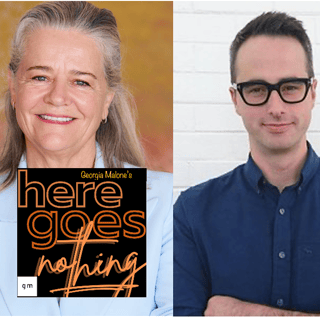
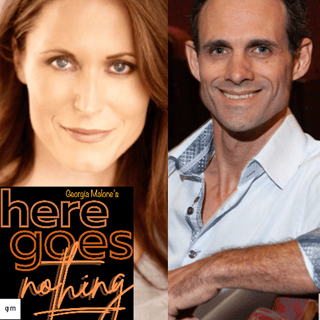
Speaker: we welcome the inspirational Anna Rees, Artistic Director of the Perth Festival, which at nearly 75 is Australia's oldest arts festival. In this fascinating chat with 10 Days on the Island CEO, Vernon Guest, Anna gives a glimpse into the labour behind creating something unforgettable and lets us in on just how hard it is to make things look effortless.
Speaker: Enjoy the conversation.
Speaker: Hello and welcome to another episode of Georgia Malone's Here Goes Nothing. think My name is Vernon Guest and I'm stepping in as your host today. I'm really looking forward to this chat. Our guest today is Anna Rees, the current Artistic Director of Perth Festival and in my opinion one of the most progressive and dynamic curators out there.
Speaker: Anna and I have known each other for many years with our festival careers and paths crossing numerous times. So I'm excited to jump into into today's conversation.
Speaker: Anna Rees, welcome to Here Goes Nothing. Thank you, Vernon Guest. What a delight.
Speaker: So let's start off where much many of these conversations start and what do you recall as your kind of first memory of an arts experience?
Speaker: I think it was, well, no, I know i know what it was. It was a I must have been about three or four and our little family went over to um to Ireland to because my dad had a job, he got a job lecturing at the University of Dublin.
Speaker: And we went over to England to see my mum's sister. And I've got very sketchy memories of this, but I remember piling into a car to go and see a pantomime.
Speaker: And I didn't know what this pantomime was, but I remember the car and I remember the freeway. And then I remember being in this packed theatre, sitting on my dad's lap, in the middle of and ah of a of a row just watching Peter Pan. And the things for me about this show is that they had a real dog on stage.
Speaker: And it was enough for me to get off my dad's lap and I remember just wandering along the row and then down the aisle heading to the stage and just looking up And I think that's it. That's my that's my first memory. That's your first memory. There was Peter Pan and there was a real St. Bernard dog on stage. And that that set me up for life, actually.
Speaker: And did did access to the arts and particularly performing arts continue throughout your childhood? or Was that a regular thing as ah as a family experience for you or or something quite unique? Yeah.
Speaker: No, we were pretty, pretty lucky. My, um my mum and dad just loved the arts. um My mum has kind of always been like a, an English language specialist, which then moved into, you know, teaching English as a second language. And that then evolved into children's literature and really nurturing literature in, in little kids. um So storytelling has always been a really big thing. Lots and lots of, illustrated picture books um was a huge part of our lives from the very beginning and hopefully is something that I've got in common with lots of people who who were exposed to beautiful picture books as kids and then kind of my dad as well my dad is is a historian and it's kind of interesting because the my mum's side of the family is emotional and chaotic and my grandmother was an artist um and my dad's side of the family was quite um
Speaker: very beautiful family but much more conservative and and wouldn't show too much emotion and it's interesting with my dad because one of the things he always talked to me a lot about actually was the importance of being objective and how important as a historian it was to remain neutral and I think it's a really interesting um combination of things that I learned like emotional chaos creativity you know but but like how important it is to kind of stay grounded and stay anchored. um
Speaker: So that's an interesting thing. But, yeah, I mean, so look, my mum and dad, would we we were lucky enough to travel a lot um because we and we were based in Ireland for for quite a few years. And so because of that we we had a bit more access to, well, obviously, to kind of Europe. But any any pennies my mum and dad had,
Speaker: we would go and see film show. And it was as we got older and we would go back to the UK to visit family, it was quite a ah routine to get up with my mum first thing, go down to Leicester Square and find whatever you could find for the £10 go home back to the kind of um I think we were staying in student housing at the university as a family of five.
Speaker: grab Marks and Spencer soups for dinner because we couldn't afford anything else but the tickets, the £10 tickets were the priority to kind of see yeah a great piece of theatre or a musical. And so did you move around much as a kid then?
Speaker: Well, Ireland was kind of the base so we we were born here and then we moved to in when I was 11 months and we stayed there for quite a few years and then we returned to Western Australia. But yeah my dad's- Born here as in your, you were born in Fremantle, weren't you? Born in Fremantle, yeah. Yeah. Yeah. um Yes.
Speaker: And then we, we would travel quite a bit, but just stints for my dad's work. um So another area of his history focus was Borneo actually, and the Japanese occupation of Suarauk and, um, And so, again, had these wild experiences as kids of going over to Borneo for three months at a time, were taken out of school, journaling, you know, doing kind of homework.
Speaker: um But we would we would go upriver. And so I had had some lucky enough to have some very early um experiences of very, very diverse, extraordinary cultures from around the world.
Speaker: Yeah. And and so where do you recall kind of your interests in a professional career come from in the arts? Or was it, like many of us, something that we, over time in a series of ah kind of, you know, decisions, you find yourself in ah in these extraordinary positions and roles, but um was it more kind of conscious and structured for you? Because you you went through NIDA in terms of formal training as well, didn't you?
Speaker: yeah I mean, it's interesting, you know, some of my really good friends who who I actually did go to NIDA with have said to me, you know, Recy, you always, like you've always known what you were going to do. And I really resist that. And we end up having, you know, loud fueled kind of debates about that. um But because I think it's the latter. i think I've been, I've followed what I've loved. i've I've, my job's that I've had my career, I feel so much has been driven by opportunities to work with just brilliant people.
Speaker: And, you know, I think brilliant, good people work for good organizations generally, hopefully. um And so you end up being kind of a bit lucky, but I don't feel like I was super clear ever. You know, why I thought I wanted to be a zoologist. which interesting because, know, I've been crying last week just thinking of David Attenborough and the missed opportunity because I thought I always wanted to be on his film crew, you know, just filming animals. That's what I thought I wanted to do. um
Speaker: But when I was in high school, I went to John Curtin Senior High School in Fremantle and I did the music program and I did the theatre program. um And that's actually how I met all of my great friends at school because,
Speaker: John Curtin Senior High School was always quite famous for its musicals. In year eight, the the musical was Oliver. And because I was tall, I was put into the, well, I was cast as a boy. um and so I met this group of also kind of gangly, awkward, tall teenage girls and we had to smear charcoal all over our faces and tuck our hair under our caps um and played all the roles of the boys in the musical. And they were this kind of,
Speaker: great bunch of friends that I formed. And I still know all the male parts to Oliver, by the way, um in every song. But I, so I was doing those, i was doing those programs and there was this wonderful guy at John Curtin Senior High School and and his name was Jake Newby. And I really think off, off his own bat, he decided to start a class after school and it was called Stagecraft.
Speaker: And, I think he must have just put a notice up back then. There was nothing kind of online and it was learn about the history of theatre, learn about stagecraft. And my friend Rhiannon and i just decided to give it a go And so really throughout school, it was once a week after after school and we would sit with Jake and he just shared his wealth of knowledge. He shared different parts of the history of theatre but then also craft. So we learned how to use a lighting board, how to use it the soundboard in the old Ellen Street Theatre. I learned how to use a jigsaw to cut corn for the set of Oklahoma. you know So we became these really hands-on kids at school, but also because we had those skills, we suddenly became indispensable. Rhiannon and I in particular, and we learned about stage management and none of that existed in high school. So we became the the go-tos for all the musicals and and all the productions. and
Speaker: And that's kind of how it began. when i left school, um I was really encouraged always, luckily, you know very generously by my family, um to just not rush, just to take your time and work out what you wanted to do So there was no pressure to go to university immediately or to kind of work out anything.
Speaker: But then, you know, you do your exams and summer stretches on and then all of my friends started deciding to go to university and I got caught up in that and I got scared of doing something on my own so I went to uni and I was too little, you know, UWA and a double degree of political history and archaeology was like, what is happening?
Speaker: um And so it was when i um I was, you know, this is where, fantastic mothers can be so instrumental in your career because I was with my mom down south in Denmark and I had my political science reader you know and back then at university the reader was just like i don't know three tons of paper that you yeah you took down you took with you um and I was so miserable I was so overwhelmed with everything and she she just said And it would have been much more articulate, but she but essentially just said, what are you doing?
Speaker: you know, i just just stop. do Do something that you really want to do. and interestingly, in that same weekend when we had that conversation where I agreed to defer my degree, and there was this article in the paper in the West Australian and it was a call-out, an open call-out for auditions at Deck Chair Theatre Company for Performers.
Speaker: So i don't know, it was a sign and I auditioned and I got in as and as a performer at Deckchair Theatre Company And it just, yeah, it kept going, but, you know, it began. Yeah. Did did you, was was there moment, obviously this the stagecraft ah sounds principally focused on kind of what we would think of as kind of back of house versus kind of the performer artist kind of role. um was there Was there a moment for you of realising actually this this kind of, this back of house
Speaker: role is more for me than ah being a performer or, or you know, I'm not too suggest at the moment in terms of kind of curation is not ah kind of an artistic role, but, you know, it would traditionally be seen as kind of more of a back of house kind of position versus a performer. So was there a moment for you in terms of that decision or it just, it was, you were just following kind of passion and interest kind of out of some of that early work that you did at kind of stagecraft and then through NIDA?
Speaker: Yeah, I think I felt it was pretty clear at school just given the structure of some of the courses that I didn't really belong in that musical theatre. I mean I love musical theatre but um I cannot dance to save myself in terms of um coordination. and but i But I loved creating and actually at school, you know, I ended up,
Speaker: um you had to do your solo piece of drama original piece that you do for your te and i i did that and i i won the john curtain senior high school you know arts prize in year 12 and it was the elizabeth secondhand bookshop prize supported by elizabeth who's toby schmidt's mom and yeah so i i still felt i don't know then i i think for me What I realized is that I was really curious and I feel like i've I've always been incredibly curious and I've wanted to understand the big picture. So for a while coming out of high school, I thought stage management was was what I wanted to do
Speaker: The option here at WAPA I felt was too limiting because you could only study at that time stage management or lighting design or sound design. yeah And naturally, Anna Rees wanted it all. so yeah And I didn't know anything about NIDA. I just knew that it was this place in another place. And I think growing up in Perth, I am from a generation like a lot of us left because we thought we really needed to in order to find work in the arts and and also just because we really needed
Speaker: felt that there was a bigger world out there. And so when I went to NIDA, it was really because of that cu curiosity. um And neither the NIDA degree offered this opportunity to study it all and find your feet, find which way you wanted to land. And i I landed in really kind of production management, whereas some of my friends in the same course ended up as lighting designers and sound designers. But for me, I went from stage management out because even even there I learned that stage management was too repetitive for me. There's no way that I could deal with calling the same show night after night for a career. um Some people do it and it's incredible, but I just wanted to stretch up and out and keep looking at the entire room, you know?
Speaker: And leaping forward to your kind of current role, I'm curious where what we've just been talking ah talking about perhaps intersects with your your current role, and that is this very interesting transition from, again, this somewhat back-of-house role, certainly not public-facing, a highly, you know, high-profile public role leading, you know, kind of this this really important kind of cultural institution, not just in WA and Perth, but but nationally and internationally.
Speaker: What has that been for you personally and how much did you weigh that up when you were thinking about going for the role? And then I guess how has that played out in terms of the lived reality of being really thrust into a public kind of position?
Speaker: Yes. Yes, yes. Big question. um i find it incredibly challenging.
Speaker: um I think when you learn the ropes in production management and then in event management and then in producing your, well, actually, okay, there's the public facing thing I'll get to because that that's incredibly, that's a big thing. But I think the secret superpower that I am proud to have actually and feel comfortable saying this, and it is actually something I said when I went for my interview and I said it in my job application, and i I would imagine, Vern, because I see it in you too, you have the same secret superpower, is that when you have had the industry experience that we've had of these different place, these different career paths across the industry and not just in kind of one stream
Speaker: in In production management, one of the things that I was taught um by Bill Harris actually, who was my head of course at NIDA, you never directly say no because you never want to crush anyone's dreams and that's something I've really held onto terms of the conversations that I have with artists or the conversations I've had supporting artistic directors. But you've got to find a way to show that individual what it will mean.
Speaker: the the cost of that decision or what yeah um else it might mean that they like they can't necessarily have. and And you also really learn how to read a room when you're a stage manager, when you're a production manager, your job is to support wild room of egos and demands. And it's just people, who are adults forget how to tell the time that's okay because they're focusing on the most beautiful creation process right in a room but but i think these they're their skills that have really enabled me to even consider that i could i could do a job like this because when i think about
Speaker: I think it's interesting when you have the background I have and you're in these discussions with artists and people go around the room and they identify their practice, right? So my practice is a multidisciplinary artist or I'm a writer.
Speaker: and And so I'm not an artist and and I think that's that's completely fine, but i my practice is producing.
Speaker: Ultimately I think that's where my career has got me to and The role of a producer in my eyes is someone who who works with creative individuals to distill what they want and to enable them to do what they want to do and to empower them to do what they want to do. That's my role.
Speaker: And it has been my role as a producer and now as artistic director of a festival, it's exactly the same role. I'm still there to distill and to enable and to empower. And if I do those things, then I'm doing my job well.
Speaker: But with that, back to your question around forward facing, um, look, it's certainly very different to running an emergency evacuation procedure as a production. like And I'm an introvert. I, and, and, um, you know, I can put on a show. i absolutely. And I, I,
Speaker: I feel very, of course, incredibly privileged to be the custodian and the caretaker of this festival at this point in time. But the forward-facing nature of it um can be huge and I think there's definitely that Anna who who appears and talks passionately about the things that I i believe in and that's what I tap into to to enable me to do what I do in that forward-facing role because I'm like I'm just one of the luckiest people in the arts industry in Australia, right, to kind of have this have this job. but um But it comes at a cost, doesn't it? It does. And, i like, I still go home, you know, I can –
Speaker: i can um
Speaker: Yeah, I can do an event and and and be with all the donors and the stakeholders and the artist. And I mean, it's a schizophrenic role in terms of the different, um
Speaker: yeah, the different, not that you are pretending to be someone who you're not, but in terms of different switches, you have to kind of connect with your brain to engage with a particular person about a particular, i don't know, i art form or stakeholder engagement plan. Like there's definitely, i come home, I like to put on all grey tracksuit pants and a hoodie and sit on the couch, you know, with my partner and my dog. that's i there's ah There's a big part of me which needs then a lot of time and space in my personal life because my work life is 500% demanding of most most parts of you. Yeah.
Speaker: Yeah. And do you think, you know, festivals generally, not talking necessarily specifically about the Perth festival, but that demand on a festival these days in terms of it it needing to be everything and trying to solve every problem from sustainability to kind of accessibility to, know, we'll perhaps touch on the neutrality thing that you're going back to your father's comments there, but...
Speaker: you know, trying to be accessible, trying to be a good platform for artists to to kind of share their perspectives. um Those demands seem ah ever greater. um And I think festivals, as they are really great at doing, they kind of are brilliant at kind of synthesising and bringing...
Speaker: these things together. That also means they're great at kind of actually becoming a flashpoint for some of these problems in the sector or some of the conversations. And as a figurehead of that type of contemporary organisation,
Speaker: you know, surely you feel that pressure to try and so be be facing many of those challenges and problems. But do you think that in itself is is one of the the issues that festivals in Australia need to face and actually a bit of focus and a bit of clarity and go actually...
Speaker: for the resources and the time we've got and, know, we're better spent kind of focusing on, you know, the platform for artists rather than trying to solve all these other things. And if we can progress that broader conversation, great, but, you know, this is that's not the altar we're here to die on kind of thing. um But, you know, we are I appreciate dealing with really significant amounts of public funding and high profile, um ah you know, artists and venues and, and um you know, those kind of, those privileges mean that, you know, you need you need to be holding yourself and the organisation to really high standards,
Speaker: But have you felt that there's a ah a tipping point that actually that can be somewhat destructive internally? I certainly see it within the festival context at the moment and and arts context in terms of those challenges around resources and time that we're just being pulled in, I think, far too many directions and um that that might be impacting the outcome of what we're really here to try and do. What's your thoughts on that?
Speaker: Yeah, I mean, honestly, I think i think we're in trouble. I think we're in a bit of danger. i think um festivals,
Speaker: yeah, we we shouldn't be dying on the altar. um And I think it's it's wild that it's the arts organisations across the country when they are working with and supporting artists who ah who are simply reflecting the world back um are dragged across the coals.
Speaker: And and um when I think it's
Speaker: it's a festival's role to generate empathy and perspective and curiosity.
Speaker: And i i I couldn't, they're they're the key words that I think of all the time in terms of what i'm what I'm here to do. And, yeah, i really i really worry about it.
Speaker: I really worry about it a lot um because, oh God, it's a big it's a big conversation. What do I have to say about it, Vern?
Speaker: Well, I mean, let's just for a minute while you reflect on that, I would look, yeah If we look nationally to um kind of the the the you know audience growth around some festivals and others that are struggling, um and I think that is you know is is a lot to do with ah a broader engagement issue that the arts is is having,
Speaker: But your legacy through, you know, kind of Darwin Festival and now now Perth Festival, you know, i would I would absolutely kind of put my hand up and say i think kind of Perth, that that extraordinary legacy through through Darwin that yourself and others have been instrumental in and looking across to to what Lou has done at Brisbane Festival and Ebony's now picking up,
Speaker: Those three, I think, represent a new exploration of a deeply kind of community-engaged festival. um rather than a kind of a curator-led style festival.
Speaker: um so you know, you having been part of at least a to of two of the three that are actually showing growth of numbers, younger audiences, you know, and... you know this deeper kind of community engagement. I mean, what's that as an ah approach to you? Because I assume you're approaching it both in terms of your your your curation is wanting to solve a problem, wanting to take these festivals in a new direction to to to kind of um solve a new, you know, the the issues of the day. so I'm just curious about what your approach has been given that you've, I think, had a critical role in two of the three really interesting contemporary festivals in Australia. um You know, what what what are your thoughts around kind of how you're approaching that curation and structurally what the festivals are there to do?
Speaker: well festivals are here to like they're excavators of a city that's how I see it and when I was so when I think and when I talk about festivals as well with my incredible colleagues it it's so much more than a show and I don't want to say this kind of as an off it's going to sound off the cuff but the shows are the easy part it's the experience it's it's your entire experience from when you arrive and when you leave, what you, what you hear and see and smell and eat and, and how you sit and how you engage with the person next to you, be it someone, you know, or, or a stranger. And I think that's something that is always front of mind in terms of any role I've
Speaker: I've kind played in those roles as in production management and operations or producing and now now kind of curating. you It all comes back down to kind of what ah what a festival is here to do and a festival is that one moment in time. It's just a moment in time. It's not something that happens all year round. It shouldn't be offering the same thing that happens all year round. And it's a conversation that we have with ourselves at work. It's a conversation I have with the artists who come into my office and they sit down at my table and they might put eight extraordinary ideas out on the table and it's a kind confronting, interesting conversation where I'll say back to them, but but what's the one out of those eight? What's the one that's
Speaker: different that that only a festival can enable you to to deliver that that is that ah ambitious and ah ambition on and scale like that's up to the artist to determine um based on their practice and their experience but but what is what is that point of difference and so i think that I think that's why Darwin Festival, you know, when we we designed Festival Park and we built this beautiful venue called the Lighthouse and that Lighthouse was a ticketed venue, but it sat in the middle of a space full of food and and outside and full of culture and full of community.
Speaker: And the the Lighthouse itself was a canvas of extraordinary visual art. It's interesting. um i'm I'm detecting a bit of a formula between Darwin Festival and Perth as I speak live. but um But it was it was just I remember the first day we opened Festival Park in Darwin and, um you know, the lighthouse was made out of corrugated iron and and i I could hear the music but I couldn't see it and I could see people in trees peeping over the top of the corrugated iron and I could see kids peeping through these tiny little holes in the coro to kind of see what was in there. But it was,
Speaker: everyone was part of it even though they weren't necessarily inside it was this really special moment of thinking oh we've we've actually made this work and the park the park wasn't fenced we worked with the city of darwin to say this isn't a booze joint this isn't a rave club this is people who want to be able to flow through we don't want bag checks and um wristbands, this is something for absolutely everybody and yes, we can manage it.
Speaker: And I think that's the same kind of premise and approach to Perth Festival. I think the success of this new hub we've created over the last two years, the East Perth Power Station, like Darwin Festival, it's it's it's built in a place in the city that has history and that has grit and that has a point of connection and It is a place that you can go and have many different experiences without necessarily having to go through a barrier or buy a ticket, but you can be part of it. You can still share in that experience with people who've
Speaker: have tapped into it in a different way. And and I think too that that connects with this the the role of place um in in both the curation and kind of creating that identity for a festival and the the role place pays in that.
Speaker: um ah because I think certainly yeah the space you're talking about in Darwin, there is you you you are in no doubt when you walk towards that space and you're sitting in it and experiencing it, you're like, I can only be in one place in the world right now and that is I'm in Darwin.
Speaker: um and And yes, absolutely, I think Perth is the same, but I think you've ah you would have you've approached creating that space in a different way in the sense that kind of the the the extraordinary kind of projections and the artworks and so on. You know, at the end of the day, I guess you could be at a rundown powerhouse anywhere in the world. Yeah. But you've transformed it that into ah into a kind of a distinctly Western Australian Perth kind of place through those kind of design decisions.
Speaker: um so So how do you approach place? Because, we' you know, we're talking a little bit about kind of the the role of kind of community, but um certainly the work we do here at 10 Days and so on working with across regional communities as well as an urban centre, you know, places and actually are central to a lot of the discussions we start we in terms of programming and curation. what's your What's your thoughts on that?
Speaker: Well, it's so, I mean, you yeah, I'd be, ah I want to bounce that question back to you, but they um it's so interesting how the landscape has changed um recently because of, you know, the the atrocities of the of global war and, yes, the fuel crisis. But even before then, when there's still there still wars happening across our world, But this idea of um exclusivity has been fundamental to festivals across Australia, carving out their whatever it's called, do you carve out? Carving out something. yeah
Speaker: And and they're they're kind of offering. And that's, I get that. I really get that. I think we grew up understanding that that's what festivals would do. They'd bring something to Perth or something to Adelaide or something to Sydney. that no one in us would ever get to see unless you you chose to fly. And so those exclusives drive tourism and, you know, ah roi and and hotel beds and all those other things, that huge component that unlocks festivals to deliver those really significant, very, very important works. um And I i really, with with place and locality,
Speaker: centrally here um i guess i should point to my heart um equally that importance of bringing extraordinary work and stories and perspectives up from the rest of the world but now festivals have to change how they work together because these companies from around the world don't want to come just to one festival and they yeah they don't want to come because it's about sustainability or it's about ah why would they want to travel all the way to Australia and not see and share their work with the rest of the country? Yeah, absolutely. And so this kind of working, this is really, this is changing how we all need to work together. So, and when I think about, i do, I am actually getting to your question because it's not these big international works that have a place and have a role.
Speaker: that provide the identity of a festival. it's It's how they connect right there to their city. and Yeah. um And, man, it is the most terrifying thing to be the Artistic Director of a Perth Festival when I'm from here. It's the best thing. I'm so lucky and I'm so privileged, but equally, God damn it, like it really feeds a full-on terror about I have this opportunity and it's a short opportunity, right, four years to,
Speaker: to show a city and it's, this is on me, this is the the pressure I have on myself. It's not people pressuring me, but to show a city what it is and how how extraordinary i think it is and and and how extraordinary it could be.
Speaker: And so how do you celebrate place and you, and and it's interesting. i mean, in 2026,
Speaker: with that juggle of, okay, what are the threads and what what is the hook and and how can we show people from Perth that this festival is about them and it's for them. um And we had this we have this beautiful production, you know, it was a digital production called View From A Bridge. And it was eight videos for three minutes that captured stories in different places across Perth on different bridges.
Speaker: And today over 4 million people across the world have seen it. And does that belong in a festival? You know, people didn't stay in front of those stories and experience them live. But it's it's part of that placemaking and it's part of that identity and and that thread.
Speaker: um And that's one part as well as this, a very, very significant part of placemaking. and celebration of place and grounding of place in a festival context has to always begin with our First Nations culture. And I'm very proud that what we do hear from people about Perth Festival is that it feels held and enveloped by First Nations culture.
Speaker: And that is very much down to our the my predecessors, our Noongar Cultural Authority Council, my incredible colleagues um Yeah.
Speaker: I mean, you in the middle of that, you you were asking about the kind of the role of exclusivity going forward. My my position is it is not part of our, you healthy future. Yeah. um And and i don't I don't think it matters because it's it if if if you're If you're trying to deliver a festival that thinks it's competing based on which international show is coming, you is being brought into your city versus what the overall experience is, what the memory, that audience memory and experience of attending a festival, to your point, that broader thing from, you know, the car park through to the meals, so that's the social spaces around it. yes.
Speaker: At the end of the day, the show at the middle could be the same international show, whichever city you're in, but what is distinct about that experience is all of those other things that you wrap around, which is, I think, ah the kind of the superpower of what a festival can do over a fixed yeah venue, um you know, that that has kind of some limitations, whereas as a festival you're transforming, know, the entire city and building these kind of other social spaces in which, you know, people can move.
Speaker: So I don't think um exclusivity should be a part of our future yeah for for a whole bunch of reasons. But also I think you know the role that that has played in terms of the you know the tourism and bed nights that you touched on is is the wrong ah approach in terms of the the the approach that I think the tourism sector take. And that is you know treat continuing to treat the arts as content.
Speaker: versus kind of placemaking and brand, you know, kind of reinforcing brand. We're having conversations with tourism at the which where we're considered as an event, you know not that opportunity for Perth in summertime for four weeks and making it be lovable and not just liveable and...
Speaker: um And, i you know, I think that I get it. That comes down to kind of, you know, what's what's trackable, what can be put in a report and how do we trace those things because, you know, improving the the liveability of of a city, you know, people's connection and sense of identity, all of these things are, there are measures for them, but are far, far more complex. And we're, you know, certainly not involved in and digging too deep in those spaces, but that's, That's where the value lies and that's why I think exclusivity really doesn't have a role um because at the end of the day, if if I think if you're getting if you're if you're getting that kind of secret sauce right as ah as a festival experience, it is it can't be replicated. It is of that place and of of that moment in time. Yeah.
Speaker: i We did a really interesting exercise here ah a couple of years ago, um led by the amazing ah marketing and brand manager we have here, Caro.
Speaker: And she looked at, um initially we started with the the ah brochure designs, but actually expanded it into looking at um all the trailers for festivals around Australia. Yeah. And we chopped off all their tops and tails and put them all, mashed them all together, and they were almost identical.
Speaker: They all felt and looked the same. You know, there was like people people on stage, you know, kind of this rhythmic music, kind of high energy, bodies moving in space, da-da-da-da-da.
Speaker: and the and the And the handful that kind of stood out as as being different were Perth and... um ah Brisbane along with 10 Days as the only ones that actually showed outside of a theatre.
Speaker: So all of a sudden you had a sense that, oh, which environment? We are in Brisbane. We're in, you know, kind of, you we've got a sense of what that location was, but not from a tourism sense of, you know, here we're going to show you You know, i fly over the Opera House. It was actually, you know, we've we've transformed it into these hubs and these gardens and you you're living a changed urban environment and this is how we're going to celebrate this city.
Speaker: And the thing that really jumped out at me from that process, only one at the time we did this actually put forward an invitation to the audience to to welcome them in to what they were doing and that was Brisbane Festival.
Speaker: Everything else was just kind of like, but papa you know, music, re minute mirror amazingness, boom, boom. You know, that's his website, come and buy a ticket. It's like, hang on, where's the invitation in that? yeah You know, where if you're talking about making community, you know, so it was such a fascinating process. So so i think this idea that, you know, the the the audience are you know, buying based on that unique piece of programming that is exclusive to a town. I mean, yes, there's some portion of that.
Speaker: look at Adelaide and some of the, you know the big operas and so on But, you know, it's a very particular kind of cohort that is is doing that. And, you you can still have those exclusives in your program. But that's not what is making Adelaide a distinct festival. i think it's that broader experience of when you go to Adelaide,
Speaker: actually that experience for me, I'd say as an audience member, is actually what that city feels like at that moment in time with all of the festivals kind of happening back to back and overlaying and the complexity of all of that is what helps make that a distinctly Adelaide experience versus the individual shows in that program.
Speaker: Yeah, and there's places for those shows, you know, and those places are connected to generations of individuals who who we rely on so greatly, obviously for many reasons, maybe it is philanthropy, and but but most of all, it's those people, those audiences who I think are connected to those works of scale and those kind of brilliant works around the world.
Speaker: They're the people who will advocate and bring their grandchildren to the festivals for the first time. you know we We know that that that cohort is is incredibly valuable and and um and and won't be around for for a super long time, but it's it's our job as relatively young, now new leaders of festivals in Australia, like we've got, our job is to keep them alive. our job No, our job is not to keep that older generation alive. Our job is to keep the festivals alive and
Speaker: to push the the relevance of of why a festival is necessary and this the importance of a gathering and to get to get young people to engage in live performance. I mean, one of the things I'm terrified of is that we will swing all the way back to live performance becoming extremely elitist. you know And even in a festival context, you'll have your outside and your community and um you know accessible programming, but then you'll have a because of out of necessity in relation to funding, the the the the cultural institution component of a festival will be will be out of reach and we will go back to this idea that festivals are elitist and they're not for everybody.
Speaker: And, you know, it jumps right into the future and I think, God, will it become so niche and so um precious because everyone will be online all the time so it will become this top-dollar thing where people will almost go and see live performance to just get their adrenaline going and just kind of feed off it, you know. and i um i And I think that's really interesting as to why see now across the the industry, especially in Australia, but also it's not, is that a lot of people who are running festivals in in these jobs as artistic directors, they're not that kind of quintessential people
Speaker: classic artistic director who's come from an art form background. And those, um you know, directors of opera and theatre directors, um and those those individuals have and continue to contribute to festivals in the most incredible way. um But it is interesting because of these challenges um and this work wild landscape that we're all navigating now that you, that you're seeing more producers and, um, kind of programmers or kind of multi-skilled, crazy individuals, uh, yeah, running, running these festivals.
Speaker: And I think, I mean, to me, that doesn't surprise me because we're, I think we're trying to, um put together a really complex jigsaw puzzle that doesn't in many ways want to go together.
Speaker: And that's that set of skills as a producer is is fundamental to that, I think, in terms of kind of figuring out who who can work together, who's who's going to have that right energy and exchange um and, you know, what those – and navigating those difficult kind of conversations is central to a producer as well as, you know, the belief, you know, i think was Wendy Blacklock's, you know, being a producer's being absolutely certain about certain things you're not ah absolutely certain about, you know, and that kind of sense that you can, you can in in moments where even the artist and the project is kind of
Speaker: fraying at the edges and then there' there's a little loss of confidence, the role of a producer to come in and go, no, this is important. This is why we're doing this. And let's kind of hold it together through the process, trust the process and and we'll get through it. It's really important.
Speaker: Yeah, and I mean take that a step further, Vernon, like that's what festivals are meant to do. We're here to help people navigate different kind but difficult conversations. we're not here to We're not here to as actual festivals tell those those stories or drive those conversations or have, you know, it's coming back to my father-daughter training of objectivity.
Speaker: Like what we're here to enable our world to hear and grapple with and discuss things and critique and feel that's what we're here to do and across the industry right now we're not having enough critical conversation and if we want to have a moment for our beautiful friend Georgia like no greater champion of just having a direct conversation about whether or not that work had something to say or it didn't or if it had something to say was it good enough um was it was it constructed well enough and we've
Speaker: We've got to find our way back. We've got to play a very critical role in society and community right now of reminding people that it's okay to have adverse responses and reactions to a story or a narrative. yeah We're not here to create positions of conflict. We're here for people to hear and hold.
Speaker: And yes there's just got to be more of that in our industry. And in and therefore... in our community. And so I'm interested in connecting that idea with with your suggestion that, you know one outcome in terms of the the future of festivals could be that elitist kind of um model. Yeah. I think and another one is is having to really, yeah to your point around, you know kind of what what the role of a festival is.
Speaker: But as we're seeing kind of the the the the kind of growth of AI and a whole bunch of other geopolitical things happening as well, um ah what we're really looking at a future where democracy is hugely under threat and the role of arts um globally, but really in Australia as well, that has you know been has been central, particularly the performing arts in terms of the union movement and the political movements around Australia that has over time, I think, moved into this gentrified elitist space. And so the those voices coming out ah of
Speaker: ah kind of the the out of the political debate are either kind of um ah causing yeah a great deal of controversy and curators are feeling that they maybe can't touch them because they're causing they're causing issues.
Speaker: When in fact, you know, to me, they they should be kind of front and centre. Those artists that are kind of, you know, coming from, you know, working class or poor backgrounds, outer urban areas, regional locations. these kind of spaces because, you know, that that's where I think this interesting um role for artists in terms of a political discourse needs to be amplified and it's not in Australia. It's being, you know, we're're we're largely replicating very urban privileged backgrounds and reflecting that, you know, kind of back to the the urban communities um and i and I really do think festivals could have an interesting
Speaker: kind of role um in in being more controversial in terms of their programming from a political standpoint. and And to your point, I think about this is not about neutrality. It's about being objective in terms of how you approach it. So it's not saying, hey, well, we've got to take a neutral position. These things are not neutral. And and I think ah a dynamic, healthy future of a a role for a festival is about helping communities um explore difficult solutions in in a democratic environment because, you know, other platforms like online and so on are going to be really, really challenging.
Speaker: Yeah. Yeah. And it is, it's, you know, I think a lot of, I think we're seeing a lot of fear and trepidation across the industry about and second guessing and second guessing kind of instincts that we've all kind of carefully um nurtured and and shaped um together and and individually. And, yeah, it's definitely a very important distinction between being objective and and being neutral, but it's this fear of, um
Speaker: of
Speaker: yeah, of being a being hung out to dry when um When really I think everyone deserves an opportunity to kind of tell their tell their story.
Speaker: Yeah. and and And the fundamental risk we have, I mean, I i think you had a wonderful kind of information campaign attached to to the last festival I saw, which was um ah some some kind of posters and flyers, just letting people know, is it 17% of their ticket price? Yeah, 17% of um the festival comes from ticket sales.
Speaker: Yeah. i think yeah So that means there's a lot of other interested parties subsidising this. you know And that is extraordinary in in in one sense that, you know again, festivals are so great at kind of bringing people and money together to to take on ambitious things. But it also means that if you're being cynical, there's a lot of other players that...
Speaker: might have influence or at least an opinion on what should or shouldn't be in a festival and and how their contributions are being used, you know, be it to the tourism point that we were talking about earlier through to the kind of state government political connections that we've kind of seen the fallout of in in Adelaide.
Speaker: um You know, i think the the festivals are really great at trying to keep those things apart, but I'm interested in in your thoughts and experience about how that how that pressure kind of plays out for you personally because, you know, it's, you know, kind of coming back to the challenges of of the sector but also kind of how these kind of key leadership roles are particularly challenging at the moment. How do you kind of navigate or ah or consider those kind of things around kind of the influence of of money even if it's not being exerted directly?
Speaker: Yeah. I mean, the interesting, the flip side of it that I try and think of sometimes is, well, if there's so many different stakeholders who have an invested interest in the festival, at least people are having an invested interest in the festival. and Like that's demonstrating that a festival is remains something um instrumental in the eyes of those stakeholders and therefore you know, we are relevant and we are having an impact and those stakeholders want to ensure that that we're having the right impact, I suppose, or they want to align ourselves, they want to align themselves with us because of the the reach um that we can we can deliver. But, yeah, i mean, I think it's really interesting as ah as a curator. I do start from not the not the rules but thinking of,
Speaker: the thinking of those stakeholders and like we have the most incredible support from lottery west here in perth but lottery west understandably want a wonderful program of ah is that open and accessible and celebrating our diversity and celebrating our first nations culture in a program where where young people and families um where everyone is welcome and um that's a joy to program. It happens to be probably the, you know, definitely one of the chunkier parts of the program in terms of expense because it's free.
Speaker: And over a third of the program is is kind of proudly free. But then then you got it's almost like you go through the other, and I don't want to say this disrespectfully, but the kind of other tick boxes of, okay, well, we have this particular wonderful group of donors here And they're interested is this. So I've definitely got to tap that and I've got to connect to this. So the kind of the mapping of what you need to achieve within the program, the balance of um free and family or the the balance of the the artistic disciplines that we show on stage, theatre, dance something a bit light-hearted because people are saying at the moment that the world is a sad place but you know what the reality is that a lot of artists right now are not making happy work so yeah you know know there's that um I find the pressure immense then like um you know I think I think probably everyone so many people I know in the arts in not and not necessarily just in these similar positions but God, we don't want to let people down.
Speaker: Like ah almost a paralyzing sense sometimes of a fear of letting people down. And when you're in a position like this, leading a festival for your city, it's like, oh my God, um how to,
Speaker: um all of those things that you care about that you want reflected in the program, but also what all of those other stakeholders want. And so it can be,
Speaker: And i've I've talked about this quite a lot with some of my friends who also happen to be my colleagues because all of my friends work in the arts industry. But um how to be present, how to actually enjoy what we do sometimes and just to take a moment um because like my first festival in 2025, it was huge and enormous and the team did the most incredible push. Yeah.
Speaker: But honestly, I was just so terrified the entire time and I was terrified about the failure, if it if it would fail, no right there and then as it was happening. But then I was also equally terrified about what if I couldn't deliver 2026 festival. And even in the 2026 festival, I'm more weathered and I promised myself and I was very determined to be more present and to really kind of take it in and to engage with those people who I could see enjoying it or not enjoying it either way. um But I still have that.
Speaker: And that, ah
Speaker: yep, fear, it's definitely fear and of of doing it again and delivering again to all those those stakeholders. yeah, and
Speaker: Yeah, don't know, dude. It's a lot sometimes. And is it in part as well that and maybe years ago talking to a ah choreographer about, you know, the experience that the the their experience of kind of walking into a rehearsal room at the beginning of developing a new work and kind of, you know, there's a cohort of dancers and this whole team standing there kind of looking in one direction going, okay, you know, work your work your magic, you know, just just create another one, you know, just...
Speaker: and just the sheer exhaustion of that as a starting point, let alone the pressure and all of those kind of things. I mean, you, and I think Perth has been quite unique. The Perth Festival has been quite unique for many, many years in terms of the number of kind of programming groups roles and producers within the team and often specialists, be it Writers' Festival and film and those kind of things that haven't always sat within the festival programs in such a way for around the country, perhaps quite unique in that sense.
Speaker: Do you find that ah a really reassuring way to work because you've you've got those colleagues to be bouncing off of versus it's all on me or actually at the end of the day, you're the figurehead and you're still feeling what you just shared? Yeah. I think it shifts.
Speaker: It's interesting when you move into this,
Speaker: what do you call it, top, if you want to call it, top role, and it it changes the relationship you have with your colleagues. It does. um There's a level of distance you have to create between you and them constantly.
Speaker: purely for for the for both of you actually. um And that's that's fine. But I think in terms of though all those individuals, you know, that you've kind of just touched on, you know, those people who've come from Perth who who who aren't here, who aren't in Perth anymore but are like running other festivals around the the the country, you know, like you, Vern. Like my support network is my WhatsApp group.
Speaker: groups that I keep in my pocket, you know, and that's, that's how we all get through things. We have, we have incredible friends and colleagues who we can just, ah we can, reach we can reach out to um And it's so important and it's, it's funny. I don't know if you have this, but people outside the industry who are like, but all your, it's, it's, it's kind of considered slightly disdainful that, you know, all, but all of your, friends you work with all of your friends, like you're, and it's, it's so hard to,
Speaker: i mean, I just kind of feel like saying, you just have no idea how lucky we are. Like, yeah, I work with my friends and my friends are my work and I have no regrets about that. Like the best relationships and adventures and challenges and happy times and lowest of times have been with my,
Speaker: my arts industry is my love life, you know. it's It's the, it is the hands down the most extraordinary thing about what we do and it is why we do it.
Speaker: Yeah. Yeah, I agree. You know, you you talk and ah i think we've heard it many times across ah ah across this podcast when people are talking about their early days memories and and kind of why they got into it. And many talk about kind of finding their community, finding their, you know, their peers as kind of that moment of kind of, oh, this is a space for me. This is a space that kind of allows me to be who I am. um And I would agree, absolutely, that still goes through to to today. You know, i I adore coming into the office, this idea that people want to work from home. I'm just like, that's yeah You know, like, you know, for me, it's, you know, coming in and spending time with colleagues and talking about kind of these challenges on a daily basis and and what we're here to try and do. It absolutely drives me.
Speaker: So despite these things of it getting harder and both the external challenges and these these kind of the the challenges that festivals are facing, um what what's kind of exciting you right now? what Looking ahead, what's what's really interesting you?
Speaker: I what is interesting me I I do I'm really interested and passionate about where about what kind of happens with the festivals um know I think there's there's a lot there's a lot going on in the festival landscape across Australia and I'm I'm excited and incredibly blown away by how some of our colleagues are managing different um situations and working environments and and flexing and shifting the festival model. i think's I think there's a lot that is going to happen over the next few years in the arts industry.
Speaker: And I hope ah hope a lot of it actually is for the better. i hope there's more of a sense of, there is always collegiality, but I always think we can do we can do better there. But I'm i'm always excited about about change and about evolution and about responding and shifting versus just holding firm and, you know, and holding on in that kind of stubborn way. So I know that's like a broad answer, but yeah, I mean, I don't i don't know about the cultural strategy. i don't know about how things are going to shift here and in Western Australia. I feel like I'm excited for what we all continue to do
Speaker: And I suppose I'm excited for what I hope will be this kind of resurgence of purpose and confidence and collegiality um because we can be forced to be disparate and desperate. And I know we all want to and we're all pushing to head in a different um a different direction that's that's better for all of us. And i I know that I really know that we can Yeah, I really do know that we can do it. It just, it's a push, right? that
Speaker: Yeah. Yeah, talking about kind of what's exciting you and that the new opportunities. What's exciting you? Because you know what? This is a feeder industry. Like I want to know what excites you because then I'm going to get excited and then I'm going to have a better day, you know? It's a, it's a, it's a two, you know, two things ah happening for us as, you know, we've shared with you and our other festival kind of colleagues. Yeah.
Speaker: So 10 Days on the Island is is kind of leading the way and in Australia in terms of a state festival that's kind of you know going on a journey now to try and find its new future self.
Speaker: um And so we've just kind of announced a ah new model, which is going to be very, very different in terms of the structure of the program and um but keeping kind of at the centre of that kind of placemaking and and and the Tasmanian community being central to to to kind of our new future.
Speaker: um ah So it it has been a really interesting process. It took us nearly two years in terms of strategy work and kind of to to get to kind of announcing the new the new model.
Speaker: um And I'd say it was a very interesting process in that, you know, the exploration is what's exciting me in terms of going, we we have to find a new way because the old way, i think, he is is not fit for purpose anymore. And that is just becoming more and more acute in terms of the role of festivals in in Australia.
Speaker: So we've got to go on a journey. But it's terrifying because... that is going to come at a cost, I think. um You know, some, you know, ideas and strategies may not work. And because I think so many in the arts are working on such tight um parameters, be it in terms of how they're funded, who they're funded by, but even, you know, just the sheer cost of putting festivals and that on, um you know, recovering from... ah
Speaker: a strategy that doesn't work is going to be really difficult for many. um So, you know, we might see, like we have seen within the commercial space and the, you know, music festivals and that as, you know, some festivals go by the wayside, what that might mean as a state festival instead of institutions is is really challenging to imagine a major state festival kind of not surviving a transition, given that there are so many people engaged and supportive of those festivals. But um it's really, I've been talking about it with colleagues here, it was really difficult, actually, once kind of the decision was taken that we were going to change the festival model here,
Speaker: it was It was the personal reaction because I've kind of lived and breathed festivals almost all of my career. I adore them and I fundamentally believe in their power to kind of make the world a better place. Yeah.
Speaker: You know, I cut my teeth on a particular style of festival and a festival model that was so successful through the 90s and 2000s. And it was just, it was a process of kind of actually let needing to let go of that and say that was a moment in time that we shouldn't be trying to replicate or breathe new life into. We need to find the new model. But the terrifying process now is,
Speaker: I don't have the answers, but we're kind of trudging off in into the unknown to try and find what that new model might be. And, you know, it's...
Speaker: it's terrifying in the sense that, you know, if you get it wrong, you know, if if if you're your assumptions around the the strategy and and and the future of the festival is wrong, that, you know, you're you're going to be a terrible custodian for these extraordinary institutes that have, you know, um given so much to to each of the states. So, you know, i I was talking and the other night to to Robin Archer who started 10 Days on the Island. yes
Speaker: um about it and the change and so on. And it was just so refreshing to kind of hear this kind of, you know, extraordinary kind of arts leader um just kind of going, this is great. You this is an exciting change. This is brilliant, you know, and and it absolutely connects back to some of the origins of of where the, you know, in terms of where the organisation's coming from and so on.
Speaker: So that kind of, you know, got me fired up again to kind of go, okay, you know, we've got to just keep pushing. We've got to keep pushing for for these things to change and be better better, better places for the community, better places for the artists. Yeah.
Speaker: um but I think we've just got to be careful at the moment to not do it at the expense of kind of, you know, the bodies left on the roadside. And I think we see that in terms of our arts leaders and some of our artists in terms of what's being demanded of them and what expectations are being placed at their feet like we've talked about in in today's podcast. So thank you for sharing that um and we look forward to to seeing the next program when you release later this year for... Yeah, yeah, will release we'll release in October and then we'll kick off work on This Is Crazy Van but the festival's turning 75 in 2020. Yeah, so I relate the...
Speaker: yeah sorry i i relate to the I think it's incredible that we've been lucky enough to be part of those older waterways, you know, yeah festivals before us and the water's still cruising in one direction. It's just like, what ocean is it going to end up in? And that's, that's kind of our job, but it's, it's um there's a level of inevitability in terms of that force of,
Speaker: of nature that almost seems to kind of drive a festival forward that sits in us that um I know you know and love. Well, think it's because it we we truly believe that that that artists can help us make the world a better place, you know, and if we can do something to help artists do that, then that's time well spent.
Speaker: Exactly. Yeah. Thank you, Anna Rees, and thank you everyone for joining us today. Thank you, Vern. you.
Speaker: Anna Reese was at the very top of Georgia's wishlist when she started this podcast. And in her notes, Georgia jotted down that she planned to chat with Anna about, quote, why we continue to do what we do, despite how hard it is getting.
Speaker: I think that from this chat, Anna and Vernon were able to get to the nub of the matter. Yeah, it's so hard. But this conversation serves as real inspiration over the fact that we have amazing people working tirelessly to keep the work going.
Speaker: Thank you again to Anna and Vern. I know Georgia would have loved to have waded into this topic herself, but I can't think of anyone better to take up her mantle. I'm Toby Millar.
Speaker: Thanks for listening.
Speaker: Thank you for listening to Georgia Malone's Here Goes Nothing. This podcast is dedicated to the enduring, impactful and dynamic memory of Georgia Lindsay Malone. We produce and maintain each episode in Georgia's honour to keep the ripples moving.
Speaker: Georgia Malone's Here Goes Nothing is produced and engineered by Toby Malone with the support of co-producers Joe Malone and John Carter. Original theme music by Lyndon Blue.
Speaker: As for where this podcast is based, let's let Georgia get the last word. This podcast was made on Whadjuk Noongar, Budja, a place I'm very privileged to call my home, and I acknowledge and honour all Noongar people that have been making art on this land for tens of thousands of years, and will continue to do so for generations to come.
Speaker: Always was, always will be Aboriginal land. This is the GM Productions Project.