Transcript
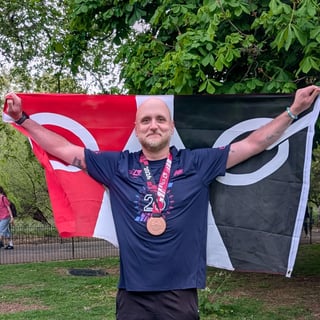
UKRunChat: Hello and welcome to the UK Run Chat Podcast, where each episode we'll explore the stories, science and ideas that help runners train smarter, stay healthy and enjoy those miles a little bit more. I'm Michelle and today I've got a very special guest as we talk about something every runner does thousands of times on every run, but very few of us ever think about our breathing. My guest today is David Jacko Jackson. Now, Jacko's a former rugby player who, after a brain injury, has gone on to become a master oxygen advantage coach, working with athletes to improve performance and recovery through better breathing. He's got a new book coming out, Breathe Smarter, Run Stronger, which explores
UKRunChat: how the way we breathe affects everything in our body. So in this episode, we'll talk about how nose versus mouth breathing might affect our running, how it could help our mobility, why carbon dioxide tolerance matters for running, and just some simple breathing strategies as well that might help you run.
UKRunChat: a bit calmer and stronger in a race. So, Jaco, welcome to the UK Run Chat Podcast. Thank you so much for joining us. and I've had, I'll confess, I've had a very quick read of your book because I only received it yesterday.
J A C K O: Yeah, yeah.
UKRunChat: There's a lot...
J A C K O: Well, it's not out yet, so you're doing well.
UKRunChat: Yes, so I had a very exciting preview. there's There's a lot in it. Honestly, there's a lot that i I've never even thought about breathing wise, which we'll get into in the podcast.
J A C K O: Yeah.
UKRunChat: But just tell us how, because you started out as a rugby player, obviously, playing professionally. How did you kind of get into breathing and becoming interested in that?
J A C K O: Yeah.
J A C K O: Yeah, well, I guess I was exactly the same as what you're describing and how a lot of people listening will be initially like, oh I've not really never really thought about my breathing. Like I was with ah doing some work with a 220 marathon runner last week. And the first question I asked was like, one of the questions i asked initially was like, you know, what how what's your breathing like? a very open question, like what's your breathing like when you're when you're running? You know, 220 marathon he is going to me shifting. Yeah.
J A C K O: And he was just like, looked at me and like, I don't know, it was almost like, it was a let me go for a run and think about it and then come back to you. type of yoga it's' It's one of these things that and we we take for granted and we and we've it's been overlooked for for far too long.
J A C K O: And actually, um are there things that we can do that ideally are simple because we're like simple things are good on it, but that can have like quite a big effect on, even if it's just one parameter of our, of running performance would be worth exploring, but it, it transcends into almost everything you're going to do because of the effect it has on your, your nervous system. And I came into this from a, ah yeah, I had a brain injury back in 2013, ended my professional rugby career.
J A C K O: um And that really disrupted my brain, my brain health, my nervous system regulation. And so I came at this from a just a brain health perspective and trying to regulate my nervous system after that traumatic brain injury. and You know, I was at a state where it took me a year to be able to actually get back to some level of functionality and being able to to run again without all of my symptoms kicking off. um at At the time, I'd had a seizure on the field and a small bleed on the brain.
J A C K O: um so brain health long term is is really important for someone like me that's been exposed to to brain injuries like that um so when it's when it's sort of there's a a dark cloud of early onset of dementia is a real reality for somebody in in my sort scenario scenario so anything that's going to help my brain is something you're going to take quite seriously. And breathing came onto the, onto the, I guess a piece of the puzzle for, for this. um
J A C K O: And it helped me with all sorts of um symptoms and issues I was having as a result of my brain injury. And interestingly, I'd retrained as a strength and conditioning coach at the time, working a lot with Paralympic athletes in athletics and in swimming, you know where breathing is really important. And we did nothing about breathing training at all.
J A C K O: I did none of it at all when I played professional rugby. We just... it just simply wasn't on the map as a, as a modality that we can actually influence train and, you know, use to our, to our advantage. Um, but as the, what the opening story in the book tells of, uh, Parker and I did a, um,
J A C K O: at this Sheffield where it was the first time I'd been to that particular parkrun, so I didn't know the course. and i'd I'd spent four weeks trying to work a little bit on controlling my breathing whilst running.
J A C K O: I wasn't doing anything crazy like trying to do it all nasally or anything like that. i was just trying to breathe a little bit little bit more under control so it could be a little deeper and a little bit... um slower and I went around this set off as normal. I'd but my training at this point for running, you know, after my brain injury, I couldn't even run two k So I'd got back to a point where my PB in a 5K was 20-20. And i couldn't break the 20-minute barrier. Like I tried and tried and tried.
J A C K O: And I set off as normal on this run of this 5K, which was typically for me, was just like set off as hard as you can and try and hold on. I had no tactics or anything. it wasn't I had very much a rugby approach of just try harder.
J A C K O: um and as i started to like feel a bit out of breath chasing runners that were comfortably sub 20 minutes um i just managed to remind myself this time oh rather than focusing on them runners ahead of you, why don't you focus on your breathing and and try and put into place a bit of this like breath control you've been learning about and reading about. um So I settle into settle into into that and and rather than focusing on them ahead of me, I'm um'm thinking about my breathing and,
J A C K O: the 5k sort of flies by and i get around the final bend and i'm i'm feeling like i've not really pushed myself that hard and i was a bit disappointed i actually crossed the finish line at the time i was on a good old casio illuminator so if i stopped my stopwatch and i didn't even look at it because i was like that is no way that's a pb because i just i was a bit i was actually a bit annoyed i was like i didn't really try that hard m my wife came came through and she was like oh how'd you get on and she could tell I was a bit annoyed because you see my sort of face and i was like oh I've not it wasn't very fast I've not even and I looked at my watch and I was like almost I probably would have sworn because I was like wow like 1917 I'd knocked a minute and three seconds and not only that I didn't even feel as out of breath
J A C K O: So then that really opened my eyes and changed this um narrative of breathing. I'd seen how it helped me with my brain health and nervous system regulation, which was helping me manage stress better, helping me sleep better, have my digestive system, all these sorts of seemingly non-performance parameters. But then when I saw what it did to running,
J A C K O: And at the time I'm working with some of these Paralympic athletes where I was like, wow, this this is like a this is something for exercise performance, not just for general health.
J A C K O: And that's where the rabbit hole so started and i'm and I'm still down there. I've just got a book with this now as a result of it.
UKRunChat: Well, the book the book is long overdue. Thank you. We've needed something like this. Like, I'm a running coach, and it's probably the question I get asked most from newer runners who really struggle.
J A C K O: Yeah.
J A C K O: Yeah.
UKRunChat: They seem to struggle with their breathing. And it's strange, isn't it? Because it's something we do every day without even thinking about it. Why do you think breathing is so difficult when people start running?
UKRunChat: And have you got some tips in your book?
J A C K O: well yeah no for sure like so and one thing i want to make sure i do on interviews like this is it's like yes grab the book if you want to take a deep dive but it's i'm not so' i want to give people ah the simple tools like hopefully you listen on to this and you know by the end of it we've give you some tools and you you know you don't need to buy the book you might want to but you know There's lots of things that you can do straight away.
UKRunChat: Yeah.
J A C K O: um I think that one of the um one of the things that we've seen in the research comparing elite runners to amateur runners is that not only are they better conditioned, yeah their running mechanics might be better, their economy will be better, all these things, they're also breathing differently to amateur runners.
J A C K O: An amateur runner tends to get ah restricted in their breathing and the size of breath that they can take because maybe their diaphragm isn't particularly well trained. Maybe they don't activate the diaphragm or maybe their rib cage is particularly tight and they can't get that expansion.
J A C K O: And so instead they just have to breathe faster. Whereas an elite runner is able to control the speed of their breathing, allowing them to take a more efficient, deeper breath and increase their what we call tidal volume, like the size of the breath.
J A C K O: And so what we know about breathing is the faster you're breathing, the higher your perception of effort. which is more linked to perception of effort, even than blood lactate levels or or measuring heart rate, which is interesting because if the speed of my breathing is perception is affecting my perception of effort and my levels of fatigue, more so than my, even my heart rate or blood lactate levels,
UKRunChat: Right.
J A C K O: The reverse of that means that, well, if I start to control the speed of my breathing, I change my perception of effort. And not only are you going to change your perception of effort, when you can control the speed of your breathing, you can actually mechanically ventilate more efficiently.
J A C K O: And then the most important thing for runners, the thing that every single coach researcher or expert I spoke to when I was researching for the book, when I said, what's the most important thing for runners, like not breathing related, just what's the the most important thing for running performance.
J A C K O: They all said that the key, the single most important thing, being able to relax the relaxation.
UKRunChat: Yes, that's it.
J A C K O: And now, We know from breathing, the faster you're breathing, the harder it is to relax because your breathing is a reflection in nervous system. The faster you're breathing, you're in more of a stress state.
J A C K O: it's Your perception effort is higher. It feels harder. And ultimately, your brain is just going to hijack you and make you stop because that fast breathing rate is too stressful. It's part of that natural stress response.
J A C K O: And one of the... and simplest things that we can learn to do is be more aware of that speed of breath and being able to control it and then we've got so then we've got lots of like little tilt tools and and tricks and tips to help you control it better but also train your ability to create some adaptations so you get better all the little pieces of the puzzle or ingredients to go into more efficient breathing that allows you to be more in control of it so that allows you to have that relaxation and more easily enter flow state for better performance
UKRunChat: Yeah, it's fascinating that what you say about relaxation, actually, because i was i was when I was reading your book earlier, I was thinking back to some of the races that I've found the easiest. And I had a similar experience to your park run.
UKRunChat: and it was It was a 10K I was doing. And I got to the end. I had an absolute whale of a time during that race. And I've been trying so hard for almost a year to kind of get a PB at 10K.
J A C K O: Yeah.
UKRunChat: And I went into this race just to have fun. um And I thought the course was measured short because I knocked two minutes off my time. And reading your book now, I think it's because I was so relaxed and would probably just wasn't aware of my breathing. And it was I was just in that flow state. And, yeah, it's incredible what an impact it can have, actually, isn't it?
J A C K O: Yeah. And, you know, it can, your breath can be a tool to access that flow state and relaxation. um But then at the same time, when you've created adaptation and and trained it, because it does happen automatically, you don't actually have to think about it when you're going to do your competition.
J A C K O: But if you've never trained your breathing, what we know from all of the research that's out there on it now that's starting to really come to light is that it's likely at those higher intensities, roughly around about over 85% of someone's VO2 max, your respiratory system isn't actually built for those types of intensities. We we previously in the scientific literature have have always had the assumption that the lungs are overbuilt for exercise.
J A C K O: Whereas um I come across um a lecture and then which was later published ah back in, this is back in 1985, guy called Professor ah professor Dempsey, sorry.
UKRunChat: Thank you.
J A C K O: and he He gave a ah lecture titled something like, um ah like the lungs the lungs aren't built for exercise or where he he he he put forward in 1985, like that's what, 40 years ago, um put forward this idea that actually the respiratory system gets left behind and becomes a weak link in someone's training because it's not getting trained. And I think one of the things that plays into it is that
J A C K O: your breathing has your your auto setting. And if you're not aware of what's going on with it, you're just stuck in whatever this auto is. And for for an amateur runner where you're, and if you're new to it and you're less conditioned, and everything that's gonna make you feel out of breath, like the increase in CO2 that you get when you're exercising, the stress response of parts of exercising, um and any sort of tightness and restriction you've got around your breathing muscles and your rib cage, that some of the mobilizations can help.
J A C K O: um All of those things are going to feed into you feeling more out of breath quicker and breathing faster without you even realizing that your own breathing is hijacking your experience of trying to go out and have a nice run.
UKRunChat: Yeah. Yeah. So let's, can we talk about nose breathing?
J A C K O: Yes, hot topic.
UKRunChat: Because that's good that's a big topic at the moment, isn't it, in running? and what So why why does it matter? I mean, I think it matters for everybody, does it? But but why for runners especially?
J A C K O: Yeah, um it's one of these things where you haven't got a lot, that many different options with breathing. Yeah, you've got a few holes in your face. Your eyes are popping, your brain are popping out of of a couple of them, that's your eyes. And then you've got your nose, which are smaller holes than your mouth, which is a bigger hole.
J A C K O: And you can get more air in through your mouth because it's a bigger hole. um Now, one of the misconceptions is that just more is better.
J A C K O: Whereas some of the research that that that we've looked into and some of the testing that I've done in the lab as part of the research for the book is that when you look at an amateur athlete runner compared to an elite, it's not that they're able to breathe more oxygen or breathe more air necessarily at a given speed.
J A C K O: Their breathing is more efficient allowing it to be slower and they'll be breathing in a way that's extracting more oxygen per breath and done in a way that requires less energy because the act of breathing itself and the harder you do it and faster you do it is using up vital oxygen and energy that you want to really go to your legs so they will be breathing less air than you ah you know And obviously they're more conditioned and better, they have an economy and all of that goes into the mix as well. But what we can see and what we can train is we can train you to be more efficient so you don't need as much air to oxygenate your muscles to the same levels.
J A C K O: And when you don't need to breathe quite as much air, that means at times, depending on the intensity of the run, you might be able to do that through your nose.
J A C K O: And when you can do it through your nose, we get better recruitment of the diaphragm, potentially. It can be the resistance the nose provides it can be a little bit a challenge, which in training can help build up the strength of your breathing muscles.
J A C K O: And then you might um say you're trying to do like a five or 10 K like PB. Well, you might do some of your training breathing through your nose. So your diaphragm is building up a bit of strength, but then for your run,
J A C K O: You might use most of that breathing through your mouth because there tends to be um a point for most people, depending on the size of your nose and your airway, where you wear for something like a, you know, you're trying to PB in a, in any type of distance of race where the intensity might be greater than you can manage through your nose.
J A C K O: What I call the nasal threshold. yeah up and Whenever you can use your nose over your mouth, all of the data shows us that that is going to be more efficient in terms of the amount of oxygen you extract per breath, that the nose will always beat the mouth in terms of efficiency.
J A C K O: But there will come a point where your the amount of air you can actually get through your nose is just much smaller. If I put some numbers on it to bring it to life, it helps a little bit.
UKRunChat: Yeah.
J A C K O: So testing done in the lab on VO2 on me as a case study, breathing through my nose, I was able to breathe 80 liters of air per minute. when i when i and that took me up to of max.
J A C K O: At that point, I just couldn't go any faster to breathing through my nose, but it's quite a high intensity. and And then I switched to mouth breathing and I got up to um like 120 and even later 140 liters of air with my mouth.
J A C K O: Now, even though i was breathing 50% more air with the mouth, I didn't get 50% more oxygen in because the mouth was less efficient, but it did let me get more in in total.
J A C K O: So to sort of like summarize that in a little bit with a, try and be a bit concise on that. at an intensity that's comfortable for you to use your nose, it's more efficient for you to use it.
J A C K O: When it starts to feel like it's limiting you genuinely, then it will be probably reducing your oxygen ah supply to your tissue tissues and then switching to mouth breathing and can then be beneficial. but
J A C K O: earning the right to mouth breathe well, rather than it just being a compensation. One of the problems with mouth breathing is it's tends to, the airflow comes in really fast. There's no protection for your upper airways. People can struggle with airway restriction and irritation of those upper airways.
J A C K O: And then mechanically the air comes in much faster. So it ends up being a much shallower breath, which is less efficient. And then you end this cycle of having to do more of it. And then you feel more stressed and you and you're breathing faster. So your perception of effort is higher. So we're back to that. And then it's ah back to that perception of effort iss higher, fast breathing rate.
J A C K O: It's almost impossible for me to relax. So when you don't need to use your mouth, you can use your nose. to train your system to become better at nose breathing, but then you also get better at mouth breathing when you need to.
J A C K O: I think one of the things that with nose breathing, it got a little bit of like excitement and hype around it. And some people would find some benefits to it and other people weren't. and That's because that threshold at which is beneficial for you is different for everybody.
J A C K O: depending on the size of your airway and other factors, but it's a trainable point. You can get up to, like I can get into like zone four nasal breathing and run a 20 minute 5K nasal breathing.
UKRunChat: yeah.
J A C K O: Now couldn't at start, I couldn't run 50 meters at the start. But when I'm trying to get towards my PB, like I've done an 18 minute forty five k I had to do 90% of that with my mouth because my nose wasn't able to provide enough air in total to oxygenate sufficiently.
J A C K O: But training with some of my runs nasally meant that when I let myself breathe with the mouth, it wasn't a fast, shallow upper chest breath. It was still diaphragmatic. My rib cage was expanding nicely. And I was in control of the all important breathing rate.
J A C K O: And that's the thing that we see elite athletes do. They naturally, whether they're doing it through the nose or the mouth, they're breathing less air than you or me. And they're doing it in a way that's far more efficient with their diaphragm and their rib cage expanding rather than just breathing faster. And that's one of the keys.
UKRunChat: Yeah. So you mentioned diaphragm there. So it's key that we're getting air in through our diaphragm, isn't it, rather than this upper chest breathing and nasal breathing helps us to do that. Is that right?
J A C K O: Well, that's what some people will say when they oversimplify it. But there's a little bit more to it than that in that if I'm used to using my accessory breathing muscles to hike my rib cage up, just because you switch to nasal breathing doesn't mean you're automatically going to start activating your diaphragm if your brain is much more used to activating your accessory breathing muscles.
J A C K O: So for, and I've had Olympic athletes, elite athletes, international athletes of various different sports where they don't use the diaphragm in the first, and we spend and we spend maybe half an hour in the first session, like this is the most important muscle in your body potentially, or what's certainly one of.
UKRunChat: Yeah.
J A C K O: We need to be able to, you need to be able to consciously activate your diaphragm before it's going to happen unconsciously. i mean, that just makes makes sense. if you can't consciously do it, you're not going to be able to do it on auto.
J A C K O: And particularly when you're being challenged by your next PB in a whatever run you're doing. So um yeah, there's there's a little bit of work to do on that. There's something we can try if you want to have a little go.
J A C K O: um i call it a diaphragm activation test. m
UKRunChat: Yeah.
J A C K O: Use it as a little assessment, but also it becomes and a great exercise in itself to just simply get a a stronger contraction of your diaphragm isometrically so you can feel it. So um your diaphragm is situated at the bottom of your rib cage where your two lower ribs meet. And you can sort of like find those ribs on your on your body and like track your hands down to have a feel of m what they're like. So if I should just bring that onto the camera, you don't want to look in on the video. My ribs underneath here, yeah?
J A C K O: The diaphragm is attaching into into there. The central tendon for the diaphragm is just below your your sternum. And it wants to move down and flatten out to draw air in and ideally draw into the the bottom portion of the lungs where the lungs are most efficient, have the most ah density of alveoli. That's where the gas exchange is actually taking place.
J A C K O: you're getting less gas exchange taking place up there. So um the diaphragm wants to move down and flatten out when it contracts. It contracts on an inhale. Most people, it's a 50-50. Does the diaphragm contract a knee-hound or exhale?
J A C K O: Normally, half the people say exhale. We usually don't know. We don't get we don't get taught any of this at at school, weirdly.
UKRunChat: think about it though, do we? We don't think about it.
J A C K O: No. And some people don't bleed and barely contract their diaphragm at all. So um if you want to feel a strong contraction of any muscle, if you want to contract your biceps strongly, you you shorten it and you you you do an isometric, a static, a squeeze.
J A C K O: The way to do that with your diaphragm so you can really feel it is to hold your breath and then try to breathe in whilst holding your breath. The diaphragm will try to move down and flatten out, but it won't be able to if you hold your breath. It can't really move. And you're going to feel it like trying like it's going to contract and pulse or like try and jump out of your stomach.
J A C K O: So I'll sort of demonstrate. It's going to be somewhere down here. i take a normal breath in, a normal breath out, pinch the nose after that exhale, and then try to breathe in.
J A C K O: I twice there tried to breathe in and I could feel this sensation happening there. People can try that as they go along at home. it's ah it's a It's a deeper sensation than the superficial like abdominal muscles.
J A C K O: If you put your hands on your abs and do a strong exhale, You'll feel your abs tense. And they're on like the outside, whereas the diaphragm is deeper on the inside. But the sensations can feel quite similar. So it gets confusing to go like, oh, what's abs and what's diaphragm?
UKRunChat: Yeah.
J A C K O: linked in with all of that whilst we're talking about the diaphragm is that the diaphragm isn't just a breathing muscle it's actually a muscle to um for for stability postural stabilization and helping your your core to transfer force effectively when you're breathing dynamics are correct and your diaphragm is strong and and the diaphragm is really the the superhero in, in this story of how breathing can influence your running, because it's not just, it's not just helping you get oxygen and air in more effectively and efficiently.
J A C K O: It's actually going to help you with your, with your running economy and being more efficient and transferring force, um, which, which can lead into all sorts of, cool little things that, um, we can explore.
UKRunChat: Yeah, well, that there's loads of exercises in the book, isn't there, about how to kind of, well, find, with that one you've just described of how to kind of locate your diaphragm and get used to what it feels like and how to kind of get used to using it and breathing through it.
J A C K O: Yeah. Yeah.
UKRunChat: There's also ah another bit that really blew my mind in the book was how breathing mechanics can kind of contribute or relieve hip tightness. That that blew my mind, but it's all kind of linked together.
J A C K O: yeah
J A C K O: Yeah, so a couple of um coaches that people might have heard of.
UKRunChat: so
J A C K O: Shane Benzie was one that sort of um fed into this. And then the other is um Gemma Jefferson is a physiotherapist that works with ah Olympic athletes in the UK, runners, where...
J A C K O: um One of the ways she described it to me, that's one of the entries in the book, I think is really nice is the idea of this canister in your abdomen area and your core.
J A C K O: And rather than you creating tension and stability in that region by just like tensing your abs or the hip flexors being staying tight, it's If your diaphragm is moving down, pulling air in to the lower portions of the lungs, that um those breathing dynamics are creating like pressure inside this canister.
J A C K O: And the nice sort of metaphor that she gave is like, if you had a can of Coke and it's full and you haven't opened it yet, all that pressure in that canister, like it's rock solid and you can't do anything to it. You can't twist You can't manipulate it at all.
J A C K O: you You open that can of Coke up, let the pressure out of that container, you can start to manipulate and and and do and squeeze and crush and do whatever you want to that thing.
UKRunChat: Yeah.
J A C K O: And it's the same. if we're not If our breathing dynamics aren't creating pressure internally inside of us, we're going to lack stability. And when your foot hits the floor, your body needs that stability to transfer that force.
J A C K O: If it's not sensing that your breathing dynamics are creating that internal stability with pressure and the di function of the diaphragm, then it's going to ensure that it creates that stability and that tension in in in another way.
J A C K O: that The body is phenomenal at compensating. And the classic one that the that Gemma described is the hip flexors, particularly psoas major, connects into the spine and and and intersects with the diaphragm itself so that psoas major and your diaphragm like become the same tissue. Those two are in a direct relationship.
J A C K O: that If your diaphragm isn't doing it, guess what? Hip flexors go boom. will create this like tightness and stiffness for you that's going to give us some stability. And she found that with any athletes that were suffering with hip pain and hip tightness, that has a massive effect on stride length because you won't be able to get into like decent ah hip extension if those hip flexors are tight.
UKRunChat: Yeah.
J A C K O: If she identifies that they're typically like an upper chest dominant breather, not utilizing their diaphragm well, until she sorted out their breathing mechanics to get that diaphragm doing the breathing work for them, the hip tightness wouldn't go away.
J A C K O: And I've seen it time and time again where we can improve like that hip tightness, stiffness, pain, mobility around the hip, lower back area, all that whole region.
J A C K O: By improving someone's breathing mechanics and and the dynamics of their breathing of how they create stability with their breathing and their diaphragm in that region, creating a nice canister of pressure rather than it having to be all the muscles around the hip tightening up to do that for them.
J A C K O: And that's that's a ah total game changer for like how your hips feel, which is nice, but then also it's gonna transcend then into your running because your your stride length improves.
J A C K O: that your forced transfer improves. Each step, you might be being more efficient. You know Shane Benzie, I don't think you've come across his work with The Lost Art of Running, you know, talks about can we be efficient with our running posture and mechanics so that you rely more on the fascia that isn't greedy with energy and oxygen.
J A C K O: And what was really interesting and when we started to do some work together, and we're doing a workshop actually in a couple of weeks, and is where everything that he tries to line up with your head position, your spine, your rib cage, your pelvis,
J A C K O: All of those stacking of those elements are the same postural positions we want people to get into for the airway to be nice and open, for the rib cage to be able to expand and the diaphragm to connect with your pelvic floor for efficient breathing.
J A C K O: So efficient breathing is feeding like efficient running economy and vice versa. And when you start to put those two things together, you're you're like ticking boxes of performance enhancement, um but you're only doing one thing.
J A C K O: you're you're You're trying to, you can just do it from either angle. You can try and do it from a running economy perspective, or you can try and do it from a breathing perspective. what you're creating in your body line is the same, which was really nice because you're getting like, you're getting two things for for one one bit of effort.
UKRunChat: Yeah, that's really good because, yeah, we we do talk about the posture, but I've never, again, really thought that that is that helps us to breathe more efficiently either. and Yeah, I mean, how how long? So if somebody, animmate I know everybody's different and this is still very much a work in progress for you as well. But how long before people start to see some benefits if if they do kind of start to look at the mobility and the diaphragm and practice the nasal breathing? how long should they really stick with it before they think
J A C K O: I think that the typically in like, I'm, I'm, I'm a coach and and practitioner.
UKRunChat: Yeah.
J A C K O: So and I'm out there doing it with, with athletes and you can always, wait and my job when working with someone is in that first session, I need to make something feel better for them to get them to buy in and believe in it.
UKRunChat: yeah
J A C K O: to So depending on what the, um you know, depending on what their sort of challenges are, what the restrictions are, it's like, depending on what we're going to target. But, everybody is going to feel some sort of benefit in something, some way, it in just by just doing one one starting point.
J A C K O: you know if you've If you've never really felt your diaphragm activate before and you did that little diaphragm activation, it's like, if you go and use your diaphragm next time you're running, like something's going to feel better.
UKRunChat: yeah.
J A C K O: um Over time, it just gets better and better as you integrate more things in. And I think one of the things that I'm a big believer in, and all the athletes that I've worked with need it to be the same is that no one's got more time to do extra training sessions.
J A C K O: So it needs to be integrated into what you're already doing. The beauty with all of the exercise that outlined in the book is that they're designed to be integrated into the various different sessions you've got. And so depending on what type of session you're doing, is it aerobic? Is it zone two? Is it anaerobic? Is it speed? Is it sprints? What type of session? Is it threshold session? What type of session is it?
J A C K O: What's the purpose of the session? And what type of adaptation am I looking to try and create with this session? And then I choose what type of breathing tool I'm going to use to maximize my performance in those sessions.
J A C K O: And you're going to get, you're just going get a little bit more out of that session or recover a little bit faster from that session. So in the session, you can go again harder or your recovery in between sessions is going to be better.
J A C K O: And you just start to stack those things on top of each other. And then all of a sudden those PBs happen and you're like, cool. I just, I didn't do anything extra. It's it's just, it helps me do the things I'm doing better.
UKRunChat: Yeah. Yeah. she's So we're a constant work in progress, I guess, aren't we? And we're just practice, practice, practice and being consistent with it. m Yeah, there's that you you kind of go through loads of useful warm up exercises in your book, don't you?
UKRunChat: To help people with mobility and the breathing. And there's absolutely loads in there.
J A C K O: Yeah. Yeah, some of those things are around like warming up the breathing muscles. Like we think in a warm-up, we warm up other muscles. Like you said right at start of the interview that something we do thousands of times when we're out running and we don't actually let those breathing muscles warm up. and And the the mobilization bits is around um the rib cage and the ribs.
J A C K O: connecting to your spine, your thoracic spine, and the thoracic spine is so key to like good running form, good efficient movement. Those ribs articulate with the spine, with the thoracic, they form joints at the spine.
J A C K O: Those joints can be moved and mobilized. You can get more movement out of your rib cage, which is going to get more expansion Easier for you to use your diaphragm, easier to take a bigger, fuller, deeper breath when you need to so that you don't just have to breathe fast You can breathe a little bit more like an elite runner who breathes bigger and deeper with control rather than fast and shallow. And a lot of the time, people's ribcage is very restricted, which restricts their breathing, but it's also going to restrict your movement. It's going to restrict your thoracic extension, which is going to affect your height in your running form, but also it's going to transcend lower down. It's going to restrict your your hip range of motion as well.
UKRunChat: Yeah, one one particular thing I wanted to talk about that I found fascinating was how important the tongue is in breathing and tongue position. I've been making funny faces at my desk today, going through those exercises.
J A C K O: Game changer.
UKRunChat: And honestly, the the difference is amazing. It's not something I've, ever again, I've ever thought about before. But can you explain why it matters?
J A C K O: Yeah, and so the tongue, this came at a, I went to a biological dentist, ah Dr. Lomas, um for what I thought would be a normal dentist appointment. And um actually, first I saw the hygienist who, Annie she were probably 30 minutes in and she'd not even looked at my teeth yet.
J A C K O: was looking at my tongue because the effect it has on my airway. And your airway is going to affect your breathing and your breathing is going to affect your the microbiome of your mouth, which has a huge impact on like all of your health and your gut microbiome. So their starting point for their dentistry is like, what's your airway like? What's your breathing like? And what's your tongue like?
J A C K O: um's like And you can feel it in a very simple way. If you put your fingers underneath your chin here, where my double chin would be. and If I push my tongue to the roof of my mouth hard, I'm going to feel those muscles kick in.
UKRunChat: Yeah.
J A C K O: If I feel the side of my jaw and I push my tongue to the roof of the mouth,
J A C K O: as I push my tongue up, I'm flexing the muscles of my jaw.
UKRunChat: in Yeah.
J A C K O: The muscles of your tongue are connected to the muscles of your jaw, the muscles of your throat, even the muscles of your airway. through your deep front fascial line, goes all the way down to your diaphragm and even all the way down to your big toe.
J A C K O: So your tongue is going to affect how air flows in your airway It's going to affect how easily you contract your diaphragm. um And it's going to create nice tension through that fascia that someone like Shane Benzie is like, this is the key for you to be running more efficiently. um So yeah, the tongue plays a vital role um in the airway. And if you get the tongue, when you're trying it, when you're doing the best way to start with it would be get used to where the tongue supposed to sit in the mouth.
J A C K O: at rest and then try to integrate that into like an easy warm-up or something where you can manage nasal breathing your your tongue can't be in the roof of the mouth when your mouth breathing but in your daily life for good airway posture the tongue should sit in the roof of the mouth as a simple little exercise that this dr lomas gave me to do was make a
J A C K O: Click your noise with the tongue just before the tongue pings off.
J A C K O: If you stop, you're going to see that it's suction to the roof of the mouth and you're going to get a stretch in the bottom of the tongue. Yeah, the the if the tongue is tight and the tongue is weak.
UKRunChat: Yeah.
J A C K O: It's going to struggle to sit in the roof of the mouth. Your airway is going to be more compromised and airflow is going to be more restricted, which is going to feel more uncomfortable. And you aren't going to have that same fascial connection to your diaphragm if you can't get your tongue up.
J A C K O: m it's a It's an essential part of a nasal breathing puzzle for running intensities that are comfortable for you to do nasally.
UKRunChat: Yeah, it's amazing. You even mentioned a possible connection with knee flexion with relation to where your tongue is. And it's, yeah, it's incredible how everything's literally connected.
J A C K O: Yeah,
J A C K O: and they did like a very simple study, like a knee extension test, like strength of like and quad into ah knee extension. when you got some up When they tested people with the tongue just resting at the bottom the mouth compared to the tongue pressing into the roof of the mouth, though instantly their strength scores are higher.
UKRunChat: Yeah.
J A C K O: um Yeah, there's some there's some very interesting things that we don't fully know or understand, but are creating quite strange results. But that tongue is affecting even the nervous system. Like you've got more parasympathetic nerves at the back of your soft palate.
J A C K O: So the more of the tongue you can get up, the more those parasyndetic nerves are activated to help you stay nice and calm and relaxed whilst you're running. um But it's it's like that it's part of that fascial chain with the deep front line where it's going to help us create like a lot of nice stability through our midline, which is massively important for um for runners and force transfer.
UKRunChat: Yeah, fascinating. and So something else I wanted to talk about is, it's again, a question that I get asked a lot is how many breaths should, or how many kind of foot strikes should I be taking?
J A C K O: Yeah.
UKRunChat: And how do I match it to my breathing? and Because that's something that I think people tend to get a bit confused about. Is there one right answer? Or does it depend?
J A C K O: Yeah, and um it it it definitely it depends and will change as you train, potentially. um It's the sort of, in the research, they call it locomotor respiratory coupling, like syncing your steps with your breathing cycle, your movements. So syncing your movement, your locomotion with your with your breathing. And it has ah ah what I found fascinating about this in the research was, and then putting it into place myself and feeling it.
J A C K O: Interestingly, at first, I came across it a couple of years ago and I really didn't like it. I found it annoying. I found it off-putting. And they do highlight that in the research that having to think about your breathing and when your foot's hitting the ground can be a little bit off-putting for people at the start. But it's worth sticking with because there's and there's there's a a few different dimensions that it ah that it's going to affect.
J A C K O: One being, so before we get on to a specific number of of of steps, one that's just like real nice encouragement. When your foot hits the floor, your um ground reaction forces are pulling you down, gravity works downwards. yeah When I'm trying to inhale, when my diaphragm is trying to inhale, it's contracting and it's trying to move down.
J A C K O: The researchers noted elite athletes naturally sink the initiation of their inhale where the diaphragm wants to move down with when their foot, with when one of their foot strikes the floor.
J A C K O: whereas an amateur runner may not, which is interesting I'm always interested in when when the elites do something naturally that we don't, it's like, hmm, can I train myself to do it like them, even though it might not feel natural to me at the start?
J A C K O: And then um what that's what the research has described is it's giving free energy to the diaphragm. So when you want to breathe in, your diaphragm wants to move down and flatten out.
J A C K O: For your diaphragm to contract, that takes energy and oxygen.
UKRunChat: Yeah.
J A C K O: If you can make it easier for your diaphragm to contract, you don't have to spend as much energy and oxygen on that. So it can go to your legs instead of having to go to your breathing muscles. You know, energy consumption of your breathing muscles during hard running can be, you know, 15, 20, even more percent.
J A C K O: the less efficient you are at breathing, the more energy and effort you're going to put into breathing rather than energy and effort going into your legs to actually run, propel you. So if you time the start of your inhale with when, when one your foot hits the floor,
J A C K O: diaphragm is being pulled down with those ground reaction forces, easier for your diaphragm to contract and draw air in. And they even reported in the research, and something in the region of like ah a 10% increase in total ventilation without any additional effort.
UKRunChat: Yeah, wow.
J A C K O: So you can get, you can breathe more without even trying harder. and
UKRunChat: Yeah, that's massive, yeah.
J A C K O: Yeah. The other, the other thing that's really nice with it is that um it's reported in the research and I've felt it and people I work with the same where um there's this beautiful synchronization that's quite hypnotic.
J A C K O: That sort of drops you into that relaxation and flow state. Like, yeah, And you don't, and all of a sudden you're at the top of the mountain or you, you're five K's flying by and you're just like, your your foot's kissing the floor and you're listening to your breath. And it's like, we're in, we're in this rhythm.
J A C K O: um so it's, it's a fantastic tool for so keeping relaxation and entering flow state. And with that, depending on the ratio of how many steps you take for the inhale and exhale is going to help you manage your pacing.
UKRunChat: Right.
J A C K O: which is really critical for some of our longer races, right? So um the shortest step-to-breath ratio that elites are reported to do is a two-step inhale and a two-step exhale.
J A C K O: If it's going shorter than that, if you're trying to like inhale with each stride, like you've lost control of your breathing, it's it's going to get in. if's goingnna we're We're going to get hijacked. to the The central governor is going to want to make us stop.
J A C K O: So two steps, left, right, inhale, left, right, exhale. And syncing that initiation of in inhale with one of those foot strikes.
UKRunChat: Right.
J A C K O: Yeah, that's going to be like the shortest or fastest type of intensity you've run. It can be really helpful. The end of my last PB in a 5K, the last 500 meters, that saved me and allowed me to stay relaxed and push beyond my sort of perceived limits because I felt like I was losing a bit of control and that perception of effort was going up.
J A C K O: And i and i I checked back in with um how many steps am I doing for the inhale and exhale. Got back myself to 2-2. And then it helped me relax and, you know, finish strong rather than yeah falling away.
UKRunChat: Yeah.
J A C K O: um Now, you can, on your slower runs, maybe you doing some zone 2 type of training, or if you're doing some longer distance marathon, ultra marathon stuff where...
J A C K O: you need to make sure you don't go off too fast. It's a mistake sometimes sometimes we made, isn't it? Or in your training, you're just trying to keep yourself in more of a zone two type of session. A longer step to breath ratio.
J A C K O: So and doing three in, three out, or four in, four out, or five in, five out, something like that. As you get better with your breath control, you'll be able to do more steps per inhale and exhale.
J A C K O: Now, everything I've quoted there was even numbers.
UKRunChat: Yeah.
J A C K O: The problem with even numbers is that you're always going to land on the same foot at the end of your exhale. And this is an important one for injury.
J A C K O: At the end of your exhale, you've got the least amount of air inside of you. If I've got the least amount of air pressure inside of me, I've got the least amount of stability when my foot hits the ground.
J A C K O: So if I always land on my left foot at the end of my exhale, if it's always the left foot, you're You're exposing that left foot to an impact on the floor when your body is the least stable.
J A C K O: Does that have potential to increase your injury risk on that side? Yes, it does.
UKRunChat: Thank you.
J A C K O: And we've we've seen it in the research. I've seen it personally and I've seen it in coaching. If we can use, say, three-step inhale, four-step exhale or four-step inhale, five-step exhale for those slower runs, your your foot hitting the floor at the end of exhale is going to swap each time.
J A C K O: which is actually really quite nice when you get it right, because you'll be trying to do it and thinking about it a bit. And then it will like, you'll be like, okay, one, two, three, four. And then you'll go one, two, three, four, five.
J A C K O: And it'll be like, Oh, but it was left. And then you'll go one, two, three, four. And it switches. And it goes, Oh, and it switched to you right. And then you're like, you get this little, um, dopamine hit of like success.
UKRunChat: Okay.
J A C K O: It's actually, you know, those short little, um,
J A C K O: like what do they call them i'm trying to and think of like um the guy that wrote for the book flow where it's like the ingredients for like flow state is having these like short term like goals that you can hit and you you you when you achieve it you get that little dopamine hit and it's like your foot's just swapping every time and it's like ah you know and eventually you just get into this like rhythm where often it's almost like i'm I'm singing a song in my head or there's just like ah a tune to my breathing in steps that I'm not actually counting four in, five out on my easy zone two run. I'm just in it, in that in that flow.
J A C K O: m I'm going to be running two marathons a day for two brain injury charities for 100 days starting on the 29th May.
UKRunChat: Oh yes, she's got a world record attempt, haven't you?
J A C K O: Yeah, and that, for me, that is such a critical tool for like staying relaxed, staying calm, getting in flow state, but managing pacing.
UKRunChat: Yeah.
J A C K O: Like I cannot go, if I go too fast on day one, two, three, four, five, six, seven or whatever, yeah i I'm absolutely toast.
UKRunChat: wow
J A C K O: But you've got to go fast enough that you're not spending all day running, the otherwise you're never going to recover. Yeah. Yeah.
UKRunChat: So does does that kind of breathing ratio, like a say a four, five, does that ever come naturally or is that something you're always having to be kind of thinking about?
J A C K O: Yeah, know so once once you've like trained and practiced that, you will um you'll just slip into...
UKRunChat: Yeah.
J A C K O: What people tend to find is people have different differences, different speeds, whatever sort of becomes natural to you, but there's you know there's not that many different types of options that you've got.
J A C K O: You've got your 2-2 for your fast stuff, and then you're starting to elongate it out. You probably might have a three three But then once you start getting into those longer ones, rather than sitting in a four four and that same foot on the XO hitting the ground all the time, you're going to want to swap that out for like a 3-4 or 4-5. And um and you're probably not going to go, you'd you'd be going pretty slow if you were extending it further out than that.
UKRunChat: yet
J A C K O: But what you tend to find is you're like, you have a few different little gears for yourself that you're like, okay, when I'm really pushing, I'm going for like, this is my max speed type of effort. I'm two, two, my zone two type of run.
J A C K O: I know that I'm three, four or four, five or somewhere, somewhere large like that. And then you'll probably have something in the middle that you, that you play with when you're like pushing it a bit, but just trying to maintain a decent, like a threshold type of session where you're not absolutely gunning it, but you're trying to maintain some good form and good pacing.
UKRunChat: Yeah, yeah, that's something I'm definitely going to give a try my next few runs. I'm going to see what my natural is, because, again, it's something that I've not really given any thought to.
J A C K O: Yeah. All I recommend for people at the start is, one, don't be put off by counting those steps initially because you don't have to you don't you won't have to count them all the time. It will start to become natural. and And just be, the first time you do it, just go out and just be inquisitive of just go, okay. m when do do so does my One question to ask yourself is, when I start my inhale, do i feel do I feel like it's coming from my diaphragm or is it driven from my upper chest?
J A C K O: And when I do start that inhale, is it where my foot is kissing the floor perfectly? Are they in sync? Do that first and then just be inquisitive about, oh, how many strides am I taking during this inhale?
J A C K O: Is it two, three, four? Is it... is it is it two and a half like am i out of sync um and then the final point that's really important on this is that don't change your steps to match your breathing manipulate your breathing so that you don't mess with your your your cadence on your and your running form that's really important
UKRunChat: Yeah.
UKRunChat: Yeah. Because I was going to ask, actually, lots of people run with music. Will that have an impact on, I mean, I guess it has an impact on cadence, does it? but So as long as you're manipulating your breathing to keep up with your cadence, I guess you're okay.
J A C K O: yeah Yeah, yeah that's yeah, that's the right way around to do it.
UKRunChat: Yeah.
J A C K O: Manipulate your breathing, yeah. Yeah,
UKRunChat: Yeah. Because music really throws off my stride. It can make me run a lot faster than I necessarily want.
J A C K O: because you're, yeah. I mean, yeah, I would think i would spend some time listening to the music of your breath and foot strikes and the birds.
UKRunChat: Yes.
J A C K O: Yeah.
UKRunChat: Yeah. A bit more aware. Yeah.
J A C K O: Yeah,
UKRunChat: I'm in that camp as well. I like listening to the birdsong and the peace and quiet, but yeah, I know lots love their music.
J A C K O: yeah. yeah I know, I know. And it's, yeah, everyone's got their own things, yeah.
UKRunChat: Yeah. Yeah. and Can we talk a little bit about just building up some carbon dioxide tolerance? Because we we've we've been chatting for nearly an hour.
J A C K O: yeah
UKRunChat: and I did definitely want to cover this because you cover this quite a lot in your book about how and we think running is all about oxygen intake.
J A C K O: Yes.
UKRunChat: But actually, a lot depends on us building up tolerance of carbon dioxide, doesn't it? Especially with the elite seem to be able to tolerate that much better.
J A C K O: Yes. So... um The notion of like carbon dioxide tolerance is probably is coming in other sport, like free diving, where they do a lot of breath holding. They specifically work on their ability to tolerate carbon dioxide, not leaving the body because they free dives. And i interviewed a couple of world record holders.
J A C K O: They understand that, well, two things. One, they have to stay relaxed in their mind in order to be able to like manipulate their breathing.
J A C K O: which is interesting for us as runners when our coaches and all the experts say that relaxation is the most important thing.
UKRunChat: Yeah.
J A C K O: We, we, we can use our breathing and we can train our breathing to help us with that relaxation. Um, but the, yeah, the other thing they, they're very acutely aware that they're the more sensitive, their brain receptors that control their breathing in the respiratory centers, the more sensitive those are to carbon dioxide, the,
J A C K O: the less they can hold their breath. For us as runners, what that means is the the faster you're gonna be triggered to breathe. So if relaxation is our key and um being able to control our breathing rate is key to that relaxation and efficient breathing,
UKRunChat: Yeah.
J A C K O: controlling the speed of my breathing in order to help me do that. It's going to be far easier for me to do that. If I can build up some tolerance to carbon dioxide and desensitize um those receptors in the brain. So something like nasal breathing on your easy runs,
J A C K O: CO2 can't leave your nose as quickly as it can your mouth because there's more resistance and there's smaller holes. So you just automatically get a little bit of CO2 tolerance as part of those easy runs.
UKRunChat: Yeah.
J A C K O: You know, a lot of complaints that people make about and zone two type of training, even though we read about how it's important and blah, blah, blah. It's like, yeah, but it's boring. And it's like, well, why you could use that time to work on your CR2 tons with some laser breathing. At the same time, your diaphragm on the in inhales is have to work a bit harder with that resistance, a bit diaphragm strengthening, which is nice. um And then you could practice playing with those step breath ratios to work on like the efficiency of your force transfer.
J A C K O: So I like to, i like to go like, how can I get more out of this session? Particularly if it's a boring session, how do I get more out of this boring session that know is important? and And those boring sessions tend to end up feeling a bit more fun or they at least go faster because you're a bit more engaged.
J A C K O: um
UKRunChat: Yeah, your mind's distracted, isn't it, and focused on something
J A C K O: Yeah. There's also then some breath holding that you can do. and There's a French scientist that's worked with a lot of Olympic athletes called Xavier Waurons that interviewed in the book, um who is a big advocate for breath holding for more anaerobic type of training sessions where you, I guess you starve the body of oxygen, but then also you don't let the CO2 out.
J A C K O: ah One of the things I think for runners where this becomes quite exciting and and I saw this with my own VO2 max testing where my lactate accumulation after having practiced all this breath holding with some of my interval like training and speed work was that my body could tolerate way more lactate and it took far longer before my lactate started to spike.
J A C K O: So all of my zone shifted massively and my body and was just able to utilize and process lactate at a totally different rate to the point where my exercise test in the lab, we had to extend it by like 10 minutes or something because had to do two more speed ah intervals when they were taking the blood lactates.
UKRunChat: yeah
J A C K O: And the researchers were like, oh, what have you been doing in training? Like how come... And I was like, oh, you're not going to want to know because you're not going to believe me. Because they said, oh, if you you must have been doing loads of more zone two training, haven't you? Zone two, that's what you've been doing, isn't it? Like trying to put words mouth. was like, well, haven't done any more than that than i normally do. What I've been doing is like holding my breath, but you're not going to believe me the effect that has. But you when you keep that CO2 in, you desensitize those receptors, which is helpful for your breath control. But the CO2 has a relationship with the lactate.
J A C K O: Xavier Warren's reported in his research that m we see that the CO2 seems to like trap and and not allow the lactate to leave the tissues. so we get ah You're going have more lactate being produced because you're holding your breath and starving the body of oxygen.
J A C K O: So you're being more anaerobic anyway. Plus that like your body has to like so of just deal with that lactate because that CO2 is like that's trapping it in the in the tissues. And the result is Yeah, those trying to do some like interval sprints holding your breath is pretty difficult.
J A C K O: Like you feel it, it's hard. But the adaptation is your body finds it easy to utilize in clear lactate.
UKRunChat: Yeah.
UKRunChat: Yeah.
J A C K O: And then it's
UKRunChat: So on Wednesday, wow, yeah.
J A C K O: Yeah. And um you yeah you can see the results if you go and retest yourself in a, you can fit, you can feel the difference in like the times that you run and how you feel, but you know, I've been and done some, some testing in the lab and like got those data points to to show the effects that those things are having.
UKRunChat: Yeah. Wow. um Are there any differences when it comes to male versus female with breathing?
J A C K O: Yes, and there are. There's um a section in the book that you know tries to highlight.
J A C K O: Catherine Jackson was an expert we spoke to on this around that there's a couple of key and things for for females that often in the research,
J A C K O: of anything to do with males, females, um not just running research, is that um often because of a female's natural fluctuation in their hormonal cycle, they actually get taken out of research and we just do the research on men.
J A C K O: And then we make an assumption that a a female is like a smaller version of that man. So we just like take those data points and go, ah and seventy five take 75% of that and that's probably what the females are. We're literally guesswork. And that's and it in a good way, it's been starting to be really well highlighted and people are going, hold on minute. We can't just say that women are small versions of men because there's some differences. And with breathing,
J A C K O: it's interesting that yes an average male and average female are going to be difference the averages in terms of size height weight and all of that but even when you take those differences in terms of size a female still has relatively a smaller airway and is going to
UKRunChat: Right.
J A C K O: um that that's going to be more of a challenge for their breathing during exercise. So it's not just that, ah you know, if ah if I've got a female that's 70 kilos and a male that's 80 kilos, it's it's not just that that comparisonly is is the same.
J A C K O: um And there's for females that are in their hormonal cycling years, one of the um key hormones, progesterone,
J A C K O: that you're having an increase of in the second half of the, of the cycle in the luteal phase, that, and that itself as a hormone is a breathing stimulant. So you're going to get a stronger urge to breathe when progesterone is higher.
UKRunChat: Right.
J A C K O: And so that can make someone feel more out of breath during that part of their part of their cycle. So and yeah, there's there's a little bit of differences in the the shape and size of the rib cage.
J A C K O: um So it's a little bit wider, the zone of apposition. So the distance the diaphragm is going to move through um is smaller for a female. um A lot of the stuff tends to point towards that females are going to get, a potentially are going to get even more benefit than a male by implementing some breath training specifically because they've got they've got the the potential for more challenges if they just let the auto setting kick in, if that makes sense.
UKRunChat: Yeah. Oh, that's really interesting. Yeah, that's really interesting. I'm i'm definitely going to be giving a go all the exercises. Yeah, I'm really interested to see where it'll where it'll take me.
J A C K O: Yeah, I'm excited to hear about your yeah what PBs are going to do.
UKRunChat: Yeah, I know. well, no PBs this year because I've got an ultra to train for as well, but um but I'll be interested to see how it carries me through that.
J A C K O: It's
UKRunChat: and So we'll we'll finish with one. What's the top breathing habit that you wished every runner developed?
J A C K O: a great question.
J A C K O: And I think that the if you had to boil it down to one, like the most important thing is the speed of your breathing.
UKRunChat: Yeah.
J A C K O: That's the most important thing. But in terms of a habit, i would say the the best thing you can do as a starting point is you need to just give yourselves a chance to be aware of your breathing. Because if you start to just be a little bit more aware of what you're doing and inquisitive about your breathing as you're running,
J A C K O: you'll very naturally start to be a little bit better at controlling it just by being more aware of it. Rather than like me asking that 220 marathon runner, I had you breathing running being, I've got no idea that you've at least got some sort of answer to that question. You're already starting to intuitively be a little bit more in control of it me a little bit more in control, easier to relax, easier to enter that all important flow state.
UKRunChat: Brilliant. ah Thank you so much, Jacka. That's been really interesting. i yeah I could chat for another hour, actually.
J A C K O: Yeah.
UKRunChat: It's yes fascinating. But I will dive deeper into your book, which I'm finding really interesting.
J A C K O: el leftic yeah You'll have to come come run a little 5 or 10k loop when I'm doing the two marathons a day for a two brain injury charity challenge.
UKRunChat: Yeah, so tell us about that. So when when do you start that and is it taking you all over the country?
J A C K O: Yes. So starting the day after Kylie Minogue's birthday.
UKRunChat: okay.
J A C K O: So I share my birthday with Kylie. um
UKRunChat: Okay.
J A C K O: ah We're not twins, but yeah, sweat that's but so birthday is 28th of May. So we start on the 29th of May. Lots of confusing. It's 29th of May. um Going to 25 different locations all around the UK, starting where I live in Wales, going up to Scotland, down to London, across to Cornwall and back up. So 25 locations, um spending four days at each location bait to make up the 100 days.
J A C K O: Meaning that like we're going to be based at one place for four days, running simple five and 10K loops. So it's very easy for someone to come park up. We're going run when you're back at E-car. you know couldn't make it couldn't It couldn't be any easier to to come and come and get involved and join in, yeah.
UKRunChat: Yeah. Oh, fantastic. Yeah. So where can we find out that information and where you are?
J A C K O: um At the moment, it literally, I the finalized the details and ah did an announcement last week on my Instagram, which is thebreathrunningcoach.
J A C K O: If you go to thebreathrunningcoach.com, that's my website where there'll be details of the run there, depending on how quickly you get this podcast because I still haven't finished that page on the website yet.
J A C K O: But yeah, there will be, there'll be, there's details on my Instagram. And then, yeah, there will be on the website, thebreathrunningcoach.com.
UKRunChat: Oh, fantastic. Yeah, I'll definitely try and make an effort to get out there and see it as I'm sure many of our listeners will as well. Thank you so much.
J A C K O: Amazing.
UKRunChat: So your new book, Breathe Smarter, Run Stronger, is out on the 12th of March.
J A C K O: Yeah.
UKRunChat: Yeah. um And if this episode has made you more curious about how your breathing affects your running,
J A C K O: I want to follow
UKRunChat: then do let us know and let us know if you try any any of the exercises that Jaco's told us about today. As always, you can find all the links in the show notes. And if you enjoyed this episode, please do share it with a friend or tag us on social media. And thank you for listening to the UK Wind Chat podcast. We will see you next time.