Transcript
Speaker: Welcome to the For Wild Places podcast. I'm your host, Hilary, and today we're joined by someone who is at more races than some of the elite athletes we've spoken to, but they are on the tools, chasing runners with a heavy camera in tow.
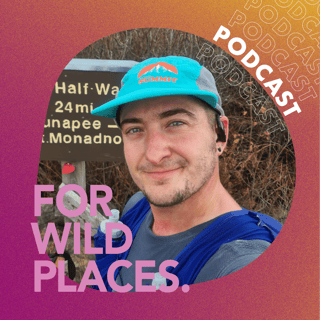
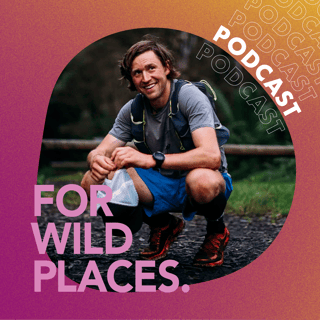
Speaker: Today's guest, Callum Hockey, is a self-taught adventure photographer based on New South Wales' mid-north coast. But before we get into our chat with Cal, I'd like to pay my deepest respects to the custodians of the country that I'm on, the Gadigal people of the Eora Nation, and acknowledge that here in Australia, we are all on unceded lands.
Speaker: For Wild Places, I'm deeply grateful to the First Nations people for caring for these so-called wild places for tens of thousands of years, and hope that we can continue to learn from and honour their care for country. This always was, and always will be, Aboriginal land.
Speaker: Today's guest, Callum Hockey, has been shooting trail and ultra vents across Australia and Aotearoa, New Zealand for roughly five years. Call is known for his epic drone shots, which demonstrate just how insignificant people are amongst a natural wild landscape.
Speaker: Callum has been a photographer for much longer, starting out with a GoPro and then moving on to photography, drone and now video. Callum is entirely self-taught and has traveled widely using his time outdoors to hone his eye and his skills.
Speaker: Our first conversation with Callum was in January 2024 and was a bit of a show and tell with Callum sharing the stories behind some of his favourite photographs. We hear the stories behind the images and the effort and patience that goes into getting quality shot. In our follow-up conversation from December 2025, Callum reflects on the past two years and the impact trail and ultra running has had on his career and the many places and people he's captured along the way.
Speaker: Chances are you've seen one of Callum's photos or videos in your feed at some stage. Like any creative freelancer, he's everywhere and anywhere. These conversations are a peek behind the curtain of what it takes to capture the inspiring, insightful and epic content that we get to see from the comfort of our screen.
Speaker: If you want to see the images Will and Callum are talking about in this first conversation, head to our Instagram at 4wildplaces to see the photos they discuss. Now let's jump into the chat. My name is Will.
Speaker: My pronouns are he, him. I'm based on beautiful Darawal land, south of Sydney. I'm in Port Kembla in this lovely Illawarra. Got the lovely escarpment to run around in. These trail chats are supported by Smartwool. If you haven't checked out Smartwool, check them out, smartwool.com. Thanks to those guys for supporting these chats.
Speaker: For Wild Places is a group of activist runners with a purpose, to use our love for trails as a tool to make a difference, to protect our planet and its wild places. So if that sounds like you, check us out and join up today. We organise these chats every month and we have a yarn with special guests about running, about life, about sports activism, about whatever we feel like it on the day. And we're stoked this month to bring a very special guest that for plenty of you won't need an intro.
Speaker: But our guest is based on, and I may need to be corrected on this pronunciation, sorry, but our guest is based on Gumbangir country. Gumbangir. There we go. Gumbangir country. Yep. That's it.
Speaker: Pretty good. He's an adventure photographer, and I think you've already got a preview of his face, so my surprise is ruined, but I'll just keep going. He's an adventure photographer. Captured some of Australia's biggest ultra marathons, including Takina Trail, Ultra Trail Australia, West Mac Monster, Buffalo Stampede.
Speaker: He's also a keen road runner and trail runner. Massive thanks to for being with us today. Welcome, Callum. Thank you very much. Stoked to be here. Stoked to have any yarn with Wild Places.
Speaker: Brilliant. Now, my first question is a bit embarrassing. I'm just going to jump in. Oh, good. The bio you sent me, at the end of the bio, it says, when he's not behind his camera, he can be found taking precious crowns. Now, i didn't yeah i didn't want to I didn't know what that meant, but I felt but i didn't want to check because I felt a bit stupid, but I'm just going put myself out there now.
Speaker: What is taking precious crowns? Well, so I only really got back into running probably 16 months ago and ah came across Strava as a way to document my runs and see how much I'm doing.
Speaker: And then there wass this little feature down the bottom called crowns or oh something like that. And I like, this is pretty interesting. And then everyone had the list of times and everything of where they've run and how fast they've done it. And i'm like, okay, well, I don't really want to compete as a runner, but I want to try and um sneak a few of these PBs in my own country here. So I'm just like, yeah, I'm going to go and run as fast as I can and get a collection of crowns. And yeah, so do that every now and then. So that's quite fun.
Speaker: Oh, that's brilliant. I thought it must have been some, you know, some lingo of a photographer, but it's the good old Strava crowns. Love it Yeah, man. Love a good Strava crown. Every time I see a good one or someone takes my crown, I'll go and take it back.
Speaker: and Yeah, so that's quite good. Awesome, awesome. Now, folks, today's chat's gonna be a bit different, but in a good way, because we've got the visual format, we're gonna make the most of that. And Callum has shared with us a few photos, which we're going to talk through.
Speaker: um ah We want to dedicate most of the chat to checking out those photos because they're spectacular. But just before we get to those pickies, um Cal, can you just tell us what got you into photography and then more specifically adventure photography in the first place? Tell us a bit about yourself.
Speaker: Yeah. So adventure photography has kind of been always ingrained in my soul. Like I started off you know, with the nice little Hero 3 GoPro back in the day. That was my first like real action camera. And that was, you know, I took that to Uluru for my first trip, like to the Red Center. And I just love the idea of having a GoPro and I was like literally just taking selfies everywhere and doing all that sort of stuff. And then went on the GoPro bandwagon quite back in the day and did some quite adventurous stuff around Australia and New Zealand and even went over to Nepal
Speaker: And yeah, I just love the idea of taking photos of um in adventurous places. So yeah, it kind of started with that. And then COVID happened and then everything kind of slowed right down.
Speaker: and then my whole aspect of photography changed because I was doing a lot of tourism related stuff. And next minute I know I'm... ringing up a race director in Alice Springs about a race out out west. And I'm like, Hey, can I come and shoot this ultra marathon?
Speaker: And yeah, so that was a year after COVID. Next minute I'm shooting ultras all over Australia. Not a path I probably intended to go down, but it's just been quite an adventure so far.
Speaker: Yeah, nice. i was going to ask that because i didn't get to catch you at our For Wild Places camp last year, and I'm only just getting familiar with your work now. But I was going to ask whether the shots you've taken, ah you just getting out there yourself or were you on the crew like as part of the event? What's your norm?
Speaker: Yeah, so ah usually... ah get out and well down at Hawthorne that was kind of like he let arranged me to come down and capture that whole event so that was kind of cool I was out there shooting a bit of video a bit of photos and just like just pretty much in awe the whole time of how special it is up in that country i was just watching a Bo Miles YouTube thing of him running through that country down there and I'm just like such good memories of how special it was down the street at that camp As a freelance photographer, I'm pretty much just emailing every race in Australia trying to get work. So that's kind of how it happens. Most of the time it's a no. About 10% of the time it's a yes. I just take it as it comes.
Speaker: Yeah, nice. Well, look, let's get stuck in because I know people are keen to have a look at some of the work. I think we've got six photos that Cal sent us. Oh, wow.
Speaker: Cal has sent us a bit of a mix of just adventure and running pickies, but also bit of sports activism. So we'll just go through them one by one. I might just follow your lead, Cal, in terms of how we should talk about this. Yeah, talk us through this one.
Speaker: Yeah, so this was one of my most recent shots. So this was part of Godzone Australia and basically it's a big one week long adventure race. And this is pretty much a shot I took where you hike in And then in order to finish, to start hiking again, you've got to do this big 65 meter abseil.
Speaker: So there's no other way around, but to go down this abseil next to a waterfall. So everyone on the God's own teams, the teams of four had to abseil down this massive drop. And it was just spectacular, massive waterfall and they're just dangling in midair. So I thought I'd um get down to the bottom, get my fisheye lens out, which was like super wide and actually captured one of my mates who was um competing and yeah, next minute, um,
Speaker: Yeah, they're just like coming straight down above me. And there was a case of where some guy got flipped upside down during it. So that was pretty gnarly. Unfortunately, I didn't capture that, but my hands were sweating just looking at this, like just looking over the edge and getting all these different angles and stuff. of That was um pretty spectacular. And like getting to this spot was not easy. i nearly got my car stuck on the river above it.
Speaker: There was this big boulder just in the middle of the creek and... I got lost like four times getting to this location. So I'm just saying, I'm just going to drive my car over this little sketchy bit of water. And there's a boulder in the middle of the creek and I nearly got stuck on it.
Speaker: So pretty much just floored it, went over, to the other side and just say, yep, righto. That was good. Because if I lost my car there, I'd literally be like five days walking to the nearest town. So yeah, the photos from this place actually paid off quite well considering how many times I got lost.
Speaker: So like you've come down there, that that that guy's coming down after you. Yeah, pretty much. So i i have done one. um in Kanani and in Nippaluna.
Speaker: And that was probably like two years before. And then I came across this again. And then I'm just like, No, I'm not actually. I'm pretty terrified to be on ropes. I'm going to find my way around and get down to the bottom and not abseil.
Speaker: So yeah, it could have been me, the one that was flipped upside down. Thankfully, I'm a bit of a mountain goat, so I'll just crawl around the outside and make my way down. I don't know photography lingo, but the framing on this is like it's mostly dark with all the tree canopy around. Yeah, so I like to shoot a lot of monochrome stuff. So the sky in the background was pretty like...
Speaker: like really light and bright. So, you know, if a photo is like that, i'll just turn them into black and white and it just adds another bit of feel to the photo. And I just love a silhouette of my mate just hanging up there and making his way down. Just that little speck and then there's just this massive landscape.
Speaker: Just shows how tiny humans are in nature. It's just, yeah, one of the coolest shots that I've taken recently. That's pretty special. We'll keep going now, Hill. I think on to that next one. I love this one, that ridgeline, far out. Where's this, Carl?
Speaker: Yeah, so this was probably two years ago along the High Sim Trail. So there was a group of four guys attempting to run the High Sim Trail from...
Speaker: north to south in under 12 days. So that's 1,200 kilometers. So that's average about 100 k's a day to get there, fastest known in time. So yeah, I got a call from a mate who wanted me to come and document this whole adventure.
Speaker: And it was literally like the most beautiful part of Australia that I've ever seen. But at the same time, it was just so damn cold and windy, like a South Australian Winter is just horrible. But when the sun came out, it was pretty good.
Speaker: But this location, I actually kind of, the yeah, it was like about halfway along the trail. And in order to get to the location to take this photo, i went with one of the other guys who a car and we literally were going at like 45 degrees up this Spinifex Mountain and it was terrifying.
Speaker: Like I thought the car was just going to fall off the cliff. These guys are like making their way up to us and then we're on this mountain just across from it. But this location was just absolutely insane and it was very cold.
Speaker: I think I'm still cold from this experience two years ago. I don't want to go back to South Australia in the winter. But um yeah, no, it's a take. was just like admiring like the big Spinifex and all these big gums and everything in this country. And then I just see there's four little people making their way up this ridge line. And I'm pretty sure they would have been, yeah, 70 K's in for the day, quite cooked, lot of blisters.
Speaker: And, Pretty cold. So yeah, no, this is one of my favorite shots from that whole expedition. And the four guys, so three of them finished, one of them pulled out, but they end up getting the fastest known time.
Speaker: So they end up finishing in probably 11 days, which was quite amazing to see considering how gnarly the Flinders are. behold The whole of the Heisen, it's not very runnable.
Speaker: Yeah. I love the way it it looks like that. It looks like that ridge has been ruled. Like it's so straight. And then you got those beautiful trees going up in the other direction. Yeah.
Speaker: Oh, I did. Everything just, it's just so magical. And this was probably just after sunrise as well. So getting that nice morning light. And I literally just didn't know where to take a photo. I'm just like, wow, i was just in awe of everywhere. And then I just saw this moment and that was pretty special to see.
Speaker: So how far away have you have you had to do much? Yeah, i had a zoom lens, so a 70 to 300. I was quite far away, probably two kilometres as the crow flies away from this photo.
Speaker: now And then they kind of got to the top of that and they went down again, then came back up to us. So quite a bit of climbing for them. Very rugged country out there. Spectacular.
Speaker: That was probably one of my favorite adventures to go on this one. Anytime you're doing an expedition shoot, like I haven't done many of them, but there's just, never know what's going to happen or what's going to appear. Yeah, I ended up making a 26 minute long film on this and That was pretty cool. Unfortunately, not many people got to see the film, but it was quite special to film it for the boys and the support crews that did it.
Speaker: Oh man, we'd we'd love, I'd love to see that if it's publicly. Yeah, it's on YouTube. We should put a link to it on our YouTube. So Izzy, I can do that. Hilary's just asked, can you tell it's a special photo when you take it or is it not until you're looking at them on a laptop that you know you've nailed it?
Speaker: I don't know. I get a feeling if I've taken a good photo, like kind of like Spider-Man sense, you know, when you get, you can kind of feel when you're taking it, but it's not until, don't know, you can take a photo and then look back at it at multiple times and,
Speaker: you know, it'd kind of go over your head, but then you look at it again. It's like, actually, no, that all looks pretty cool. So like I've got photos from like few years ago that look average, but you know, you kind of grow on it and you see it and it looks pretty cool. So yeah, I never, you know, a lot of people like to delete their photos and stuff after they've taken them, but I like to save them because you never know if it's a, there's a good one in there. Awesome. Can we go to the next one, Hill?
Speaker: Hey, here we got a bit of, Sports activism hooked in, I assume. bit depressing, but at the same time, some amazing people there. Well, no, sorry, I should leave it to you.
Speaker: No, no. All good. All good. Yeah. So this was um down in Sakina in Tasmania. And this was the first conservation shoot that I ever got to go on with fellow photographer, Paul Hilton, who's up in the Sunshine Coast. And...
Speaker: So i got to spend 10 days down in Tassie and I got to make Bob Brown and spend a day of Bob Brown, which was like the coolest s thing ever.
Speaker: And got to, yeah head out to one of the camps out near Rosebury, which is kind of like, yeah, deep within Takana up on the West coast.
Speaker: Yeah. So we went out and were actually meant to be filming. And so Paul was like back here with his camera, like trying to get a long shot of the activists in the tree.
Speaker: then I was like flying my drone around. Like a lot of people ask how I took this photo and they're like, oh, we'll be up in the tree. I'm like, I wish I was up in the tree. Like I wish I was good with ropes, something probably down the track we should be able to do, hopefully do. But at this time I had my drone and I was flying around this big, eucalyptus obliqua. So it was like 50 meters tall. And that's like, that's massive.
Speaker: And that's even a small tree in Tassie. Like you get trees in Tassie that are hundred meters. So this was still pretty special. And these activists are on their way up to a tree sit and they're standing on a burl, which is like a big growth that just forms on the side of the tree. So there could have been a branch there or something before and it's fallen off. and then this big thing's just like formed over the top.
Speaker: So they're on their way, climbing up to the top, having a rest. And yeah, snapped this photo with my drone and I nearly got drone stuck in this branch up the top. Like I had to have a spotter like watching me where I was flying too close.
Speaker: So that could have ended in disaster. One of them many times with my drone. So yeah, and I snapped this one and next minute I, well, I really didn't have any intentions to do much with this photo, but I entered it into a wildlife photographer of the year, 58, which was two years ago.
Speaker: And I never entered this competition before. i had a book I'd read from it, like, yeah, an old book and I saw the photos and looked pretty special. And I entered this and yeah, next minute I know, I'm It made the top 100 in the world and one of the best photojournalist photos in the world for that year. So that was pretty special and took me a bit of convincing to get my butt over to London for the award ceremony, because it's quite a way to go to London.
Speaker: But yeah, so I thought, you know, this is the wildlife photographer of the year. So yeah, and I went over for that and had to wear a tuxedo, had a little black tie and everything and got to meet all these Nat Geo photographers and everything. And then there's little old me and some shiny shoes and a bow tie.
Speaker: That's pretty cool. But hats off to the people who, especially the mob down in Tassie who are defending the country down there. I can take a photo, but these guys are out here.
Speaker: like defending the forest and stopping these big trees from getting cut down. So much admiration for this for the two in the photo and everyone on the ground holding the fort and keeping out forestry. Yeah, they're amazing people.
Speaker: Elise says powerful. Akana says congrats, so good. One thing I love about this photo is often photos of kind of forest protectors are from like you're looking up to them and you don't get a sense of the scale or the height. And this photo almost gives you a bit of vertigo. It gives you an idea of just the physical and mental courage of what these people are doing to protect our forest is incredible. Yeah, I love the angle. It really shows what a full-on thing it is to be doing this.
Speaker: Oh, yeah. I've got a few other angles of this photo and this situation, but this one is just like, you know, it's like these guys have got in here and stopped. Like, I mean, there's a lot of destruction on the ground, but at the same time, they've got in there not too late, but at the right time and stopped any further destruction. And it's, yeah, it's just like...
Speaker: But kind of that bird's eye view of what they would be seeing and what a bird would be seeing, it's something quite unique. Absolutely. Yeah, I can see like there's another line of trees just behind. do you know anything more specific about this individual thing? Like did logging have to halt for a while or um yeah? Yeah, so beyond this tree line, it just goes on and on and on, but unfortunately there's a really big tailings dam, which is like a toxic tailings dam for a big gold mine. So that's another really terrible thing. It's like a whole nother story. And there's a few things going on here. The Bob Brown Foundation wanted to stop deforestation and they had to stop another mine being established. It was over 500 days or so where they were holding fort and it ended up being about 90 arrests. The camp got shut down, raided multiple times by police.
Speaker: And, yeah, that went on for a long time. And then the Bob Brown Foundation ended up moving further into the bush to a more secure location. So I'm not too sure if that camp's still there right now because I haven't been down there in about a year.
Speaker: But, um yeah, so at the moment they're trying to, the Bob Brown Foundation is trying to stop another really big tailing stand from being put in further down because they've already, the, The mine has already filled up all this toxic sludge and everything into the current one and they need to build another one.
Speaker: And it's meant to be even bigger. So they need to destroy all these big beach forests and everything just beyond this tree line in order to put it in. And it would just be an absolute environmental catastrophe.
Speaker: So there hasn't been a decision on whether it's going to be made yet. So that's down to the environmental minister, but it's a wait and see game from now on. Yeah, right.
Speaker: Congrats on the photo. And it's awesome that you have really helped bring attention to what's going on there. I might also just take a second to plug the Takina Ultra is is next month. We've got for Wild Places members heading down to take part. I'm sure folks here would know about it, but um if you're not heading down to participate, make sure you jump on Raisely and support people who are running down there to save Takina.
Speaker: All right. Next looks like we're heading up to Cozzy, Coziosco. That is beautiful, Kel. Talk us through this. I'd never been to Cozzy before until this.
Speaker: So um this was part of the... So I shot UTA and then they also signed me up to shoot UTK, which is Ultratale Coziosco. And... Yeah, down into the high country and it was just like everywhere you look was just absolutely magnificent. And so, yeah, it was like a three-day shoot and there was a lot of trails, lot of like, oh, just as you can see, like these big rivers of just like freezing water and...
Speaker: like tussocks and everything. It was so incredible to see. ah literally didn't know where to take photos. Like I had to take photos of everything, but it's just like, wow, everything looks so good here. And then I got my trusty drone out again and snapped this shot. I think it's probably about one of my favorite shots from UTK of just these two trail runners, probably on the...
Speaker: one of the 100Ks events just going on this nice meander past this river. think it's near a Threadbow. So yeah, this is quite special to see. And what's really funny is that Once again, it was freezing, but they didn't really predict the snow, like there was any snow coming. So at the start line of the 100 miler, it absolutely bucketed with snow and and snow everywhere. So there had to be all these course changes and everything. And everyone was just huddled into this room up at Perisher.
Speaker: And it was like a few thousand people just cramped in and I didn't want to go outside and start this event. And it was probably like, it would have been minus 10 freezing and minus 10 in summer, which is crazy in Australia.
Speaker: like, it doesn't, it hadn't been heard of like, snowing down that way in summer and it did it's like that whole morning it snowed and then by lunchtime yeah it cleared up and I'm just in awe of the location down here and yeah this one definitely stood out for me down in Cozzy so beautiful you guys are pretty lucky I mean Hillary it's down that way and she gets to see this kind of country all the time and yeah definitely jealous of this people who got to run this course Elise says she did it this year such beautiful terrain i love that you can see the diversity of the
Speaker: The plant life there too with the grasses and i assume they're mainly shrubs there, doesn't it? Yeah, very shrubby. And then you move up into the hills and there's all these snow gums and then you get to the top up near Kosciuszko and then it's just like all these tussocks and everything. Yeah, it's just absolutely amazing. Yeah.
Speaker: Yeah, I can't believe i hadn't been there before. Unfortunately, I didn't get to go back recently, but, you know, yeah, it's just probably one of the most unique courses we have in Australia to run. and It's kind of funny for me, like, you know, I love running, but I've also got to take photos to make money, but I also want to run it at the same time.
Speaker: it's just like, what do I do? and so But I prefer to run them without a thousand people. That's kind of me. and And just an excuse to go back.
Speaker: What's the go with drones? do they You'd obviously put your own camera on a drone, would you? No, so you can buy a drone these days or every drone you pretty much buy comes with a little camera on board. um You'd want a little gimbal that, you know, you can angle it and everything that you want, but you can get bigger bigger cameras where you can put your own camera on, but, you know, going to spend 20 grand doing that.
Speaker: But these days you get like a good drone for 1,200 bucks onwards. And the camera, you know, I don't know the species on cameras, but again, the the cameras are obviously good enough for for your work, like.
Speaker: Yeah, I mean, I can do it like a 48 megapixel photo, which is like quite big. So I can get all the detail and everything. So yeah, no, it's quite, it's a very handy tool. Probably 60% of my work is drone.
Speaker: Yeah, very handy tool. Even if you crash it into trees and stuff and you mend it and you've, yeah, it's been through a fair bit. There's another story for another day is getting stuck up a tree and getting an arborist out to rescue it. So yeah. And then breaking the side of it and, oh, man, that's just camera gear. it's just another tool, really.
Speaker: Yeah. Just another tool for the work. Do you do any touching up? Do you alter anything afterwards? I don't like to as much. Like i'll do a little bit of like contrast and maybe texture and just like getting rid of highlights and stuff. Like very minimal.
Speaker: With my style of photography, I don't like to have scenes that are too saturated, like too much color and that sort of stuff. So less is better. The less time you spend editing a photo, the better.
Speaker: Like you just try to take a good photo, like as it is, and then try not to edit It doesn't make that much sense, but like try not to edit it too much in post. Just you want to keep it as real as possible.
Speaker: I just see very oversaturated photos and fake kind of looking style. So it's like, yeah, less touching up the better. Oh, and the places you're You know, this picture right here, you know, it's so beautiful. There's no need for a touch. No, not at all. No.
Speaker: It's, yeah, special scenery down there for sure. Well, I was going to say we're back on the ground, but it actually looks like we're on the ground, but we're very high up. where Is this the mountains? this is ups This is Blue Mountains, yeah. So this is during Ultra Trail Australia, UTA, the men's 50K.
Speaker: It was one of the most exciting 50K races I've probably ever seen, and I got to photograph it. Yeah, so I shot this originally in color, but I turned it to black and white because it looked a lot cooler.
Speaker: There was a group of like three guys i absolutely going all out like four minute kilometers during the 50k, which is just crazy. There's a fair bit of elevation gain for the 50k.
Speaker: And I thought I'd get to this little bridge and... snap the runners as they come across. So this guy was actually leading Iron Explorer. You can find him on Instagram. he's pretty cool fella. And then behind him is a local Ronnie Sparks.
Speaker: And then not far behind him is Benny St. Lawrence. So couple of Sydney folk down that way at the UTA. Yeah, it was just an absolute crazy. Like these three guys were like neck and neck for 50 kilometers And yeah, thought I'd get down with my wide angle and snap this shot of this guy coming across the bridge and then Ronnie Sparks in pursuit. And yeah,
Speaker: I kind of know Benny St. Lawrence from previous years and I asked him how he was and he just like looked at me. i think you're at the turnaround point. So there are at least 25 Ks in and he was absolutely cooked.
Speaker: Like he had hadn't run more than a marathon before. for him to do a 50 K, yeah, it was pretty brutal. And yeah, Benny St. Lawrence ended up winning his first 50 K and yeah, it's a pretty amazing thing to do. And I got a an after shot of Benny.
Speaker: just like absolutely passed out on the ground at the finish line. So pretty brutal. Like you can do like 50 Ks and average like four minute Ks and less. Yeah. Pretty amazing things you see on those races. And this was one of the moments.
Speaker: Absolutely. I think this one, yeah, it captures the beauty of some of these areas, but also the pain on his face. Oh, I can imagine how it would be feeling. Yeah.
Speaker: Absolutely cooked. And that's just the 50K. And I mean, there was some people go on the hundred k and certainly how people can do that sort of stuff. So sometimes it is good to be just taking photos, not running.
Speaker: if Is that, don't know that course, is it very technical in parts? Like what ah obviously we're seeing here a nice bridge and some nice finished steps, but I imagine it gets into heaps more technical stuff on other.
Speaker: Yeah. So for the 50K, there's a bit of up and down. The course has actually changed quite a bit for this year. So this would have been two years ago now, this course, not the recent UTA before.
Speaker: so there's a fair bit of road running during the 50K, but I know the 100K can be pretty brutal. Apparently there's a lot of stairs. There are a lot of stairs. There's this really big section, which actually closed for the year that I was there.
Speaker: where it's literally like that. You've got to crawl your way up these stairs. And I went down some sections to take photos and I was just like, yeah, not too many stairs for me. Pretty brutal, but yeah, if you like stairs and ultra running, this is the one for you, UTA.
Speaker: My quads just started pinging thinking about it. No, thanks. Oh, specky. All right. Where's that? This is the West Max out in Alice Springs.
Speaker: It looks dry. Oh, it's always like let out there. It does get rain, but yeah, every time I've been out there, it's been bone dry. So this was my first ever ultra that I attended and photographed. So this is kind of where it all started for the Westmax monster.
Speaker: And yeah, it's kind of remained my favorite ultra ever. I don't know. There's just something about it, like 231 of... absolute hell. Like it's the gnarliest course you'll ever see.
Speaker: It's hot. It's like 40 degrees in the daytime. There's flies, there's cow shit, there's snakes, and you've literally just got to watch the ground the whole time. It's pretty brutal.
Speaker: It doesn't look like much of a trail. like Yeah, there's a little bit of a trail, but it's super hard to see, especially like navigating in the night too. Oh, really difficult to do. Cause like, you got to look for like these little blue triangles and they're probably every few hundred meters apart, probably even like 500 meters apart. And if you miss one, you can end up a long way off track, which happens quite regularly with this race.
Speaker: So there's been quite few people getting lost and doing like an extra 20 K and then missing cutoffs. So pretty brutal. Yeah, that's Mount Sonder where it starts at the back, that mountain way, way way out the back there. So yeah, that's where they come from. There's a few different races though. You've got like the 231 and a that is a, from my DSLR, that one, this shot. So was up on a Euro Ridge.
Speaker: yeah So I was just like sitting back, kind of waiting for people to come along this ridge and yeah, snap this one. This one's great. It's beautiful. But I think it also gives you that idea of the relentlessness of ultras, like that undulating, like you get to a peak. Oh, another one, another one. Oh yeah. Because you got such distance back to Mount, sorry, what's it in the background? Mount Sunder. Mount Sunder, yeah. Yeah.
Speaker: Even driving to the start line, which usually you should, it's better as to camp out there the night before it starts, but driving from Alice to Mount Sonder at the start in the morning, it takes like two and a half hours to get to the start line from Alice Springs. It's such a mission.
Speaker: And then that's not even bad because people have to run back from Mount Sonder to Alice Springs and there's a 60 hour cutoff. So it's like, Absolutely hectic and not many people finish. There's probably like five finishes a year and they finish literally on the 59th hour and pushing it right up to the 60th hour.
Speaker: That's just how insane it is. But this year or last year, Salman Duke actually absolutely annihilated the course record by at least 12 hours. So...
Speaker: so Yeah, think he did it under 40 hours. It was pretty insane to see. I'm not sure when that question was asked. Is this a drone or a camera shot? Yeah, you're you're sitting for that one. Hey, Carl, you're on. Yeah, yeah.
Speaker: I was just sitting there on ah under. um So it's probably like, yeah, 40 degrees there. And there's these little trees that, you know, the best thing for shade. And that's just, it's pretty horrible. was me so much ashamed of it Yeah, like, ah what are you doing to, must be full on for you just out there.
Speaker: see Yeah. So it's, I mean, I love it. It's just so beautiful out there that I don't really mind that I have to wait. But there was one instance last summer i shot this race where I went out to get this really good view of Mount Sonder and the runners coming past.
Speaker: And for some reason I got there four hours early. So i really messed up my timing with the athletes coming past. And yeah, I was sitting out in the middle of this big spin effects plane waiting for the runners to come past. And I was there for four hours and I was absolutely cooked. I had no food, no water and I had to hike in and I didn't want to leave this location because it was such a good spot to get these photos, but I didn't leave and I, everyone came past and I got back to my car and i drank a lot of water.
Speaker: ah I was pretty cooked just waiting, but it happens. Yeah. That's extreme photography. Yep. You got to wait to get the shot or you just fix your timing up, which I should do more often.
Speaker: Do you know what kind of rock that is and in this little outcrop here in the front? what's There's um a lot of granite, um kind of, I'm not too sure, like Sni. I couldn't tell you the actual name, but it's quite common. It's a lot of iron in all this rock here, hence it's red color and the soil is just absolutely iron rich and red. It's got some type of iron in it.
Speaker: And there's just these massive big seams that run all the way west, especially if you're like driving along that rode out to Mount Zonda, you see this is just big, like from the air, they look like caterpillars, like literally these big, like wavy kind of things in the ground.
Speaker: And yeah, it's just literally the most, I don't know. I've got so much FOMO for this country out in Alice. It's just, yeah, it's spectacular. If you want to run a ultra, like you don't have to do the 231K, you can do a 65 or a 128 or even a 27.
Speaker: It'll blow your mind. Like you don't want to finish it quickly. You want to just embrace it. It's, yeah, it's just a country just so special. I've actually been out to a place called Unbloodowatch, which is a couple of hundred Ks out of Alice.
Speaker: The contrast, it must be a photographer's dream, the contrast between the beautiful greens from the grasses and the shrubs, but then the red earth and the blue sky. Like it sounds corny, but it's, there's nothing like it.
Speaker: It's amazing. I get shivers like flying over that country and seeing it from bird's eye view. It's amazing. It's, don't know, the beating heart of Australia. It's just so amazing.
Speaker: Yep. Literally words can't describe. Have photos, Ken. Absolutely. Oh, cool. So Hill's Googled. It's a combination of limestone, granite, sandstone, and silicon. Wow. That's along the Larapinta with iconic peaks and gorges of red quartzite.
Speaker: Fascinating. Nice job. I've only just started scraping the surface of taking photos of ultras. So hopefully down the track, there's going to be a a lot more, hopefully a few things on the cards, nothing set in stone at the moment, but you know, hopefully I get to experience some ultras this year that I haven't really done before. So I'll see what I can create and and yeah, this should be little bit of adventure along the way.
Speaker: Awesome. I was going to ask, what do you got planned for the year? As a freelance, it's all over the place. So there's nothing really set in stone. I know that I'm going to go down to Warburton and do the cover the trail run down there, Warburton Trail Fest. So That's meant to be pretty special. That's just outside of Melbourne.
Speaker: That's Hillary's country pretty much. So I'm going to be getting down, taking some photos of that one. I've got a drive down for that one. So that's going to be a mission. I've got that. And then hopefully. What's that? Like 15 years? 16 years? Yeah, something like that is crazy.
Speaker: It's a bit of a mission, but it's going to be fun. There'll be a lot of the good scenes along the way. So I've got that. I'm literally just waiting to hear back from people to shoot ultras this year. so But as my year usually goes, it's Kind of as something comes up, I take it and then I do whatever the thing is. So yeah, it's usually all over the place, but I do hope to do a few more ultras this year that I haven't done before. So wouldn't mind getting up to WA.
Speaker: Wouldn't mind getting back to the red center. That's kind of back on the list and getting down to Tassie. That would be pretty special. but Hopefully you get down there for Takana trail. That would be pretty amazing, but yeah, just go into the flow. see where it goes.
Speaker: Yeah, awesome. Hey, um feel free to not answer this question, but how, like as a freelancer, and you are describing an absolute crap load of travel, obviously your aim is to cover travel costs, but are you, like if you don't get funding, do you just cover the travel anyway and go on?
Speaker: How do you manage that stuff? Usually I probably won't go to a race and cover it if I don't get the travel stuff paid for because Australia is a pretty big country and prices at the moment are pretty much through the roof going anywhere. So I've got to just be wary of when my next job is and just need to balance the accounts everything.
Speaker: make sure I'm not spending too much and just being wise with my money. Cause that's unfortunately how it is when you're a freelance. But if there's an opportunity that really speaks to you, you know, you take those things and you run with it. I have a question. um Not get injured or cause you know, you don't want to not be able to keep up or cover an event because you've twisted your ankle or, you know, something more for severe. Like how do you kind of find that balance, especially when your calendar is so unpredictable?
Speaker: with what's coming up and you know, you could be called up next week to do an event and you might be nursing injury. How do you find that? Yeah, well, touch wood, I'm pretty good with injuries, even though I did have an Achilles scare last week, but that came good in two days. So that was all good. I'm usually injury free and all that sort of stuff. So even if i did have a niggle or something and an opportunity came up, I'd be like, nah, screw it. I'll be fine. I bandage it up and I'll hop on to the course and take it. But There's a bit of a balance between my life of running and taking photos and all that sort of stuff. So, you know, I'm usually pretty careful.
Speaker: With ultras these days, there's a lot of very easily accessible places to take photos from. So apart from Godzone, which is an absolute nightmare, navigating seven days worth of wilderness to get an elegant car stuck and all that sort of stuff. there's situations like that, but...
Speaker: At the same time, like I'm not doing these massive, you know, 20K hike-ins or anything like that. So it's not to not too bad on the body. For those events, like do you do a recce, like in terms of knowing the good spots to take photos or do the race directors usually like give you a heads up and like how do you, you know, pick the spots that are worth going to when, you know, you only have so much time that to capture the runners out on course? Yeah.
Speaker: Yeah, most of the time i haven't been to any of the courses. All the courses I've been to, I've never been there prior to. So I'm pretty much just on google Google Maps, just looking at all the locations and seeing all the accessible points where I can get in and Googling photos and even looking at galleries from previous years from what people have shot on those actual races. And then I kind of get an idea what the course will be like through that and just piece it all together in my head and kind of make a plan and not all those plans actually eventuate because
Speaker: Ultras can be all over the place and waiting for four hours for people to come by and all that sort of stuff. So things happen and you need to improvise a lot of the time. So you're pretty much taking a photo, going to the next location and just doing that and doing that for 12 hours of the day.
Speaker: yeah, it's it could be worse though. It is quite fun. And like, is your brief, like, I'm just interested to know, cause often you see a lot of like the photos of the leaders, you know, like the athletes, but then often it's like the back of the packers that are, you know, the more entertaining in the sense that they're really slogging it out. Do you find your brief is generally that you've got to follow the leaders?
Speaker: into the front of the pack or can you kind of, you know, look for opportunities where you're catching like, you know, the the everyday ultra runners as opposed to those that are like doing four minute Ks on a 50K?
Speaker: Yeah, and so it's anyone pretty much. Photographing anyone doesn't have to be the leaders. Usually you get back to the finish line to capture the winners coming over the line and then you get back out to the course. But pretty much like most briefs, you're capturing the most unique landscapes and it could be any runner that comes past and capturing them. so That's quite cool. doesn't have to be the elites or anything like that. just be anyone really. So that's, and like the West Max months are the first time I shot up that. I spent a lot of time at some of the aid stations because they were absolutely brutal, but the course out there does to you.
Speaker: I was getting a lot of like, yeah, really emotional stuff. People like with back pains and blisters and spin effects stuck in their leg and all that sort of stuff. So the real gnarly stuff, that's quite one of my favorite things to do. Yeah. The the gritty stuff.
Speaker: Yeah, Elise's question, like what are you most trying to capture? Is it there the overall landscape or, yeah, that kind of in emotion and the movement and, yeah, pretty good moments.
Speaker: It's a balance. I like to capture really nice landscape shots, but I do prefer to capture the moments of someone suffering. so i don't know they're just more emotional yeah you know they're probably still remember that scene from lucy's when she did the lara pinter and she's like covered in dust and looking back at it she's like i can't believe they didn't tell me i was covered in you know red dirt but from the photographer's perspective that's the gold just that's the stuff that you want yeah i know that's the good stuff
Speaker: And funny and um what what would be all like, what's on your dream list of any, if you could shoot any event in the world, what would it be? I'll go back to West Max.
Speaker: Really good question. I would love to start shooting ultras in New Zealand. In New Zealand, that's like something I'm aiming to do but that's just a whole another ball game getting over to New Zealand. ball and So that's kind of on the list to do that because there's some pretty special things that go through the mountains over there. Yeah, there's that big one. It's not called Coast to Coast, but whenever that one is coming up, it's like kind of like God's Own. It's like multi-soul.
Speaker: Oh, the Revenant, I think there's a Revenant in Northburn 100. Yeah. There's so many big ones happening over in New Zealand and there's a Kepler challenge at the end of the year. So yeah I don't know. That's kind of on the list is, you know, of me to pester people in New Zealand but get them to have me over to take photos, but you know, I would love to get back out to the red center and capture some stuff and back down to Tassie. That's kind of one of the short term stuff. Yeah. Yeah.
Speaker: And we'll send you up in the Pilliga in September as well. but yeah bay yeah That's a pretty, um so as far as like inaccessible rugged landscapes, it doesn't get much better than the Pilliga.
Speaker: You'll have to work that out for you there. Yep. I won't be waiting for four hours though for someone to come past. No, we'll do a better job at um hopefully getting you to where you need to be. But yeah, it's surprisingly rugged out there femo you know for what it's worth. Yeah, and I'm definitely keen to get out there in September.
Speaker: Nice. Well, look, folks, we might finish it there. Great way to end with a plug for the Pilliga Ultra brought you by for Wild Places. Keep that on your calendar, folks, September, and keep an eye on our socials. Massive thanks for joining us. The words were fascinating and those photos sensational.
Speaker: I can't wait to share this chat around so people can experience those photos like we did. Thanks so much for joining us, mate. Thank you very much. It's been a moment. I'll see yous out in Pilliga.
Speaker: And that's a wrap on our show and tell. Let's time travel almost two years to December 2025 to hear what adventures and events have been keeping Callum busy and inspired. First of all, Cal, thanks so much for joining us again. How are you and where do we find you today? Thanks for having me. yeah It's great to be back on. I'm on Gumbangia country, so that's my home. So that's on the mid-north coast of New South Wales. Thankfully, too many places exotic at the moment, chilling at home, growing vegetables. Very nice. Sounds amazing. Just about two years ago since our last chat, similar time of year, January it was. How are you? It's been a massive year. i feel like every year just gets busier, but how are you feeling coming to the end of 2025? It's been a very busy year in the last since yeah two years since we last chatted on here. It's been hectic. Last year was very busy and this year is just like another step up. So
Speaker: Yeah, I've been everywhere in Australia this year capturing ultras and all that sort of thing. So can't even like count how many of events I've been to. It's been a bit of a whirlwind.
Speaker: Yeah, so it must be nice having a bit of downtime at home to close out the year. And are you a planner? Have you already started looking at 2026 and mapping out what next year might have in store? It is real good to be in the one spot. I can't be on a plane at the moment. and just like, I have that. I think i have a phobia of flying for now, which is good. Next year, i have started planning and I've got some things lined up, which looks quite exciting. So trying to branch out and keen to embrace December. And then when January comes, I'll just go from there.
Speaker: Yeah. One month at a time. 100%. Yeah. I can't plan too far ahead, but yeah. When we spoke two years ago, you said it when it came to like pitching to events to shoot there, it was a pretty low success rate with about 90% of knockbacks um when reaching out.
Speaker: Does this still feel like the case? I guess with so many events on the schedule and the rise in streaming and live update from events that people might think that there's plenty of work out there, but what's the the landscape at the moment?
Speaker: it's pretty good. I mean, I'm more like I don't email everyone these days and pitch them an idea. I'm more specific on what I do. So, yeah, I mean, it's pretty good success rate. But at the same time, like as you get older, you don't want to do too many events and get burnt out. Like I'm in a period right now where like if I take too much work on, I'm just going to be like overwhelmed.
Speaker: So I kind of um be quite specific about what I want to shoot. And, you know, sometimes I get people come to me, which is great. It saves me a bit of energy in reaching out for events and stuff. So, yeah, but definitely this year compared to last year, i probably had 50% more work, which is pretty good.
Speaker: So definitely on the right track. Yeah. And I guess being a freelancer, how do you find that balance between having opportunities and wanting to say yes, but then also that longevity piece and, and also the time it takes like shooting is one thing, but editing and all of that is a huge chunk of time as well. So how have you, yeah, how have you found that negotiation between the two?
Speaker: I definitely get some people that want me to just like work for free and it's just like, you know, it depends on who it is, if it's a good mate or something like that. I'm always down for nudging a bit on the on the budget, but...
Speaker: Yeah, I don't take on too much. I take on just enough. So I don't want to be overwhelmed. Otherwise, there's nothing worse than just sitting on your laptop day after day doing an edit. So more time out there, less time on the laptop.
Speaker: No, it's important balance to find that I think we're all trying, you know, always, we're all constantly navigating that balance. Speaking of getting out there, early this year in June, you and Akana head along to Dead Cow Gully to crew the infamous world record holder, Phil Gore, where he went out to take the world record again in an incredible 119 laps over several days.
Speaker: Looking back at this experience, what parts of those few days kind of stick with you that are the most memorable? ah That was such an adventure, that one. I think it started like straight away.
Speaker: Like I'd never met Phil before. And I think the first word he said to us is like, yeah, my wife's not coming. She broke her ankle. And he's just like, or can you want Akana stay here for the whole thing? I'm like, far out.
Speaker: This thing is long. So me and Akana were crewing Phil for one whole day straight, which is a lot, but that was wild. That was such a big thing to undertake. And crewing someone who's going to go 119 yards, that's just like, just crewing itself is an ultra.
Speaker: I'm pretty grateful for Akana. Couldn't have done it without her. Definitely not going to crew fill again. so Did it inspire you to do something that, you know, whether it be something longer that is over multiple days and I guess has that added element of sleep deprivation thrown in there?
Speaker: Yeah, well, I um decided to enter Gold Coast Backyard Ultra in March next year. So that's a Karnas event. So I'm going go and give it a bit of a crack.
Speaker: I haven't run one before. I've been there many times, but to be there and do one is going to be quite good, quite fun. I'm not sure how far I'll go. I'll see. Yeah, so what's the training schedule for that look like? he said it's March 2026? Yeah.
Speaker: yeah ah My training is pretty much non-existent the moment, so I'm just kind of like recovering from a – post-viral thing a bit of a down, just bit of downtime away from running.
Speaker: I've got plenty of time. I'm not going to be too vigorous about my training. I mean, like backyard ultras are slow. Like you can run it however slow you want. So I feel like, yeah, nothing too specific. Just keep a bit of fitness.
Speaker: And then towards March, I'll ramp it up a little bit. And um who are you looking to to crew you now that you know what a hard job crewing is? Have you got anyone in mind that might be able to give you your a hand? Yeah.
Speaker: don't know. I don't know if I'm going to be out there long enough to need a crew. i mean, know I want to see ah sunrise the next day. That's kind of the goal. So 4 p.m. start, see sunrise, and then I'm going to help out, cheer on the others who are still going. so ah It sounds like you've ever already counted yourself out of the race, Kyle. I think you might need to um you know give yourself a bit more yeah opportunity. Yeah, and I'll definitely go for give it a good crack. But, yeah, keen to get up to Goldie and do that event. might'd be fun.
Speaker: And what was it like being so close to absolute mastermind of logistics and precision in fill? And I guess what did you see or experience that maybe gave you a newfound appreciation of the endurance of ultra running that, you know, you've you've been out to a lot of places with a lot of people who are pushing their limits, but was there a moment or something in particular that just personified the dedication that it takes to run 119 yards?
Speaker: Yeah, Phil has a very detailed schedule of what he wants on every lap. So there were definitely times where me and Akana didn't get it right because it was so it was so detailed and we kind of had to figure it out for ourselves. We didn't have Gemma there, Phil's wife, to help us out. or So for the first day, me and Akana were just kind of guessing.
Speaker: and hoping that we got it right. Like Phil, in the first 24 hours, he was great. Like he he knew everything, but the longer it went on, he kind of wasn't all there. But I remember he went out for a lap and I didn't know where his gloves were and I didn't get to his gloves to him on time.
Speaker: Then he just looked at me, gave me the evil eye and i'm just like, shit. Okay, I'm not going to do that again. and then i'm pretty sure the next morning I didn't make his porridge right. He likes his porridge made perfectly. He likes it fresh and I didn't make it fresh because I had a hundred other things to do. And he looked at the porridge and he's just like, that's not how I like my porridge.
Speaker: Next time, get it right. i'm like, okay, sweet. So, but once he tells you, you'll never get it wrong again. so Yeah. Wow. I guess it just goes to show that, I don't know. I know personally, i remember when I did a hundred carry race years ago, i spent the whole time just dreaming about what I was going to eat at the end. And I'm imagining if you're on, you know, you've done a hundred yards and for that 6.5 K you're thinking about your porridge and then you get in and your porridge isn't quite right. You're, um, Your reaction might be a bit more extreme than, you know, what you'd expect. But at the same time, I think it just shows the perfection or the level of detail that's needed to be able to push the body and the mind, I guess, more importantly, for that hard and for that long. So, yeah, that's pretty amazing. And you tried to pull that whole experience together in a short film that called Crewing Phil Gore. And I guess in general, since the last time we spoke you, you've been doing a bit more video work.
Speaker: What do you like about capturing and editing video and storytelling that way that you haven't been able to get out of still photography? Yeah, that was a fun little ah site, like trying to crew fill and make a video at the same time. That was a bit of a mission.
Speaker: Going in, if you knew what you know now, you probably wouldn't have tried to do both or would you have tried your best regardless? Yeah, I mean, I was always there to help a kind of crew and then the video was just a little side project. so But, I mean, you've got 119 yards to make a film and that is a long time.
Speaker: So you can miss many laps and then still film and a lot of the daytime stuff is the same. But, yeah, video is fun. It requires quite a bit more effort, not that photography doesn't, but video, you've got to kind of think of the end piece and what story you want to get out of it.
Speaker: You've definitely got to make sure you got enough content because at the end, you know, if you don't have enough video, sometimes you just don't have a piece together. So, yeah, it's it's definitely a work in progress, my video, and I think it's still getting better.
Speaker: It's quite a good addition to have when you're trying to make it as a freelancer out there. To be able to do video and photos, it's got such a better chance of getting hired for a job than just doing photo. That's what I find.
Speaker: It definitely seems that I guess events now are really focused, especially larger events on that kind of live aspect of, you know, sharing an event to people who aren't there, let alone, it used to just be about the post race photos where you'd get a photo of yourself out on course and now it's gravitated to a whole different category.
Speaker: kind of marketing realm, hasn't it? Which is exciting, but at the same time, so much time and effort goes into getting those shots as well. Looking towards next year, what do you think that you'll gravitate to Fill more stills or like you said, do you go with the flow and just whatever a particular client or event is after? or do you have a preference between the two or do you like to combine them?
Speaker: I'll definitely do both. Like I have a camera set up where, you know, someone wants me for photos, I can do photos. Someone wants me for video, I can just do video. So I'm pretty much open to doing both. And if they don't want photos and they want video, so you know, I'm ready for that, vice versa. So just being able to do both, it's just enables me to get more work. So I'm always quite open, but preferences, I do like photos.
Speaker: but also shooting video gets me out of my comfort zone. It's quite more technical than taking photos. So yeah, definitely do on both next year. And as well, I guess, aside from the, I guess, the earning a ah living side of it, there is the creative and the kind of activism conservationist side of it. And how have you found, I guess, over the past two years and looking forward as well, have you found a balance between the two and an opportunity to get the jobs that help pay the bills and buy the gear and keep growing. But at the same time, those other projects that might feel more close to home or personal or impactful, but, you know, often they're the people who don't have big budgets to pay for these sorts of things.
Speaker: Yeah. 2025 this year, really, I don't think I've really got any conservation work. It's such a hustle. I'm just finding the right people to get work, but that doesn't mean I don't do it. Like I'll go out there and if I see something that I want to shoot or just do it out of my own pocket, especially if it's local.
Speaker: And I mean, if I'm going to some location, i don't know, to shoot an ultra and I'll do a bit of research and see if there's something along the way that I can shoot. My work mostly is in the adventure scene, but I'd love to do more in conservation because it's just like, it's so meaningful to use my skills to capture a shot, to help out local conservation groups. So yeah, I definitely keep pursuing that. Unfortunately, it doesn't really pay much, but it doesn't mean I'm not going to stop doing it.
Speaker: we're out there to protect our environment and these wild places. And it's just like, you know, even if that means working for free sometimes for a good cause, it's totally worth it. Definitely. And I guess like with your Nature Photographer of the Year Award a few years ago, like I guess it's a space where there's not necessarily money, but there might be recognition in other ways. And I guess is that something that's at the back of your mind in terms of awards or other ways that you can get recognised for?
Speaker: platforming campaigns and places that need a voice. Yeah, definitely. Like I'll always go and take photos of like um deforestation and all that stuff and use those images to create awareness.
Speaker: And you know, ever ever happen to take a good photo, when it gets recognized, it's a bit of a bonus, but I'm working with the Bob Brown Foundation. That's mostly volunteer work that I do, like shooting to kind of trail and all those things.
Speaker: So would go and lend a hand. I'll keep doing it, even if it means if it's a bit of an expense out of my pocket, it's just a good cause. And I guess you've been to Pilliga Ultra two years in a row and then also we had a camp or a kind of weekend away in there and comparing that event to other events that you go to and I guess the focus of the Pilliga is on that kind of conservation, protection, awareness side. But from your perspective, because you do, you have been to Pilliga Ultra a bunch of times and also a lot of other events around the world and particularly Australia, What to you stands out about the Peeliga that is different in terms of whether it be, you know, you're kind of part of the crew, but then also from seeing the runner's experience and the kind of atmosphere and attitude of people who come along?
Speaker: Yeah, Peeliga is a great example of a an event that is just focused on not being so serious on getting a good time on the trail, but it's more about kind of protecting the environment. so Definitely compared to some of the bigger events, they're more based on you know revenue and all that profit.
Speaker: Peliga Ultra is probably one of the best community ultras that I've been to. Everyone sits around the finish line cheering on everyone else and you know like with a gas tour, getting out there and seeing what Narrabri gas is actually doing to the environment and creating an awareness that...
Speaker: These places that we run in may not exist if we don't band together. So, yeah, the last two years I've been out there been great. Everyone's smiling. Everyone's out there for a good time. And that's what shower running should be, not so serious, just out there frothing on those single tracks.
Speaker: Yeah, totally. And there's plenty of fun single track out in the Pilliga. I guess compared to larger events, because it's small grassroots event, we can kind of get away with doing things that, you know, other bigger events might not be able to, but at larger events, for example, you're at GPT recently and I believe they're doing single track, doing quite a good initiatives around, I guess, connection to culture and the traditional owners there. Like what are some examples that you've seen in larger recently that you think could be applied across the board to trail running to kind of bring that conservation and understanding to a larger audience because the Pilliga Ultra is great, but it's also a really small event. So it'd be nice if larger events did more of this so more people could appreciate that connection.
Speaker: Yeah, GPT, they're great. Pretty big event and they're growing, you know, which requires more logistics and all that sort of thing, but they care a lot about where they are. They care a lot about the Indigenous country that they're on and they're really aware that running on the GPT, the trail, it's a quite a delicate ecosystem. So they do their most to prevent, you know, people from going off track, going into sacred areas.
Speaker: So, yeah, they're like leading by example for like those really big events out there and, I think that's great to see yeah those really big events starting to go down that track because I know like events in Katoomba and that are just like getting way too many runners and it's just like, can these places actually hold that many people? you know Events have to think like, is this about profit or is it how many people we can squeeze onto our trails?
Speaker: So there's always consequences of um having too many people on trails and and the effects that that will have. But at the same time, you know, Pilliga, it's capped at about 200 people and that's kind of all you want going on these trails.
Speaker: That's like basically the annual Katali as well because they're such remote places that... You know, whereas I guess Katoomba and for example, Grampians Peaks Trail, like, yes, it is a concentrated weekend, but it's also got year round activity on those trails. Whereas I guess that's one of the good things about the Piliger is that by us being there, we're also helping reactivate and maintain those trails on an annual basis. So hopefully more people can get out there and enjoy them outside of the events as well.
Speaker: Yeah, it's great to see our Kerry Lowe out there too. like He takes such good care of his trails and that's why they're just such good trails to run on too. but You don't get that at um some other places and to have Kerry's touch makes it running the trail out there all the more fun.
Speaker: Yeah, totally. No, it definitely brings in that community aspect and yeah, that grassroots and and I guess all trails started like that once upon a time. And, you know, maybe in 10, 15, 20 years, the Peelaga will, you know, hopefully tourism picks up in the area. They don't go ahead with the gas project and the trails do represent something more established and you know, maybe it's a national park and therefore it's got more infrastructure. But in the meantime, it's kind of like going back in time, isn't it? To what I'm sure a lot of trails look like once upon a time. I grew up near the Grampians. I remember going out there as a kid and now a lot of the trails that we used to walk on don't exist anymore because they've all been shut down and and instead the infrastructure has gone towards
Speaker: you know, fewer better maintained trails rather than heaps of small trails. So it's a bit of an evolution in these places. As more people come, it brings with it more complexities and land management and all that fun stuff.
Speaker: You've recently had a bit of a holiday over in Thailand or somewhat recently. I'm interested to know How does, you know, photography, capturing content, that's your job. But at the same time, when you go on holidays, you're still exploring beautiful places and probably fighting the urge to pick up the camera. Do you try and take a break from it when you go away or does it just bring you back your love for it because you can do it because you feel like it, not because you have to?
Speaker: I always, like if I'm going overseas, like I went to Laos and Thailand for a couple of weeks and I did take a camera. I took a camera and one lens and that was it. I was going to take my drone, but I'm just like, no, I don't need my drone.
Speaker: I'm just going to have my camera. I see something cool, I'll snap it. i preference other things and taking photos when I'm on holidays. But there were times when I got up at like 5am to follow like monks around like Lao and Vientiane and all those places just to like get cool photos of anything else happening in the streets. it's It's always so vibrant and active over there, like early mornings in Asia. So i do switch off a bit, but at the same time, you know, if something presents itself, I'll have a camera there, but I'm not too fast if it doesn't turn out good.
Speaker: I'm there to chill out and not work. That's like what I'm doing now for the next month is probably not picking up the camera too much, kind of stopping work for a while and then just getting, hitting reset button. So that's kind of like what the holidays do.
Speaker: And I guess because I guess photography capturing, like that's how you got started was traveling and taking footage with GoPros and having fun. And now it's become your job. And now to go up when you want to relax, you want to take a break from that. So what has filled that whole of I don't know, creativity or hobbies that photography once filled, but now is obviously feels work related. So yeah, what's, what are you looking forward to doing over the next month that you wouldn't do if you were in work mode?
Speaker: Yes, I've been actually looking forward to this summer. So um I know a lot of crickets on TV. I think the Big Bash is going to start soon. Growing vegetables, growing a lot of tomatoes at the moment, um reading books, riding a bike, and I do need to start training for Gold Coast BYU at some point properly.
Speaker: So I'll think about doing that. So all those little things kind of fill the gap. Every now and then I'll take my camera out and and my drone and go and snap something. But it is quite nice to just ah store it away for a while because I use it so frequently throughout the year that it's ah I don't want to um wear out the fun too much.
Speaker: Yeah, you've got to pace yourself. And because you live on New South Wales, is it mid north coast or north coast? midnight Yeah, just about mid north coast. like mid north coast yes yeah I'm still trying to work out the different geography sections of the New South Wales coastline. I feel like it's very particular and people get very angry if you get it wrong. but Yeah, so just probably an hour south of the Big Banana.
Speaker: So yeah everyone knows where the Big Banana is. And that's where your family property is and you were affected really, really badly in the 2019-2020 bushfires. And as we head into another summer, I can imagine there is a bit of a feeling of, you know, that anxiety around summer months and it has been pretty dry and pretty warm lately. How is the feeling on the ground amongst your neighbours and your communities coming into summer this year? Yeah, so it's been six years, just over six years now since we got hit by the Kearn Road bushfire, which was um about 30,000 hectares.
Speaker: So that went through our family property. We managed to save everything. We stayed and defended. But I don't know that we're going to see conditions like that for a while because that was quite a unique set of circumstances.
Speaker: Already this summer we've had 40 degree days. So spring's been warm already. We've had 40 degree days. But, you know, we're kind of more prepared this time if there were to be anything. But the grass is still green. Every now and then we get a bit of a shower from the storm. So we're not too worried. 2019 was just a whole different kettle of fish.
Speaker: So to say that again, that might be hopefully touch wood or happen again. That's really good to hear because it can often, i don't know, I find myself catastrophizing. If you look out, you're driving around and you look out the window and it's dry or it's, or you get a really hot day. And I know over the past few days in Sydney, it's been, you know, extreme fire danger and, you know, with the strong winds and all this and, know,
Speaker: Yeah, i feel like as much as we kind of forget about sometimes the worst bits, we still have that kind of unease when we see weather conditions that just look posed to to wreak havoc. And it can't believe it's been six years ago because it kind of feels like it wasn't long ago at all in many ways as well. And I'm sure that, yeah, within your community, it feels very fresh. And you'd see it every day just looking out the window and the forest coming back and Is there been heaps of regrowth or was it kind of too hot to to do that or is it pretty varied around where you are?
Speaker: It has been so much regrowth. Like the bush year has just completely changed. But what was pretty, I think it was last year, just after GPT, there was a really big fires down in the Grampians.
Speaker: And I had a chance to have a look at the damage that that fire did. And it was quiet it's quite scary. Apparently like 80% of the grampians burnt and it was quite severe as well. So it'll take time to regenerate. Our property took the first shoot on a tree to come back took four months.
Speaker: So the hotter the fire burns, the more time it takes for nature bounce back. But eventually it will. It does. Nature will prevail. Yep. Somehow, someway. Always. Awesome, Cal. Well, we're about to wrap things up. Is there anything else that, I don't know, we haven't chatted about or anything that you've got coming up that you want to plug or anything that people can do to get involved with what you've what you've created this year and what's coming up next? You can definitely check my socials out, see what little little adventures I'll be getting up to, but I'm going head over to New Zealand in January, go and hang out with my mate up in the Coromandel and do some work
Speaker: filming out in nature, out in the bush, out in the in the New Zealand bush. And then, yeah, going to kind of probably get back on the ultra scene at some point in February. But, yeah, i'm looking forward to seeing what next year.
Speaker: Try not to think about it too much, just thinking about how my tomatoes are growing at the moment and thinking about running a bit more. But, yeah, no, it's been ah it's been a great year and looking forward to having a bit of downtime.
Speaker: Totally. Well, it's well-deserved, Cal. thank you so much for taking the time. Always lovely to chat and in happy tomato growing. um Look forward to seeing what goodies you create. And yeah, thanks so much for taking the time.
Speaker: Thank you, Hilary. It's been good. It's been good to catch up. And that's the finish line of our 15th trial chat. A huge thank you to Callum for not only sharing your creative process and insights into the adventure photography freelance scene, but for also being a longstanding and integral part of the For Wild Places team.
Speaker: Callum has helped capture the essence of For Wild Places for years, and we're very grateful to have someone with your skill, passion and relaxed attitude on the team. If you'd like to see more of Callum's work and adventures, check him out on Instagram at Callum Hockey.
Speaker: That's C-A-L-U-M-N-H-O-C-K-E-Y or his website www.callumh.com. If you'd like to cheer on Callum at the Gold Coast Backyard Ultra, head along to Main Beach on Friday the 13th of March, 2026 for the inaugural event.
Speaker: If you'd like to hear more from us, you can follow us online at For Wild Places, subscribe to our newsletter or become a member. We currently have a Christmas membership special thanks to our friends at Aura Health. So get yourself a 12-month membership and some sweet freebies by heading to our website. And as always, all of these links can be found in the show notes.
Speaker: Thank you again for joining us. We are stoked to have you here. a huge thanks to Cal for taking the time away from your tomatoes to chat with us and to aspiring winter Olympian, Lara Hamilton for our theme music and to Nico for editing this episode.
Speaker: Until next time, folks, happy trails. And as always, thank you for taking the time for Wild Places.