Transcript
Speaker: And what we want to do is we want to be that person or that entity that people have to turn to when they do have issues and they need some support.
Speaker: Music
Speaker: Hi everybody and welcome to another episode of the Glam Reaper podcast.
Speaker: I'm your host, Jennifer Muldowney, aka the Glam Reaper.
Speaker: And on today's episode, we are talking to the lovely Kim from Funeral Peer Support.
Speaker: I was very blessed and honoured to have been on their webinar or Zoom class, I think it's called, I guess.
Speaker: Well, she'll fill us in more later, but I was very honoured to be on that.
Speaker: It was a really enlightening experience.
Speaker: Actually, it was really nice to share stories.
Speaker: But yes, without further ado, welcome, Kim.
Speaker: Thank you.
Speaker: Thank you.
Speaker: So good to be here finally with you.
Speaker: Yes, we have met in person quite a lot recently.
Speaker: We met at the New York State.
Speaker: We met at the National Funeral Directors Convention.
Speaker: So we met in Vegas and we met in Saratoga.
Speaker: And I was at Cana.
Speaker: Yes.
Speaker: So we were down in DC too.
Speaker: Oh my gosh.
Speaker: Oh my gosh.
Speaker: We were everywhere.
Speaker: So yeah.
Speaker: Funeral peer support definitely gets my support.
Speaker: I just think it's wonderful what you guys are doing.
Speaker: And so I want you to share a sort of
Speaker: what that mission is like for with my listeners.
Speaker: So we've got obviously listeners from funeral directors and funeral homes.
Speaker: We also have sort of, I call them Joe Bloggs on the street.
Speaker: You know, somebody who, like myself, until 15 years ago when I came into this industry, people who just are curious or whatever it might be.
Speaker: So we, you know, I'd love if you could explain what your mission is to them.
Speaker: No problem.
Speaker: So, funeral professionals peer support, we are a worldwide group, which has been wonderful.
Speaker: Both here, well, started in Canada, moved down to the U.S. We also have a group in Kenya.
Speaker: Currently, they meet, I think, like once a quarter.
Speaker: But we have student group and so we have a couple different meetings throughout the month in different areas.
Speaker: And what we want to do is we want to be that person or that entity that people have to turn to.
Speaker: When they do have issues and they need some support, whether it be at work or even at home or even any combination thereof.
Speaker: In today's world, support is something that some people don't feel like they have or have somebody that they can turn to.
Speaker: And especially in this profession with just all the stuff that we put on our own shoulders, a lot of times you can't go home and talk to someone.
Speaker: Your spouse is about it and everything because they really don't get what we do.
Speaker: You know, we're really the only ones that understand kind of the ins and outs of everything.
Speaker: And, you know, if you don't have, you know, the support that you may need in the workplace, we are there for people to turn to.
Speaker: And, you know, we have a call line set up.
Speaker: where people can call if they're having any kind of issues, whether it be financial, emotional, you know, in their lives in general.
Speaker: And this line is manned by a mental health professional.
Speaker: And it's 24-7.
Speaker: And you don't have to leave a message and call back.
Speaker: When you call the number, it is a mental health professional that is there to help you.
Speaker: The whole scenario, it's again, funeral professionals.
Speaker: So anybody that's involved in the funeral profession, so whether that be a funeral director or an embalmer or an apprentice or office staff, crematory workers, cemetery workers, removal staff, crematory technicians, anybody that is within the industry is welcome to join us.
Speaker: You know, we have our monthly meetings that are free of charge.
Speaker: There's no charge.
Speaker: And as Jennifer mentioned, she was on one of ours.
Speaker: And we have a different topic every month that we kind of go through and address.
Speaker: And whether it be workplace issues that we may deal with on a day-to-day basis or just some interaction between all of us, you know, asking, you know, what are your issues today?
Speaker: And we can be there.
Speaker: It's
Speaker: by peers and for peers.
Speaker: So the monthly meetings, there are, we do not have the mental health professionals in that meeting, but we are happy to guide folks if they need that guidance, where to turn.
Speaker: But, you know, that way you've got those people that are in the industry that know what you're doing and you may not have
Speaker: a support person at work or a mentor at work to be able to turn to and ask for advice or guidance.
Speaker: And we are there to be able to help, you know, help that person in that situation.
Speaker: So, yeah, it's great.
Speaker: It's incredible.
Speaker: And I, I came across it, your podcast, right?
Speaker: I guess as well.
Speaker: Yeah.
Speaker: Stronger together.
Speaker: Yeah, so I came across the podcast a while, a while back.
Speaker: And I also, I think I heard maybe it was Mike getting interviewed on Michael getting interviewed on the Undertaking podcast maybe a long time ago.
Speaker: I think I was actually getting my nails done.
Speaker: That's usually what I mean to a podcast.
Speaker: But I remember being so moved by what he was saying.
Speaker: And, you know, I put it sort of as I do with everything in my life, put it on my to-do list to must research these funeral pyrs.
Speaker: people and you know it took me a while but I eventually did you know I did connect with you guys and yeah I just think it's it's so so important what what you're offering what you're doing and I mean I was honored and kind of couldn't really understand why I was I was going to be a guest on it but at the same time it's what's interesting is I've been asked to speak about sort of mental health in the profession and
Speaker: A lot recently, I'm actually flying home to Ireland October 4th to speak at our trade show at home in Ireland about mental health and the profession.
Speaker: And I am and I'm very clear about this.
Speaker: Like I always say, I'm not an undertaker.
Speaker: I'm not a funeral director.
Speaker: You know, I'm always clear with that.
Speaker: And now I feel like I have to be clear.
Speaker: I'm not a therapist.
Speaker: I am not a mental health provider in any way, shape or form.
Speaker: But I think it's just and it's probably part of, I guess, just my personality is that I think it's it's about opening up the conversations, you know, and, you know, even even with what I do for a living, like the event planning and the celebrant stuff.
Speaker: Even that it's like when I ever I'm on stage with that, it's it's not.
Speaker: Are you licensed to do X, Y and Z?
Speaker: It's about opening the conversation.
Speaker: And, you know, at New York State, I did a presentation.
Speaker: I was asked to do a presentation and I did it and it was amazing.
Speaker: And there was one guy in the audience who sort of said, well, I have to I'm a funeral director and I have to answer to, you know, the licensure and all that.
Speaker: Who are you to tell us how to do funerals?
Speaker: And I just thought this is negative, Nelly.
Speaker: First of all, you were.
Speaker: Yeah.
Speaker: That's when we're asleep through the entire presentation.
Speaker: So who do you even get to even, you know, talk about this to me?
Speaker: But I just thought, I said, that is just the antiquated attitude of, I understand.
Speaker: Yes, you do have to be certified and you do have to be licensed and all that sort of stuff.
Speaker: And listen, if that,
Speaker: came into what I'm doing.
Speaker: Absolutely.
Speaker: No problem.
Speaker: I'll tick the boxes and do whatever I need to do.
Speaker: But that doesn't necessarily make you the perfect funeral directors because you're a book smart and you've passed whatever.
Speaker: And I'm always very crystal clear that I'm not a funeral director.
Speaker: And so with this new sort of thing, I'm just to me, I consider myself just a facilitator of conversations.
Speaker: Let's just have the conversation.
Speaker: What harm does it do?
Speaker: But I did read something interesting on Instagram, as you do.
Speaker: And it did kind of make me think, though, it was somebody who has had suicidal thoughts in the past, sadly.
Speaker: And they were kind of saying that, you know, death meditation and all sort of these things.
Speaker: you know, contemplating death and in different forms is something that she's like, she basically said, you know, it is not helpful to be encouraging people to do that because for me, that's detrimental to my health.
Speaker: And it made me think because I thought, because that would be something that I would consider.
Speaker: You know, I'm actually writing my fourth book at the moment and it's actually about self-help.
Speaker: it's more about sort of people on the streets is not necessarily aimed at the funeral profession at all.
Speaker: It's more that I having worked in this business for 15 years, I do think that the more if we contemplate the fact that this life, we one life we have is finite, whether you believe you'll go to the afterlife and all that, it's neither here nor there.
Speaker: But, you know, that this is finite and that, you know, it just makes you love and live more.
Speaker: I think I think it makes you love harder and it makes you do things that you maybe wouldn't normally do.
Speaker: do because most people after they leave the funeral of a loved one they're kind of they're a little bit more oh my god life is so precious and that lasts like moments maybe week maybe you know a month if you're lucky and then it's back to normal and we're in the grind again so I'm definitely a fan of
Speaker: contemplation of death not in a heavy heavy way but this was sort of a different take on it um that I was fascinated with because I thought oh my god you know is that something that we shouldn't be doing because it potentially is detrimental to other people's health but then I thought you know opening these conversations I think is is really the important part of it because you're giving people space to to say that to come to the table and say this isn't you know that's not really helpful for me but
Speaker: If it's not helpful for one person, does that mean it shouldn't be done at all?
Speaker: You know, like, for example, if you've got a diabetes two drug, OK, it doesn't work on half the population, but it works on the other half.
Speaker: Should it just never be created?
Speaker: Because that's what mental health is.
Speaker: It's a disease, really.
Speaker: Absolutely.
Speaker: And the whole the whole idea of the peer support group was actually brought out.
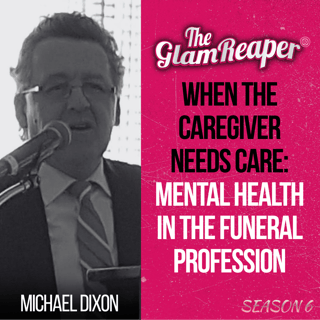
Speaker: brought on by Michael Dixon, our founder, of his own mental health struggles and past traumas.
Speaker: And I'm not speaking out of turn because he, you know, he is very, very open with his past struggles.
Speaker: And he was in that moment, you know, contemplating suicide.
Speaker: And his saving moment was he said, you know, I'm going to call
Speaker: You know, my doctor and, you know, if someone answers, then fine.
Speaker: You know, if somebody doesn't, then I'm going off and doing what I, you know, what I plan to do.
Speaker: And he said, you know, he said, and they never answer.
Speaker: He said, but I figured, you know, I'd call and see, you know, do it.
Speaker: Something was just told me to do that.
Speaker: And he called and somebody answered the phone.
Speaker: So that is what he wants for anybody else.
Speaker: And it doesn't have to be, you know, that drastic of a situation, but, you know, it could, you know, lessen that, you know, somebody getting to that and, you know, having that number to be able to call and say, I need help, or can I just, you know, just somebody to talk to and everything.
Speaker: And again,
Speaker: you know, we understand what, you know, what we each go through on a day-to-day basis.
Speaker: And he didn't want anybody else to be in a situation where they needed somebody to talk and they had to leave a message because you don't know what would happen when the person turns and, you know, and hangs up the phone.
Speaker: So that was his motivation for the, you know, for the group.
Speaker: And, you know, that was only, that was in 2018 that
Speaker: that he formed the group, I think is the official, you know, the official start.
Speaker: But so that was his, his motivation to begin the group.
Speaker: And not I think it's, you know, it's definitely moving in the direction that he wants to be, he wants to be, you know, worldwide leader.
Speaker: And we are making, you know, good strides towards
Speaker: Yeah, I mean, that's incredible.
Speaker: I never knew you were international.
Speaker: So do you have anybody in Ireland?
Speaker: You might have.
Speaker: But I think he has been contacted by some people.
Speaker: So in different, I think Ireland and I think the UK, he's been contacted by people in those those countries.
Speaker: Yeah, I'll pay the excuse.
Speaker: Why they're willing to go over and start the group in Ireland.
Speaker: There you go.
Speaker: There you go.
Speaker: Well, we had, we did have, we were trying to get Brian from undertaking the podcast to be sponsored, to come over to talk with me on stage at the funeral times trade show.
Speaker: But it didn't it didn't come to par, which actually leads me to a pretty important question, especially nowadays.
Speaker: Although I feel like it was it was always a topic of conversation.
Speaker: How do you how is your how is funeral peer support funded or how does that, you know, because it's a lot of time and a lot of dedication.
Speaker: Absolutely.
Speaker: I'm currently, um, we are all volunteers, you know, on the, um, on the board, I guess the board, the, you know, the leadership team, um, I'm classified as the U.S. director.
Speaker: Um, so we are all, we're all volunteers.
Speaker: Nobody is getting paid for, you know, for this organization.
Speaker: So any funds that we get are through donations.
Speaker: Um, we do have sponsorships available for, um,
Speaker: or companies or individuals if they would like to sponsor us because obviously, you know, we have things like the helpline, you know, they need to be funded.
Speaker: So through donations, we have had a couple of generous donations, which we're very thankful for.
Speaker: But, you know, as everybody knows, you know, the spigot can turn off and, you know, and it does run dry at times.
Speaker: So any donations, whether it be from an individual or
Speaker: from a company, from, you know, from a larger company, small funeral homes.
Speaker: We do have different levels available.
Speaker: You know, they can sponsor a podcast, things like that.
Speaker: So we do have different levels for higher entities to become sponsorships for us.
Speaker: We also have what's called our, in the U.S., it's called the Member Assistance Program.
Speaker: And that is $15 a month or $150 for the year.
Speaker: And what that includes is that helpline.
Speaker: So that helpline is available to you 24-7.
Speaker: It also includes, we do webinars, professional webinars, which we sometimes have continuing ed credits available with them.
Speaker: So three of those available throughout the year for you to participate in.
Speaker: And with that membership, it's not only the person that takes the membership, it's their entire family.
Speaker: And it can be purchased on an individual level or as an employer, if you would want to provide a service like this to your employees.
Speaker: an employer can purchase them as well for all their employees and staff.
Speaker: So, you know, it's, and for that cost, those, you know, those that have had therapy in the past, you know, that $150 for a whole year, you know, one therapy session can be $150.
Speaker: And those calls, if anybody does make the call to that helpline, you
Speaker: And there's no timeframe on how long those telephones calls can last.
Speaker: They are there to be able to help you through the situation.
Speaker: And if they feel that you need continued help, they will assist you in getting you help in your local area.
Speaker: So, you know, so there's a lot, again, you know, it covers the family, it covers the individuals.
Speaker: So for that cost, it's not, you know, it's not a lot to be able to provide a service like that for your employees or yourself.
Speaker: Yeah.
Speaker: And I mean, everyone that's volunteering, they're all full time funeral directors and well, so I want to, is there a website like a link that people can go to to maybe donate or if they've got more questions, we'll obviously leave all the links below.
Speaker: But yeah, if you can give us any information.
Speaker: Absolutely.
Speaker: Our website is www.funerals.com.
Speaker: That's our website.
Speaker: And there is some information in there about sponsorship levels and our emails are there to be able to contact us if you have any other questions, things like that.
Speaker: about sponsorships or the member assistance program.
Speaker: And in Canada, they have, it's called an EAP, but it's basically the same services as the MAP in the States.
Speaker: Yeah, so they can all go right there and they're welcome to, you know, contact somebody that's on the website or
Speaker: They can contact me directly, whichever, and I can point them in the right direction.
Speaker: So I'm more than happy to help with anybody that would be interested in that.
Speaker: That's brilliant.
Speaker: Well, thank you so much.
Speaker: Please, everyone, check it out.
Speaker: If you do have, you know, some money to spare or you just feel like it's a great cause, which it is, definitely check out the website or if you just want some more information.
Speaker: As you guys know, I've said it enough times or I hope I have said it enough times, but sometimes it falls on deaf ears.
Speaker: I'm always here to chat and to listen if anybody is feeling, feeling whatever, whatever way.
Speaker: So, yeah.
Speaker: And I, you know, myself and the grave woman, we put out a big sort of poster that if you ever see us at a convention, you know, we're recognizable usually.
Speaker: If you ever see us at a convention, never feel alone, always pop up and say hi.
Speaker: So I would definitely recommend everybody can pop into any funeral, the peer support booth whenever you see it at a convention as well.
Speaker: But
Speaker: our just our monthly meetings in the u.s are the third tuesday of every month um the link is on the cana website and the link never changes so you can go to the cana website to get our link for the monthly meetings in the u.s again they're the third tuesday of the month and they're at 8 p.m eastern time anybody anybody's welcome to join and um
Speaker: you know, from across the country or beyond.
Speaker: We do get people from Canada in that one as well.
Speaker: Canada does have their own monthly meeting as well.
Speaker: But I'm not positive on the date, but it's all on the website as well.
Speaker: So the third Tuesday of every month, which is easy enough to remember.
Speaker: So that's amazing.
Speaker: Well, thank you so much for joining us, Kim.
Speaker: And we're going to leave all the links below.
Speaker: And yeah, please don't be alone.
Speaker: And this is a very, very important service for the funeral profession.
Speaker: And I'm really thankful for your service.
Speaker: Thank you.
Speaker: Thank you for your support.
Speaker: Oh, absolutely not a bother.
Speaker: All right.
Speaker: Well, thank you very much, Kim.
Speaker: And we'll wrap it up and we'll leave all the links for you guys below.
Speaker: So thanks a million.
Speaker: Thank you.
Speaker: Talk to you later.
Speaker: you