Transcript
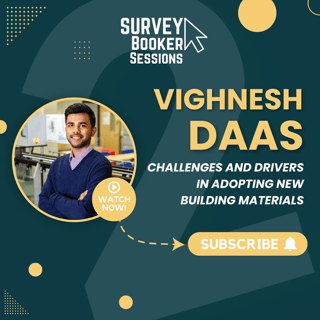
Speaker: In the final part of this episode with Vignesh we're looking at venture building to decarbonize the built environment. So if you haven't watched the first parts we've looked at new materials coming to the industry, um the challenges in adopting them, but now we're also looking at what type of support is available for helping bring you new materials to market. So um I suppose there's there's a couple of few things we can look at here and what what what interests venture capital into the industry and what puts them off. But um I suppose the the first point I suppose is we need entrepreneurs coming into this market to develop these new material materials. um We touched on PhDs, is that the driver in terms of people looking at stuff in in research labs and so on or or there are there actually other other ways that and entrepreneurs are coming into the industry now?
Speaker: It's an interesting space, this one, Matt. um Conventionally, PhD researchers usually go into academia as research assistants, associates, and go into teaching. um And that's a ah still massively followed.
Speaker: um But there's there's also an interest now in commercialising and seeing these innovations actually work in in in the real world. um And I think that's ah that's a massive driver um and that but this space is seeing these days.
Speaker: um I mean, I left academia almost 10 years ago for the very same reasons. um I was like, no, I need to see this work. I want to see this work. I would like to see the impact, the benefits, you know, sometimes when I'm down in Cornwall or in Bank Station in London or, you know, so something like that. I do feel a sense of almost pride, I would say, because it's like, oh, yeah, I helped do this. And and I think that's a huge motivation for civil engineers and people in this industry.
Speaker: um Another one is, you you know, when you work in a big corporate firm, um um you get to learn so many different aspects. So there's so many positives that you can take from those environment. And then you potentially want to bring that to your own method of thinking. So if you want to mold and shape something that is yours, I think starting a startup is is is is is is the um it' a natural way. and So imagine you put together a PhD researcher or someone who's finished their PhD who's come up with some sort of an innovation or a recent piece of research that has a strong IP and you put together someone from the industry with a bit of a commercial background or who knows you know how the the ins and outs of the industry is.
Speaker: it's the recipe for success you wouldn't that you would think, right? and It's a great startup and I think that's what is is happening um in the construction tech sector. um A lot of people are coming together and there are Whether this be through research projects, whether this be through corporates working with universities or Innovate UK funding grant projects and people knowing each other through that. There's been an organic um partnership almost forming in this in the sector which is refreshing.
Speaker: and it's it's it's It's kind of different because you know this exists in in the US, this exists in Singapore, in Japan, where you know MIT and the likes of them have their you know what they call as tech transfer offices, where they would go and find people to to push IP, um and strong IP, protect it, push it.
Speaker: um and commercialise it. and It's starting to happen in the UK and it's very refreshing to do to see that. um However, there are challenges around it. it's a You put two people together, but how do you fund it? Where do you find the money? um iss too ah Is it too early for VC because venture capitalists need to see red returns? um are there um you know What stage of innovation are you at? Are you at lower technology readiness level, TRL? um Or you know are you at a lower funding level, which is pre -seed or are you at seed? So multiple, multiple tricky challenges to be to be met. the The main one that I do see with quite a lot of founders
Speaker: is where do they start? um Because where is this training coming from? has Is anyone training them? um Because an academic has an academic experience and ah and a consultant has ah as a commercial experience. But who's training them to actually form and run a company? um You know, I've done that for several years now. i've've've ah I've been part of I've been a director in SMEs and all of that. And I know running a company is is potentially the hardest thing that you can take up. And to do that, right? You would agree, right? You start your own firm. So, um I mean, add that to the mix of coming out and doing your own thing and and coming up with that innovation. You would relate to this, right? You you fund it, you you run it, and you're you're spending all your time into it.
Speaker: And doing that in an industry where you don't know when you will get your first trial or you don't know whether VCs will will find your model, um um you know, investor investment worthy, it's ah it's a tricky one. um And it's really hard and which is where, you know, something that we have decided to do is bring our experience into the space. and and And we're helping, you know, um founders get crayons and find connections with international VCs.
Speaker: um because international VCs really see UK as a very good starting point. you know It's always been the gateway to Europe um um and something that that it' it works very well for us. um um But one thing that we are still quite you know at ah at an essence stage is we still don't know how to commercialize innovations from and research from from universities. I think that spinning off is is quite a tricky one. The business models aren't there yet.
Speaker: and Some universities like Imperial have what they call as Undaunted, which is an incredible ah platform where they put together their researchers along with people like that and they eventually build and they're getting huge success from it. Oxford and Cambridge always are always there.
Speaker: ah Queen's Belfast, they're doing something really incredible over there too. um But when it comes to construction, just construction, I don't think the focus is still there yet. And I think this requires the support of ah corporates. This does require support of innovators doing a great job in putting this together.
Speaker: um And I think this is where tier ones and corporates, they could find some budgets to put into into this area because they are the ones who will benefit the most and because they will be the ones who will be profiting from and ah from both you know a planet perspective and a people perspective and and then a perspective, right? So it's planet, people and profit. If you're looking at these three aspects, then it's quite natural for you to go and look into funding these extremely early stage innovations so that thereafter.
Speaker: in two years time or whatever time it takes to scale it from a lab to a factory, you'll be the first ones to benefit in gaining new frameworks in making producing more sustainably, building more sustainably, houses can be more energy efficient, dwellings would be better for its inhabitants and we will have warmer flats and warmer houses to stay in, well colder in the summer when it gets cold out here.
Speaker: Yeah, definitely. that's That's the flipside challenge. It'll be over instantly. We'll be back to you in the summer. I suppose and theyre um yeah know with if you look at tech, for example, you you you hear a lot in the headlines around, I don't know, and an AI project that um was basically an idea, but it's got loads of funding because it so sounds quite quite um exciting. Does that happen and with materials?
Speaker: All right, I'm guessing not because there's there's still too much ambiguity around from idea to getting to an actual material you can use. So where where does the funding typically come in? i'm I'm guessing the idea stage, like you might get with with tech, just doesn't tend to happen. it it has You somehow have to get it further down the line the line first. Absolutely, yeah. Unfortunately, building materials, when you start something new or something different,
Speaker: ah How do you start? Because conventional materials have their design standards, right? So they have to hit certain numbers and criteria. But this new material, ah can you fit it into into those same numbers and criteria? Sometimes you can, but a lot of times you can't. And when you can't,
Speaker: How do you come up with a way of measuring the impact, positive or negative, of of this new innovation? And um it's it's hard for investors to go and you know go and say, yeah, we'll let you and ah trial and error of this.
Speaker: um But you still have to show some sort of, um let's say traction, whether it be commercial traction or whether it be interest from the industry or whether it be data from university research labs saying that, yeah, this this looks promising. um And for that to happen, you still need funding. Universities can't just you know give their research labs away and and say, yeah, please feel free to trial wherever you like. You still have to pay for your estate costs and whatever else, which in the UK is a major challenge because sometimes they can be quite high because of how how everything is you know energy costs are high etc etc
Speaker: and So the only way sometimes turns out to be um um grants and public grants. And you know um I always say it's a lottery. Public grants are always a lottery. You can do your best, but no matter how good your application is, unless it fits the criteria and the boxes, you're not guaranteed anything. um And you are spending um a significant amount of times, a few weeks at the very minimum,
Speaker: to just write these things. you know So when you are a small team of two or four, you're starting your own company and you're writing a grant for six weeks, it means you're you're leaving everything else alone. right um So again, it goes back to that chicken and egg thing, which which which I mentioned. But you know some companies, um if they are really promising, and they do end up being successful for these for these grants. And Somehow I've seen that this almost becomes a marker for pre -seed or seed funding. So if a researcher or an innovator has received a grant, they are at a very good position. They've set themselves off fairly well, you know, to prove to
Speaker: investors that oh yeah five reviewers or seven reviewers or whatever number of reviewers have assessed our application and deemed us fit for a grant worth whatever amount of money and um and we have carried out tests and these have been the results and it looks promising and for the next stage we would like your your funding and that does give investors a bit of risk management.
Speaker: um to to then look at it and um but then it also gives the invent gives the investors an opportunity to talk to people like me or other people from the industry who you know have done this previously have succeeded have failed um do to find gaps to help with due diligence to to look at okay this one looks like it's promising or this one could be promising in I don't know in Argentina so if you're a VC who has investors from Argentina or or partners in Argentina you're probably well worth looking at this piece of innovation but if you're based in Scandinavia is probably not for you so you know like you mentioned geography you mentioned stage of innovation we've talked about the quality of team all of those become
Speaker: um Incredibly, incredibly important. But self -funding these building material and material -based startups, um personally, I wouldn't recommend it um because it's you don't because we're always confident in ourselves, right? we We would like to believe in ourselves and our product, and we think it's a great product.
Speaker: But do your testing, do your market testing much earlier than people would say. Always go to the market first, then start working. Because if the market says, yes, I like it, yes, I'm going to work with you and your researcher partner, then you've got something to start. If the market says, we're not really sure if this is going to take off now, it's going to take off in five years, it's a hard one. I'm not saying don't do it at all, but I'm saying it's much higher risk what if you're doing it.
Speaker: Definitely. No, I can completely understand that. um I think with any with anything you do, you know even even if you're a surveyor listening, wondering if you launch a new surveying product, you've got to understand from the market whether they're interested in it before you yeah put the time into the same materials. I suppose it's my final question on this around the sort of the venture building, you meant you mentioned there are there are more VCs that are um starting to understand this sort of area and investing in materials. Have you seen the growth and over the last few years as to the number of VCs um that are investing and how and how much they're investing. Yeah, absolutely. um
Speaker: I think again, it's come to those drivers we were talking about earlier, the net zero targets and the incentivization from financial institutions towards developers and and and contractors. So I think those two are incredibly key drivers and that that's changed the focus of a lot of VCs who were investing in what they would call as PropTech. PropTech is, you know Airbnb is a PropTech, right? um But if you're a VC who's investing in Airbnb,
Speaker: Do you have the skill set or do you have the internal team to be able to value um ah you know both financially and technically some of these innovations? It's hard, right? Because um how do you how if you were to tell me a comment, help me out with with doing due diligence on on surveying based products,
Speaker: I can probably help with you know market testing and all of that, but I wouldn't be able to go into the technical details of of of of your um of your profession because that's ah that's something that you would know much better. um And I think that's the challenge that VCs are facing or are facing still. um There's not enough technically capable people in in in that world to be able to evaluate these kind of innovations. And I think being savvy financially is incredibly important.
Speaker: But also being ah technically sound is is important to be able to invest in these kind of innovations and also an appetite for risk and knowing that you probably won't be getting your returns for the next five to 10 years. um and And if you're fine with that.
Speaker: It also depends because VCs go and raise their money from people called our institutions called LPs, which is limited partners, which are much larger institutional investors. you know They could be large corporates, they could be banks, pension funds, et cetera. And those guys are answerable to their shareholders. So if their LP is is a big building material company,
Speaker: they're more likely to look into your innovation if you're a building building material startup. um And I think that makes sense because that corporate behind that BC would have a technical team in place so the BC doesn't necessarily have to do the due diligence by themselves.
Speaker: and They can pass it on to their LPs and they will be able to look into it much more detailed and say, yes, we like it or no, we we don't really see it. So it kind of minimizes the risk a little bit for the VCs and also tells their LPs, look, we're going to go look into this this this product, right? And I think that's a that's a key way of looking at it.
Speaker: There are new VCs coming up in this space, some of them really promising and they are able to invest and they are able to raise very quickly. But I would still say we don't have enough venture capitalists in this space at all. And the deal flow is a critical aspect for them. and They need to find decent innovations, decent teams, teams that are capable of commercializing these innovations. um I mean, if you put a bunch of university professors together um and you put one commercial person with them, it's absolutely fine. But if you put all the university's professors together and no commercial people around them,
Speaker: It would be hard to fund them initially. um um But if they are able to find someone with a bit of a commercial acumen, it makes for a great team. So it's understanding what are the parameters that investors need to look at before you know they can fund um your innovation. But I do generally think that there's a massive space in this market. And this is why you know something we are doing is setting up a venture building fund, because we decided that you know this space does need that. We need to provide um innovators a new space and some initial funding from our own background so that they can go and build and we can advise them on the marketing, we can advise them on how to build a business, you know we can advise them what do you need to get into the supply chain, we can give them introductions to to really high quality venture capitalists in this space. um and And creating that ecosystem, creating a safe ecosystem um to to innovate.
Speaker: Definitely. I think my my final question on this then is, is it comes actually about the geography. Are you finding that certain countries perhaps or or areas are more interested in developing new materials or perhaps the funding is focused in certain areas dr geographically?
Speaker: I think um funding goes where there's nice deals. It's as simple as that. um If there's a good innovation, strong team and great for commercial traction, investment will definitely go there. I don't think investment is um ah is geography dependent. It's agnostic. It'll go anywhere where where it sees a good um potential deal.
Speaker: um Funnily enough, ah well, actually, you know it makes sense. It's logical that innovation usually comes from areas which have been conventionally good in in in those sectors. So for example, you know you can see um Sweden, Denmark, you can see Netherlands, Germany. um and They have strong technical universities. yeah if They have Delft, they have TU Denmark, they have TU Munich. um um Then you've got KTH Stockholm.
Speaker: Same in the UK, you know, you've got your Imperial, which is which is an incredible civil engineering university, or you've got Cambridge, you know, the guys, strong team, UCL, Queens, Leeds, Sheffield. um So these are the places where um almost research or new technologies are born. um What happens is previously, they they would go and do impact criteria for research assessment frameworks and whatever else.
Speaker: but there was nothing commercial coming. um Well, I wouldn't say nothing, but yeah, commercially it was still far behind than where it could be. And I think this is something that is is changing now. And, and you know, um investment like is going into Singapore, is going into the same places in the US, is going into places in India, same here. um And these are the hotbeds of of new technologies. And if you can find the hotbeds of new technologies, it's best to boost them.
Speaker: ah There are upcoming areas um um and it's worth looking at those up and coming areas. um But equally, you know investors want um returns and and to see commercial traction. And that's usually where the ecosystem is.
Speaker: there's a um There's a Cambridge clean tech thing, what they are calling as a climate super cluster. I would recommend people listening to this to look at climate super cluster. And it was quite it was quite cool because it's within two hours of London, like you have Amsterdam, Paris and and and all of that. So it's not that big, but you've got some mega cities with some mega innovation ecosystems around. So if you put them all together,
Speaker: You don't actually have to go that far to find these these cool things. No, it's very, very true. Well, I think it's been a ah really, really interesting episode over the three parts. and if Thank you for coming on. if If anyone wants to learn more about the work you're doing, for example, in this space, how do they get in touch or or learn more?
Speaker: Sure, I mean, um please feel free to obviously go to Sensecon's website. We have sensecon .co .uk. So Sensecon Ventures are um a venture partner to startups and VCs. We help both the sites scale. Essentially, we're also raising, like I mentioned previously, our own venture building fund. and So that's an exciting part. We have got two portfolio companies now, which, and one of them is Carver Secretration.
Speaker: Another one is Ecoengineering, which is the nature of its solutions. So, so yeah, lots of exciting things happening in this space. Please feel free to reach out on LinkedIn. My my profile is fairly accessible. And, um yeah, you'' you're free to to get in touch with us um at in in London, Liverpool or Yorkshire, wherever you like. Awesome. Well, yeah, thank you very much for coming on today. It's been a pleasure chatting. Thanks for having me, me Matt. It's been an absolute pleasure and a lot of fun.