Transcript
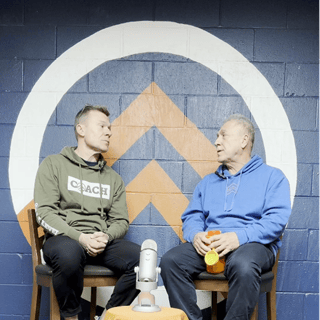
Speaker: Okay, welcome to Levels, the podcast where we explore the people and the stories that make up our amazing community here at All Level CrossFit.
Speaker: Today, as my guest, I have Michael Inni Abasi with me.
Speaker: He's been a member of the gym for about two years, three years, amazing.
Speaker: And we want to get to know Michael a little bit better and some of the things that his likes and dislikes, some of the things that make him tick.
Speaker: So sit back and enjoy the conversation.
Speaker: So Michael, tell me a little bit about yourself.
Speaker: Where were you born?
Speaker: Where did you grow up?
Speaker: Well, thank you, John.
Speaker: My name is Michael.
Speaker: I was born in Nigeria.
Speaker: I grew up mostly in Nigeria, but I also partly grew up in the States, in Michigan.
Speaker: And I moved to Windsor about 20 years ago, and it's been good.
Speaker: Awesome.
Speaker: So did you move from Nigeria to Michigan in the States?
Speaker: Yes, from Nigeria to Michigan, from Michigan to Windsor.
Speaker: Michigan to Windsor.
Speaker: Awesome.
Speaker: When you were growing up, either in Nigeria or in the States, did you play any sports?
Speaker: Did you play anything like that?
Speaker: Oh, the most popular sport, as you know, in Nigeria is soccer.
Speaker: Yeah.
Speaker: So we call it football.
Speaker: So that's what I played.
Speaker: And I didn't make any teams, but we just played for fun.
Speaker: What's their team called?
Speaker: The Super Hawks?
Speaker: No.
Speaker: Super Eagles.
Speaker: Super Eagles.
Speaker: Yeah.
Speaker: I'm sorry.
Speaker: My bad.
Speaker: Super Eagles.
Speaker: Yeah.
Speaker: They've put out a lot of really, really high caliber football, soccer players.
Speaker: Oh, they have.
Speaker: They have been so good at some point.
Speaker: Maybe not anymore, but they were so good.
Speaker: They got to the Olympics once.
Speaker: And then they,
Speaker: They beat Mexico, Argentina, and Brazil in a stretch.
Speaker: Amazing.
Speaker: And got the gold.
Speaker: That was in Atlanta.
Speaker: They won the gold in Atlanta?
Speaker: They won the gold in Atlanta.
Speaker: So that was the peak.
Speaker: After that, not so good anymore.
Speaker: Yeah, I know that they've got a chance to qualify for the World Cup this year.
Speaker: So that'd be cool, too.
Speaker: Yeah, fingers crossed.
Speaker: Yeah, fingers crossed.
Speaker: Okay, so moved to Windsor about 20 years ago.
Speaker: Tell us what you do for work.
Speaker: I am a computer scientist and an engineer.
Speaker: I basically build systems for e-learning and build messaging systems for those who do teaching and coaching online.
Speaker: Oh, wow.
Speaker: And I've been doing that for a long time.
Speaker: Amazing.
Speaker: Someone told me you were dabbling in AI and machine learning.
Speaker: I actually have a PhD in artificial intelligence.
Speaker: from the industrial engineering perspective.
Speaker: And I use that in building the platforms that we build.
Speaker: Wow.
Speaker: So you have a PhD in artificial intelligence?
Speaker: Yes.
Speaker: Oh my goodness.
Speaker: That's amazing.
Speaker: I'm going to come to you when AI tries to take over the world then.
Speaker: Not so fast.
Speaker: Not so fast.
Speaker: Okay.
Speaker: So I know that now your work, is it mainly done remotely?
Speaker: I know you travel a fair bit for your work as well.
Speaker: Yeah.
Speaker: All our teams are
Speaker: all over the place, you know, India, in Ukraine, you know, and all those places.
Speaker: So, but we do mostly remote work.
Speaker: Awesome.
Speaker: Yeah, remotely.
Speaker: I do visit them from time to time, but 90% of the time is remote.
Speaker: Yeah.
Speaker: Okay.
Speaker: And tell me about, you've got a family as well.
Speaker: I know you have a daughter.
Speaker: Yeah, my daughter is in Los Angeles.
Speaker: She's doing a PhD and my wife is here.
Speaker: So we are quite a little small family, but
Speaker: Happy family.
Speaker: What is your daughter doing her PhD in?
Speaker: She's in biotechnology and its impact on society.
Speaker: And yeah, that's what she is.
Speaker: Wow.
Speaker: Wow.
Speaker: The apple doesn't fall very far from the tree, I guess, eh?
Speaker: Absolutely.
Speaker: Some smart people in the family.
Speaker: Is she smart enough to be cheering for the Blue Jays in LA?
Speaker: She better be.
Speaker: She better be smart enough.
Speaker: No comment.
Speaker: Oh, no.
Speaker: No comment.
Speaker: Okay.
Speaker: How long have you been doing CrossFit?
Speaker: Wanted to ask you, because I know a little bit of your backstory, was there anything that prompted you to start CrossFit?
Speaker: Yeah, actually, some years ago, that was before COVID, I had this couple come to work in my house.
Speaker: The wife was very fit, the husband not so much.
Speaker: So I kind of tease the one that say, hey, how come the wife is so fit and the husband is not fit?
Speaker: So she says, oh, I go to CrossFit and every day at 5.30 I'm there and my husband is sleeping, doesn't want to wake up and come.
Speaker: So I said, wow, I have to find that place because I like the way you look.
Speaker: So one day I was driving by and I saw, actually it was you, John, you know, in Howard, the other location.
Speaker: Yeah, carrying these weights, walking around.
Speaker: And I looked, I said, man, you're supposed to be the guy.
Speaker: Yeah.
Speaker: So I had it in mind to check it out.
Speaker: But, you know, life happens and I did not.
Speaker: During COVID, you know, not much happened.
Speaker: And after COVID, I told myself, I have to go back there and find those guys.
Speaker: So I got there and I didn't see the places.
Speaker: I didn't see them.
Speaker: I said, oh, they moved to Division.
Speaker: So I drove out to Division and I saw Steph the first day I came.
Speaker: Steph is a coach here.
Speaker: I said, hey, I want to start CrossFit.
Speaker: And she said, okay, come on over.
Speaker: And she gave me some exercises.
Speaker: I almost passed out.
Speaker: So she said, okay, you start coming tomorrow.
Speaker: And that's how I came.
Speaker: Amazing.
Speaker: Amazing.
Speaker: I'm glad that that's one of the benefits that when we get outside and run on the sidewalk or do stuff outside, people take notice.
Speaker: Yeah.
Speaker: For our Halloween wad on Saturday, we're running down Provincial Road with pumpkins at 9 in the morning in costume.
Speaker: So people look and they're, what's going on there?
Speaker: But a lot of people, we've had quite a few people who said, we used to see you run up and down Howard, or we saw you running up and down Provincial Road.
Speaker: And then they kind of filed that away, and then they come back and they're like, okay, well, I kind of want to do the things that you guys do.
Speaker: Absolutely.
Speaker: You know, it might not happen immediately, but, you know, it gets in the memory and something triggers it one day and you're like, ah, you know those guys I saw?
Speaker: I better pay them a visit.
Speaker: Yeah, that's amazing.
Speaker: Now, I know from speaking to you also that, you know, you've had some conversation with your doctor and your doctor said, you know, whatever you're doing, keep on doing it.
Speaker: Yeah, so I go to see the doctor and he says to me, oh, you know, I'm looking at your stats here.
Speaker: You should actually be doing more exercises.
Speaker: I said, OK, I will.
Speaker: I do three times a week.
Speaker: And he goes, maybe you should do more.
Speaker: I said, all right, I'll do more.
Speaker: But I didn't, you know, and I kept coming a few days.
Speaker: three times a week until I traveled in September and I came back in the middle of September.
Speaker: I said, look, I should do my 12 days this month, but I'm running out of time.
Speaker: So I'd better catch up.
Speaker: So in trying to catch up, I ended up doing every day.
Speaker: At the end of the month, I felt so much better.
Speaker: And I go to see my doctor, he says, yeah, you should.
Speaker: You're doing something right, keep doing it.
Speaker: Keep doing it, yeah.
Speaker: So I know that, I know that,
Speaker: Prior to coming more often, you wanted to make sure you got 12 classes a month, which is what the minimum to make our committed club, right?
Speaker: And you're like, I'm coming three times a week, I'll make my 12 classes.
Speaker: But now you found the dose for you that seems to be effective.
Speaker: You feel good.
Speaker: The doctor says you look good.
Speaker: All your vitals are good.
Speaker: So, I mean, that works for you.
Speaker: Yeah, you know, actually, if you had told me, John, you said, hey, Michael, you should be coming to it five times a week.
Speaker: I would just say, yeah, I'll smile politely and say, yeah, yeah, yeah, I'll try.
Speaker: But when I had to push myself to do that and I could see the difference, I said, look, this is really good for me.
Speaker: I wake up very early, even though I work so late at night and I wake up so early and I am sharp and I decided, look,
Speaker: I think I could make the morning classes.
Speaker: And that's when I started coming at 9.30.
Speaker: Yeah, that's awesome.
Speaker: I'm glad that you found the right number of times and the right time for you that works.
Speaker: And the 9.30 crew here now is amazing.
Speaker: We have a great little group here at 9.30 as well.
Speaker: Okay, cool.
Speaker: What else do we got to talk about?
Speaker: Okay, do you remember your first class?
Speaker: We kind of touched on it.
Speaker: Your first class was with Steph.
Speaker: Yeah, yeah.
Speaker: She said she wanted me to do a couple of sit-ups.
Speaker: I could not.
Speaker: I couldn't do sit-ups.
Speaker: And so she brought this skipping rope.
Speaker: I fell down.
Speaker: And she says, oh, no problem.
Speaker: You do better.
Speaker: You know, keep going, keep going.
Speaker: You know, so I have to mention that because
Speaker: that encouragement was really key, motivating me to actually really start doing the three days a week.
Speaker: But over time I realized that the community is so important.
Speaker: You know, when I travel, I'm like somewhere and my phone rings and that's John's asking, Hey, Michael, we haven't seen in a while.
Speaker: Are you okay?
Speaker: That's a huge motivation.
Speaker: And that comes to the community aspect of it.
Speaker: So over the,
Speaker: Over the Thanksgiving, somebody asked me, why are you always going to CrossFit?
Speaker: I said, you know, I have to tell you that there is community there.
Speaker: And, you know, somebody looks out for you and they're like, hey, come over here.
Speaker: And then you come and then you see others struggling with something.
Speaker: So you kind of feel motivated to continue.
Speaker: So the second thing is the coaching.
Speaker: So I call it my three C's of CrossFit.
Speaker: The community is one.
Speaker: Then the coaching.
Speaker: Somebody is always watching over you.
Speaker: Before I came to CrossFit, I went to other gyms.
Speaker: I know what it cares whether you do it right, whether you do it wrong.
Speaker: But over here, there's a coach always looking out and saying, hey, this is the way to do it.
Speaker: This is the right way.
Speaker: This is the wrong way.
Speaker: You do it this way.
Speaker: And then they keep watching until you improve.
Speaker: That to me is a game changer.
Speaker: And of course, the last thing is the
Speaker: just show up, you know, I have a t-shirt here that says, just show up, you know.
Speaker: So the C is come, just come, you know, just come and that's it, you know.
Speaker: Don't put any pressure on yourself, just come.
Speaker: And then the rest will take over the community and the coaching and before you know it,
Speaker: you, you'd be making so much progress.
Speaker: I love, I love the three C's of CrossFit that you've got, the community, the coaching and, and just come, just show up because that's the one that we just tell people like, like you said, don't put pressure on yourself.
Speaker: You don't have to do what's written on the board.
Speaker: You don't have to use the weights, but 90% of the struggle is getting through the front door.
Speaker: And then once you do, we'll take care of you.
Speaker: We'll, we'll make suggestions.
Speaker: We'll scale workouts.
Speaker: We'll make modifications.
Speaker: You know, if you just want to ride the bike for,
Speaker: for 40 minutes, ride the bike for 40 minutes, but being in the environment and, and being part of the community, it's no one ever really had a workout where they're like, man, I wish I hadn't have gone and worked out today.
Speaker: Right.
Speaker: Absolutely.
Speaker: But getting to the gym can be, can be a struggle.
Speaker: I, as we all know, we've got priorities and life is busy.
Speaker: Right.
Speaker: But, but getting here,
Speaker: Just come.
Speaker: Just come.
Speaker: Just show up.
Speaker: And just so you know, when I'm out of town, I look for CrossFit.
Speaker: So when I'm in LA, I go to CrossFit called Brick.
Speaker: Very, very well designed, very well done and all that.
Speaker: Good community as well.
Speaker: But I found that maybe because I was new over there, that sense of community did not quite click as it does here.
Speaker: You know, so when I'm outside this place and I'm in a CrossFit or anywhere else, I don't quite feel that same sense of community.
Speaker: And, you know, there's been a lot of studies, you know, showing that if you do something in a group, in a community, you learn,
Speaker: you build better habits faster.
Speaker: You are motivated, you have accountability and all of that.
Speaker: So I find that to be a really good part of being part of CrossFit right here.
Speaker: The community and I know that people you kind of become friends with, you could have coffee with and all of that.
Speaker: And it just helps you to improve.
Speaker: It helps me actually.
Speaker: You know, I look at somebody that's doing something like dobs, and I'm like, man, how did you do that?
Speaker: He says, look, actually, I struggled for two years before I could do this.
Speaker: You know, I'm like, okay, I'm encouraged, so I could do it.
Speaker: The first day I did my dobs, I was screaming all over the gym, you know?
Speaker: I remember.
Speaker: No, that's a great point.
Speaker: Like, you know, they...
Speaker: the community is going to help lift you to heights that you can't get to by yourself.
Speaker: Motivation wanes.
Speaker: And, you know, having people who say, hey, am I going to see you tomorrow?
Speaker: I'll meet you here tomorrow.
Speaker: And then shooting you a text and saying, hey, do you want to go to CrossFit with me tomorrow?
Speaker: That's part of the motivation.
Speaker: And then, like you said, too, having people around who have
Speaker: been through the experience before and done the struggles before and still come out on the other side, you know, that gives you hope as well too, right?
Speaker: They're like, this is my experience.
Speaker: And, you know, so it's not atypical for you not to have double unders already, you know, we're going to get there.
Speaker: So that's amazing.
Speaker: And there's also shared suffering builds bonds a little bit, right?
Speaker: You know, so being together and doing hard work,
Speaker: definitely builds bonds with each other.
Speaker: And that's part of the magic, I think, of CrossFit that doesn't get discussed.
Speaker: Like everyone looks at the workouts and they look at the intensity, but they don't talk about how the community is going to help push you to heights that you couldn't reach yourself.
Speaker: Yeah, yeah, actually, yeah.
Speaker: I think that's true.
Speaker: Yeah.
Speaker: Okay.
Speaker: If you could give your day one CrossFit self some advice, what would you say?
Speaker: Oh, it's just coming.
Speaker: Yeah.
Speaker: when you feel like coming, when you don't feel like coming, just keep coming.
Speaker: And to me, that's the key.
Speaker: Just keep coming.
Speaker: Even though you don't feel like it, just keep coming.
Speaker: That's what I would have told myself from day one.
Speaker: Because what I found was, you know, it's easy to kind of slide away and say, well, I'll do it tomorrow.
Speaker: I'll do it the day after.
Speaker: Before you know it, you're like not there for a week or two or three weeks.
Speaker: So that's what I would have told myself.
Speaker: Just show up.
Speaker: Just show up.
Speaker: I love it.
Speaker: All right.
Speaker: Is there an accomplishment or a PR or personal record in the gym that you're most proud of?
Speaker: I would just say, okay, when I came, I couldn't do any skipping.
Speaker: I couldn't skip.
Speaker: I couldn't squat.
Speaker: And then, you know, in my work for decades, all I do is sit in front of a computer screen.
Speaker: for decades, that's what I've been doing.
Speaker: And my posture, everything was out of whack.
Speaker: So I kind of felt that if I keep coming, all those things will take care of themselves.
Speaker: And that's what's been happening.
Speaker: So I can skip now.
Speaker: Once in a while, I can do double under.
Speaker: Then I can lift the weights that I could.
Speaker: I do like 200 once in a while.
Speaker: So consistency.
Speaker: That's it.
Speaker: So the greatest achievement is consistency.
Speaker: I think you can tell that
Speaker: for you coming more often is your greatest PR, your greatest achievement.
Speaker: And just as a little side note here, how old are you, Michael?
Speaker: I'm 64.
Speaker: 64, right?
Speaker: So the stuff I see you do in the gym at the age of 64, again, that's like...
Speaker: That's inspirational.
Speaker: That gives us who are slightly younger than you, gives us a little bit of hope as we go forward because the stuff you can do at 64, right?
Speaker: It's not what people in the past used to think 64 year olds could do, right?
Speaker: It used to be, I'm too old to do that.
Speaker: I'm too old to do those things.
Speaker: But now like people like yourself and Gabe and other members, Lana in the gym are showing people that you can do all the things as you age.
Speaker: In fact, you need to do all the things as you age.
Speaker: You know, I travel home to Nigeria once in a while, a couple of times a year, and I meet a lot of people.
Speaker: They look so old, they cannot walk, they have all kinds of problems.
Speaker: So the other day, I'm saying, hey, are you never going to grow old?
Speaker: I say, yeah, because I have a secret.
Speaker: And the secret is continuous movement.
Speaker: Go to a gym, walk around, do something.
Speaker: Don't just sit down.
Speaker: You know, it's tempting at that age to kind of relax and
Speaker: allow life to, no, that's not it.
Speaker: Just go walk around, find a gym, do something.
Speaker: Otherwise you age so fast.
Speaker: I can look at some of them and I sort of say, look, if you don't do something,
Speaker: very fast, you'd be in trouble.
Speaker: Yeah, I know.
Speaker: I think that we've found the fountain of youth and it's exercise, right?
Speaker: Absolutely.
Speaker: That's what it is.
Speaker: People are searching for the fountain of youth when it's right there.
Speaker: It's a little bit of hard work.
Speaker: It's a little bit of high intensity, a little bit of exercise, and that's what's going to
Speaker: keep you young for as long as possible.
Speaker: Everything has a cost.
Speaker: So my doctor usually tells me when I need to lose weight, he says, lose 10 pounds.
Speaker: I say, sure, I can do that.
Speaker: No problem.
Speaker: There's CrossFit over there.
Speaker: I can do that.
Speaker: No problem at all.
Speaker: Then he goes, you know what?
Speaker: If you keep doing what you are doing, you would not be paying me a lot of visits.
Speaker: And I like that.
Speaker: That's what my doctor told me.
Speaker: And it's true.
Speaker: It's great to find a doctor like that who sees the value of exercise as kind of preventative medicine, right?
Speaker: So exercise is a way to stop yourself from being in the nursing home, stop yourself from being on medication, stop yourself from decrepitude.
Speaker: When a doctor sees that and sees the value of that, that's a good doctor.
Speaker: In my opinion, that's a good doctor.
Speaker: I think so too.
Speaker: Awesome.
Speaker: Okay.
Speaker: Can you give me a real world example of how CrossFit may have helped you in your daily life?
Speaker: Oh, well, it's easy because I usually go to bed around 2 a.m.
Speaker: in the morning because my teams, my global teams, like in India, they're coming to work around 1 a.m.
Speaker: here.
Speaker: Yeah.
Speaker: So I have to sit around and have a couple of calls with them and all that.
Speaker: So before I started CrossFit, I would go to bed around two o'clock and then I wouldn't wake up till nine.
Speaker: But during CrossFit, even if I go to bed at 3 a.m., I'm up at 6, 7.
Speaker: Oh, wow.
Speaker: You know, I just wake up.
Speaker: And then I'm like, no, I should go back to bed.
Speaker: I said, no, I should go to CrossFit.
Speaker: So that's the whole thing.
Speaker: Perfect, perfect, perfect.
Speaker: Okay, so you kind of touched on it there a little bit about the morning routine.
Speaker: So I didn't know that about you.
Speaker: I didn't know that you –
Speaker: you went to bed at like 2 a.m.
Speaker: because you've got teams all over the world.
Speaker: So your sleep schedule is a little bit different for most people, right?
Speaker: You go to bed quite late and maybe get up a little bit later.
Speaker: But in the morning, is there any non-negotiables?
Speaker: Do you have coffee?
Speaker: Do you have to... What do you do in the morning?
Speaker: Oh, the non-negotiable in the morning when I wake up is...
Speaker: I have a couple of exercises that I think it was Zach.
Speaker: Yeah.
Speaker: That said I should do stretching exercises in the morning.
Speaker: Yeah.
Speaker: getting up and stretching, the first thing I should do, I actually do is, you know, to kneel down and pray.
Speaker: I'm a person of faith.
Speaker: So right after the prayer, so I kind of walk in the stretches, the three stretching exercises right after the prayer so I don't miss it.
Speaker: And also it became a habit.
Speaker: So that's my morning routine.
Speaker: Then from there,
Speaker: I can now go read, study the Bible now, really actually go and pray and then start the day.
Speaker: I used to drink quite a few cups of coffee, but I've sort of caught down on it.
Speaker: I just find that my body, with more exercises, my body sort of self-regulates and doesn't need that coffee anymore.
Speaker: And I think I've only had coffee...
Speaker: Twice this year.
Speaker: Wow.
Speaker: Yeah.
Speaker: So you've kind of like, you've replaced the caffeine kick with a higher energy level from exercise, basically.
Speaker: Absolutely.
Speaker: Awesome.
Speaker: And I love the way that you're kind of habit stacking.
Speaker: You know, you wake up, you do some prayer, then you add in your stretching, and then you go and do your Bible study.
Speaker: So it's sandwiched in the middle of two things you're not going to miss.
Speaker: So it becomes part of that routine, that habit stacking.
Speaker: That's great.
Speaker: It's amazing.
Speaker: Okay.
Speaker: Let's go a little bit rapid fire here now, Michael.
Speaker: So rapid fire, what is your favorite movement to do in the gym?
Speaker: Oh, it's push-ups.
Speaker: Push-ups?
Speaker: Yeah.
Speaker: Nice.
Speaker: All right.
Speaker: I did a few of those today.
Speaker: What's your least favorite movement?
Speaker: Burpees.
Speaker: Burpees.
Speaker: Push-ups and burpees, such close cousins.
Speaker: But the hatred between the push-up and the burpee, right?
Speaker: It's much.
Speaker: Yeah.
Speaker: Oh, man.
Speaker: Okay.
Speaker: Morning, afternoon, or evening class?
Speaker: I was doing evenings until I switched to five days, so now it's morning.
Speaker: Morning classes.
Speaker: Perfect, perfect.
Speaker: Okay.
Speaker: What is your favorite indulgent food?
Speaker: Like what's something that if you're going to say, you know what, I'm going to indulge a little bit, I'm going to have this.
Speaker: Actually, I don't have any.
Speaker: Nothing?
Speaker: Not like ice cream?
Speaker: No, no, no.
Speaker: I had to train myself and cut all of that away.
Speaker: Yeah.
Speaker: Yeah.
Speaker: I could be pretty disciplined when I want to.
Speaker: So I just cut it off.
Speaker: I say, I'm not doing this.
Speaker: So I haven't had ice cream in like forever, right?
Speaker: Yeah.
Speaker: That's a man of discipline.
Speaker: I can appreciate that.
Speaker: I do that because I want my daughter to be disciplined.
Speaker: So when she sees me doing that, she's like, why are you doing that?
Speaker: I said, well, because I can.
Speaker: And so she kind of tries to take after that.
Speaker: That's a really, I think that's a really important lesson.
Speaker: Yeah.
Speaker: as a parent myself, there's things that I want to do or maybe I used to do that I, because of that, my kids are always watching and they, and they're going to mimic what you do and they're going to take their cues from you, right?
Speaker: Like,
Speaker: I like a Diet Coke once in a while, but I don't want my kids to have pop or soda.
Speaker: So I don't have Diet Coke anymore because it's not fair for me to be having a Diet Coke or a soda in front of them and say, no, no, no, stuff's bad for you.
Speaker: Don't have it.
Speaker: Exactly.
Speaker: It's a great role model for your daughter.
Speaker: I love that.
Speaker: Thank you.
Speaker: Okay.
Speaker: What is your favorite healthy food?
Speaker: Oh, veggies.
Speaker: Yeah.
Speaker: Favorite, but not that I like.
Speaker: I like it, but it's favorite.
Speaker: Yeah.
Speaker: When I think healthy, it's veggies.
Speaker: You have a favorite vegetable?
Speaker: Not really.
Speaker: I just grab the ones in the store.
Speaker: Whatever's there, right?
Speaker: Okay.
Speaker: Do you have any workout?
Speaker: Do you have any food pre or post workout all the time?
Speaker: Like a routine in terms of that?
Speaker: Do you have anything before workout, after workout?
Speaker: No, nothing before and mostly nothing after.
Speaker: I just stick to my normal lunch, dinner.
Speaker: I don't eat breakfast.
Speaker: Lunch and dinner and
Speaker: My lunch is like quite heavy.
Speaker: Okay.
Speaker: Because I want to kind of compensate for the breakfast that I didn't have.
Speaker: So a bigger lunch.
Speaker: Yeah.
Speaker: Okay.
Speaker: What's your favorite way to relax?
Speaker: Listening to a lot of music.
Speaker: Music and just...
Speaker: lying there and doing nothing.
Speaker: You're listening to music.
Speaker: I know that you have a really big appreciation for music.
Speaker: We talk music once in a while in class.
Speaker: I know that you like some funk.
Speaker: You like some rock.
Speaker: I like classical, I like jazz, I like rock, I like, believe it or not, country.
Speaker: Everything mixed in there.
Speaker: Because when I grew up, we had to compete, you know, to know the most musicians, the most artists, who plays what guitar, who plays the drums, and so you had to have
Speaker: all of this in your head.
Speaker: And so I think the unfortunate thing is that I never learned to play any instrument, but I should have done that because I kind of can tell who's playing what, you know, when I listen to music.
Speaker: So I kind of carried it along.
Speaker: Yeah, it's never too late.
Speaker: Never too late.
Speaker: I've got a guitar in my house that's growing really dusty because I keep saying I'm going to learn it and then I try and it's really hard, but never too late.
Speaker: Never too late to learn something new.
Speaker: Okay.
Speaker: Those are all the questions I have for you today.
Speaker: Michael, thank you so much for joining us.
Speaker: Thank you.
Speaker: It's a pleasure talking to you.
Speaker: And I guess I'll see you at 9.30 tomorrow.
Speaker: Thank you for having me.
Speaker: And you've been a great encouragement as well.
Speaker: So I'm trying to drag.
Speaker: my family and people over here, you know, to come and see, because they actually say, hey, you look fit.
Speaker: But I say, hey, come over here and see what I do.
Speaker: And they're like, oh, no, thank you.
Speaker: Yeah, well, you know, I think a lot of people have a little, they have some, they have a little bit of, maybe not fear, but they're,
Speaker: to come in the gym because they have a little, they think that they might not be able to do the things or that it's going to be really, really hard and they're going to be embarrassed.
Speaker: But I think that's, that's the stigma that they have to get over is like, like you said, just show up, just come.
Speaker: We'll take care of you and we'll make sure that you get what you need, not what somebody else needs, right?
Speaker: Everyone's an individual.
Speaker: Great.
Speaker: Thank you so much, John.
Speaker: Thank you, sir.
Speaker: Have a good one.
Speaker: Yeah, you too.
Speaker: Okay.
Speaker: I'm going to grab that microphone off you.
Speaker: Okay.
Speaker: Okay.
Speaker: Let me get in here.