Transcript
Speaker: It'll be fun.
Speaker: It'll be fun.
Speaker: Okay.
Speaker: Welcome to Levels, where we explore the people and the stories that make up our amazing community at All Level CrossFit.
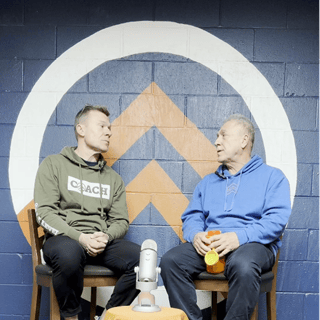
Speaker: I'm your host, John, and today I'm thrilled to have the legend Lana Marcin with me.
Speaker: So sit down, grab a cup of your favorite beverage, and get ready to learn a little bit more about that person sweating alongside you.
Speaker: So, Lana, how long have you been a member of the gym?
Speaker: Golly, four years now?
Speaker: Four years.
Speaker: It was right around COVID, right?
Speaker: No, post-COVID.
Speaker: I moved in 20.
Speaker: See, I knew I had no answers.
Speaker: Probably January 23.
Speaker: Cool.
Speaker: Is that right?
Speaker: No, it can't be 23.
Speaker: So I think it was 21.
Speaker: No, no, it wasn't 21.
Speaker: I moved in 20, maybe 22.
Speaker: Cool.
Speaker: Okay.
Speaker: Yeah.
Speaker: So we're in 25.
Speaker: So it's three-ish years.
Speaker: Yeah, about three years.
Speaker: That's about right.
Speaker: Yeah.
Speaker: And in that time, you've really kind of entrenched yourself in the community.
Speaker: You know, you're here all the time.
Speaker: You judge.
Speaker: You help out.
Speaker: You're helping out with the adaptive class.
Speaker: You're doing all the things, right?
Speaker: All the things.
Speaker: Love this gym.
Speaker: And we appreciate it.
Speaker: We really appreciate it.
Speaker: So tell me a little bit about yourself.
Speaker: Where were you born?
Speaker: Where did you grow up?
Speaker: Kenora, Ontario.
Speaker: Born in Kenora?
Speaker: Yep.
Speaker: Yeah, we spent, in the 80s, my husband got transmitted to Alberta, so we were out there for about nine years.
Speaker: Other than that, all my life in Kenora.
Speaker: Wow, and give us a little perspective, because it really took me off guard when I looked at where Kenora was on a map.
Speaker: I knew it was up north, but give me a little perspective in terms of how long would it take me to drive from Windsor, Ontario to Kenora?
Speaker: 23 hours.
Speaker: 23 hours.
Speaker: If you go through Canada, kind of thing.
Speaker: That's crazy.
Speaker: Yeah, far.
Speaker: It's crazy.
Speaker: Ontario is so huge.
Speaker: It's...
Speaker: Kenora is like 50 kilometers to the Manitoba border.
Speaker: We have to bike to the Manitoba border.
Speaker: Tell me a little bit about Kenora.
Speaker: It's a small... 15,000 people, small town, beautiful lake, really nice in July and August.
Speaker: What's like the main industry there?
Speaker: It's a lumber.
Speaker: I forget what it's called.
Speaker: Lumber, like sawmill?
Speaker: They used to have sawmill.
Speaker: No, they put some kind of wood, special wood.
Speaker: Okay.
Speaker: So you went to school there, you grew up in Kenora.
Speaker: Did you play any sports when you were growing up?
Speaker: Yeah, the regular, like back in my day, girls were, it was a little different for us, but I did track and field and high school, volleyball, basketball.
Speaker: Yeah, so you were an athlete.
Speaker: Yeah, I always liked sports.
Speaker: Yeah.
Speaker: Now, I do know that you were a nurse.
Speaker: Right, so did you go to school for nursing?
Speaker: Where did you go to school?
Speaker: Thunder Bay and then Kinara, both.
Speaker: Oh wow, so Thunder Bay and Lakehead?
Speaker: Yeah.
Speaker: Oh wow, you went to Lakehead?
Speaker: Yeah, we did courses there, St.
Speaker: Joe's Hospital.
Speaker: Okay, there's a hospital, cool.
Speaker: And so how long were you a nurse?
Speaker: Oh, the rest of my life.
Speaker: Yeah, when did you retire?
Speaker: I never really retired from nursing, I guess.
Speaker: After my husband passed away, I wasn't really nursing, but my sister was a midwife and I ran her office.
Speaker: So after he passed, I decided to completely retire and get into retirement funds.
Speaker: I wasn't bringing in enough on my own.
Speaker: Right.
Speaker: Great.
Speaker: Okay.
Speaker: Now, I do know that you've had a pretty...
Speaker: very past in terms of you've done some powerlifting, you've done some triathlons, you've done, obviously you've done CrossFit competitions, you've done all that stuff.
Speaker: So, so tell me a little bit about those pursuits in the past, like which came first, triathlons, powerlifting, CrossFit?
Speaker: Um, back in the day when I was younger and kids were young, we just did curling.
Speaker: Yeah.
Speaker: Yeah.
Speaker: That's like girls didn't really, women didn't, we took care of the kids, did macrame and curling.
Speaker: And then, um,
Speaker: In my 50s, I got into the swim club, joined the swim club.
Speaker: Okay.
Speaker: I always liked swimming and ended up, the coach was a triathlete, so got involved in triathlon.
Speaker: Yeah.
Speaker: So raced for Canada then.
Speaker: Wow.
Speaker: Yeah.
Speaker: Went to world seven times.
Speaker: Tell me a little bit about that.
Speaker: So you represented Canada in triathlons at the world in your age group?
Speaker: In my age group.
Speaker: What was the first age group you were in when you did that?
Speaker: 55 to 59.
Speaker: 55 to 59.
Speaker: Yeah.
Speaker: I went to a race with a friend in Vancouver.
Speaker: She was trying to qualify for Team Canada and I won my age group.
Speaker: Wow.
Speaker: Fluke.
Speaker: Total fluke.
Speaker: Didn't have a coach.
Speaker: Didn't know anything.
Speaker: Wow.
Speaker: Tell me what are the kind of distances that you were doing in those ones?
Speaker: That was a sprint.
Speaker: Most of my worlds, I think, were sprints, but I did Olympics.
Speaker: I did half Ironman.
Speaker: Okay.
Speaker: So what would a sprint distance be in terms of swim, run?
Speaker: 750 swim, 20k bike, 5k run, I think.
Speaker: Olympic was double that.
Speaker: Ironman was many times that.
Speaker: How did you fare at the Worlds?
Speaker: Fifth was my highest.
Speaker: Wow.
Speaker: Yeah, never podiumed.
Speaker: I podiumed at a half iron.
Speaker: More of a distance person, I think.
Speaker: Right.
Speaker: Same with my swimming.
Speaker: I had a Canadian silver medal in the 1500s.
Speaker: Wow.
Speaker: Yeah, so.
Speaker: Distance.
Speaker: See, this is why we do this.
Speaker: So you're such a decorated athlete that we didn't know.
Speaker: No.
Speaker: Yes, and a lot of people don't know that story.
Speaker: Okay, and then powerlifting.
Speaker: Tell me about powerlifting.
Speaker: I got into that through CrossFit when I went to Florida.
Speaker: I can't remember.
Speaker: It just came up in the gym.
Speaker: There's powerlifting.
Speaker: I'm like, oh, I can do all those three things.
Speaker: We do it at CrossFit all the time.
Speaker: Right.
Speaker: Yeah.
Speaker: So that went quite well for me, actually.
Speaker: Tell me about that.
Speaker: I had three national records in my age group.
Speaker: Wow.
Speaker: For Canada, national?
Speaker: U.S. U.S. U.S. Yeah.
Speaker: I had a home in Florida, so I could be, they considered it U.S. Right.
Speaker: And what were the, what was the age group?
Speaker: Oh, gosh, it would have been 65 to 69, probably, maybe 70 to 74.
Speaker: And do you know what your best list were?
Speaker: No.
Speaker: They're good enough to be national record so they can't be that bad, right?
Speaker: That's amazing.
Speaker: Yeah, it was pretty fluky.
Speaker: Didn't expect that at all.
Speaker: They had to, at the meet, it was a senior's games or something.
Speaker: They have to bring in a special judge for if you're going for a national record, which I wasn't going for.
Speaker: But another coach, I didn't have a coach, but a coach in the warmup said something about 50-something in my age group.
Speaker: And I'm like, no, no, that's my weight class.
Speaker: I'm in the
Speaker: forget what it was, might have been 70 to 74 at the time.
Speaker: Anyway, and he said, oh, well then we need to bring in another Dutch because you're older though.
Speaker: Right.
Speaker: But that's, so twice you said it's kind of fluky that you ended up with national records.
Speaker: Kind of fluky.
Speaker: Yeah, I don't know about that.
Speaker: I don't think you can fluke into a world's in triathlon and a national record in powerlifting.
Speaker: Be lucky that many times.
Speaker: You might be the luckiest person I know.
Speaker: There you go.
Speaker: Okay, so
Speaker: with that you've got triathlons you've got power lifting how did you start in CrossFit our pool was shut down back in Kinnar when we were training swimming for triathlon and swimming was on the swim top so we went to a gym with the coaches and we were doing in a church basement kind of thing and then somebody opened a gym I don't even think they called it CrossFit at that time so I'm like I kind of like this dumbbells and
Speaker: So I went to that gym and then he opened the CrossFit gym and yeah.
Speaker: Is that CrossFit gym still open in the car?
Speaker: It is, but it's not affiliated anymore.
Speaker: Okay.
Speaker: That's Janet that you've met, Martine that you've met.
Speaker: Well, Martine's down here now, but Janet still coaches there.
Speaker: What's the name of that gym?
Speaker: CrossFit Core.
Speaker: CrossFit Core.
Speaker: Oh, I like it.
Speaker: It used to be CrossFit Core.
Speaker: Now it's Core K-Town.
Speaker: Core K-Town.
Speaker: Yeah.
Speaker: For Kenora.
Speaker: Yeah.
Speaker: All right.
Speaker: Yeah.
Speaker: Great.
Speaker: Yeah.
Speaker: So you started with CrossFit kind of as dry land training for for swimming and decided that you liked it.
Speaker: Yeah.
Speaker: It kind of fit the bill for you.
Speaker: I did both for a while, CrossFit and Triathlon.
Speaker: Nice.
Speaker: How did that that's one thing that that I'm interested in, because a lot of people
Speaker: they i tend to find a lot of runners endurance athletes are a little bit afraid of the weight room and i know how beneficial it could be right kind of um but they're like oh i don't want to get too bulky or i don't want to you know compromise my running by doing this and it they've got a really symbiotic relationship like runners need to lift weights more and most people that lift weights need to run more right so it's like
Speaker: Having that and being able to balance that, what did a kind of training week look like for you when you were training for us?
Speaker: I was really lucky.
Speaker: The swim coach in Kamara was a triathlete.
Speaker: Yeah.
Speaker: And she really pushed, like we do stuff on the deck of the pool, that kind of thing.
Speaker: So she supported it.
Speaker: Right.
Speaker: But it was mostly when I got to Florida that I started doing a lot of CrossFit, actual CrossFit.
Speaker: Okay.
Speaker: Do you remember your first class?
Speaker: CrossFit class?
Speaker: No, don't remember.
Speaker: I remember.
Speaker: before it was actually CrossFit when we first went and I couldn't do the PVC over my shoulders.
Speaker: Oh, like PVC pastoral?
Speaker: At all.
Speaker: I could not do it at all.
Speaker: I was a lot younger then.
Speaker: Swimmers have a lot of tight shoulders.
Speaker: Swimmers and cyclists when they're hunched over.
Speaker: Exactly.
Speaker: It was terrible.
Speaker: But sometimes it takes something like that.
Speaker: That's why I needed it.
Speaker: Exactly.
Speaker: Sometimes it takes something like that to make you realize, oh, I've got a lot more potential to unlock if I can just do this, right?
Speaker: Yeah.
Speaker: Okay, let's, do you remember your first real CrossFit workout or your first real benchmark that you did?
Speaker: No, I don't, no.
Speaker: It's all good.
Speaker: Okay.
Speaker: I've been to so many gyms because when I went to Florida, I was like nine years.
Speaker: I went to a variety of gyms down there.
Speaker: So what year is it that you started CrossFit?
Speaker: Gosh, John.
Speaker: You're asking all the hard questions.
Speaker: I told you I wouldn't know these answers.
Speaker: I don't know.
Speaker: No, but when did you go to, so in Florida, when were you in Florida?
Speaker: Oh my God.
Speaker: Ray died 13 years ago, so.
Speaker: Yeah.
Speaker: 12 years ago.
Speaker: So like 12 years ago, and probably prior to that, you did some stuff.
Speaker: In Canara.
Speaker: Yeah.
Speaker: Yeah.
Speaker: Wow.
Speaker: Yeah.
Speaker: I got more serious about it down there.
Speaker: Yeah.
Speaker: Yeah, started doing it.
Speaker: But I mean, I remember doing a lot of blues and qualifiers, that kind of thing, still when I was in Canara.
Speaker: Yeah.
Speaker: Yeah.
Speaker: Wow.
Speaker: Yeah.
Speaker: Okay.
Speaker: What PR or accomplishment in the gym are you most proud of?
Speaker: Well, I guess, of course.
Speaker: Yeah.
Speaker: That's obvious.
Speaker: But I'm most proud that I'm still able to climb a rope.
Speaker: I know it's ugly.
Speaker: You as a coach, I know that.
Speaker: And I don't have a good grip with my foot, but I'm still doing it.
Speaker: Yeah.
Speaker: And I don't want to get that out.
Speaker: No, I don't think you should.
Speaker: Full transparency, when I talk about CrossFit to other people, and they're like, oh, I could never do that.
Speaker: You're usually one of the people that I bring up and said, we have a lady that can do strict pull-ups, she can climb ropes, she can hold planks forever, she can deadlift, she can do all these things.
Speaker: And it's like, you're not too old to do these things, right?
Speaker: You're only as old as you want to be.
Speaker: And if you want to use that as an excuse, fine.
Speaker: But we have people from all age ranges that can do that stuff.
Speaker: And you're living proof of the fact that-
Speaker: Yeah, but I mean, you and Gabe, Michael, who assisted here, right?
Speaker: Like all 64, 65 plus, right?
Speaker: And, and doing things and making progress and, you know, still setting PRs, getting stronger, getting faster at their age, you know, that's, those are huge.
Speaker: It changes though.
Speaker: This year, lots of big change for me.
Speaker: Yeah.
Speaker: I'm just sort of going down the hill, but it's better for me going up the like,
Speaker: Benefiting more probably right right right even though you're not maybe the right way right proportionally It's probably better for you.
Speaker: Yeah, for sure.
Speaker: Yeah, not giving it up.
Speaker: Yeah.
Speaker: Oh, yeah, yeah Yeah Okay, if you could give your day one CrossFit self some advice, what would you say?
Speaker: First day start.
Speaker: Stay starting work on that PPC
Speaker: Yeah, PVC as long as you can.
Speaker: Yeah, that's the thing is myself as an athlete who's aging up, getting older, like mobility is not something that I particularly enjoy that much.
Speaker: I'd much rather do a hard workout than stretch and do mobility, but it is super important.
Speaker: It's something that I need to make more time.
Speaker: Um, and I think we all do, but it's just, it's just hard to wrap my head around.
Speaker: I'm just going to sit in this one spot and stretch for a while.
Speaker: The other thing I tell myself, don't be afraid as a woman in your fifties to lift some weight.
Speaker: Yes.
Speaker: That's fine.
Speaker: Yeah.
Speaker: Good.
Speaker: Well, and also like,
Speaker: coming from the generation you did, like you said, macrame curling, staying with the kids, right?
Speaker: So that had to be a mindset and a generational shift and say, you know what?
Speaker: No, like I can do all these things.
Speaker: I'm just as capable as anyone else.
Speaker: And it's super beneficial to my health to be doing it.
Speaker: Right.
Speaker: And I think that's one of the big things that we're seeing now.
Speaker: We're talking about how athletes are
Speaker: are able to, you know, do things for longer and longer as they age up.
Speaker: And I think it was just before they were told they couldn't.
Speaker: Right.
Speaker: But now we know, now we know that it's important to keep doing it, not to shut it down as you get to a certain age and say, Oh, I'm too old for that.
Speaker: Like I'm too old to train that hard.
Speaker: I'm too old to do that thing, to do that movement, like climb a rope.
Speaker: Like how old are you now?
Speaker: 77 77 in a couple of weeks, 77, so 76.
Speaker: and you're climbing ropes and you're doing burpees and you're doing deadlifts, like that's lighting the path for the rest of us and showing us that like, yeah, it can be done, right?
Speaker: So I appreciate that.
Speaker: And then if you watch the 70 plus of the games this year, they were amazing.
Speaker: Oh my goodness.
Speaker: They are doing things that are beyond much.
Speaker: Hands down pushups.
Speaker: Yeah, hands down pushups.
Speaker: A couple of them.
Speaker: 200 pound clean and jerks, like crazy stuff.
Speaker: Okay.
Speaker: How has CrossFit helped you in your daily life?
Speaker: In every way.
Speaker: Yeah, I trust my girl.
Speaker: My farmers carry my groceries.
Speaker: I live alone.
Speaker: So everything I mean lifting the mattress.
Speaker: Yeah, really?
Speaker: Yeah, everything every day everything you do.
Speaker: Yeah, I
Speaker: I see that like in my own self too, right?
Speaker: Carrying, I think I said carrying groceries is a good example, but like carrying kids, you know, moving stuff by yourself.
Speaker: Moving.
Speaker: Yeah.
Speaker: Moving.
Speaker: Twice a year ago.
Speaker: I got that down.
Speaker: Okay.
Speaker: And food.
Speaker: It keeps you aware of your food.
Speaker: What does?
Speaker: Knowing that you're going to the gym and working out, working hard.
Speaker: I'm not going to sit down and eat Big Mac.
Speaker: Right.
Speaker: Just not going to do it.
Speaker: No.
Speaker: And that's, that's part of the conversation we had with, with the previous guest Mike, um, you know, for me,
Speaker: Working out is the pillar that holds all the other things in place.
Speaker: The nutrition, the sleep, the hydration, right?
Speaker: If I'm not working out, part of me in my brain is like, oh, what's the point?
Speaker: Have the ice cream or have more ice cream.
Speaker: Don't need to sleep as much.
Speaker: Don't need to take care of yourself.
Speaker: But when I'm working out and I'm putting that hour a day in, then everything else is like, okay, well, I don't want to ruin that.
Speaker: and waste my time by eating it all the way or not sleeping or not hydrated.
Speaker: So I think I totally get what you're saying there too.
Speaker: It keeps you healthy all the way around.
Speaker: Yeah.
Speaker: I think one of the things that we didn't touch on too much with the last guest is the mental health piece.
Speaker: For myself coming in here and seeing people and being around positive people, that's a massive part of my day and it's something that I need to
Speaker: do as much as I can to keep me, you know, keep the stresses of life at bay, I think a little bit.
Speaker: And I live alone.
Speaker: Yeah.
Speaker: So, and yes, I have my ladies groups and I have my line dancing and all that.
Speaker: That's great.
Speaker: But, and there are days when I go, I'm going to the gym, I'm tired, I'm achy, I'm bull.
Speaker: Yeah.
Speaker: But never do I leave saying, I wish I hadn't come today.
Speaker: Never.
Speaker: No, that's a hundred percent.
Speaker: We say it all the time and it sounds like a cliche, but there's no bad workout.
Speaker: Yeah.
Speaker: Even if it is a bad work and I'm still glad I came in and I still get something out of it.
Speaker: Yeah, yeah.
Speaker: No, I totally agree.
Speaker: That's the way I feel too.
Speaker: Okay.
Speaker: What's your favorite thing about all of Ocroster?
Speaker: Favorite thing about Ocroster?
Speaker: Other than the fact that they moved me.
Speaker: I'm doubting the community.
Speaker: You made it a community.
Speaker: 100% the community.
Speaker: Oh, wow.
Speaker: I love the seven-day option.
Speaker: I love it.
Speaker: that you can come to any class.
Speaker: Well, you'll never see me at 5.30 in the morning, but I could come to any class.
Speaker: There's so many things I love about it.
Speaker: I love the coaching.
Speaker: I love the care I'm getting from all the coaches.
Speaker: Chance and I just had a really good chat about my back squat.
Speaker: It's getting pretty ugly, not quite down.
Speaker: How about we cut back?
Speaker: Don't worry about PRs.
Speaker: Start doing more reps at 80 pounds instead of an ugly 100 pounds.
Speaker: Every single one of you is wonderful.
Speaker: I keep telling people that go to a gym where you get good coaching because they're watching you.
Speaker: I think what you're saying, obviously coaching is something we take a lot of pride in, but it's the level of care that I think that people have for the athletes.
Speaker: If you don't care, it doesn't matter how good your coaching is, right?
Speaker: Right.
Speaker: No one wants to listen to you until they know you care.
Speaker: And I think that we do, we're very lucky to have a lot of people that care.
Speaker: Oh, 100%.
Speaker: I heard an amazing quote the other day that said, you know, you can't reach your full potential without the support of an awesome community, right?
Speaker: Like you could be the best athlete, you could be the best anything, but if you don't have people that are going to pick you up when you're down or cheer you on or whatever it is, and that really rang true with me is that you
Speaker: You can't do it alone.
Speaker: No.
Speaker: You don't want to do it alone.
Speaker: And if you have a community that's supporting you, then it's going to make it easier and it's going to get you through those tough times when the motivation's not there, which is... You missed a huge moment yesterday with Adam.
Speaker: Oh, yeah?
Speaker: Hands down pushups.
Speaker: Really?
Speaker: That's a thing.
Speaker: Oh, wow.
Speaker: Strict.
Speaker: Yeah.
Speaker: Like I got to witness that.
Speaker: Yeah, no, I've seen, I've seen Adam do, Adam is one of our adaptive athletes who is just at the WheelWide Adaptive Games in the intellectual division.
Speaker: I've seen him just wall walk up, wall facing straight handstand pushups, like potential he has is insane.
Speaker: It's amazing.
Speaker: It was just incredible to witness it.
Speaker: Yeah.
Speaker: It was awesome.
Speaker: And that's, and that's, things like that happen so frequently in the gym and
Speaker: And sometimes you don't see them and you don't, they just kind of pass by.
Speaker: But there's so many breakthroughs, whether it be movements or mindset or, you know, if people are starting to eat correctly and all that kind of stuff, they get off medications and all the things.
Speaker: Yeah.
Speaker: you don't always notice it.
Speaker: It's almost like your kid who's growing up beside you and someone's like, oh my God, look how tall they got.
Speaker: You're like, oh, I didn't even notice because you see it every day.
Speaker: Those stories happen all the time and that's part of the reason that we want to have a podcast is we can tell stories.
Speaker: We can unearth the stuff that
Speaker: needs to be told and doesn't always see the light of day because it happens and people are like, yeah, I see stuff like that every day.
Speaker: Right.
Speaker: But, but there's some massive, massive, um, triumphs in the gym that, that, you know, I think need to be celebrated a bit more people getting off their, their medication, right?
Speaker: Gaining back more independence.
Speaker: Um, the people fighting the weight, those people.
Speaker: Yeah.
Speaker: Watch their bodies change.
Speaker: It's just mind boggling.
Speaker: Yeah.
Speaker: Yeah.
Speaker: And again, they're doing an hour day.
Speaker: Yep.
Speaker: It's four or five times a week.
Speaker: I know it is mind blowing.
Speaker: Okay.
Speaker: Um, let's talk about, do you have a morning routine?
Speaker: I mean, maybe mid afternoon.
Speaker: Eight ish.
Speaker: Eight ish.
Speaker: Eight ish.
Speaker: Eight ish.
Speaker: Eight ish.
Speaker: Eight ish.
Speaker: Eight ish.
Speaker: Yes.
Speaker: Yes.
Speaker: I have my coffee.
Speaker: And then I have my second coffee with my collagen.
Speaker: vanilla in it, but not my first one.
Speaker: It's got to be straight.
Speaker: And then I have my oatmeal probably 360 days a year with all my goodies in it, my creatine and everything, and my protein powder.
Speaker: Kickstart my day that way.
Speaker: Yeah, your nutrition is, I know I've spoken to you about this before, is you're very consistent.
Speaker: You track your macros still, right?
Speaker: You always track your macros.
Speaker: You know, you said you eat probably the same thing a lot of the time, but that's an easy thing.
Speaker: Yeah.
Speaker: Very boring.
Speaker: Yeah.
Speaker: But I mean, it works.
Speaker: Works for me.
Speaker: Right?
Speaker: It's just me, so it's easy for me.
Speaker: Right.
Speaker: Yeah.
Speaker: That's important.
Speaker: I'm not cooking for 20 other people.
Speaker: Right.
Speaker: Okay.
Speaker: Let's go with a couple of rapid fire things.
Speaker: So what's your favorite movement in the gym?
Speaker: Deadlift.
Speaker: Deadlift.
Speaker: Okay.
Speaker: What's your least favorite?
Speaker: Overhead squat.
Speaker: I can't do them.
Speaker: Yeah.
Speaker: I'm pretty sure I know the answer to this, but I'm going to ask anyways.
Speaker: Morning, afternoon, or evening class.
Speaker: Evening.
Speaker: Afternoon or evening for sure.
Speaker: Afternoon or evening.
Speaker: Now, each class has its own flavor, right?
Speaker: Right.
Speaker: Afternoon is a little bit slower, a little bit more time to chat.
Speaker: Evening is a little bit more.
Speaker: A lot going on.
Speaker: 5.30 is just fun.
Speaker: Yeah.
Speaker: I like the 9.30 group when I can get here because they're fun.
Speaker: Yeah.
Speaker: They're all good.
Speaker: No, it's a good group, but definitely each has its own flavor.
Speaker: Right.
Speaker: Okay.
Speaker: Maybe I know the answer to this one as well.
Speaker: Long endurance workouts or short.
Speaker: Short and intense.
Speaker: Probably, yeah.
Speaker: Like in the gym, like I like a, what's the word?
Speaker: Understanding?
Speaker: No.
Speaker: He'll come to me after.
Speaker: Yeah.
Speaker: Like a chipper.
Speaker: Oh, you like a chipper.
Speaker: Everyone loves a chipper, right?
Speaker: Everyone but a coach loves a chipper because they're like, here's seven movements and we're going to go through them all.
Speaker: Yeah, yeah.
Speaker: I kind of like it.
Speaker: And I loved yesterday's too.
Speaker: So three sets.
Speaker: Yeah.
Speaker: or five rounds of three, a triplet.
Speaker: Yes.
Speaker: Yeah, that was a good one too.
Speaker: I love a good couplet or triplet.
Speaker: Yeah.
Speaker: When it comes to programming, for me, personally, I feel like simplicity is...
Speaker: the best people do like novelty they like different things they like different formats but give me a 21 15 9 of a couple movements or give me five rounds for time yeah a triplet and it's just I feel like in those ones there's nowhere to hide it's just like here we go yeah here we go like you got to get it done and and I love just
Speaker: having those couple of movements and just being able to go back and forth.
Speaker: I do like a good chip or two, but, but yeah.
Speaker: Okay.
Speaker: It helps if you like the particular movements.
Speaker: Yeah.
Speaker: And which you don't always, but it works fine.
Speaker: No, for sure.
Speaker: It's always nice to have a wheelhouse walk where you can just get in there and be like, okay, she's going to be fine.
Speaker: I can do this.
Speaker: Yeah.
Speaker: Favorite indulgent food.
Speaker: So something that if you- My frozen yogurt.
Speaker: Frozen yogurt.
Speaker: What flavor?
Speaker: Jack Cherry, Black Jack Cherry, it's called.
Speaker: Black Cherry.
Speaker: Okay.
Speaker: Favorite healthy food?
Speaker: Probably.
Speaker: Eat a lot of chicken.
Speaker: Chicken, yeah.
Speaker: You and Zach get along well.
Speaker: Yeah.
Speaker: Okay.
Speaker: Favorite pre- or post-workout snack?
Speaker: Well, I have my protein drinks.
Speaker: Post, pre... I don't really do a pre-snack.
Speaker: Yeah, unless it's comp or something like that.
Speaker: And I probably do a gel and that goes back to my track one days.
Speaker: Yeah.
Speaker: I just did my meals.
Speaker: Yeah.
Speaker: Yeah.
Speaker: Like if I'm coming to four, I make sure I have a good amount of carbs for lunch.
Speaker: Yeah.
Speaker: And I have meat at every meal.
Speaker: Yeah.
Speaker: So you prioritize protein.
Speaker: Yeah.
Speaker: Yeah.
Speaker: It always blows me away how dialed in your nutrition is.
Speaker: I mean, I'm really,
Speaker: in awe of the fact that it is top of the list for when you're doing it.
Speaker: But I live alone.
Speaker: Yes.
Speaker: That's why I can do that.
Speaker: It makes it a lot easier.
Speaker: Yeah.
Speaker: Still.
Speaker: Yeah.
Speaker: Okay, your favorite way to relax?
Speaker: Line dancing.
Speaker: Line dancing.
Speaker: How long have you been line dancing for?
Speaker: Oh, on and off for, I don't know, five or six, ten years.
Speaker: A while.
Speaker: Yeah.
Speaker: Is it always country music when you line dance?
Speaker: No.
Speaker: No?
Speaker: No, it used to be, but not so much anymore.
Speaker: Really?
Speaker: I wish it was more country.
Speaker: Really?
Speaker: Yeah, I like country.
Speaker: Oh, you got me intrigued now.
Speaker: Yeah, oh, it's fun.
Speaker: Our question of the day was one about what dance do you wish you could master, and someone did say line dancing.
Speaker: Oh, really?
Speaker: Who hasn't?
Speaker: Give them a lesson.
Speaker: I can't remember.
Speaker: Maybe it might have been Phil.
Speaker: It might have been Phil.
Speaker: Oh, really?
Speaker: So, you know, you might have some people that go along with you there.
Speaker: Okay.
Speaker: There's a lot of great dancing in there.
Speaker: It's a good way.
Speaker: I like going to music events like River's Edge where they have British beat playing and we get up and dance and eat.
Speaker: And yeah, I do a lot of that too.
Speaker: Really?
Speaker: With friends.
Speaker: That's really cool.
Speaker: That's fine.
Speaker: Okay.
Speaker: I like music.
Speaker: So what's your favorite type of music?
Speaker: Country.
Speaker: Country.
Speaker: Classic country.
Speaker: Classic country.
Speaker: See, I can get behind the classic country.
Speaker: Really?
Speaker: Yeah, I mean, are we talking like Hank Williams and Johnny Cash?
Speaker: Yeah, yeah.
Speaker: Yeah.
Speaker: I'm more.
Speaker: I like Toby Keith and those guys too, but even prior to them.
Speaker: Yeah.
Speaker: Like I, I like the, the old, old stuff, I guess.
Speaker: And then I kind of like, I like the Chris Stapleton and the Zach Bryan.
Speaker: I do like that.
Speaker: The stuff in the middle, I'm not overly sold on, but I mean, fun stuff.
Speaker: Okay.
Speaker: Last question.
Speaker: If you, what would you say to someone who is on the fence about starting a cross-stead or at our gym?
Speaker: I would say just come, I'll go with you.
Speaker: Perfect.
Speaker: The ambassador, Ambassador Atlanta.
Speaker: Okay.
Speaker: I mean, there's so much more, like now I have the judging.
Speaker: There's so many ways that you can get involved without being a good athlete in the gym.
Speaker: You still be yourself and do your workouts, but there's so much more.
Speaker: There's the adaptive group to get to know.
Speaker: Yeah, just come.
Speaker: I think that's part of the misconception is that you have to be a good athlete to start.
Speaker: And it's a tough one to get older because people do see CrossFit Games athletes who are professional athletes.
Speaker: And we always say it's like going and shooting hoops in your backyard and then thinking you're going to go play in the NBA.
Speaker: Right.
Speaker: It doesn't work like that.
Speaker: These are the professional athletes' full-time job is training eight hours a day, keeping track of everything they do.
Speaker: Yeah.
Speaker: We're here, most of us can only spare an hour, an hour a day, and we do our best.
Speaker: And the thing is, no one cares about your score or how you look.
Speaker: They want you to put the effort in.
Speaker: They do and they don't.
Speaker: Like you'll say, people that you're used to work with, so how did your back squat go today?
Speaker: Not necessarily about their score, but like, did you get it?
Speaker: Did you get what you wanted?
Speaker: That kind of thing.
Speaker: You become aware of it.
Speaker: They're invested in your success as opposed to comparing yourself to others.
Speaker: And I think people can get caught up in that, right?
Speaker: People can get caught up in the comparison game because, um, you know, you'll see a score or you'll see how somebody did.
Speaker: And, um, you know, there's some people who really have an aversion to competition and it's not, it's not about that competition.
Speaker: It's about competing.
Speaker: Then there's low heat who's four pounds above the end is deadlift.
Speaker: I gotta get him.
Speaker: Go get low heat.
Speaker: Go get him.
Speaker: All right, cool.
Speaker: Well, Lana, thank you so much for being with us today and sharing your story.
Speaker: Thank you for having me in your gym.
Speaker: Yeah, well, I mean, you are such a massive part of the gym now.
Speaker: We're very lucky that you found us and we're super persistent and got to be
Speaker: Remember our first phone call?
Speaker: I do.
Speaker: I do.
Speaker: I had no idea what was going on.
Speaker: I remember taking it in the bottom of my driveway.
Speaker: You were with your kids.
Speaker: I'm like, who am I talking to?
Speaker: What do you want?
Speaker: What?
Speaker: Here we are.
Speaker: Okay.
Speaker: So we were really...
Speaker: Fortunate to have you here.
Speaker: Happy to have you as a guest.
Speaker: Really excited that we got to know you a little bit better.
Speaker: And if you did enjoy the show and you do enjoy the show, please like, subscribe, or share.
Speaker: And next week we have a surprise guest who I won't reveal quite yet.
Speaker: But, yeah, keep your ears peeled because it's going to be fun.
Speaker: And come on down to all-level CrossFit.
Speaker: Beautiful.
Speaker: Thanks, Lana.