Transcript
Speaker: Welcome to Levels, where we explore the people and the stories that make up our community here at All Level CrossFit.
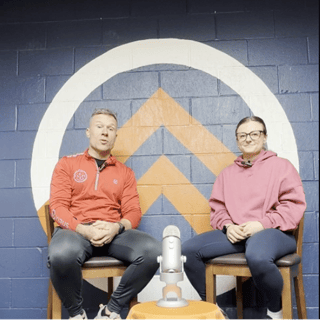
Speaker: Today we have Sheila Friesen with us.
Speaker: Mama McFreeze.
Speaker: Am I missing any?
Speaker: No.
Speaker: No.
Speaker: That's it.
Speaker: All right.
Speaker: Sheels.
Speaker: That's right.
Speaker: Sheels.
Speaker: Okay.
Speaker: Tell me a little bit about yourself.
Speaker: Where did you grow up?
Speaker: I grew up in Windsor.
Speaker: You grew up in Windsor?
Speaker: You were born and raised?
Speaker: I was.
Speaker: I didn't know that.
Speaker: For some reason, I thought you were not.
Speaker: Where did you go to school?
Speaker: I went to Assumption High School.
Speaker: Assumption, very nice.
Speaker: Over there on here on?
Speaker: Back when one of the first classes that let girls in, first years that they let go out with girls, used to be all boys.
Speaker: And there was a separate school for girls?
Speaker: No, there was just an all boys school with priests running it and then they let girls in eventually.
Speaker: So you were part of the first integrated class?
Speaker: First few years, yep.
Speaker: Nice.
Speaker: Nice.
Speaker: Okay, and did you play any sports growing up?
Speaker: Yes.
Speaker: What did you play?
Speaker: I ran track for about 12 years competitively.
Speaker: Nice track club in Windsor.
Speaker: I started when I was six.
Speaker: Ran with the nine-year-olds because I wasn't old enough for three years and then moved up.
Speaker: And I ran that all through high school as well, in grade school.
Speaker: And played basketball in high school, volleyball in high school.
Speaker: Nice.
Speaker: Now in track, what event did you run?
Speaker: Hurdles, 200 meters and long jump.
Speaker: Cool, so multi-sport athlete.
Speaker: And then I know that you played basketball in university as well.
Speaker: Yeah, at Laurentian University.
Speaker: Went to Laurentian University.
Speaker: Sudbury, yep.
Speaker: Were you there at the same time as?
Speaker: Linda?
Speaker: Yeah.
Speaker: No, she's younger than I am.
Speaker: I was there before her.
Speaker: Okay, cool.
Speaker: I set the way for her.
Speaker: You paved the way for her.
Speaker: But also, Millie, did she go?
Speaker: No, we played high school together.
Speaker: High school together, cool.
Speaker: Went to Massey.
Speaker: Oh, so you played against it?
Speaker: Yeah, yeah.
Speaker: Ah, nice, very nice.
Speaker: Okay, what do you do for work?
Speaker: I'm a legal assistant for a personal injury lawyer in Windsor.
Speaker: Cool, all right, and how long have you done that for?
Speaker: 15 years.
Speaker: 15 years, cool, all right.
Speaker: How long have you been doing CrossFit?
Speaker: It'll be eight years in February.
Speaker: Eight years in February.
Speaker: All with you.
Speaker: I know these times just slide by, and I feel...
Speaker: I feel bad when people are like, yeah, eight years.
Speaker: And I'm like, really?
Speaker: Eight years?
Speaker: Doesn't seem like it.
Speaker: I still remember.
Speaker: I honestly remember this clear as a bell, this first class that Sam and you did in the back room at the old gym.
Speaker: I remember because I remember you guys like the look on your face of you guys talking, turning to each other, talking to each other.
Speaker: And like, yeah, that I totally remember that clear as a bell, though.
Speaker: And I can't believe that's eight years ago.
Speaker: Yeah.
Speaker: So Sam is your daughter?
Speaker: Correct.
Speaker: Who started CrossFit with you?
Speaker: Yep, Linda gave us a golden ticket.
Speaker: Well, gave her two golden tickets.
Speaker: Right.
Speaker: She gave her one, and then Sam can, can I have another one for my mom?
Speaker: Yeah.
Speaker: If she wants to try it too.
Speaker: And so Linda found another one and gave us the golden ticket, and we did our foundations together, and yeah.
Speaker: That's awesome.
Speaker: Been doing it since.
Speaker: Yeah, and Sam recently moved to Montreal, fairly recently moved to Montreal.
Speaker: A couple years ago, yeah.
Speaker: Is it a couple years ago?
Speaker: Yeah, already.
Speaker: A couple of years ago, moved to Montreal, and she's still doing CrossFit in Montreal.
Speaker: Correct.
Speaker: Yeah.
Speaker: I'm proud to say probably the strongest female athlete I've ever met in person.
Speaker: Crazy strong.
Speaker: Crazy strong.
Speaker: Yeah.
Speaker: So you guys kind of started the CrossFit journey together.
Speaker: And probably for different reasons, I would say.
Speaker: Like, Sam is very competitive.
Speaker: Yeah.
Speaker: Not that you're not competitive, but I know that when you started, you had some back pain.
Speaker: You had some stuff, you know.
Speaker: Yeah.
Speaker: I had...
Speaker: Real bad back pain, yeah.
Speaker: I had pretty much explored everything, MRIs, everything, and stand-up desks, and hanging upside in boots, upside-down boots, and reverse table and everything, and went to all kinds of therapy.
Speaker: And, yeah, I just started doing this, and I guess I just got my core and all my muscles just such an all-over body workout, you know what I mean?
Speaker: It just literally disappeared.
Speaker: I haven't had any back pain at all.
Speaker: That's always one of the most incredible things I hear is that
Speaker: you starting with back pain, doing CrossFit, which people sometimes associate with back pain.
Speaker: Right.
Speaker: And then it kind of alleviating that pain, which you had for a while.
Speaker: Like, I don't want to say debilitating, but it was, you know, pain.
Speaker: It was pretty bad.
Speaker: Yeah.
Speaker: Pain that you lived with and pain that you were like, kind of like, maybe this is just the way it's going to be.
Speaker: Right.
Speaker: And then, and not even in CrossFit, we don't specifically focus on one thing.
Speaker: It wasn't like, Hey, here's our back pain protocol.
Speaker: It was like, right.
Speaker: Let's do CrossFit.
Speaker: Yeah.
Speaker: And then it,
Speaker: end up strengthening your core, strengthening all those muscles around, maybe taking some pressure off whatever was causing it.
Speaker: Yeah, they had told me it was, you know, worn out pads between my discs and arthritis, which I have a lot of in my entire body, but yeah.
Speaker: I don't know what happened.
Speaker: I don't know what the magic of CrossFit is, but there's something.
Speaker: Sometimes I don't know either, but it just kind of works.
Speaker: All right, cool.
Speaker: So I guess that's what prompted you to start.
Speaker: Do you remember, we already kind of went over it.
Speaker: Do you remember your first class outside of foundations?
Speaker: Do you remember your first class?
Speaker: You know what?
Speaker: Sam and I were talking about that when I visited her at Thanksgiving.
Speaker: We don't remember.
Speaker: We remember being in the back room doing our foundations.
Speaker: But no, no, I don't really remember the exact...
Speaker: Yeah.
Speaker: But I do remember the old gym.
Speaker: Yeah.
Speaker: It was fun.
Speaker: It was like raw.
Speaker: It was pretty raw, yeah.
Speaker: Yeah.
Speaker: It was very cool.
Speaker: I look back on that pretty fondly now.
Speaker: There's a picture that came up.
Speaker: Actually, my sister shared a video from her phone
Speaker: when the kids were tiny.
Speaker: Like I think Ella was probably like maybe two and it was in the old gym and it was in the second room.
Speaker: That's what I really liked about it.
Speaker: That gym had multiple rooms and them running around.
Speaker: It was a really, I have very fond memories of it even though it was very raw in terms of like facilities and you know.
Speaker: I mean it was great.
Speaker: I get you have to expand as you go on but it was a pretty good experience.
Speaker: Yeah, I liked it a lot too.
Speaker: I love this place too.
Speaker: The Tuban Motel right next door.
Speaker: That's right.
Speaker: Always exciting.
Speaker: That parking lot, yeah.
Speaker: Always exciting.
Speaker: Do you have, is there a first workout that you remember?
Speaker: Like maybe a benchmark or one that you did and you're just like, you know.
Speaker: Well, not, I don't, I'm not really good with that kind of stuff, but I do remember falling on the box the first time.
Speaker: Yeah.
Speaker: And I think that was very early on.
Speaker: I was doing it with Sam.
Speaker: She would jump, I would jump, she would jump, I would jump.
Speaker: And, you know, we were getting kind of only cocky a little bit.
Speaker: Speedy.
Speaker: And my ankle just went off the edge.
Speaker: I was like bruised all.
Speaker: It was an eye-opener.
Speaker: It was like a learning lesson.
Speaker: Everybody falls on the box.
Speaker: I feel like that is almost a rite of passage in CrossFit.
Speaker: I think so.
Speaker: At some point, you're going to fall on the box.
Speaker: Now, we're lucky enough that we have a bunch of soft boxes.
Speaker: So people fall all the time.
Speaker: And it's just like, oh, don't worry, right?
Speaker: But back then, you've got these wooden boxes with some pretty sharp corners.
Speaker: And you're like, yeah.
Speaker: But I mean...
Speaker: It's still a good memory, though.
Speaker: I think it's a good memory.
Speaker: I don't know.
Speaker: Same.
Speaker: I've tripped a bunch of times going over boxes, and most of the time I'm laughing as I'm falling.
Speaker: Right, yeah.
Speaker: Okay.
Speaker: What PR or accomplishment in the gym are you most proud of?
Speaker: I don't think I really – I don't really excel at anything.
Speaker: I think I'm just kind of like okay across.
Speaker: So I think just going, keep coming.
Speaker: Yeah.
Speaker: The fact that I'm keeping coming, and as I'm getting older, I'm still coming, and
Speaker: With shoulder surgery, I'm still trying to cum and that kind of stuff.
Speaker: So I think that's my biggest thing.
Speaker: Yeah, no, I think consistency.
Speaker: But also, don't sell yourself short.
Speaker: Like, when you do whatever version of the workout you do, like, you go hard and you... Your score is always reflective of the effort you put in, right?
Speaker: Like, it's not one where you're like, oh, Sheila probably didn't give everything today.
Speaker: Sheila gave what she had to give today.
Speaker: Right, yeah.
Speaker: You know, you always...
Speaker: And I think that some of that maybe links back to sports.
Speaker: I always find that people who have a kind of sports background have a sense of urgency or a kind of grit and resilience that I think can be tied back to that.
Speaker: Yeah.
Speaker: A lot.
Speaker: They're willing to kind of push through some stuff when people who haven't, I mean, it's some people do and some people don't, but I find that it's, it's more prevalent in people who play sports.
Speaker: They're like, you know, I'm going to do this thing.
Speaker: Yeah.
Speaker: Yeah.
Speaker: And I think like I'm,
Speaker: You know, before I hurt my shoulder, I was getting my pull-ups and getting post-bars.
Speaker: So that was a big deal for me, just because I'm not very gymnastic-y.
Speaker: Right, right.
Speaker: I'm a pretty big girl.
Speaker: You're long.
Speaker: Yeah, you're very long.
Speaker: Yeah, you've got some long levers.
Speaker: It wasn't one of my historical sports that I played.
Speaker: You grew out of gymnastics by the time you were six, right?
Speaker: Okay.
Speaker: If you could give your day one CrossFit self some advice, what would it be?
Speaker: Um...
Speaker: Keep going because eight years from now you'll be pretty happy you did.
Speaker: That's amazing.
Speaker: I like that.
Speaker: Yeah, I think that that's, for a lot of people, taking the first step is the hardest part.
Speaker: Sure.
Speaker: And then even getting through that first month is tough.
Speaker: Because there is a learning curve, right?
Speaker: There's a pretty steep learning curve.
Speaker: I also think that there's like the first year you hit all kinds of like milestones.
Speaker: You're like, oh, I'm so good.
Speaker: I'm doing so great.
Speaker: And then after a year you're like, it just kind of levels off.
Speaker: Or after a certain amount of time it levels off and you're like, well,
Speaker: now what?
Speaker: How do I get better?
Speaker: And then it's just consistency.
Speaker: Yeah.
Speaker: I think you start to value things differently, right?
Speaker: It's not always the PR.
Speaker: It's not always putting up a big number.
Speaker: It is like, hey, I've come 16, 17 times this month, or I feel better in the morning.
Speaker: I have more energy, that kind of stuff, which is a little harder to track, I think.
Speaker: And I love your, of them, when you have that...
Speaker: Did you reach your goal?
Speaker: What do you call that?
Speaker: You reached like so many times.
Speaker: Community club.
Speaker: Community club.
Speaker: Yeah.
Speaker: I love that you have that.
Speaker: Because I think that's a good motivator.
Speaker: Like, I really, you know?
Speaker: No, it's the number of people, like it,
Speaker: To be honest, when we first started Committed Club, it didn't seem as powerful as it is now.
Speaker: The number of people who will come in and say, I've got to get my 12th class in, even though I'm going away for two weeks at the end of the month, and they're pushing to get it.
Speaker: Michael, who's been on this podcast, I remember he was going to Nigeria, and he's like, I've got to get my classes in before I leave, because he wants to do it.
Speaker: And it is a great motivator, and I'm really happy that we have it, and happy that people take it seriously and do see the benefits of that.
Speaker: Another member,
Speaker: you know, he showed me a little bit of a progress pick that he had taken.
Speaker: And I look back and he had been in Committed Club every month leading up to that, right?
Speaker: So from when he started to when he showed me that progress pick, he had been in Committed Club 12 classes a month every month leading up to that.
Speaker: And I was like, well, that makes sense.
Speaker: Yeah, for sure.
Speaker: And that's the one thing is you can –
Speaker: you can almost be 100% certain if someone comes that consistently, they're gonna start seeing changes that they wanna see, right?
Speaker: It's just that some people think they're more consistent than they are, and then when you show them the attendance, you're like, well, you know, a little spotty.
Speaker: And I think people think they have to come every day hard, hard, hard.
Speaker: Like, if you're not feeling it, just come and scale back.
Speaker: get a workout in.
Speaker: Yeah.
Speaker: Do a workout.
Speaker: I think that's a big, that would have been a big change for me.
Speaker: Just like a mindset change and an ego change where it's like, you don't have to go hard every day.
Speaker: Some days I'm going to do a really scaled down version of the workout because that's just the way I'm feeling.
Speaker: Right.
Speaker: And, and that's more valuable than not coming at all.
Speaker: A hundred percent.
Speaker: Yeah, I agree.
Speaker: Love it.
Speaker: Okay.
Speaker: Um, how has CrossFit helped you in your daily life?
Speaker: Um, everything.
Speaker: Especially since my shoulder surgery, I really realized how important Turkish get ups are.
Speaker: Yes.
Speaker: You don't have an arm.
Speaker: Yeah.
Speaker: Like I'm a stretcher, so I get on the ground a lot and at home in front of TV, I'm stretching at night, especially before I go to bed.
Speaker: And just since I didn't have an arm to use, just getting up, I was like,
Speaker: He's like, you're getting up like a, you're doing a Turkish getup.
Speaker: I'm like, I really am.
Speaker: Yeah.
Speaker: I think I've shared this with you before that I found that when I, when my kids were babies, sometimes they fall asleep on your chest.
Speaker: Right.
Speaker: And that was how I was kind of getting up with Turkish getup style.
Speaker: Yeah.
Speaker: so that I could, I could kind of wiggle my way up using that.
Speaker: And I thought, this is actually functional.
Speaker: Because it doesn't seem, when you're doing it, like, this is odd, right?
Speaker: But, but I think there is functionality in almost all the stuff we do.
Speaker: So that's cool.
Speaker: Even, like, just when I had the sling on and I couldn't, getting up out of the couch, it's like, well, I can, or I can sit down on the couch.
Speaker: I'm not flopping.
Speaker: It's like, I could, like, squatting, right?
Speaker: Yeah.
Speaker: I could squat down to a sitting position, no problem.
Speaker: Get up out of a sitting position.
Speaker: Yeah, that's.
Speaker: All that kind of stuff.
Speaker: Get out of bed, like,
Speaker: It was hard getting in on a bed.
Speaker: Right.
Speaker: I'm like, oh, I can use my core to get up.
Speaker: That's kind of cool.
Speaker: Yes.
Speaker: That's a really good point, right?
Speaker: Because they talk about, you know, activities of daily living for people and sit to stand and getting up from the floor.
Speaker: 100%.
Speaker: Yeah.
Speaker: 100%.
Speaker: Especially as you get older because I know people that wouldn't be able to do it.
Speaker: Right.
Speaker: Yeah, and that's scary, right?
Speaker: So that goes to quality of life rather than length of life, health span rather than lifespan, right?
Speaker: Health span is how many good years do you have as opposed to maybe you lived to 95, but the last 15 were not so great, right?
Speaker: You're in assisted living.
Speaker: Okay.
Speaker: Do you have a morning routine?
Speaker: I come to the gym at 6.30.
Speaker: Yeah.
Speaker: Do you do anything before that?
Speaker: No, I have a banana.
Speaker: I grab a banana and go.
Speaker: No coffee?
Speaker: Nope, not before.
Speaker: Ooh, no.
Speaker: Man, you're brave.
Speaker: You're brave as I'm on my third coffee right now.
Speaker: Yeah.
Speaker: Do you have a sleep routine?
Speaker: I do.
Speaker: I'm in bed every night between 9 and 9.30.
Speaker: Okay.
Speaker: Like, even on the weekends.
Speaker: I mean, just usually.
Speaker: I mean, it's just basic.
Speaker: Like I said, I stretch.
Speaker: Definitely before I go to bed, I stretch a lot.
Speaker: And then just maybe go upstairs.
Speaker: You know, I watch, like, five minutes of The Office and
Speaker: go to bed on a high note yeah actually ask Alexa to turn off the TV oh nice I never even thought about that smart I like the stretching thing that's something I've I want to commit to but I haven't committed to fully especially before bed they say it's really good it gets you into a really good I for me it's I'm just a stretching person I'm like I'm always stretching so I just it does relax me yeah I find that relax you think that comes from your track days
Speaker: Yeah, there was a lot of stretching, a lot of warming up, a lot of cooling down.
Speaker: Especially as a hurdler.
Speaker: Yeah.
Speaker: You've got to get that leg up there.
Speaker: Yeah.
Speaker: I just saw a video of a track athlete I follow, and they're trying to learn how to hurdle with their opposite leg.
Speaker: Yeah.
Speaker: And she said that's difficult, right?
Speaker: Well, it also depends, like, I'm not going to get too tentacle, but sometimes people have four steps between.
Speaker: I did 90 meter hurdles.
Speaker: So there's either four or five steps between each hurdle.
Speaker: Right.
Speaker: So.
Speaker: If you take five steps, then you have to use your opposite leg, right?
Speaker: Yeah.
Speaker: Right.
Speaker: So it depends on how ambidexious you are and how long your legs are.
Speaker: Were you a both legger?
Speaker: Yeah.
Speaker: Oh, nice.
Speaker: Yeah.
Speaker: That's great.
Speaker: Yeah.
Speaker: Probably because you, did you take five steps then?
Speaker: I did, yeah.
Speaker: But when I run, I don't take walkie steps.
Speaker: I do now, but in fact, then I didn't.
Speaker: So yeah, I got five steps.
Speaker: Interesting fact as well too, one of our members, Zach Lane.
Speaker: Mm-hmm.
Speaker: His son is now a 400 meter hurdler and is doing track with a border city track club, I believe.
Speaker: Yeah.
Speaker: They were a part, they were a part, like they weren't around when I was younger, but they're similar to what I ran.
Speaker: Yeah.
Speaker: That's like the hardest race.
Speaker: 400 meter hurdler, I would, I would contest is probably the hardest race to run in track.
Speaker: Yeah.
Speaker: I mean, I haven't run them all, but it requires a lot.
Speaker: Yeah.
Speaker: Like it's a lot.
Speaker: Yeah.
Speaker: No, I've, it's a lot.
Speaker: I'm a huge track and field fan and I watch a lot of it and,
Speaker: I have nothing but the utmost respect for every athlete because it's just the capability of the human body is unbelievable and they're showing us what they can do.
Speaker: Whether it's sub 10 second 100s or sub 13 minute 5Ks.
Speaker: It's crazy.
Speaker: It's such an individual sport.
Speaker: Individual sport and team sports are so vastly different.
Speaker: They're both great.
Speaker: It's like swimming.
Speaker: It's like diving.
Speaker: You're in your head.
Speaker: You're doing your...
Speaker: a lot yeah i find that i've had this conversation with people lately is because i've my experience has all been from team sports all team sports um but i feel like the mental aspect of an individual sport is more not probably more important than some of the physicality in it because it's just it is just you right in a team sport you can use you can take a playoff you can rely on people to fire you up you can you know
Speaker: do that kind of stuff, but I mean, in an individual sport, there's no... Oh, yeah.
Speaker: Whether you're doing, like you said, 10 seconds, 100 meters, where you're, if you're off slightly, you know, a tenth of a second is... Oh, yeah.
Speaker: Or if you're doing, like, you say, a marathon, like, how do you keep your head in that for that long?
Speaker: Good point.
Speaker: So there's, like, it's all kinds, right?
Speaker: Yeah.
Speaker: No, I love that.
Speaker: That's a really good point.
Speaker: Okay.
Speaker: Rapid fire.
Speaker: What is your favorite movement in the gym?
Speaker: I kind of like GHDs and sit-ups and...
Speaker: Like anything on the box?
Speaker: Box jumps?
Speaker: Yeah.
Speaker: Yeah, yeah.
Speaker: No, no, the core stuff and your basketball jumping.
Speaker: Jumpy.
Speaker: Okay.
Speaker: What's your least favorite?
Speaker: Burpees.
Speaker: Is that everybody's answer?
Speaker: Somewhat, yeah.
Speaker: Yeah.
Speaker: It's one of those, like, it's the, what is it?
Speaker: The...
Speaker: Oh, what's that?
Speaker: Love it or hate it?
Speaker: Yeah.
Speaker: What's that?
Speaker: What's the coriander?
Speaker: No.
Speaker: Oh, yeah.
Speaker: Cilantro.
Speaker: Cilantro.
Speaker: Cilantro.
Speaker: Yeah, exactly.
Speaker: Love it or hate it, right?
Speaker: Okay.
Speaker: Do you like long endurance workouts or short, intense workouts?
Speaker: Long endurance.
Speaker: Long endurance workouts.
Speaker: Yeah.
Speaker: Well, we got a short, intense one today.
Speaker: Okay.
Speaker: Morning, afternoon, or evening workouts?
Speaker: Morning.
Speaker: 100%.
Speaker: Yeah.
Speaker: I am in the same boat, too.
Speaker: My motivation really wanes.
Speaker: Oh, 100%.
Speaker: As we get farther away from the morning.
Speaker: It's not going to happen.
Speaker: Don't give me the option.
Speaker: Just, yeah, right here.
Speaker: Okay.
Speaker: Favorite indulgent food?
Speaker: Chips.
Speaker: Chips.
Speaker: Do you have a favorite flavor?
Speaker: All of them.
Speaker: All of them.
Speaker: Doesn't matter.
Speaker: No, I'm not picky.
Speaker: Oh, it's tough walking through the mall, or not the mall, through the grocery store, and they've got all the chips on the end, and you're looking at them, and you're like, oh.
Speaker: Yeah, no, it's bad.
Speaker: It's on sale.
Speaker: No.
Speaker: I don't even care if it's on sale.
Speaker: Doesn't matter.
Speaker: All right.
Speaker: Favorite healthy food?
Speaker: I like eggs.
Speaker: Yeah.
Speaker: Mm-hmm.
Speaker: I made an omelet for dinner the other night.
Speaker: No, I think like versatile.
Speaker: Yeah.
Speaker: You get easy when you don't want to eat.
Speaker: You're just like, yeah, no, I agree.
Speaker: I agree.
Speaker: Okay.
Speaker: Favorite pre or post workout snack.
Speaker: Free or end post or, um, I guess Greek yogurt is a good one.
Speaker: Yeah.
Speaker: I'll usually have that after like when I get to work, I have a bowl of Greek yogurt with some fruit.
Speaker: Perfect.
Speaker: That's one of my favorite snacks.
Speaker: Yeah.
Speaker: After.
Speaker: Yeah.
Speaker: I really do like skier as well too.
Speaker: Me too.
Speaker: Yeah.
Speaker: Okay.
Speaker: Favorite way to relax?
Speaker: Around a pool or at the beach or in the hot.
Speaker: Yeah.
Speaker: Yeah.
Speaker: Yeah.
Speaker: We know when Sheila goes away and comes back and you're extremely dark.
Speaker: Yeah.
Speaker: I'm stopping that.
Speaker: I'm getting away from that.
Speaker: All right.
Speaker: Vitamin, vitamin D, right?
Speaker: No.
Speaker: Yeah.
Speaker: Just a little less.
Speaker: Yeah.
Speaker: It's okay.
Speaker: It's okay.
Speaker: Okay, I think that's all I've got.
Speaker: Thank you very much for being here and sharing your story.
Speaker: We appreciate it, and we appreciate you as a member of All Level for eight years and also being on the Christmas committee.
Speaker: So far, so good.
Speaker: So far, so good.
Speaker: Can't wait for the Christmas party, December 12th.
Speaker: Yeah, that's right.
Speaker: Okay, thank you, Sheila.
Speaker: Thanks, John.
Speaker: Okay, have a good one, and I'll see you in the 9.30 class.
Speaker: Okay.
Speaker: Okay.