Transcript
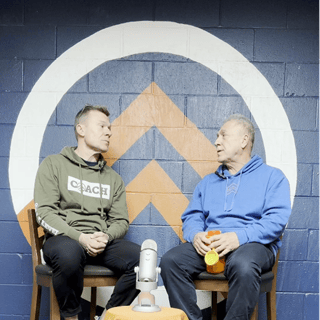
Speaker: Welcome to Levels, the show where we explore our CrossFit community here at All Level CrossFit and some of the awesome stories and people that make our community so special.
Speaker: Today I have with me Mark Campbell as my guest.
Speaker: Mark, you've been a member at All Level for...
Speaker: Five years?
Speaker: Five years, yeah, it seems about right.
Speaker: And in those five years, you've become a pretty big part of some of the classes you attend, morning classes, weekend classes, adaptive class, you're there.
Speaker: My favorites.
Speaker: And that's awesome.
Speaker: We appreciate that.
Speaker: So tell me a little bit about yourself, Mark.
Speaker: Where did you grow?
Speaker: I grew up in Thunder Bay, Ontario, right on top of Lake Superior.
Speaker: And I
Speaker: I was there till I was about 18 years old, went to University of Manitoba and Winnipeg for a couple of years.
Speaker: Then I decided I was going to go into nursing and then came down to Windsor.
Speaker: The decision that locked it was the ability to play football down here.
Speaker: So I played for the Lancers for four years and I've been in Windsor ever since 1988.
Speaker: but Northern born and raised.
Speaker: Awesome.
Speaker: So I didn't know that you attended University of Winnipeg for a couple of years.
Speaker: Yeah.
Speaker: What did you take there?
Speaker: I was taking general science there.
Speaker: Yeah.
Speaker: Did you play football there?
Speaker: I did.
Speaker: I played.
Speaker: So interesting story, the Windsor AKO Fratman were a powerhouse down here and I played for the St.
Speaker: Mattel Mustangs and incidentally we got put into the East Conference.
Speaker: So we won our conference and we were to play the OJFL.
Speaker: which was the Windsor Fratnacht.
Speaker: So I played against a lot of the guys that when I came down here to the University of Windsor, I ended up knowing at least names.
Speaker: And it was kind of an interesting lead into my football career for the Lancers.
Speaker: Awesome.
Speaker: So you played four years for the Lancers.
Speaker: And what position did you play?
Speaker: I played inside linebacker.
Speaker: Nice.
Speaker: I didn't know that.
Speaker: Yeah.
Speaker: This whole time I thought you were an O-lineman.
Speaker: I thought you were an O-lineman.
Speaker: You're the inside.
Speaker: I guess that's in a 4-3, right?
Speaker: So you're one of the inside linebackers.
Speaker: 3-4.
Speaker: We were a little more in the era of Lawrence Taylor-ish.
Speaker: So 3-4.
Speaker: Yeah, I played weak side linebacker.
Speaker: with a few great linebackers.
Speaker: Mike O'Neill was one of them, who's a first or second team All-Canadian, who's just a beast.
Speaker: Great player.
Speaker: Awesome.
Speaker: Awesome.
Speaker: So I know that you still go back to Thunder Bay fairly regularly, obviously, to this family, and that kind of like
Speaker: We have this, I know that in Southern Ontario, we kind of have this kind of vision of what Northern Ontario is like, you know, sparse, cold, unforgiving, brutal.
Speaker: But tell me a little bit, what were some of your favorite things about growing up?
Speaker: North, definitely, especially now reflecting back is the nature.
Speaker: I don't think you, as a young person, you were, uh,
Speaker: appreciate it when you're there.
Speaker: Now looking back, just the beauty of it all, looking out into the harbor, we have a large island called the Sleeping Giant.
Speaker: I know you've been to Thunder Bay and you've seen that going out.
Speaker: A lot of people there, instead of vacationing down south, they have
Speaker: We call them camps, the cottages.
Speaker: So there's tons of lakes for 30 minutes outside of the town going to the camp or cottage in the summertime for the weekends.
Speaker: Those were some of the things I really enjoyed.
Speaker: And through doing that, just doing a lot of outdoor things, summertime, swimming, jumping in the sauna,
Speaker: into the lake riding motorbikes.
Speaker: Being a northern climate in the winter, it was awesome.
Speaker: There was tons of outdoor rinks.
Speaker: We would go out, skate, play hockey.
Speaker: There's ski hills around, downhill ski, cross-country ski, toboggan, all of those things.
Speaker: You dress for it, you get used to it, and you really learn to appreciate that northern climate.
Speaker: So I think tying all that into the nature is one of the things I really miss.
Speaker: Yeah, I think that that's, we're kind of stuck in limbo here in Windsor because we don't get a real
Speaker: winter or it doesn't stay cold long enough that we can actually do some of those outdoor things.
Speaker: Like we do, you know, Hey, let's go tobogganing and stuff, but you don't, no one's ever really prepared for it because it's kind of like winter is there, but it's not quite there.
Speaker: But I, I know that from Northern and as well as stuff like Quebec, like,
Speaker: they know how to enjoy the winter season.
Speaker: Here it seems like we just tolerate it rather than enjoy it.
Speaker: It's so sporadic down here.
Speaker: It's kind of slushy.
Speaker: Yeah.
Speaker: Slushy mud.
Speaker: Yeah.
Speaker: Right.
Speaker: Yeah.
Speaker: Not so fun to toboggan on.
Speaker: No, no, but the summers, those are, those are beastly down here, the humidity and the heat.
Speaker: So that like, you know, flip it on its head.
Speaker: That's something got to get used to as well.
Speaker: Yeah.
Speaker: I, I, you know, my wife's English and I, I,
Speaker: I've always told her and she, I think, agrees now that there's nothing like a Canadian summer.
Speaker: Like, Canadian summers for me are the best because they're so long and the days are beautiful.
Speaker: And then if you can get to enjoy a cottage or a camp or something like that, that's phenomenal.
Speaker: Okay.
Speaker: So you played some sports.
Speaker: What do you do for work?
Speaker: I'm what's called a certified registered nurse anesthetist.
Speaker: So I am a master's trained nurse specifically in anesthesia.
Speaker: So I went, I graduated from the university of Windsor with my bachelor's and much like a lot of nurses, my generation did just weren't a lot of jobs here in Detroit.
Speaker: As a lot of people down in the area know, is always begging for nurses to come over there and work.
Speaker: And through something called the Trade Naftabies, I was able to secure employment in downtown Detroit.
Speaker: I worked at Detroit Receiving Hospital, which is a trauma hospital.
Speaker: and gained a lot of experience.
Speaker: I started out in the neurotrauma unit.
Speaker: We'd see closed head injuries.
Speaker: We would see post-surgical patients specific to neuroinjury.
Speaker: Did that for a couple of years, then decided I wanted to learn the rest of the body.
Speaker: And I went to the medical intensive care unit.
Speaker: I'm dealing with things like severe emphysema, diabetes, infections or sepsis.
Speaker: And when I was up there,
Speaker: A patient that was returning from the operating room had one of the anesthesia providers there and he was a certified registered nurse anesthetist.
Speaker: So we got to talking and said, do you know what I do?
Speaker: I said, no, I have no idea what you do because they don't have that in Canada.
Speaker: So we got to talking and he says, why don't you come on down and you can shadow and see what we do.
Speaker: So I actually ended up going up to Beaumont and shadowing up there.
Speaker: to see what it was.
Speaker: And I was like, this is amazing.
Speaker: And by that time in my nursing career, I had seen a lot, been involved in a lot, things like codes, invasive lines, drips, all of the things that require
Speaker: certain skill set as far as being able to manipulate vital signs and just kind of what's going on if you will the offense is or the body's doing offense you're playing defense to that so with anesthesia it's that much faster plus there was a lot of technical skills that were really cool if that's the right word right so i really enjoyed seeing that eventually got into school at oakland university through beaumont and it was 28 months straight
Speaker: Through my education, I was able to rotate down to Children's Hospital in Michigan, and I really found that I really liked taking care of kids.
Speaker: And what really fascinated me was hearts, so pediatric hearts.
Speaker: So the way that we're formed sometimes, we're not formed absolutely correct.
Speaker: So we have these variants of heart defects, and that absolutely fascinated me, the physiology, what they were doing surgically, and I was hooked.
Speaker: So I did a pediatric anesthesia fellowship.
Speaker: after 28 months, graduated from that.
Speaker: And I've been working at Children's Hospital for the past 24 and change years and still love what I do, love taking care of kids.
Speaker: That's an amazing story.
Speaker: Again, like most of the stuff, I knew kind of what you did, but I didn't know exactly what you did.
Speaker: Obviously, when you wear the shirts in, you've got some special shirts that you like to wear to work with the kids at ease.
Speaker: So, I mean, we got talking about that, but the whole journey through that, that's amazing.
Speaker: Now, in Canada,
Speaker: they don't have designated nurses anesthesiologists?
Speaker: They do not.
Speaker: So here it is anesthesiologists and they've been training respiratory therapists to sit in the room and kind of monitor things.
Speaker: I won't speak more to that professionally because just because I think it's that's kind of more their deal.
Speaker: I do think it's unfortunate that with
Speaker: With the OR weights and lack of anesthesia people, it's very unfortunate that they have not embraced the nurse anesthetist.
Speaker: 68% of the anesthetics in the United States are given by nurse anesthetists.
Speaker: And it's a tremendous amount of workforce and the ability to really drop OR times and the quality of care is absolutely extremely high.
Speaker: The outcomes are excellent for the care that
Speaker: Amazing.
Speaker: Another thing I did not know.
Speaker: All right.
Speaker: So how long have you, I know you've been with us for five years, but how long have you been doing CrossFit?
Speaker: CrossFit about eight years.
Speaker: I started at Windsor CrossFit when it was over, just off of EC Row.
Speaker: And I was really looking for something that had the intensity of football, as far as training, as far as the competitiveness.
Speaker: And I'd been to the big box gyms, and it just stall and you stall and you stall.
Speaker: So I was looking for something more than that.
Speaker: So I walked in, I saw all these...
Speaker: movements there was weights being thrown there's boxes being jumped and more importantly i saw the community people cheering each other on and that intensity and that community was something that really drew me in so a shout out for it signed up and i really haven't looked back i just absolutely love coming here as stressful as my job can be this is just me releasing my stress and it's just for me it throws me into a a great high for the rest of the day or week yeah it's a beautiful like
Speaker: For high stress jobs like yourself, I've seen people definitely blow off steam in non-productive manners and I've seen people blow off steam in productive manners.
Speaker: And I think this hopefully checks the box for productive, but I've seen you work out and I see you've got some of that football in you when you work out.
Speaker: And I think that anyone who's played sports kind of feels the same way about the style of training that we do.
Speaker: You know, there's high fives, you get to know people, you've got your group.
Speaker: There is an intensity piece to it that does kind of lend itself.
Speaker: or borrow from sports, right?
Speaker: Like you can always see when someone's like got a sense of urgency, right?
Speaker: And sometimes we have things we do and they're urgent and sports has the same sort of urgency, right?
Speaker: You've got to get something done in a certain amount of time or there's a clock or a buzzer and we've got clocks and buzzers here too.
Speaker: So I think it's a really...
Speaker: it does bring back those memories and that transition makes it a little easier.
Speaker: And that's one of the things that drew me into.
Speaker: I love sports and I love teams and I love, you know, kind of the locker room stuff.
Speaker: And so all that,
Speaker: kind of fits in to what we do here.
Speaker: I think the skills portion of it too is there's always something to improve on.
Speaker: As basic as you start out, the learning curve just goes very quickly and it's just very, very stimulating, especially if you look across and see the better athletes going.
Speaker: It's like, yeah, I'd like to do that.
Speaker: Yeah.
Speaker: Oh, yeah.
Speaker: Yeah, for sure.
Speaker: There's never a shortage of things to get better at, right?
Speaker: That's what they say is once you've kind of got one thing and you feel good about it, well, there's the next thing and the next thing and the next thing.
Speaker: There's no, that's what I love about CrossFit is there's just no ceiling, right?
Speaker: There's no ceiling.
Speaker: Like you're not ever going to reach that peak.
Speaker: Even the people that have reached the pinnacle of CrossFit success, they probably feel like they've still got a lot to improve on.
Speaker: Most definitely.
Speaker: And, you know, back down to us regular everyday athletes, like,
Speaker: That's tenfold.
Speaker: We've always got stuff we can work on.
Speaker: Absolutely.
Speaker: It's the shortage of time.
Speaker: Okay.
Speaker: Did anything prompt you to start though?
Speaker: Was there anything?
Speaker: I was fat and I didn't feel good about myself.
Speaker: I didn't have that stuff to look forward to.
Speaker: I needed something.
Speaker: I needed that.
Speaker: It was mindset, body image, all of the above.
Speaker: It's funny because that's pretty much the exact same reason that I started.
Speaker: I was in a pretty unhealthy lifestyle for a bit.
Speaker: I came back to Windsor.
Speaker: I was living in the Caribbean.
Speaker: I came back to Windsor for a wedding.
Speaker: Someone made a comment on how I looked physically.
Speaker: They said, oh my God, John Mack, you got fat.
Speaker: I was like, I did?
Speaker: I think that you just accept who you are at that point.
Speaker: Maybe I wasn't super motivated, but that triggered it.
Speaker: I ended up getting into a gym in the Caribbean and
Speaker: absolutely loving it and ended up working my schedule there so that I could make sure I made the gym every day.
Speaker: Right.
Speaker: So it became that big part of my life.
Speaker: And that was kind of the turning point.
Speaker: It's just like, I, I felt unhealthy.
Speaker: I looked unhealthy.
Speaker: Absolutely.
Speaker: And this kind of pulled me back into a healthier place.
Speaker: And it's, you know, that was 15 years ago, maybe.
Speaker: That's amazing.
Speaker: So yeah.
Speaker: And that's kind of the transformative power CrossFit and why we kind of have these conversations because, you know,
Speaker: There's so many people in the gym that have these amazing stories that, you know, why they started, how it's helped them.
Speaker: And they just kind of can float by if you don't grab onto them and kind of like, hey, this is a cool story and I want to hear why and how it's affected you because I know how it's affected me.
Speaker: Absolutely.
Speaker: But I think for a majority of people in here, they have a story like that.
Speaker: Okay.
Speaker: Do you remember your first class?
Speaker: Yeah.
Speaker: Yeah.
Speaker: We were doing bench press.
Speaker: I think deadlifts, there was another barbell movement.
Speaker: I was told to take it easy and stuff.
Speaker: Me being me, I wanted to tear somebody's head off.
Speaker: You're close to throwing up.
Speaker: It was like, okay.
Speaker: I get it the old linebacker mentality came back and what now I've made a mistake what more of a perfect workout for a football player than let's bench press and deadlift oh for sure can someone make this workout for me right but it's not sets of eight and then you can take 15 minutes rest right in sets of stuff it's like okay let's let's go yeah it's like why why is my heart beating so fast why do I feel like throwing up yeah you know lesson learned I think we all go through that yeah and watching new guys come in and say hey
Speaker: Don't rip one off, pace yourself, pace yourself.
Speaker: Lesson learned.
Speaker: I think that almost everybody I've ever seen come in here, regardless of their level of fitness, super strong people, super fit people, super whatever, the type of training we do always exposes some sort of weakness in your overall fitness, whether it's the cardio aspect, whether it's the strength aspect, flexibility, gymnastics, all that stuff.
Speaker: you know, it gets people and then there's kind of almost two types of people.
Speaker: There's the type that's like, man, that was too hard.
Speaker: I don't know if I want to do that again.
Speaker: And those people that are like, wow, that was awesome.
Speaker: I was terrible, but that was awesome.
Speaker: And I want to do it again.
Speaker: And I think for myself, I was the latter.
Speaker: I went in there and I thought that I did really well in the workout that they've
Speaker: first put me through.
Speaker: And I thought, being my cocky self, I thought, oh, wow, I crushed that.
Speaker: And they're like, no, you did not.
Speaker: That was not very good.
Speaker: I'm like, are you sure?
Speaker: Sure.
Speaker: You know, and I, it's funny you say that.
Speaker: I like football to CrossFit.
Speaker: The reason why I love football so much is
Speaker: The skinny kid can play it.
Speaker: The fat kid can play it.
Speaker: The short kid can play it.
Speaker: The tall kid can play it.
Speaker: The athletic kid can play it.
Speaker: You can all play it.
Speaker: So you come into CrossFit here.
Speaker: A guy like me, I'm stronger.
Speaker: So I will excel in the barbell movement.
Speaker: Right.
Speaker: You throw me up in a bar and it's just, it's not good.
Speaker: My daughter actually
Speaker: shout out to Ashley.
Speaker: She'll come in and she'll go up on the bar and do all of these movements and stuff.
Speaker: So that's a really cool part.
Speaker: And that goes back to there's always something to work on, which for me is very stimulating.
Speaker: I like that component of making a weakness of strength.
Speaker: 100%.
Speaker: And shout out to Ashley.
Speaker: I've never seen someone do strict handstand push-ups.
Speaker: like Ashley can be strict.
Speaker: A lot of anger in that.
Speaker: A lot of anger.
Speaker: She's still doing those over there in the U.S. because I don't want to see that go to waste.
Speaker: Absolutely.
Speaker: Okay.
Speaker: Do you have any PRs or accomplishments in the gym that you're most proud of?
Speaker: Absolutely.
Speaker: So the older I get now, I focus less on how much I'm lifting.
Speaker: So my PRs now are coming back from injury and that has helped
Speaker: To me, that's been more than dead lifting 400 pounds, you know, cleaning whatever amount of weight.
Speaker: I've torn meniscus in both of my knees.
Speaker: I've come back from them non-surgically.
Speaker: I've had shoulder issues, some back issues, all of that.
Speaker: learning to dial it back learning how not to be you know just get out there and rip it football mentality really learning how to listen to your body and uh scale things you know we talk about scale scale scale i absolutely take that to heart so as far as an accomplishment i've learned to listen to my body i've learned how to come back from injury be patient with it and and um
Speaker: John, you and I talk a lot about mind-body connection, being positive with yourself, really looking at anything that you've done that is a small accomplishment and taking satisfaction in that.
Speaker: from a mental standpoint, I think that's really most recently been my biggest accomplishment in the gym is really learning how to come back from adversity.
Speaker: Yeah, I think that's such an awesome lesson for people because you can see people get discouraged when they have an injury or a setback or things aren't going the way they want.
Speaker: And then it's really easy to get in your head and, you know, think about quitting or wanting to
Speaker: not do the things anymore or I can't do that.
Speaker: And like you said, we've chatted a lot about mind-body connection and just the power of positive thinking like, okay, there's a lot of things I can't do right now, but there's so many things I can do.
Speaker: So what can I do?
Speaker: And how can I keep moving the needle forward?
Speaker: And a lot of times what I find, I've been injured plenty of times or my CrossFit career, my athletic career, and
Speaker: it's a really good time to focus on stuff that maybe you don't pay a lot of attention to because you're somewhat limited in the movements you could choose, but there's a lot of stuff like whether it's static holds and core strength or, or whatever it might be, you're doing some of this stuff that's not as, as fun and, you know, as sexy as some of the movements, but are very, very important.
Speaker: You have more time to focus on that.
Speaker: And I find that then you can come back and almost be an improved version of the person who got injured previously because you're,
Speaker: You have the experience.
Speaker: You know what you need to do.
Speaker: You're focusing a little bit more on it.
Speaker: And I think that that definitely comes with some perspective and some maturity as an athlete.
Speaker: And I think that that's an incredible lesson for people.
Speaker: Like, you don't have to stop doing what you're doing because you've got an injury.
Speaker: You can always find a way.
Speaker: Like, I say that to everybody.
Speaker: We've got people in the gym that are doing things, you know, with one arm, that are doing things that are in a wheelchair.
Speaker: Yes, yes.
Speaker: You know, and it's like, if they can find a way...
Speaker: to continue to work out.
Speaker: If you have a sprained ankle or you've got a knee that's, you know, got some torn miscus or cartilage in it, we can figure out a way.
Speaker: And you can keep moving the needle forward.
Speaker: It doesn't have to be, you know, so you can't squat.
Speaker: Cool.
Speaker: We've got a hundred other things we can do.
Speaker: So I think that's, that's really, really important as an athlete and as a person to be able to face that adversity and figure out a way around it.
Speaker: Like we talk about sometimes the obstacle is the way, right?
Speaker: So the obstacle is the injury.
Speaker: So
Speaker: What am I going to do?
Speaker: I'm going to find a way to continue moving forward.
Speaker: Another point to that is the body will heal.
Speaker: Your body is absolutely amazing at healing and it will absolutely heal.
Speaker: So fear not.
Speaker: Yeah.
Speaker: And I mean, who better to say that than a healthcare professional, right?
Speaker: So I love it.
Speaker: Okay.
Speaker: If you could give your day one CrossFit self.
Speaker: Some advice, what would it be?
Speaker: Be patient.
Speaker: Be patient.
Speaker: I think, you know, especially the older I get, be patient.
Speaker: Yeah, it's funny because that's the exact same answer that Steph Dufour gave too, right?
Speaker: And she's a younger athlete.
Speaker: She's a very high level athlete.
Speaker: She puts a lot of time in, but same thing.
Speaker: Whether it's being patient for getting your first full depth squat or being patient, you know, getting into the top 100 in the world, it's the patience.
Speaker: We want everything now.
Speaker: And that's, I think, part of that.
Speaker: mindset, that athlete mindset as well too.
Speaker: We want it all now.
Speaker: Absolutely.
Speaker: A little patience goes a long way.
Speaker: Okay.
Speaker: How has CrossFit helped you in your daily life?
Speaker: When adverse situations come, knowing how to deal with them really
Speaker: Really putting the blinders on and focusing on the task at hand, much like it's like I have 20 burpees to do.
Speaker: Well, I can do one burpee, then I'll do another burpee.
Speaker: So looking at each tree as opposed to the forest, I'm chopping that tree down.
Speaker: So in doing these very difficult workouts, it absolutely has helped me when I'm in difficult situations at work.
Speaker: And giving me that ability to focus and take one moment at a time and just kind of get through things and just get getting better and better at doing that.
Speaker: Love that.
Speaker: Yeah.
Speaker: One foot in front of the other.
Speaker: I think people underestimate the power of doing hard things, whether it's in the gym and how that.
Speaker: I've done a hundred burpees in a row so I can do this.
Speaker: Absolutely.
Speaker: I've, I've run this far.
Speaker: I can do this thing.
Speaker: And I think that's, it's an underrated part of the community as well too.
Speaker: And I've had, I've had people that someone that told us that, you know, if I hadn't come to the gym and kind of learned that I could do hard things, I would have never done my MBA in Paris and gone over and done all this stuff.
Speaker: And I was like,
Speaker: That blew me away.
Speaker: I was like, really?
Speaker: Yeah, yeah.
Speaker: You know what I mean?
Speaker: But you, again, those are things that maybe you take for granted and you don't see those kind of stories.
Speaker: So, very, very cool.
Speaker: Okay.
Speaker: Do you have a morning routine?
Speaker: Now, I know you've got some strange hours sometimes.
Speaker: So,
Speaker: Do I have a morning routine?
Speaker: Yeah, I will get up.
Speaker: And so recently, probably in the past year and change, I've started getting into fasting quite a bit.
Speaker: So on days that I'm fasting, I'll get up, have a cup of espresso and then start drinking water just to kind of catch up on the news.
Speaker: Beyond that, if it's a day off.
Speaker: typically come into the gym, mobility's become a very big part of my life.
Speaker: I've been using Wazram WOD, it's called Mobility WOD, that's what it's called, at any rate.
Speaker: Plyab, not Plyab.
Speaker: Plyab, okay, that's it.
Speaker: I've been using that, so that's coming into it more.
Speaker: But as far as that goes, I'm going to say strict morning routine.
Speaker: No, what's been more important is my nighttime routine.
Speaker: that's become very important going to bed at a decent consistent time not eating within hours before and interestingly enough my sleep is much deeper when i fasted like fasted at length you know 60 hours or something like that i find i really get a big depth of that so consistency of time the room's totally blacked out i'm doing screen time um i use the the aura ring
Speaker: for sleep, looking at my sleep cycles.
Speaker: It's not an obsessive looking at it.
Speaker: It's just kind of like, okay, where am I at with my sleep?
Speaker: Those types of things I think are very consistent.
Speaker: I wear earplugs as well to block out noise as much as possible.
Speaker: I think routine is more to my sleep.
Speaker: That's something I've started prioritizing a while back too.
Speaker: You know, sometimes I get up really early.
Speaker: For sure.
Speaker: So going to bed early enough can be a struggle, but it's something that I try to prioritize.
Speaker: I just know the feeling.
Speaker: Like we can survive, but survival is not the goal, right?
Speaker: So it's trying to thrive a little bit.
Speaker: So I love that night routine.
Speaker: Okay, we're going to go rapid fire.
Speaker: Favorite movement in the gym?
Speaker: Oh, squat clean.
Speaker: Squat clean.
Speaker: Oh, I love it.
Speaker: Nice.
Speaker: All right.
Speaker: Least favorite?
Speaker: Burpee.
Speaker: Burpee?
Speaker: No, everybody.
Speaker: This body's not made for burpee.
Speaker: Okay.
Speaker: Morning, afternoon, or evening class?
Speaker: My schedule's so varied.
Speaker: Morning if I can, but God bless the 5.30 and 6.30, that's way too early.
Speaker: 9.30?
Speaker: Yeah, 9.30.
Speaker: 9.30's sweet.
Speaker: Yeah, that's a sweet spot for sure.
Speaker: Long endurance workout or short and intense workout?
Speaker: Both.
Speaker: Both.
Speaker: I like both.
Speaker: I like the strategizing of both.
Speaker: So forcing myself to sprint for the shorter ones and then really holding myself back and pacing and strategically breaking things up and making a little more cerebral for the longer ones.
Speaker: I love it.
Speaker: I think that it's flipped.
Speaker: I think if I was young, younger, young John would definitely be like, let's sprint.
Speaker: But older John's like, eh, sprinting hurts a little bit too much now.
Speaker: So let's back off and go long.
Speaker: Okay.
Speaker: What's your favorite indulgent food?
Speaker: Pizza.
Speaker: Pizza.
Speaker: What's your favorite pizza place?
Speaker: In town, it's a toss-up between Oven 360 and recently.
Speaker: It used to be Naples in Tecumseh.
Speaker: It's called Capital City.
Speaker: I really like their pizza.
Speaker: I've just had that over the past year.
Speaker: Nice.
Speaker: I really like it.
Speaker: All right.
Speaker: Good old Windsor pizza.
Speaker: Okay.
Speaker: Favorite healthy food?
Speaker: Fresh vegetables or meat.
Speaker: Just like a steak or something.
Speaker: I really like that.
Speaker: It's healthy.
Speaker: All right.
Speaker: Favorite pre or post workout snack?
Speaker: I'll have a smoothie with some berries, some R&F protein and creatine.
Speaker: Beautiful.
Speaker: The R&F, always the R&F shout out.
Speaker: Okay.
Speaker: Favorite way to relax?
Speaker: Throw some country music on John and sit in the backyard and just kind of.
Speaker: look around and just enjoy, enjoy being outside in the sun and having some good music playing.
Speaker: I love it.
Speaker: All right.
Speaker: I know you go, you tend to drop in on boxes when you go home to Thunder Bay or go to Thunder Bay when you travel.
Speaker: Give me a couple of places that you really enjoy boxes.
Speaker: Give a couple of shout outs.
Speaker: Sure.
Speaker: Shout out to Superior CrossFit.
Speaker: Uh,
Speaker: Ron Rooster has been there for many years.
Speaker: Great community.
Speaker: The facility is fantastic.
Speaker: He takes care of his equipment.
Speaker: Very engaged coach.
Speaker: If you're ever up in Thunder Bay, Superior CrossFit, absolutely go to.
Speaker: In Tennessee, we've been going to a couple now.
Speaker: CrossFit Incandescent is in Franklin, Tennessee.
Speaker: Great spot.
Speaker: If you're going in the summer, it's wicked humid.
Speaker: So like bring a lot of water with you, but coaching was excellent.
Speaker: Space was great.
Speaker: I just recently started going to CrossFit Spring Hill, which is just outside of Nashville as well.
Speaker: Air conditioned much like this, which to me in the summertime is a big plus, but the coaching was fantastic.
Speaker: Everything was well kept, well organized and well run.
Speaker: So those three.
Speaker: Awesome.
Speaker: Now tell me, I know you're a big Nashville aficionado.
Speaker: Aficionado.
Speaker: What's your favorite spot in Nashville?
Speaker: My favorite spot in Nashville, let's see, I have a couple.
Speaker: There's a country music band John, I call Brooks and Dunn.
Speaker: Yes, I've heard of them.
Speaker: Yeah, it picks Brooks.
Speaker: He has a vineyard just outside of Franklin, Tennessee called Arrington Vineyards.
Speaker: Oh, cool.
Speaker: And it's in the rolling hills of Tennessee.
Speaker: They have grapes.
Speaker: They have two big barns that are at distance from one another.
Speaker: One plays live bluegrass.
Speaker: The other one plays live jazz.
Speaker: Glass of wine, some live music.
Speaker: They have charcuterie board.
Speaker: You look at the nature.
Speaker: That's really up there.
Speaker: Sounds amazing.
Speaker: Beautiful.
Speaker: It is absolutely beautiful.
Speaker: So getting back to the Thunder Bay nature and stuff, it certainly rings true for me.
Speaker: That's definitely up there.
Speaker: Yeah, that's the theme that's running through this is your appreciation for nature.
Speaker: Love it.
Speaker: Hey, Mark, thank you so much for taking the time.
Speaker: Awesome.
Speaker: And we'll see you out on the floor there.
Speaker: We can rage over a couple of squat wings.
Speaker: Thanks, dude.
Speaker: All right, brother.
Speaker: Let me just grab that mic off.
Speaker: Yes.
Speaker: Got it.
Speaker: Perfect.