Transcript
Speaker: Welcome to Levels, the podcast where we get to know our members here at All Level CrossFit a bit better.
Speaker: We've got some amazing stories that happen inside this box and outside the walls of the box, and we want to share them.
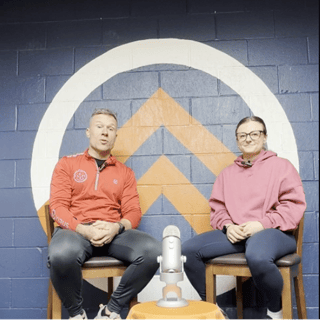
Speaker: Today we have Lexi LaFontaine on our show.
Speaker: Thank you, Lexi, for being a guest today.
Speaker: She's going to share some stories and how she started the gym, all that kind of good stuff, and we'll get to know you a little bit better and let people in the community get to know you a little bit better.
Speaker: Cool.
Speaker: Okay, so tell me a little bit about yourself.
Speaker: Where did you grow up?
Speaker: I grew up in LaSalle.
Speaker: Yeah, in LaSalle, always lived there with my family, my mom, my dad, and my two sisters, and then my dog, Pia.
Speaker: I'm 24 years old.
Speaker: L.A.
Speaker: Always lived in L.A.
Speaker: We've never moved.
Speaker: I've always stayed at the same house ever since I've been there.
Speaker: Well, that's all right.
Speaker: Yeah, there's some continuity there.
Speaker: Cool.
Speaker: Now, where did you go to school?
Speaker: I went to school, like, grade school.
Speaker: Sure.
Speaker: So grade school, I went to Sacred Heart.
Speaker: It was, like, two blocks away from my house.
Speaker: So it was easy.
Speaker: We always walked to school.
Speaker: And then high school, I went to Sandwich Secondary School.
Speaker: And then I went to St.
Speaker: Clair College for about one year in the fitness, health, and promotion program.
Speaker: Yeah, that's awesome.
Speaker: Yeah.
Speaker: I think that just circling back to the grade school thing, like being able to walk to school is really underrated.
Speaker: Like my kids ride the bus.
Speaker: I love if they'd be able to walk because I remember when I used to walk to school as a kid, like there's some cool conversations you have, you see stuff, you know, it's a time to chat, be away from parents, be away from supervision a little bit.
Speaker: I think that's something that it's missed in today's world.
Speaker: I loved walking to school.
Speaker: Everyone's worried about this and that, but I think they're,
Speaker: Kids need a little bit of freedom.
Speaker: They need a little bit of freedom to grow.
Speaker: Cool.
Speaker: Yeah.
Speaker: Okay.
Speaker: Did you play any sports when you were growing up?
Speaker: It was like,
Speaker: dance kind of a sport of course it is yeah i mean i know some parents that pay a lot of money for competitive dance so yeah we'll call it a sport sport yeah i did dance yeah um i danced at kathy's dance studio did hip-hop jazz um tap ballet tap was probably my favorite was your favorite yeah that i did didn't really wasn't very much of a ballet like person but tap and hip-hop were my favorite i did that with my um
Speaker: My older sister.
Speaker: Cool.
Speaker: Yeah.
Speaker: Do you still have your tap shoes?
Speaker: I do still have my tap shoes.
Speaker: Christmas party's coming up.
Speaker: I don't know if they'd fit me, though.
Speaker: Christmas party's coming up.
Speaker: That'd be pretty fun.
Speaker: Okay.
Speaker: How long have you been doing CrossFit?
Speaker: So I've been at the gym for like five years now.
Speaker: Crazy.
Speaker: Yeah.
Speaker: I still remember when you started.
Speaker: That's five years.
Speaker: They go by so fast.
Speaker: I say this every time I have a guest on here.
Speaker: It's like eight years, five years, six years, and it feels like yesterday.
Speaker: Yeah.
Speaker: That's awesome.
Speaker: Okay.
Speaker: How did you get started?
Speaker: What prompted you to start CrossFit?
Speaker: Was there a specific thing?
Speaker: Like, was there a reason you started?
Speaker: So I started CrossFit because I was like a previous opioid addict and I wanted to find a different out.
Speaker: I had to kind of get rid of all of my old like like people that I was hanging out with and being around and I needed some sort of new healthy addiction and my therapist that I was going to at the time she mentioned
Speaker: here and said you should go see John and talk to him and like meet up with him and I was really scared to come into the gym especially at that time because I was like fresh fresh in recovery and I was like debating between a normal gym like just like a commercial gym or like a CrossFit gym and I've never been to one so when me and my mom we came in here I talked to you and I was like I was like really scared because everybody's doing like rope thing climbing you know what I mean
Speaker: And like my mom was like, well, did you want to like, did you want to do it here?
Speaker: And I was like, well,
Speaker: I'm like, I'm not, I'm not sure.
Speaker: My mom's like, yeah, we're just going to sign her up.
Speaker: We're going to do it.
Speaker: Like, I remember my mom like doing that push because she's like, saw like the community here.
Speaker: And it was either that or I went to commercial gym and like headphones and stuff.
Speaker: And that, that really probably wouldn't have helped me because I needed some sort of social aspect of it.
Speaker: So once I got started, I started with Steph, like do four, which I
Speaker: We did like lots, I remember lots of PTs to help me be comfortable to just even just movement and stuff like that.
Speaker: And like ever since like then, even like watching you, Zach, Steph and all the coaches, like coach, for some reason, just like found this like obsession, new obsession of like, I want to do what they're doing.
Speaker: yeah like and like my goal ever since i started here was like i wanted like i said the stuff like i wanted to become a coach here so it's like crazy how it's kind of making like full circle yeah because that was my like main goal and it really helped me um to find a new healthy addiction and like this this i think this like the gym kind of like saved me in a way because like whenever i had like an issue or even if i just like wanted to just chill
Speaker: or hanging out was having a bad day.
Speaker: Like any of the coaches I'd come here and just like, just let me hang out and just like talk.
Speaker: Yeah.
Speaker: If I like had an urge for like to go, to go grab or go somewhere that wouldn't be very good for me, like I would run here.
Speaker: And that was a perfect like out for me because like I was having such a hard time.
Speaker: So it helped me to create such a great new environment and community with people that we all enjoy doing the same thing.
Speaker: We all have the same goal.
Speaker: We're all trying to be healthy.
Speaker: like fit and we're all like cheering each other on.
Speaker: I never had any of that where I had so much support from so many people.
Speaker: It was, it was really great that I'm glad that I started.
Speaker: Yeah.
Speaker: Well, we're really glad you started too.
Speaker: So I just want to circle back on a couple of things because, um, you know, we've,
Speaker: I think that's an underrated aspect of CrossFit and CrossFit community.
Speaker: And it's starting to come out a bit more where CrossFit is doing a lot of stuff with groups in recovery.
Speaker: Like, you know, we've done stuff with the Phoenix in the U.S. and they're a huge organization that helps people in recovery.
Speaker: They just need 24 hours of sobriety to come and attend some of their programming.
Speaker: That's part of it is that, you know, it's great.
Speaker: You know, it's hard enough to get
Speaker: clean or be in recovery.
Speaker: But if you don't have anybody, like you said, to talk to, to hang out with.
Speaker: Because you have to get rid of those people.
Speaker: Right.
Speaker: You have to, you pretty much have to start over and you, and you either choose, you know, being alone and just kind of hanging out in your house or hopefully find a community that welcomes you in and says, yeah, you know, let's whatever, let's just go and work out.
Speaker: Let's have fun.
Speaker: And I think that's something that, that is, is really underrated about our community, our community, CrossFit community in general is,
Speaker: we don't really care what's gone on or what you're doing.
Speaker: You know, as long as when you're here, you're a good person, you contribute to the community, right?
Speaker: And you kind of integrate yourself that way.
Speaker: I think that that's really, really cool.
Speaker: I'm really happy you shared that story because that's part that not a lot of people get to hear about, right?
Speaker: You know, they hear about weight loss and they hear about getting stronger and they hear about, you know, all that kind of stuff.
Speaker: But your story is another aspect
Speaker: that, you know, I know personally more than one person who's gone through a similar journey and, and CrossFit has helped them along the way too.
Speaker: So that's really cool, Lex.
Speaker: And then, as you said, coming for a full circle now, spoiler alert, you're a coach here at all CrossFit, which is, which is really, really cool.
Speaker: And you're doing a fantastic job running some kids programs and coaching classes.
Speaker: So that's awesome.
Speaker: Awesome.
Speaker: Okay.
Speaker: Um, do you remember your first class or your first session?
Speaker: My first session I was definitely with Steph.
Speaker: I think I remember I did like over like 200 PTs with Steph before I started in the class.
Speaker: I think I was just having a lot of social anxiety, like fresh out of recovery, obviously.
Speaker: It was like having a hard time like talking to people, socializing and stuff.
Speaker: So it really like Steph really helped to make me feel comfortable and like find my strengths and stuff.
Speaker: doing like i remember steph talked to my mom after we did so many pts together and i was i was doing so well i was progressing so well that she was like i think it would be good to get lexi into doing the classes and i think she should try the classes and i remember when i start when i i was like i was like okay yeah i'll try it and then i started to do the classes and like i like that even more
Speaker: like even more and like because like I was finding like friends like community and like the whole like aspect of it like with the mindset the question of the day like everybody getting involved engaging with each other so like that's where it kind of like filled that social aspect first it was kind of like finding myself first and that's what Steph kind of helped me do is or during our like personal training sessions then like in the class it kind of like kind of put it together with like
Speaker: my personal the stuff that i was going through personally and then um like the social aspect all together it kind of like i kind of just put together two and two and then i i really enjoyed the classes yeah and they've been like they've been great like they're they're so fun no they're they're my favorite way to work out i mean i i look back on training in regular gyms and
Speaker: I wasn't sure how I stayed motivated.
Speaker: I was not very motivated, but I love being in class.
Speaker: I love banter with people.
Speaker: I love talking to people.
Speaker: I love high fives, a little bit of competition, all the things that are in a class, the social aspect, just make it a great hour.
Speaker: I look forward to that hour and I know that I need to do it as frequently as I can.
Speaker: If I don't, then I miss it.
Speaker: And then I get a little grumpy.
Speaker: I get a little out of sorts.
Speaker: That one hour where I can hang out with people and just kind of, you know, throw around some weights and high five is super, super important for me.
Speaker: Yeah.
Speaker: Okay.
Speaker: What PR or accomplishment in the gym are you most proud of?
Speaker: Probably.
Speaker: Well, I miss my back squats, but probably my back squat.
Speaker: I worked really hard to, um,
Speaker: get to 200 when I PR'd my 200 pound back squat.
Speaker: Nice.
Speaker: That was, that was pretty sweet.
Speaker: Cause I had probably for about, probably about six, six months, I kept on hitting 195, like matching it so many times, so many times.
Speaker: And I was getting so frustrated.
Speaker: So when I hit that, that was probably like,
Speaker: It's just like that five pounds is like, I didn't think it can make a difference, but it just feels like 200 more pounds on it.
Speaker: I've been there before.
Speaker: And it's that, it always seems to be those rounded numbers, right?
Speaker: It's like a 200 or a 300 or whatever it is.
Speaker: And there's a mental aspect to that too.
Speaker: That five pounds, like you said, feels like 200 pounds because in your head, it's this barrier.
Speaker: And then once you break free of that or get past that,
Speaker: it seems like, okay, now I can start climbing again.
Speaker: It's one of those plateaus where you get here, then you do one of these for a little while.
Speaker: And then mentally you get strong enough to do it.
Speaker: And then boom, then you start going up again, you know, and that's, that's your fitness journey, right?
Speaker: And I know that right now you say you miss your back squats because you're going through some, some injuries.
Speaker: But what I really admire about you as well is the way that you continue to come to the gym, regardless of what's going on in your body, if it's not cooperating and you find stuff to do, which is,
Speaker: perfect, which is the perfect mentality that we want out of athletes is don't tell me what you can't do.
Speaker: Tell me what you can do and then we'll work from there.
Speaker: And you find that out yourself, right?
Speaker: So you're always in here doing things, you know, ring rows and planks and riding the bike and you're still as consistent with an injury as you were when you were injury free, which is perfect.
Speaker: That's great.
Speaker: Okay.
Speaker: If you could give your day one CrossFit self some advice, what would it be?
Speaker: Don't think, just do it.
Speaker: I like it, right?
Speaker: Don't overthink it.
Speaker: I think that's big.
Speaker: I'm a big overthinker, so I'd say just do it because I would always procrastinate and then my mom would make the decision for me so that I wouldn't procrastinate because I'd be like, oh, one more day to think about it.
Speaker: And just like, no, we're doing it now.
Speaker: Yeah, I think it's becoming more and more prevalent in today's society that we tend to overthink things.
Speaker: I don't know if it's social media.
Speaker: I don't know what it is, but...
Speaker: even I find myself now overthinking things that shouldn't, don't require that much thought.
Speaker: And it's like, should I do this?
Speaker: Should I not do this?
Speaker: And it's like, whoa, just do the thing.
Speaker: Right.
Speaker: And I think that's amazing.
Speaker: Amazing thing to tell people is, you know, people are a lot of times, as you said, they're scared and they're anxious when they come here.
Speaker: And it's, and that's a big step to get in the front door, but almost everybody says, you know,
Speaker: What's your advice to people who want to try CrossFit?
Speaker: Just try it.
Speaker: Just try it.
Speaker: Just try it.
Speaker: Because they do.
Speaker: They overthink it.
Speaker: What if I don't know how to do the movements?
Speaker: What if I look silly?
Speaker: What if no one remembers my name?
Speaker: All those things.
Speaker: But you know, once you walk in the doors, right?
Speaker: Yeah, that's the biggest step is just getting through the door.
Speaker: Yeah.
Speaker: It's hard to come in, and we appreciate that.
Speaker: That it is hard, but we just say, once you get here, we'll take care of you.
Speaker: We will totally 100% take care of you.
Speaker: Yeah.
Speaker: Okay.
Speaker: Has CrossFit helped you in your daily life any way?
Speaker: I mean, obviously we've gone through it, but can you think of any examples where you've utilized, you know, strength from CrossFit or mindset from CrossFit or anything?
Speaker: smart like even just like the shelves because they have a lot of like when I used to be on the stock team there like dog food bags and stuff so it's kind of like sandbag like carry or like stand by clean I'd be like every single time I go to go pick up one of those bags I'm like and then pick it up like pick it up so like probably like any like lifting stuff as well yeah um
Speaker: probably what I've used in everyday life I'd love to see a video of you doing that because you're a really good mover and you're very conscientious about the way you move and I'd love to see you like approach a 50 pound bag of dog food and just like grab it you've you've seen obviously you've seen it on Instagram where the people do that where they get into like Costco and they're picking things up but they're yeah doing it like you're in the gym I love it
Speaker: We need a video of that.
Speaker: My co-workers, right before I said, they're like, you're good.
Speaker: Lexi, before I'm going to pick it up.
Speaker: I said, just give me a second to pick this up.
Speaker: I'm just putting my belt on.
Speaker: I'm just brazing.
Speaker: Nice.
Speaker: All right.
Speaker: Do you have a morning routine?
Speaker: Yes.
Speaker: Yeah, I usually, so I usually, the one thing that helps me in the morning is that the night before, I like to get everything ready the night before so that when I wake up in the morning, it's easier and I can just grab and go.
Speaker: Which is to like pick my outfit before I go, like set up if I have any medications or like my breakfast, like my skincare, all that.
Speaker: I like to set it up all before so that I can just get up and go.
Speaker: I don't have to, because usually...
Speaker: I like have a hard time waking up.
Speaker: And so I just end up just setting it all up the night before.
Speaker: And then so it's just like one, two, three, I can just do it all, all the things.
Speaker: I love that.
Speaker: I love that.
Speaker: I basically, the only thing I set up the night before is the clothes I'm going to wear the next day.
Speaker: But I think that makes it so much better to wake up and know that everything's taken care of.
Speaker: And I've seen senior notes when you prepare for class, you're a very prepared person.
Speaker: Yeah.
Speaker: You know, you've got,
Speaker: pages of notes for one class and it's awesome.
Speaker: So I think that that is something that I would love to incorporate, not only my own routine, but also my kids as well.
Speaker: They do a little bit of that now.
Speaker: They're starting to learn.
Speaker: The better they're set up the night before, the longer they can sleep in the morning.
Speaker: Yeah, well, that's the same thing for me.
Speaker: And sometimes I was really bad with time management before.
Speaker: So like getting everything ready the night before really helped me.
Speaker: And like, for some reason, like,
Speaker: We have like, I have a laptop and I have all that stuff and like, but just like typing, it doesn't like, it doesn't really stick in my head for me.
Speaker: I really liked, I really, I love to write and I love to write all my notes, like every idea I have because I can just like write it out and like,
Speaker: on the computer if I'm typing and then or I go backspace you know I want to like jot it all down like scratch it out and then again like you know I mean oh this one didn't work and then it just it just helps me to be if I have like a set like plan on how like the class is gonna run yeah like for example if like I'm like setting up how like the the class is gonna go I just have like an outline where if like I get lost
Speaker: that I can go back to it and if I need to change something I can change something like quickly but like just looking back at that plan helps me to really change that quickly if I don't have anything to see I kind of get a little bit flustered so that really helps me to really get back yeah they say there's there's a connection there's a much more of a connection when you physically write something out then if you type it like you're more likely to retain that information more of a mind-body connection because you are
Speaker: you know, when you're typing, you're making your body do something as well too, but, but being able to see it all happen before you.
Speaker: And I'm old enough that I took notes in university and school, you know, by hand, because it wasn't really another option, but I don't think I could go back to, I don't think I could use a computer to take notes.
Speaker: It just doesn't seem as real as silly as that sound.
Speaker: It doesn't seem as real.
Speaker: Like, and I love your notebook full of notes and then you can just refer back to it.
Speaker: Right.
Speaker: Yeah.
Speaker: I love that.
Speaker: It's really cool.
Speaker: So that kind of,
Speaker: Your morning routine kind of showed us what your night routine as well is.
Speaker: Yeah, it's setting up for the morning.
Speaker: Ready?
Speaker: Take as much sleep as I can by setting up the night before, which is perfect.
Speaker: Okay, some rapid fire questions.
Speaker: You ready?
Speaker: Yeah.
Speaker: Favorite movement in the gym?
Speaker: Favorite movement in the gym?
Speaker: Probably, can I pick my top two?
Speaker: Power clean and back squat.
Speaker: Yeah.
Speaker: Yeah.
Speaker: Yeah, I agree on the power clean.
Speaker: Back squat, maybe not so much.
Speaker: I love squats.
Speaker: Yeah, that's my own personal thing.
Speaker: I love a good power clean.
Speaker: Okay, what's your least favorite movement?
Speaker: Probably thrusters and gymnastics movement, which do like chest bar.
Speaker: Tough.
Speaker: Yeah.
Speaker: Yeah, I know.
Speaker: Chest bar are a tough movement.
Speaker: Okay, you prefer morning, afternoon, or evening classes?
Speaker: It's different for me because I remember before I used to be like a big morning person where I would come in the morning and then I'd be like kind of middle of the day and then afternoon.
Speaker: But lately I've been like afternoon, like later in the day, which is, which I like because there's, um,
Speaker: The 5.30 classes always bump in.
Speaker: So I think I get to talk to a lot more people in the afternoon.
Speaker: But I do really like the morning classes as well.
Speaker: That's a good point too.
Speaker: Each class time has a different vibe to it, right?
Speaker: 5.30 a.m.
Speaker: no one wants to talk because they're probably still sitting there.
Speaker: And then 5.30 p.m.
Speaker: is a party in here, right?
Speaker: You've got 5.30 p.m.
Speaker: class going on.
Speaker: You might have kids class going on at the same time.
Speaker: There's the crossover for the 6.30 class.
Speaker: The place is packed.
Speaker: The music's going.
Speaker: Yeah, it's a pretty classic meme where you have the morning people, you know, like this and then the 5.30 a.m.
Speaker: And then noon's like a mixture of both.
Speaker: It can be, yeah.
Speaker: It's like a mixture of both where it's just like people that are very nonchalant.
Speaker: Yeah.
Speaker: The 930 has become a busy class at the AM as well too, which is really cool to see a good group.
Speaker: Okay.
Speaker: Long endurance workouts or short sprinty workouts.
Speaker: Yeah.
Speaker: Yeah.
Speaker: You know, it's so funny.
Speaker: I think I mentioned this before that I prefer probably a long endurance workout now just because I'm scared of like short sprinting workouts.
Speaker: Yeah.
Speaker: Because they just tend to hurt a lot more.
Speaker: They do.
Speaker: And my desire to hurt has gotten less and less as I age up, right?
Speaker: And I'm just like, I'll just settle into a nice pace as opposed to like push myself to the red line.
Speaker: Yeah, I agree with you.
Speaker: Okay, what's your favorite indulgent food?
Speaker: So if you're going to indulge and you're like, I'm going to have this.
Speaker: Probably donuts.
Speaker: Donuts.
Speaker: I love.
Speaker: Steimars donut, I love.
Speaker: Like, every single time I go in there, I usually get their bread.
Speaker: And I always say that I'm going to get one and I end up eating the two.
Speaker: Those are serious donuts.
Speaker: Like, you have a Steimars donut and you don't have to eat again for three days.
Speaker: And now, you know, we've got that donut connection in the gym.
Speaker: Louise works at Taurus Donuts and she'll occasionally bring in some donuts, you know, and we get to sample some of those crazy fancy donuts.
Speaker: Yeah.
Speaker: All right.
Speaker: What's your favorite healthy food?
Speaker: I love blueberries and bananas.
Speaker: Those are probably my top two fruits lately.
Speaker: I think that's probably I love fruits.
Speaker: I'd have to have a top five.
Speaker: But bananas, the only cheap thing in the world anymore.
Speaker: And then blueberries are packed with antioxidants and just really delicious.
Speaker: Bananas are so easy.
Speaker: Even in the morning when I have to get up and go to work for 6 a.m., ground banana.
Speaker: Just so easy.
Speaker: What would be your top five fruits?
Speaker: Probably banana, blueberry, raspberry.
Speaker: I like watermelon.
Speaker: Yeah, I was going to say, don't forget the melons.
Speaker: Don't forget the melons.
Speaker: Okay, what's your favorite pre- or post-workout snack?
Speaker: Well, pre-workout snack would probably be, well, I love egg whites.
Speaker: I like egg whites where they usually do ham and feta cheese.
Speaker: That's been my go-to.
Speaker: Like an omelet?
Speaker: Yeah.
Speaker: Like I make it into like an egg white like omelet and like my family thinks I'm crazy because I love that so much.
Speaker: I could eat that for breakfast, lunch, dinner.
Speaker: You stick with what if you find something good, just stick with it, right?
Speaker: Yeah.
Speaker: Perfect.
Speaker: Okay.
Speaker: What's your favorite way to relax?
Speaker: My favorite way to relax lately, it's been the sauna up here.
Speaker: It's, I forgot how much I love the sauna.
Speaker: Yeah.
Speaker: Just like to relax in there.
Speaker: It just like helps calm, relax my muscles.
Speaker: Um,
Speaker: Yeah, and it's a good way to get a little bit of a sweat.
Speaker: Yeah.
Speaker: There's research that says having a sauna is like doing zone two or low-intensity cardio because your core temperature gets up, it gets raised, you sweat.
Speaker: So all the things that happen when you're doing quote-unquote easy cardio, same thing happens in a sauna.
Speaker: Another good thing that saunas can be used for, besides the fact that it's minus 14 out today and it's nice and warm in there, but...
Speaker: it's a good way to acclimatize yourself too if you're going to be working out in the heat, right?
Speaker: So sometimes if someone's got a run or a workout that's outside in the summer, you're going to hit in a few saunas before, you know, you get there.
Speaker: The heat acclimatization happens fairly quickly.
Speaker: So you can do it in a week.
Speaker: And then by the time you get to your workout or your run or whatever you're training for, you know, your body is kind of set up for that because it can really –
Speaker: It can really get your heart rate up a little bit too.
Speaker: And like, I've noticed too in there where it's like getting really like getting really hot and I'm like, Oh, I like, I can't like be in the sun anymore.
Speaker: I just kind of like, that's what really helps relax me is to find my breath and like calm, calm my breathing down.
Speaker: Cause that's what I feel like sometimes when I'm doing cardio workouts, I'm like,
Speaker: in the middle of it and I'm like, I can't do it anymore.
Speaker: Like I can't do it anymore, but I can still do it and I just need to find my breath.
Speaker: And that's what the sauna is helping me do it is like to find my breath.
Speaker: And since my injury, I haven't been able to do much like weightlifting, but I've been doing more cardio and I feel like I've been able to like,
Speaker: sustain like the longer endurance workouts and like find my breath without like giving up super quick.
Speaker: And then like being really like heavy out of breath where I like just kind of like stop.
Speaker: So it's like, I just kind of like find my breath and I can still keep going.
Speaker: I love that.
Speaker: That's a great mindset.
Speaker: Find your breath, right?
Speaker: Cause finding your breath can help you whatever in a workout, in a stressful situation, you know, whatever that is, just find your breath and then center yourself again and then breathe through it.
Speaker: Perfect.
Speaker: I think it's a good way to end, Lex.
Speaker: This has been awesome.
Speaker: Thank you so much for coming on.
Speaker: Thank you, John.
Speaker: And sharing your story.
Speaker: No problem.
Speaker: And yeah, we'll see you around the gym.
Speaker: Oh, yeah, for sure.
Speaker: Okay.
Speaker: Bye.
Speaker: Thank you, John.
Speaker: That was awesome, Lex.
Speaker: Yeah.
Speaker: That was fun.
Speaker: I like those fun questions.
Speaker: Yeah.
Speaker: I think it's cool.
Speaker: Like it's just some people get a little bit.
Speaker: Just.