Craftsmanship as Resistance
00:00:05
Speaker
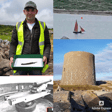
Well today we're here at the Galway Hooker Sailing Club to talk to a man who's a boat builder. His name is Sebastian Cassini and as his tagline he has Craftsmanship as Resistance.
00:00:20
Speaker
Now he's not just any boat builder, he's a wooden boat builder which is kind of a dying trade and many people would say it's useless. So we're here to find out ah about what it is Sebastian is resisting and what it is he gets from his trade and his craft.
00:00:39
Speaker
So join us as we go in and talk to Sebastian.
Journey to Wooden Boats
00:00:42
Speaker
Sebastian, thanks for talking to us. It's a pleasure. No, it's good to see you It's good to see you. So you're a boat builder and you've ended up here in Galway working on the Galway hookers. Yeah.
00:00:55
Speaker
Why don't you tell us about the start of your boat building journey? Where where did it begin? Did you always love boats? How did they start for you? Well, it's kind of a weird story because I i come from Italy. It is a country with a very long and strong like boating tradition. But so yeah, I come from the only region of Italy that doesn't have access to the sea.
00:01:16
Speaker
So of the insular part of the country, we come from from the mountains, from Umbria. So like straight in the middle. straight in the center and it was always a big issue for for us in the past not to not to have this connection with the with the sea. brought to like big wars with the Vatican State for the for the control of salt and and a lot of other things. So now I grew up like very far from the sea and very far from boats. I never thought about like crossing salt water like yeah on
Curves Over Straight Lines
00:01:44
Speaker
myself. so um I was in Norway when I stumbled upon like my first wooden boat. And you know by the time I thought it was something very much related that ended you some 200 years ago. And what were you doing in Norway at the time?
00:01:59
Speaker
I was working as a carpenter, but in buildings. So I moved there because of, yeah, i had the opportunity to to go for a couple of summers and I just enjoyed it very much. And then Corona hit, so I kind of got stuck there.
00:02:13
Speaker
And suddenly, yeah, i was I was living there. And at a certain point, just walking around, I found myself in front of my first tharing, they call it. some Some traditional fishing boats, very small boats, very similar to the to the Viking ships, but for two people.
00:02:28
Speaker
And when I saw that, my brain just ah just went off. was i was but I was quite bored. I tend to get bored very easily. And working in buildings is all about you know straight lines and 90 degrees angle. You can get to 45 degrees if you really want to stretch things around. but it doesn't go much more than that. So like when I saw a boat and there are no straight lines and just like, you know, elegance of shape, I just was like, huh. It was kind of aesthetic that caught you first. It was, hang on, I'm working with all corners and straight lines. Look at this smooth, sleek looking, shapely thing. Yeah.
00:03:05
Speaker
That's what first kind
Learning the Craft in Norway
00:03:06
Speaker
of captured you. Absolutely. So I started just hanging out in shipyards to to learn more about it. And, uh, I would volunteer there, I would go and and I would just help people working on their own boats and I would the scrub hulls and do the the the most basic works, the most dirty stuff. yeah What they would allow me to do. And started at the bottom kind of. Yeah. And at a certain point I met my first teacher and he just yeah he looked at me and he saw that there was
00:03:36
Speaker
I guess he saw a little bit of potential and he just said, okay, like if you want to take this thing seriously, let's start learning from the basis. And yeah as slowly, as slowly, I just learned more and more.
00:03:47
Speaker
And so you've had a few teachers. It wasn't just that first guy, is it? you've you Did you progress to different teachers? I mean, I i look at myself, like I think i'm I'm learning every day. so yeah my My list of teachers is very long, but ah mostly there have been like yeah two people that have been following me and giving me most of the information.
00:04:07
Speaker
Did you learn do most of your your apprenticeship? Is it an apprenticeship? would you Yeah, to to some extent. i went a very unconventional way, so I don't have any sort of, like ah nobody ever released me like ah a paper or I didn't do any exam.
00:04:23
Speaker
I just spent a lot of time doing this thing. yeah and um but but But still, when ah when you call yourself a boat builder, yeah when when you first came to Galway here yeah and you came to this workshop,
00:04:38
Speaker
and they heard you were an actual boat builder there was a lot of excitement i there was there was because we are not many left yeah we are not many left and Ireland is kind of losing like this this knowledge and tradition so fortunately the club could rely on ah on um on ah on a local boat builder until now But you know, like ah yeah he has ah nephews and he has like his own couple of boats, so he he would rather spend his time somewhere else. He's been fixing and building boats for the last 40 years. yeah yeah i didn't ask by good time probably. I had a question I was going to ask you I was going to ask, when did it stop being a job and become something else? But now I'm thinking, was it ever a job? I mean, was it jobs you were kind of running away from into something that you could be passionate about, something that you enjoyed and you loved doing? I mean, this is like, ah for the last seven years,
Wooden Boats in Norway and Ireland
00:05:31
Speaker
this has been my nine to five. So, you know, it's what pays my bills. it because It's what like pays my rent. yeah So, it is very much my my job. Fortunately, in Norway there is still like enough ah
00:05:43
Speaker
ah enough demand, there are enough wooden boats around for me to actually you know work on it on ah on a daily base. i'm I would say I'm slightly fed up with two Norwegian winter so I take the chance in winter to move around and learn new techniques, work on different kind of boats and and learn more.
00:06:04
Speaker
But Norway is very much like a country where still this this kind of trade is is going on. and Is that coming from the their Viking history? Yeah, well, from the Viking history, but Norway is a country that historically is very much water bound.
00:06:21
Speaker
until ah Until the 70s, there wasn't really ah a decent system of roads in Norway. So, you know, on one side you have a sea that is not the most friendly, but it's there and allows you to move a lot of... ah weight a lot of material around if you need and move people. On the other side do you have like very steep mountains you know and ice on top and you know and and and no roads. yeah So Norway had a very strong tradition with with the sea since the very beginning.
00:06:52
Speaker
So for them it's very normal. Like first thing you learn to bring around is a boat and then you you need how to you learn how to ride a bike. So that's the way it goes. You'd think that Ireland being an island, that we'd have some similar tradition that keep that kept going, that wouldn't be dying out as it seems to be. But ah there seems to be very little boating in Ireland, if that's a way to say it Well, for sure there is, like the the tradition is there, like the feeling is there. You see it when you go to Condemaro, you see when you go to the Aran Island and you see how yeah the people from there speaks about their boats. yeah they yeah but There is passion, there is feeling, there is like a deep love that still you can feel.
00:07:32
Speaker
around but you know my country is also one with quite a long cost and still i've seen like our tradition being completely destroyed in the last 50 years yeah so now boating is a very you know expensive hobby that's what stops most people from from from approaching it and you know it's it's expensive to learn to sail it's expensive to have a boat to maintain it to have a place where to store it So um I think we are missing kind of the middle gap that goes around like this kind of boat, like small dinghies, small vessels that can be taken out of the water, you know, and like that kind of boats that kind of boat they allow people to to get more of a connection with the sea in first place. Then you go to a bigger boat. We we kind of miss that middle ground. And so yeah it's ah it's it's not easy. It's not easy to get out in the water. So it's very important also for club like this to be around.
00:08:28
Speaker
a place where you know you put the effort, you put the work to fix the boats, to take care of them and in exchange you have the possibility to go sailing.
Respect for the Sea
00:08:36
Speaker
and that's That's the prize. Yeah. yeah It's the prize but it's also like the possibility and you know like um We had a small chat before, so I believe in this kind of like very, you know, on the connection of ah of things. And if you go out and you experience the sea, you cannot look at the water with the same kind of a of careless kind of approach. Like if if if you leave the sea, you're going to be more respectful towards it. So I'm concerned on the way that it's used and the way that it's misused.
00:09:07
Speaker
So I think it's just important for people to to get closer to this element. So it's ah it's it's very much it's very different from most of us, me being an urban city dweller, I drive past the sea all the time, I'm right on the coast.
00:09:21
Speaker
but I don't have the same appreciation as somebody who's been out on a boat. And not just a boat, I mean, being out on a ferry that doesn't really move much is different from being out on a couric or a small boat like that. You really get to feel the sea and and and and connect with the sea. yeah um Wood.
00:09:41
Speaker
you Wood is your main material that you use. ah Why not plastic? Why not metal? Why is wood what you are passionate about? What grabs you? The aesthetics of it, everything.
00:09:57
Speaker
I think initially was just the fact that I had more experience with it. So, working, i was already a carpenter and and I knew how wood could be used. And in the object boat I just found ah a new challenge because you just ah use you use wood in a very unconventional way for what are today's standards. So that was what fascinated me at the very beginning. Now, like, that discourse got to be, like, way wider.
00:10:24
Speaker
Because what I find ah amazing about about all like the, like, you know, about my daily work is um that it's... it could be on everybody's possibilities to try build a boat with wood.
00:10:39
Speaker
So I don't think glass fiber or or steel is as friendly okay to to a beginner. So that's part of it. And... Yeah, just going back to this whole connection between things, know, like the more I work with wood, the more I'm concerned about like where wood comes from, where wood, like how it have been treated, i would have been or sourced. And so now I'm concerned about like the forest that we have around. I'm concerned about the woods because, you know, it needs to provide like wood material and to provide what we need to build boats. You need to have a very like long distance kind of thinking. You need to to to be, you know,
00:11:18
Speaker
It's kind of a cliché thing, but you need to plant today the trees that are going to be ready in 80 years to build boats. And it's really like, it's not just ah ah you know a poetic way of looking at at things. it It is the reality.
00:11:32
Speaker
like I don't see any care put on ah on ah on a management of of the forest and of the woods that is like that ah would provide good materials for the future.
00:11:42
Speaker
And this is my concern like when it comes to boats. but you know we also Trees, besides giving us wood, they also give us you know the air that we breathe and and they they hold like yeah mud from sliding down and and submerging cities. you know like it's um it's a wide ah It's a wide issue.
00:12:01
Speaker
so that that user would then um it connects you to something larger. connect It connects you. It's not just a material. It connects you to a larger kind of um ecosystem.
00:12:11
Speaker
Yeah. And and and and a long term understanding of not just the material, but what brought about the material. Yeah. ah how
Sustainable Wood Selection
00:12:21
Speaker
How would, yeah let's say I wanted, okay I have a very rudimentary understanding of wood. So what's the difference between planting a tree specifically for a boat and say just picking any tree, cutting it down, this wood will do?
00:12:38
Speaker
Which is what i what I do. I wouldn't be able to see what you see in timber for specific uses. Yeah, i don't i don't think it's... um I don't think it's it's the real question. The thing is that nowadays it's very hard to find the trees that are 150 years old. like you know yeah and And cut them light-hearted is not there's not something that you can do. yeah it's not really the the It's not only about the material that you get at the end of the process of repair. Because making back in the days they would prepare would like specifically.
00:13:12
Speaker
for boats. They would just like, you know, when it comes to pine trees and spruce, so they would just like trim the branches on the lower part of the of the tree and just leaving the one on the top. So like the the tree would grow grow like as fast as possible.
00:13:28
Speaker
and it wouldn't have many knots due to the to the branches along the the stem. So like that would provide like better better planks for planking the boats. But this is quite ah of a stretch. The problem is that no now there aren't like old forests where you can source properly grown wood, like yeah tight grains and and you know and and ah a tree that took ah its time, its proper time to grow.
00:13:54
Speaker
And has ah where has all that wood gone? has Has it been all put into boats in the past or...? or Some of it for sure. um some of it for sure but um oh Depends, every country has a different history when it comes to that. Ireland was a rainforest at one time, I believe.
00:14:12
Speaker
Yeah. I'm not very comfortable, like very, I don't know very much about the history of Ireland itself, but for sure, like there aren't many forests left. I've seen charts like just showing how little ah no trees are left in the in Ireland. I think the like the the yeah like the years of occupation has had a lot to deal with that since ah what happened in Scandinavia is like most of the forests have been cut down and purposed to the production of ah of ships during the Napoleonic Wars and onwards. So like, you know Holland, that been a country of great sailors and great ships.
00:14:55
Speaker
Holland doesn't have the the forest to to to to just provide the wood to such an industry. So, like, Scandinavia has been, like, the sourcing point for that. And also England had a huge ah fleet, so yeah i wouldn't I wouldn't see the English not concerning themselves with cutting down all the forests of of Ireland. We blame the English for everything here anyway. So if if you want to just say the English, we'll we'll buy that. We're good with that. Yeah, but I think it's also quite realistic. I could see that happening. For sure, at a certain point, England started sourcing wood, like, from all over Europe where they could...
00:15:29
Speaker
find it. So ah there was a concern during the Napoleonic War, like in the in in the countries that they were the producers of ships, they would say, okay, now we need to stop cutting trees. It wouldn't be a concern for them to cut trees elsewhere, but it's very much our modern mentality as well. So, you know, but IKEA i' have been, like, dismantling, like, the the forest of ah o Sweden when they started their production. Now they source their wood in, ah they used to so source their wood in ah in Russia until the the last ah the last years. Recent events. Yeah. um the IKEA, we see IKEA as ah the ones who post us all our
00:16:09
Speaker
all our flat packed furniture. we get We get our tables, we get all the other bits and stuff. But when you see that stuff, possibly because your link and you you did the the link you have a wood, the connection you have with wood, you see back further and, okay, where did that wood come from? Yeah, yeah, yeah that's ah it's a different view of material, of the world and and how it's connected. Yeah, and I see so many, like, I see more I see more furniture of IKEA thrown away than the one I see you know being purchased. And so like you know all that wood is wasted. yeah
00:16:44
Speaker
And all pieces of furniture, all ah all wardrobes and stuff built like in 1800, 1900 are now pieces of ah of of history and they are very valued. And they're still good, they're still around, they still do their job.
00:17:01
Speaker
so how does How does this old wood, um I mean you showed me a piece of wood 120 years ago that that looked really solid.
00:17:11
Speaker
yeah How does this old wood stay so still like that, keep so well? It needs ah a whole line of production that that is devoted to prepare the wood. So our concern nowadays is just to have the material ready as
Traditional vs. Modern Wood Preparation
00:17:27
Speaker
fast as possible. So we toss it in kilns and you know like the forests are like 365 days ah a year we are cutting down trees and we are splitting them and and dry them. and And so back in the days ah you had to take care with, you know you have you had to put a lot of care and attention on how you do all these steps.
00:17:50
Speaker
So there were a specific time of the years when to cut the trees, there were a specific time ah of the years to dry. the wood because you couldn't just toss it in a keel, you had to do it outside or like on the structure just like devoted to that.
00:18:03
Speaker
So the humidity in the air, the period of the year was very important. The humidity in the air. Yeah. So not just for the comfort of the guys who were out doing it, but there was something about the material that the humidity in the air. Yeah, the whole point like on like the the main thing when it comes to to wood is that like ah the plant has water inside it.
00:18:22
Speaker
And this water is like is the weak point that on the long run, you know like a tree wasn't like... Mother Nature didn't make trees to be to to provide materials to humans.
00:18:34
Speaker
So once the the tree dies, it's the nature of things that is just going to rot and fade away. While what we are trying to do is just to get rid of the humidity that is in the fibers to allow the wood to stay, to maintain as long as possible.
00:18:48
Speaker
So How can you do that? Well, you can be careful of which time of the year you are cutting the tree. So, you know, in winter there's going to be less water in the fibers because there are no leaves on the branches. So there is no reason for this water to be in the fibers in the first place. So the tree doesn't do all that kind of operation. So winter is the time to cut it.
00:19:09
Speaker
But then you need to store it. And of course, it's going to be better to store it in summer where there is less rain. Talking about the rest of the world, not Ireland. Yeah, yeah, yeah. We've got plenty. But you know, summer is a better time to to dry the wood. and then you know like it so It all comes down to trying to get rid of as much free water in the fibers of the wood as possible.
00:19:31
Speaker
yeah But if you have to provide the wood to to IKEA to produce you know like that amount of material, you need to cut down trees every day of the year, you need to dry it every day of the year, it needs to be moved around the you know countries and sea and whatnot, and it needs to be ready to just be used as, you know,
00:19:50
Speaker
it would be easier to to build that kind of stuff out of plastic. They just need the straight fibers, they just need knots, they just need the they need wood. They are hungry for wood and they don't care like where it comes from or how it's harvested, how it's prepared. It just doesn't have to warp too much when they when they use it. So just toss it in an oven, it's going to roast it and it's going it's going to be ready to be used.
00:20:12
Speaker
It doesn't matter how much energy is going to be spent because that's also a concern. yeah know like a kiln like to to kiln dry wood is not it's not a a cheap process neither to produce heat i guess yeah and of course throughout the digital process we lose a lot of things that for us boat builders are as essential so if you look at a boat and all the round shapes that are there it's easy to understand that i'm interested in all the weird pieces of wood that I can find. So all the crooks, all the branches, all the connections like with the roots where like where these lines are take a twist, for me are essential pieces that I'm going to use to to follow the shape of the boat when I'm building it.
00:20:56
Speaker
okay All this stuff is just on the way of mass production. So nowadays it's ah it's very hard to go to a sawmill and find these pieces. So I need to harvest them myself most most times.
00:21:08
Speaker
So like the IKEA idea or the the mass manufacture idea, like if they want to see if if there's moisture in the wood, they just use a moisture meter and and walk away. And that's kind of all the the interest that they have. This is just this immediate piece of knowledge about this piece of material in front of them.
00:21:30
Speaker
But you're looking at it and you want to know the old way. You want to know the seasons that it was cut down in, how it was stored. And you have use for the natural shapes that come in the woods. You don't just want to put it into a pulp or force it into the shape that's useful or that's pragmatic for a desk or whatever. yeah So again, it's kind of shown your deeper relationship with the material. yeah You know, it is.
00:21:56
Speaker
Yeah, it's ah it's unavoidable. It's un unavoidable. yeah Yeah. it's ah it's it's It's also a beautiful way
Community and Volunteering
00:22:03
Speaker
to live. It's... it's a I heard, ah she was an old hippie lady and and she was a philosopher, but I heard her saying something. She said, um yeah every time a human relationship comes apart, it creates a gap for capitalism to fill. And this is what we call gaps in the markets, is actually breakdowns of human relationships.
00:22:24
Speaker
But I think it something you're describing is the gaps between human and the rest of nature. have also become gaps in the market for capitalism to fill. And then of course it's incentivized to keep us away from that stuff because it can sell us what we used to get yeah from nature.
00:22:43
Speaker
Yeah. Yeah, i I sense a lot of that stuff in in your work. You're not the only passionate boat builder. There's a lot of volunteers, and you were once a volunteer yourself. yeah There's a lot of volunteers. I met a lovely fellow with you last time, Ed.
00:23:01
Speaker
and they come And they come from all over the world, and it's not just the the wood boat projects. Here, it's the wood boat projects in other parts of the world. and You've been on a few, I imagine. Is this the case everywhere? There's volunteers who, instead of going on a holiday to Haiti, or not Haiti, maybe Hawaii might be a better destination, now but instead of going on a holiday there, they choose to use their their month or their two weeks to come...
00:23:24
Speaker
and work on a board. Very much so. Very much so. It's all a word when it comes to traditional vessels nowadays, the whole industry relies lot on just the the love and passion of ah of people big time. um It's very common on tall ships to have like most of the most of the crew is going to be made of volunteers. yeah So just the the most technical people and the same thing happens in the in the shipyard.
00:23:54
Speaker
so I'm gonna be in Sweden in two weeks time to work on one of the biggest wooden ships in in the world.
Growth Through Shipbuilding
00:24:03
Speaker
And yeah, like beside the beside the really the people that they have the knowledge and the responsibility of the project, everybody else is volunteers.
00:24:12
Speaker
That's it. that's it's It's amazing. It keeps the ball rolling, yeah. It's amazing too because it's not, um normally when you hear volunteering things like this, it's it's mostly about charity work. But this is not about charity work, it's it's it's about building something together. and Do you think it's a love for the boats themselves or is there something else people are getting from this?
00:24:36
Speaker
My personal experience when it comes to to traditional vessels in general is like the the boat is um it's a weird organism. It really has the power to bring people together. Like there is this ah this old, really like... ah almost this ancestry thing for which like when you are on ah on a boat together like humanity is just drawn to what is most important that is like to keep the boat afloat so I think what draw draw like beside the how cool just the boat is just people are drawn to it for the experience and yeah and everybody goes home with ah with a different kind of understanding of ah of priorities really it's um
00:25:16
Speaker
It's a wonderful experience and one that I would... another we We work a lot with the with the with the youth, with ah with young adults, and and for them it' it's an incredibly important experience.
00:25:29
Speaker
Also when when we are, also a sailor, besides being a boat builder and working on the on the ships gives like that sort of opportunity. It's almost a military kind of ah environment because you know you you get orders and those orders needs to be you know followed as quick and as precisely as possible for the final ah goal of just bringing like this massive level piece of wood and and en canvas forward, like just split the waves and and and and go fast and go places. yeah
00:26:04
Speaker
And um just ah it just brings a lot of energy to the world, ah to the world experience. And it teaches, ah addition teachers especially the youth, like a lot of um you know consistency and and rigor and and method and a lot of important stuff to the final purpose of of satisfaction.
00:26:23
Speaker
of ah of of doing something together that it wouldn't be possible like on the in the hands of a single person but you know if we stick together and we do it together it's ah it's suddenly reality. And and and really on a boat, the stakes are so high that you work together in a compatible way and and and because boats sink, you know? So, them stakes aren't really so high for for kids now. We've made the world so safe and sanitized, um largely, at least where where we live most of the time, that being on a boat really creates a different environment. All of a sudden, oh no, you have to do it or this thing can sink. yeah
00:27:03
Speaker
I think it's a responsibility comes also like in ah in a matter of meters. Yeah. So you feel a lot of responsibility when you are, you know, 20 meters high on ah on a mast, for instance. yeah yeah it's it's It's tough work, you know, like most of the times we don't have, ah we we cannot use safety equipment when it comes to like dealing with the rigging of tall ships.
00:27:26
Speaker
So, coming up and down the mast is still something that you need to do free of ropes and and anything that can, you know, can be on the way of of your free movement. So, you don't,
00:27:39
Speaker
you don't secure yourself until you are static in a place and you have to do a work but you know climbing up and down a mast is something that happens under 20 knots of wind and yeah and if you fall from 10 meters you're falling on a steel deck it's not you know it's no joke yeah yeah there's no next you are responsible for yourself and it's ah you know And as you say, after being pampered on an environment that never puts like yourself in in any danger, like it's it is quite a shocking experience. It's a wake-up call. yeah listen Listening to you speak, I get a sense that, ah especially the kids and stuff like this, um the imagery I have have you ever seen Avatar?
Connection with Nature
00:28:19
Speaker
I think I've seen the first movie when I was quite young, yeah. Well, they... the I don't want to call them aliens, but the creatures in it, they have a tail, and they hook this tail up to nature in this kind of synopsis, and they get...
00:28:33
Speaker
they they get a feeling for nature around them. That seems to be what kind of you're given to children when you bring them out in a boat, when you show them, tell them about the wood and the connection and where it's come from and how this can bring you onto a sea and and then their connection with the sea. There's a real connection that that is coming from this stuff to to nature, to ma material.
00:28:55
Speaker
yeah If there's even a difference between nature and material. Yeah. and
00:29:02
Speaker
Something I was thinking when you were saying about hippie lady, philosopher not, the thing is really don't
00:29:11
Speaker
i really don't like A spiritual point of view over this topic is something that I get as a by-product. But like on the first on on the main point I'm a very practical person, I'm a craftsman. and that's what i That's where my interest lies. yeah And all this feeling of connection and you know and and symbiosis between humans and nature and isnt that is for me a very practical and very pragmatic.
00:29:37
Speaker
kind of thing But of course, like my my brain and also like like my like division of ah of the of the kids that they experience both building with us or adults. mean, these days I'm working with the members of the of the club and they are yeah grown men and and women and you know like the the effect is just the same.
00:29:56
Speaker
it's just ah It's unavoidable to grow some sort of of sensibility for what you're doing.
Influence of Geography on Design
00:30:04
Speaker
An example, just ah just to to clarify what I'm talking about.
00:30:09
Speaker
Norway is a country with very little soil. It's mostly stone. It's stone and then on the top there is like a tiny layer of dirt that have been like piling up through the millennium. So trees, they don't have the chance to go looking for water very deep in the ground.
00:30:25
Speaker
They just like, the the roots of the trees are gonna move ah on that you know very surface level of things. so When building ah different kinds of boats, when it comes to to the front line of the boat, so where the keel meets like the very front of the boat, that line of intersection between like the water and the vertical part of the boat is going to have a different pitch, a different inclination, depending on on the design that you're going to build.
00:30:54
Speaker
So in Norway, that part is normally made with no connections. There is no joining point between like the keel and the and and the front of the boat. So normally what you look for is a bend in the wood that can match that pitch.
00:31:10
Speaker
okay You're normally going to use ah the the point where the the the roots they meet the base of the of the log of a tree. So if I'm building a boat that has like you know a 45 degree angle on its bow or a 90 degree angle, I'm just going to go in different places. Since there is no soil, like there is no soil deep down, if I go on a hill that has 30 degrees of slope,
00:31:40
Speaker
I will have a tree that goes down and then like the main root of the tree is going to go look for water downhill. Okay. So that inclination of the hill is going to give me the 30 degrees of ah of angle that I need for the route to to go and make the the front of my boat.
00:31:57
Speaker
Okay. So, you know, at that point, I just, like, go around, and I enjoy the landscape, and enjoy nature, but I don't look at hills and valleys and mountains with the same kind of feeling. you don't. i'm feeling you and i You definitely don't look at them the same as I do. No, no, the same as most people do. So it's ah it's that kind of curiosity, kind of curos is that and of interest that it's it's just unavoidable to bring with you and when you start know getting... ah getting passionate or getting interested in the matter. Yeah. would you You said you're a sailor as well as a boat builder.
Sailing and Maintenance Knowledge
00:32:31
Speaker
Can you be one without the other? Well, can you be a boat builder without being a sailor? Yes. Well, you know I like to look at boats and think that they are like very big musical instruments. A boat is a very big cello. It's the biggest standing base you can find around. But and look at, you know, guitar makers are very seldomly they are musicians.
00:32:52
Speaker
Okay. Because, yeah, you cannot have the the right nail to play the guitar if you are building instruments. No, but yeah, it's... um It is possible. I think like you need to to be a little bit of a so you need to spend a little bit of time on the water just to understand the dynamic of the boat, or to be a good boat builder.
00:33:11
Speaker
But you're going to end up spending ah too much time in the workshop to have the time to sail, yeah i'm afraid. But ah on the other hand, if you are if you are the skipper, if you are the owner of a wooden boat,
00:33:22
Speaker
you should know a little bit of boat building because taking care of the boat and fixing it is going to be part of the experience. There is no way that you're going to avoid that. Yeah, that's something about boats, isn't It's a very hard job to keep. I mean, the water is always trying to get in. It's a job. Yeah, yeah, yeah. It's, ah you know, like, as we, like, it's, you're challenging, uh,
00:33:44
Speaker
a very ancient god when you get out of the water, you know yeah like know? Like, as humans, and the wood, and steel, and plastic, these are not things made for the salt water. So, of course, it's ah it's it's it's a job to to keep to keep them dry and to keep the water out. That's not what the water wants to do.
00:34:08
Speaker
And I suppose that's not what the wood wants to do either, is it? it wants to let it in and rot and go away and become something else. Yeah, I'm actually astonished that still all these things, they come together with such an equilibrium that allows us to to to even like to to be bold enough to try. you know yeah It's incredible how these things so sometimes they come together.
00:34:28
Speaker
It is incredible. when you when you're ah When you're doing the work itself, it seems... is so different to working in a factory or so different to working on ah on a production line or even in retail or something.
00:34:46
Speaker
You're so connected to the work, to the material. um Do you find yourself getting lost in it sometimes as in, oh my God, it's eight o'clock already and I didn't realize I'd completely lost time. Yeah, absolutely. and Sometimes, like ah especially when it comes to more repetitive jobs, when I stumble upon something that doesn't require too much thinking, and the
Skill Development and Craftsmanship
00:35:09
Speaker
job just turns into meditation. At a certain point, ah you know the the hands are doing their things and I just find myself daydreaming. that's You mentioned your hands. i was going Another a question I was going to ask is kind of deep philosophy or whatever, but where do you think that knowledge you have is stored? Is it in your head or is it in your body? Is it in your hands?
00:35:34
Speaker
Obviously it's a mixture of both, but... Yeah, there's an equilibrium there. like yeah The brain of course stores like the concepts, but you don't go anywhere without without a good degree of muscle memory. then um'm I'm very clear about that when to the people that they come to my courses and they and they are learning about building.
00:35:53
Speaker
So um I try to be very clear about that, not to get frustrated, not to get, you know, not to get angry with yourself because you don't accomplish something because muscle memory is a thing and it requires a lot of time and a lot of trial and error and a lot of repetition to, you know, to just get in the spot. And it's the same thing once again with music, you know, yeah you ah whatever good musician as by has just like refined their technique, but that also means that the tendons and the and and the muscle are doing exactly what they are supposed to do
00:36:28
Speaker
So that's ah sometimes I'm I cannot really be any proud of my myself because it seems like my hands are doing all the job and I'm just witnessing the process yeah happening. Your eyes are just along for the ride. Yeah, yeah yeah yeah and it's's it's really true. And I think it's also what makes, ah you know, you're talking about factory work and i think um um I get asked very often because still my job is something that is very much rooted to the use of hand tools. So, you know, I have my hand planers, I have my axes, I have my chisels, and these are the things that I use like on ah on a daily base. Like most of the time I'm going to use those things. I, of course, have ah heavy machineries that they help me preparing and squaring wood where, you know, like they they save me time.
00:37:18
Speaker
when it comes to the raft work, but if I have to follow like a progressive like curved line that is just following the shape of ah of the hull of a boat, to match those lines with a control control machine you know, it's almost impossible.
00:37:33
Speaker
So for me it's way faster, it's way more effective to do it by hand.
Craftsmanship as Political Resistance
00:37:37
Speaker
What is the problem there is that I think there have been a process, ah like power tools have ah been something that took over the industry, is not really to help
00:37:50
Speaker
the workers, I think it's way more something that is on the on the good use ah of of who owns a business. Because my kind of knowledge, that you it took me years to learn how to use a planer the way I use it.
00:38:06
Speaker
Yeah. It's like the muscle memory is there and and the knowledge is there and I know how to fix it, I know how to sharpen it, I know how to operate it. And same thing, an axe. Like, you know, now I've seen people that are way better than me, but you know, you can use an axe as a precision tool.
00:38:23
Speaker
It just takes a lot of time to get there and a lot of mistakes and a lot of years of experience to get there. What is the problem? Like, you know, A router, it's an expensive piece of machinery that you can buy and you can give it to a worker and you know in ah in some in a week of training they can use it.
00:38:41
Speaker
The problem is that you know if that worker is not useful anymore you can just you know discard it and bring somebody in and teach them how to use a router in 10 days and the you know the money that they've been invested in the tools are going to stay.
00:38:55
Speaker
you know, yeah in the workplace, while my knowledge is something that I'm going to bring with me wherever I go. And it's what gives me, know, yeah part of my value. But this is very dangerous, like for somebody that hires me because like my skills are not something that can be bought or sold or just like, you or not and know, you know, you can't just have no consideration for it. there's ah there's ah There's a sensitivity, I feel like, that you're talking about in in in your in your body,
00:39:24
Speaker
through the tools to the material that is like something like tuning a musical instrument. Just that that whole relationship that that you can feel what the wood is doing, what the blade of the plane is doing to the timber, that it just, all you get from a router of vibrations.
00:39:41
Speaker
yeah You know what I mean? So there's a sensitivity and that sensitivity is a type of it's a type of knowledge a type of of muscle memory knowledge that that that's that becomes intuition i guess yeah um and i think you're dead right i think that's what i what the ford factory done what henry ford done was hang on these guys are too skilled they've way too much power over me you know i i need to make it so i can switch them in and out yeah i want them disposable i want them disposable whereas Craftsmen, genuine craftsmen are not disposable. This brings me on to something that is very intriguing to me about you and that's your tagline.
00:40:21
Speaker
Craftsmanship is resistance. no It's a lovely saying and itrate it it can say so much but explain to me what you mean by that.
00:40:33
Speaker
Yeah, i'm go ah I think there are two ways to look at it. So on one side, what i What I'm thinking about when i when I come out with such a sober statement like that um I believe that politically like craftsmen are very dangerous elements of society.
00:40:52
Speaker
cause Just because of what we've been talking about until now, when you have like a knowledge of of the material and and you know how much effort it goes like into the process of creating stuff,
00:41:03
Speaker
and when you can establish like the quality of the work and the quality of of ah yeah of yeah of the material used, it's very hard to trap,
00:41:15
Speaker
to play a craftsman into you know fast fashion, for instance, or like or to to just like follow like the advice of ah of commercials. like There's going to be a critical thinking into like the choices that we make ah when facing whatever kind of product.
00:41:31
Speaker
that makes us, you know, ah not as easy to influence, I think. yeah And um that's my very personal political view and it doesn't it's not necessarily like correct.
00:41:45
Speaker
But I have very little faith nowadays into like into the election process process and into voting. So I think that today very like the world, the wider world just views like individuals as just like bags of money, walking around.
00:42:03
Speaker
So I think very much like that, the way that we spend our money, the way that we decide to invest like on products, like it's a reflection of... ah like It has like a weight on politics way more than you know our vote every four years has.
00:42:18
Speaker
So the way that... you know the me Me refusing to buy fast fashion, me refusing to buy you know products that are sourced without any kind of care for the people that made them,
00:42:31
Speaker
It's a political, it's a daily political decision. And I think, ah and i I don't find myself personally like doing it in an active and ah in an active way and struggling like with the mentality of it.
00:42:45
Speaker
It's just that my hands, they don't, They don't appreciate like a material that is not like that is not up to my standard. And I don't like i don't like a piece of furniture that doesn't have like you joints and connections that they show no respect for the material and no love for the job that that had been done there.
00:43:03
Speaker
So for me, it's not it's not a struggle. it's just a daily choice that you know that I take without thinking about. So that's what I... That's one you know view of what like resistance to craftsmanship can be. that that that's ah That's a ah beautiful way to look at it, I think. You know what I mean? Because as you say, it's it's an everyday living. It's not going out to march.
00:43:24
Speaker
yeah and And it's probably more impactful than the marches. um And so I get a sense that what you're resisting is the the shallowness, this consumer society ah that's disconnected not only from from nature and the rest of the world, but we're becoming disconnected from each other in this uber-connected world, you know what I mean? um There's a there's a a depth of connection that that's becoming lost.
00:43:50
Speaker
And I like how you relate craftsmanship to staying within that connection because of your connection and your knowledge to the material, it maintains that that depth of connection.
00:44:02
Speaker
And not only in your craft, but you look around the world and you see craft or the lack of craft in the rest of the world. And so you see craftsmanship as a resistance to that shallow consumerism. yeah I really think there's something really genuinely nice in that. And do you, ah like in Galway here now we have a few markets where there's small craftsmen and small... yeah would Would you go around them and look and recognize other crafts and would you recognize that kind of sensibility in another craftsperson?
00:44:38
Speaker
Definitely. Yeah. Yeah. yeah Yeah. And I think it's very easy for us also to recognize each other. Like it's, so you know, but by the way, we just like... I don't know, we are connected by the same kind of like sensitivity in what we do and and the experiences, it's a common point on on all of us. Of course I'm talking about people that they actually yeah do the job and I am not interested in the final result, I'm not interested in ah you know me liking or not liking what these people make.
00:45:10
Speaker
But they've been sitting at the table, they've been sitting at the workbench and they've been like creating something So we can understand each other through that experience and they all like had that moment of you know of meditation when your hands are working and your brain is somewhere else.
00:45:28
Speaker
And that brings us together. and you know like Another interesting thing that I that i see like in Craftman is ah that there is a playfulness in fixing things that is ah is common to us all.
00:45:41
Speaker
It's also quite a challenge to try to fix things and like and to put them back to use. So you know the patches on our pieces of clothing is normally quite a giving sign of a craftsman. They don't throw things away. No, no, they don't. And and you know and like for me it's ah you know it gives like more meaning to the to the objects I have. I don't have the time to make everything for myself. yeah but I often find the time to fix the stuff that I own already. So like my trousers, they last me decades. And like when I really get to the point that there is no no more life to squeeze out of them, it's it's quite painful to throw them away. so know but they've been yeah've been with me for a while I've been stitching them together with you know with dental floss, so when I had nothing else to stitch them. So it's it's it's fun. and and And I see that as ah as a common ground, like when when it comes to crafts craftsmen in general.
00:46:36
Speaker
Yeah, that's that that that's that's recognizable and that's lovely. And I guess that's that's the way you can spot each other across a room. Yeah. yeah If there's something else I can ah yeah i can add before like we we drift ah like ah too far from that and and it doesn't make sense
Empowerment in Craft
00:46:51
Speaker
anymore. um These days we've been building the core.
00:46:55
Speaker
And i've been giving like courses to to the members of the club for the last four months. Another thing that um but I find very important of this whole process is that ah now that the boat is starting to get a shape and it's like and it starts to really look like something that can go in the water, the other day some people they came to me and they they just told me, don like ah now I want to build my own cork, now like I want to build like a small boat myself, not this one, but you another kind of shape, but you know, I would like to do that nowadays. And I find in that kind of ah empowerment, in that moment in which you realize that actually, you know, you can do it. Like these same people, they came here four months ago and they were just curious about the courses, but they were saying, yeah, you know, like, yeah, I could never do this thing.
00:47:44
Speaker
Now they have the bravery and like, and the madness to just say, I'm going to try. Yeah. And maybe it doesn't work, but you know, I can try again. And I think ah this is also like another another of this like weird concept that I'm trying to slowly, slowly know break apart when I do my daily job.
00:48:01
Speaker
The fact that nowadays I see there is a lot of um There is a kind of... these are People are requested um a degree of of performance in what they do that is really out of place.
00:48:15
Speaker
It seems that you cannot be a musician if you are not Jimi Hendrix level. Playing the guitar just to play a couple of tunes is not enough. you know ah You cannot be a painter unless you make like super realistic portraits that they just pinpoint the last hair of your beard.
00:48:35
Speaker
Like if you do anything else than that, you're just like, why why do you even try? And this kind of performative like request that society has toward us, do maybe not social media or or like television that brings us only like, know, a very polished image of things. they just It just brings us away from just from even trying questioning the fact that maybe you could be able to stitch the fair of trousers that you know that yeah that you would like to have or to build a boat that that you would like to have to cross the water or or to fix the car like whatever kind of things but the the the world is really like putting ourselves into doubting about the possibilities of our hands and something that is extremely important for me
00:49:22
Speaker
I'm very proud of my job and I like very much what are the products of like of my struggles are. But I'm very conscious and I am very strict into forwarding the idea that everybody can do what i can what what I'm doing.
00:49:35
Speaker
It's just a matter of dedicating enough time and and having the right informations and be curious enough. But I'm not doing anything anything crazy. anything about you know like i'm not ah There is no there is no magic in what they do Really.
00:49:53
Speaker
And it's to anybody could could do it. It's just a matter of trying. i really love that. It really speaks to me what you said there. ah Yeah, and and i and I hadn't, I guess, looked at it like that.
00:50:09
Speaker
But it definitely speaks to me what you're saying. Even what I'm trying to do doing a podcast here. And, and you know, i'm like, oh, it has to be this, that and the other. But it... give it a go. Have a lash at it and see what you come out with. Yeah. And it's a, it's not necessarily the finished product we're after, is it? It's the the doing of it. It's the,
00:50:28
Speaker
there's an intrinsic worth in actually doing the thing. yeah You know what I mean? And I think that I definitely, when I i i tip around with wood and love working with wood and sand down a few things, but there's something about the actual doing of it that I like. I could almost throw away what I've built, but it's the doing of it sometimes that...
00:50:49
Speaker
that that that I really appreciate. Yeah. um Yeah, so so looking to do things for, as you said, this perfect product at the end is is is missing the point.
00:50:59
Speaker
Yeah. Missing the point of doing many things. Yeah, it's the same thing with traveling, no? Like the the comparison is is very easy, you know? How much much the the meaning is in the in the process more than getting to to the final destination. Yeah, absolutely. yeah That's a good analogy. That's it. And I think nowadays, most the people they travel to have the final result of a picture to show like on social media and they miss like the moment in which they are there experiencing the thing.
00:51:26
Speaker
I am a traveler myself. and i like I love my motorbike and I love to fix it more than theyre riding it very often. But you know, it's it's just that kind of ah that that kind of feeling that like ah it's really, I think, important to shift the the the focus and just enjoy the process way more than than the result because there is also much meaning there.
00:51:49
Speaker
And that is also like, you know, it relates to my life on of many different levels. So for me, It's nice to go to holiday those two weeks a year, but I needed to be, to find fulfillment in what I'm doing throughout the process that brings me there. yeah And I could not live now, know, with the standards of a craftsman, I could not accept a life that forces me to do something that I don't believe into and that I don't enjoy throughout, you know, all the process that brings me in the end that to have, you know, the money to buy myself.
00:52:23
Speaker
a new motorbike or to go in holidays for those two weeks. I need to enjoy the process. Otherwise it doesn't yeah it doesn't make sense. we lose it We lose so many right nows for imagined futures.
00:52:38
Speaker
You know what I mean? that We don't concentrate on every day, on every moment, on everything that we're doing. yeah Because we're lost on thoughts of what the future can be, should be, will be. Yeah. yeah ah Yeah, that's that's brilliant. you When we- When we- When we were- Sorry, I had to interject. It's like craftsmen were building the cathedrals.
00:52:56
Speaker
Yeah. You know, like people are so geared to an end product. Yeah. When those guys were building those cathedrals, they knew their grandchildren would even see it finished. Yeah. And when we were about that cathedral Barcelona, you know, it gets odd comments saying, know, well, why not just finish it?
00:53:11
Speaker
And they kind missed the point. That's the great thing. They missed the point. Yeah. Yeah. Sorry, you guys just pissed off? Yeah. Yeah. no, no, no. That's good. That's good. That's good. Yeah. It's a really three point.
00:53:23
Speaker
No, no, no, it's it's it's a good point. I think you've stated it well. I think you spoke very well there. um When we spoke last, you were getting phone calls from Antarctica. Yeah. I don't speak with many people who were getting phone calls from Antarctica. No. So you must know a lot of sailors. Yeah, well, or a lot of penguins. You don't use phones. I'm not going to believe that.
00:53:49
Speaker
But um the Arctic in that area is is is very ah very important right now. It seems to be very prominent people's minds, Greenland and all that. yeah Do you hear any stories from the boats around there? Because the seas around there are seeming to be very important. Do you get any feedback from sailors or people up there?
00:54:10
Speaker
Yeah, I do. And it's very stop it's very hard to stop sailors. So more than often like they end up in places where where you know not necessarily everybody goes and sometimes in places where they shouldn't be. Okay. So yeah I'm hearing quite ah some some some weird stories like from the north especially.
00:54:30
Speaker
Okay. lot of movement, a lot of a lot of yeah a lot of weird boats going around. Really? Yeah, I mean I hear from people like
Strategic Importance of the Arctic
00:54:41
Speaker
traveling, like doing a um expeditions so in the North Sea and it's quite common for them like to stumble upon war frigates in the North Sea.
00:54:53
Speaker
War frigates? Who owns them war frigates? hi no Plenty of people. like Mostly they're talking about Danish frigates, but you know this is just like the experience of somebody that stumbled upon a whole fleet of of ships in the middle of the sea. But you know, that's the ships they stumble upon.
00:55:11
Speaker
it's ah It's a very interesting like place at the moment. So there is a lot of activity actually in the water around there. yeah But you know, like you We have this thing in Oslo now, it's ah for the last few years we had like the biggest ah battleship, like American battleship that just comes and visits us every every couple of years.
00:55:33
Speaker
It's, ah I mean, the and now now I don't have like the data at hand, but it has like your nuclear react ah reactors on board, ah just like, and I think on board um it's ah it's a plane carrier.
00:55:47
Speaker
okay So, for what I understood, that they have more planes on that ship then Norway has a country. so And they just do that. that They just leave from New York or from whoever like their home harbor is. And they just like cross the Atlantic, come to Oslo, have a beer in town, and then they go back. Just you know just to show that they can deploy like the biggest ship they have and they can be in Norway Australia.
00:56:15
Speaker
45 hours if they want to. Yeah, yeah. So it's yeah, it's who wants to see us I guess. Yeah, there's a lot of dyslexia actually going on in the north so just because it's so challenging the environment but like the Danes they have a special force that ah every I think every three every four years they just like cross from the south of Greenland by you know sleds and and foot they just get to the top northern point of Greenland and they come back just so just to show that they can do it. Just to cash show that you know this is our land and you know this is what we're used to deal with. yeah
00:56:49
Speaker
And that it can be protected and doesn't need to be taken over. Yeah, I think the Greenlanders themselves have a different idea of private property than most of the West anyways. so I have to say, like i you know like the the discussion these days is going like in every direction, but I have to say, if you want to Step your boots on a country and you want to rule it without the compiling of the local population. Like a place like Greenland is a hell of a place to deal with. These people have been used to deal with the climate and a country that is not a kind one at all. I don't think it's easy to rule a population against their will in such an environment. Yeah, Napoleon in Russia comes to mind. If people start going up there trying to mess with them. Yeah, yeah. I wouldn't go mess around with the Tuareg in the Sahara Desert because they just need to leave me alone for 12 hours. It would be enough to just destroy me. So I don't know. It's also a thought I have. I have a lot of respect for these people. I've been dealing a little bit with the Sami, with the natives in Scandinavia.
Universal Language of Craftsmanship
00:58:01
Speaker
And just the way that they deal with their with their environment is so much beyond my possibilities. It's humbling. It's very humbling. And they'd be kind of... They'd be indigenous. So the the idea of craft to them and the idea of craft that you have as well would be very similar, or wouldn't it it? Well, it's nice because it's a nice contact point that we can find like toever ah to have an exchange. So, yeah.
00:58:25
Speaker
Yeah. Yeah, I just imagine them looking at a lot of Western people then seeing the patches on your clothes and going, I'll talk to that guy. that's the That's the guy who's like me. He stitches his own clothes. He knows.
00:58:36
Speaker
Yeah, yeah. situations cross is a lina franco yeah Yeah, craft as as ah as a way of...
00:58:49
Speaker
No, no, no, no. k Craft as a lingua franca. Yeah, as something that translates over languages. But it's it's very true. Like, you know, wherever I go in Northern Europe, like, if I go to a shipyard and there are wooden boats, you know, for me, it's family.
00:59:01
Speaker
Yeah. You know, we're going to find people up to help me, host me, and just and share a meal, just because, you know, yeah, we share the same experience even if we never met.
00:59:12
Speaker
Yeah. It is definitely a, it is definitely a thing. It's up to something. It's a community, so, this this craftsmanship. And, it i like, the boat building thing seems to be,
00:59:24
Speaker
a community that's built around the boats with all the people that are willing to volunteer just to come, they must be, tim ah it's kind of a a weird utilitarian way thinking of it, but they must be getting something from it. They must, you know, they're not going home with with gold in their pocket. They're getting something from it. Once again, I feel the need ah of forwarding like a philosophy when it comes to that. now when i When I try to teach and stuff, I am very conscious of the fact that I wouldn't be the person I am today, ah like professionally, I mean, but on on a different level, I guess.
00:59:54
Speaker
But I wouldn't be the craftsman I am today if I didn't have somebody teaching me the things I know. So, due to this process, I also feel the responsibility on my shoulders to be open and willing to share the information I have with the others.
01:00:11
Speaker
And I have to say, it's not necessarily a natural thing to happen. Like, until ah and in the past, ah this kind of knowledge was cherished and it was like and it was kept as secret. Think about like the medieval guilds, like know the stone masons. There were professionals that they were bringing their their secrets with them. There were so secret societies. That was the the seriousness that there was around around these kind of things. now like You have, a um how do they call it? like um We're talking about cathedras.
01:00:46
Speaker
Yeah, the the Freemasons, but they have the Compagnon in France. ah The Medieval Guilds. Yeah, the Medieval Guilds, they were using like a bunch of like um of knowledge that was generally like very much based on solid geometry, and they would call it stereotomy.
01:01:05
Speaker
It was just like this bunch of like knowledge of geometry and math ah that were very practical. And they would mix it with religion and magic and just make it into like this ah this this this this bundle of knowledge that was kept as a secret in the in the society. So, you know, a blacksmith yeah would never share the tricks and the and and and secrets of of smelting metal. And, ah you know, um a carpenter or a stonemason would not share like the formulas that he uses like to calculate angles.
01:01:39
Speaker
So um in some environments I feel that you know the pride and the and the jealousy of the of the craft still keeps people from sharing their information for for like personal pride and and personal jealousy. And I find it so humiliating when it comes to to to something as noble as craft ah yeah for like the way that I have to look at it. so This is another thing that i for me is very important to forward, like the necessity of sharing these informations, because like the more knowledge, the more
01:02:14
Speaker
ah yeah the more technical knowledge that you have, or that you share, is not going to take away any of the personality that you put on the things you do.
01:02:26
Speaker
So your product is always going to be a very natural expression of yourself, It's not like the trick, it's not the mathematics formulas that is going to give you that little bit more that makes your work special. Your work is going to be a reflection of the person you are and there is no way out of it.
01:02:44
Speaker
yeah Nobody else is going to do the same thing as you are doing it. yeah So there is no point on on being jealous about our knowledge. I that's i think that's great advice and it's something ah It's something I hear you saying you you you were wanting to open doors rather than rather than close them.
01:03:03
Speaker
But something you said the work is an expression of the self who made it and you also seem to be saying that the work has formed who you are as well.
Identity Through Work
01:03:19
Speaker
No. So there's there's a I guess, when does the self stop and the work begin and how does it, there's an intermingling there, an interdependency, an inter-nationality. For me it never does, you know, I cannot ah i can i cannot do this thing, I cannot get at five o'clock in the evening and just say, you clock off and just say, okay, now, you know. Now I can be myself. Now you now I'm real me. like you know i'm I'm real me now in the workshop. This is the person I am. yes And I bring it around everywhere. It's just like there's been like a blur between these two things that that now it's it's just like ah not the person I am. But I find meaning in that. like i don't I don't want do have ah to spend ah eight hours of my day doing something that is not you that has no resonance with the person I am.
01:04:05
Speaker
So i' i seen i don't I don't blame and I don't shame like yeah people ah doing something different from what I'm doing, but i'm just like i I would just hope for them to have the possibility to try at least once in their life to to devote themselves to something that resonates with what they believe, in what they feel, what they want to do.
01:04:29
Speaker
And I don't know like i don't know how exactly i ended up here, it took a little bit of bravery and a little bit of madness, but but it was worth the the process. Yeah.
01:04:43
Speaker
So I just think that ah that what What pains me is that I am aware of being part of a very small percentage of people that are actually happy of devoting their life into something that they enjoy doing. yeah And this is, ah it's crazy for me, no? Like, when ah if I think about it, I have then a couple of, like, seconds that I just, like, walk around the road and I look at humanity with different eyes and I'm kind of scared. Yeah, yeah.
01:05:12
Speaker
Like, it's... um it it It is a change from the kind of a... the performative that you talked that's so kind that you talked about earlier, that's so common now that most of us seem to embody for most of our lives. Like we go in and perform and work for eight hours a day, or we we feel like we get to be ourselves at the weekend, but but that's that's more of a release of tension or whatever than it is ah being oneself. But I find myself being slightly jealous of you, that you're able to be yourself all the time and i the work you do,
01:05:47
Speaker
but it both embodies yourself and you embody the work that you do, you know. ah it's ah It's a beautiful way to live. i i I know I'm blessed. I know it's not ah it's not something that I should give for granted, like, at all. So, like, I yeah i know that I'm i'm i'm privileged in yeah the possibility I have.
01:06:09
Speaker
It's great. It's great. Look, maybe you'll show us around the workshop and show us a few bits that you're doing and then... yeah i mean
01:06:28
Speaker
I'm just looking at your bag and I take it this is your bag because this looks like something that has been made by a craftsman as well. Yes, it had been made by a couple of craftsmen. So this is um this is the front sail of a ship I worked on, and the the ship had been dismantled now, and the the the sails were just left there.
01:06:48
Speaker
The boat was built in, was a Swedish trader built in 1923. And the are probably not as old, but yeah still, like it was all stitched by hand.
01:07:00
Speaker
So I took it upon myself to just cut it in pieces and make like my... i guess my my bag out of it. Oh you made it? You made that yourself? Yeah, yeah. That is cool.
01:07:10
Speaker
Yeah. That's nice. You gain no waste. No, and it was ah it was part of the experience of all the riggers like back in the days when you would start working on ah on a toll ship you would have to make yourself like a ditty bag. If you were like a deckhand you would make like ah a bag where to store all the tools to to fix the, mend the sails. Yeah. So you would learn ah you know to to attach all the ropes and you would learn to make the grommets, you would learn all the things and when you were done with your bag you had all the basic information to go up the rig and fix all the all the different parts of the sail. So making the bag was part of the train. It was the training. It was the training.
01:07:48
Speaker
Very cool. yeah Very cool. yeah This is the boat you're working on at the moment and that's what you're trying to get finished before you leave within a couple of weeks. Yeah, that was the the dream, to to set this boat back in the water. Anankara is ah some 120 years old and she had been now in the workshop for almost two years, waiting to be to be fixed. It was one of the very first boat that the association got. so yeah She's quite ah an important one for the and for the club. It's 120 years old. yeah So this wood here 120 years old. yeah thousand yeah Around 1900 she was built. We don't know exactly because these boats, ah being ah you know being working boats, there isn't like the glamour that that you know that cherish them.
01:08:35
Speaker
ah like as you know um a fine sailing yacht. So no nobody broke a bottle of champagne on this when they first went on the water? No, maybe maybe a bottle of poutine. bottle of poutine was possible, alright? But yeah. Yeah. And it's, um you know, it's it's but it's it's tough work to be able to builders nowadays. um it's It's kind of, a it doesn't respect very much the tradition, I would say. Back in the days, ah this would be a job divided between different professions.
01:09:06
Speaker
So like, who was putting the planks in place was not the same person putting the frames and who was making the frames was not the same person drawing a boat and the like, you know, the person caulking, filling up the seams between the planks. These were very specialized the workers that were only doing that that, were not dealing with any other part of the boat.
01:09:25
Speaker
Well, nowadays, you know, boat builder needs to do everything because we are just not enough to to to to get so specialized. So I think it's tricky nowadays to do that. And the boat is a very, it's a very complicated kind of organism because you have a lot of elements working together. You have like ah a mix of ah physics and and chemistry that comes together because of yeah all the strength that the water has on the on the hull and you have wood, you have iron, you have like the cotton in between, you have the chemicals that you use to protect the wood and all these things they work together and the this thing is like emerged
01:10:06
Speaker
in salt water that is basically like a huge car battery that starts reacting with the with the with the iron and the metal in the in the hull and it affects like the wood in different ways, like the salt water that gets in touch under the the the water line and the fresh water from the rain that's that that that affects the wood over the water line. And they all like come together like working and pushing and pulling and like in different directions.
01:10:32
Speaker
it's a it's ah It's a complicated matter and one needs to have like um a good degree of sensibility to just understand what is the best strategy to put in place when when to take like a step like you know fixing a boat that is that has 120 years of history.
01:10:51
Speaker
so why Why is the Galway Hooker so kind of revered? in this part of the world anyways, in this little island, on the corner of this little island, it's quite a famous boat. Well, for sure, it's you know, some of the passion for this boat comes from the fact that they have been keeping people alive.
01:11:10
Speaker
for centuries. like you know like Life in this side of the country was very much related to these work horses that they were bringing around goods and people. like It was just like for the possibility that these boats gave to people to to just sustain themselves in this ah in this side of the world as ah in others. like It's just they are objects that were for sure like loved. But by the construction of it you can understand like the very like functional um task that these boats ah had in the past. They're easy to fix, they're easy to be, like all the pieces are easy to be taken and shifted and changed ah and you know with the tides that you have in Ireland it was like very daily and quick thing. Like tides goes down, as the boat is laying on the mud you just like take off a plank, put up another one and you're ready to go fishing like six hours later. It was like
01:12:05
Speaker
It was daily work and this is like something that the club and and and everybody dealing with wooden boats, they need to get back that kind of confidence in just like doing the job. It's part of the life of the boat.
01:12:17
Speaker
And it's, yeah. So when't when the people come here to work, when the volunteers come here to work then, ah do you just like throw them into it? Here's a bit a sandpaper, have a go at that or...
01:12:30
Speaker
You know, how much instruction is involved or do people come already having and enough knowledge to Well, i give I give courses to give the basic knowledge about ah working with tools and and I know their faces. So I know who have been here and who have been working with different tools. So, you know, I'm just going to try to to to to to gauge a work that is up to their level of skills. And then like just a little bit of ah of a challenge, just like to give get a little bit forward because um you really have a like a development
01:13:04
Speaker
in the in this ah in the process when you start putting like some ah um some critical thinking into the process and you start like evaluating the actions that you're doing. So i try to I try to schedule a task that can be useful for them to to to get forward with what they're doing. Meet them at stage they're at kind of and development. Yeah, that's that part of that flow experience we were talking about as well. It can't be too easy. It has to be a little bit... upal Absolutely. And there needs to be like ah ah the right amount of sweat involved. It's a tough work. and it's ah you know You came here this morning and you could hear me hammering like from ah from the road, didn't you? like it's ah What were you doing with that hammering? Can you show us a bit of that? Yeah, I was caulking. I was just feeding ah like the space between the cloud the the planks. I was just like driving... ah
01:13:58
Speaker
ah this string of cotton in place so like we yeah but a tool very similar to like a dull chisel we just like push the fibers in between the in between the seams and when the boat goes in the water just the humidity is going to filter through the planks and it's going to make this cotton expand and that is going to make like a a tight seal okay um between the Yeah, just watching you doing it, even that little thing called caulking, it seems to take a bit ah a bit of skill but ah to to learn how to do that right. When you first said caulking, I was looking for a tube because I'm used to caulking in a tube, but oh, you're caulking with a rope. Yeah, yeah.
01:14:41
Speaker
Yeah, back in the days, then on top of it, there would be like a layer of, the we call it back in Norwegian, bitumen basically. Like it's gonna cover and the and keep the cotton in place.
01:14:52
Speaker
I think it's some it's quite fun. i was um I was looking, there is a passage on Dante's Divine Comedy. Yeah. At a certain point, like Dante like he has no all this image about his traveling through hell and the purgatory the the pooratorian heaven, and he experiences all different things. And when he's in hell, there are a lot of like there is these people like suffering like different penalties depending on what kind of deranged life they had. At a certain point, I think it was the twenty first chant.
01:15:23
Speaker
And Dante gets into like this huge cave underground and there is that these people are like are basically swimming in this black gooey boiling stuff and there is fire falling from the sky and it's like you know it's just pain and people screaming and there is lot of noise and this you know smell of burned stuff in the air and it just gets to heaven and the first thing, to hell, and the first thing he says is is like, this place is just like the shipyards in Venice. so it was ah It was probably not so yeah not the best. Not the best advertisement for the trade. No, no, no.
01:16:03
Speaker
It is staff work for sure. But the reward is there. The reward is there. I think the work itself tends to be the reward too when it comes to things like this. Yeah, and I have to say, like as I said, like I got into boat building ah as ah as a part of my evolution as a craftsman, and I was very interested in the object boat. yeah But I've never been a sailor myself. By that by by then, like I'd never had anything to do with saltwater. My family always told me, like, you know, saltwater, stay away from it. Don't play with it.
01:16:32
Speaker
And um as I finished like my first project, we finally like had like ready to go in the water a boat of a guy that had been waiting years to see her finally going back. So when she was finally sat in the water, the guy just told me, okay, let's go sailing.
01:16:48
Speaker
i was I was like, I was like, was like, ah it never even crossed my mind, like the possibility that that would have been like, you part of the of the deal at all so just like tossed me on a boat and we went out and it was like you know for me like I until that point I've been looking at at the sea as you know as a limit as a border as something that stops you from you know from going places and then suddenly like that challenge became a highway yeah I never came back that was it so that was the moment when you actually got around the boat in the water you're like oh this is who I am yeah this is this is me
01:17:28
Speaker
Yeah, and still I have a lot to learn and I'm not not great of a sailor for sure. there is ah like ah Most of the people are going to do better than me on a boat, but it's worth everything. You were telling me something about this hammer a while ago. Yeah. And about hammers. Yeah. This is a mallet.
01:17:46
Speaker
This is a Colkin mallet. Okay. So that's also another like tool that normally each boat builder makes its own and and brings it along. And definite one they are dismantled so you can take away the the handle so you can pack it neatly and put it in your in your in your ah working bag. But yeah, what we were talking about is that normally I'm used to see these hammers with like ah a slit on the top, like ah with ah with um with a cut through the body.
01:18:13
Speaker
And the reason is that being like a very noisy work, if you have a group of people working with them, it ah yeah it just like results in ah in a very like like yeah noisy endeavor.
01:18:26
Speaker
And since the hull of the boat is wood and is very thin, it also like amplifies the sound a lot. So what a group of colkers, what they were used to do back in the days was to open this cut progressively to tune all the hammers on the same note.
01:18:42
Speaker
So like the noise would be there still but it would be like a little bit more pleasant to hear and you wouldn't get crazy after eight hours of this mess. So these hammers that that I found here, they don't have this cut and that's probably due to the fact that there wouldn't be more than one person doing this job. Since they are small boats. yeah I don't know, if you have two.
01:19:01
Speaker
To work on a big vessel, you just want a team working. So they'd have a team, but they they couldn't deal with the different tones of that were coming out that it was a bit distracting or a bit discombobulating. So they tuned the hammers to make them all in tune. so's it To me, imagine that it sounds like melodic, yeah you know, when you'd hear people almost playing the tune, putting the boat together. Yeah, it depends how many hours.
01:19:25
Speaker
yeah For how many hours? That really makes the the difference, I guess. They're beautiful objects. They are beautiful. they are beautiful and Do you have problems sourcing the wood?
01:19:38
Speaker
Yes, I do. yes i always It's very hard ah to nowadays to find ah to find good material and the quality of the wood anyway is not going to be... ah you know I cannot expect a plank shifted today to last as much as as the old ones can.
01:19:53
Speaker
So it's very complicated. Fortunately, we have we have ah a very like valuable guy, like the owner of a sawmill outside town, and he had been building his own boat for the last 15 years. so He's making a hobby, like an old working boat.
01:20:13
Speaker
And so he has the sensibility to actually like be on the lookout for the right material that we need here at the association. So that's really like and number but like an invaluable piece of help that we're getting.
01:20:29
Speaker
But still, like it just makes the task a little bit easier. Gives another set of eyes looking for who's in the business, but it doesn't make more material, I suppose. Yeah. Yeah. yeah it cancel yeah
01:20:44
Speaker
childs Yeah, how many people would you have here working on the ball at one time?
Workshop Dynamics
01:20:51
Speaker
Well, we have days ah when that I dedicate to just to to kind of like share the information about the work. So when some days of the week, the workshop is just open to everybody and they the the members, they can come down. normally If I have more than eight people around, it starts to get a little bit like too crowded and like then suddenly my job is more dedicated to find something to do to to everybody than then progressing with the work on the boats. So I try to keep like the groups like yeah up to a maximum of six, eight people.
Community and Accessibility
01:21:27
Speaker
Is there always people wanting to come down? There is quite a follow-up, yeah. People are very interested. How if somebody watching this now was deciding, you know what, I'm going to go and try and make some boats or I have a go, I wonder what that's about. How would they go about that? How would they get contact? Well, the club is very much open to everybody wants to join and it's a great opportunity to get in the water and fixing and working on the boats is part of the experience for sure.
01:21:57
Speaker
So that's the Galway Hooker Sailing Club, is that Galway Hooker Sailing Club, they have a website that is very accessible and one can just like, yeah, sign up and then become a member and come down and just yeah do the whole thing. They're like, i'm I'm here and the other boat builders when I'm going to leave are going to be here giving, know, information about the building. But on the side,
01:22:18
Speaker
other members are giving courses on the navigation and like reading charts and getting used like to deal with tides and and streams and whatnot. Everything that is related to navigation and power boating and engines. So like there is a lot of information to to be know so to experience and to learn. So, yeah, the club is ah it's a very good tool, I think, for the city, especially Galway, that has such like a strong image like related to to the vault. Absolutely. But now we're more about medical devices and factories and things like that, so it's kind of different.
01:22:53
Speaker
but um But it's nice to have the chance to go out in the bay and experience a little bit of ah of the sea life as well. You're experiencing, I feel like doing stuff like this, you're experiencing a place.
01:23:06
Speaker
You know what I mean? You're experiencing Galway here more than you are in the factories. are Okay, the pubs are definitely Galway too, but you know, there's there's so much...
01:23:17
Speaker
of the place Galway here. You know, there's so much that it's the sea. yeah it's It's the material, it's the people. it's it's You talked about the history of the working boats that these are, you know, that that it's really part of the place that you experience when you come and you learn this knowledge. You're not just learning knowledge that you can go and write in the book you're learning about the place that you're in and the boats are of course like a key element of the thing but also like the people are no less part of the of the whole experience like this ah this whole endeavor comes with a with a community around it so a lot of people they just like find a meeting place here and it's just nice to have coffees and talk about boats and the big things of and of life so like that's part of the
01:23:59
Speaker
of the perk. I've been like, it for me it was an amazing, amazing ah experience to come here. Like the the Irish themselves, they are like very very friendly people in general, I i found out. But you know, like coming here and having like the access to a city, like having the possibility to interact with a community of people that are happy to have you here and it just, you know, it just came with the perk of finding a family, like from day one.
01:24:23
Speaker
So that that's that's also part of the value of the world experience. It's a whole thing, like the the community of people, the material, the actual learning, the flow experience that you get into when you're actually doing the work and the knowledge that you learn about the history and the place.
01:24:43
Speaker
i mean It's very much a full life here, you know what i mean? And and fulfilling in in so many ways that seem to be absent in so much of our modern lifestyles. yeah You know what I mean? ah I think it's a beautiful thing you're doing here.
Life Through Craftsmanship
01:25:00
Speaker
And and just to just the trade and the passing on and the living.
01:25:06
Speaker
um As one of our friends said earlier, you know, many people when when when they when they come to death, they're probably thinking, did I really live though when I was alive? Was i was i just performing a role?
01:25:22
Speaker
but What was it? was i Did I give myself? Did I express myself in this world while I was here? I think you're going to have a very clear, yes, I did. in the and at the end there, you're going, oh, hell yeah, I lived.
01:25:33
Speaker
I expressed myself. I've left my mark. i You know what I mean? I hope so. I hope so. And I don't know, maybe ah as a last wish, I would like to be buried like the old-fashioned way this. in one of the boats that i made my myself and just be let out at sea on one of my little wooden boats that wouldn't be that wouldn't be bad no that'd be that'd be a nice way to go and yeah like uh like a true viking i feel like there's definitely a viking in you if you haven't seen the show there's a the vikings there's a boat builder in it called floki uh yeah yeah you definitely um you definitely are hidden now he reminds me of you i was going to say you remind me of him but that would be unfair He reminds me of you. You would love to see all the characters that I ever that i deal with when I travel around the dealing with with boats. It comes with a community, for sure. I'd say they're very unique characters, too, because...
01:26:24
Speaker
ah One thing a lifestyle like this allows you to do is is express yourself, is express your own true self in how you act and how you work and everything every day.
01:26:35
Speaker
And I think a lot of the characters the modern world creates or forms are rather dull, rather monotone, you know, often dress the same, often the same things to say, often talk about the same things. But but in this kind of environment,
01:26:52
Speaker
there's a lot more freedom of expression. it's it's not only um It's not only there, it's it's it's it's pulled out of people. Who are you? Show it to the board, show it to the wood, you know, engage. That's how love that about this. i yeah Yeah, look, Sebastian, is there anything else you want to show us? Well, I want to ask you, we will we see you down at the workshop anytime soon? Oh, I've sold it, now I have to buy it.
01:27:21
Speaker
ah Yeah, i'll I'll come down. I'll give you hand down here. I'll definitely, I think it'll be ah it'll be enjoyable where to spend the day.
Social Media and Future Plans
01:27:28
Speaker
For sure, yeah. So yeah, you will see me down here. What can I say? like i'm ah I'm very bad with with social media. I think everybody like around me speaks about that. How bad I am with social media. But if if anybody is curious and they want to see what my next you know adventure will be and what I'm up to, like yeah i have i have a page on ah on Instagram that is kind of like ah the best way to get in touch with me. Okay. So under the name like Seb Said.
01:27:55
Speaker
Seb Said, how do you spell it? S-E-B underscore Said. Like it's my side of things. Oh, S-I-D-E. Yeah. Ah, Seb Said, okay. Yeah. So you find me there and yeah, you can see the wonderful bots that I'm working on and and yeah, and try to pinpoint me on a map. Where is it you said you're going next? Sweden? I'm going to Sweden to work on the Gothenburg. It's a copy of 1700 Galleon. So we're going to work on that. It's a museum boat. So it's still ah kept like with yeah the old fashioned way. So like only natural fibers are used like in the rigging and they use tar and sweat to keep it together. So it's going to be a great adventure. How long will you be up there?
01:28:43
Speaker
Not for long, unfortunately, because I have my next mission ah in Italy right after. So I'm going to be there for like some three weeks and hopefully I'm going make the contacts to maybe have the chance to sail it with them whenever the boat is ready. That's my hope. Lovely.
01:28:58
Speaker
Well, here we might we might be in touch and and catch up with you in and some other part of the world. Yeah. It might be nice for us to go and visit some other project and and see you at work there. I think there's the risk I'm going to be back in Galway. The risk?
01:29:12
Speaker
Okay, well yeah I think Gawai's got you a little bit so, has it? It's impossible not