Transcript
Speaker: race scal end Hey, this is Katie and you're tuned in to Riskiliants. I am gratefully recording in Jara country, central Victoria, where the sunrises are soft, the days are golden, and Jupiter is dancing with the moon as it makes its way west to rest in the wee hours of the morning. Ah, so romantic.
Speaker: Well, the other morning, I was out for a frolic, which is when you sometimes walk, sometimes run, sometimes bow theatrically to swamp wallabies. And I was on my way home from this frolic when I spotted one of our neighbours digging in his garden.
Speaker: I was tempted to do that thing where you put your head down and power walk past like you're late for work, but instead I gave myself a pep talk and said, come on, Katie, be the neighbour you want to see in the world.
Speaker: I have met this neighbour before, briefly. He's an older chap with a killer veggie patch, a very respected local green thumb. So I wandered over and said, Hello! Hello, he replied, looking up from where his garden fork was half buried in the red soil, unearthing a potato.
Speaker: There was a pause. hi I said again. What are you up to? Just digging some spuds. Another pause. I scratched around for something else to say. Well, let us know if you ever need a hand in the garden.
Speaker: We'd love to come and help. But as I looked across his vast plantation of potatoes, perfectly netted fruit trees and bedazzling flower beds, my offer felt distinctly ridiculous.
Speaker: If anything, this guy should be helping us. So we exchanged polite goodbyes and I shuffled off home. And it's not like he was rude or standoffish, just reserved.
Speaker: Shy. and what this little interaction gave me was a healthy dose of reality. Because, yes, one of the most powerful things we can do right now is reach out to the people around us. Build those ropes of local connection and resilience.
Speaker: But it's not a freeze-frame Hollywood ending. Like, have a conversation over the fence and next minute the fence is coming down and you're building a communal chook run. No. No. Saying hi to your neighbour is probably just the beginning of a low-budget permaculture production with a non-linear storyline that could include all kinds of different characters and plot twists, like your neighbour isn't home that day and you just have to go back some other time, or your neighbour doesn't answer the door but you see them peering through the curtains and hissing, your neighbour isn't really interested in joining the WhatsApp group you created and you feel kind of rejected, or your goats eat your neighbour's prize-winning roses which brings tension to your fledgling friendship and 1,000 other possible scenarios.
Speaker: All I'm saying, to myself mostly, is to persist. Try again. Don't take it personally. Keep on smiling and waving and making clunky conversation.
Speaker: Respect people's privacy, of course. But maybe this neighbourhood building, this re-villaging, is going to take time. And we just need to keep showing up with kindness and genuine interest in the people around us, even when it's a bit orkies.
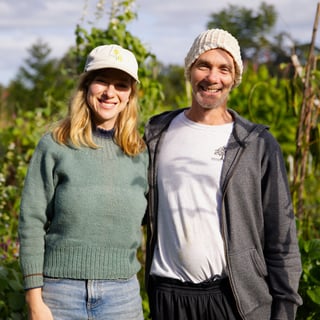
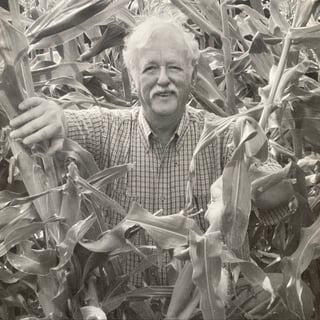
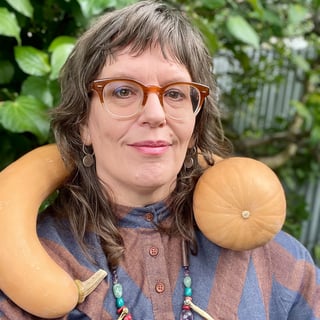
Speaker: So thanks for listening to another instalment of Katie's Basic Revelations. There are plenty more where that came from. Today's Reskillience installment is rich in life advice indeed, because it's with a formidable permaculture duo, and I'm going to call them elders, even though they might laugh at the gravitas of that title, two people who are really revered in our local permaculture community, Ian Lillington and Marita Zee.
Speaker: Before this interview, i didn't really know that much about them other than that Ian is a writer, a history buff, and he consistently wins the People's Choice Award on permaculture design certificates. He's a really awesome teacher.
Speaker: Marita, his partner, is an epic foodie and a quiet, grounded authority on all things health and homemaking. Together they live in a solar passive straw bale home on the edge of Castle Main, Victoria, surrounded by fruit and nut trees and veggie gardens, where students come to see and feel what it is to be wrapped in abundance.
Speaker: And this is how I found them, on a chilly, sunny autumn morning in the cosy warmth of their kitchen, dealing with masses of peaches, pistachios and zucchini.
Speaker: And we all sat down and chopped and chatted, eventually remembering to turn on the microphones. What I really love about this convo is the long-term perspective that Ian and Marita offer as Permi elders.
Speaker: They've been around the block a few times, seen many a global crisis, and aren't too flapped about the state of things right now because they have a lot of faith in human adaptability. They're down-to-earth and non-judgmental, encouraging everyone to find a model of living that suits them. I felt extremely comforted by this conversation, and I hope you do too.
Speaker: In podcasting news, I want to profusely thank everyone on Patreon who directly funds my work as an independent storyteller, producing this podcast on the smell of an oily rag between working as a writer, gardener, and full-time tiny homesteader.
Speaker: It's a lot. It is a joy, and it has been life-changing to have a bit of financial support coming in for the hours upon loving hours I spend on Raskillians. My deepest gratitude goes out to everyone who donates to the show, and if you want to join the Raskillians community, you can find us at patreon.com forward slash Raskillians.
Speaker: We're actually having a watch party for the premiere of George's new film this Thursday, which is a documentary about Joan Nemeth, who you've heard from before on the pod. But sorry to say that the watch party is now completely chockers with 100 virtual butts on virtual seats, but I will record it to share with any patrons who missed out on a spot.
Speaker: Massive shout out to new patrons Rachel and Sam. Welcome to the fam. And here's Ian Lillington and Marita Zee being introduced by some white winged chuffs.
Speaker: We can be off grid but we're on the mains. We have a compost toilet. our kitchen And a normal toilet. And the kitchen. Our attitude to food is like this. We get it locally. We grow it if we can. We get it locally if we can't.
Speaker: And we have some Danish cheese.
Speaker: Mazdan. With the holes in it. I need it for my sanity. Yes, it's your medicine. Your rightful medicine. And you get bacteria from overseas, like from the actual European continent. yeah that's another It's a thing. Does it survive the trip?
Speaker: Well, it's made from milk. over there. It's not made from milk over here. And milk over here is a completely different product from European milk. Well, I've had friends who are deeply dairy intolerant and go to Europe and they don't bleed when they eat cheese. Exactly. yeah And the same with bread. Exactly. yeah We've found that too. Some Australian foods are apparently poisonous. Directly, provably poisonous. It's like what? What you're saying. That...
Speaker: The way they, it with wheat, a lot of it's to do with storage. They store in these big, open, huge mounds and they use a lot of rat poison. I did not know that. I was always thinking about all the soil minerals and could also the variety. Could be that. But the rat poison would do it to you, wouldn't it?
Speaker: But the genetic modification of wheat is also a thing. And they have resisted that in, for example, Italy. They've really resisted that. Because there's a food culture that people can rally behind and defend. yeah Yeah, and that persists right up into political and rich people's thinking.
Speaker: We have a bit of an identity crisis, an ongoing chronic case of which you've already touched on in permaculture. What is the Australian Permi dream? Well, yeah, what's what's the unique factors and how do we actually describe it to the rest of the world?
Speaker: I will say I am sitting here with Ian Merida in your beautiful home and we've just been processing zucchinis and peaches and having a good old chin wag and probably should have been recording that. But here we are. And this is my favorite kind of interview, which is in person and couched in some useful contributions, hopefully to your household as well. So thank you so much for having me.
Speaker: And that is as official as I'm going to get with an introduction. you've only been in this place you've built this house um when you were in your 50s roughly and that to me is a really potent statement given that i'm sitting in this incredible homey homestead that feels like a permaculture paradise that is surely decades and decades and decades in the making and also i'm 37 and i constantly think oh it's too late for me and kind of let some dream go And I wonder how many other people feel like it's it's too late to put down roots. So I'd love to hear yeah a little more of about how you've created this space and what you were thinking and feeling when you were in your 50s.
Speaker: I was a renter until I was your age. We had we had kids and we were renting. And you were a renter until you were in your 40s. So it's never too late. Yeah, it's good.
Speaker: All right. Did you have to get over some psychological hurdles when... you were thinking about taking on a big project like this. As you said, it was a blank canvas essentially when you arrived, knowing how much time it takes to grow fruit trees and to start having a productive perennial garden.
Speaker: We bought an old house on the edge of Campbell's Creek, which in turn is on the edge of Castlemaine. We already knew Castlemaine was quite a rapidly developing eco-centre, and I had been working in the local sustainability group. I got to meet a lot of people around here that made me sure that I wanted to stay here. So being based around this area was really clear to me. And I'd go as far as to say that I'm one of those people who've who've come to Castle, Maine from far away, partly by conscious design and partly by just those things turning out that way.
Speaker: But certainly when I go to, when I meet up with interesting people around this town, always half of them have come from interstate or overseas. So it it is it a pretty special place. And that was in the big picture that made it quite easy to decide to stay here.
Speaker: So was it more about the people and the community that was brewing or more about your feelings towards the land? Like what percentage would you weight those in terms of choosing a place?
Speaker: A lot of it actually was that both of us separately in our earlier lives had lived in really poor housing. And Marita might be maybe more than I. Do you want to talk about that?
Speaker: Yeah, just being in in the Dalesford region for 25 years and also before that as well just moving a year something like that.
Speaker: Eventually we came to the point where financially it was possible to actually build something and and stay in it and... Enjoy it. And homestead. Because in 2009 when we met, we were both living in rental accommodation and we both had an interest in doing what I call sustainable subdivision. And we put our few thousand dollars together and we bought the cheapest house in the cheapest street on the edge of Dalesfield and we renovated it and we sold that.
Speaker: And then we renovated a house in Castlemaine and we sold that. And that led us to buy the house next door to where we are sitting right now, which is another old house. And we we insulated that and we made it quite beautiful in a very simple way. But we bought that house. The attraction of that house was having two acres of land. which was zoned residential, so we knew we could build more houses on the two acres.
Speaker: And eventually we got this block of land that we owned outright by 2017 and that allowed us to be owner builders of the house that we're now in. So we've been planting trees here for 12 years but we've been living in the house for only six years. We decided to build a straw bale house, which was also a little bit of ah a process because the there weren't that many people who were doing it. And going back right going back into the 1990s, we were both around people doing mud brick and we helped people owner build houses.
Speaker: And I did have a bit of contact with straw bale building in South Australia. And I was really confident about the fact that straw would give us good insulation because we weren't 100% sure about living in Castle Mine because of the cold winters and the hot summers.
Speaker: But we knew that straw was going to give us that quick and and guaranteed insulation. um Not in the roof. we put We put conventional insulation in the roof, but it's turned out really successful from ah from a physical structure point of view.
Speaker: But you asked before about people as well, and there's there's no doubt that apart from being attracted to have a have a a block of land and a house on the edge of town, um then yes, when you you go to the Saturday morning market and we know people and we we build up friendships there every many years and That's really symbolic to me of how Castle Mane's got this 40 or 50 year old tradition of people coming to do back to the land things.
Speaker: And ah more recently, things like farmers markets have developed. And ah Beck Lowe and I have been teaching permaculture classes here since 2009 as well.
Speaker: We started the first class just after the Black Saturday bushfires. and it was a drought time as well. And a lot of people have keep on coming to our primaculture design classes.
Speaker: And we run them on a weekday, like the next one's on a Wednesday, sometimes they're on a Friday. So they're they're spread out over a 16 week period. And and over these last 17 years, we've had almost 400 people come through PDCs in the Castlemaine area. And most of them are still living around here. So that's another way that permaculture has directly built up the community, which we then benefit from.
Speaker: So for people on the permaculture courses who visit your home and people who are listening who are probably feeling like this would be quite an aspiration for a lot of people to have this warm, simple, beautifully designed homestead with, as I mentioned when I first came in, the filtered light from the the plantings that you've done around the around the house and the abundance that I can glimpse through the windows, it it must be a nurturing space to live in. So I'm wondering when students come here,
Speaker: And the inevitable question arises, well, how can I work towards something like this? And things are really different from the time when you were kind of developing and being able to access this land to now. I'm wondering what you might...
Speaker: say to folks who would dream of creating something like this in a very different kind of financial and real estate realm to what you are probably working with what 15 how many years ago now well i think real estate prices as we know go up double in 10 years and have have historically done so in the last 30 that i can think of so therefore there are still places in Victoria or other places in Australia where you can buy into a small hamlet
Speaker: or a smaller town and and places like Dalesford and places like Castlemaine started like that where people said oh we're going to move out of Melbourne 100 kilometers away from Melbourne that's a long way and we're going to you know do our thing there like the different health practitioners and the different artists and the different permaculture type of people who wanted to grow their food and do their nature thing And so if people don't have the actual finances to buy into a place like Dalesford or Castlemaine, maybe they can figure out a way to buy into Denali or yeah yeah somewhere a little bit further out now.
Speaker: Maribor is still really cheap. You need to sort of set your eyes on something, a prize that you can actually win. You can't be too perfect about it. And that there's plenty of imperfections here as well. And there certainly was 20 years ago. And I'm trying not to sound too defensive or too much like an old guy, but I had a couple of young kids. We We were recent migrants to Australia. We hardly had any money. We bought a cheap block of land, but it was on the edge of a different town that eventually was to become a more valuable place to live, a more desirable place. But we could only just about get a mortgage on part-time wages, and we only got to build that house because... two different friends lent us $3,000 each.
Speaker: And if we hadn't had that support and just been able to just scrape over the line, then we wouldn't have been on ah on the on the ladder.
Speaker: And although you possibly have to add an extra nought to everything now, Basically, it's still the same situation. People who get into some sort of real estate mostly have to work really hard and and just scrape by and just get over the line. So maybe you've got to find a friend with $30,000, not $3,000. But if that gets you over the line, then it's it's an option and it's possible.
Speaker: and And it takes us back to age as well because it it isn't it isn't too late at any particular time. So I i was 38, Marita was 44 before we even started getting a mortgage to begin the ownership process. And there's loads of downsides about the mortgage and being locked into that. But it's been a means to an end.
Speaker: And it's what we would call good good debt. If you borrow money to buy a car, for example, it's depreciating. It's a bad debt. that you You never get that back. But ah a debt to build a house and especially build a passive solar house, it's an investment that does pay off. And also team up with each other as well. Just like you know our kids, they go to Melbourne and they have share houses because they can't afford their own house to rent. It's the same here. Share shares some land If you can. And yeah, if things go haywire with each other, then people have always had solutions, you know, how to move out again and move on from yeah what didn't work out. But give it a go and just share.
Speaker: If you really want to live in a place like, you know, an unaffordable real estate place like Castlemaine, then um yeah, you definitely need to share.
Speaker: One of the things that we have in common is we're we're good at not spending too much money. and that like So reducing the things you, reducing the outgoings rather than increasing the income is a big factor.
Speaker: And although we do grow quite a lot of our own food, we do have a small wood fire, we grow most of our own firewood. We use the government grant to get solar panels. So when the sun's shining like it is right now, we don't have an electricity bill. And we have increasingly been ah self-employed rather than going to work in another building. So by working from home, it means that we can put the washing machine on or dry the fruit during the daytime so that the things like appliances are running when the electricity is free. So part of our reason to be able to exist as we do is that earning relatively little money goes hand in hand with working around our own place. And it doesn't really matter whether it was a quarter acre or 400 acres, there's always some things you can be doing, whether it's having a worm farm or growing a few of your vegetables, uh or exchanging with neighbors like that it takes time to exchange with neighbors but there's there's almost always someone around who's got the thing you need and they want something that you can give them evoking that kind of spirit of their resourceful frugal multi-interested and incomeed homesteader i'm thinking of
Speaker: the mind space that that cultivates sometimes in me is really frenetic and full and it can tip into overwhelm. And I would love to know from you too what it feels like to have such a rich and textured and everything all at once life and how you how you cope with those booms and busts, you know whether it's from the garden gluts or work peaking at a specific time of the year.
Speaker: What is your lived experience of being in that more responsive home-based context? Can you ask him the question about it being autumn, or can you describe what you're actually seeing around a bit more? Yeah, yes. As a lead-in to how Marita or I perceive that lived experience of that. Yeah, thanks, Ian. When I walked in, i was met with a big bowl of pistachios and figs, and there were things happening. Marita was pottering in the kitchen, juggling zucchinis,
Speaker: I mean, i had i learned something about pistachios. I didn't realize what the process was involved in husking, de-husking a pistachio before you even get to the little clamshell that we're all familiar with.
Speaker: So i walk into a brouhaha of autumn happenings because it is the harvest and it's also the time when we're thinking about winter crops. There's a big... maelstrom of of homesteading happenings right now. And I know personally at our place we've got vines, tomato vines hanging around our tiny home ripening. I need to get onto those and make chutney. There's zucchinis and pumpkins kind of semi decomposing on the deck that I need to deal with. There's a bucket of hawthorn haws that I need to tincture. It's It's until we go to bed, we're doing things, blending basil pesto, the whole shebang. And that feels so natural to me and wonderful. But at the same time, when you pair that with the imperatives of making money or writing for pleasure, creating, socialising, I'd love to know how you cope with the abundances.
Speaker: And we can maybe talk about the... the scarcities later too, how you cope when things are not there like rainfall. Yes, in this time of the year there can be a bit of anxiety about how to get most things into some sort of bottle or drying them or any any sort of way of storing the produce. When there is a massive glut, we call in friends. We got a friend who really loves figs, so he gets lots of figs. Otherwise, we have to make kilos and kilos of fig jam. When the pistachios were ready, they needed
Speaker: very quickly within 24 hours they needed peeling the outer shell and so we called in eight friends for a pistachio picking and peeling party party and and yeah so two two hours each of these eight people which makes 16 hours of peeling pistachios and we're still now processing them further salting and drying them roasting them and we call in friends really you can call in woofers as well um when you yeah at this time of year it's good to have people cutting up things for you and helping you in any which way they can. Marita, just one more question on that. How do you, I don't know if this is a thing that you've experienced, but I find a little hurdle, a little speed bump there for me around having the confidence to sit someone down with a chopping board and a knife and a bucket and say, let's keep talking, but also can we do this? Because
Speaker: ah it feels a bit like we socialise in cafes and we don't ask anything of each other other than to share each other's latest goss. And so there's a bit of a learning around how do we be productive together whilst sharing a heart-to-heart conversation. Has there ever been moments where you've had to muster your confidence to say, hey, can we just pause for a second and look at these pictures and direct people? I suppose that's the that's the art of it.
Speaker: I don't think so. I mean, can't think of anything that way. People are interested to to learn. People are really interested to learn. And we we do a bit of this on primaculture classes, for example. We have a visit here from a class. And if there is an abundance, then we'll teach them to, say, chop up the pears in a certain way for them to go in the dryer.
Speaker: And people don't mind a bit of supervision or direction. I'm also thinking of that Frugal Hedonism book, which is Adam and Annie, annie and still available from Maliadora Publishing, I think, and because they describe this as well, the the the the relative ease of getting around the kitchen table to socialise and also do some produce and processing.
Speaker: We have, ah as as we are only two people in this household, we have two realize that we only need a certain amount of preserves. So we can sell some of our produce fresh. We can give them away to people who don't have any of those things. There's there's many ways of oh getting rid of um beautiful produce, which which we do with gluts. That's how we usually deal with it. we We try to sell some and we try to give some away and the rest we we bottle and preserve in any which way we can.
Speaker: That feeling of giving to the community is important to me because I think a lot of people give to us indirectly just by, for example, being a good neighbour, not really actively doing anything. But it's just nice to give your neighbours a kilo of fruit now and then because it's ah it's forming an ongoing relationship. And in other cases, like with our friend who really likes figs, you know he's he's a very supportive friend. He's there for a conversation when we need him. So ah giving him figs feels like a kind of payment, but it doesn't have to be at all documented or or recorded or and in any way reconciled. It's just an an easy way to to share the abundance. Mm-hmm.
Speaker: You mentioned earlier about times of shortage or difficulty as well. One of those is when it's really too hot, but we do have a watering system. like Practically speaking, we have mains water, we also have rainwater. Our garden needs mains water, but we can't store enough rainwater.
Speaker: And we don't mind buying some mains water. The reservoirs are still 60% full or something. the local water company wants to sell us water it only cost about three dollars for a thousand liters the water is a very cheap commodity and we turn it into food and we're really efficient we we use small drippers we don't big unlike commercial growers where there is actually waste and up over ballarat way you'll see huge amounts of water being sprayed into the air and evaporating and only part of it falling on the potatoes. where we use We're using our water very effectively. And also, although we do pay a few hundred dollars of a water bill, some other households have that kind of ah bill, but all and all they're doing is showering and washing clothes and washing the car and and so on. So we we think we do really well with filling those gaps, like partly by...
Speaker: managing the the hot summers ah by looking after our plants and managing the cold winters and and the spring by having some food in storage.
Speaker: Having said that, with most most things we' we' we're hybrid. We don't go to supermarkets but we do go to small independent shops um and those those smaller independent grocers are really important so we can buy certain products that we can't grow ourselves.
Speaker: and also friends who run bulk purchasing and that this is one of those things you can do even if you don't have a garden in buying buying a big tub or a big sack of something sharing it with your friends it's another of those really sociable activities and produces a really significant discount it means that a particular food like say tahini if you're buying it in bulk It can be $20 a kilo if you're buying it in a small jar, it's probably $40 a kilo.
Speaker: And now you don't you don't need 20 kilos of tahini, but if you've got 10 friends who want 2 kilos each, it's a pretty easy equation to share it around. Well, we can shift 10 kilos of tahini pretty quickly, I have to say. But also I'm thinking of how that benefits farmers, those partnerships, because I know potato farmers, for instance, who are being haggled down to nothing by the big two, ah say like 50 cents a kilo or something like that, whereas directly to consumer, yeah still at a massive discount for the consumer, they can be paid
Speaker: more fairly for their produce so it's kind of more of a win for everyone. So being a node at the food hub node, nodule, accumulator is a great thing. When we first started teaching permaculture classes in the early 2000s, we'd say on every class, wouldn't it be great if there were people around here growing freshly and locally for a farmers market? There really was not.
Speaker: and then over the last few years we've seen midweek farmers market and we increasingly see people who set up and grow specifically for local consumption and it's it's hard work this you you don't become a millionaire out of growing food but people are really consistently now turning up at farmers market year after year summer and winter with locally grown produce And there' they are supplying the local market. They're not involved at all in that national supply chain. And and although it's ah more difficult, there are people working out how to do the dairy, how to do the meat. how to do the specialist crops um and we mentioned before figs for example you can actually buy fresh figs you'd never see fresh figs in 15 years ago now there are probably more fig trees around but there's more people realizing that there's a market for something like that and once again you may have a small garden but if you have one big fig tree for For a couple of months, a year at least, you can be selling fresh figs and and getting ah a useful income from it.
Speaker: and if And if there's too many to sell fresh, then drying them in the in the sun or drying them in a small hydrator is simple and doesn't cost much. But you're producing a really high value crop.
Speaker: Yeah, seeing those opportunities is something in itself that we can develop, ah observing what's around us and what's in abundance and surplus that others are overlooking. Mm-hmm.
Speaker: Yeah, on the hybrid, the hybrid model of permaculture, which I do really love and I think will be very comforting for many people to hear, that um cleverly leaning on maybe bigger systems and supports that are there at the moment, like your water, your town water to irrigate for a lower cost. I'm wondering if you are still looking to push your independence from any system further over the years. I'm just thinking of the current times where people looking at how can we be the most off-grid, the most independent, the most resilient, the most insulated from the global system and shocks that are associated with what's happening at the moment. Are you feeling secure in your hybrid model or are there places where you'd want to be more self-reliant?
Speaker: Yeah, we we just had this discussion with the solar panels and batteries, which are highly rebated at the moment. We have got the solar panels already, which we got when we first built the house. And so we had the battery discussion, which we don't have any storage here for electricity. and also for blackouts we we haven't gotten much resilience in that area yet. Yeah, we had a long discussion about that and we decided it's probably better to just buy a petrol generator, an inverter generator that can be switched into the switchboard of our house and then you can run that for a very small amount of petrol. in case of emergency for a small amount of petrol and you still have power to run your fridge or you know your devices, I suppose. Yeah, we also have some diversity that gives us security. So we have a gas cooktop, for example, if it runs on a small gas bottle. We only use a few kilos of gas a year. and But in the absence of an electric kettle or electric cooking, we can cook on the gas top. We do have a wood heater which we can cook on the top of. So it's not just a way to keep warm, but it's actually for for cooking. So there are these multiple whats yeah there's multiple layers in the permaculture jargon. It's like every important function is provided by not a number of different elements. It's really good to have alternatives. We have gas cooking, we can cook electric and we can cook with wood.
Speaker: But it can feel really finicky when you're designing, like we're designing the tiny home at the moment and the cooking, it it's less intuitive in a tiny home just for lots of reasons because we can't have a big fireplace it with a wet back and, you know, I don't have to explain that to you, but it feels like there's this piecemeal kind of approach happening and, oh we'll have this outside and, know, You have to fit it all together. And I guess that figuring out is a fun game as well. You know, it's different to just putting all of your eggs in one basket. It's a different mindset, right?
Speaker: But isn't a tiny house solution a solution for the simplicity in life? So maybe the whole resources thing should go along with in that in that mindset you know as as simple as possible. Well, you know if you really haven't got any gas left or something, then you just have to light a fire outside if you haven't got fire inside. you know There's always the going back to like the Stone Age kind of technology you literally light
Speaker: where you literally lot a fire outside and cook, boil your billy or whatever. It's good to remember that. I think this coming from the hybrid thing to me is the importance of scale. like or The cliche is like horses for courses. there There are different things that work for different people in different situations. and there is a a kind of hierarchy of thinking to me within this is about how secure i feel australia is a relatively secure country it our isolation does give us some benefits that are is different to other countries except for example new zealand or a couple of other places australia despite
Speaker: increasing reliance on oil imports does have some fuel resources within the country. And the the scale thing is about the scale of use. Despite more efficient cars, oil use continues to increase. despite the digitization of communication, the number of sheets of paper that are printed still increases. And there just hasn't been ah an incentive to set those limits. So I noticed 10 years ago or so I went to a meeting with the bank manager And I'd sent an email confirming that I would attend at 9.30. And because of bank policy, every email like that was printed out on a sheet of a four paper because they couldn't trust the digital risk system to store that really valuable communication. And the same with petrol. There are there are more kids being driven to school. There are more people driving to sporting events, there's more petrol being used in in relatively frivolous ways. And I know that sounds judgmental, but those ways simply weren't being done 20 years ago. And my kids were playing sport and enjoying it relatively locally.
Speaker: They might get driven to Bendigo, but now they're being automatically driven to Sunbury or Melbourne because cars are relatively efficient. Petrol has been relatively cheap. Permaculture people have talked about peak oil for the last 20 years. Peak oil is real, and this is the sort of ah ragged, messy ways that peak oil is unfolding.
Speaker: people's individual solutions are going to differ from person to person but understanding that there are limits there actually are limits to growth there are limits to the resources that that we can access it's it's a tough process because for 20 30 40 years we've been able to buy solutions none of us have got a lot of money but most of us have had ah a bit of money to throw at some problem and if it means driving a bit more or it means buying a new appliance, we've tended to use money as a cushioning process.
Speaker: Humans, though, are really resilient and um people do adjust. And there's there's a fair bit of complaining and grumbling as the adjustment happens. But some of these adjustments are already happening.
Speaker: There is a new carpooling group set up in the in the Signal app in Castlemaine. There must be carpooling groups being set up all around the country, all around the world, And some of that some of that carpooling stuff that I used to take for granted when I was a student will simply see more of that. And those little adjustments will be made over and over and over.
Speaker: Jordan and I have been having this discussion a bit lately. what What makes certain people act on what they know, the information that they have about the future? What makes people not only be able to access foresight, but then pair it with action whilst the rest of us, it's almost like we're still in this liminal space where nothing has really changed.
Speaker: Even though everything has changed in the world and we're just hanging here wondering, are we crazy for thinking that things are going to be dramatically altered in a few weeks' time?
Speaker: um How much do we do right now? Or how much do we just kind of wait for the authorities to give us some kind of clue or indication about what's coming? So like for you two what has given you what has given you the whatever magical thing it is that has meant you've lived in a more frugal more kind of home-based more permaculture way like does that just feel right on some level or well i think you might be calling it frugal but i feel actually incredibly abundant and more abundant than ever in my life to be surrounded by all this gardens here and our neighbors with all our neighbors have got fruit trees and gardens and
Speaker: things in their pantry that they've processed and so I think the abundance um is really yes we're we're living in a very rich time at the moment so I don't feel yeah I don't feel like um anytime soon that the that that severe frugality is coming Most of what I've done over the last 30 years to end up living in this relatively secure, abundant place, most of that has seemed like really common sense. In my 20s, I didn't think I'd have children, but around 30, early 30s, decided that we would have children. And once I had children, started seeing my world quite differently. yeah and And like pretty much every other family, just wanting... somewhere secure, somewhere reliable, wanting to provide for the next generation. And so mixing with permaculture people being mentored and influenced by people doing self-reliant things just seemed so much common sense.
Speaker: And to eventually end up with a block of land and to build a house has... cost about the same or maybe cost less than ending up with a sort glossy black roof brick veneer and I find it hard to know why most people are so locked in to the other system but I do know that I'm a bit of I am a bit unconventional I don't think I'm terribly unconventional I think I'm quite cautious in many ways But I've just been on that slightly unconventional side that means I have purposely made choices, for example, to give up a job I wasn't enjoying and try making my own way self-employed or to give up a rental on the basis of taking a risk of getting a mortgage and going back into the regular workforce to pay the mortgage to get a house that by the time I was 40 years old, I felt like, oh, we actually... have a roof over our head that the landlord isn't going to kick us out of. So there's been a lot of self-interest and what seemed like common sense has proved mostly proven to be worthwhile.
Speaker: And as Marita says, without having to really compromise on and enjoying having good good stuff and good people around. Yeah, one of the advantages of being over 60 is yeah growing up in the Cold War and also being around for that many decades has taught me that every now and then the world is in this crisis and um yes, it does get very heavy ah in certain places.
Speaker: but we also moved on from there and then you know some other crisis happens and whatever but at this point in time um we have survived all the cold wars and all the petrol shortages that we had in the 70s when i was a kid i remember skating on the autobahn in germany in the 70s because there was no car anywhere to be seen it was just nobody could drive there was such a shortage of petrol that no one could drive and so I'm thinking of being older and having gone through different crises in my life and I'm I think my advice is don't listen too much to the news or the media ah it's so scary and it
Speaker: makes you feel so scary. I mean, you don't you don't have to bury your head in the sand and never look at it, but just look at it and take it with a grain of salt and keep focusing on your local life here and now.
Speaker: Just keep doing your resilience here and don't get too scared. This shall pass. I think it's easy to sound a bit complacent though as well. I'm thinking of other things that we do do in life.
Speaker: It's not party political, but we are political in the sense of um having compassion, having concern, acting in ways in local groups like lobbying for a better cycle path, for example. which has proven to be very difficult despite Castlemaine having a lot more cyclists than most other towns. We have a higher percentage of cyclists but we're lobbying for that to be reflected in policy and we're not getting anywhere.
Speaker: we're In small ways we're working in things like bushfire recovery, we're we're interested in state and national politics, not not in like waving the banner of the party but in actually being out there and trying to influence direction and trying to bring sustainability and compassionate solutions in.
Speaker: And i I think also by by teaching and sharing, teaching permaculture classes or sharing in other ways, I see that as quite a political act. This is the concept of the personal is political.
Speaker: because trying to do these sustainable local things we are more and more up against the corporate greed and the the corporations are good at telling us that we're the problem because we should reduce our consumerism and so on but there is a massive amount of creaming off of the commonwealth going into a few billionaires and a few big companies so having The opportunity to secure our own base and to have a chance to think about those things is also a chance to act on those things as well.
Speaker: But once again, that's a highly variable thing for for for different people, very different as to what exactly that you can do. But having ah having a conscience, being aware of your own conscience as you move in your particular circle, do your own thing, i think that's a fundamental.
Speaker: Very solid permaculture pep talks happening. And yeah, we're... Coming to the end of this preliminary podcast chat, because I do hope that there'll be more, but I wonder off the back of those beautiful sentiments that you shared, what your personal priorities are at the moment and what you could offer to folks listening as potential priorities or ways to feel prepared in this time.
Speaker: I've been putting out in the local permaculture Facebook group about why don't people interested in permaculture get together and meet up. And there's surprisingly a reluctance for people to make meeting up happening.
Speaker: I'm not really sure why it's not. And maybe it will come in time. Possibly permaculture isn't the right name for people to to gather. It's maybe not the banner anymore that people want to gather under.
Speaker: We used to have local permaculture groups where people shared these stories, shared this wisdom, shared plants, shared produce. So it's a bit of a priority for me to keep on encouraging people to to meet and act locally.
Speaker: I also happen to be involved in one of the leaders in trying to get the National Permaculture Convergence happening, which is ah a conference that happens every two or three years. And I'm putting a lot of time into that at the moment.
Speaker: And that's going to happen in about 12 months time. But this is the period when all the background work is happening. So that's keeping me really busy as well. Yeah. um Locally, having a ah local network and sharing sharing skills and sharing produce and sharing knowledge and stories.
Speaker: with each other I think is probably the most important thing. We found that through 2020 and 2222 was quite important to keep that social aspect alive which ah led to many different you know, the success stories, I suppose, in in in producing different groups and different support networks.
Speaker: And I think there is an inner inner resilience needed as well. the the The gratitude for what we do have, you know, versus constantly fearing something that we don't have or will not have or might not have. Really, really focusing on the gratitude, I think, is really important and just supporting each other and yeah the sharing things is it's a fun thing sometimes I want to just tell this tiny little story we had some courses here in March who came to visit our
Speaker: place to have a look at our wild wild garden. Ian just sort of said oh we should borrow someone's chooks because at the moment our chooks have died last year and we haven't replaced them and I'm on a chook break.
Speaker: I'm the chook person and I'm on a chook break so i asked her to Ian that's really ah inauthentic. i mean, you can't just pretend that we have these chooks here to these groups of people coming, you know. And so the the subject was closed. But the next day, a friend from over the road said, I really need somewhere for my four chooks to go because blah, blah, blah, blah. And then she was going away and it would be really good if you could have the chooks for two weeks.
Speaker: And so we ended up populating our poor little chook pen with some really beautiful birds that gave us huge amounts of eggs for two weeks and they were so lovely and they they did really well they didn't mind the the shifting from here to there and then they shifted back again they were totally fine about it and everybody came and said oh what lovely birds you have in your chook pen. You ticked the poultry box. Yeah ticked that one. So, you know, that was that was a fun thing because it just, yeah, sometimes things just sort of fall into place and it's lovely like that.
Speaker: o And I'd love to bring into the conversation a term, a Merida special, a word that I haven't heard before and that I think you've personally coined.
Speaker: And you know the one that I'm talking about. Yeah, i I used to... I used to tell my son that we're we are not Permis, we're practicing impermaculture. Referring back to what the Buddhists say, you know, that everything in life is impermanent. We are born and we we die and each tree is, you know, come from has come from a seed and eventually will die. And everything in nature is impermanent.
Speaker: everything on earth is impermanent and there is a certain sort of detachment that we gain from looking at things in that way and the reason why I was saying we are practicing in permaculture is because we have to keep moving from place to place when we had no when we're just renting in the Dalesford area yeah, we'd put in a garden in each place and then had to leave it behind for maybe the next people who were there or maybe it was just completely trashed and not tended to after us.
Speaker: But it was the impermanence of everything. And we felt like by saying in permaculture we were still sort of permaculture but not really in the permaculture scene in a different way just finally ian as someone who isn't only a very well respected permaculture teacher and absolutely passionate and steeped in permaculture as a way of life i wonder what you see as permaculture's greatest gift
Speaker: right now i mean it could be the the all-time gift of permaculture but just how you see it being particularly relevant at the moment i think the education and training component is huge permaculture is really spread i think mainly through the through teachers and the not so much by consultants and designers but it's the going out and teaching of permaculture and We we welcome people who want to learn about teaching permaculture and because it's possible to teach a short workshop or teach an introductory course. There's lots of ways that we can want to share the great information that we have got.
Speaker: So people who are interested or feeling pulled towards permaculture considering becoming permaculture teachers and sharing that? Yeah, I think some people would actually be really great to have as permaculture teachers. Others may simply want to just keep on looking for ways to learn more.
Speaker: i think that that that principle of lifelong learning, that matters a lot to me. And I think that that openness to learning new stuff, and learning and teaching goes hand in hand anyway.
Speaker: So anything around permaculture education is is what permaculture has to offer. It's also highly practical as well. It doesn't just be have to be a classroom facilitated event. The permaculture teaching involves lots and lots of on-site visits to where you can actually see what it looks like and a day by day kind of what people do every day when they're living on that piece of land. and
Speaker: It's sort of very... practical learning that way too and bringing it all the way back to the season and our bellies what kind of things are you enjoying eating at the moment like was some meals that are just quintessentially autumnal in this household I really enjoyed the grated zucchini fritters with the eggs that we got from those chooks that were here a couple of weeks ago.
Speaker: fruit Fruits are abundant at the moment that it's it's a given. So anything that's not fruit is what I'm enjoying. The fruit's a nice way to accompany any of the other meals.
Speaker: But yeah, you you come here at a really abundant time and we're really um enjoying having so much stuff around. The pistachios are pretty much the highlight of the season. I think that's pretty, pretty special. And we, we found that the cockatoos are really, really excited about the few pistachios that didn't want to let go off the tree that we left.
Speaker: We'd had a hoard of them just before. I think that's really high food food value. I really appreciate the, the food value of pistachios. And if things do really get tough, we'll be eating the cockatoos. Pistachio-finished cockatoos. Yeah, they might have green flesh. Who knows?
Speaker: Oh, well, Ian and Marita, it has been so lovely hearing from both of you. That was a real treat. And I really appreciate the time that you've carved out for this this morning.
Speaker: Thank you. Thank you for your lovely podcast and your great, great questioning. Yeah, thanks from me as well.
Speaker: That was Ian Lillington and Marita Z. And they are so old school that they've given me email addresses and even phone numbers if you want to get in touch with them. If you want to ask any questions or perhaps be mentored by them, I love the analogness of that invitation. And you will find the details in the show notes.
Speaker: Just a little preview of upcoming conversations here on Ruskelions. Next week is a big week of interviews. I am hanging out with Nathan Surrendran. I got really interested in Nathan's work when he released a document that pretty much outlined what we can individually do in our communities to build networks of mutual aid.
Speaker: and be far more resilient. So i really wanted to chat with him about that. I hope it'll be super practical and useful for everyone asking questions like, what do we do now?
Speaker: I'm also going to be in conversation with Ilka White, who is a beautiful local textile artist here in Jara country, and have an upcoming conversation with Helen Lendorf as well, A Kiwi who is a forager, permy, and an excruciatingly beautiful writer. I'm really looking forward to that.
Speaker: And I reckon we can get Jordan Osmond back on the podcast because I really want to hear about the films that he's releasing and also his thoughts on everything because he's a really smart fella and I think what he's interested in, you'll probably be interested in too.
Speaker: Lots of goodness in the Riskilliance queue and thank you for listening. I hope to see you again in a couple of weeks' time.